CN115237380A - Low-code development system and method based on element codes - Google Patents
Low-code development system and method based on element codes Download PDFInfo
- Publication number
- CN115237380A CN115237380A CN202210824433.3A CN202210824433A CN115237380A CN 115237380 A CN115237380 A CN 115237380A CN 202210824433 A CN202210824433 A CN 202210824433A CN 115237380 A CN115237380 A CN 115237380A
- Authority
- CN
- China
- Prior art keywords
- code
- business
- service
- meta
- model
- Prior art date
- Legal status (The legal status is an assumption and is not a legal conclusion. Google has not performed a legal analysis and makes no representation as to the accuracy of the status listed.)
- Granted
Links
Images


Classifications
-
- G—PHYSICS
- G06—COMPUTING OR CALCULATING; COUNTING
- G06F—ELECTRIC DIGITAL DATA PROCESSING
- G06F8/00—Arrangements for software engineering
- G06F8/10—Requirements analysis; Specification techniques
-
- G—PHYSICS
- G06—COMPUTING OR CALCULATING; COUNTING
- G06F—ELECTRIC DIGITAL DATA PROCESSING
- G06F8/00—Arrangements for software engineering
- G06F8/30—Creation or generation of source code
- G06F8/35—Creation or generation of source code model driven
-
- G—PHYSICS
- G06—COMPUTING OR CALCULATING; COUNTING
- G06F—ELECTRIC DIGITAL DATA PROCESSING
- G06F8/00—Arrangements for software engineering
- G06F8/70—Software maintenance or management
- G06F8/71—Version control; Configuration management
Landscapes
- Engineering & Computer Science (AREA)
- General Engineering & Computer Science (AREA)
- Theoretical Computer Science (AREA)
- Software Systems (AREA)
- Physics & Mathematics (AREA)
- General Physics & Mathematics (AREA)
- Computer Security & Cryptography (AREA)
- Stored Programmes (AREA)
- Information Retrieval, Db Structures And Fs Structures Therefor (AREA)
Abstract
本发明公开了一种基于元代码的低代码开发系统及方法,微服务拆分模块,所述微服务拆分模块用于拆分微服务,对功能模块进行组装、对资源进行归类,生成业务应用;生成式开发模块,所述生成式开发模块通过对生成的元服务和元组件进行拖拽,配置多类型数据源,生成轻应用;源代码管理模块,所述源代码管理模块用于定义代码模型,对源码进行管理,同一代码多端发布。本发明能够跨领域构建组件,并完成多版本数据库的适配;同时还能够根据各个功能之间的关联性,在定义代码模型时,实现对代码模型的有效筛选,确保对代码模型的精准匹配。

The invention discloses a meta-code-based low-code development system and method, a micro-service splitting module, and the micro-service splitting module is used for splitting micro-services, assembling functional modules, classifying resources, and generating Business applications; a generative development module, which configures multiple types of data sources by dragging and dropping the generated meta-services and meta-components to generate light applications; a source code management module, which is used for Define the code model, manage the source code, and release the same code to multiple ends. The invention can construct components across fields and complete the adaptation of multi-version databases; at the same time, according to the correlation between various functions, when defining the code model, it can realize the effective screening of the code model and ensure the accurate matching of the code model. .
Description
技术领域technical field
本发明涉及互联网技术领域,具体为一种基于元代码的低代码开发系统及方法。The invention relates to the field of Internet technology, in particular to a meta-code-based low-code development system and method.
背景技术Background technique
在传统的开发过程中,一个应用程序需要经过需求分析、数据库设计、UI设计、程序设计几个阶段。即:开发人员首先需要了解用户需求,梳理每项业务的逻辑及模块关联关系。其次,根据需求分析设计数据结构,而且大部分软件开发商是通过特定的某类数据库(如MySQL)描述其数据结构。最后,对数据结构进行程序设计、模块之间的接口设计和UI设计,进而整合为一个完整的应用程序。在应用程序交付过程中,经常会存在一些需求与产品不一致的情况,开发人员需要对应用程序的业务分类、数据结构、程序处理进行修复、调整,直至应用程序符合用户需求。因此,传统的应用程序开发是基于一定的业务领域、具备一定的开发技术、按照特定的开发过程将用户需求演变为应用程序,同一应用程序在不同终端需要设计不同的数据结构、开发不同的程序。其开发成本昂贵、开发效率低、模块之间关联度弱、模块复用率不高,对于数据更是容易重复存储、利用率低,并且无法满足政府、企业的系统重构、个性化服务,从而影响行政管理效能、业务方向拓展。In the traditional development process, an application needs to go through several stages of requirements analysis, database design, UI design, and program design. That is, developers first need to understand user needs and sort out the logic and module relationships of each business. Secondly, the data structure is designed according to the demand analysis, and most software developers describe their data structure through a specific type of database (such as MySQL). Finally, program design, interface design and UI design for the data structure, and then integrate into a complete application. In the process of application delivery, there are often inconsistencies between some requirements and products. Developers need to repair and adjust the application's business classification, data structure, and program processing until the application meets user requirements. Therefore, the traditional application development is based on a certain business field, with a certain development technology, according to a specific development process to evolve user requirements into applications, the same application needs to design different data structures and develop different programs in different terminals . Its development cost is high, development efficiency is low, the degree of correlation between modules is weak, and the module reuse rate is not high. For data, it is easy to repeatedly store data, and the utilization rate is low, and it cannot meet the system reconstruction and personalized services of the government and enterprises. Thereby affecting the efficiency of administrative management and business direction expansion.
基于上述的开发背景,国内迅速衍生的许多低代码开发平台,一种是基于表单驱动的低代码平台、一种是基于数据驱动的低代码平台,并在某一类特定的业务领域如2B、2C、 2G领域使用,根据其业务领域使用面向对象的开发语言开发出许多业务组件、业务表单、数据模型、界面原型,如:譬如使用某一种特定的数据库和前端语言进行低代码开发,数据库使用MySQL,前后端使用开源框架,通过JAVA、html、Javascript语言构建业务组件,用户通过拖拽有限的组件构建其系统原型,提高了一定的开发效率。但是在跨领域构建组件、多版本数据库适配方面还有待完善。Based on the above-mentioned development background, many low-code development platforms have been rapidly derived in China, one is a form-driven low-code platform, the other is a data-driven low-code platform, and in a certain type of specific business areas such as 2B, 2C and 2G fields are used, and many business components, business forms, data models, and interface prototypes are developed using object-oriented development languages according to their business fields, such as: for example, using a specific database and front-end language for low-code development, database Using MySQL, using open source frameworks at the front and back ends, and building business components through JAVA, html, and Javascript languages, users can build their system prototypes by dragging and dropping limited components, which improves development efficiency to a certain extent. However, there is still room for improvement in cross-domain building components and multi-version database adaptation.
发明内容SUMMARY OF THE INVENTION
本发明的目的在于提供一种基于元代码的低代码开发系统及方法,以解决上述背景技术中提出的问题。The purpose of the present invention is to provide a meta-code-based low-code development system and method to solve the above-mentioned problems in the background art.
为了解决上述技术问题,本发明提供如下技术方案:一种基于元代码的低代码开发方法,所述方法包括以下步骤:In order to solve the above-mentioned technical problems, the present invention provides the following technical solutions: a meta-code-based low-code development method, the method comprises the following steps:
S1、根据业务行业、业务需求划分的业务边界构建业务领域,根据不同的业务边界划分不同的子域、主题域,直至划分为最小边界,得到最小功能单元;S1. Construct a business domain according to business boundaries divided by business industries and business requirements, and divide different subdomains and subject domains according to different business boundaries until they are divided into minimum boundaries to obtain minimum functional units;
S2、根据业务属性、业务特征构建元模型,进行表单建模、数据建模;S2. Build a meta model according to business attributes and business characteristics, and perform form modeling and data modeling;
S3、元模型根据不同的类和方法生成后端元服务和前端元组件;S3. The metamodel generates back-end meta-services and front-end meta-components according to different classes and methods;
S4、拆分微服务,对功能模块进行组装、对资源进行归类,生成业务应用;S4. Split microservices, assemble functional modules, classify resources, and generate business applications;
S5、通过对生成的元服务和元组件进行拖拽,配置多类型数据源,生成轻应用;S5. By dragging and dropping the generated meta-services and meta-components, multiple types of data sources are configured to generate light applications;
S6、定义代码模型,对源码进行管理,同一代码多端发布。S6, define the code model, manage the source code, and release the same code to multiple ends.
进一步的,所述S1中根据业务行业、业务需求划分的业务边界构建业务领域的方法包括以下步骤:Further, the method for constructing a business domain according to business boundaries divided by business industries and business requirements in the S1 includes the following steps:
S1.1、划分业务领域,以从上至下或者从下至上的策略进行业务边界划分,大的领域划分为2G领域、2B领域、2C领域,并根据不同的业务行业将大的领域划分为不同的业务子域,在业务子域内根据业务需求细分若干个主题域,直至划分为最小边界领域;S1.1. Divide business areas, and divide business boundaries according to top-to-bottom or bottom-up strategies. Large areas are divided into 2G areas, 2B areas, and 2C areas. According to different business industries, large areas are divided into Different business sub-domains are subdivided into several subject domains according to business needs in the business sub-domain until they are divided into the smallest boundary domain;
S1.2、构建资源目录,根据业务领域的划分情况建立资源目录,构建不同的共性目录、业务目录,规范化管理业务系统,所述共性目录为面向所有人使用的应用目录;S1.2, build a resource catalog, build a resource catalog according to the division of business fields, build different common catalogs, business catalogs, and standardize the management business system, and the common catalog is an application catalog for everyone to use;
S1.3、规划业务模块,根据业务领域的业务属性、对象属性特征,建立业务类、数据类、共性类、测试类的业务模块;S1.3, plan business modules, and establish business modules of business class, data class, common class, and test class according to the business attributes and object attribute characteristics of the business field;
S1.4、规划功能模块,对各业务模块进行细粒度拆分,拆分多个功能模块;S1.4, planning functional modules, fine-grained splitting of each business module, and splitting multiple functional modules;
S1.5、细分功能模块,将功能模块细分为最小功能单元。S1.5, subdivide functional modules, and subdivide the functional modules into the smallest functional units.
本发明中2G领域是面向行政领域的,通过低代码构建公文、会议、督办、干部管理、教务管理等的PC端、移动端、大屏应用,开发过程按照下面步骤进行,该类业务主要是基于流程类应用的开发;2B领域是面向企业领域的,基于轻流程、无流程的应用构建,比如固定资产、项目采购以及盈利数据分析类应用,其构建过程主要是通过绑定不同数据库的数据源,通过页面拖拽可视化分析组件构建分析类应用,该类业务主要是基于数据类应用的开发;2C领域是面向个人领域的,该类的开发主要是基于平台的业务组件灵活构建个人应用,此类应用主要是个人通过组件商店进行自行开发,像个人的学习、知识库管理等类应用,定制型较强,基于数据类和流程类结合的产物;建立资源目录的目的在于对应用进行科学分类,在系统维护过程中可以通过资源目录快速找找各类应用,并对应用进行维护。The 2G field in the present invention is oriented to the administrative field. PC-side, mobile-side, and large-screen applications such as official documents, meetings, supervision, cadre management, educational affairs management, etc. are constructed through low-code. The development process is carried out according to the following steps. This type of business is mainly Based on the development of process-based applications; the 2B field is oriented to the enterprise field, and is based on the construction of light-process and non-process applications, such as fixed assets, project procurement and profit data analysis applications. The construction process is mainly by binding the data of different databases. Source, build analysis applications by dragging and dropping visual analysis components on the page, this type of business is mainly based on the development of data applications; the 2C field is oriented to the personal field, and the development of this type is mainly based on the business components of the platform to flexibly build personal applications, Such applications are mainly developed by individuals through the component store, such as personal learning, knowledge base management and other applications, which are highly customized and are based on the combination of data and process types; the purpose of establishing resource catalogues is to conduct scientific research on applications. Classification, in the process of system maintenance, you can quickly find various applications through the resource directory, and maintain the applications.
进一步的,所述S2中根据业务属性、业务特征构建元模型的方法包括以下步骤:Further, the method for constructing a meta-model according to business attributes and business characteristics in the S2 includes the following steps:
S2.1、提取业务对象,从业务领域、最小功能单元中提取产生的事件、命令对应的业务对象,并梳理对象间的关联关系;S2.1. Extract business objects, extract business objects corresponding to generated events and commands from business fields and minimum functional units, and sort out the associations between objects;
S2.2、选择元数据,分析业务对象的业务属性,定义业务元素、核心元素并进行分组,从而建立元数据目录,根据业务对象的模型设计业务对象的业务实体及关联实体;S2.2. Select metadata, analyze business attributes of business objects, define business elements, core elements and group them, thereby establishing a metadata catalog, and design business entities and associated entities of business objects according to the business object model;
S2.3、新建元数据,结构化数据定义元模型时,定义结构化元数据的数据类型、长度、是否非空,从而快速生成对应的表结构;非结构化元数据是单独定义的,在一个模块下定义多个非结构元数据的规则;S2.3. When creating new metadata, when defining a meta model for structured data, define the data type, length, and whether it is non-empty for structured metadata, so as to quickly generate the corresponding table structure; unstructured metadata is defined separately and is Rules for defining multiple unstructured metadata under one module;
S2.4、构建元模型,定义元数据和物理表的映射关系,配置数据源及输入事件、关联规则,建立表单类模型、数据类模型,遵循程序设计、UI设计、数据库对应的语法结构,生成不同数据库的表结构。S2.4. Build a meta model, define the mapping relationship between metadata and physical tables, configure data sources, input events, and association rules, establish form model and data model, and follow the syntax structure corresponding to program design, UI design, and database. Generate table structures for different databases.
进一步的,所述S3中元模型根据不同的类和方法生成后端元服务和前端元组件的方法包括以下步骤:Further, the method for generating the back-end meta-service and the front-end meta-component according to different classes and methods in the meta-model in the S3 includes the following steps:
S3.1、划分界线上下文,根据元模型的业务边界划分界线上下文,使得元模型被修改后,其关联的服务或组件则同步修改;S3.1. Divide the boundary context, divide the boundary context according to the business boundary of the meta model, so that after the meta model is modified, its associated services or components are modified synchronously;
S3.2、生成元服务和元组件,对表单类模型、数据类模型的使用场景、业务权限、显示条件、事件说明、禁止状态进行可视化编排,平台自动封装UI属性、校验方法并生成前端组件和后端服务。S3.2. Generate meta-services and meta-components, and visually arrange the usage scenarios, business permissions, display conditions, event descriptions, and prohibition states of form class models and data class models. The platform automatically encapsulates UI attributes, verification methods, and generates front-end Components and backend services.
本发明中设置有界上下文是为了关联修改。A bounded context is provided in the present invention for associative modification.
进一步的,所述S4中拆分微服务,对功能模块进行组装、对资源进行归类,生成业务应用的方法包括以下步骤:Further, the method for splitting microservices in the S4, assembling functional modules, classifying resources, and generating business applications includes the following steps:
S4.1、拆分微服务,规划微服务应用,对最小功能单元进行服务编排,对其存储、交互、接口属性进行设计;S4.1. Split microservices, plan microservice applications, arrange services for the smallest functional unit, and design its storage, interaction, and interface attributes;
S4.2、整合功能模块资源,对业务对象进行资源整合,对模块基础信息、元模型、列表、流程、表单进行聚合,配置其联动信息、使用场景、使用范围;S4.2. Integrate functional module resources, integrate resources for business objects, aggregate basic module information, meta-models, lists, processes, and forms, and configure their linkage information, usage scenarios, and usage scope;
S4.3、可视化开发,通过流程设计器、表单设计器、列表设计器进行可视化拖拽设计;S4.3, visual development, visual drag-and-drop design through process designer, form designer, and list designer;
S4.4、模块权限配置,根据流程、表单对业务模块在每个环节的权限进行可视化配置,对页面当中的元数据进行权限定义,设计每个元数据在每个环节的可见、编辑、保存内容;S4.4, module permission configuration, according to the process and form to visually configure the permissions of the business module in each link, define the permissions for the metadata in the page, and design the visibility, editing and saving of each metadata in each link content;
S4.5、整合功能模块关联的资源,对功能模块关联的菜单、按钮、任务、用户资源进行整合和配置;S4.5. Integrate resources associated with functional modules, and integrate and configure menus, buttons, tasks, and user resources associated with functional modules;
S4.6、模块分级管理,在构建功能模块后,由不同机构分别对功能模块进行管理;S4.6. Module hierarchical management. After building functional modules, different institutions manage the functional modules respectively;
S4.7、预览视图,据应用配置情况实时展示前端应用的显示效果。S4.7, the preview view, which displays the display effect of the front-end application in real time according to the application configuration.
进一步的,所述S5中通过对生成的元服务和元组件进行拖拽,配置多类型数据源,生成轻应用的方法包括以下步骤:Further, by dragging and dropping the generated meta-services and meta-components, and configuring multi-type data sources in the S5, the method for generating a light application includes the following steps:
S5.1、选择框架,用户根据权限、优先级选择不同的布局框架、列表框架、统计框架,每个框架赋予多个功能代码集合、界面集合、组件集合,并对每个框架的使用范围、图标进行设计,支持新建、删除、配置、预览功能;S5.1. Select the framework. The user selects different layout frameworks, list frameworks, and statistical frameworks according to permissions and priorities. Each framework is assigned multiple function code sets, interface sets, and component sets. Icons are designed to support the functions of creating, deleting, configuring and previewing;
S5.2、页面配置,通过设计面板、各类引擎以拖拉拽布局组件、框架组件、元数据组件快速构建应用,通过VUE或iVew框架使用元代码进行二次开发;S5.2, page configuration, quickly build applications by dragging and dropping layout components, frame components, and metadata components through design panels and various engines, and use metacodes for secondary development through VUE or iVew framework;
S5.3、生成千人千面工作台,通过门户设计器对工作台标识、页面类型、授权用户、优先级进行管理;在页面授权过程中,根据机构、角色、常用联系人配置使用权限,拥有权限的用户能够对指定页面进行配置;S5.3. Generate a thousand-person and thousand-faced workbench, and manage the workbench ID, page type, authorized user, and priority through the portal designer; during the page authorization process, configure the use rights according to the organization, role, and common contacts. Users with permissions can configure the specified page;
S5.4、生成多级专题门户,通过门户设计器将具有共同属性的微应用集合体进行归集;S5.4. Generate multi-level thematic portals, and collect micro-application aggregates with common attributes through the portal designer;
S5.5、生成分析门户,通过不同的数据库源进行分析,能连结任何数据源并使用连结功能,从存储过程中直接获取数据,对数据进行配置、分析、设计。S5.5. Generate an analysis portal, analyze through different database sources, connect any data source and use the connection function, directly obtain data from the stored process, and configure, analyze, and design the data.
进一步的,所述S6中定义代码模型,对源码进行管理,同一代码多端发布的方法包括以下步骤:Further, the code model is defined in the S6, the source code is managed, and the method for multi-terminal publishing of the same code includes the following steps:
S6.1、定义代码模型,分别建立接口、领域、子域、数据库及缓存对应的代码目录,在源码模式下修改页面模板、二次开发JS、自定义CSS样式、html编辑,并形成新的业务组件;S6.1. Define the code model, establish code directories corresponding to interfaces, domains, subdomains, databases and caches, modify page templates, secondary development JS, custom CSS styles, html editing in source code mode, and form new business components;
S6.2、对源码的质量、版本进行规范化管理,建立元组件源码、元服务源码、项目源码;S6.2. Standardize the quality and version management of the source code, and establish the source code of the meta-component, the source of the meta-service, and the source of the project;
S6.3、多端发布,根据不同的元服务和元组件选择不同的编译器并直接生成不同的源代码。S6.3, multi-terminal release, select different compilers according to different meta-services and meta-components and directly generate different source codes.
进一步的,所述S6.1中定义代码模型时,获取规划的微服务中的各个最小功能单元及每个最小功能单元对应的业务领域,获取数据库中每个最小功能单元相应业务领域中对应的各个代码版本,Further, when the code model is defined in S6.1, each minimum functional unit in the planned microservice and the business domain corresponding to each minimum functional unit are obtained, and the corresponding business domain of each minimum functional unit in the database is obtained. each code version,
不同业务领域中的同一最小功能单元对应的代码版本中的内容存在差异,同一业务领域中的同一最小功能单元存在多个代码版本且每个代码版本中的内容存在差异;There are differences in the content of the code versions corresponding to the same minimum functional unit in different business fields, and there are multiple code versions of the same minimum functional unit in the same business field, and the content of each code version is different;
在定义代码模型时,对各个微服务中的每个最小功能单元进行编号,对各个微服务中的每个最小功能单元对应的业务领域进行编号,不同最小功能单元对应的业务领域相同时相应的业务领域编号相同,获取第i个业务领域中第j个最小功能单元与第i1个业务领域中第j1个最小功能单元中的各个功能衔接处对应的代码版本,对各个微服务中的功能衔接处进行编号;When defining the code model, number each smallest functional unit in each microservice, number the business field corresponding to each smallest functional unit in each microservice, and when the business fields corresponding to different smallest functional units are the same, the corresponding The number of the business area is the same, and the code version corresponding to each function connection between the jth smallest functional unit in the ith business area and the j1th smallest functional unit in the i1th business area is obtained, and the functions in each microservice are connected. be numbered;
将编号为j的最小功能单元中的第k1个代码版本记为Ajk1,1≤k1≤k1j,k1j表示编号为j的最小功能单元中代码版本的总个数;Denote the k1 th code version in the smallest functional unit numbered j as Aj k1 , 1≤k1≤k1 j , k1 j represents the total number of code versions in the smallest functional unit numbered j;
将编号m的功能衔接处中的第k2个代码版本记为Bmk2,1≤k2≤k2m,k2m表示编号为m 的功能衔接处中代码版本的总个数;Denote the k2 code version in the functional joint with number m as Bm k2 , 1≤k2≤k2 m , k2 m represents the total number of code versions in the functional joint with number m;
随机选取每个编号对应的最小功能单元中的一个代码版本及每个编号对应的功能衔接处中的一个代码版本添加到一个空白集合中,得到一个功能代码集合,所述一个功能代码集合对应一个代码模型,进而得到的功能代码集合的种数为F,Randomly select a code version in the minimum functional unit corresponding to each number and a code version in the function connection corresponding to each number and add it to a blank set to obtain a function code set, and the one function code set corresponds to one code model, and then the number of function code sets obtained is F,
F=k11*...*k1j*...*k1j0*k21*...*k2m*...*k2m0,F=k1 1 *...*k1 j *...*k1 j0 *k2 1 *...*k2 m *...*k2 m0 ,
其中,j0表示各个微服务中最小功能单元的总个数,m0表示各个微服务中功能衔接处的总个数;Among them, j0 represents the total number of the smallest functional units in each microservice, and m0 represents the total number of functional connections in each microservice;
在定义代码模型时,对各个功能代码集合进行分析,筛选出最佳功能代码集合,作为定义的代码模型。When defining the code model, analyze each function code set, and filter out the best function code set as the defined code model.
进一步的,筛选出最佳功能代码集合的方法包括以下步骤:Further, the method for filtering out the best function code set includes the following steps:
S7.1、获取某一个功能代码集合中各个元素对应的相同且连续的代码片段,并将每个相同且连续的代码片段对应的代码行数分别与第一预设值进行比较,所述第一预设值为数据库中预制的常数,S7.1. Obtain the same and continuous code fragments corresponding to each element in a certain function code set, and compare the number of lines of code corresponding to each same and continuous code fragment with the first preset value. A preset value is a preset constant in the database,
当相同且连续的代码片段对应的代码行数大于等于第一预设值时,则对该代码片段进行提取,When the number of code lines corresponding to the same and continuous code fragments is greater than or equal to the first preset value, the code fragment is extracted,
当相同且连续的代码片段对应的代码行数小于第一预设值时,则不对该代码片段进行提取;When the number of code lines corresponding to the same and continuous code fragment is less than the first preset value, the code fragment is not extracted;
S7.2、统计提取的代码片段的种类,并判断不同种类的代码片段之间是否存在交集,并进行二次封装处理,S7.2. Count the types of extracted code fragments, and determine whether there is an intersection between different types of code fragments, and perform secondary encapsulation processing.
若某一种类的代码片段与其余种类的代码片段均不存在交集或者交集对应的代码行数小于第二预设值,则直接对该种类的代码片段进行二次封装,并将相应的封装结果替换功能代码集合中各个元素中该种类的代码片段,所述第二预设值为数据库中预制的常数;If there is no intersection between a certain type of code fragment and other types of code fragments or the number of lines of code corresponding to the intersection is less than the second preset value, the code fragment of this type is directly encapsulated for a second time, and the corresponding encapsulation result is Replace the code fragment of this type in each element in the function code set, and the second preset value is a preset constant in the database;
若两个至多个种类的代码片段存在交集且交集对应的代码行数大于等于第二预设值,则计算交集对应的每个代码片段对应的代码行数与相应代码片段在功能代码集合中出现的次数的乘积,将交集对应的各个代码片段中,最大乘积对应的代码片段进行二次封装,并将相应的封装结果替换功能代码集合中各个元素中该种类的代码片段;If there is an intersection between two or more types of code fragments and the number of lines of code corresponding to the intersection is greater than or equal to the second preset value, the number of lines of code corresponding to each code fragment corresponding to the intersection is calculated and the corresponding code fragment appears in the function code set The product of the number of times, among the code fragments corresponding to the intersection, the code fragment corresponding to the largest product is encapsulated twice, and the corresponding encapsulation result is replaced by the corresponding type of code fragment in each element in the function code set;
S7.2、统计二次封装处理后的功能代码集合中的实际代码行数,记为HG,模拟二次封装处理后的功能代码集合中各个微服务运行时延中的最大值,记为SY;S7.2. Count the actual number of lines of code in the function code set after secondary encapsulation processing, denoted as HG, and simulate the maximum value of the running delay of each microservice in the function code set after secondary encapsulation processing, denoted as SY ;
S7.3、分别获取每个功能代码集合分别对应的HG及SY,将各个功能代码集合中对应 HG的最大值记为HGmax,将各个功能代码集合中对应SY的最大值记为SYmax,S7.3. Obtain the HG and SY corresponding to each function code set respectively, denote the maximum value of the corresponding HG in each function code set as HGmax, and denote the maximum value of the corresponding SY in each function code set as SYmax,
将每个功能代码集合对应的HG与HGmax差的绝对值除以HGmax得到的商记为该功能代码集合的第一优化系数The quotient obtained by dividing the absolute value of the difference between HG and HGmax corresponding to each function code set by HGmax is recorded as the first optimization coefficient of the function code set

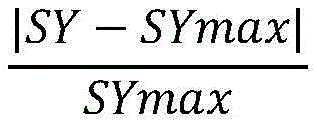
将每个功能代码集合对应的SY与SYmax差的绝对值除以SYmax得到的商记为该功能代码集合的第二优化系数The quotient obtained by dividing the absolute value of the difference between SY and SYmax corresponding to each function code set by SYmax is recorded as the second optimization coefficient of the function code set

S7.4、计算每个功能代码集合对应的第一优化系数与第二优化系数的乘积,并将第一优化系数与第二优化系数的乘积最大的功能代码集合作为筛选出最佳功能代码集合。S7.4. Calculate the product of the first optimization coefficient and the second optimization coefficient corresponding to each function code set, and use the function code set with the largest product of the first optimization coefficient and the second optimization coefficient as the best function code set. .
一种基于元代码的低代码开发系统,包括:A meta-code-based low-code development system including:
功能单元划分模块,所述功能单元划分模块根据业务行业、业务需求划分的业务边界构建业务领域,根据不同的业务边界划分不同的子域、主题域,直至划分为最小边界,得到最小功能单元;a functional unit dividing module, the functional unit dividing module constructs a business domain according to the business boundaries divided by business industries and business requirements, and divides different subdomains and subject domains according to different business boundaries until it is divided into a minimum boundary to obtain a minimum functional unit;
元模型构建模块,所述元模型构建模块根据业务属性、业务特征构建元模型,进行表单建模、数据建模;a meta-model building module, wherein the meta-model building module builds a meta-model according to business attributes and business characteristics, and performs form modeling and data modeling;
元服务及元组件生成模块,所述元服务及元组件生成模块通过元模型根据不同的类和方法生成后端元服务和前端元组件;a meta-service and meta-component generation module, the meta-service and meta-component generation module generates back-end meta-services and front-end meta-components according to different classes and methods through the meta-model;
微服务拆分模块,所述微服务拆分模块用于拆分微服务,对功能模块进行组装、对资源进行归类,生成业务应用;A microservice splitting module, where the microservice splitting module is used to split microservices, assemble functional modules, classify resources, and generate business applications;
生成式开发模块,所述生成式开发模块通过对生成的元服务和元组件进行拖拽,配置多类型数据源,生成轻应用;A generative development module, which configures multi-type data sources by dragging and dropping the generated meta-services and meta-components to generate light applications;
源代码管理模块,所述源代码管理模块用于定义代码模型,对源码进行管理,同一代码多端发布。A source code management module, the source code management module is used to define a code model, manage the source code, and release the same code to multiple ends.
与现有技术相比,本发明所达到的有益效果是:本发明能够跨领域构建组件,并完成多版本数据库的适配;同时还能够根据各个功能之间的关联性,在定义代码模型时,实现对代码模型的有效筛选,确保对代码模型的精准匹配。Compared with the prior art, the beneficial effects achieved by the present invention are: the present invention can construct components across fields and complete the adaptation of multi-version databases; , to achieve effective screening of code models and ensure accurate matching of code models.
附图说明Description of drawings
附图用来提供对本发明的进一步理解,并且构成说明书的一部分,与本发明的实施例一起用于解释本发明,并不构成对本发明的限制。在附图中:The accompanying drawings are used to provide a further understanding of the present invention, and constitute a part of the specification, and are used to explain the present invention together with the embodiments of the present invention, and do not constitute a limitation to the present invention. In the attached image:
图1是本发明一种基于元代码的低代码开发方法的结构示意图;1 is a schematic structural diagram of a meta-code-based low-code development method of the present invention;
图2是本发明一种基于元代码的低代码开发方法中提取发文起草环节的各节点说明信息的结构示意图;2 is a schematic structural diagram of extracting each node description information of a document drafting link in a meta-code-based low-code development method of the present invention;
图3是本发明一种基于元代码的低代码开发方法中选择元数据的结构示意图;3 is a schematic structural diagram of selecting metadata in a metacode-based low-code development method of the present invention;
图4是本发明一种基于元代码的低代码开发方法中明确其标识符和字段名称的结构示意图;Fig. 4 is a kind of meta-code-based low-code development method of the present invention to clarify its identifier and the structural representation of the field name;
图5是本发明一种基于元代码的低代码开发方法中对元数据进行标识的结构示意图。FIG. 5 is a schematic structural diagram of identifying metadata in a metacode-based low-code development method of the present invention.
具体实施方式Detailed ways
下面将结合本发明实施例中的附图,对本发明实施例中的技术方案进行清楚、完整地描述,显然,所描述的实施例仅仅是本发明一部分实施例,而不是全部的实施例。基于本发明中的实施例,本领域普通技术人员在没有做出创造性劳动前提下所获得的所有其他实施例,都属于本发明保护的范围。The technical solutions in the embodiments of the present invention will be clearly and completely described below with reference to the accompanying drawings in the embodiments of the present invention. Obviously, the described embodiments are only a part of the embodiments of the present invention, but not all of the embodiments. Based on the embodiments of the present invention, all other embodiments obtained by those of ordinary skill in the art without creative efforts shall fall within the protection scope of the present invention.
请参阅图1,本发明提供技术方案:一种基于元代码的低代码开发方法,所述方法包括以下步骤:Referring to Fig. 1, the present invention provides a technical solution: a meta-code-based low-code development method, the method comprising the following steps:
S1、根据业务行业、业务需求划分的业务边界构建业务领域,根据不同的业务边界划分不同的子域、主题域,直至划分为最小边界,得到最小功能单元;S1. Construct a business domain according to business boundaries divided by business industries and business requirements, and divide different subdomains and subject domains according to different business boundaries until they are divided into minimum boundaries to obtain minimum functional units;
S2、根据业务属性、业务特征构建元模型,进行表单建模、数据建模;S2. Build a meta model according to business attributes and business characteristics, and perform form modeling and data modeling;
S3、元模型根据不同的类和方法生成后端元服务和前端元组件;S3. The metamodel generates back-end meta-services and front-end meta-components according to different classes and methods;
S4、拆分微服务,对功能模块进行组装、对资源进行归类,生成业务应用;S4. Split microservices, assemble functional modules, classify resources, and generate business applications;
S5、通过对生成的元服务和元组件进行拖拽,配置多类型数据源,生成轻应用;S5. By dragging and dropping the generated meta-services and meta-components, multiple types of data sources are configured to generate light applications;
S6、定义代码模型,对源码进行管理,同一代码多端发布。S6, define the code model, manage the source code, and release the same code to multiple ends.
所述S1中根据业务行业、业务需求划分的业务边界构建业务领域的方法包括以下步骤:The method for constructing a business domain according to business boundaries divided by business industries and business requirements in S1 includes the following steps:
S1.1、划分业务领域,以从上至下或者从下至上的策略进行业务边界划分,大的领域划分为2G领域、2B领域、2C领域,并根据不同的业务行业将大的领域划分为不同的业务子域,在业务子域内根据业务需求细分若干个主题域,直至划分为最小边界领域;S1.1. Divide business areas, and divide business boundaries according to top-to-bottom or bottom-up strategies. Large areas are divided into 2G areas, 2B areas, and 2C areas. According to different business industries, large areas are divided into Different business sub-domains are subdivided into several subject domains according to business needs in the business sub-domain until they are divided into the smallest boundary domain;
S1.2、构建资源目录,根据业务领域的划分情况建立资源目录,构建不同的共性目录、业务目录,规范化管理业务系统,所述共性目录为面向所有人使用的应用目录;S1.2, build a resource catalog, build a resource catalog according to the division of business fields, build different common catalogs, business catalogs, and standardize the management business system, and the common catalog is an application catalog for everyone to use;
S1.3、规划业务模块,根据业务领域的业务属性、对象属性特征,建立业务类、数据类、共性类、测试类的业务模块;S1.3, plan business modules, and establish business modules of business class, data class, common class, and test class according to the business attributes and object attribute characteristics of the business field;
S1.4、规划功能模块,对各业务模块进行细粒度拆分,拆分多个功能模块;S1.4, planning functional modules, fine-grained splitting of each business module, and splitting multiple functional modules;
S1.5、细分功能模块,将功能模块细分为最小功能单元。S1.5, subdivide functional modules, and subdivide the functional modules into the smallest functional units.
所述S2中根据业务属性、业务特征构建元模型的方法包括以下步骤:The method for constructing a meta-model according to business attributes and business characteristics in S2 includes the following steps:
S2.1、提取业务对象,从业务领域、最小功能单元中提取产生的事件、命令对应的业务对象,并梳理对象间的关联关系;S2.1. Extract business objects, extract business objects corresponding to generated events and commands from business fields and minimum functional units, and sort out the associations between objects;
S2.2、选择元数据,分析业务对象的业务属性,定义业务元素、核心元素并进行分组,从而建立元数据目录,根据业务对象的模型设计业务对象的业务实体及关联实体;S2.2. Select metadata, analyze business attributes of business objects, define business elements, core elements and group them, thereby establishing a metadata catalog, and design business entities and associated entities of business objects according to the business object model;
S2.3、新建元数据,结构化数据定义元模型时,定义结构化元数据的数据类型、长度、是否非空,从而快速生成对应的表结构;非结构化元数据是单独定义的,在一个模块下定义多个非结构元数据的规则;S2.3. When creating new metadata, when defining a meta model for structured data, define the data type, length, and whether it is non-empty for structured metadata, so as to quickly generate the corresponding table structure; unstructured metadata is defined separately and is Rules for defining multiple unstructured metadata under one module;
S2.4、构建元模型,定义元数据和物理表的映射关系,配置数据源及输入事件、关联规则,建立表单类模型、数据类模型,遵循程序设计、UI设计、数据库对应的语法结构,生成不同数据库的表结构。S2.4. Build a meta model, define the mapping relationship between metadata and physical tables, configure data sources, input events, and association rules, establish form model and data model, and follow the syntax structure corresponding to program design, UI design, and database. Generate table structures for different databases.
所述S3中元模型根据不同的类和方法生成后端元服务和前端元组件的方法包括以下步骤:The method for generating the back-end meta-service and the front-end meta-component according to different classes and methods in the meta-model in the S3 includes the following steps:
S3.1、划分界线上下文,根据元模型的业务边界划分界线上下文,使得元模型被修改后,其关联的服务或组件则同步修改;S3.1. Divide the boundary context, divide the boundary context according to the business boundary of the meta model, so that after the meta model is modified, its associated services or components are modified synchronously;
S3.2、生成元服务和元组件,对表单类模型、数据类模型的使用场景、业务权限、显示条件、事件说明、禁止状态进行可视化编排,平台自动封装UI属性、校验方法并生成前端组件和后端服务。S3.2. Generate meta-services and meta-components, and visually arrange the usage scenarios, business permissions, display conditions, event descriptions, and prohibition states of form class models and data class models. The platform automatically encapsulates UI attributes, verification methods, and generates front-end Components and backend services.
所述S4中拆分微服务,对功能模块进行组装、对资源进行归类,生成业务应用的方法包括以下步骤:The method of splitting microservices in S4, assembling functional modules, classifying resources, and generating business applications includes the following steps:
S4.1、拆分微服务,规划微服务应用,对最小功能单元进行服务编排,对其存储、交互、接口属性进行设计;S4.1. Split microservices, plan microservice applications, arrange services for the smallest functional unit, and design its storage, interaction, and interface attributes;
S4.2、整合功能模块资源,对业务对象进行资源整合,对模块基础信息、元模型、列表、流程、表单进行聚合,配置其联动信息、使用场景、使用范围;S4.2. Integrate functional module resources, integrate resources for business objects, aggregate basic module information, meta-models, lists, processes, and forms, and configure their linkage information, usage scenarios, and usage scope;
S4.3、可视化开发,通过流程设计器、表单设计器、列表设计器进行可视化拖拽设计;S4.3, visual development, visual drag-and-drop design through process designer, form designer, and list designer;
S4.4、模块权限配置,根据流程、表单对业务模块在每个环节的权限进行可视化配置,对页面当中的元数据进行权限定义,设计每个元数据在每个环节的可见、编辑、保存内容;S4.4, module permission configuration, according to the process and form to visually configure the permissions of the business module in each link, define the permissions for the metadata in the page, and design the visibility, editing and saving of each metadata in each link content;
S4.5、整合功能模块关联的资源,对功能模块关联的菜单、按钮、任务、用户资源进行整合和配置;S4.5. Integrate resources associated with functional modules, and integrate and configure menus, buttons, tasks, and user resources associated with functional modules;
S4.6、模块分级管理,在构建功能模块后,由不同机构分别对功能模块进行管理;S4.6. Module hierarchical management. After building functional modules, different institutions manage the functional modules respectively;
S4.7、预览视图,据应用配置情况实时展示前端应用的显示效果。S4.7, the preview view, which displays the display effect of the front-end application in real time according to the application configuration.
所述S5中通过对生成的元服务和元组件进行拖拽,配置多类型数据源,生成轻应用的方法包括以下步骤:In the S5, by dragging and dropping the generated meta-services and meta-components, and configuring multi-type data sources, the method for generating a light application includes the following steps:
S5.1、选择框架,用户根据权限、优先级选择不同的布局框架、列表框架、统计框架,每个框架赋予多个功能代码集合、界面集合、组件集合,并对每个框架的使用范围、图标进行设计,支持新建、删除、配置、预览功能;S5.1. Select the framework. The user selects different layout frameworks, list frameworks, and statistical frameworks according to permissions and priorities. Each framework is assigned multiple function code sets, interface sets, and component sets. Icons are designed to support the functions of creating, deleting, configuring and previewing;
S5.2、页面配置,通过设计面板、各类引擎以拖拉拽布局组件、框架组件、元数据组件快速构建应用,通过VUE或iVew框架使用元代码进行二次开发;S5.2, page configuration, quickly build applications by dragging and dropping layout components, frame components, and metadata components through design panels and various engines, and use metacodes for secondary development through VUE or iVew framework;
S5.3、生成千人千面工作台,通过门户设计器对工作台标识、页面类型、授权用户、优先级进行管理;在页面授权过程中,根据机构、角色、常用联系人配置使用权限,拥有权限的用户能够对指定页面进行配置;S5.3. Generate a thousand-person and thousand-faced workbench, and manage the workbench ID, page type, authorized user, and priority through the portal designer; during the page authorization process, configure the use rights according to the organization, role, and common contacts. Users with permissions can configure the specified page;
S5.4、生成多级专题门户,通过门户设计器将具有共同属性的微应用集合体进行归集;S5.4. Generate multi-level thematic portals, and collect micro-application aggregates with common attributes through the portal designer;
S5.5、生成分析门户,通过不同的数据库源进行分析,能连结任何数据源并使用连结功能,从存储过程中直接获取数据,对数据进行配置、分析、设计。S5.5. Generate an analysis portal, analyze through different database sources, connect any data source and use the connection function, directly obtain data from the stored process, and configure, analyze, and design the data.
所述S6中定义代码模型,对源码进行管理,同一代码多端发布的方法包括以下步骤:The code model is defined in the S6, the source code is managed, and the method for multi-terminal publishing of the same code includes the following steps:
S6.1、定义代码模型,分别建立接口、领域、子域、数据库及缓存对应的代码目录,在源码模式下修改页面模板、二次开发JS、自定义CSS样式、html编辑,并形成新的业务组件;S6.1. Define the code model, establish code directories corresponding to interfaces, domains, subdomains, databases and caches, modify page templates, secondary development JS, custom CSS styles, html editing in source code mode, and form new business components;
S6.2、对源码的质量、版本进行规范化管理,建立元组件源码、元服务源码、项目源码;S6.2. Standardize the quality and version management of the source code, and establish the source code of the meta-component, the source of the meta-service, and the source of the project;
S6.3、多端发布,根据不同的元服务和元组件选择不同的编译器并直接生成不同的源代码。S6.3, multi-terminal release, select different compilers according to different meta-services and meta-components and directly generate different source codes.
所述S6.1中定义代码模型时,获取规划的微服务中的各个最小功能单元及每个最小功能单元对应的业务领域,获取数据库中每个最小功能单元相应业务领域中对应的各个代码版本,When defining the code model in the S6.1, obtain each minimum functional unit in the planned microservice and the business domain corresponding to each minimum functional unit, and obtain each code version corresponding to the corresponding business domain of each minimum functional unit in the database ,
不同业务领域中的同一最小功能单元对应的代码版本中的内容存在差异,同一业务领域中的同一最小功能单元存在多个代码版本且每个代码版本中的内容存在差异;There are differences in the content of the code versions corresponding to the same minimum functional unit in different business fields, and there are multiple code versions of the same minimum functional unit in the same business field, and the content of each code version is different;
在定义代码模型时,对各个微服务中的每个最小功能单元进行编号,对各个微服务中的每个最小功能单元对应的业务领域进行编号,不同最小功能单元对应的业务领域相同时相应的业务领域编号相同,获取第i个业务领域中第j个最小功能单元与第i1个业务领域中第j1个最小功能单元中的各个功能衔接处对应的代码版本,对各个微服务中的功能衔接处进行编号;When defining the code model, number each smallest functional unit in each microservice, number the business field corresponding to each smallest functional unit in each microservice, and when the business fields corresponding to different smallest functional units are the same, the corresponding The number of the business area is the same, and the code version corresponding to each function connection between the jth smallest functional unit in the ith business area and the j1th smallest functional unit in the i1th business area is obtained, and the functions in each microservice are connected. be numbered;
将编号为j的最小功能单元中的第k1个代码版本记为Ajk1,1≤k1≤k1j,k1j表示编号为j的最小功能单元中代码版本的总个数;Denote the k1 th code version in the smallest functional unit numbered j as Aj k1 , 1≤k1≤k1 j , k1 j represents the total number of code versions in the smallest functional unit numbered j;
将编号m的功能衔接处中的第k2个代码版本记为Bmk2,1≤k2≤k2m,k2m表示编号为m 的功能衔接处中代码版本的总个数;Denote the k2 code version in the functional joint with number m as Bm k2 , 1≤k2≤k2 m , k2 m represents the total number of code versions in the functional joint with number m;
随机选取每个编号对应的最小功能单元中的一个代码版本及每个编号对应的功能衔接处中的一个代码版本添加到一个空白集合中,得到一个功能代码集合,所述一个功能代码集合对应一个代码模型,进而得到的功能代码集合的种数为F,Randomly select a code version in the minimum functional unit corresponding to each number and a code version in the function connection corresponding to each number and add it to a blank set to obtain a function code set, and the one function code set corresponds to one code model, and then the number of function code sets obtained is F,
F=k11*...*k1j*...*k1j0*k21*...*k2m*...*k2m0,F=k1 1 *...*k1 j *...*k1 j0 *k2 1 *...*k2 m *...*k2 m0 ,
其中,j0表示各个微服务中最小功能单元的总个数,m0表示各个微服务中功能衔接处的总个数;Among them, j0 represents the total number of the smallest functional units in each microservice, and m0 represents the total number of functional connections in each microservice;
在定义代码模型时,对各个功能代码集合进行分析,筛选出最佳功能代码集合,作为定义的代码模型。When defining the code model, analyze each function code set, and filter out the best function code set as the defined code model.
筛选出最佳功能代码集合的方法包括以下步骤:The method for filtering out the best set of functional codes includes the following steps:
S7.1、获取某一个功能代码集合中各个元素对应的相同且连续的代码片段,并将每个相同且连续的代码片段对应的代码行数分别与第一预设值进行比较,所述第一预设值为数据库中预制的常数,S7.1. Obtain the same and continuous code fragments corresponding to each element in a certain function code set, and compare the number of lines of code corresponding to each same and continuous code fragment with the first preset value. A preset value is a preset constant in the database,
当相同且连续的代码片段对应的代码行数大于等于第一预设值时,则对该代码片段进行提取,When the number of code lines corresponding to the same and continuous code fragments is greater than or equal to the first preset value, the code fragment is extracted,
当相同且连续的代码片段对应的代码行数小于第一预设值时,则不对该代码片段进行提取;When the number of code lines corresponding to the same and continuous code fragment is less than the first preset value, the code fragment is not extracted;
S7.2、统计提取的代码片段的种类,并判断不同种类的代码片段之间是否存在交集,并进行二次封装处理,S7.2. Count the types of extracted code fragments, and determine whether there is an intersection between different types of code fragments, and perform secondary encapsulation processing.
若某一种类的代码片段与其余种类的代码片段均不存在交集或者交集对应的代码行数小于第二预设值,则直接对该种类的代码片段进行二次封装,并将相应的封装结果替换功能代码集合中各个元素中该种类的代码片段,所述第二预设值为数据库中预制的常数;If there is no intersection between a certain type of code fragment and other types of code fragments or the number of lines of code corresponding to the intersection is less than the second preset value, the code fragment of this type is directly encapsulated for a second time, and the corresponding encapsulation result is Replace the code fragment of this type in each element in the function code set, and the second preset value is a preset constant in the database;
若两个至多个种类的代码片段存在交集且交集对应的代码行数大于等于第二预设值,则计算交集对应的每个代码片段对应的代码行数与相应代码片段在功能代码集合中出现的次数的乘积,将交集对应的各个代码片段中,最大乘积对应的代码片段进行二次封装,并将相应的封装结果替换功能代码集合中各个元素中该种类的代码片段;If there is an intersection between two or more types of code fragments and the number of lines of code corresponding to the intersection is greater than or equal to the second preset value, the number of lines of code corresponding to each code fragment corresponding to the intersection is calculated and the corresponding code fragment appears in the function code set The product of the number of times, among the code fragments corresponding to the intersection, the code fragment corresponding to the largest product is encapsulated twice, and the corresponding encapsulation result is replaced by the corresponding type of code fragment in each element in the function code set;
S7.2、统计二次封装处理后的功能代码集合中的实际代码行数,记为HG,模拟二次封装处理后的功能代码集合中各个微服务运行时延中的最大值,记为SY;S7.2. Count the actual number of lines of code in the function code set after secondary encapsulation processing, denoted as HG, and simulate the maximum value of the running delay of each microservice in the function code set after secondary encapsulation processing, denoted as SY ;
S7.3、分别获取每个功能代码集合分别对应的HG及SY,将各个功能代码集合中对应 HG的最大值记为HGmax,将各个功能代码集合中对应SY的最大值记为SYmax,S7.3. Obtain the HG and SY corresponding to each function code set respectively, denote the maximum value of the corresponding HG in each function code set as HGmax, and denote the maximum value of the corresponding SY in each function code set as SYmax,
将每个功能代码集合对应的HG与HGmax差的绝对值除以HGmax得到的商记为该功能代码集合的第一优化系数The quotient obtained by dividing the absolute value of the difference between HG and HGmax corresponding to each function code set by HGmax is recorded as the first optimization coefficient of the function code set

将每个功能代码集合对应的SY与SYmax差的绝对值除以SYmax得到的商记为该功能代码集合的第二优化系数The quotient obtained by dividing the absolute value of the difference between SY and SYmax corresponding to each function code set by SYmax is recorded as the second optimization coefficient of the function code set

S7.4、计算每个功能代码集合对应的第一优化系数与第二优化系数的乘积,并将第一优化系数与第二优化系数的乘积最大的功能代码集合作为筛选出最佳功能代码集合。S7.4. Calculate the product of the first optimization coefficient and the second optimization coefficient corresponding to each function code set, and use the function code set with the largest product of the first optimization coefficient and the second optimization coefficient as the best function code set. .
一种基于元代码的低代码开发系统,包括:A meta-code-based low-code development system including:
功能单元划分模块,所述功能单元划分模块根据业务行业、业务需求划分的业务边界构建业务领域,根据不同的业务边界划分不同的子域、主题域,直至划分为最小边界,得到最小功能单元;a functional unit dividing module, the functional unit dividing module constructs a business domain according to the business boundaries divided by business industries and business requirements, and divides different subdomains and subject domains according to different business boundaries until it is divided into a minimum boundary to obtain a minimum functional unit;
元模型构建模块,所述元模型构建模块根据业务属性、业务特征构建元模型,进行表单建模、数据建模;a meta-model building module, wherein the meta-model building module builds a meta-model according to business attributes and business characteristics, and performs form modeling and data modeling;
元服务及元组件生成模块,所述元服务及元组件生成模块通过元模型根据不同的类和方法生成后端元服务和前端元组件;a meta-service and meta-component generation module, the meta-service and meta-component generation module generates back-end meta-services and front-end meta-components according to different classes and methods through the meta-model;
微服务拆分模块,所述微服务拆分模块用于拆分微服务,对功能模块进行组装、对资源进行归类,生成业务应用;A microservice splitting module, where the microservice splitting module is used to split microservices, assemble functional modules, classify resources, and generate business applications;
生成式开发模块,所述生成式开发模块通过对生成的元服务和元组件进行拖拽,配置多类型数据源,生成轻应用;A generative development module, which configures multi-type data sources by dragging and dropping the generated meta-services and meta-components to generate light applications;
源代码管理模块,所述源代码管理模块用于定义代码模型,对源码进行管理,同一代码多端发布。A source code management module, the source code management module is used to define a code model, manage the source code, and release the same code to multiple ends.
本实施例中划分业务领域时,结合管理情况可以从上至下或者从下至上的策略进行业务边界划分,大的领域可划分为2G、2B、2C;根据不同的业务行业划分业务子域;在子域内根据业务需求细分若干个主题域,直至划分为最小边界领域。2G领域:面向政府用户。通过低代码构建公文、会议、督办、干部管理、教务管理等的PC端、移动端、大屏应用,开发过程按照后面提到的步骤进行。该类业务主要是基于流程类应用的开发。2B 领域:面向企业,基于轻流程、无流程的应用构建,比如固定资产、项目采购以及盈利数据分析类应用,其构建过程主要是通过绑定不同数据库的数据源,通过页面拖拽可视化分析组件构建分析类应用,该类业务主要是基于数据类应用的开发。2C领域:面向个人,该类的开发主要是基于平台的业务组件灵活构建个人应用,此类应用主要是个人通过组件商店进行自行开发,像个人的学习、知识库管理等类应用,定制型较强。基于数据类和流程类结合。When dividing the business domain in this embodiment, the business boundary can be divided from the top to the bottom or from the bottom to the top according to the management situation, and the large domain can be divided into 2G, 2B, and 2C; the business subdomains are divided according to different business industries; Within the subdomain, subdivide several subject areas according to business needs until they are divided into the smallest boundary areas. 2G field: for government users. Through low-code construction of PC-side, mobile-side, and large-screen applications for official documents, meetings, supervision, cadre management, educational affairs management, etc., the development process is carried out according to the steps mentioned later. This type of business is mainly based on the development of process applications. 2B field: For enterprises, it is based on the application construction of light process and no process, such as fixed assets, project procurement, and profit data analysis applications. The construction process is mainly by binding data sources of different databases, and dragging and dropping visual analysis components on the page. Build analysis applications, which are mainly based on the development of data applications. 2C field: for individuals, the development of this type is mainly based on the business components of the platform to flexibly build personal applications. This type of application is mainly developed by individuals through the component store, such as personal learning, knowledge base management and other applications. powerful. Based on the combination of data class and process class.
例如:构建应用系统的名称、单位属性、名称、访问地址等。For example: the name, unit attribute, name, access address, etc. of the construction application system.
本实施例在构建资源目录时,根据业务领域的划分情况建立资源目录,构建不同的共性目录、业务目录,规范化管理业务系统。建立资源目录的目的在于对应用进行科学分类,在系统维护过程中可以通过资源目录快速找找各类应用,并对应用进行维护。共性目录是根据需要构建的,属于面向所有人可以使用的应用目录,比如每个人都可以使用便笺、日程。此类应用属于共性模块,避免了重复开发。When constructing a resource catalog in this embodiment, a resource catalog is established according to the division of business fields, different common catalogs and business catalogs are constructed, and a business system is managed in a standardized manner. The purpose of establishing a resource directory is to scientifically classify applications. During system maintenance, you can quickly find and maintain various applications through the resource directory. The common directory is built on demand and belongs to the application directory that everyone can use, such as notes and schedules that everyone can use. Such applications belong to common modules, avoiding repeated development.
例如:在构建办公子领域构建应用时,构建应用的统一资源目录,通过归档目录可以查看目录内的应用,我们可以建立业务模块、内置模块、测试模块等资源目录。并可在目录内进行查询、检索应用。For example, when building an application in an office sub-domain, build a unified resource directory for the application. Through the archive directory, you can view the applications in the directory. We can create resource directories such as business modules, built-in modules, and test modules. And can query and retrieve applications in the directory.
本实施例在规划业务模块时,根据业务领域的业务属性、对象属性特征,建立业务类、数据类、共性类、测试类等业务模块。首先需要划分该项目是哪类子域。如收文、发文、值班、考勤等若干个主题域,收文主题域又划分为组内收文、办公室收文等小领域。When planning business modules in this embodiment, business modules such as business classes, data classes, common classes, and test classes are established according to the business attributes and object attribute characteristics of the business domain. First, you need to divide what kind of subdomain the project is. For example, there are several subject domains such as receiving, sending, on-duty, and attendance. The receiving subject domain is further divided into small fields such as group receiving and office receiving.
本实施例在规划功能模块时,对各业务模块进行细粒度拆分,拆分多个功能模块。In this embodiment, when planning functional modules, each business module is divided into fine-grained divisions, and multiple functional modules are divided.
例如:公文管理模块又可以建立收文、发文模块。For example, the document management module can also create modules for receiving and sending documents.
例如:根据收文、发文分别是一类业务,我们统一建立公文管理业务模块、行政事务管理(考勤)模块。For example, according to the fact that receiving and sending documents are a type of business, we have unified the establishment of a document management business module and an administrative affairs management (attendance) module.
本实施例在细分功能模块时,将功能模块细分为最小功能单元。例如:收文模块又可以建立组内收文、办公室收文。共性模块可以建立通知模块。In this embodiment, when the functional modules are subdivided, the functional modules are subdivided into minimum functional units. For example, the receiving module can create group receiving and office receiving. Common modules can create notification modules.
本实施例在提取业务对象时,从业务领域、最小功能单元中提取可能产生的事件、命令等业务对象。梳理对象间的关联关系,如提取用户属性,用户属性关联的部门属性、权限属性。When extracting business objects in this embodiment, business objects such as events and commands that may be generated are extracted from business fields and minimum functional units. Sort out the relationship between objects, such as extracting user attributes, department attributes associated with user attributes, and permission attributes.
如图2所示,提取发文起草环节的各节点说明信息。As shown in Figure 2, the description information of each node in the drafting process of the document is extracted.
本实施例在选择元数据时,分析业务对象的业务属性,定义业务元素、核心元素并进行分组,从而建立元数据目录。根据业务对象的模型设计业务对象的业务实体及关联实体,如元数据的时间属性、地域属性、来源属性、路径属性、管理属性等,对其进行描述。In this embodiment, when metadata is selected, the business attributes of the business objects are analyzed, business elements and core elements are defined and grouped, thereby establishing a metadata catalog. Design the business entities and associated entities of the business object according to the model of the business object, such as the time attribute, regional attribute, source attribute, path attribute, management attribute, etc. of the metadata, and describe them.
元数据是分类的,包括公共元数据、技术元数据、业务元数据。其中政务类应用的元数据构建是参照《政务信息资源目录体系》GB/T21063.1/2/3/4-2007标准构建的。Metadata is classified, including public metadata, technical metadata, and business metadata. Among them, the metadata construction of government affairs applications is based on the GB/T21063.1/2/3/4-2007 standard of "Government Information Resource Catalog System".
平台根据2B、2C、2G业务分别构建了不同的元数据体系,用户可以选择元数据或新建元数据,如图3。The platform builds different metadata systems according to 2B, 2C, and 2G services. Users can choose metadata or create new metadata, as shown in Figure 3.
本实施例在新建元数据时,When creating metadata in this embodiment,
当结构化数据定义元模型时,可以定义多个元数据,引用了大量的控件(如单选框、复选框、日期事件控件、文本域等等的),并且明确该元数据是否可加密、取值范围是多少,通过系统提供的一些校验方法如必填项、数字、唯一等规则进行校验。定义结构化元数据的数据类型、长度、是否非空等等的,从而快速生成对应的表结构。When structured data defines a metamodel, it can define multiple metadata, refer to a large number of controls (such as radio buttons, checkboxes, date event controls, text fields, etc.), and clarify whether the metadata can be encrypted , What is the value range, and is verified by some verification methods provided by the system, such as required items, numbers, and unique rules. Define the data type, length, non-empty, etc. of the structured metadata, so as to quickly generate the corresponding table structure.
构建元数据方法如下:The metadata method is constructed as follows:
根据发文节点业务对象提取的节点信息,可使用标题、文号等常用公共元数据,遵循统一的命名规范如OA_XXXX,明确其标识符和字段名称,如图4;对元数据进行标识,如图5;其他说明,对元数据进行格式化、明确取值范围、默认值。According to the node information extracted from the business object of the sending node, common public metadata such as title and document number can be used, and the identifier and field name can be specified according to a unified naming convention such as OA_XXXX, as shown in Figure 4; the metadata is identified, as shown in the figure 5; For other instructions, format the metadata, specify the value range, and default values.
当非结构化元数据是单独定义的,可以在一个模块下定义多个非结构元数据的规则,比如对于附件、清稿文件等等,通过系统定义前端附件上传的按钮名称、显示内容,通过元模型定义上传附件后的字数限制、格式限制、大小限制。允不允许打印、是否加密等等的,文件可以与部门捆绑,实现文件的逻辑分离。When unstructured metadata is defined separately, multiple unstructured metadata rules can be defined under one module. For example, for attachments, clearing documents, etc., the system defines the button name and display content for uploading front-end attachments. The metamodel defines the word limit, format limit, and size limit after uploading an attachment. Whether to allow printing, whether to encrypt, etc., files can be bundled with departments to achieve logical separation of files.
本实施例在构建元模型时,定义元数据和物理表的映射关系,配置数据源及输入事件、关联规则,建立表单类模型、数据类模型,遵循程序设计、UI设计、数据库等语法结构,生成不同数据库的表结构。When constructing a meta model, this embodiment defines the mapping relationship between meta data and physical tables, configures data sources, input events, and association rules, establishes form model and data model, and follows grammatical structures such as program design, UI design, and database. Generate table structures for different databases.
本实施例在生成元服务和元组件时,元模型根据不同的类和方法生成后端元服务和前端元组件,新更新的元数据组件将按照组件定义时的业务分类,分别归入应用商店,比如按钮、各项目类功能控件、签名控件等等的。When generating meta-services and meta-components in this embodiment, the meta-model generates back-end meta-services and front-end meta-components according to different classes and methods, and the newly updated meta-data components will be classified into the application store according to the business classification at the time of component definition. , such as buttons, function controls of various items, signature controls, and so on.
本实施例在生成表结构时,根据元模型的业务边界划分界线上下文,使得各业务表单的元数据合理区分,在划分上下文后,根据其校验方法、属性等信息一键生成表结构。当元模型被修改后,其关联的服务或组件则同步修改。如修改用户、权限元模型后,其被引用的服务或组件同步修改。When generating the table structure in this embodiment, the boundary context is divided according to the business boundary of the meta model, so that the metadata of each business form is reasonably distinguished. When the metamodel is modified, its associated services or components are modified synchronously. For example, after modifying the user and permission metamodel, its referenced services or components are modified synchronously.
本实施例在划分界线上下文时,根据业务对象属性进行分类,根据新建元数据时的一些基本信息,如元数据名称、UI属性(如长度、宽度、显示模式、文本对齐位置长宽、是否DIV显示模式),需不需要使用一些文本框、日期、编号、富文本等控件,系统提供元数据的常用标准校验方法和自定义校验方法。标准校验方法如元数据是否是整数、是否唯一等等的,而自定义元数据校验方法则是通过元代码进行修改,比如JAVA、Python等语言均支持。通过校验方法对元数据进行规则校验,配置完成后,保存,即生成元组件。When dividing the boundary line context in this embodiment, classification is performed according to the attributes of business objects, and some basic information when creating metadata, such as metadata name, UI attributes (such as length, width, display mode, text alignment position, length and width, whether DIV or not) are used for classification. Display mode), need to use some text box, date, number, rich text and other controls, the system provides common standard verification methods and custom verification methods for metadata. Standard verification methods such as whether the metadata is an integer, whether it is unique, etc., while the custom metadata verification method is modified through the meta code, such as JAVA, Python and other languages are supported. The metadata is verified by the verification method. After the configuration is completed, save it, that is, generate the meta-component.
本实施例在生成元服务时,元服务如待办、定时任务、功能类服务、发布类服务、共享类服务、回退类服务、流程类服务的大部分是基于表单、流程定义,为前端应用或第三方应用提供的服务,如第三方系统的开放商、访问地址、接口数量,每个组件的后台调用方法,前端应用通过该方法调用此类服务。When generating meta-services in this embodiment, most of the meta-services, such as to-do, timed tasks, functional services, publishing services, shared services, fallback services, and process services, are based on forms and process definitions, and are front-end services. Services provided by the application or third-party applications, such as the third-party system's developer, access address, and the number of interfaces, the background calling method of each component, and the front-end application calling such services through this method.
本实施例在生成元组件时,通过系统对表单类模型、数据类模型的使用场景、业务权限、显示条件、事件说明、禁止状态进行可视化编排,平台自动封装UI属性、校验方法并生成前端组件和后端服务。组件库中的正文、附件等等元数据组件是通过元数据构建并配置其属性后自动生成。在可视化开发过程中,可进行拖拽设计。In this embodiment, when the meta-component is generated, the system visually arranges the usage scenarios, business permissions, display conditions, event descriptions, and prohibition states of the form class model and data class model, and the platform automatically encapsulates UI attributes, verification methods, and generates a front end. Components and backend services. Metadata components such as text, attachments, etc. in the component library are constructed through metadata and automatically generated after configuring their properties. In the visual development process, drag-and-drop design can be performed.
元组件包括框架类组件、管理类组件、元数据组件及元代码编辑组件。Meta components include framework components, management components, metadata components and meta code editing components.
框架类组件拥有框架目录,包括页面模板和门户框架两种分类。用户可以新建页面,增加标识并区分是门户页、列表页、统计页、框架页。配置该页面的使用范围和效果图。该类基础信息定义后,可以进行页面配置,拖拽平台中用户自定义的元数据组件,从而对页面进行拖拽配置和保存,待生成合适的页面后,存储为新的UI框架。The framework class component has a framework directory, including two categories of page templates and portal frameworks. Users can create new pages, add logos and distinguish portal pages, list pages, statistics pages, and frame pages. Configure the scope of use and renderings of this page. After this type of basic information is defined, page configuration can be performed, and user-defined metadata components in the platform can be dragged and dropped to configure and save the page. After a suitable page is generated, it is stored as a new UI framework.
本实施例在模块分级管理时,在对于机构信息庞大、多级机构的单位而言,在构建功能模块后,可将甲模块根据乙、丙机构信息进行发布,由乙、丙机构分别对甲功能模块进行管理。In the hierarchical management of modules in this embodiment, for a unit with huge institutional information and multi-level institutions, after building a functional module, module A can be released according to the information of institutions B and C, and institutions B and C can respectively report to A. Function modules are managed.
本实施例在生成式开发时,通过生成的元服务和元组件进行拖拽式,配置多类型数据源,从而实现所见即所得开发和生成轻应用。具备灵活方便的可视化逻辑编排服务。系统管理员可通过拖拉拽布局组件、框架组件、元数据组件快速构建工作台,支持使用历史模板、VUE模板,每个用户在登录到系统后可看到系统配置的信息和应用,包括页面的外观、布局、风格、功能模块等。During generative development in this embodiment, multi-type data sources are configured by dragging and dropping generated meta-services and meta-components, thereby realizing WYSIWYG development and generating light applications. It has a flexible and convenient visual logic orchestration service. System administrators can quickly build workbenches by dragging and dropping layout components, framework components, and metadata components, and support the use of historical templates and VUE templates. After logging in to the system, each user can see system configuration information and applications, including page content. Appearance, layout, style, functional modules, etc.
本实施例在可视化开发时,通过设计面板、各类引擎以拖拉拽布局组件、框架组件、元数据组件快速构建应用,可以使用VUE、iVew等其他框架使用元代码进行二次开发。During visual development in this embodiment, applications can be quickly constructed by dragging and dropping layout components, framework components, and metadata components through design panels and various engines, and metacodes can be used for secondary development using other frameworks such as VUE and iVew.
本实施例在生成多级专题门户时,通过门户设计器将具有共同属性的微应用集合体,类似于应用文件夹,专题应用能够有效的将相同类型的应用进行归集,方便使用人员更便捷的找到适合的应用。集约化管理平台提供专题项的配置、查看、编辑和删除功能。When generating a multi-level thematic portal in this embodiment, the portal designer uses the portal designer to create a collection of micro-applications with common attributes, similar to application folders. Thematic applications can effectively collect applications of the same type, which is more convenient for users. find the right application. The intensive management platform provides the configuration, viewing, editing and deletion functions of thematic items.
本实施例在生成分析门户时,生成分析门户主要是通过不同的数据库源进行分析,支持国产数据库;能连结任何数据源并使用各种ADO与OLEDB连结功能,可以从存储过程中直接获取数据。对数据进行配置、分析、设计,基于BI工具,创建和配置关系数据源进行组合分析、灵活分析、透视分析、仪表分析、地图分析、电子表格。包括可视化仪表盘、基础图表、高级报表、动态图形、智能分析等。When generating an analysis portal in this embodiment, the generated analysis portal mainly analyzes through different database sources, and supports domestic databases; it can connect to any data source and use various ADO and OLEDB connection functions, and can directly obtain data from stored procedures. Configure, analyze, and design data, create and configure relational data sources based on BI tools for combined analysis, flexible analysis, pivot analysis, instrumentation analysis, map analysis, and spreadsheets. Including visual dashboards, basic charts, advanced reports, dynamic graphics, intelligent analysis, etc.
生成分析门户对应的方法如下:The corresponding method for generating the analysis portal is as follows:
第一,配置数据源,在前端通过标准的伪代码配置轻应用的数据库厂商、数据库类型、数据源;First, configure the data source, and configure the database vendor, database type, and data source of the light application through standard pseudocode at the front end;
第二,报表设计,通过元组件对业务应用系统元数据的定义和数据的清洗整理,展现出相应的报表信息,功能包括选择指标、选择纬度、表头设置、表单设置等;Second, report design, through the definition of metadata of the business application system and the cleaning and sorting of data by meta-components, the corresponding report information is displayed, and the functions include selection indicators, selection latitude, header settings, form settings, etc.;
第三,选择业务指标;Third, select business indicators;
第四,修改指标算法;Fourth, modify the index algorithm;
第五,生成效果图。Fifth, generate renderings.
本实施例在定义代码模型时,分别建立接口、领域、子域、数据库、缓存等代码目录,可在源码模式下修改页面模板、二次开发JS、自定义CSS样式、html编辑并形成新的业务组件;对源码的质量、版本进行规范化管理,建立元组件源码、元服务源码、项目源码。In this embodiment, when defining a code model, code directories such as interfaces, domains, subdomains, databases, and caches are established respectively, and page templates can be modified in source code mode, secondary development of JS, custom CSS styles, html editing, and the formation of new Business components; standardize the quality and version management of source code, and establish meta-component source code, meta-service source code, and project source code.
本实施例在多端发布时,根据不同的元服务和元组件选择不同的编译器并直接生成不同的源代码,如微信、支付宝、飞书小程序;H5页面;轻应用;针对不同端如形成PC应用、手机APP、大屏;大屏发布可以快速地远程布署和更新Web报表,一旦设计出一份报表,其模板即可在Web服务器的Web文件夹中直接储存和更新。In this embodiment, when publishing on multiple terminals, different compilers are selected according to different meta-services and meta-components, and different source codes are directly generated, such as WeChat, Alipay, Feishu applet; H5 page; light application; PC application, mobile APP, large screen; large screen publishing can quickly deploy and update Web reports remotely. Once a report is designed, its template can be directly stored and updated in the Web folder of the Web server.
需要说明的是,在本文中,诸如第一和第二等之类的关系术语仅仅用来将一个实体或者操作与另一个实体或操作区分开来,而不一定要求或者暗示这些实体或操作之间存在任何这种实际的关系或者顺序。而且,术语“包括”、“包含”或者其任何其他变体意在涵盖非排他性的包含,从而使得包括一系列要素的过程、方法、物品或者设备不仅包括那些要素,而且还包括没有明确列出的其他要素,或者是还包括为这种过程、方法、物品或者设备所固有的要素。It should be noted that, in this document, relational terms such as first and second are only used to distinguish one entity or operation from another entity or operation, and do not necessarily require or imply any relationship between these entities or operations. any such actual relationship or sequence exists. Moreover, the terms "comprising", "comprising" or any other variation thereof are intended to encompass a non-exclusive inclusion such that a process, method, article or device that includes a list of elements includes not only those elements, but also includes not explicitly listed or other elements inherent to such a process, method, article or apparatus.
最后应说明的是:以上所述仅为本发明的优选实施例而已,并不用于限制本发明,尽管参照前述实施例对本发明进行了详细的说明,对于本领域的技术人员来说,其依然可以对前述各实施例所记载的技术方案进行修改,或者对其中部分技术特征进行等同替换。凡在本发明的精神和原则之内,所作的任何修改、等同替换、改进等,均应包含在本发明的保护范围之内。Finally, it should be noted that the above descriptions are only preferred embodiments of the present invention, and are not intended to limit the present invention. Although the present invention has been described in detail with reference to the foregoing embodiments, for those skilled in the art, the The technical solutions described in the foregoing embodiments may be modified, or some technical features thereof may be equivalently replaced. Any modification, equivalent replacement, improvement, etc. made within the spirit and principle of the present invention shall be included within the protection scope of the present invention.
Claims (10)

Priority Applications (1)
| Application Number | Priority Date | Filing Date | Title |
|---|---|---|---|
| CN202210824433.3A CN115237380B (en) | 2022-07-13 | 2022-07-13 | A low-code development system and method based on metacode |
Applications Claiming Priority (1)
| Application Number | Priority Date | Filing Date | Title |
|---|---|---|---|
| CN202210824433.3A CN115237380B (en) | 2022-07-13 | 2022-07-13 | A low-code development system and method based on metacode |
Publications (2)
| Publication Number | Publication Date |
|---|---|
| CN115237380A true CN115237380A (en) | 2022-10-25 |
| CN115237380B CN115237380B (en) | 2026-04-21 |
Family
ID=83673614
Family Applications (1)
| Application Number | Title | Priority Date | Filing Date |
|---|---|---|---|
| CN202210824433.3A Active CN115237380B (en) | 2022-07-13 | 2022-07-13 | A low-code development system and method based on metacode |
Country Status (1)
| Country | Link |
|---|---|
| CN (1) | CN115237380B (en) |
Cited By (14)
| Publication number | Priority date | Publication date | Assignee | Title |
|---|---|---|---|---|
| CN115857898A (en) * | 2023-02-25 | 2023-03-28 | 武汉万云网络科技有限公司 | Application system construction and operation method and device |
| CN115964102A (en) * | 2023-01-09 | 2023-04-14 | 上海涵妍档案信息技术有限责任公司 | Low code configuration platform based on archive service |
| CN116185381A (en) * | 2022-12-16 | 2023-05-30 | 辽宁荣科智维云科技有限公司 | Cloud native low-code construction method, system and application based on micro-service architecture |
| CN116225438A (en) * | 2023-05-10 | 2023-06-06 | 和创(北京)科技股份有限公司 | Custom configuration multifunctional workbench system |
| CN116301794A (en) * | 2022-12-29 | 2023-06-23 | 鼎道智联(北京)科技有限公司 | Method and device for realizing service composition visualization |
| CN116382643A (en) * | 2023-03-24 | 2023-07-04 | 肖光睿 | A running system based on a low-code platform |
| CN117270825A (en) * | 2023-10-25 | 2023-12-22 | 苏州工业职业技术学院 | Flexible software development method and suite for industrial complex business requirements |
| CN117472362A (en) * | 2023-11-09 | 2024-01-30 | 福建博思软件股份有限公司 | Metadata-based low-code development platform design and implementation method |
| CN118069019A (en) * | 2024-01-05 | 2024-05-24 | 北京晨实科技管理有限公司 | Parameter configuration method and system for multi-level system of set period guarantee service |
| CN118245551A (en) * | 2024-05-28 | 2024-06-25 | 杭州跃翔科技有限公司 | A low-code platform data transmission method and system based on BI platform |
| CN119337359A (en) * | 2024-12-18 | 2025-01-21 | 广州赛意信息科技股份有限公司 | A permission control method, device and storage medium based on metamodel |
| CN119806611A (en) * | 2023-10-10 | 2025-04-11 | 北京沃东天骏信息技术有限公司 | A method and device for business logic encapsulation |
| WO2025077171A1 (en) * | 2023-10-09 | 2025-04-17 | 华为云计算技术有限公司 | Application management method and related system |
| CN121143773A (en) * | 2025-09-03 | 2025-12-16 | 合创嘉华(北京)信息技术有限公司 | A low-code generation method and system for multi-platform applications |
Citations (14)
| Publication number | Priority date | Publication date | Assignee | Title |
|---|---|---|---|---|
| US20120259576A1 (en) * | 2011-04-07 | 2012-10-11 | Infosys Technologies, Ltd. | System and method for efficient test case generation using input dependency information |
| CN109240923A (en) * | 2018-08-31 | 2019-01-18 | 福建天泉教育科技有限公司 | The generation method and computer readable storage medium of interface testing script |
| CN110825362A (en) * | 2019-11-04 | 2020-02-21 | 广东道一信息技术股份有限公司 | Low-code application software development system and method |
| CN110989983A (en) * | 2019-11-28 | 2020-04-10 | 深圳航天智慧城市系统技术研究院有限公司 | A Zero-Code Application Software Rapid Construction System |
| CN112835560A (en) * | 2021-03-04 | 2021-05-25 | 广州图创计算机软件开发有限公司 | WEB multi-terminal low-code intelligent software development platform |
| CN113254015A (en) * | 2021-05-21 | 2021-08-13 | 中国建设银行股份有限公司 | Page data generation method, device and system based on comprehensive service platform |
| CN113254026A (en) * | 2021-07-19 | 2021-08-13 | 国网汇通金财(北京)信息科技有限公司 | Low code development method and device |
| CN113849165A (en) * | 2021-09-28 | 2021-12-28 | 航天科工网络信息发展有限公司 | Customizable low-code front-end development framework and method based on visual dragging |
| CN113918145A (en) * | 2021-11-12 | 2022-01-11 | 中国工商银行股份有限公司 | Business process building method and device |
| CN114168126A (en) * | 2021-11-30 | 2022-03-11 | 重庆允成互联网科技有限公司 | A method for data fusion collection, processing and presentation of multiple micro-servers |
| CN114257577A (en) * | 2021-12-08 | 2022-03-29 | 长城计算机软件与系统有限公司 | Service request message response method and system for micro service |
| CN114444458A (en) * | 2022-01-21 | 2022-05-06 | 浪潮软件集团有限公司 | Method of generating document scene template code with low code based on domestic CPU |
| US20220206762A1 (en) * | 2020-12-31 | 2022-06-30 | Nb Ventures, Inc. Dba Gep | Codeless development of enterprise application |
| CN114721630A (en) * | 2022-04-06 | 2022-07-08 | 朗新数据科技有限公司 | Low-code development system and method |
-
2022
- 2022-07-13 CN CN202210824433.3A patent/CN115237380B/en active Active
Patent Citations (14)
| Publication number | Priority date | Publication date | Assignee | Title |
|---|---|---|---|---|
| US20120259576A1 (en) * | 2011-04-07 | 2012-10-11 | Infosys Technologies, Ltd. | System and method for efficient test case generation using input dependency information |
| CN109240923A (en) * | 2018-08-31 | 2019-01-18 | 福建天泉教育科技有限公司 | The generation method and computer readable storage medium of interface testing script |
| CN110825362A (en) * | 2019-11-04 | 2020-02-21 | 广东道一信息技术股份有限公司 | Low-code application software development system and method |
| CN110989983A (en) * | 2019-11-28 | 2020-04-10 | 深圳航天智慧城市系统技术研究院有限公司 | A Zero-Code Application Software Rapid Construction System |
| US20220206762A1 (en) * | 2020-12-31 | 2022-06-30 | Nb Ventures, Inc. Dba Gep | Codeless development of enterprise application |
| CN112835560A (en) * | 2021-03-04 | 2021-05-25 | 广州图创计算机软件开发有限公司 | WEB multi-terminal low-code intelligent software development platform |
| CN113254015A (en) * | 2021-05-21 | 2021-08-13 | 中国建设银行股份有限公司 | Page data generation method, device and system based on comprehensive service platform |
| CN113254026A (en) * | 2021-07-19 | 2021-08-13 | 国网汇通金财(北京)信息科技有限公司 | Low code development method and device |
| CN113849165A (en) * | 2021-09-28 | 2021-12-28 | 航天科工网络信息发展有限公司 | Customizable low-code front-end development framework and method based on visual dragging |
| CN113918145A (en) * | 2021-11-12 | 2022-01-11 | 中国工商银行股份有限公司 | Business process building method and device |
| CN114168126A (en) * | 2021-11-30 | 2022-03-11 | 重庆允成互联网科技有限公司 | A method for data fusion collection, processing and presentation of multiple micro-servers |
| CN114257577A (en) * | 2021-12-08 | 2022-03-29 | 长城计算机软件与系统有限公司 | Service request message response method and system for micro service |
| CN114444458A (en) * | 2022-01-21 | 2022-05-06 | 浪潮软件集团有限公司 | Method of generating document scene template code with low code based on domestic CPU |
| CN114721630A (en) * | 2022-04-06 | 2022-07-08 | 朗新数据科技有限公司 | Low-code development system and method |
Non-Patent Citations (2)
| Title |
|---|
| 熊红云, 孙苏榕: "程序化思想在多媒体技术中的应用", 北京服装学院学报(自然科学版), no. 01, 30 June 2002 (2002-06-30) * |
| 陈斌: "基于领域驱动设计的低代码平台的设计与实现", 中国硕士学位论文全文数据库 信息科技辑, vol. 2022, no. 06, 15 June 2022 (2022-06-15), pages 8 - 76 * |
Cited By (19)
| Publication number | Priority date | Publication date | Assignee | Title |
|---|---|---|---|---|
| CN116185381A (en) * | 2022-12-16 | 2023-05-30 | 辽宁荣科智维云科技有限公司 | Cloud native low-code construction method, system and application based on micro-service architecture |
| CN116185381B (en) * | 2022-12-16 | 2023-11-03 | 辽宁荣科智维云科技有限公司 | Cloud native low-code construction method, system and application based on micro-service architecture |
| CN116301794A (en) * | 2022-12-29 | 2023-06-23 | 鼎道智联(北京)科技有限公司 | Method and device for realizing service composition visualization |
| CN116301794B (en) * | 2022-12-29 | 2026-01-06 | 鼎道智联(北京)科技有限公司 | A method and apparatus for visualizing service composition |
| CN115964102A (en) * | 2023-01-09 | 2023-04-14 | 上海涵妍档案信息技术有限责任公司 | Low code configuration platform based on archive service |
| CN115857898A (en) * | 2023-02-25 | 2023-03-28 | 武汉万云网络科技有限公司 | Application system construction and operation method and device |
| CN116382643A (en) * | 2023-03-24 | 2023-07-04 | 肖光睿 | A running system based on a low-code platform |
| CN116225438A (en) * | 2023-05-10 | 2023-06-06 | 和创(北京)科技股份有限公司 | Custom configuration multifunctional workbench system |
| WO2025077171A1 (en) * | 2023-10-09 | 2025-04-17 | 华为云计算技术有限公司 | Application management method and related system |
| CN119806611A (en) * | 2023-10-10 | 2025-04-11 | 北京沃东天骏信息技术有限公司 | A method and device for business logic encapsulation |
| CN117270825A (en) * | 2023-10-25 | 2023-12-22 | 苏州工业职业技术学院 | Flexible software development method and suite for industrial complex business requirements |
| CN117472362A (en) * | 2023-11-09 | 2024-01-30 | 福建博思软件股份有限公司 | Metadata-based low-code development platform design and implementation method |
| CN118069019B (en) * | 2024-01-05 | 2025-02-14 | 北京晨实科技管理有限公司 | A parameter configuration method and system for a multi-level system of hedging business |
| CN118069019A (en) * | 2024-01-05 | 2024-05-24 | 北京晨实科技管理有限公司 | Parameter configuration method and system for multi-level system of set period guarantee service |
| CN118245551A (en) * | 2024-05-28 | 2024-06-25 | 杭州跃翔科技有限公司 | A low-code platform data transmission method and system based on BI platform |
| CN119337359A (en) * | 2024-12-18 | 2025-01-21 | 广州赛意信息科技股份有限公司 | A permission control method, device and storage medium based on metamodel |
| CN119337359B (en) * | 2024-12-18 | 2025-05-30 | 广州赛意信息科技股份有限公司 | A permission control method, device and storage medium based on metamodel |
| CN121143773A (en) * | 2025-09-03 | 2025-12-16 | 合创嘉华(北京)信息技术有限公司 | A low-code generation method and system for multi-platform applications |
| CN121143773B (en) * | 2025-09-03 | 2026-04-17 | 合创嘉华(北京)信息技术有限公司 | Low code generation method and system for multi-terminal program |
Also Published As
| Publication number | Publication date |
|---|---|
| CN115237380B (en) | 2026-04-21 |
Similar Documents
| Publication | Publication Date | Title |
|---|---|---|
| CN115237380B (en) | A low-code development system and method based on metacode | |
| CN114090653B (en) | Resource data statistics method and device, meta-platform equipment and storage medium | |
| US7716170B2 (en) | Holistic dynamic information management platform for end-users to interact with and share all information categories, including data, functions, and results, in collaborative secure venue | |
| US8949291B2 (en) | Automatic conversion of multidimentional schema entities | |
| CN101084494B (en) | Method and apparatus for managing workflow in a computer environment | |
| CN107807913A (en) | A kind of form design system and method based on web | |
| CN101308490A (en) | A method and platform for generating dynamic reports | |
| CN103984755A (en) | Multidimensional model based oil and gas resource data key system implementation method and system | |
| CN104462306B (en) | A kind of archives compile grinding device automatically | |
| CN115700495A (en) | Government affair data-based governance model and method | |
| Al-Fedaghi | Conceptual data modeling: Entity-relationship models as thinging machines | |
| CN115840567A (en) | Application editing method and related equipment | |
| CN114610801B (en) | A method for generating row and column report templates | |
| CN104346154B (en) | Service-oriented model building method on basis of scenes | |
| EP1814048A2 (en) | Content analytics of unstructured documents | |
| CN108153754A (en) | A kind of data processing method and its device | |
| CN111563221B (en) | A Method of Creating a Personalized Site | |
| US20070294631A1 (en) | Apparatus and method for embedding and utilizing report controls within an online report | |
| Ceri et al. | Designing multi-role, collaborative Web sites with WebML: a conference management system case study | |
| US20130218893A1 (en) | Executing in-database data mining processes | |
| US20140067874A1 (en) | Performing predictive analysis | |
| Giblin et al. | Towards an integrated approach to role engineering | |
| CN102081635A (en) | Knowledge management system capable of providing effective information | |
| KR100873807B1 (en) | How to Build an Object-Oriented Metadata Repository for Enterprise Data Systems | |
| KR100327722B1 (en) | Knowledge Management System Registration and Search Method |
Legal Events
| Date | Code | Title | Description |
|---|---|---|---|
| PB01 | Publication | ||
| PB01 | Publication | ||
| SE01 | Entry into force of request for substantive examination | ||
| SE01 | Entry into force of request for substantive examination | ||
| GR01 | Patent grant |