Detailed Description
In order to make the technical solutions of the present invention better understood, the technical solutions in the embodiments of the present invention will be clearly and completely described below with reference to the drawings in the embodiments of the present invention, and it is obvious that the described embodiments are only a part of the embodiments of the present invention, and not all of the embodiments. All other embodiments, which can be derived by a person skilled in the art from the embodiments given herein without making any creative effort, shall fall within the protection scope of the present invention.
It should be noted that the terms "first," "second," and the like in the description and claims of the present invention and in the drawings described above are used for distinguishing between similar elements and not necessarily for describing a particular sequential or chronological order. It is to be understood that the data so used is interchangeable under appropriate circumstances such that the embodiments of the invention described herein are capable of operation in sequences other than those illustrated or described herein. Furthermore, the terms "comprises," "comprising," and "having," and any variations thereof, are intended to cover a non-exclusive inclusion, such that a process, method, system, article, or apparatus that comprises a list of steps or elements is not necessarily limited to those steps or elements expressly listed, but may include other steps or elements not expressly listed or inherent to such process, method, article, or apparatus.
First, some of the nouns or terms appearing in the description of the embodiments of the present application are used for the following explanation:
skinning, a term for three-dimensional animation, is also used in three-dimensional games, and is a manufacturing technique for three-dimensional animation. Adding bones to a model on the basis of the model created in three-dimensional software, wherein the bones and the model are independent from each other, and the technology of binding the model to the bones is called skinning in order to drive the model to generate reasonable motion;
digital Content creation related software (DCC for short) is a kind of Digital Content creation related software (e.g., Maya, 3ds Max).
In accordance with one embodiment of the present invention, there is provided an information processing method, wherein the steps shown in the flowchart of the figure may be executed in a computer system such as a set of computer executable instructions, and wherein, although a logical order is shown in the flowchart, in some cases, the steps shown or described may be executed in an order different from that shown.
The method embodiments may be performed in a mobile terminal, a computer terminal or a similar computing device. Taking the example of the mobile terminal running on the mobile terminal, the mobile terminal may be a terminal device such as a smart phone (e.g., an Android phone, an iOS phone, etc.), a tablet computer, a palm computer, a mobile internet device (MID for short), a PAD, a game console, and the like. Fig. 1 is a block diagram of a hardware configuration of a mobile terminal of an information processing X method according to an embodiment of the present invention. As shown in fig. 1, the mobile terminal may include one or more (only one shown in fig. 1) processors 102 (the processors 102 may include, but are not limited to, a Central Processing Unit (CPU), a Graphics Processing Unit (GPU), a Digital Signal Processing (DSP) chip, a Microprocessor (MCU), a programmable logic device (FPGA), a neural Network Processor (NPU), a Tensor Processor (TPU), an Artificial Intelligence (AI) type processor, etc.) and a memory 104 for storing data. Optionally, the mobile terminal may further include a transmission device 106, an input/output device 108, and a display device 110 for communication functions. It will be understood by those skilled in the art that the structure shown in fig. 1 is only an illustration, and does not limit the structure of the mobile terminal. For example, the mobile terminal may also include more or fewer components than shown in FIG. 1, or have a different configuration than shown in FIG. 1.
The memory 104 can be used for storing computer programs, for example, software programs and modules of application software, such as a computer program corresponding to the information processing X method in the embodiment of the present invention, and the processor 102 executes various functional applications and data processing by running the computer program stored in the memory 104, that is, implementing the information processing X method described above. The memory 104 may include high speed random access memory, and may also include non-volatile memory, such as one or more magnetic storage devices, flash memory, or other non-volatile solid-state memory. In some examples, the memory 104 may further include memory located remotely from the processor 102, which may be connected to the mobile terminal over a network. Examples of such networks include, but are not limited to, the internet, intranets, local area networks, mobile communication networks, and combinations thereof.
The transmission device 106 is used to receive or transmit data via a network. Specific examples of the network described above may include a wireless network provided by a communication provider of the mobile terminal. In one example, the transmission device 106 includes a Network adapter (NIC) that can be connected to other Network devices through a base station to communicate with the internet. In one example, the transmission device 106 may be a Radio Frequency (RF) module, which is used to communicate with the internet in a wireless manner.
The inputs in the input output Device 108 may come from a plurality of Human Interface Devices (HIDs). For example: keyboard and mouse, game pad, other special game controller (such as steering wheel, fishing rod, dance mat, remote controller, etc.). Some human interface devices may provide output functions in addition to input functions, such as: force feedback and vibration of the gamepad, audio output of the controller, etc.
The display device 110 may be, for example, a head-up display (HUD), a touch screen type Liquid Crystal Display (LCD), and a touch display (also referred to as a "touch screen" or "touch display screen"). The liquid crystal display may enable a user to interact with a user interface of the mobile terminal. In some embodiments, the mobile terminal has a Graphical User Interface (GUI) with which a user can interact by touching finger contacts and/or gestures on a touch-sensitive surface, where the human-machine interaction function optionally includes the following interactions: executable instructions for creating web pages, drawing, word processing, making electronic documents, games, video conferencing, instant messaging, emailing, call interfacing, playing digital video, playing digital music, and/or web browsing, etc., for performing the above-described human-computer interaction functions, are configured/stored in one or more processor-executable computer program products or readable storage media.
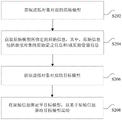
In a possible implementation manner, an embodiment of the present invention provides an information processing method, and fig. 2 is a flowchart of the information processing method according to an embodiment of the present invention, and as shown in fig. 2, the method may include the following steps:
step S202, an original model corresponding to the virtual object is obtained.
In the technical solution provided by step S202 of the present invention, an original model corresponding to a virtual object is obtained, where the virtual object may be a virtual character in a Three Dimensional (3D) animation, and the original model may be an initial model corresponding to the virtual object.
Optionally, the original model may be obtained from an existing database, or may be built by itself through modeling software, which is not specifically limited herein.
Step S204, acquiring original information bound by the original model, wherein the original information comprises original skin information and/or original skeleton information of the virtual object.
In the technical solution provided by step S204 of the present invention, a function is created, and original information bound to an original model is obtained through the function, where the original information may include original skin information and original skeleton information of a virtual object, the original skin information may include skin weight information of an original skin object, the original skeleton information includes a skeleton index, a skeleton array, a skeleton name, and weight array information, skin refers to a process of combining a skeleton and a model, and weight refers to a degree of influence of a skin-covered skeleton on an object fixed point.
Optionally, the original information may further include a data structure of the original model object with the skeleton binding and the skinning information object weight table of the virtual object, the number of vertices of the original skinning object, the number of how many bones the impact-specifying vertices are affected by, and a skeleton index collecting weights at the model points, which is not specifically limited herein.
Step S206, a target model corresponding to the virtual object is obtained.
In the technical solution provided in step S206 of the present invention, a target model corresponding to the virtual object is obtained, where the target model is obtained by adjustment based on the original model, the pose of the target model is the same as the pose of the original model, a first vertex attribute of the target model is the same as a second vertex attribute of the original model, the first vertex attribute includes positions and/or numbers of a plurality of vertices of the target model, and the second vertex attribute includes positions and/or numbers of a plurality of vertices of the original model.
Optionally, the relative position information between the vertices of the target model is the same as the relative position information between the vertices of the original model, and the number of the vertices of the target model is the same as the number of the vertices of the target model, for example, if the original model has 10 vertices in total, and vertex a is at the upper left corner of vertex B, then the target model also has 10 vertices in total, and vertex a 'is at the upper left corner of vertex B'.
Optionally, the target model may be a model readjusted based on the original model, a model requiring skin creation, an adjusted model structure model, an adjusted point-surface model, a transfer model, or a new model, which is not specifically limited herein.
And step S208, binding the original information to the target model so as to drive the target model to move based on the original information.
In the technical solution provided by step S208 of the present invention, when the position information of the target model is the same as the position information of the original model, the original information is bound to the target model, and the target model is driven to move based on the original information, where the position information of the target model may be coordinate information of the target model, and the position information of the original model may be coordinate information of the original model.
It should be noted that the "binding" in this embodiment is a work of changing a three-dimensional model into a three-dimensional model that can be animated by an animator, and is also an important link in a three-dimensional animation production process, after the model is produced, the binding engineer needs to add bones and controllers to the model, and after the weights of the bones are reasonably distributed, the models can be handed to the animator, and the animator controls the controllers to produce the three-dimensional animation.
Optionally, when the position information of the target model is different from the position information of the original model, the position information of the target model needs to be adjusted until the adjusted position information is the same as the position information of the original model, the original information is bound to the target model, and the target model is driven to move based on the original information.
Optionally, the binding of the original information to the target model may be to copy the original information to the target model, and when the target model has bound the skeleton information, only the skinning information needs to be bound, that is, the original skinning information in the original information is bound to the target model; when the target model is not bound with the bone information and not bound with the skinning information, the bone information and the skinning information need to be bound at the same time, that is, the original bone information and the original skinning information in the original information are bound to the target model.
Optionally, the original information may be bound to the target model in an automatic binding manner and a manual binding manner, which are not specifically limited herein.
Through the steps S202 to S208 described above, an original model corresponding to the virtual object is obtained; acquiring original information bound by an original model, wherein the original information comprises original skin information and/or original skeleton information of a virtual object; acquiring a target model corresponding to the virtual object, wherein the target model is obtained by adjustment based on an original model, the posture of the target model is the same as that of the original model, a first vertex attribute of the target model is the same as a second vertex attribute of the original model, the first vertex attribute comprises the positions and/or the number of a plurality of vertexes of the target model, and the second vertex attribute comprises the positions and/or the number of the plurality of vertexes of the original model; and binding the original information to the target model to drive the target model to move based on the original information. That is to say, the embodiment of the present invention obtains the original information of the original model corresponding to the virtual object, and then transmits the original information to the target model, so as to achieve the purpose of driving the target model, thereby avoiding manually adjusting the skin of each point, achieving the technical effect of improving the efficiency of processing the information of the virtual object, and further solving the technical problem of low efficiency of processing the information of the virtual object.
The above method of this embodiment is further described below.
As an optional implementation, the method further comprises: determining a corresponding relation between the original model and the target model based on the vertex attribute information of the target model and the vertex attribute information of the original model; step S208, binding the original information to the target model, including: and binding the original information to the target model based on the corresponding relation.
In this embodiment, according to the vertex attribute information of the target model and the vertex attribute information of the original model, a corresponding relationship between the original model and the target model may be determined, and the original information is bound to the target model based on the corresponding relationship, where the vertex attribute information of the target model may include positions and numbers of a plurality of vertices of the target model, the vertex attribute information of the original model may include positions and numbers of a plurality of vertices of the original model, and the corresponding relationship may include correspondence and non-correspondence.
Optionally, when the relative position information between the multiple vertices of the target model is the same as the relative position information between the multiple vertices of the original model, and the number of the multiple vertices of the target model is the same as the number of the multiple vertices of the target model, indicating that the corresponding relationship between the original model and the target model is corresponding, the original information may be bound to the target model according to the corresponding relationship.
Optionally, when the relative position information between the multiple vertices of the target model is different from the relative position information between the multiple vertices of the original model, or the number of the multiple vertices of the target model is different from the number of the multiple vertices of the target model, it indicates that the corresponding relationship between the original model and the target model is not corresponding, and the original information cannot be bound to the target model according to the corresponding relationship.
As an alternative embodiment, step S208, binding the original information to the target model includes: in response to the location information of the target model being the same as the location information of the original model, binding the original information to the target model.
In this embodiment, after determining that the original model and the target model have a corresponding relationship, it is necessary to further determine the position information of the target model and the position information of the original model, and if the position information of the target model is the same as the position information of the original model, the original information may be bound to the target model to improve matching accuracy, where the position information of the target model may be coordinate information of the target model and the position information of the original model may be coordinate information of the original model.
As an alternative implementation, step S208, in response to that the position information of the target model is the same as the position information of the original model, binding the original information to the target model includes: and adjusting the position information of the target model into the position information of the original model so as to bind the original information to the target model.
In this embodiment, if the position information of the target model is different from the position information of the original model, the position information of the target model may be adjusted to the position information of the original model, and then the original information may be bound to the target model.
Alternatively, the coordinates of the target model and the coordinates of the original model may be both at the origin of the coordinates to ensure that the position information of the two target models and the position information of the original model are consistent, for example, the two models are in a state of (0,0,0), that is, a world center point, where the left side of the center point is a left part of the body and the right side of the center point is a right part of the body, which is not limited herein.
As an alternative embodiment, step S208, binding the original information to the target model includes: and in response to the target model not being bound with any bone information and not being bound with any skinning information, binding the original skinning information and the original bone information to the target model.
In this embodiment, when the target model is not bound with neither the bone information nor the skinning information, it is necessary to bind the original bone information and the original skinning information in the original information to the target model at the same time.
As an optional implementation, the original model and the target model satisfy at least one of the following relationships: the number of the original bones bound by the original model is the same as the number of the target bones bound by the target model; the form of the original model is the same as that of the target model; the number of vertex surfaces of the original model is the same as the number of vertex surfaces of the target model.
In this embodiment, the original model and the target model satisfy any condition that the number of original bones bound by the original model is the same as the number of target bones bound by the target model, the form of the original model is the same as the form of the target model, and the number of vertex surfaces of the original model is the same as the number of vertex surfaces of the target model, and then the original information can be bound to the original model of the target model, where the form may be the motion and posture of the virtual character model, and is not specifically limited here.
As an alternative embodiment, step S208, binding the original information to the target model includes: and binding the original skin information to the target model in response to the fact that the target skeleton information is bound to the target model and any skin information is not bound to the target model.
In this embodiment, if the target model has already bound bone information, only the skinning information needs to be bound, i.e., the original skinning information in the original information is bound to the target model.
For example, when the virtual character has multiple body types and each body type has a general skeleton scheme, only the original skin information needs to be transferred, that is, the original skin information in the original information of the virtual character is bound to the target model.
As an alternative implementation, step S208, establishing a matching relationship between the original bone information and the target bone information; binding the original skin information to a target model, comprising: and binding the original skin information to the target model according to the matching relation.
In this embodiment, a matching relationship between the original bone information and the target bone information is established, and then the original skin information is bound to the target model according to the matching relationship, where the matching relationship may be a mapping relationship between the original bone information and the target bone information.
Optionally, the matching relationship between the original bone information and the target bone information may be established by automatic matching or manual matching, and the matching relationship between the original bone information and the target bone information may also be established by a method of automatic matching and then manual determination, where the automatic matching may include fuzzy matching of keywords, such as a foot and a foot, which is not specifically limited herein.
As an alternative embodiment, step S208, establishing a matching relationship between the original bone information and the target bone information includes: and matching the original bone information and the target bone information according to the bone attributes to establish a matching relation.
In this embodiment, when the matching relationship between the original bone information and the target bone information is established, the original bone information and the target bone information may be matched according to bone attributes, and after the matching is successful, the matching relationship is established, where the bone attributes may include bone names, which is not specifically limited herein.
As an optional implementation, in response to removing the matching relationship, the original skinning information is unbound to the target model.
In this embodiment, if the matching relationship between the original bone information and the target bone information is removed, binding of the original skinning information to the target model is cancelled.
Alternatively, if the matching relationship between the original bone information and the target bone information is not successfully established, the matching relationship may be indicated to be removed, and the original skinning information is unbound to the target model.
As an optional implementation, the original model and the target model satisfy at least one of the following relationships: the number of the original bones bound by the original model is different from the number of the target bones bound by the target model; the form of the original model is different from that of the target model; the number of vertex planes of the original model and the number of vertex planes of the target model are different.
In this embodiment, if the original model and the target model satisfy any one of the conditions that the number of original bones bound by the original model is different from the number of target bones to be bound by the target model, the morphology of the original model is different from that of the target model, and the number of vertex planes of the original model is different from that of the target model, the original information may be bound to the original model of the target model.
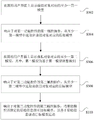
In a possible implementation manner, an embodiment of the present invention further provides another information processing method, where a graphical user interface is provided by a terminal device, where the terminal device may be a local terminal device, or a client device in a cloud interaction system. Fig. 3 is a flowchart of another information processing method according to an embodiment of the present invention, in which a terminal device provides a graphical user interface, and content displayed on the graphical user interface includes a touch area, as shown in fig. 3, the method may include the following steps:
step S302, at least one first model corresponding to the virtual object is displayed on the graphical user interface.
In the technical solution provided in step S302 of the present invention, one first model corresponding to the virtual object may be displayed on the graphical user interface, or multiple first models corresponding to the virtual object may also be displayed, where the graphical user interface may be a graphical interface of a client, the virtual object may be any character in a 3D animation, and the first model may be any model corresponding to the virtual object, which is not specifically limited herein.
Step S304, in response to the first touch operation on the first function control, selecting an original model corresponding to the virtual object from the at least one first model.
In the technical solution provided in step S304 of the present invention, when a first touch operation is performed on a first function control, an original model corresponding to a virtual object is selected from at least one first model, where the first function control may be a skin object selection button (e.g., select skin object), the first touch operation may be a click operation, and the original model may be a model to be adjusted.
Optionally, the first function control may be subjected to a first touch operation by a mouse, or may be subjected to a first touch operation by a touch screen, or may be subjected to a first touch operation by voice, which is not specifically limited herein.
Step S306, displaying at least one second model corresponding to the virtual object on the graphical user interface, wherein the second model is obtained by adjusting based on the first model.
In the technical solution provided in step S306 of the present invention, one second model corresponding to the virtual object may be displayed on the graphical user interface, or multiple second models corresponding to the virtual object may also be displayed, where the second model is a model obtained by adjusting based on the first model, for example, the first model is enlarged or reduced to obtain the second model, and this is not limited specifically here.
Step S308, in response to a second touch operation on the second function control, selecting a target model corresponding to the virtual object from the at least one second model.
In the technical solution provided by the foregoing step S308 of the present invention, when performing a second touch operation on a second function control, a target model corresponding to a virtual object is selected from at least one second model, and an original model corresponding to the virtual object is selected from at least one first model, where the second function control may be a key for selecting an object without covering (e.g., select nonskin obj a), the second touch operation may be a click operation, and the target model is obtained by adjusting based on the original model.
Alternatively, the pose of the target model is the same as the pose of the original model, and the positions and number of the plurality of vertices of the target model are the same as those of the plurality of vertices of the original model.
Optionally, a second touch operation may be performed on the second function control through a mouse, or may be performed on the second function control through a touch screen, or may be performed on the second function control through voice, which is not specifically limited herein.
Step S310, in response to a third touch operation on a third function control, binding original information bound by the original model to the target model to drive the target model to move based on the original information, where the original information includes original skinning information and/or original skeleton information of the virtual object.
In the technical solution provided by step S310 of the present invention, when a third touch operation is performed on a third function control, original information bound to an original model is bound to a target model, so as to drive the target model to move based on the original information, where the third function control may be an application key (e.g., Apply), the third touch operation may be a click operation, the original information may include original skin information and original bone information of a virtual object, the original skin information may include skin weight information of the original skin object, the original bone information includes a bone index, a bone array, a bone name and weight array information, and the skin refers to information used for combining a bone and a model.
Optionally, a third touch operation may be performed on the third function control through a mouse, or may be performed on the third function control through a touch screen, or may be performed on the third function control through voice, which is not specifically limited herein.
Through the steps S302 to S310, at least one first model corresponding to the virtual object is displayed on the graphical user interface; in response to a first touch operation on the first function control, selecting an original model corresponding to the virtual object from at least one first model; displaying at least one second model corresponding to the virtual object on the graphical user interface; and in response to a third touch operation on a third function control, binding original information bound by the original model to the target model to drive the target model to move based on the original information, so that the aim of avoiding manual adjustment of the skin of each point is fulfilled, the technical effect of improving the information processing efficiency of the virtual object is realized, and the technical problem of low information processing efficiency of the virtual object is solved.
The technical solutions of the embodiments of the present invention are further described below with reference to preferred embodiments.
Bones are hard tissues within or on the body of vertebrates, whose function is to move, support and protect the body. In a computer, the virtual character is simulated by creating a skeleton so as to achieve the purpose of manufacturing the dynamic three-dimensional digital creature, wherein the creation of the skeleton and the skin is an indispensable step, and the creation of the skeleton and the skin is better, so that the artists can conveniently create vivid dynamic three-dimensional digital characters.
The skin possesses a point-to-face relationship corresponding to the perimeter of each bone. When the skeleton moves, the corresponding points and surfaces of the skeleton are driven according to the skin information, and the biodynamic simulation is completed. The method is suitable for digital scenes such as video animation of a PC (personal computer) end and a mobile end, 3D (three-dimensional) games and the like.
At present, a virtual character is skinned mainly through software (for example, 3DsMax) with a skinning function, the skinning has the function of corresponding to the relation between points and surfaces at the periphery of each skeleton, and when the skeleton moves, the points and surfaces corresponding to the skeleton can be driven according to skinning information to complete biological dynamic simulation. However, when the software is used for skin production with the skin function, the skin of each point needs to be manually adjusted, and in the process of playing animation, the point of skin error is checked, and rework adjustment is performed.
In the related art, a method of creating a virtual character model is proposed, which may include: creating a skeleton, wherein fig. 4(a) is a schematic diagram of an operation interface for creating a skeleton in a related art according to an embodiment of the present invention, and as shown in fig. 4, by selecting a biped under an "object type" of an operation box on the right side, a corresponding skeleton can be created on the left side; binding bones to a model, selecting model points and surfaces near the bones for skinning, wherein fig. 4(b) is a schematic diagram of an operation interface for binding the bones to the model in the related art according to the embodiment of the invention, and as shown in fig. 4(b), selecting "0001 _ head" under the condition of "selecting bones" and binding head bones to the model; selecting model points and surfaces near bones for skinning, wherein fig. 4(c) is a schematic diagram of an operation interface for skinning in the related art according to the embodiment of the present invention, as shown in fig. 4(c), points and surfaces in a box represent model points and surfaces near bones of legs of a model, and the model points and surfaces near the bones can be selected for skinning, so that the transition is natural when the bones drive the model surfaces, and points which are not naturally pulled appear, fig. 4(d) is a schematic diagram of skinning effects in the related art according to the embodiment of the present invention, as shown in fig. 4(d), when the bones of the legs are pulled, the model of the legs moves along with the movement, but the waists do not move along with the movement, and an animated artist can produce excellent and exquisite action contents by the method.
However, the above method is only suitable for creating a completely new virtual character model, that is, the method includes a whole process of binding bones and skin creation, and when skin is made, skin of each point needs to be manually adjusted, a point where skin is wrong is checked, and then rework adjustment is performed, but the model cannot be adjusted on the existing basis, for example, an enlarged or reduced version, a model surface and a version with adjusted version, no change in the number of model point surfaces, and only a version with changed form of an existing character are included, so that the efficiency of re-skinning a version with fine-tuned diagonal color model is low, the technical problem of low information processing efficiency of a virtual object occurs, and there is no good method for optimizing these operations, and accurate and fast transmission of bone skin cannot be achieved.
However, the embodiment of the invention provides a method for quickly creating a skin for a virtual character, which has the advantages of simple and clear operation thought, convenience in operation, optimization of the adjustment time and the adjustment difficulty of the animation production process, and realization of the information transmission of the skin and the bones between two models with the same and different skeleton numbers, the same and different shapes, the same and different vertex surfaces, thereby solving the technical problem of low information processing efficiency on a virtual object.
The method for quickly creating the skin by the virtual role provided by the embodiment of the invention is further described. The method may comprise the steps of:
firstly, creating a function which can be used for collecting original bone index, bone array, bone name and weight array information with skinned bone information;
second, an execution transfer function is created that can be used to copy the collected information onto a new model.
When an original model is selected, a modifier [ # skin ]) is used for collecting a data structure which is originally provided with a bone binding and skinning information model object weight table and is required to be collected in a first function; collecting the number of vertexes, the number of bones and the name of the bones of the original skin object; skin weight information of a skin object is collected; collecting a number that affects how much bone a given vertex is affected by; bone indices of weights on model points are collected.
Selecting a transfer model, adding the collected bone covering information to an add Modifier (add Modifier), then correspondingly copying according to the information, and displaying a dialog box (message box) to be executed successfully after the execution is successful.
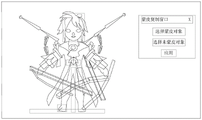
And thirdly, performing packaging calling based on the functions, configuring a visual User Interface (UI), setting the width and height dimensions (such as width 218 and height 31) of the Interface and the names of keys, wherein the model selected by the keys is an array, displaying the model name on the keys after the model is selected, and finally executing the transfer function when the application key is clicked.
Fig. 5 is a schematic diagram of a visualization interface according to an embodiment of the present invention, and as shown in fig. 5, a window of the visualization interface includes three keys, namely "select skinned object", "select non-skinned object", and "apply", and when the apply key is clicked, the transfer function is executed.
The following describes an application of the method for quickly creating the skin by the virtual character.
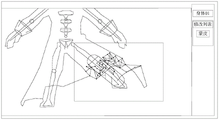
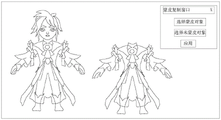
Preparing two or more virtual character models, wherein fig. 6 is a schematic diagram of an original model with skin and bone according to an embodiment of the present invention, as shown in fig. 6, the original model needs skin and bone, fig. 7 is a schematic diagram of an operation interface for adjusting a model structure model according to an embodiment of the present invention, as shown in fig. 7, the model with the same number of faces needing skin information transmission is the adjusted model structure model.
The positions of the original model and the adjusted model structure model are both located at the origin (x: 0.0, y: 0.0, z: 0.0), and fig. 8 is a schematic diagram of an operation interface for adjusting the model position according to an embodiment of the present invention, and as shown in fig. 8, the position of the adjusted model is located at the origin. The coordinate point of the model is in the center of the character model and vertically and downwards intersects with a line parallel to the feet. When performing the information transfer, the model point is in the state of (0,0,0), i.e. the center point of the world coordinates, to ensure that the two model positions are consistent (the left side of the center point is the left part of the body, and the right side of the center point is the right part of the body). The model is at the original position, and is not dragged to other positions, and the original position is the world center point of the software.
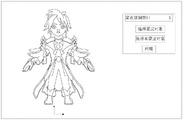
Selecting a Skin object (Select Skin object) button, which becomes blue after selection, according to an embodiment of the present invention, fig. 9 is a schematic diagram of an operation interface of a click button, as shown in fig. 9, a dashed box in the diagram indicates a state of the button after selecting the Skin object (Select Skin object) button, when an original model with Skin (Skin) information is selected, a name appears in a first button after selection, fig. 10 is a schematic diagram of a name appearing in the first button according to an embodiment of the present invention, as shown in fig. 10, after clicking the Skin button is selected, an original model with Skin information is selected, and "body 01" appears in the first button.
Selecting a Select No Skin object (Select No Skin object) button, which also becomes blue after selection, fig. 11 is a schematic diagram of an operation interface of another click button according to an embodiment of the present invention, as shown in fig. 11, in which a dashed box indicates a state of the button after selecting the Select No Skin object (Select No Skin object), when an adjustment point model of the non-Skin (No Skin) information is selected, and after selection, a name appears in the second button, fig. 12 is a schematic diagram of a name appearing in the second button according to an embodiment of the present invention, as shown in fig. 12, when the Select non-Skin object button is clicked, an original model with non-Skin object information, and "body 02" appears in the second button.
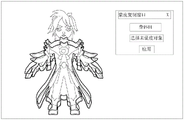
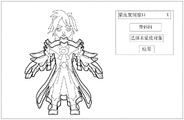
And clicking an application (appliance) to perform technical application, and popping up and executing successfully to finish the skin copying. Fig. 13 is a schematic diagram of an operation interface of a click technology application according to an embodiment of the present invention, and fig. 14 is a schematic diagram of successful execution of a technology application according to an embodiment of the present invention, and as shown in fig. 13 and fig. 14, an "application" button is clicked to pop up an "execution success" window, which indicates that the skinning copy is completed.
Alternatively, fig. 15 is a schematic diagram of the effect of applying the skinning technique to the case that one character has multiple body types, as shown in fig. 15, and each body type has a common skeleton for the case that one virtual character has multiple body types. The skin information is required to be rapidly manufactured for each body type instead of manual manufacturing. The number and the names of the universal bones of different body types are different. The method for solving the problem of the transmission of the skeleton and skin information between two sets of models with the same or different skeleton numbers, consistent and inconsistent shapes, the same number of vertex surfaces and the different number of vertex surfaces can comprise the following steps: loading a scene containing two skin grids, wherein one is skin data to be extracted, and the other is skin data to be pasted; a source mesh is selected that has the correct skeleton and weight, can be replicated by bone name, and can be de-replicated by vertex and face.
Fig. 16 is a schematic diagram of a matching approach according to an embodiment of the present invention, as shown in fig. 16, the left arrow matches the highlighted target bone with the highlighted source bone. Moving the source bone name to the left side of the dialog box following the target bone name can also highlight the target bone and the source bone, clicking the left arrow to match a plurality of source bones with one target bone, clicking 'confirm' to match the source bones listed on the left side of the dialog box. The right arrow is over the highlighted match on the left side of the dialog, the match is removed, and the source bone is moved to the right side of the dialog.
Alternatively, name-based matching, which exactly matches the source bone and the target bone by name, may include a manual matching mode and an automatic matching mode.
The embodiment of the invention realizes the transmission of the skeleton and skin information between two sets of models with the same or different skeleton numbers, consistent and inconsistent shapes, the same number of vertex surfaces and the different number of vertex surfaces by the following technology: collecting an original data structure with a skeleton binding and skinning information model object weight table; the number of collected vertices, the number of bones, and the names of the bones; skin weight information of a skin object is collected; collecting a number of how many bones affect a given vertex is; collecting the skeletal indexes of the weights on the model points; storing the collected data, packaging, calculating the corresponding relation between the model of the skin to be created and the original model, and transferring and copying; the simple UI setting interface is only provided with three keys, namely an original skeleton skin object key is picked up, a skeleton skin model key needing to be transmitted is picked up, and a transmission key is applied, so that the simple UI setting interface is a tool which is most easily understood, simple and easy to use by an action artist.
The technical scheme of the embodiment of the invention mainly solves the problems that: solving two or more models of the same number of faces, bone mapping; solving two or more models with the same number of faces, and performing skin mapping; solving two or more models of different surface numbers, bone mapping; solving two or more models, skinning maps, that have no different number of faces.
The beneficial effects brought by the embodiment of the invention can comprise: the time for binding the skin by a single action is greatly shortened, the labor cost is saved, the modification time of a manufacturer is greatly shortened, the communication cost is reduced, and the process optimization and the cost reduction are realized.
In the embodiment of the invention, a function is created, and the function is used for collecting the original bone index with skin bone information, a bone array, a bone name and weight array information; creating an execution transfer function, wherein the execution transfer function is used for collecting information which needs to be collected in the first function through modifiers [ # skin ] when an original model is selected, selecting a transfer model, copying the previously collected skeleton skin information, and displaying successful execution after successful execution; the method has the advantages that the functions are packaged and called, the visual UI interface is provided for the tool, the width and the height of the interface and the key naming are set, so that the aim of transmitting the skeleton and skin information between two models with the same and different skeleton numbers, the same and different shapes, the same and different vertex numbers is fulfilled, the efficiency of skeleton skin of the virtual role is improved, and the technical problem of low information processing efficiency of the virtual object is solved.
Through the above description of the embodiments, those skilled in the art can clearly understand that the method according to the above embodiments can be implemented by software plus a necessary general hardware platform, and certainly can also be implemented by hardware, but the former is a better implementation mode in many cases. Based on such understanding, the technical solutions of the present invention may be embodied in the form of a software product, which is stored in a storage medium (e.g., ROM/RAM, magnetic disk, optical disk) and includes instructions for enabling a terminal device (e.g., a mobile phone, a computer, a server, or a network device) to execute the method according to the embodiments of the present invention.
In this embodiment, an information processing apparatus for implementing the embodiment shown in fig. 2 is further provided, and the apparatus is used to implement the above-mentioned embodiment and the preferred embodiment, which have already been described and are not described again. The terms "unit", "module" as used below may implement a combination of software and/or hardware of predetermined functions. Although the means described in the embodiments below are preferably implemented in software, an implementation in hardware, or a combination of software and hardware is also possible and contemplated.
Fig. 17 is a schematic diagram of an information processing apparatus according to an embodiment of the present invention, and as shown in fig. 17, the information processing apparatus 17 includes: a first fetch unit 1701, a second fetch unit 1702, a third fetch unit 1703, and a first bind unit 1704.
A first obtaining unit 1701 is used to obtain an original model corresponding to the virtual object.
A second obtaining unit 1702, configured to obtain original information bound by an original model, where the original information includes original skin information and/or original bone information of the virtual object.
A third obtaining unit 1703, configured to obtain a target model corresponding to the virtual object, where the target model is obtained by adjustment based on the original model, a pose of the target model is the same as that of the original model, a first vertex attribute of the target model is the same as a second vertex attribute of the original model, the first vertex attribute includes positions and/or numbers of multiple vertices of the target model, and the second vertex attribute includes positions and/or numbers of multiple vertices of the original model.
A first binding unit 1704 for binding the original information to the target model to drive the target model to move based on the original information.
Optionally, the apparatus may further include: and the determining unit is used for determining the corresponding relation between the original model and the target model based on the vertex attribute information of the target model and the vertex attribute information of the original model.
The first binding unit 1704 may include: and the first binding subunit is used for binding the original information to the target model based on the corresponding relation.
Optionally, the first binding subunit may include: and the first binding module is used for binding the original information to the target model in response to the fact that the position information of the target model is the same as the position information of the original model.
Optionally, the first binding module may include: and the first binding submodule is used for adjusting the position information of the target model into the position information of the original model so as to bind the original information to the target model.
Alternatively, the first binding unit 1704 may include: and the second binding subunit is used for binding the original skinning information and the original skeleton information to the target model in response to the fact that the target model is not bound with any skeleton information and is not bound with any skinning information.
Optionally, the original model and the target model satisfy at least one of the following relationships: the number of the original bones bound by the original model is the same as the number of the target bones bound by the target model; the form of the original model is the same as that of the target model; the number of vertex surfaces of the original model is the same as the number of vertex surfaces of the target model.
Alternatively, the first binding unit 1704 may include: and the third binding subunit is used for binding the original skin information to the target model in response to the target model being bound with the target skeleton information and not being bound with any skin information.
Optionally, the third binding subunit may include: the establishing module is used for establishing a matching relation between the original skeleton information and the target skeleton information; and the second binding module is used for binding the original skin information to the target model according to the matching relationship.
Optionally, the establishing module may include: and the second matching submodule is used for matching the original bone information and the target bone information according to the bone attributes so as to establish a matching relation.
Optionally, the third binding subunit may include: and the de-matching module is used for de-binding the original skinning information to the target model in response to the removal of the matching relation.
Optionally, the original model and the target model satisfy at least one of the following relationships: the number of the original bones bound by the original model is different from the number of the target bones bound by the target model; the form of the original model is different from that of the target model; the number of vertex surfaces of the original model and the number of vertex surfaces of the target model are different.
In the information processing apparatus of this embodiment, an original model corresponding to a virtual object is acquired by a first acquisition unit, original information to which the original model is bound is acquired by a second acquisition unit, the original information includes original skin information and/or original skeleton information of the virtual object, a target model corresponding to the virtual object is acquired by a third acquisition unit, the target model is adjusted based on the original model, and a pose of the target model is the same as that of the original model, a first vertex attribute of the target model is the same as a second vertex attribute of the original model, the first vertex attribute includes positions and/or numbers of a plurality of vertices of the target model, the second vertex attribute includes positions and/or numbers of a plurality of vertices of the original model, the original information is bound to the target model by a first matching unit to drive the target model to move based on the original information, the purpose of avoiding manual adjustment of the skin of each point is achieved, so that the technical effect of improving the efficiency of processing the information of the virtual object is achieved, and the technical problem of low information processing efficiency of the virtual object is solved.
In this embodiment, there is also provided an information processing apparatus for executing the embodiment shown in fig. 3, fig. 18 is a schematic diagram of an information processing apparatus according to an embodiment of the present invention, a graphical user interface is provided through a terminal device, content displayed by the graphical user interface includes a touch area, and the information processing apparatus 18 includes: a first display unit 1801, a first selection unit 1802, a second display unit 1803, a second selection unit 1804, and a second matching unit 1805.
The first display unit 1801 is configured to display, on the graphical user interface, at least one first model corresponding to the virtual object.
A first selecting unit 1802, configured to select, in response to a first touch operation on the first function control, an original model corresponding to the virtual object from at least one first model.
A second display unit 1803, configured to display at least one second model corresponding to the virtual object on the graphical user interface, where the second model is obtained by adjustment based on the first model, a pose of the target model is the same as a pose of the original model, a first vertex attribute of the target model is the same as a second vertex attribute of the original model, the first vertex attribute includes positions and/or numbers of multiple vertices of the target model, and the second vertex attribute includes positions and/or numbers of multiple vertices of the original model.
A second selecting unit 1804, configured to select, in response to a second touch operation on the second function control, a target model corresponding to the virtual object from at least one second model, where the target model is obtained by adjustment based on the original model, a posture of the target model is the same as a posture of the original model, a first vertex attribute of the target model is the same as a second vertex attribute of the original model, the first vertex attribute includes positions and/or numbers of multiple vertices of the target model, and the second vertex attribute includes positions and/or numbers of the multiple vertices of the original model.
A second binding unit 1805, configured to bind, in response to a third touch operation on a third function control, original information bound by the original model to the target model, so as to drive the target model to move based on the original information, where the original information includes original skinning information and/or original skeleton information of the virtual object.
In the information processing apparatus of the embodiment, a first display unit is configured to display at least one first model corresponding to a virtual object on a graphical user interface; the first selecting unit is used for responding to a first touch operation on the first function control and selecting an original model corresponding to the virtual object from at least one first model; the second display unit is used for displaying at least one second model corresponding to the virtual object on the graphical user interface; the second selecting unit is used for selecting a target model corresponding to the virtual object from at least one second model in response to a second touch operation on the second function control, wherein the target model is obtained by adjustment based on the original model, the posture of the target model is the same as that of the original model, the first vertex attribute of the target model is the same as that of a second vertex of the original model, the first vertex attribute comprises the positions and/or the number of a plurality of vertexes of the target model, and the second vertex attribute comprises the positions and/or the number of the plurality of vertexes of the original model; the second binding unit is used for binding original information bound by the original model to the target model in response to a third touch operation on the third function control, so that the target model is driven to move based on the original information, the purpose of avoiding manual adjustment of the skin of each point is achieved, the technical effect of improving the information processing efficiency of the virtual object is achieved, and the technical problem of low information processing efficiency of the virtual object is solved.
It should be noted that, the above units and modules may be implemented by software or hardware, and for the latter, the following may be implemented, but not limited to: the units and the modules are all positioned in the same processor; alternatively, the units and modules may be located in different processors in any combination.
Embodiments of the present invention also provide a readable storage medium having a computer program stored thereon, wherein the computer program is arranged to perform the steps of any of the above method embodiments when executed.
Optionally, in this embodiment, the readable storage medium may include, but is not limited to: various media capable of storing computer programs, such as a usb disk, a Read-Only Memory (ROM), a Random Access Memory (RAM), a removable hard disk, a magnetic disk, or an optical disk.
Optionally, in this embodiment, the readable storage medium may be located in any one of a group of computer terminals in a computer network, or in any one of a group of mobile terminals.
Alternatively, in the present embodiment, the above-mentioned readable storage medium may be configured to store a computer program for executing the steps of:
s1, obtaining an original model corresponding to the virtual object;
s2, acquiring original information bound by the original model, wherein the original information comprises original skin information and/or original skeleton information of the virtual object;
s3, obtaining a target model corresponding to the virtual object, wherein the target model is obtained by adjustment based on the original model, the posture of the target model is the same as that of the original model, a first vertex attribute of the target model is the same as a second vertex attribute of the original model, the first vertex attribute comprises the positions and/or the number of a plurality of vertexes of the target model, and the second vertex attribute comprises the positions and/or the number of the plurality of vertexes of the original model;
and S4, binding the original information to the target model to drive the target model to move based on the original information.
Alternatively, the above-mentioned readable storage medium may be configured to store a computer program for executing the steps of: determining a corresponding relation between the original model and the target model based on the vertex attribute information of the target model and the vertex attribute information of the original model; and binding the original information to the target model based on the corresponding relation.
Alternatively, the above-mentioned readable storage medium may be arranged to store a computer program for performing the steps of: in response to the location information of the target model being the same as the location information of the original model, binding the original information to the target model.
Alternatively, the above-mentioned readable storage medium may be arranged to store a computer program for performing the steps of: and adjusting the position information of the target model into the position information of the original model so as to bind the original information to the target model.
Alternatively, the above-mentioned readable storage medium may be arranged to store a computer program for performing the steps of: and in response to the target model not being bound with any skeleton information and being bound with any skin information, binding the original skin information and the original skeleton information to the target model.
Optionally, the original model and the target model satisfy at least one of the following relationships: the number of the original bones bound by the original model is the same as the number of the target bones bound by the target model; the form of the original model is the same as that of the target model; the number of vertex surfaces of the original model is the same as the number of vertex surfaces of the target model.
Alternatively, the above-mentioned readable storage medium may be arranged to store a computer program for performing the steps of: and binding the original skin information to the target model in response to the fact that the target skeleton information is bound to the target model and any skin information is not bound to the target model.
Alternatively, the above-mentioned readable storage medium may be arranged to store a computer program for performing the steps of: and binding the original skin information to the target model according to the matching relation.
Alternatively, the above-mentioned readable storage medium may be arranged to store a computer program for performing the steps of: and matching the original bone information and the target bone information according to the bone attributes to establish a matching relation.
Optionally, in response to removing the matching relationship, unbundling the original skinning information to the target model.
Optionally, the original model and the target model satisfy at least one of the following relationships: the number of the original bones bound by the original model is different from the number of the target bones bound by the target model; the form of the original model is different from that of the target model; the number of vertex surfaces of the original model and the number of vertex surfaces of the target model are different.
The above readable storage medium is further configured to store program code for performing the steps of:
s1, displaying at least one first model corresponding to the virtual object on the graphical user interface;
s2, in response to a first touch operation on the first function control, selecting an original model corresponding to the virtual object from at least one first model;
s3, displaying at least one second model corresponding to the virtual object on the graphical user interface, wherein the second model is obtained by adjustment based on the first model;
s4, in response to a second touch operation on the second function control, selecting a target model corresponding to the virtual object from at least one second model, wherein the target model is obtained by adjustment based on the original model, the posture of the target model is the same as that of the original model, a first vertex attribute of the target model is the same as a second vertex attribute of the original model, the first vertex attribute comprises the positions and/or the number of a plurality of vertices of the target model, and the second vertex attribute comprises the positions and/or the number of the plurality of vertices of the original model;
and S5, in response to a third touch operation on a third function control, binding original information bound by the original model to the target model so as to drive the target model to move based on the original information, wherein the original information comprises original skin information and/or original skeleton information of the virtual object.
In the readable storage medium of this embodiment, a technical solution for information processing is provided, where original information of an original model corresponding to a virtual object is obtained, and then the original information is transmitted to a target model, so as to achieve a purpose of driving the target model, thereby avoiding manual adjustment of a skin of each point, achieving a technical effect of improving efficiency of processing information of the virtual object, and further solving a technical problem of low efficiency of information processing of the virtual object.
Through the above description of the embodiments, those skilled in the art will readily understand that the exemplary embodiments described herein may be implemented by software, or by software in combination with necessary hardware. Therefore, the technical solution according to the embodiment of the present invention can be embodied in the form of a software product, which can be stored in a computer-readable storage medium (which can be a CD-ROM, a usb disk, a removable hard disk, etc.) or on a network, and includes several instructions to make a computing device (which can be a personal computer, a server, a terminal device, or a network device, etc.) execute the method according to the embodiment of the present invention.
In an exemplary embodiment of the present application, a computer-readable storage medium has stored thereon a program product capable of implementing the above-described method of the present embodiment. In some possible implementations, various aspects of the embodiments of the present invention may also be implemented in the form of a program product including program code for causing a terminal device to perform the steps according to various exemplary implementations of the present invention described in the above section "exemplary method" of this embodiment, when the program product is run on the terminal device.
According to the program product for realizing the method, the portable compact disc read only memory (CD-ROM) can be adopted, the program code is included, and the program product can be operated on terminal equipment, such as a personal computer. However, the program product of the embodiments of the invention is not limited thereto, and in the embodiments of the invention, the computer readable storage medium may be any tangible medium that can contain or store a program for use by or in connection with an instruction execution system, apparatus, or device.
The program product described above may employ any combination of one or more computer-readable media. The computer readable storage medium may be, for example, but not limited to, an electronic, magnetic, optical, electromagnetic, infrared, or semiconductor system, apparatus, or device, or any combination of the foregoing. More specific examples (a non-exhaustive list) of the computer readable storage medium would include the following: an electrical connection having one or more wires, a portable disk, a hard disk, a Random Access Memory (RAM), a read-only memory (ROM), an erasable programmable read-only memory (EPROM or flash memory), an optical fiber, a portable compact disc read-only memory (CD-ROM), an optical storage device, a magnetic storage device, or any suitable combination of the foregoing.
It should be noted that the program code embodied on the computer readable storage medium may be transmitted using any appropriate medium, including but not limited to wireless, wireline, optical fiber cable, RF, etc., or any suitable combination of the foregoing.
Embodiments of the present invention also provide an electronic device comprising a memory having a computer program stored therein and a processor arranged to run the computer program to perform the steps of any of the above method embodiments.
Optionally, the electronic apparatus may further include a transmission device and an input/output device, wherein the transmission device is connected to the processor, and the input/output device is connected to the processor.
Optionally, in this embodiment, the processor may be configured to execute the following steps by a computer program:
s1, acquiring an original model corresponding to the virtual object;
s2, acquiring original information bound by the original model, wherein the original information comprises original skin information and/or original skeleton information of the virtual object;
s3, obtaining a target model corresponding to the virtual object, wherein the target model is obtained by adjustment based on the original model, the posture of the target model is the same as that of the original model, a first vertex attribute of the target model is the same as a second vertex attribute of the original model, the first vertex attribute comprises the positions and/or the number of a plurality of vertexes of the target model, and the second vertex attribute comprises the positions and/or the number of the plurality of vertexes of the original model;
and S4, binding the original information to the target model to drive the target model to move based on the original information.
Alternatively, the processor may be configured to execute the following steps by a computer program: determining a corresponding relation between the original model and the target model based on the vertex attribute information of the target model and the vertex attribute information of the original model; and binding the original information to the target model based on the corresponding relation.
Alternatively, the processor may be configured to execute the following steps by a computer program: in response to the location information of the target model being the same as the location information of the original model, the original information is bound to the target model.
Alternatively, the processor may be configured to execute the following steps by a computer program: and adjusting the position information of the target model into the position information of the original model so as to bind the original information to the target model.
Alternatively, the processor may be configured to execute the following steps by a computer program: and in response to the target model not being bound with any skeleton information and not being bound with any skinning information, binding the original skinning information and the original skeleton information to the target model.
Optionally, the original model and the target model satisfy at least one of the following relationships: the number of the original bones bound by the original model is the same as the number of the target bones bound by the target model; the form of the original model is the same as that of the target model; the number of vertex surfaces of the original model is the same as the number of vertex surfaces of the target model.
Alternatively, the processor may be configured to execute the following steps by a computer program: and binding the original skin information to the target model in response to the fact that the target skeleton information is bound to the target model and any skin information is not bound to the target model.
Alternatively, the processor may be configured to execute the following steps by a computer program: and binding the original skin information to the target model according to the matching relation.
Alternatively, the processor may be configured to execute the following steps by a computer program: and matching the original bone information and the target bone information according to the bone attributes to establish a matching relation.
Optionally, in response to canceling the matching relationship, the original information is unbound to the target model.
Optionally, the original model and the target model satisfy at least one of the following relationships: the number of the original bones bound by the original model is different from the number of the target bones bound by the target model; the form of the original model is different from that of the target model; the number of vertex surfaces of the original model and the number of vertex surfaces of the target model are different.
The processor may be further configured to perform the following steps by the computer program:
s1, displaying at least one first model corresponding to the virtual object on the graphical user interface;
s2, in response to a first touch operation on the first function control, selecting an original model corresponding to the virtual object from at least one first model;
s3, displaying at least one second model corresponding to the virtual object on the graphical user interface, wherein the second model is obtained by adjustment based on the first model;
s4, in response to a second touch operation on a second function control, selecting a target model corresponding to the virtual object from at least one second model, wherein the target model is obtained by adjustment based on the original model, the posture of the target model is the same as that of the original model, a first vertex attribute of the target model is the same as a second vertex attribute of the original model, the first vertex attribute comprises the positions and/or the number of a plurality of vertexes of the target model, and the second vertex attribute comprises the positions and/or the number of the plurality of vertexes of the original model;
and S5, in response to a third touch operation on a third function control, binding original information bound by the original model to the target model so as to drive the target model to move based on the original information, wherein the original information comprises original skin information and/or original skeleton information of the virtual object.
In the electronic device of this embodiment, a technical scheme of information processing is that original information of an original model corresponding to a virtual object is obtained, and then the original information is transmitted to a target model to achieve the purpose of driving the target model, so that skin of each point is prevented from being manually adjusted, a technical effect of improving efficiency of processing information of the virtual object is achieved, and a technical problem of low efficiency of processing information of the virtual object is solved.
Fig. 19 is a schematic diagram of an electronic device according to an embodiment of the invention. As shown in fig. 19, the electronic device 1900 is only an example and should not bring any limitation to the functions and the scope of the application of the embodiments of the present invention.
As shown in fig. 19, electronic apparatus 1900 takes the form of a general purpose computing device. Components of electronic device 1900 may include, but are not limited to: the at least one processor 1910, the at least one memory 1920, the bus 1930 connecting the various system components (including the memory 1920 and the processor 1910), and the display 1940.
The memory 1920 stores therein program code, which is executable by the processor 1910 to cause the processor 1910 to perform steps according to various exemplary embodiments of the present invention described in the method section of the embodiments of the present application.
The memory 1920 may include readable media in the form of volatile memory units, such as a random access memory unit (RAM)19201 and/or a cache memory unit 19202, may further include a read-only memory unit (ROM)19203, and may also include non-volatile memory, such as one or more magnetic storage devices, flash memory, or other non-volatile solid state memory.
In some examples, memory 1920 may also include a program/utility 19204 having a set (at least one) of program modules 19205, such program modules 19205 including, but not limited to: an operating system, one or more application programs, other program modules, and program data, each of which, or some combination thereof, may comprise an implementation of a network environment. The memory 1920 may further include memory located remotely from the processor 1910 and such remote memory may be connected to the electronic device 1900 through a network. Examples of such networks include, but are not limited to, the internet, intranets, local area networks, mobile communication networks, and combinations thereof.
Bus 1930 can be one or more of several types of bus structures including a memory unit bus or memory unit controller, a peripheral bus, an accelerated graphics port, and processor 1910, or a local bus using any of a variety of bus architectures.
Display 1940 may be, for example, a touch screen-type Liquid Crystal Display (LCD) that may enable a user to interact with a user interface of electronic device 1900.
Optionally, the electronic apparatus 1900 may also communicate with one or more external devices 1900 (e.g., a keyboard, a pointing device, a bluetooth device, etc.), one or more devices that enable a user to interact with the electronic apparatus 1900, and/or any devices (e.g., a router, a modem, etc.) that enable the electronic apparatus 1900 to communicate with one or more other computing devices. Such communication can occur via input/output (I/O) interface 1950. Also, the electronic device 1900 may communicate with one or more networks (e.g., a Local Area Network (LAN), a Wide Area Network (WAN), and/or a public network, such as the internet) via a network adapter 1960. As shown in fig. 19, a network adapter 1960 communicates with the other modules of the electronic device 1900 via a bus 1930. It should be appreciated that although not shown in FIG. 19, other hardware and/or software modules may be used in conjunction with electronic device 1900, which may include but are not limited to: microcode, device drivers, redundant processing units, external disk drive arrays, RAID systems, tape drives, and data backup storage systems, among others.
The electronic device 1900 may further include: a keyboard, a cursor control device (e.g., a mouse), an input/output interface (I/O interface), a network interface, a power source, and/or a camera.
It will be understood by those skilled in the art that the structure shown in fig. 19 is merely illustrative and is not intended to limit the structure of the electronic device. For example, electronic device 1900 may also include more or fewer components than shown in FIG. 19, or have a different configuration than shown in FIG. 1. The memory 1920 can be used for storing computer programs and corresponding data, such as computer programs and corresponding data corresponding to the information processing methods in the embodiments of the present invention. The processor 1910 executes various functional applications and data processing by executing computer programs stored in the memory 1920, thereby implementing the information processing method described above.
The above-mentioned serial numbers of the embodiments of the present invention are merely for description and do not represent the merits of the embodiments.
In the above embodiments of the present invention, the descriptions of the respective embodiments have respective emphasis, and for parts that are not described in detail in a certain embodiment, reference may be made to related descriptions of other embodiments.
In the embodiments provided in the present application, it should be understood that the disclosed technical content can be implemented in other manners. The above-described embodiments of the apparatus are merely illustrative, and for example, the division of the units may be a logical division, and in actual implementation, there may be another division, for example, multiple units or components may be combined or integrated into another system, or some features may be omitted, or not executed. In addition, the shown or discussed mutual coupling or direct coupling or communication connection may be an indirect coupling or communication connection through some interfaces, units or modules, and may be in an electrical or other form.
The units described as separate parts may or may not be physically separate, and parts displayed as units may or may not be physical units, may be located in one position, or may be distributed on a plurality of units. Some or all of the units can be selected according to actual needs to achieve the purpose of the solution of the embodiment.
In addition, functional units in the embodiments of the present invention may be integrated into one processing unit, or each unit may exist alone physically, or two or more units are integrated into one unit. The integrated unit can be realized in a form of hardware, and can also be realized in a form of a software functional unit.
The integrated unit, if implemented in the form of a software functional unit and sold or used as a stand-alone product, may be stored in a computer readable storage medium. Based on such understanding, the technical solution of the present invention may be embodied in the form of a software product, which is stored in a storage medium and includes instructions for causing a computer device (which may be a personal computer, a server, or a network device) to execute all or part of the steps of the method according to the embodiments of the present invention. And the aforementioned storage medium includes: a U-disk, a Read-Only Memory (ROM), a Random Access Memory (RAM), a removable hard disk, a magnetic or optical disk, and other various media capable of storing program codes.
The foregoing is only a preferred embodiment of the present invention, and it should be noted that, for those skilled in the art, various modifications and decorations can be made without departing from the principle of the present invention, and these modifications and decorations should also be regarded as the protection scope of the present invention.