CN114902176A - Performing conditional statements by arithmetic and/or bitwise units - Google Patents
Performing conditional statements by arithmetic and/or bitwise units Download PDFInfo
- Publication number
- CN114902176A CN114902176A CN202180007729.XA CN202180007729A CN114902176A CN 114902176 A CN114902176 A CN 114902176A CN 202180007729 A CN202180007729 A CN 202180007729A CN 114902176 A CN114902176 A CN 114902176A
- Authority
- CN
- China
- Prior art keywords
- arithmetic
- variable
- bitwise
- boolean condition
- boolean
- Prior art date
- Legal status (The legal status is an assumption and is not a legal conclusion. Google has not performed a legal analysis and makes no representation as to the accuracy of the status listed.)
- Pending
Links
Images



Classifications
-
- G—PHYSICS
- G06—COMPUTING OR CALCULATING; COUNTING
- G06F—ELECTRIC DIGITAL DATA PROCESSING
- G06F7/00—Methods or arrangements for processing data by operating upon the order or content of the data handled
- G06F7/38—Methods or arrangements for performing computations using exclusively denominational number representation, e.g. using binary, ternary, decimal representation
- G06F7/48—Methods or arrangements for performing computations using exclusively denominational number representation, e.g. using binary, ternary, decimal representation using non-contact-making devices, e.g. tube, solid state device; using unspecified devices
- G06F7/57—Arithmetic logic units [ALU], i.e. arrangements or devices for performing two or more of the operations covered by groups G06F7/483 – G06F7/556 or for performing logical operations
-
- G—PHYSICS
- G06—COMPUTING OR CALCULATING; COUNTING
- G06F—ELECTRIC DIGITAL DATA PROCESSING
- G06F8/00—Arrangements for software engineering
- G06F8/30—Creation or generation of source code
- G06F8/33—Intelligent editors
-
- G—PHYSICS
- G06—COMPUTING OR CALCULATING; COUNTING
- G06F—ELECTRIC DIGITAL DATA PROCESSING
- G06F8/00—Arrangements for software engineering
- G06F8/40—Transformation of program code
- G06F8/41—Compilation
- G06F8/44—Encoding
- G06F8/443—Optimisation
-
- G—PHYSICS
- G06—COMPUTING OR CALCULATING; COUNTING
- G06F—ELECTRIC DIGITAL DATA PROCESSING
- G06F7/00—Methods or arrangements for processing data by operating upon the order or content of the data handled
- G06F7/38—Methods or arrangements for performing computations using exclusively denominational number representation, e.g. using binary, ternary, decimal representation
- G06F7/48—Methods or arrangements for performing computations using exclusively denominational number representation, e.g. using binary, ternary, decimal representation using non-contact-making devices, e.g. tube, solid state device; using unspecified devices
- G06F7/57—Arithmetic logic units [ALU], i.e. arrangements or devices for performing two or more of the operations covered by groups G06F7/483 – G06F7/556 or for performing logical operations
- G06F7/575—Basic arithmetic logic units, i.e. devices selectable to perform either addition, subtraction or one of several logical operations, using, at least partially, the same circuitry
-
- G—PHYSICS
- G06—COMPUTING OR CALCULATING; COUNTING
- G06F—ELECTRIC DIGITAL DATA PROCESSING
- G06F8/00—Arrangements for software engineering
- G06F8/30—Creation or generation of source code
- G06F8/31—Programming languages or programming paradigms
- G06F8/313—Logic programming, e.g. PROLOG programming language
-
- G—PHYSICS
- G06—COMPUTING OR CALCULATING; COUNTING
- G06F—ELECTRIC DIGITAL DATA PROCESSING
- G06F8/00—Arrangements for software engineering
- G06F8/40—Transformation of program code
- G06F8/41—Compilation
- G06F8/44—Encoding
- G06F8/443—Optimisation
- G06F8/4441—Reducing the execution time required by the program code
-
- G—PHYSICS
- G06—COMPUTING OR CALCULATING; COUNTING
- G06F—ELECTRIC DIGITAL DATA PROCESSING
- G06F9/00—Arrangements for program control, e.g. control units
- G06F9/06—Arrangements for program control, e.g. control units using stored programs, i.e. using an internal store of processing equipment to receive or retain programs
- G06F9/30—Arrangements for executing machine instructions, e.g. instruction decode
- G06F9/30003—Arrangements for executing specific machine instructions
- G06F9/30007—Arrangements for executing specific machine instructions to perform operations on data operands
- G06F9/30029—Logical and Boolean instructions, e.g. XOR, NOT
-
- G—PHYSICS
- G06—COMPUTING OR CALCULATING; COUNTING
- G06F—ELECTRIC DIGITAL DATA PROCESSING
- G06F9/00—Arrangements for program control, e.g. control units
- G06F9/06—Arrangements for program control, e.g. control units using stored programs, i.e. using an internal store of processing equipment to receive or retain programs
- G06F9/30—Arrangements for executing machine instructions, e.g. instruction decode
- G06F9/30003—Arrangements for executing specific machine instructions
- G06F9/30072—Arrangements for executing specific machine instructions to perform conditional operations, e.g. using predicates or guards
Landscapes
- Engineering & Computer Science (AREA)
- Theoretical Computer Science (AREA)
- General Engineering & Computer Science (AREA)
- Software Systems (AREA)
- General Physics & Mathematics (AREA)
- Physics & Mathematics (AREA)
- Computing Systems (AREA)
- Mathematical Optimization (AREA)
- Pure & Applied Mathematics (AREA)
- Mathematical Analysis (AREA)
- Computational Mathematics (AREA)
- Devices For Executing Special Programs (AREA)
- Peptides Or Proteins (AREA)
- Executing Machine-Instructions (AREA)
- Earth Drilling (AREA)
- Saccharide Compounds (AREA)
Abstract
Methods, systems, and apparatus, including computer programs encoded on a computer storage medium, for executing conditional statements in arithmetic and/or bitwise units. A computer program is accessed that includes a conditional statement that includes a boolean condition. The boolean condition is transformed into an arithmetic and/or bitwise expression of the boolean condition. The arithmetic and/or bitwise expression of the computer program comprises an arithmetic and/or bitwise expression of the boolean condition instead of the boolean condition. Arithmetic and/or bitwise expressions of a computer program are executed by an arithmetic and/or bitwise operation unit of a processor.
Description
Technical Field
The present description relates generally to computing systems, and more particularly to execution of conditional statements and expressions by computing circuitry.
Background
In computer science, conditional statements are features of a programming language that perform different calculations or actions depending on whether a specified boolean condition evaluates to True or False.
The execution of a conditional statement requires the evaluation of a boolean condition and therefore requires a comparison of numbers. This comparison determines whether one number is greater than, equal to, or less than the other number. Boolean conditions are typically evaluated by a digital comparator. A digital comparator is a hardware electronic device that takes two numbers as input in binary form and determines whether one number is greater than, less than, or equal to the other number.
The conditional statement uses the output of the digital comparator to switch to executing one or the other piece of computer code. Each entire "if-then do" operation of the digital comparator takes at least 2 clock cycles of the processor. Furthermore, digital comparators often cannot perform multiple levels of conditional tasks in parallel. Thus, digital comparators (or logic blocks of an ALU) often constitute a bottleneck for integrated circuit processors.
Disclosure of Invention
This specification describes how the system can execute a computer program comprising conditional statements using arithmetic blocks and/or bit cells of the processor alone.
Particular embodiments of the subject matter described in this specification can be implemented to realize one or more of the following advantages.
Conditional statements are transformed into sets of arithmetic and/or bitwise operations. As such, the computer program may be executed solely by arithmetic and/or bit cells of the processor. In particular, the computer program may be executed without using a digital comparator. As explained above, each overall operation of the digital comparator takes at least 2 clock cycles of the processor. On the other hand, the arithmetic unit of the processor is capable of performing most arithmetic calculations within 1 clock cycle. As such, the techniques described in this specification increase the execution speed of computer programs by processors. The digital comparator can be removed, which leaves more room for arithmetic and/or bitwise arithmetic units. For a constant chip size, the power of the chip can therefore be increased, thereby increasing the execution speed.
In addition, digital comparators often cannot perform parallel execution of multiple stages of conditional tasks. Thus, digital comparators often become the bottleneck of integrated circuit processors. On the other hand, arithmetic and/or bitwise expressions may be divided into multiple segments and then may be executed in parallel by multiple arithmetic and/or bitwise blocks. As such, the techniques described in this specification can further increase the execution speed of the processor by executing the computer program by multiple arithmetic blocks working in parallel.
The method may be used at various levels of any suitable programming language. In particular, the method may be used in any suitable low-level language (e.g., assembly language, or at the Instruction Set Architecture (ISA) level), as well as in any suitable high-level programming language (e.g., C + + code or Java, etc.) specific software programs.
The details of one or more embodiments of the subject matter of this specification are set forth in the accompanying drawings and the description below. Other features, aspects, and advantages of the subject matter will become apparent from the description, the drawings, and the claims.
Drawings
Fig. 1 is a diagram illustrating an example system.
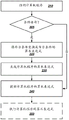
FIG. 2 is a flow diagram of an example process for executing a computer program with only arithmetic and/or bitwise unit(s) of a processor.
FIG. 3 is pseudo code illustrating the basic structure of an if-then (-else) conditional statement.
FIG. 4 is a flow diagram of an example process for transforming Boolean conditions into arithmetic and/or bitwise expressions.
Fig. 5 is a flow diagram of an example process for transforming a ═ B into an arithmetic and/or bitwise expression of a ═ B.
FIG. 6 is a flow diagram of an example process for transforming A ≧ B into an arithmetic and/or bitwise expression of A ≧ B.
Fig. 7A and 7B are flow diagrams of example processes for transforming a < B into an arithmetic and/or bitwise expression of a < B.
FIG. 8 is a flow diagram of an example process for generating an arithmetic and/or bitwise expression of a computer program when a conditional statement has an arithmetic body.
FIG. 9 is a flow diagram of an example process for generating an arithmetic and/or bitwise expression of a computer program when a conditional statement has a non-arithmetic body.
FIG. 10 is a flow diagram of an example process for providing arithmetic and/or bitwise expressions of a computer program.
Fig. 11A is an example of a C + + computer program including conditional statements with arithmetic bodies. Fig. 11B is an example of a C + + computer program resulting from a transformation of the computer program of fig. 11A. FIG. 11C is an example of an assembly language computer program that includes conditional statements with arithmetic bodies. FIG. 11D is an example of an assembly language computer program resulting from a transformation of the computer program of FIG. 11C.
FIG. 12A is an example of a C + + computer program that includes conditional statements with non-arithmetic bodies. Fig. 12B is an example of a C + + computer program resulting from a transformation of the computer program of fig. 12A. FIG. 12C is an example of an assembly language computer program that includes conditional statements with non-arithmetic bodies. FIG. 12D is an example of an assembly language computer program resulting from a transformation of the computer program of FIG. 12C.
Fig. 13A and 13B illustrate examples of combinational logic circuits of an integrated circuit of an arithmetic and/or bitwise operation unit.
FIG. 14 is a flow chart of an example process for reducing the size of matrix type data.
FIG. 15 is a flow diagram of an example process for parallel ordering matrix type data.
Detailed Description
Fig. 1 is a diagram illustrating an example system 100. System 100 is an example of a system that may implement the techniques described in this specification.
System 100 includes a processor 110, such as a Central Processing Unit (CPU), a Graphics Processing Unit (GPU), a Neural Processing Unit (NPU), a Tensor Processor Unit (TPU), or any other type of processing unit that enables conditional tasks to be performed. The processor performs the basic arithmetic, logical, control, and input/output (I/O) operations specified by instructions in the computer program 182. The processor 110 may be a microprocessor, with the CPU contained on a single Metal Oxide Semiconductor (MOS) Integrated Circuit (IC) chip 160. An IC containing a CPU may also contain a memory unit 150, such as Dynamic Random Access Memory (DRAM), as well as more than one level of cache memory, and a peripheral interface to input device(s) 180 or output device(s) 190.
Processor 110 includes a number of functional components, including one or more arithmetic and/or bitwise operation units (ABUs) 130 that perform arithmetic and bitwise logical operations, one or more registers 140 that supply operands to ABUs 130 and store results of ABU operations, and one or more Control Units (CUs) 120 that orchestrate execution of instructions by directing coordinated operation of ABUs 130, registers 140, and other components.
The ABU 130 is a digital circuit that performs arithmetic and/or bitwise logical operations. The ABU 130 may include one or more arithmetic blocks 131, one or more bitwise bit blocks 132, and one or more bitwise logic blocks 133. The arithmetic block 131 performs arithmetic operations such as addition, carry addition, subtraction, borrow subtraction. Shift operations, such as arithmetic shifts, logical shifts, cycles through carries, are performed per shift bit block 132. The bitwise logic block 133 performs bitwise logic operations such as AND, OR, XOR. In some embodiments, the ABU 130 does not include any digital comparators. In some embodiments, processor 110 does not include any digital comparators.
In operation, the processor 110 accesses and executes a computer program 182 comprising a sequence of instructions. The computer program 182 may be accessed from the memory unit 150 or from the input device 180. The processor may follow an instruction cycle that includes fetching, decoding, and executing steps. Multiple instructions may be fetched, decoded, and executed simultaneously. The performing step may consist of a single action or a series of actions. During each action, the various parts of the processor are electrically connected so that they can perform all or part of the desired operation, and then complete the action. The result may be written to one of registers 140 or to memory unit 150.
In some embodiments, CU 120 includes a transformation unit 121 that transforms computer program 182 into an arithmetic and/or bitwise expression 122 of the computer program. The transformation unit 121 identifies and transforms conditional statements found in the computer program 182 into arithmetic and/or bitwise expressions of the conditional statements. The transformation unit 121 generates an arithmetic and/or bitwise expression 122 of the computer program 182 based on arithmetic and/or bitwise operations and operands. The CU 120 then provides the arithmetic and/or bitwise expressions 122 of the computer program 182 to the ABU 130. In other embodiments, the system includes a separate data processing apparatus that identifies and transforms conditional statements found in the computer program 182 into arithmetic and/or bitwise expressions of the conditional statements.
In some embodiments, arithmetic and/or bitwise expressions of conditional statements include only arithmetic and/or bitwise operations. In some embodiments, substantially all of the conditional statements (e.g., more than 50%, more than 60%, more than 70%, more than 80%, more than 90%, or more than 95%) are transformed, but some of the conditional statements need not be transformed if the processor still includes a digital compressor that can be used to evaluate a given appropriate subset of the conditional statements.
FIG. 2 is a flow chart of an example process for executing a computer program. The process can be implemented by one or more computer programs installed on one or more computers at one or more locations and programmed according to the present specification. For example, the process may be performed by the system 100 shown in fig. 1. For convenience, the process will be described as being performed by a system of one or more computers. Some embodiments involve preprocessing a computer program for transformation, e.g., on a completely different computer system, before the transformed computer program is executed on system 100. For example, a source compiler may transform when generating object code and/or machine-level code for a target computer.
The system accesses (210) a computer program (e.g., computer program 182 of fig. 1). The system determines (205) whether the computer program includes at least one conditional statement that includes a boolean condition. If the computer program includes at least one conditional statement, the system transforms (220) the Boolean condition into an arithmetic and/or bitwise expression of the Boolean condition. If the computer program does not include any conditional statements, the system provides 240 the arithmetic and/or bitwise expression of the computer program to the ABU 130 for execution.
When executed, the conditional statements cause the processor to execute the associated task in accordance with the specified boolean condition evaluating as True or False. The task may include one or more calculations and/or one or more actions. The specified boolean condition requires that at least one variable be compared to one value or another. For example, the comparison may determine whether the value of a variable (e.g., a) is greater than (e.g., a > B), equal to (e.g., a ═ B), or less than (e.g., a < B) the value of another variable (e.g., B). The result of the comparison determines that the associated task is to be performed by the processor.
FIG. 3 is pseudo code illustrating the basic structure of an if-then (-else) conditional statement 310. When the interpreter finds If, it expects a boolean condition 301 and evaluates the boolean condition 301 as a value True or False. If the condition is True, the processor performs a follow-up task 302. Otherwise, execution continues in the next branch. If an alternate task 303 exists (e.g., in an Else block), then the processor executes the alternate task 303. If there is no Else branch, then the processor executes the statements after End If. After either branch is executed, control returns to a point after End If.
Referring again to fig. 2, the system (e.g., transformation unit 121) transforms (220) the boolean condition into an arithmetic and/or bitwise expression of the boolean condition. Arithmetic and/or bitwise expression of boolean conditions takes as variables the variables of the conditional statement. In some embodiments, the arithmetic and/or bitwise expression of the boolean condition causes the output of the arithmetic and/or bitwise expression of the boolean condition to verify the following two characteristics. If the value of the variable verifies a Boolean condition, then the arithmetic and/or bitwise expression of the Boolean condition equals 1. If the value of the variable does not verify a Boolean condition, then the arithmetic and/or bitwise expression of the Boolean condition is equal to 0. As such, the Boolean TRUE is converted to a 1 and the Boolean FALSE is converted to a 0. In execution, arithmetic and/or bitwise expressions of the Boolean condition maintain portions of the executable code to be executed while zeroing out portions that are not to be executed. The transformation of boolean conditional statements into arithmetic and/or bitwise expressions is described in more detail in fig. 4.
The transformations may be performed at various levels of any suitable programming language. In particular, the method may be used for specific software programs in any suitable low-level language (e.g., assembly language, or at the Instruction Set Architecture (ISA) level), as well as in any suitable high-level programming language (e.g., C + + code, Java, etc.). The process may be performed as a pre-processing step when the source code is compiled into executable code of the target machine, or as a just-in-time process when implemented in an interpreter rather than a compiler.
Examples of specific and general transformation formulas that may be used to transform boolean conditions into arithmetic and/or bitwise expressions are provided below.
Examples of concrete transformation formulas (at the asm and/or ISA level)
Concrete transformation formulas due to integer, character, or Boolean types
answer=z |k| % z (for x ═ y and x>Condition of No. y)
answer=1-z |k| % z (for all other conditions)
Concrete transformation formulas for float or double type (floating point type data)
answer=z ceil|(k) |% z (for x ═ y and x)>Condition of No. y)
answer=1-z ceil|(k)| % z (for all other conditions)
Examples of general transformation formulas for all data types (including arrays and strings)
General transformation of boolean condition "if

Boolean condition "if>General transformation of ═ a-

Boolean condition "if<) General transformation of

Boolean condition "if>) General transformation of

Symbol:
-z is a base number.
A, B is an array comprising N elements.
-A [ i ], B [ i ] are elements of an array. A single element like an integer, a floating point number, etc. is a one-dimensional array (row vector matrix) of only one element.
Answer is an arithmetic and/or bitwise expression of a boolean condition.
-% is the remainder of the division.
Ceil (x) is a ceiling function that maps x to the smallest integer greater than or equal to x.
-if the boolean condition is x-y, then k-x-y
-if the boolean condition is x ≧ y, then k ═ x-y) - (| x-y |)
For x ≧ y, x < y is the "else" result
The base z may be the base of the digital system. Most arithmetic operations based on a digital system (e.g., remainder of power functions and divisions) can be immediately computed by a shift operation. In particular, if the processor uses a binary system, then z may be equal to 2.
In the case of arrays and strings, the elements of the array may be normalized. Any known normalization method may be used. This increases the execution speed of the conditional statement.
Returning to FIG. 2, the system (e.g., transformation unit 121) generates (230) an arithmetic and/or bitwise expression of the computer program. The system replaces the boolean condition in the computer program with an arithmetic and/or bitwise expression of the boolean condition. In execution, arithmetic and/or bitwise expressions of the Boolean condition maintain portions of the executable code to be executed while zeroing out portions that are not to be executed. The generation of arithmetic and/or bitwise expressions of a computer program will be described in more detail in connection with fig. 8 and 9.
The system (e.g., CU 120) provides 240 the arithmetic and/or bitwise expressions of the computer program to an arithmetic and/or bitwise unit (e.g., ABU 130) for execution. The arithmetic and/or bitwise expression of a computer program may be in any suitable programming language, in particular a specific software program in any suitable low-level language (e.g. assembly language, or at the Instruction Set Architecture (ISA) level), as well as in any suitable high-level programming language (e.g. C + + code or Java, etc.). The execution of arithmetic and/or bitwise expressions of a computer program does not require any direct comparison of numbers. The system may thus provide arithmetic and/or bitwise expressions of the computer program to arithmetic and/or bitwise units, in particular arithmetic and/or bitwise units not comprising any digital comparators.
The system (e.g., ABU 130) executes (250) an arithmetic and/or bitwise expression of the computer program. The execution of arithmetic and/or bitwise expressions of conditional statements provides the same results as the execution of conditional statements, while not requiring any numerical comparisons. As such, a processor that does not include any digital comparator may execute the computer program. The execution of conditional statements having an arithmetic body is described in more detail in conjunction with FIGS. 11A and 11B. The execution of conditional statements having non-arithmetic bodies is described in more detail with respect to FIGS. 12A and 12B. As described in more detail with respect to fig. 10, the arithmetic and/or bitwise expressions of a computer program may be segmented and the segments run in parallel (e.g., simultaneously or concurrently), particularly in the case of multi-level conditional statements.
FIG. 4 is a flow diagram of an example process for transforming Boolean conditions (e.g., 220 of FIG. 2) into arithmetic and/or bitwise expressions. The boolean condition has a as the first variable and B as the second variable.
The system (e.g., transform unit 121) subtracts (410) B from a.
The system (e.g., transform unit 121) calculates (420) the absolute value of the result of the subtraction.
The system (e.g., transform unit 121) calculates (430) an exponent based on the absolute value of the result of the subtraction.
The system (e.g., transformation unit 121) calculates (440) an exponent by exponentiation of the calculated exponent to a base. The base number may be any number. In particular, the base may be the base of a digital system used by the processor. In particular, if the processor uses a binary system, the base may be equal to 2. Most arithmetic operations based on a digital system (e.g., remainder of power functions and divisions) can be immediately computed by a shift operation. In particular, the exponentiation of the base number by the calculated exponent may be performed by left-shifting a bit equal to 1 by a number of bits equal to the calculated exponent. This improves the execution speed.
The system (e.g., transformation unit 121) computes (450) an arithmetic and/or bitwise expression of the boolean condition as a remainder of the division of the exponent by the base number.
If the Boolean condition is verified, the exponent is calculated so that the exponent equals 0. Any number raised to a power of 0 results in a 1. As such, if the boolean condition is verified, the exponent is equal to 0, and the arithmetic and/or bitwise expression of the boolean condition will be equal to 1.
In some embodiments, the base number is 2. If the processor uses a binary system, the remainder of the exponent divided by the base can be extracted by taking the last bit of the exponent. This reduces the computational complexity.
Fig. 5 is a flow diagram of an example process for transforming a boolean condition a-B into an arithmetic and/or bitwise expression of a-B.
The system (e.g., transform unit 121) subtracts (510) B from a.
The system (e.g., transform unit 121) calculates (520) an exponent as the absolute value of the result of 510.
The system (e.g., transformation unit 121) calculates (530) an exponent by exponentiation of the exponent to the base calculated at 520.
The system (e.g., transformation unit 121) computes (540) an arithmetic and/or bitwise expression of the boolean condition as a remainder of the exponent calculated at 530 divided by the base.
Arithmetic and/or bitwise expressions of a ═ B are calculated so that the following is verified. If a ═ B, the exponent equals 0, and the arithmetic and/or bitwise expression of a ═ B equals 1. If a ≠ B, then the exponent is not equal to 0, and the arithmetic and/or bitwise expression of a ≠ B is equal to 0.
FIG. 6 is a flow diagram of an example process for transforming a Boolean condition A ≧ B into an arithmetic and/or bitwise expression of A ≧ B.
The system (e.g., transform unit 121) subtracts (610) B from a.
The system (e.g., transform unit 121) calculates 620 the absolute value of the result 610.
The system (e.g., transform unit 121) subtracts 630 the result of 610 from the result of 620.
The system (e.g., transformation unit 121) calculates (640) the exponent as the absolute value of the result of 630.
The system (e.g., transform unit 121) calculates 650 the exponent by exponentiating the exponent to the base calculated at 640.
The system (e.g., transformation unit 121) computes (660) an arithmetic and/or bitwise expression of the boolean condition as the remainder of the exponent calculated at 650 divided by the base.
The arithmetic and/or bitwise expression of A ≧ B is calculated, so that the following is verified. If A ≧ B, the exponent equals 0, and the arithmetic and/or bitwise expression of A ≧ B equals 1. If A < B, then the exponent is not equal to 0, and the arithmetic and/or bitwise expression of A ≧ B is equal to 0.
Fig. 7A is a flow diagram of an example process for transforming a boolean condition a < B into an arithmetic and/or bitwise expression of a < B.
The system (e.g., transform unit 121) subtracts (710) B from a.
The system (e.g., transform unit 121) calculates 720 the absolute value of the result 710.
The system (e.g., transform unit 121) subtracts 730 the result of 710 from the result of 720.
The system (e.g., transform unit 121) calculates (740) the exponent as the absolute value of the result of 730.
The system (e.g., transformation unit 121) calculates (750) an exponent by exponentiation of the exponent to the base calculated at 740.
The system (e.g., transformation unit 121) computes (760) an arithmetic and/or bitwise expression of the boolean condition as the remainder of the exponent divided by the base computed at 750.
The arithmetic and/or bitwise expression of a < B is calculated such that the following is verified. If A < B, then the exponent is equal to 0 and the arithmetic and/or bitwise expression of the Boolean condition is equal to 1. If A ≧ B, the exponent is not equal to 0, and the arithmetic and/or bitwise expression of the Boolean condition will be equal to 0.
FIG. 7B is a flow diagram of another example process for transforming a Boolean condition A < B into an arithmetic and/or bitwise expression of A < B.
The system (e.g., transform unit 121) subtracts (710B) B from a.
The system (e.g., transformation unit 121) computes (720B) an arithmetic and/or bitwise expression of the boolean condition as a borrow value for the result of subtracting B from a.
The arithmetic and/or bitwise expression of a < B is calculated such that the following is verified. If A < B, then the borrow value of the result of subtracting B from A is equal to 1 and the arithmetic and/or bitwise expression of the Boolean condition is equal to 1. If A ≧ B, the borrow value of the result of subtracting B from A equals 0, and the arithmetic and/or bitwise expression of the Boolean condition equals 0.
FIG. 8 is a flow diagram of an example process for generating an arithmetic and/or bitwise expression of a computer program (e.g., 230 of FIG. 2) when a conditional statement has an arithmetic body. Examples are described in more detail with respect to fig. 11A and 11B.
The system (e.g., transformation unit 121) multiplies (810) statements of a subsequent (consequent) task (e.g., 302 of fig. 3) by arithmetic and/or bitwise expressions of boolean conditions. As such, when executing a computer program, the following occurs. If the Boolean condition is verified, the arithmetic and/or bitwise expression of the Boolean condition equals 1, the subsequent task is maintained by multiplication with the arithmetic and/or bitwise expression of the Boolean condition, and the subsequent task is executed. If the Boolean condition is not verified, then the arithmetic and/or bitwise expression of the Boolean condition is equal to 0, the subsequent task is invalidated by multiplication with the arithmetic and/or bitwise expression of the Boolean condition, and the subsequent task is not executed.
If the conditional statement includes an alternative task (e.g., 303 of FIG. 3) formulated as an arithmetic statement, then the system (e.g., transformation unit 121) multiplies (820) the arithmetic successor task by the arithmetic and/or bitwise expression of 1 minus the Boolean condition. As such, when executing a computer program, the following occurs. If the Boolean condition is verified, then the arithmetic and/or bitwise expression of the Boolean condition is equal to 1. Subsequent tasks are maintained by multiplication with arithmetic and/or bitwise expressions of the boolean condition, while alternative tasks are invalidated by multiplication with arithmetic and/or bitwise expressions of 1 minus the boolean condition. Thus, the subsequent task is executed, while the alternative task is not executed. If the Boolean condition is not verified, then the arithmetic and/or bitwise expression of the Boolean condition is equal to 0, the subsequent task is invalidated by multiplication with the arithmetic and/or bitwise expression of the Boolean condition, and the alternative task is maintained by multiplication by 1 minus the arithmetic and/or bitwise expression of the Boolean condition. Thus, the substitute task is executed, while the subsequent tasks are not executed.
FIG. 9 is a flow diagram of an example process for generating an arithmetic and/or bitwise expression of a computer program (e.g., 230 of FIG. 2) when a conditional statement has a non-arithmetic body. Examples are described in more detail with respect to fig. 12A and 12B.
The system (e.g., transformation unit 121) includes unconditional jumps in arithmetic and/or bitwise expressions of a computer program to tags associated with arithmetic and/or bitwise expressions of a Boolean condition. The tag is initiated with an arithmetic and/or bitwise expression of a Boolean condition such that when the arithmetic and/or bitwise expression of the conditional statement equals 1, the tag equals the start statement (e.g., 302 of FIG. 3) of the subsequent task. As such, when executing a computer program, the following occurs. If the Boolean condition is verified, then the arithmetic and/or bitwise expression of the Boolean condition is equal to 1. The label equals the start statement of the subsequent task. The unconditional jump statement points to a subsequent task. During execution, when the processor finds an unconditional jump statement, the processor performs the subsequent task.
If an alternative task (e.g., 303 of FIG. 3) is present, then the tag is further initiated such that when the arithmetic and/or bitwise expression of the conditional statement equals 0, it equals the start statement of the alternative task. As such, when executing a computer program, the following occurs. If the Boolean condition is verified, then the arithmetic and/or bitwise expression of the Boolean condition is equal to 1, the tag is equal to the start statement of the subsequent task, the unconditional jump statement points to the subsequent task, and the subsequent task is executed. If the conditional statement is not verified, then the arithmetic and/or bitwise expression of the Boolean condition is equal to 0, the tag is equal to the start statement of the substitute task, the jump statement points to the substitute task, and the substitute task is executed.
FIG. 10 is a block diagram of an arithmetic and/or bitwise expression for providing (e.g., 240 of FIG. 2) and optionally executing (e.g., 250 of FIG. 2) a computer program. The arithmetic and/or bitwise expression is segmented. Multiple fragments may then be executed in parallel by multiple arithmetic and/or bitwise blocks. As such, the execution speed of the processor may be increased by executing the computer program by a plurality of arithmetic blocks working in parallel. In addition, multiple stages of conditional statements may be executed in parallel.
A system (e.g., transformation unit 121) segments (1010) an arithmetic and/or bitwise expression of a computer program into a plurality of segments.
The system (e.g., ABU 130) executes (1020) the segments in parallel. In particular, the ABU 130 may perform multithreading. The ABU 130 executes at least two segments in parallel. In particular, the fragmentation can be performed using the inverse Polish notation.
Fig. 11A is an example of a C + + computer program including conditional statements 1101A having an arithmetic body.
The Boolean condition 1101A of conditional statement 1101A is whether x is equal to y. The subsequent task 1102 is that z equals 1. An alternative task 1103 is that z equals 0. Conditional statement 1110A may be represented as follows:
if x equals y, then z equals 1.
If x is not equal to y, then z is equal to 0.
Execution of conditional statement 1110A therefore requires comparison of variables x and y.
Fig. 11B is an example of a C + + computer program resulting from a transformation of the computer program of fig. 11A.
The arithmetic of the conditional statement and/or the execution of bitwise expression 1101B thus provides the same result as the execution of conditional statement 1101A, but does not require comparing variables x and y.
FIG. 11C is an example of an assembly language computer program 1100C that includes conditional statements having an arithmetic body. FIG. 11D is an example of an assembly language computer program 1100D resulting from a transformation of the computer program of FIG. 11C.
Fig. 12A is an example of a C + + computer program including conditional statements 1201A having non-arithmetic bodies.
Fig. 12B is an example of a C + + computer program resulting from a transformation of the computer program of fig. 12A.
When the arithmetic and/or bitwise expression of the conditional statement is equal to 1(res ═ 1), the tag ("condition [1 ]") is equal to the start statement ("to _ do") 1201 of the subsequent task. The unconditional jump statement points to a subsequent task 1201. During execution, when the processor finds unconditional jump statement 1204, the processor executes subsequent tasks 1201.
When the arithmetic and/or bitwise expression of the conditional statement is equal to 0(res ═ 0), the tag ("condition [0 ]") is equal to the start statement ("elso _ do") 1202 of the substitute task. Unconditional jump statements point to substitute task 1202. During execution, when the processor finds unconditional jump statement 1204, the processor executes alternative task 1202.
Thus, the execution of arithmetic and/or bitwise expressions of a conditional statement provides the same result as the execution of the conditional statement.
FIG. 12C is an example of an assembly language computer program 1200C that includes conditional statements that have non-arithmetic bodies. FIG. 12D is an example of an assembly language computer program 1200D resulting from a transformation of the computer program of FIG. 12C.
Fig. 13A illustrates an example of a combinational logic circuit 1310A of an integrated circuit of an ABU.
The combinational logic circuit 1310A includes a half subtractor 1302 for performing a subtraction of two bits. The half subtractor includes an XOR gate 1303, a NOT gate 1304, AND a gate 1305. The half subtractor 1302 has two inputs: a subtree a 1311 and a subtree B1312. The half subtractor 1302 has two outputs: difference 1313 and debit 1314. When conditional logic circuit 1310A needs to borrow from the next bit in the multi-bit subtraction, borrow signal 1314 is set. The loan signal 1314 is equal to 1 only when a is equal to 0 and B is equal to 1. The lending signal is therefore equal to 1 when A < B and equal to 0 when A ≧ B. Thus, the loan signal provides an evaluation of the boolean condition a < B.
The shift operator 1306 shifts a bit equal to 1 to the left by a number of bits equal to the difference signal 1313. This results in exponentiation of the base by subtracting the result of B from a. The shift operator 1306 outputs the first right bit of the result, which is equal to the remainder of the base exponent divided by the result. Thus, the output of shift operand 1306 equals 1 when a ≠ B and equals 0 when a ≠ B. The output of the shift operand 1306 thus provides an evaluation of boolean condition a ═ B.
Fig. 13B illustrates an example of a combinational logic circuit 1310B of an integrated circuit of an ABU when variables a and B each include only one bit. Conditional logic circuit 1310B includes NOR gate 1320 and NOT gate 1330. The output of NOT gate 1330 provides an evaluation of boolean condition a ═ B.
Further, in some embodiments, the following techniques are used when the boolean condition is between matrix type data (arrays, lists, vectors, etc.) where elements are represented by numbers and/or characters. The use of these techniques may improve the efficiency of comparing matrix type data, thereby also improving the process of transforming boolean conditions into arithmetic and/or bitwise expressions of boolean conditions. Rather than comparing each number or character (in the same location) in the matrix type variables a and B, the size of the matrix type objects (e.g., arrays) to be compared may be reduced to improve the efficiency of the arithmetic and/or bitwise expression to transform the boolean condition into a boolean condition, as described in connection with fig. 14.
FIG. 14 is a flow chart of an example process for reducing the size of matrix type data, for example, to be compared. The process can be implemented by one or more computer programs installed on one or more computers at one or more locations and programmed according to the present specification. For example, the process may be performed by the system 100 shown in fig. 1. For convenience, the process will be described as being performed by a system of one or more computers, but it should be noted that the process of FIG. 14 may be part of the pre-processing of a computer program to perform the transformation, and thus it need not be performed on the same computer system on which the transformed computer program is executed. Further, while the process of FIG. 14 is described in connection with a single variable having matrix-type data, e.g., a data object such as an array, list, vector, etc., it should be understood that the process is performed for each variable (e.g., variable A and variable B) to be compared in a Boolean condition.
The system determines (1400) whether the variable has an odd number of elements. If so, a single element may be removed (1405) from the variable before splitting (1410) the variable during subsequent processing and adding the single element to the smaller version of the variable formed. For example, a new matrix type variable may be instantiated for a smaller version of the variable and the data values of the elements of the input variable (e.g., the last element) added to the new variable (e.g., in the first element of the new variable), and then that element may be removed from the initial variable, resulting in an even number of elements for splitting (1410). Note that the same single element (in terms of position, e.g., in an array) should be removed (1405) from each corresponding variable to be compared (to add to a smaller version of the variable). Additionally, some embodiments process the appropriate variables and do not involve instantiating a new version of the variable; thus, the following references to variables include embodiments that instantiate new variables and embodiments that do not instantiate. Finally, note that multidimensional arrays can be processed by recursively performing the same processes described herein.
The variable is split (1410) into two-element pairs, where the data value in each two-element pair will be used to form the data value of the smaller variable. For example, a first two-element pair may be the first and second elements of an input variable, a second two-element pair may be the third and fourth elements of an input variable, a third two-element pair may be the fifth and sixth elements of an input variable, and so on. Also, the two-element pairs (where each element of the variable is only part of a pair) may be formed in other suitable manners. Note that for each set of compared variables, e.g., for all compared variables of a given type, the pairs should be split (1410) in the same way. In general, smaller versions of each variable to be compared by boolean conditions are formed using representative numbers in the mathematical sequence, with the differences between members of the mathematical sequence being increasingly larger, where each representative number is one number representing a pair of numbers or characters from a double element pair, and when an input variable has an odd number of data elements, the smaller version of each variable will also include a single element from the input variable (e.g., the last data element). Moreover, in some embodiments, all optimization steps for each compared (matrix type) variable are performed in exactly the same way.
To represent a pair of numbers or characters as a number, the characteristics of mathematical sequences with increasing differences between the members of these sequences can be used, which means that the sum of the two members of the mathematical sequences with increasing differences (geometric sequence, etc.) is unique. Thus, for each pair of elements in the two-element pair of variables, the corresponding members of the mathematical sequence are summed (1415), wherein a member of the mathematical sequence corresponds to an element pair in the two-element pair of variables, wherein each data value in the pair of elements is used as a position index for the corresponding member of the mathematical sequence. This can be understood as replacing each element of a pair with a member of a mathematical sequence in the sequence having an index equal to the data value of the element of the pair, and then adding the two members of the mathematical sequence for each element of the two-element pair of variables to form each corresponding representative number in the smaller (reduced-size) variable. Note that to derive the representative numbers (1415) for the variables being compared (matrix type), the same (one selected) mathematical sequence is applied; and in some embodiments the same mathematical sequence is applied to all the compared (matrix type) variables (when deriving the representative numbers).
The system may also determine (1420) whether the position of the element in the variable is important. For example, the position is not important when processing the sorted array (because the position of the elements in the sorted array is already known), and the position is not important when processing the logical condition that pair [2,3] is considered equal to pair [3,2 ]. In other cases, position is important, for example, when pair [2,3] is not considered equal to pair [3,2 ]. If the position is not important, each representative number from each respective sum of member numbers of the mathematical sequence may be used as is. But if the position of the element in the variable is important, then a position variable is calculated (1425) for the element pair in the dual element pair of the variable. The calculation (1425) of each position variable for a pair of elements may involve exponentiating negative 1 by the result of a boolean condition Y > X, where X is the first element in the pair of elements and Y is the second element in the pair of elements. Thus, if Y > X, the position variable is a negative 1, and if Y ≦ X, the position variable is a positive 1. Also, note that in some embodiments, inverse boolean conditions may also be used.
For the compared variables where the position of the element is significant, a representative number is further formed by multiplying (1430) each sum of the members of the mathematical sequence by the position variable of the corresponding element pair in the dual element pair of variables. Thus, using f (n) as a function of the number determined by its index in the selected mathematical sequence (the difference between the members of the sequence is increasingly larger), x may be the first number, y may be the second number, and z may be the unique number (representative number) formed therefrom. The formula that is important for the position of the centering element is:
Z=((-1)^ condition(y>x) )*F(x)+F(y)
or

The formula for which the position of the element in the pair is unimportant is:
Z=F(x)+F(y)
note that the mathematical sequences that differ more and more between the members of these sequences are where | a (i+1) –a (i) |>|a (i) –a (i-1) A sequence of | such as a geometric sequence, an exponential sequence, etc. Wherein a is n Is a member of a sequence with an index (position) equal to n in the sequence. Also, the Fibonacci series receives this characteristic, starting with the third member of the series.
In addition, representative numbers are stored (1435) in smaller (reduced size) versions of the variables for use in evaluating the boolean condition between the original variables a and B, or for further reducing the size of the variables before evaluating the boolean condition between the original variables a and B. For example, a representative number for each new pair may be added to the new array, which is a smaller (scaled down) version of the previous array. Note that the representative number should be stored (1435) in a smaller version of the variable, linking any single element (1405) removed from the original variable, all in the same order as the variables being compared.
The system may determine (1440) whether further reduction in the size of the variable is desired. For example, when further scaling does not improve efficiency, it is not needed because (1) the amount of time it takes to perform additional size scaling (the more the number of elements in a variable and the number of variables being compared, the greater the time advantage of scaling over normal comparison) and/or (2) the amount of memory consumed (due to the high-speed growth of the number of stages, where long arithmetic is not supported, the value of an element in a scaled down variable will grow, and to save memory, the system can round the value of the element, which can result in a conflict of very large or small numbers compared to traditional comparisons (each corresponding number or character in the matrix type variables a and B is in the same position)). Thus, if no further zoom out is desired, the process of FIG. 14 ends. If further reduction is desired, the process of FIG. 14 is repeated to reduce the size of the variables again.
Note that the process of fig. 14 is performed for variables a and B (with matrix type data) to be compared under boolean conditions. The data values of the elements of the variables that are reduced in size using the process of fig. 14 may be numbers and/or characters, and the reduction in size of variables a and B results in improved efficiency of arithmetic and/or bitwise expression of the transformation of the boolean condition into the boolean condition.
In addition, as described above, when processing ordered arrays, the position of the elements in the matrix type variables to be compared is not important. In view of this, in some embodiments, each matrix type variable (array, list, vector, etc.) to be compared is ordered to avoid one or more portions (or all) of the determining (1420), calculating (1425), and multiplying (1430) operations. The following ordering technique may provide improved efficiency in conjunction with arithmetic and/or bitwise expressions that transform boolean conditions into boolean conditions. For example, rather than sorting the entire array on a single thread using modern sorting techniques (e.g., quick sort or qsort, bubble sort, selection sort, insertion sort, etc.), the array is broken down into a number of smaller sub-arrays corresponding to the number of available threads, where each smaller sub-array process may be performed in parallel by a separate thread, and where the (searched) position index of each element in the original array is determined by comparing each element to the values of the other elements of the initial array.
FIG. 15 is a flow diagram of an example process for parallel ordering of matrix type data (e.g., matrix type data to be compared), as may be used in connection with arithmetic and/or bitwise expressions that transform Boolean conditions into Boolean conditions. The process can be implemented by one or more computer programs installed on one or more computers at one or more locations and programmed according to the present specification. For example, the process may be performed by the system 100 shown in fig. 1. For convenience, the process will be described as being performed by a system of one or more computers, but it should be noted that the process of FIG. 15 may be part of the pre-processing of a computer program to perform the transformation, and thus it need not be performed on the same computer system that executes the transformed computer program. In any event, such a parallel ordering scheme may improve the overall computational efficiency of the processing operations.
Based on the initial (selected for sorting) matrix type data variables, the system can instantiate (1500) a new variable having the same number of elements as the matrix type data variable. For example, a new array may be created that has the same number of elements as in the initial (to be sorted) array, and all element positions in the new array may be filled with null values. The system allocates the necessary amount of memory to store the new variable.
The matrix type data variable is divided (1505) by the system into a number of sub-portions equal to the number of processing threads to be used to perform the ordering. For example, the initial (to be sorted) array may be split into sub-arrays equal to the number of threads allocated to the sorting task. Note that the sub-portions of the matrix-type data variables need not be dimensionally equal.
Each of the respective processing threads in the system determines (1510) a position index for each element in the subsection handled by that processing thread. This may involve comparing the value of each element of the sub-portion to all other values in the matrix-type data variable and counting how much smaller (or most for the inverse position index) the elements in the matrix-type data variable are than the compared elements of the sub-portion. For example, at the level of each thread, the system may determine the position index of each element of each sub-array in the sorted array by comparing the value of each element of the sub-array to the values of the remaining elements in the initial array, and count the number of elements in the initial array whose value is greater than (or less than) the compared element.
When counting the number of elements whose values are less than the compared element, the resulting count is a position index, i.e., a count of zero indicates that no other value in the matrix-type data variable is less than the compared value in the sub-portion of the variable, and therefore this compared value appears first in the sorted variable (when sorted in ascending order). Conversely, when counting the number of elements whose values are greater than the compared element, the resulting count is the inverse position index, i.e., a count of zero indicates that no other value in the matrix-type data variable is greater than the compared value in the sub-portion of the variable, and therefore this compared value is the last in the ordering variable (when ordered in ascending order).
In some embodiments, the system determines (1515) whether the ordering is in ascending or descending order. In other embodiments, the ordering is always done in one order or another, so the system does not need to determine (1515).
When sorted in ascending order, the system replaces (1520) the values in the new variable in ascending order to the values from the matrix-type data variable according to the position index determined by the processing thread. Thus, for a regular position index (when counting the number of smaller elements), a value of zero for the position index in the matrix-type data variable enters the first position in the new variable, a value of one for the value of the position index in the matrix-type data variable enters the second position in the new variable, a value of two for the value of the position index in the matrix-type data variable enters the third position in the new variable, and so on. For example, the results of the position index counts at the sub-array level in the initial array may be combined into the new array by replacing null values in the new array with corresponding values from the initial array having the same position index in ascending order.
The system then checks (1525) to see if there are any remaining unchanged values in the new variable. For example, because there are equivalent elements in the initial array, the system may check whether there are any more elements in the new array that have null values. In the event that there are no null elements in the new array at this stage, the new array may be treated as the equivalent of the sorted (initial) array. Note that each element in the initial variable whose value is equal to the value in another element of the initial variable will obtain the same position index as that other element, so one or more elements in the new variable will remain unchanged after the replacement (1520) when the values in the initial variable are equal.
When this occurs, the system replaces 1530 any remaining unchanged values in the new variable with the left neighboring element value in the new variable. For example, all remaining null elements in the new array may be replaced by the first (non-null) value element found from the null element, after which the new array may be considered the equivalent of the sorted (initial) array. These substitutions are made as many times as necessary to account for the number of equal values in the elements of the initial matrix-type data variable.
Likewise, when sorted in descending order, the system replaces (1535) the values in the new variables with the values from the matrix-type data variables in descending order according to the position index determined by the processing thread. Thus, for the inverse position index (when the count is a larger number of elements), the value of position index zero in the matrix-type data variable goes to the first position in the new variable, the value of position index one in the matrix-type data variable goes to the second position in the new variable, the value of position index er in the matrix-type data variable goes to the third position in the new variable, and so on. For example, the results of the position index counts at the sub-array level in the initial array may be combined into the new array by replacing the null value in the new array with a corresponding value in the initial array having the same position index in descending order.
The system then checks 1540 to see if there are any remaining unchanged values in the new variable. For example, because there are equivalent elements in the initial array, the system may check whether there are any more elements in the new array that have null values. In the event that there are no null elements in the new array at this stage, the new array may be treated as the equivalent of the sorted (initial) array. Note that each element in the initial variable whose value is equal to the value in another element of the initial variable will obtain the same position index as that other element, so one or more elements in the new variable will remain unchanged after the replacement (1535) when the values in the initial variable are equal.
When this occurs, the system replaces (1545) any remaining unchanged values in the new variable with the right-adjacent element value in the new variable. For example, all remaining null elements in the new array may be replaced by the first (non-null) value element found from the null element, after which the new array may be considered the equivalent of the sorted (initial) array. These substitutions are made as many times as necessary to account for the number of equal values in the elements of the initial matrix-type data variable.
Finally, the system uses (1550) the new variable as a sorted version of the matrix type data variable. In some cases, this is done by using the new variables in the process of FIG. 14 instead of the initial matrix type data variables. In some cases, this is done by overwriting the values in the initial matrix type data variables with the values sorted in the new variables, and using the now sorted matrix type data variables in the process of FIG. 14.
Further, it should be noted that the parallel ordering process of FIG. 15 can be used efficiently in contexts other than the matrix optimization (for comparing matrix type data) process of FIG. 14. For example, the parallel ordering process of FIG. 15 may also be used for efficient ordering of matrix type data (without further matrix optimization and comparison), such as ordering for various task optimization criteria using methods that transform Boolean conditions into arithmetic and/or bitwise expressions of Boolean conditions, as described herein.
In some embodiments, a method of ordering matrix type data objects may include: instantiating a new object having the same number of elements as the matrix-type data object; dividing the matrix type data object into a number of sub-portions equal to the number of processing threads to be used to perform the sorting; determining, by each of the respective processing threads, a position index for each element in the subdivision processed by the processing thread by comparing the value of each element of the subdivision with all other values in the matrix-type data object and counting how much smaller or for most of the inverse position indices the elements in the matrix-type data object are than the compared elements of the subdivision; replacing values in the new object with values from the matrix type data object in either ascending or descending order according to the position index determined by the processing thread; and replacing any remaining unchanged values in the new object with left-adjacent element values or right-adjacent element values in the new object, according to whether the ordering is ascending or descending, wherein the new object is used as an ordered version of the matrix type data object. Note that determining the position index by comparing values may employ the systems and techniques described in connection with fig. 1-13 for transforming boolean conditions into arithmetic and/or bitwise expressions of boolean conditions, which results in an increase in processing operation efficiency.
Additionally, it should be noted that the optimization of the process of comparing matrix type data (or objects) of FIG. 14 may be used efficiently in contexts other than arithmetic and/or bitwise expressions that transform Boolean conditions into Boolean conditions. For example, this matrix variable optimization process can also be used in the context of comparisons without transforming boolean conditions into arithmetic and/or bitwise expressions, such as comparisons with optimization criteria. Also, the optimization process of FIG. 14 can be used independently of the comparison process. For example, the optimization process of FIG. 14 can be used to compress matrices to smaller size matrices for efficient storage (less memory required).
In some embodiments, the matrix variable optimization process of FIG. 14 is used to more generally improve the efficiency of matrix type object comparison. Accordingly, a method (according to some embodiments) may comprise: accessing a computer program comprising a conditional statement, the conditional statement comprising a boolean condition that compares a first variable a with a second variable B, wherein each of the first and second variables a and B comprises matrix type data; splitting each of the first and second variables a and B into a first dual-element pair of the first variable a and a second dual-element pair of the second variable B; and for comparison, forming a smaller version of each of the first and second variables a and B using representative numbers from the mathematical sequence, wherein differences between members of the mathematical sequence increase, wherein each representative number for a smaller version of the first variable a is calculated from a respective member of the mathematical sequence whose index in the mathematical sequence is equal to a data value in a first pair of double elements of the first variable a, each representative number for a smaller version of the second variable B is calculated from a respective member of the mathematical sequence whose index in the mathematical sequence is equal to a data value in a second pair of double elements of the second variable B, and wherein, when each of the first and second variables a and B has an odd number of elements, a single element is removed from each of the first and second variables a and B prior to splitting, and a single element from each of the first and second variables a and B is added to the first and second variables, respectively Smaller versions of a and B. Additionally, the method includes comparing the first and second variables a and B in smaller versions while running the computer program to evaluate the boolean condition of the conditional statement.
In some embodiments, the forming operation of the above method comprises: calculating a representative number for the smaller version of the first variable a by adding, for each element of the smaller version of the first variable a, two of the respective members of the mathematical sequence that correspond to data values in the first double-element pair of the first variable a; and calculating a representative number for the smaller version of the second variable B by adding, for each element of the smaller version of the second variable B, two of the respective members of the mathematical sequence that correspond to the data values in the second two-element pair of the second variable B.
In some embodiments, the above method comprises: calculating a first position variable for a first pair of double elements of a first variable a; and calculating a second position variable for a second two-element pair of a second variable B; wherein calculating each position variable for a pair of elements comprises exponentiating a number equal to minus 1 by the result of a Boolean condition Y > X, where X is the first element in the pair of elements and Y is the second element in the pair of elements; and wherein forming comprises calculating a representative number for the smaller version of the first variable a by multiplying, for each element of the smaller version of the first variable a, one of the first position variables by a sum of two of the respective members of the mathematical sequence corresponding to the data values in the first two-element pair of the first variable a, and calculating a representative number for the smaller version of the second variable B by multiplying, for each element of the smaller version of the second variable B, one of the second position variables by a sum of two of the respective members of the mathematical sequence corresponding to the data values in the second two-element pair of the second variable B.
In some embodiments, the same (identical) steps, orders, tools (e.g., a sequence of mathematical series) are applied to all the compared (matrix type) variables. Moreover, one or more of the systems described in this document may be used in one or more embodiments in which one or more memory units are configured to cause one or more instruction processing units to perform the operations of the above-described methods(s). These systems and methods for matrix type object comparison result in improved processing speed because matrix type objects can be compared more quickly on a particular computer (with a given processing power) than previously on that particular computer. Moreover, these systems and methods for matrix type object comparison may result in less memory consumption, as smaller versions of variables may require less memory than the original variables.
Some embodiments include a method comprising: accessing a computer program, wherein the computer program comprises a conditional statement, the conditional statement comprising a boolean condition; transforming the boolean condition into an arithmetic and/or bitwise expression of the boolean condition; generating an arithmetic and/or bitwise expression of the computer program, including an arithmetic and/or bitwise expression of the boolean condition in place of the boolean condition; and providing an arithmetic and/or bitwise expression of the computer program, wherein the arithmetic and/or bitwise expression of the computer program is configured to be performed by an arithmetic and/or bitwise operation unit of the processor. Arithmetic and/or bitwise expression of boolean conditions may verify the following: if the Boolean condition is verified, then the arithmetic and/or bitwise expression of the Boolean condition is equal to 1; whereas if the boolean condition is not verified, the arithmetic and/or bitwise expression of the boolean condition is equal to 0.
In some embodiments of the above method, the boolean condition takes a first variable a and a second variable B, and transforming the boolean condition into an arithmetic and/or bitwise expression of the boolean condition comprises: subtracting B from A; calculating an absolute value of a result of subtracting B from A; calculating an index based on an absolute value of a result of subtracting B from A; computing an exponent by exponentiation of the computed exponent to a base; and calculating an arithmetic and/or bitwise expression of the boolean condition based on a remainder of the division of the exponent by the base. The boolean condition may be a ═ B, and transforming the boolean condition into an arithmetic and/or bitwise expression of the boolean condition may include: calculating the exponent as the absolute value of the result of subtracting B from A; and calculating an arithmetic and/or bitwise expression of the boolean condition as a remainder of the division of the exponent by the base.
The Boolean condition may be A ≧ B, and the arithmetic and/or bitwise expression that transforms the Boolean condition into the Boolean condition may include: subtracting the result of subtracting B from a from the absolute value of the result of subtracting B from a; calculating an exponent as an absolute value of a result of subtracting B from A from an absolute value of a result of subtracting B from A; and calculating an arithmetic and/or bitwise expression of the boolean condition as a remainder of the division of the exponent by the base.
The boolean condition may be a < B, and transforming the boolean condition into an arithmetic and/or bitwise expression of the boolean condition may include: subtracting the result of subtracting B from a from the absolute value of the result of subtracting B from a; calculating an exponent as an absolute value of a result of subtracting B from A from an absolute value of a result of subtracting B from A; exponentiation is carried out on the base number through the exponent to calculate the exponent; and calculating an arithmetic and/or bitwise expression of the boolean condition as a remainder of 1 minus the exponent divided by the base.
The first and second variables a and B may be floating point type data. In some embodiments, the boolean condition is a ═ B, the first and second variables a and B are floating point type data, and transforming the boolean condition into an arithmetic and/or bitwise expression of the boolean condition includes: calculating an exponent as a result of an upper bound function applied to the absolute value of the result of subtracting B from A; and calculating an arithmetic and/or bitwise expression of the boolean condition as a remainder of the division of the exponent by the base. In some embodiments, the Boolean condition is A ≧ B, the first and second variables A and B are floating-point type data, and the arithmetic and/or bitwise expression that transforms the Boolean condition into the Boolean condition includes: subtracting the result of subtracting B from a from the absolute value of the result of subtracting B from a; calculating an exponent as a result of an upper bound function applied to an absolute value of a result of subtracting B from a from an absolute value of a result of subtracting B from a; and calculating an arithmetic and/or bitwise expression of the boolean condition as a remainder of the division of the exponent by the base. In some embodiments, the boolean condition is a < B, the first and second variables a and B are floating point type data, and transforming the boolean condition into an arithmetic and/or bitwise expression of the boolean condition includes: subtracting the result of subtracting B from a from the absolute value of the result of subtracting B from a; calculating an exponent as a result of an upper bound function applied to an absolute value of a result of subtracting B from a from an absolute value of a result of subtracting B from a; exponentiation is carried out on the base number through the exponent to calculate the exponent; and calculating an arithmetic and/or bitwise expression of the boolean condition as a remainder of 1 minus the exponent divided by the base.
In some embodiments, the first and second variables a and B may be boolean type data (0 and 1), the boolean condition may be a ═ B, and the arithmetic and/or bitwise expression to transform the boolean condition into the boolean condition may include: calculating the sum of A and B; and calculating an arithmetic and/or bitwise expression of the boolean condition as a remainder of 1 minus the sum divided by the base.
In some embodiments, the first and second variables a and B may comprise matrix type data, and the method may comprise: splitting each of the first and second variables a and B into a respective first dual-element pair of the first variable a and a second dual-element pair of the second variable B; and for comparison, forming a smaller version of each of the first and second variables a and B using representative numbers from the mathematical sequence, wherein the difference between the members of the mathematical sequence increases; wherein each representative number for the smaller version of the first variable a is calculated from a respective member of the mathematical sequence whose index in the mathematical sequence is equal to the data value in the first pair of double elements of the first variable a; wherein each representative number for the smaller version of the second variable B is calculated from a respective member of the mathematical sequence whose index in the mathematical sequence is equal to the data value in the second two-element pair of the second variable B; and wherein when each of the first and second variables a and B has an odd number of elements, a single element is removed from each of the first and second variables a and B prior to splitting and a single element from each of the first and second variables a and B is added to the smaller version of the first and second variables a and B, respectively.
The forming may include: calculating a representative number for the smaller version of the first variable a by adding, for each element of the smaller version of the first variable a, two of the respective members of the mathematical sequence that correspond to data values in the first two-element pair of the first variable a; and calculating a representative number for the smaller version of the second variable B by adding, for each element of the smaller version of the second variable B, two of the respective members of the mathematical sequence that correspond to the data values in the second two-element pair of the second variable B.
The above method may further include: ordering each of the first and second variables a and B, wherein the ordering of the matrix type data variables comprises: instantiating a new variable having the same number of elements as the matrix-type data variable; dividing the matrix type data variable into a number of sub-portions equal to the number of processing threads to be used to perform the sorting; determining, by each of the respective processing threads, a position index for each element in the subdivision processed by the processing thread by comparing the value of each element of the subdivision with all other values in the matrix-type data variable and counting how much smaller or most smaller the elements in the matrix-type data variable are than the compared elements of the subdivision; replacing values in the new variable with values from the matrix-type data variable in either ascending or descending order according to the position index determined by the processing thread; and replacing any remaining unchanged values in the new variable with left-adjacent element values or right-adjacent element values in the new variable, depending on whether the ordering is in ascending or descending order, wherein the new variable is used as an ordered version of the matrix-type data variable.
The above method may further include: calculating a first position variable for a first pair of double elements of a first variable a; and calculating a second position variable for a second two-element pair of a second variable B; wherein calculating each position variable for a pair of elements comprises exponentiating a number equal to minus 1 by the result of a Boolean condition Y > X, where X is the first element in the pair of elements and Y is the second element in the pair of elements; and wherein forming comprises calculating a representative number for the smaller version of the first variable a by multiplying, for each element of the smaller version of the first variable a, one of the first position variables by a sum of two of the respective members of the mathematical sequence corresponding to the data values in the first two-element pair of the first variable a, and calculating a representative number for the smaller version of the second variable B by multiplying, for each element of the smaller version of the second variable B, one of the second position variables by a sum of two of the respective members of the mathematical sequence corresponding to the data values in the second two-element pair of the second variable B.
In the above embodiment, the base may be equal to 2, wherein the processor uses a binary system, and wherein the remainder of dividing the exponent by the base is extracted by taking the last bit of the exponent. In addition, when the processor uses a binary system, exponentiation of the calculated exponent to the base may be performed by left-shifting a bit equal to 1 by a number of bits equal to the calculated exponent.
The boolean condition may be a < B, and transforming the boolean condition into an arithmetic and/or bitwise expression of the boolean condition may include: subtracting B from A; arithmetic and/or bitwise expressions of the boolean condition are calculated as borrow values of the result of subtracting B from a.
Providing an arithmetic and/or bitwise expression of a computer program may comprise: segmenting an arithmetic and/or bitwise expression of a computer program into a plurality of segments of the arithmetic and/or bitwise expression; and the segments of the arithmetic and/or bitwise expressions may be configured to execute in parallel.
The boolean condition may include subsequent tasks expressed as arithmetic statements, and generating an arithmetic and/or bitwise expression of the computer program may include: the subsequent task is multiplied by an arithmetic and/or bitwise expression of the boolean condition. The boolean condition may include an alternative task expressed as an arithmetic statement, and generating an arithmetic and/or bitwise expression of the computer program may include: the substitute task is multiplied by 1 minus an arithmetic and/or bitwise expression of the boolean condition.
The boolean condition may include subsequent tasks expressed as non-arithmetic statements, and generating an arithmetic and/or bitwise expression of the computer program may include: unconditional jumps to tags associated with arithmetic and/or bitwise expressions of Boolean conditions are included in arithmetic and/or bitwise expressions of a computer program. Also, when the arithmetic of the Boolean condition and/or the value of the bitwise expression equals 1, the tag may equal the beginning of the statement of the subsequent task. Also, a Boolean condition may include a substitute task expressed as a non-arithmetic statement, where the tag equals the start of the statement of the substitute task when the value of the arithmetic and/or bitwise expression of the Boolean condition equals 0.
In some embodiments, the method further comprises: arithmetic and/or bitwise expressions of a computer program are performed by an arithmetic and/or bitwise arithmetic unit. In some embodiments, at least the transformation is performed by a first computer, and the execution is performed by a second computer. In some embodiments, the transformation and execution are performed by the same computer.
Some embodiments include a system comprising: one or more instruction processing units comprising at least one control unit, at least one arithmetic and/or bitwise operation unit, and at least one register unit; and one or more memory units coupled to the one or more instruction processing units; wherein the system is configured to execute substantially all conditional statements in the computer program by executing arithmetic and/or bitwise expressions of boolean conditions of substantially all conditional statements, each conditional statement comprising a boolean condition, using at least one arithmetic and/or bitwise arithmetic unit. In such system embodiments, at least one control unit or separate data processing apparatus of the system may be configured to perform the method operations of any of the method embodiments described above, and at least one arithmetic and/or bitwise operation unit of the processor, including one or more instruction processing units, may be configured to perform arithmetic and/or bitwise expressions of the computer program. Moreover, the at least one arithmetic and/or bitwise operation unit may include one or more of an arithmetic block, a bitwise block, and a bitwise logic block, and the at least one arithmetic and/or bitwise operation unit need not include any digital comparators.
Embodiments of the subject matter and the functional operations described in this specification can be implemented in digital electronic circuitry, tangibly embodied computer software or firmware, computer hardware (including the structures disclosed in this specification and their structural equivalents), or combinations of one or more of them. Embodiments of the subject matter described in this specification can be implemented as one or more computer programs, i.e., one or more modules of computer program instructions encoded on a tangible, non-transitory storage medium for execution by, or to control the operation of, data processing apparatus. The computer storage medium may be a machine-readable storage device, a machine-readable storage substrate, a random or serial access storage device, or a combination of one or more of them. Alternatively or in addition, the program instructions may be encoded on an artificially generated propagated signal (e.g., a machine-generated electrical, optical, or electromagnetic signal) that is generated to encode information for transmission to suitable receiver apparatus for execution by the data processing apparatus.
The term "data processing apparatus" refers to data processing hardware and is hardly changed to all types of devices, apparatuses and machines for processing data, including for example a programmable processor, a computer or a plurality of processors or computers. The apparatus can also be or include special purpose logic circuitry, e.g., an FPGA (field programmable gate array) or an ASIC (application-specific integrated circuit). In addition to hardware, an apparatus may optionally include code that creates an execution environment for a computer program, e.g., code that constitutes processor firmware, a protocol stack, a database management system, an operating system, or a combination of one or more of them.
A computer program (which may also be referred to or described as a program, software application, app, module, software module, script, or code) can be written in any form of programming language, including compiled or interpreted languages, declarative or procedural languages, and it can be deployed in any form, including as a stand-alone program or as a module, component, subroutine, or other unit suitable for use in a computing environment. A program may, but need not, correspond to a file in a file system. A program can be stored in a portion of a file that holds other programs or data (e.g., one or more scripts stored in a markup language document), in a single file dedicated to the program in question, or in multiple coordinated files (e.g., files that store one or more modules, sub-programs, or portions of code). A computer program can be deployed to be executed on one computer or on multiple computers that are located at one site or distributed across multiple sites and interconnected by a data communication network.
A system of one or more computers configured to perform a particular operation or action means that the system has installed thereon software, firmware, hardware, or a combination thereof that in operation causes the system to perform the operation or action. One or more computer programs configured to perform particular operations or actions means that the one or more programs include instructions, which when executed by a data processing apparatus, cause the apparatus to perform the operations or actions.
As used in this specification, "engine" or "software engine" refers to a software-implemented input/output system that provides output that is different from input. The engine may be a coded function block such as a library, platform, software development kit ("SDK"), or object. Each engine may be implemented on any suitable type of computing device including one or more processors and computer-readable media, such as a server, a mobile phone, a tablet computer, a notebook computer, a music player, an e-book reader, a laptop or desktop computer, a PDA, a smart phone, or other fixed or portable device. Further, two or more of the engines may be implemented on the same computing device or on different computing devices.
The processes and logic flows described in this specification can be performed by one or more programmable computers executing one or more computer programs to perform functions by operating on input data and generating output. The processes and logic flows can also be performed by, and in combination with, special purpose logic circuitry, e.g., an FPGA or an ASIC.
A computer suitable for executing a computer program may be based on a general purpose or special purpose microprocessor or both, or any other type of central processing unit. Generally, a central processing unit will receive instructions and data from a read-only memory or a random access memory or both. The essential elements of a computer are a central processing unit for executing or executing instructions and one or more memory devices for storing instructions and data. The central processing unit and the memory can be supplemented by, or incorporated in, special purpose logic circuitry. Generally, a computer will also include, or be operatively coupled to receive data from or transfer data to, or both, one or more mass storage devices for storing data, e.g., magnetic, magneto-optical disks, or optical disks. However, a computer does not require such a device. Moreover, a computer can be embedded in another device, e.g., a mobile telephone, a Personal Digital Assistant (PDA), a mobile audio or video player, a game player, a Global Positioning System (GPS) receiver, or a portable storage device (e.g., a Universal Serial Bus (USB) flash drive), to name a few.
Computer-readable media suitable for storing computer program instructions and data include all forms of non-volatile memory, media and memory devices, including by way of example: semiconductor memory devices, e.g., EPROM, EEPROM, and flash memory devices; magnetic disks, e.g., internal hard disks or removable disks; magneto-optical disks; and CD ROM and DVD-ROM disks.
To provide for interaction with a user, embodiments of the subject matter described in this specification can be implemented on a computer having a display device (e.g., a CRT (cathode ray tube) or LCD (liquid crystal display)) for displaying information to the user and a keyboard and a pointing device (e.g., a mouse, a trackball, or a presentation sensitive display or other surface) by which the user can provide input to the computer. Other types of devices may also be used to provide for interaction with a user; for example, feedback provided to the user can be any form of sensory feedback, e.g., visual feedback, auditory feedback, or tactile feedback; and input from the user may be received in any form, including acoustic, speech, or tactile input. Further, the computer may interact with the user by sending and receiving documents to and from the device used by the user; for example, by sending a web page to a web browser on the user's device in response to a request received from the web browser. Also, the computer may interact with the user by sending text messages or other forms of messages to a personal device (e.g., a smartphone running a messaging application) and receiving response messages from the user.
Embodiments of the subject matter described in this specification can be implemented in a computing system that includes a back-end component (e.g., as a data server), or that includes a middleware component (e.g., an application server), or that includes a front-end component (e.g., a client computer having a graphical user interface or a web browser or app through which a user can interact with an implementation of the subject matter described in this specification), or any combination of one or more such back-end, middleware, or front-end components. The components of the system can be interconnected by any form or medium of digital data communication (e.g., a communication network). Examples of communication networks include a Local Area Network (LAN) and a Wide Area Network (WAN), such as the Internet.
The computing system may include clients and servers. A client and server are generally remote from each other and typically interact through a communication network. The relationship of client and server arises by virtue of computer programs running on the respective computers and having a client-server relationship to each other. In some embodiments, the server transmits data, e.g., an HTML page, to the user device, for displaying data to and receiving user input from a user interacting with the device acting as a client, for example. Data generated at the user device, e.g., a result of the user interaction, may be received at the server from the device.
While this specification contains many specific implementation details, these should not be construed as limitations on the scope of any invention or of what may be claimed, but rather as descriptions of features specific to particular embodiments of particular inventions. Certain features that are described in this specification in the context of separate embodiments can also be implemented in combination in a single embodiment. Conversely, various features that are described in the context of a single embodiment can also be implemented in multiple embodiments separately or in any suitable subcombination. Moreover, although features may be described above as acting in certain combinations and even initially claimed as such, one or more features from a claimed combination can in some cases be excised from the combination, and the claimed combination may be directed to a subcombination or variation of a subcombination.
Similarly, while operations are depicted in the drawings in a particular order, this should not be understood as requiring that such operations be performed in the particular order shown or in sequential order, or that all illustrated operations be performed, to achieve desirable results. In some cases, multitasking and parallel processing may be advantageous. Moreover, the separation of various system modules and components in the embodiments described above should not be understood as requiring such separation in all embodiments, and it should be understood that the described program components and systems can generally be integrated within a single software product or packaged into multiple software products.
Specific embodiments of the present subject matter have been described. Other embodiments are within the scope of the following claims. For example, the actions recited in the claims can be performed in a different order and still achieve desirable results. As one example, the processes depicted in the accompanying figures do not necessarily require the particular order shown, or sequential order, to achieve desirable results. For example, operations 1420 and 1425 need not follow operation 1415 in FIG. 14; in some implementations, operations 1420 and 1425 are performed before operation 1415. Furthermore, in some cases, multitasking and parallel processing may be advantageous.
Claims (35)
Applications Claiming Priority (3)
| Application Number | Priority Date | Filing Date | Title |
|---|---|---|---|
| US17/076,726 | 2020-10-21 | ||
| US17/076,726 US11029920B1 (en) | 2020-10-21 | 2020-10-21 | Execution of a conditional statement by an arithmetic and/or bitwise unit |
| PCT/US2021/031996 WO2022086594A1 (en) | 2020-10-21 | 2021-05-12 | Execution of a conditional statement by an arithmetic and/or bitwise unit |
Publications (1)
| Publication Number | Publication Date |
|---|---|
| CN114902176A true CN114902176A (en) | 2022-08-12 |
Family
ID=76213270
Family Applications (1)
| Application Number | Title | Priority Date | Filing Date |
|---|---|---|---|
| CN202180007729.XA Pending CN114902176A (en) | 2020-10-21 | 2021-05-12 | Performing conditional statements by arithmetic and/or bitwise units |
Country Status (10)
| Country | Link |
|---|---|
| US (1) | US11029920B1 (en) |
| EP (1) | EP4058885B1 (en) |
| JP (1) | JP7341258B2 (en) |
| KR (1) | KR102758260B1 (en) |
| CN (1) | CN114902176A (en) |
| CA (1) | CA3192952A1 (en) |
| IL (1) | IL301192A (en) |
| MX (1) | MX2023002986A (en) |
| TW (2) | TWI786879B (en) |
| WO (1) | WO2022086594A1 (en) |
Families Citing this family (3)
| Publication number | Priority date | Publication date | Assignee | Title |
|---|---|---|---|---|
| US12517712B2 (en) | 2020-10-21 | 2026-01-06 | Chariot Technologies Lab, Inc. | Execution of a conditional statement by an arithmetic and/or bitwise unit |
| TW202534519A (en) | 2023-12-08 | 2025-09-01 | 美商夏瑞特科技實驗室股份有限公司 | Dynamic processor architecture |
| US12099462B1 (en) | 2023-12-08 | 2024-09-24 | Chariot Technologies Lab, Inc. | Dynamic processor architecture |
Citations (4)
| Publication number | Priority date | Publication date | Assignee | Title |
|---|---|---|---|---|
| CN101231585A (en) * | 2007-01-26 | 2008-07-30 | 辉达公司 | Virtual Architecture and Instruction Set for Parallel Thread Computing |
| CN101278262A (en) * | 2004-08-12 | 2008-10-01 | 桑德布里奇技术公司 | Recognition Method of Acyclic Instruction Pattern |
| US20100199354A1 (en) * | 2006-12-21 | 2010-08-05 | Johan Eker | Obfuscating Computer Program Code |
| CN111406379A (en) * | 2017-11-09 | 2020-07-10 | 区块链控股有限公司 | Arithmetic enhancement of C-like intelligent contracts for verifiable computing |
Family Cites Families (14)
| Publication number | Priority date | Publication date | Assignee | Title |
|---|---|---|---|---|
| US6578133B1 (en) | 2000-02-24 | 2003-06-10 | Stanley M. Hyduke | MIMD array of single bit processors for processing logic equations in strict sequential order |
| US7523151B1 (en) | 2000-05-12 | 2009-04-21 | The Athena Group, Inc. | Method and apparatus for performing computations using residue arithmetic |
| GB0013355D0 (en) | 2000-06-01 | 2000-07-26 | Tao Group Ltd | Parallel modulo arithmetic using bitwise logical operations |
| US8752032B2 (en) * | 2007-02-23 | 2014-06-10 | Irdeto Canada Corporation | System and method of interlocking to protect software-mediated program and device behaviours |
| JP2008305185A (en) * | 2007-06-07 | 2008-12-18 | Nec Electronics Corp | Processor device and compound condition processing method |
| US8782599B2 (en) | 2008-06-26 | 2014-07-15 | Invensys Systems, Inc. | Multi-mode editor for configuring process control blocks including both logical functions and arithmetic computations |
| JP2011197951A (en) * | 2010-03-18 | 2011-10-06 | Canon Inc | Image processor and image processing method |
| JP2015201119A (en) * | 2014-04-10 | 2015-11-12 | 富士通株式会社 | Compilation program, compilation method, and compilation apparatus |
| US9460075B2 (en) | 2014-06-17 | 2016-10-04 | International Business Machines Corporation | Solving and answering arithmetic and algebraic problems using natural language processing |
| CN106126189B (en) * | 2014-07-02 | 2019-02-15 | 上海兆芯集成电路有限公司 | method in a microprocessor |
| US9588765B2 (en) | 2014-09-26 | 2017-03-07 | Intel Corporation | Instruction and logic for multiplier selectors for merging math functions |
| EP3411800A1 (en) | 2016-02-01 | 2018-12-12 | Microsoft Technology Licensing, LLC | Parameterizing and working with math equations in a spreadsheet application |
| CN107291420B (en) | 2017-06-27 | 2020-06-05 | 上海兆芯集成电路有限公司 | Device that integrates arithmetic and logic processing |
| WO2019043134A1 (en) * | 2017-08-31 | 2019-03-07 | Carbiolice | Biodegradable polyester article comprising enzymes |
-
2020
- 2020-10-21 US US17/076,726 patent/US11029920B1/en active Active
-
2021
- 2021-05-12 CA CA3192952A patent/CA3192952A1/en active Pending
- 2021-05-12 EP EP21883464.6A patent/EP4058885B1/en active Active
- 2021-05-12 WO PCT/US2021/031996 patent/WO2022086594A1/en not_active Ceased
- 2021-05-12 CN CN202180007729.XA patent/CN114902176A/en active Pending
- 2021-05-12 JP JP2021577389A patent/JP7341258B2/en active Active
- 2021-05-12 KR KR1020217043317A patent/KR102758260B1/en active Active
- 2021-05-12 IL IL301192A patent/IL301192A/en unknown
- 2021-05-12 MX MX2023002986A patent/MX2023002986A/en unknown
- 2021-10-14 TW TW110138115A patent/TWI786879B/en active
- 2021-10-14 TW TW111140591A patent/TWI812524B/en active
Patent Citations (4)
| Publication number | Priority date | Publication date | Assignee | Title |
|---|---|---|---|---|
| CN101278262A (en) * | 2004-08-12 | 2008-10-01 | 桑德布里奇技术公司 | Recognition Method of Acyclic Instruction Pattern |
| US20100199354A1 (en) * | 2006-12-21 | 2010-08-05 | Johan Eker | Obfuscating Computer Program Code |
| CN101231585A (en) * | 2007-01-26 | 2008-07-30 | 辉达公司 | Virtual Architecture and Instruction Set for Parallel Thread Computing |
| CN111406379A (en) * | 2017-11-09 | 2020-07-10 | 区块链控股有限公司 | Arithmetic enhancement of C-like intelligent contracts for verifiable computing |
Also Published As
| Publication number | Publication date |
|---|---|
| TW202219739A (en) | 2022-05-16 |
| IL301192A (en) | 2023-05-01 |
| KR102758260B1 (en) | 2025-01-21 |
| EP4058885A4 (en) | 2023-01-11 |
| MX2023002986A (en) | 2023-04-10 |
| TWI786879B (en) | 2022-12-11 |
| CA3192952A1 (en) | 2022-04-28 |
| WO2022086594A1 (en) | 2022-04-28 |
| EP4058885B1 (en) | 2024-05-01 |
| JP2023501763A (en) | 2023-01-19 |
| JP7341258B2 (en) | 2023-09-08 |
| EP4058885A1 (en) | 2022-09-21 |
| TW202311935A (en) | 2023-03-16 |
| EP4058885C0 (en) | 2024-05-01 |
| KR20220054248A (en) | 2022-05-02 |
| TWI812524B (en) | 2023-08-11 |
| US11029920B1 (en) | 2021-06-08 |
Similar Documents
| Publication | Publication Date | Title |
|---|---|---|
| Rokh et al. | A comprehensive survey on model quantization for deep neural networks in image classification | |
| Salamat et al. | F5-hd: Fast flexible fpga-based framework for refreshing hyperdimensional computing | |
| JP7734790B2 (en) | Multitask recurrent neural network | |
| CN112136142B (en) | Computer system predictive machine learning model | |
| KR20200002607A (en) | Deep neural network architecture using piecewise linear approximation | |
| Peng et al. | Fully integer-based quantization for mobile convolutional neural network inference | |
| KR102758260B1 (en) | Execution of conditional statements by arithmetic and/or bit units | |
| US12210945B2 (en) | Methods and systems configured to specify resources for hyperdimensional computing implemented in programmable devices using a parameterized template for hyperdimensional computing | |
| US11829764B2 (en) | Address manipulation using indices and tags | |
| TW202507533A (en) | Exploiting data sparsity at a machine-learning hardware accelerator | |
| EP3616072A1 (en) | Processing core with metadata actuated conditional graph execution | |
| US11113051B2 (en) | Processing core with metadata actuated conditional graph execution | |
| CN112835551A (en) | Data processing method, electronic device and computer readable storage medium for processing unit | |
| CN116194886A (en) | Branch Prediction Using Supervectors | |
| CN114296682B (en) | Floating point number processing device, method, electronic device, storage medium and chip | |
| HK40078606A (en) | Execution of a conditional statement by an arithmetic and/or bitwise unit | |
| US12517712B2 (en) | Execution of a conditional statement by an arithmetic and/or bitwise unit | |
| CN117270870A (en) | Compiling optimization method, device and equipment based on mixed precision tensor operation instruction | |
| HK40081113A (en) | Execution of a conditional statement by an arithmetic and/or bitwise unit | |
| HK40081113B (en) | Execution of a conditional statement by an arithmetic and/or bitwise unit | |
| Omidian et al. | Appsign: multi-level approximate computing for real-time traffic sign recognition in autonomous vehicles | |
| JP2023531917A (en) | Processor with small footprint arithmetic logic unit | |
| US20260050571A1 (en) | Quantization prediction for block data | |
| CN121882124A (en) | Quantization used to perform machine learning model operations | |
| CN118760415A (en) | Data processing method and device, processor, electronic device, and storage medium |
Legal Events
| Date | Code | Title | Description |
|---|---|---|---|
| PB01 | Publication | ||
| PB01 | Publication | ||
| SE01 | Entry into force of request for substantive examination | ||
| SE01 | Entry into force of request for substantive examination | ||
| REG | Reference to a national code |
Ref country code: HK Ref legal event code: DE Ref document number: 40078606 Country of ref document: HK |