This application claims benefit of U.S. provisional application No. 62/952,159 filed on 20.12.2019 and U.S. provisional application No. 63/030,463 filed on 27.5.2020. The disclosure of each provisional application is incorporated herein by reference in its entirety.
The sequence listing is provided herein as the text file "PC 72533ASEQLISTING _ st25. txt", which was created at 11, 12, months and 12 days of 2020 and is 32KB in size. The contents of the text file are incorporated herein by reference in their entirety.
Detailed Description
The present disclosure provides dosing regimens for treating or preventing cancer and/or HER2 expressing cancer using an anti-HER 2ADC or a pharmaceutical composition comprising the same. In some aspects of the invention, a dosing regimen comprises administering to a patient an effective amount of an anti-HER 2ADC at least twice a week, at least once a week (QW), at least once every 2 weeks (Q2W), at least once every 3 weeks (Q3W), or at least once every 4 weeks (Q4W). In some particular aspects of the invention, a dosing regimen may comprise administering to the patient an effective amount of an anti-HER 2ADC once every 3 weeks (Q3W). In some particular aspects of the invention, the efficacy of a dosing regimen can be determined by measuring the reduction in tumor size compared to the patient's tumor size prior to the initial administration of the anti-HER 2 ADC. For example, the size of the tumor can be reduced by at least 1%, at least 5%, at least 10%, at least 15%, at least 20%, at least 25%, at least 30%, at least 35%, at least 40%, at least 45%, at least 50%, at least 55%, at least 60%, at least 65%, at least 70%, at least 75%, at least 80%, at least 85%, at least 90%, at least 95%, or up to 100%, or to the extent that the tumor is no longer detectable. The present disclosure also provides a method for treating or preventing cancer and/or HER2 expressing cancer comprising administering to a patient an anti-HER 2ADC or a pharmaceutical composition comprising the same. The present disclosure further provides a method for the treatment or prevention of cancer and/or HER2 expressing cancer, wherein the anti-HER 2ADC or the pharmaceutical composition comprising the same is administered intravenously to the patient once every 3 weeks (Q3W).
The present disclosure also provides anti-HER 2 ADCs and pharmaceutical compositions comprising the same for use in treating or preventing cancer and/or HER2 expressing cancer. The present disclosure further provides an anti-HER 2ADC or a pharmaceutical composition comprising the same for use in the treatment or prevention of cancer and/or a HER2 expressing cancer, wherein the anti-HER 2ADC or the pharmaceutical composition comprising the same is administered intravenously to the patient once every 3 weeks (Q3W).
The present disclosure also provides the use of an anti-HER 2ADC or a pharmaceutical composition comprising the same in a dosing regimen, treatment or prevention for cancer and/or a HER2 expressing cancer. The present disclosure further provides the use of an anti-HER 2ADC or a pharmaceutical composition comprising the same for the treatment or prevention of cancer and/or a HER2 expressing cancer, wherein the anti-HER 2ADC or the pharmaceutical composition comprising the same is administered intravenously to the patient once every 3 weeks (Q3W).
The present disclosure also provides for the use of an anti-HER 2ADC in the manufacture of a medicament for the treatment or prevention of cancer and/or a HER2 expressing cancer.
The present disclosure also provides pharmaceutical compositions comprising anti-HER 2 ADCs for use in the treatment or prevention of cancer and/or HER2 expressing cancer.
The present disclosure also provides anti-HER 2 ADCs and pharmaceutical compositions comprising the same for use in treating or preventing a condition associated with HER2 expression in a patient. Conditions associated with HER2 expression include, but are not limited to, aberrant HER2 expression, altered or aberrant HER2 expression, HER2 overexpression, and proliferative disorders (e.g., cancer).
The present disclosure also provides methods for treating or preventing a condition associated with HER2 expression in a patient comprising administering to the patient an anti-HER 2ADC or a pharmaceutical composition comprising the same.
The present disclosure also provides for the use of an anti-HER 2ADC or a pharmaceutical composition comprising the same for treating or preventing a condition associated with HER2 expression in a patient.
The present disclosure also provides for the use of an anti-HER 2ADC in the manufacture of a medicament for the treatment or prevention of a condition associated with HER2 expression in a patient.
The invention also provides pharmaceutical compositions for treating or preventing a condition associated with HER2 expression in a patient.
The present disclosure also provides anti-HER 2 ADCs and pharmaceutical compositions comprising the same for use in inhibiting the growth or progression of a HER2 expressing tumor in a patient.
The present disclosure also provides a method for inhibiting the growth or progression of a HER2 expressing tumor in a patient comprising administering to the patient an anti-HER 2ADC or a pharmaceutical composition comprising the same.
The present disclosure also provides the use of an anti-HER 2ADC or a pharmaceutical composition comprising the same for inhibiting the growth or progression of a tumor expressing HER2 in a patient.
The present disclosure also provides the use of an anti-HER 2ADC in the manufacture of a medicament for inhibiting the growth or progression of a HER 2-expressing tumor.
The present disclosure also provides pharmaceutical compositions comprising anti-HER 2 ADCs for use in inhibiting the growth or progression of a HER2 expressing tumor.
The present disclosure also provides anti-HER 2 ADCs and pharmaceutical compositions comprising the same for use in inhibiting metastasis of HER2 expressing cancer cells in a patient.
The present disclosure also provides a method for inhibiting metastasis of HER 2-expressing cancer cells in a patient comprising administering to the patient an anti-HER 2ADC or a pharmaceutical composition comprising the same.
The present disclosure also provides for the use of an anti-HER 2ADC or a pharmaceutical composition comprising the same for inhibiting metastasis of a HER2 expressing cancer cell in a patient.
The present disclosure also provides for the use of an anti-HER 2ADC in the manufacture of a medicament for inhibiting metastasis of a HER2 expressing cancer cell.
The present disclosure also provides pharmaceutical compositions comprising anti-HER 2 ADCs for use in inhibiting metastasis of cancer cells expressing HER 2.
The present disclosure also provides anti-HER 2 ADCs and pharmaceutical compositions comprising the same for use in inducing regression of HER2 expressing tumors in a patient.
The present disclosure also provides a method for inducing regression of a HER2 expressing tumor in a patient comprising administering to the patient an anti-HER 2ADC or a pharmaceutical composition comprising the same.
The present disclosure also provides the use of an anti-HER 2ADC or a pharmaceutical composition comprising the same for inducing regression of a tumor expressing HER2 in a patient.
The disclosure also provides for the use of an anti-HER 2ADC in the manufacture of a medicament for inducing regression of a HER 2-expressing tumor.
The present disclosure also provides pharmaceutical compositions comprising anti-HER 2 ADCs for use in inducing regression of HER2 expressing tumors.
The present disclosure also provides anti-HER 2 ADCs formulated as pharmaceutical compositions. The present disclosure also provides methods of making and manufacturing anti-HER 2 ADCs and pharmaceutical compositions comprising the same. The present disclosure also provides articles of manufacture and kits comprising the pharmaceutical compositions disclosed herein.
General technique
The practice of the present invention will employ, unless otherwise indicated, conventional techniques of molecular biology (including recombinant techniques), microbiology, cell biology, biochemistry and immunology, which are within the skill of the art. Such techniques are well explained in the literature, for example, Molecular Cloning, A Laboratory Manual, 2 nd edition (Sambrook et al, 1989) Cold Spring Harbor Press; oligonucleotide Synthesis (m.j.gait, eds., 1984); methods in Molecular Biology, Humana Press; cell Biology A Laboratory Notebook (J.E. Gellis, eds., 1998) Academic Press; animal Cell Culture (ri. freshney, eds., 1987); introduction to Cell and Tissue Culture (J.P.Mather and P.E.Roberts,1998) Plenum Press; cell and Tissue Culture Laboratory Procedures (A.Doyle, J.B.Griffiths and D.G.Newell, eds., 1993 and 1998) J.Wiley and Sons; methods in Enzymology (Academic Press, Inc.); handbook of Experimental Immunology (d.m.weir and c.c.blackwell, eds.); gene Transfer Vectors for Mammalian Cells (J.M.Miller and M.P.Calos, eds., 1987); current Protocols in Molecular Biology (F.M. Ausubel et al, eds., 1987); PCR The Polymerase Chain Reaction, (Mullis et al eds., 1994); current Protocols in Immunology (J.E. Coligan et al, 1991); short Protocols in Molecular Biology (Wiley and Sons, 1999); lmmicrobiology (c.a. janeway and p.travers, 1997); antibodies (p.finch, 1997); antibodies a practical prophach (D.Catty, ed. IRL Press, 1988-; monoclonal antigens a practical proproach (edited by P.Shepherd and C.dean, Oxford University Press, 2000); using Antibodies a Laboratory manual (E.Harlow and D.Lane (Cold Spring Harbor Laboratory Press, 1999); The Antibodies (M.Zantetti and J.D.Capra, Harwood Academic Publishers, 1995).
As used herein, the term "antibody-drug conjugate" or "ADC" refers to a molecule consisting of an antibody linked to an anti-cancer drug. The antibody specifically binds to a tumor antigen, such as HER 2. The antibody used in the ADC may be a full-length antibody, an antigen-binding fragment of a full-length antibody, or an antibody derivative. Typically, the anti-cancer drug is conjugated to the antibody via a linker. Thus, in one embodiment, the ADCs provided by the present disclosure comprise an antibody or antigen-binding fragment thereof that binds to HER2, and a linker-drug moiety.
As used herein, the term "HER 2" refers to transmembrane tyrosine kinase receptors belonging to the EGFR family. Wild-type human HER2 proteins are described, for example, in Semba et al, 1985, PNAS 82: 6497-. The term "HER 2" includes variants, isoforms, homologs, orthologs, and paralogs. In some aspects of the invention, the antibodies and antibody-drug conjugates cross-react with HER2 from non-human species (e.g., mouse, rat, or primate HER2) and with different forms of HER2 (e.g., glycosylated HER 2). In other aspects, antibodies and antibody-drug conjugates may be completely specific for human HER2 and may not exhibit species or other types of cross-reactivity. As used herein, the term HER2 refers to naturally occurring human HER2, unless the context indicates otherwise. Thus, "HER 2 antibody," "anti-HER 2 antibody," or other similar designation refers to an antibody that associates, binds, or reacts with a HER2 type ligand or isoform or fragment or derivative thereof. Furthermore, "HER 2 antibody-drug conjugate", "anti-HER 2 antibody-drug conjugate" refers to an antibody-drug conjugate or ADC (as defined herein) comprising an anti-HER 2 antibody as defined herein.
In some embodiments, the antibodies used in the invention specifically bind HER 2. In particular embodiments, the HER2 antibody binds to the same epitope on HER2 as trastuzumab. In a more specific embodiment, the HER2 antibody has the same variable region CDRs as trastuzumab. In still more particular embodiments, the HER2 antibody has the same variable region (i.e., V) as trastuzumab H And V L )。
As used herein, the term "linker" refers to a chemical moiety that links an antibody to a drug payload. Attachment of the linker to the antibody can be accomplished in a variety of ways, such as by surface lysine, reductive coupling of oxidized carbohydrates, cysteine residues released by reducing interchain disulfide bonds, engineered reactive cysteine residues at specific sites, and acyl donor glutamine-containing tags or by polypeptide engineering in the presence of transglutaminase and amines to generate reactive endogenous glutamine. The present invention uses site-specific methods to attach antibodies to drug payloads. In one embodiment, conjugation occurs through cysteine residues that have been engineered into the constant region of the antibody. In another embodiment, conjugation occurs through an acyl donor glutamine residue that has either a) been added to the antibody constant region via a peptide tag, b) engineered into the antibody constant region, or c) made accessible/reactive by engineering a surrounding residue. The linker may be cleavable (i.e., susceptible to cleavage under intracellular conditions) or non-cleavable. In some embodiments, the linker is a cleavable linker. In some embodiments, the linker of HER2ADC is maleimidocaproyl-valine-citrulline-p-aminobenzyloxycarbonyl (hereinafter "vc").
As used herein, the terms "anti-cancer drug," "payload," and "drug payload," used interchangeably, refer to a therapeutic agent useful in the treatment of cancer, such as cytotoxic agents, chemotherapeutic agents, cytostatic agents, and immunomodulatory agents. In some embodiments, the drug is preferably membrane permeable. In some embodiments, the therapeutic agent has a cytotoxic effect on the tumor, including depleting, eliminating, and/or killing tumor cells. In a specific embodiment, the drug is an antimitotic agent. In a more specific embodiment, the drug is an auristatin. Examples of anticancer drugs in ADCs include 2-methylallyl-N- [ (3R,4S,5S) -3-methoxy-1- { (2S) -2- [ (1R,2R) -1-methoxy-2-methyl-3-oxo-3- { [ (1S) -2-phenyl-1- (1, 3-thiazol-2-yl) ethyl ] amino } propyl ] pyrrolidin-1-yl } -5-methyl-1-oxoheptan-4-yl ] -N-methyl-L-valinamide (also known as 0101), 2-methylallyl-N- [ (3R,4S,5S) -1- { (2S) -2- [ (1R,2R) -3- { [ (1S) -1-carboxy-2-phenylethyl ] amino } -1-methoxy-2-methyl-3-oxopropyl ] pyrrolidin-1-yl } -3-methoxy-5-methyl-1-oxoheptan-4-yl ] -N-methyl-L-valinamide (also designated 8261), 2-methyl-L-prolyl-N- [ (3R,4S,5S) -3-methoxy-1- { (2S)) -2- [ (1R,2R) -1-methoxy-3- { [ (2S) -1-methoxy-1-oxo-3-phenylpropan-2-yl ] amino } - 2-methyl-3-oxopropyl ] pyrrolidin-1-yl } -5-methyl-1-oxoheptan-4-yl ] -N-methyl-L-valinamide, trifluoroacetate (also known as 6121), 2-methylalanyl-N- [ (3R,4S,5S) -3-methoxy-1- { (2S) -2- [ (1R,2R) -1-methoxy-3- { [ (2S) -1-methoxy-1-oxo-3-phenylpropan-2-yl ] amino } -2-methyl-3-oxopropyl ] pyrrolidin-1-yl } -5-methyl-1-oxoheptan-4-yl ] -N -methyl-L-valinamide (also designated 8254), 2-methylallyl-N- [ (3R,4S,5S) -1- { (2S) -2- [ (1R,2R) -3- { [ (1S,2R) -1-hydroxy-1-phenylpropan-2-yl ] amino } -1-methoxy-2-methyl-3-oxopropyl ] pyrrolidin-1-yl } -3-methoxy-5-methyl-1-oxoheptan-4-yl ] -N-methyl-L-valinamide (also designated 6780), 2-methyl-L-prolyl-N- [ (3R,4S,5S) -1- { (2S) -2- [ (1R,2R) -3- { [ (1S) -1-carboxy-2-phenylethyl ] amino } -1-methoxy-2-methyl-3-oxopropyl ] pyrrolidin-1-yl } -3-methoxy-5-methyl-1-oxoheptan-4-yl ] -N-methyl-L-valinamide, trifluoroacetate (also known as 0131), N-methyl-L-valyl-N- [ (3R,4S,5S) -3-methoxy-1- { (2S) -2- [ (1R,2R) -1-methoxy-2-methyl-3-oxo-3 - { [ (1S) -2-phenyl-1- (1, 3-thiazol-2-yl) ethyl ] amino } propyl ] pyrrolidin-1-yl } -5-methyl-1-oxoheptan-4-yl ] -N-methyl-L-valinamide (also known as MMAD), N-methyl-L-valyl-N- [ (3R,4S,5S) -1- { (2S) -2- [ (1R,2R) -3- { [ (1S,2R) -1-hydroxy-1-phenylpropan-2-yl ] amino } -1-methoxy-2-methyl-3-oxopropyl ] pyrrolidin-1-yl } -3-methoxy-5- Methyl-1-oxoheptan-4-yl ] -N-methyl-L-valinamide (also known as MMAE) and N-methyl-L-valyl-N- [ (3R,4S,5S) -1- { (2S) -2- [ (1R,2R) -3- { [ (1S) -1-carboxy-2-phenylethyl ] amino } -1-methoxy-2-methyl-3-oxopropyl ] pyrrolidin-1-yl } -3-methoxy-5-methyl-1-oxoheptan-4-yl ] -N-methyl-L-valinamide (also known as MMAF). In a more specific embodiment, the drug is 2-methylalanyl-N- [ (3R,4S,5S) -3-methoxy-1- { (2S) -2- [ (1R,2R) -1-methoxy-2-methyl-3-oxo-3- { [ (1S) -2-phenyl-1- (1, 3-thiazol-2-yl) ethyl ] amino } propyl ] pyrrolidin-1-yl } -5-methyl-1-oxoheptan-4-yl ] -N-methyl-L-valinamide (also known as 0101).
As used herein, the term "linker-drug moiety" refers to a molecule that results from a drug attached or conjugated to a linker.
As used herein, the term "binding affinity" or "K
D "refers to the equilibrium dissociation constant for a particular antigen-antibody interaction. K
D Is the ratio of the off-rate (also known as the "off-rate" or "kd") to the association rate or "on-rate" or "ka". Thus, K
D Equal to kd/ka and expressed as molar concentration (M). As can be seen, K
D The smaller the binding affinity, the stronger. Thus, with a K of 1nM
D In contrast, K of 1. mu.M
D Indicating a weaker binding affinity. K of antibody
D Values can be determined using methods well known in the art. Determination of antibody K
D By using surface plasmon resonance, usually with biosensor systems such as
Provided is a system.
An "antibody" or "Ab" is an immunoglobulin molecule capable of recognizing and binding a particular target or antigen (e.g., carbohydrate, polynucleotide, lipid, polypeptide, etc.) through at least one antigen recognition site located in the variable region of the immunoglobulin molecule. As used herein, the term "antibody" encompasses any type of antibody, including but not limited to monoclonal antibodies, polyclonal antibodies, antigen binding fragments (or portions), such as Fab, Fab ', F (ab') of an intact antibody that retains the ability to specifically bind to a given antigen (e.g., HER2) 2 Fd, Fv, Fc, etc., isolated Complementarity Determining Regions (CDRs), bispecific antibodies, heteroconjugate antibodies, mutants thereof, fusion proteins with antibodies or antigen-binding fragments thereof (e.g., domain antibodies), single chain (ScFv) and single domain antibodies (e.g., shark and camelid antibodies), large antibodies, small antibodies, internal antibodies, diabodies, triabodies, tetrabodies, v-NAR and bis-scFv (see, e.g., Holliger and Hudson,2005, Nature Biotechnology 23(9):1126 and 1136), humanized antibodies, chimeric antibodies and any other modified configuration of the immunoglobulin molecule that includes an antigen recognition site of desired specificity, glycosylated variants comprising an antibody, amino acid sequence variants of an antibody and covalently modified antibodies. The antibody may be murine, rat, human, or any other source (including chimeric or humanized antibodies). In some aspects of the invention, the antibody or antigen binding fragment thereof of the disclosed anti-HER 2 antibody-drug conjugate is a chimeric, humanized, or recombinant human antibody or HER2 binding fragment thereof.
The "variable region" of an antibody refers to the variable region of the antibody light chain or the variable region of the antibody heavy chain, alone or in combination. As is known in the art, the variable regions of the heavy and light chains each consist of four Framework Regions (FRs) connected by three Complementarity Determining Regions (CDRs), also known as hypervariable regions. The CDRs in each chain are held tightly together by the FRs and, in combination with the CDRs from the other chain, contribute to the formation of the antigen binding site of the antibody. There are at least two techniques for determining CDRs: (1) methods based on sequence variability across species (i.e., Kabat et al Sequences of Proteins of Immunological Interest, (5 th ed., 1991, national institutes of health, Bethesda MD)); and (2) methods based on crystallographic studies of antigen-antibody complexes (Al-Lazikani et Al, J.Molec.biol.273:927-948 (1997)). As used herein, a CDR may refer to a CDR defined by either approach or by a combination of the two approaches.
The CDRs of the variable domains consist of amino acid residues identified within the variable region according to Kabat, Chothia, both Kabat and Chothia accumulation, VBASE2, AbM, contact and/or conformational definitions or any CDR determination method well known in the art. Antibody CDRs can be identified as hypervariable regions originally defined by Kabat et al (see, e.g., Kabat et al, 1992, Sequences of Proteins of Immunological Interest,5th ed., Public Health Service, NIH, Washington d.c.). The position of the CDRs can also be identified as structural loop structures originally described by Chothia and others (see, e.g., Chothia et al, Nature342:877-883, (1989)). CDR locations may also be derived from analysis of the VBASE2 database. (see, e.g., Retter et al, Nucleic Acids Res.33(Database Issue): D671-D674, 2005).
Other methods of CDR identification include "AbM definition", which is a compromise between Kabat and Chothia, using the Oxford Molecular AbM antibody modeling software (now known as

) "contact definition" of CDRs derived, or based on observed antigen contact, is described in MacCallum et al, J.mol.biol.,262:732-745 (1996). In another approach, referred to herein as "conformational definition" of a CDR, the position of the CDR can be identified as the residue that contributes enthalpically to antigen binding. See, for example, Makabe et al, Journal of Biological Chemistry,283: 1156-. There are other CDR boundary definitions that may not strictly adhere to the aboveOne of the methods, but still overlaps at least a portion of the Kabat CDRs, which may be shortened or lengthened, although the particular residue or group of residues or even the entire CDR may not significantly affect antigen binding, as predicted or experimentally found. As used herein, a CDR may refer to a CDR defined by a combination of any approaches, including approaches, known in the art. The methods used herein may utilize CDRs defined according to any of these approaches. For the anti-HER 2 antibody-drug conjugates described herein, the CDRs may be defined according to any of Kabat, Chothia, extended, VBASE2, AbM, contact, and/or conformational definitions.
Antibodies, antibody domains, and antigen-binding fragments thereof, can be described as "polypeptides", "oligopeptides", "peptides", and "proteins", i.e., chains of amino acids of any length, preferably relatively short (e.g., 10 to 100 amino acids). The chain may be straight or branched, it may comprise modified amino acids, and/or it may be interrupted by non-amino acids. The term also includes amino acid chains that are modified, either naturally or by intervention; for example, disulfide bond formation, glycosylation, lipidation, acetylation, phosphorylation, or any other manipulation or modification, such as conjugation to a labeling component. The definition also includes, for example, polypeptides containing one or more amino acid analogs (including, for example, unnatural amino acids, etc.), as well as other modifications known in the art. It is understood that the polypeptide may exist in a single chain or in an associated chain. Amino acids may be referred to herein by their commonly known three letter symbols or by the one letter symbols recommended by the IUPAC-IUB Biochemical nomenclature Commission.
As used herein, "humanized antibody" or "CDR-grafted antibody" refers to a chimeric immunoglobulin, immunoglobulin chain, or fragment thereof (e.g., Fv, Fab ', F (ab' of an antibody) 2 Or other antigen binding subsequence) that comprises minimal sequences derived from non-human immunoglobulins. Preferably, the humanized antibody is a human immunoglobulin (recipient antibody) in which residues from one or more Complementarity Determining Regions (CDRs) of the recipient are substituted with residues from a non-human species (donor antibody) such as mouse, rat or rabbit having the desired specificity, affinity and capacityResidue substitutions of one or more CDRs.
As used herein, the term "dosing regimen" refers to the entire course of treatment administered to a patient, e.g., using anti-HER 2ADC therapy.
As used herein, "dose-limiting toxicity" (DLT) refers to a dose at which further increasing the dose of the anti-HER 2 antibody-drug conjugate is detrimental. DLT was graded during the first treatment cycle according to NCI universal terminology criteria (v4.03), which is not clear and controversial due to underlying disease/progression or extrinsic causes. Hematology: grade 4 neutropenia, lasting >7 days; a decrease in febrile neutrophils; grade 3 or more neutrophils reduce infection; thrombocytopenia with clinically profuse bleeding; or grade 4 thrombocytopenia. Non-hematology: grade 3 or more toxicity, considered clinically significant, not including nausea, vomiting or diarrhea or electrolyte abnormalities lasting <72 hours, failing to resolve spontaneously or to be unresponsive to routine medical intervention or other supportive care; or delaying the next scheduled period for more than 2 weeks due to continued toxicity.
As used herein, "maximum tolerated dose" (MTD) refers to the highest dose of the anti-HER 2 antibody-drug conjugate that does not cause unacceptable side effects or intolerable toxicity. MTD was estimated using mTPI based on observed DLT rate, with a target DLT rate of 27.5% and an equivalent interval of 22.5-32.5%. At least 9 patients will accumulate to the dose expected as the MTD.
In the dosing regimens or methods provided by the present disclosure, the anti-HER 2ADC may be administered as an initial treatment for a condition, or for treating a condition that is not responsive to conventional therapy. The term "conventional therapy" refers to a therapy widely accepted and used by healthcare professionals. Examples of conventional therapies for cancer include chemotherapy, radiation therapy, and surgery. In addition, HER2ADC may be used in combination with other therapies (e.g., surgical resection, radiation, additional anti-cancer drugs, etc.) to elicit additional or enhanced therapeutic effects and/or to reduce the toxicity of certain anti-cancer agents. The HER2ADC used in the regimens or methods provided by the present disclosure may be co-formulated for co-administration with an additional agent, or separately formulated for separate administration in any order from the additional agent.
As used herein, the phrases "effective amount" or "effective dose" are used interchangeably and refer to the amount of a drug (e.g., anti-HER 2 ADC), compound, or pharmaceutical composition necessary to achieve one or more beneficial or desired prophylactic or therapeutic results. For prophylactic use, beneficial or desired results include elimination or reduction of the risk of developing a disease (e.g., cancer and/or HER 2-expressing cancer), delay of onset of a disease, or prevention of progression of a disease. For therapeutic use, beneficial or desired results include elimination of, reduction in incidence of, or amelioration of one or more symptoms of these diseases or conditions. Determination of an effective amount or dose may include observing or measuring changes in: a biochemical or histological marker; behavioral symptoms of the disease; complications of the disease; and intermediate pathological phenotypes that arise during disease progression. Determining an effective amount or dose may also include observing or measuring a reduction in the dose of another agent/drug required to treat the disease; or to increase the efficacy of another drug/medicine. In particular aspects of the invention, the determination can be made by measuring the reduction in tumor size as compared to the tumor size in the patient prior to the initial administration of the anti-HER 2ADC using methods known in the art, such as the solid tumor response assessment criteria (RECIST). For example, the size of the tumor may be reduced by at least 1%, at least 5%, at least 10%, at least 15%, at least 20%, at least 25%, at least 30%, at least 35%, at least 40%, at least 45%, at least 50%, at least 55%, at least 60%, at least 65%, at least 70%, at least 75%, at least 80%, at least 85%, at least 90%, at least 95%, or up to 100% or to a point where the tumor is no longer detectable. In one aspect, the disclosure provides methods for treating a condition associated with HER2 expression in a patient. The present disclosure also provides an ADC or a pharmaceutical composition as described herein for use in a method of treating a condition associated with HER2 expression in a patient. The present disclosure further provides the use of an ADC or a pharmaceutical composition as described herein in the manufacture of a medicament for the treatment of a condition associated with HER2 expression in a patient.
In some aspects of the disclosure, a method of treating a condition associated with HER2 expression in a patient comprises administering to a patient in need thereof an effective amount of a composition (e.g., a pharmaceutical composition) comprising a HER2ADC described herein. Conditions associated with HER2 expression include, but are not limited to, aberrant HER2 expression, altered or aberrant HER2 expression, HER2 overexpression, and proliferative disorders (e.g., cancer).
In some aspects of the invention, HER2 expressing cancers to be treated with the site specific HER2 ADCs of the invention may express HER2 at high, medium or low levels. In some embodiments, the cancer to be treated is resistant to, refractory to, and/or relapsed from treatment with trastuzumab and/or trastuzumab mettansine (T-DM1), used alone or in combination with a taxane. The cancers to be treated include, but are not limited to, breast cancer, ovarian cancer, lung cancer, gastric cancer, esophageal cancer, colorectal cancer, urothelial cancer, pancreatic cancer, salivary gland cancer, and brain cancer or metastases of the above cancers. In a more specific embodiment, the breast cancer is hormone receptor positive breast cancer, estrogen receptor and progesterone receptor negative breast cancer or Triple Negative Breast Cancer (TNBC). In another embodiment, the lung cancer is non-small cell lung cancer (NSCLC).
In some aspects, the disclosure provides methods of inhibiting tumor growth or progression in a patient having a HER2 expressing tumor comprising administering to a patient in need thereof an effective amount of a composition having a HER2ADC as described herein. In other aspects of the invention, there is provided a method of inhibiting metastasis of a HER 2-expressing cancer cell in a patient, comprising administering to a patient in need thereof an effective amount of a composition having a HER2ADC as described herein. In other aspects of the invention, there is provided a method of inducing regression of a tumor expressing HER2 in a patient comprising administering to a patient in need thereof an effective amount of a composition having a HER2ADC as described herein. In other aspects, the disclosure provides a HER2ADC or pharmaceutical composition as described herein for use in a method as described above. In other aspects, the present disclosure provides the use of a HER2ADC or pharmaceutical composition as described herein in the manufacture of a medicament for use in the above methods. HER2ADC may be administered according to the dosing regimen described herein.
As used herein, the terms "individual," "subject," and "patient" are used interchangeably and refer to a mammal, including but not limited to humans, non-human primates, horses, dogs, cats, mice, and rats. In a preferred aspect of the invention, the mammal is a human.
As used herein, the terms "pharmaceutically acceptable carrier" and "pharmaceutically acceptable excipient" are used interchangeably and refer to any material that, when combined with an active ingredient, allows the ingredient to retain biological activity and not react with the immune system of a patient. Examples include standard pharmaceutical carriers such as phosphate buffered saline solution, water, emulsions such as oil/water emulsions, and various types of wetting agents. Compositions comprising such carriers are formulated by well-known conventional methods (see, e.g., Remington's Pharmaceutical Sciences, 18 th edition, A.Gennaro, ed., Mack Publishing Co., Easton, PA, 1990; and Remington, The Science and Practice of Pharmacy, 20 th edition, Mack Publishing, 2000).
Reference herein to a value or parameter of "about" includes (and describes) embodiments directed to that value or parameter per se. For example, a description referring to "about X" includes a description of "X". Numerical ranges include the numbers defining the range.
It should be understood that embodiments described herein, in any event using the language "comprising," also provide similar embodiments described as "consisting of … …" and/or "consisting essentially of … ….
Additional scientific and technical terms related to the present invention, unless otherwise indicated herein, shall have the meanings that are commonly understood by those of ordinary skill in the art. Furthermore, unless the context requires otherwise, singular terms shall include the plural and plural terms shall include the singular. Generally, the nomenclature and techniques described herein for use in connection with cell and tissue culture, molecular biology, immunology, microbiology, genetics and protein and nucleic acid chemistry and hybridization are well known and commonly employed in the art.
Dosing regimens and methods of treatment
The present disclosure provides dosing levels, dosing regimens and methods for treating patients with cancer and/or HER2 expressing cancer with an anti-HER 2 antibody-drug conjugate (ADC). The disclosure further provides dosing levels, dosing regimens and methods for treating a patient suffering from cancer and/or HER2 expressing cancer, wherein the anti-HER 2ADC is administered to the patient intravenously, subcutaneously, intramuscularly, bolus injection, intracerebrally or by sustained release. The disclosure further provides dosing levels, dosing regimens and methods for treating a patient with cancer and/or HER 2-expressing cancer, wherein the anti-HER 2ADC is administered to the patient at least twice weekly, at least once weekly (QW), at least once every 2 weeks (Q2W), at least once every 3 weeks (Q3W), or at least once every 4 weeks (Q4W). The disclosure further provides dosing levels, dosing regimens and methods for treating a patient suffering from cancer and/or HER2 expressing cancer, wherein the anti-HER 2ADC is administered intravenously to the patient once every 3 weeks (Q3W). The anti-HER 2ADC may be administered as an initial treatment, or for the treatment of cancer that is not responsive to conventional therapies.
In some aspects of the invention, the anti-HER 2ADC is administered or administrable at a dose of about 0.10mg/kg to about 10mg/kg or any dose range between these values. In another aspect of the invention, the anti-HER 2ADC is administered or administrable at a dose of about 0.10mg/kg to about 5mg/kg, about 0.10mg/kg to about 1mg/kg, or about 0.10mg/kg to about 0.50 mg/kg. In some aspects of the invention, the anti-HER 2ADC is administered or administrable at a dose of at least 0.10, 0.15, 0.20, 0.25, 0.30, 0.35, 0.40, 0.45, 0.50, 0.55, 0.60, 0.65, 0.70, 0.75, 0.80, 0.95, 1.00, 1.10, 1.20, 1.30, 1.40, 1.50, 2.00, 2.50, 2.70, 3.00, 3.50, 4.00, 4.50, 5.00, 5.50, 6.00 mg/kg. In some aspects of the invention, a dosage of about 0.15mg/kg, 0.50mg/kg, 1.20mg/kg, 2.00mg/kg, 2.70mg/kg, 3.00mg/kg, 4.00mg/kg, 5.00mg/kg, or 6.00mg/kg is specifically contemplated. In particular aspects of the invention, the anti-HER 2ADC is administered or administrable once every 3 weeks (Q3W) at a dose of about 0.15mg/kg, 0.50mg/kg, 1.20mg/kg, 2.00mg/kg, 2.70mg/kg, 3.00mg/kg, 4.00mg/kg, 5.00mg/k, or 6.00 mg/kg.
The disclosure further provides dosing levels, dosing regimens and methods for treating a patient having cancer and/or HER2 expressing cancer, wherein the treatment results in a reduction in tumor size by at least 1%, at least 5%, at least 10%, at least 15%, at least 20%, at least 25%, at least 30%, at least 35%, at least 40%, at least 45%, at least 50%, at least 55%, at least 60%, at least 65%, at least 70%, at least 75%, at least 80%, at least 85%, at least 90%, at least 95%, or 100% as compared to the tumor size in the patient prior to initial administration of the anti-HER 2 ADC. The reduction in tumor size can be measured or determined by any method used and accepted in the art (e.g., recistv.1.1).
anti-HER 2 antibody-drug conjugates (ADCs)
The invention may be practiced using, for example, an anti-HER 2ADC comprising an antibody that specifically binds human HER 2. In some aspects, the antibody comprises three CDRs from a heavy chain protein having the amino acid sequence set forth in SEQ ID NO. 14 (i.e., CDR1, CDR2, and CDR3) and three CDRs from a light chain protein having the amino acid sequence set forth in SEQ ID NO. 16 (i.e., CDR1, CDR2, and CDR 3). In another aspect, the antibody comprises a VH CDR1 having the amino acid sequence shown in SEQ ID NO. 2, a VH CDR2 having the amino acid sequence shown in SEQ ID NO. 3, and a VH CDR3 having the amino acid sequence shown in SEQ ID NO. 4, and/or a VL CDR1 having the amino acid sequence shown in SEQ ID NO. 8, a VL CDR2 having the amino acid sequence shown in SEQ ID NO. 9, and a VL CDR3 having the amino acid sequence shown in SEQ ID NO. 10.
Table 1 provides the amino acid (protein) sequences and related nucleic acid (DNA) sequences of certain humanized HER2 antibodies that can be used to construct site-specific ADCs for use in the dosing regimens or methods provided by the present disclosure. The CDRs shown are defined by the Kabat numbering scheme.
The antibody heavy and light chains shown in table 1 have trastuzumab heavy chain variable regions (VH) and light chain variable regions (VL). The heavy and light chain constant regions shown in table 1 are derived from trastuzumab and comprise one or more modifications (relative to the corresponding sequence of trastuzumab) to allow site-specific conjugation in the preparation of ADCs for use in the present invention. Modifications to the amino acid sequences in the antibody constant regions to allow site-specific conjugation are underlined and bolded. The designation of antibodies derived from trastuzumab is T (for trastuzumab), then in parentheses is the modified amino acid position, flanked by the one letter amino acid code for the wild-type residue and the one letter amino acid code for the residue at that position now in the derived antibody. An exception to this nomenclature is "kK 183C", which indicates that position 183 in the light (kappa) chain has been modified to cysteine by lysine. The positions of the modified amino acids, e.g., "K290C" and "kK 183C", are numbered according to EU index numbering of Kabat.
Table 1: sequences of humanized HER2 antibodies
In particular aspects, the invention can be practiced using an anti-HER 2ADC comprising an antibody designated T (kK183C + K290C) as described in U.S. patent publication No. 2017/0151341 and international patent application publication No. WO2017/093844, each of which is incorporated herein by reference in its entirety. anti-HER 2 antibody T (kK183C + K290C) comprises a heavy chain comprising the amino acid sequence of SEQ ID NO. 14 and a light chain comprising the amino acid sequence of SEQ ID NO. 16.
In another aspect, the invention can be practiced using an anti-HER 2ADC comprising a drug linked to an antibody via a linker, wherein the drug is the auristatin drug 2-methylalanyl-N- [ (3R,4S,5S) -3-methoxy-1- { (2S) -2- [ (1R,2R) -1-methoxy-2-methyl-3-oxo-3- { [ (1S) -2-phenyl-1- (1, 3-thiazol-2-yl) ethyl ] amino } propyl ] pyrrolidin-1-yl } -5-methyl-1-oxoheptan-4-yl ] -N-methyl-L-valinamide (also referred to as 0101) (table 2 below), and the linker is a cleavable linker maleimidocaproyl-valine-citrulline-p-aminobenzyloxycarbonyl (vc) (table 2 below). In a particular aspect, the invention can be implemented using anti-HER 2ADC T (kK183C + K290C) -vc0101 (see fig. 1).
Table 2: joint and payload
HER2 expressing cancers
Cancers that may be treated with the dosing regimens or methods provided by the present disclosure include "HER 2 positive" or "HER 2 +") solid tumors that express HER 2. HER2 expressing cancers may express HER2 at high, medium or low levels. Methods for identifying the expression and/or amplification level of the HER2 gene are known in the art, such as Immunohistochemistry (IHC) and fluorescence in situ hybridization (FISH or ISH). In some embodiments, the cancer to be treated is Hormone Receptor (HR) positive (+) breast cancer. The term "hormone receptor positive" or "HR +" refers to tumors that are Estrogen Receptor (ER) positive, Progesterone Receptor (PR) positive, or ER positive and PR positive. In some particular embodiments, patients with breast cancer are HR + (including records of Estrogen Receptor (ER) positive and/or progesterone receptor positive tumors (≧ 1% positively stained cells) based on recent tumor biopsies determined using local criteria) and HER2IHC +/ISH negative (-) or ambiguous. In some other embodiments, the cancer to be treated is resistant to, refractory to, and/or relapsed from treatment with trastuzumab and/or trastuzumab maytansine (T-DM1), alone or in combination with taxane. Examples of cancers to be treated include breast cancer, ovarian cancer, lung cancer, stomach cancer, esophageal cancer, colorectal cancer, urothelial cancer, pancreatic cancer, salivary gland cancer, and brain cancer or metastases of the foregoing. In a more specific embodiment, the breast cancer is hormone receptor positive breast cancer, estrogen receptor and progesterone receptor negative breast cancer, or Triple Negative Breast Cancer (TNBC). In another embodiment, the lung cancer is non-small cell lung cancer (NSCLC).
Pharmaceutical composition
Further provided herein are pharmaceutical compositions comprising the anti-HER 2 ADCs disclosed herein and a pharmaceutically acceptable carrier. The present disclosure also provides an article of manufacture comprising a container, a composition comprising an anti-HER 2ADC within the container, and a package insert comprising instructions for administering a dose of the anti-HER 2 ADC.
Another aspect of the invention provides a kit comprising a formulation comprising a pharmaceutical composition. The kit may include an anti-HER 2ADC and a pharmaceutically acceptable carrier. The kit may include instructions for intravenous administration of a pharmaceutical composition for treating cancer and/or HER 2-expressing cancer in which administration of an anti-HER 2ADC is beneficial for QW and/or Q3W.
Combination therapy
In some aspects of the invention, the dosing regimens or methods described herein further comprise administering an additional therapeutic agent to the subject, thereby eliciting an additional or enhanced therapeutic effect and/or reducing the cytotoxicity of some anti-cancer agents. Examples of other therapeutic agents include chemotherapy, radiation, surgery, hormonal therapy, therapeutic antibodies, ADCs, immunomodulators, cytotoxic agents and cytostatic agents. Cytotoxic effects refer to the depletion, elimination and/or killing of target cells (i.e., tumor cells). Cytotoxic agents are agents that have a cytotoxic and/or cytostatic effect on cells. Cytostatic effect means inhibiting cell proliferation. Cytostatic agents refer to agents that have a cytostatic effect on cells, thereby inhibiting the growth and/or expansion of a particular subpopulation of cells (i.e., tumor cells). An immunomodulatory agent refers to an agent that stimulates an immune response by producing cytokines and/or antibodies and/or modulating T cell function, thereby directly or indirectly inhibiting or reducing the growth of a subpopulation of cells (i.e., tumor cells) by allowing another agent to be more effective. The anti-HER 2ADC may be co-formulated with the additional therapeutic agent or formulated separately from the additional therapeutic agent.
The anti-HER 2ADC and/or one or more additional therapeutic agents may be administered within any time frame suitable for the intended therapy. Thus, the single agents may be administered substantially simultaneously (i.e., as a single formulation or within minutes or hours) or sequentially in any order. For example, single agent treatments may be administered within about 1 year of each other, e.g., within about 10, 8, 6, 4, or 2 months, or within 4, 3, 2, or 1 week, or within about 5, 4, 3, 2, or 1 day.
The disclosed combination therapies can elicit a synergistic therapeutic effect, i.e., an effect that is greater than their individual effects or the sum of the therapeutic outcomes. For example, a synergistic therapeutic effect may be at least about two times greater, or at least about 5 times greater, or at least about 10 times greater, or at least about 20 times greater, or at least about 50 times greater, or at least about 100 times greater than the therapeutic effect elicited by a single agent, or the sum of the therapeutic effects elicited by a given combination of single agents. A synergistic therapeutic effect may also be observed as an increase in therapeutic effect of at least 10%, or at least 20%, or at least 30%, or at least 40%, or at least 50%, or at least 60%, or at least 70%, or at least 80%, or at least 90%, or at least 100%, or more, compared to the therapeutic effect elicited by a single agent, or the sum of the therapeutic effects elicited by a given combination of single agents. Synergistic effects are also effects that allow for a reduction in their administration when therapeutic agents are used in combination.
Examples of specific combination therapies encompassed by the present invention are shown below in examples 1 and 2.
Examples
The following examples are intended to illustrate the methods and materials of the present invention. Appropriate modifications and adaptations of the described conditions and parameters normally encountered in the art that are obvious to those skilled in the art are within the spirit and scope of the present invention.
Example 1
anti-HER 2T (kK183C + K290C) -vc0101ADC clinical study
A. Overview of the study
This example illustrates a phase 1, open label, multicenter, multiple dose, safety, PK and PD study of the single agent T (kK183C + K290C) -vc0101ADC (PF06804103) that was performed on increasing doses of the single agent T (kK183C + K290C) -vc0101ADC every 21 days intravenously in an adult patient with HER2+ solid tumors (breast cancer (BC) and Gastric Cancer (GC)) and in a post-menopausal patient with HR + HER2IHC1+ or IHC2 +/ISH-Breast Cancer (BC) in a series cohort (n ═ 2-15) that was resistant or intolerant to standard therapy or was not available. The study included two fractions, dose escalation (fraction 1) and dose extension (fraction 2). Escalating doses of T (kK183C + K290C) -vc0101ADC were evaluated as monotherapy and as part of a combination regimen, respectively, in part 1A and part 1B. Part 2A and part 2B will evaluate selected doses of T (kK183C + K290C) -vc0101ADC as monotherapy and a combination regimen, respectively, in an expanded cohort. The overall study design is shown in figure 2.
In part 1A, patients with HER2 positive BC or HER2 positive GC received increasing doses of T (kK183C + K290C) -vc0101ADC starting from 0.15mg/kg, Q3W over a 21-day cycle, to estimate the dose level of T (kK183C + K290C) -vc0101ADC to be administered in part 2A.
In part 1B, postmenopausal patients with HR positive HER2IHC1+ or IHC2+/ISH-BC will receive increasing doses of T (kK183C + K290C) -vc0101ADC starting from a dose equivalent to the recommended monotherapy Q3W part 2 dose minus 1 dose, Q2W in a 28 day cycle, administered in combination with SOC doses of palbociclib (palbociclib) and letrozole (letrozole) (according to local and regional guidelines). The data collected during part 1B provides information on the dose level selected for part 2B dose extension.
In part 2A, HER2 positive BC patients in a 3L background will be randomized to receive either a 3mg/kg or 4mg/kg dose of T (kK183C + K290C) -vc0101ADC administered as monotherapy Q3W to further assess safety, efficacy and the benefit/risk of 3mg/kg and 4mg/kg Q3W in a larger population to support optimal dose selection. Also in part 2A, HR positive HER2IHC1+ or IHC2+/ISH-BC patients in a 2L background will receive 4mg/kg of T (kK183C + K290C) -vc0101ADC administered as monotherapy Q3W. If the observed toxicity of 4mg/kg Q3W is determined to be too high, then a lower dose (e.g., 3mg/kg) will be tested.
In part 2B, patients with HR positive HER2IHC1+ or IHC2+/ISH-BC in a 1L background received selected T (kK183C + K290C) -vc0101ADC doses (part 1B) administered Q2W in combination with SOC doses of palbociclib and letrozole (according to local and regional guidelines) over a 28 day cycle.
Treatment with T (kK183C + K290C) -vc0101ADC until disease progression, patient rejection, or unacceptable toxicity occurs unless researchers and medical monitors agree to post-progression treatment based on personal benefit/risk assessment.
In both study sections, suggested dose levels, schedules and PK time points may be reconsidered based on emerging safety and PK data. Dose levels or treatment arms can be stopped at any time, depending on overall data, including but not limited to, assessment of all available clinical, safety, PK, PD and preliminary efficacy outcomes.
The main objective was to assess the safety and tolerability of T (kK183C + K290C) -vc0101ADC, characterize its dose-limiting toxicity (DLT), and determine the recommended phase 2 dose (RP2D) in adult patients with Breast (BC) or stomach and esophagus-stomach junction (GC) Her2+ carcinoma. The dose escalation phase of the study was designed using an improved toxicity probability interval with the goal of a DLT rate of about 27.5%, with equivalent intervals of 22.5%, 32.5%. A secondary objective was to assess the PK profile, immunogenicity and primary anti-tumor activity of T (kK183C + K290C) -vc0101 ADCs. Response assessment was performed using the solid tumor response assessment criterion v1.1(RECIST v 1.1). The objective response rate of patients with evaluable response, i.e., patients with target lesions at baseline and assessed >1 post-baseline until disease progression or new anti-cancer treatment, was calculated.
B. Patient population
All patients considered to participate in the study and meet the screening criteria must sign an informed consent form for the study before any study-specific procedures are completed.
The key inclusion criteria of section 1 include: adult patients (age ≧ 18 years) have histologically or cytologically diagnosed advanced/unresectable or metastatic HER2 positive BC or metastatic HER2 positive gastric or esophageal gastric junction (GC) adenocarcinoma and are refractory or intolerant to standard therapy or have no standard therapy available. HER2 positivity was defined according to the American Society of Clinical Oncology/American Pathology Guidelines. A record of HER2 gene amplification or overexpression of one of the following is necessary:
overexpression was classified as HER 23 + by Immunohistochemistry (IHC) and was defined as:
breast cancer: perimembranous staining was intact, intense and in > 10% of tumor cells.
Gastric cancer (part 1A only): surgery specimen: strong, complete/basal side or lateral membrane reactivity in > 10% of cells.
Gastric cancer (part 1A only): biopsy specimens: the tumor cell cluster (>5 tumor cells) had strong intact basal or lateral membrane activity, independent of the percentage of stained tumor cells.
Overexpression was classified as HER 22 + by IHC and defined as:
breast cancer: weak to moderate intact membrane staining was observed in > 10% of tumor cells (in situ hybridization (ISH) confirmation if IHC was ambiguous).
Gastric cancer (part 1A only): surgery specimen: weak to moderate complete basal-or lateral membrane reactivity in ≧ 10% of cells (ISH confirmation was performed if IHC was ambiguous).
Gastric cancer (part 1A only): biopsy specimens: clusters of tumor cells with weak to moderate full basolateral or lateral membrane activity, independent of the percentage of stained tumor cells (ISH confirmation if IHC is ambiguous).
Overexpression was classified as HER 21 + by IHC and defined as:
-BC: incomplete membrane staining that is weak/barely detectable and in > 10% of tumor cells.
-GC (part 1A only): surgery specimen: weak/hardly detectable membrane reactivity in > 10% of tumor cells; the cells react only in part of their membranes.
-GC (part 1A only): biopsy specimens: tumor cell clusters with weak or hardly detectable membrane reactivity, independent of stained tumor cells.
Overexpression is classified by IHC as HER 20, defined as:
-BC: no staining or incomplete membrane staining was observed and was weak/hardly detectable in ≦ 10% of tumor cells.
-GC (part 1A only): surgical specimens-anergy to membrane reactivity in ≦ 10% of tumor cells.
-GC (part 1A only): biopsy specimen-no reactivity in any tumor cells.
Gene amplification by ISH is defined as:
single probe: the average HER2 copy number is more than or equal to 6.0 signals/cell; or
Single probe: average HER2 copy number is greater than or equal to 4.0 and <6.0 signals/cell, and
concurrent IHC3+ and/or concurrent dual probe ISH group 1.
Two probes: HER 2/chromosome enumeration probe 17(CEP17), ratio ≥ 2.0, average HER2 copy number ≥ 4.0 signals/cell (group 1).
4.0 signals/cell (group 2) and IHC3 +.
Two-probe HER2/CEP17 ratio < 2.0.
The average HER2 copy number ≧ 6.0 signals/cell (group 3) required additional examination (IHC 3+ or IHC2+, and in cases where the observer was blinded to previous results, the ISH was re-counted, at least 20 cells were counted, showing a HER2/CEP17 ratio <2.0, and an average HER2 signal/cell > 6.0).
Mean HER2 copy numbers ≥ 4.0 and ≤ 6.0 signals/cell (group 4) and IHC3 +.
A previous HER2 positive test result may be accepted using Food and Drug Administration (FDA) approval or local confirmation testing.
More specifically, patient inclusion criteria include, but are not limited to, the following:
1) parts 1A and 2A (arm M1 and arm M2)
a) The patient is more than or equal to 18 years old;
b) adenocarcinoma of the advanced/unresectable or metastatic HER2 positive BC or metastatic HER2 positive gastric or esophageal gastric junction that is refractory or intolerant to standard therapy or for which no standard therapy is available; and
c) (ii) diagnosis of adenocarcinoma at the gastric or esophageal gastric junction, either histologically or cytologically confirmed HER2 positive BC or metastatic HER2 positive, recorded based on local laboratory results;
2) part 2A (arm M3)
a) Adult female patients aged 18 years or more;
b) advanced/unresectable or metastatic HER2IHC1+ or IHC2+/ISH-BC, progressing in at least 1 prior systemic treatment course (including hormone-based regimens); and
c) based on local laboratory results, recorded HER2IHC1+ or IHC2+/ISH-BC is histologically or cytologically defined as HER2IHC1+ or IHC2 +/ISH-. Record of HER2IHC and/or ISH status; and
3) parts 1B and 2B
a) Adult female patients aged 18 years or more;
b) a postmenopausal woman, defined as: (i) previous bilateral ovariectomy, or medically-confirmed postmenopausal state, defined as spontaneous cessation of normal menses for at least 12 consecutive months or FSH and estradiol blood levels within their respective postmenopausal ranges without other pathological or physiological causes;
c) advanced/unresectable or metastatic HER2IHC1+ or IHC2+/ISH-BC, without any prior systemic anti-cancer treatment; and
d) record of histologically or cytologically confirmed HER2IHC1+ or IHC2+/ISH-BC diagnosis based on local laboratory results. Record of HER2IHC and/or ISH status.
Patients were excluded from the study if they met the following key exclusion criteria:
a) a patient with Her2IHC 0, defined as:
(i) BC: no staining was observed or membrane staining was incomplete and weak/hardly detectable in ≤ 10% of the tumor cells;
(ii) GC (part 1A only): surgical specimens-unresponsive to membrane reactivity in ≦ 10% of tumor cells; or biopsy specimen-no reactivity in any tumor cells; and
b) brain metastases with known symptoms, patients in need of steroid therapy; and
c) patients with major surgery or systemic anti-cancer treatment within 4 weeks of starting treatment.
C. Treatment schedule
Fraction 1A-monotherapy dose escalation with T (kK183C + K290C) -vc0101ADC
The objective was to assess the safety, tolerability and antitumor activity of PF-06804103, characterize its dose-limiting toxicity (DLT) in the dose escalation part of the phase 1 study and determine the recommended phase 2 dose in adult patients with Breast (BC) and gastric and esophageal gastric junction (GC) HER2+ cancers.
In the dose escalation portion (part 1), T (kK183C + K290C) -vc0101ADC (PF-06804103) was administered every 21 days (Q3W) Intravenous (IV) infusion at a starting dose of 0.15 mg/kg. Based on clinical and PK data, alternative dosing regimens can be evaluated. Treatment with T (kK183C + K290C) -vc0101ADC continues until disease progression, patient rejection/withdrawal of consent, or unacceptable toxicity occurs, whichever occurs first, unless researchers and medical monitors agree to post-progression treatment based on individual benefit/risk assessment.
The modified toxicity probability interval (mTPI) method was used in part 1 of the study, with the goal of a DLT rate of about 27.5%, and equivalent intervals (22.5%, 32.5%).
The planned dose levels for study part 1 are shown in table 3. Intermediate doses were explored based on emerging safety, PK or PD data, if appropriate.
Table 3: dose escalation levels of T (kK183C + K290C) -vc0101ADC
Evaluation of
Safety assessments include collection of AEs, SAE, vital sign and physical examinations, ECG (12 leads), ECHO or MUGA, pulmonary carbon dioxide diffusion capacity (DLco), ophthalmic examinations, laboratory safety assessments including pregnancy tests and verification of concomitant medication.
Pharmacokinetic assessment included quantification of serum concentrations of T (kK183C + K290C) -vc0101ADC (measured as conjugated payload), total antibodies, and unconjugated payload for blood samples taken before treatment and during the study using validated bioanalytical assays. Specifically, total antibody concentration was measured using ELISA method, T (kK183C + K290C) -vc0101ADC concentration as conjugated payload was measured using hybrid LC-MS/MS method, and unconjugated payload concentration was measured using LC-MS/MS method. For preliminary PK assessments, mean serum concentration-time curves of T (kK183C + K290C) -vc0101 ADCs were generated for each dose cohort; non-compartmental PK parameters were estimated from cycle 1 concentration-time data using the calibration sampling time. For T (kK183C + K290C) -vc0101ADC and total antibody, PK parameters were calculated, including maximum plasma concentration (Cmax), time to reach maximum plasma concentration (Tmax), and area under the curve of plasma concentration versus time (AUC) inf AUC τ), Clearance (CL), steady state volume of distribution (Vss), terminal half-life (t) 1/2 ) And cumulative ratio (R) ac ). For unconjugated payloads, PK parameters were calculated, including Cmax, Tmax, AUCi nf 、AUCτ、t 1/2 And R ac 。
Antitumor clinical activity was assessed at baseline using computed tomography or magnetic resonance imaging, and then every 6 weeks after treatment initiation until disease progression was confirmed or study treatment was stopped. Evaluation may be performed every 12 weeks after 6 months of study treatment.
Tumor response was assessed according to RECIST v 1.1. Objective Response Rates (ORRs) were calculated for patients evaluated for tumor assessments at baseline and ≧ 1 established post-baseline assessment (including unconfirmed response). Changes in tumor size are classified as Complete Response (CR), Partial Response (PR), disease Stabilization (SD), or disease Progression (PD), the latter including the appearance of new lesions, as defined below:
i) complete Response (CR): all target lesions were completely absent except sarcoidosis. All target nodes must be reduced to normal size (minor axis <10 mm). All target lesions must be evaluated;
ii) Partial Response (PR): the sum of all measurable target lesion diameters decreased by greater than or equal to 30% at baseline. The short diameter is used for the sum of the target nodes, while the longest diameter is used for the sum of all other target lesions.
All target lesions must be evaluated;
iii) stabilization: not complying with CR, PR or progression. All target lesions must be evaluated. Stabilization can only occur after PR if in a few cases the sum increases from nadir by less than 20%, but enough that the previously recorded 30% reduction is no longer maintained; and
iv) objective Progressive Disease (PD): the sum of measurable target lesion diameters increased by 20% over the minimum sum observed (compared to baseline if no decrease in sum was observed during treatment), with a minimum absolute increment of 5 mm.
As a result, the
1. Patient(s) is/are
Key inclusion criteria include, but are not limited to:
a) standard therapy refractory or no advanced/unresectable or metastatic HER2+ BC or metastatic HER2+ GC histological or cytological diagnosis with standard therapy available;
b) the performance state (ECOG PS) of the Eastern Cooperative Oncology Group is less than or equal to 1; and
c) adequate bone marrow, kidney and liver function.
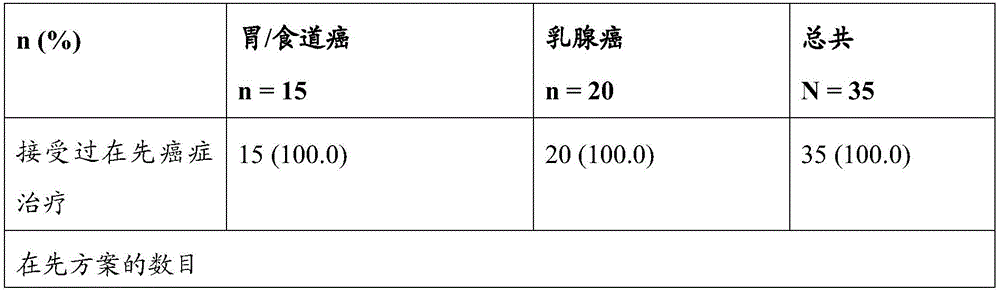
A total of 18 tumor samples were provided in 16 of 35 patients (46%) (n-6 BC and n-10 GC). Based on HER2 Immunohistochemical (IHC) detection, 12 patients scored 3+ and 4 patients scored 2 +. Patients with a score of 2+ were all tested for FISH +. The median number (range) of prior treatment received by GC and BC patients was 3(1-7) and 6(3-18), respectively (table 4). All patients received prior HER2 targeted therapy; all GC and BC patients received trastuzumab (table 4).
Table 4: advanced cancer treatment
T-DMI ═ trastuzumab mettansine
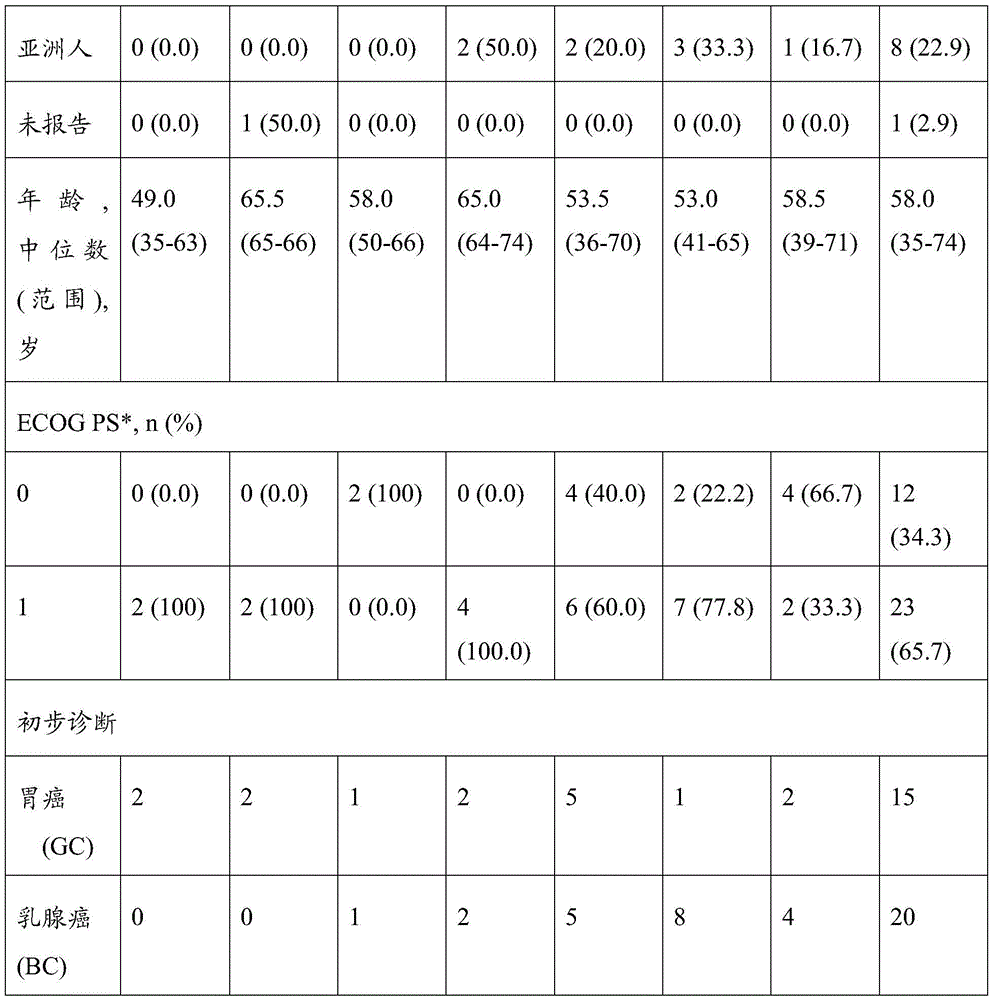
TABLE 5 patient demographics and Baseline characteristics (safety analysis group)
ECOG PS (eastern cooperative group of tumors) expression status
2. Clinical Activity
Objective Response Rate (ORR) resulting from treatment with PF-06804103 was 38.7% based on patients evaluable for all responses across all doses (table 6). For patients receiving ≥ 3mg/kg PF-06804103: (i) ORR 11/21 (52.4%); 8/21 (38.1%) patients reached stable disease; and (ii) a complete response was observed at 2/21 (9.5%) in patients receiving PF-06804103 (table 6). Median response duration for patients with confirmed or unconfirmed responses was 6.9 months. The optimal change in tumor size for BC or GC patients is shown in figure 3.
TABLE 6 summary of tumor assessments in response evaluable patients
Including confirmed and unconfirmed responses.
CR is complete response; ORR ═ objective response rate; PD-disease progression; PR ═ partial response; stable disease with SD
PK characterization of PF-06804103
Dose-dependent increases in ADC exposure and unconjugated payload were observed following IV administration of PF-06804103 (fig. 4A and 4B).
The serum concentration of unconjugated payload was substantially lower than that of ADC (fig. 4A and 4B); and the half-life of the ADC ranged from 2 to 5 days (table 7).
TABLE 7 PK parameters for PF-06804103ADC, in doses (mg/kg)
Percent CV-percent coefficient change; AUC is the area under the plasma concentration-time curve from time 0 to infinity; CL is cleared; c max Maximum plasma concentration; PK ═ pharmacokinetics
4. Safety feature
The most common treatment-related Adverse Events (AEs) (of any grade) are alopecia and fatigue. Reported treatment-related AEs at levels 3-4 included fatigue, peripheral neuropathy, myalgia, arthralgia, and decreased appetite. 5 (14.3%) patients reported grade 3-4 treatment-related AEs in the first treatment cycle.
Dose-limiting toxicity (DLT) was reported in 3 patients (mostly grade 3) and included joint pain, neuropathy, myalgia, fatigue and osteomyalgia.
The proportion of patients (in the PF-06804103 dose group) with AEs that lead to dose reductions, interruptions or withdrawal was 100% (0.15mg/kg), 0(0.5mg/kg), 50% (1.2mg/kg), 25% (2.0mg/kg), 40% (3.0mg/kg), 78% (4.0mg/kg) and 83% (5.0 mg/kg).
5. Conclusion
In this panel of GC and BC patients who underwent extensive pretreatment, treatment with PF-06804103ADC showed promising efficacy and generally manageable toxicity profiles. Among the evaluable patients receiving a response of 3mg/kg PF-06804103 or more, the ORR was 52.4%, including 2 (9.5%) complete responses.
Part 1B-combination regimen dose escalation
The combination regimen evaluated in part 1B will be administered to patients with 1L of BC HR positive HER2IHC1+ or IHC2 +/ISH-.
PF-06804103 was administered every 14 days by IV infusion in combination with SOC oral palbociclib and oral letrozole. Dose escalation or decline up to 3.3mg/kg Q2W (table 8), including higher, intermediate, or lower doses, can be evaluated based on all available clinical, safety, PK and/or PD data.
The starting dose level schedule for PF-06804103 corresponds to monotherapy part 2 dose minus 1 and is selected based on potential DDI, any overlapping toxicity considerations, and all available clinical, safety, PK, tolerability, and primary efficacy data.
TABLE 8 part 1B-PF-06804103 dose escalation levels
| Dosage level
|
PF-06804103 dose (mg/kg) Q2W
|
| -1
|
1.3
|
| 1 (initial dose)
|
2.0
|
| 2
|
2.7
|
| 3
|
3.3 |
Intermediate or lower doses may be explored.
Palbociclib is a time-dependent weak inhibitor of CYP3A and is expected to result in a low to moderate increase in exposure of the unconjugated payload PF-06804103. Since the monotherapy part 2 dose minus 1 was 3mg/kg Q3W, the starting dose of PF-06804103 in part 1B would be 2mg/kg Q2W to yield the same dose strength as 3mg/kg Q3W in the monotherapy administration. The expected maximum dose for part 1B was 2.7mg/kg Q2W to produce the same dose strength as 4mg/kg Q3W monotherapy. Patients who have not previously received systemic anti-cancer therapy can tolerate higher doses of PF-06804103. For those patients, the maximum dose for part 1B may exceed 2.7mg/kg QW.
More specifically, PF-06804103 will be administered at a starting dose IV of 2mg/kg Q2W + palbociclib (125mg) + letrozole (2.5mg) Q4W.
Part 2A-monotherapy dose extension
In part 2A, HER2 positive BC patients in a 3L background will be randomized to receive either a 3mg/kg or 4mg/kg dose of T (kK183C + K290C) -vc0101ADC administered as monotherapy Q3W to further assess safety, efficacy and the benefit/risk of 3mg/kg and 4mg/kg Q3W in a larger population to support optimal dose selection. Also in part 2A, HR positive HER2IHC1+ or IHC2+/ISH-BC patients in a 2L background will receive 4mg/kg of T (kK183C + K290C) -vc0101ADC administered as monotherapy Q3W. If the toxicity observed for 4mg/kg Q3W is determined to be too high, then a lower dose (e.g., 3mg/kg) will be tested.
After reviewing all available safety, tolerability, primary efficacy and PK data collected in part 1A, the dose level of PF-06804103 to be administered will be selected. The planned fraction 2 monotherapy doses of PF-06804103 were 3.0 mg/kg/and 4.0mg/kg Q3W. More specifically, study treatments in section 2A included the following:
arm M1: PF-06804103 will be administered at 3mg/kg Q3W IV;
arm M2: PF-06804103 will be administered at 4mg/kg Q3W IV; and
arm M3: PF-06804103 will be administered at 4mg/kg Q3W IV.
Part 2B-combination dose regimen extension
In part 2B, patients with HR positive HER2IHC1+ or IHC2+/ISH-BC in a 1L background received selected T (kK183C + K290C) -vc0101ADC doses (part 1B) combined with SOC doses of palbociclib and letrozole combination (according to local and regional guidelines) administered Q2W over a 28 day cycle. The SOC administration period for palbociclib was 28 days, and the dose level selection for PF-06804103Q2W was based on all available clinical, safety, tolerability, primary efficacy, and PK data from part 1B. The expected combination dose of PF-06804103 for part 2 was 2.7mg/kg Q2W.
More specifically, study treatments in section 2B included the following:
arm C1: PF-06804103(TBD) Q2W + palbociclib (125mg) + letrozole (2.5mg) Q4W (Table 9) was administered IV.
TABLE 9 dosage levels of part 2B
1 The medication was taken for 3 weeks and then discontinued for 1 week.
2 The dose level of PF-06804103 to be administered in combination with palbociclib and letrozole was established from part 1B.
Example 2
anti-HER 2T (kK183C + K290C) -vc0101ADC part 2 study (alternative):
combination dose discovery (part 2A) and
as a single agent (part 2B: arms A, B, C and D)
And dose extension of the combination (part 2B: arms 1, 2 and 3)
A. To summarize:
part 2 the selected doses from part 1 can be further evaluated as single agents and combinations in patients with:
single agents:
arm A: HER2+ BC (HER 2IHC 3+ or IHC2+ ISH + (in situ hybridization) BC;
an arm B: hormone Receptor (HR) + HER2IHC 2+ ISH-or undefined BC;
arm C: HER2+ (HER 2IHC 3+ or IHC2+ ISH +) GC or HER2IHC 2+ ISH-or undefined GC; and
arm D: NSCLC (whole); and
combining:
arm 1 and arm 2: "one-line (1L) MBC": HER2 +; and
arm 3: "one-line (1L) MBC": HR + HER2-mBC, adjuvant therapy failure or new MBC; not previously exposed to CDK4/6 inhibitor.
Single agent T (kK183C + K290C) -vc0101ADC MTD/RP2D from part 1 will be used to initiate the single agent dose-extension arm study of part 2 (arms A, B, C and D). Furthermore, the starting dose of T (kK183C + K290C) -vc0101ADC in the combination study will be based on MTD/RP2D or MTD/RP2D from fraction 1 minus one dose level, depending on which arm (see table 10). The dose of T (kK183C + K290C) -vc0101ADC can be incremented or decremented based on mTPI design and DLT criteria as well as emerging data (if indicated).
The recommended phase 2 dose (RP2D) is the dose selected for further study based on the phase 1 study results. This dose will typically become RP2D if MTD is proven to be clinically viable for long-term administration in a reasonable number of patients. Further experience with MTD may result in doses of RP2D that are lower than the MTD.
B. Patient population
The key inclusion criteria of section 2 include: adult patients (age ≧ 18 years) have:
arm A: breast cancer: histological or cytological diagnosis of late/unresectable or metastatic HER2 positive (+) BC. Patients classified as HER2 positive must be refractory or have progressed or intolerant to established therapies known to provide clinical benefit in HER2+ breast cancer, including herceptin, pertuzumab, and ado-trastuzumab mettansine (T-DM1), whether combination or single agent, unless not indicated according to local care practice criteria. Prior treatments allowing other monoclonal HER2 targeted therapies, including margeruximab (margetuximab) or trastuzumab deuxtecan (DS-8201).
An arm B: breast cancer: late/unresectable or metastatic hormone receptor positive (HR +), HER2IHC 2+/ISH negative (-) or ambiguous histological or cytological diagnosis. Patients were classified as HR + (including records based on recent tumor biopsies using assays that met local standards, Estrogen Receptor (ER) positive and/or progesterone receptor positive tumors (≧ 1% positively stained cells)) and HER2IHC 2+/ISH negative (-) or ambiguous and must be refractory or have progressed or intolerant to established therapies known to provide clinical benefit in HR + breast cancer, including anti-hormone therapies and inhibitors of CDK (cyclin dependent kinase) 4/6, unless not indicated or allowed according to local standard of care practices.
Arm C: gastric cancer: advanced/unresectable or metastatic HER2+ and HER2IHC 2+/ISH negative (-) or histologic or cytological diagnosis of adenocarcinoma is not clear at the gastric or esophageal gastric junction. The patient must be refractory or have progressed or intolerant to the primary (first line) treatment for adenocarcinoma at the gastric or esophageal gastric junction (gastric or gastroesophageal cancer) using trastuzumab plus cisplatin/5-FU (fluorouracil) based regimens or standard therapies.
Previous HER2 positive test results (HER 2+ patients in arm a and arm C) may be accepted using Food and Drug Administration (FDA) approval or local confirmation tests.
Arm D: NSCLC: diagnosis of histological or cytological records of advanced NSCLC. The patient must be refractory or have progressed or intolerant to anti-PD-1 (programmed cell death protein 1)/programmed death ligand 1(PD-L1) checkpoint inhibitor therapy following standard therapy: unless otherwise indicated, when PD-L1 expressed 1% or more [ tumor proportion score 1% or more ], the patient had to have been treated with anti-PD-1/L1 combination chemotherapy or as monotherapy. Patients with EGFR mutations and ALK rearrangements must receive prior EGFR and ALK targeted therapies, respectively. If the tumor is a T790M mutation-positive NSCLC, the patient must have received oxitinib (osimertinib). Patients with ROS1 mutation-positive tumors must have received prior crizotinib (crizotinib).
Patients were excluded from the study if they met the following key exclusion criteria: the patient has a known symptomatic brain metastasis requiring steroids and has had major surgery or systemic anti-cancer therapy started within four weeks of treatment.
C. Treatment schedule
Part 2B: t (kK183C + K290C) -vc0101ADC single agent dose extension
Part 2 dose extension T (kK183C + K290C) -vc0101ADC administered as a single agent at MTD/RP2D in a 21 day cycle in four separate dose extension arms (arms A, B, C and D) as described herein will be evaluated.
Part 2A: t (kK183C + K290C) -vc0101ADC combined dose discovery
After single agent T (kK183C + K290C) -vc0101ADC MTD/RP2D was identified in part 1, recruitment into part 2A was initiated in parallel with part 2 single agent dose expansion.
Part 2A will evaluate T (kK183C + K290C) -vc0101ADC MTD/RP2D doses (arm 1 and arm 2) and T (kK183C + K290C) -vc0101ADC plus palbociclib and letrozole (arm 3) in separate arms of women with HER2+ BC and HR + HER2-mBC, respectively, in combination with pertuzumab ± docetaxel. Each arm of part 2A is expected to recruit 3 to 6 patients, with at least 3 participants evaluable by DLT in each arm. The objective of this study was to assess the safety and primary antitumor activity of T (kK183C + K290C) -vc0101ADC in the following patient populations:
arm 1 and arm 2: "one-line (1L) MBC": HER2 +; and
an arm 3: "one-line (1L) MBC": HR + HER2-mBC, adjuvant therapy failure or new MBC; not previously exposed to CDK4/6 inhibitor.
Dose and schedule:
t (kK183C + K290C) -vc0101ADC was administered every 21 days (Q3W) IV infusion, with the combination drug for each arm administered based on table 10. Part 2A dose finding combination arm is the recommended dose level.
TABLE 10 suggested dose levels for part 2A dose finding combination arms
§ 3 weeks after administration and 1 week after discontinuation
Part 2B: t (kK183C + K290C) -vc0101ADC combination dose expansion
Part 2B/arm 1 and arm 2-T (kK183C + K290C) in HER2+ locally advanced or mBC (first line background) -
vc0101ADC combination pertuzumab + -docetaxel
T (kK183C + K290C) -vc0101 ADCs will be evaluated in patients with HER2+ late or mBC in combination with pertuzumab plus or minus docetaxel at doses determined in arm 1 and arm 2 of part 2A, respectively. Patients who had not previously received systemic anti-cancer therapy in an advanced or metastatic setting were enrolled. Each arm will recruit up to 30 patients.
The administration scheme is as follows: pertuzumab + T (kK183C + K290C) -vc0101ADC +/-docetaxel (table 11):
pertuzumab 840mg IV, followed by 420mg IV on day 1;
t (kK183C + K290C) -vc0101ADC day 1 RP2D IV
Every 21 days of circulation
Pertuzumab was first administered followed by T (kK183C + K290C) -vc0101ADC docetaxel 75mg/m 2 Q3W
Part 2B/arm 3-T (kK183C + K290C) -vc0101ADC combinations of Pabociclib-dilletrozole in HR + HER 2-or HER2lo locally advanced or mBC (first line background)
The dose of T (kK183C + K290C) -vc0101ADC combination palbociclib-ganciclovir determined in part 2A was evaluated in patients with HR + HER 2-advanced or mBC patients. Patients who have not previously received systemic anti-cancer therapy in an advanced or metastatic setting are enrolled. The arm will recruit up to 30 patients.
The administration scheme is as follows: letrozole + palbociclib + NGHER 2ADC (table 11):
letrozole 2.5mg PO QD, days 1-28;
pabociclib 125mg/kg PO QD for 3 weeks
-letrozole and palbociclib repeated every 28 days;
NG HER2ADC RP2D IV day 1
Cycles every 14 days.
The dosages of palbociclib and letrozole should be about the same as the time of initiation of infusion.
Information on dosage and schedule is shown in table 11.
TABLE 11 suggested dose levels for part 2B dose extension combination arm
§ 3 weeks after administration and 1 week after discontinuation
Example 3
Dosage forms, packaging and administration of research product supplies
T(kK183C+K290C)-vc0101 ADC
The T (kK183C + K290C) -vc0101ADC is presented in powder form for reconstitution and IV administration. Each vial contained 40mg of T (kK183C + K290C) -vc0101ADC, was sealed with a coated stopper and overseal, and labeled as required by local regulations.
T (kK183C + K290C) -vc0101ADC will be administered on day 1 of each 21-day cycle. One cycle is defined as the time from day 1 administration to the next day 1 administration. If there is no treatment delay, one cycle would be 21 days. In addition, alternative dosing regimens may be evaluated.
The T (kK183C + K290C) -vc0101ADC will be administered intravenously over a period of about 60 minutes (+ -15 minutes) based on the outpatient setting.
The decision to include the pre-medication in all patients will be made after the sponsor and investigator discussions. The patient should be pre-treated with acetaminophen and diphenhydramine (or other antihistamines) about 0.5 to 2 hours prior to each PF-06804103 administration.
Suggested starting doses are IV or oral 650mg to 1000mg paracetamol and 50mg diphenhydramine (or equivalent of other antihistamines). An additional two doses of acetaminophen may be administered about every 4-6 hours after the initial pretreatment or as needed.
When used in combination with palbociclib and letrozole, the treatment schedule (treatment period and days) of PF-06804103 should follow the schedule of palbociclib.
Pertuzumab
The pertuzumab 420mg concentrated solution used for the infusion solution is transparent to be micro-emulsion white and colorless to be light yellow liquid. A bottle of 14ml concentrate contains 420mg pertuzumab at a concentration of 30 mg/ml.
Pertuzumab was initially administered at 840mg at 60 min intravenous infusion followed by 420mg every 3 weeks at 30 to 60 min intravenous infusion.
Docetaxel
Docetaxel is sterile, pyrogen-free and can be used in single dose vials containing 20mg (0.5mL) or 80mg (2mL) docetaxel (anhydrous) and needs to be diluted before use. Sterile, pyrogen-free, single dose diluents are provided for this purpose. The diluent contained 13% ethanol in water for injection, supplied in vials.
Docetaxel will be administered at 75mg/m every 3 weeks 2 The starting dose of (a) is administered intravenously. The total dose of docetaxel was administered as a 1 hour IV infusion. The dose of docetaxel will use body surface area (mg/m) 2 ) And (4) calculating.
The use of docetaxel must be in compliance with its local prescription information, which should be reviewed to ensure proper patient participation in the study.
According to institutional practice, all patients must receive preventative pre-medication to reduce the incidence and severity of fluid retention and allergic reactions. The recommended pre-medication regimen before each chemotherapy administration consists of: oral administration of dexamethasone 8mg bid or an equivalent dose of oral prednisone or prednisolone or methylprednisolone is started 1 day before docetaxel administration for 3 days.
The total dose of docetaxel will be administered as a 1 hour infusion on day 1 of each cycle.
Pabociclib
Palbociclib will be supplied in 125mg capsules in High Density Polyethylene (HDPE) bottles, labeled according to local regulatory requirements. 100mg and 75mg capsules are available for reduced dose.
Patients should be instructed to swallow the palbociclib capsules in whole granules, without manipulation or chewing prior to swallowing. If the capsule is damaged, broken or incomplete, the capsule should not be ingested. Patients should be encouraged to take their doses at about the same time each day. The patient should be instructed to record daily administration in the patient diary.
The patient should take palbociclib with a meal. For each 28-day cycle, palbociclib was orally administered once a day for 21 days, followed by 7 days off.
Letrozole
The recommended dose is one 2.5mg tablet administered once daily, with or without meals, on days 1 to 28.
Sequence listing
<110> Pfizer Inc.
Leung, Abraham
Sung, Matthew
<120> treatment with site-specific HER2 antibody-drug conjugates
<130> PC072533A
<150> 62/952,159
<151> 2019-12-20
<150> 63/030,463
<151> 2020-05-27
<160> 24
<170> PatentIn version 3.5
<210> 1
<211> 120
<212> PRT
<213> Artificial
<220>
<223> synthetic construct
<400> 1
Glu Val Gln Leu Val Glu Ser Gly Gly Gly Leu Val Gln Pro Gly Gly
1 5 10 15
Ser Leu Arg Leu Ser Cys Ala Ala Ser Gly Phe Asn Ile Lys Asp Thr
20 25 30
Tyr Ile His Trp Val Arg Gln Ala Pro Gly Lys Gly Leu Glu Trp Val
35 40 45
Ala Arg Ile Tyr Pro Thr Asn Gly Tyr Thr Arg Tyr Ala Asp Ser Val
50 55 60
Lys Gly Arg Phe Thr Ile Ser Ala Asp Thr Ser Lys Asn Thr Ala Tyr
65 70 75 80
Leu Gln Met Asn Ser Leu Arg Ala Glu Asp Thr Ala Val Tyr Tyr Cys
85 90 95
Ser Arg Trp Gly Gly Asp Gly Phe Tyr Ala Met Asp Tyr Trp Gly Gln
100 105 110
Gly Thr Leu Val Thr Val Ser Ser
115 120
<210> 2
<211> 5
<212> PRT
<213> Artificial
<220>
<223> synthetic construct
<400> 2
Asp Thr Tyr Ile His
1 5
<210> 3
<211> 17
<212> PRT
<213> Artificial
<220>
<223> synthetic construct
<400> 3
Arg Ile Tyr Pro Thr Asn Gly Tyr Thr Arg Tyr Ala Asp Ser Val Lys
1 5 10 15
Gly
<210> 4
<211> 11
<212> PRT
<213> Artificial
<220>
<223> synthetic construct
<400> 4
Trp Gly Gly Asp Gly Phe Tyr Ala Met Asp Tyr
1 5 10
<210> 5
<211> 329
<212> PRT
<213> Artificial
<220>
<223> synthetic construct
<400> 5
Ala Ser Thr Lys Gly Pro Ser Val Phe Pro Leu Ala Pro Ser Ser Lys
1 5 10 15
Ser Thr Ser Gly Gly Thr Ala Ala Leu Gly Cys Leu Val Lys Asp Tyr
20 25 30
Phe Pro Glu Pro Val Thr Val Ser Trp Asn Ser Gly Ala Leu Thr Ser
35 40 45
Gly Val His Thr Phe Pro Ala Val Leu Gln Ser Ser Gly Leu Tyr Ser
50 55 60
Leu Ser Ser Val Val Thr Val Pro Ser Ser Ser Leu Gly Thr Gln Thr
65 70 75 80
Tyr Ile Cys Asn Val Asn His Lys Pro Ser Asn Thr Lys Val Asp Lys
85 90 95
Lys Val Glu Pro Lys Ser Cys Asp Lys Thr His Thr Cys Pro Pro Cys
100 105 110
Pro Ala Pro Glu Leu Leu Gly Gly Pro Ser Val Phe Leu Phe Pro Pro
115 120 125
Lys Pro Lys Asp Thr Leu Met Ile Ser Arg Thr Pro Glu Val Thr Cys
130 135 140
Val Val Val Asp Val Ser His Glu Asp Pro Glu Val Lys Phe Asn Trp
145 150 155 160
Tyr Val Asp Gly Val Glu Val His Asn Ala Lys Thr Lys Pro Arg Glu
165 170 175
Glu Gln Tyr Asn Ser Thr Tyr Arg Val Val Ser Val Leu Thr Val Leu
180 185 190
His Gln Asp Trp Leu Asn Gly Lys Glu Tyr Lys Cys Lys Val Ser Asn
195 200 205
Lys Ala Leu Pro Ala Pro Ile Glu Lys Thr Ile Ser Lys Ala Lys Gly
210 215 220
Gln Pro Arg Glu Pro Gln Val Tyr Thr Leu Pro Pro Ser Arg Glu Glu
225 230 235 240
Met Thr Lys Asn Gln Val Ser Leu Thr Cys Leu Val Lys Gly Phe Tyr
245 250 255
Pro Ser Asp Ile Ala Val Glu Trp Glu Ser Asn Gly Gln Pro Glu Asn
260 265 270
Asn Tyr Lys Thr Thr Pro Pro Val Leu Asp Ser Asp Gly Ser Phe Phe
275 280 285
Leu Tyr Ser Lys Leu Thr Val Asp Lys Ser Arg Trp Gln Gln Gly Asn
290 295 300
Val Phe Ser Cys Ser Val Met His Glu Ala Leu His Asn His Tyr Thr
305 310 315 320
Gln Lys Ser Leu Ser Leu Ser Pro Gly
325
<210> 6
<211> 449
<212> PRT
<213> Artificial
<220>
<223> synthetic construct
<400> 6
Glu Val Gln Leu Val Glu Ser Gly Gly Gly Leu Val Gln Pro Gly Gly
1 5 10 15
Ser Leu Arg Leu Ser Cys Ala Ala Ser Gly Phe Asn Ile Lys Asp Thr
20 25 30
Tyr Ile His Trp Val Arg Gln Ala Pro Gly Lys Gly Leu Glu Trp Val
35 40 45
Ala Arg Ile Tyr Pro Thr Asn Gly Tyr Thr Arg Tyr Ala Asp Ser Val
50 55 60
Lys Gly Arg Phe Thr Ile Ser Ala Asp Thr Ser Lys Asn Thr Ala Tyr
65 70 75 80
Leu Gln Met Asn Ser Leu Arg Ala Glu Asp Thr Ala Val Tyr Tyr Cys
85 90 95
Ser Arg Trp Gly Gly Asp Gly Phe Tyr Ala Met Asp Tyr Trp Gly Gln
100 105 110
Gly Thr Leu Val Thr Val Ser Ser Ala Ser Thr Lys Gly Pro Ser Val
115 120 125
Phe Pro Leu Ala Pro Ser Ser Lys Ser Thr Ser Gly Gly Thr Ala Ala
130 135 140
Leu Gly Cys Leu Val Lys Asp Tyr Phe Pro Glu Pro Val Thr Val Ser
145 150 155 160
Trp Asn Ser Gly Ala Leu Thr Ser Gly Val His Thr Phe Pro Ala Val
165 170 175
Leu Gln Ser Ser Gly Leu Tyr Ser Leu Ser Ser Val Val Thr Val Pro
180 185 190
Ser Ser Ser Leu Gly Thr Gln Thr Tyr Ile Cys Asn Val Asn His Lys
195 200 205
Pro Ser Asn Thr Lys Val Asp Lys Lys Val Glu Pro Lys Ser Cys Asp
210 215 220
Lys Thr His Thr Cys Pro Pro Cys Pro Ala Pro Glu Leu Leu Gly Gly
225 230 235 240
Pro Ser Val Phe Leu Phe Pro Pro Lys Pro Lys Asp Thr Leu Met Ile
245 250 255
Ser Arg Thr Pro Glu Val Thr Cys Val Val Val Asp Val Ser His Glu
260 265 270
Asp Pro Glu Val Lys Phe Asn Trp Tyr Val Asp Gly Val Glu Val His
275 280 285
Asn Ala Lys Thr Lys Pro Arg Glu Glu Gln Tyr Asn Ser Thr Tyr Arg
290 295 300
Val Val Ser Val Leu Thr Val Leu His Gln Asp Trp Leu Asn Gly Lys
305 310 315 320
Glu Tyr Lys Cys Lys Val Ser Asn Lys Ala Leu Pro Ala Pro Ile Glu
325 330 335
Lys Thr Ile Ser Lys Ala Lys Gly Gln Pro Arg Glu Pro Gln Val Tyr
340 345 350
Thr Leu Pro Pro Ser Arg Glu Glu Met Thr Lys Asn Gln Val Ser Leu
355 360 365
Thr Cys Leu Val Lys Gly Phe Tyr Pro Ser Asp Ile Ala Val Glu Trp
370 375 380
Glu Ser Asn Gly Gln Pro Glu Asn Asn Tyr Lys Thr Thr Pro Pro Val
385 390 395 400
Leu Asp Ser Asp Gly Ser Phe Phe Leu Tyr Ser Lys Leu Thr Val Asp
405 410 415
Lys Ser Arg Trp Gln Gln Gly Asn Val Phe Ser Cys Ser Val Met His
420 425 430
Glu Ala Leu His Asn His Tyr Thr Gln Lys Ser Leu Ser Leu Ser Pro
435 440 445
Gly
<210> 7
<211> 107
<212> PRT
<213> Artificial
<220>
<223> synthetic construct
<400> 7
Asp Ile Gln Met Thr Gln Ser Pro Ser Ser Leu Ser Ala Ser Val Gly
1 5 10 15
Asp Arg Val Thr Ile Thr Cys Arg Ala Ser Gln Asp Val Asn Thr Ala
20 25 30
Val Ala Trp Tyr Gln Gln Lys Pro Gly Lys Ala Pro Lys Leu Leu Ile
35 40 45
Tyr Ser Ala Ser Phe Leu Tyr Ser Gly Val Pro Ser Arg Phe Ser Gly
50 55 60
Ser Arg Ser Gly Thr Asp Phe Thr Leu Thr Ile Ser Ser Leu Gln Pro
65 70 75 80
Glu Asp Phe Ala Thr Tyr Tyr Cys Gln Gln His Tyr Thr Thr Pro Pro
85 90 95
Thr Phe Gly Gln Gly Thr Lys Val Glu Ile Lys
100 105
<210> 8
<211> 11
<212> PRT
<213> Artificial
<220>
<223> synthetic construct
<400> 8
Arg Ala Ser Gln Asp Val Asn Thr Ala Val Ala
1 5 10
<210> 9
<211> 7
<212> PRT
<213> Artificial
<220>
<223> synthetic construct
<400> 9
Ser Ala Ser Phe Leu Tyr Ser
1 5
<210> 10
<211> 9
<212> PRT
<213> Artificial
<220>
<223> synthetic construct
<400> 10
Gln Gln His Tyr Thr Thr Pro Pro Thr
1 5
<210> 11
<211> 107
<212> PRT
<213> Artificial
<220>
<223> synthetic construct
<400> 11
Arg Thr Val Ala Ala Pro Ser Val Phe Ile Phe Pro Pro Ser Asp Glu
1 5 10 15
Gln Leu Lys Ser Gly Thr Ala Ser Val Val Cys Leu Leu Asn Asn Phe
20 25 30
Tyr Pro Arg Glu Ala Lys Val Gln Trp Lys Val Asp Asn Ala Leu Gln
35 40 45
Ser Gly Asn Ser Gln Glu Ser Val Thr Glu Gln Asp Ser Lys Asp Ser
50 55 60
Thr Tyr Ser Leu Ser Ser Thr Leu Thr Leu Ser Lys Ala Asp Tyr Glu
65 70 75 80
Lys His Lys Val Tyr Ala Cys Glu Val Thr His Gln Gly Leu Ser Ser
85 90 95
Pro Val Thr Lys Ser Phe Asn Arg Gly Glu Cys
100 105
<210> 12
<211> 214
<212> PRT
<213> Artificial
<220>
<223> synthetic construct
<400> 12
Asp Ile Gln Met Thr Gln Ser Pro Ser Ser Leu Ser Ala Ser Val Gly
1 5 10 15
Asp Arg Val Thr Ile Thr Cys Arg Ala Ser Gln Asp Val Asn Thr Ala
20 25 30
Val Ala Trp Tyr Gln Gln Lys Pro Gly Lys Ala Pro Lys Leu Leu Ile
35 40 45
Tyr Ser Ala Ser Phe Leu Tyr Ser Gly Val Pro Ser Arg Phe Ser Gly
50 55 60
Ser Arg Ser Gly Thr Asp Phe Thr Leu Thr Ile Ser Ser Leu Gln Pro
65 70 75 80
Glu Asp Phe Ala Thr Tyr Tyr Cys Gln Gln His Tyr Thr Thr Pro Pro
85 90 95
Thr Phe Gly Gln Gly Thr Lys Val Glu Ile Lys Arg Thr Val Ala Ala
100 105 110
Pro Ser Val Phe Ile Phe Pro Pro Ser Asp Glu Gln Leu Lys Ser Gly
115 120 125
Thr Ala Ser Val Val Cys Leu Leu Asn Asn Phe Tyr Pro Arg Glu Ala
130 135 140
Lys Val Gln Trp Lys Val Asp Asn Ala Leu Gln Ser Gly Asn Ser Gln
145 150 155 160
Glu Ser Val Thr Glu Gln Asp Ser Lys Asp Ser Thr Tyr Ser Leu Ser
165 170 175
Ser Thr Leu Thr Leu Ser Lys Ala Asp Tyr Glu Lys His Lys Val Tyr
180 185 190
Ala Cys Glu Val Thr His Gln Gly Leu Ser Ser Pro Val Thr Lys Ser
195 200 205
Phe Asn Arg Gly Glu Cys
210
<210> 13
<211> 329
<212> PRT
<213> Artificial
<220>
<223> synthetic construct
<400> 13
Ala Ser Thr Lys Gly Pro Ser Val Phe Pro Leu Ala Pro Ser Ser Lys
1 5 10 15
Ser Thr Ser Gly Gly Thr Ala Ala Leu Gly Cys Leu Val Lys Asp Tyr
20 25 30
Phe Pro Glu Pro Val Thr Val Ser Trp Asn Ser Gly Ala Leu Thr Ser
35 40 45
Gly Val His Thr Phe Pro Ala Val Leu Gln Ser Ser Gly Leu Tyr Ser
50 55 60
Leu Ser Ser Val Val Thr Val Pro Ser Ser Ser Leu Gly Thr Gln Thr
65 70 75 80
Tyr Ile Cys Asn Val Asn His Lys Pro Ser Asn Thr Lys Val Asp Lys
85 90 95
Lys Val Glu Pro Lys Ser Cys Asp Lys Thr His Thr Cys Pro Pro Cys
100 105 110
Pro Ala Pro Glu Leu Leu Gly Gly Pro Ser Val Phe Leu Phe Pro Pro
115 120 125
Lys Pro Lys Asp Thr Leu Met Ile Ser Arg Thr Pro Glu Val Thr Cys
130 135 140
Val Val Val Asp Val Ser His Glu Asp Pro Glu Val Lys Phe Asn Trp
145 150 155 160
Tyr Val Asp Gly Val Glu Val His Asn Ala Lys Thr Cys Pro Arg Glu
165 170 175
Glu Gln Tyr Asn Ser Thr Tyr Arg Val Val Ser Val Leu Thr Val Leu
180 185 190
His Gln Asp Trp Leu Asn Gly Lys Glu Tyr Lys Cys Lys Val Ser Asn
195 200 205
Lys Ala Leu Pro Ala Pro Ile Glu Lys Thr Ile Ser Lys Ala Lys Gly
210 215 220
Gln Pro Arg Glu Pro Gln Val Tyr Thr Leu Pro Pro Ser Arg Glu Glu
225 230 235 240
Met Thr Lys Asn Gln Val Ser Leu Thr Cys Leu Val Lys Gly Phe Tyr
245 250 255
Pro Ser Asp Ile Ala Val Glu Trp Glu Ser Asn Gly Gln Pro Glu Asn
260 265 270
Asn Tyr Lys Thr Thr Pro Pro Val Leu Asp Ser Asp Gly Ser Phe Phe
275 280 285
Leu Tyr Ser Lys Leu Thr Val Asp Lys Ser Arg Trp Gln Gln Gly Asn
290 295 300
Val Phe Ser Cys Ser Val Met His Glu Ala Leu His Asn His Tyr Thr
305 310 315 320
Gln Lys Ser Leu Ser Leu Ser Pro Gly
325
<210> 14
<211> 449
<212> PRT
<213> Artificial
<220>
<223> synthetic construct
<400> 14
Glu Val Gln Leu Val Glu Ser Gly Gly Gly Leu Val Gln Pro Gly Gly
1 5 10 15
Ser Leu Arg Leu Ser Cys Ala Ala Ser Gly Phe Asn Ile Lys Asp Thr
20 25 30
Tyr Ile His Trp Val Arg Gln Ala Pro Gly Lys Gly Leu Glu Trp Val
35 40 45
Ala Arg Ile Tyr Pro Thr Asn Gly Tyr Thr Arg Tyr Ala Asp Ser Val
50 55 60
Lys Gly Arg Phe Thr Ile Ser Ala Asp Thr Ser Lys Asn Thr Ala Tyr
65 70 75 80
Leu Gln Met Asn Ser Leu Arg Ala Glu Asp Thr Ala Val Tyr Tyr Cys
85 90 95
Ser Arg Trp Gly Gly Asp Gly Phe Tyr Ala Met Asp Tyr Trp Gly Gln
100 105 110
Gly Thr Leu Val Thr Val Ser Ser Ala Ser Thr Lys Gly Pro Ser Val
115 120 125
Phe Pro Leu Ala Pro Ser Ser Lys Ser Thr Ser Gly Gly Thr Ala Ala
130 135 140
Leu Gly Cys Leu Val Lys Asp Tyr Phe Pro Glu Pro Val Thr Val Ser
145 150 155 160
Trp Asn Ser Gly Ala Leu Thr Ser Gly Val His Thr Phe Pro Ala Val
165 170 175
Leu Gln Ser Ser Gly Leu Tyr Ser Leu Ser Ser Val Val Thr Val Pro
180 185 190
Ser Ser Ser Leu Gly Thr Gln Thr Tyr Ile Cys Asn Val Asn His Lys
195 200 205
Pro Ser Asn Thr Lys Val Asp Lys Lys Val Glu Pro Lys Ser Cys Asp
210 215 220
Lys Thr His Thr Cys Pro Pro Cys Pro Ala Pro Glu Leu Leu Gly Gly
225 230 235 240
Pro Ser Val Phe Leu Phe Pro Pro Lys Pro Lys Asp Thr Leu Met Ile
245 250 255
Ser Arg Thr Pro Glu Val Thr Cys Val Val Val Asp Val Ser His Glu
260 265 270
Asp Pro Glu Val Lys Phe Asn Trp Tyr Val Asp Gly Val Glu Val His
275 280 285
Asn Ala Lys Thr Cys Pro Arg Glu Glu Gln Tyr Asn Ser Thr Tyr Arg
290 295 300
Val Val Ser Val Leu Thr Val Leu His Gln Asp Trp Leu Asn Gly Lys
305 310 315 320
Glu Tyr Lys Cys Lys Val Ser Asn Lys Ala Leu Pro Ala Pro Ile Glu
325 330 335
Lys Thr Ile Ser Lys Ala Lys Gly Gln Pro Arg Glu Pro Gln Val Tyr
340 345 350
Thr Leu Pro Pro Ser Arg Glu Glu Met Thr Lys Asn Gln Val Ser Leu
355 360 365
Thr Cys Leu Val Lys Gly Phe Tyr Pro Ser Asp Ile Ala Val Glu Trp
370 375 380
Glu Ser Asn Gly Gln Pro Glu Asn Asn Tyr Lys Thr Thr Pro Pro Val
385 390 395 400
Leu Asp Ser Asp Gly Ser Phe Phe Leu Tyr Ser Lys Leu Thr Val Asp
405 410 415
Lys Ser Arg Trp Gln Gln Gly Asn Val Phe Ser Cys Ser Val Met His
420 425 430
Glu Ala Leu His Asn His Tyr Thr Gln Lys Ser Leu Ser Leu Ser Pro
435 440 445
Gly
<210> 15
<211> 107
<212> PRT
<213> Artificial
<220>
<223> synthetic construct
<400> 15
Arg Thr Val Ala Ala Pro Ser Val Phe Ile Phe Pro Pro Ser Asp Glu
1 5 10 15
Gln Leu Lys Ser Gly Thr Ala Ser Val Val Cys Leu Leu Asn Asn Phe
20 25 30
Tyr Pro Arg Glu Ala Lys Val Gln Trp Lys Val Asp Asn Ala Leu Gln
35 40 45
Ser Gly Asn Ser Gln Glu Ser Val Thr Glu Gln Asp Ser Lys Asp Ser
50 55 60
Thr Tyr Ser Leu Ser Ser Thr Leu Thr Leu Ser Cys Ala Asp Tyr Glu
65 70 75 80
Lys His Lys Val Tyr Ala Cys Glu Val Thr His Gln Gly Leu Ser Ser
85 90 95
Pro Val Thr Lys Ser Phe Asn Arg Gly Glu Cys
100 105
<210> 16
<211> 214
<212> PRT
<213> Artificial
<220>
<223> synthetic construct
<400> 16
Asp Ile Gln Met Thr Gln Ser Pro Ser Ser Leu Ser Ala Ser Val Gly
1 5 10 15
Asp Arg Val Thr Ile Thr Cys Arg Ala Ser Gln Asp Val Asn Thr Ala
20 25 30
Val Ala Trp Tyr Gln Gln Lys Pro Gly Lys Ala Pro Lys Leu Leu Ile
35 40 45
Tyr Ser Ala Ser Phe Leu Tyr Ser Gly Val Pro Ser Arg Phe Ser Gly
50 55 60
Ser Arg Ser Gly Thr Asp Phe Thr Leu Thr Ile Ser Ser Leu Gln Pro
65 70 75 80
Glu Asp Phe Ala Thr Tyr Tyr Cys Gln Gln His Tyr Thr Thr Pro Pro
85 90 95
Thr Phe Gly Gln Gly Thr Lys Val Glu Ile Lys Arg Thr Val Ala Ala
100 105 110
Pro Ser Val Phe Ile Phe Pro Pro Ser Asp Glu Gln Leu Lys Ser Gly
115 120 125
Thr Ala Ser Val Val Cys Leu Leu Asn Asn Phe Tyr Pro Arg Glu Ala
130 135 140
Lys Val Gln Trp Lys Val Asp Asn Ala Leu Gln Ser Gly Asn Ser Gln
145 150 155 160
Glu Ser Val Thr Glu Gln Asp Ser Lys Asp Ser Thr Tyr Ser Leu Ser
165 170 175
Ser Thr Leu Thr Leu Ser Cys Ala Asp Tyr Glu Lys His Lys Val Tyr
180 185 190
Ala Cys Glu Val Thr His Gln Gly Leu Ser Ser Pro Val Thr Lys Ser
195 200 205
Phe Asn Arg Gly Glu Cys
210
<210> 17
<211> 360
<212> DNA
<213> Artificial
<220>
<223> synthetic construct
<400> 17
gaggtgcagc tggtggaatc cggcggaggc ctggtccagc ctggcggatc tctgcggctg 60
tcttgcgccg cctccggctt caacatcaag gacacctaca tccactgggt ccgacaggca 120
cctggcaagg gactggaatg ggtggcccgg atctacccca ccaacggcta caccagatac 180
gccgactccg tgaagggccg gttcaccatc tccgccgaca cctccaagaa caccgcctac 240
ctgcagatga actccctgcg ggccgaggac accgccgtgt actactgctc cagatgggga 300
ggcgacggct tctacgccat ggactactgg ggccagggca ccctggtcac cgtgtctagc 360
<210> 18
<211> 1347
<212> DNA
<213> Artificial
<220>
<223> synthetic construct
<400> 18
gaggtgcagc tggtggaatc cggcggaggc ctggtccagc ctggcggatc tctgcggctg 60
tcttgcgccg cctccggctt caacatcaag gacacctaca tccactgggt ccgacaggca 120
cctggcaagg gactggaatg ggtggcccgg atctacccca ccaacggcta caccagatac 180
gccgactccg tgaagggccg gttcaccatc tccgccgaca cctccaagaa caccgcctac 240
ctgcagatga actccctgcg ggccgaggac accgccgtgt actactgctc cagatgggga 300
ggcgacggct tctacgccat ggactactgg ggccagggca ccctggtcac cgtgtctagc 360
gcgtcgacca agggcccatc ggtcttcccc ctggcaccct cctccaagag cacctctggg 420
ggcacagcgg ccctgggctg cctggtcaag gactacttcc ccgaaccggt gacggtgtcg 480
tggaactcag gcgccctgac cagcggcgtg cacaccttcc cggctgtcct acagtcctca 540
ggactctact ccctcagcag cgtggtgacc gtgccctcca gcagcttggg cacccagacc 600
tacatctgca acgtgaatca caagcccagc aacaccaagg tggacaagaa agttgagccc 660
aaatcttgtg acaaaactca cacatgccca ccgtgcccag cacctgaact cctgggggga 720
ccgtcagtct tcctcttccc cccaaaaccc aaggacaccc tcatgatctc ccggacccct 780
gaggtcacat gcgtggtggt ggacgtgagc cacgaagacc ctgaggtcaa gttcaactgg 840
tacgtggacg gcgtggaggt gcataatgcc aagacaaagc cgcgggagga gcagtacaac 900
agcacgtacc gtgtggtcag cgtcctcacc gtcctgcacc aggactggct gaatggcaag 960
gagtacaagt gcaaggtctc caacaaagcc ctcccagccc ccatcgagaa aaccatctcc 1020
aaagccaaag ggcagccccg agaaccacag gtgtacaccc tgcccccatc ccgggaggag 1080
atgaccaaga accaggtcag cctgacctgc ctggtcaaag gcttctatcc cagcgacatc 1140
gccgtggagt gggagagcaa tgggcagccg gagaacaact acaagaccac gcctcccgtg 1200
ctggactccg acggctcctt cttcctctat agcaagctca ccgtggacaa gagcaggtgg 1260
cagcagggga acgtcttctc atgctccgtg atgcatgagg ctctgcacaa ccactacacg 1320
cagaagagcc tctccctgtc cccgggt 1347
<210> 19
<211> 321
<212> DNA
<213> Artificial
<220>
<223> synthetic construct
<400> 19
gacatccaga tgacccagtc cccctccagc ctgtccgcct ctgtgggcga cagagtgacc 60
atcacctgtc gggcctccca ggacgtgaac accgccgtgg cctggtatca gcagaagccc 120
ggcaaggccc ccaagctgct gatctactcc gcctccttcc tgtactccgg cgtgccctcc 180
cggttctccg gctccagatc tggcaccgac tttaccctga ccatctccag cctgcagccc 240
gaggacttcg ccacctacta ctgccagcag cactacacca ccccccccac ctttggccag 300
ggcaccaagg tggaaatcaa g 321
<210> 20
<211> 642
<212> DNA
<213> Artificial
<220>
<223> synthetic construct
<400> 20
gacatccaga tgacccagtc cccctccagc ctgtccgcct ctgtgggcga cagagtgacc 60
atcacctgtc gggcctccca ggacgtgaac accgccgtgg cctggtatca gcagaagccc 120
ggcaaggccc ccaagctgct gatctactcc gcctccttcc tgtactccgg cgtgccctcc 180
cggttctccg gctccagatc tggcaccgac tttaccctga ccatctccag cctgcagccc 240
gaggacttcg ccacctacta ctgccagcag cactacacca ccccccccac ctttggccag 300
ggcaccaagg tggaaatcaa gcggaccgtg gccgctccct ccgtgttcat cttcccaccc 360
tccgacgagc agctgaagtc cggcaccgcc tccgtcgtgt gcctgctgaa caacttctac 420
ccccgcgagg ccaaggtgca gtggaaggtg gacaacgccc tgcagtccgg caactcccag 480
gaatccgtca ccgagcagga ctccaaggac agcacctact ccctgtcctc caccctgacc 540
ctgtccaagg ccgactacga gaagcacaag gtgtacgcct gcgaagtgac ccaccagggc 600
ctgtccagcc ccgtgaccaa gtccttcaac cggggcgagt gc 642
<210> 21
<211> 987
<212> DNA
<213> Artificial
<220>
<223> synthetic construct
<400> 21
gcgtcgacca agggcccatc ggtcttcccc ctggcaccct cctccaagag cacctctggg 60
ggcacagcgg ccctgggctg cctggtcaag gactacttcc ccgaaccggt gacggtgtcg 120
tggaactcag gcgccctgac cagcggcgtg cacaccttcc cggctgtcct acagtcctca 180
ggactctact ccctcagcag cgtggtgacc gtgccctcca gcagcttggg cacccagacc 240
tacatctgca acgtgaatca caagcccagc aacaccaagg tggacaagaa agttgagccc 300
aaatcttgtg acaaaactca cacatgccca ccgtgcccag cacctgaact cctgggggga 360
ccgtcagtct tcctcttccc cccaaaaccc aaggacaccc tcatgatctc ccggacccct 420
gaggtcacat gcgtggtggt ggacgtgagc cacgaagacc ctgaggtcaa gttcaactgg 480
tacgtggacg gcgtggaggt gcataatgcc aagacatgcc cgcgggagga gcagtacaac 540
agcacgtacc gtgtggtcag cgtcctcacc gtcctgcacc aggactggct gaatggcaag 600
gagtacaagt gcaaggtctc caacaaagcc ctcccagccc ccatcgagaa aaccatctcc 660
aaagccaaag ggcagccccg agaaccacag gtgtacaccc tgcccccatc ccgggaggag 720
atgaccaaga accaggtcag cctgacctgc ctggtcaaag gcttctatcc cagcgacatc 780
gccgtggagt gggagagcaa tgggcagccg gagaacaact acaagaccac gcctcccgtg 840
ctggactccg acggctcctt cttcctctat agcaagctca ccgtggacaa gagcaggtgg 900
cagcagggga acgtcttctc atgctccgtg atgcatgagg ctctgcacaa ccactacacg 960
cagaagagcc tctccctgtc cccgggt 987
<210> 22
<211> 1347
<212> DNA
<213> Artificial
<220>
<223> synthetic construct
<400> 22
gaggtgcagc tggtggaatc cggcggaggc ctggtccagc ctggcggatc tctgcggctg 60
tcttgcgccg cctccggctt caacatcaag gacacctaca tccactgggt ccgacaggca 120
cctggcaagg gactggaatg ggtggcccgg atctacccca ccaacggcta caccagatac 180
gccgactccg tgaagggccg gttcaccatc tccgccgaca cctccaagaa caccgcctac 240
ctgcagatga actccctgcg ggccgaggac accgccgtgt actactgctc cagatgggga 300
ggcgacggct tctacgccat ggactactgg ggccagggca ccctggtcac cgtgtctagc 360
gcgtcgacca agggcccatc ggtcttcccc ctggcaccct cctccaagag cacctctggg 420
ggcacagcgg ccctgggctg cctggtcaag gactacttcc ccgaaccggt gacggtgtcg 480
tggaactcag gcgccctgac cagcggcgtg cacaccttcc cggctgtcct acagtcctca 540
ggactctact ccctcagcag cgtggtgacc gtgccctcca gcagcttggg cacccagacc 600
tacatctgca acgtgaatca caagcccagc aacaccaagg tggacaagaa agttgagccc 660
aaatcttgtg acaaaactca cacatgccca ccgtgcccag cacctgaact cctgggggga 720
ccgtcagtct tcctcttccc cccaaaaccc aaggacaccc tcatgatctc ccggacccct 780
gaggtcacat gcgtggtggt ggacgtgagc cacgaagacc ctgaggtcaa gttcaactgg 840
tacgtggacg gcgtggaggt gcataatgcc aagacatgcc cgcgggagga gcagtacaac 900
agcacgtacc gtgtggtcag cgtcctcacc gtcctgcacc aggactggct gaatggcaag 960
gagtacaagt gcaaggtctc caacaaagcc ctcccagccc ccatcgagaa aaccatctcc 1020
aaagccaaag ggcagccccg agaaccacag gtgtacaccc tgcccccatc ccgggaggag 1080
atgaccaaga accaggtcag cctgacctgc ctggtcaaag gcttctatcc cagcgacatc 1140
gccgtggagt gggagagcaa tgggcagccg gagaacaact acaagaccac gcctcccgtg 1200
ctggactccg acggctcctt cttcctctat agcaagctca ccgtggacaa gagcaggtgg 1260
cagcagggga acgtcttctc atgctccgtg atgcatgagg ctctgcacaa ccactacacg 1320
cagaagagcc tctccctgtc cccgggt 1347
<210> 23
<211> 321
<212> DNA
<213> Artificial
<220>
<223> synthetic construct
<400> 23
cggaccgtgg ccgctccctc cgtgttcatc ttcccaccct ccgacgagca gctgaagtcc 60
ggcaccgcct ccgtcgtgtg cctgctgaac aacttctacc cccgcgaggc caaggtgcag 120
tggaaggtgg acaacgccct gcagtccggc aactcccagg aatccgtcac cgagcaggac 180
tccaaggaca gcacctactc cctgtcctcc accctgaccc tgtcctgcgc cgactacgag 240
aagcacaagg tgtacgcctg cgaagtgacc caccagggcc tgtccagccc cgtgaccaag 300
tccttcaacc ggggcgagtg c 321
<210> 24
<211> 642
<212> DNA
<213> Artificial
<220>
<223> synthetic construct
<400> 24
gacatccaga tgacccagtc cccctccagc ctgtccgcct ctgtgggcga cagagtgacc 60
atcacctgtc gggcctccca ggacgtgaac accgccgtgg cctggtatca gcagaagccc 120
ggcaaggccc ccaagctgct gatctactcc gcctccttcc tgtactccgg cgtgccctcc 180
cggttctccg gctccagatc tggcaccgac tttaccctga ccatctccag cctgcagccc 240
gaggacttcg ccacctacta ctgccagcag cactacacca ccccccccac ctttggccag 300
ggcaccaagg tggaaatcaa gcggaccgtg gccgctccct ccgtgttcat cttcccaccc 360
tccgacgagc agctgaagtc cggcaccgcc tccgtcgtgt gcctgctgaa caacttctac 420
ccccgcgagg ccaaggtgca gtggaaggtg gacaacgccc tgcagtccgg caactcccag 480
gaatccgtca ccgagcagga ctccaaggac agcacctact ccctgtcctc caccctgacc 540
ctgtcctgcg ccgactacga gaagcacaag gtgtacgcct gcgaagtgac ccaccagggc 600
ctgtccagcc ccgtgaccaa gtccttcaac cggggcgagt gc 642