CN114610298A - Low-code API (application program interface) design and development method, system and storage medium - Google Patents
Low-code API (application program interface) design and development method, system and storage medium Download PDFInfo
- Publication number
- CN114610298A CN114610298A CN202210149833.9A CN202210149833A CN114610298A CN 114610298 A CN114610298 A CN 114610298A CN 202210149833 A CN202210149833 A CN 202210149833A CN 114610298 A CN114610298 A CN 114610298A
- Authority
- CN
- China
- Prior art keywords
- api
- data
- design
- flow
- code
- Prior art date
- Legal status (The legal status is an assumption and is not a legal conclusion. Google has not performed a legal analysis and makes no representation as to the accuracy of the status listed.)
- Pending
Links
Images




Classifications
-
- G—PHYSICS
- G06—COMPUTING OR CALCULATING; COUNTING
- G06F—ELECTRIC DIGITAL DATA PROCESSING
- G06F8/00—Arrangements for software engineering
- G06F8/30—Creation or generation of source code
- G06F8/35—Creation or generation of source code model driven
-
- G—PHYSICS
- G06—COMPUTING OR CALCULATING; COUNTING
- G06F—ELECTRIC DIGITAL DATA PROCESSING
- G06F8/00—Arrangements for software engineering
- G06F8/20—Software design
-
- G—PHYSICS
- G06—COMPUTING OR CALCULATING; COUNTING
- G06F—ELECTRIC DIGITAL DATA PROCESSING
- G06F8/00—Arrangements for software engineering
- G06F8/30—Creation or generation of source code
- G06F8/31—Programming languages or programming paradigms
- G06F8/315—Object-oriented languages
-
- G—PHYSICS
- G06—COMPUTING OR CALCULATING; COUNTING
- G06F—ELECTRIC DIGITAL DATA PROCESSING
- G06F8/00—Arrangements for software engineering
- G06F8/30—Creation or generation of source code
- G06F8/34—Graphical or visual programming
Landscapes
- Engineering & Computer Science (AREA)
- Software Systems (AREA)
- General Engineering & Computer Science (AREA)
- Theoretical Computer Science (AREA)
- Physics & Mathematics (AREA)
- General Physics & Mathematics (AREA)
- Computing Systems (AREA)
- Stored Programmes (AREA)
- Debugging And Monitoring (AREA)
Abstract
The invention discloses a method, a system and a storage medium for designing and developing a low-code API (application program interface), wherein the method comprises the following steps: establishing a data model: establishing a data model according to a business scene through a data model designer; visual process design: based on the data model, creating an API (application programming interface) and performing visual arrangement of processing flow in a flow design module; debugging the API flow of the design: filling API input data in the designed API flow at an API input position, and verifying whether output is expected output at an API output position so as to verify whether errors occur in flow nodes; and if no error occurs, releasing the designed data and API flow, and operating in a public/private hosting environment. Compared with the prior art, the method and the device can accelerate the design, development and delivery processes of the API and improve the design and development efficiency of the API.
Description
Technical Field
The invention relates to the technical field of information, in particular to a method, a system and a storage medium for designing and developing a low-code API (application program interface).
Background
An API (Application Programming Interface) is a predefined Interface (e.g., a function, HTTP Interface), or a convention for linking different components of a software system, and is used to provide a set of routines that an Application program and a developer can access based on certain software or hardware without accessing source code or understanding details of internal working mechanisms.
In the current enterprise informatization application process, a large amount of information needs to be managed and displayed, and certain business functions can be supported, wherein, besides the interactive design of a PC/mobile terminal, how to provide a background API for information management and processing is also a very time-consuming matter for development and debugging.
The traditional way is that a developer designs input and output of an API interface required in a certain service scene, uses a database related tool to build a table, reads/writes data based on a certain development language and based on a certain development framework (such as Spring), processes the data, provides output of the API, tests a call through the interface (such as MockMVC or Postman client), and finally deploys the applications in an environment requiring deployment manually or by means of some tool for further integrated testing or production use.
Therefore, a solution is needed to accelerate the design, development and delivery processes of the data, the business process and the API, and to improve the efficiency of the process.
Disclosure of Invention
The invention mainly aims to provide a method, a system and a storage medium for designing and developing a low-code API (application program interface), aiming at improving the efficiency of designing and developing the API.
In order to achieve the above object, the present invention provides a low-code API design and development method, including the following steps:
step S10, establishing a data model: establishing a data model according to a business scene through a data model designer;
step S20, visualization process design: based on the data model, creating an API and processing the visualization arrangement of the flow in a flow design module;
step S30, debugging the API flow of the design: filling API input data in the designed API flow at an API input position, and verifying whether output is expected output at an API output position so as to verify whether errors occur in flow nodes;
and step S40, if no error occurs, the designed data and API flows are released and run in a public/private hosting environment.
The further technical solution of the present invention is that, in the step S10, the step of establishing the data model according to the service scenario by the data model designer includes:
the names, types and corresponding meaning interpretations of the data fields within each data entity are added and modified by the data model designer.
The further technical solution of the present invention is that, in the step S20, the step of creating an API and performing a visualization layout of the process flow in the process design module based on the data model includes:
predefining a data reference, condition selection, code and input/output flow design module;
data defined by the data model are quoted in a data quote module, and the condition equal, unequal, greater than or equal to or less than or equal to judgment is carried out on the data fields quoted in a condition selection module;
entering different processing nodes, entering can be a processing node of a code, the processing node of the code can receive result input and data reference from the previous node, flexible processing is carried out at a code level, and then entering the next node for data storage or API result output.
The technical solution of the present invention is that, in the step S30, the API flow of the debug design: for a designed API flow, filling API input data at an API input position, and verifying whether output is expected output at an API output position so as to verify whether errors occur in flow nodes, wherein the steps of:
if the error occurs, displaying error information at the output position, and checking where the error exists in the design flow.
The invention further adopts the technical scheme that in step S10, the established Data model is represented by Meta Data, and the Meta Data of the Data model at least comprises information of each field and type of the Data model and related information stored in a bottom database related to the Data.
To achieve the above object, the present invention further proposes a low-code API design and development system, which includes a memory, a processor, and a low-code API design and development program stored on the processor, and when executed by the processor, the low-code API design and development program performs the following steps:
step S10, establishing a data model: establishing a data model according to a business scene through a data model designer;
step S20, visualization process design: based on the data model, creating an API and processing the visualization arrangement of the flow in a flow design module;
step S30, debugging the API flow of the design: filling API input data in the designed API flow at an API input position, and verifying whether output is expected output at an API output position so as to verify whether errors occur in flow nodes;
and step S40, if no error occurs, issuing the designed data and API flow, and operating in a public/private hosting environment.
The further technical scheme of the invention is that when the low-code API design and development program is run by the processor, the following steps are also executed:
the names, types and corresponding meaning interpretations of the data fields within each data entity are added and modified by the data model designer.
The further technical scheme of the invention is that the low-code API design and development program executes the following steps when being run by the processor:
predefining a data reference, condition selection, code and input/output flow design module;
data defined by the data model are quoted in a data quote module, and the condition equal, unequal, greater than or equal to or less than or equal to judgment is carried out on the data fields quoted in a condition selection module;
entering different processing nodes, entering can be a code processing node, the code processing node can receive result input and data reference from the previous node, flexible processing is carried out at the code level, and then entering the next node for data storage or API result output.
The further technical scheme of the invention is that when the low-code API design and development program is run by the processor, the following steps are also executed:
if the error occurs, displaying error information at the output position, and checking where the error exists in the design flow.
To achieve the above object, the present invention also provides a computer readable storage medium storing a low-code API design and development program, which when executed by a processor performs the steps of the method as described above.
The low-code API design and development method, the system and the storage medium have the advantages that: through the technical scheme, the invention comprises the following steps: step S10, establishing a data model: establishing a data model according to a business scene through a data model designer; step S20, visualization process design: based on the data model, creating an API and processing the visualization arrangement of the flow in a flow design module; step S30, debugging the API flow of the design: filling API input data in the designed API flow at an API input position, and verifying whether output is expected output at an API output position so as to verify whether errors occur in flow nodes; and step S40, if no error occurs, the designed data and API flow are issued and run in a public/private hosting environment, so that the design, development and delivery process of the API can be accelerated, and the design and development efficiency of the API can be improved.
Drawings
FIG. 1 is a flow diagram of a preferred embodiment of the low-code API design and development method of the present invention;
FIG. 2 is a system framework diagram of a low-code API design and development system;
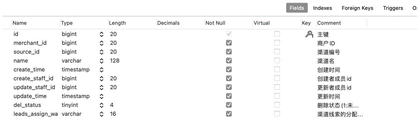
FIG. 3 is a schematic diagram of a data model designer building a data model;
FIG. 4 is a visualization flow design diagram;
FIG. 5 is an API flow diagram of a debug design;
FIG. 6 is a schematic diagram of environment publishing of APIs;
FIG. 7 is a flow diagram of low code design.
The implementation, functional features and advantages of the objects of the present invention will be further explained with reference to the accompanying drawings.
Detailed Description
It should be understood that the specific embodiments described herein are merely illustrative of the invention and are not intended to limit the invention.
The invention provides a low-code API design and development method, which aims to accelerate the API design and development interaction process and improve the API design and development efficiency, relates to the technical field of information, and particularly relates to the sub-fields of low code, flow arrangement, function as a service (FaaS), data modeling and the like.
As shown in FIG. 1, the preferred embodiment of the low-code API design and development method of the present invention comprises the following steps:
step S10, establishing a data model: and establishing a data model according to the service scene through a data model designer.
In this embodiment, the low-code API design and development method may be applied to a low-code API design and development system, which includes six parts as shown in fig. 2: the method comprises the steps of convenient data modeling tools, visual process development, convenient debugging tools, development of scripting languages and operation hosting environments.
In this embodiment, when a data model is established, the data model may be established according to a service scenario by a convenient data modeling tool, that is, a data model designer.
Specifically, the step S10 includes: the names, types and corresponding meaning interpretations of the data fields within each data entity are added and modified by the data model designer.
It can be understood that, in the present embodiment, the Data model design bottom layer is extracted by using a relational database, but in order to refer to Data in the visual design process, the designed Data model must be described and represented, and the present embodiment uses a custom Meta Data to represent the designed Data model, and the Meta Data is generated during the Data model design.
Meta Data of a Data model contains the following description information:
a) information of each field and type of the data model;
b) the underlying database to which the data relates stores relevant information (addresses of different contexts of the DB, base table information).
In step S10, the present embodiment can perform modeling of structured data on business data, support classification and sub-environment management of modeling data, support modeling of data sets on a basic data model, and support reference of data objects in visual process design and scripting language.
Step S20, visualization process design: and creating an API and performing the visualization arrangement of the processing flow in the flow design module based on the data model.
Specifically, step S20 includes: predefining data reference, condition selection, code and input and output flow design modules.
And the data defined by the data model is referred in a data reference module, and the data fields in the reference are judged to be equal to, unequal to, greater than or equal to or less than or equal to the conditions in a condition selection module.
Entering different processing nodes, entering can be a code processing node, the code processing node can receive result input and data reference from the previous node, flexible processing is carried out at the code level, and then entering the next node for data storage or API result output.
It should be noted that, in step S20, in a more complex business link in the process of flow development, development of a code function is performed, and an API output result is designed, so that it can be supported that a function processing node of a code type is embedded in the process of visual flow design, and a language supported by the code includes Python, Java, JavaScript, and the like.
In addition, in step S20, the flow instructions of the program design are visually mapped, and corresponding UI interaction operations are provided to visualize and low code the flow design, and data involved in data modeling can be referenced in the flow.
Step S30, debugging the API flow of the design: and for the designed API flow, filling API input data at an API input position, and verifying whether output is expected output at an API output position so as to verify whether errors occur in flow nodes.
In step S30, the embodiment can run and debug the designed flow, and check whether the final output of the designed data model, data view and business flow is in accordance with the expectation.
And step S40, if no error occurs, the designed data and API flows are released and run in a public/private hosting environment.
In this embodiment, for the data model, the business process, the code function, and the associated API, the publishing and running of multiple instances in different environments including, but not limited to, a development environment, a test environment, and a formal environment are supported.
In step S30, the present embodiment debugs the API flow of the design: for a designed API flow, filling API input data at an API input position, and verifying whether output is expected output at an API output position so as to verify whether errors occur in flow nodes, wherein the steps of:
if the error occurs, displaying error information at the output position, and checking where the error exists in the design flow.
The low code API design and development methods of the present invention are described in further detail below.
It is a first object of the present invention to provide multi-environment isolation support
The software development model based on continuous iteration needs to isolate the production environment from the ongoing development and test environment, and as an overall solution, the first solution is to support project multi-environment.
The scheme provided by the low-code API design and development method is as follows: the development activities are organized in projects, each project having two types of environments, a "development environment" and a "production environment". In the links of data modeling, visual process editing, code development and the like, the process from the 'development environment' to the 'production environment' needs to be carried out.
Secondly, modeling data:
data modeling may be accomplished by a data model designer, as shown in FIG. 3.
The data model designer can add and modify data entities, the data fields in each data entity can be processed in the manner shown in fig. 3, and the names, types and corresponding meaning explanations of the data fields can be set.
Thirdly, visual flow design:
based on the data model, after the data model is designed, the creation of the API and the visual arrangement of the processing flow are carried out in a flow design module.
As shown in fig. 4, several main process design modules such as "data reference", "condition selection", "code", "input/output" and the like are first defined in advance in the visual process design, in the "data reference" module, data defined by the data model can be referred, and in the "condition selection", authenticity judgment such as that the condition is equal to, not greater than or equal to, and the like can be performed on the data field in the reference. After judgment, entering different processing nodes, entering the processing node which can be a code, receiving result input and data reference from the previous node at the processing node of the code, performing more flexible processing at the code level, and entering the next node for data storage or API result output.
Fourthly, debugging the API flow of the design:
and for the designed API flow, filling API input data at an API input position, and verifying whether output is expected output at an API output position so as to verify whether errors occur in flow nodes. And if errors occur, displaying error information at the output position, thereby checking where the errors exist in the design flow.
As shown in FIG. 5, FIG. 5 is a schematic diagram of an API flow for a debug design.
Fifthly, releasing the environment of the API:
the low code development design activities of the API are by default performed in the development environment, at which point the API will need to be released to the production environment if it is developed, as shown in fig. 6.
The core of the preferred embodiment of the low code API design and development method of the present invention is to solve two problems: 1. reference and access of data in low code designs; 2. abstract description and explanatory execution of the flow.
The following two issues are addressed:
1. the Data model design bottom layer is accessed by using a relational database, but in order to reference Data in the visual design process, the designed Data model must be described and represented, and the invention uses the customized Meta Data to represent the designed Data model, and the Meta Data is generated during the design of the Data model.
Meta Data of a Data model includes the following description information:
a) information of each field and type of the data model;
b) the underlying database to which the data relates stores relevant information (addresses of different contexts of the DB, base table information).
2. To implement low-code flow design, the designed low-code flow is also described, stored, and executed. As shown in FIG. 7, the flow design of the present invention is abstracted into an execution graph consisting of nodes and directed edges, each node having its node type, input and output data representation and the direction of the next node.
After the flow is designed, the nodes and the pointing association information between the nodes are stored in a relational database, and when executed, read from the database by an execution engine and loaded to the managed execution environment. The flow starts triggering the overall execution flow when receiving the input of the API.
When the execution engine executes the flow, the data and the code referred by the nodes need to be expanded, interpreted and loaded.
The low-code API design and development method has the beneficial effects that: through the technical scheme, the invention comprises the following steps: step S10, establishing a data model: establishing a data model according to a business scene through a data model designer; step S20, visualization process design: based on the data model, creating an API and processing the visualization arrangement of the flow in a flow design module; step S30, debugging the API flow of the design: filling API input data in the designed API flow at an API input position, and verifying whether output is expected output at an API output position so as to verify whether errors occur in flow nodes; and step S40, if no error occurs, the designed data and API flow are issued and run in a public/private hosting environment, so that the design, development and delivery process of the API can be accelerated, and the design and development efficiency of the API can be improved.
To achieve the above object, the present invention further proposes a low-code API design and development system, which includes a memory, a processor, and a low-code API design and development program stored on the processor, and when executed by the processor, the low-code API design and development program performs the following steps:
step S10, establishing a data model: and establishing a data model according to the service scene through a data model designer.
Step S20, visualization process design: and creating an API and performing the visualization arrangement of the processing flow in the flow design module based on the data model.
Step S30, debugging the API flow of the design: and for the designed API flow, filling API input data at an API input position, and verifying whether output is expected output at an API output position so as to verify whether errors occur in flow nodes.
And step S40, if no error occurs, issuing the designed data and API flow, and operating in a public/private hosting environment.
Further, the low-code API design and development program when executed by the processor further performs the steps of:
the names, types and corresponding meaning interpretations of the data fields within each data entity are added and modified by the data model designer.
Further, the low code API design and development program when executed by the processor further performs the steps of:
predefining data reference, condition selection, code and input and output flow design modules.
And the data defined by the data model is referred in a data reference module, and the data fields in the reference are judged to be equal to, unequal to, greater than or equal to or less than or equal to the conditions in a condition selection module.
Entering different processing nodes, entering can be a processing node of a code, the processing node of the code can receive result input and data reference from the previous node, flexible processing is carried out at a code level, and then entering the next node for data storage or API result output.
Further, the low-code API design and development program when executed by the processor further performs the steps of:
if an error occurs, displaying error information at an output place, and checking where the error exists in the design flow.
The beneficial effects of the low-code API design and development system are as follows: through the technical scheme, the invention comprises the following steps: step S10, establishing a data model: establishing a data model according to a business scene through a data model designer; step S20, visualization process design: based on the data model, creating an API (application programming interface) and performing visual arrangement of processing flow in a flow design module; step S30, debugging the API flow of the design: filling API input data in the designed API flow at an API input position, and verifying whether output is expected output at an API output position so as to verify whether errors occur in flow nodes; and step S40, if no error occurs, the designed data and API flow are released and run in a public/private hosting environment, so that the design and development delivery process of the API can be accelerated, and the design and development efficiency of the API can be improved.
In order to achieve the above object, the present invention further provides a computer-readable storage medium, where a low-code API design and development program is stored, and when the low-code API design and development program is executed by a processor, the steps of the method according to the above embodiment are performed, which is not described herein again.
The above description is only a preferred embodiment of the present invention, and not intended to limit the scope of the present invention, and all modifications of equivalent structures and equivalent processes, which are made by using the contents of the present specification and the accompanying drawings, or directly or indirectly applied to other related technical fields, are included in the scope of the present invention.
Claims (10)
1. A low-code API design and development method, said method comprising the steps of:
step S10, establishing a data model: establishing a data model according to a business scene through a data model designer;
step S20, visualization process design: based on the data model, creating an API and processing the visualization arrangement of the flow in a flow design module;
step S30, debugging the API flow of the design: filling API input data in the designed API flow at an API input position, and verifying whether output is expected output at an API output position so as to verify whether errors occur in flow nodes;
and step S40, if no error occurs, issuing the designed data and API flow, and operating in a public/private hosting environment.
2. The method for designing and developing a low-code API according to claim 1, wherein the step S10 of building a data model according to the business scenario through a data model designer includes:
the names, types and corresponding meaning interpretations of the data fields within each data entity are added and modified by the data model designer.
3. The method for designing and developing a low-code API according to claim 1, wherein the step S20 of creating an API and performing a visualization layout of the process flow in the process design module based on the data model comprises:
predefining a data reference, condition selection, code and input/output flow design module;
data defined by the data model are quoted in a data quote module, and the condition equal, unequal, greater than or equal to or less than or equal to judgment is carried out on the data fields quoted in a condition selection module;
entering different processing nodes, entering can be a processing node of a code, the processing node of the code can receive result input and data reference from the previous node, flexible processing is carried out at a code level, and then entering the next node for data storage or API result output.
4. The method for designing and developing a low-code API according to claim 1, wherein the step S30 is performed by debugging the API flow of the design: for a designed API flow, filling API input data at an API input position, and verifying whether output is expected output at an API output position so as to verify whether errors occur in flow nodes, wherein the steps of:
if the error occurs, displaying error information at the output position, and checking where the error exists in the design flow.
5. The method for designing and developing the API with low code according to any one of claims 1 to 4, wherein in step S10, Meta Data is adopted to represent the built Data model, and the Meta Data of the Data model at least comprises information of various fields and types of the Data model and related information stored in an underlying database to which the Data relates.
6. A low-code API design and development system comprising a memory, a processor, and a low-code API design and development program stored on the processor, the low-code API design and development program when executed by the processor performing the steps of:
step S10, establishing a data model: establishing a data model according to a business scene through a data model designer;
step S20, visualization process design: based on the data model, creating an API and processing the visualization arrangement of the flow in a flow design module;
step S30, debugging the API flow of the design: filling API input data in the designed API flow at an API input position, and verifying whether output is expected output at an API output position so as to verify whether errors occur in flow nodes;
and step S40, if no error occurs, issuing the designed data and API flow, and operating in a public/private hosting environment.
7. The low-code API design and development system of claim 6 wherein the low-code API design and development program, when executed by the processor, further performs the steps of:
the names, types and corresponding meaning interpretations of data fields within each data entity are added and modified by the data model designer.
8. The low-code API design and development system of claim 6 wherein the low-code API design and development program, when executed by the processor, further performs the steps of:
predefining a data reference, condition selection, code and input/output flow design module;
data defined by the data model are quoted in a data quote module, and the condition equal, unequal, greater than or equal to or less than or equal to judgment is carried out on the data fields quoted in a condition selection module;
entering different processing nodes, entering can be a processing node of a code, the processing node of the code can receive result input and data reference from the previous node, flexible processing is carried out at a code level, and then entering the next node for data storage or API result output.
9. The low-code API design and development system of claim 6 wherein the low-code API design and development program, when executed by the processor, further performs the steps of:
if the error occurs, displaying error information at the output position, and checking where the error exists in the design flow.
10. A computer-readable storage medium, characterized in that the computer-readable storage medium stores a low-code API design and development program which, when executed by a processor, performs the steps of the method according to any one of claims 1 to 5.
Priority Applications (1)
| Application Number | Priority Date | Filing Date | Title |
|---|---|---|---|
| CN202210149833.9A CN114610298A (en) | 2022-02-18 | 2022-02-18 | Low-code API (application program interface) design and development method, system and storage medium |
Applications Claiming Priority (1)
| Application Number | Priority Date | Filing Date | Title |
|---|---|---|---|
| CN202210149833.9A CN114610298A (en) | 2022-02-18 | 2022-02-18 | Low-code API (application program interface) design and development method, system and storage medium |
Publications (1)
| Publication Number | Publication Date |
|---|---|
| CN114610298A true CN114610298A (en) | 2022-06-10 |
Family
ID=81858979
Family Applications (1)
| Application Number | Title | Priority Date | Filing Date |
|---|---|---|---|
| CN202210149833.9A Pending CN114610298A (en) | 2022-02-18 | 2022-02-18 | Low-code API (application program interface) design and development method, system and storage medium |
Country Status (1)
| Country | Link |
|---|---|
| CN (1) | CN114610298A (en) |
Cited By (2)
| Publication number | Priority date | Publication date | Assignee | Title |
|---|---|---|---|---|
| CN117971922A (en) * | 2024-01-24 | 2024-05-03 | 北京中数睿智科技有限公司 | Method for decoupling data mining process based on database |
| CN118259884A (en) * | 2023-04-07 | 2024-06-28 | 中兴通讯股份有限公司 | Low-code application generation method, low-code development platform and storage medium |
Citations (4)
| Publication number | Priority date | Publication date | Assignee | Title |
|---|---|---|---|---|
| US20040107414A1 (en) * | 2002-10-21 | 2004-06-03 | Youval Bronicki | Method, a language and a system for the definition and implementation of software solutions |
| CN110825362A (en) * | 2019-11-04 | 2020-02-21 | 广东道一信息技术股份有限公司 | Low-code application software development system and method |
| CN111427576A (en) * | 2020-03-27 | 2020-07-17 | 远光软件股份有限公司 | Method, device, storage medium and terminal for configuring application program interface |
| CN113721901A (en) * | 2021-06-25 | 2021-11-30 | 国网安徽省电力有限公司 | Low-code financial data analysis visualization engine |
-
2022
- 2022-02-18 CN CN202210149833.9A patent/CN114610298A/en active Pending
Patent Citations (4)
| Publication number | Priority date | Publication date | Assignee | Title |
|---|---|---|---|---|
| US20040107414A1 (en) * | 2002-10-21 | 2004-06-03 | Youval Bronicki | Method, a language and a system for the definition and implementation of software solutions |
| CN110825362A (en) * | 2019-11-04 | 2020-02-21 | 广东道一信息技术股份有限公司 | Low-code application software development system and method |
| CN111427576A (en) * | 2020-03-27 | 2020-07-17 | 远光软件股份有限公司 | Method, device, storage medium and terminal for configuring application program interface |
| CN113721901A (en) * | 2021-06-25 | 2021-11-30 | 国网安徽省电力有限公司 | Low-code financial data analysis visualization engine |
Cited By (2)
| Publication number | Priority date | Publication date | Assignee | Title |
|---|---|---|---|---|
| CN118259884A (en) * | 2023-04-07 | 2024-06-28 | 中兴通讯股份有限公司 | Low-code application generation method, low-code development platform and storage medium |
| CN117971922A (en) * | 2024-01-24 | 2024-05-03 | 北京中数睿智科技有限公司 | Method for decoupling data mining process based on database |
Similar Documents
| Publication | Publication Date | Title |
|---|---|---|
| US9021440B1 (en) | System and method for automated test script generation | |
| CN110716870B (en) | Automatic service testing method and device | |
| US9037595B2 (en) | Creating graphical models representing control flow of a program manipulating data resources | |
| US8291372B2 (en) | Creating graphical models representing control flow of a program manipulating data resources | |
| CN101482817B (en) | Large-particle Java component assembly method based on black box | |
| CN102207903A (en) | Automatically redirecting method calls for unit testing | |
| CN106649103A (en) | Android application program automatically black box testing method and system | |
| CN111026670B (en) | Test case generation method, test case generation device and storage medium | |
| US10445225B2 (en) | Command coverage analyzer | |
| CN114610298A (en) | Low-code API (application program interface) design and development method, system and storage medium | |
| CN115222376A (en) | A method, device, equipment and storage medium for changing aircraft tooling | |
| CN111142862A (en) | System and method for automatically generating code | |
| US20080052690A1 (en) | Testing software with a build engine | |
| CN104317559A (en) | Visual modeling platform based on GMF | |
| KR20090099977A (en) | Reserved component container based software development method and apparatus | |
| US7958487B2 (en) | Apparatus, system, and method for modifying an integration software template | |
| CN114168121B (en) | Software system, terminal and storage medium based on code factory mode development | |
| Zhang et al. | Automated unit testing intelligent agents in PDT | |
| CN113220586A (en) | Automatic interface pressure test execution method, device and system | |
| CN113220278A (en) | Page construction method, system, medium and device suitable for multiple scenes | |
| CN114116470B (en) | An automated static model checking method and device | |
| JP2016126700A (en) | Program verification device, program verification method, and program verification program | |
| Al-Azzoni et al. | A framework for the regression testing of model-to-model transformations | |
| CN116204429B (en) | Code organization and debugging method, system and storage medium thereof | |
| Raana et al. | C++ bug cub: logical bug detection for C++ code |
Legal Events
| Date | Code | Title | Description |
|---|---|---|---|
| PB01 | Publication | ||
| PB01 | Publication | ||
| SE01 | Entry into force of request for substantive examination | ||
| SE01 | Entry into force of request for substantive examination | ||
| RJ01 | Rejection of invention patent application after publication |
Application publication date: 20220610 |
|
| RJ01 | Rejection of invention patent application after publication |