CN114492721A - Hybrid precision quantification method of neural network - Google Patents
Hybrid precision quantification method of neural network Download PDFInfo
- Publication number
- CN114492721A CN114492721A CN202011163813.4A CN202011163813A CN114492721A CN 114492721 A CN114492721 A CN 114492721A CN 202011163813 A CN202011163813 A CN 202011163813A CN 114492721 A CN114492721 A CN 114492721A
- Authority
- CN
- China
- Prior art keywords
- precision
- layer
- quantization
- final output
- objective function
- Prior art date
- Legal status (The legal status is an assumption and is not a legal conclusion. Google has not performed a legal analysis and makes no representation as to the accuracy of the status listed.)
- Pending
Links
Images


Classifications
-
- G—PHYSICS
- G06—COMPUTING OR CALCULATING; COUNTING
- G06N—COMPUTING ARRANGEMENTS BASED ON SPECIFIC COMPUTATIONAL MODELS
- G06N3/00—Computing arrangements based on biological models
- G06N3/02—Neural networks
- G06N3/04—Architecture, e.g. interconnection topology
-
- G—PHYSICS
- G06—COMPUTING OR CALCULATING; COUNTING
- G06N—COMPUTING ARRANGEMENTS BASED ON SPECIFIC COMPUTATIONAL MODELS
- G06N3/00—Computing arrangements based on biological models
- G06N3/02—Neural networks
- G06N3/04—Architecture, e.g. interconnection topology
- G06N3/047—Probabilistic or stochastic networks
-
- G—PHYSICS
- G06—COMPUTING OR CALCULATING; COUNTING
- G06N—COMPUTING ARRANGEMENTS BASED ON SPECIFIC COMPUTATIONAL MODELS
- G06N3/00—Computing arrangements based on biological models
- G06N3/02—Neural networks
- G06N3/04—Architecture, e.g. interconnection topology
- G06N3/045—Combinations of networks
-
- G—PHYSICS
- G06—COMPUTING OR CALCULATING; COUNTING
- G06F—ELECTRIC DIGITAL DATA PROCESSING
- G06F17/00—Digital computing or data processing equipment or methods, specially adapted for specific functions
- G06F17/10—Complex mathematical operations
- G06F17/18—Complex mathematical operations for evaluating statistical data, e.g. average values, frequency distributions, probability functions, regression analysis
-
- G—PHYSICS
- G06—COMPUTING OR CALCULATING; COUNTING
- G06N—COMPUTING ARRANGEMENTS BASED ON SPECIFIC COMPUTATIONAL MODELS
- G06N3/00—Computing arrangements based on biological models
- G06N3/02—Neural networks
- G06N3/04—Architecture, e.g. interconnection topology
- G06N3/0495—Quantised networks; Sparse networks; Compressed networks
-
- G—PHYSICS
- G06—COMPUTING OR CALCULATING; COUNTING
- G06N—COMPUTING ARRANGEMENTS BASED ON SPECIFIC COMPUTATIONAL MODELS
- G06N3/00—Computing arrangements based on biological models
- G06N3/02—Neural networks
- G06N3/04—Architecture, e.g. interconnection topology
- G06N3/0499—Feedforward networks
-
- G—PHYSICS
- G06—COMPUTING OR CALCULATING; COUNTING
- G06N—COMPUTING ARRANGEMENTS BASED ON SPECIFIC COMPUTATIONAL MODELS
- G06N3/00—Computing arrangements based on biological models
- G06N3/02—Neural networks
- G06N3/06—Physical realisation, i.e. hardware implementation of neural networks, neurons or parts of neurons
- G06N3/063—Physical realisation, i.e. hardware implementation of neural networks, neurons or parts of neurons using electronic means
Landscapes
- Engineering & Computer Science (AREA)
- Physics & Mathematics (AREA)
- Theoretical Computer Science (AREA)
- Data Mining & Analysis (AREA)
- General Physics & Mathematics (AREA)
- Life Sciences & Earth Sciences (AREA)
- Mathematical Physics (AREA)
- Health & Medical Sciences (AREA)
- Biomedical Technology (AREA)
- Biophysics (AREA)
- General Engineering & Computer Science (AREA)
- Software Systems (AREA)
- Computational Linguistics (AREA)
- Computing Systems (AREA)
- Molecular Biology (AREA)
- General Health & Medical Sciences (AREA)
- Evolutionary Computation (AREA)
- Artificial Intelligence (AREA)
- Mathematical Optimization (AREA)
- Computational Mathematics (AREA)
- Mathematical Analysis (AREA)
- Pure & Applied Mathematics (AREA)
- Probability & Statistics with Applications (AREA)
- Neurology (AREA)
- Bioinformatics & Cheminformatics (AREA)
- Bioinformatics & Computational Biology (AREA)
- Evolutionary Biology (AREA)
- Operations Research (AREA)
- Algebra (AREA)
- Databases & Information Systems (AREA)
- Compression, Expansion, Code Conversion, And Decoders (AREA)
Abstract
Description
技术领域technical field
本发明是有关于一种混合精度量化方法,且特别是有关于一种神经网络的混合精度量化方法。The present invention relates to a mixed-precision quantization method, and in particular, to a mixed-precision quantization method of a neural network.
背景技术Background technique
在神经网络的应用中,预测过程需要大量的计算资源。神经网络量化可减少计算成本,但是可能会降低预测精准度。目前的量化方法都是使用同一种精度来量化整个神经网络,但此作法缺乏弹性。且目前的量化方法中,大多需要搭配大量已标注数据,并整合至训练流程才可完成。In the application of neural network, the prediction process requires a lot of computing resources. Neural network quantization reduces computational cost, but may reduce prediction accuracy. Current quantization methods use the same precision to quantify the entire neural network, but this approach lacks flexibility. And most of the current quantification methods need to match a large amount of labeled data and integrate it into the training process to complete.
另外,在目前的方法中,若要判断神经网络中一特定层的量化损失,仅会考虑此特定层的状况,例如此特定层的输出的损失、权重的损失等,并未考虑此特定层对最终结果的影响性,故目前的方法无法在成本与预测精准度之间取得最佳平衡。因此,需要一种量化方法来克服上述问题。In addition, in the current method, to judge the quantization loss of a specific layer in the neural network, only the status of the specific layer is considered, such as the loss of the output of the specific layer, the loss of the weight, etc., and the specific layer is not considered. Therefore, the current method cannot achieve the best balance between cost and prediction accuracy. Therefore, a quantization method is needed to overcome the above problems.
发明内容SUMMARY OF THE INVENTION
本发明的目的在于提出一种神经网络的混合精度量化方法,起可根据部分量化后的神经网络的最后输出的损失,决定此部分的量化精度。The purpose of the present invention is to propose a mixed-precision quantization method of neural network, which can determine the quantization precision of this part according to the loss of the final output of the partially quantized neural network.
根据本发明的一实施例,提出一种神经网络的混合精度量化方法,神经网络为一第一精度,且包括多个层及一原始最终输出,混合精度量化方法包括以下步骤:对该些层中的一层及该层的输入进行一第二精度的量化(quantize);根据该第二精度的该层及该层的输入获得该层的输出;对该层的输出进行反量化(dequantize),并将反量化的该层的输出输入至下一层;获得一最终输出;根据该最终输出与该原始最终输出以获得一目标函数的值;重复上述步骤直到获得每一该些层对应的该目标函数的值;根据每一该些层对应的该目标函数的值决定每一该些层的一量化精度;其中,该量化精度为该第一精度、该第二精度、一第三精度或一第四精度。According to an embodiment of the present invention, a mixed-precision quantization method of a neural network is proposed. The neural network is of a first precision and includes a plurality of layers and an original final output. The mixed-precision quantization method includes the following steps: for these layers One layer and the input of the layer are quantized with a second precision; the output of the layer is obtained according to the input of the layer and the layer of the second precision; the output of the layer is dequantized (dequantize) , and input the inverse quantized output of this layer to the next layer; obtain a final output; obtain a value of an objective function according to the final output and the original final output; repeat the above steps until the corresponding The value of the objective function; a quantization precision of each of the layers is determined according to the value of the objective function corresponding to each of the layers; wherein, the quantization precision is the first precision, the second precision, and a third precision or a fourth precision.
以下结合附图和具体实施例对本发明进行详细描述,但不作为对本发明的限定。The present invention is described in detail below with reference to the accompanying drawings and specific embodiments, but is not intended to limit the present invention.
附图说明Description of drawings
图1绘示根据本发明一实施例的神经网络的示意图。FIG. 1 is a schematic diagram of a neural network according to an embodiment of the present invention.
图2绘示根据本发明一实施例的神经网络的混合精度量化装置的示意图。FIG. 2 is a schematic diagram of a mixed-precision quantization apparatus of a neural network according to an embodiment of the present invention.
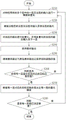
图3绘示根据本发明一实施例的神经网络的混合精度量化方法的流程图。3 is a flowchart illustrating a mixed-precision quantization method of a neural network according to an embodiment of the present invention.
图4绘示根据本发明一实施例的对神经网络的第一层及其输入进行量化的示意图。FIG. 4 is a schematic diagram of quantizing the first layer of a neural network and its input according to an embodiment of the present invention.
图5绘示根据本发明一实施例的对神经网络的第二层及其输入进行量化的示意图。FIG. 5 is a schematic diagram of quantizing the second layer of the neural network and its input according to an embodiment of the present invention.
图6绘示根据本发明一实施例的对神经网络的第三层及其输入进行量化的示意图。FIG. 6 is a schematic diagram of quantizing the third layer of the neural network and its input according to an embodiment of the present invention.
图7绘示根据本发明另一实施例的神经网络的混合精度量化方法的流程图。FIG. 7 is a flowchart illustrating a mixed-precision quantization method of a neural network according to another embodiment of the present invention.
附图标记reference number
NN:神经网络NN: Neural Network
L1:第一层L1: first floor
L2:第二层L2: second floor
L3:第三层L3: The third floor
100:混合精度量化装置100: Mixed-precision quantizer
110:量化单元110: Quantization unit
120:处理单元120: Processing unit
130:反量化单元130: Inverse Quantization Unit
S110-S170、S210-S280:步骤S110-S170, S210-S280: Steps
具体实施方式Detailed ways
下面结合附图对本发明的结构原理和工作原理作具体的描述:Below in conjunction with accompanying drawing, structure principle and working principle of the present invention are described in detail:
请参照图1,其绘示根据本发明一实施例的神经网络NN的示意图。神经网络NN具有第一层L1、第二层L2及第三层L3。第一层L1的输入为X1且输出为X2、第二层L2的输入为X2且输出为X3及第三层L3的输入为X3且输出为X4。也就是说,X2同时为第一层L1的输出及第二层L2的输入,X3同时为第二层L2的输出及第三层L3的输入。其中,X4为神经网络NN的最终输出,以下称为原始最终输出。神经网络NN为已训练的神经网络,且以一第一精度运算。第一精度例如为32位浮点数(FP32)或64位浮点数(FP64),本发明不以此为限。在另一实施例中,神经网络NN可为两层或更多层。为方便说明,故以神经网络NN具有三层为例。Please refer to FIG. 1 , which is a schematic diagram of a neural network NN according to an embodiment of the present invention. The neural network NN has a first layer L1, a second layer L2 and a third layer L3. The input of the first layer L1 is X1 and the output is X2, the input of the second layer L2 is X2 and the output is X3 and the input of the third layer L3 is X3 and the output is X4. That is to say, X2 is the output of the first layer L1 and the input of the second layer L2 at the same time, and X3 is the output of the second layer L2 and the input of the third layer L3 at the same time. Among them, X4 is the final output of the neural network NN, hereinafter referred to as the original final output. The neural network NN is a trained neural network and operates with a first precision. The first precision is, for example, a 32-bit floating point number (FP32) or a 64-bit floating point number (FP64), which is not limited in the present invention. In another embodiment, the neural network NN may be two or more layers. For the convenience of description, the neural network NN has three layers as an example.
请参照图2,其绘示根据本发明一实施例的神经网络的混合精度量化装置100的示意图。混合精度量化装置100包括一量化单元110、一处理单元120及一反量化单元130。量化单元110、处理单元120及反量化单元130例如是一芯片、一电路板或一电路。Please refer to FIG. 2 , which is a schematic diagram of a mixed-
图3绘示根据本发明一实施例的神经网络的混合精度量化方法的流程图。图4绘示根据本发明一实施例的对神经网络NN的第一层L1及其输入进行量化的示意图。图5绘示根据本发明一实施例的对神经网络NN的第二层L2及其输入进行量化的示意图。图6绘示根据本发明一实施例的对神经网络NN的第三层L3及其输入进行量化的示意图。以下以硬件支持两种量化精度为例进行说明,两种量化精度分别为第二精度及第三精度。第二精度及第三精度分别为4位整数(INT4)、8位整数(INT8)、16位脑浮点(BF16)其中之一,但本发明不以此为限。在此实施例中,第一精度高于第二精度及第三精度,且第三精度高于第二精度。请同时参照图1至图6。3 is a flowchart illustrating a mixed-precision quantization method of a neural network according to an embodiment of the present invention. FIG. 4 is a schematic diagram of quantizing the first layer L1 of the neural network NN and its input according to an embodiment of the present invention. FIG. 5 is a schematic diagram illustrating the quantization of the second layer L2 of the neural network NN and its input according to an embodiment of the present invention. FIG. 6 is a schematic diagram illustrating the quantization of the third layer L3 of the neural network NN and its input according to an embodiment of the present invention. Hereinafter, the hardware supports two kinds of quantization precisions as an example for description, and the two kinds of quantization precisions are the second precision and the third precision respectively. The second precision and the third precision are respectively one of 4-bit integer (INT4), 8-bit integer (INT8), and 16-bit brain floating point (BF16), but the invention is not limited to this. In this embodiment, the first precision is higher than the second precision and the third precision, and the third precision is higher than the second precision. Please refer to Figure 1 to Figure 6 at the same time.
步骤S110,量化单元110对神经网络NN的多个层中的一层及该层的输入进行一第二精度的量化(quantize)。举例来说,量化单元110首先对第一层L1及第一层L1的输入X1进行第二精度的量化,以获得第二精度的第一层L1'及输入X11,如图2及图4所示。Step S110, the
步骤S120,处理单元120根据第二精度的该层及该层的输入获得该层的输出。举例来说,处理单元120根据量化为第二精度的第一层L1'及第一层L1'的输入X11获得输出X12,如图2及图4所示。此时输出X12为第二精度。Step S120, the
步骤S130,对该层的输出进行反量化(dequantize),并将反量化的该层的输出输入至下一层。举例来说,反量化单元130对第一层L1'的输出X12进行反量化以得到反量化的第一层L1'的输出X2',并将输出X2'输入至第二层L2,如图4所示。此时反量化后的输出X2'为第一精度。In step S130, the output of the layer is dequantized, and the dequantized output of the layer is input to the next layer. For example, the
步骤S140,处理单元120获得一最终输出。举例来说,处理单元120获得第二层L2的输出X3',并输入至第三层L3,如图4所示。接着获得第三层L3的输出X4'。输出X4'为神经网络NN的最后输出。第二层L2、第二层L2的输出X3'、第三层L3及第三层L3的输出X4'为第一精度。也就是说,在图4中,仅第一层L1'的输入X11、第一层L1'及第一层L1'的输出X12为第二精度。In step S140, the
步骤S150,处理单元120根据最终输出与原始最终输出以获得一目标函数的值。举例来说,处理单元120根据最终输出X4'与原始最终输出X4获得目标函数LS1的值。目标函数LS1可为信号量化噪声比(Signal-to-quantization-noiseratio,SQNR)、交叉熵(crossentropy)、余弦相似度(cosinesimilarity)、或KL散度(KLdivergence),本发明不以此为限,只要可计算出最终输出X4'与原始最终输出X4之间的损失即可。在另一实施例中,处理单元120根据部分的最终输出X4'与部分的原始最终输出X4以获得目标函数LS1的值。例如,神经网络NN用于物体检测,故最终输出X4'及原始最终输出X4包含坐标及类别,处理单元120可根据最终输出X4'的坐标与原始最终输出X4的坐标获得目标函数LS1的值。In step S150, the
在另一实施例中,当最终输出X4'及原始最终输出X4为多个时,则在步骤S150中处理单元120可根据多个最终输出X4'与多个原始最终输出X4获得目标函数的值。举例来说,处理单元120可平均、加权平均或取部分的多个最终输出X4'与多个原始最终输出X4,以获得目标函数的值。但本发明不以此为限,只要是根据多个最终输出X4'与多个原始最终输出X4获得目标函数的值即可。In another embodiment, when there are multiple final outputs X4' and multiple original final outputs X4, in step S150, the
步骤S160,处理单元120判断是否获得每一层量化后所对应的目标函数的值。若是,则进入步骤S170;若否,则回到步骤S110,量化单元110对另一层(例如第二层L2或第三层L3)及此另一层的输入(第二层L2的输入X2或第三层L3的输入X3)进行第二精度的量化,以得到此另一层所对应的目标函数的值。也就是说,步骤S110至S150会执行多次直到获得每一层对应的目标函数的值,且每一次执行步骤S110至S150都是独立的。例如获得第一层L1量化后的最终输出X4'与原始最终输出X4的目标函数LS1的值之后(如图1、图2及图4所示),再次执行步骤S110至S150以获得第二层L2量化后的最终输出X4”与原始最终输出X4的目标函数LS2的值(如图1、图2及图5所示),最后再次执行步骤S110至S150以获得第三层L3量化后的最终输出X4”'与原始最终输出X4的目标函数LS3的值(如图1、图2及图6所示)。在获得每一层对应的目标函数的值之后,进入步骤S170。Step S160, the
步骤S170,处理单元120根据每一层对应的目标函数的值决定每一层的一量化精度。更进一步来说,处理单元120根据每一层对应的目标函数的值是否大于一门槛值,决定每一层分别以第二精度或第三精度进行量化。举例来说,假设第一层L1的目标函数的值大于门槛值,表示损失小,则处理单元120决定以第二精度对第一层L1进行量化。假设第二层L2的目标函数的值未大于门槛值,表示损失大,则处理单元120决定以第三精度对第二层L2进行量化。假设第三层L3的目标函数的值未大于门槛值,表示损失大,则处理单元120决定以第三精度对第三层L3进行量化。换句话说,对于量化后损失大的层,以硬件可支持的两种量化精度中量化精度较高的第三精度对该层进行量化;对于量化后损失小的层,以硬件可支持的两种量化精度中量化精度较低的第二精度对该层进行量化。Step S170, the
图7绘示根据本发明另一实施例的神经网络的混合精度量化方法的流程图。现以图1的神经网络NN搭配图7的方法进行说明。神经网络NN为已训练的神经网络,且以一第一精度运算。第一精度例如为32位浮点数(FP32)或64位浮点数(FP64),本发明不以此为限。以下为硬件支持的四种量化精度为例,四种量化精度分别为第一精度、第二精度、第三精度及第四精度。第二精度、第三精度及第四精度分别为4位整数(INT4)、8位整数(INT8)、16位脑浮点(BF16)其中之一,但本发明不以此为限。在此实施例中,第一精度高于第二精度、第三精度及第四精度,且第四精度高于第三精度以及第三精度高于第二精度。请同时参照图1、图2、图4至图7。图7的步骤S210至S260类似于图3的步骤S110至S160,在此不多赘述。在图7中,首先以第二精度执行多次步骤S210至S260以获得每一层以第二精度量化后所对应的目标函数的值,接着进入步骤S270。FIG. 7 is a flowchart illustrating a mixed-precision quantization method of a neural network according to another embodiment of the present invention. Now, the neural network NN of FIG. 1 is used in combination with the method of FIG. 7 for description. The neural network NN is a trained neural network and operates with a first precision. The first precision is, for example, a 32-bit floating point number (FP32) or a 64-bit floating point number (FP64), which is not limited in the present invention. The following is an example of the four quantization precisions supported by the hardware. The four quantization precisions are the first precision, the second precision, the third precision and the fourth precision. The second precision, the third precision and the fourth precision are respectively one of 4-bit integer (INT4), 8-bit integer (INT8), and 16-bit brain floating point (BF16), but the invention is not limited to this. In this embodiment, the first precision is higher than the second precision, the third precision and the fourth precision, and the fourth precision is higher than the third precision and the third precision is higher than the second precision. Please refer to Figure 1, Figure 2, Figure 4 to Figure 7 at the same time. Steps S210 to S260 in FIG. 7 are similar to steps S110 to S160 in FIG. 3 , and details are not repeated here. In FIG. 7 , steps S210 to S260 are performed multiple times with the second precision to obtain the value of the objective function corresponding to each layer after quantization with the second precision, and then step S270 is entered.
步骤S270,处理单元120根据每一层对应的目标函数的值决定每一层的一量化精度。更进一步来说,处理单元120根据每一层对应的目标函数的值是否大于一门槛值,决定每一层分别以第二精度进行量化或者需进一步判断要以第三精度或第四精度进行量化。举例来说,假设第一层L1的目标函数的值大于门槛值,表示损失小,则处理单元120决定以第二精度对第一层L1进行量化。假设第二层L2及第三层L3的目标函数的值未大于过门槛值,表示损失大,则第二层L2及第三层L3的量化精度可能决定为第三精度或第四精度或者不进行量化(亦即保留在第一精度)。Step S270, the
接着,进入步骤S280,处理单元120判断是否每一层都已决定一精度。若是,则结束流程;若否,则回到步骤S210,以另一精度(例如第三精度)执行多次步骤S210至S260,直到获得还未决定精度的每一层(第二层L2及第三层L3)量化后所对应的目标函数的值。接着进入步骤S270,处理单元120根据还未决定精度的每一层(第二层L2及第三层L3)对应的目标函数的值决定还未决定精度的每一层的一量化精度。图7的实施例与图3的实施例不同之处在于,图7的量化精度超过两种。故以第二精度执行完步骤S210至S270之后,仅决定第一层L1的量化精度为第二精度,还未决定第二层L2及第三层L3的量化精度(可能为第三精度或第四精度或不进行量化(亦即保留在第一精度))。因此,以第三精度针对未决定精度的第二层L2及第三层L3再次执行步骤S210至S270,以决定第二层L2及第三层L3的量化精度。举例来说,由于在步骤S280中,处理单元120判断还未决定第二层L2及第三层L3的量化精度,因此回到步骤S210,以第三精度执行步骤S210至S260,获得第二层L2对应的目标函数的值及第三层L3对应的目标函数的值。接着再次进入步骤S270,处理单元120根据第二层L2及第三层L3对应的目标函数的值决定第二层L2及第三层L3的一量化精度。更进一步来说,处理单元120根据第二层L2及第三层L3对应的目标函数的值是否大于另一门槛值,决定第二层L2及第三层L3分别以第三精度或第四精度进行量化。举例来说,假设第二层L2的目标函数的值大于此另一门槛值,表示损失小,则处理单元120决定以第三精度对第二层L2进行量化。假设第三层L3的目标函数的值未大于此另一门槛值,表示损失大,则第三层L3的量化精度可能决定为第四精度或者不进行量化(亦即保留在第一精度)。Next, in step S280, the
接着,由于在步骤S280中,处理单元120判断还未决定第三层L3的量化精度,因此回到步骤S210,以第四精度执行步骤S210至S260,获得第三层L3对应的目标函数的值。接着再次进入步骤S270,处理单元120根据第三层L3对应的目标函数的值决定第三层L3的一量化精度。更进一步来说,处理单元120根据第三层L3对应的目标函数的值是否大于另一门槛值,决定第三层L3以第四精度进行量化或者不进行量化(亦即保留在第一精度)。举例来说,假设第三层L3的目标函数的值大于此另一门槛值,表示损失小,则处理单元120决定以第四精度对第三层L3进行量化。假设第三层L3的目标函数的值未大于此另一门槛值,表示损失大,则处理单元120决定第三层L3不进行量化(亦即保留在第一精度)。Next, since in step S280, the
上述的图3及图7的神经网络的混合精度量化方法是以层为单位执行,但在另一实施例中,本发明也可以张量(tensor)为单位来执行,本发明不以此为限。换句话说,本发明提出的神经网络的混合精度量化方法,是根据部分量化后所对应的神经网络的最后输出的损失,决定此部分的量化精度。The above-mentioned mixed-precision quantization method of the neural network in FIG. 3 and FIG. 7 is performed in units of layers, but in another embodiment, the present invention can also be performed in units of tensors, and the present invention does not take this as a unit. limit. In other words, the mixed precision quantization method of the neural network proposed by the present invention determines the quantization precision of this part according to the loss of the final output of the neural network corresponding to the partial quantization.
如此一来,通过本发明提出的神经网络的混合精度量化方法,根据每一部分量化后所对应的神经网络的最后输出的损失,决定每一部分的量化精度,可在成本与预测精准度之间取得最佳平衡。另外,本发明提出的神经网络的混合精度量化方法,仅需少量未标注的数据(例如100至1000笔),且不需要整合神经网络的训练流程即可完成。In this way, through the mixed-precision quantization method of the neural network proposed by the present invention, the quantization accuracy of each part is determined according to the loss of the final output of the neural network corresponding to each part after quantization, which can be obtained between the cost and the prediction accuracy. best balance. In addition, the mixed-precision quantization method of the neural network proposed by the present invention only needs a small amount of unlabeled data (for example, 100 to 1000 transactions), and does not need to integrate the training process of the neural network.
当然,本发明还可有其它多种实施例,在不背离本发明精神及其实质的情况下,熟悉本领域的技术人员当可根据本发明作出各种相应的改变和变形,但这些相应的改变和变形都应属于本发明所附的权利要求的保护范围。Of course, the present invention can also have other various embodiments, without departing from the spirit and essence of the present invention, those skilled in the art can make various corresponding changes and modifications according to the present invention, but these corresponding Changes and deformations should belong to the protection scope of the appended claims of the present invention.
Claims (10)
Priority Applications (2)
| Application Number | Priority Date | Filing Date | Title |
|---|---|---|---|
| CN202011163813.4A CN114492721A (en) | 2020-10-27 | 2020-10-27 | Hybrid precision quantification method of neural network |
| US17/483,567 US20220129736A1 (en) | 2020-10-27 | 2021-09-23 | Mixed-precision quantization method for neural network |
Applications Claiming Priority (1)
| Application Number | Priority Date | Filing Date | Title |
|---|---|---|---|
| CN202011163813.4A CN114492721A (en) | 2020-10-27 | 2020-10-27 | Hybrid precision quantification method of neural network |
Publications (1)
| Publication Number | Publication Date |
|---|---|
| CN114492721A true CN114492721A (en) | 2022-05-13 |
Family
ID=81257042
Family Applications (1)
| Application Number | Title | Priority Date | Filing Date |
|---|---|---|---|
| CN202011163813.4A Pending CN114492721A (en) | 2020-10-27 | 2020-10-27 | Hybrid precision quantification method of neural network |
Country Status (2)
| Country | Link |
|---|---|
| US (1) | US20220129736A1 (en) |
| CN (1) | CN114492721A (en) |
Cited By (1)
| Publication number | Priority date | Publication date | Assignee | Title |
|---|---|---|---|---|
| CN115481725A (en) * | 2022-08-12 | 2022-12-16 | 重庆长安汽车股份有限公司 | Neural network quantization accuracy evaluation method, device, electronic equipment and storage medium |
Families Citing this family (2)
| Publication number | Priority date | Publication date | Assignee | Title |
|---|---|---|---|---|
| KR20230134877A (en) * | 2022-03-15 | 2023-09-22 | 삼성전자주식회사 | Electronic device for performing sensitivity-based quantized training and operating method thereof |
| GB202301370D0 (en) | 2023-01-31 | 2023-03-15 | Samsung Electronics Co Ltd | A model for every user and budget:label-free personalised model quantization under memory constraints |
Family Cites Families (11)
| Publication number | Priority date | Publication date | Assignee | Title |
|---|---|---|---|---|
| JP4104435B2 (en) * | 2002-11-26 | 2008-06-18 | 大日本スクリーン製造株式会社 | Control method, control device, and program |
| US11429862B2 (en) * | 2018-03-20 | 2022-08-30 | Sri International | Dynamic adaptation of deep neural networks |
| US11875251B2 (en) * | 2018-05-03 | 2024-01-16 | Samsung Electronics Co., Ltd. | Neural network method and apparatus |
| US11385863B2 (en) * | 2018-08-01 | 2022-07-12 | Hewlett Packard Enterprise Development Lp | Adjustable precision for multi-stage compute processes |
| US11676003B2 (en) * | 2018-12-18 | 2023-06-13 | Microsoft Technology Licensing, Llc | Training neural network accelerators using mixed precision data formats |
| US11475308B2 (en) * | 2019-03-15 | 2022-10-18 | Samsung Electronics Co., Ltd. | Jointly pruning and quantizing deep neural networks |
| US12175359B2 (en) * | 2019-09-03 | 2024-12-24 | International Business Machines Corporation | Machine learning hardware having reduced precision parameter components for efficient parameter update |
| GB201914193D0 (en) * | 2019-10-02 | 2019-11-13 | Aldo Faisal | Digital biomarkers of movement for diagnosis |
| US12067479B2 (en) * | 2019-10-25 | 2024-08-20 | T-Head (Shanghai) Semiconductor Co., Ltd. | Heterogeneous deep learning accelerator |
| CN112200296B (en) * | 2020-07-31 | 2024-04-05 | 星宸科技股份有限公司 | Network model quantization method, device, storage medium and electronic device |
| US20220044109A1 (en) * | 2020-08-06 | 2022-02-10 | Waymo Llc | Quantization-aware training of quantized neural networks |
-
2020
- 2020-10-27 CN CN202011163813.4A patent/CN114492721A/en active Pending
-
2021
- 2021-09-23 US US17/483,567 patent/US20220129736A1/en not_active Abandoned
Cited By (1)
| Publication number | Priority date | Publication date | Assignee | Title |
|---|---|---|---|---|
| CN115481725A (en) * | 2022-08-12 | 2022-12-16 | 重庆长安汽车股份有限公司 | Neural network quantization accuracy evaluation method, device, electronic equipment and storage medium |
Also Published As
| Publication number | Publication date |
|---|---|
| US20220129736A1 (en) | 2022-04-28 |
Similar Documents
| Publication | Publication Date | Title |
|---|---|---|
| EP4008057B1 (en) | Lossless exponent and lossy mantissa weight compression for training deep neural networks | |
| CN114492721A (en) | Hybrid precision quantification method of neural network | |
| JP2021072103A (en) | Method of quantizing artificial neural network, and system and artificial neural network device therefor | |
| WO2020065874A1 (en) | Network quantization method, inference method, and network quantization device | |
| CN109344893B (en) | A kind of image classification method based on mobile terminal | |
| US20210232894A1 (en) | Neural network processing apparatus, neural network processing method, and neural network processing program | |
| CN113159318B (en) | A neural network quantization method, device, electronic device and storage medium | |
| CN111178514A (en) | Neural network quantification method and system | |
| WO2018068421A1 (en) | Method and device for optimizing neural network | |
| CN114169513B (en) | Neural network quantization method and device, storage medium and electronic equipment | |
| CN110826706B (en) | Data processing method and device for neural network | |
| EP3816866A1 (en) | Operation method and apparatus for network layer in deep neural network | |
| CN110874625A (en) | A deep neural network quantization method and device | |
| CN110738313B (en) | Method, apparatus, device and medium for evaluating quantization operation | |
| CN114841339A (en) | Network model quantification method and device, electronic equipment and storage medium | |
| CN114444688A (en) | Quantification method, apparatus, equipment, storage medium and program product of neural network | |
| TW202001700A (en) | Method for quantizing an image, a method for training a neural network and a neural network training system | |
| CN113177634B (en) | Image analysis system, method and equipment based on neural network input and output quantification | |
| WO2021230006A1 (en) | Network quantization method and network quantization device | |
| CN115796256B (en) | Model quantization method and device | |
| CN117273092A (en) | A model quantification method, device, electronic equipment and storage medium | |
| CN114065913B (en) | Model quantization method, device and terminal equipment | |
| CN112668702B (en) | Fixed-point parameter optimization method, system, terminal and storage medium | |
| CN116483724A (en) | Quantitative model test method, device, equipment, storage medium and program product | |
| WO2023029579A1 (en) | Neural network inference quantization method and apparatus, electronic device, and storage medium |
Legal Events
| Date | Code | Title | Description |
|---|---|---|---|
| PB01 | Publication | ||
| PB01 | Publication | ||
| SE01 | Entry into force of request for substantive examination | ||
| SE01 | Entry into force of request for substantive examination | ||
| TA01 | Transfer of patent application right |
Effective date of registration: 20250627 Address after: 518100 Guangdong Province Shenzhen City Fuhai Street Zhancheng Community Huiyan Bay Yung On Plaza Building 10 201 Applicant after: Shenzhen Suanhai Technology Co.,Ltd. Country or region after: China Address before: 101149 Beijing City Tongzhou District Jinghai Fifth Road No. 3 Courtyard 26 Building Applicant before: Beijing Jingshi Intelligent Technology Co.,Ltd. Country or region before: China |
|
| TA01 | Transfer of patent application right |