Detailed Description
Hereinafter, embodiments will be described in detail with reference to the accompanying drawings. However, the embodiments can be variously modified, and the scope of the present invention is not limited or restricted by the embodiments. All modifications, equivalents, and alternatives to the embodiments are intended to be included within the scope of the claims.
The terminology used in the embodiments is for the purpose of describing particular embodiments only and is not intended to be limiting of the embodiments. Where not otherwise stated in the context, singular expressions include plural meanings. In the present specification, the terms "comprising" or "having" are used to express that there are the features, numerals, steps, operations, constituent elements, components or combinations thereof described in the specification, and do not exclude that there are one or more other features, numerals, steps, operations, constituent elements, components or combinations thereof, or additional functions.
In the description with reference to the drawings, the same constituent elements are denoted by the same reference numerals regardless of the reference numerals, and redundant description thereof will be omitted. In describing the embodiments, when it is judged that a detailed description of the related well-known art may unnecessarily obscure the embodiments, a detailed description thereof will be omitted.
Hereinafter, embodiments of the present invention will be described in detail with reference to the accompanying drawings.
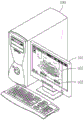
Fig. 1 is a drawing showing an examination information display apparatus according to an embodiment of the present invention.
The examination information display apparatus 100 may display a tooth image 102 on a display 101 as shown in fig. 1 and match it to a tooth included in the tooth image 102, thereby displaying examination information 103 about the tooth. For example, as shown in fig. 1, the examination information display device 100 may be a PC, an intelligent terminal, or a notebook computer. Further, the display 101 may be a monitor as shown in fig. 1 or a display device included in the examination information display device 100.
First, as shown in fig. 1, the examination information display apparatus 100 may display a dental image 102 of a patient on a display 101. At this time, the display 101 may display a region dividing line for dividing each region of the tooth included in the tooth image 102 on the tooth image 102 according to a request of the processor of the examination information display apparatus 100.
In addition, the examination information display apparatus 100 may receive time information selected by the user through the interface. At this time, the time information may include at least one of a past corresponding to a previous time based on the time at which the dental image 102 is displayed, a present corresponding to the time at which the dental image 102 is displayed, and a future corresponding to a subsequent time based on the time at which the dental image 102 is displayed. For example, the temporal information may be one of (past), (present), (future), (past, present), (present, future), and (past, present, future). Further, the time information may be a certain time interval selected by the user from the past or the future. For example, the time information may be information indicating a time interval, such as (2015-.
In this case, the examination information display apparatus 100 may search for teeth that generate examination information within a time interval included in the time information. Thereafter, the examination information display apparatus 100 may distinguish and display the searched tooth region from the non-searched tooth region, thereby enabling the user to easily identify the tooth for which the examination information is generated at the time interval.
For example, when the time information is (2015-2019), the examination information display device 100 may search for a tooth for which the examination information is generated between 2015 and 2019. Further, the examination information display device 100 performs only highlighting, hatching, shading, or displaying in a color different from that of the non-searched teeth in the searched tooth region, thereby making it possible for the user to identify the teeth for which the examination information was generated between 2015 and 2019.
Further, the examination information display apparatus 100 may receive a selection of one of the plurality of regions divided according to the region dividing line by the user through the interface. At this time, the examination information display apparatus 100 may provide the user with examination information of the teeth corresponding to the identified region according to the user's selection.
For example, the examination information display apparatus 100 may map examination information corresponding to time information received from the user to a region corresponding to a selection of the user among examination information of teeth corresponding to the region, and display the mapped examination information. At this time, the examination information may include at least one of examination details generated for the tooth at a previous time based on the time at which the tooth image 102 is displayed, or past examination information including treatment details, current examination information including a diagnosis result of a current state of the tooth included in the tooth image 102 based on the time at which the tooth image 102 is displayed, and future examination information including a treatment plan to be performed on the tooth at a later time based on the time at which the tooth image 102 is displayed.
At this time, the examination information display apparatus 100 may receive time information selected by the user through the interface. In addition, the examination information display apparatus 100 may map and display examination information corresponding to the time information to an area corresponding to the user's selection among examination information of the teeth corresponding to the area selected by the user. For example, when the time information is one of (past), (present), and (future), the examination information display apparatus 100 selects one of the past examination information, the current examination information, and the future examination information according to the time information, and maps and displays the selected examination information to an area corresponding to the selection of the user. Further, when the time information indicates two or more different time intervals, for example, (past, future), (past, present), (present, future), (past, present, future), the examination information display apparatus 100 may select a plurality of examination information corresponding to the time information from the past examination information, the current examination information, and the future examination information, based on the time information. Further, the examination information display apparatus 100 may map and display the selected examination information to an area corresponding to the user's selection.
At this time, the examination information display apparatus 100 may distinguish the color of the examination information or the display effect of the examination information to be applied to the examination information according to the time information and provide it to the user. For example, the examination information display device 100 may display past examination information in a red background or text; displaying the current examination information with a blue background or characters; the future examination information is displayed with green background or words.
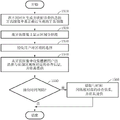
The examination information display device 100 may arrange the examination information of the teeth corresponding to the regions in time series, and sequentially select and display a predetermined number of pieces of information from the sorted examination information.
Also, the examination information may include detailed information and summary information about the examination. In this case, the summary information may be information that summarizes the detailed information and reduces the size of the information displayed on the display 101 compared to the detailed information.
For example, when the detailed information includes an image representing a change in appearance of the tooth, the summary information may include only a part of the image or include an image whose size is reduced. Further, the detailed information includes all information about the examination of the patient, and the summary information may include only the date of the patient's visit and the name of the diagnosis.
That is, since the area required to display the examination information displayed as the summary information on the display 101 is smaller than the area required to display the examination information displayed as the summary information on the display 101, when the summary information is displayed on the display 101, more examination information than detailed information can be displayed.
At this time, when the number of the examination information corresponding to the teeth of the area is above the threshold, the examination information display apparatus 100 may display the summary information on the display 101 and provide it to the user; when the number of examination information corresponding to the teeth of the area is less than the threshold, detailed information may be displayed on the display 101 and provided to the user. In addition, when a user's selection of summary information is received through the interface, the examination information display apparatus 100 may provide the user with detailed information required by the user by displaying detailed information corresponding to the summary information selected by the user.
Further, the summary information may be information obtained by counting the past examination information, the current examination information, and the future examination information of the tooth corresponding to the region. For example, the summary information may be displayed as an interface window in which summary information is displayed, which displays the number of past examination information, the number of current examination information, and the number of future examination information of the tooth as numbers, respectively. Further, the summary information may indicate the status of past examination information, current examination information, and future examination information of the tooth, and the status result may be displayed through a chart window such as a ring chart or a bar chart.
The display 101 may display a search bar that may be selected from the time the study information is first generated to the time the patient treatment is expected to be completed. The examination information display apparatus 100 may receive the user-selected time through the search bar. Then, the examination information display apparatus 100 may select one of the past examination information, the current examination information, and the future examination from the examination information of the teeth corresponding to the region according to the movement of the search bar and the position where the search bar stops moving, and display it on the display 101, thereby providing the user with the examination information corresponding to the time selected by the user.
Further, the examination information display device 100 may search for teeth that generate examination information before a time corresponding to a position at which the search bar stops moving. Also, the examination information display device 100 may distinguish the color of the searched tooth region, or the color of the region dividing line and the display effect to be applied to the tooth region from the region of the non-searched tooth, so that the user may be allowed to identify the tooth generating the examination information in the time interval selected by the user.
Further, the examination information display device 100 may display an examination type or a treatment type list. In this case, the examination information display apparatus 100 may receive a user's selection of an examination type or a treatment type through the interface. In addition, the examination information display device 100 may search for teeth corresponding to the examination type or treatment type selected by the user. At this time, the examination information display apparatus 100 may distinguish the color of the searched tooth region, or the color of the region dividing line and the display effect to be applied to the tooth region from the region of the non-searched tooth, so that the user may be allowed to identify the tooth generating the examination information of the examination type or treatment type selected by the user.
At this time, when the examination type or treatment type selected by the user requires an image other than the tooth image, the examination information display apparatus 100 may map an image corresponding to the examination type or treatment type selected by the user to the tooth image and display it on the display 101.
Further, the examination information display device 100 may request the display 101 to display a single image of the teeth corresponding to the region identified according to the user's selection. At this time, the examination information display apparatus 100 may receive the direction selected by the user on the tooth image through the interface. Also, the examination information display apparatus 100 may select one of the past examination information, the current examination information, the future examination of the tooth corresponding to the region, and the image of the relevant tooth corresponding to the region according to the direction selected by the user, and further display it on the display 101.
The examination information display apparatus 100 may accumulate examination information displayed in each of the dental images of the patient generated at different times in one dental image and provide it to the user.
First, the examination information display apparatus 100 may recognize a tooth image generated most recently from among tooth images of a patient generated at different times and display it on the display 101. Further, the examination information display apparatus 100 may display a region dividing line for dividing each region of the tooth included in the tooth image on the tooth image 102, which is displayed on the display 101.
Further, the examination information display apparatus 100 may receive a selection of any one of the plurality of regions divided according to the region dividing line by the user through the interface. At this time, the examination information display apparatus 100 may collect examination information of teeth corresponding to the region selected by the user from each of the tooth images of the patient generated at different times and provide it to the user.
In this case, the examination information display apparatus 100 may accumulate and display examination information collected from each of the dental images of the patient generated at different times on the dental image generated most recently. Further, when the number of pieces of examination information collected from each tooth image of a patient generated at different times is above a threshold value, the examination information display apparatus 100 may arrange the collected examination information in chronological order, and sequentially select and display a preset number of pieces of information from the arranged examination information. Also, when the number of pieces of examination information collected from each tooth image of a patient generated at different times is equal to or more than a threshold value, the examination information display apparatus 100 may display summary information of the collected examination information on the tooth image 102.
The examination information display apparatus 100 can provide the user with the examination particulars about the teeth by displaying the examination information of each tooth in time series.
Further, the examination information display apparatus 100 allows the user to easily recognize which attribute of the past examination result, the current state of the teeth, and the tooth treatment plan the examination information corresponds to by changing the method of displaying the examination information according to the characteristics of the examination information.
In addition, the examination information display apparatus 100 can prevent unnecessary excessive examination information from covering the tooth image by maintaining the number of examination information displayed on the tooth image below a certain number.
Further, the examination information display apparatus 100 can increase the number of examination information displayed in the same area by reducing the size of each examination information displayed on the tooth image.
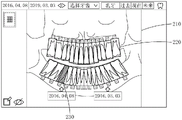
Fig. 2 is an example of a screen displaying a region segmentation line on a dental image according to an embodiment of the present invention.
As shown in fig. 2, the examination information display apparatus 100 may overlap and display a region dividing line 220 for distinguishing each region of the tooth included in the tooth image 210 on the tooth image 210. At this time, as shown in fig. 2, the region dividing line 220 may be represented by a solid line. In addition, the region dividing line 220 may also be displayed as a dotted line or a transparent line.
At this time, the examination information display apparatus 100 may provide the user with an interface for selecting at least one region from the plurality of regions divided by the region dividing line 220.
In addition, when the user selects the area 230 using the interface, the examination information display device 100 may identify the area 230 selected on the interface. At this time, the examination information display apparatus 100 may provide an input interface to the user for the user to input information about the region 230. In addition, the examination information display device 100 may store and manage information input to the input interface as examination information corresponding to the area 230. For example, the input interface may be an application such as a notepad or pen writing (pen writing).
Further, as shown in fig. 3, the examination information display device 100 may provide the user with examination information 310 of the teeth corresponding to the identification area 230.
Further, the examination information display apparatus 100 may display an interface 320 for receiving time information selected by the user on the display 101.
When the user selects the past in the interface 320, the examination information display apparatus 100 may display only the past examination information in the examination information 310 of the tooth corresponding to the area 230 on the display 101. Further, when the user selects now in the interface 320, the examination information display device 100 may display only the current examination information among the examination information 310 of the teeth corresponding to the region 230 on the display 101. Also, when the user selects the future in the interface 320, the examination information display device 100 may display only the future examination information of the examination information 310 of the teeth corresponding to the region 230 on the display 101.
Interface 320 may receive a plurality of different time intervals selected by a user. For example, when the user selects the past and future on the interface 320, the examination information display apparatus 100 may display the past examination information and the future examination information in the examination information 310 of the tooth corresponding to the area 230 on the display 101.
In fig. 3, the examination information 310 displayed on the display 101 may be detailed information. Also, as shown in fig. 4, when the number of the examination information corresponding to the teeth of the area 230 is equal to or more than the threshold value, the examination information display apparatus 100 may display summary information of the examination information 410 on the display 101 according to a request of the user.
Since the detailed information includes the date on which the examination information is generated, the diagnosis name, and the specific prescription for the examination, three pieces of examination information 310 can be displayed at once as shown in fig. 3.
In contrast, since the summary information includes only the date and the diagnosis name generated by the examination information, nine or more pieces of examination information 410 may be displayed as shown in fig. 4.
Therefore, the user can easily confirm the number of examination information about the teeth and the number of examination days by requesting the examination information display device 100 to display the summary information.
Further, the examination information display apparatus 100 may provide an interface for selecting summary information to the user, and when the user selects one of the summary information, detailed information corresponding to the summary information may be displayed, thereby allowing the user to recognize the detailed information.
FIG. 5 is an example of a screen for a tooth displaying diagnostic information generated during a particular time interval in accordance with an embodiment of the present invention.
The examination information display apparatus 100 may receive an input of a user-selected time interval through the interface 510 for selecting a time interval. At this time, the examination information display device 100 may search for teeth that generate examination information in the time interval input to the interface 510. For example, as shown in fig. 5, the examination information display device 100 may search for teeth that generate examination information between 2016, 4, 8, and 2019, 3.
Then, the examination information display apparatus 100 may distinguish and display the searched region 520 of the tooth from the non-searched region of the tooth, thereby enabling the user to easily identify the tooth generating the examination information within the time interval. For example, as shown in fig. 5, the examination information display device 100 may hatch the area 520 of the searched teeth, thereby allowing the user to identify the teeth for which the examination information is generated between 2016 4 and 8 days to 2019 and 3 days.
At this time, the interface 510 may be configured such that the user manually inputs the start time to the end time of the time interval. Further, interface 510 may be configured to automatically set the current time at which the dental image is displayed as the start time or end time of the time interval. Further, the interface 510 may automatically set a preset previous time (e.g., before one week) to the end time of the time interval based on the current time, or automatically set a preset time interval (e.g., from the current time to one week later). At this time, the preset time interval may be a time interval related to the treatment. For example, the times at which the intermediate state is checked from the time of the start of correction according to the correction schedule may be set to preset time intervals, respectively.
FIG. 6 is an example of a process for changing examination information using a search bar according to an embodiment of the present invention.
The display 101 may display a search bar 600 that may be selected from the time the study information is initially generated to the time the patient's treatment is expected to be completed.
In this case, the time when the patient treatment is expected to be completed may be determined according to the diagnosis result of the patient, or may be determined as a time having a time interval of more than a certain time (e.g., one or two years). Further, the medical examination information display apparatus 100 may adaptively change the correction completion time according to the medical examination information input during the correction of the patient, and may change the range of the search bar 600 according to the changed correction completion time. For example, when it is expected that 6 months will be required to straighten a patient's teeth, the maximum value of the search bar 600 may be based on a time 6 months after the current time. However, the patient's tooth correction is delayed, and the correction may not be completed even after 6 months. In this case, the examination information display device 100 may change the maximum value of the search bar 600 to 6 months later based on the examination information input during the patient's correction. In addition, when the treatment of the patient progresses better than expected, the correction completion time can be shortened. At this time, the medical examination information display apparatus 100 may change the maximum value of the search bar 600 to a time from the current time to a time 6 months ago, based on the medical examination information input during the patient's correction.
Screen 610 may be the screen when search bar 600 is in the default state. Since the examination information can be classified into past examination information, current examination information, and future examination information based on the time at which the dental image 102 is displayed, the search bar 600 in a default state can be located in the center 601 corresponding to the current examination information as a reference time. At this time, the examination information display apparatus 100 may display the region 611 of the tooth in which the diagnosis result as the current examination information 612 is generated, differently from the regions of the other teeth, and may match and display the current examination information 612 to the region 611.
Screen 620 may be a screen where the user moves search bar 600 to the left. At this time, the examination information display apparatus 100 may recognize the elapsed time corresponding to the position at which the search bar stops moving. Further, the examination display apparatus 100 may display the regions 621, 623 of the tooth, in which the past examination information corresponding to the identified past time is generated, differently from the regions of the other teeth. Further, the examination information display apparatus 100 may distinguish and display the regions 621, 623 of the teeth from the region 611 of the screen 610 so as to display them as teeth corresponding to the past examination information.
In addition, depending on the state of the teeth, if the degree of damage reaches a level that does not require treatment, only examination may be performed, and no treatment may be performed. In addition, when the damage of the teeth exceeds a certain degree, corresponding diagnosis and treatment can be carried out. Accordingly, as shown in fig. 6, the examination information display apparatus 100 can match and display past examination information 622 including examination particulars in the region 621 of the tooth where only the examination is performed; and past examination information 625 including both examination and treatment details is matched and displayed in the region 623 of the tooth where both examination and treatment are performed.
Screen 630 may be a screen where the user moves search bar 600 to the right. At this time, the examination information display apparatus 100 may identify a future time corresponding to the position at which the search bar stops moving. Further, the study display device 100 can search for future study information 632, which includes treatment plans corresponding to the identified future times. At this time, the examination display apparatus 100 may display the region 631 of the tooth corresponding to the searched future examination information differently from the regions of other teeth, and match and display the future examination information 632 with the region 631. Further, the examination information display apparatus 100 may distinguish and display the region 631 of the teeth from the region 611 of the screen 610 and the regions 621, 623 of the screen 620 so as to display it as teeth corresponding to future examination information.
Further, the examination information display apparatus 100 may represent a process of changing teeth in the panoramic image according to the movement of the search bar as an animation-like effect.
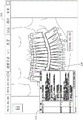
Fig. 7 is an example of a screen displaying a tooth generating examination information corresponding to an examination type or a treatment type according to an embodiment of the present invention.
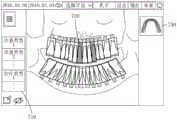
The examination information display device 100 may display a list 710 of examination types or treatment types. At this time, the examination information display apparatus 100 may receive a selection of the examination type or the treatment type included in the list 710 from the user. For example, exam type 1 and exam type 2 can be "caries" and "dental folds". In addition, treatment type 1 and treatment type 2 may be "inlay repair" and "resin repair".
In addition, the examination information display device 100 may search for a tooth selected by the user corresponding to the examination type or the treatment type. At this time, the examination information display apparatus 100 may distinguish and display the color of the searched tooth region 720, or the color of the region dividing line and the display effect to be applied to the tooth region from the non-searched tooth region 720, thereby allowing the user to identify the tooth in which the examination information of the examination type or treatment type selected by the user is generated.
Further, when the examination type or treatment type selected by the user requires an image other than the tooth image, as shown in fig. 7, the treatment information display apparatus 100 may map an image 730 corresponding to the examination type or treatment type selected by the user to the tooth image and display it on the display 101. For example, the image 730 may be one of a panorama, a root tip, a CT, a head radiation, and a scan.
Fig. 8 is an operation example of a method of providing different information according to a user operation according to an embodiment of the present invention.
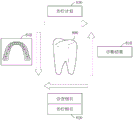
As shown in fig. 8, the examination information display apparatus 100 may display an image 800 of the tooth corresponding to the region identified according to the user selection.
At this time, the examination information display device 100 may receive the direction selected by the user on the image 800 of the tooth through the interface. Also, the examination information display apparatus 100 may select one of the past examination information, the current examination information, and the future examination corresponding to the region and the related tooth image corresponding to the region according to the direction selected by the user and further display them on the display 101.
For example, as shown in fig. 8, when the user drags up the image 800 of the tooth, the examination information display apparatus 100 may match and display the diagnosis result 810, which is the current examination information, with the image 800 of the tooth.
Further, when the user drags the image 800 of the tooth to the left, the examination information display device 100 may match and display examination details and treatment details 820, which are past examination information, with the image 800 of the tooth.
Further, when the user drags the image 800 of the tooth to the right, the examination information display device 100 may match and display the treatment plan 830 as future examination information with the image 800 of the tooth.
Further, when the user drags the image 800 of the teeth downward, the examination information display device 100 may match and display the image 840 related to the teeth with the image 800 of the teeth.
At this time, the direction selected by the user and the corresponding information may be changed according to the embodiment. For example, in another embodiment, in response to the user dragging the image 800 of the tooth to the right, the examination information display device 100 may display the diagnosis result 810 or display the image 840 related to the tooth.
Fig. 9 is an example of a screen displaying summary information of a statistical method according to an embodiment of the present invention.
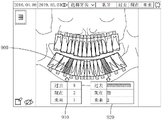
The examination information display device 100 can count the past examination information, the current examination information, and the future examination information of each tooth. Further, when the user selects the tooth region 900, the examination information display apparatus 100 may match and display summary information obtained by counting the past examination information, the current examination information, and the future examination information of the tooth in the tooth region 900. For example, summary information can be displayed on interface window 910, which digitally displays the amount of past examination information, the amount of current examination information, and the amount of future examination information for the tooth, respectively. Further, the summary information can be displayed as a graphical window 920 that displays the status of the past, current, and future exams of the tooth in a circular chart or bar graph, respectively.
Also, when the user selects one of the past, present, and future from the summary information, the examination information display apparatus 100 may display one of the past examination information, the present examination information, and the future examination information of the tooth according to the user's selection. For example, when the user selects the past from the summary information, the examination information display device 100 may display the past examination information. Also, when the user selects the present from the summary information, the examination information display apparatus 100 may display the current examination information. Also, when the user selects the future from the summary information, the examination information display device 100 may display the future examination information.
At this time, the examination information display device 100 may display an examination information list classified into past examination information, current examination information, or future examination information of the tooth. In this case, as shown in fig. 4, only the date and name of the generated examination information are displayed in the list of examination information. Further, when the user selects one of the examination information included in the list, the examination information display apparatus 100 may display the details of the examination information selected by the user.
Further, when the user selects one of the past, present and future from the summary information, the examination information display apparatus 100 may display the detailed contents of the examination information corresponding to the user's selection from among the past examination information, the current examination information and the future examination information of the teeth, as shown in fig. 3.
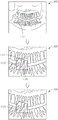
Fig. 10 is an example of a screen for converting and displaying a dental image into an animated image according to an embodiment of the present invention.
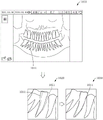
In step 1010, the examination information display apparatus 100 may receive a user selection of any one of a plurality of regions divided according to the region dividing line through the interface to identify the user-selected tooth 1011.
In step 1020, the examination information display apparatus 100 may enlarge and display the screen of the tooth 1011. At this time, as shown in fig. 10, the examination information display device 100 may display a screen of the tooth 1011 instead of the tooth image 102 on the display 101. Further, the examination information display apparatus 100 may reduce the tooth image 102 and divide the screen of the display 101 to display the screen of the tooth 1011 together with the tooth image 102.
Further, the examination information display apparatus 100 can identify the position, angle or shape 1021 at which the tooth 1011 is to be corrected according to the treatment plan of the future examination information.
In step 1030, the examination information display apparatus 100 may display an animation image animating a process of changing from the current state of the teeth 1011 to the position, angle, or shape 1021 to be corrected.
Fig. 11 is an example of a screen for overlaying and displaying an animated image on a dental image according to an embodiment of the present invention.
In step 1110, the examination information display apparatus 100 may receive a user's selection of any one of a plurality of regions divided according to the region division lines through the interface to identify the user-selected tooth 1111.
In step 1120, the examination information display apparatus 100 may display the image of the tooth 1011 superimposed on the tooth image 102. Further, the examination information display device 100 may recognize the position, angle or shape 1121 at which the tooth 1111 should be corrected according to the treatment plan of the future examination information.
In step 1130, the examination information display device 100 may display an animated image that animates a process of changing from the current state of the teeth 1111 into the position, angle, or shape 1121 to be straightened.
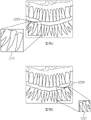
Fig. 12 is an example of a screen that distinguishes the size of an animated image according to the amount of examination information and displays it according to an embodiment of the present invention.
The sum of the number of past examination information, the number of current examination information, and the number of future examination information for tooth 1210 may be 8, and the sum of the number of past examination information, the number of current examination information, and the number of future examination information for tooth 1220 may be 8.
Also, when the tooth 1210 is recognized as the tooth selected by the user, the examination information display device may display a screen 1211 of the tooth 1210 as shown in case 1 of fig. 12. At this time, the screen 1211 of the tooth 1210 may be displayed as shown in fig. 10 or 11.
Also, when the tooth 1220 is recognized as the tooth selected by the user, the examination information display device may display a screen 1221 of the tooth 1220 as shown in case 2 of fig. 12. At this time, a screen 1221 of the tooth 1220 may be displayed as shown in fig. 10 or 11.
In addition, the size of the screen 1211 of the tooth 1210 and the size of the screen 1221 of the tooth 1220 may be determined according to the amount of examination information of the tooth. Since the number of the examination information of the tooth 1210 is larger than that of the examination information of the tooth 1220, as shown in fig. 12, the screen 1211 of the tooth 1210 may be displayed larger than the screen 1221 of the tooth 1220.
That is, the examination information display apparatus 100 may determine the size of the tooth screen according to the amount of examination information of the teeth, thereby allowing the user to easily recognize whether the amount of examination information of the corresponding teeth is large or small by the size of the tooth screen.
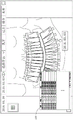
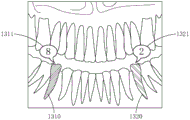
Fig. 13 is an example of a screen for distinguishing and displaying tooth regions according to the amount of examination information according to an embodiment of the present invention.
Tooth 1310 can have a sum of 8 of the number of past examination information, the number of current examination information, and the number of future examination information, and tooth 1320 can have a sum of 8 of the number of past examination information, the number of current examination information, and the number of future examination information.
At this time, the examination information display device 100 may display the teeth 1310 and 1320 differently. For example, as shown in fig. 13, by applying the hatching effect to a tooth 1310 having a larger amount of examination information than a tooth 1320 and to a stronger degree than the tooth 1320, the user can easily recognize whether the amount of examination information of the tooth is large or small by the degree of shading.
In one embodiment, the examination information display device 100 displays the tooth 1310 and the tooth 1320 in different ways using a shadow effect, and the examination information display device 100 can display that the number of examination information of the tooth 1310 is larger than that of the tooth 1320 by a light and shade, a color, a mark, a symbol, and other effects. For example, the examination information display apparatus 100 may display the color of the teeth closer to red as the amount of examination information increases, and may display the color of the teeth closer to green as the amount of examination information decreases.
Further, as shown in fig. 13, the examination information display apparatus 100 may map and display the numbers 1311, 1321 of examination information on the tooth 1310 and the tooth 1320, respectively, thereby intuitively providing the user with the numbers of examination information.
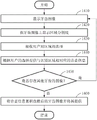
Fig. 14 is a flowchart illustrating a diagnosis information display method according to an embodiment of the present invention.
In step 1410, the examination information display apparatus 100 may display the dental image 102 of the patient on the display 101.
In step 1420, the examination information display apparatus 100 may display a region segmentation line for segmenting each region of the tooth included in the tooth image 102 on the tooth image 102 displayed in step 1410. At this time, the examination information display apparatus 100 may receive time information selected by the user through the interface. Further, the examination information display device 100 may search for teeth that generate examination information within a time interval included in the time information. Next, the examination information display apparatus 100 may distinguish the searched region of the tooth from the non-searched region of the tooth and display the same.
Further, the study information display device 100 may receive a selected time from the user through a search bar that may select from a time when the study information was initially generated to a time when the patient treatment is expected to be completed. Further, the examination information display device 100 may search for teeth that generate examination information before a time corresponding to a position at which the search bar stops moving. At this time, the examination information display apparatus 100 may distinguish and display the color of the searched tooth region, or the color of the region dividing line and the display effect to be applied to the tooth region from the tooth region not searched.
In step 1430, the examination information display apparatus 100 may receive a user selection of any one of a plurality of regions divided according to the region dividing line through the interface.
In step 1440, the medical information display apparatus 100 may provide the user with medical information about the teeth corresponding to the identified area according to the user's selection. For example, the examination information display apparatus 100 may map and display examination information corresponding to time information received from the user among examination information corresponding to teeth of the region to the region corresponding to the user selection. In addition, the examination information display apparatus 100 may arrange the examination information of the teeth corresponding to the region in time series, and sequentially select and display a preset number of information among the sorted examination information.
At this time, the examination information display apparatus 100 may receive a selected time from the user through the search bar, which may select a time from when the examination information is initially generated to a time when the patient treatment is expected to be completed. In addition, the examination information display apparatus 100 may select and display one of the past examination information, the current examination information, and the future examination from among the tooth examination information corresponding to the region according to the position at which the search bar stops moving.
At this time, the examination information display device 100 may display a list of examination types or treatment types. In addition, the examination information display apparatus 100 may receive a user's selection of an examination type or a treatment type through the interface. Next, the examination information display device 100 may search for teeth corresponding to the examination type or treatment type selected by the user. Next, the examination information display apparatus 100 may distinguish and display the color of the searched tooth region, or the color of the region dividing line and the display effect to be applied to the tooth region from the tooth region that is not searched. When the examination type or treatment type selected by the user requires an image other than the tooth image, the examination information display apparatus 100 may map the examination type or treatment type selected by the user to the tooth image and display it.
Further, the examination information display device 100 may display an image of the teeth corresponding to the region identified according to the user's selection. In addition, the examination information display apparatus 100 may receive a direction selected by the user on the tooth image through the interface. At this time, the examination information display apparatus 100 may select and further display one of the past examination information, the current examination information, and the future examination corresponding to the region and the image related to the teeth of the region according to the direction selected by the user.
Further, the examination information display device 100 may display summary information obtained by counting the past examination information, the current examination information, and the future examination information of the tooth corresponding to the region. When a user's selection of the summary information is received through the interface, the examination information display apparatus 100 may display one of a past examination information list, a current examination information list, and a future examination information list according to the user's selection. Also, when the user selects one of the examination information included in the list, the examination information display apparatus 100 may display detailed information on the selected examination information to the user.
In step 1450, the examination information display apparatus 100 may check whether there is a tooth image that is generated at a different time from the tooth image displayed in step 1410 and that does not display examination information.
When there are tooth images generated at different times and on which no examination information is displayed, the examination information display apparatus 100 performs step 1410 again, and may display the examination information of the user-selected region on the tooth images in the tooth images of the patient generated at different times.
When there are no tooth images generated at different times or the examination information is displayed on all the tooth images generated at different times, the examination information display apparatus 100 may perform step 1450.
In step 1450, the examination information display apparatus 100 may accumulate examination information displayed in each dental image of the patient generated at different times in one dental image and provide it to the user. At this time, when there is no tooth image generated at a different time, the examination information display apparatus 100 may maintain the examination information displayed on the tooth information in step 1440.
FIG. 15 is a flow chart illustrating a method of accumulating and displaying examination information displayed on a plurality of dental images in accordance with an embodiment of the present invention. Steps 1510 through 1560 of fig. 15 may be included in step 1460 of fig. 14, or may be performed independently of fig. 14.
In step 1510, the examination information display apparatus 100 may identify a recently generated tooth image from among tooth images of the patient generated at different times and display it on the display 101.
In step 1520, the examination information display apparatus 100 may display a region dividing line for dividing each region included in the tooth image displayed in step 1510 on the tooth image 102.
In step 1530, the medical information display apparatus 100 may receive a selection of any one of the plurality of regions divided according to the region dividing line by the user through the interface.
In step 1540, the examination information display apparatus 100 may collect examination information of the teeth corresponding to the region selected by the user from each tooth image of the patient generated at different times and provide it to the user. At this time, the examination information display apparatus 100 may accumulate and display examination information collected from each tooth image of the patient generated at different times on the tooth image generated most recently.
In step 1550, the examination information display device 100 may confirm whether time information including the time interval has been received from the user through the interface. When the time information is received, the examination information display apparatus 100 may perform step 1560.
In step 1560, the examination information display apparatus 100 may extract examination information corresponding to the time information from the examination information displayed on the tooth image in step 1540 and provide it to the user. Specifically, the examination information display apparatus 100 may delete the examination information not corresponding to the time information from the examination information displayed on the tooth image in step 1540, so that only the examination information corresponding to the date information is displayed on the tooth image.
According to the present invention, by displaying examination information of each tooth in time series, it is possible to provide a user with examination details of the teeth. Further, the present invention can allow a user to easily recognize which attribute the examination information corresponds to in the results of the past examinations, the current state of the teeth, and the treatment plan of the teeth by distinguishing the display method of the examination information according to the characteristics of the examination information.
In addition, the present invention can prevent unnecessary excessive examination information from covering the tooth image by maintaining the number of examination information displayed on the tooth image below a predetermined number. Further, according to the present invention, the number of examination information displayed in the same area can be increased by reducing the size of each piece of examination information displayed on the tooth image.
In addition, the method for displaying examination information according to the present invention is written as a program executable on a computer, and may be implemented as various recording media such as a magnetic storage medium, an optical reading medium, and a digital storage medium.
Implementations of the various techniques described herein may be implemented in digital electronic circuitry, or in computer hardware, firmware, software, or in combinations of them. Implementations may be implemented as a data processing device (e.g., a programmable processor, a computer, or multiple computers) in a computer program product, e.g., a machine-readable storage device (computer-readable usable medium) as a computer program tangibly embodied therein. A computer program, such as the computer program(s) described above, can be written in any form of programming language, including compiled or interpreted languages, and it can be deployed in any form, including as a stand-alone program or as a module, component, subroutine, or other unit suitable for use in a computing environment. A computer program can be deployed to be processed on one computer or on multiple computers at one site or distributed across multiple sites and interconnected by a communication network.
Processors suitable for the processing of a computer program include, by way of example, both general and special purpose microprocessors, and any one or more processors of any kind of digital computer. Generally, a processor will receive instructions and data from a read-only memory or a random access memory or both. Elements of a computer may include at least one processor for executing instructions and one or more memory devices for storing instructions and data. Generally, a computer will include, or be coupled to receive data from or transfer data to, or both, one or more mass storage devices for storing data, e.g., magnetic, magneto-optical disks, or optical disks. Information carriers suitable for embodying computer program instructions and data include magnetic media such as hard disks, floppy disks, and magnetic tape; optical media (optical media) similar to CD-ROM (compact Disk Read Only memory), DVD (digital Video Disk), etc.; magneto-optical media (magneto-optical media) similar to floptical disks (floptical disks), and Read-Only memories (ROMs), Random Access Memories (RAMs), flash memories, Erasable Programmable Read-Only memories (EPROMs), Electrically Erasable Programmable Read-Only memories (EEPROMs), and the like. The processor and the memory can be supplemented by, or included in, special purpose logic circuitry.
Furthermore, computer-readable media can be any available media that can be accessed by the computer and can include any computer storage media.
While this specification includes many implementation-specific details, these should not be construed as limitations on the scope of any invention or of the claims, but rather as descriptions of features that may be specific to particular embodiments of particular inventions. It is to be understood that certain features that are described herein in the context of separate embodiments can be implemented in combination in a single embodiment. Conversely, various features that are described in the context of a single embodiment can also be implemented in multiple embodiments separately or in any suitable subcombination. Furthermore, although features may be described above as acting in certain combinations and even initially claimed as such, one or more features from a claimed combination can in some cases be excised from the combination, and the claimed combination may be modified to a subcombination or variation of a subcombination.
Similarly, while operations are depicted in the drawings in a particular order, this should not be construed as requiring that such operations be performed in the particular order shown or in sequential order, or that all operations be performed, to achieve desirable results. In some cases, multitasking and parallel processing may be advantageous. Moreover, the separation of various device components of the embodiments described above should not be construed as requiring such separation in all embodiments, and it should be understood that the described program components and devices can generally be integrated into a single software product or packaged into multiple software products.
In addition, the embodiments of the present invention disclosed in the present specification and the drawings are presented only as specific examples to aid understanding, and are not intended to limit the scope of the present invention. It will be apparent to those skilled in the art that other modifications based on the technical spirit of the present invention can be implemented in addition to the embodiments disclosed herein.