CN114146415A - Game element transaction method and device based on block chain - Google Patents
Game element transaction method and device based on block chain Download PDFInfo
- Publication number
- CN114146415A CN114146415A CN202111473794.XA CN202111473794A CN114146415A CN 114146415 A CN114146415 A CN 114146415A CN 202111473794 A CN202111473794 A CN 202111473794A CN 114146415 A CN114146415 A CN 114146415A
- Authority
- CN
- China
- Prior art keywords
- user
- blockchain
- game
- business system
- intelligent contract
- Prior art date
- Legal status (The legal status is an assumption and is not a legal conclusion. Google has not performed a legal analysis and makes no representation as to the accuracy of the status listed.)
- Pending
Links
Images


Classifications
-
- A—HUMAN NECESSITIES
- A63—SPORTS; GAMES; AMUSEMENTS
- A63F—CARD, BOARD, OR ROULETTE GAMES; INDOOR GAMES USING SMALL MOVING PLAYING BODIES; VIDEO GAMES; GAMES NOT OTHERWISE PROVIDED FOR
- A63F13/00—Video games, i.e. games using an electronically generated display having two or more dimensions
- A63F13/70—Game security or game management aspects
- A63F13/73—Authorising game programs or game devices, e.g. checking authenticity
-
- G—PHYSICS
- G06—COMPUTING OR CALCULATING; COUNTING
- G06F—ELECTRIC DIGITAL DATA PROCESSING
- G06F21/00—Security arrangements for protecting computers, components thereof, programs or data against unauthorised activity
- G06F21/60—Protecting data
- G06F21/64—Protecting data integrity, e.g. using checksums, certificates or signatures
-
- G—PHYSICS
- G06—COMPUTING OR CALCULATING; COUNTING
- G06Q—INFORMATION AND COMMUNICATION TECHNOLOGY [ICT] SPECIALLY ADAPTED FOR ADMINISTRATIVE, COMMERCIAL, FINANCIAL, MANAGERIAL OR SUPERVISORY PURPOSES; SYSTEMS OR METHODS SPECIALLY ADAPTED FOR ADMINISTRATIVE, COMMERCIAL, FINANCIAL, MANAGERIAL OR SUPERVISORY PURPOSES, NOT OTHERWISE PROVIDED FOR
- G06Q40/00—Finance; Insurance; Tax strategies; Processing of corporate or income taxes
- G06Q40/04—Trading; Exchange, e.g. stocks, commodities, derivatives or currency exchange
-
- A—HUMAN NECESSITIES
- A63—SPORTS; GAMES; AMUSEMENTS
- A63F—CARD, BOARD, OR ROULETTE GAMES; INDOOR GAMES USING SMALL MOVING PLAYING BODIES; VIDEO GAMES; GAMES NOT OTHERWISE PROVIDED FOR
- A63F2300/00—Features of games using an electronically generated display having two or more dimensions, e.g. on a television screen, showing representations related to the game
- A63F2300/20—Features of games using an electronically generated display having two or more dimensions, e.g. on a television screen, showing representations related to the game characterised by details of the game platform
- A63F2300/201—Playing authorisation given at platform level
Landscapes
- Engineering & Computer Science (AREA)
- Computer Security & Cryptography (AREA)
- Business, Economics & Management (AREA)
- Theoretical Computer Science (AREA)
- Physics & Mathematics (AREA)
- General Physics & Mathematics (AREA)
- Finance (AREA)
- Accounting & Taxation (AREA)
- Software Systems (AREA)
- Multimedia (AREA)
- General Business, Economics & Management (AREA)
- Computer Hardware Design (AREA)
- General Engineering & Computer Science (AREA)
- General Health & Medical Sciences (AREA)
- Bioethics (AREA)
- Health & Medical Sciences (AREA)
- Development Economics (AREA)
- Economics (AREA)
- Marketing (AREA)
- Strategic Management (AREA)
- Technology Law (AREA)
- Financial Or Insurance-Related Operations Such As Payment And Settlement (AREA)
Abstract
The embodiments disclosed in the specification provide a method and a device for trading intra-game elements based on a blockchain. In order to achieve the purpose that a user can have ownership of elements in a game without registering a game account, on one hand, a user system of different service systems is opened, a global identity of a cross-service system, namely a blockchain account, is registered for the user in the blockchain system, and the service system to which the user originally belongs can register the blockchain account for the user according to identity related information provided by the user during previous registration. On the other hand, the ownership of the in-game elements under the chain is mapped by the digital certificates issued in the blockchain system, and can be recorded by the intelligent contract of the blockchain system.
Description
Technical Field
Embodiments of the present disclosure relate to the field of blockchain technologies, and in particular, to a method and an apparatus for trading in-game elements based on a blockchain.
Background
The in-game element refers to an element which can be perceived by a user during playing of the electronic game and is related to game content. In-game elements are typically created in-game by a business system of an electronic game. The in-game elements may be, for example, in-game avatars, in-game virtual items, in-game music, in-game map styles, in-game clearance tasks, and the like.
A user who is registered in a business system for an electronic game may have ownership of one or more in-game elements. For example, a user may purchase an avatar from a business system of an electronic game, having ownership of the avatar. In another example, a user may request that a business system of an electronic game create a clearance task within the electronic game and have ownership of the clearance task.
Because the affiliation between the in-game element and the user needs to be maintained by the business system of the electronic game, the user who is not registered in the business system of the electronic game generally cannot have ownership of the in-game element, and if the user is required to be qualified to obtain the in-game element after being registered in the business system of the electronic game, inconvenience is brought to the user.
Disclosure of Invention
Various embodiments of the present description provide a method and apparatus for trading intra-game elements based on a blockchain.
The technical scheme provided by the embodiments of the specification is as follows:
according to a first aspect of various embodiments of the present specification, a method for trading intra-game elements based on a blockchain is provided, which is used for enabling a first user registered in a first business system to obtain intra-game elements created by a second business system, wherein the second business system is a business system of an electronic game, and the method includes:
the first business system calls an intelligent contract in the blockchain system to execute: registering a blockchain account for the first user according to identity related information provided by the first user when the first user registers in the first service system;
the second business system calls an intelligent contract in the blockchain system to execute: issuing a digital certificate corresponding to the in-game element;
the first business system responds to a first transaction request of the first user for the in-game element, and sends a second transaction request to the second business system; the second transaction request specifies a blockchain account of the first user and the in-game element;
the second business system responds to the second transaction request and calls an intelligent contract in the blockchain system to execute: recording the association relationship between the digital certificate and the blockchain account of the first user.
According to a second aspect of the embodiments of the present specification, there is provided a block chain-based in-game element transaction apparatus for enabling a first user registered in a first business system to obtain an in-game element created by a second business system, where the second business system is a business system of an electronic game, the apparatus including a first module applied to the first business system and a second module applied to the second business system;
the first module calls an intelligent contract in the block chain system to execute: registering a blockchain account for the first user according to identity related information provided by the first user when the first user registers in the first service system; sending a second transaction request to the second business system in response to a first transaction request for the in-game element by the first user; the second transaction request specifies a blockchain account of the first user and the in-game element;
the second module calls an intelligent contract in the block chain system to execute: issuing a digital certificate corresponding to the in-game element; in response to the second transaction request, invoking intelligent contract execution in a blockchain system to: recording the association relationship between the digital certificate and the blockchain account of the first user.
In the above technical solution, in order to achieve the purpose that a user can own ownership of an element in a game without registering a game account, on one hand, a user system of different service systems is opened, a global identity across service systems, that is, a blockchain account, is registered for the user in a blockchain system, and the service system to which the user originally belongs can register the blockchain account for the user according to identity-related information provided when the user previously registers. On the other hand, the ownership of the in-game elements under the chain is mapped by the digital certificates issued in the blockchain system, and can be recorded by the intelligent contract of the blockchain system.
Through the technical scheme, the user can obtain ownership of the in-game element of the electronic game without registering in a business system of the electronic game.
Drawings
FIG. 1 is a schematic diagram of creating an intelligent contract, provided by an exemplary embodiment.
FIG. 2 is a schematic diagram of a calling smart contract provided by an exemplary embodiment.
FIG. 3 is a schematic diagram of creating and invoking an intelligent contract according to an exemplary embodiment.
Fig. 4 is a flowchart illustrating a transaction method for intra-game elements based on a blockchain according to the present disclosure.
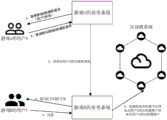
Fig. 5 is a schematic diagram of a transaction flow of a virtual item in a game, which is provided by the disclosure.
Detailed Description
In order to make those skilled in the art better understand the technical solutions in the present specification, the technical solutions in the embodiments of the present specification will be clearly and completely described below with reference to the drawings in the embodiments of the present specification, and it is obvious that the described embodiments are only a part of the embodiments of the present specification, and not all of the embodiments. All other embodiments obtained by a person skilled in the art based on the embodiments in the present specification without any inventive step should fall within the scope of protection of the present specification.
It should be noted that: in other embodiments, the steps of the corresponding methods are not necessarily performed in the order shown and described herein. In some other embodiments, the method may include more or fewer steps than those described herein. Moreover, a single step described in this specification may be broken down into multiple steps for description in other embodiments; multiple steps described in this specification may be combined into a single step in other embodiments.
In the technical scheme provided by the disclosure, in order to achieve the purpose that a user can own ownership of elements in a game without registering a game account, on one hand, a user system of different service systems is opened, a global identity of a cross-service system, namely a blockchain account, is registered for the user in the blockchain system, and the service system to which the user originally belongs can register the blockchain account for the user according to identity related information provided by the user during previous registration. On the other hand, the ownership of the in-game elements under the chain is mapped by the digital certificates issued in the blockchain system, and can be recorded by the intelligent contract of the blockchain system.
In-game elements, as used herein, refer to elements that are perceived by a user during play of an electronic game and that are related to the content of the game. In-game elements are typically created in-game by a business system of an electronic game. The in-game elements may be, for example, in-game avatars, in-game virtual items, in-game music, in-game map styles, in-game clearance tasks, and the like.
Through the technical scheme, the following technical effects can be realized:
1. since the service system to which the user originally belongs can register the blockchain account for the user according to the identity-related information provided by the user during previous registration, the user does not need to register the blockchain account in person, and inconvenience is not brought to the user.
2. The intra-game elements under the chain are mapped into the digital certificates on the chain, so that the ownership of the intra-game elements can be recorded by the intelligent contract of the blockchain system, and compared with the record of the ownership of the intra-game elements by a business system of the game, the ownership of the intra-game elements is more difficult to tamper and more credible.
3. Because the ownership of the in-game element is recorded by using the intelligent contract of the blockchain system, the ownership of the in-game element can be recorded without the business system of the game, and therefore, the necessity of registering the user in the business system of the game is further eliminated.
In addition, it should be noted that, the technical solution provided by the present disclosure has certain commercial value besides the technical effects described above. The system of users of different game business parties can be opened, the in-game element of another game can be recommended to the user in one game, the user in one game can obtain the in-game element of another game through transaction without registering in another game, and the user can possibly generate interest in another game because of ownership of the in-game element of another game. Therefore, user drainage among different games can be realized, and a better marketing effect is achieved.
Furthermore, a user system can be opened across industries, namely, the user system of the game industry and the non-game industry is opened, a business party of the non-game industry can recommend an in-game element of a certain game to a user in the business field of the business party, the user is attracted to obtain the in-game element through transaction, and the user is possibly attracted to be converted into a game user. Therefore, the drainage of the non-game industry to users in the game industry can be realized, and a better marketing effect is achieved.
The block chain technique is described first below.
Blockchains are generally divided into three types: public chain (Public Blockchain), Private chain (Private Blockchain) and alliance chain (Consortium Blockchain). In addition, there are various types of combinations, such as private chain + federation chain, federation chain + public chain, and other different combinations. The most decentralized of these is the public chain. The public chain is represented by an ether house, and participants joining the public chain can read data records on the chain, participate in transactions, compete for accounting rights of new blocks and the like. Furthermore, each participant (i.e., node) is free to join and leave the system and perform related operations. Private chain the other way around, the write rights of the system are controlled by an organization or organization, and the data read rights are specified by the organization. Briefly, a private chain can be a weakly centralized system with strictly limited and few participating nodes. This type of blockchain is more suitable for use within a particular establishment. A federation chain is a block chain between a public chain and a private chain, and "partial decentralization" can be achieved. Each node in a federation chain typically has a physical organization or organization corresponding to it; participants maintain blockchain operation together by authorizing to join the system and forming a stakeholder union.
Whether public, private, or alliance, may provide the functionality of an intelligent contract. Intelligent contracts on blockchains are contracts that can be triggered to execute by transactions (typically client-initiated) on the blockchain system. An intelligent contract may be defined in the form of code.
It should be noted that in the blockchain field, the request for invoking the intelligent contract submitted to the blockchain system has a data structure specified by the blockchain protocol, which is generally referred to as a transaction. A blockchain transaction is a data structure, and the "transaction" in the blockchain-based transaction methods described in the embodiments herein refers to a transaction activity, and those skilled in the art can distinguish these two transaction expressions in meaning.
Taking an Etherhouse as an example, a user is supported to create and call some complex logic in the Etherhouse system. The core of the ethernet plant as a programmable blockchain is the ethernet plant virtual machine (EVM), each ethernet plant node can run the EVM. The EVM is a well-behaved virtual machine, which means that a variety of complex logic can be implemented through it. The user issuing and invoking smart contracts in the etherhouse is running on the EVM. In fact, what the virtual machine directly runs is virtual machine code (virtual machine bytecode, hereinafter referred to as "bytecode"). The intelligent contracts deployed on the blockchain may be in the form of bytecodes.
For example, as shown in fig. 1, after Bob sends a transaction containing information to create an intelligent contract to the ethernet system, the EVM of node 1 may execute the transaction and generate a corresponding contract instance. The "0 x6f8ae93 …" in fig. 1 represents the address of the contract, the data field of the transaction holds the byte code, and the to field of the transaction is empty. After agreement is reached between the nodes through the consensus mechanism, this contract is successfully created and can be invoked in subsequent procedures. After the contract is created, a contract account corresponding to the intelligent contract appears on the blockchain and has a specific address, and the contract code is stored in the contract account. The behavior of the intelligent contract is controlled by the contract code.
As shown in fig. 2, still taking an ethernet house as an example, after Bob sends a transaction for invoking an intelligent contract to the ethernet house system, the EVM of a certain node may execute the transaction and generate a corresponding contract instance. The from field of the transaction in FIG. 2 is the address of the account of the initiator of the transaction (i.e., Bob), the "0 x6f8ae93 …" in the to field represents the address of the smart contract being invoked, and the value field is the value in EtherFang that is kept in the data field of the transaction as the method and parameters for invoking the smart contract. After invoking the smart contract, the value of balance may change. Subsequently, a client can view the current value of balance through a blockchain node (e.g., node 6 in fig. 2). The intelligent contract is independently executed at each node in the blockchain system in a specified mode, and all execution records and data are stored on the blockchain, so that after the transaction is completed, transaction certificates which cannot be tampered and cannot be lost are stored on the blockchain.
A schematic diagram of creating an intelligent contract and invoking the intelligent contract is shown in fig. 3. To create an intelligent contract in an ethernet workshop, the intelligent contract needs to be compiled, compiled into byte codes, deployed to a block chain and the like. The intelligent contract is called in the Ethernet workshop, a transaction pointing to the intelligent contract address is initiated, and the intelligent contract codes are distributed and run in the virtual machine of each node in the Ethernet workshop system.
It should be noted that, in addition to the creation of the smart contracts by the users, the smart contracts may also be set by the system in the creation block. Such contracts are generally referred to as foundational contracts. In general, the data structure, parameters, attributes and methods of some blockchain systems may be set in the startup contract. Further, an account with system administrator privileges may create a contract at the system level, or modify a contract at the system level (simply referred to as a system contract). In addition to the EVM in the ethernet bay, various virtual machines may be used in different blockchain systems, which is not limited herein.
After executing a transaction that invokes an intelligent contract, a node in the blockchain system generates a corresponding receipt (receipt) for recording information related to executing the intelligent contract. In this way, information about the contract execution results may be obtained by querying the receipt of the transaction. The contract execution result may be represented as an event (event) in the receipt. The message mechanism can realize message passing through an event in a receipt so as to trigger the blockchain node or a node device deploying the blockchain node to execute corresponding processing.
The structure of the event may be, for example:
Event:
[topic][data]
[topic][data]
......
in the above example, the number of events may be one or more; wherein, each event respectively comprises fields of a subject (topic) and data (data). The blockchain node or the node device deploying the blockchain node may perform the preset processing by monitoring the topic of the event, in case that the predefined topic is monitored, or read the related content from the data field of the corresponding event, and may perform the preset processing based on the read content.
In the event mechanism, it is equivalent to that there is a client with a monitoring function at a monitoring party (e.g. a user with a monitoring requirement), for example, an SDK or the like for implementing the monitoring function is run on the client, and the client monitors events generated by the blockchain node, and the blockchain node only needs to generate a receipt normally. The passage of transaction information may be accomplished in other ways than through the event mechanism described above. For example, the monitoring code can be embedded in a blockchain platform code running at blockchain nodes, so that the monitoring code can monitor one or more data of transaction content of blockchain transactions, contract states of intelligent contracts, receipts generated by contracts and the like, and send the monitored data to a predefined monitoring party. Since the snoop code is deployed in the blockchain platform code, rather than at the snooper's client, this implementation based on snoop code is relatively more proactive than the event mechanism. The above monitoring code may be added by a developer of the blockchain platform in the development process, or may be embedded by the monitoring party based on the own requirement, which is not limited in this specification.
The blockchain technology is different from the traditional technology in one of decentralization characteristics, namely accounting is performed on each node, or distributed accounting is performed, and the traditional centralized accounting is not performed. To be a difficult-to-defeat, open, non-falsifiable data record decentralized honest and trusted system, the blockchain system needs to be secure, unambiguous, and irreversible in the shortest possible time for distributed data records. In different types of blockchain systems, in order to keep accounts consistent among nodes recording accounts, a consensus algorithm is generally adopted to ensure that the above-mentioned consensus mechanism is adopted. For example, a common mechanism of block granularity can be implemented between block nodes, such as after a node (e.g., a unique node) generates a block, if the generated block is recognized by other nodes, other nodes record the same block. For another example, a common mechanism of transaction granularity may be implemented between the blockchain nodes, such as after a node (e.g., a unique node) acquires a blockchain transaction, if the blockchain transaction is approved by other nodes, each node that approves the blockchain transaction may add the blockchain transaction to the latest block maintained by itself, and finally, each node may be ensured to generate the same latest block. The consensus mechanism is a mechanism for the blockchain node to achieve a global consensus on the block information (or called blockdata), which can ensure that the latest block is accurately added to the blockchain. The current mainstream consensus mechanisms include: proof of Work (POW), Proof of stock (POS), Proof of commission rights (DPOS), Practical Byzantine Fault Tolerance (PBFT) algorithm, HoneyBadgerBFT algorithm, etc.
Fig. 4 is a flow chart of a transaction method of intra-game elements based on a blockchain provided by the present disclosure, which may include the following steps:
s400: the first business system calls the intelligent contract execution in the blockchain system: and registering a blockchain account for the first user according to the identity related information provided when the first user registers in the first service system.
The process flow shown in FIG. 4 is for implementation, where a first user registered in a first business system obtains an in-game element created by a second business system.
The first service system and the second service system may be two service systems independent from each other, that is, a user is registered in one of the service systems, which does not mean that the registration in the other service system is also completed at the same time, and the user systems of the first service system and the second service system are not open.
The second business system is used as a business system of the electronic game, and the second business system creates an in-game element which a first user registered in the first business system wants to obtain.
The first business system can be a business system of other electronic games or a business system of non-electronic game business.
For example, the first business system may be a business system of game a, the second business system may be a business system of game B, the business system of game a may recommend a game item of game B to the user who plays game a, and the user who plays game a may directly request ownership of the game item of game B from the business system of game a.
For another example, the first business system may be a business system of a certain brand of sports shoes, the second business system may be a business system of game B, a store of the brand of sports shoes may present a promotional advertisement related to the avatar in game B, a user visiting the store may go to a store service desk to request to obtain ownership of the avatar in game B, and the store service desk may send a transaction request to the business system of game B through the business system of the brand of sports shoes.
It should be noted that, the method shown in fig. 4 is only described with the first service system and the second service system as a set of two transaction parties, in practice, a plurality of service systems may participate in the implementation of the present scheme, and any two service systems may have a relationship between the first service system and the second service system.
In some embodiments, a first service party corresponding to a first service system may manage at least one blockchain node of the blockchain system. A second service party corresponding to the second service system may manage at least one blockchain node of the blockchain system. That is, the blockchain system may be a federation chain architecture, and both the first service party and the second service party may be federation members. In addition, more service parties can be absorbed as coalition members, and a user system among more service parties can be opened.
The identity-related information provided by the first user when registering in the first service system may be conventional information required for registering an account of the system, such as a mobile phone number, a gender, a name, and the like. In addition, the identity-related information may also include user-provided identity authentication information, such as passwords, fingerprint features, face features, and the like. In addition, the identity-related information may also include a public key corresponding to the private key of the user.
When registering the blockchain account for the first user, the identity-related information provided by the first user when registering in the first service system can be used, so that the first user does not need to register the blockchain account of the first user himself.
Different business systems can register block chain accounts for registered users managed by the business systems, and the block chain accounts are globally unique accounts of the cross-business systems, so that the different business systems can communicate with each other and share user flow.
In some embodiments, a centralized identity may be created for the first user as the blockchain account of the first user according to identity-related information provided when the first user registers in the first business system.
The decentralized identity technology is a digital identity certificate technology implemented based on a distributed system (e.g., a blockchain system), and its constituent elements at least include a Digital Identity (DID) and a digital identity document (DID document).
In some embodiments, the credential identification of the digitized credential may be documented in a DID document of the DID of the first user. The certificate identification of the digital certificate may or may not be the code of the digital certificate itself.
S402: the second business system calls the intelligent contract in the blockchain system to execute: and issuing the digital certificate corresponding to the in-game element.
In order to transfer the ownership record work of the in-game elements to the responsibility of the blockchain system, the second business system needs to use the intelligent contract of the blockchain system, and issues the digital certificates corresponding to the in-game elements on the chain.
A digitized credential may be understood as a chain-issued code that may uniquely correspond to a virtual or physical item under the chain, being a mapping of items under the chain onto the chain. A common digitizing credential protocol (ERC721) may be employed in some embodiments to issue a digitizing credential known as a Non-homogeneous Token (NFT). Of course, other digital voucher protocols can be used to issue the digital voucher.
In step S402, the second business system may specify information about the in-game element to the smart contract when the smart contract is invoked.
Information relating to an in-game element, including at least one of: descriptive information of the electronic game; description information of the in-game element; a release time specified by the first business system. The description information of the electronic game may include a name of the electronic game and/or a profile of the electronic game. The description information of the in-game element is used for describing the in-game element, and may be a picture, for example.
The related information of the in-game element can have signature information corresponding to the first service system. If the signature information on the related information of the in-game element is verified and passed by the intelligent contract, the digital certificate can be issued according to the related information of the in-game element. If the signature information in the information related to the in-game element is not verified, the digital certificate can be refused to be issued.
In some embodiments, the smart contract may generate a digitized token based on a preset algorithm and record an association between the digitized token and the unique identification of the in-game element.
In other embodiments, the smart contract may generate and issue a digitized credential based on information about the elements within the game. For example, the related information of the elements in the game is taken as calculation input, specified calculation is executed, and the coding of the digital certificate is output.
In some embodiments, the above-mentioned specified calculation may be that a hash value of the calculation input is calculated as a base portion, and a unique index value is assigned to the game element as an additional portion, the base portion and the additional portion being combined; and encrypting the combination of the basic part and the additional part to obtain the calculation output.
Accordingly, the intelligent contract can be invoked to verify a digital certificate to be verified, whether the digital certificate is a legal digital certificate (i.e. whether the digital certificate corresponds to an item under a chain). The verifying step may include: decrypting the code of the digital certificate to be verified to obtain a basic part and an additional part; judging whether the basic part obtained by decryption is the hash value of the acquired relevant information of any one of the in-game elements; and, judge whether the additional part is the only index value of the element in the game; if the judgment results are yes, the verification is determined to be passed; if any judgment result is negative, the verification is determined not to pass.
S404: and the first business system responds to a first transaction request of the first user for the in-game element and sends a second transaction request to the second business system.
For convenience of description, a transaction request sent by a first user to a first business system is referred to as a first transaction request, and a transaction request sent by the first business system to a second business system is referred to as a second transaction request. The second transaction request entails specifying the blockchain account of the first user and the in-game element that the first user wants to obtain.
S406: and the second business system responds to the second transaction request and calls an intelligent contract in the blockchain system to execute: recording the association relationship between the digital certificate and the blockchain account of the first user.
In some embodiments, the intelligent contract may document the association between the digitized credentials and the blockchain account of the first user if the signature submitted when the first business system invokes the intelligent contract of the blockchain system is verified. If the signature submitted when the first business system calls the intelligent contract of the blockchain system is not verified, recording the association relationship between the digital certificate and the blockchain account of the first user can be refused.
Additionally, in some embodiments, the in-game elements created by the second business system may not belong to any user, but are instead escrowed by the second business system prior to the first user initiating the transaction.
In other embodiments, the in-game element created by the second business system may belong to the second user, i.e., the in-game element is previously obtained by the second user registered in the second business system, before the first user initiates the transaction. For example, the in-game element may be a bonus item that the second user gains by playing the game. As another example, the in-game element may be an avatar made by a second user within the game.
The second business system calls an intelligent contract in the blockchain system to execute: registering a blockchain account for the second user according to identity related information provided when the second user registers in the second service system;
in this case, the method flow shown in fig. 4 may further include that the second business system calls an intelligent contract in the blockchain system to execute: and registering a block chain account for the second user according to the identity related information provided when the second user registers in the second service system.
Accordingly, before the second business system responds to the second transaction request, the step that the second business system can call the intelligent contract in the blockchain system to execute may further include: recording the association relationship between the digital certificate and the blockchain account of the second user.
Accordingly, after the second business system responds to the second transaction request, the step of the second business system calling the intelligent contract in the blockchain system to execute may further include: eliminating the record of the association between the digitized credentials and the blockchain account of the second user.
The blockchain account of the second user may also be a DID, and the digitized credential identifier may be recorded in a DID document of the DID of the second user before the first user initiates the transaction. The credential identification of the digitized credential may be deleted in a DID document of the DID of the second user after the first user initiates the transaction.
Additionally, the first user obtaining ownership of the in-game element from the second user may require consent from the second user. In some embodiments, the second business system may query whether the second user approves the second transaction request in response to the second transaction request, and if the second user approves the second transaction request, invoke an intelligent contract in the blockchain system to perform the recording of the association between the digitized credential and the blockchain account of the first user. If the second user does not agree, the intelligent contract in the blockchain system can be refused to execute the recording of the association relationship between the digital certificate and the blockchain account of the first user.
In some embodiments, if the transaction is a paid transaction, i.e., the in-game element has a price, the first business system may deduct the price from the first user's account balance and transfer the price to the second business system. The account balance of the first user may be a balance at a bank account.
Further, if the in-game element originally belongs to the second user, the second service system also needs to transfer the price to the second user.
In addition, the account balance of the first user may also be the balance of the blockchain account, i.e., the on-chain balance. If the account balance is the chain balance, the deduction operation can be completed by the second service system calling the intelligent contract of the blockchain system, and the deducted price can be transferred to the blockchain account of the second service system.
Further, if the in-game element originally belongs to the second user, the smart contract may transfer the deducted price directly to the blockchain account of the second user after the deduction operation is performed.
Fig. 5 is a schematic diagram of a transaction flow of a virtual item in a game, which is provided by the disclosure. As shown in fig. 5, the service system of game a recommends a virtual item of game B (originally belonging to user Y) to user X of game a, and user X is interested in the virtual item and requests purchase from the service system of game a. The business system of game a then requests the business system of game B to purchase the virtual item for user X. The business system of the game B inquires whether the user Y agrees the transaction, and after the user Y agrees the transaction, the business system of the game B calls an intelligent contract in the blockchain system and transfers the digital certificate of the virtual property from the blockchain account of the user Y to the blockchain account of the user X.
The present disclosure also provides a transaction apparatus for in-game elements based on a blockchain, which is used for a first user registered in a first service system to obtain in-game elements created by a second service system, where the second service system is a service system of an electronic game, and the apparatus includes a first module applied to the first service system and a second module applied to the second service system;
the first module calls an intelligent contract in the block chain system to execute: registering a blockchain account for the first user according to identity related information provided by the first user when the first user registers in the first service system; sending a second transaction request to the second business system in response to a first transaction request for the in-game element by the first user; the second transaction request specifies a blockchain account of the first user and the in-game element;
the second module calls an intelligent contract in the block chain system to execute: issuing a digital certificate corresponding to the in-game element; in response to the second transaction request, invoking intelligent contract execution in a blockchain system to: recording the association relationship between the digital certificate and the blockchain account of the first user.
The systems, devices, modules or units illustrated in the above embodiments may be implemented by a computer chip or an entity, or by a product with certain functions. One typical implementation device is a computer. In particular, the computer may be, for example, a personal computer, a laptop computer, a cellular telephone, a camera phone, a smartphone, a personal digital assistant, a media player, a navigation device, an email device, a game console, a tablet computer, a wearable device, or a combination of any of these devices.
For convenience of description, the above devices are described as being divided into various units by function, and are described separately. Of course, the functions of the various elements may be implemented in the same one or more software and/or hardware implementations of the present description.
As will be appreciated by one skilled in the art, embodiments of the present invention may be provided as a method, system, or computer program product. Accordingly, the present invention may take the form of an entirely hardware embodiment, an entirely software embodiment or an embodiment combining software and hardware aspects. Furthermore, the present invention may take the form of a computer program product embodied on one or more computer-usable storage media (including, but not limited to, disk storage, CD-ROM, optical storage, and the like) having computer-usable program code embodied therein.
The present invention is described with reference to flowchart illustrations and/or block diagrams of methods, apparatus (systems), and computer program products according to embodiments of the invention. It will be understood that each flow and/or block of the flow diagrams and/or block diagrams, and combinations of flows and/or blocks in the flow diagrams and/or block diagrams, can be implemented by computer program instructions. These computer program instructions may be provided to a processor of a general purpose computer, special purpose computer, embedded processor, or other programmable data processing apparatus to produce a machine, such that the instructions, which execute via the processor of the computer or other programmable data processing apparatus, create means for implementing the functions specified in the flowchart flow or flows and/or block diagram block or blocks.
This description may be described in the general context of computer-executable instructions, such as program modules, being executed by a computer. Generally, program modules include routines, programs, objects, components, data structures, etc. that perform particular tasks or implement particular abstract data types. The specification may also be practiced in distributed computing environments where tasks are performed by remote processing devices that are linked through a communications network. In a distributed computing environment, program modules may be located in both local and remote computer storage media including memory storage devices.
These computer program instructions may also be stored in a computer-readable memory that can direct a computer or other programmable data processing apparatus to function in a particular manner, such that the instructions stored in the computer-readable memory produce an article of manufacture including instruction means which implement the function specified in the flowchart flow or flows and/or block diagram block or blocks.
These computer program instructions may also be loaded onto a computer or other programmable data processing apparatus to cause a series of operational steps to be performed on the computer or other programmable apparatus to produce a computer implemented process such that the instructions which execute on the computer or other programmable apparatus provide steps for implementing the functions specified in the flowchart flow or flows and/or block diagram block or blocks. In a typical configuration, a computer includes one or more processors (CPUs), input/output interfaces, network interfaces, and memory.
The memory may include forms of volatile memory in a computer readable medium, Random Access Memory (RAM) and/or non-volatile memory, such as Read Only Memory (ROM) or flash memory (flash RAM). Memory is an example of a computer-readable medium.
Computer-readable media, including both non-transitory and non-transitory, removable and non-removable media, may implement information storage by any method or technology. The information may be computer readable instructions, data structures, modules of a program, or other data. Examples of computer storage media include, but are not limited to, phase change memory (PRAM), Static Random Access Memory (SRAM), Dynamic Random Access Memory (DRAM), other types of Random Access Memory (RAM), Read Only Memory (ROM), Electrically Erasable Programmable Read Only Memory (EEPROM), flash memory or other memory technology, compact disc read only memory (CD-ROM), Digital Versatile Discs (DVD) or other optical storage, magnetic cassettes, magnetic disk storage, quantum memory, graphene-based storage media or other magnetic storage devices, or any other non-transmission medium that can be used to store information that can be accessed by a computing device. As defined herein, a computer readable medium does not include a transitory computer readable medium such as a modulated data signal and a carrier wave.
It should also be noted that the terms "comprises," "comprising," or any other variation thereof, are intended to cover a non-exclusive inclusion, such that a process, method, article, or apparatus that comprises a list of elements does not include only those elements but may include other elements not expressly listed or inherent to such process, method, article, or apparatus. Without further limitation, an element defined by the phrase "comprising an … …" does not exclude the presence of other like elements in a process, method, article, or apparatus that comprises the element.
In summary, in some embodiments disclosed herein, the digital article and the digital identity are connected by digital identity technology, and the digital identity may further include identity authentication information so that the transaction of the digital article can meet the requirements of KYC regulation. In some embodiments, some or all of the digital identities are fully authenticated by real name, providing a fully authenticated blockchain-based transaction system. The system is beneficial to the operation of anti-money laundering and fraud, and becomes a true credible transaction system. In some embodiments, the recording and verification functions of the digital article and the digital identity are combined, so that transaction elements such as transaction objects, transaction participants and the like can be recorded and verified conveniently, and the convenience and reliability of transactions are improved. In other embodiments, the intelligent contract in the blockchain system may be invoked by the client of the transacting party independently of the digital identity to create tables of associations between the digital item and its owner on the chain and store the tables of associations in the intelligent contract, thereby creditably recording ownership of the digital item on the chain.
The foregoing describes several embodiments of the present specification. Other embodiments are within the scope of the following claims. In some cases, the actions or steps recited in the claims may be performed in a different order than in the embodiments and still achieve desirable results. In addition, the processes depicted in the accompanying figures do not necessarily require the particular order shown, or sequential order, to achieve desirable results. In some embodiments, multitasking and parallel processing may also be possible or may be advantageous.
The terminology used in the description of the various embodiments is for the purpose of describing particular embodiments only and is not intended to be limiting of the embodiments herein. As used in this specification and the appended claims, the singular forms "a", "an", and "the" are intended to include the plural forms as well, unless the context clearly indicates otherwise. It should also be understood that the term "and/or" as used herein refers to and encompasses any and all possible combinations of one or more of the associated listed items.
It should be understood that although the terms first, second, third, etc. may be used in various embodiments of the present description to describe various information, the information should not be limited to these terms. These terms are only used to distinguish one type of information from another. For example, the first information may also be referred to as second information, and similarly, the second information may also be referred to as first information, without departing from the scope of the various embodiments herein. The word "if" as used herein may be interpreted as "at … …" or "when … …" or "in response to a determination", depending on the context.
The embodiments in the present specification are described in a progressive manner, and the same and similar parts among the embodiments are referred to each other, and each embodiment focuses on the differences from the other embodiments. In particular, as for the method embodiment, since it is substantially similar to the method embodiment, it is relatively simple to describe, and reference may be made to the partial description of the method embodiment for relevant points. The above-described method embodiments are merely illustrative, wherein the modules described as separate components may or may not be physically separate, and the functions of the modules may be implemented in one or more software and/or hardware when implementing the embodiments of the present specification. And part or all of the modules can be selected according to actual needs to achieve the purpose of the scheme of the embodiment. One of ordinary skill in the art can understand and implement it without inventive effort.
The above description is only a preferred embodiment of the present disclosure, and should not be taken as limiting the present disclosure, and any modifications, equivalent replacements, improvements, etc. made within the spirit and principle of the present disclosure should be included in the scope of protection of the present disclosure.
Claims (17)
1. A transaction method of intra-game elements based on blockchain, which is used for realizing that a first user registered in a first business system obtains the intra-game elements created by a second business system, wherein the second business system is a business system of an electronic game, and the method comprises the following steps:
the first business system calls an intelligent contract in the blockchain system to execute: registering a blockchain account for the first user according to identity related information provided by the first user when the first user registers in the first service system;
the second business system calls an intelligent contract in the blockchain system to execute: issuing a digital certificate corresponding to the in-game element;
the first business system responds to a first transaction request of the first user for the in-game element, and sends a second transaction request to the second business system; the second transaction request specifies a blockchain account of the first user and the in-game element;
the second business system responds to the second transaction request and calls an intelligent contract in the blockchain system to execute: recording the association relationship between the digital certificate and the blockchain account of the first user.
2. The method of claim 1, wherein the first business system is a business system of another electronic game;
or
The first business system is a business system of a non-electronic game business.
3. The method according to claim 1, wherein a first service side corresponding to the first service system manages at least one blockchain node of the blockchain system;
and the second service side corresponding to the second service system manages at least one block chain node of the block chain system.
4. The method of claim 1, registering a blockchain account for the first user based on identity-related information provided by the first user when registering in the first business system, comprising:
and creating a centralized identity DID for the first user according to the identity related information provided when the first user registers in the first service system, wherein the centralized identity DID is used as a block chain account of the first user.
5. The method of claim 4, wherein the associating of the digitized credentials with the blockchain account of the first user comprises:
and recording the certificate identification of the digital certificate in the DID document of the DID of the first user.
6. The method of claim 1, issuing a digitized credential corresponding to the in-game element, comprising:
acquiring related information of elements in the game, which is specified when the second service system calls the intelligent contract of the block chain system;
and issuing a digital certificate according to the related information of the elements in the game.
7. The method of claim 1, wherein the related information of the in-game element has signature information corresponding to the first business system;
issuing a digital voucher based on information associated with the in-game element, comprising:
and if the signature information in the related information of the in-game element passes the verification, issuing a digital certificate according to the related information of the in-game element.
8. The method of claim 6, wherein the information related to the in-game element comprises at least one of:
descriptive information of the electronic game;
description information of the in-game element;
a release time specified by the first business system.
9. The method of claim 6, wherein the encoding of the digitized credential is generated by:
and taking the related information of the elements in the game as calculation input, executing specified calculation, and outputting the code of the digital certificate.
10. The method of claim 9, wherein performing the specified computation comprises:
calculating a hash value of the calculation input as a base portion, and assigning a unique index value to the game element as an additional portion, combining the base portion and the additional portion;
and encrypting the combination of the basic part and the additional part to obtain the calculation output.
11. The method as recited in claim 10, further comprising:
invoking an intelligent contract execution in the blockchain system: verifying the digital certificate to be verified;
the verifying step comprises:
decrypting the code of the digital certificate to be verified to obtain a basic part and an additional part;
judging whether the basic part obtained by decryption is the hash value of the acquired relevant information of any one of the in-game elements; and, judge whether the additional part is the only index value of the element in the game;
if the judgment results are yes, the verification is determined to be passed;
if any judgment result is negative, the verification is determined not to pass.
12. The method of claim 1, wherein the associating between the digitized credentials and the blockchain account of the first user comprises:
and if the signature submitted when the intelligent contract of the blockchain system is called by the first service system passes the verification, recording the association relationship between the digital certificate and the blockchain account of the first user.
13. The method of claim 1, wherein a second user registered in the second service system previously obtains the in-game element;
the method further comprises the following steps:
the second business system calls an intelligent contract in the blockchain system to execute: registering a blockchain account for the second user according to identity related information provided when the second user registers in the second service system;
before the second business system responds to the second transaction request, the step of the second business system calling the intelligent contract execution in the blockchain system further comprises the following steps:
recording the association relationship between the digital certificate and the blockchain account of the second user;
after the second business system responds to the second transaction request, the step of the second business system calling the intelligent contract execution in the blockchain system further comprises the following steps:
eliminating the record of the association between the digitized credentials and the blockchain account of the second user.
14. The method of claim 13, registering a blockchain account for the second user based on identity-related information provided by the second user when registering in the second service system, comprising:
and creating a DID for the second user according to the identity related information provided when the second user registers in the second service system, wherein the DID is used as the block chain account of the second user.
15. The method of claim 14, wherein the associating of the digitized credentials with the blockchain account of the second user comprises:
recording the certificate identification of the digital certificate in the DID document of the DID of the second user;
eliminating the record of the association between the digitized credential and the blockchain account of the second user, comprising:
deleting the voucher ID of the digital voucher in the DID document of the DID of the second user.
16. The method of claim 13, wherein the second business system, in response to the second transaction request, invokes an intelligent contract in a blockchain system, comprising:
the second service system inquiring whether the second user agrees to the second transaction request in response to the second transaction request;
and if the second user agrees to the second transaction request, invoking an intelligent contract in the blockchain system.
17. A transaction device of in-game elements based on a block chain is used for realizing that a first user registered in a first service system obtains in-game elements created by a second service system, wherein the second service system is a service system of an electronic game, and the device comprises a first module applied to the first service system and a second module applied to the second service system;
the first module calls an intelligent contract in the block chain system to execute: registering a blockchain account for the first user according to identity related information provided by the first user when the first user registers in the first service system; sending a second transaction request to the second business system in response to a first transaction request for the in-game element by the first user; the second transaction request specifies a blockchain account of the first user and the in-game element;
the second module calls an intelligent contract in the block chain system to execute: issuing a digital certificate corresponding to the in-game element; in response to the second transaction request, invoking intelligent contract execution in a blockchain system to: recording the association relationship between the digital certificate and the blockchain account of the first user.
Priority Applications (1)
| Application Number | Priority Date | Filing Date | Title |
|---|---|---|---|
| CN202111473794.XA CN114146415A (en) | 2021-11-30 | 2021-11-30 | Game element transaction method and device based on block chain |
Applications Claiming Priority (1)
| Application Number | Priority Date | Filing Date | Title |
|---|---|---|---|
| CN202111473794.XA CN114146415A (en) | 2021-11-30 | 2021-11-30 | Game element transaction method and device based on block chain |
Publications (1)
| Publication Number | Publication Date |
|---|---|
| CN114146415A true CN114146415A (en) | 2022-03-08 |
Family
ID=80452488
Family Applications (1)
| Application Number | Title | Priority Date | Filing Date |
|---|---|---|---|
| CN202111473794.XA Pending CN114146415A (en) | 2021-11-30 | 2021-11-30 | Game element transaction method and device based on block chain |
Country Status (1)
| Country | Link |
|---|---|
| CN (1) | CN114146415A (en) |
Cited By (3)
| Publication number | Priority date | Publication date | Assignee | Title |
|---|---|---|---|---|
| CN114723500A (en) * | 2022-05-07 | 2022-07-08 | 北京天德科技有限公司 | Multi-chain system cooperation architecture for NFR digital transaction |
| CN115375306A (en) * | 2022-07-22 | 2022-11-22 | 苏州缓流科技有限公司 | Game prop transaction method and system based on block chain |
| CN116975150A (en) * | 2023-07-20 | 2023-10-31 | 中国电信股份有限公司技术创新中心 | Data asset management system, method, device, equipment and medium |
Citations (8)
| Publication number | Priority date | Publication date | Assignee | Title |
|---|---|---|---|---|
| CN108376337A (en) * | 2018-01-31 | 2018-08-07 | 曲桂正 | A kind of multi-platform virtual role management method and system |
| CN109617861A (en) * | 2018-11-20 | 2019-04-12 | 北京小米移动软件有限公司 | A blockchain-based business account management method and system |
| US20190299105A1 (en) * | 2018-03-27 | 2019-10-03 | Truly Simplistic Innovations Inc | Method and system for converting digital assets in a gaming platform |
| CN110782244A (en) * | 2019-09-29 | 2020-02-11 | 腾讯科技(深圳)有限公司 | Game data processing method, device and electronic device |
| CN111291336A (en) * | 2020-01-21 | 2020-06-16 | 腾讯科技(深圳)有限公司 | Game registration method and device in game platform |
| CN111652617A (en) * | 2020-07-07 | 2020-09-11 | 中国银行股份有限公司 | Service processing system of trans-block chain platform |
| WO2021132454A1 (en) * | 2019-12-26 | 2021-07-01 | シビラ株式会社 | Transaction delegation method, transaction delegation system, and computer program |
| CN113327165A (en) * | 2021-06-07 | 2021-08-31 | 支付宝(杭州)信息技术有限公司 | Transaction method based on block chain |
-
2021
- 2021-11-30 CN CN202111473794.XA patent/CN114146415A/en active Pending
Patent Citations (8)
| Publication number | Priority date | Publication date | Assignee | Title |
|---|---|---|---|---|
| CN108376337A (en) * | 2018-01-31 | 2018-08-07 | 曲桂正 | A kind of multi-platform virtual role management method and system |
| US20190299105A1 (en) * | 2018-03-27 | 2019-10-03 | Truly Simplistic Innovations Inc | Method and system for converting digital assets in a gaming platform |
| CN109617861A (en) * | 2018-11-20 | 2019-04-12 | 北京小米移动软件有限公司 | A blockchain-based business account management method and system |
| CN110782244A (en) * | 2019-09-29 | 2020-02-11 | 腾讯科技(深圳)有限公司 | Game data processing method, device and electronic device |
| WO2021132454A1 (en) * | 2019-12-26 | 2021-07-01 | シビラ株式会社 | Transaction delegation method, transaction delegation system, and computer program |
| CN111291336A (en) * | 2020-01-21 | 2020-06-16 | 腾讯科技(深圳)有限公司 | Game registration method and device in game platform |
| CN111652617A (en) * | 2020-07-07 | 2020-09-11 | 中国银行股份有限公司 | Service processing system of trans-block chain platform |
| CN113327165A (en) * | 2021-06-07 | 2021-08-31 | 支付宝(杭州)信息技术有限公司 | Transaction method based on block chain |
Cited By (4)
| Publication number | Priority date | Publication date | Assignee | Title |
|---|---|---|---|---|
| CN114723500A (en) * | 2022-05-07 | 2022-07-08 | 北京天德科技有限公司 | Multi-chain system cooperation architecture for NFR digital transaction |
| CN115375306A (en) * | 2022-07-22 | 2022-11-22 | 苏州缓流科技有限公司 | Game prop transaction method and system based on block chain |
| CN115375306B (en) * | 2022-07-22 | 2025-12-12 | 苏州缓流科技有限公司 | Blockchain-based Game Item Trading Method and System |
| CN116975150A (en) * | 2023-07-20 | 2023-10-31 | 中国电信股份有限公司技术创新中心 | Data asset management system, method, device, equipment and medium |
Similar Documents
| Publication | Publication Date | Title |
|---|---|---|
| US11615078B2 (en) | Blockchain-based transaction methods | |
| CN112200567B (en) | Blockchain-based resource management method, device and electronic equipment | |
| CN113506111A (en) | Entity article ownership registration method and device based on block chain | |
| CN112200568B (en) | Block chain based account creation method and device and electronic equipment | |
| CN114146415A (en) | Game element transaction method and device based on block chain | |
| CN113221165B (en) | User element authentication method and device based on block chain | |
| CN112200570A (en) | Blockchain-based resource distribution method, device and electronic device | |
| CN113159902A (en) | Auction method based on block chain | |
| CN113128992A (en) | Payment method based on intellectual property right use authorization | |
| CN113541965A (en) | A block chain-based communication authorization method, device, device and storage medium | |
| CN113159898A (en) | A blockchain-based auction method | |
| CN113255008B (en) | Method and system for outputting multimedia file | |
| CN114756903A (en) | Homote advice processing method and device based on block chain intelligent contract and computing equipment | |
| CN113095917A (en) | Auction method based on block chain | |
| CN113095915A (en) | Auction method based on block chain | |
| CN114119046B (en) | Method and device for authorized use of commodity design based on blockchain system | |
| CN113095913A (en) | Block chain-based shopping method | |
| CN113095916A (en) | Auction method based on block chain | |
| HK40056189A (en) | Block chain-based panic buying method | |
| HK40056187A (en) | Block chain-based panic buying method | |
| CN113159899A (en) | Block chain-based shopping method | |
| CN113095918A (en) | Block chain-based shopping method | |
| CN113095912A (en) | Block chain-based shopping method | |
| HK40055825A (en) | Block chain-based panic buying method | |
| HK40055827A (en) | Block chain-based panic buying method |
Legal Events
| Date | Code | Title | Description |
|---|---|---|---|
| PB01 | Publication | ||
| PB01 | Publication | ||
| SE01 | Entry into force of request for substantive examination | ||
| SE01 | Entry into force of request for substantive examination |