Detailed Description
In order to make those skilled in the art better understand the technical solutions in one or more embodiments of the present disclosure, the technical solutions in one or more embodiments of the present disclosure will be clearly and completely described below with reference to the drawings in one or more embodiments of the present disclosure, and it is obvious that the described embodiments are only a part of the embodiments of the present disclosure, and not all embodiments. All other embodiments that can be derived by a person skilled in the art from one or more of the embodiments described herein without making any inventive step shall fall within the scope of protection of this document.
An embodiment of a block chain-based random number generation method provided in this specification:
the random number generation method based on the block chain provided by this embodiment starts from a transaction for generating a random number, calls a corresponding intelligent contract, and performs random number generation by executing the intelligent contract, so as to achieve consensus of multiparty cooperative generation of the random number by means of the block chain, specifically generates an aggregated signature by performing multiparty cooperative signature on a random number seed, performs random number generation on the basis of the aggregated signature, so that the multiparty cooperative generation of the random number is enabled to achieve consensus of the aggregated signature, and the random number generated on the basis of the aggregated signature is ensured to also pass through multiparty consensus, thereby improving the correctness of random number generation.
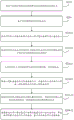
Referring to fig. 1, the method for generating a random number based on a block chain according to this embodiment is applied to a block chain node, and specifically includes steps S102 to S104.
Step S102, receiving the transaction carrying the request for generating the random number.
In specific implementation, the transaction carrying the random number generation request may be sent by a trusted execution environment, for example, after receiving a random number generation request submitted by a client, the trusted execution environment generates a random number seed for the random number generation request, and sends the transaction carrying the random number seed in the random number generation request to a block link point; in addition, the client connected by the block chain node can send the transaction carrying the request for generating the random number. The request for generating the random number carries a random number seed, and the random number seed refers to reference data used for generating the random number. To ensure randomness of the random number seed, optionally, the random number seed is generated by a trusted execution environment for the request to generate a random number.
And step S104, calling a corresponding intelligent contract based on the transaction, and executing the corresponding intelligent contract through the virtual machine.
In this embodiment, the intelligent contract includes contract logic that can be understood as being actually included in the intelligent contract, or a business process implemented by executing the intelligent contract. Specifically, the intelligent contract includes: generating a signature instruction for triggering a plurality of parties participating in random number generation to carry out multi-party collaborative signature on the random number seed; and acquiring an aggregated signature obtained by multiple parties responding to the signature instruction to perform multi-party collaborative signature on the random number seed, and generating a random number based on the acquired multiple aggregated signatures.
The multiparty cooperative signature refers to a process that a plurality of participants participating in random number generation respectively sign random number signatures obtained by signing random number seeds, and aggregate the random number signatures obtained by self signature and the random number signatures obtained by the signatures of the other participants to obtain an aggregated signature.
In this embodiment, the participating parties participating in the random number generation are multiple parties, and optionally, a plurality of participating parties participating in the random number generation are all block chain nodes, and in the random number generation process, the processing process performed by each participating party (block chain node) is the same, and the following description takes the processing of any one participating party in the random number generation process as an example, to describe the random number generation process in which the plurality of participating parties participate, and the processes of random number generation by the remaining participating parties other than the participating party are performed by referring to the processing process of any one participating party in the random number generation process, which is provided below, and is not described here any more.
In addition, the participants participating in the random number generation may not be blockchain nodes, in this case, to implement the consensus of generating random numbers cooperatively by multiple parties, a plurality of participants participating in the random number generation also need to be blockchain users, that is, have corresponding blockchain accounts, so that the consensus of generating random numbers cooperatively by multiple parties can be achieved by means of blockchain on the basis of blockchain accounts.
In an optional implementation manner provided by this embodiment, the responding, by any one or more of the multiple participants, to the signature instruction to perform multi-party collaborative signature on the random number seed includes:
signing the random number seeds by adopting a private key fragment to obtain a first random number signature, wherein the private key fragment is generated by the participant and the rest participants in a pre-cooperative manner based on a distributed key protocol;
sending the first random number signature to other participants, and receiving the first random number signature from other participants as a second random number signature;
and when the received second random number signature meets the aggregation condition, aggregating the received second random number signature together with the first random number signature to obtain an aggregated signature.
For example, the ith participant (block chain node) participating in random number generation performs signature processing by using the following algorithm according to the random number seed r and the key sk _ i generated by executing the distributed key protocol on the basis of the random number seed r carried by the random number generation request:
the signature share of the ith participant is the signature of the random number of the ith participant;
further, after receiving the t participant synchronized signature shares, the ith participant generates its own signature shares as follows
The signature shares synchronized with the t participants are aggregated into an aggregate signature p:
sequentially synchronizing the received t participant shares;
in order to ensure the processing consistency of the participants participating in the random number generation process and enhance the data security in the random number generation process, the key fragments of the participants participating in the random number generation are generated by executing a distributed key protocol, specifically, the private key fragments used by the participants for signing the random number seeds are generated by all the participants in advance based on the distributed key protocol in a coordinated manner, and the following method is adopted for key generation:
n is the total number of all participants, t is the number of untrusted nodes, pk output by the algorithm KenGen () is the shared public key,
the private keys of the 1 st to nth participants are sliced in sequence.
Considering that there may be an untrusted node in a block chain under many actual scenarios, in order to enhance robustness of the random number generation process to different data scenarios, the above configuration of the number of nodes of the untrusted node in the execution process of the distributed key protocol is used to ensure data security of the random number generation process, for example, the configuration of the number of nodes of the untrusted node is 0, which indicates that the current data scenario does not accept the untrusted node; if the node number of the non-trusted nodes is configured to be 2, it indicates that two non-trusted nodes exist in the block chain which can be accepted by the current data scene, that is: the generation of the random number can be still carried out under the condition that 2 untrustworthy nodes exist in the block chain, so that the robustness of the random number generation process is improved.
In a specific execution process, in order to avoid the random number seed from being tampered in a transmission process, the correctness and the security of the random number seed are ensured through a signature and signature verification mechanism, and specifically, the trusted execution environment signs the random number seed by using a private key to obtain a digital signature of the random number seed. Correspondingly, the block chain node performs signature verification in the process of invoking the intelligent contract to generate the random number, so as to detect whether the random number seed is tampered in the sending process, optionally, the intelligent contract further includes:
verifying the authenticity of the random number seed;
and generating a signature instruction for triggering the parties participating in the random number generation to carry out multi-party cooperative signature on the random number seed after the verification is passed.
Optionally, the random number seed carried by the random number generation request has a private key signature obtained by signing by the trusted execution environment, and verifying the authenticity of the random number seed includes performing signature verification by using a public key corresponding to the private key of the trusted execution environment.
In this embodiment, detecting whether the number of participants performing random number signing and signature aggregation satisfies a certain condition to detect the synchronicity of random number signing and signature aggregation performed by multiple participants, so as to ensure that the multiple participants participating in random number generation agree on the generation of random numbers, specifically, generating random numbers based on the obtained multiple aggregation signatures includes:
when the same number of the acquired multiple aggregated signatures reaches a certain condition, generating a random number based on the same aggregated signatures;
and the same quantity in the multiple aggregated signatures reaches a certain condition, wherein the condition comprises that the same quantity in the multiple aggregated signatures is greater than or equal to the number of nodes of the untrusted nodes.
In addition, in addition to the acquisition of the plurality of aggregated signatures, when the same number of the plurality of acquired aggregated signatures reaches a certain condition, the same aggregated signature may be used as a random number. The data form of the random number may be a character string, or may be other data forms besides a character string.
In specific implementation, after receiving the multiple aggregated signatures, the authenticity of the aggregated signatures is verified in a signature verification manner, and specifically, in the verification process, the received multiple aggregated signatures are verified by using a shared public key obtained after executing a distributed key protocol, so as to ensure that participants performing random number signature, signature aggregation, and aggregated signature synchronization are participants achieving consensus, optionally, the intelligent contract further includes:
verifying the plurality of aggregated signatures using a shared public key, the shared public key being generated by the plurality of participants in a pre-collaborative manner based on a distributed key protocol;
generating the random number based on the plurality of aggregated signatures after verification passes.
In practical application, the generation of the random number in many service scenarios is often served for actual services, for example, the generation of the random number serves for drawing lots or the random number generation for drawing lots, so that after the random number is generated, the generated random number is returned for the request of generating the random number, so as to facilitate the service to access the random number, optionally, according to the identifier carried in the request of generating the random number, the random number is recorded and used as the random number corresponding to the identifier, and a request response carrying the random number is returned for the request of generating the random number. For example, if the transaction for generating the random number request is sent by the client, the generated random number is recorded and used as the random number corresponding to the task identifier according to the task identifier carried in the random number request, and a request response carrying the random number is returned to the client.
In summary, the block chain-based random number generation method calls a corresponding intelligent contract based on a received transaction carrying a request for generating a random number and executes the called intelligent contract to generate the random number, specifically, in the process of generating the random number, a signature instruction for performing multi-party cooperative signature on a random number seed is generated from the random number seed carried in the request for generating the random number, and aggregated signatures obtained by performing the multi-party cooperative signature on a plurality of participants are aggregated into the random number, so that consensus of the plurality of participants on the generation of the random number is achieved, the correctness and the legality of the generation of the random number are effectively improved, and meanwhile, the generation process of the random number is traceable by executing the intelligent contract to generate the random number, and the safety of the generation process of the random number is improved;
further, a private key fragment for signing the random number seed and a shared public key for verifying the authenticity of the aggregated signature are generated by executing a distributed key protocol, so that the random number seed and the aggregated signature are ensured to be commonly identified by a plurality of parties, and the safety of the random number generation process and the legitimacy of the random number generation are further promoted.
The following takes an application of the block chain-based random number generation method provided in this embodiment in a drawing scene as an example, and further describes the block chain-based random number generation method provided in this embodiment, with reference to fig. 2, the block chain-based random number generation method applied in the drawing scene specifically includes the following steps.
Step S202, receiving a transaction carrying a request for generating a random number sent by the trusted execution environment.
The random number generation request carries a random number seed, the random number seed is generated by the trusted execution environment according to the random number generation request submitted by the drawing client, and the random number seed is provided with a private key signature obtained by signature of the trusted execution environment.
And step S204, calling a corresponding intelligent contract based on the transaction.
After invoking the corresponding smart contract, executing the corresponding smart contract by the virtual machine, specifically, performing the following substeps 204-2 to substep S204-12 when the smart contract = is executed by the virtual machine.
And a substep S204-2 of signature verification is carried out on the random number seed by adopting a public key corresponding to the private key of the trusted execution environment.
And a substep S204-4, generating a signature instruction for triggering the parties participating in the random number generation to carry out multi-party cooperative signature on the random number seed after the verification is passed.
And a substep S204-6, signing the random number seeds by adopting the private key fragments to obtain a first random number signature.
Wherein the private key fragments are generated by the participant in advance in cooperation with the other participants based on a distributed key protocol.
Substep S204-8, sending the first random number signature to the remaining participants and receiving the first random number signature from the remaining participants as a second random number signature.
And a substep S204-10, when the received second random number signature meets the aggregation condition, aggregating the received second random number signature and the first random number signature to obtain an aggregated signature.
And a substep S204-12 of, when the same number of the acquired plurality of aggregated signatures reaches a certain condition, taking the same aggregated signature as a target signature and generating a random number based on the target signature.
An embodiment of a random number generation apparatus based on a block chain provided in this specification is as follows:
in the foregoing embodiment, a block chain-based random number generation method is provided, and correspondingly, a block chain-based random number generation apparatus is also provided, which is described below with reference to the accompanying drawings.
Referring to fig. 3, a schematic diagram of a block chain-based random number generation apparatus according to this embodiment is shown.
Since the device embodiments correspond to the method embodiments, the description is relatively simple, and the relevant portions may refer to the corresponding description of the method embodiments provided above. The device embodiments described below are merely illustrative.
The present embodiment provides a block chain-based random number generation apparatus, including:
a transaction receiving module 302 configured to receive a transaction carrying a request to generate a random number, the request to generate a random number carrying a random number seed;
an intelligent contract invoking module 304 configured to invoke a corresponding intelligent contract based on the transaction and execute the corresponding intelligent contract through a virtual machine, the intelligent contract comprising: generating a signature instruction for triggering a plurality of parties participating in random number generation to carry out multi-party collaborative signature on the random number seed; and acquiring an aggregated signature obtained by multiple parties responding to the signature instruction to perform multi-party collaborative signature on the random number seed, and generating a random number based on the acquired multiple aggregated signatures.
An embodiment of a random number generation device based on a block chain provided in this specification is as follows:
corresponding to the above-described random number generation method based on a block chain, based on the same technical concept, one or more embodiments of the present specification further provide a random number generation device based on a block chain, where the random number generation device based on a block chain is configured to execute the above-described random number generation method based on a block chain, and fig. 4 is a schematic structural diagram of a random number generation device based on a block chain provided in one or more embodiments of the present specification.
The random number generation device based on the block chain provided by the embodiment includes:
as shown in fig. 4, the random number generation device based on the block chain may have a relatively large difference due to different configurations or performances, and may include one or more processors 401 and a memory 402, where one or more stored applications or data may be stored in the memory 402. Wherein memory 402 may be transient or persistent. The application program stored in memory 402 may include one or more modules (not shown), each of which may include a series of computer-executable instructions in a random number generation device based on a block chain. Still further, the processor 401 may be arranged in communication with the memory 402 to execute a series of computer executable instructions in the memory 402 on a blockchain based random number generating device. The blockchain-based random number generation apparatus may also include one or more power supplies 403, one or more wired or wireless network interfaces 404, one or more input/output interfaces 405, one or more keyboards 406, and the like.
In a particular embodiment, a blockchain-based random number generating apparatus includes a memory, and one or more programs, wherein the one or more programs are stored in the memory, and the one or more programs may include one or more modules, and each module may include a series of computer-executable instructions for the blockchain-based random number generating apparatus, and the one or more programs configured to be executed by one or more processors include computer-executable instructions for:
receiving a transaction carrying a request for generating a random number, wherein the request for generating the random number carries a random number seed;
invoking a corresponding intelligent contract based on the transaction, and executing the corresponding intelligent contract through a virtual machine, the intelligent contract comprising:
generating a signature instruction for triggering a plurality of parties participating in random number generation to carry out multi-party collaborative signature on the random number seed;
and acquiring an aggregated signature obtained by multiple parties responding to the signature instruction to perform multi-party collaborative signature on the random number seed, and generating a random number based on the acquired multiple aggregated signatures.
An embodiment of a storage medium provided in this specification is as follows:
in response to the above-described block chain-based random number generation method, based on the same technical concept, one or more embodiments of the present specification further provide a storage medium.
The storage medium provided in this embodiment is used to store computer-executable instructions, and when the computer-executable instructions are executed by the processor, the following processes are implemented:
receiving a transaction carrying a request for generating a random number, wherein the request for generating the random number carries a random number seed;
invoking a corresponding intelligent contract based on the transaction, and executing the corresponding intelligent contract through a virtual machine, the intelligent contract comprising:
generating a signature instruction for triggering a plurality of parties participating in random number generation to carry out multi-party collaborative signature on the random number seed;
and acquiring an aggregated signature obtained by multiple parties responding to the signature instruction to perform multi-party collaborative signature on the random number seed, and generating a random number based on the acquired multiple aggregated signatures.
It should be noted that the embodiment of the storage medium in this specification and the embodiment of the random number generation method based on the block chain in this specification are based on the same inventive concept, and therefore, for specific implementation of this embodiment, reference may be made to implementation of the foregoing corresponding method, and repeated details are not described again.
The foregoing description has been directed to specific embodiments of this disclosure. Other embodiments are within the scope of the following claims. In some cases, the actions or steps recited in the claims may be performed in a different order than in the embodiments and still achieve desirable results. In addition, the processes depicted in the accompanying figures do not necessarily require the particular order shown, or sequential order, to achieve desirable results. In some embodiments, multitasking and parallel processing may also be possible or may be advantageous.
In the 30 s of the 20 th century, improvements in a technology could clearly be distinguished between improvements in hardware (e.g., improvements in circuit structures such as diodes, transistors, switches, etc.) and improvements in software (improvements in process flow). However, as technology advances, many of today's process flow improvements have been seen as direct improvements in hardware circuit architecture. Designers almost always obtain the corresponding hardware circuit structure by programming an improved method flow into the hardware circuit. Thus, it cannot be said that an improvement in the process flow cannot be realized by hardware physical modules. For example, a Programmable Logic Device (PLD), such as a Field Programmable Gate Array (FPGA), is an integrated circuit whose Logic functions are determined by programming the Device by a user. A digital system is "integrated" on a PLD by the designer's own programming without requiring the chip manufacturer to design and fabricate application-specific integrated circuit chips. Furthermore, nowadays, instead of manually making an Integrated Circuit chip, such Programming is often implemented by "logic compiler" software, which is similar to a software compiler used in program development and writing, but the original code before compiling is also written by a specific Programming Language, which is called Hardware Description Language (HDL), and HDL is not only one but many, such as abel (advanced Boolean Expression Language), ahdl (alternate Hardware Description Language), traffic, pl (core universal Programming Language), HDCal (jhdware Description Language), lang, Lola, HDL, laspam, hardward Description Language (vhr Description Language), vhal (Hardware Description Language), and vhigh-Language, which are currently used in most common. It will also be apparent to those skilled in the art that hardware circuitry that implements the logical method flows can be readily obtained by merely slightly programming the method flows into an integrated circuit using the hardware description languages described above.
The controller may be implemented in any suitable manner, for example, the controller may take the form of, for example, a microprocessor or processor and a computer-readable medium storing computer-readable program code (e.g., software or firmware) executable by the (micro) processor, logic gates, switches, an Application Specific Integrated Circuit (ASIC), a programmable logic controller, and an embedded microcontroller, examples of which include, but are not limited to, the following microcontrollers: ARC 625D, Atmel AT91SAM, Microchip PIC18F26K20, and Silicone Labs C8051F320, the memory controller may also be implemented as part of the control logic for the memory. Those skilled in the art will also appreciate that, in addition to implementing the controller as pure computer readable program code, the same functionality can be implemented by logically programming method steps such that the controller is in the form of logic gates, switches, application specific integrated circuits, programmable logic controllers, embedded microcontrollers and the like. Such a controller may thus be considered a hardware component, and the means included therein for performing the various functions may also be considered as a structure within the hardware component. Or even means for performing the functions may be regarded as being both a software module for performing the method and a structure within a hardware component.
The systems, devices, modules or units illustrated in the above embodiments may be implemented by a computer chip or an entity, or by a product with certain functions. One typical implementation device is a computer. In particular, the computer may be, for example, a personal computer, a laptop computer, a cellular telephone, a camera phone, a smartphone, a personal digital assistant, a media player, a navigation device, an email device, a game console, a tablet computer, a wearable device, or a combination of any of these devices.
For convenience of description, the above devices are described as being divided into various units by function, and are described separately. Of course, the functions of the units may be implemented in the same software and/or hardware or in multiple software and/or hardware when implementing the embodiments of the present description.
One skilled in the art will recognize that one or more embodiments of the present description may be provided as a method, system, or computer program product. Accordingly, one or more embodiments of the present description may take the form of an entirely hardware embodiment, an entirely software embodiment or an embodiment combining software and hardware aspects. Furthermore, the description may take the form of a computer program product embodied on one or more computer-usable storage media (including, but not limited to, disk storage, CD-ROM, optical storage, and the like) having computer-usable program code embodied therein.
The description has been presented with reference to flowchart illustrations and/or block diagrams of methods, apparatus (systems), and computer program products according to embodiments of the description. It will be understood that each flow and/or block of the flow diagrams and/or block diagrams, and combinations of flows and/or blocks in the flow diagrams and/or block diagrams, can be implemented by computer program instructions. These computer program instructions may be provided to a processor of a general purpose computer, special purpose computer, embedded processor, or other programmable data processing apparatus to produce a machine, such that the instructions, which execute via the processor of the computer or other programmable data processing apparatus, create means for implementing the functions specified in the flowchart flow or flows and/or block diagram block or blocks.
These computer program instructions may also be stored in a computer-readable memory that can direct a computer or other programmable data processing apparatus to function in a particular manner, such that the instructions stored in the computer-readable memory produce an article of manufacture including instruction means which implement the function specified in the flowchart flow or flows and/or block diagram block or blocks.
These computer program instructions may also be loaded onto a computer or other programmable data processing apparatus to cause a series of operational steps to be performed on the computer or other programmable apparatus to produce a computer implemented process such that the instructions which execute on the computer or other programmable apparatus provide steps for implementing the functions specified in the flowchart flow or flows and/or block diagram block or blocks.
In a typical configuration, a computing device includes one or more processors (CPUs), input/output interfaces, network interfaces, and memory.
The memory may include forms of volatile memory in a computer readable medium, Random Access Memory (RAM) and/or non-volatile memory, such as Read Only Memory (ROM) or flash memory (flash RAM). Memory is an example of a computer-readable medium.
Computer-readable media, including both non-transitory and non-transitory, removable and non-removable media, may implement information storage by any method or technology. The information may be computer readable instructions, data structures, modules of a program, or other data. Examples of computer storage media include, but are not limited to, phase change memory (PRAM), Static Random Access Memory (SRAM), Dynamic Random Access Memory (DRAM), other types of Random Access Memory (RAM), Read Only Memory (ROM), Electrically Erasable Programmable Read Only Memory (EEPROM), flash memory or other memory technology, compact disc read only memory (CD-ROM), Digital Versatile Discs (DVD) or other optical storage, magnetic cassettes, magnetic disk storage or other magnetic storage devices, or any other non-transmission medium that can be used to store information that can be accessed by a computing device. As defined herein, a computer readable medium does not include a transitory computer readable medium such as a modulated data signal and a carrier wave.
It should also be noted that the terms "comprises," "comprising," or any other variation thereof, are intended to cover a non-exclusive inclusion, such that a process, method, article, or apparatus that comprises a list of elements does not include only those elements but may include other elements not expressly listed or inherent to such process, method, article, or apparatus. Without further limitation, an element defined by the phrase "comprising an … …" does not exclude the presence of other like elements in a process, method, article, or apparatus that comprises the element.
One or more embodiments of the present description may be described in the general context of computer-executable instructions, such as program modules, being executed by a computer. Generally, program modules include routines, programs, objects, components, data structures, etc. that perform particular tasks or implement particular abstract data types. One or more embodiments of the specification may also be practiced in distributed computing environments where tasks are performed by remote processing devices that are linked through a communications network. In a distributed computing environment, program modules may be located in both local and remote computer storage media including memory storage devices.
The embodiments in the present specification are described in a progressive manner, and the same and similar parts among the embodiments are referred to each other, and each embodiment focuses on the differences from the other embodiments. In particular, for the system embodiment, since it is substantially similar to the method embodiment, the description is simple, and for the relevant points, reference may be made to the partial description of the method embodiment.
The above description is only an example of this document and is not intended to limit this document. Various modifications and changes may occur to those skilled in the art from this document. Any modifications, equivalents, improvements, etc. which come within the spirit and principle of the disclosure are intended to be included within the scope of the claims of this document.