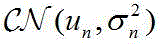
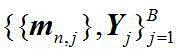
CN113766669B - Large-scale random access method based on deep learning network - Google Patents

Large-scale random access method based on deep learning network Download PDF

Info

Publication number
CN113766669B
CN113766669B CN202111323583.8A CN202111323583A CN113766669B CN 113766669 B CN113766669 B CN 113766669B CN 202111323583 A CN202111323583 A CN 202111323583A CN 113766669 B CN113766669 B CN 113766669B
Authority
CN
China
Prior art keywords
neural network
user
matrix
random access
algorithm
Prior art date
Legal status (The legal status is an assumption and is not a legal conclusion. Google has not performed a legal analysis and makes no representation as to the accuracy of the status listed.)
Active
Application number
CN202111323583.8A
Other languages
Chinese (zh)
Other versions
CN113766669A (en
Inventor
黄川�
崔曙光
黄坚豪
Current Assignee (The listed assignees may be inaccurate. Google has not performed a legal analysis and makes no representation or warranty as to the accuracy of the list.)
Chinese University of Hong Kong Shenzhen
Original Assignee
Chinese University of Hong Kong Shenzhen
Priority date (The priority date is an assumption and is not a legal conclusion. Google has not performed a legal analysis and makes no representation as to the accuracy of the date listed.)
Filing date
Publication date
Application filed by Chinese University of Hong Kong Shenzhen filed Critical Chinese University of Hong Kong Shenzhen
Priority to CN202111323583.8A priority Critical patent/CN113766669B/en
Publication of CN113766669A publication Critical patent/CN113766669A/en
Application granted granted Critical
Publication of CN113766669B publication Critical patent/CN113766669B/en
Active legal-status Critical Current
Anticipated expiration legal-status Critical

Links

Images

Classifications

    • HELECTRICITY
    • H04ELECTRIC COMMUNICATION TECHNIQUE
    • H04WWIRELESS COMMUNICATION NETWORKS
    • H04W74/00Wireless channel access
    • H04W74/08Non-scheduled access, e.g. ALOHA
    • H04W74/0833Random access procedures, e.g. with 4-step access
    • GPHYSICS
    • G06COMPUTING OR CALCULATING; COUNTING
    • G06NCOMPUTING ARRANGEMENTS BASED ON SPECIFIC COMPUTATIONAL MODELS
    • G06N3/00Computing arrangements based on biological models
    • G06N3/02Neural networks
    • G06N3/04Architecture, e.g. interconnection topology
    • G06N3/045Combinations of networks
    • GPHYSICS
    • G06COMPUTING OR CALCULATING; COUNTING
    • G06NCOMPUTING ARRANGEMENTS BASED ON SPECIFIC COMPUTATIONAL MODELS
    • G06N3/00Computing arrangements based on biological models
    • G06N3/02Neural networks
    • G06N3/04Architecture, e.g. interconnection topology
    • G06N3/047Probabilistic or stochastic networks
    • GPHYSICS
    • G06COMPUTING OR CALCULATING; COUNTING
    • G06NCOMPUTING ARRANGEMENTS BASED ON SPECIFIC COMPUTATIONAL MODELS
    • G06N3/00Computing arrangements based on biological models
    • G06N3/02Neural networks
    • G06N3/04Architecture, e.g. interconnection topology
    • G06N3/048Activation functions
    • GPHYSICS
    • G06COMPUTING OR CALCULATING; COUNTING
    • G06NCOMPUTING ARRANGEMENTS BASED ON SPECIFIC COMPUTATIONAL MODELS
    • G06N3/00Computing arrangements based on biological models
    • G06N3/02Neural networks
    • G06N3/08Learning methods

Landscapes

  • Engineering & Computer Science (AREA)
  • Physics & Mathematics (AREA)
  • Theoretical Computer Science (AREA)
  • Evolutionary Computation (AREA)
  • Molecular Biology (AREA)
  • Artificial Intelligence (AREA)
  • Biomedical Technology (AREA)
  • Biophysics (AREA)
  • Computational Linguistics (AREA)
  • Data Mining & Analysis (AREA)
  • Health & Medical Sciences (AREA)
  • General Health & Medical Sciences (AREA)
  • Life Sciences & Earth Sciences (AREA)
  • Computing Systems (AREA)
  • General Engineering & Computer Science (AREA)
  • General Physics & Mathematics (AREA)
  • Mathematical Physics (AREA)
  • Software Systems (AREA)
  • Probability & Statistics with Applications (AREA)
  • Computer Networks & Wireless Communication (AREA)
  • Signal Processing (AREA)
  • Mobile Radio Communication Systems (AREA)

Abstract

本发明公开了一种基于深度学习网络的大规模随机接入方法,包括以下步骤:构建基于大规模随机接入的系统模型;构建利用深度神经网络对用户的发射信号

Figure 618710DEST_PATH_IMAGE001
进行检测和用户接入判断的模型;进行神经网络训练和参数更新;根据训练更新后的神经网络对用户发射信号进行检测,从而判断用户是否成功接入。本发明提供的大规模随机接入方案中,提出了低复杂度的解码算法,有效提升通信性能,具体而言,基于神经网络的检测算法与传统的算法相比,无需信道的先验统计特性,能够大大降低系统的损耗,更加适用于实际的通信系统,另外,所提出算法将比传统算法更加具有鲁棒性,即当系统先验知识不完备时,该算法将提供更好的性能。

Figure 202111323583

The invention discloses a large-scale random access method based on a deep learning network, comprising the following steps: constructing a system model based on large-scale random access;

Figure 618710DEST_PATH_IMAGE001
Model for detection and user access judgment; neural network training and parameter update; detection of user transmission signals according to the trained and updated neural network, so as to determine whether the user successfully accesses. In the large-scale random access scheme provided by the present invention, a low-complexity decoding algorithm is proposed to effectively improve the communication performance. Specifically, compared with the traditional algorithm, the detection algorithm based on neural network does not need the prior statistical characteristics of the channel. , which can greatly reduce the loss of the system and is more suitable for practical communication systems. In addition, the proposed algorithm will be more robust than the traditional algorithm, that is, when the prior knowledge of the system is incomplete, the algorithm will provide better performance.

Figure 202111323583

Description

一种基于深度学习网络的大规模随机接入方法A large-scale random access method based on deep learning network

技术领域technical field

本发明涉及深度学习网络,特别是涉及一种基于深度学习网络的大规模随机接入方法。The invention relates to a deep learning network, in particular to a large-scale random access method based on a deep learning network.

背景技术Background technique

随着通信技术的高速发展,基站在社会生活中的应用越来越广泛,基站常常需要接入大量用户,并支持大量用户的上行传输;此时用户的接入方法非常重要。With the rapid development of communication technology, base stations are more and more widely used in social life. Base stations often need to access a large number of users and support uplink transmission of a large number of users. At this time, the access method of users is very important.

传统的接入策略和数据传输策略是独立的,分为两步:首先对活跃用户进行检测,然后对已检测的活跃用户进行信道估计及数据检测。这种分立式策略需要用户在数据发送前,通过导频完成活跃度检测和信道估计,会产生巨大的时间延迟和性能开销。因此,这种传统通信模式很难再满足大规模场景下高能量效率和低通信延迟的通信需求。另外,传统的接入算法往往需要知道信道的统计特性以及用户活跃特征,这在实际情况中是很难实现的。The traditional access strategy and data transmission strategy are independent and are divided into two steps: firstly, active users are detected, and then channel estimation and data detection are performed on the detected active users. This discrete strategy requires users to complete activity detection and channel estimation through pilots before data transmission, which will result in huge time delay and performance overhead. Therefore, it is difficult for this traditional communication mode to meet the communication requirements of high energy efficiency and low communication delay in large-scale scenarios. In addition, traditional access algorithms often need to know the statistical characteristics of channels and user activity characteristics, which are difficult to achieve in practical situations.

发明内容SUMMARY OF THE INVENTION

本发明的目的在于克服现有技术的不足,提供一种基于深度学习网络的大规模随机接入方法,提出了低复杂度的解码方案,有效提升通信性能。The purpose of the present invention is to overcome the deficiencies of the prior art, provide a large-scale random access method based on a deep learning network, and propose a low-complexity decoding scheme to effectively improve communication performance.

本发明的目的是通过以下技术方案来实现的:一种基于深度学习网络的大规模随机接入方法,包括以下步骤:The object of the present invention is to be achieved through the following technical solutions: a large-scale random access method based on a deep learning network, comprising the following steps:

S1.构建基于大规模随机接入的系统模型;S1. Build a system model based on large-scale random access;

S2.构建利用深度神经网络对用户的发射信号

Figure DEST_PATH_IMAGE001
进行检测和用户接入判断的模型;S2. Constructing the transmission signal to the user using the deep neural network
Figure DEST_PATH_IMAGE001
A model for detection and user access judgment;

S3.进行神经网络训练和参数更新;S3. Perform neural network training and parameter update;

S4. 根据训练更新后的神经网络对用户发射信号进行检测,从而判断用户是否成功接入。S4. Detect the signal transmitted by the user according to the trained and updated neural network, so as to determine whether the user successfully accesses.

进一步地,所述步骤S1包括以下子步骤:Further, the step S1 includes the following sub-steps:

S101.对于包含

Figure DEST_PATH_IMAGE002
个单天线用户和一个接收端的通信系统,每个用户随机接入接收端,即在每个发射时隙都会以一定概率向接收端发射信息,其中,接收端配有
Figure DEST_PATH_IMAGE003
根天线;用随机变量
Figure DEST_PATH_IMAGE004
来形容用户
Figure DEST_PATH_IMAGE005
的活跃特性,在每一个时隙,
Figure 506649DEST_PATH_IMAGE004
满足:S101. For containing
Figure DEST_PATH_IMAGE002
In a communication system with one single-antenna user and one receiver, each user randomly accesses the receiver, that is, it transmits information to the receiver with a certain probability in each transmission time slot. The receiver is equipped with
Figure DEST_PATH_IMAGE003
root antenna; use random variables
Figure DEST_PATH_IMAGE004
to describe the user
Figure DEST_PATH_IMAGE005
the active characteristic of, in each time slot,
Figure 506649DEST_PATH_IMAGE004
Satisfy:

Figure DEST_PATH_IMAGE006
;

S102.各个用户采用基于自由接入的随机接入方案;在传输之前每一个用户预先分配了一个专用的导频序列

Figure DEST_PATH_IMAGE007
,其中
Figure DEST_PATH_IMAGE008
为导频长度,符号
Figure DEST_PATH_IMAGE009
代表长度为
Figure 971260DEST_PATH_IMAGE008
的复数序列集合;每个导频的元素由独立同分布的高斯分布得到,即
Figure DEST_PATH_IMAGE010
,其中符号
Figure DEST_PATH_IMAGE011
代表均值为0,方差为
Figure DEST_PATH_IMAGE012
的复高斯分布,
Figure DEST_PATH_IMAGE013
代表维度为
Figure 360784DEST_PATH_IMAGE008
的单位矩阵;所有用户的导频序列都储存在接收端中;S102. Each user adopts a random access scheme based on free access; each user is pre-assigned a dedicated pilot sequence before transmission
Figure DEST_PATH_IMAGE007
,in
Figure DEST_PATH_IMAGE008
is the pilot length, symbol
Figure DEST_PATH_IMAGE009
represents the length of
Figure 971260DEST_PATH_IMAGE008
The complex sequence set of ; the elements of each pilot are obtained from the independent and identically distributed Gaussian distribution, namely
Figure DEST_PATH_IMAGE010
, where the symbol
Figure DEST_PATH_IMAGE011
means that the mean is 0 and the variance is
Figure DEST_PATH_IMAGE012
The complex Gaussian distribution of ,
Figure DEST_PATH_IMAGE013
The representative dimension is
Figure 360784DEST_PATH_IMAGE008
The identity matrix of ; the pilot sequences of all users are stored in the receiver;

S103.在每一个发射时隙,每个活跃用户同步地发射导频序列和发射信号

Figure 165447DEST_PATH_IMAGE001
到接收端,接收信号表示为S103. In each transmission time slot, each active user synchronously transmits the pilot sequence and transmits the signal
Figure 165447DEST_PATH_IMAGE001
to the receiving end, the received signal is expressed as

Figure DEST_PATH_IMAGE014

Figure DEST_PATH_IMAGE016
, 得到接收信号的矩阵表达式,make
Figure DEST_PATH_IMAGE016
, to get the matrix expression of the received signal,

Figure DEST_PATH_IMAGE017

其中

Figure 100002_DEST_PATH_IMAGE018
为高斯噪声,每个元素满足独立同分布均值为零,方差为
Figure DEST_PATH_IMAGE019
的高斯分布;
Figure DEST_PATH_IMAGE020
代表用户n到接收端的信道参数,
Figure DEST_PATH_IMAGE021
为表示长度为
Figure DEST_PATH_IMAGE022
的复数序列集合,并且在接收端是未知的,设
Figure DEST_PATH_IMAGE023
为用户n的发射信号。其中发射信号
Figure 340339DEST_PATH_IMAGE023
是由以下码本产生:in
Figure 100002_DEST_PATH_IMAGE018
is Gaussian noise, each element satisfies the independent and identical distribution with zero mean, and the variance is
Figure DEST_PATH_IMAGE019
the Gaussian distribution of ;
Figure DEST_PATH_IMAGE020
represents the channel parameters from user n to the receiver,
Figure DEST_PATH_IMAGE021
to represent the length of
Figure DEST_PATH_IMAGE022
, and is unknown at the receiver, let
Figure DEST_PATH_IMAGE023
is the transmitted signal of user n . which transmits the signal
Figure 340339DEST_PATH_IMAGE023
is generated by the following codebook:

Figure DEST_PATH_IMAGE024

其中

Figure DEST_PATH_IMAGE025
是第
Figure DEST_PATH_IMAGE026
个调制码字,
Figure DEST_PATH_IMAGE027
是用户n 的传输速率,
Figure DEST_PATH_IMAGE028
代表这个用户是非活跃的,即
Figure DEST_PATH_IMAGE029
。in
Figure DEST_PATH_IMAGE025
is the first
Figure DEST_PATH_IMAGE026
modulation codeword,
Figure DEST_PATH_IMAGE027
is the transmission rate of user n ,
Figure DEST_PATH_IMAGE028
Indicates that the user is inactive, i.e.
Figure DEST_PATH_IMAGE029
.

进一步地,所述步骤S2包括以下子步骤:Further, the step S2 includes the following sub-steps:

S201.初始化:输入接收信号

Figure DEST_PATH_IMAGE030
,用户的稀疏参数g,每个用户的速率
Figure DEST_PATH_IMAGE031
;初始化令
Figure DEST_PATH_IMAGE032
;S201. Initialization: input receiving signal
Figure DEST_PATH_IMAGE030
, the user's sparse parameter g , the rate of each user
Figure DEST_PATH_IMAGE031
;Initialization command
Figure DEST_PATH_IMAGE032
;

S202. 首先将接收信号

Figure 785971DEST_PATH_IMAGE030
输入进设计的神经网络算法,进行干扰消除处理,神经网络算法基于多层结构,第t层的计算过程为:S202. First will receive the signal
Figure 785971DEST_PATH_IMAGE030
Input into the designed neural network algorithm for interference elimination processing. The neural network algorithm is based on a multi-layer structure. The calculation process of the t -th layer is as follows:

Figure DEST_PATH_IMAGE033

其中,

Figure DEST_PATH_IMAGE034
Figure DEST_PATH_IMAGE035
是矩阵
Figure DEST_PATH_IMAGE036
的共轭转置,t 为大于零的整数,最大层数设定为
Figure DEST_PATH_IMAGE037
,即
Figure DEST_PATH_IMAGE038
Figure DEST_PATH_IMAGE039
Figure DEST_PATH_IMAGE040
代表去噪器作用于第n列信号,
Figure DEST_PATH_IMAGE041
代表去噪器函数的一阶导数;去噪器的设计将由深度神经网络实现,
Figure DEST_PATH_IMAGE042
代表去噪器
Figure DEST_PATH_IMAGE043
的神经网络参数;in,
Figure DEST_PATH_IMAGE034
,
Figure DEST_PATH_IMAGE035
is the matrix
Figure DEST_PATH_IMAGE036
The conjugate transpose of , t is an integer greater than zero, and the maximum number of layers is set as
Figure DEST_PATH_IMAGE037
,Right now
Figure DEST_PATH_IMAGE038
;
Figure DEST_PATH_IMAGE039
,
Figure DEST_PATH_IMAGE040
represents that the denoiser acts on the nth column signal,
Figure DEST_PATH_IMAGE041
represents the first derivative of the denoiser function; the design of the denoiser will be implemented by a deep neural network,
Figure DEST_PATH_IMAGE042
stands for denoiser
Figure DEST_PATH_IMAGE043
the neural network parameters;

去噪器

Figure DEST_PATH_IMAGE044
的设计如下:首先将复数矩阵
Figure DEST_PATH_IMAGE045
转化为实数矩阵
Figure DEST_PATH_IMAGE046
,其中
Figure DEST_PATH_IMAGE047
代表维度为
Figure DEST_PATH_IMAGE048
的实数矩阵集合,转化方式为:denoiser
Figure DEST_PATH_IMAGE044
The design is as follows: first convert the complex matrix
Figure DEST_PATH_IMAGE045
Convert to real matrix
Figure DEST_PATH_IMAGE046
,in
Figure DEST_PATH_IMAGE047
The representative dimension is
Figure DEST_PATH_IMAGE048
The set of real number matrices is transformed as:

Figure DEST_PATH_IMAGE049

其中

Figure DEST_PATH_IMAGE050
,其中
Figure DEST_PATH_IMAGE051
代表维度为
Figure DEST_PATH_IMAGE052
的实数向量集合,是矩阵
Figure DEST_PATH_IMAGE053
的第n个切面矩阵;然后将矩阵输入以下神经网络:in
Figure DEST_PATH_IMAGE050
,in
Figure DEST_PATH_IMAGE051
The representative dimension is
Figure DEST_PATH_IMAGE052
The set of real vectors of , is a matrix
Figure DEST_PATH_IMAGE053
The nth facet matrix of ; then the matrix is fed into the following neural network:

Figure DEST_PATH_IMAGE054

其中,

Figure DEST_PATH_IMAGE055
代表两个神经网络的组合;
Figure DEST_PATH_IMAGE056
是卷积神经网络,过滤器数量为
Figure DEST_PATH_IMAGE057
,内核大小为(1,1),步长大小为 (1,1);in,
Figure DEST_PATH_IMAGE055
represents the combination of two neural networks;
Figure DEST_PATH_IMAGE056
is a convolutional neural network with a number of filters of
Figure DEST_PATH_IMAGE057
, the kernel size is (1,1), and the step size is (1,1);

在卷积网络

Figure DEST_PATH_IMAGE058
Figure DEST_PATH_IMAGE059
的末尾添加 Relu 函数 作为激活函数;令
Figure DEST_PATH_IMAGE060
Figure DEST_PATH_IMAGE061
是一个软收缩函数:in convolutional networks
Figure DEST_PATH_IMAGE058
and
Figure DEST_PATH_IMAGE059
Add the Relu function as the activation function at the end of ; let
Figure DEST_PATH_IMAGE060
,
Figure DEST_PATH_IMAGE061
is a soft contraction function:

Figure DEST_PATH_IMAGE062

其中,矩阵

Figure DEST_PATH_IMAGE063
是矩阵
Figure DEST_PATH_IMAGE064
的第n个切片,
Figure DEST_PATH_IMAGE065
是收缩参数包含在参数集合
Figure DEST_PATH_IMAGE066
中;最后,将
Figure DEST_PATH_IMAGE067
转化为复数矩阵
Figure DEST_PATH_IMAGE068
;输出信号
Figure DEST_PATH_IMAGE069
,令
Figure DEST_PATH_IMAGE070
。Among them, the matrix
Figure DEST_PATH_IMAGE063
is the matrix
Figure DEST_PATH_IMAGE064
the nth slice of ,
Figure DEST_PATH_IMAGE065
is the contraction parameter contained in the parameter set
Figure DEST_PATH_IMAGE066
in; finally, the
Figure DEST_PATH_IMAGE067
Convert to complex matrix
Figure DEST_PATH_IMAGE068
;output signal
Figure DEST_PATH_IMAGE069
,make
Figure DEST_PATH_IMAGE070
.

S203.利用神经网络计算基于

Figure DEST_PATH_IMAGE071
的后验概率:S203. Using neural network to calculate based on
Figure DEST_PATH_IMAGE071
The posterior probability of :

首先,每个复数向量

Figure DEST_PATH_IMAGE072
转化为实数向量
Figure DEST_PATH_IMAGE073
,即,First, each complex vector
Figure DEST_PATH_IMAGE072
Convert to real vector
Figure DEST_PATH_IMAGE073
,which is,

Figure DEST_PATH_IMAGE074

其中,

Figure DEST_PATH_IMAGE075
代表向量
Figure DEST_PATH_IMAGE076
中第
Figure DEST_PATH_IMAGE077
个元素到第
Figure DEST_PATH_IMAGE078
个元素组成的向量,
Figure DEST_PATH_IMAGE079
Figure DEST_PATH_IMAGE080
分别代表实数和虚数;随后,将得到的向量
Figure DEST_PATH_IMAGE081
输入神经网络,即,in,
Figure DEST_PATH_IMAGE075
representative vector
Figure DEST_PATH_IMAGE076
B
Figure DEST_PATH_IMAGE077
element to
Figure DEST_PATH_IMAGE078
a vector of elements,
Figure DEST_PATH_IMAGE079
and
Figure DEST_PATH_IMAGE080
represent real and imaginary numbers, respectively; then, the resulting vector
Figure DEST_PATH_IMAGE081
input to the neural network, i.e.,

Figure DEST_PATH_IMAGE082

其中,

Figure DEST_PATH_IMAGE083
Figure DEST_PATH_IMAGE084
是全连接神经网络层,神经元数分别为
Figure DEST_PATH_IMAGE085
Figure DEST_PATH_IMAGE086
;Relu 函数和 Softmax 函数分别添加在网络
Figure 687892DEST_PATH_IMAGE083
Figure 417950DEST_PATH_IMAGE084
的末尾,
Figure DEST_PATH_IMAGE087
是神经网络的参数;in,
Figure DEST_PATH_IMAGE083
and
Figure DEST_PATH_IMAGE084
is a fully connected neural network layer, and the number of neurons is
Figure DEST_PATH_IMAGE085
and
Figure DEST_PATH_IMAGE086
; Relu function and Softmax function are added to the network respectively
Figure 687892DEST_PATH_IMAGE083
and
Figure 417950DEST_PATH_IMAGE084
the end of
Figure DEST_PATH_IMAGE087
are the parameters of the neural network;

最后,根据得到的输出

Figure DEST_PATH_IMAGE088
,计算用于检测的最优后验概率,即,Finally, according to the obtained output
Figure DEST_PATH_IMAGE088
, computes the optimal posterior probability for detection, i.e.,

Figure DEST_PATH_IMAGE089

其中

Figure DEST_PATH_IMAGE090
是发送信息
Figure DEST_PATH_IMAGE091
的热编码码字;in
Figure DEST_PATH_IMAGE090
is sending information
Figure DEST_PATH_IMAGE091
one-hot encoded codewords;

Figure DEST_PATH_IMAGE092
,则
Figure DEST_PATH_IMAGE093
,当
Figure DEST_PATH_IMAGE094
,则
Figure DEST_PATH_IMAGE095
, 其中
Figure DEST_PATH_IMAGE096
代表长度为n的零向量;like
Figure DEST_PATH_IMAGE092
,but
Figure DEST_PATH_IMAGE093
,when
Figure DEST_PATH_IMAGE094
,but
Figure DEST_PATH_IMAGE095
, in
Figure DEST_PATH_IMAGE096
represents a zero vector of length n ;

S204. 得到后验概率之后,通过最大化后验概率的方法,对用户发射信息进行检测,即,S204. After obtaining the posterior probability, the user transmission information is detected by the method of maximizing the posterior probability, that is,

Figure DEST_PATH_IMAGE097

得到

Figure DEST_PATH_IMAGE098
之后,通过步骤S203中热编码的对应关系,得到发射信息
Figure DEST_PATH_IMAGE099
。get
Figure DEST_PATH_IMAGE098
After that, the transmission information is obtained through the corresponding relationship of the one-hot encoding in step S203
Figure DEST_PATH_IMAGE099
.

S205. 通过检测到的信息

Figure 195151DEST_PATH_IMAGE099
,从而判断用户是否成功接入:当
Figure DEST_PATH_IMAGE100
, 则代表用户n成功接入接收端。S205. Pass the detected information
Figure 195151DEST_PATH_IMAGE099
, so as to determine whether the user successfully accesses: when
Figure DEST_PATH_IMAGE100
, it means that user n successfully accesses the receiver.

进一步地,所述步骤S3包括以下子步骤:Further, the step S3 includes the following sub-steps:

所述步骤S3包括以下子步骤:The step S3 includes the following sub-steps:

S301. 初始化,输入

Figure DEST_PATH_IMAGE101
,参数
Figure DEST_PATH_IMAGE102
Figure DEST_PATH_IMAGE103
,训练样本
Figure DEST_PATH_IMAGE104
,其中,
Figure DEST_PATH_IMAGE105
为第j个样本下的接收信号,
Figure DEST_PATH_IMAGE106
代表第j个样本下的第n个用户的发送码字,B为样本总数,正实数
Figure DEST_PATH_IMAGE107
;S301. Initialization, input
Figure DEST_PATH_IMAGE101
,parameter
Figure DEST_PATH_IMAGE102
and
Figure DEST_PATH_IMAGE103
,Training samples
Figure DEST_PATH_IMAGE104
,in,
Figure DEST_PATH_IMAGE105
is the received signal under the jth sample,
Figure DEST_PATH_IMAGE106
Represents the transmitted codeword of the nth user under the jth sample, B is the total number of samples, a positive real number
Figure DEST_PATH_IMAGE107
;

S302. 将样本

Figure 411018DEST_PATH_IMAGE105
输入进入S202中的神经网络,
Figure DEST_PATH_IMAGE108
代表神经网络输出的第n行实数信号;接着将
Figure DEST_PATH_IMAGE109
输入S203中的神经网络,输出
Figure DEST_PATH_IMAGE110
;S302. Put the sample
Figure 411018DEST_PATH_IMAGE105
The input enters the neural network in S202,
Figure DEST_PATH_IMAGE108
represents the nth row of real signals output by the neural network; then
Figure DEST_PATH_IMAGE109
Input the neural network in S203, output
Figure DEST_PATH_IMAGE110
;

S303.利用

Figure DEST_PATH_IMAGE111
Figure DEST_PATH_IMAGE112
,和热编码码字
Figure DEST_PATH_IMAGE113
,对神经网络参数
Figure DEST_PATH_IMAGE114
Figure DEST_PATH_IMAGE115
进行更新;S303. Utilize
Figure DEST_PATH_IMAGE111
,
Figure DEST_PATH_IMAGE112
, and one-hot encoded codewords
Figure DEST_PATH_IMAGE113
, for the neural network parameters
Figure DEST_PATH_IMAGE114
and
Figure DEST_PATH_IMAGE115
to update;

首先,为训练神经网络设计损失函数,损失函数包括三个方面:First, the loss function is designed for training the neural network. The loss function includes three aspects:

Figure DEST_PATH_IMAGE116

Figure DEST_PATH_IMAGE117

Figure DEST_PATH_IMAGE118

其中,

Figure DEST_PATH_IMAGE119
代表向量
Figure DEST_PATH_IMAGE120
的第i个元素,
Figure DEST_PATH_IMAGE121
是通过随机打乱训练样本得到的发送码字;方程
Figure DEST_PATH_IMAGE122
是由参数为
Figure DEST_PATH_IMAGE123
的神经网络,设计方法如下:in,
Figure DEST_PATH_IMAGE119
representative vector
Figure DEST_PATH_IMAGE120
the ith element of ,
Figure DEST_PATH_IMAGE121
is the transmitted codeword obtained by randomly shuffling the training samples; the equation
Figure DEST_PATH_IMAGE122
is defined by the parameter
Figure DEST_PATH_IMAGE123
The neural network is designed as follows:

Figure DEST_PATH_IMAGE124

其中,

Figure DEST_PATH_IMAGE125
是全连接神经网络,其节点数为
Figure DEST_PATH_IMAGE126
;设置
Figure DEST_PATH_IMAGE127
;ELU函数被设置在每个神经网络的后面作为激活函数;in,
Figure DEST_PATH_IMAGE125
is a fully connected neural network with a number of nodes of
Figure DEST_PATH_IMAGE126
;set up
Figure DEST_PATH_IMAGE127
; The ELU function is set behind each neural network as the activation function;

每一次训练,输入样本

Figure DEST_PATH_IMAGE128
进入神经网络,得到
Figure DEST_PATH_IMAGE129
Figure DEST_PATH_IMAGE130
,然后计算损失函数,然后利用后向迭代算法和Ada优化器对参数
Figure DEST_PATH_IMAGE131
更新;当更新固定数量次后,输出为更新后的神经网络参数,即
Figure DEST_PATH_IMAGE132
;For each training, input samples
Figure DEST_PATH_IMAGE128
Enter the neural network and get
Figure DEST_PATH_IMAGE129
and
Figure DEST_PATH_IMAGE130
, then calculate the loss function, and then use the backward iterative algorithm and the Ada optimizer to adjust the parameters
Figure DEST_PATH_IMAGE131
Update; after updating a fixed number of times, the output is the updated neural network parameters, that is
Figure DEST_PATH_IMAGE132
;

S304. 在步骤S2算法中使用更新后的神经网络参数

Figure DEST_PATH_IMAGE133
;经过更新后的神经网络能够得到更准确的发射信息
Figure DEST_PATH_IMAGE134
,使得随机接入更加准确。S304. Use the updated neural network parameters in the algorithm of step S2
Figure DEST_PATH_IMAGE133
; The updated neural network can get more accurate emission information
Figure DEST_PATH_IMAGE134
, making random access more accurate.

本发明的有益效果是:本发明提供的大规模随机接入方案中,提出了低复杂度的解码算法,有效提升通信性能。具体而言,基于神经网络的检测算法与传统的算法相比,无需信道的先验统计特性,能够大大降低系统的损耗,更加适用于实际的通信系统。另外,所提出算法将比传统算法更加具有鲁棒性,即当系统先验知识不完备时,该算法将提供更好的性能,如更低的误码率。The beneficial effects of the present invention are: in the large-scale random access scheme provided by the present invention, a low-complexity decoding algorithm is proposed, which effectively improves the communication performance. Specifically, compared with the traditional algorithm, the detection algorithm based on neural network does not need the prior statistical characteristics of the channel, can greatly reduce the loss of the system, and is more suitable for the actual communication system. In addition, the proposed algorithm will be more robust than the traditional algorithm, that is, when the prior knowledge of the system is incomplete, the algorithm will provide better performance, such as lower bit error rate.

附图说明Description of drawings

图1为大规模随机接入信道的示意图;1 is a schematic diagram of a large-scale random access channel;

图2为本发明的方法流程图;Fig. 2 is the method flow chart of the present invention;

图3为基于多层结构神经网络算法示意图;Fig. 3 is a schematic diagram of a neural network algorithm based on a multi-layer structure;

图4为去噪器的设计原理示意图;Figure 4 is a schematic diagram of the design principle of the denoiser;

图5为实施例中用户数量分别为(4,8,28), 稀疏度分别为(0.2,0.1,0.2)时的算法比较示意图;FIG. 5 is a schematic diagram of the comparison of algorithms when the number of users is (4, 8, 28) and the sparsity is (0.2, 0.1, 0.2) respectively in the embodiment;

图6为实施例中用户数量为(8,20,12),稀疏度为(0.1,0.2,0.3)的算法比较示意图;FIG. 6 is a schematic diagram of the comparison of algorithms in which the number of users is (8, 20, 12) and the sparsity is (0.1, 0.2, 0.3) in the embodiment;

图7为实施例中用户数量分别为(4,8,28), 稀疏度分别为(0.1,0.2,0.3)的算法比较示意图。FIG. 7 is a schematic diagram of the comparison of algorithms in which the number of users is (4, 8, 28) and the sparsity is (0.1, 0.2, 0.3) respectively in the embodiment.

具体实施方式Detailed ways

下面结合附图进一步详细描述本发明的技术方案,但本发明的保护范围不局限于以下所述。The technical solutions of the present invention are further described in detail below with reference to the accompanying drawings, but the protection scope of the present invention is not limited to the following.

如图1所示,针对5G通信中大规模随机接入问题,本发明设计了一种基于深度学习网络的随机接入算法。考虑一个大规模随机接入信道如图1所示,基站需要同时支持大量用户的上行传输。在一个传输时刻,只有少量的用户处于活跃状态,向基站传输信息,而其他用户处于休眠状态。基站需要同时对用户的活跃状态和活跃用户的发射数据进行检测,如图2所示,具体的方法包括以下步骤:As shown in Figure 1, for the large-scale random access problem in 5G communication, the present invention designs a random access algorithm based on a deep learning network. Consider a large-scale random access channel as shown in Figure 1, the base station needs to support the uplink transmission of a large number of users at the same time. At a transmission moment, only a small number of users are in an active state, transmitting information to the base station, while other users are in a dormant state. The base station needs to detect the active state of the user and the transmission data of the active user at the same time, as shown in Figure 2, the specific method includes the following steps:

S1.构建基于大规模随机接入的系统模型:S1. Build a system model based on large-scale random access:

S101.对于

Figure DEST_PATH_IMAGE135
个单天线用户和一个接收端的通信系统,每个用户随机接入接收端,即在每个发射时隙都会以一定概率向接收端发射信息,其中,接收端配有
Figure DEST_PATH_IMAGE136
根天线;用随机变量
Figure DEST_PATH_IMAGE137
来形容用户n的活跃特性,在每一个时隙,
Figure 743229DEST_PATH_IMAGE137
满足:S101. For
Figure DEST_PATH_IMAGE135
In a communication system with one single-antenna user and one receiver, each user randomly accesses the receiver, that is, it transmits information to the receiver with a certain probability in each transmission time slot. The receiver is equipped with
Figure DEST_PATH_IMAGE136
root antenna; use random variables
Figure DEST_PATH_IMAGE137
to describe the active characteristics of user n , in each time slot,
Figure 743229DEST_PATH_IMAGE137
Satisfy:

Figure DEST_PATH_IMAGE138
;

S102. 各个用户采用基于自由接入的随机接入方案;在传输之前每一个用户预先分配了一个专用的导频序列

Figure DEST_PATH_IMAGE139
,其中
Figure DEST_PATH_IMAGE140
为导频长度,符号
Figure DEST_PATH_IMAGE141
代表长度为
Figure 493623DEST_PATH_IMAGE140
的复数序列集合;每个导频的元素由独立同分布的高斯分布得到,即
Figure DEST_PATH_IMAGE142
,其中符号
Figure DEST_PATH_IMAGE143
代表均值为0,方差为
Figure DEST_PATH_IMAGE144
的复高斯分布,
Figure DEST_PATH_IMAGE145
代表维度为
Figure 830057DEST_PATH_IMAGE140
的单位矩阵;所有用户的导频序列都储存在接收端中;S102. Each user adopts a random access scheme based on free access; each user is pre-assigned a dedicated pilot sequence before transmission
Figure DEST_PATH_IMAGE139
,in
Figure DEST_PATH_IMAGE140
is the pilot length, symbol
Figure DEST_PATH_IMAGE141
represents the length of
Figure 493623DEST_PATH_IMAGE140
The complex sequence set of ; the elements of each pilot are obtained from the independent and identically distributed Gaussian distribution, namely
Figure DEST_PATH_IMAGE142
, where the symbol
Figure DEST_PATH_IMAGE143
means that the mean is 0 and the variance is
Figure DEST_PATH_IMAGE144
The complex Gaussian distribution of ,
Figure DEST_PATH_IMAGE145
The representative dimension is
Figure 830057DEST_PATH_IMAGE140
The identity matrix of ; the pilot sequences of all users are stored in the receiver;

S103.在每一个发射时隙,每个活跃用户同步地发射导频序列和发射信号

Figure 791060DEST_PATH_IMAGE001
到接收端,接收信号表示为S103. In each transmission time slot, each active user synchronously transmits the pilot sequence and transmits the signal
Figure 791060DEST_PATH_IMAGE001
to the receiving end, the received signal is expressed as

Figure DEST_PATH_IMAGE146

Figure 970368DEST_PATH_IMAGE016
, 得到接收信号的矩阵表达式,make
Figure 970368DEST_PATH_IMAGE016
, to get the matrix expression of the received signal,

Figure DEST_PATH_IMAGE147

其中

Figure DEST_PATH_IMAGE148
为高斯噪声,每个元素满足独立同分布均值为零,方差为
Figure DEST_PATH_IMAGE149
的高斯分布;
Figure DEST_PATH_IMAGE150
代表用户n到接收端的信道参数,
Figure DEST_PATH_IMAGE151
为表示长度为M的复数序列集合,并且在接收端是未知的,设
Figure DEST_PATH_IMAGE152
为用户n的发射信号;其中发射信号
Figure 999154DEST_PATH_IMAGE152
是由以下码本产生:in
Figure DEST_PATH_IMAGE148
is Gaussian noise, each element satisfies the independent and identical distribution with zero mean, and the variance is
Figure DEST_PATH_IMAGE149
the Gaussian distribution of ;
Figure DEST_PATH_IMAGE150
represents the channel parameters from user n to the receiver,
Figure DEST_PATH_IMAGE151
To represent the set of complex sequences of length M and unknown at the receiver, let
Figure DEST_PATH_IMAGE152
is the transmitted signal of user n ; where the transmitted signal
Figure 999154DEST_PATH_IMAGE152
is generated by the following codebook:

Figure DEST_PATH_IMAGE153

其中

Figure DEST_PATH_IMAGE154
是第
Figure DEST_PATH_IMAGE155
个调制码字,
Figure DEST_PATH_IMAGE156
是用户n 的传输速率,
Figure DEST_PATH_IMAGE157
代表这个用户是非活跃的,即
Figure DEST_PATH_IMAGE158
。in
Figure DEST_PATH_IMAGE154
is the first
Figure DEST_PATH_IMAGE155
modulation codeword,
Figure DEST_PATH_IMAGE156
is the transmission rate of user n ,
Figure DEST_PATH_IMAGE157
Indicates that the user is inactive, i.e.
Figure DEST_PATH_IMAGE158
.

S2.构建利用深度神经网络对用户的发射信号

Figure DEST_PATH_IMAGE159
进行检测和用户接入判断的模型;S2. Constructing the transmission signal to the user using the deep neural network
Figure DEST_PATH_IMAGE159
A model for detection and user access judgment;

所述步骤S2包括:The step S2 includes:

S201.初始化:输入接收信号

Figure DEST_PATH_IMAGE160
,用户的稀疏参数g,每个用户的速率
Figure DEST_PATH_IMAGE161
。初始化令
Figure DEST_PATH_IMAGE162
;S201. Initialization: input receiving signal
Figure DEST_PATH_IMAGE160
, the user's sparse parameter g , the rate of each user
Figure DEST_PATH_IMAGE161
. initialization order
Figure DEST_PATH_IMAGE162
;

S202. 首先将接收信号

Figure 406739DEST_PATH_IMAGE160
输入进设计的神经网络算法,进行干扰消除处理,神经网络算法基于多层结构,第t层的计算过程为:S202. First will receive the signal
Figure 406739DEST_PATH_IMAGE160
Input into the designed neural network algorithm for interference elimination processing. The neural network algorithm is based on a multi-layer structure. The calculation process of the t -th layer is as follows:

Figure DEST_PATH_IMAGE163

其中,

Figure DEST_PATH_IMAGE164
Figure DEST_PATH_IMAGE165
是矩阵
Figure DEST_PATH_IMAGE166
的共轭转置,t 为大于零的整数,最大层数设定为
Figure DEST_PATH_IMAGE167
,即
Figure DEST_PATH_IMAGE168
Figure DEST_PATH_IMAGE169
Figure DEST_PATH_IMAGE170
代表去噪器作用于第n列信号,
Figure DEST_PATH_IMAGE171
代表去噪器函数的一阶导数;去噪器的设计将由深度神经网络实现,
Figure DEST_PATH_IMAGE172
代表去噪器
Figure DEST_PATH_IMAGE173
的神经网络参数;in,
Figure DEST_PATH_IMAGE164
,
Figure DEST_PATH_IMAGE165
is the matrix
Figure DEST_PATH_IMAGE166
The conjugate transpose of , t is an integer greater than zero, and the maximum number of layers is set as
Figure DEST_PATH_IMAGE167
,Right now
Figure DEST_PATH_IMAGE168
;
Figure DEST_PATH_IMAGE169
,
Figure DEST_PATH_IMAGE170
represents that the denoiser acts on the nth column signal,
Figure DEST_PATH_IMAGE171
represents the first derivative of the denoiser function; the design of the denoiser will be implemented by a deep neural network,
Figure DEST_PATH_IMAGE172
stands for denoiser
Figure DEST_PATH_IMAGE173
the neural network parameters;

去噪器

Figure DEST_PATH_IMAGE174
的设计如下:首先将复数矩阵
Figure DEST_PATH_IMAGE175
转化为实数矩阵
Figure DEST_PATH_IMAGE176
,其中
Figure DEST_PATH_IMAGE177
代表维度为
Figure DEST_PATH_IMAGE178
的实数矩阵集合,转化方式为:denoiser
Figure DEST_PATH_IMAGE174
The design is as follows: first convert the complex matrix
Figure DEST_PATH_IMAGE175
Convert to real matrix
Figure DEST_PATH_IMAGE176
,in
Figure DEST_PATH_IMAGE177
The representative dimension is
Figure DEST_PATH_IMAGE178
The set of real number matrices is transformed as:

Figure DEST_PATH_IMAGE179

其中

Figure DEST_PATH_IMAGE180
,其中
Figure DEST_PATH_IMAGE181
代表维度为M的实数向量集合,是矩阵
Figure DEST_PATH_IMAGE182
的第n个切面矩阵; 然后将矩阵输入以下神经网络:in
Figure DEST_PATH_IMAGE180
,in
Figure DEST_PATH_IMAGE181
Represents a set of real vectors of dimension M , which is a matrix
Figure DEST_PATH_IMAGE182
The nth facet matrix of ; the matrix is then fed into the following neural network:

Figure DEST_PATH_IMAGE183

其中,

Figure DEST_PATH_IMAGE184
代表两个神经网络的组合;
Figure DEST_PATH_IMAGE185
是卷积神经网络,过滤器数量为
Figure DEST_PATH_IMAGE186
,内核大小为(1,1),步长大小为 (1,1);in,
Figure DEST_PATH_IMAGE184
represents the combination of two neural networks;
Figure DEST_PATH_IMAGE185
is a convolutional neural network with a number of filters of
Figure DEST_PATH_IMAGE186
, the kernel size is (1,1), and the step size is (1,1);

在卷积网络

Figure DEST_PATH_IMAGE187
Figure DEST_PATH_IMAGE188
的末尾添加 Relu 函数 作为激活函数;令
Figure DEST_PATH_IMAGE189
Figure DEST_PATH_IMAGE190
是一个软收缩函数:in convolutional networks
Figure DEST_PATH_IMAGE187
and
Figure DEST_PATH_IMAGE188
Add the Relu function as the activation function at the end of ; let
Figure DEST_PATH_IMAGE189
,
Figure DEST_PATH_IMAGE190
is a soft contraction function:

Figure DEST_PATH_IMAGE191

其中,

Figure DEST_PATH_IMAGE192
矩阵是矩阵
Figure DEST_PATH_IMAGE193
的第n个切片,
Figure DEST_PATH_IMAGE194
是收缩参数包含在参数集合
Figure DEST_PATH_IMAGE195
中;最后,将
Figure DEST_PATH_IMAGE196
转化为复数矩阵
Figure DEST_PATH_IMAGE197
;in,
Figure DEST_PATH_IMAGE192
matrices are matrices
Figure DEST_PATH_IMAGE193
the nth slice of ,
Figure DEST_PATH_IMAGE194
is the contraction parameter contained in the parameter set
Figure DEST_PATH_IMAGE195
in; finally, the
Figure DEST_PATH_IMAGE196
Convert to complex matrix
Figure DEST_PATH_IMAGE197
;

经过S202 步骤之后,输出信号

Figure DEST_PATH_IMAGE198
,令
Figure DEST_PATH_IMAGE199
。After the step S202, the output signal
Figure DEST_PATH_IMAGE198
,make
Figure DEST_PATH_IMAGE199
.

S203.在这一步骤中,我们将利用神经网络计算基于

Figure DEST_PATH_IMAGE200
的后验概率。 首先,每个复数向量
Figure DEST_PATH_IMAGE201
转化为实数向量
Figure DEST_PATH_IMAGE202
,即,S203. In this step, we will use a neural network to calculate
Figure DEST_PATH_IMAGE200
The posterior probability of . First, each complex vector
Figure DEST_PATH_IMAGE201
Convert to real vector
Figure DEST_PATH_IMAGE202
,which is,

Figure DEST_PATH_IMAGE203

其中

Figure DEST_PATH_IMAGE204
代表向量
Figure DEST_PATH_IMAGE205
中第
Figure DEST_PATH_IMAGE206
个元素到第
Figure DEST_PATH_IMAGE207
个元素组成的向量,
Figure DEST_PATH_IMAGE208
Figure DEST_PATH_IMAGE209
分别代表实数和虚数。随后,我们将得到的向量
Figure DEST_PATH_IMAGE210
输入神经网络,即,in
Figure DEST_PATH_IMAGE204
representative vector
Figure DEST_PATH_IMAGE205
B
Figure DEST_PATH_IMAGE206
element to
Figure DEST_PATH_IMAGE207
a vector of elements,
Figure DEST_PATH_IMAGE208
and
Figure DEST_PATH_IMAGE209
represent real and imaginary numbers, respectively. Subsequently, we will get the vector
Figure DEST_PATH_IMAGE210
input to the neural network, i.e.,

Figure DEST_PATH_IMAGE211

其中

Figure DEST_PATH_IMAGE212
Figure DEST_PATH_IMAGE213
是全连接神经网络层,神经元数分别为
Figure DEST_PATH_IMAGE214
Figure DEST_PATH_IMAGE215
。 Relu 函数和 Softmax 函数分别添加在网络
Figure 955620DEST_PATH_IMAGE212
Figure 950121DEST_PATH_IMAGE213
的末尾,
Figure DEST_PATH_IMAGE216
是神经网络的参数。最后,根据得到的输出
Figure DEST_PATH_IMAGE217
,我们可以计算用于检测的最优后验概率,即,in
Figure DEST_PATH_IMAGE212
and
Figure DEST_PATH_IMAGE213
is a fully connected neural network layer, and the number of neurons is
Figure DEST_PATH_IMAGE214
and
Figure DEST_PATH_IMAGE215
. The Relu function and Softmax function are added to the network respectively
Figure 955620DEST_PATH_IMAGE212
and
Figure 950121DEST_PATH_IMAGE213
the end of
Figure DEST_PATH_IMAGE216
are the parameters of the neural network. Finally, according to the obtained output
Figure DEST_PATH_IMAGE217
, we can calculate the optimal posterior probability for detection, i.e.,

Figure DEST_PATH_IMAGE218

其中

Figure DEST_PATH_IMAGE219
是发送信息
Figure DEST_PATH_IMAGE220
的热编码码字;若
Figure DEST_PATH_IMAGE221
,则
Figure DEST_PATH_IMAGE222
,当
Figure DEST_PATH_IMAGE223
,则
Figure DEST_PATH_IMAGE224
in
Figure DEST_PATH_IMAGE219
is sending information
Figure DEST_PATH_IMAGE220
one-hot encoded codewords; if
Figure DEST_PATH_IMAGE221
,but
Figure DEST_PATH_IMAGE222
,when
Figure DEST_PATH_IMAGE223
,but
Figure DEST_PATH_IMAGE224

, 其中

Figure DEST_PATH_IMAGE225
代表长度为n的零向量。, in
Figure DEST_PATH_IMAGE225
represents a zero vector of length n .

S204. 得到后验概率之后,我们通过最大化后验概率的方法,对用户发射信息进行检测,即,S204. After obtaining the posterior probability, we use the method of maximizing the posterior probability to detect the information transmitted by the user, that is,

Figure DEST_PATH_IMAGE226

得到

Figure DEST_PATH_IMAGE227
之后,通过S203中热编码的对应关系,我们可以得到发射信息
Figure DEST_PATH_IMAGE228
。get
Figure DEST_PATH_IMAGE227
After that, through the correspondence of one-hot encoding in S203, we can get the emission information
Figure DEST_PATH_IMAGE228
.

S205. 通过检测到的信息

Figure 810628DEST_PATH_IMAGE228
,从而判断用户是否成功接入:当
Figure DEST_PATH_IMAGE229
, 则代表用户n成功接入接收端。S205. Pass the detected information
Figure 810628DEST_PATH_IMAGE228
, so as to determine whether the user successfully accesses: when
Figure DEST_PATH_IMAGE229
, it means that user n successfully accesses the receiver.

步骤S2介绍了神经网络算法的具体步骤,然而神经网络的参数需要经过训练之后才能使用。为此,我们在S3中详细介绍了如何训练神经网络和更新参数。Step S2 introduces the specific steps of the neural network algorithm, but the parameters of the neural network can only be used after training. To this end, we detail how to train the neural network and update the parameters in S3.

所述步骤S3包括以下子步骤:The step S3 includes the following sub-steps:

S301. 初始化,输入

Figure DEST_PATH_IMAGE230
,参数
Figure DEST_PATH_IMAGE231
Figure DEST_PATH_IMAGE232
,训练样本
Figure DEST_PATH_IMAGE233
,其中,
Figure DEST_PATH_IMAGE234
为第j个样本下的接收信号,
Figure DEST_PATH_IMAGE235
代表第j个样本下的第n个用户的发送码字,B为样本总数,正实数
Figure DEST_PATH_IMAGE236
;S301. Initialization, input
Figure DEST_PATH_IMAGE230
,parameter
Figure DEST_PATH_IMAGE231
and
Figure DEST_PATH_IMAGE232
,Training samples
Figure DEST_PATH_IMAGE233
,in,
Figure DEST_PATH_IMAGE234
is the received signal under the jth sample,
Figure DEST_PATH_IMAGE235
Represents the transmitted codeword of the nth user under the jth sample, B is the total number of samples, a positive real number
Figure DEST_PATH_IMAGE236
;

S302. 将样本

Figure 197354DEST_PATH_IMAGE234
输入进入S202中的神经网络,
Figure DEST_PATH_IMAGE237
代表神经网络输出的第n行实数信号;接着将
Figure 703421DEST_PATH_IMAGE237
输入S203中的神经网络,输出
Figure DEST_PATH_IMAGE238
;S302. Put the sample
Figure 197354DEST_PATH_IMAGE234
The input enters the neural network in S202,
Figure DEST_PATH_IMAGE237
represents the nth row of real signals output by the neural network; then
Figure 703421DEST_PATH_IMAGE237
Input the neural network in S203, output
Figure DEST_PATH_IMAGE238
;

S303.利用

Figure 591743DEST_PATH_IMAGE237
Figure 880773DEST_PATH_IMAGE238
,和热编码码字
Figure DEST_PATH_IMAGE239
,对神经网络参数
Figure DEST_PATH_IMAGE240
Figure 108623DEST_PATH_IMAGE232
进行更新;S303. Utilize
Figure 591743DEST_PATH_IMAGE237
,
Figure 880773DEST_PATH_IMAGE238
, and one-hot encoded codewords
Figure DEST_PATH_IMAGE239
, for the neural network parameters
Figure DEST_PATH_IMAGE240
and
Figure 108623DEST_PATH_IMAGE232
to update;

首先,为训练神经网络设计损失函数,损失函数包括三个方面:First, the loss function is designed for training the neural network. The loss function includes three aspects:

Figure DEST_PATH_IMAGE241

Figure DEST_PATH_IMAGE242

Figure DEST_PATH_IMAGE243

其中,

Figure DEST_PATH_IMAGE244
代表向量
Figure DEST_PATH_IMAGE245
的第i个元素,
Figure DEST_PATH_IMAGE246
是通过随机打乱训练样本得到的发送码字;方程
Figure DEST_PATH_IMAGE247
是由参数为
Figure DEST_PATH_IMAGE248
的神经网络,设计方法如下:in,
Figure DEST_PATH_IMAGE244
representative vector
Figure DEST_PATH_IMAGE245
the ith element of ,
Figure DEST_PATH_IMAGE246
is the transmitted codeword obtained by randomly shuffling the training samples; the equation
Figure DEST_PATH_IMAGE247
is defined by the parameter
Figure DEST_PATH_IMAGE248
The neural network is designed as follows:

Figure DEST_PATH_IMAGE249

其中,

Figure DEST_PATH_IMAGE250
是全连接神经网络,其节点数为
Figure DEST_PATH_IMAGE251
;设置
Figure DEST_PATH_IMAGE252
;ELU函数被设置在每个神经网络的后面作为激活函数;in,
Figure DEST_PATH_IMAGE250
is a fully connected neural network with a number of nodes of
Figure DEST_PATH_IMAGE251
;set up
Figure DEST_PATH_IMAGE252
; The ELU function is set behind each neural network as the activation function;

每一次训练,输入样本

Figure DEST_PATH_IMAGE253
进入神经网络,得到
Figure DEST_PATH_IMAGE254
Figure DEST_PATH_IMAGE255
,然后计算损失函数,然后利用后向迭代算法和Ada优化器对参数
Figure DEST_PATH_IMAGE256
更新;当更新固定数量次后,输出为更新后的神经网络参数,即
Figure DEST_PATH_IMAGE257
;For each training, input samples
Figure DEST_PATH_IMAGE253
Enter the neural network and get
Figure DEST_PATH_IMAGE254
and
Figure DEST_PATH_IMAGE255
, then calculate the loss function, and then use the backward iterative algorithm and the Ada optimizer to adjust the parameters
Figure DEST_PATH_IMAGE256
Update; after updating a fixed number of times, the output is the updated neural network parameters, that is
Figure DEST_PATH_IMAGE257
;

S304. 在步骤S2算法中使用更新后的神经网络参数

Figure DEST_PATH_IMAGE258
;经过更新后的神经网络能够得到更准确的发射信息
Figure DEST_PATH_IMAGE259
,使得随机接入更加准确。S304. Use the updated neural network parameters in the algorithm of step S2
Figure DEST_PATH_IMAGE258
; The updated neural network can get more accurate emission information
Figure DEST_PATH_IMAGE259
, making random access more accurate.

S4. 根据训练更新后的神经网络对用户发射信号进行检测,从而判断用户是否成功接入;判断是否成功接入时,按照步骤S201~S205中的步骤进行即可。S4. Detect the signal transmitted by the user according to the trained and updated neural network, so as to determine whether the user has successfully accessed; when determining whether the user has successfully accessed, follow the steps in steps S201 to S205.

在本申请的实施例中,给出一些仿真结果,来验证提出的随机接入方式的可行性。实验参数选择为:用户数量N=40,序列长度K=30。考虑了三种不同的传输速率:组1中的用户的码本为

Figure DEST_PATH_IMAGE260
,组2中的用户的码本为
Figure DEST_PATH_IMAGE261
,组3 中的用户的码本为
Figure DEST_PATH_IMAGE262
。信道满足莱斯分布,即
Figure DEST_PATH_IMAGE263
。每个用户的信道参数
Figure DEST_PATH_IMAGE264
都是由K-factor莱斯分布随机产生的。我们将所提出的算法与传统的基于消息传递算法进行比较,并且设置参数
Figure DEST_PATH_IMAGE265
来衡量对于信道分布的估计误差,即
Figure DEST_PATH_IMAGE266
。神经网络的参数设计为:
Figure DEST_PATH_IMAGE267
Figure DEST_PATH_IMAGE268
。训练样本数为
Figure DEST_PATH_IMAGE269
。In the embodiments of the present application, some simulation results are given to verify the feasibility of the proposed random access mode. The experimental parameters are selected as: the number of users N = 40, and the sequence length K = 30. Three different transmission rates are considered: the codebook for users in group 1 is
Figure DEST_PATH_IMAGE260
, the codebook of users in group 2 is
Figure DEST_PATH_IMAGE261
, the codebook of users in group 3 is
Figure DEST_PATH_IMAGE262
. The channel satisfies the Rice distribution, that is
Figure DEST_PATH_IMAGE263
. Channel parameters for each user
Figure DEST_PATH_IMAGE264
All are randomly generated from the K -factor Rice distribution. We compare the proposed algorithm with traditional message-passing-based algorithms and set the parameters
Figure DEST_PATH_IMAGE265
to measure the estimation error for the channel distribution, namely
Figure DEST_PATH_IMAGE266
. The parameters of the neural network are designed as:
Figure DEST_PATH_IMAGE267
,
Figure DEST_PATH_IMAGE268
. The number of training samples is
Figure DEST_PATH_IMAGE269
.

在图5的实验中,我们设置用户组1,2,3的用户数量分别为(4,8,28), 稀疏度分别为(0.2,0.1,0.2)。如图5所示,我们提出的算法相比传统的消息传递算法具有更强的鲁棒性。当对与信道分布估计有误差时,我们提出的神经网络算法具有更好的性能。在图6中,我们改变了用户组的用户数量为(8,20,12),稀疏度变为了(0.1,0.2,0.3)。如图6所示,我们所提出的算法的性能依旧比消息传递算法在鲁棒性上拥有更好的性能。In the experiment in Figure 5, we set the number of users in user groups 1, 2, and 3 to be (4, 8, 28), respectively, and the sparsity to be (0.2, 0.1, 0.2). As shown in Figure 5, our proposed algorithm is more robust than traditional message passing algorithms. Our proposed neural network algorithm has better performance when there is an error in the estimation of the channel distribution. In Figure 6, we changed the number of users in the user group to (8, 20, 12), and the sparsity became (0.1, 0.2, 0.3). As shown in Figure 6, the performance of our proposed algorithm is still better than the message passing algorithm in terms of robustness.

在图7中,我们研究了天线数量对于性能的影响。我们设置用户组1,2,3的用户数量分别为(12,20,8), 稀疏度分别为(0.1,0.2,0.1)。如图7所示,随着天线数量的增加,我们提出的算法的误码率随之下降,并且相比传统的消息传递算法具有更好的鲁棒性。In Figure 7, we investigate the effect of the number of antennas on performance. We set the number of users in user groups 1, 2, and 3 to be (12, 20, 8), respectively, and the sparsity to be (0.1, 0.2, 0.1). As shown in Figure 7, as the number of antennas increases, the bit error rate of our proposed algorithm decreases, and it has better robustness than traditional message passing algorithms.

以上所述是本发明的优选实施方式,应当理解本发明并非局限于本文所披露的形式,不应该看作是对其他实施例的排除,而可用于其他组合、修改和环境,并能够在本文所述构想范围内,通过上述教导或相关领域的技术或知识进行改动。而本领域人员所进行的改动和变化不脱离本发明的精神和范围,则都应在本发明所附权利要求的保护范围内。The above are preferred embodiments of the present invention, and it should be understood that the present invention is not limited to the form disclosed herein, should not be regarded as an exclusion of other embodiments, but can be used in other combinations, modifications and environments, and can be used herein. Within the scope of the stated concept, modifications can be made through the above teachings or skill or knowledge in the relevant field. However, modifications and changes made by those skilled in the art do not depart from the spirit and scope of the present invention, and should all fall within the protection scope of the appended claims of the present invention.

Claims (2)

1. A large-scale random access method based on a deep learning network is characterized in that: the method comprises the following steps:
s1, constructing a system model based on large-scale random access;
s2, constructing a transmitting signal for a user by utilizing a deep neural network
Figure 81890DEST_PATH_IMAGE001
A model for detection and user access judgment;
s3, carrying out neural network training and parameter updating;
s4, detecting the user emission signal according to the neural network after training update, thereby judging whether the user is successfully accessed;
the step S1 includes the following sub-steps:
s101, for the content containing
Figure 326927DEST_PATH_IMAGE002
Communication between single antenna user and receiving endA system for transmitting information to a receiver with a certain probability in each transmission time slot, wherein each user randomly accesses the receiver, and the receiver is provided with
Figure 450872DEST_PATH_IMAGE003
A root antenna; by random variables
Figure 314923DEST_PATH_IMAGE004
To describe the user
Figure 457191DEST_PATH_IMAGE005
The active nature of the slot, at each time slot,
Figure 748495DEST_PATH_IMAGE004
satisfies the following conditions:
Figure 94157DEST_PATH_IMAGE006
s102, each user adopts a random access scheme based on free access; each user is pre-assigned a dedicated pilot sequence prior to transmission
Figure 886532DEST_PATH_IMAGE007
Wherein
Figure 758673DEST_PATH_IMAGE008
For pilot length, symbols
Figure 96245DEST_PATH_IMAGE009
Representative length of
Figure 178470DEST_PATH_IMAGE008
A set of complex sequences of (a); the elements of each pilot being derived from an independent identically distributed gaussian distribution, i.e.
Figure 384324DEST_PATH_IMAGE010
Wherein the symbol
Figure 977549DEST_PATH_IMAGE011
Represents a mean of 0 and a variance of
Figure 876234DEST_PATH_IMAGE012
The complex gaussian distribution of (a) is,
Figure 445756DEST_PATH_IMAGE013
representative dimension of
Figure 799508DEST_PATH_IMAGE014
The identity matrix of (1); storing the pilot sequences of all users in a receiving end;
s103, each active user synchronously transmits a pilot frequency sequence and a transmission signal in each transmission time slot
Figure DEST_PATH_IMAGE015
To the receiving end, the received signal is represented as
Figure 505296DEST_PATH_IMAGE016
Order to
Figure 919091DEST_PATH_IMAGE017
Obtaining a matrix expression of the received signal,
Figure DEST_PATH_IMAGE018
wherein
Figure 444750DEST_PATH_IMAGE019
Is Gaussian noise, each element satisfies the conditions that the mean value of independent equal distribution is zero and the variance is
Figure 992406DEST_PATH_IMAGE020
Gauss ofDistributing;
Figure 569012DEST_PATH_IMAGE021
representing a usernThe channel parameters to the receiving end are,
Figure 934134DEST_PATH_IMAGE022
to indicate a length of
Figure 353614DEST_PATH_IMAGE023
And is unknown at the receiving end, is set
Figure 577398DEST_PATH_IMAGE024
For the usernThe transmission signal of (1); in which the signal is transmitted
Figure 398723DEST_PATH_IMAGE024
Is generated from the following codebook:
Figure 669168DEST_PATH_IMAGE025
wherein
Figure 575944DEST_PATH_IMAGE026
Is the first
Figure 75189DEST_PATH_IMAGE027
A number of modulation code words is modulated,
Figure 875655DEST_PATH_IMAGE028
is a usernThe rate of transmission of (a) is,
Figure 67733DEST_PATH_IMAGE029
representing the user as inactive, i.e. inactive
Figure 196226DEST_PATH_IMAGE030
The step S2 includes the following sub-steps:
s201, initialization: inputting a received signal
Figure 748430DEST_PATH_IMAGE031
Sparse parameters of usersgRate per user
Figure 154135DEST_PATH_IMAGE032
(ii) a Initialization order
Figure 641748DEST_PATH_IMAGE033
S202, firstly, receiving signals
Figure 382171DEST_PATH_IMAGE031
Inputting into a designed neural network algorithm for interference elimination, wherein the neural network algorithm is based on a multilayer structuretThe calculation process of the layer is as follows:
Figure 491728DEST_PATH_IMAGE034
wherein,
Figure 1207DEST_PATH_IMAGE035
Figure 659721DEST_PATH_IMAGE036
is a matrix
Figure 903752DEST_PATH_IMAGE037
The conjugate transpose of (a) is performed,tis an integer greater than zero, and the maximum number of layers is set to
Figure 938704DEST_PATH_IMAGE038
I.e. by
Figure 833848DEST_PATH_IMAGE039
Figure 397684DEST_PATH_IMAGE040
Figure 129011DEST_PATH_IMAGE041
Representing the action of a noise remover onnThe column signals are then transmitted to the display device,
Figure 967654DEST_PATH_IMAGE042
representing the first derivative of the denoiser function; the design of the denoiser will be implemented by a deep neural network,
Figure 451725DEST_PATH_IMAGE043
representative denoiser
Figure 717621DEST_PATH_IMAGE044
A neural network parameter of (a);
noise removing device
Figure 405086DEST_PATH_IMAGE044
The design of (2) is as follows: firstly, a complex matrix is formed
Figure 172053DEST_PATH_IMAGE045
Conversion into a real number matrix
Figure 385997DEST_PATH_IMAGE046
Wherein
Figure 695231DEST_PATH_IMAGE047
Representative dimension of
Figure 260205DEST_PATH_IMAGE048
The conversion mode of the real number matrix set is as follows:
Figure 565284DEST_PATH_IMAGE049
wherein
Figure 509100DEST_PATH_IMAGE050
Wherein
Figure 116799DEST_PATH_IMAGE051
Representative dimension of
Figure 293703DEST_PATH_IMAGE052
Is a matrix
Figure 12260DEST_PATH_IMAGE053
To (1) anA section matrix; the matrix is then input into the following neural network:
Figure 341741DEST_PATH_IMAGE054
wherein,
Figure 120341DEST_PATH_IMAGE055
represents a combination of two neural networks;
Figure 784541DEST_PATH_IMAGE056
is a convolutional neural network with a number of filters of
Figure 41210DEST_PATH_IMAGE057
The kernel size is (1,1), and the step size is (1, 1);
in a convolutional network
Figure 225198DEST_PATH_IMAGE058
And
Figure 174699DEST_PATH_IMAGE059
adding Relu function as an activation function at the end of (1); order to
Figure 60616DEST_PATH_IMAGE060
Figure 386555DEST_PATH_IMAGE061
Is a soft shrinkage function:
Figure 439697DEST_PATH_IMAGE062
wherein, the matrix
Figure 419155DEST_PATH_IMAGE063
Is a matrix
Figure 933313DEST_PATH_IMAGE064
To (1) anThe number of the slices is one,
Figure 672730DEST_PATH_IMAGE065
is that the puncturing parameter is included in the parameter set
Figure 690364DEST_PATH_IMAGE066
Performing the following steps; finally, will
Figure 371881DEST_PATH_IMAGE067
Conversion into a complex matrix
Figure 842177DEST_PATH_IMAGE068
(ii) a Output signal
Figure 385285DEST_PATH_IMAGE069
Let us order
Figure 257426DEST_PATH_IMAGE070
S203, calculating by using a neural network
Figure 109844DEST_PATH_IMAGE071
The posterior probability of (2):
first, each complex phasor
Figure 942802DEST_PATH_IMAGE072
Conversion into real number vector
Figure 148656DEST_PATH_IMAGE073
That is to say that,
Figure 265516DEST_PATH_IMAGE074
wherein,
Figure 164202DEST_PATH_IMAGE075
representative vector
Figure 481526DEST_PATH_IMAGE076
To middle
Figure 491071DEST_PATH_IMAGE077
Element to element
Figure 728017DEST_PATH_IMAGE078
A vector of the composition of the individual elements,
Figure 532025DEST_PATH_IMAGE079
and
Figure 339575DEST_PATH_IMAGE080
respectively representing real numbers and imaginary numbers; then, the obtained vector is
Figure 887231DEST_PATH_IMAGE081
The input neural network, i.e.,
Figure 978684DEST_PATH_IMAGE082
wherein,
Figure 953593DEST_PATH_IMAGE083
and
Figure 514019DEST_PATH_IMAGE084
is a fully connected neural network layer, the number of neurons is respectively
Figure 865366DEST_PATH_IMAGE085
And
Figure 545746DEST_PATH_IMAGE086
(ii) a The Relu function and the Softmax function are respectively added to the network
Figure 832502DEST_PATH_IMAGE083
And
Figure 739278DEST_PATH_IMAGE084
at the end of the time period (c) of (c),
Figure 753370DEST_PATH_IMAGE087
is a parameter of the neural network;
finally, based on the obtained output
Figure 694781DEST_PATH_IMAGE088
The optimal a posteriori probability for detection is calculated, i.e.,
Figure 889789DEST_PATH_IMAGE089
wherein
Figure 18282DEST_PATH_IMAGE090
Is to transmit information
Figure 836065DEST_PATH_IMAGE091
The thermally encoded codeword of (a);
if it is
Figure 631983DEST_PATH_IMAGE092
Then, then
Figure 260542DEST_PATH_IMAGE093
When is coming into contact with
Figure 141910DEST_PATH_IMAGE094
Then, then
Figure 497805DEST_PATH_IMAGE095
Wherein
Figure 758016DEST_PATH_IMAGE096
Representative length ofnA zero vector of (d);
s204, after the posterior probability is obtained, the user emission information is detected by a method of maximizing the posterior probability, namely,
Figure 682110DEST_PATH_IMAGE097
to obtain
Figure 175408DEST_PATH_IMAGE098
Then, the transmission information is obtained through the corresponding relationship of the thermal coding in step S203
Figure 210360DEST_PATH_IMAGE099
S205, passing the detected information
Figure 590657DEST_PATH_IMAGE099
Thus, whether the user is successfully accessed is judged: when in use
Figure 685652DEST_PATH_IMAGE100
Then represents the usernAnd successfully accessing the receiving end.
2. The large-scale random access method based on the deep learning network as claimed in claim 1, wherein: the step S3 includes the following sub-steps:
s301, initializing and inputting
Figure 400667DEST_PATH_IMAGE101
Parameter of
Figure 973731DEST_PATH_IMAGE102
And
Figure 471184DEST_PATH_IMAGE103
training sample
Figure 737080DEST_PATH_IMAGE104
Wherein
Figure 673812DEST_PATH_IMAGE105
is as followsjThe received signal at the time of one sample,
Figure 191512DEST_PATH_IMAGE106
represents the firstjUnder the samplenThe transmitted code words of the individual users are,Bis the total number of samples, positive real number
Figure 671035DEST_PATH_IMAGE107
S302, sampling
Figure 232466DEST_PATH_IMAGE105
The input enters the neural network in S202,
Figure 797440DEST_PATH_IMAGE108
representing the output of a neural networknA line real number signal; then will be
Figure 587672DEST_PATH_IMAGE108
Input deviceNeural network, output in S203
Figure 921702DEST_PATH_IMAGE109
S303. utilize
Figure 654034DEST_PATH_IMAGE110
Figure 706304DEST_PATH_IMAGE111
And thermally encoded code word
Figure 300228DEST_PATH_IMAGE112
To neural network parameters
Figure 754343DEST_PATH_IMAGE113
And
Figure 657577DEST_PATH_IMAGE114
updating is carried out;
firstly, designing a loss function for training a neural network, wherein the loss function comprises three aspects:
Figure 197142DEST_PATH_IMAGE115
Figure 320389DEST_PATH_IMAGE116
Figure 753644DEST_PATH_IMAGE117
wherein,
Figure 703145DEST_PATH_IMAGE118
representative vector
Figure 339794DEST_PATH_IMAGE119
To (1) aiThe number of the elements is one,
Figure 665733DEST_PATH_IMAGE120
is a transmitted codeword obtained by randomly scrambling a training sample; equation of
Figure 953495DEST_PATH_IMAGE121
Is given by the parameter
Figure 808319DEST_PATH_IMAGE122
The design method of the neural network comprises the following steps:
Figure 197843DEST_PATH_IMAGE123
wherein,
Figure 61894DEST_PATH_IMAGE124
is a fully connected neural network with a number of nodes of
Figure 204162DEST_PATH_IMAGE125
(ii) a Is provided with
Figure 761045DEST_PATH_IMAGE126
(ii) a An ELU function is arranged behind each neural network as an activation function;
for each training, input samples
Figure 106707DEST_PATH_IMAGE127
Enter a neural network to obtain
Figure 633503DEST_PATH_IMAGE128
And
Figure 771224DEST_PATH_IMAGE129
then calculating a loss function and then using backward iterative calculationsFarad and Ada optimizer Pair parameters
Figure 371445DEST_PATH_IMAGE130
Updating; when updated a fixed number of times, the output is the updated neural network parameters, i.e.
Figure 329037DEST_PATH_IMAGE131
S304, the updated neural network parameters are used in the algorithm of step S2
Figure 925103DEST_PATH_IMAGE132
(ii) a The updated neural network can obtain more accurate transmission information
Figure 917330DEST_PATH_IMAGE133
And the random access is more accurate.
CN202111323583.8A 2021-11-10 2021-11-10 Large-scale random access method based on deep learning network Active CN113766669B (en)

Priority Applications (1)

Application Number Priority Date Filing Date Title
CN202111323583.8A CN113766669B (en) 2021-11-10 2021-11-10 Large-scale random access method based on deep learning network

Applications Claiming Priority (1)

Application Number Priority Date Filing Date Title
CN202111323583.8A CN113766669B (en) 2021-11-10 2021-11-10 Large-scale random access method based on deep learning network

Publications (2)

Publication Number Publication Date
CN113766669A CN113766669A (en) 2021-12-07
CN113766669B true CN113766669B (en) 2021-12-31

Family

ID=78784916

Family Applications (1)

Application Number Title Priority Date Filing Date
CN202111323583.8A Active CN113766669B (en) 2021-11-10 2021-11-10 Large-scale random access method based on deep learning network

Country Status (1)

Country Link
CN (1) CN113766669B (en)

Citations (17)

* Cited by examiner, † Cited by third party
Publication number Priority date Publication date Assignee Title
CN107743103A (en) * 2017-10-26 2018-02-27 北京交通大学 The multinode access detection of MMTC systems based on deep learning and channel estimation methods
CN107820321A (en) * 2017-10-31 2018-03-20 北京邮电大学 Large-scale consumer intelligence Access Algorithm in a kind of arrowband Internet of Things based on cellular network
CN108882301A (en) * 2018-07-25 2018-11-23 西安交通大学 The nonopiate accidental access method kept out of the way in extensive M2M network based on optimal power
CN109862567A (en) * 2019-03-28 2019-06-07 电子科技大学 A method for accessing unlicensed spectrum in a cellular mobile communication system
CN111182649A (en) * 2020-01-03 2020-05-19 浙江工业大学 A Random Access Method Based on Massive MIMO
CN111224905A (en) * 2019-12-25 2020-06-02 西安交通大学 A Multi-User Detection Method Based on Convolutional Residual Networks in Large-scale Internet of Things
CN111343730A (en) * 2020-04-15 2020-06-26 上海交通大学 A Massive MIMO Passive Random Access Method in Spatially Correlated Channels
CN111641570A (en) * 2020-04-17 2020-09-08 浙江大学 A joint device detection and channel estimation method based on deep learning
CN111683023A (en) * 2020-04-17 2020-09-18 浙江大学 A model-driven deep learning-based large-scale device detection method
CN112188539A (en) * 2020-10-10 2021-01-05 南京理工大学 Interference cancellation scheduling code design method based on deep reinforcement learning
CN112492686A (en) * 2020-11-13 2021-03-12 辽宁工程技术大学 Cellular network power distribution method based on deep double-Q network
CN112910806A (en) * 2021-01-19 2021-06-04 北京理工大学 Joint channel estimation and user activation detection method based on deep neural network
CN113303022A (en) * 2019-01-10 2021-08-24 苹果公司 2-step RACH fallback procedure
CN113344212A (en) * 2021-05-14 2021-09-03 香港中文大学(深圳) Model training method and device, computer equipment and readable storage medium
CN113438746A (en) * 2021-08-27 2021-09-24 香港中文大学(深圳) Large-scale random access method based on energy modulation
CN113573284A (en) * 2021-06-21 2021-10-29 吉林大学 A random access backoff method based on machine learning for large-scale machine-like communication
US11164348B1 (en) * 2020-06-29 2021-11-02 Tsinghua University Systems and methods for general-purpose temporal graph computing

Family Cites Families (2)

* Cited by examiner, † Cited by third party
Publication number Priority date Publication date Assignee Title
US11188035B2 (en) * 2018-07-19 2021-11-30 International Business Machines Corporation Continuous control of attention for a deep learning network
US11874897B2 (en) * 2020-04-09 2024-01-16 Micron Technology, Inc. Integrated circuit device with deep learning accelerator and random access memory

Patent Citations (17)

* Cited by examiner, † Cited by third party
Publication number Priority date Publication date Assignee Title
CN107743103A (en) * 2017-10-26 2018-02-27 北京交通大学 The multinode access detection of MMTC systems based on deep learning and channel estimation methods
CN107820321A (en) * 2017-10-31 2018-03-20 北京邮电大学 Large-scale consumer intelligence Access Algorithm in a kind of arrowband Internet of Things based on cellular network
CN108882301A (en) * 2018-07-25 2018-11-23 西安交通大学 The nonopiate accidental access method kept out of the way in extensive M2M network based on optimal power
CN113303022A (en) * 2019-01-10 2021-08-24 苹果公司 2-step RACH fallback procedure
CN109862567A (en) * 2019-03-28 2019-06-07 电子科技大学 A method for accessing unlicensed spectrum in a cellular mobile communication system
CN111224905A (en) * 2019-12-25 2020-06-02 西安交通大学 A Multi-User Detection Method Based on Convolutional Residual Networks in Large-scale Internet of Things
CN111182649A (en) * 2020-01-03 2020-05-19 浙江工业大学 A Random Access Method Based on Massive MIMO
CN111343730A (en) * 2020-04-15 2020-06-26 上海交通大学 A Massive MIMO Passive Random Access Method in Spatially Correlated Channels
CN111641570A (en) * 2020-04-17 2020-09-08 浙江大学 A joint device detection and channel estimation method based on deep learning
CN111683023A (en) * 2020-04-17 2020-09-18 浙江大学 A model-driven deep learning-based large-scale device detection method
US11164348B1 (en) * 2020-06-29 2021-11-02 Tsinghua University Systems and methods for general-purpose temporal graph computing
CN112188539A (en) * 2020-10-10 2021-01-05 南京理工大学 Interference cancellation scheduling code design method based on deep reinforcement learning
CN112492686A (en) * 2020-11-13 2021-03-12 辽宁工程技术大学 Cellular network power distribution method based on deep double-Q network
CN112910806A (en) * 2021-01-19 2021-06-04 北京理工大学 Joint channel estimation and user activation detection method based on deep neural network
CN113344212A (en) * 2021-05-14 2021-09-03 香港中文大学(深圳) Model training method and device, computer equipment and readable storage medium
CN113573284A (en) * 2021-06-21 2021-10-29 吉林大学 A random access backoff method based on machine learning for large-scale machine-like communication
CN113438746A (en) * 2021-08-27 2021-09-24 香港中文大学(深圳) Large-scale random access method based on energy modulation

Non-Patent Citations (5)

* Cited by examiner, † Cited by third party
Title
R3-206092 "Initial Analyse on the Interface Impact with AI-based RAN Architecture";ZTE Corporation等;《3GPP tsg_ran\wg3_iu》;20201023;全文 *
R3-206403 "Use cases, AI/ML algorithms, and general concepts";Intel Corporation;《3GPP tsg_ran\wg3_iu》;20201022;全文 *
去蜂窝大规模MIMO系统研究进展与发展趋势;章嘉懿;《重庆邮电大学学报(自然科学版)》;20190615(第03期);全文 *
智简6G无线接入网:架构、技术和展望;彭木根等;《北京邮电大学学报》;20201120(第03期);全文 *
面向5G/B5G通信的智能无线资源管理技术;史清江等;《中国科学基金》;20200425(第02期);全文 *

Also Published As

Publication number Publication date
CN113766669A (en) 2021-12-07

Similar Documents

Publication Publication Date Title
CN111740934B (en) Underwater sound FBMC communication signal detection method based on deep learning
CN114097202B (en) Decoder and method for decoding a signal
Ye et al. Circular convolutional auto-encoder for channel coding
CN116232810A (en) A OTFS Channel Estimation Method Based on Deep Neural Network
CN111447160A (en) Signal detection method of large-scale MIMO passive random access based on neural network
CN110430013B (en) An RCM method based on deep learning
Ouyang et al. Channel estimation for underwater acoustic OFDM communications: An image super-resolution approach
CN111865845A (en) A MIMO user detection and channel estimation device and method
CN114500322B (en) Method for detecting device activity and estimating channel under unauthorized large-scale access scene
Ye et al. Bilinear convolutional auto-encoder based pilot-free end-to-end communication systems
CN113438746B (en) Large-scale random access method based on energy modulation
CN113766669B (en) Large-scale random access method based on deep learning network
Han et al. Residual CNN-based transceiver with attention-aided GAN for unknown channels
Yuan et al. Sparse code multiple access scheme based on variational learning
CN119544416A (en) A low-complexity channel estimation method and device based on MIMO system
Yuan et al. Channel estimation and pilot design for uplink sparse code multiple access system based on complex-valued sparse autoencoder
CN117395123A (en) A deep learning-based OFDM underwater acoustic communication receiving method
Chen et al. A Novel GNN-based Decoding Scheme for Sparse Code Multiple Access (SCMA)
CN113037409B (en) Large-scale MIMO system signal detection method based on deep learning
Chai et al. A RNN Based Decoder for Polar Codes
CN112737735A (en) Polarization coding method and system of visible light communication channel based on polarization weight
Duan et al. A model‐driven robust deep learning wireless transceiver
Khan et al. Link to system interfacing for multiple input and multiple output wireless system using maximum likelihood receiver
Zhai et al. End-to-End Neural Communication Based on Autoencoders
Wu et al. Low complexity detection based on selective message passing for SCMA systems

Legal Events

Date Code Title Description
PB01 Publication
PB01 Publication
SE01 Entry into force of request for substantive examination
GR01 Patent grant
GR01 Patent grant