CN113741569A - Line-changing construction robot and tension control device and method thereof - Google Patents
Line-changing construction robot and tension control device and method thereof Download PDFInfo
- Publication number
- CN113741569A CN113741569A CN202111279479.3A CN202111279479A CN113741569A CN 113741569 A CN113741569 A CN 113741569A CN 202111279479 A CN202111279479 A CN 202111279479A CN 113741569 A CN113741569 A CN 113741569A
- Authority
- CN
- China
- Prior art keywords
- wire
- angle
- tension
- construction robot
- inclination angle
- Prior art date
- Legal status (The legal status is an assumption and is not a legal conclusion. Google has not performed a legal analysis and makes no representation as to the accuracy of the status listed.)
- Pending
Links
Images


Classifications
-
- G—PHYSICS
- G05—CONTROLLING; REGULATING
- G05D—SYSTEMS FOR CONTROLLING OR REGULATING NON-ELECTRIC VARIABLES
- G05D15/00—Control of mechanical force or stress; Control of mechanical pressure
- G05D15/01—Control of mechanical force or stress; Control of mechanical pressure characterised by the use of electric means
-
- H—ELECTRICITY
- H02—GENERATION; CONVERSION OR DISTRIBUTION OF ELECTRIC POWER
- H02G—INSTALLATION OF ELECTRIC CABLES OR LINES, OR OF COMBINED OPTICAL AND ELECTRIC CABLES OR LINES
- H02G1/00—Methods or apparatus specially adapted for installing, maintaining, repairing or dismantling electric cables or lines
- H02G1/02—Methods or apparatus specially adapted for installing, maintaining, repairing or dismantling electric cables or lines for overhead lines or cables
Landscapes
- Physics & Mathematics (AREA)
- General Physics & Mathematics (AREA)
- Engineering & Computer Science (AREA)
- Automation & Control Theory (AREA)
- Manipulator (AREA)
Abstract
本发明涉及输电线智能施工技术领域,为解决拆换线施工机器人在爬线过程中出现打滑现象的技术问题,提供一种拆换线施工机器人及其张紧力控制装置和方法,所述拆换线施工机器人包括用以设置于导线之上的主动轮组、用以设置于导线之下的张紧轮组、用以顶升张紧轮组以提供张紧力的顶升装置,所述张紧力控制装置包括:检测模块,检测模块用于通过检测拆换线施工机器人的姿态以获取拆换线施工机器人所在位置处的导线倾角;主控模块,主控模块用于根据导线倾角确定顶升装置所要提供的张紧力。本发明能够根据导线倾角调整对导线造成的张紧力,从而有效减少拆换线施工机器人打滑现象的发生,保障拆换线施工机器人的正常运行。

The invention relates to the technical field of intelligent construction of power transmission lines. In order to solve the technical problem that a construction robot for dismantling and exchanging lines slips during the line climbing process, a construction robot for dismantling and exchanging lines and a tension control device and method thereof are provided. The line-changing construction robot includes a driving wheel set for being arranged above the wire, a tensioning wheel set for being arranged under the wire, and a jacking device for lifting the tensioning wheel set to provide tensioning force, the said The tensioning force control device includes: a detection module, which is used to obtain the wire inclination at the position of the wire-removing construction robot by detecting the posture of the wire-removing and changing construction robot; a main control module, which is used to determine the wire inclination according to the wire inclination. The tensioning force to be provided by the jacking device. The invention can adjust the tension force caused to the wire according to the inclination of the wire, thereby effectively reducing the occurrence of slippage of the wire-removing and changing construction robot and ensuring the normal operation of the wire-removing and changing construction robot.
Description
技术领域technical field
本发明涉及输电线智能施工技术领域,具体涉及一种拆换线施工机器人的张紧力控制装置、一种拆换线施工机器人和一种拆换线施工机器人的张紧力控制方法。The invention relates to the technical field of intelligent construction of power transmission lines, in particular to a tension control device for a line removal and replacement construction robot, a line removal and replacement construction robot, and a tension control method for a line removal and replacement construction robot.
背景技术Background technique
架空输电线路是电力传输的主要途径,然而,国内电网还存在着数量巨大的需要改造和拆除的线路。传统的输电线路拆换线施工基本依靠人工完成,审批程序繁琐、施工难度高、周期长,并存在一定的安全隐患,甚至对于一些复杂环境下的输电线路,拆换线施工可能是实现不了的。Overhead transmission lines are the main way of power transmission, however, there are still a huge number of lines in the domestic power grid that need to be transformed and removed. The traditional construction of transmission line removal and replacement is basically done manually. The approval process is cumbersome, the construction is difficult, the cycle is long, and there are certain safety hazards. Even for some transmission lines in complex environments, the line removal construction may not be realized. .
而采用智能拆换线施工机器人代替人工完成上塔后拆换线施工的部分操作,可以弥补传统人工方式的不足。由施工人员将机器人挂到待拆除的架空线路上,机器人带领拆线用的牵引绳沿着线路前进,并完成后续的施工。但由于线路本身角度等的变化,机器人在爬线过程中常常出现打滑的现象,无法顺利行进,给施工造成了一定困难。The use of intelligent line-removing and changing-line construction robots instead of manual completion of part of the operation of the line-removing and changing line construction after the tower is used can make up for the deficiencies of traditional manual methods. The construction personnel hang the robot on the overhead line to be dismantled, and the robot leads the traction rope for dismantling along the line and completes the subsequent construction. However, due to the change of the angle of the line itself, the robot often slips during the climbing process, and it cannot travel smoothly, causing certain difficulties to the construction.
发明内容SUMMARY OF THE INVENTION
本发明为解决上述技术问题,提供了一种拆换线施工机器人及其张紧力控制装置和方法,能够根据导线倾角调整对导线造成的张紧力,从而有效减少拆换线施工机器人打滑现象的发生,保障拆换线施工机器人的正常运行。In order to solve the above technical problems, the present invention provides a wire-removing and changing construction robot and a tension control device and method thereof, which can adjust the tensioning force caused to the wire according to the wire inclination, thereby effectively reducing the slipping phenomenon of the wire-removing and changing construction robot occurrence, to ensure the normal operation of the demolition and replacement line construction robot.
本发明采用的技术方案如下:The technical scheme adopted in the present invention is as follows:
一种拆换线施工机器人的张紧力控制装置,所述拆换线施工机器人包括用以设置于导线之上的主动轮组、用以设置于所述导线之下的张紧轮组、用以顶升所述张紧轮组以提供张紧力的顶升装置,所述张紧力控制装置包括:检测模块,所述检测模块用于通过检测所述拆换线施工机器人的姿态以获取所述拆换线施工机器人所在位置处的导线倾角;主控模块,所述主控模块用于根据所述导线倾角确定所述顶升装置所要提供的张紧力。A tension control device for a wire-removing and changing construction robot, wherein the wire-removing and changing construction robot comprises an active wheel set for being arranged on a wire, a tensioning wheel set for being arranged under the wire, and a A jacking device for jacking up the tensioning wheel set to provide tensioning force, the tensioning force control device includes: a detection module, the detection module is used for detecting the posture of the line-removing construction robot to obtain The wire inclination angle at the location where the wire removal and replacement construction robot is located; and a main control module, where the main control module is used to determine the tensioning force to be provided by the jacking device according to the wire inclination angle.
根据本发明的拆换线施工机器人的张紧力控制装置,通过检测模块检测拆换线施工机器人的姿态以获取拆换线施工机器人所在位置处的导线倾角,并通过主控模块根据导线倾角确定顶升装置所要提供的张紧力,由此,能够根据导线倾角调整对导线造成的张紧力,从而有效减少拆换线施工机器人打滑现象的发生,保障拆换线施工机器人的正常运行。According to the tension control device of the wire-removing and changing construction robot of the present invention, the posture of the wire-removing and changing construction robot is detected by the detection module to obtain the wire inclination at the position of the wire-removing and wire-removing construction robot, and is determined by the main control module according to the wire inclination angle. The tensioning force to be provided by the jacking device can thus be adjusted according to the inclination of the wire, thereby effectively reducing the occurrence of slippage of the wire-removing construction robot and ensuring the normal operation of the wire-removing construction robot.
另外,本发明的拆换线施工机器人的张紧力控制装置还可具有如下附加技术特征:In addition, the tension control device of the wire-removing and changing construction robot of the present invention may also have the following additional technical features:
所述主控模块包括:第一计算单元,所述第一计算单元用于计算所述拆换线施工机器人在所述顶升装置未提供张紧力时的最大自行爬坡角度;第一判断单元,所述第一判断单元用于判断所述导线倾角是否小于所述最大自行爬坡角度;第一确定单元,所述第一确定单元用于在所述导线倾角小于所述最大自行爬坡角度时,将预设值确定为所述顶升装置所要提供的张紧力,在所述导线倾角大于或等于所述最大自行爬坡角度时,根据所述导线倾角计算张紧力,并将计算出的张紧力确定为所述顶升装置所要提供的张紧力。该主控模块可在导线倾角发生变化时确定相应的顶升装置所要提供的张紧力,从而实时调节顶升装置所要提供的张紧力。The main control module includes: a first calculation unit, the first calculation unit is used to calculate the maximum self-climbing angle of the construction robot when the jacking device does not provide tension; a first judgment unit, the first judging unit is used for judging whether the inclination of the wire is smaller than the maximum self-climbing angle; a first determining unit, the first determining unit is used for when the inclination of the wire is smaller than the maximum self-climbing angle When the angle is determined, the preset value is determined as the tension force to be provided by the jacking device, and when the inclination angle of the wire is greater than or equal to the maximum self-climbing angle, the tension force is calculated according to the inclination angle of the wire, and the The calculated tension force is determined as the tension force to be provided by the jacking device. The main control module can determine the tension force to be provided by the corresponding jacking device when the inclination angle of the wire changes, so as to adjust the tension force to be provided by the jacking device in real time.
所述主控模块包括:第二计算单元,所述第二计算单元用于计算所述拆换线施工机器人在所述顶升装置未提供张紧力时的最大自行爬坡角度;划分单元,所述划分单元用于从所述最大自行爬坡角度到所述导线倾角的最大值之间划分多个角度区间;第三计算单元,所述第三计算单元用于根据每个角度区间内最大的导线倾角计算每个角度区间所对应的张紧力;第二判断单元,所述第二判断单元用于判断所述导线倾角是否小于所述最大自行爬坡角度;第二确定单元,所述第二确定单元用于在所述导线倾角小于所述最大自行爬坡角度时,将预设值确定为所述顶升装置所要提供的张紧力,在所述导线倾角大于或等于所述最大自行爬坡角度时,判断所述导线倾角所处的角度区间,并将所述导线倾角所处的角度区间对应的张紧力确定为所述顶升装置所要提供的张紧力。该主控模块可在导线倾角所处的角度区间发生变化时,确定相应的顶升装置所要提供的张紧力,并调节顶升装置所要提供的张紧力,在导线倾角所处的角度区间未发生变化时,不确定新的顶升装置所要提供的张紧力,且不调节顶升装置所要提供的张紧力,由此,可大大减小计算和调节的频次,降低运算量。The main control module includes: a second calculation unit, the second calculation unit is used to calculate the maximum self-climbing angle of the construction robot when the jacking device does not provide tension; the division unit, The dividing unit is used to divide a plurality of angle intervals from the maximum self-climbing angle to the maximum value of the inclination angle of the wire; Calculate the tension force corresponding to each angle interval according to the wire inclination angle; a second judgment unit, the second judgment unit is used to judge whether the wire inclination angle is less than the maximum self-climbing angle; the second determination unit, the The second determination unit is configured to determine a preset value as the tension force to be provided by the jacking device when the inclination of the wire is smaller than the maximum self-climbing angle, and when the inclination of the wire is greater than or equal to the maximum self-climbing angle When self-climbing the angle, the angle interval in which the wire inclination is located is determined, and the tension force corresponding to the angle interval in which the wire inclination is located is determined as the tension force to be provided by the jacking device. The main control module can determine the tensioning force to be provided by the corresponding jacking device when the angle range of the wire inclination angle changes, and adjust the tensioning force to be provided by the jacking device, in the angle range of the wire inclination angle. When there is no change, the tensioning force to be provided by the new jacking device is not determined, and the tensioning force to be provided by the jacking device is not adjusted, so that the frequency of calculation and adjustment can be greatly reduced, and the amount of calculation can be reduced.
所述最大自行爬坡角度为:The maximum self-climbing angle is:

其中,α max 为所述最大自行爬坡角度,μ为所述主动轮组与所述导线之间的摩擦系数。Wherein, α max is the maximum self-climbing angle, and μ is the friction coefficient between the driving wheel set and the wire.
所述导线倾角与张紧力的计算关系为:The calculation relationship between the inclination angle of the wire and the tension force is:

其中,F W 为张紧力,M为所述拆换线施工机器人的质量,g表示重力加速度,α为所述导线倾角,ε为大于0的常数。Wherein, F W is the tension force, M is the mass of the wire removal and replacement construction robot, g is the acceleration of gravity, α is the inclination angle of the wire, and ε is a constant greater than 0.
所述检测模块包括倾角传感器。The detection module includes an inclination sensor.
一种拆换线施工机器人,包括上述拆换线施工机器人的张紧力控制装置。A construction robot for removing and changing lines includes the tension control device of the above-mentioned construction robot for removing and changing lines.
根据本发明的拆换线施工机器人,能够根据导线倾角调整对导线造成的张紧力,从而有效减少打滑现象的发生,保障正常运行。According to the wire-removing and replacing construction robot of the present invention, the tension force on the wire can be adjusted according to the wire inclination angle, thereby effectively reducing the occurrence of slippage and ensuring normal operation.
一种拆换线施工机器人的张紧力控制方法,所述拆换线施工机器人包括用以设置于导线之上的主动轮组、用以设置于所述导线之下的张紧轮组、用以顶升所述张紧轮组以提供张紧力的顶升装置,所述张紧力控制方法包括以下步骤:通过检测所述拆换线施工机器人的姿态以获取所述拆换线施工机器人所在位置处的导线倾角;根据所述导线倾角确定所述顶升装置所要提供的张紧力。A tension control method for a wire-removing and changing construction robot, wherein the wire-removing and changing construction robot comprises an active wheel set for being arranged on a wire, a tensioning wheel set for being arranged under the wire, and a A jacking device for jacking up the tensioning wheel set to provide a tensioning force, the tensioning force control method includes the following steps: obtaining the line-removing and changing construction robot by detecting the posture of the line-removing and changing construction robot The wire inclination angle at the location; the tension force to be provided by the jacking device is determined according to the wire inclination angle.
根据本发明的拆换线施工机器人的张紧力控制方法,通过检测拆换线施工机器人的姿态以获取拆换线施工机器人所在位置处的导线倾角,并根据导线倾角确定顶升装置所要提供的张紧力,由此,能够根据导线倾角调整对导线造成的张紧力,从而有效减少拆换线施工机器人打滑现象的发生,保障拆换线施工机器人的正常运行。According to the tension control method of the wire-removing and changing construction robot of the present invention, the wire inclination angle at the position of the wire-removing and changing construction robot is obtained by detecting the posture of the wire-removing and changing construction robot, and the inclination angle of the wire to be provided by the jacking device is determined according to the wire inclination angle. Tensioning force, thus, the tensioning force on the wire can be adjusted according to the inclination of the wire, thereby effectively reducing the occurrence of slippage of the wire-removing and changing construction robot, and ensuring the normal operation of the wire-removing and changing construction robot.
另外,本发明的拆换线施工机器人的张紧力控制方法还可具有如下附加技术特征:In addition, the tension control method of the wire-removing construction robot of the present invention may also have the following additional technical features:
根据所述导线倾角确定所述顶升装置所要提供的张紧力,具体包括:计算所述拆换线施工机器人在所述顶升装置未提供张紧力时的最大自行爬坡角度;判断所述导线倾角是否小于所述最大自行爬坡角度;如果所述导线倾角小于所述最大自行爬坡角度,则将预设值确定为所述顶升装置所要提供的张紧力;如果所述导线倾角大于或等于所述最大自行爬坡角度,则根据所述导线倾角计算张紧力,并将计算出的张紧力确定为所述顶升装置所要提供的张紧力。由此,可在导线倾角发生变化时确定相应的顶升装置所要提供的张紧力,从而实时调节顶升装置所要提供的张紧力。Determining the tensioning force to be provided by the jacking device according to the wire inclination angle specifically includes: calculating the maximum self-climbing angle of the wire-removing and changing construction robot when the jacking device does not provide tensioning force; Whether the wire inclination angle is less than the maximum self-climbing angle; if the wire inclination is less than the maximum self-climbing angle, the preset value is determined as the tension force to be provided by the jacking device; If the inclination angle is greater than or equal to the maximum self-climbing angle, the tensioning force is calculated according to the inclination angle of the wire, and the calculated tensioning force is determined as the tensioning force to be provided by the jacking device. Therefore, when the inclination angle of the wire changes, the tension force to be provided by the corresponding jacking device can be determined, so that the tension force to be provided by the jacking device can be adjusted in real time.
根据所述导线倾角确定所述顶升装置所要提供的张紧力,具体包括:计算所述拆换线施工机器人在所述顶升装置未提供张紧力时的最大自行爬坡角度;从所述最大自行爬坡角度到所述导线倾角的最大值之间划分多个角度区间;根据每个角度区间内最大的导线倾角计算每个角度区间所对应的张紧力;判断所述导线倾角是否小于所述最大自行爬坡角度;如果所述导线倾角小于所述最大自行爬坡角度,则将预设值确定为所述顶升装置所要提供的张紧力;如果所述导线倾角大于或等于所述最大自行爬坡角度,则判断所述导线倾角所处的角度区间,并将所述导线倾角所处的角度区间对应的张紧力确定为所述顶升装置所要提供的张紧力。由此,可在导线倾角所处的角度区间发生变化时,确定相应的顶升装置所要提供的张紧力,并调节顶升装置所要提供的张紧力,在导线倾角所处的角度区间未发生变化时,不确定新的顶升装置所要提供的张紧力,且不调节顶升装置所要提供的张紧力,由此,可大大减小计算和调节的频次,降低运算量。Determining the tensioning force to be provided by the jacking device according to the wire inclination angle specifically includes: calculating the maximum self-climbing angle of the wire-removing construction robot when the jacking device does not provide the tensioning force; Divide a plurality of angle intervals from the maximum self-climbing angle to the maximum value of the wire inclination angle; calculate the corresponding tension force of each angle interval according to the largest wire inclination angle in each angle interval; determine whether the wire inclination angle is less than the maximum self-climbing angle; if the wire inclination angle is less than the maximum self-climbing angle, the preset value is determined as the tension force to be provided by the jacking device; if the wire inclination is greater than or equal to For the maximum self-climbing angle, the angle interval in which the wire inclination is located is determined, and the tension force corresponding to the angle interval in which the wire inclination is located is determined as the tension force to be provided by the jacking device. As a result, when the angular interval in which the inclination of the wire is located changes, the tensioning force to be provided by the corresponding jacking device can be determined, and the tensioning force to be provided by the jacking device can be adjusted. When changes occur, the tensioning force to be provided by the new jacking device is not determined, and the tensioning force to be provided by the jacking device is not adjusted, thereby greatly reducing the frequency of calculation and adjustment, and reducing the amount of computation.
所述最大自行爬坡角度为:The maximum self-climbing angle is:

其中,α max 为所述最大自行爬坡角度,μ为所述主动轮组与所述导线之间的摩擦系数。Wherein, α max is the maximum self-climbing angle, and μ is the friction coefficient between the driving wheel set and the wire.
所述导线倾角与张紧力的计算关系为:The calculation relationship between the inclination angle of the wire and the tension force is:

其中,F W 为张紧力,M为所述拆换线施工机器人的质量,g表示重力加速度,α为所述导线倾角,ε为大于0的常数。Wherein, F W is the tension force, M is the mass of the wire removal and replacement construction robot, g is the acceleration of gravity, α is the inclination angle of the wire, and ε is a constant greater than 0.
通过倾角传感器检测所述拆换线施工机器人的姿态。The posture of the construction robot for removing and changing the line is detected by an inclination sensor.
附图说明Description of drawings
图1为本发明一个实施例的拆换线施工机器人的结构示意图;1 is a schematic structural diagram of a wire-removing construction robot according to an embodiment of the present invention;
图2为本发明实施例的拆换线施工机器人的张紧力控制装置的方框示意图;2 is a schematic block diagram of a tension control device of a wire-removing and changing construction robot according to an embodiment of the present invention;
图3为本发明一个实施例的拆换线施工机器人的受力示意图;3 is a schematic diagram of the force of a wire-removing and changing construction robot according to an embodiment of the present invention;
图4为本发明实施例的拆换线施工机器人的张紧力控制方法的流程图。FIG. 4 is a flow chart of a method for controlling the tension force of a wire-removing and changing construction robot according to an embodiment of the present invention.
具体实施方式Detailed ways
下面将结合本发明实施例中的附图,对本发明实施例中的技术方案进行清楚、完整地描述,显然,所描述的实施例仅仅是本发明一部分实施例,而不是全部的实施例。基于本发明中的实施例,本领域普通技术人员在没有做出创造性劳动前提下所获得的所有其他实施例,都属于本发明保护的范围。The technical solutions in the embodiments of the present invention will be clearly and completely described below with reference to the accompanying drawings in the embodiments of the present invention. Obviously, the described embodiments are only a part of the embodiments of the present invention, but not all of the embodiments. Based on the embodiments of the present invention, all other embodiments obtained by those of ordinary skill in the art without creative efforts shall fall within the protection scope of the present invention.
如图1所示,本发明实施例的拆换线施工机器人包括用以设置于导线之上的主动轮组1、用以设置于导线之下的张紧轮组2、用以顶升张紧轮组2以提供张紧力的顶升装置3,进一步地,拆换线施工机器人还可包括底座4、设置于主动轮组1与底座4之间的主动轮架5、对应张紧轮组2设置的张紧轮架6、对应主动轮组1设置的驱动电机7。主动轮组1和张紧轮组2均可包括至少一个轮子,图中以均包括两个轮子为例,主动轮组1和张紧轮组2的轮子与导线接触的轮面为凹槽状。顶升装置3设置于底座4与张紧轮架6之间,顶升装置3包括固定端和可调端,固定端固定于底座4上,可调端可采用电动缸结构,从而根据需要进行升降运动。通过顶升装置3的升降,能够调节张紧轮组2和主动轮组1对导线的压力,即张紧轮组2和主动轮组1对导线造成的张紧力。驱动电机7可对应主动轮组1中的任一轮子设置,通过驱动电机7驱动该轮子,即可实现拆换线施工机器人沿导线的行进驱动。As shown in FIG. 1 , the wire-removing and changing construction robot according to the embodiment of the present invention includes a driving wheel set 1 arranged on the wire, a tensioning wheel set 2 arranged below the wire, and used to lift the tension The wheel set 2 is provided with a
本发明实施例的上述拆换线施工机器人,通过沿导线行进,可实现拆线施工、换线施工、导线巡检等工作。The above-mentioned construction robot for wire removal and replacement according to the embodiment of the present invention can realize work such as wire removal construction, wire replacement construction, wire inspection and the like by traveling along the wire.
如图2所示,本发明实施例的拆换线施工机器人的张紧力控制装置包括检测模块10和主控模块20,其中,检测模块10用于通过检测拆换线施工机器人的姿态以获取拆换线施工机器人所在位置处的导线倾角;主控模块20用于根据导线倾角确定顶升装置3所要提供的张紧力。As shown in FIG. 2 , the tension control device for the wire-removing and changing construction robot according to the embodiment of the present invention includes a
在本发明的一个实施例中,检测模块10包括倾角传感器,可实时感知拆换线施工机器人的行进方向相对于水平面的角度,也即拆换线施工机器人所在位置处的导线倾角。其中,导线倾角的取值范围可以为[0°,90°]。In one embodiment of the present invention, the
下面首先结合图3对导线倾角为α时的拆换线施工机器人进行受力分析。如图3所示,对于质量为M的拆换线施工机器人,其所受重力为Mg,其中,g表示重力加速度,那么导线提供给拆换线施工机器人的支持力F N 为:In the following, the force analysis of the construction robot when the wire inclination angle is α is firstly carried out with reference to Fig. 3. As shown in Fig. 3, for a line removal and replacement construction robot with a mass of M , its gravity is Mg , where g represents the acceleration of gravity, then the support force F N provided by the wire to the line removal and replacement construction robot is:

若张紧力为F W ,则在主动轮组1处对导线的总压力为F N +F W ,主动轮组1受到的摩擦力F f 为:If the tension force is F W , the total pressure on the wire at the driving wheel set 1 is F N + F W , and the friction force F f received by the driving wheel set 1 is:

其中,F a 和F b 分别为主动轮组1两个轮子所受的静摩擦力,μ为主动轮组1与导线之间的摩擦系数。Among them, F a and F b are the static friction forces on the two wheels of the driving wheel set 1 respectively, and μ is the friction coefficient between the driving wheel set 1 and the wire.
若要避免拆换线施工机器人打滑现象的发生,则应满足以下条件:In order to avoid the occurrence of slippage of the construction robot for line removal, the following conditions should be met:

将式(1)和式(2)代入式(3),即可得出:Substituting equations (1) and (2) into equation (3), we can get:


在本发明的一个实施例中,主控模块20可包括第一计算单元、第一判断单元和第一确定单元,其中,第一计算单元用于计算拆换线施工机器人在顶升装置3未提供张紧力时的最大自行爬坡角度;第一判断单元用于判断导线倾角是否小于最大自行爬坡角度;第一确定单元用于在导线倾角小于最大自行爬坡角度时,将预设值确定为顶升装置3所要提供的张紧力,在导线倾角大于或等于最大自行爬坡角度时,根据导线倾角计算张紧力,并将计算出的张紧力确定为顶升装置3所要提供的张紧力。In an embodiment of the present invention, the
具体地,第一计算单元可基于上述式(5),在张紧力F W =0时,可得出:Specifically, the first calculation unit can be based on the above formula (5), when the tension force F W =0, it can be obtained:

因此,拆换线施工机器人在顶升装置3未提供张紧力时的最大自行爬坡角度α max 为:Therefore, the maximum self-climbing angle α max of the construction robot when the

也就是说,当
而当
应当理解的是,上述主动轮组1与导线之间的摩擦系数μ为某种导线在所设定的常
态下的摩擦系数,例如某型号的导线在某设定的常态温度、湿度条件下的摩擦系数,而受主
动轮组1轮子的磨损、导线局部粗糙度变化、环境条件变化等的影响,在一条导线的不同位
置处μ可能会有小的变化。因此,当


其中,ε为大于0的常数。where ε is a constant greater than 0.
对于预设值和常数ε,不宜过小,应能够避免摩擦系数μ变化的影响,也不宜过大,以免对驱动电机7的驱动力要求过高,造成能源浪费甚至电机堵转等异常。在本发明的一个具体实施例中,ε的取值范围为[3%,10%],预设值的取值范围为The preset value and constant ε should not be too small, which should be able to avoid the influence of changes in the friction coefficient μ , and should not be too large, so as to avoid excessive requirements on the driving force of the driving motor 7, resulting in energy waste or even abnormality such as motor stall. In a specific embodiment of the present invention, the value range of ε is [3%, 10%], and the value range of the preset value is

上述实施例中在
在本发明的另一个实施例中,主控模块20可包括第二计算单元、划分单元、第三计算单元、第二判断单元和第二确定单元,其中,第二计算单元用于计算拆换线施工机器人在顶升装置3未提供张紧力时的最大自行爬坡角度;划分单元用于从最大自行爬坡角度到导线倾角的最大值之间划分多个角度区间;第三计算单元用于根据每个角度区间内最大的导线倾角计算每个角度区间所对应的张紧力;第二判断单元用于判断导线倾角是否小于最大自行爬坡角度;第二确定单元用于在导线倾角小于最大自行爬坡角度时,将预设值确定为顶升装置所要提供的张紧力,在导线倾角大于或等于最大自行爬坡角度时,判断导线倾角所处的角度区间,并将导线倾角所处的角度区间对应的张紧力确定为顶升装置3所要提供的张紧力。In another embodiment of the present invention, the
具体地,第二计算单元可基于上述式(5),在张紧力F W =0时,可得出:Specifically, the second calculation unit can be based on the above formula (5), when the tension force F W =0, it can be obtained:

因此,拆换线施工机器人在顶升装置3未提供张紧力时的最大自行爬坡角度α max 为:Therefore, the maximum self-climbing angle α max of the construction robot when the

也就是说,当
而当
划分单元可从最大自行爬坡角度α max 到导线倾角的最大值,如90°之间划分多个角度区间。举例而言,可以以5°为步长进行划分,第一个角度区间为[α max ,α max +5°],第二个角度区间为(α max +5°,α max +10°],…,倒数第二个角度区间,假设为第i个角度区间,为(α max +(i-1)*5°,α max +i*5°],最后一个角度区间为(α max +i*5°,90°]。The division unit can divide multiple angle intervals from the maximum self-climbing angle α max to the maximum value of the inclination angle of the wire, such as 90°. For example, it can be divided in steps of 5°, the first angle interval is [ α max , α max +5°], and the second angle interval is ( α max +5°, α max +10°] , ..., the penultimate angle interval, assuming the i-th angle interval, is ( α max +(i-1)*5°, α max +i *5°], and the last angle interval is ( α max + i *5°, 90°].
第三计算单元所计算出的每个角度区间所对应的张紧力,应当满足在处于相应角度区间内每个导线倾角时,拆换线施工机器人均不会发生打滑,因此根据每个角度区间内最大的导线倾角计算每个角度区间所对应的张紧力。同样地,考虑到μ可能的变化,第三计算单元根据以下公式计算张紧力F W :The tensioning force corresponding to each angle interval calculated by the third calculation unit should satisfy that when each wire inclination angle is within the corresponding angle interval, the construction robot for wire removal and replacement will not slip. Therefore, according to each angle interval Calculate the tension force corresponding to each angle interval according to the largest wire inclination angle in the range. Likewise, taking into account possible changes in μ , the third calculation unit calculates the tensioning force F W according to the following formula:

其中,α的取值为每个角度区间内最大的导线倾角,ε为大于0的常数。Among them, the value of α is the maximum wire inclination angle in each angle interval, and ε is a constant greater than 0.
当

对于预设值和常数ε,不宜过小,应能够避免摩擦系数μ变化的影响,也不宜过大,
以免对驱动电机7的驱动力要求过高,造成能源浪费甚至电机堵转等异常。在本发明的一个
具体实施例中,ε的取值范围为[3%,10%],预设值的取值范围为
由此可见,在本发明的另一个实施例中,在
进一步地,主控模块20除了与检测模块10相连以接收其检测的数据,即导线倾角外,还可分别与顶升装置3、驱动电机7相连,主控模块20通过对驱动电机7进行控制以驱动拆换线施工机器人沿导线行进,并且,主控模块20在确定了张紧力后,通过对顶升装置3进行控制以调节张紧力。此外,拆换线施工机器人和还可包括必要的电源模块等,通过电源模块为顶升装置3、驱动电机7、检测模块10、主控模块20等提供电源。Further, in addition to being connected with the
综上所述,根据本发明实施例的拆换线施工机器人的张紧力控制装置,通过检测模块检测拆换线施工机器人的姿态以获取拆换线施工机器人所在位置处的导线倾角,并通过主控模块根据导线倾角确定顶升装置所要提供的张紧力,由此,能够根据导线倾角调整对导线造成的张紧力,从而有效减少拆换线施工机器人打滑现象的发生,保障拆换线施工机器人的正常运行。To sum up, according to the tension control device of the wire-removing and changing construction robot according to the embodiment of the present invention, the posture of the wire-removing and changing construction robot is detected by the detection module to obtain the wire inclination at the position of the wire-removing and wire-changing construction robot, and through The main control module determines the tensioning force to be provided by the jacking device according to the inclination of the wire, so that the tensioning force on the wire can be adjusted according to the inclination of the wire, thereby effectively reducing the occurrence of slippage of the construction robot for wire removal and wire replacement. The normal operation of the construction robot.
基于上述实施例的拆换线施工机器人的张紧力控制装置,本发明还提出一种拆换线施工机器人。Based on the tension control device of the wire-removing and changing construction robot of the above embodiment, the present invention also provides a wire-removing and changing construction robot.
本发明实施的拆换线施工机器人,包括本发明上述任一实施例的拆换线施工机器人的张紧力控制装置,其具体的实施方式可参照上述实施例,在此不再赘述。The wire removal and replacement construction robot implemented by the present invention includes the tension control device of the wire removal and replacement construction robot according to any of the above embodiments of the present invention, and the specific implementation can refer to the above embodiments, which will not be repeated here.
根据本发明实施例的拆换线施工机器人,能够根据导线倾角调整对导线造成的张紧力,从而有效减少打滑现象的发生,保障正常运行。The wire-removing and replacing construction robot according to the embodiment of the present invention can adjust the tension force on the wire according to the wire inclination, thereby effectively reducing the occurrence of slippage and ensuring normal operation.
对应上述实施例的拆换线施工机器人的张紧力控制装置,本发明还提出一种拆换线施工机器人的张紧力控制方法。Corresponding to the tension control device of the wire-removing and changing construction robot of the above embodiment, the present invention also provides a tensioning force control method of the wire-removing and changing construction robot.
如图4所示,本发明实施例的拆换线施工机器人的张紧力控制方法包括以下步骤:As shown in FIG. 4 , the tension control method of the wire-removing and changing construction robot according to the embodiment of the present invention includes the following steps:
S1,通过检测拆换线施工机器人的姿态以获取拆换线施工机器人所在位置处的导线倾角。S1, by detecting the posture of the line-removing and changing construction robot, the inclination angle of the wire at the position of the line-removing and changing construction robot is obtained.
在本发明的一个实施例中,可通过倾角传感器检测拆换线施工机器人的姿态,倾角传感器可实时感知拆换线施工机器人的行进方向相对于水平面的角度,也即拆换线施工机器人所在位置处的导线倾角。其中,导线倾角的取值范围可以为[0°,90°]。In an embodiment of the present invention, the posture of the line-removing and changing construction robot can be detected by an inclination sensor, and the inclination-angle sensor can sense the angle of the traveling direction of the line-removing and changing construction robot relative to the horizontal plane in real time, that is, the position of the line-removing and changing construction robot. the inclination of the wire. The value range of the wire inclination angle can be [0°, 90°].
S2,根据导线倾角确定顶升装置所要提供的张紧力。S2, determine the tensioning force to be provided by the jacking device according to the inclination of the wire.
下面首先结合图3对导线倾角为α时的拆换线施工机器人进行受力分析。如图3所示,对于质量为M的拆换线施工机器人,其所受重力为Mg,其中,g表示重力加速度,那么导线提供给拆换线施工机器人的支持力F N 为:In the following, the force analysis of the construction robot when the wire inclination angle is α is firstly carried out with reference to Fig. 3. As shown in Fig. 3, for a line removal and replacement construction robot with a mass of M , its gravity is Mg , where g represents the acceleration of gravity, then the support force F N provided by the wire to the line removal and replacement construction robot is:

若张紧力为F W ,则在主动轮组处对导线的总压力为F N +F W ,主动轮组受到的摩擦力F f 为:If the tension force is F W , the total pressure on the wire at the driving wheel set is F N + F W , and the friction force F f on the driving wheel set is:

其中,F a 和F b 分别为主动轮组两个轮子所受的静摩擦力,μ为主动轮组与导线之间的摩擦系数。Among them, F a and F b are the static friction forces on the two wheels of the driving wheel set, respectively, and μ is the friction coefficient between the driving wheel set and the wire.
若要避免拆换线施工机器人打滑现象的发生,则应满足以下条件:In order to avoid the occurrence of slippage of the construction robot for line removal, the following conditions should be met:

将式(1)和式(2)代入式(3),即可得出:Substituting equations (1) and (2) into equation (3), we can get:


在本发明的一个实施例中,可计算拆换线施工机器人在顶升装置未提供张紧力时的最大自行爬坡角度,然后判断导线倾角是否小于最大自行爬坡角度。如果导线倾角小于最大自行爬坡角度,则将预设值确定为顶升装置所要提供的张紧力;如果导线倾角大于或等于最大自行爬坡角度,则根据导线倾角计算张紧力,并将计算出的张紧力确定为顶升装置所要提供的张紧力。In one embodiment of the present invention, the maximum self-climbing angle of the wire-removing construction robot can be calculated when the jacking device does not provide tension, and then it is determined whether the wire inclination angle is smaller than the maximum self-climbing angle. If the wire inclination angle is less than the maximum self-climbing angle, the preset value is determined as the tension force to be provided by the jacking device; if the wire inclination angle is greater than or equal to the maximum self-climbing angle, the tension force is calculated according to the wire inclination angle, and the The calculated tension is determined as the tension to be provided by the jacking device.
具体地,可基于上述式(5),在张紧力F W =0时,可得出:Specifically, based on the above formula (5), when the tension force F W =0, it can be obtained:

因此,拆换线施工机器人在顶升装置未提供张紧力时的最大自行爬坡角度α max 为:Therefore, the maximum self-climbing angle α max of the construction robot when the lifting device does not provide tension is:

也就是说,当
而当
应当理解的是,上述主动轮组1与导线之间的摩擦系数μ为某种导线在所设定的常
态下的摩擦系数,例如某型号的导线在某设定的常态温度、湿度条件下的摩擦系数,而受主
动轮组1轮子的磨损、导线局部粗糙度变化、环境条件变化等的影响,在一条导线的不同位
置处μ可能会有小的变化。因此,当



其中,ε为大于0的常数。where ε is a constant greater than 0.
对于预设值和常数ε,不宜过小,应能够避免摩擦系数μ变化的影响,也不宜过大,以免对驱动电机的驱动力要求过高,造成能源浪费甚至电机堵转等异常。在本发明的一个具体实施例中,ε的取值范围为[3%,10%],预设值的取值范围为The preset value and constant ε should not be too small, which should be able to avoid the influence of the change of the friction coefficient μ , and should not be too large, so as to avoid excessive requirements on the driving force of the driving motor, resulting in energy waste or even abnormality such as motor stall. In a specific embodiment of the present invention, the value range of ε is [3%, 10%], and the value range of the preset value is

上述实施例中在
在本发明的另一个实施例中,可计算拆换线施工机器人在顶升装置未提供张紧力时的最大自行爬坡角度,并从最大自行爬坡角度到导线倾角的最大值之间划分多个角度区间,以及根据每个角度区间内最大的导线倾角计算每个角度区间所对应的张紧力,然后判断导线倾角是否小于最大自行爬坡角度。如果导线倾角小于最大自行爬坡角度,则将预设值确定为顶升装置所要提供的张紧力;如果导线倾角大于或等于最大自行爬坡角度,则判断导线倾角所处的角度区间,并将导线倾角所处的角度区间对应的张紧力确定为顶升装置所要提供的张紧力。In another embodiment of the present invention, the maximum self-climbing angle of the wire-removing construction robot can be calculated when the jacking device does not provide tension, and the maximum self-climbing angle can be divided from the maximum self-climbing angle to the maximum value of the wire inclination angle. Multiple angle intervals, and calculate the tension force corresponding to each angle interval according to the largest wire inclination in each angle interval, and then judge whether the wire inclination is less than the maximum self-climbing angle. If the wire inclination is less than the maximum self-climbing angle, the preset value is determined as the tension force to be provided by the jacking device; if the wire inclination is greater than or equal to the maximum self-climbing angle, the angle range of the wire inclination is determined, and Determine the tension force corresponding to the angle interval in which the wire inclination is located as the tension force to be provided by the jacking device.
具体地,可基于上述式(5),在张紧力F W =0时,可得出:Specifically, based on the above formula (5), when the tension force F W =0, it can be obtained:

因此,拆换线施工机器人在顶升装置未提供张紧力时的最大自行爬坡角度α max 为:Therefore, the maximum self-climbing angle α max of the construction robot when the lifting device does not provide tension is:

也就是说,当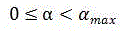
而当
可从最大自行爬坡角度α max 到导线倾角的最大值,如90°之间划分多个角度区间。举例而言,可以以5°为步长进行划分,第一个角度区间为[α max ,α max +5°],第二个角度区间为(α max +5°,α max +10°],…,倒数第二个角度区间,假设为第i个角度区间,为(α max +(i-1)*5°,α max +i*5°],最后一个角度区间为(α max +i*5°,90°]。Multiple angle intervals can be divided from the maximum self-climbing angle α max to the maximum value of the inclination angle of the wire, such as 90°. For example, it can be divided in steps of 5°, the first angle interval is [ α max , α max +5°], and the second angle interval is ( α max +5°, α max +10°] , ..., the penultimate angle interval, assuming the i-th angle interval, is ( α max +(i-1)*5°, α max +i *5°], and the last angle interval is ( α max + i *5°, 90°].
所计算出的每个角度区间所对应的张紧力,应当满足在处于相应角度区间内每个导线倾角时,拆换线施工机器人均不会发生打滑,因此根据每个角度区间内最大的导线倾角计算每个角度区间所对应的张紧力。同样地,考虑到μ可能的变化,可根据以下公式计算张紧力F W :The calculated tension force corresponding to each angle interval should satisfy that the construction robot will not slip when the wire inclination angle is in the corresponding angle interval. Therefore, according to the largest wire in each angle interval The inclination angle calculates the tension force corresponding to each angle interval. Likewise, taking into account possible changes in μ , the tensioning force F W can be calculated according to the following formula:

其中,α的取值为每个角度区间内最大的导线倾角,ε为大于0的常数。Among them, the value of α is the maximum wire inclination angle in each angle interval, and ε is a constant greater than 0.
当

对于预设值和常数ε,不宜过小,应能够避免摩擦系数μ变化的影响,也不宜过大,
以免对驱动电机的驱动力要求过高,造成能源浪费甚至电机堵转等异常。在本发明的一个
具体实施例中,ε的取值范围为[3%,10%],预设值的取值范围为
由此可见,在本发明的另一个实施例中,在
进一步地,在确定了张紧力后,通过对顶升装置进行控制以调节张紧力。Further, after the tensioning force is determined, the tensioning force is adjusted by controlling the jacking device.
综上所述,根据本发明实施例的拆换线施工机器人的张紧力控制方法,通过检测拆换线施工机器人的姿态以获取拆换线施工机器人所在位置处的导线倾角,并根据导线倾角确定顶升装置所要提供的张紧力,由此,能够根据导线倾角调整对导线造成的张紧力,从而有效减少拆换线施工机器人打滑现象的发生,保障拆换线施工机器人的正常运行。To sum up, according to the method for controlling the tensioning force of the wire-removing and changing construction robot according to the embodiment of the present invention, the inclination angle of the wire at the position of the wire-removing and changing construction robot is obtained by detecting the posture of the wire-removing and changing construction robot, and the wire inclination angle is obtained according to the wire inclination angle. Determine the tensioning force to be provided by the jacking device, so that the tensioning force on the wire can be adjusted according to the inclination of the wire, thereby effectively reducing the occurrence of slippage of the wire-removing construction robot and ensuring the normal operation of the wire-removing and changing construction robot.
在本发明的描述中,术语“第一”、“第二”仅用于描述目的,而不能理解为指示或暗示相对重要性或者隐含指明所指示的技术特征的数量。由此,限定有“第一”、“第二”的特征可以明示或者隐含地包括一个或者更多个该特征。“多个”的含义是两个或两个以上,除非另有明确具体的限定。In the description of the present invention, the terms "first" and "second" are only used for the purpose of description, and cannot be understood as indicating or implying relative importance or implying the number of indicated technical features. Thus, a feature defined as "first" or "second" may expressly or implicitly include one or more of that feature. "Plurality" means two or more, unless expressly specifically limited otherwise.
在本发明中,除非另有明确的规定和限定,术语“安装”、“相连”、“连接”、“固定”等术语应做广义理解,例如,可以是固定连接,也可以是可拆卸连接,或成一体;可以是机械连接,也可以是电连接;可以是直接相连,也可以通过中间媒介间接相连,可以是两个元件内部的连通或两个元件的相互作用关系。对于本领域的普通技术人员而言,可以根据具体情况理解上述术语在本发明中的具体含义。In the present invention, unless otherwise expressly specified and limited, the terms "installed", "connected", "connected", "fixed" and other terms should be understood in a broad sense, for example, it may be a fixed connection or a detachable connection , or integrated; it can be a mechanical connection or an electrical connection; it can be a direct connection or an indirect connection through an intermediate medium, and it can be the internal connection of the two elements or the interaction relationship between the two elements. For those of ordinary skill in the art, the specific meanings of the above terms in the present invention can be understood according to specific situations.
在本发明中,除非另有明确的规定和限定,第一特征在第二特征“上”或“下”可以是第一和第二特征直接接触,或第一和第二特征通过中间媒介间接接触。而且,第一特征在第二特征“之上”、“上方”和“上面”可是第一特征在第二特征正上方或斜上方,或仅仅表示第一特征水平高度高于第二特征。第一特征在第二特征“之下”、“下方”和“下面”可以是第一特征在第二特征正下方或斜下方,或仅仅表示第一特征水平高度小于第二特征。In the present invention, unless otherwise expressly specified and limited, a first feature "on" or "under" a second feature may be in direct contact between the first and second features, or the first and second features indirectly through an intermediary touch. Also, the first feature being "above", "over" and "above" the second feature may mean that the first feature is directly above or obliquely above the second feature, or simply means that the first feature is level higher than the second feature. The first feature being "below", "below" and "below" the second feature may mean that the first feature is directly below or obliquely below the second feature, or simply means that the first feature has a lower level than the second feature.
在本说明书的描述中,参考术语“一个实施例”、“一些实施例”、“示例”、“具体示例”、或“一些示例”等的描述意指结合该实施例或示例描述的具体特征、结构、材料或者特点包含于本发明的至少一个实施例或示例中。在本说明书中,对上述术语的示意性表述不必针对相同的实施例或示例。而且,描述的具体特征、结构、材料或者特点可以在任一个或多个实施例或示例中以合适的方式结合。此外,在不相互矛盾的情况下,本领域的技术人员可以将本说明书中描述的不同实施例或示例以及不同实施例或示例的特征进行结合和组合。In the description of this specification, description with reference to the terms "one embodiment," "some embodiments," "example," "specific example," or "some examples", etc., mean specific features described in connection with the embodiment or example , structure, material or feature is included in at least one embodiment or example of the present invention. In this specification, schematic representations of the above terms are not necessarily directed to the same embodiment or example. Furthermore, the particular features, structures, materials or characteristics described may be combined in any suitable manner in any one or more embodiments or examples. Furthermore, those skilled in the art may combine and combine the different embodiments or examples described in this specification, as well as the features of the different embodiments or examples, without conflicting each other.
流程图中或在此以其他方式描述的任何过程或方法描述可以被理解为,表示包括一个或更多个用于实现特定逻辑功能或过程的步骤的可执行指令的代码的模块、片段或部分,并且本发明的优选实施方式的范围包括另外的实现,其中可以不按所示出或讨论的顺序,包括根据所涉及的功能按基本同时的方式或按相反的顺序,来执行功能,这应被本发明的实施例所属技术领域的技术人员所理解。Any description of a process or method in the flowcharts or otherwise described herein may be understood to represent a module, segment or portion of code comprising one or more executable instructions for implementing a specified logical function or step of the process , and the scope of the preferred embodiments of the invention includes alternative implementations in which the functions may be performed out of the order shown or discussed, including performing the functions substantially concurrently or in the reverse order depending upon the functions involved, which should It is understood by those skilled in the art to which the embodiments of the present invention belong.
在流程图中表示或在此以其他方式描述的逻辑和/或步骤,例如,可以被认为是用于实现逻辑功能的可执行指令的定序列表,可以具体实现在任何计算机可读介质中,以供指令执行系统、装置或设备(如基于计算机的系统、包括处理器的系统或其他可以从指令执行系统、装置或设备取指令并执行指令的系统)使用,或结合这些指令执行系统、装置或设备而使用。就本说明书而言,“计算机可读介质”可以是任何可以包含、存储、通信、传播或传输程序以供指令执行系统、装置或设备或结合这些指令执行系统、装置或设备而使用的装置。计算机可读介质的更具体的示例(非穷尽性列表)包括以下:具有一个或多个布线的电连接部(电子装置),便携式计算机盘盒(磁装置),随机存取存储器(RAM),只读存储器(ROM),可擦除可编辑只读存储器(EPROM或闪速存储器),光纤装置,以及便携式光盘只读存储器(CDROM)。另外,计算机可读介质甚至可以是可在其上打印所述程序的纸或其他合适的介质,因为可以例如通过对纸或其他介质进行光学扫描,接着进行编辑、解译或必要时以其他合适方式进行处理来以电子方式获得所述程序,然后将其存储在计算机存储器中。The logic and/or steps represented in flowcharts or otherwise described herein, for example, may be considered an ordered listing of executable instructions for implementing the logical functions, may be embodied in any computer-readable medium, For use with, or in conjunction with, an instruction execution system, apparatus, or device (such as a computer-based system, a system including a processor, or other system that can fetch instructions from and execute instructions from an instruction execution system, apparatus, or apparatus) or equipment. For the purposes of this specification, a "computer-readable medium" can be any device that can contain, store, communicate, propagate, or transport the program for use by or in connection with an instruction execution system, apparatus, or apparatus. More specific examples (non-exhaustive list) of computer readable media include the following: electrical connections with one or more wiring (electronic devices), portable computer disk cartridges (magnetic devices), random access memory (RAM), Read Only Memory (ROM), Erasable Editable Read Only Memory (EPROM or Flash Memory), Fiber Optic Devices, and Portable Compact Disc Read Only Memory (CDROM). In addition, the computer readable medium may even be paper or other suitable medium on which the program may be printed, as the paper or other medium may be optically scanned, for example, followed by editing, interpretation, or other suitable medium as necessary process to obtain the program electronically and then store it in computer memory.
应当理解,本发明的各部分可以用硬件、软件、固件或它们的组合来实现。在上述实施方式中,多个步骤或方法可以用存储在存储器中且由合适的指令执行系统执行的软件或固件来实现。例如,如果用硬件来实现,和在另一实施方式中一样,可用本领域公知的下列技术中的任一项或他们的组合来实现:具有用于对数据信号实现逻辑功能的逻辑门电路的离散逻辑电路,具有合适的组合逻辑门电路的专用集成电路,可编程门阵列(PGA),现场可编程门阵列(FPGA)等。It should be understood that various parts of the present invention may be implemented in hardware, software, firmware or a combination thereof. In the above-described embodiments, various steps or methods may be implemented in software or firmware stored in memory and executed by a suitable instruction execution system. For example, if implemented in hardware, as in another embodiment, it can be implemented by any one or a combination of the following techniques known in the art: Discrete logic circuits, ASICs with suitable combinational logic gates, Programmable Gate Arrays (PGA), Field Programmable Gate Arrays (FPGA), etc.
本技术领域的普通技术人员可以理解实现上述实施例方法携带的全部或部分步骤是可以通过程序来指令相关的硬件完成,所述的程序可以存储于一种计算机可读存储介质中,该程序在执行时,包括方法实施例的步骤之一或其组合。Those skilled in the art can understand that all or part of the steps carried by the methods of the above embodiments can be completed by instructing the relevant hardware through a program, and the program can be stored in a computer-readable storage medium, and the program can be stored in a computer-readable storage medium. When executed, one or a combination of the steps of the method embodiment is included.
此外,在本发明各个实施例中的各功能单元可以集成在一个处理模块中,也可以是各个单元单独物理存在,也可以两个或两个以上单元集成在一个模块中。上述集成的模块既可以采用硬件的形式实现,也可以采用软件功能模块的形式实现。所述集成的模块如果以软件功能模块的形式实现并作为独立的产品销售或使用时,也可以存储在一个计算机可读取存储介质中。In addition, each functional unit in each embodiment of the present invention may be integrated into one processing module, or each unit may exist physically alone, or two or more units may be integrated into one module. The above-mentioned integrated modules can be implemented in the form of hardware, and can also be implemented in the form of software function modules. If the integrated modules are implemented in the form of software functional modules and sold or used as independent products, they may also be stored in a computer-readable storage medium.
尽管上面已经示出和描述了本发明的实施例,可以理解的是,上述实施例是示例性的,不能理解为对本发明的限制,本领域的普通技术人员在本发明的范围内可以对上述实施例进行变化、修改、替换和变型。Although the embodiments of the present invention have been shown and described above, it should be understood that the above-mentioned embodiments are exemplary and should not be construed as limiting the present invention. Embodiments are subject to variations, modifications, substitutions and variations.
Claims (13)


Priority Applications (1)
| Application Number | Priority Date | Filing Date | Title |
|---|---|---|---|
| CN202111279479.3A CN113741569A (en) | 2021-11-01 | 2021-11-01 | Line-changing construction robot and tension control device and method thereof |
Applications Claiming Priority (1)
| Application Number | Priority Date | Filing Date | Title |
|---|---|---|---|
| CN202111279479.3A CN113741569A (en) | 2021-11-01 | 2021-11-01 | Line-changing construction robot and tension control device and method thereof |
Publications (1)
| Publication Number | Publication Date |
|---|---|
| CN113741569A true CN113741569A (en) | 2021-12-03 |
Family
ID=78727180
Family Applications (1)
| Application Number | Title | Priority Date | Filing Date |
|---|---|---|---|
| CN202111279479.3A Pending CN113741569A (en) | 2021-11-01 | 2021-11-01 | Line-changing construction robot and tension control device and method thereof |
Country Status (1)
| Country | Link |
|---|---|
| CN (1) | CN113741569A (en) |
Cited By (2)
| Publication number | Priority date | Publication date | Assignee | Title |
|---|---|---|---|---|
| CN115016560A (en) * | 2022-05-17 | 2022-09-06 | 国网江苏省电力有限公司常州供电分公司 | Advancing control method and advancing control device of intelligent robot for removing and changing wire |
| CN115036838A (en) * | 2022-06-02 | 2022-09-09 | 常州晋陵电力实业有限公司 | Overhead line disconnecting and replacing method based on line disconnecting and replacing robot |
Citations (8)
| Publication number | Priority date | Publication date | Assignee | Title |
|---|---|---|---|---|
| CN201332238Y (en) * | 2008-12-31 | 2009-10-21 | 中国科学院沈阳自动化研究所 | Inspection robot mechanism with lifting and clamping function |
| CN102655314A (en) * | 2011-03-04 | 2012-09-05 | 中国科学院沈阳自动化研究所 | Broken strand crimping work robot mechanism of super-high-voltage power transmission line |
| CN102931693A (en) * | 2011-08-10 | 2013-02-13 | 联发科技(新加坡)私人有限公司 | Battery charging control method and device and charging system and portable device. |
| WO2014032981A1 (en) * | 2012-08-29 | 2014-03-06 | Matrix Gmbh Spannsysteme Und Produktionsautomatisierung | Gripping head, gripping tongs, and robot with segmented gripping surface for gripping objects of any shape |
| CN111555179A (en) * | 2020-04-28 | 2020-08-18 | 武汉露能科技有限公司 | Multi-angle intelligent spraying robot for power transmission line |
| CN212374746U (en) * | 2019-09-30 | 2021-01-19 | 天津恩泰智能装备有限公司 | Overhead line goes up and rolls off production line auxiliary conveyor |
| CN112570220A (en) * | 2019-09-30 | 2021-03-30 | 天津恩泰智能装备有限公司 | Live working type automatic coating equipment for insulating material of overhead bare conductor |
| CN113321107A (en) * | 2021-05-31 | 2021-08-31 | 菱王电梯有限公司 | Automatic equipment control method and device and automatic equipment |
-
2021
- 2021-11-01 CN CN202111279479.3A patent/CN113741569A/en active Pending
Patent Citations (8)
| Publication number | Priority date | Publication date | Assignee | Title |
|---|---|---|---|---|
| CN201332238Y (en) * | 2008-12-31 | 2009-10-21 | 中国科学院沈阳自动化研究所 | Inspection robot mechanism with lifting and clamping function |
| CN102655314A (en) * | 2011-03-04 | 2012-09-05 | 中国科学院沈阳自动化研究所 | Broken strand crimping work robot mechanism of super-high-voltage power transmission line |
| CN102931693A (en) * | 2011-08-10 | 2013-02-13 | 联发科技(新加坡)私人有限公司 | Battery charging control method and device and charging system and portable device. |
| WO2014032981A1 (en) * | 2012-08-29 | 2014-03-06 | Matrix Gmbh Spannsysteme Und Produktionsautomatisierung | Gripping head, gripping tongs, and robot with segmented gripping surface for gripping objects of any shape |
| CN212374746U (en) * | 2019-09-30 | 2021-01-19 | 天津恩泰智能装备有限公司 | Overhead line goes up and rolls off production line auxiliary conveyor |
| CN112570220A (en) * | 2019-09-30 | 2021-03-30 | 天津恩泰智能装备有限公司 | Live working type automatic coating equipment for insulating material of overhead bare conductor |
| CN111555179A (en) * | 2020-04-28 | 2020-08-18 | 武汉露能科技有限公司 | Multi-angle intelligent spraying robot for power transmission line |
| CN113321107A (en) * | 2021-05-31 | 2021-08-31 | 菱王电梯有限公司 | Automatic equipment control method and device and automatic equipment |
Cited By (2)
| Publication number | Priority date | Publication date | Assignee | Title |
|---|---|---|---|---|
| CN115016560A (en) * | 2022-05-17 | 2022-09-06 | 国网江苏省电力有限公司常州供电分公司 | Advancing control method and advancing control device of intelligent robot for removing and changing wire |
| CN115036838A (en) * | 2022-06-02 | 2022-09-09 | 常州晋陵电力实业有限公司 | Overhead line disconnecting and replacing method based on line disconnecting and replacing robot |
Similar Documents
| Publication | Publication Date | Title |
|---|---|---|
| CN113741569A (en) | Line-changing construction robot and tension control device and method thereof | |
| CN104370229B (en) | Novel offshore crane heave compensation system and compensation method | |
| CN206789988U (en) | A kind of quick laying apparatu of horizontal cable | |
| CN111874798B (en) | Control method and system for blade lifting appliance | |
| CN111055378A (en) | Concrete intelligent pumping system and operation method | |
| CN114370245A (en) | Continuous pipe operation system and continuous pipe operation construction method | |
| CN204342340U (en) | Novel offshore crane heave compensation system | |
| CN112816543B (en) | Electric control type detection probe carrying device and oil pipe field electromagnetic flaw detection method thereof | |
| CN118630642A (en) | Power supply cable laying system | |
| CN113848934B (en) | Replacement line construction robot and its traveling speed control device and method | |
| CN205593522U (en) | Detection and monitoring device of slipform platform | |
| CN103683053A (en) | Leveling device for suspension equipment | |
| CN207001864U (en) | A kind of cable auto take-up | |
| CN218067448U (en) | A steel bar on-site detector for quality supervision of construction projects | |
| CN114382447B (en) | Intelligent control method and device for pumping between oil pumping units | |
| JP6610665B2 (en) | Detection system, detection method, and program | |
| CN218122516U (en) | Servo driver simulation testing device | |
| CN214010480U (en) | A water level measuring device for water conservancy engineering detection | |
| CN211920538U (en) | A vertical cage safety warning device | |
| CN206623906U (en) | It is a kind of to climb wall device for chimney or nuclear cooling tower detection supporting body | |
| CN105422081A (en) | Method and device for calculating the movement angle of pumping unit suspension point based on angle relationship | |
| CN102515023B (en) | Method for butting inclined steel structures | |
| CN106760420A (en) | A kind of vertical plastering machine of adjust automatically and the vertical method of plastering machine adjust automatically | |
| CN118495368B (en) | Large-span pipe rack sliding and lifting device, control method thereof and related products | |
| CN221879373U (en) | Water resources well location detection equipment |
Legal Events
| Date | Code | Title | Description |
|---|---|---|---|
| PB01 | Publication | ||
| PB01 | Publication | ||
| SE01 | Entry into force of request for substantive examination | ||
| SE01 | Entry into force of request for substantive examination | ||
| RJ01 | Rejection of invention patent application after publication |
Application publication date: 20211203 |
|
| RJ01 | Rejection of invention patent application after publication |