CN113546174A - 5HT agonists for the treatment of disorders - Google Patents
5HT agonists for the treatment of disorders Download PDFInfo
- Publication number
- CN113546174A CN113546174A CN202111041649.4A CN202111041649A CN113546174A CN 113546174 A CN113546174 A CN 113546174A CN 202111041649 A CN202111041649 A CN 202111041649A CN 113546174 A CN113546174 A CN 113546174A
- Authority
- CN
- China
- Prior art keywords
- receptor agonist
- pharmaceutically acceptable
- receptor
- epilepsy
- administered
- Prior art date
- Legal status (The legal status is an assumption and is not a legal conclusion. Google has not performed a legal analysis and makes no representation as to the accuracy of the status listed.)
- Pending
Links
Images




Classifications
-
- A—HUMAN NECESSITIES
- A61—MEDICAL OR VETERINARY SCIENCE; HYGIENE
- A61K—PREPARATIONS FOR MEDICAL, DENTAL OR TOILETRY PURPOSES
- A61K31/00—Medicinal preparations containing organic active ingredients
- A61K31/185—Acids; Anhydrides, halides or salts thereof, e.g. sulfur acids, imidic, hydrazonic or hydroximic acids
- A61K31/19—Carboxylic acids, e.g. valproic acid
-
- A—HUMAN NECESSITIES
- A61—MEDICAL OR VETERINARY SCIENCE; HYGIENE
- A61K—PREPARATIONS FOR MEDICAL, DENTAL OR TOILETRY PURPOSES
- A61K45/00—Medicinal preparations containing active ingredients not provided for in groups A61K31/00 - A61K41/00
-
- A—HUMAN NECESSITIES
- A61—MEDICAL OR VETERINARY SCIENCE; HYGIENE
- A61K—PREPARATIONS FOR MEDICAL, DENTAL OR TOILETRY PURPOSES
- A61K31/00—Medicinal preparations containing organic active ingredients
- A61K31/13—Amines
- A61K31/135—Amines having aromatic rings, e.g. ketamine, nortriptyline
- A61K31/137—Arylalkylamines, e.g. amphetamine, epinephrine, salbutamol, ephedrine or methadone
-
- A—HUMAN NECESSITIES
- A61—MEDICAL OR VETERINARY SCIENCE; HYGIENE
- A61K—PREPARATIONS FOR MEDICAL, DENTAL OR TOILETRY PURPOSES
- A61K31/00—Medicinal preparations containing organic active ingredients
- A61K31/33—Heterocyclic compounds
- A61K31/395—Heterocyclic compounds having nitrogen as a ring hetero atom, e.g. guanethidine or rifamycins
- A61K31/40—Heterocyclic compounds having nitrogen as a ring hetero atom, e.g. guanethidine or rifamycins having five-membered rings with one nitrogen as the only ring hetero atom, e.g. sulpiride, succinimide, tolmetin, buflomedil
- A61K31/403—Heterocyclic compounds having nitrogen as a ring hetero atom, e.g. guanethidine or rifamycins having five-membered rings with one nitrogen as the only ring hetero atom, e.g. sulpiride, succinimide, tolmetin, buflomedil condensed with carbocyclic rings, e.g. carbazole
- A61K31/404—Indoles, e.g. pindolol
-
- A—HUMAN NECESSITIES
- A61—MEDICAL OR VETERINARY SCIENCE; HYGIENE
- A61K—PREPARATIONS FOR MEDICAL, DENTAL OR TOILETRY PURPOSES
- A61K31/00—Medicinal preparations containing organic active ingredients
- A61K31/33—Heterocyclic compounds
- A61K31/395—Heterocyclic compounds having nitrogen as a ring hetero atom, e.g. guanethidine or rifamycins
- A61K31/41—Heterocyclic compounds having nitrogen as a ring hetero atom, e.g. guanethidine or rifamycins having five-membered rings with two or more ring hetero atoms, at least one of which being nitrogen, e.g. tetrazole
- A61K31/4164—1,3-Diazoles
- A61K31/4184—1,3-Diazoles condensed with carbocyclic rings, e.g. benzimidazoles
-
- A—HUMAN NECESSITIES
- A61—MEDICAL OR VETERINARY SCIENCE; HYGIENE
- A61K—PREPARATIONS FOR MEDICAL, DENTAL OR TOILETRY PURPOSES
- A61K31/00—Medicinal preparations containing organic active ingredients
- A61K31/33—Heterocyclic compounds
- A61K31/395—Heterocyclic compounds having nitrogen as a ring hetero atom, e.g. guanethidine or rifamycins
- A61K31/495—Heterocyclic compounds having nitrogen as a ring hetero atom, e.g. guanethidine or rifamycins having six-membered rings with two or more nitrogen atoms as the only ring heteroatoms, e.g. piperazine or tetrazines
- A61K31/496—Non-condensed piperazines containing further heterocyclic rings, e.g. rifampin, thiothixene or sparfloxacin
-
- A—HUMAN NECESSITIES
- A61—MEDICAL OR VETERINARY SCIENCE; HYGIENE
- A61K—PREPARATIONS FOR MEDICAL, DENTAL OR TOILETRY PURPOSES
- A61K31/00—Medicinal preparations containing organic active ingredients
- A61K31/33—Heterocyclic compounds
- A61K31/395—Heterocyclic compounds having nitrogen as a ring hetero atom, e.g. guanethidine or rifamycins
- A61K31/55—Heterocyclic compounds having nitrogen as a ring hetero atom, e.g. guanethidine or rifamycins having seven-membered rings, e.g. azelastine, pentylenetetrazole
-
- A—HUMAN NECESSITIES
- A61—MEDICAL OR VETERINARY SCIENCE; HYGIENE
- A61K—PREPARATIONS FOR MEDICAL, DENTAL OR TOILETRY PURPOSES
- A61K31/00—Medicinal preparations containing organic active ingredients
- A61K31/70—Carbohydrates; Sugars; Derivatives thereof
- A61K31/7042—Compounds having saccharide radicals and heterocyclic rings
- A61K31/7048—Compounds having saccharide radicals and heterocyclic rings having oxygen as a ring hetero atom, e.g. leucoglucosan, hesperidin, erythromycin, nystatin, digitoxin or digoxin
-
- A—HUMAN NECESSITIES
- A61—MEDICAL OR VETERINARY SCIENCE; HYGIENE
- A61K—PREPARATIONS FOR MEDICAL, DENTAL OR TOILETRY PURPOSES
- A61K45/00—Medicinal preparations containing active ingredients not provided for in groups A61K31/00 - A61K41/00
- A61K45/06—Mixtures of active ingredients without chemical characterisation, e.g. antiphlogistics and cardiaca
-
- A—HUMAN NECESSITIES
- A61—MEDICAL OR VETERINARY SCIENCE; HYGIENE
- A61P—SPECIFIC THERAPEUTIC ACTIVITY OF CHEMICAL COMPOUNDS OR MEDICINAL PREPARATIONS
- A61P25/00—Drugs for disorders of the nervous system
-
- A—HUMAN NECESSITIES
- A61—MEDICAL OR VETERINARY SCIENCE; HYGIENE
- A61P—SPECIFIC THERAPEUTIC ACTIVITY OF CHEMICAL COMPOUNDS OR MEDICINAL PREPARATIONS
- A61P25/00—Drugs for disorders of the nervous system
- A61P25/08—Antiepileptics; Anticonvulsants
-
- A—HUMAN NECESSITIES
- A61—MEDICAL OR VETERINARY SCIENCE; HYGIENE
- A61K—PREPARATIONS FOR MEDICAL, DENTAL OR TOILETRY PURPOSES
- A61K2300/00—Mixtures or combinations of active ingredients, wherein at least one active ingredient is fully defined in groups A61K31/00 - A61K41/00
Landscapes
- Health & Medical Sciences (AREA)
- Life Sciences & Earth Sciences (AREA)
- Animal Behavior & Ethology (AREA)
- General Health & Medical Sciences (AREA)
- Public Health (AREA)
- Veterinary Medicine (AREA)
- Chemical & Material Sciences (AREA)
- Medicinal Chemistry (AREA)
- Pharmacology & Pharmacy (AREA)
- Epidemiology (AREA)
- Bioinformatics & Cheminformatics (AREA)
- General Chemical & Material Sciences (AREA)
- Organic Chemistry (AREA)
- Biomedical Technology (AREA)
- Neurology (AREA)
- Neurosurgery (AREA)
- Chemical Kinetics & Catalysis (AREA)
- Engineering & Computer Science (AREA)
- Nuclear Medicine, Radiotherapy & Molecular Imaging (AREA)
- Pain & Pain Management (AREA)
- Emergency Medicine (AREA)
- Molecular Biology (AREA)
- Pharmaceuticals Containing Other Organic And Inorganic Compounds (AREA)
- Medicines That Contain Protein Lipid Enzymes And Other Medicines (AREA)
- Acyclic And Carbocyclic Compounds In Medicinal Compositions (AREA)
Abstract
尤其提供的是使用5HT受体激动剂或其药学可接受的盐用于治疗癫痫病症的方法。

Specifically provided are methods of using a 5HT receptor agonist or a pharmaceutically acceptable salt thereof for the treatment of epileptic disorders.
Description
The present application is a divisional application of the invention patent application having a filing date of 2016, 24/2, and an application number of 201680023991.2, entitled "5 HT agonist for treating disorders".
Cross Reference to Related Applications
This application claims priority to U.S. application No. 62/120,726 filed on 25/2/2015, the disclosure of which is incorporated by reference herein in its entirety.
Claims on inventions carried out under federally sponsored research and development
The invention was made with government support under grant number R01 NS 07921403 awarded by the National Institutes of Health. The government has certain rights in this invention.
Technical Field
The present disclosure provides methods of treating an epileptic condition using a 5HT receptor agonist, or a pharmaceutically acceptable salt thereof.
Background
Dravet Syndrome (DS) is a catastrophic pediatric epilepsy with severe intellectual disability, impaired social development, and sustained episodes of drug resistance. One of the major causes of this is Nav1.1(SCN1A), a mutation in the voltage-gated sodium channel. Seizures experienced by DS patients and other epileptic patients are inadequately managed with available antiepileptic drugs (AEDs), and children with DS are poor candidates for neurosurgical resection. Thus, there is a need in the art for epilepsy treatment options, particularly those for DS and related catastrophic pediatric epilepsy. Provided herein are solutions to these and other problems in the art.
Disclosure of Invention
Provided herein, inter alia, are methods of treating an epileptic condition using a 5HT agonist, or a pharmaceutically acceptable salt thereof. In one aspect, the method comprises administering to a subject in need thereof a therapeutically effective amount of a 5HT agonist, a 5HT agonist analog, or a pharmaceutically acceptable salt thereof. In another aspect, the method comprises administering to a subject in need thereof a pharmaceutical composition comprising a therapeutically effective amount of a 5HT agonist, a 5HT agonist analog, or a pharmaceutically acceptable salt thereof. Further provided herein are pharmaceutical compositions for treating an epileptic condition.
According to one aspect of the present disclosure, a method of treating an epileptic condition may comprise administering to a patient suffering from an epileptic condition a therapeutically effective amount of a 5HT receptor agonist, or a pharmaceutically acceptable salt thereof.
In an exemplary embodiment, the 5HT agonist may be 5HT2AReceptor agonists or 5HT2BA receptor agonist. In some exemplary embodiments, it is contemplated that the 5HT agonist may be any one or more of: ACP-104, ACP-106, AR-116081, AR-116082, ATHX-105, belladonna combined with ergotamine tartrate, BW 723C86, cisapride, Ciza-MPS, Cizap-MPS, CSC-500 series, DOI or salts thereof (e.g., HCl), ergotamine tartrate and caffeine, Esorid MPS, flibanserin, Ikaran L.P., Manotac Plus, Migril, Mirtazapine Rimafar, mirtazapine, naratriptan, netanotryptilin, defefloramine, Normagut Tab, nefazodone hydrochloride, OSU-6162, Pridofin, Sensiflu, PRX-00933, RP-5063, antagonism for inflammatory diseases 5-HT2AAnd antagonizing 5-HT for schizophrenia and obesity2COf a small molecule, antagonizing 5-HT for obesity2COf a small molecule, targeted 5-HT for schizophrenia2CAnd 5-HT6Small molecules of receptors, modulation of 5HT for CNS and metabolic disorders2The small molecule of (A), TGBA-01AD, trazodone hydrochloride, temanogrel hydrochloride, pentachromycin hydrochloride, Virdex, VR-1065, ziprasidone hydrochloride and/or Ziprasidon-Sigillata.
In some exemplary embodiments, it is contemplated that the 5HT receptor agonist is not clemizole or fenfluramine. In some exemplary embodiments, it is further contemplated that the 5HT receptor agonist is not acetazolamide, benzodiazepine Class (diazepam; clobazamine), cannabidiol, carbamazepine, clemizole, ethosuximide, felbamate, fenfluramine, fluoxetine, gabapentin, ganaxolone, lacosamide, lamotrigine, levetiracetam, nitrazepam, oxcarbazepine, piranphane, phenytoin, phenobarbital, piracetam, potassium bromide, pregabalin, paminone, retigabine, rufinamide, stitepol, tiagabine, topiramate, valproic acid, verapamil, vigabatrin and/or zonisamide.
In an exemplary embodiment, the 5HT receptor agonist directly binds to the 5HT receptor. In an exemplary embodiment, the 5HT receptor agonist specifically activates the 5HT receptor.
In an exemplary embodiment, the 5HT receptor agonist provides increased stimulation by 5HT2AReceptor or 5HT2BReceptor mediated activity with equivalent or reduced passage of 5HT2CReceptor-mediated activity.
In an exemplary embodiment, 5HT is subject toThe agonist is a dual 5HT2AReceptor and 5HT2BA receptor agonist.
In an exemplary embodiment, the 5HT receptor agonist is not a serotonin (serotonin) reuptake inhibitor.
In an exemplary embodiment, the 5HT receptor agonist does not significantly bind to or modulate the activity of at least one of the following: 5HT1A、5HT1B、5HT1D、5HT2C、5HT3、5HT4(e.g., 5 HT)4e)、5HT6、5HT7NPY Y1 receptor, L-type Ca channel, N-type Ca channel, SK-Ca channel, GABA-gated Cl channel, GABA transporter, GABA-A1 receptor, GABA-B1B receptor, Na channel, 5HT transporter, CB1 receptor, CB2 receptor, BZD or estrogen ER α.
In an exemplary embodiment, the 5HT receptor agonist is any one or more of flibanserin, 2, 5-dimethoxy-4-iodophenylpropylamine monohydrochloride (DOI HCl), desfenfluramine, or BW 723C 86.
In an exemplary embodiment, the epilepsy disorder is Dravet syndrome, Lennox-Gastaut syndrome, infantile spasms or primary field syndrome. In an exemplary embodiment, the epilepsy disorder is Dravet syndrome. In an exemplary embodiment, the epilepsy disorder is a pediatric epilepsy disorder.
In an exemplary embodiment, the subject has a cardiovascular disease.
In an exemplary embodiment, the subject is resistant to treatment with a serotonin reuptake inhibitor.
In an exemplary embodiment, the subject is susceptible to side effects when administered a serotonin reuptake inhibitor. In an exemplary embodiment, the serotonin reuptake inhibitor is fenfluramine.
In an exemplary embodiment, the subject has a ketogenic diet.
In an exemplary embodiment, the 5HT receptor agonist inhibits compulsive behavior or electrographic seizures in an epileptic subject, an alzheimer's subject, an autistic subject, or a parkinson's subject.
In an exemplary embodiment, the 5HT receptor agonist reduces the incidence of unprovoked seizures in the subject when compared to the absence of the 5HT receptor agonist.
In an exemplary embodiment, administration of the 5HT receptor agonist reduces or prevents myoclonic seizures or status epilepticus in the subject when compared to the absence of the 5HT receptor agonist.
In an exemplary embodiment, the 5HT receptor agonist is administered to said subject in an amount of from about 0.1mg to about 1000mg per kg body weight.
In an exemplary embodiment, the 5HT receptor agonist is administered to said subject in a daily dose of about 0.1mg to about 1000mg/kg body weight.
In an exemplary embodiment, the 5HT receptor agonist is co-administered with an anti-epileptic drug (AED). In an exemplary embodiment, the 5HT receptor agonist is an adjunctive therapy with an anti-epileptic drug (AED). In an exemplary embodiment, the AED is acetazolamide, benzodiazepine Cannabidiol, carbamazepine, clobazam, clonazepam, eslicarbazepine acetate, ethosuximide, ethotoxin, felbamate, fenfluramine, phenytoin, gabapentin, ganaxolone, huperzine A, lacosamide, lamotrigine, levetiracetam, nitrazepam, oxcarbazepine, pirampanel, piracetam, phenobarbital, phenytoin, potassium bromide, pregabalin, paminone, retigabine, rufinamide, valproic acid, sodium valproate, stiripentol, tiagabine, topiramate, vigabatrin or zonisamide. In an exemplary embodiment, the AED is valproic acid, sodium valproate, clonazepam, ethosuximide, felbamate, gabapentin, carbamazepine, oxcarbazepine, lamotrigine, levetiracetam, benzodiazepine
 Phenobarbital, pralineRebamipine, paminone, tiagabine, topiramate, potassium bromide, phenytoin, stiripentol, vigabatrin, or zonisamide. In an exemplary embodiment, the AED is valproic acid, sodium valproate, gabapentin, topiramate, carbamazepine, oxcarbazepine or vigabatrin.
In an exemplary embodiment, the AED is not topiramate.
In an exemplary embodiment, the AED is not fenfluramine.
In an exemplary embodiment, the AED is administered simultaneously or sequentially with the 5HT receptor agonist.
In another aspect, the present disclosure provides a method of treating an epilepsy disorder, the method comprising administering to a subject in need thereof a therapeutically effective amount of a 5HT receptor agonist or a pharmaceutically acceptable salt thereof, wherein the subject has a cardiovascular disease, is resistant to treatment with a 5-hydroxytryptamine reuptake inhibitor, or is susceptible to side effects when administered a 5-hydroxytryptamine reuptake inhibitor.
In an exemplary embodiment, the 5HT receptor agonist is 5HT2AReceptor agonists or 5HT2BA receptor agonist. In an exemplary embodiment, the 5HT receptor agonist is clemizole, a clemizole analog, or a pharmaceutically acceptable salt thereof. In an exemplary embodiment, the pharmaceutically acceptable salt is clemizole HCl.
In embodiments, the 5HT receptor agonist is sumatriptan, naratriptan, rizatriptan, zolmitriptan, urapidil, BRL-54443(3- (1-methylpiperidin-4-yl) -1H-indol-5-ol), lorcaserin, buspirone, ziprasidone, TCB-2 ((4-bromo-3, 6-dimethoxybenzocyclobuten-1-yl) methylamine hydrobromide), BRL-15572(3- (4- (4-chlorophenyl) piperazin-1-yl) -1, 1-diphenyl-2-propanol), trazodone, BMY7378(8- (2- [4- (2-methoxyphenyl) -1-piperazinyl ] ethyl) -8-azaspiro [4.5] decane-7, 9-dione), atomoxetine, and venlafaxine. In embodiments, the 5HT receptor agonist is sumatriptan. In embodiments, the 5HT receptor agonist is naratriptan. In embodiments, the 5HT receptor agonist is rizatriptan. In embodiments, the 5HT receptor agonist is zolmitriptan. In an embodiment, the 5HT receptor agonist is urapidil. In embodiments, the 5HT receptor agonist is BRL-54443(3- (1-methylpiperidin-4-yl) -1H-indol-5-ol). In embodiments, the 5HT receptor agonist is lorcaserin. In embodiments, the 5HT receptor agonist is buspirone. In an embodiment, the 5HT receptor agonist is ziprasidone. In an embodiment, the 5HT receptor agonist is TCB-2 ((4-bromo-3, 6-dimethoxybenzocyclobuten-1-yl) methylamine hydrobromide). In an embodiment, the 5HT receptor agonist is BRL-15572(3- (4- (4-chlorophenyl) piperazin-1-yl) -1, 1-diphenyl-2-propanol). In embodiments, the 5HT receptor agonist is trazodone. In an embodiment, the 5HT receptor agonist is BMY7378(8- (2- [4- (2-methoxyphenyl) -1-piperazinyl ] ethyl) -8-azaspiro [4.5] decane-7, 9-dione). In embodiments, the 5HT receptor agonist is atomoxetine. In embodiments, the 5HT receptor agonist is venlafaxine.
In embodiments, the 5HT receptor agonist is trazodone or a pharmaceutically acceptable salt thereof.
In an exemplary embodiment, clemizole, the clemizole analog, or the pharmaceutically acceptable salt thereof forms part of a pharmaceutical composition. In an exemplary embodiment, the pharmaceutical composition further comprises a pharmaceutically acceptable excipient. In an exemplary embodiment, the pharmaceutical composition comprises a therapeutically effective amount of clemizole, the clemizole analog, or the pharmaceutically acceptable salt thereof.
In an exemplary embodiment, the pharmaceutical composition is co-administered with an anti-epileptic drug (AED). In an exemplary embodiment, the pharmaceutical composition comprises clemizole, the clemizole analog, or the pharmaceutically acceptable salt thereof, and AED. In an exemplary embodiment, the 5HT receptor agonist is not fenfluramine. In an exemplary embodiment, the 5HT receptor agonist directly binds to the 5HT receptor.
In an exemplary embodiment, the 5HT receptor agonist specifically activates the 5HT receptor. In an exemplary embodiment, the 5HT receptor agonist provides increased stimulation by5HT2AReceptor or 5HT2BReceptor mediated activity with equivalent or reduced passage of 5HT2CReceptor-mediated activity. In an exemplary embodiment, the 5HT receptor agonist is a dual 5HT2AReceptor and 5HT2BA receptor agonist.
In an exemplary embodiment, the 5HT receptor agonist is not a serotonin reuptake inhibitor.
In an exemplary embodiment, the 5HT receptor agonist does not significantly bind to 5HT1A、5HT1B、5HT1D、5HT2C、5HT3、5HT4(e.g., 5 HT)4e)、5HT6、5HT7At least one of NPY Y1 receptor, L-type Ca channel, N-type Ca channel, SK-Ca channel, GABA-gated Cl channel, GABA transporter, GABA-A1 receptor, GABA-B1B receptor, Na channel, 5HT transporter, CB1 receptor, CB2 receptor, BZD or estrogen ER α.
In another aspect, the present disclosure provides a method of modulating the activity of a 5HT receptor comprising contacting a 5HT receptor with clemizole, a clemizole analog, or a pharmaceutically acceptable salt thereof.
In an exemplary embodiment, the modulation is activation.
In an exemplary embodiment, the 5HT receptor is 5HT2AReceptor or 5HT2BA receptor.
In another aspect, the present disclosure provides a method of treating a disease or disorder caused by a serotonin deficiency or a low activity of one or more 5HT receptors in the brain, comprising administering to a subject in need thereof a therapeutically effective amount of clemizole, a clemizole analog, or a pharmaceutically acceptable salt thereof.
In an exemplary embodiment, the disease or condition is not epilepsy.
In an exemplary embodiment, the disease or disorder is not Dravet syndrome.
In an exemplary embodiment, the disease or disorder is selected from migraine, fragile X syndrome, prader-willi syndrome, schizophrenia, depression, alzheimer's disease, autism, neuropathic pain, parkinson's disease, irritable bowel syndrome and dementia.
In one aspect, there is provided a pharmaceutical composition comprising clemizole, a clemizole analog, or a pharmaceutically acceptable salt thereof for use in treating a disease or condition caused by a serotonin deficiency or a low activity of one or more 5HT receptors in the brain.
In an embodiment of the above aspect, the 5HT receptor agonist does not significantly bind to or does not significantly modulate (e.g., inhibit) the activity of at least one of: 5HT1A、5HT1B、5HT1D、5HT3、5HT4e、GABAA1、GABAB(1b)、BZD.CB1、CB2GABA-gated Cl channels, SK-Ca channels or GABA transporters. In embodiments, the 5HT receptor agonist does not significantly bind to or does not significantly modulate (e.g., inhibit) the activity of: 5HT1A, 5HT1B, 5HT1D, 5HT3, 5HT4e, GABAA1, GABAB(1b)、BZD.CB1、CB2GABA-gated Cl channels, SK-Ca channels and GABA transporters.
In an embodiment of the above aspect, the 5HT receptor agonist modulates the target by less than about 50% of a reference modulator (e.g., a natural or known modulator as commonly used in the art). In embodiments, the 5HT receptor agonist modulates the target by less than about 40% of a reference modulator (e.g., a natural or known modulator as commonly used in the art). In embodiments, the 5HT receptor agonist modulates the target by less than about 30% of a reference modulator (e.g., a natural or known modulator as commonly used in the art). In embodiments, the 5HT receptor agonist modulates the target by less than about 20% of a reference modulator (e.g., a natural or known modulator as commonly used in the art). In embodiments, the 5HT receptor agonist modulates the target by less than about 10% of a reference modulator (e.g., a natural or known modulator as commonly used in the art).
In an embodiment of the above aspect, the 5HT receptor agonist does not significantly modulate activity when the 5HT receptor agonist fails to modulate (e.g., inhibit) the target by less than about 50% of a reference inhibitor (e.g., a natural or known inhibitor as commonly used in the art). In embodiments, a 5HT receptor agonist does not significantly modulate activity when the 5HT receptor agonist fails to modulate (e.g., inhibit) the target by less than about 40% of a reference inhibitor (e.g., a natural or known inhibitor as commonly used in the art). In embodiments, a 5HT receptor agonist does not significantly modulate activity when the 5HT receptor agonist fails to modulate (e.g., inhibit) the target by less than about 30% of a reference inhibitor (e.g., a natural or known inhibitor as commonly used in the art). In embodiments, a 5HT receptor agonist does not significantly modulate activity when the 5HT receptor agonist fails to modulate (e.g., inhibit) the target by less than about 20% of a reference inhibitor (e.g., a natural or known inhibitor as commonly used in the art). In embodiments, a 5HT receptor agonist does not significantly modulate activity when the 5HT receptor agonist fails to modulate (e.g., inhibit) the target by less than about 10% of a reference inhibitor (e.g., a natural or known inhibitor as commonly used in the art). In embodiments, a 5HT receptor agonist does not significantly modulate activity when the 5HT receptor agonist fails to modulate (e.g., inhibit) the target by less than about 5% of a reference inhibitor (e.g., a natural or known inhibitor as commonly used in the art).
Drawings
Figure 1 molecular characterization of scn1Lab zebrafish mutants. (A) Sequencing confirmed the T to G mutation in the scn1Lab mutant cDNA. (B) Validation of reduced expression in scn1Lab mutants compared to sibling controls at 3, 5 and 7dpf using qPCR. Data are presented as mean ± s.e.m; significance is understood as p<0.05 student's t test. Data were normalized against the internal reference gene β -actin. Values represent the average from five independent biological samples (1 sample-10 pooled larvae) for each of the 3 developmental stages. Data are presented as mean ± s.e.m; significance is understood as p<0.05 student's t test. (C) scn8aa and scn8ab at 5dpf at Nav1.1 relative expression in mutant (n-5) and sibling control (n-5). Data are presented as in B. (D) Whole specimen embedding in situ hybridization for scn1Lab in juvenile zebrafish at 3, 5 and 7 dpf. Wild type larvae are shown in side elevation; the expression is shown as dark purple. Scn1Laa Table at 3dpfFor comparison. The heart is indicated by arrows in the 5 and 7dpf panels. (E) Dorsal view of scb1Laa expression at 3 dpf; prominent expression was noted in the region corresponding to the juvenile zebrafish CNS. Abbreviations: tel, telencephalon; TeO, top view cover; cb, cerebellum. Scale bar 0.35mm in D and 0.2mm in E.
Figure 2 microarray analysis of scn1Lab zebrafish mutants. (A) The heat map depicts gene expression differentially expressed between scn1Lab mutant and sibling control larvae at 5 dpf. The rows represent individual genes. Columns indicate different larvae. Genes highly expressed in the scn1Lab mutant relative to the control are shown. (B) MA plot of normalized microarray data for all 44,000 genes. The logarithmic ratio M and the average fluorescence intensity A were calculated as the average of all replicates. (C) The list of the first 30 genes shows the largest difference in expression between the scn1Lab mutant and the sibling control.
FIG. 3 quantitative RT-PCR analysis of scn1Lab zebrafish mutants. (A) Comparison of fold changes in gene expression obtained by microarray analysis (array) and real-time qPCR analysis. The y-axis represents the average fold change in gene expression for each gene from zebrafish at 5 dpf. The x-axis represents different genes. (B) qPCR analysis of three genes involved in epileptogenesis. Relative gene expression is presented as log of least abundant transcript2Ratio (log)2Δ ct). Data were normalized against the internal reference gene β -actin. Values represent the average from five independent biological samples (1 sample-10 larvae pooled). Bars indicate s.e.m; p<And (5) carrying out 0.05t test. (C) Gene ontology Classification of differentially expressed genes detected in scn1Lab mutants at 5dpf (p)<0.05ANOVA one-way and fold-change>1.5). Biological processes representing at least 5 gene annotations in at least one category are presented.
Figure 4 spontaneous seizures in scn1Lab zebrafish mutants. (A) Immobilized and agar-embedded zebrafish larvae are shown. Images were obtained on an Olympus upright microscope using a 4x objective lens and a 2x magnifier during forebrain electrophysiological recording in sibling control (a, left) and scn1Lab mutant (a, middle) larvae at 5 dpf. Dark pigmentation of the mutant was noted. The recording electrode can be seen in panel a1-2, and the approximate site of the recording electrode tip in the forebrain is shown in a, right side using a representative HuC: GFP-labeled larva (red circle). Scale bar: 100 μm. (B) Sample motion tracking plots for sibling control (B, left) and scn1Lab mutant (B, right) at 5 dpf. (C) Paralyzed between 3 and 7dpf, a representative 10 minute recording period obtained in the forebrain of fixed and agar-embedded scn1Lab mutant larvae. The presence of a spontaneous explosion discharge of small amplitude and large amplitude is noted; additional temporal expansion of seizure activity. Representative recordings from sibling control larvae at 5dpf under the same recording conditions are also shown. Scale bar: 2 mV; for 30 seconds.
Figure 5 pharmacological validation of scn1Lab zebrafish mutants. (A) The heatmap shows responses to nine different AEDs. Each column represents the percent change in burst frequency (baseline-drug/baseline x 100) for one single zebrafish mutant. The drugs that inhibited the seizure events appeared to be dark blue. All drugs were tested at a concentration of 1 mM. It was noted that in some experiments carbamazepine and vigabatrin increased the burst frequency beyond the initial baseline level. (B) Plot of burst frequency and average change in standard error of the data shown in the heatmap. Paired t-test or Wilcoxon signed rank-sum test on data that failed the normality test showed significance as follows: diazepam (p ═ 0.002; n ═ 7), potassium bromide (p ═ 0.016; n ═ 7), stiripentol (p ═ 0.024; n ═ 7) and valproate (p ═ 0.004; n ═ 7); (C) burst duration plots for all trials shown in a. Data are presented as mean ± s.e.m. of electrographic seizure events at baseline (black bars) and after drug exposure (white bars). The inset shows a representative 2 minute recording during the stiripentol test; scale bar: large trace 1mV, 1 second; small trace, 1mV, 100 ms. (D) Fractional time plot of onset spent for all trials shown in a. Data are presented as mean ± s.e.m. of electrographic seizure events at baseline (black bars) and after drug exposure (white bars). The student's t-test or man-wheatstone rank-sum test on data that failed the normality test showed significance as follows: diazepam (p 0.001; n 7); potassium bromide (p ═ 0.043; n ═ 7); stiripentol (p ═ 0.007; n ═ 7) and valproate (p ═ 0.007; n ═ 7). (E) Movement tracking profiles of 10 individual mutant larvae raised for 48 hours in embryo culture medium (upper row) or ketogenic diet. The figure shows swimming speed and motion trajectory, with darker colors indicating higher speeds; a 10 minute test is shown. (F) A representative 10 minute extracellular recording period from the same fish indicated in E; representative examples are represented by x in the motion map. Scale bar 1mV, 30 seconds. Inset shows the burst at higher temporal resolution (indicated by #); scale bar: 1mV, 100 ms.
FIG. 6. screening for the identification of drugs that rescue the epileptic phenotype of scn1Lab mutants. (A) Boxplot of the mean velocity (in mm/sec) of two consecutive recordings of mutant larvae in embryo culture medium. The experiment was performed by first placing the mutant larvae in embryo culture media and obtaining a baseline locomotor response, then replacing the embryo culture media with new embryo culture media (to simulate the procedure used to test compounds), and obtaining a second locomotor response. The percent change in velocity from baseline (record #1) relative to experiment (record #2) is shown. In the box plot, the bottom and top of the box represent the 25 th percentile and the 75 th percentile, respectively. The line crossing the box represents the median value and the vertical line includes the entire range of values. This figure represents normal changes in follow-up activities in the absence of drug challenge. (B) Graph of the effect of eleven known antiepileptic drugs on motor seizure behavior in scn1Lab mutants at 5 dpf. Phenotype-based assays were performed in 96-well format (see, e.g., panel 5C 1). Bars represent the percent change in baseline recordings comparing the activity of the mutant onset with the average velocity of the same mutants after drug application. For all drug studies, 6-12 fish were used per experiment. Testing the drug at a concentration of 1 mM; diazepam (Dzp; p)<0.001), carbamazepine (Carb, p ═ 0.024), ganaxolone (Gan; p ═ 0.003), stiripentol (Stp; p ═ 0.001), valproate (Vpa, p ═ 0.026), and 48 hour exposure to the ketogenic diet (KD; p ═ 0.003) reduced seizure activity measured as velocity changes by more than 34% (dashed line in B; representing fold changes greater than the standard deviation in control recordings). Acetazolamide (Ac)et,p<0.001) and ethosuximide (Etx; p ═ 0.250) increased seizure behavior; levetiracetam (Lev; p ═ 0.243) and lamotrigine (Ltg; p ═ 0.058) had no effect; (C) motor seizure behavior of scn1lab mutants at 5dpf for the 320 compounds tested. Colored circles indicate positive hits; compounds that reduce activity by 100% are generally toxic; 6-12 fish were tested each time. The arrow indicates the first clemizole test. Some compounds were noted to increase seizure activity, as expected. (D) Drug retest chart for a separate population of scn1Lab mutants (clutch) at 5 dpf; 100 μ M of each drug; 10 fish were tested each time. Abbreviations: clem, clemizole; clem + PTZ, clemizole +15mM PTZ; clorg, clorgland; tolp, tolperisone; zox, chlorobenzoxazolylamine. The effect of acute clemizole on PTZ-induced seizure behavior was shown for wild-type larvae. Bars represent mean ± s.e.m. For panels B and D: student's paired t test or mann-whitney rank-sum test, in which significance is set at p ═ 0.01(×) or p<0.001(**). (E) Samples from the scn1Lab mutant exposed to clemizole first in the motor assay (panel D) were electrophysiologically recorded and then monitored using a forebrain extracellular recording electrode (top trace; seizure-like outbreaks shown in the inset). For untreated Nav1.1 mutant (middle trace) and mutant treated with clofazamine (bottom trace) show similar traces. Burst analysis of untreated mutants (n ═ 3): the burst frequency is 1.5 plus or minus 0.3 bursts/minute; the burst duration is 926 ± 414 milliseconds; fractional time spent onset 0.73 ± 0.17% relative to clemizole treated mutant (n 7): the burst frequency is 0.2 plus or minus 0.01 burst/min; burst duration 154 ± 127 ms; the fractional time spent in the bout was 0.03 ± 0.02%; for all comparisons, p is 0.001, Kruskal-Wallis ANOVA with Dunn paired multiple comparison test). Scale bar: large trace 0.5mV, 10 s; inset 0.5mV, 100 ms.
FIG. 7: confirmation of clemizole activity in scn1Laa mutants. (A) Representative 10 minute recording periods obtained in forebrains of paralyzed, fixed and agar-embedded scn1Laa mutant larvae at 6 dpf. Note the presence of small amplitude and large amplitude spontaneous burst discharges. (B) Movement trace of 10 individual mutants and wild type siblings. The figure shows swimming speed and motion trajectory, with darker colors indicating higher speeds; a 10 minute test is shown. Seizures were scored in a staging system described in Baraban et al (Neuroscience 2005). S0, little or no swimming activity; s1, motion increase; s2 vortex-like swimming activities and S3; general twitching and loss of posture with rapid swimming events. (C) Boxplots of the average speed (in mm/sec) for 96 zebra fish, sorted into putative scn1Laa and sibling control pools based on the onset stage described above. The experiment was performed by first placing the mutant larvae in embryo culture media and obtaining a baseline locomotor response, then replacing the embryo culture media with new embryo culture media and obtaining a second locomotor response. The percent change in velocity from baseline (record #1) relative to experiment (record #2) is shown. In the box plot, the bottom and top of the box represent the 25 th percentile and the 75 th percentile, respectively. The lines across the box represent the median, and the vertical line includes the entire range of values. A graph is shown for all 96 fish (left), the putative scn1Laa zebrafish (middle) and the sibling control (left). Subsequent PCR analysis was done to confirm the mutant and control pools. (D) Graph of the effect of stitepol (Stp), diazepam (Dzp), clemizole (Clem) and lamotrigine (Ltg) on mottling behaviour in scn1Laa mutants at 5 dpf. The average velocity before and after drug application is shown. Each drug, N ═ 7 fish. Bars represent mean ± s.e.m. Wherein significance was set as either the student's paired t test or the man-wheatstone rank sum test with p 0.01(×) or p 0.001(×).
FIG. 8: antihistamines do not have anti-epileptic properties in scn1Lab mutants. Graph of the effect of various antihistamines in a seizure assay using scn1Lab mutant at 5 dpf. The average velocity before and after drug application is shown. Each drug, N ═ 7 fish. Additional compounds are listed at the right. Bars represent mean ± s.e.m. Wherein significance was set as either the student's paired t test or the man-wheatstone rank sum test with p 0.01(×) or p 0.001(×). Note that: some antihistamines increase seizure activity in this assay.
FIG. 9: clemizole concentration-response study in scn1 Lab. Graphs from two different concentration-response studies show percent inhibition of the mean velocity from the baseline value. Each concentration N ═ 7 fish, and experiments were performed on separate populations of mutant larvae.
FIG. 10: a shelf screen (shelf screen) was performed using 34 compounds with anti-histamine properties. All compounds shown were tested for spontaneous seizures in scn1Lab larvae at 5 dpf; 6-10 fish in each medicine. The results are shown as the change in average velocity from the motion tracking data plot. Compounds were tested at concentrations of 0.1 to 1 mM. The threshold for positive hits is indicated by the dashed line. Three compounds reached this threshold, but all 3 compounds were identified as toxic (arrows).
FIG. 11: 5HT library screening. Motor seizure behavior pattern of scn1Lab mutant at 5dpf for the 62 compounds tested. The suppression threshold for seizure activity (positive hits) was set at > 38% reduction in average swim speed; the threshold for the proconvulsive or hyperexcitatory effect is set at an increase in average swimming speed of > 44% (dashed green line). Compounds were tested at a concentration of 250 μ M and 6 fish/drug. Compound lists are shown below, with positive hits indicated in gray (on the graph) or black circles (in the graph).
FIGS. 12A-12B: figure 12a graph of the change in mean velocity of scn1Lab mutants upon exposure to different concentrations of trazodone for 30 minutes (black bars) or 90 (grey bars)) at 5dpf for the drug exposure period. The threshold for suppression of seizure activity (positive hits) was set to a reduction in average swim speed of ≧ 40%. Trazodone is toxic at 750 μ M (loose wires). Compounds were tested in 6 fish/drug. Figure 12b sample EEG traces of scn1Lab mutant larvae exposed to trazodone (inhibition of seizure events) or the control drug MK-801 (no inhibition of epileptic events).
Detailed Description
By "5 HT receptor" or "5-hydroxytryptamine receptor" is meant a group of G protein-coupled receptors (GPCRs) and ligand-gated ion channels (LGICs) that are found in the Central Nervous System (CNS) and Peripheral Nervous System (PNS) and generally belong to the genusIn the serotonin receptor group. The 5HT receptors can be divided into 7 receptor families, including: 5HT1(e.g. G)i/G0-protein coupled receptors), 5HT2(e.g. G)q/G11-protein coupled receptors), 5HT3(e.g., ligand-gated Na)+And K+Cation channels), 5HT4(e.g. G)s-protein coupled receptors), 5HT5(e.g. G)i/G0-protein coupled receptors), 5HT6(e.g. G)sProtein-coupled receptors) and 5HT7(e.g. G)s-protein-coupled receptors). In addition, the 7 families of 5HT receptors may be further subdivided into multiple subfamilies. E.g. 5HT1Families also include the following subfamilies: 5HT1A(e.g., it is known to play a role in the vascular and CNS, and may be involved in addiction, invasion, anxiety, appetite, autoreceptors, blood pressure, cardiovascular function, emesis, heart rate, impulsion, memory, mood, nausea, nociception, penile erection, pupil dilation, respiration, sexual behavior, sleep, sociality, thermoregulation, and vasoconstriction), 5HT1B(e.g., it is known to play a role in the vascular and CNS, and may be involved in addiction, aggression, anxiety, autoreceptors, learning, exercise, memory, mood, penile erection, sexual behavior, and vasoconstriction), 5HT1D(e.g., it is known to play a role in the vascular and CNS, and may be involved in anxiety, autoreceptors, motility, and vasoconstriction), 5HT1E(e.g. it is known to play a role in the CNS and may involve migraine). As another example, 5HT2Families can be divided into the following subfamilies: 5HT2A(e.g., it is known to play a role in blood vessels, CNS, gastrointestinal tract, platelets, PNS and smooth muscle, and may be involved in addiction, anxiety, appetite, cognition, imagination, learning, memory, mood, perception, sexual behavior, sleep, thermoregulation and vasoconstriction), 5HT2B(e.g., it is known to play a role in blood vessels, CNS, gastrointestinal tract, platelets, PNS and smooth muscle, and may be involved in anxiety, appetite, cardiovascular function, gastrointestinal activity, sleep and vasoconstriction) and 5HT2C(e.g., it is known to play a role in blood vessels, CNS, gastrointestinal tract, platelets, PNS and smooth muscleAnd may involve addiction, anxiety, appetite, gastrointestinal activity, exercise, mood, penile erection, sexual behavior, sleep, thermoregulation, and vasoconstriction). In addition, 5HT5The families can be further divided into the following subfamilies: 5HT5A(e.g. it may play a role in the CNS, and in locomotion and sleep, and act as autoreceptors) and 5HT5B(e.g., it may function in rodents and appear to be a pseudogene in humans).
By "5 HT receptor agonist" is meant any agent that activates the 5HT receptor relative to the absence of a 5HT receptor agonist or in a manner similar to 5-hydroxytryptamine. Exemplary 5HT receptor agonists include, but are not limited to, any one or more of the following: ACP-104, ACP-106, AR-116081, AR-116082, ATHX-105, belladonna combined with ergotamine tartrate, BW 723C86, cisapride, Ciza-MPS, Cizap-MPS, CSC-500 series, DOI or its salt, ergotamine tartrate and caffeine, Esorid MPS, flibanserin, Ikaran L.P., Manotac Plus, Migril, Mirtazapina Rimafar, mirtazapine, naratriptan, netanolin, desfenfluramine, Normagut Tab, nefazodone hydrochloride, OSU-6162, Pridofin, Sensiflu, PRX-00933, RP-5063, 5-HT for antagonism of inflammatory diseases2AAnd antagonizing 5-HT for schizophrenia and obesity2COf a small molecule, antagonizing 5-HT for obesity2COf a small molecule, targeted 5-HT for schizophrenia2CAnd 5-HT6Small molecules of receptors, modulation of 5HT for CNS and metabolic disorders2The small molecule of (1) TGBA-01AD, trazodone hydrochloride, temanogrel hydrochloride, pentacalcin hydrochloride, Virdex, VR-1065, ziprasidone hydrochloride and Ziprasidon-Sigillata.
In embodiments, the 5HT receptor agonist is sumatriptan, naratriptan, rizatriptan, zolmitriptan, urapidil, BRL-54443(3- (1-methylpiperidin-4-yl) -1H-indol-5-ol), lorcaserin, buspirone, ziprasidone, TCB-2 ((4-bromo-3, 6-dimethoxybenzocyclobuten-1-yl) methylamine hydrobromide), BRL-15572(3- (4- (4-chlorophenyl) piperazin-1-yl) -1, 1-diphenyl-2-propanol), trazodone, BMY7378(8- (2- [4- (2-methoxyphenyl) -1-piperazinyl ] ethyl) -8-azaspiro [4.5] decane-7, 9-dione), atomoxetine, or venlafaxine.
In embodiments, the 5HT receptor agonist is trazodone.
It is further contemplated within the scope of the invention that in some embodiments, the 5HT receptor agonist does not include one or more or all of the following: acetazolamide and benzodiazepine Class (diazepam; clobazamine), cannabidiol, carbamazepine, clemizole, ethosuximide, felbamate, fenfluramine, fluoxetine, gabapentin, ganaxolone, lacosamide, lamotrigine, levetiracetam, nitrazepam, oxcarbazepine, piranphane, phenytoin, phenobarbital, piracetam, potassium bromide, pregabalin, paminone, retigabine, rufinamide, stiriptan, tiagabine, topiramate, valproic acid, verapamil, vigabatrin and zonisamide.
By "agent" is meant any small molecule compound, antibody, nucleic acid molecule or polypeptide or fragment thereof.
By "cardiac condition" is meant a related disease, including but not limited to: coronary Heart Disease (CHD), cardiomyopathy, cardiovascular disease (CVD), ischemic heart disease, heart failure, hypertensive heart disease, inflammatory heart disease, valvular heart disease, atherosclerosis, and cardiac hypertrophy. Heart disease can be a systemic disease that can affect the heart, brain, most major organs, and limbs. "Coronary Heart Disease (CHD)" means a disease that causes the coronary circulation to fail to supply adequate circulation to the myocardium and surrounding tissues. By "cardiovascular disease (CVD)" is meant any of a number of specific diseases affecting the heart itself or the vascular system, especially myocardial tissue, as well as veins and arteries leading to the heart. For example, CVD may include, but is not limited to, acute coronary syndrome, cardiac arrhythmia, atherosclerosis, heart failure, myocardial infarction, neointimal hyperplasia, pulmonary hypertension, stroke, valvular disease, or cardiac hypertrophy. Cardiac disease can be diagnosed by any of a variety of methods known in the art. For example, such methods may include evaluating a subject for dyspnea, orthopnea, paroxysmal nocturnal dyspnea, lameness, angina, chest pain, which may present any of a number of symptoms known in the art, such as exercise intolerance, edema, palpitations, syncope, loss of consciousness, or cough; heart disease can be diagnosed by blood chemistry analysis. As described above and as used herein, "heart disease" relates to a condition that affects the heart itself or the circulatory system.
"analog" or "analogue" is used according to its ordinary meaning in chemistry and biology and refers to a chemical compound that is structurally similar to another compound (i.e., a so-called "reference" compound) but differs in composition, e.g., one atom is replaced by an atom of a different element, or the presence of a particular functional group, or one functional group is replaced by another functional group, or the absolute stereochemistry of one or more chiral centers of the reference compound. Accordingly, an analog is a compound that is similar or comparable in function and appearance to a reference compound, but not in structure or origin.
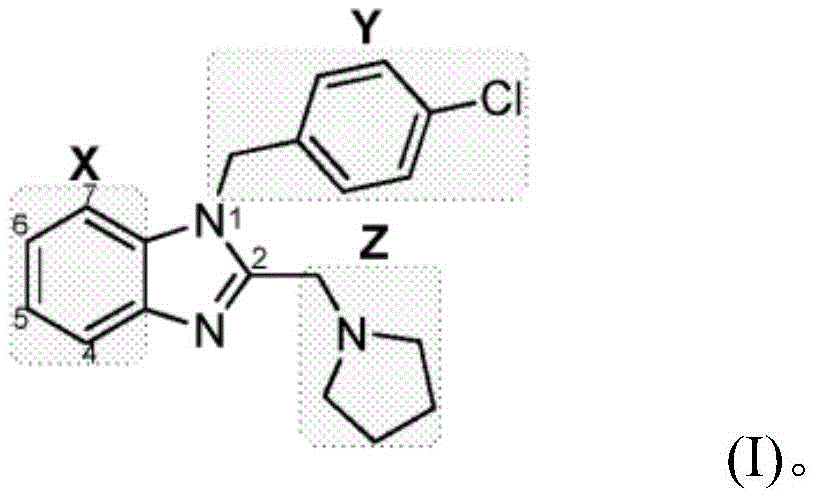
"clemizole" refers to a compound having the formula:

clemizole includes pharmaceutically acceptable salts and formulations of clemizole as described herein (e.g., "clemizole salts"). Exemplary clemizole salts include, but are not limited to clemizole-HCl, clemizole penicillin, clemizole-sulfate, or clemizole-undecanoate.
"clemizole analog" as described herein refers to a compound having a similar structure. Such compounds include, for example, those shown in PCT/US2008/076804 and U.S. patent No. 4,011,322, which are incorporated by reference herein in their entirety. Further exemplary clemizole analogs are set forth, for example, in the following: US 2012/0232062; PCT publication numbers 2009/038248; US 2010/107739; US 2010/107742, WO 2002/089731, WO 2005/032329, WO 2009/039248, WO 2010/039195, WO 2010/107739 and WO 2010/107742, each of which is incorporated herein by reference in its entirety. Clemizole analogs described herein, including compounds described in the above references, may be substituted (i.e., modified) at the 1 or 2 positions (boxes Y and Z) as shown in formula (I) below. Clemizole analogs can be substituted (i.e., modified) at the 4, 5,6, or 7 position, as shown by box X in formula (I).
"flibanserin" refers to a compound having the following formula (II):

flibanserin includes pharmaceutically acceptable salts and formulations of flibanserin (e.g., "flibanserin salts").
"Desfenfluramine" refers to a compound having the following formula (III):

desfenfluramine includes pharmaceutically acceptable salts and formulations of desfenfluramine (e.g., "desfenfluramine salts").
"DOI" refers to 2, 5-dimethoxy-4-iodophenylpropylamine. DOI includes pharmaceutically acceptable salts and formulations of DOI. Exemplary DOI salts include, but are not limited to, 2, 5-dimethoxy-4-iodophenylpropylamine monohydrochloride (DOI HCl) having the following formula (IV):


"BW 723C 86" means acting as 5HT2BA receptor agonist and a tryptamine derivative drug having the following formula (V):

BW 723C86 includes pharmaceutically acceptable salts and formulations of BW 723C86 (e.g., "BW 723C86 salt").
The term "pharmaceutically acceptable salt" is intended to include salts of the active compounds prepared with relatively nontoxic acids or bases, depending on the particular substituents found on the compounds described herein. When the 5-HT agonist contains a relatively acidic functional group, base addition salts may be obtained by contacting the neutral form of such a compound with a sufficient amount of the desired base, neat or in a suitable inert solvent. Examples of pharmaceutically acceptable base addition salts include sodium, potassium, calcium, ammonium, organic amino or magnesium salts or similar salts. When the 5-HT agonist contains a relatively basic functional group, acid addition salts may be obtained by contacting the neutral form of such a compound with a sufficient amount of the desired acid, neat or in a suitable inert solvent. Examples of pharmaceutically acceptable acid addition salts include those derived from inorganic acids such as hydrochloric acid, hydrobromic acid, nitric acid, carbonic acid, monohydrogencarbonic acid, phosphoric acid, monohydrogenphosphoric acid, dihydrogenphosphoric acid, sulfuric acid, monohydrogensulfuric acid, hydroiodic acid, or phosphorous acid, among others, as well as salts derived from relatively nontoxic organic acids such as acetic acid, propionic acid, isobutyric acid, maleic acid, malonic acid, benzoic acid, succinic acid, suberic acid, fumaric acid, lactic acid, mandelic acid, phthalic acid, benzenesulfonic acid, p-toluenesulfonic acid, citric acid, tartaric acid, oxalic acid, methanesulfonic acid, and others. Also included are Salts of amino acids such as arginine Salts and the like, and Salts of organic acids such as glucuronic acid or galacturonic acid (galactunoric acid) and the like (see, e.g., Berge et al, "Pharmaceutical Salts", Journal of Pharmaceutical Science,1977,66, 1-19). The 5-HT agonist may contain both basic and acidic functional groups that allow conversion to base or acid addition salts.
Thus, the 5-HT agonist may be present, for example, as a salt with a pharmaceutically acceptable acid. The present invention includes these salts. Non-limiting examples of such salts include hydrochloride, hydrobromide, phosphate, sulfate, methanesulfonate, nitrate, maleate, acetate, citrate, fumarate, propionate, tartrate (e.g., (+) -tartrate, (-) -tartrate or mixtures thereof, including racemic mixtures), succinate, benzoate, and salts and quaternary ammonium salts with amino acids such as glutamic acid (e.g., methyl iodide, ethyl iodide, and the like). These salts can be prepared by methods known to those skilled in the art.
The neutral form of the 5-HT agonist is preferably regenerated by contacting the salt with a base or acid and isolating the parent compound in a conventional manner. The parent form of the compound may differ from the various salt forms in certain physical properties, such as solubility in polar solvents.
In addition to salt forms, 5-HT agonists may be provided in prodrug form. Prodrugs are those compounds that readily undergo chemical changes under physiological conditions to provide the compounds of the present invention. The 5-HT agonist drug may be converted in vivo after administration. In addition, prodrugs of 5-HT agonists may be converted to the active compound in an ex vivo environment by chemical or biochemical means, for example, when contacted with a suitable enzyme or chemical agent.
The 5-HT agonists can exist in unsolvated as well as solvated forms, including hydrated forms. In general, the solvated forms are equivalent to unsolvated forms and are intended to be encompassed within the scope of the present invention. The 5-HT agonist may be present in multiple crystalline forms or in amorphous form. In general, all physical forms are equivalent for the uses contemplated by the present invention and are contemplated to be within the scope of the present invention.
An "effective amount" is an amount sufficient for a 5-HT agonist (including pharmaceutically acceptable salts thereof) to achieve the stated purpose (e.g., achieve the effect of its administration, treat a disease, decrease protein/enzyme activity, increase protein/enzyme activity, decrease a signaling pathway, or decrease one or more symptoms of a disease or condition) relative to the absence of a 5-HT agonist (including pharmaceutically acceptable salts thereof). An example of an "effective amount" is an amount of a 5-HT agonist (including pharmaceutically acceptable salts thereof) sufficient to effect treatment, prevention, or reduction of one or more disease symptoms, which may also be referred to as a "therapeutically effective amount". "reduction" of one or more symptoms (and grammatical equivalents of phrases thereof) means a reduction in the severity or frequency of the symptoms, or elimination of the symptoms (e.g., seizures). A "prophylactically effective amount" of a drug is an amount of the drug that, when administered to a subject, will have the intended prophylactic effect, e.g., preventing or delaying the onset (or recurrence) of an injury, disease, pathology, or condition, or reducing the likelihood of the onset (or recurrence) of an injury, disease, pathology, or condition, or a symptom thereof (e.g., onset). A complete prophylactic effect does not necessarily occur by administration of one dose, but may only occur after administration of a series of doses. Thus, a prophylactically effective amount may be administered in one or more administrations. The exact amount will depend on The purpose of The treatment and will be determined by one skilled in The Art using known techniques (see, e.g., Lieberman, Pharmaceutical delivery Forms (Vol.1-3, 1992); Lloyd, The Art, Science and Technology of Pharmaceutical Compounding (1999); Pickar, delivery calls (1999); and Remington: The Science and Practice of Pharmacy, 20 th edition, 2003, geno, Ed., Lippincott, Williams & Wilkins).
A therapeutically effective amount of a 5-HT agonist (including pharmaceutically acceptable salts thereof) can be initially determined by cell culture assays. Target concentrations will be those concentrations of active compound that are capable of achieving the methods described herein, as measured using the methods described herein or known in the art.
A therapeutically effective amount for use in humans can also be determined from animal models, as is well known in the art. For example, a dose for use in humans may be formulated to achieve a concentration found to be effective in animals. As described above, the dosage in humans can be adjusted by monitoring the effectiveness of the compound and adjusting the dosage up or down. It is well within the ability of the ordinarily skilled artisan to adjust dosages based on the above methods and other methods to achieve maximal efficacy in humans.
The dosage may vary depending on the patient and the requirements of the compound employed. In the context of the present invention, the dose administered to a patient should be sufficient to achieve a beneficial therapeutic response in the patient over a period of time. The size of the dose will also be determined by the presence, nature and extent of any adverse side effects. Determination of the appropriate dosage for a particular situation is within the skill of the practitioner. Generally, treatment is initiated at smaller doses than the optimal dose of the compound. The dose is then increased in small increments until the optimum effect under circumstances is reached.
The dosage and interval may be adjusted individually to provide levels of the administered compound that are effective for the particular clinical indication being treated. This will provide a treatment regimen commensurate with the severity of the individual's disease state.
Using the teachings provided herein, an effective prophylactic or therapeutic treatment regimen can be planned that does not cause substantial toxicity and yet still effectively treat the clinical symptoms exhibited by a particular patient. The program should involve careful selection of the active compound by taking into account factors such as compound potency, relative bioavailability, patient weight, presence and severity of adverse side effects, preferred mode of administration and toxicity characteristics of the selected agent.
"control" or "control experiment" is used in its plain ordinary sense and refers to an experiment in which the subjects or reagents of the experiment are treated in parallel experiments, except that the procedures, reagents or variables of the experiment are omitted. In some cases, controls were used as comparative standards to evaluate the effects of the experiments. In some embodiments, the control is a measure of the activity of the 5-HT agonist in the absence of the 5-HT agonist (including pharmaceutically acceptable salts thereof).
As used herein, "test compound" refers to an experimental compound used in a screening process to identify the activity, inactivity or other modulation of a particular biological target or pathway (e.g., 5-HT receptor). The test compound may be a 5-HT agonist, including pharmaceutically acceptable salts thereof, as described herein.
The terms "modulation", "modulation" or "modulating" are used in their plain, ordinary sense and refer to an action that alters or changes one or more properties. By "modulator" is meant a composition or compound that increases or decreases the level of a target molecule or the function of a target molecule or the physical state of a molecular target. "modulation" refers to a process of altering or changing one or more properties. For example, as applied to the effect of a modulator on a biological target, modulation means alteration by increasing or decreasing the property or function of the biological target or the amount of the biological target (e.g., 5-HT receptor).
As defined herein, the terms "inhibit", "inhibiting", and the like, with reference to a protein-inhibitor interaction, mean to negatively affect (e.g., reduce) the activity or function of a protein relative to the activity or function of the protein in the absence of the inhibitor. In some embodiments, inhibition refers to a reduction in a disease or disease symptom. In some embodiments, inhibition refers to a decrease in the activity of a particular protein or nucleic acid target. Thus, inhibition includes at least partial, partial or complete blocking of stimulation, reduction, prevention or delay of activation, or inactivation, desensitization or down regulation of signal transduction or protein/enzyme activity or amount of protein.
The terms "activation" or "activating" and the like, with reference to a protein-compound interaction, positively affects (e.g., increases) the activity or function of a protein relative to the activity or function of the protein in the absence of an activator compound. Activation may refer to enhanced activity of a particular protein target. Activation may refer to the restoration of the loss of function of the mutein target. As used herein, activation may refer to activation of one or more 5-HT receptors.
"contacting" is used in its plain, ordinary sense and refers to a process that allows at least two different species (e.g., chemical compounds including biomolecules or cells) to become close enough to react, interact, or physically contact. However, it should be understood that the resulting reaction product may be produced directly from the reaction between the added reagents or from an intermediate product of one or more of the added reagents that may be produced in the reaction mixture.
The term "contacting" may include allowing two species to react, interact, or physically contact, wherein the two species may be a compound and a protein or enzyme as described herein. In some embodiments, contacting comprises interacting a compound described herein with a receptor, such as a 5-HT receptor.
In the context of a substance or substance activity or function associated with a disease, the term "associated with" or "associated with … …" means that the disease is caused (in whole or in part) by the substance or substance activity or function, or that the symptoms of the disease are caused (in whole or in part) by the substance or substance activity or function.
The term "patient" or "subject in need thereof" refers to a living organism that has or is predisposed to developing a disease or condition that can be treated by administration of a pharmaceutical composition as provided herein. Non-limiting examples include humans, other mammals, cows, rats, mice, dogs, monkeys, goats, sheep, cattle, deer, and other non-mammals such as zebrafish. The patient may be a human.
The term "disease" or "condition" refers to a physical or health state of a patient or subject that can be treated with a compound or method provided herein.
The terms "epileptic disorder", "seizure disorder" or "epilepsy" refer herein to a series of chronic neurological disorders most commonly characterized by the absence of causative seizures. See, e.g., Noebels et al, Jasper's Basic mechanics of the epistasis, 4 th edition, Bethesda (MD): National Center for Biotechnology Information (US); 2012. as used herein, epilepsy may refer to brain injury (e.g., from trauma, stroke, or cancer) or genetic mutation. Symptoms of an epileptic condition may result from aberrant electrochemical signaling between neurons in the brain. A patient who has experienced two or more unprovoked seizures may be considered to have epilepsy.
Types of epilepsy disorders include, for example, benign motor epilepsy, frontal lobe epilepsy, infantile spasms, Juvenile Myoclonic Epilepsy (JME), juvenile absence epilepsy, childhood absence epilepsy (e.g., petit mal), febrile seizures, progressive myoclonic epilepsy of Lafora type, Lennox-Gastaut syndrome, Landau-Kleffner syndrome, Dravet Syndrome (DS), generalized epilepsy with febrile seizures (GEFS +), infantile Severe Myoclonic Epilepsy (SMEI), benign neonatal familial convulsions (BFNC), West syndrome, grassland syndrome, early myoclonic encephalopathy, migratory regional epilepsy, infantile epileptic encephalopathy, tuberous sclerosis syndrome (TSC), focal cortical dysplasia, type I anencephaly, miler-Dieker syndrome, Angelman syndrome, fragile X syndrome, epilepsy in autistic spectrum disorders, Subcortical ectopic disorders, Walker-Warburg syndrome, Alzheimer's disease, post-traumatic epilepsy, progressive myoclonic epilepsy, reflex epilepsy, Rasmussen syndrome, temporal lobe epilepsy, epilepsy of the limbic system, status epilepticus, abdominal epilepsy, major bilateral myoclonic epilepsy, menstrual epilepsy, Jackson's seizure disorder, Unverricht-Lundborg's disease, or photosensitive epilepsy.
"pharmaceutically acceptable excipient" and "pharmaceutically acceptable carrier" or "carrier moiety" refer to a substance that aids in the administration and absorption of a 5-HT agonist (including pharmaceutically acceptable salts thereof) to a subject, and may be included in a composition without causing significant adverse toxicological effects to the patient. Non-limiting examples of pharmaceutically acceptable excipients include water, NaCl, physiological saline solution, lactated ringer's, normal sucrose, normal glucose, binders, fillers, disintegrants, lubricants, coatings, sweeteners, flavors, salt solutions (e.g., ringer's solution), alcohols, oils, gelatins, carbohydrates such as lactose, amylose or starch, fatty acid esters, hydroxymethylcellulose, polyvinylpyrrolidine, pigments, and the like. Such formulations can be sterilized and, if desired, mixed with auxiliary agents, e.g., lubricants, preservatives, stabilizers, wetting agents, emulsifiers, salts for influencing osmotic pressure, buffers, colorants and/or aromatic substances and the like, which do not deleteriously react with the compounds of the invention. One skilled in the art will recognize that other pharmaceutically acceptable excipients may be used in the present invention.
The term "formulation" is intended to include a formulation of a 5-HT agonist (including pharmaceutically acceptable salts thereof) having encapsulating material as a carrier, providing a capsule in which the active ingredient, with or without other carriers, is surrounded by a carrier, which is thus associated therewith. Similarly, cachets and lozenges are included. Tablets, powders, capsules, pills, cachets, and lozenges can be used as solid dosage forms suitable for oral administration.
As used herein, the term "administering" means oral administration, administration as a suppository, topical contact, intravenous, intraperitoneal, intramuscular, intralesional, intrathecal, intranasal, or subcutaneous administration, or implantation of a sustained release device such as a mini osmotic pump, to a subject. Administration is by any route, including parenteral and transmucosal (e.g., buccal, sublingual, palatal, gingival, nasal, vaginal, rectal, or transdermal). Parenteral administration includes, for example, intravenous, intramuscular, intraarteriolar, intradermal, subcutaneous, intraperitoneal, intraventricular, and intracranial. Other modes of delivery include, but are not limited to, the use of liposomal formulations, intravenous infusion, transdermal patches, and the like.
5-HT agonists (including pharmaceutically acceptable salts thereof) and pharmaceutical compositions thereof can be delivered transdermally by a topical route, formulated as applicator sticks, solutions, suspensions, emulsions, gels, creams, ointments, pastes, gels, paints, powders, and aerosols. Oral formulations include tablets, pills, powders, dragees, capsules, liquids, lozenges, cachets, gels, syrups, slurries, suspensions and the like, suitable for ingestion by a patient. Solid form preparations include powders, tablets, pills, capsules, cachets, suppositories, and dispersible granules. Liquid form preparations include solutions, suspensions and emulsions, for example, water or water/propylene glycol solutions. The 5-HT agonist (including pharmaceutically acceptable salts thereof) may additionally include components that provide sustained release and/or comfort. These components include high molecular weight, anionic mucomimetic polymers, gel-forming polysaccharides, and finely divided pharmaceutical carrier materials. These components are described in U.S. patent nos. 4,911,920; 5,403,841, respectively; 5212162, respectively; and 4,861,760 are discussed in more detail. The entire contents of these patents are incorporated herein by reference in their entirety for all purposes. 5-HT agonists (including pharmaceutically acceptable salts thereof) can also be delivered as microspheres for slow release in vivo. For example, the microspheres may be administered via: intradermal injection of drug-containing microspheres with slow subcutaneous release (see Rao, J.biomater Sci.Polym.Ed.7:623-645, 1995), formulations as biodegradable and injectable gel formulations (see, e.g., Gao Pharm.Res.12:857- For example, Al-Muhammed, J.Microencapsul.13:293-306, 1996; chonn, Curr, Opin, Biotechnol.6:698-708, 1995; ostro, am.J.Hosp.Pharm.46:1576-1587, 1989). The composition may also be delivered as nanoparticles.
By "co-administration" is meant that the compositions described herein are administered simultaneously, just prior to, or just after the administration of one or more other therapies. The 5-HT agonists (including pharmaceutically acceptable salts thereof) can be administered alone or can be co-administered to a patient. Co-administration means simultaneous or sequential administration of the compounds, alone or in combination (more than one compound). Thus, the formulation may also be combined with other active substances (e.g. to reduce metabolic degradation) when desired. The 5-HT agonist (including pharmaceutically acceptable salts thereof) may be delivered transdermally by a topical route or formulated as a stick, solution, suspension, emulsion, gel, cream, ointment, paste, gel, paint, powder, and aerosol.
The terms "add therapy", "add-therapy", "adjunctive therapy", and "adjunctive therapy" are used interchangeably herein and refer to the treatment of epilepsy by the combination of a 5-HT agonist or a pharmaceutically acceptable salt thereof and another anticonvulsant.
"anti-epileptic seizure Agentsanti-seizure drug), "antiepileptic drug," "AED," or "anticonvulsant" are used interchangeably herein and are used according to their common and ordinary meaning and include compositions for reducing or eliminating seizures. Anticonvulsants include, but are not limited to, acetazolamide, benzodiazepine Cannabidiol, carbamazepine, clobazam, clonazepam, eslicarbazepine acetate, ethosuximide, ethotoxin, felbamate, fenfluramine, phenytoin, gabapentin, ganaxolone, huperzine A, lacosamide, lamotrigine, levetiracetam, nitrazepam, oxcarbazepine, pirampanel, piracetam, phenobarbital, phenytoin, potassium bromide, pregabalin, paminone, retigabine, rufinamide, valproic acid, sodium valproate, stiripentol, tiagabine, topiramate, vigabatrin or zonisamide.
As used herein, the term "tolerability" refers to a reduction in the effectiveness of an agent or drug. For example, subjects "resistant" to treatment with a serotonin reuptake inhibitor (e.g., fenfluramine) exhibit a reduced response relative to the response observed when the subject is first treated with the serotonin reuptake inhibitor.
As used herein, the term "does not significantly bind" shall be taken to mean that the 5HT receptor agonist of the present disclosure exhibits 10-fold, or 20-fold, or 50-fold, or 60-fold, or 70-fold, or 80-fold, or 90-fold or 100-fold less binding to another transmembrane protein, such as a 5HT receptor, NPY YP receptor, Ca + channel, C1 channel, GABA transporter or GABA-a1 receptor, Na channel, 5HT transporter, and/or CB1 or CB2 receptor. This reduced level of binding can be measured by ELISA or biosensor analysis (e.g., Biacore). In one example, a 5HT receptor agonist of the present disclosure binds 5HT undetectable1A、5HT1B、5HT1D、5HT2C、5HT3、5HT4、5HT6、5HT7NPY Y1 receptor, L-type Ca channel, Ca channel (N-type), SK-Ca channel, GABAGated Cl channels, GABA transporters, GABA-a1 receptor, GABA-B1B receptor, Na channels, 5HT transporters, CB1 receptor, CB2 receptor, BZD or estrogen era as measured by ELISA or Biacore or western blot or FACS. In this regard, "non-detectably binds" is understood to mean that the level of binding is not significantly greater than background. In exemplary embodiments, 5-HT agonists do not significantly modulate 5HT1A、5HT1B、5HT1D、5HT2C、5HT3、5HT4、5HT6、5HT7An NPY Y1 receptor, an L-type Ca channel, an N-type Ca channel, an SK-Ca channel, a GABA-gated Cl channel, a GABA transporter, a GABA-A1 receptor, a GABA-B1B receptor, a Na channel, a 5HT transporter, a CB1 receptor, a CB2 receptor, a BZD or an estrogen ER α. As used herein, the term "does not significantly modulate activity" shall be taken to mean that the 5HT receptor agonist of the present disclosure elicits a receptor-mediated biological response that is substantially similar to its activity in the absence of an activating or inhibiting ligand.
Method of treatment
Provided herein are methods of treating an epileptic condition. In one aspect, the method is a method of treating an epilepsy disorder by administering to a subject in need thereof a therapeutically effective amount of a 5-HT receptor agonist, or a pharmaceutically acceptable salt thereof. In another aspect, the method is for treating an epilepsy disorder by administering to a subject in need thereof a pharmaceutical composition described herein, wherein the pharmaceutical composition comprises a 5-HT receptor agonist or a pharmaceutically acceptable salt thereof. The subject may have a ketogenic diet (e.g., the food may be consumed according to the ketogenic diet). The subject may have cardiovascular disease. The subject may be resistant to treatment with a serotonin reuptake inhibitor. When a serotonin reuptake inhibitor is administered, the subject may be susceptible to side effects. The subject may be a child (e.g., a subject with a pediatric epilepsy condition).
The epilepsy disorder may be benign motor epilepsy, frontal lobe epilepsy, infantile spasms, Juvenile Myoclonic Epilepsy (JME), juvenile absence epilepsy, childhood absence epilepsy (e.g., petit mal epilepsy), febrile seizures, progressive myoclonic epilepsy of Lafora type, Lennox-Gastaut syndrome, Landau-Kleffner syndrome, Dravet syndrome, generalized epilepsy with febrile seizures (GEFS +), severe myoclonic epilepsy in infants (SMEI), benign neonatal familial convulsions (BFNC), West syndrome, grassland syndrome, early myoclonic encephalopathy, migratory regional epilepsy, infantile epileptic encephalopathy, tuberous sclerosis syndrome (TSC), focal cortical dysplasia, type I lissencephaly, Miller-Dieker syndrome, Angelman syndrome, fragile X syndrome, epilepsy in autistic spectrum disorders, subcortical heteroleptic syndrome, Walker-Warburg syndrome, Alzheimer's disease, post-traumatic epilepsy, progressive myoclonic epilepsy, reflex epilepsy, Rasmussen syndrome, temporal lobe epilepsy, limbic epilepsy, status epilepticus, abdominal epilepsy, massive bilateral myoclonic epilepsy, menstrual epilepsy, Jackson's seizure disorder, Unverricht-Lundborg's disease, or photosensitive epilepsy. Epilepsy may include generalized seizures or partial (i.e., focal) seizures.
The epilepsy disorder may be Dravet syndrome, Lennox-Gastaut syndrome, infantile spasms or daidz syndrome. The epilepsy disorder may be Dravet syndrome, Lennox-Gastaut syndrome, infantile spasms or Tagety syndrome, or a pediatric epilepsy disorder. The pediatric epilepsy disorder may be benign childhood epilepsy, benign neonatal familial convulsions (BFNC), febrile seizures, Dravet syndrome, Lennox-Gastaut syndrome, infantile spasms, agoraphobia syndrome, juvenile myoclonic epilepsy, juvenile absence epilepsy, childhood absence epilepsy (e.g., petit mal epilepsy), infantile spasms. The epilepsy disorder may be Dravet syndrome.
The pediatric epilepsy disorder may be benign childhood epilepsy. The pediatric epilepsy disorder may be benign neonatal familial convulsions (BFNC). The pediatric epilepsy disorder may be febrile seizures. The pediatric epilepsy disorder may be Dravet syndrome. The pediatric epilepsy disorder may be Lennox-Gastaut syndrome. The pediatric epilepsy disorder may be infantile spasms. The pediatric epilepsy disorder may be a Tagetian syndrome. The pediatric epilepsy disorder may be juvenile myoclonic epilepsy. The pediatric epilepsy disorder may be juvenile absence epilepsy. The pediatric epilepsy disorder may be childhood absence epilepsy (e.g., petit mal epilepsy). The pediatric epilepsy disorder may be infantile spasms.
An epileptic condition may be the result of a neurological disease or injury, such as encephalitis, abscess, stroke, tumor, trauma, hereditary, tuberous sclerosis, cerebral hypoplasia, or hypoxic-ischemic encephalopathy. The epileptic condition may be associated with a neurodegenerative disease such as alzheimer's disease or parkinson's disease. The epilepsy disorder may be associated with autism. An epileptic condition may be associated with a single gene mutation. Epileptic disorders may be associated with compulsive behavior or electrographic seizures. Administration of a 5-HT receptor agonist or a pharmaceutically acceptable salt thereof can inhibit compulsive behavior or electrographic seizures in an epileptic condition, an Alzheimer's disease subject (e.g., a subject with Alzheimer's disease), an autistic subject (e.g., a subject with autism), or a Parkinson's disease subject (e.g., a subject with Parkinson's disease). Thus, a 5-HT receptor agonist or a pharmaceutically acceptable salt thereof can inhibit compulsive behavior or electrographic seizures in an epileptic condition. 5-HT agonists or pharmaceutically acceptable salts thereof can inhibit compulsive behavior or electrographic seizures in Alzheimer's disease subjects. 5-HT receptor agonists or pharmaceutically acceptable salts thereof can inhibit compulsive behavior or electrographic seizures in autistic subjects. A5-HT receptor agonist or a pharmaceutically acceptable salt thereof can inhibit compulsive behavior or electrographic seizures in a Parkinson's disease subject.
Administration of a 5-HT receptor agonist or a pharmaceutically acceptable salt thereof may reduce the incidence (e.g., number of) unprovoked episodes in a subject compared to the absence of the 5-HT receptor agonist or a pharmaceutically acceptable salt thereof. Thus, a patient's response to administration of a 5-HT receptor agonist, or a pharmaceutically acceptable salt thereof, may be monitored stepwise as compared to the time (e.g., control or control time) prior to administration of a compound described herein.
Administration of a 5-HT receptor agonist or a pharmaceutically acceptable salt thereof may reduce or prevent myoclonic seizures or status epilepticus in a subject as compared to the absence of the 5-HT receptor agonist or a pharmaceutically acceptable salt thereof. Administration of the 5-HT receptor agonist or pharmaceutically acceptable salt thereof may reduce or prevent the onset of myoclonic seizures in a subject compared to the absence of the 5-HT receptor agonist or pharmaceutically acceptable salt thereof. Administration of a 5-HT receptor agonist or a pharmaceutically acceptable salt thereof may reduce or prevent status epilepticus in a subject as compared to the absence of the 5-HT receptor agonist or a pharmaceutically acceptable salt thereof. Thus, a patient's response to administration of a 5-HT receptor agonist, or a pharmaceutically acceptable salt thereof, may be monitored stepwise as compared to the time (e.g., control or control time) prior to administration of a compound described herein.
The epileptic disorder may be an epileptic disorder that is not responsive to treatment with an anti-epileptic drug (AED). The subject may eat a ketogenic diet. The epileptic condition may be an epileptic condition in an adult (e.g., greater than about 16 years of age).
The epilepsy disorder may be an epilepsy disorder in children. Thus, the epilepsy disorder may be a pediatric epilepsy disorder. The child may be less than about 1 week. The child may be less than about 1 month. The child may be less than about 6 months. Children may be less than about 12 months old. The child may be less than about 2 years old. The child may be less than about 3 years old. The child may be less than about 4 years old. The child may be less than about 5 years old. The child may be less than about 6 years old. The child may be less than about 7 years old. The child may be less than about 8 years old. The child may be less than about 9 years old. The child may be less than about 10 years old. The child may be less than about 12 years old.
The child may be greater than about 1 week. The child may be greater than about 1 month. Children may be older than about 6 months. Children may be greater than about 12 months old. The child may be greater than about 2 years old. The child may be greater than about 3 years old. The child may be greater than about 4 years old. The child may be greater than about 5 years old. The child may be greater than about 5 years old. The child may be greater than about 6 years old. The child may be greater than about 7 years old. The child may be greater than about 8 years old. The child may be greater than about 9 years old. The child may be greater than about 10 years old. The child may be greater than about 11 years old. The child may be greater than about 12 years old.
The child may have an epileptic condition that is treated by administering an AED as described herein. Thus, a 5-HT receptor agonist, or a pharmaceutically acceptable salt thereof, may be administered to such children (e.g., as an add-on therapy).
In another aspect is a method of treating Dravet syndrome. A method of treating Dravet syndrome comprising administering to a subject in need thereof a therapeutically effective amount of a 5-HT receptor agonist or a pharmaceutically acceptable salt thereof. Methods of treating Dravet syndrome may comprise administering to a subject in need thereof a pharmaceutical composition of a 5-HT receptor agonist, or a pharmaceutically acceptable salt thereof, as described herein. As described herein, a 5-HT receptor agonist (including pharmaceutically acceptable salts thereof) may be co-administered with an AED to a subject in need thereof.
In the methods described herein, a 5-HT receptor agonist (including pharmaceutically acceptable salts thereof) can be co-administered with an antiepileptic drug (AED). The AED may be acetazolamide or benzodiazepine Cannabidiol, carbamazepine, clobazam, clonazepam, eslicarbazepine acetate, ethosuximide, ethotoxin, felbamate, fenfluramine, phenytoin, gabapentin, ganaxolone, huperzine A, lacosamide, lamotrigine, levetiracetam, nitrazepam, oxcarbazepine, pirampanel, piracetam, phenobarbital, phenytoin, potassium bromide, pregabalin, paminone, retigabine, rufinamide, valproic acid, sodium valproate, stiripentol, tiagabine, topiramate, vigabatrin or zonisamide. The AED may be valproic acid, sodium valproate, clonazepam, ethosuximide, felbamate, gabapentin, carbamazepine, oxcarbazepine, lamotrigine, levetiracetam, benzodiazepine
 Such as phenobarbital, pregabalin, primidone, tiagabine, topiramate, potassium bromide, phenytoin, stiripentol, vigabatrin or zonisamide. The AED may be valproic acid, sodium valproate, gabapentin, topiramate, carbamazepine, oxcarbazepine or vigabatrin.
The AED may be acetazolamide. The AED may be benzodiazepine And (4) class. The AED may be Cannabis sativa IIAn alcohol. The AED may be carbamazepine. The AED may be clobazam. The AED may be clonazepam. The AED may be eslicarbazepine acetate. The AED may be ethosuximide. The AED may be phenytoin. The AED may be felbamate. The AED may be fenfluramine. The AED may be fosphenytoin. The AED may be gabapentin. The AED may be ganaxolone. The AED may be huperzine A. The AED may be lacosamide. The AED may be lamotrigine. The AED may be levetiracetam. The AED may be nitrazepam. The AED may be oxcarbazepine. The AED may be perampanel. The AED may be piracetam. The AED may be phenobarbital. The AED may be phenytoin. The AED may be potassium bromide. The AED may be pregabalin. The AED may be primidone. The AED may be retigabine. The AED may be rufinamide. The AED may be valproic acid. The AED may be sodium valproate. The AED may be stiripentol. The AED may be tiagabine. The AED may be topiramate. The AED may be vigabatrin. The AED may be zonisamide. Clemizole or clemizole analogs (including pharmaceutically acceptable salts thereof) or pharmaceutical compositions of clemizole or clemizole analogs can be administered as adjunctive therapy to one or more AEDs described herein.
The 5-HT receptor agonist, or a pharmaceutically acceptable salt thereof, may thus be administered as an additive (e.g., in combination) with an AED drug for the treatment of seizures, including seizures associated with the epileptic conditions described herein. A 5-HT receptor agonist or a pharmaceutically acceptable salt thereof may be administered as an adjunct therapy (e.g., in combination with) an AED drug for the treatment of seizures, including seizures associated with the epileptic conditions described herein.
An epileptic condition may be characterized as a partial seizure or a generalized seizure. An epileptic condition may be characterized by a partial seizure. An epileptic condition may be characterized by a generalized seizure. The partial episode may be a simple focal episode, a complex focal episode, or a partial focal episode with a secondary systemic episode. The generalized seizures may be generalized tonic-clonic seizures, absence seizures (i.e. petit mal seizures), myoclonic seizures, clonic seizures, tonic seizures or dystonic seizures.
When co-administered with an AED as described herein, a 5-HT receptor agonist (including pharmaceutically acceptable salts thereof) and an AED may be administered simultaneously. When administered simultaneously, the 5-HT receptor agonist (including pharmaceutically acceptable salts thereof) may be formulated with the AED (i.e. in a single dosage unit). The 5-HT receptor agonist (including pharmaceutically acceptable salts thereof) may be formulated for administration separately from, but simultaneously with, the AED. When co-administered with an AED as described herein, the 5-HT receptor agonist (including pharmaceutically acceptable salts thereof) can be administered sequentially (e.g., before or after) with AED administration. As described herein, the sequential order of administration can be readily determined by one skilled in the art.
The 5-HT receptor agonist (including pharmaceutically acceptable salts thereof) may be administered at a dose of about 1mg/kg to about 1000 mg/kg. The 5-HT receptor agonist (including pharmaceutically acceptable salts thereof) may be administered at a dose of about 10mg/kg to about 1000 mg/kg. The 5-HT receptor agonist (including pharmaceutically acceptable salts thereof) may be administered at a dose of about 10mg/kg to about 600 mg/kg. The 5-HT receptor agonist (including pharmaceutically acceptable salts thereof) may be administered at a dose of about 25mg/kg to about 500 mg/kg. The 5-HT receptor agonist (including pharmaceutically acceptable salts thereof) may be administered at a dose of about 25mg/kg to about 400 mg/kg. The 5-HT receptor agonist (including pharmaceutically acceptable salts thereof) may be administered at a dose of about 25mg/kg to about 350 mg/kg. The 5-HT receptor agonist (including pharmaceutically acceptable salts thereof) may be administered at a dose of about 25mg/kg to about 300 mg/kg. The 5-HT receptor agonist (including pharmaceutically acceptable salts thereof) may be administered at a dose of about 25mg/kg to about 250 mg/kg. The 5-HT receptor agonist (including pharmaceutically acceptable salts thereof) may be administered at a dose of about 25mg/kg to about 200 mg/kg. The 5-HT receptor agonist (including pharmaceutically acceptable salts thereof) may be administered at a dose of about 25mg/kg to about 150 mg/kg. The 5-HT receptor agonist (including pharmaceutically acceptable salts thereof) may be administered at a dose of about 25mg/kg to about 100 mg/kg. The 5-HT receptor agonist (including pharmaceutically acceptable salts thereof) may be administered at a dose of about 25mg/kg to about 75 mg/kg. The 5-HT receptor agonist (including pharmaceutically acceptable salts thereof) may be administered at a dose of about 25mg/kg to about 50 mg/kg. As used herein, "mg/kg" refers to mg/kg of the body weight of a subject. The dosages described herein include administration of a 5-HT receptor agonist (including pharmaceutically acceptable salts thereof) as the sole therapeutically active agent, or administration of a 5-HT receptor agonist (including pharmaceutically acceptable salts thereof) as the therapeutically active agent in combination with an AED as described herein (as described herein).
The 5-HT receptor agonist (including pharmaceutically acceptable salts thereof) may be administered at a dose of about 1 mg/kg. The 5-HT receptor agonist (including pharmaceutically acceptable salts thereof) may be administered at a dose of about 5 mg/kg. The 5-HT receptor agonist (including pharmaceutically acceptable salts thereof) may be administered at a dose of about 10 mg/kg. The 5-HT receptor agonist (including pharmaceutically acceptable salts thereof) may be administered at a dose of about 20 mg/kg. The 5-HT receptor agonist (including pharmaceutically acceptable salts thereof) may be administered at a dose of about 25 mg/kg. The 5-HT receptor agonist (including pharmaceutically acceptable salts thereof) may be administered at a dose of about 30 mg/kg. The 5-HT receptor agonist (including pharmaceutically acceptable salts thereof) may be administered at a dose of about 40 mg/kg. The 5-HT receptor agonist (including pharmaceutically acceptable salts thereof) may be administered at a dose of about 50 mg/kg. The 5-HT receptor agonist (including pharmaceutically acceptable salts thereof) may be administered at a dose of about 75 mg/kg. The 5-HT receptor agonist (including pharmaceutically acceptable salts thereof) may be administered at a dose of about 100 mg/kg.
The 5-HT receptor agonist (including pharmaceutically acceptable salts thereof) may be administered at a dose of about 125 mg/kg. The 5-HT receptor agonist (including pharmaceutically acceptable salts thereof) may be administered at a dose of about 150 mg/kg. The 5-HT receptor agonist (including pharmaceutically acceptable salts thereof) may be administered at a dose of about 175 mg/kg. The 5-HT receptor agonist (including pharmaceutically acceptable salts thereof) may be administered at a dose of about 200 mg/kg. The 5-HT receptor agonist (including pharmaceutically acceptable salts thereof) may be administered at a dose of about 225 mg/kg. The 5-HT receptor agonist (including pharmaceutically acceptable salts thereof) may be administered at a dose of about 250 mg/kg. The 5-HT receptor agonist (including pharmaceutically acceptable salts thereof) may be administered at a dose of about 275 mg/kg.
The 5-HT receptor agonist (including pharmaceutically acceptable salts thereof) may be administered at a dose of about 300 mg/kg. The 5-HT receptor agonist (including pharmaceutically acceptable salts thereof) may be administered at a dose of about 325 mg/kg. The 5-HT receptor agonist (including pharmaceutically acceptable salts thereof) may be administered at a dose of about 350 mg/kg. The 5-HT receptor agonist (including pharmaceutically acceptable salts thereof) may be administered at a dose of about 375 mg/kg. The 5-HT receptor agonist (including pharmaceutically acceptable salts thereof) may be administered at a dose of about 400 mg/kg. The 5-HT receptor agonist (including pharmaceutically acceptable salts thereof) may be administered at a dose of about 425 mg/kg. The 5-HT receptor agonist (including pharmaceutically acceptable salts thereof) may be administered at a dose of about 450 mg/kg. The 5-HT receptor agonist (including pharmaceutically acceptable salts thereof) may be administered at a dose of about 475 mg/kg. The 5-HT receptor agonist (including pharmaceutically acceptable salts thereof) may be administered at a dose of about 500 mg/kg.
5-HT receptor agonist analogs (including pharmaceutically acceptable salts thereof) can be administered at a dose of about 600 mg/kg. The 5-HT receptor agonist (including pharmaceutically acceptable salts thereof) may be administered at a dose of about 700 mg/kg. The 5-HT receptor agonist (including pharmaceutically acceptable salts thereof) may be administered at a dose of about 800 mg/kg. The 5-HT receptor agonist (including pharmaceutically acceptable salts thereof) may be administered at a dose of about 900 mg/kg. The 5-HT receptor agonist (including pharmaceutically acceptable salts thereof) may be administered at a dose of about 1000 mg/kg.
The 5-HT receptor agonist (including pharmaceutically acceptable salts thereof) may be administered at least once daily (e.g., once every 1, 2, 3, 4, 5,6, 7, 8, 9,10, 11, or 12 hours) at a dosage described herein. The 5-HT receptor agonist (including pharmaceutically acceptable salts thereof) can be administered once daily at a dosage as described herein. The 5-HT receptor agonist (including pharmaceutically acceptable salts thereof) may be administered at least twice weekly at the dosages described herein. As described herein, a 5-HT receptor agonist (including pharmaceutically acceptable salts thereof) may be administered at least three times per week. As described herein, a 5-HT receptor agonist (including pharmaceutically acceptable salts thereof) may be administered once a month.
Provided herein are methods of treating a disease or condition caused by a serotonin deficiency or a low activity of one or more 5HT receptors in the brain by administering a therapeutically effective amount of clemizole, a clemizole analog, or a pharmaceutically acceptable salt thereof. The disease or condition caused by a serotonin deficiency in the brain or a low activity of one or more 5HT receptors may be migraine. The disease or condition caused by a serotonin deficiency in the brain or a low activity of one or more 5HT receptors may be fragile X syndrome. The disease or condition caused by a serotonin deficiency in the brain or a low activity of one or more 5HT receptors may be prader-willi syndrome. The disease or condition caused by a serotonin deficiency in the brain or a low activity of one or more 5HT receptors may be schizophrenia. The disease or condition caused by a serotonin deficiency in the brain or a low activity of one or more 5HT receptors may be depression. The disease or condition caused by a serotonin deficiency in the brain or a low activity of one or more 5HT receptors may be alzheimer's disease. The disease or condition caused by a serotonin deficiency in the brain or a low activity of one or more 5HT receptors may be autism. The disease or condition caused by a serotonin deficiency in the brain or a low activity of one or more 5HT receptors may be neuropathic pain. The disease or condition caused by a serotonin deficiency in the brain or a low activity of one or more 5HT receptors may be parkinson's disease. The disease or condition caused by a serotonin deficiency in the brain or a low activity of one or more 5HT receptors may be irritable bowel syndrome. The disease or condition caused by a serotonin deficiency in the brain or a low activity of one or more 5HT receptors may be dementia.
Further provided herein are methods of modulating 5HT receptor activity comprising contacting a 5HT receptor with clemizole, a clemizole analog, or a pharmaceutically acceptable salt thereof.
Analogs of clemizole may include compounds of formula (I) described herein, and may include compounds having similar structures as described, for example, in PCT/US2008/076804, WO10107739, WO2009039248, or U.S. patent No. 4,011,322, which are incorporated herein by reference.
In embodiments, the present disclosure provides methods of treating epilepsy or Dravet syndrome by administering a therapeutically effective amount of trazodone or a pharmaceutically acceptable salt thereof. In embodiments, the therapeutically effective amount is from about 10 mg/day to about 600 mg/day. In embodiments, the method is for treating epilepsy. In an embodiment, the epilepsy is pediatric epilepsy. In embodiments, the method is for treating Dravet syndrome.
Pharmaceutical composition
Provided herein are pharmaceutical compositions comprising 5-HT receptor agonists or pharmaceutically acceptable salts thereof useful for the treatment of the above-mentioned diseases and disorders. The pharmaceutical composition may be formulated as a tablet, powder, capsule, pill, cachet, or lozenge as described herein. The pharmaceutical composition may be formulated as a tablet, capsule, pill, cachet, or lozenge for oral administration. The pharmaceutical compositions may be formulated for dissolution into a solution for administration by such techniques as intravenous administration. The pharmaceutical composition may be formulated as described herein for oral, suppository, topical, intravenous, intraperitoneal, intramuscular, intralesional, intrathecal, intranasal, subcutaneous, implant, transdermal, or transmucosal administration.
When administered as a pharmaceutical composition, the pharmaceutical composition may include an optical isomer, diastereoisomer, enantiomer, isoform, polymorph, hydrate, solvate or product of a 5-HT receptor agonist, or a pharmaceutically acceptable salt. As described above, the 5-HT receptor agonist (including pharmaceutically acceptable salts thereof) included in the pharmaceutical composition may be covalently attached to the carrier moiety. Alternatively, the 5-HT receptor agonist(s) (including pharmaceutically acceptable salts thereof) included in the pharmaceutical composition is not covalently attached to the carrier moiety.
The 5-HT receptor agonist (including pharmaceutically acceptable salts thereof) may be administered alone or in combination with the AEDs described herein to a subject in need thereof. Administration is intended to include the simultaneous or sequential administration of a 5-HT receptor agonist, either singly or in combination (e.g., more than one compound-e.g., an AED as described herein), as described herein. The formulations may also be combined with other active substances when desired (e.g. to prevent seizures).
Preparation
The 5-HT receptor agonists (including pharmaceutically acceptable salts thereof) or pharmaceutical compositions described herein may be prepared and administered in a wide variety of oral, parenteral and topical dosage forms. Thus, the 5-HT receptor agonist (including pharmaceutically acceptable salts thereof) or pharmaceutical composition described herein may be administered by injection (e.g., intravenously, intramuscularly, intradermally, subcutaneously, intraduodenally, or intraperitoneally). Additionally, the 5-HT receptor agonists (including pharmaceutically acceptable salts thereof) or pharmaceutical compositions described herein can be administered by inhalation, e.g., intranasally. Additionally, the 5-HT receptor agonist (including pharmaceutically acceptable salts thereof) or pharmaceutical composition may be administered transdermally. It is also envisaged that multiple routes of administration (e.g. intramuscular, oral, transdermal) may be used for administration of the 5-HT receptor agonist (including pharmaceutically acceptable salts thereof) or a pharmaceutical composition comprising the same. The pharmaceutical compositions described herein may include a pharmaceutically acceptable carrier or excipient and one or more 5-HT receptor agonists (including pharmaceutically acceptable salts thereof). The pharmaceutical compositions described herein may include a pharmaceutically acceptable carrier or excipient, one or more 5-HT receptor agonists (including pharmaceutically acceptable salts thereof), and one or more AEDs as described herein.
The formulation may include a pharmaceutically acceptable carrier. The pharmaceutically acceptable carrier may be a solid or a liquid. Solid form preparations include powders, tablets, pills, capsules, cachets, suppositories, and dispersible granules. A solid carrier can be one or more substances which may also act as diluents, flavoring agents, binders, preservatives, tablet disintegrating agents, or an encapsulating material.
In powders, the carrier may be a finely divided solid in a mixture with the finely divided active component. In tablets, the active ingredient may be mixed with the carrier having the necessary binding properties in suitable proportions and compacted in the shape and size desired.
Powders and tablets preferably contain from 5% to 70% of the active compound. Suitable carriers are magnesium carbonate, magnesium stearate, talc, sugar, lactose, pectin, dextrin, starch, gelatin, tragacanth, methylcellulose, sodium carboxymethylcellulose, a low melting wax, cocoa butter, and the like. The term "formulation" is intended to include a formulation of an active compound with an encapsulating material as a carrier, providing a capsule in which the active component, with or without other carriers, is surrounded by a carrier, which is thus associated therewith. Similarly, cachets and lozenges are included. Tablets, powders, capsules, pills, cachets, and lozenges can be used as solid dosage forms suitable for oral administration.
Suitable solid excipients include, but are not limited to, magnesium carbonate; magnesium stearate; talc; pectin; dextrin; starch; gum tragacanth; a low melting wax; cocoa butter; a carbohydrate; sugars include, but are not limited to, lactose, sucrose, mannitol, or sorbitol, starch from corn, wheat, rice, potato, or other plants; cellulose such as methyl cellulose, hydroxypropyl methyl cellulose, or sodium carboxymethyl cellulose; and gums including acacia and tragacanth; and proteins including, but not limited to, gelatin and collagen. If desired, disintegrating or solubilizing agents can be added, such as cross-linked polyvinylpyrrolidone, agar, alginic acid or a salt thereof such as sodium alginate.
Dragee cores are provided with suitable coatings, e.g., concentrated sugar solutions, which may also contain acacia, talc, polyvinyl pyrrolidone, carbomer gels, polyethylene glycol and/or titanium dioxide, lacquer solutions and suitable organic solvents or solvent mixtures. Dyes or pigments may be incorporated into the tablets or dragee coatings for product identification or to characterize the amount (i.e., dosage) of the 5-HT receptor agonist(s) (including pharmaceutically acceptable salts thereof) or pharmaceutical composition. The pharmaceutical formulations described herein may also be used orally using push-fit capsules made of, for example, gelatin, as well as soft, sealed capsules made of gelatin and a coating such as glycerol or sorbitol.
To prepare suppositories, a low melting wax such as a mixture of fatty acid glycerides or cocoa butter is first melted and the active ingredient is dispersed homogeneously therein, such as by stirring. The molten homogeneous mixture is then poured into a conveniently sized mold, allowed to cool and thereby solidify.
Liquid form preparations include solutions, suspensions and emulsions, for example, water or water/propylene glycol solutions. For parenteral injection, the liquid formulation may be formulated in solution in an aqueous solution of polyethylene glycol.
Particularly suitable mixtures for the 5-HT receptor agonist (including pharmaceutically acceptable salts thereof) or pharmaceutical compositions comprising the same, when parenteral administration is required or desired, are injectable sterile solutions, preferably oil or aqueous solutions, and suspensions, emulsions or implants, including suppositories. In particular, carriers for parenteral administration include aqueous solutions of dextrose, saline, purified water, ethanol, glycerol, propylene glycol, peanut oil, sesame oil, polyoxyethylene block polymers, and the like. Ampoules are convenient unit doses. The 5-HT receptor agonist (including pharmaceutically acceptable salts thereof) or pharmaceutical compositions comprising the same may also be incorporated into liposomes or administered by transdermal pump or patch. Pharmaceutical mixtures suitable for use in the present invention include, for example, those described in Pharmaceutical Sciences (17 th edition, Mack pub. co., Easton, PA) and WO 96/05309, the teachings of both of which are incorporated herein by reference.
Aqueous solutions suitable for oral use can be prepared by dissolving the active component in water and adding suitable colorants, flavors, stabilizers, and thickeners as desired. Aqueous suspensions suitable for oral use can be prepared by dispersing the finely divided active component in water together with: viscous materials such as natural or synthetic gums, resins, methylcellulose, sodium carboxymethylcellulose, hydroxypropylmethylcellulose, sodium alginate, polyvinylpyrrolidone, gum tragacanth and gum acacia, and dispersing or wetting agents such as a naturally-occurring phosphatide (e.g., lecithin), a condensation product of an alkylene oxide with a fatty acid (e.g., polyoxyethylene stearate), a condensation product of ethylene oxide with a long chain aliphatic alcohol (e.g., heptadecaethyleneoxycetanol), a condensation product of ethylene oxide with a partial ester derived from a fatty acid and a hexitol (e.g., polyoxyethylene sorbitol monooleate), or a condensation product of ethylene oxide with a partial ester derived from a fatty acid and a hexitol anhydride (e.g., polyoxyethylene sorbitan monooleate). The aqueous suspensions may also contain one or more preservatives, for example ethyl or n-propyl p-hydroxybenzoate, one or more colouring agents, one or more flavouring agents and one or more sweetening agents, such as sucrose, aspartame or saccharin. The formulation can be adjusted for osmotic pressure.
Also included herein are solid form preparations which are intended to be converted, shortly before use, to liquid form preparations for oral administration. Such liquid forms include solutions, suspensions and emulsions. In addition to the active ingredients, these preparations may contain colorants, flavors, stabilizers, buffers, artificial and natural sweeteners, dispersants, thickeners, solubilizing agents, and the like.
The oil suspension may contain a thickening agent, for example beeswax, hard paraffin or cetyl alcohol. Sweetening agents may be added to provide a palatable oral preparation, such as glycerol, sorbitol or sucrose. These formulations may be preserved by the addition of an antioxidant such as ascorbic acid. See Minto, J.Pharmacol.Exp.Ther.281:93-102,1997 as an example of an oil vehicle for injection. The pharmaceutical formulations described herein may also be in the form of an oil-in-water emulsion. The oily phase may be a vegetable or mineral oil as described above, or a mixture of these. Suitable emulsifying agents include naturally-occurring gums, for example gum acacia and gum tragacanth, naturally-occurring phosphatides, for example soy bean lecithin, esters or partial esters derived from fatty acids and hexitol anhydrides, for example sorbitan monooleate, and condensation products of these partial esters with ethylene oxide, for example polyoxyethylene sorbitan monooleate. The emulsion may also contain sweetening agents and flavoring agents, such as in the preparation of syrups and elixirs. Such formulations may also contain a demulcent, a preservative or a colouring agent.
The pharmaceutical preparation is preferably in unit dosage form. In this form, the preparation is subdivided into unit doses containing appropriate quantities of the active component. The unit dosage form may be a packaged preparation, the package containing discrete quantities of the preparation, for example, packaged tablets, capsules, and powders in vials or ampoules. In addition, the unit dosage form can be a capsule, tablet, cachet, or lozenge itself, or it can be the appropriate number of any of these in packaged form.
The amount of active ingredient in a unit dose formulation may be varied or adjusted from 0.1mg to 10000mg depending on the particular application and the potency of the active ingredient. The composition may also contain other compatible therapeutic agents, if desired.
The formulation may include a surfactant or other suitable co-solvent in the composition. These co-solvents include: polysorbates 20, 60 and 80; pluronic F-68, F-84 and P-103; a cyclodextrin; and polyoxyethylene 35 castor oil. Such co-solvents are typically employed at levels of about 0.01% to about 2% by weight. A viscosity greater than that of a simple aqueous solution may be desirable to reduce variability in dispensing formulations, reduce physical separation of components of suspensions or emulsions of formulations, and/or otherwise improve formulations. Such viscosity-building agents include, for example, polyvinyl alcohol, polyvinyl pyrrolidone, methyl cellulose, hydroxypropyl methyl cellulose, hydroxyethyl cellulose, carboxymethyl cellulose, hydroxypropyl cellulose, chondroitin sulfate and salts thereof, hyaluronic acid and salts thereof, and combinations of the foregoing. Such agents are typically employed at levels of about 0.01% to about 2% by weight.
A viscosity greater than that of a simple aqueous solution may be desirable to reduce variability in dispensing formulations, reduce physical separation of components of suspensions or emulsions of formulations, and/or otherwise improve formulations. Such viscosity building agents include, for example, polyvinyl alcohol, polyvinyl pyrrolidone, methyl cellulose, hydroxypropyl methyl cellulose, hydroxyethyl cellulose, carboxymethyl cellulose, hydroxypropyl cellulose, chondroitin sulfate and salts thereof, hyaluronic acid and salts thereof, combinations of the foregoing, and other agents known to those skilled in the art. Such agents are typically employed at levels of about 0.01% to about 2% by weight. Determination of acceptable amounts of any of the above adjuvants is readily determined by one skilled in the art.
The pharmaceutical composition may additionally include components that provide sustained release and/or comfort. These components include high molecular weight, anionic mucomimetic polymers, gel-forming polysaccharides, and finely divided pharmaceutical carrier materials. These components are described in U.S. patent nos. 4,911,920; 5,403,841, respectively; 5212162, respectively; and 4,861,760 are discussed in more detail. The entire contents of these patents are incorporated herein by reference in their entirety for all purposes.
The pharmaceutical composition may be intended for intravenous use. Pharmaceutically acceptable excipients may include buffers to adjust the pH to the desired range for intravenous use. Many buffers are known, including salts of inorganic acids such as phosphates, borates, and sulfates.
The 5-HT receptor agonist (including pharmaceutically acceptable salts thereof) or pharmaceutical composition thereof may be delivered transdermally by a topical route for the treatment of the epilepsy disorders described herein, formulated as applicator sticks, solutions, suspensions, emulsions, gels, creams, ointments, pastes, gels, paints, powders, and aerosols.
5-HT receptor agonists (including pharmaceutically acceptable salts thereof) can be provided as a salt in the pharmaceutical compositions described herein, and can be formed from a number of acids, including, but not limited to, hydrochloric acid, sulfuric acid, acetic acid, lactic acid, tartaric acid, malic acid, succinic acid, and the like. Salts tend to be more soluble in aqueous or other protic solvents, which are the corresponding free base forms.
Administration of 5-HT receptor agonists (including pharmaceutically acceptable salts thereof) or pharmaceutical compositions thereof for the treatment of epilepsy disorders described herein may be administered via parenteral administration, such as Intravenous (IV) administration or administration to the lumen of a body cavity or organ. Formulations for administration will generally comprise a solution of a composition of the invention dissolved in a pharmaceutically acceptable carrier. Among the acceptable vehicles and solvents that may be employed are water and ringer's solution, isotonic sodium chloride. In addition, sterile, fixed oils may be conventionally employed as a solvent or suspending medium. For this purpose, any bland fixed oil may be employed including synthetic mono-or diglycerides. In addition, fatty acids such as oleic acid find use in the preparation of injectables. These solutions are sterile and generally free of undesirable substances. These formulations can be sterilized by conventional, well-known sterilization techniques. The formulations may contain pharmaceutically acceptable auxiliary substances as required to approximate physiological conditions, such as pH adjusting and buffering agents, toxicity adjusting agents, for example, sodium acetate, sodium chloride, potassium chloride, calcium chloride, sodium lactate, and the like. The concentration of the compositions of the present invention in these formulations can vary widely and will be selected primarily based on fluid volume, viscosity, body weight, and the like, according to the particular mode of administration selected and the needs of the patient. For IV administration, the formulation may be a sterile injectable formulation, for example a sterile injectable aqueous or oleaginous suspension. The suspension may be formulated according to the known art using suitable dispersing or wetting agents and suspending agents. The sterile injectable preparation may also be a sterile injectable solution or suspension in a non-toxic parenterally-acceptable diluent or solvent, for example as a solution in 1, 3-butanediol.
Pharmaceutical formulations of 5-HT receptor agonists (including pharmaceutically acceptable salts thereof) for the treatment of epileptic disorders may be delivered by the use of liposomes fused to the cell membrane or endocytosed, i.e. by employing ligands attached to the liposomes, or attached directly to oligonucleotides that bind to surface membrane protein receptors of the cell, resulting in endocytosis. The compositions of the invention can be delivered to target cells concentrated in vivo by the use of liposomes, particularly where the liposome surface carries ligands specific for the target cells, or is otherwise preferentially directed to a particular organ (see, e.g., Al-Muhammed, J.Microencapsu.13: 293-.
Co-administration includes administration of one active agent (e.g., clemizole or clemizole analog, including pharmaceutically acceptable salts thereof) within 0.5, 1, 2, 4,6, 8, 10, 12, 16, 20, or 24 hours of a second active agent (e.g., an anticonvulsant). Co-administration may include administering one active agent within 0.5, 1, 2, 4,6, 8, 10, 12, 16, 20, or 24 hours of the second active agent. Co-administration may include administering the two active agents simultaneously, about simultaneously (e.g., within about 1, 5, 10, 15, 20, or 30 minutes of each other), or sequentially in any order. Co-administration may be achieved by co-formulation, i.e. preparing a single pharmaceutical composition comprising both active agents. In other embodiments, the active agents may be formulated separately. The active agent and/or the auxiliary agent may be linked or conjugated to each other.
Co-administration also includes combination with treatment for epilepsy disorders such as dietary requirements or dietary changes. Accordingly, the 5-HT receptor agonist (including pharmaceutically acceptable salts thereof) or pharmaceutical compositions thereof may be administered to a subject on a specialized diet including, but not limited to, a ketogenic diet (e.g., a high fat, adequate protein, low carbohydrate diet).
Effective dose
The pharmaceutical composition may comprise a 5-HT receptor agonist (including pharmaceutically acceptable salts thereof) included in a therapeutically effective amount (i.e. in an amount effective to achieve its intended purpose). The actual amount effective for a particular application will depend, inter alia, on the condition being treated. For example, when administered in a method of treating an epileptic condition (e.g., Dravet syndrome), such compositions will contain an amount of a 5-HT receptor agonist (including pharmaceutically acceptable salts thereof) or pharmaceutical composition thereof effective to achieve the desired result (e.g., suppression of seizures).
The dose and frequency (single or multiple doses) of the 5-HT receptor agonist (including pharmaceutically acceptable salts thereof) or pharmaceutical composition thereof administered may vary depending on various factors, including the route of administration; the size, age, sex, health, body weight, body mass index, and diet of the recipient; the nature and extent of the symptoms of the disease to be treated; the presence of other diseases or other health related problems; the kind of concurrent treatment; and complications from any disease or treatment regimen. Other treatment regimens or agents can be used in conjunction with the methods described herein.
A therapeutically effective amount of a 5-HT receptor agonist (including pharmaceutically acceptable salts thereof) or pharmaceutical composition thereof as described herein for the treatment of an epileptic condition may initially be determined by cell culture assays. The target concentrations will be those concentrations of the 5-HT receptor agonist (including pharmaceutically acceptable salts thereof) or pharmaceutical composition that are capable of inhibiting or otherwise reducing the seizures experienced by the patient.
A therapeutically effective amount of a 5-HT receptor agonist (including pharmaceutically acceptable salts thereof) or pharmaceutical composition thereof for use in humans can be determined from animal models. For example, a dose for use in humans may be formulated to achieve a concentration found to be effective in animals. As described above, the dose in a human can be adjusted by monitoring the patient's response to treatment and adjusting the dose up or down.
The dosage may vary according to the requirements of the subject and the compound employed. In the context of the pharmaceutical compositions presented herein, the dose administered to a subject should be sufficient to achieve a beneficial therapeutic response in the subject over a period of time. The size of the dose will also be determined by the presence, nature and extent of any adverse side effects. Generally, treatment is initiated at smaller doses than the optimal dose of the compound. The dose is then increased in small increments until the optimum effect under circumstances is reached.
Dosages and intervals may be adjusted individually to provide levels of the administered 5-HT receptor agonist (including pharmaceutically acceptable salts thereof) or pharmaceutical compositions thereof that are effective for the particular epileptic condition being treated. This will provide a treatment regimen commensurate with the severity of the individual's disease state.
Using the teachings provided herein, an effective prophylactic or therapeutic treatment regimen can be planned that does not cause substantial toxicity and yet is fully effective in treating the clinical symptoms exhibited by a particular patient. The program should involve careful selection of the 5-HT receptor agonist (including pharmaceutically acceptable salts thereof) or pharmaceutical composition thereof by taking into account factors such as potency, relative bioavailability, patient body weight, presence and severity of adverse side effects, preferred mode of administration and toxicity characteristics of the selected agent.
Toxicity
The ratio between toxicity and therapeutic efficacy for a particular compound is its therapeutic index and can be expressed as LD50(amount of compound lethal in 50% of the population) with ED50(amount of compound effective in 50% of the population). Compounds that exhibit high therapeutic indices are preferred. Therapeutic index data obtained from cell culture assays and/or animal studies can be used to formulate a range of doses for use in humans. The dose of these compounds is preferably within the plasma concentration range, which includes ED with little or no toxicity50. The dosage may vary within this range depending upon the dosage form employed and the route of administration utilized. See, for example, Fingl et al, In, THE PHARMACOLOGICAL BASIS OF THERAPEUTIC, Chapter 1, page l, 1975. The exact formulation, route of administration and dosage may be determined by the individual physicianSelected in view of the condition of the patient and the particular method in which the compound is to be used.
Particularly suitable mixtures for including the 5-HT receptor agonist (including pharmaceutically acceptable salts thereof) in the pharmaceutical composition may be injectable sterile solutions, oil or water solutions, and suspensions, emulsions or implants, including suppositories, when parenteral administration is required or desired. In particular, carriers for parenteral administration include aqueous solutions of dextrose, saline, purified water, ethanol, glycerol, propylene glycol, peanut oil, sesame oil, polyoxyethylene block polymers, and the like. Ampoules are convenient unit doses. Pharmaceutical mixtures suitable for use in the Pharmaceutical compositions presented herein may include, for example, those described in Pharmaceutical Sciences (17 th edition, Mack pub. co., Easton, PA) and WO 96/05309, the teachings of both of which are incorporated herein by reference.
Examples
Example 1
Epilepsy can be obtained as a result of brain injury or genetic mutation. In hereditary epilepsy, more than 650 variants have been identified in The SCN1A gene (Harkin, L.A. et al, The spectrum of SCN1A-related infectious epileptic genes. brain 130,843-852 (2007); Mulley J.C. et al, SCN1A variants and epiliepsy. hum. Mutat.25,535-542 (2005)). Missense or frameshift mutations in this gene are associated with generalized epileptic heat-associated convulsive addictions (GEFS +) (Ceulems, B.P. et al, Clinical correlations of events in the SCN1A gene from febrile peptides to vitamin adiponic epiilp in the amino, Pediatric neurol.30,236-243(2004)) and a more severe condition known as Dravet syndrome. Children with DS initially show normal development, but often experience febrile episodes within the first year of life, eventually progressing to severe spontaneous relapse, intellectual disability, ataxia, and psychomotor dysfunction. Seizures are inadequately managed using available antiepileptic drugs (AEDs) and these children are poor candidates for neurosurgical resection (Bender, a.c. et al, SCN1A muscles in drain syndrome: Impact of interventional therapy on neural networks and cognitive outome.
In the mammalian brain, there are four major subtypes of the α subunit of voltage-gated sodium channels: nav1.1, nav1.2, nav1.3 and nav1.6, encoded by the genes SCN1A, SCN2A, SCN3A and SCN8A, respectively: the opening of these channels results in sodium conductance and rapid cell membrane depolarization, e.g., a feature of the initial integration of action potentials (Catterall, W.A. et al, Nav1.1 channels and epilepsy.J. Physiol.588,1849-1859 (2010)). In Mice, Nav1.1 is widely expressed in the central nervous system, including parvalin-positive hippocampal interneurons and axonal inception of excitable major cells (Kim, D.Y. et al, Reduced sodium channel Na (v)1.1 levels in BACE1-null mice.J. biol. chem.286,8106-8116 (2011); Chen, C. et al, Mice lacking sodium channel beta1 suburbitus defects in neural activity, sodium channel expression, and nodal architecture. J.Neurosci.24,4030-4042 (2004)). Heterozygous deletion of Nav1.1 in mice results in a Reduced priming capacity of acutely isolated flash interneurons (Yu, F.H. et al, Reduced sodium current in GABAergic interneurons in a mouse model of liver myoclonic epiilp-syin infancy. Nat. neurosci.9,1142-1149 (2006)). Mice with global or interneuronal neuron Specific heterozygous deletions of Nav1.1 show Temperature-induced and spontaneous seizures, mild ataxia, autism-like behavior and premature death (Yu, F.H. et al, Reduced sodium current in GABAergic interferons in a mouse model of segment myoclonic epinasy. Nat. Neurosis. 9,1142-1149 (2006); Oakley, J.C. et al, Temperature-and-dependent mutations in a mouse model of segment myoclonic epinasy. Proc. Natl. Acad. Sci. 106, USA 3994-3999 (2009); Cheah, C.S. et al, Specification Na of segmentv1.1 sodium channels in inhibition intersections cultures and preamble death in a mouse model of Dravet syndrome Proc. Natl. Acad. Sci. USA 109,14646 + 14651 (2012)). Knock-in mice carrying a premature stop codon in domain III of the Nav1.1 channel also showed a decrease in the amplitude of the wave tip during prolonged interneuron excitation and an increase in sensitivity to temperature-induced seizures (Ogi)wara, I.et al, Nav1.1 localizes to axons of parvalbumin-positive inhibitory interneurons:a circuit basis for epileptic seizures in mice carrying an Scn1a gene mutation.J.Neurosci.27,5903-5914(2007))。
The generation and characterization of effective animal models is critical to efforts to understand the pathophysiology of DS and to help identify novel therapies. Although considerable attention has been focused on modeling SCN1A mutations in mice, these animals have proven difficult to reproduce, and the epileptic phenotype is strongly influenced by background strain genetics. Induced pluripotent stem cells can be generated from DS patients, but individual neurons do not reproduce the network environment required for in vivo onset generation. Zebrafish (Danio reio), a simple vertebrate species, provides a surrogate model system with significant advantages in genetic manipulation, reproductive cost savings and in vivo Drug development (leisman, c.a., The devitalizing Zebrafish (Danio reio): a vertabrate model for high-throughput screening of chemical library, birth Defects res, c.embroy Today 93,268 again 280 (2011); delvachi, c.et al, The Zebrafish: a pfuful platform for in vivo, HTS driver discovery device, technol.9, 354-2011; rinkwi, s.et al, Zebrafish: Zebrafish yellow river 2011, 2011 maintenance device, 2011 new year, 2011 g new year # 231. introduced). Ideally, animal models should accurately replicate the key features of disease (epilepsy) based on the known genetic cause of the disease (SCN1A mutation), and respond or not respond to therapies commonly used in patients with disease (pharmacological validation). If successful, such models can inform understanding of the disease process and catalyze the exploration of new therapies.
In zebrafish, the voltage-gated sodium channel family consists of four sets of repetitive genes: scn1Laa&scn1Lab、scn4aa&scn4ab、scn5Laa&scn5Lab and scn8aa&scn8ab (Novak, A.E. et al, Embryonic and large expression of zebrafish voltage-gated sodium channel alpha-subBunit genes. Dev. Dyn.235,1962-1973 (2006)). The zebrafish SCN1Lab gene shares 77% identity with human SCN1A and is expressed in the central nervous system. Homozygous zebrafish mutant of this gene (originally namedIs ddys552) Found in chemical mutagenesis screens using photodynamic reactions as an assay (Schoonheim, p.j., Arrenberg, a.b., Del Bene, f.,&baier H, operative localization and genetic validation of saccade-generating neurons in zebrafish J.Neurosci.30,7111-7120 (2010)). These types of screens are based on the induction of random point mutations using the alkylating agent N-ethyl-N-nitrosourea (ENU), the resulting mutations usually being loss of function and recessive. Although this is a homozygous mutation, the scn1Lab zebrafish mutant is relevant for the autosomal dominant human Dravet syndrome, given the genomic duplication and the presence of an additional nav1.1 homolog (scn1Laa) in zebrafish. scn1Lab mutants were characterized at the molecular and behavioral level, confirming that the mutants showed spontaneous resistance outbreaks, and then used in a novel high throughput screening program to identify compounds that improve the epileptic phenotype. Phenotype-based screening identified clemizole (FDA-approved compound) as a potent inhibitor of spontaneous convulsive behavior and electrographic seizures in these mutants.
scn1Lab expression and characterization of mutant zebrafish. Zebrafish with mutations in domain III of voltage-gated sodium channels were identified by the doctor Herwig Baier during chemical mutagenesis screening (Schoonheim, p.j., Arrenberg, a.b., Del Bene, f., & Baier h., operative localization and genetic validation of saccharose-generating nerves in zebrafish.j.neurosci.30,7111-7120 (2010)). The original scn1Lab mutant was backcrossed for 7-10 generations on Tupfel Long (TL) background and demonstrated a methionine (M) to arginine (R) mutation in the colony (fig. 1A). Reverse Transcriptase (RT) and quantitative (q) PCR revealed a decrease in scn1Lab mRNA expression in mutant larvae at 3, 5 and 7 days (dpf) after fertilization (fig. 1B); antibodies recognizing this protein are not available in zebrafish. As expected (Novak, A.E. et al, Embryonic and large expression of zebrafish voltage-gated sodium channel alpha-subbunit genes. Dev. Dyn.235,1962-1973(2006)), scn1Lab is significantly expressed during the early stages of larval development (FIG. 1B), and particularly in the central nervous system at 3dpf (FIG. 1D, E). Whole specimen embedded in situ hybridization revealed diffuse but significant expression in brain regions corresponding to forebrain (telencephalon), optic nerve and cerebellum. Similar expression patterns were observed for scn1Laa at 3 dpf. CNS expression remained significant at 5 and 7dpf, and a weak scn1Lab signal was also noted in the heart (fig. 1D). Relative expression of Scn8aa or Scn8ab (Nav1.6), such as The subunit believed to serve as a genetic modifier of DS (Martin, M.S. et al, The voltage-gated sodium channel Scn8a is a genetic modifier of polypeptide myoclonic episimplicity of origin, hum. mol. Gen.16,2892-2899(2007)), failed to reveal significant differences in expression between The mutant and The sibling control at 5dpf (FIG. 1C). Similarly, microarray analysis at 5dpf also failed to detect compensatory changes in mRNA expression of thirteen different zebrafish scn subunits (table I) including other homologs (scn1 Laa). These results demonstrate a selective defect of the zebrafish nav1.1 gene expressed in the CNS during early development.
Large scale transcriptomics analysis of scn1Lab mutants. Although genetic disorders of voltage-gated ion channels are recognized as the cause of epilepsy, studies of transcriptional changes have not been reported for epilepsy-related channel pathologies. To detect differences in gene expression in an unbiased manner, an Agilent Danio reio chip covering-44,000 probes (fig. 2A, B) was used. Hierarchical clustering analysis showed that 2.5% of these probes (1099) were differentially expressed between mutant and sibling controls at 5dpf (p.ltoreq.0.01, t-test; 674 upregulated and 425 downregulated). 405 are assigned to the "function unknown" category. A list of the 30 down-and up-regulated known genes showing the greatest difference is shown in figure 2C. These differences were modest, as 90% (990/1099) of the identified genes showed fold changes between 0.8 and 2.0. Similar to microarray analysis of Mecp2 monogenic mutant mice (Jordan, c. et al, Cerebellar gene expression profiles for mouse models for Rett syndrome genetic novel Mecp2 targets. bmc med. gene 8,36(2007)), many genes were identified as having no significant CNS-related function and/or expression.
Two genes with the greatest fold change, growth prolactin (somatomedin) beta and Na, K-ATPase, have Expression primarily limited to the pituitary gland (smtlb) (Lopez, M. et al, Expression of the somatomectin beta gene reducing zebraffing Expression. Gene Expression. Patterns 6, 156. 161(2006)) or ear, gut bulb and prorenal tube (atp1a1a.5) (Blasiole, B. et al, Cloning, mapping, and Expression of a six zebraffing Na, K-ATPase 1 plus gene (atp1a1a.5.) Mech.119, Suppl 1: S211-S214 (2002)). Probes for several genes associated with apoptosis (casp8, casp8b, and casp3b) did not reveal any statistically significant changes in microarray studies. Of the genes with altered expression in the scn1Lab mutant, six previously implicated neurological disorders such as pcdh19 (infantile epileptic encephalopathy), cyfip1 and fxr2 (fragile X syndrome), ocrl (Lowe syndrome), ubap2l (parkinson disease) and oca2(Angelman syndrome). Microarray-based gene expression measurements were validated using qPCR for 14 randomly selected genes (fig. 3A).
Biological functions were assigned to all genes using Gene Ontology (GO) annotation and 482 genes showing at least 1.5 fold change in expression and a p-value <0.01 were further classified (fig. 3C). Calcium binding genes include annexin A1c, A1b and 2a, spectrin α 2, axon 2a, calsyntenin 1 and parvalbumin 3. Significant changes in gap junction channels (cx43), genes involved in voltage-gated sodium channel clustering at the initial segment of axons (spna2), and the ubiquitin domain of GABA receptors (map1lc3b) were also noted. Three additional genes not found on the microarray were selected for qPCR analysis (fig. 3B): HCN1, genes that showed association with SCN1A and were down-regulated in several seizure models using data mining (Noam, y, et al, Towards an integrated view of HCN channel roll in epiilepsy. curr. opin. neurobiol.21,873-879(2011)) were significantly reduced in the SCN1Lab mutant compared to sibling controls (p < 0.052 student's t-test). However, there is no change in the homer and bdnf, for example, genes involved in synaptogenesis associated with the formation of recurrent excitatory synapses and epilepsy (Avedissian, M. et al, Hippocpal gene expression analysis using the ORESTES method recordings third 1a mRNA is up-regulated in the acid period of the picocarpine epsilon model Hippocpal 17,130-136 (2007); Tongiorgi, E. et al, Brain-derived neuropathic factor mRNA and protein arm target to discrete transcriptional dynamics by events third 684.
spontaneous onset in scn1Lab mutant zebrafish. At 3dpf, e.g. the first juvenile stage at which epileptiform discharges may be detected, the scan 1Lab mutant (Baraban, s.c. et al, a large-scale mutagenesis from an experimental section-resistor of a electrographic seizure 48,1151 157 (2007); Hortopan, g.a. et al, span outer sections and an absolute gene expression in GABA linkage peptides, a small-scale mutagenesis, j.neuro.30, 13718-13728(2010), hu2012, r.f., Hortopan, g.a. NMDA, NMDA, baraben, s.c. Pat. A. isn. et al, bark expression, c. 13718-13728(2010), n.g. bau. n. g.a. Pat. A. et al, bark expression, n. c. Pat. 31, n. 31, n. c. Pat. No. 31, n. c. gamma. Pat. 31, n. g.a. gamma. Pat. 31, n. g.a. et al, n. g.a. Pat. 31, n. c. 31, n. gamma. Pat. 31, n. gamma. 9, n. experiment, n. gamma. Pat. 31. 9, n. 9, gamma. experiment, gamma. 3, gamma. 3, gamma. 3, gamma. 3, gamma. 3, gamma. 3, gamma. 3, gamma. 3, gamma. 3, gamma. 3, gamma. 3, gamma. 3, gamma. 20, gamma. 3, gamma. 20, gamma. gamma, dinday, m.t., & Baraban, s.c., Expression and function of KCNQ channels in large zebrafish. dev. neurobiol.72,186-198 (2012)). The mutant larvae were identified by their "black" appearance (fig. 4A) indicating a defect in pigment aggregation and premature death between 10 and 12dpf, as previously reported (Novak, a.e. et al, embryo and large expression of zebrafish voltage-gated sodium channel alpha-subBunit genes. dev. dye.235, 1962-1973 (2006)). Forebrain extracellular field recordings from paralyzed and agar-fixed scn1Lab mutants were labeled by frequent short-onset episodic outbreaks and large-duration episode-like events that started at 3dpf (n ═ 4) and became progressively more prominent between 4 and 7dpf (n ═ 132) (fig. 2C). These events were confirmed in 100% at 3dpf, 100% at 4dpf, 97% at 5dpf, 98% at 6dpf, and 100% at 7dpf mutants.
At any developmental stage (n-36), no aberrant electrical events were observed in the age-matched sibling controls. Hyperthermo-induced seizures (Hunt, r.f., Hortopan, g.a., Gillespie, a., & Baraban, s.c., a novel zebraffin model of hyperthermia-induced fractures revalue a rolls for TRPV4 channels and NMDA-type glutamate receptors. exp.neurol.237,199-206(2012)) can be induced in 5dpf scn1Lab mutant and control at distinctly similar temperature thresholds (mutant: 26.9 ± 0.5 ℃; n ═ 14; control: 25.9 ± 0.5 ℃; n ═ 14; p ═ 0.164t test). However, these measurements are complicated in the mutant by the simultaneous occurrence of high frequency spontaneous epileptiform discharges. The mutants had elevated swimming activity levels and showed a non-causal seizure-like behaviour consisting of a generalized twitch and a rapid disorientation starting at 4dpf (n-36). A representative motion trace plot for the scn1Lab mutant showing hyperactivity and convulsion behavior is shown in figure 4B. This behavior is similar to that classified as stage III seizures in larvae exposed to pentylenetetrazol (Baraban, s.c., Taylor, m.r., Castro, p.a., & Baier h., pentalene induced changes in zebrafish biology, neural activity and c-fos expression. neural science 131,759-768 (2005)). In any developmental stage control (n-36), seizure behavior was never observed. In the population of mutants and sibling control larvae, the scn1Lab mutant remained close to the side of the culture dish, which was considered to be a form of thigmotaxis in fish (Ellis, l.d., Seibert, j., & Soanes, k.h., distint models of induced hyperactivity in zebrafish great. brain res.1449,46-59(2012)), which revealed a surprising epileptic phenotype in scn1Lab mutant zebrafish.
Pharmacological evaluation of scn1Lab mutant zebrafish. The episode associated with the SCN1A mutation responded poorly to most AEDs. To assess drug sensitivity, spontaneous electrographic episodes were recorded in agar-embedded scn1Lab mutants (5-6dpf) under baseline conditions and again after application of commercially available AEDs. All drugs were applied in a 1mM concentration bath; seven fish were tested for each drug. The frequency of epileptiform events (including inter-seizure and episodic discharges) and the fractional time spent in seizures in the scn1Lab mutant were reduced by valproate, diazepam, potassium bromide and stiripentol (fig. 5A, B, D). The burst duration did not change significantly for any of these drug exposures (fig. 5C).
As expected, most AEDs had no effect, and epileptiform activity became more frequent after exposure to carbamazepine (2 of 7 fish), ethosuximide (4 of 7 fish) or vigabatrin (6 of 7 fish)). Since DS children often respond to Ketogenic Diet (KD) ((Dravet, c. et al, segmented myoclonic epiilpsy in infancy: Dravet syndrome.adv.neurol.95,71-102(2005)), starting at 4dpf, separate populations of scn1Lab mutants, siblings and WT controls were exposed to one dietary form for 48 hours, exercise follow-up data for KD-exposed larvae at 6dpf demonstrated a reduction in seizure-like behavior at 7 of 10 mutants compared to control levels (panel E; average speed, treated mutant 0.43 ± 0.09 mm/sec, n ═ 16; untreated mutant ═ 0.81 ± 0.05 mm/sec, n ═ 28; p <0.05 paired multiple comparisons of Dunn, Kruskal-ralls ANOVA with Dunn, at 6, 0.05, treated vs. 0.62 mm/sec, WT ═ 0.05 mm/sec, n-20) did not notice a significant difference in swimming behavior. Acute exposure to diet (20 min) had no effect on mutant seizure behavior in the exercise assay (n-14; change in mean velocity < 34%). Subsequent forebrain field recordings obtained from the same zebrafish used in the locomotion assay (fig. 5F, top trace) confirmed the appearance of spontaneous epileptiform discharges of embryo culture medium-exposed scn1Lab mutants, as well as the inhibition of explosive activity in mutants exposed to KD for a total of 48 hours (fig. 5F, bottom trace). These results confirm that the pharmacological profile of the scn1Lab mutant resembles that seen in children with DS.
High throughput drug screening in scn1Lab mutants. Because behavioral seizure activity is easily and rapidly monitored using a form of motion tracking (Baraban, S.C. et al, A large-scale tissue diagnosis to identification section-resistant Zebrafish 48,1151-157 (2007); Hortopan, G.A. et al, Spontaneous sections and identified gene Expression in signaling GABA pathway in a small-scale tissue diagnosis. J.Neurosci.30,13718-13728(2010), Baraban, S.C. Taylor, M.R. Castor, P.A., (Baiier H., Pentylene tissue induced changes in Zebrafish fibers, B.C. japonica, M.R. casseron, P.A., Batrachet H., Pentyle tissue transformed into a small-scale tissue diagnosis, B.R. J.N. Neuro, G.S. Pat. No. D. D.A., G.S.C. D. J.C. J.S.C. Neuro., G.S.S. D. J. Neurospora, P.S.S. D. Pat. No. 9, J. Neurokinase, P.S. D. M.A. Pub. No. 3, C. D. C. No. C. No. C. No. C. No. C. No. C. No. C. No. C. No. C. No. C. No. 9, No. 4, No. 4, No. C. No. 4, No. 4,72, No. 4, No. 4,103, No. 4,72, No. 4,103, No. 4,72, No. 4,76, No. 4,103, No. 4,76, No. 4,103, B, B.S. 4,103, No. 4,76, No. 4,103, B, B.S. 4,103, B, No. 4,103, B, No. 4,103, No. 4,32, B, No. C, B, No. 4,S. C, B, No. 4,103, No. 4,32, B, No. C, B, No. 3, No. C, No. 4,103, No. 3, No. C, B, No. C, B, No. 3, B, No. C, B, s. et al, Identification of compounds with anti-conditional properties in a zebraphis model of epidemic diseases, Dis. model. Mech.5,773-774 (2012); cario, c.l., Farrell, t.c., Milanese, c., & Burton, e.a., Automated measurement of zebrafish great movement.j.physiol.589,3703-3708 (2011); winter, M.J., et al, differentiation of a large zebraf height assembly for assembling the section height of early-stage height assemblies.J.Pharm.Tox.methods 5, 176-; Orellana-Paucar, A.M. et al, anticancer virtual activity of biochemical reagents in zebrafish and mouse reagents modules, Epilepsy Beh.24,14-22(2012) (FIGS. 4B and 5B 1).
Strategies based on the high throughput phenotype were designed to screen chemical libraries for compounds that reduced mutant behavior to phase 0 (very little swimming activity) or phase I (increased but non-convulsive swimming activity), e.g., equivalent to that seen in normal WT mutants. Automated measurement of larval activity was achieved using EthoVision tracking software (Noldus Information Technology) and a high speed camera. Previous studies demonstrated that high speed motion of 20 mm/sec or more corresponds to paroxysmal epileptiform tics (phase III) (Winter, M.J. et al, differentiation of a large zebrafish locomator assay for assessing the section reliability of early-stage severity drugs J.phase. Tox.methods 5, 176-.
Mutant swimming activity at baseline was automatically followed using the 96-well format, and then again after addition of test compound (100 μ Ι). Each compound tested 6 to 12 individual larvae at 5 dpf. The change in mutant swimming activity between two consecutive recording periods in embryo culture medium was taken as baseline and is shown in fig. 6A (n-28). Compounds that inhibited movement (measured as change in mean velocity) by > 34% were screened based on the standard deviation of 17.3 from baseline recordings that simply correlated with solution exchange. To validate the method, 11 AEDs and KD were first screened using the assay. As expected from electrophysiological assays (fig. 5), diazepam, potassium bromide, stiripentol, valproate and exposure to KD for 48 hours effectively inhibited seizure behavior in the exercise-based assay (fig. 6B); ganaxolone, a neuroactive steroid associated with allopregnanolone, is also effective. Next, test compounds were screened from a library of drugs including U.S. Food and Drug Administration (FDA) approved and toxicology tests at an initial concentration of 667 μ M.
Of the 320 compounds screened in vivo, 18 were found to significantly inhibit spontaneous seizures in the scn1Lab mutant to levels comparable to phase 0 or phase 1 behavior and/or to reduce average swim speed (red circles in fig. 6C). These 18 compounds were then retested on a separate population of scn1Lab mutants at 667, 67 and 6.7 μ M concentrations. In the initial screen, 81 compounds were identified as lethal, i.e. no visible heartbeat or movement in response to touch after 30 minutes exposure, and re-evaluated at a dilution of 1: 100; none of these have progressed further. Drug libraries included many additional compounds with putative anticonvulsant properties (beclaramide, aminohydroxybutyric acid, teletamine) that were also ineffective in 96-well motility assays at 667 μ M. 14 of the retested compounds failed to inhibit seizure behavior in the second population of scn1Lab mutants, or only at the highest drug concentration. Next 4 compounds (out of 18) effective at reducing seizure-induced swimming activity and average speed at all three drug concentrations were selected for further testing: clofazamide, clemizole HCl, clorgyline HCl, and tolperisone HCl (fig. 6D). Each of these compounds was evaluated for a third time in a motility assay at a concentration of 100 μ M, followed by monitoring of the pre-electroencephalographic activity. Clorgyline (monoamine oxidase a inhibitor) and The muscle relaxant, chlorfenapyr (Hadra, R. & milliamp j.g., Quantitative assessment in brain function: evaluation of zoozolamide (flex), a new muscle relaxation agent.neuron 6, 843. 852(1956)), and tolperisone (Sakitama, k., The effects of The oral systemic refractory-induced failure of The oral muscle modified group II. fibrosis in rates.jpn.j.63, phan-1993) were identified as "pseudo-positive" because they were observed in The same concentration of The active ingredient but were reduced in The same concentration of The active ingredient, see fig. 6. agar, see fig. 6. when The active concentration was observed (see E et 6).
Only one compound, clemizole (antihistamine and NS4B RNA binding inhibitor) (Finkelstein, m., Kromer, c.m., Sweeney, s.a., & Delahunt c.s., Some aspects, of the pharmacological of clinical hydrochloric acid.j.am.pharm.asoc.am.a. pharm.asm.asoc.49, 18-22 (1960); Einav, s.s., Sobol, h.d., Gehrig, E., & Glenn j.s., Discovery of a heparin C target and of pharmacological inhibitors by microfluidic affinity analysis.nat. biotechnology.26, 1019-7 was effective in inhibiting both activities (e.g., self-activation) in fig. 6. At concentrations between 6.25 and 50 μ M, clemizole had no significant effect on seizure behavior in the locomotor assay (n 33). As an additional evaluation of the therapeutic potential of acute clemizole treatment, 100 μ M clemizole was demonstrated to be effective in reducing seizure behavior in WT zebrafish exposed to 15mM pentyltetrazole (i.e., acute seizure model based on GABA receptor antagonism) (fig. 6D; n ═ 10). These results suggest that the scn1Lab mutant can be used in high throughput screening to identify potential lead compounds for Dravet syndrome.
The scn1Lab zebrafish mutant described herein is the first simple vertebrate model of sodium channel mutation that recapitulates the characteristics of Dravet syndrome, a catastrophic form of drug-resistant epilepsy in children. These mutants showed hyperactivity, including convulsive behaviour, spontaneous electrographyOnset, shortened life cycle and pharmacological profile similar to human condition. Additional molecular analysis of scn1Lab mutants suggested the absence of global changes in global gene expression, and Na gating by other voltages at the RNA level+Compensatory deficiencies of channel subunits. The two-stage phenotype-based drug screening strategy to identify lead compounds with the potential to improve the epileptic phenotype associated with the SCN1A mutation identified an FDA-approved drug (clemizole).
Electroencephalographic (EEG) activity is generally normal for DS patients within the first year of life, with evolution between 1 and 9 years into abnormal paroxysmal and spiny activity. This age-dependent pattern was mimicked in developing zebrafish larvae where scn1a expression was of significant age. Forebrain extracellular recordings in very young larvae (3dpf) appeared largely normal with occasional small bursts of spiny activity. As the larvae age, frequent brief episodic activity with large amplitude spiny burst discharges becomes more prominent. The architecture of these electrical events is similar to those previously described in wild-type larvae exposed to: pentylenetetrazol (Baraban, s.c., Taylor, m.r., Castro, p.a., & Baier h., pentalene tetrazole induced changes in zebrafish modifier, nerve activity and c-fos Expression. neuron 131,759-768(2005)), 4-aminopyridine (Baraban, s.c. et al, a large-scale mutagenesis protocol, and a small-scale mutagenesis-resistant zebrafish 48, 1151-chemical 157(2007)), linopyridine (s.w., Hortopan, g.2012, dinay, m.t., & Baraban, s.c., Expression of neutron, and n.r. transformed into n.g.198, n.r., castoron. g.152, m.t., & NMDA, s.c., Expression of neutron and n.r., n.r. 35, n.r. 152, n.r. t. kappa. 198, n. iv. gamma. 35, n.r. iv. f. 198, n. gamma. and n. 4. r. t.
The appearance of electrographic seizure activity corresponds to hyperactivity, general twitching with associated high-speed swimming activity, and transient postural loss in the mutant of free behavior. These types of spontaneous behaviour are never observed in wild type larvae, and again,like those previously observed only during exposure to convulsive drugs. These behaviors are indirect indicators of seizure activity and can be used in the rapid in vivo assessment of drug treatment and lethality in porous form using automated motion tracking software (Berghmans) (Berghmans, s., Hunt, j., Roach, a.,&goldsmith, P., Zebraphis of the patent for a primary screen to identity a utility of the patent anti results Res.75, 18-28 (2007); baxendale, S. et al, Identification of compounds with anti-consistent properties in a zebrafish model of epitopic sections, Dis model, Mech.5,773-774 (2012); winter, M.J. et al, differentiation of a large zebraf height assembly for assembling the section reliability of early-stage depth drugs.J.Pharm.Tox.methods 5, 176-. seizures in scn1Lab zebrafish mutants in response to a ketogenic diet and four AEDs (e.g., valproate, benzodiazepine) prescribed clinically for patients with DS Class, potassium bromide and stiripentol).
Interestingly, electrographic seizure events in scn1Lab mutants remained unchanged (or may worsen) in response to several commercially available AEDs. While drug concentrations above 1mM may be required to eliminate an electrical event, these are considered to be very high and potentially non-selective concentrations. In drug trials using the acute PTZ-induced seizure model in juvenile Zebrafish (Baraban, S.C. et al, A large-scale mutagenesis patient to Identification section-resistant section 48,1151-157 (2007); Berghmans, S.Hunt, J.Acah, A., & Goldsmith, P., Zebranch of the potential for a primary scale assay a with a variable of potential influencing variables, Epilepsy.75, 18-28 (2007), Baxendalle, S.et al, Identification of probability of a potential influencing tissue of a P.21-19), S.2012, S.et al, Identification of probability of a potential influencing tissue of a strain of a patent of a, and the expression of a model of epilepsy of the general expression of 3. 20. 3. publication of the molecular model of epilepsy of the infant. This model complies with the clinical definition of resistant epilepsy due to the failure to respond to seven different AEDs (de toffee, B. et al, ESPERA study: application of the new ILAE criterion for the interactive drug resistance of focal epsilon peptides in current clinical practice Epilepsy 25,166-169 (2012)).
In the last 40 years, the discovery and identification of new AEDs has been almost entirely based on preclinical animal models of acquired or acute onset in rodents (Loscher, W. & Schmidt, D., Modern antigenic drug level has failed to delivery: waters out of the current dilemma. Epilepia 52, 657-. This approach successfully identifies drugs that block the onset of systemic tonic-clonic attacks in humans (Bialer, M. & White h.s., Key factors in the recovery and level of new anti-inflammatory drugs, nat. rev. drug disorders.9, 10-19(2012)), but are still time consuming, resource intensive, expensive and laborious. Although tests for PTZ or other types of acquired attacks in Zebrafish larvae may be more effective than similar assays in rodents (Berghmans, s., Hunt, j., Roach, a., & Goldsmith, p., Zebrafish of the patent for a primary screen to identity a utility of potential interactions. episiles res.75, 18-28 (2007); Baxendale, s. et al, Identification of compatibility of environmental with anti-environmental properties in a branched peptide model of environmental reactions. Disiles. model.2015, 773-774 (for immediate peptides), the final compounds should be identified by the same general category of value of the patent application, t. zeotypic 54tension, the final compounds of interest: patent application of interest: 166).
In contrast, an alternative screening strategy is described herein, using a 96-well format for rapid automated behavioral monitoring followed by sensitive electrophysiological assays that mimic spontaneous electrographic seizure activity in mutant fish of known human genetic disorders. This in vivo strategy simultaneously monitors mortality and is not limited to SCN1A, but can be applied to any epileptic condition. In fact, this phenotype-based approach may constitute a heritageThe basis for informed or "personalized" drug development approaches. Although genetically modified mice have been developed that mimic the known SCN1A mutation and exhibit epilepsy, breeding can be complex, background strains can modify seizure phenotype, and AEDs are rarely tested in these animals. For example, in Scn1aRX/+In mutant mice, only the effects of stitepentanol and clobazam on the hyperthermia-induced seizure threshold were evaluated (Cao, d. et al, Efficacy of stiripentol in hyperthermia-induced fractures in a mouse model of drift syndrome. epipilepsia 53,1140-1145 (2012)). Treatment of Scn1a with clonazepam (an allosteric modulator of GABA-A receptor)+/-Mutant mice rescue some autism-like behavior, but were not evaluated as antiepileptics (de toffee, B. et al, ESPERA study: Applicability of the new ILAE criterion for an anti-epileptic drug resistance of focal epilepisis in current clinical practice Epilepsy 25,166-169 (2012)).
When drug resistant rodent models of epilepsy have been described, for example, from the wild-type rat subpopulation of the post-ignition or post-state models of epilepsy (Han, S. et al, Austic-lipid behaviour in Scn1a +/-mice and residual by enhanced GABA-mediated neurotransmission Nature 489,385-390(2012)), they are still poorly characterized and unsuitable for the initial high throughput phase of drug screening. In contrast, large scale transcriptome profiling of over 44,000 probes was accomplished using zebrafish scn1Lab mutants with greater than 75% sequence identity to human sodium channel mutations, confirming development progress of scn1Lab channel expression and epileptic phenotype, analyzing the effects of available anti-epileptic therapies, and screening a chemical library of 320 compounds for spontaneous unprovoked seizures. While this first principle verifies that screening is done in one fish/well, 6 to 12 fish/trial and one trial/week, zebrafish can be scaled up (especially in a commercial setting) for it to study the ease of hundreds to thousands of larvae/week, making this an attractive system for rapid large-scale first phase in vivo drug development programs. Simultaneous in vivo toxicity assessment-moving lead compounds from the laboratory to one of the greatest sources of failure in the clinic-is a key advantage of this approach over available organotypic hippocampal cultures or computer chip-based screening strategies.
While any animal model drug development data should be carefully processed, clemizole, a compound with H1 antagonist and NS4B RNA inhibitory properties are FDA-approved drugs, have a safe toxicology profile emerging from this screen, and provide an exciting starting point for further studies. For example, while it has recently been recognized that antihistamines inhibit induced seizures in neonatal rats (Yamada, k., Takizawa, f., Tamura, t., & Kanda t., The effect of anti-histamines on peptides induced by negative involvement-current electroshrocks: ketotifen, but not opatadine, proteins in peptides in animals rates, biol. phase. wall.35, 693-697(2012)), without being bound by any particular theory, this may not be a mechanism of action here. We demonstrated that four other H1 antihistamines (pimeltamiton maleate, clopidogrel HCl, meyeraline sulfonate, and isoprotene) failed to inhibit convulsive behavior in the scn1Lab mutant. Furthermore, evidence suggests that the potential of H1 antihistamines to adversely modify seizures in children (Miyata, i., Saegusa, H., & Sakurai, m., Seizure-modifying potential of histamines H1 antagnosts: a clinical administration. pediator. int.53,706-708(2011)) indicates that more detailed analysis will be required to identify mechanisms of action. Given that clemizole is also effective in the Metrazol tested zebrafish form, it may be worthwhile to perform additional preclinical testing in the NIH-sponsored anticancer Drug Development Program at the University of Utah. Most importantly, these studies suggest that in vivo drug screening and experimental analysis of scn1Lab mutant zebrafish may prove very valuable for the understanding (and treatment) of Dravet syndrome.
An animal. Scn1Lab (didy)s552) Zebrafish embryos are friendly gifts from Herwig Baier. Adult HuC GFP zebrafish is a friendly gift from Stephen Ekker. Zebra fish are produced and maintained as directed by the University of California, San Francisco Committee on the Use and Care of Animals. Zebrafish larvae are maintained in "embryo medium" consisting of a medium containing 0.002% methylene groupsBlue as fungicide, 0.03% Instant Ocean (aqua Systems, inc., Mentor, OH, u.s.a.) in deionized water. Juvenile zebrafish populations were bred from scn1Lab hybrid animals that had been backcrossed with TL wild type or HuC: GFP zebrafish for at least 7 generations. Heterozygous mutants (based on pigmentation sorting) and age-matched siblings were used. Although the precise genetic defect responsible for the skin pigmentation problem is unknown, it is interesting to note a 1.5-fold up-regulation of the gene encoding the melanocortin 5a receptor in the microarray data.
Seizure monitoring. Procedures for motion tracking and electrophysiology are described ((Baraban, s.c. et al, a large-scale tissue diagnosis to identification section-resistant tissue diagnosis. epipleurs 48,1151-157 (2007); Baraban, s.c., Taylor, m.r., Castro, p.a., & Baier h., pentalene tetrazotized guided changes in zebrafish belts, neural and c-fos expression. neuroscience 131,759-768 (2005)). in the preliminary experiments, HuC: zebrafish was used in the electrophysiology experiments to obtain an estimate of the position of the recording electrode. a system running EthoVision software (novalzeology; leichne, GFP) was used to obtain an estimate of the position of the recording electrode, a system running EthoVision software (novalware science; leichne, vineyne, a, camera. Epileptiform events were analyzed in pClamp (Molecular Devices; Sunnyvale, CA) and defined as upward or downward membrane deflections greater than 2x baseline noise level and classified as either seizure-like (100 to 300 msec duration) or seizure-like (1000 to 5000 msec duration). Burst frequency was determined by counting the number of epileptiform events per minute during the 10 minute recording period. Burst duration was determined by measuring the start-to-excursion interval of all events during the same period.
The drug was obtained from Sigma-Aldrich and dissolved in embryo culture medium. Stock solutions were prepared at 1mM in embryo culture media and pH adjusted to-7.5. Ganaxolone is a friendly gift from BioCrea GmbH (Radebeul, germany). Compounds for Drug screening were purchased from MicroSource Discovery Systems, Inc. (International Drug Collection; Gaylordsville, CT) and provided as 10mM DMSO solutions. Test compounds were dissolved in embryo culture media and tested at concentrations of 6.7 to 667 μ M; final DMSO concentration-7%. An initial screening concentration of 667 μ M was chosen for behavioral studies in free swimming fish as this fell into the lower range of AED concentrations (0.1 to 25mM) previously reported to be effective against PTZ (10-20mM) induced seizures in juvenile zebrafish, Baraban, S.C., Taylor, M.R., Castro, P.A., & Baier H., Pentylene grafted changes in zebrafish modifier, neural activity and c-fos expression Neuroscience 131, 759-; berghmans, s., Hunt, j., Roach, a., & Goldsmith, p., Zebrafish of the potential for primary screen to identity a wide variety of potential anti-inflammatory vacuums, epipilepsy res.75, 18-28 (2007); afrikanova, T.et al, differentiation of the zebrafiabut pentanetral section model: lcomotor ver aqueous responses to anti-inflammatory drugs PLoS One 8, e54166(2013)), and is the most effective use of a small volume stock solution (250. mu.L) provided by MicroSource Discovery Systems, Inc. A slightly higher concentration (1mM) was chosen for the initial AED validation assay in figures 5 and 6 to account for any potential complications associated with diffusion through agar. DMSO was evaluated for toxicity at dilutions between 0.01 and 100% using wild type larvae (n ═ 12 fish/concentration). DMSO at > 25% is lethal.
In all drug screening studies, the compound was encoded and the experiment was performed by a researcher blinded to the nature of the compound. Line recordings of seizure activity were obtained from mutants immersed in embryo culture medium; a second plot is then obtained after the solution of test compound is replaced. Each test compound classified as a "positive hit" in the motor assay was visually confirmed as viable based on the movement in response to touch and the visible heartbeat. WT fish showed little to no spontaneous swimming activity during this 10 minute recording period (see fig. 3B) and were not used in drug development assays.
Procedures for microarray, quantitative PCR and whole-specimen embedding in situ hybridization are described (Hortopan, G.A. et al, spread sources and alternative gene expression in GABA signaling pathway in a mind bomb mutant zebraf. J. Neurosci.30,13718-13728 (2010)).
Data are presented as mean and SEM unless otherwise indicated. Unless otherwise noted, pairwise statistical significance was determined using the student's two-tailed unpaired t-test, ANOVA, or man-wheatstone rank-sum test, as appropriate. Unless otherwise stated, results were considered significant at P < 0.05.
Example 2
Based on our previous discussion and some of the activities observed at 100 and 300mg/kg doses in a qualitative MES screen in mice, we performed quantitative tests in the MES/scMET/Tox mouse model to determine ED50/TD 50. No activity was observed at the 300mg/kg starting dose during TPE determination in the MES model. However, activity was observed at a 500mg/kg dose, with 2/4 animals being protected at 0.25 minutes and 4/4 animals being protected at 30 minutes. No activity or toxicity was observed at any other dose or time point tested (no ability to grasp the rotating rod). No activity was observed in the scMET model. Data in the MES model showed significant activity/protection by ASP469016 in this mouse model with ED50 < 400 mg/kg.
Anticonvulsant screening results-mouse IP quantification

ED50 value
| Testing | Time (hours) | ED50 | 95% confidence interval | Slope of | STD Err | PI value |
| MES | 0.5 | <400.0 | - | |||
| SCMET | 0.5 | >250.0 | - | |||
| TOX | 0.5 | >500.0 | - |
ED50 BioResponse

Note: the presence of an asterisk (#) indicates that there are multiple annotation codes.
Time of peak effect

Note: number of active or toxic animals exceeding the number tested
C-annotation code. The presence of an asterisk (#) indicates that there are multiple annotation codes.
Notes on NIH:
comments of the supplier: MES doses 350m/kg and 400m/kg and Scmet dose 200m/kg were done in batches with Ori and all other doses were done in batches with A. Insufficient material continued further testing.
Example 3
ASP469016 was tested in our initial T31(MES/scMET/Tox) screen at 30, 100 and 300 mg/kg. Data for each condition is presented as N/F, where N equals the number of protected animals and F equals the number of animals tested. For toxicity Testing (TOX), N equals the number of animals exhibiting toxic effects, and F equals the number of animals tested. The code in column C refers to comments from the technician performing the experiment and is defined in the comments section if necessary. Any death was noted. Only 1/4 animals were protected at 100mg/kg at 30 minutes as shown by the 6Hz (32mA) model. In the MES-induced seizure model, only 1/4 animals were protected at 30 minutes at 100 and 300 mg/kg. No toxicity (inability to grasp the rotating rod) or activity was detected at any other dose or time point tested.
Anticonvulsant screening results-mouse MES and 6Hz identification

Note: number of active or toxic animals exceeding the number tested
C-annotation code. The presence of an asterisk (#) indicates that there are multiple annotation codes.
Example 4
Clemizole (149934-L6) was tested in CEREP Bioprint Profile, a 139 different panel of in vitro receptor binding and enzyme assays. For the initial Bioprint screening, a free compound concentration of 10. mu.M (1.0E-5M) was used. Compound binding was calculated as% inhibition of binding of radiolabeled ligand specific for each target. The compound enzyme inhibitory effect was calculated as% inhibition of control enzyme activity. In each experiment, the corresponding reference compound was tested simultaneously with clemizole (149934-L6) and the data were compared to the historical values determined at CEREP. The experiment was accepted according to the validated Standard Operating Procedure of CEREP. Results showing an inhibition higher than 50% (or a stimulation of the assay run under basal conditions) are considered to represent a significant effect of the test compound. A summary of these results is shown below:


example 5
Clemizole exerts antiepileptic activity without via an antihistamine mechanism of action. 32 different antihistamine compounds were screened in the scn1Lab zebrafish assay, FIG. 10, and none of the compounds mimicked the antiepileptic effect of clemizole. Three compounds are toxic and, consistent with clinical reports, antihistamines can exacerbate seizures in pediatric epileptic patients, and five compounds increase seizure behavior.
Example 6
Applicants screened Selleck custom Library containing 62 drugs acting on the 5-hydroxytryptamine signaling pathway. These compounds were initially screened in the zebrafish locomotion assay and 15 compounds were identified as positive hits in the first passage locomotion assay (details of this assay can be found in Baraban et al nat. comm.2013 and Dinday and Baraban, eNeuro 2015) and can be seen in figure 1. These studies suggest that modulation of 5HT signaling, particularly activation of postsynaptic 5HT receptors, has potential anti-epileptic activity.
Concentration-response retest studies of all 5HT compounds identified in the first pass through the exercise assay. Trazodone results (Desryl, Oleptoro) are shown as representative examples. In addition to showing strong inhibition of spontaneous seizure behavior in the locomotor assay at concentrations of 100 to 750 μ M (fig. 12A), trazodone also potently inhibited EEG activity in the scn1Lab mutant (n-15) at concentrations of 250 to 500 μ M and in a separate assay with drug elution (n-12) (fig. 12B). Compounds with positive hits include sumatriptan, naratriptan, rizatriptan, zolmitriptan, urapidil, BRL-54443(3- (1-methylpiperidin-4-yl) -1H-indol-5-ol), lorcaserin, buspirone, ziprasidone, TCB-2 ((4-bromo-3, 6-dimethoxybenzocyclobuten-1-yl) methylamine hydrobromide), BRL-15572(3- (4- (4-chlorophenyl) piperazin-1-yl) -1, 1-diphenyl-2-propanol), trazodone, BMY7378(8- (2- [4- (2-methoxyphenyl) -1-piperazinyl ] ethyl) -8-azaspiro [4.5] decane-7, 9-dione), atomoxetine, and venlafaxine.
Additional embodiments
Embodiment 11 the method of embodiment 1, wherein the 5HT receptor agonist is sumatriptan, naratriptan, rizatriptan, zolmitriptan, urapidil, BRL-54443(3- (1-methylpiperidin-4-yl) -1H-indol-5-ol), lorcaserin, buspirone, ziprasidone, TCB-2 ((4-bromo-3, 6-dimethoxybenzocyclobuten-1-yl) methylamine hydrobromide), BRL-15572(3- (4- (4-chlorophenyl) piperazin-1-yl) -1, 1-diphenyl-2-propanol), trazodone, BMY7378(8- (2- [4- (2-methoxyphenyl) -1-piperazinyl ] ethyl) -8-azaspiro [4.5] decane-7, 9-dione), atomoxetine, or venlafaxine.
Embodiment 13 the method of embodiment 1, wherein the epilepsy disorder is Dravet syndrome, Lennox-Gastaut syndrome, infantile spasms or daidz.
Embodiment 15 the method of embodiment 1, wherein the epilepsy disorder is a pediatric epilepsy disorder.
Embodiment 17 the method of embodiment 1, wherein the subject is resistant to treatment with a serotonin reuptake inhibitor.
Embodiment 19. embodiment 17 or 18 or the method, wherein the serotonin reuptake inhibitor is fenfluramine.
Embodiment 21 the method of embodiment 1, wherein said 5HT receptor agonist inhibits compulsive behavior or electrographic seizures in an epileptic patient, an alzheimer's disease subject, an autistic subject, or a parkinson's disease subject.
Embodiment 23 the method of embodiment 1, wherein the administration of the 5HT receptor agonist reduces or prevents myoclonic seizures or status epilepticus in the subject when compared to the absence of the 5HT receptor agonist.
Embodiment 24 the method of embodiment 1, wherein said 5HT receptor agonist is administered to said subject in an amount of about 0.1mg to about 1000mg per kg body weight.
Embodiment 25 the method of embodiment 22, wherein said 5HT receptor agonist is administered to said subject in a daily dose of about 0.1mg to about 1000mg per kg body weight.
Embodiment 26 the method of embodiment 1, wherein said 5HT receptor agonist is co-administered with an antiepileptic drug (AED).
Embodiment 27 the method of embodiment 1, wherein said 5HT receptor agonist is adjunctive therapy with an anti-epileptic drug (AED).
Embodiment 28 the method of embodiment 26 or 27, wherein the AED is acetazolamide, benzodiazepine Cannabidiol, carbamazepine, clobazam, clonazepam, eslicarbazepine acetate, ethosuximide, ethotoxin, felbamate, fenfluramine, phenytoin, gabapentin, ganaxolone, huperzine A, lacosamide, lamotrigine, levetiracetam, nitrazepam, oxcarbazepine, pirampanel, piracetam, phenobarbital, phenytoin, potassium bromide, pregabalin, paminone, retigabine, rufinamide, valproic acid, sodium valproate, stiripentol, tiagabine, topiramate, vigabatrin or zonisamide.

Embodiment 31 the method of embodiment 26, wherein the AED is not fenfluramine or topiramate.
Embodiment 33 a method of treating an epileptic condition, the method comprising administering to a subject in need thereof a therapeutically effective amount of a 5HT receptor agonist or a pharmaceutically acceptable salt thereof, wherein the subject has a cardiovascular disease, is resistant to treatment with a serotonin reuptake inhibitor, or is susceptible to side effects when administered a serotonin reuptake inhibitor.
Embodiment 34 the method of embodiment 33 wherein said 5HT receptor agonist is a 5HT2A receptor agonist or a 5HT2B receptor agonist.
Embodiment 36 the method of embodiment 33 wherein said 5HT receptor agonist is clemizole, a clemizole analog, or a pharmaceutically acceptable salt thereof.
Embodiment 37 the method of embodiment 36 wherein the pharmaceutically acceptable salt is clemizole HCl.
Embodiment 38 the method of embodiment 36 wherein said clemizole, clemizole analog, or pharmaceutically acceptable salt thereof forms part of a pharmaceutical composition.
Embodiment 39 the method of embodiment 38, wherein the pharmaceutical composition further comprises a pharmaceutically acceptable excipient.
Embodiment 41 the method of embodiment 40, wherein said pharmaceutical composition is co-administered with an anti-epileptic drug (AED).
Embodiment 42 the method of embodiment 41 wherein the pharmaceutical composition comprises clemizole, a clemizole analog, or a pharmaceutically acceptable salt thereof, and AED.
Embodiment 43 the method of embodiment 33, wherein said 5HT receptor agonist is not fenfluramine.
Embodiment 44 the method of embodiment 33, wherein said 5HT receptor agonist directly binds to a 5HT receptor.
Embodiment 45 the method of embodiment 33, wherein said 5HT receptor agonist specifically activates the 5HT receptor.
Embodiment 46. the method of embodiment 33, wherein the 5HT receptor agonist provides an increased activity mediated by the 5HT2A receptor or the 5HT2B receptor, with an equivalent or decreased activity mediated by the 5HT2C receptor.
Embodiment 47 the method of embodiment 33, wherein said 5HT receptor agonist is not a serotonin reuptake inhibitor.
Embodiment 48 the method of embodiment 33, wherein said 5HT receptor agonist does not significantly bind to or does not significantly modulate the activity of at least one of: 5HT1A, 5HT1B, 5HT1D, 5HT2C, 5HT3, 5HT4, 5HT6, 5HT7, NPY Y1 receptors, L-type Ca channels, N-type Ca channels, SK-Ca channels, GABA-gated Cl channels, GABA transporters, GABA-A1 receptors, GABA-B1B receptors, Na channels, 5HT transporters, CB1 receptors, CB2 receptors, BZD or estrogen ER α.
Embodiment 49 the method of embodiment 33, wherein the 5HT receptor agonist is sumatriptan, naratriptan, rizatriptan, zolmitriptan, urapidil, BRL-54443(3- (1-methylpiperidin-4-yl) -1H-indol-5-ol), lorcaserin, buspirone, ziprasidone, TCB-2 ((4-bromo-3, 6-dimethoxybenzocyclobuten-1-yl) methylamine hydrobromide), BRL-15572(3- (4- (4-chlorophenyl) piperazin-1-yl) -1, 1-diphenyl-2-propanol), trazodone, BMY7378(8- (2- [4- (2-methoxyphenyl) -1-piperazinyl ] ethyl) -8-azaspiro [4.5] decane-7, 9-dione), atomoxetine, or venlafaxine.
Embodiment 51. a method of modulating 5HT receptor activity comprising contacting a 5HT receptor with clemizole, a clemizole analog, or a pharmaceutically acceptable salt thereof.
Embodiment 52 the method of embodiment 51, wherein said modulation is activation.
Embodiment 54. a method of treating a disease or disorder caused by a serotonin deficiency or a low activity of one or more 5HT receptors in the brain comprising administering to a subject in need thereof a therapeutically effective amount of clemizole, a clemizole analog, or a pharmaceutically acceptable salt thereof
Embodiment 56 the method of embodiment 54, wherein the disease or disorder is not Dravet syndrome.
Embodiment 57 the method of embodiment 51, wherein the disease or disorder is selected from migraine, fragile X syndrome, prader-willi syndrome, schizophrenia, depression, alzheimer's disease, autism, neuropathic pain, parkinson's disease, irritable bowel syndrome and dementia.
Embodiment 58 the method of embodiment 50 wherein the pharmaceutically acceptable salt is clemizole HCl.
Claims (4)
Applications Claiming Priority (3)
| Application Number | Priority Date | Filing Date | Title |
|---|---|---|---|
| US201562120726P | 2015-02-25 | 2015-02-25 | |
| US62/120,726 | 2015-02-25 | ||
| CN201680023991.2A CN107530326B (en) | 2015-02-25 | 2016-02-24 | 5HT agonists for the treatment of disorders |
Related Parent Applications (1)
| Application Number | Title | Priority Date | Filing Date |
|---|---|---|---|
| CN201680023991.2A Division CN107530326B (en) | 2015-02-25 | 2016-02-24 | 5HT agonists for the treatment of disorders |
Publications (1)
| Publication Number | Publication Date |
|---|---|
| CN113546174A true CN113546174A (en) | 2021-10-26 |
Family
ID=56789223
Family Applications (2)
| Application Number | Title | Priority Date | Filing Date |
|---|---|---|---|
| CN202111041649.4A Pending CN113546174A (en) | 2015-02-25 | 2016-02-24 | 5HT agonists for the treatment of disorders |
| CN201680023991.2A Active CN107530326B (en) | 2015-02-25 | 2016-02-24 | 5HT agonists for the treatment of disorders |
Family Applications After (1)
| Application Number | Title | Priority Date | Filing Date |
|---|---|---|---|
| CN201680023991.2A Active CN107530326B (en) | 2015-02-25 | 2016-02-24 | 5HT agonists for the treatment of disorders |
Country Status (21)
| Country | Link |
|---|---|
| US (5) | US10874643B2 (en) |
| EP (4) | EP4043016B1 (en) |
| JP (5) | JP6884703B2 (en) |
| KR (3) | KR20220048045A (en) |
| CN (2) | CN113546174A (en) |
| AU (3) | AU2016222804C1 (en) |
| BR (1) | BR112017018297B1 (en) |
| CA (2) | CA2977135C (en) |
| CY (1) | CY1125360T1 (en) |
| DK (1) | DK3261640T3 (en) |
| EA (2) | EA201992474A3 (en) |
| ES (2) | ES2920886T3 (en) |
| HR (1) | HRP20220822T1 (en) |
| HU (1) | HUE059559T2 (en) |
| LT (1) | LT3261640T (en) |
| PL (1) | PL3261640T3 (en) |
| PT (1) | PT3261640T (en) |
| RS (1) | RS63426B1 (en) |
| SI (1) | SI3261640T1 (en) |
| SM (1) | SMT202200276T1 (en) |
| WO (1) | WO2016138138A1 (en) |
Families Citing this family (36)
| Publication number | Priority date | Publication date | Assignee | Title |
|---|---|---|---|---|
| US9549909B2 (en) | 2013-05-03 | 2017-01-24 | The Katholieke Universiteit Leuven | Method for the treatment of dravet syndrome |
| CN113546174A (en) | 2015-02-25 | 2021-10-26 | 加利福尼亚大学董事会 | 5HT agonists for the treatment of disorders |
| GB201620095D0 (en) * | 2016-11-28 | 2017-01-11 | Terali Innov Sas And Univ De Strasbourg And Inserm (Inst Nat De La Sante Et De La Rech Medicale) And | Novel use |
| WO2017112701A1 (en) | 2015-12-22 | 2017-06-29 | Zogenix International Limited | Metabolism resistant fenfluramine analogs and methods of using the same |
| PT4293009T (en) | 2015-12-22 | 2025-09-08 | Zogenix International Ltd | Fenfluramine compositions and methods of preparing the same |
| AU2017315273B2 (en) | 2016-08-24 | 2021-04-29 | Zogenix International Limited | Formulation for inhibiting formation of 5-HT 2B agonists and methods of using same |
| WO2018115010A1 (en) | 2016-12-20 | 2018-06-28 | Lts Lohmann Therapie-Systeme Ag | Transdermal therapeutic system containing asenapine and polysiloxane or polyisobutylene |
| ES2769286T3 (en) | 2016-12-20 | 2020-06-25 | Lts Lohmann Therapie Systeme Ag | Transdermal therapeutic system containing asenapine |
| ES2881783T3 (en) | 2017-06-26 | 2021-11-30 | Lts Lohmann Therapie Systeme Ag | Transdermal therapeutic system containing asenapine and silicone acrylic polymer |
| US10682317B2 (en) * | 2017-09-26 | 2020-06-16 | Zogenix International Limited | Ketogenic diet compatible fenfluramine formulation |
| EP3790537A1 (en) | 2018-05-11 | 2021-03-17 | Zogenix International Limited | Compositions and methods for treating seizure-induced sudden death |
| EP3806835A1 (en) | 2018-06-14 | 2021-04-21 | Zogenix International Limited | Compositions and methods for treating respiratory depression with fenfluramine |
| CA3101420A1 (en) | 2018-06-20 | 2019-12-26 | Lts Lohmann Therapie-Systeme Ag | Transdermal therapeutic system containing asenapine |
| CN112533593A (en) | 2018-06-20 | 2021-03-19 | 罗曼治疗系统股份公司 | Transdermal therapeutic system comprising asenapine |
| US12268683B2 (en) | 2018-07-18 | 2025-04-08 | The Regents Of The University Of California | Compounds and methods for synergistic activation of M channels |
| WO2020023923A1 (en) * | 2018-07-27 | 2020-01-30 | Xenon Pharmaceuticals Inc. | Method for treating epilepsy |
| AU2019384963B2 (en) | 2018-11-19 | 2022-05-26 | Zogenix International Limited | Methods of treating Rett syndrome using fenfluramine |
| EP3976187A4 (en) * | 2019-05-29 | 2023-08-02 | The Regents of the University of California | Methods and compositions for treating epilepsy |
| EP3791873A1 (en) | 2019-09-16 | 2021-03-17 | Universite De Bordeaux | Methods of treatment and/or prevention of disorders and symptoms related to bkca and/or sk channelophathies |
| KR20220087507A (en) * | 2019-10-23 | 2022-06-24 | 뉴로사이클 테라퓨틱스, 인크. | Treatment of epileptic conditions with GABAA receptor modulators |
| FI4048249T3 (en) * | 2019-10-23 | 2025-12-05 | Maplight Therapeutics Inc | METHODS FOR TREATING SYMPTOMS OF AUTISM DISORDER |
| KR20210054684A (en) | 2019-11-06 | 2021-05-14 | 동국대학교 경주캠퍼스 산학협력단 | Composition for preventing the ischemia stroke disease containing laminarin |
| JP7780431B2 (en) * | 2019-12-06 | 2025-12-04 | マリナス ファーマシューティカルズ, インコーポレイテッド | Ganaxolone for use in the treatment of tuberous sclerosis complex |
| KR102476771B1 (en) * | 2020-05-08 | 2022-12-13 | 광운대학교 산학협력단 | A method for predicting vagus nerve stimulation effect in pediatric epilepsy patients by brain disease verification eeg biomarker analysis algorithm |
| US11612574B2 (en) | 2020-07-17 | 2023-03-28 | Zogenix International Limited | Method of treating patients infected with severe acute respiratory syndrome coronavirus 2 (SARS-CoV-2) |
| BR112023019407A2 (en) * | 2021-03-25 | 2023-11-28 | Maplight Therapeutics Inc | PHARMACEUTICAL COMPOSITIONS COMPRISING ZOLMITRIPTANE |
| EP4346804A4 (en) * | 2021-06-01 | 2025-05-07 | Arena Pharmaceuticals, Inc. | TREATMENT METHODS |
| CN117580579A (en) * | 2021-06-10 | 2024-02-20 | 纽瑞莱斯有限公司 | Methods and compositions for treating epileptic seizure disorders in pediatric patients |
| CN118043034A (en) * | 2021-07-30 | 2024-05-14 | 艾匹真尼克斯治疗公司 | Keli imidazole formulations |
| WO2023107965A1 (en) * | 2021-12-06 | 2023-06-15 | Terran Biosciences, Inc. | Salt and solid forms of 1-(2,5-dimethoxy-4-methylphenyl)-2-aminopropane (dom), 2,5-dimethoxy-4-iodoamphetamine (doi), 2,5-dimethoxy-4-bromoamphetamine (dob), and 2,5-dimethoxy-4-chloroamphetamine (doc) |
| US11974992B2 (en) | 2022-01-26 | 2024-05-07 | Neurolixis | Use of serotonin 5-HT1A receptor agonists to treat diseases associated with sudden unexpected death in epilepsy |
| WO2023144166A1 (en) | 2022-01-26 | 2023-08-03 | Neurolixis | Use of serotonin 5-ht1a receptor agonists to treat diseases associated with sudden unexpected death in epilepsy |
| WO2023212244A1 (en) * | 2022-04-27 | 2023-11-02 | Tessellate Therapeutics, Inc. | Methods of treating 5ht2a receptor-mediated conditions |
| CA3247344A1 (en) | 2022-06-09 | 2023-12-14 | Diamond Therapeutics Inc. | Amorphous (a-polymorphic) psilocybin |
| WO2024118280A1 (en) * | 2022-11-30 | 2024-06-06 | Mind Medicine, Inc. | 4-alkenyl and 4-alkynyl phenethylamine derivatives and related compounds with modified dom-like action |
| CN119564685B (en) * | 2024-12-16 | 2026-02-06 | 中国人民解放军军事科学院军事医学研究院 | Use of YL-0919 in the treatment of epilepsy or brain damage resulting from epilepsy |
Citations (2)
| Publication number | Priority date | Publication date | Assignee | Title |
|---|---|---|---|---|
| EP1787679A1 (en) * | 2005-07-29 | 2007-05-23 | Laboratorios Del Dr. Esteve, S.A. | Use of compounds binding to the sigma receptor for the treatment of diabetes-associated pain |
| WO2015026849A1 (en) * | 2013-08-19 | 2015-02-26 | The Regents Of The University Of California | Compounds and methods for treating an epileptic disorder |
Family Cites Families (34)
| Publication number | Priority date | Publication date | Assignee | Title |
|---|---|---|---|---|
| DE2436883C2 (en) | 1974-07-29 | 1985-08-22 | Schering AG, 1000 Berlin und 4709 Bergkamen | Benzimidazole derivatives, processes for their preparation and pharmaceuticals containing them |
| US4911920A (en) | 1986-07-30 | 1990-03-27 | Alcon Laboratories, Inc. | Sustained release, comfort formulation for glaucoma therapy |
| FR2588189B1 (en) | 1985-10-03 | 1988-12-02 | Merck Sharp & Dohme | LIQUID-GEL PHASE TRANSITION PHARMACEUTICAL COMPOSITION |
| ATE141502T1 (en) | 1991-01-15 | 1996-09-15 | Alcon Lab Inc | USE OF CARRAGEENAN IN TOPICAL OPHTHALMOLOGICAL COMPOSITIONS |
| US5212162A (en) | 1991-03-27 | 1993-05-18 | Alcon Laboratories, Inc. | Use of combinations gelling polysaccharides and finely divided drug carrier substrates in topical ophthalmic compositions |
| US6309853B1 (en) | 1994-08-17 | 2001-10-30 | The Rockfeller University | Modulators of body weight, corresponding nucleic acids and proteins, and diagnostic and therapeutic uses thereof |
| US6323237B1 (en) * | 1997-03-17 | 2001-11-27 | Btg International Limited | Therapeutic compositions |
| GB9927844D0 (en) * | 1999-11-26 | 2000-01-26 | Glaxo Group Ltd | Chemical compounds |
| US7326536B2 (en) | 2001-05-03 | 2008-02-05 | Eli Lilly And Company | Agents for treatment of HCV and methods of use |
| US6559293B1 (en) | 2002-02-15 | 2003-05-06 | Transform Pharmaceuticals, Inc. | Topiramate sodium trihydrate |
| US7582428B2 (en) | 2003-08-22 | 2009-09-01 | The Board Of Trustees Of The Leland Stanford Junior University | Methods and compositions for identifying anti-HCV agents |
| US20050215589A1 (en) | 2003-09-03 | 2005-09-29 | Roger Crossley | Inhibitors of 5-HT2A receptor |
| US7635710B2 (en) | 2006-02-15 | 2009-12-22 | Neurim Pharmaceuticals (1991) Ltd. | Pyrone-indole derivatives and process for their preparation |
| EP2068872A1 (en) * | 2006-09-08 | 2009-06-17 | Braincells, Inc. | Combinations containing a 4-acylaminopyridine derivative |
| US8642351B2 (en) | 2006-09-20 | 2014-02-04 | Waters Technologies Corporation | Apparatus and methods of fluid chromatography |
| US8402815B2 (en) | 2007-04-06 | 2013-03-26 | Koninklijke Philips Electronics N.V. | Air pollution sensor system |
| TW200848063A (en) * | 2007-04-23 | 2008-12-16 | Combinatorx Inc | Methods and compositions for the treatment of neurodegenerative disorders |
| CA2687715A1 (en) | 2007-05-09 | 2008-11-20 | Traffick Therapeutics Inc. | Screening assay to identify correctors of protein trafficking defects |
| EP2203168B1 (en) | 2007-09-18 | 2014-07-16 | Stanford University | Compositions for treating a flaviviridae family viral infection |
| KR100925176B1 (en) | 2007-09-21 | 2009-11-05 | 한국전자통신연구원 | Network status display device and method using geographic information |
| BRPI0908098A2 (en) | 2008-02-19 | 2015-08-18 | Adolor Corp | Beloxepine, composition, methods for treating pain in a mammal, for inhibiting ne reuptake, for antagonizing a 5ht2 receptor, and for treating a disorder in a patient who is responsive to treatment with a nri compound and a 5ht2 antagonist compound |
| CN102066319A (en) | 2008-04-16 | 2011-05-18 | 艾尼纳制药公司 | Processes useful for the synthesis of (R)-1-{2-[4'-(3-methoxypropane-1-sulfonyl)-biphenyl-4-yl]-ethyl}-2-methyl-pyrrolidine |
| DK2307035T3 (en) | 2008-05-16 | 2014-01-20 | Nono Inc | Use of a PSD-95 inhibitor in the treatment of epilepsy |
| WO2010039195A2 (en) | 2008-09-23 | 2010-04-08 | The Board Of Trustees Of The Leland Stanford Junior University | Screening for inhibitors of hcv amphipathic helix (ah) function |
| WO2010107739A2 (en) | 2009-03-18 | 2010-09-23 | The Board Of Trustees Of The Leland Stanford Junior University | Methods and compositions of treating a flaviviridae family viral infection |
| EP2408448A4 (en) | 2009-03-18 | 2012-09-19 | Univ Leland Stanford Junior | METHOD AND COMPOSITIONS FOR TREATING FLAVIVIRIDAE VIRUS INFECTIONS |
| US8772479B2 (en) | 2009-05-13 | 2014-07-08 | Nektar Therapeutics | Oligomer-containing substituted aromatic triazine compounds |
| EP2491033A4 (en) | 2009-10-20 | 2013-03-13 | Eiger Biopharmaceuticals Inc | Azaindazoles to treat flaviviridae virus infection |
| WO2014123909A1 (en) | 2013-02-05 | 2014-08-14 | University Of Washington Through Its Center For Commercialization | Positive allosteric modulators of the gaba-a receptor in the treatment of autism |
| US9549909B2 (en) * | 2013-05-03 | 2017-01-24 | The Katholieke Universiteit Leuven | Method for the treatment of dravet syndrome |
| WO2015066344A1 (en) * | 2013-11-01 | 2015-05-07 | Arena Pharmaceuticals, Inc. | 5-ht2c receptor agonists and compositions and methods of use |
| WO2015096119A1 (en) * | 2013-12-27 | 2015-07-02 | 杭州普晒医药科技有限公司 | Lorcaserin salts and crystals thereof, preparation methods and uses thereof |
| CN113546174A (en) | 2015-02-25 | 2021-10-26 | 加利福尼亚大学董事会 | 5HT agonists for the treatment of disorders |
| GB2539472A (en) * | 2015-06-17 | 2016-12-21 | Gw Res Ltd | Use of cannabinoids in the treatment of epilepsy |
-
2016
- 2016-02-24 CN CN202111041649.4A patent/CN113546174A/en active Pending
- 2016-02-24 CA CA2977135A patent/CA2977135C/en active Active
- 2016-02-24 EP EP22157142.5A patent/EP4043016B1/en active Active
- 2016-02-24 PT PT167562826T patent/PT3261640T/en unknown
- 2016-02-24 DK DK16756282.6T patent/DK3261640T3/en active
- 2016-02-24 SM SM20220276T patent/SMT202200276T1/en unknown
- 2016-02-24 PL PL16756282.6T patent/PL3261640T3/en unknown
- 2016-02-24 SI SI201631545T patent/SI3261640T1/en unknown
- 2016-02-24 EA EA201992474A patent/EA201992474A3/en unknown
- 2016-02-24 HU HUE16756282A patent/HUE059559T2/en unknown
- 2016-02-24 BR BR112017018297-1A patent/BR112017018297B1/en active IP Right Grant
- 2016-02-24 LT LTEPPCT/US2016/019368T patent/LT3261640T/en unknown
- 2016-02-24 EA EA201791882A patent/EA201791882A1/en unknown
- 2016-02-24 US US15/552,784 patent/US10874643B2/en active Active
- 2016-02-24 KR KR1020227011498A patent/KR20220048045A/en not_active Ceased
- 2016-02-24 WO PCT/US2016/019368 patent/WO2016138138A1/en not_active Ceased
- 2016-02-24 CA CA3204599A patent/CA3204599A1/en active Pending
- 2016-02-24 RS RS20220598A patent/RS63426B1/en unknown
- 2016-02-24 EP EP16756282.6A patent/EP3261640B1/en active Active
- 2016-02-24 AU AU2016222804A patent/AU2016222804C1/en active Active
- 2016-02-24 CN CN201680023991.2A patent/CN107530326B/en active Active
- 2016-02-24 EP EP19211183.9A patent/EP3632434A1/en not_active Withdrawn
- 2016-02-24 HR HRP20220822TT patent/HRP20220822T1/en unknown
- 2016-02-24 KR KR1020177026528A patent/KR102385665B1/en active Active
- 2016-02-24 EP EP25211402.0A patent/EP4696377A3/en active Pending
- 2016-02-24 KR KR1020237037303A patent/KR20230152844A/en active Pending
- 2016-02-24 JP JP2017544887A patent/JP6884703B2/en active Active
- 2016-02-24 ES ES16756282T patent/ES2920886T3/en active Active
- 2016-02-24 ES ES22157142T patent/ES3060954T3/en active Active
-
2019
- 2019-11-08 US US16/679,112 patent/US11648237B2/en active Active
-
2020
- 2020-05-01 JP JP2020081127A patent/JP2020143087A/en active Pending
- 2020-10-28 US US17/082,929 patent/US20210154171A1/en active Pending
-
2021
- 2021-06-23 AU AU2021204261A patent/AU2021204261B2/en active Active
- 2021-08-05 JP JP2021128790A patent/JP7846506B2/en active Active
-
2022
- 2022-05-16 AU AU2022203274A patent/AU2022203274B2/en active Active
- 2022-06-06 JP JP2022091363A patent/JP2022116307A/en active Pending
- 2022-06-22 CY CY20221100428T patent/CY1125360T1/en unknown
-
2023
- 2023-03-30 US US18/192,955 patent/US12447144B2/en active Active
- 2023-09-29 JP JP2023169390A patent/JP2024009839A/en active Pending
-
2025
- 2025-05-29 US US19/222,750 patent/US20260083706A1/en active Pending
Patent Citations (2)
| Publication number | Priority date | Publication date | Assignee | Title |
|---|---|---|---|---|
| EP1787679A1 (en) * | 2005-07-29 | 2007-05-23 | Laboratorios Del Dr. Esteve, S.A. | Use of compounds binding to the sigma receptor for the treatment of diabetes-associated pain |
| WO2015026849A1 (en) * | 2013-08-19 | 2015-02-26 | The Regents Of The University Of California | Compounds and methods for treating an epileptic disorder |
Non-Patent Citations (3)
| Title |
|---|
| JULIA M. RICHTER ET AL.: "Clemizole Hydrochloride Is a Novel and Potent Inhibitor of Transient Receptor Potential Channel TRPC5", 《MOLECULAR PHARMACOLOGY》 * |
| METHVIN ISAAC: "Serotonergic 5-HT2C Receptors as a Potential Therapeutic Target for the", 《CURRENT TOPICS IN MEDICINAL CHEMISTRY》 * |
| SCOTT C. BARABAN ET AL.: "Drug screening in Scn1a zebrafish mutant identifies clemizole as a potential Dravet Syndrome treatment", 《NATURE COMMUNICATIONS》 * |
Also Published As
Similar Documents
| Publication | Publication Date | Title |
|---|---|---|
| CN107530326B (en) | 5HT agonists for the treatment of disorders | |
| US11684609B2 (en) | Compounds and methods for treating an epileptic disorder | |
| HK40062533A (en) | 5ht agonists for treating disorders | |
| HK40079848A (en) | The 5ht agonist clemizole for use in treating epilepsy disorders | |
| EA040818B1 (en) | METHOD FOR TREATMENT OF EPILEPTIC DISORDER USING 5HT RECEPTOR AGONIST | |
| EA046651B1 (en) | 5HT AGONISTS FOR TREATMENT OF DISORDERS |
Legal Events
| Date | Code | Title | Description |
|---|---|---|---|
| PB01 | Publication | ||
| PB01 | Publication | ||
| SE01 | Entry into force of request for substantive examination | ||
| SE01 | Entry into force of request for substantive examination | ||
| REG | Reference to a national code |
Ref country code: HK Ref legal event code: DE Ref document number: 40062533 Country of ref document: HK |