CN113484818A - Sliding window based high-frequency acquisition abnormity resistant electric energy meter accurate positioning method - Google Patents

Sliding window based high-frequency acquisition abnormity resistant electric energy meter accurate positioning method Download PDF

Info

Publication number
CN113484818A
CN113484818A CN202110793920.3A CN202110793920A CN113484818A CN 113484818 A CN113484818 A CN 113484818A CN 202110793920 A CN202110793920 A CN 202110793920A CN 113484818 A CN113484818 A CN 113484818A
Authority
CN
China
Prior art keywords
error
electric energy
sliding window
abnormal
calculation model
Prior art date
Legal status (The legal status is an assumption and is not a legal conclusion. Google has not performed a legal analysis and makes no representation as to the accuracy of the status listed.)
Granted
Application number
CN202110793920.3A
Other languages
Chinese (zh)
Other versions
CN113484818B (en
Inventor
黎小军
向景睿
程志炯
曾荣
陈奕瑾
陈俊锜
何培东
刘丽娜
郭建华
匡雨薇
Current Assignee (The listed assignees may be inaccurate. Google has not performed a legal analysis and makes no representation or warranty as to the accuracy of the list.)
Marketing Service Center of State Grid Sichuan Electric Power Co Ltd
Original Assignee
Marketing Service Center of State Grid Sichuan Electric Power Co Ltd
Priority date (The priority date is an assumption and is not a legal conclusion. Google has not performed a legal analysis and makes no representation as to the accuracy of the date listed.)
Filing date
Publication date
Application filed by Marketing Service Center of State Grid Sichuan Electric Power Co Ltd filed Critical Marketing Service Center of State Grid Sichuan Electric Power Co Ltd
Priority to CN202110793920.3A priority Critical patent/CN113484818B/en
Publication of CN113484818A publication Critical patent/CN113484818A/en
Application granted granted Critical
Publication of CN113484818B publication Critical patent/CN113484818B/en
Active legal-status Critical Current
Anticipated expiration legal-status Critical

Links

Images

Classifications

    • GPHYSICS
    • G01MEASURING; TESTING
    • G01RMEASURING ELECTRIC VARIABLES; MEASURING MAGNETIC VARIABLES
    • G01R35/00Testing or calibrating of apparatus covered by the other groups of this subclass
    • G01R35/04Testing or calibrating of apparatus covered by the other groups of this subclass of instruments for measuring time integral of power or current

Landscapes

  • Physics & Mathematics (AREA)
  • General Physics & Mathematics (AREA)
  • Complex Calculations (AREA)

Abstract

本发明公开了基于滑动窗口的抗高频采集异常电能表精准定位方法,涉及电能计量技术领域,解决了现有技术中当出现窃电等异常行为时无法进行异常表计的定位问题,其技术方案要点是:根据采集的电量数据或建立误差计算模型,并计算得到误差估计结果;对误差计算模型进行迭代更新后重新计算,得到估计误差向量、迭代更新次数;判断估计误差向量是否满足可信度确认要求;获取误差计算模型处于动态两端的第一误差估计结果、第二误差估计结果,并计算得到所有电能表的异常差值,当异常差值大于预设异常阈值时,则判断相应的电能表处于异常状态。本发明可实现模型估计误差可信度的准确衡量,可有效提高系统的误报和漏报,提高模型输出结果的精准性。

Figure 202110793920

The invention discloses a sliding window-based accurate positioning method for anti-high-frequency acquisition abnormal electric energy meters, relates to the technical field of electric energy measurement, and solves the problem that the abnormal meter cannot be located in the prior art when abnormal behaviors such as electricity stealing occur. The main points of the scheme are: based on the collected electricity data or establish an error calculation model, and calculate the error estimation result; recalculate the error calculation model after iterative update to obtain the estimated error vector and the number of iterative updates; judge whether the estimated error vector satisfies the credibility. Obtain the first error estimation result and the second error estimation result of the error calculation model at both ends of the dynamic, and calculate the abnormal difference of all electric energy meters. When the abnormal difference is greater than the preset abnormal threshold, judge the corresponding The energy meter is in an abnormal state. The invention can realize the accurate measurement of the reliability of the model estimation error, can effectively improve the false alarm and omission of the system, and improve the accuracy of the model output result.

Figure 202110793920

Description

Sliding window based high-frequency acquisition abnormity resistant electric energy meter accurate positioning method
Technical Field
The invention relates to the technical field of electric energy metering, in particular to a sliding window-based high-frequency acquisition abnormity-resistant electric energy meter accurate positioning method.
Background
With the continuous progress of global energy transformation, especially the proposal of carbon neutralization and carbon peak, the efficient energy technology will be an important development direction in a long time in the future, and as an important device for trade settlement of customers and power companies, the electric energy meter will play a more important role. Therefore, how to ensure that the quality of the electric energy meter is always in a good state becomes a problem which needs to be solved urgently in the front of power companies and quality management departments.
In view of this, an energy conservation principle-based electric energy meter error calculation method is proposed, that is, an equation set in which the total electric quantity is equal to the sum of the electric quantities of the sub-meters is constructed, and errors of each electric energy meter are calculated by solving the equation set. On the other hand, in combination with actual work on site, most of errors of the electric energy meter occur in a current loop, so a method for calculating errors of the electric energy meter based on a current balance principle is proposed, namely, the total current is equal to the sum of all the partial currents, and finally, the errors of the electric energy meter are obtained by calculating an equation set. In consideration of the fact that the stability of a metering loop, particularly a current loop, of an electric energy meter is very strong, and the resistance value of a sampling element can reach a quite stable state after the sampling element is subjected to strict aging treatment, so that the sampling element is widely used as a middle-low resistance precision resistance element in various instruments. In other words, the error of each electric energy meter does not change in a short time. It can further be stated that the solution of the system of equations is stable and substantially consistent over time, irrespective of externally occurring signal disturbances.
However, when the collection is abnormal, the equation set has a solution, but the solution is affected by abnormal electricity consumption, the solution cannot correctly represent the error of each electric energy meter, and the electric energy meter with the abnormality cannot be accurately located. Therefore, how to research and design a sliding window-based high-frequency acquisition abnormality-resistant electric energy meter accurate positioning method capable of accurately positioning an abnormal meter is a problem which is urgently needed to be solved at present.
Disclosure of Invention
In order to overcome the defects in the prior art, the invention aims to provide a sliding window-based high-frequency acquisition abnormity-resistant electric energy meter accurate positioning method.
The technical purpose of the invention is realized by the following technical scheme: the sliding window based high-frequency acquisition abnormity resistant electric energy meter accurate positioning method comprises the following steps:
setting a sliding window n and a sliding interval T according to input parameters;
synchronously acquiring the electric quantity or current data of all the sub-meters and the general meter according to the number of the preset samples;
establishing an error calculation model based on an energy conservation principle according to the collected electric quantity data, or establishing an error calculation model based on a current balance principle according to the collected current data, and calculating according to the error calculation model to obtain an error estimation result of the collected sample data;
after the error calculation model is subjected to iterative updating, error estimation results are recalculated to obtain an estimation error vector consisting of a plurality of error estimation results, and the iterative updating times of the error calculation model are recorded;
judging whether the estimated error vector meets the reliability confirmation requirement or not according to the sliding window n, the sliding interval T and the iteration updating times; if not, continuing to calculate the error estimation result; if yes, calculating a reliability value of the estimation error vector; when the reliability value is smaller than a set threshold value, judging that the error calculation model is in a stable state; otherwise, the state is in a dynamic state;
and acquiring a first error estimation result of the last group of the error calculation model entering the dynamic state and being in a stable state and a second error estimation result of the corresponding error calculation model exiting the dynamic state and initially being in the stable state, calculating abnormal difference values of all the electric energy meters according to the first error estimation result and the second error estimation result, and judging that the corresponding electric energy meters are in an abnormal state when the abnormal difference values are greater than a preset abnormal threshold value.
Further, the setting of the sliding window n and the sliding interval T specifically includes:
the numerical value of the sliding window n is equal to the total number of all the sub-tables in the calculation range;
the sliding interval T is a positive integer between 1-n, including 1 and n.
Further, the value m of the preset sample number is not less than the total number of all the sub-tables.
Further, the value m of the preset number of sample strips is not less than 1.5 times of the total number of all the sub-tables.
Further, the synchronous acquisition process of the sample data specifically comprises: and collecting instantaneous current or electric quantity data of all the electric energy meters at the same time.
Further, the sample data specifically includes:
[x1j,x2j,x3j,Λxnj,yj]
wherein x isnjThe current instantaneous value or electric quantity collected by the nth partial table at the j-th collection is represented; y isjRepresenting the current transient or charge collected at the j-th collection of the summary table.
Further, the calculation formula of the error calculation model is as follows:
An*nXn*1=bn*1
An*ncoefficient matrix representing n x n, An*nThe expression of (a) is as follows:
Figure BDA0003162091240000021
bn*1constant matrix representing n x 1, bn*1The expression of (a) is as follows:
Figure BDA0003162091240000031
Xn*1error matrix, X, representing n X1n*1The expression of (a) is as follows:
Figure BDA0003162091240000032
wherein epsilonnkRepresenting the estimation error of the nth division table calculated at the kth time; the error estimation result consists of the estimation errors of all the sub-tables.
Further, the iterative update of the error calculation model specifically comprises the following steps:
when a group of new sample data is collected, discarding the group of sample data farthest from the current time to obtain the sample data with the same quantity and new composition;
and reconstructing the coefficient matrix A and the constant matrix b according to the newly formed sample data, and then finishing the iterative updating of the error calculation model.
Further, the specific process of determining whether the estimated error vector meets the reliability validation requirement is as follows:
judging whether the number k of times of updating the modulo iteration is greater than a sliding window n and whether the difference between the number of times of iteration and the last estimated error vector judgment is greater than or equal to a sliding interval T;
and if the iteration updating times k and the difference between the iteration times meet the requirement, determining that the estimated error vector meets the reliability confirmation requirement.
Further, the calculation process of the confidence value specifically includes:
establishing an estimated error vector according to an error estimation result:
εk=[ε1k2k3k,Λεnk,]
wherein epsilonkRepresenting the vector formed by all the sub-table estimation errors calculated at the kth time;
establishing an estimation error matrix according to estimation error vectors obtained by multiple calculations, updating epsilon once every time an error calculation model is calculated, and newly adding a vector:
Figure BDA0003162091240000033
wherein ε represents the estimation error matrix;
Figure BDA0003162091240000034
the transpose of the vector formed by all the sub-table estimation errors in the k-th calculation is represented;
selecting the latest n elements from the estimated error matrix to establish an error judgment set epsilonupdate
Figure BDA0003162091240000041
Calculating epsilonupdateThe cumulative sum of the similarity of two adjacent vectors is calculated by the following formula:
dt=||εupdate[t]-εupdate[t+1]||2,t=1,2,3...n-1;
D={d1 d2...dn-1}
wherein epsilonupdate[t]Represents a set of difference decisions epsilonupdateThe t-th element in (1); dtA cumulative sum representing the similarity of two adjacent vectors; d represents a set consisting of a plurality of accumulated sums;
calculating the variance value of the elements in the set D to obtain a reliability value; when the reliability value is smaller than a set threshold value, judging that the error calculation model is in a stable state, and determining that the calculation result is reliable; otherwise, the calculation result is in a dynamic state and is not credible.
Compared with the prior art, the invention has the following beneficial effects: the sliding window-based high-frequency acquisition abnormity-resistant electric energy meter accurate positioning method can realize accurate measurement of model estimation error reliability, can effectively improve false alarm and missing report of a system, and improves accuracy of a model output result.
Drawings
The accompanying drawings, which are included to provide a further understanding of the embodiments of the invention and are incorporated in and constitute a part of this application, illustrate embodiment(s) of the invention and together with the description serve to explain the principles of the invention. In the drawings:
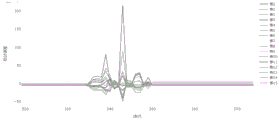
FIG. 1 is a graph of estimation error curves for various sub-tables in an embodiment of the present invention;
fig. 2 is a graph of 30 daily running averages for each sub-table in an embodiment of the present invention.
Detailed Description
In order to make the objects, technical solutions and advantages of the present invention more apparent, the present invention is further described in detail below with reference to examples and accompanying drawings, and the exemplary embodiments and descriptions thereof are only used for explaining the present invention and are not meant to limit the present invention.
Example 1: the sliding window based high-frequency acquisition abnormity resistant electric energy meter accurate positioning method is specifically realized by the following steps.
The method comprises the following steps: and setting the sliding window n and the sliding interval T according to the input parameters. The numerical value of the sliding window n is equal to the total number of all the sub-tables in the calculation range; the sliding interval T is a positive integer between 1 and n, including 1 and n, and is generally 1.
Step two: and synchronously acquiring the electric quantity or current data of all the sub-meters and the general meter according to the number of the preset samples. The number m of the preset sample strips is not less than the total number n of all the branch tables. As a preferred embodiment, the number m of the preset number of sample pieces is not less than 1.5 times the total number of all the partial tables.
It should be noted that the synchronous collection is to collect instantaneous current or electric quantity data of all the electric energy meters at the same time. And the specific expression of the collected sample data is as follows: [ x ] of1j,x2j,x3j,Λxnj,yj](ii) a Wherein x isnjThe current instantaneous value or electric quantity collected by the nth partial table at the j-th collection is represented; y isjRepresenting the current transient or charge collected at the j-th collection of the summary table. In addition, the collected sample data can only select to collect electric quantity, and can also select to only collect instantaneous current, but once the sample data is determined, the sample data is not changed.
Step three: establishing an error calculation model based on an energy conservation principle according to the collected electric quantity data, or establishing an error calculation model based on a current balance principle according to the collected current data, and calculating according to the error calculation model to obtain an error estimation result of the collected sample data;
step four: and after the error calculation model is subjected to iterative updating, recalculating the error estimation result to obtain an estimation error vector consisting of a plurality of error estimation results, and recording the iterative updating times of the error calculation model.
(1) The calculation formula of the error calculation model is as follows:
An*nXn*1=bn*1
An*ncoefficient matrix representing n x n, An*nThe expression of (a) is as follows:
Figure BDA0003162091240000051
bn*1constant matrix representing n x 1, bn*1The expression of (a) is as follows:
Figure BDA0003162091240000052
Xn*1error matrix, X, representing n X1n*1The expression of (a) is as follows:
Figure BDA0003162091240000053
wherein epsilonnkRepresenting the estimation error of the nth division table calculated at the kth time; error estimationThe result of the calculation consists of the estimation errors of all the sub-tables.
(2) The iterative updating process of the error calculation model comprises the following specific steps:
when a group of new sample data is collected, discarding the group of sample data farthest from the current time to obtain the new sample data with equal quantity. And reconstructing the coefficient matrix A and the constant matrix b according to the newly formed sample data, and then finishing the iterative updating of the error calculation model.
For example, the coefficient matrix, the constant matrix, and the error matrix are established by performing the k-th calculation at time t 0. Then, based on the sample data acquired at the time t1, the coefficient matrix a and the constant term b are updated, and the updated coefficient matrix a, the updated constant term b, and the updated error matrix are respectively:
Figure BDA0003162091240000061
step five: judging whether the estimated error vector meets the reliability confirmation requirement or not according to the sliding window n, the sliding interval T and the iteration updating times; if not, continuing to calculate the error estimation result; if yes, calculating a reliability value of the estimation error vector; when the reliability value is smaller than a set threshold value, judging that the error calculation model is in a stable state; otherwise, the dynamic state is set.
The specific process for judging whether the estimated error vector meets the reliability confirmation requirement is as follows: judging whether the number k of times of updating the modulo iteration is greater than a sliding window n and whether the difference between the number of times of iteration and the last estimated error vector judgment is greater than or equal to a sliding interval T; and if the iteration updating times k and the difference between the iteration times meet the requirement, determining that the estimated error vector meets the reliability confirmation requirement.
The calculation process of the credibility value is realized by the following steps.
S1, establishing an estimation error vector according to the error estimation result:
εk=[ε1k2k3k,Λεnk,]
wherein epsilonkRepresents the vector consisting of all the sub-table estimation errors calculated at the k-th time. The updated estimated error vector corresponding to time t1 is: epsilonk+1=[ε1(k+1)2(k+1)3(k+1),Λεn(k+1),]。
S2, establishing an estimation error matrix according to the estimation error vectors obtained by multiple calculations, and updating epsilon once every time the error calculation model is calculated, and newly adding a vector:
Figure BDA0003162091240000062
wherein ε represents the estimation error matrix;
Figure BDA0003162091240000063
representing the transpose of the vector consisting of all the sub-table estimation errors calculated the k-th time.
The updating method of epsilon specifically comprises the following steps:
s201: in the initial case, ε is null;
s202: the model completes the first calculation, then
Figure BDA0003162091240000071
S203: the model completes the second calculation, then
Figure BDA0003162091240000072
S204: the model completes the third calculation, then
Figure BDA0003162091240000073
S205: the model completes the k-th calculation, then
Figure BDA0003162091240000074
S206: and so on to update epsilon.
S3, selecting the latest n elements from the estimation error matrix to establish errorsSet of difference decisions εupdate
Figure BDA0003162091240000075
S4, calculating epsilonupdateThe cumulative sum of the similarity of two adjacent vectors is calculated by the following formula:
dt=||εupdate[t]-εupdate[t+1]||2,t=1,2,3...n-1;
D={d1 d2...dn-1}
wherein epsilonupdate[t]Represents a set of difference decisions epsilonupdateThe t-th element in (1); dtA cumulative sum representing the similarity of two adjacent vectors; d denotes a set consisting of a plurality of accumulated sums.
S5, calculating the variance value of the elements in the set D to obtain a reliability value; when the reliability value is smaller than a set threshold value, judging that the error calculation model is in a stable state, and determining that the calculation result is reliable; otherwise, the calculation result is in a dynamic state and is not credible.
Step six: and acquiring a first error estimation result of the last group of the error calculation model entering the dynamic state and being in a stable state and a second error estimation result of the corresponding error calculation model exiting the dynamic state and initially being in the stable state, calculating abnormal difference values of all the electric energy meters according to the first error estimation result and the second error estimation result, and judging that the corresponding electric energy meters are in an abnormal state when the abnormal difference values are greater than a preset abnormal threshold value.
Example 2: assuming that 16 users exist in a certain area, the error of the electric energy meter 5 is suddenly changed in the 350 th sampling period (corresponding to the 350 th-16 th iterative calculation period), and the error is changed from-5.23% to + 2.40%; the table area general table has no error and no line loss. The estimation error curves for each meter are shown in fig. 1.
From fig. 1, it can be seen that before the 350 th sampling period, i.e. the 334 th iterative computation period, the error curves of the respective meters are very smooth and substantially consistent, but after the 350 th sampling period, i.e. the 334 th iterative computation period, the mean square error of all meters greatly fluctuates, but after the 16 th iterative computation period, the computation results are again stable.
By locally enlarging the 30-time moving average curve, we can clearly find that the error variation of table 5 is correctly judged by the model, as shown in fig. 2. It should be noted that, since fig. 2 is the 30-day moving average of fig. 1, the duration of the dynamic process shown in fig. 2 is superimposed on the duration of fig. 1 by 30 calculation cycles, that is, the end iteration time of the dynamic process of fig. 1 is 350, and the end iteration time of the dynamic process of fig. 2 is 380.
As will be appreciated by one skilled in the art, embodiments of the present application may be provided as a method, system, or computer program product. Accordingly, the present application may take the form of an entirely hardware embodiment, an entirely software embodiment or an embodiment combining software and hardware aspects. Furthermore, the present application may take the form of a computer program product embodied on one or more computer-usable storage media (including, but not limited to, disk storage, CD-ROM, optical storage, and the like) having computer-usable program code embodied therein.
The present application is described with reference to flowchart illustrations and/or block diagrams of methods, apparatus (systems), and computer program products according to embodiments of the application. It will be understood that each flow and/or block of the flow diagrams and/or block diagrams, and combinations of flows and/or blocks in the flow diagrams and/or block diagrams, can be implemented by computer program instructions. These computer program instructions may be provided to a processor of a general purpose computer, special purpose computer, embedded processor, or other programmable data processing apparatus to produce a machine, such that the instructions, which execute via the processor of the computer or other programmable data processing apparatus, create means for implementing the functions specified in the flowchart flow or flows and/or block diagram block or blocks.
These computer program instructions may also be stored in a computer-readable memory that can direct a computer or other programmable data processing apparatus to function in a particular manner, such that the instructions stored in the computer-readable memory produce an article of manufacture including instruction means which implement the function specified in the flowchart flow or flows and/or block diagram block or blocks.
These computer program instructions may also be loaded onto a computer or other programmable data processing apparatus to cause a series of operational steps to be performed on the computer or other programmable apparatus to produce a computer implemented process such that the instructions which execute on the computer or other programmable apparatus provide steps for implementing the functions specified in the flowchart flow or flows and/or block diagram block or blocks.
The above embodiments are provided to further explain the objects, technical solutions and advantages of the present invention in detail, it should be understood that the above embodiments are merely exemplary embodiments of the present invention and are not intended to limit the scope of the present invention, and any modifications, equivalents, improvements and the like made within the spirit and principle of the present invention should be included in the scope of the present invention.
Claims (10)

1.基于滑动窗口的抗高频采集异常电能表精准定位方法,其特征是,包括以下步骤:1. The precise positioning method of the anti-high frequency acquisition abnormal electric energy meter based on the sliding window is characterized in that, comprising the following steps: 根据输入参数对滑动窗口n和滑动间隔T进行设置;Set the sliding window n and sliding interval T according to the input parameters; 根据预设样本条数对所有分表和总表的电量或电流数据进行同步采集;Simultaneously collect the electricity or current data of all sub-meters and total meters according to the preset number of samples; 根据采集的电量数据建立基于能量守恒原理的误差计算模型,或根据采集的电流数据建立基于电流平衡原理的误差计算模型,并根据误差计算模型计算得到采集的样本数据的误差估计结果;Establish an error calculation model based on the energy conservation principle according to the collected electricity data, or establish an error calculation model based on the current balance principle according to the collected current data, and calculate the error estimation result of the collected sample data according to the error calculation model; 对误差计算模型进行迭代更新后重新计算误差估计结果,得到由多个误差估计结果构成的估计误差向量,且记录误差计算模型的迭代更新次数;After the error calculation model is iteratively updated, the error estimation result is recalculated, an estimated error vector composed of multiple error estimation results is obtained, and the iterative update times of the error calculation model are recorded; 根据滑动窗口n、滑动间隔T和迭代更新次数判断估计误差向量是否满足可信度确认要求;若不满足,则继续进行误差估计结果计算;若满足,则计算估计误差向量的可信度值;当可信度值小于设定阈值,则判断误差计算模型处于稳态;反之,则处于动态;According to the sliding window n, the sliding interval T and the number of iterative updates, determine whether the estimated error vector meets the reliability confirmation requirements; if not, continue to calculate the error estimation result; if so, calculate the credibility value of the estimated error vector; When the reliability value is less than the set threshold, the judgment error calculation model is in a steady state; otherwise, it is in a dynamic state; 获取误差计算模型进入动态的最后一组处于稳态的第一误差估计结果以及退出对应动态的最初始处于稳态的第二误差估计结果,并根据第一误差估计结果、第二误差估计结果计算得到所有电能表的异常差值,当异常差值大于预设异常阈值时,则判断相应的电能表处于异常状态。Obtain the last set of first error estimation results in steady state when the error calculation model enters the dynamic state and the second error estimation result in the initial steady state that exits the corresponding dynamic state, and calculate according to the first error estimation result and the second error estimation result The abnormal difference values of all electric energy meters are obtained, and when the abnormal difference value is greater than the preset abnormal threshold value, it is determined that the corresponding electric energy meter is in an abnormal state. 2.根据权利要求1所述的基于滑动窗口的抗高频采集异常电能表精准定位方法,其特征是,所述滑动窗口n和滑动间隔T的设置具体为:2. the anti-high frequency acquisition abnormal electric energy meter precise positioning method based on sliding window according to claim 1, is characterized in that, the setting of described sliding window n and sliding interval T is specially: 滑动窗口n的数值等于计算范围内所有分表的总数;The value of the sliding window n is equal to the total number of all sub-tables within the calculation range; 滑动间隔T为1-n之间的正整数,包含1和n。The sliding interval T is a positive integer between 1 and n, including 1 and n. 3.根据权利要求1所述的基于滑动窗口的抗高频采集异常电能表精准定位方法,其特征是,所述预设样本条数的数值m不小于所有分表的总数。3 . The method for accurately locating an electric energy meter against abnormal high-frequency acquisition based on a sliding window according to claim 1 , wherein the numerical value m of the preset number of samples is not less than the total number of all sub-meters. 4 . 4.根据权利要求3所述的基于滑动窗口的抗高频采集异常电能表精准定位方法,其特征是,所述预设样本条数的数值m不小于所有分表的总数的1.5倍。4 . The method for accurate positioning of an electric energy meter against abnormal high-frequency acquisition based on a sliding window according to claim 3 , wherein the value m of the preset number of samples is not less than 1.5 times the total number of all sub-meters. 5 . 5.根据权利要求1所述的基于滑动窗口的抗高频采集异常电能表精准定位方法,其特征是,所述样本数据的同步采集过程具体为:在同一时刻采集所有电能表的瞬时电流或电量数据。5. The accurate positioning method for anti-high-frequency acquisition abnormal electric energy meters based on a sliding window according to claim 1, wherein the synchronous acquisition process of the sample data is specifically: collecting the instantaneous currents of all electric energy meters at the same time or power data. 6.根据权利要求1所述的基于滑动窗口的抗高频采集异常电能表精准定位方法,其特征是,所述样本数据具体为:6. the accurate positioning method of the anti-high frequency acquisition abnormal electric energy meter based on the sliding window according to claim 1, is characterized in that, described sample data is specifically: [x1j,x2j,x3j,Λ xnj,yj][x 1j ,x 2j ,x 3j ,Λ x nj ,y j ] 其中,xnj表示第n只分表在第j次采集时所采集的电流瞬时值或电量;yj表示总表在第j次采集时所采集的电流瞬时值或电量。Among them, x nj represents the current instantaneous value or power collected by the nth sub-meter during the jth collection; yj represents the current instantaneous value or power collected by the total meter during the jth collection. 7.根据权利要求1所述的基于滑动窗口的抗高频采集异常电能表精准定位方法,其特征是,所述误差计算模型的计算公式为:7. the accurate positioning method of the anti-high frequency acquisition abnormal electric energy meter based on sliding window according to claim 1, is characterized in that, the calculation formula of described error calculation model is: An*nXn*1=bn*1 A n*n X n*1 =b n*1 An*n表示n*n的系数矩阵,An*n的表达式如下:A n*n represents the coefficient matrix of n*n, and the expression of A n*n is as follows:
Figure FDA0003162091230000021
bn*1表示n*1的常数矩阵,bn*1的表达式如下:b n*1 represents a constant matrix of n*1, and the expression of b n*1 is as follows:
Figure FDA0003162091230000022
Xn*1表示n*1的误差矩阵,Xn*1的表达式如下:X n*1 represents the error matrix of n*1, and the expression of X n*1 is as follows:
Figure FDA0003162091230000023
其中,εnk表示第n只分表在第k次计算所得的估计误差;误差估计结果由所有分表的估计误差组成。Among them, ε nk represents the estimated error of the nth sub-table calculated in the k-th time; the error estimation result is composed of the estimated errors of all sub-tables.
8.根据权利要求1所述的基于滑动窗口的抗高频采集异常电能表精准定位方法,其特征是,所述误差计算模型的迭代更新具体过程为:8. The precise positioning method of an anti-high frequency acquisition abnormal electric energy meter based on a sliding window according to claim 1, wherein the iterative update specific process of the error calculation model is: 每采集一组新的样本数据时,则丢弃距离当前时间最远的一组样本数据,得到等数量的新组成的样本数据;Each time a new set of sample data is collected, the set of sample data farthest from the current time is discarded, and an equal number of newly composed sample data are obtained; 根据新组成的样本数据重新构建系数矩阵A和常数矩阵b后完成误差计算模型的迭代更新。The iterative update of the error calculation model is completed after rebuilding the coefficient matrix A and the constant matrix b according to the newly composed sample data. 9.根据权利要求1所述的基于滑动窗口的抗高频采集异常电能表精准定位方法,其特征是,判断估计误差向量是否满足可信度确认要求的具体过程为:9. The accurate positioning method of an anti-high-frequency acquisition abnormal electric energy meter based on a sliding window according to claim 1, is characterized in that, the concrete process of judging whether the estimated error vector satisfies the reliability confirmation requirement is: 判断模迭代更新次数k是否大于滑动窗口n、且距离上次进行估计误差向量判断的迭代次数之差是否大于或等于滑动间隔T;Determine whether the modulo iteration update times k is greater than the sliding window n, and whether the difference between the iteration times from the last estimation error vector judgment is greater than or equal to the sliding interval T; 若迭代更新次数k、迭代次数之差是否均满足要求,则确定估计误差向量满足可信度确认要求。If the number of iterations k and the difference between the number of iterations meet the requirements, it is determined that the estimated error vector meets the reliability confirmation requirements. 10.根据权利要求1-9任意一项所述的基于滑动窗口的抗高频采集异常电能表精准定位方法,其特征是,所述可信度值的计算过程具体为:10. The precise positioning method for an anti-high-frequency acquisition abnormal electric energy meter based on a sliding window according to any one of claims 1-9, wherein the calculation process of the reliability value is specifically: 根据误差估计结果建立估计误差向量:Create an estimated error vector based on the error estimation result: εk=[ε1k2k3k,Λεnk,]ε k =[ε 1k2k3k ,Λε nk ,] 其中,εk表示第k次计算所有分表估计误差组成的向量;Among them, ε k represents the vector composed of the estimation errors of all sub-tables in the k-th calculation; 根据多次计算得到的估计误差向量建立估计误差矩阵,且误差计算模型每计算一次,则对ε进行一次更新,新增加一个向量:The estimated error matrix is established according to the estimated error vector obtained by multiple calculations, and each time the error calculation model is calculated, ε is updated once, and a new vector is added:
Figure FDA0003162091230000031
其中,ε表示估计误差矩阵;
Figure FDA0003162091230000032
表示第k次计算所有分表估计误差组成的向量的转置;
Among them, ε represents the estimated error matrix;
Figure FDA0003162091230000032
Represents the transpose of the vector composed of the estimated errors of all sub-tables calculated for the kth time;
从估计误差矩阵中选取最新的n个元素建立误差判断集合εupdateSelect the latest n elements from the estimated error matrix to establish the error judgment set ε update :
Figure FDA0003162091230000033
计算εupdate中相邻两个向量的相似性的累加和,计算公式为:Calculate the cumulative sum of the similarity of two adjacent vectors in ε update , the calculation formula is: dt=||εupdate[t]-εupdate[t+1]||2,t=1,2,3...n-1;d t =||ε update [t]-ε update [t+1]|| 2 ,t=1,2,3...n-1; D={d1 d2...dn-1}D={d 1 d 2 ...d n-1 } 其中,εupdate[t]表示差判断集合εupdate中的第t个元素;dt表示相邻两个向量的相似性的累加和;D表示由多个累加和组成的集合;Among them, ε update [t] represents the t-th element in the difference judgment set ε update ; d t represents the cumulative sum of the similarity of two adjacent vectors; D represents the set composed of multiple cumulative sums; 计算集合D内元素的方差值得到可信度值;当可信度值小于设定阈值,则判断误差计算模型处于稳态,计算结果可信;反之,则处于动态,计算结果不可信。Calculate the variance value of the elements in the set D to obtain the credibility value; when the credibility value is less than the set threshold, it is judged that the error calculation model is in a steady state, and the calculation result is credible; otherwise, it is in a dynamic state and the calculation result is not credible.
CN202110793920.3A 2021-07-14 2021-07-14 Accurate positioning method of electric energy meter with high frequency collection abnormality based on sliding window Active CN113484818B (en)

Priority Applications (1)

Application Number Priority Date Filing Date Title
CN202110793920.3A CN113484818B (en) 2021-07-14 2021-07-14 Accurate positioning method of electric energy meter with high frequency collection abnormality based on sliding window

Applications Claiming Priority (1)

Application Number Priority Date Filing Date Title
CN202110793920.3A CN113484818B (en) 2021-07-14 2021-07-14 Accurate positioning method of electric energy meter with high frequency collection abnormality based on sliding window

Publications (2)

Publication Number Publication Date
CN113484818A true CN113484818A (en) 2021-10-08
CN113484818B CN113484818B (en) 2024-02-27

Family

ID=77938510

Family Applications (1)

Application Number Title Priority Date Filing Date
CN202110793920.3A Active CN113484818B (en) 2021-07-14 2021-07-14 Accurate positioning method of electric energy meter with high frequency collection abnormality based on sliding window

Country Status (1)

Country Link
CN (1) CN113484818B (en)

Cited By (2)

* Cited by examiner, † Cited by third party
Publication number Priority date Publication date Assignee Title
CN114062812A (en) * 2021-11-15 2022-02-18 国网四川省电力公司营销服务中心 Fault diagnosis method and system for metering cabinet
CN118914960A (en) * 2024-08-21 2024-11-08 无锡市恒通电器有限公司 Electric energy meter abnormality detection method based on sliding window model

Citations (8)

* Cited by examiner, † Cited by third party
Publication number Priority date Publication date Assignee Title
CN107621621A (en) * 2017-09-05 2018-01-23 天津市电力科技发展有限公司 A kind of intelligent electric energy meter is in Line synthesis error calibration method
CN107703475A (en) * 2017-09-05 2018-02-16 天津市电力科技发展有限公司 Check method during a kind of on-line operation intelligent electric energy meter
US20190137592A1 (en) * 2016-04-20 2019-05-09 HYDRO-QUéBEC Online calibration of meters and detection of electrical non-compliances
CN110471024A (en) * 2019-08-08 2019-11-19 天津大学 A kind of online remote checking method of intelligent electric meter based on metric data analysis
CN110658487A (en) * 2019-10-18 2020-01-07 国网福建省电力有限公司 A meter box and system that can realize online estimation of smart meter errors
CN111398885A (en) * 2020-03-27 2020-07-10 天津大学 Intelligent electric meter operation error monitoring method combining line loss analysis
CN111948596A (en) * 2020-08-24 2020-11-17 国网四川省电力公司电力科学研究院 On-line detection method and system of electric energy meter error based on multi-time scale
CN112180316A (en) * 2020-09-27 2021-01-05 青岛鼎信通讯股份有限公司 Electric energy meter metering error analysis method based on adaptive shrinkage ridge regression

Patent Citations (8)

* Cited by examiner, † Cited by third party
Publication number Priority date Publication date Assignee Title
US20190137592A1 (en) * 2016-04-20 2019-05-09 HYDRO-QUéBEC Online calibration of meters and detection of electrical non-compliances
CN107621621A (en) * 2017-09-05 2018-01-23 天津市电力科技发展有限公司 A kind of intelligent electric energy meter is in Line synthesis error calibration method
CN107703475A (en) * 2017-09-05 2018-02-16 天津市电力科技发展有限公司 Check method during a kind of on-line operation intelligent electric energy meter
CN110471024A (en) * 2019-08-08 2019-11-19 天津大学 A kind of online remote checking method of intelligent electric meter based on metric data analysis
CN110658487A (en) * 2019-10-18 2020-01-07 国网福建省电力有限公司 A meter box and system that can realize online estimation of smart meter errors
CN111398885A (en) * 2020-03-27 2020-07-10 天津大学 Intelligent electric meter operation error monitoring method combining line loss analysis
CN111948596A (en) * 2020-08-24 2020-11-17 国网四川省电力公司电力科学研究院 On-line detection method and system of electric energy meter error based on multi-time scale
CN112180316A (en) * 2020-09-27 2021-01-05 青岛鼎信通讯股份有限公司 Electric energy meter metering error analysis method based on adaptive shrinkage ridge regression

Non-Patent Citations (2)

* Cited by examiner, † Cited by third party
Title
DAVIS MONTENEGRO等: ""An iterative method for detecting and localizing islands within sparse matrixes using DSSim-RT"", 《IEEE TRANSACTIONS ON INDUSTRY APPLICATIONS》, vol. 54, no. 1, pages 675 *
王晨丞;张君胜;蒲丽娟;何培东;杜斌;赵智辉;: "电能表运行误差与状态评价模型研究", 电力大数据, no. 04, pages 84 - 90 *

Cited By (3)

* Cited by examiner, † Cited by third party
Publication number Priority date Publication date Assignee Title
CN114062812A (en) * 2021-11-15 2022-02-18 国网四川省电力公司营销服务中心 Fault diagnosis method and system for metering cabinet
CN114062812B (en) * 2021-11-15 2024-05-07 国网四川省电力公司营销服务中心 A method and system for diagnosing faults in a metering cabinet
CN118914960A (en) * 2024-08-21 2024-11-08 无锡市恒通电器有限公司 Electric energy meter abnormality detection method based on sliding window model

Also Published As

Publication number Publication date
CN113484818B (en) 2024-02-27

Similar Documents

Publication Publication Date Title
CN112035784B (en) A method and system for determining the loss of low-voltage area based on power consumption collection data
CN106505557B (en) A telemetry error identification method and device
Ruhe et al. Algorithms for separable nonlinear least squares problems
CN112379177A (en) Method and system for determining low-voltage line loss and electric energy meter operation error of transformer area
JP6388563B2 (en) Storage battery parameter estimation device and storage battery parameter estimation method
Zhao A new state estimation model of utilizing PMU measurements
CN113484818A (en) Sliding window based high-frequency acquisition abnormity resistant electric energy meter accurate positioning method
CN109858158A (en) A kind of method for parameter configuration and system of computational fluid dynamics simulation
Broersen et al. Automatic identification of time-series models from long autoregressive models
CN113484819A (en) High-frequency current sampling-based method for diagnosing metering fault of electric energy meter in limited range
CN110717244B (en) Data trust analysis computer simulation method based on average deviation algorithm
Kong et al. Classical multidimensional scaling: A subspace perspective, over-denoising, and outlier detection
CN109270455B (en) Condition monitoring method of induction motor based on weakly sensitive ensemble Kalman filter
CN106153046B (en) Gyro random noise AR modeling method based on self-adaptive Kalman filtering
CN109145258B (en) Confidence Interval Estimation Method for Weibull Distribution Parameters Based on Nonlinear Fitting
CN111124489A (en) An Estimation Method of Software Function Points Based on BP Neural Network
CN110518627A (en) Meter and the probabilistic power system steady state voltage stability probability evaluation method of failure of wind-powered electricity generation
CN107276093B (en) Power system probability load flow calculation method based on scene reduction
SIRAYA Certification of algorithms for constructing calibration curves of measuring instruments
CN109447512A (en) Bulk power grid reliability estimation method based on uniform design
CN116298670B (en) Intelligent fault positioning method and system suitable for multi-branch distribution line
CN109327026B (en) An Interval State Estimation Method for Low-Voltage Distribution Networks
CN111340647A (en) A method and system for data adjustment of distribution network
CN112967154B (en) A method and device for evaluating Well-being of power system
Broersen Modified Durbin method for accurate estimation of moving-average models

Legal Events

Date Code Title Description
PB01 Publication
PB01 Publication
SE01 Entry into force of request for substantive examination
GR01 Patent grant
GR01 Patent grant