CN113430559B - Application of a copper-based catalyst in electrocatalytic hydrogenation - Google Patents
Application of a copper-based catalyst in electrocatalytic hydrogenation Download PDFInfo
- Publication number
- CN113430559B CN113430559B CN202110662679.0A CN202110662679A CN113430559B CN 113430559 B CN113430559 B CN 113430559B CN 202110662679 A CN202110662679 A CN 202110662679A CN 113430559 B CN113430559 B CN 113430559B
- Authority
- CN
- China
- Prior art keywords
- copper
- based catalyst
- electrocatalytic hydrogenation
- hydrogenation
- electrocatalytic
- Prior art date
- Legal status (The legal status is an assumption and is not a legal conclusion. Google has not performed a legal analysis and makes no representation as to the accuracy of the status listed.)
- Expired - Fee Related
Links
Images




Classifications
-
- C—CHEMISTRY; METALLURGY
- C25—ELECTROLYTIC OR ELECTROPHORETIC PROCESSES; APPARATUS THEREFOR
- C25B—ELECTROLYTIC OR ELECTROPHORETIC PROCESSES FOR THE PRODUCTION OF COMPOUNDS OR NON-METALS; APPARATUS THEREFOR
- C25B11/00—Electrodes; Manufacture thereof not otherwise provided for
- C25B11/04—Electrodes; Manufacture thereof not otherwise provided for characterised by the material
- C25B11/051—Electrodes formed of electrocatalysts on a substrate or carrier
- C25B11/055—Electrodes formed of electrocatalysts on a substrate or carrier characterised by the substrate or carrier material
- C25B11/057—Electrodes formed of electrocatalysts on a substrate or carrier characterised by the substrate or carrier material consisting of a single element or compound
-
- C—CHEMISTRY; METALLURGY
- C25—ELECTROLYTIC OR ELECTROPHORETIC PROCESSES; APPARATUS THEREFOR
- C25B—ELECTROLYTIC OR ELECTROPHORETIC PROCESSES FOR THE PRODUCTION OF COMPOUNDS OR NON-METALS; APPARATUS THEREFOR
- C25B3/00—Electrolytic production of organic compounds
- C25B3/01—Products
- C25B3/05—Heterocyclic compounds
-
- Y—GENERAL TAGGING OF NEW TECHNOLOGICAL DEVELOPMENTS; GENERAL TAGGING OF CROSS-SECTIONAL TECHNOLOGIES SPANNING OVER SEVERAL SECTIONS OF THE IPC; TECHNICAL SUBJECTS COVERED BY FORMER USPC CROSS-REFERENCE ART COLLECTIONS [XRACs] AND DIGESTS
- Y02—TECHNOLOGIES OR APPLICATIONS FOR MITIGATION OR ADAPTATION AGAINST CLIMATE CHANGE
- Y02P—CLIMATE CHANGE MITIGATION TECHNOLOGIES IN THE PRODUCTION OR PROCESSING OF GOODS
- Y02P20/00—Technologies relating to chemical industry
- Y02P20/50—Improvements relating to the production of bulk chemicals
- Y02P20/584—Recycling of catalysts
Landscapes
- Chemical & Material Sciences (AREA)
- Organic Chemistry (AREA)
- Engineering & Computer Science (AREA)
- Chemical Kinetics & Catalysis (AREA)
- Electrochemistry (AREA)
- Materials Engineering (AREA)
- Metallurgy (AREA)
- Catalysts (AREA)
Abstract
The invention discloses an application of a copper-based catalyst in electrocatalytic hydrogenation. In the application of electrocatalytic hydrogenation, substances to be hydrogenated comprise furan derivatives containing aldehyde groups; the catalyst in the electrocatalytic hydrogenation is prepared by the following method: the electrode loaded with the CuO nanowire is subjected to electrochemical reduction to prepare the copper-based catalyst, and the electrode loaded with the CuO nanowire is immersed in the aqueous solution of neutral electrolyte. In the electrocatalytic hydrogenation process, the catalyst is low in cost and has good Faraday efficiency.
Description
Technical Field
The invention relates to an application of a copper-based catalyst in electrocatalytic hydrogenation.
Background
Hydrogenation of biomass is generally carried out industrially by a thermal catalytic conversion process, a catalytic transfer hydrogenation process or an electrocatalytic hydrogenation process. The thermocatalytic conversion method takes hydrogen as a hydrogen source, needs high-temperature atmosphere and is dangerous to react; in addition, the process of hydrogen cracking to provide active hydrogen requires a large amount of energy, and the overall reaction energy efficiency is low. The catalytic transfer hydrogenation method usually involves a high-price hydrogenation reagent (such as methanol), and the introduction of the hydrogenation reagent brings about a byproduct which is complex in process and low in economic benefit when the product is purified. The electrocatalytic hydrogenation method has the characteristics of environmental protection, has attracted extensive attention in recent years, avoids the use of high-pressure hydrogen and expensive hydrogenation reagents, and has the advantages of mild reaction conditions, easy control of reaction degree and the like.
However, the popularization of the electrocatalytic hydrogenation method still depends on good catalysts, for example, although abundant furan derivatives (furfural and 5-hydroxymethylfurfural, HMF) can be upgraded by the electrocatalytic hydrogenation method to obtain valuable chemicals, thereby effectively reducing the dependence on fossil fuels; however, in the practical application of the catalyst, the cost of the catalyst is high (such as noble metal, molybdenum sulfide, etc.), so that the catalyst cannot be really applied to industrial production.
Therefore, there is a need for a low cost catalyst that can be used in electrocatalytic hydrogenation reactions.
Disclosure of Invention
The invention aims to overcome the defect of high catalyst cost in the existing electrocatalytic hydrogenation process and provides an application of a copper-based catalyst in electrocatalytic hydrogenation. When the copper-based catalyst is used in an electrocatalytic hydrogenation process, the copper-based catalyst is low in cost and has good Faraday efficiency.
The invention solves the technical problems by the following scheme:
the application of a copper-based catalyst in electrocatalytic hydrogenation, wherein substances to be hydrogenated in the electrocatalytic hydrogenation comprise furan derivatives containing aldehyde groups; the catalyst in the electrocatalytic hydrogenation is prepared by the following method:
preparing a copper-based catalyst by electrochemically reducing an electrode loaded with CuO nanowires, wherein the electrode loaded with the CuO nanowires is immersed in an aqueous solution of a neutral electrolyte; the aqueous solution comprises a neutral electrolyte and water.
In the present invention, preferably, the aqueous solution contains a furan derivative containing an aldehyde group, a neutral electrolyte and water; more preferably, the aqueous solution consists only of the furan derivative having an aldehyde group, a neutral electrolyte and water.
Wherein, preferably, the furan derivative containing aldehyde groups comprises furfural and/or 5-hydroxymethyl furfural.
Wherein, in the aqueous solution, the concentration of the furan derivative containing aldehyde groups can be 0.05-0.1 mol/L.
In the present invention, preferably, the substance to be hydrogenated in the electrocatalytic hydrogenation comprises a furan derivative containing an aldehyde group, and the furan derivative containing an aldehyde group comprises furfural or 5-hydroxymethylfurfural.
In the present invention, the conditions for the electrocatalytic hydrogenation may be conventional in the art. The voltage of the electrocatalytic hydrogenation can be-0.35V to-0.55V, preferably-0.35V to-0.5V, such as-0.4V or-0.45V. The time of the electrocatalytic hydrogenation can be 1 to 5 hours, preferably 2 or 3 hours. More preferably, the electrocatalytic hydrogenation is carried out at-0.45V for 2 hours. The temperature of the electrocatalytic hydrogenation can be room temperature, for example, 20-25 ℃.
In the present invention, the neutral electrolyte may be conventional in the art, for example, one or more of sodium sulfate, potassium sulfate, sodium chloride, and potassium chloride. The concentration of the aqueous solution of the neutral electrolyte can be 0.5-1 mol/L.
In the present invention, in the electrochemical reduction system, the anolyte may be a solution of the above neutral electrolyte, which is conventional in the art.
In the present invention, preferably, in the system of electrochemical reduction, the aqueous solution is a catholyte.
In the present invention, the electrochemical reduction is generally: taking the electrode loaded with the CuO nanowire as a working electrode, and carrying out electrochemical reduction to obtain the CuO nanowire-based electrochemical reduction material; preferably, the following steps are carried out: and taking the electrode loaded with the CuO nano-wires as a working electrode, and carrying out electrochemical reduction by using a reference electrode and a counter electrode. The reference electrode may be an Ag/AgCl reference electrode. The counter electrode may be a platinum electrode.
Wherein the electrochemical reduction can be carried out in an electrolytic cell conventional in the art, such as an H-type three-electrode system electrolytic cell.
In the present invention, the conditions for the electrochemical reduction may be conventional in the art. The voltage of the electrochemical reduction can be-0.5 to-0.3V, such as-0.4V or-0.45V. The time of the electrochemical reduction may be 5 to 20 minutes, for example 10 minutes. Preferably, the electrochemical reduction is carried out for 5 to 20 minutes under a voltage of-0.5 to-0.3V, and more preferably for 10 minutes under a voltage of-0.4V or-0.45V.
In the present invention, the "electrode loaded with CuO nanowires" means that CuO nanowires are loaded on a carrier or CuO nanowires are adhered to a conductor to constitute an electrode.
Among them, the "electrode loaded with CuO nanowires" is preferably CuO nanowires loaded on copper foam. When the foamy copper is used as a carrier, the copper-based catalyst does not need to be adhered to an electrode plate, the operation is simple, and the catalyst does not have the risk of falling.
The CuO nanowires supported on copper foam can be prepared according to methods conventional in the art, for example, by the following steps: cu (OH) loaded on foam copper 2 And calcining the nanowire to obtain the nano-wire.
The Cu (OH) supported on the foam copper 2 Nanowires can be prepared by means conventional in the art, for example: and (3) taking the foamy copper as an anode, and electrolyzing in an alkali solution to obtain the copper-based anode material.
The copper foam can be commercially available in the field, and preferably, the technical parameters of the copper foam are as follows: PPi (number of holes per inch of length) is 5-130, and the void ratio is more than 95%; more preferably, the copper foam has a thickness of 1 to 3mm, such as available from Taylon scientific Co.
Preferably, the copper foam is pre-treated prior to use.
The pretreatment step and conditions can be conventional in the art, for example, the copper foam is sequentially subjected to ultrasonic treatment in 1 to 3mol/L hydrochloric acid, acetone and water, and then washed with water, wherein the ultrasonic treatment time is preferably 10 to 15 minutes; for example, the copper foam is sequentially subjected to ultrasonic treatment in 3mol/L hydrochloric acid, acetone and water for 10 minutes, and then washed with water. The water may be deionized water.
The dimensions of the copper foam can be tailored to the needs of the experiment, for example 1cm by 2 cm.
The alkaline solution may be conventional in the art, such as an aqueous sodium hydroxide solution or an aqueous potassium hydroxide solution. The concentration of the alkali solution can be 2-5 mol/L, preferably 3mol/L or 4 mol/L. The steps and conditions of the electrochemical etching can be conventional in the field, and the current density of the electrochemical etching is preferably 10-20 mA/cm 2 . The time of the electrochemical etching is preferably 5 to 10 minutes. More preferably, the conditions of the electrochemical etching are as follows: at 20mA/cm 2 For 10 minutes at a current density of (3).
The steps and conditions of the calcination may be conventional in the art. The temperature of the calcination is generally 180 to 400 ℃, preferably 250 to 350 ℃, for example 300 ℃. The calcination time is generally 1 to 4 hours, preferably 1.5 to 3 hours, for example 2 hours. Preferably, the temperature rise rate is 1-5 ℃/min, such as 3 ℃/min, during the calcination process. The calcination may be carried out in a muffle furnace. The Cu (OH) supported on the foam copper 2 The nanowires may be placed in a ceramic ark.
In a preferred embodiment of the present invention, the morphology of the copper-based catalyst is a nanowire. The width of the nanowire is preferably 120-150 nm.
Wherein, preferably, the surface component of the copper-based catalyst is Cu/Cu 2 O。
On the basis of the common knowledge in the field, the above preferred conditions can be combined randomly to obtain the preferred embodiments of the invention.
The reagents and starting materials used in the present invention are commercially available.
The positive progress effects of the invention are as follows:
(1) the copper-based catalyst has low cost in electrocatalytic hydrogenation reaction and has good Faraday efficiency.
(2) In the preferred embodiment of the present application, the copper-based catalyst of the present application has a higher current density in the electrocatalytic hydrogenation reaction, which can weaken the competitive reaction advantage of hydrogen evolution.
(3) In a preferred embodiment of the application, the copper-based catalyst can be circulated for 5 times in an electrocatalytic hydrogenation reaction for about 10 hours, and still can keep higher Faraday efficiency and high stability.
(4) In the preferred embodiment of the present application, the copper-based catalyst uses copper foam as a carrier, and can be directly used as a working electrode without being bonded with an electrode plate.
Drawings
FIG. 1 is a Scanning Electron Microscope (SEM) image at 10 μm of the copper-based catalyst of example 1.
FIG. 2 is a Transmission Electron Microscope (TEM) image at 5 nm of the copper-based catalyst of example 1.
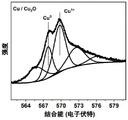
FIG. 3 is an X-ray photoelectron spectroscopy (XPS) chart of the copper-based catalyst of example 1.
FIG. 4 is a graph of in situ Raman spectroscopy (Raman) during activation of the copper-based catalyst of example 1.
Fig. 5 is an X-ray absorption near edge structure (XANES) diagram of L absorption edges of CuO nanowires, Cu, and Cu of the copper-based catalyst of example 1.
FIG. 6 is a plot of the Linear Sweep Voltammetry (LSV) of the copper-based catalyst of example 1 in an electrochemical hydrogen evolution reaction.
Figure 7 is a graph of the faradaic efficiency of electrocatalyst hydrogenation at different potentials for the copper-based catalyst of example 1.
FIG. 8 is a graph of the faradaic efficiency of electrocatalytic hydrogenation of the copper-based catalysts of examples 1, 2, and 3 at-0.45V.
Fig. 9 is a stability test chart of the copper-based catalyst of example 1.
Detailed Description
The invention is further illustrated by the following examples, which are not intended to limit the scope of the invention. The experimental methods without specifying specific conditions in the following examples were selected according to the conventional methods and conditions, or according to the commercial instructions.
EXAMPLE 1 preparation of copper-based catalyst
(1) A1 cm X2 cm foam copper sheet was pretreated: sequentially carrying out ultrasonic treatment on the foamy copper in 3mol/L hydrochloric acid, acetone and deionized water for 10 minutes respectively, and then cleaning with the deionized water;
(2) respectively taking the pretreated foamy copper as a cathode and an anode to carry out electrochemical etching in 3mol/L sodium hydroxide solution at a current density of 20mA/cm 2 Current etching for 10 minutes under the condition of (1) to obtain Cu (OH) loaded on the foam copper 2 A nanowire.
(3) The step (2) of Cu (OH) 2 And placing the nanowires in a ark, calcining in a muffle furnace, heating to 300 ℃ at a speed of 1 ℃/min, and preserving heat for 2 hours to obtain the CuO nanowires loaded on the foamy copper.
(4) In an H-type three-electrode system electrolytic cell, the CuO nanowire loaded on the foamy copper and prepared in the step (3) is directly used as a working electrode, Ag/AgCl is used as a reference electrode, a platinum electrode is used as a counter electrode, and 0.5 mol/L of Na is used 2 SO 4 The solution is used as an anode chamber electrolyte and contains 0.05 mol/L of 5-hydroxymethylfurfural and 0.5 mol/L of Na 2 SO 4 The solution is used as electrolyte of a cathode chamber, and the chambers are separated by a DuPont 117 cation exchange membrane; electrochemical reduction is carried out for 10 minutes under the voltage of-0.4V to obtain the copper-based catalyst.
EXAMPLE 2 preparation of copper-based catalyst
(1) A1 cm × 2cm piece of foam copper was pretreated: sequentially carrying out ultrasonic treatment on the foamy copper in 3mol/L hydrochloric acid, acetone and deionized water for 10 minutes respectively, and then cleaning with the deionized water;
(2) taking the pretreated foamy copper as a cathode and an anode respectively to carry out electrochemical etching in 2 mol/L sodium hydroxide solution with the current density of 20mA/cm 2 Current etching for 10 minutes under the condition of (1) to obtain Cu (OH) loaded on the foam copper 2 A nanowire.
(3) The step (2) of Cu (OH) 2 The nanowires were placed in a ark and calcined in a muffle furnace at 3 ℃/mAnd in heating to 250 ℃, and preserving the heat for 3 hours to obtain the CuO nanowire loaded on the foam copper.
(4) In an H-type three-electrode system electrolytic cell, the CuO nanowire loaded on the foamy copper prepared in the step (3) is directly used as a working electrode, Ag/AgCl is used as a reference electrode, a platinum net is used as a counter electrode, and 0.5 mol/L of Na is used 2 SO 4 The solution is used as an anode chamber electrolyte and contains 0.1mol/L of 5-hydroxymethylfurfural and 0.5 mol/L of Na 2 SO 4 The solution is used as electrolyte of a cathode chamber, and the chambers are separated by a DuPont 117 cation exchange membrane; electrochemically reducing for 10 minutes under-0.45V voltage to obtain the copper-based catalyst.
EXAMPLE 3 preparation of copper-based catalyst
(1) A1 cm X2 cm foam copper sheet was pretreated: sequentially carrying out ultrasonic treatment on the foamy copper in 3mol/L hydrochloric acid, acetone and deionized water for 10 minutes respectively, and then cleaning with the deionized water;
(2) taking the pretreated foamy copper as a cathode and an anode respectively to carry out electrochemical etching in a sodium hydroxide solution of 4 mol/L with the current density of 10mA/cm 2 Current etching for 5 minutes under the condition of (1) to obtain Cu (OH) loaded on the foam copper 2 A nanowire.
(3) The step (2) of Cu (OH) 2 And placing the nanowires in a ark, calcining in a muffle furnace, heating to 350 ℃ at a speed of 5 ℃/min, and preserving heat for 1.5 hours to obtain the CuO nanowires loaded on the copper foam.
(4) In an H-type three-electrode system electrolytic cell, the CuO nanowire loaded on the foamy copper prepared in the step (3) is directly used as a working electrode, Ag/AgCl is used as a reference electrode, a platinum net is used as a counter electrode, and 0.5 mol/L of Na is used 2 SO 4 The solution is used as an electrolyte of an anode chamber and contains 0.08mol/L of 5-hydroxymethylfurfural and 0.5 mol/L of Na 2 SO 4 The solution is used as electrolyte of a cathode chamber, and the chambers are separated by a DuPont 117 cation exchange membrane; electrochemically reducing for 10 minutes under-0.45V voltage to obtain the copper-based catalyst.
EXAMPLE 4 preparation of copper-based catalyst
(1) A1 cm × 2cm piece of foam copper was pretreated: sequentially carrying out ultrasonic treatment on the foamy copper in 3mol/L hydrochloric acid, acetone and deionized water for 10 minutes respectively, and then cleaning with the deionized water;
(2) taking the pretreated foamy copper as a cathode and an anode respectively to carry out electrochemical etching in 3mol/L sodium hydroxide solution with the current density of 20mA/cm 2 Current etching for 10 minutes under the condition of (1) to obtain Cu (OH) loaded on the foam copper 2 A nanowire.
(3) The step (2) of Cu (OH) 2 And placing the nanowires in a ark, calcining in a muffle furnace, heating to 300 ℃ at a speed of 1 ℃/min, and preserving heat for 2 hours to obtain the CuO nanowires loaded on the foamy copper.
(4) In an H-type three-electrode system electrolytic cell, the CuO nanowire loaded on the foamy copper prepared in the step (3) is directly used as a working electrode, Ag/AgCl is used as a reference electrode, a platinum net is used as a counter electrode, and 0.5 mol/L of Na is used 2 SO 4 The solution is used as an anode chamber electrolyte and 0.5 mol/L of Na 2 SO 4 The solution is used as electrolyte of a cathode chamber, and the chambers are separated by a DuPont 117 cation exchange membrane; electrochemical reduction is carried out for 10 minutes under the voltage of-0.4V to obtain the copper-based catalyst.
EXAMPLE 5 electrocatalytic hydrogenation at different potentials
Stability test of reaction for preparing 2, 5-furandimethanol by electrochemical hydrogenation of 5-hydroxymethylfurfural using the copper-based catalyst prepared in example 1:
the test was performed using a Chenghua 760 electrochemical workstation under a standard three-electrode system. The reaction was carried out using an H-cell with the copper-based catalyst prepared in example 1 as the working electrode, Ag/AgCl as the reference electrode and a platinum mesh as the counter electrode, the cells being separated from one another by a DuPont 117 cation exchange membrane. Electrolyte in an anode chamber is 0.5 mol/L sodium sulfate solution, electrolyte in a cathode chamber is 0.5 mol/L sodium sulfate and 0.05 mol/L5-hydroxymethylfurfural solution.
The reaction is carried out under the conditions of-0.35V, -0.4V, -0.45V, -0.5V and-0.55V respectively, and after 2 hours of electrocatalytic hydrogenation, the Faraday efficiency is shown in figure 7. As is clear from FIG. 7, the Faraday efficiency was the most excellent at-0.45V, and reached 96.6%.
EXAMPLE 6 electrocatalytic hydrogenation of copper-based catalysts in various examples
The copper-based catalysts prepared in the examples 2 and 3 are respectively used for carrying out electrochemical hydrogenation on 5-hydroxymethylfurfural to prepare 2, 5-furandimethanol:
the conditions for electrocatalytic hydrogenation differed from example 5 in that: electrocatalytic hydrogenation was carried out for 2 hours only at-0.45V, other conditions were kept consistent with example 5.
The faradic efficiencies of 2, 5-furandimethanol corresponding to the copper-based catalysts of example 2 and example 3 are 91% and 93%, respectively, as shown in figure 8.
Example 7 electrocatalytic hydrogenation reaction
The copper-based catalyst prepared in the example 2 is used for carrying out electrocatalytic hydrogenation for 3 hours under the voltage of-0.4V, the electrochemical hydrogenation of 5-hydroxymethylfurfural is carried out to prepare 2, 5-furandimethanol, and the conditions of other electrocatalytic hydrogenation reactions are kept consistent with those in the example 5.
The faradic efficiency of the obtained 2, 5-furandimethanol was 85.7%, and the conversion of 5-hydroxymethylfurfural was 90.7%.
EXAMPLE 8 electrocatalytic hydrogenation
The copper-based catalyst prepared in the example 3 is used for carrying out electrocatalytic hydrogenation for 2 hours under the voltage of-0.5V, the electrochemical hydrogenation of 5-hydroxymethylfurfural is carried out to prepare 2, 5-furandimethanol, and the conditions of other electrocatalytic hydrogenation reactions are kept consistent with those of the example 5.
The faradic efficiency of the obtained 2, 5-furandimethanol was 87.5%, and the conversion of 5-hydroxymethylfurfural was 95.1%.
Example 9 electrocatalytic hydrogenation
The copper-based catalyst prepared in the example 5 is used for carrying out electrocatalytic hydrogenation for 2 hours under the voltage of-0.45V, the electrochemical hydrogenation of 5-hydroxymethylfurfural is carried out to prepare 2, 5-furandimethanol, and the conditions of other electrocatalytic hydrogenation reactions are kept consistent with those in the example 5.
The faradic efficiency of the obtained 2, 5-furandimethanol was 70.3%, and the conversion of 5-hydroxymethylfurfural was 75%.
Effects of the embodiment
(1) And (3) micro-morphology testing:
SEM test of the copper-based catalyst prepared in example 1 was carried out using an S-4800N instrument, and the sample was magnified 15k times at 15kV voltage as shown in FIG. 1. From fig. 1, the copper-based catalyst is in a nanowire structure.
(2)Cu 0 And Cu 1+ Confirmation of (2)
TEM tests were carried out on the copper-based catalyst obtained in example 1 using Talos F200X TEM, and a high resolution image was obtained as shown in FIG. 2. From FIG. 2a, the nanowire width of the copper-based catalyst is 120-150 nm; from FIG. 2b, the corresponding Cu is clearly observed 0 And Cu 1+ A crystal lattice.
XPS testing of the copper-based catalyst prepared in example 1 was performed using ESCALB 250Xi, as shown in FIG. 3. From FIG. 3, it can be seen that the catalyst of the present application consists of Cu 0 And Cu 1+ And (4) forming.
To further confirm that the surface of the copper-based catalyst obtained by in-situ reduction of CuO nanowire is Cu 0 And Cu 1+ The mixture, in-situ Raman test during reduction of CuO nanowires in example 1 was performed as shown in fig. 4: the material has only CuO peak at the beginning of the reaction, the CuO peak gradually decreases as the reaction proceeds, and Cu is added 2 The peak of O gradually appeared.
Since Cu does not generate a peak in Raman spectrum, X-ray absorption near-edge structure (XANES) diagrams of L absorption edges of CuO nanowire, Cu and Cu of the copper-based catalyst are further made, as shown in FIG. 5, it can be seen that the peak generating positions of the copper-based catalyst (i.e. corresponding curve after CuO activation in FIG. 5) are different from those of CuO nanowire and Cu, which indicates that the surface of the copper-based catalyst is Cu 0 And Cu 1 And (3) mixing the substances.
(3) Hydrogen evolution test
Electrochemical hydrogen evolution reaction was performed using the copper-based catalyst prepared in example 1, and a Linear Sweep Voltammetry (LSV) test was performed at 0 to-0.6V (relative to a standard hydrogen electrode), as shown in fig. 6, under the reaction conditions:
the test was performed using the Chenghua 760 electrochemical workstation under a standard three-electrode system. The reaction was carried out using an H-cell with the copper-based catalyst prepared in example 1 as the working electrode, Ag/AgCl as the reference electrode, and a platinum mesh as the counter electrode, the cells being separated from one another by a DuPont 117 cation-exchange membrane. The electrolyte in the anode chamber was 0.5 mol/L sodium sulfate solution, and the electrolyte in the cathode chamber was also 0.5 mol/L sodium sulfate solution.
As can be seen from FIG. 6, when the electrochemical hydrogen evolution reaction system does not contain 5-hydroxymethylfurfural (without HMF) and is tested only by taking a copper-based catalyst as a working electrode, the electrochemical hydrogen evolution reaction system can reach-15 mA/cm under the voltage of-0.6V 2 Current density of (d); when the system of the electrochemical hydrogen evolution reaction contains 5-hydroxymethylfurfural (in HMF environment), the voltage can reach-120 mA/cm under-0.6V 2 The current density of the copper-based catalyst indicates that the copper-based catalyst has higher current density in the subsequent electrocatalytic hydrogenation reaction, so that the competitive reaction advantage of hydrogen evolution can be weakened.
(4) Stability testing of copper-based catalysts
Stability test of electrochemical hydrogenation of 5-hydroxymethylfurfural to 2, 5-furandimethanol reaction using the copper-based catalyst prepared in example 1:
the test was performed using a Chenghua 760 electrochemical workstation under a standard three-electrode system. The reaction was carried out using an H-cell with the copper-based catalyst prepared in example 1 as the working electrode, Ag/AgCl as the reference electrode and a platinum mesh as the counter electrode, the cells being separated from one another by a DuPont 117 cation exchange membrane. Electrolyte in the anode chamber is 0.5 mol/L sodium sulfate solution, electrolyte in the cathode chamber is 0.5 mol/L sodium sulfate and 0.05 mol/L5-hydroxymethylfurfural solution.
The cathode compartment electrolyte was changed every 2 hours of reaction with-0.45V as the reaction potential, while the reactants were re-added. As a result, as shown in fig. 9, the current density after each electrolyte replacement was always the initial maximum, and the faradaic efficiencies of 5 cycles were 94.9%, 94.7%, 98.6%, 92.5%, and 96.7%, respectively, indicating that the cycle stability of the copper-based catalyst was good.
Claims (24)
1. The application of the copper-based catalyst in electrocatalytic hydrogenation is characterized in that a substance to be hydrogenated in the electrocatalytic hydrogenation comprises a furan derivative containing aldehyde groups; the copper-based catalyst is prepared by the following method:
preparing a copper-based catalyst by electrochemically reducing an electrode loaded with CuO nanowires, wherein the electrode loaded with the CuO nanowires is immersed in an aqueous solution of a neutral electrolyte; the aqueous solution comprises a furan derivative containing an aldehyde group, a neutral electrolyte and water;
wherein in the aqueous solution, the concentration of the furan derivative containing aldehyde groups is 0.05-0.1 mol/L; the concentration of the neutral electrolyte is 0.5-1 mol/L;
wherein, in the aqueous solution, the furan derivative containing aldehyde groups comprises furfural and/or 5-hydroxymethylfurfural;
the voltage of the electrochemical reduction is-0.5 to-0.3V; the time of the electrochemical reduction is 5-20 minutes.
2. Use of the copper-based catalyst according to claim 1 in electrocatalytic hydrogenation, wherein the aqueous solution consists only of the furan derivative containing aldehyde groups, a neutral electrolyte and water.
3. The use of a copper-based catalyst according to claim 1 in electrocatalytic hydrogenation, wherein the neutral electrolyte is one or more of sodium sulfate, potassium sulfate, sodium chloride and potassium chloride;
and/or in the electrochemical reduction system, the anolyte is a water solution of a neutral electrolyte;
and/or in the electrochemical reduction system, the aqueous solution is a catholyte;
and/or the electrochemical reduction method comprises the following steps: taking the electrode loaded with the CuO nanowire as a working electrode, and carrying out electrochemical reduction to obtain the CuO nanowire-based electrochemical reduction material;
and/or, the electrochemical reduction is carried out in an H-type three-electrode system electrolytic cell;
and/or the substance to be hydrogenated in the electrocatalytic hydrogenation comprises a furan derivative containing an aldehyde group, wherein the furan derivative containing the aldehyde group comprises furfural or 5-hydroxymethyl furfural;
and/or the voltage of the electrocatalytic hydrogenation is-0.35V to-0.55V;
and/or the electrocatalytic hydrogenation time is 1-5 hours;
and/or the voltage of the electrochemical reduction is-0.4V or-0.45V;
and/or the time of the electrochemical reduction is 10 minutes.
4. The use of a copper-based catalyst according to claim 3 in electrocatalytic hydrogenation, wherein the neutral electrolyte is one or more of sodium sulfate, potassium sulfate, sodium chloride and potassium chloride;
and/or the electrochemical reduction method comprises the following steps: and taking the electrode loaded with the CuO nano-wires as a working electrode, and carrying out electrochemical reduction by using a reference electrode and a counter electrode.
5. The use of a copper-based catalyst according to claim 4 in electrocatalytic hydrogenation, wherein said reference electrode is an Ag/AgCl reference electrode; the counter electrode is a platinum electrode.
6. The use of the copper-based catalyst according to claim 3 in electrocatalytic hydrogenation, wherein the voltage of the electrocatalytic hydrogenation is-0.35V to-0.5V.
7. Use of the copper-based catalyst of claim 6 in electrocatalytic hydrogenation at a voltage of-0.4V or-0.45V.
8. Use of the copper-based catalyst according to claim 3 in electrocatalytic hydrogenation, wherein the electrocatalytic hydrogenation is carried out for a period of 2 or 3 hours.
9. Use of the copper-based catalyst according to claim 3 in electrocatalytic hydrogenation at-0.45V for 2 hours.
10. Use of a copper-based catalyst according to claim 3 in electrocatalytic hydrogenation, wherein the conditions of the electrochemical reduction are: electrochemical reduction was carried out at a voltage of-0.4V or-0.45V for 10 minutes.
11. The use of the copper-based catalyst in electrocatalytic hydrogenation according to claim 1, wherein said "CuO nanowire-loaded electrode" is CuO nanowire loaded on copper foam.
12. The use of the copper-based catalyst in electrocatalytic hydrogenation according to claim 11, wherein said CuO nanowires supported on copper foam are prepared by the steps of: cu (OH) loaded on foam copper 2 And calcining the nanowire to obtain the nano-wire.
13. The use of a copper-based catalyst according to claim 12 in electrocatalytic hydrogenation, wherein the calcination temperature is 180 to 400 ℃;
and/or the calcining time is 1-4 hours;
and/or in the calcining process, the heating rate is 1-5 ℃/min;
and/or the calcination is carried out in a muffle furnace;
and/or, the Cu (OH) supported on the foam copper 2 The nanowires are placed in a ceramic ark for calcination.
14. The use of a copper-based catalyst according to claim 13 in electrocatalytic hydrogenation, wherein the calcination temperature is 250 to 350 ℃;
and/or the calcining time is 1.5-3 hours;
and/or the temperature rise rate is 3 ℃/min in the calcining process.
15. The use of the copper-based catalyst of claim 14 in electrocatalytic hydrogenation, wherein the calcination temperature is 300 ℃;
and/or the time of the calcination is 2 hours.
16. Use of the copper-based catalyst of claim 12 in electrocatalytic hydrogenation, wherein said cu (oh) supported on copper foam 2 The nanowire is prepared by the following steps: and taking the foamy copper as an anode, and performing electrochemical etching in an alkali solution to obtain the copper-based anode material.
17. The use of a copper-based catalyst according to claim 16 in electrocatalytic hydrogenation, wherein said aqueous alkali solution is an aqueous sodium hydroxide solution or an aqueous potassium hydroxide solution;
and/or the concentration of the alkali solution is 2-5 mol/L;
and/or the current density of the electrochemical etching is 10-20 mA/cm 2 ;
And/or the time of the electrochemical etching is 5-10 minutes.
18. Use of the copper-based catalyst according to claim 17 in electrocatalytic hydrogenation, wherein the concentration of the alkali solution is 3mol/L or 4 mol/L.
19. The use of a copper-based catalyst according to claim 17 in electrocatalytic hydrogenation, wherein the conditions of the electrochemical etching are: at 20mA/cm 2 For 10 minutes at a current density of (2).
20. The use of a copper-based catalyst according to claim 16 in electrocatalytic hydrogenation, wherein the copper foam has the following technical parameters: PPI 5-130, and the void ratio is more than 95%;
and/or, pretreating the copper foam before the electrochemical etching.
21. The use of a copper-based catalyst according to claim 20 in electrocatalytic hydrogenation, wherein the copper foam has a thickness of 1 to 3 mm.
22. Use of the copper-based catalyst according to claim 20 in electrocatalytic hydrogenation, wherein the pretreatment is carried out by the steps of: sequentially carrying out ultrasonic treatment on the foamy copper in 1-3 mol/L hydrochloric acid, acetone and water respectively, and then cleaning with water;
and/or the dimension of the foam copper is 1cm multiplied by 2 cm.
23. The use of the copper-based catalyst of claim 22 in electrocatalytic hydrogenation, wherein the duration of the sonication is 10 to 15 minutes.
24. Use of the copper-based catalyst according to claim 22 in electrocatalytic hydrogenation, wherein the pretreatment is carried out by the steps of: the foamy copper is sequentially treated with ultrasonic waves in 3mol/L hydrochloric acid, acetone and water for 10 minutes respectively, and then is washed with water.
Priority Applications (1)
| Application Number | Priority Date | Filing Date | Title |
|---|---|---|---|
| CN202110662679.0A CN113430559B (en) | 2021-06-15 | 2021-06-15 | Application of a copper-based catalyst in electrocatalytic hydrogenation |
Applications Claiming Priority (1)
| Application Number | Priority Date | Filing Date | Title |
|---|---|---|---|
| CN202110662679.0A CN113430559B (en) | 2021-06-15 | 2021-06-15 | Application of a copper-based catalyst in electrocatalytic hydrogenation |
Publications (2)
| Publication Number | Publication Date |
|---|---|
| CN113430559A CN113430559A (en) | 2021-09-24 |
| CN113430559B true CN113430559B (en) | 2022-09-09 |
Family
ID=77756017
Family Applications (1)
| Application Number | Title | Priority Date | Filing Date |
|---|---|---|---|
| CN202110662679.0A Expired - Fee Related CN113430559B (en) | 2021-06-15 | 2021-06-15 | Application of a copper-based catalyst in electrocatalytic hydrogenation |
Country Status (1)
| Country | Link |
|---|---|
| CN (1) | CN113430559B (en) |
Families Citing this family (4)
| Publication number | Priority date | Publication date | Assignee | Title |
|---|---|---|---|---|
| CN114457372B (en) * | 2022-01-06 | 2023-02-28 | 深圳中拓天达环境工程有限公司 | Self-supporting heterostructure nanotube electrocatalytic material and preparation method and application thereof |
| CN114196984B (en) * | 2022-01-20 | 2023-12-08 | 辽宁大学 | Constant-current electrodeposited copper-based catalyst on carbon paper, preparation method thereof and application thereof in electrocatalytic 4-ethynylaniline |
| CN115928121A (en) * | 2022-12-15 | 2023-04-07 | 广西民族大学 | Electrochemical CO 2 Reduced tin modified copper nanowire electrode and preparation method thereof |
| CN117983259A (en) * | 2024-01-24 | 2024-05-07 | 浙江省白马湖实验室有限公司 | A catalyst for electrochemical hydrogenation and its preparation method and application |
Citations (7)
| Publication number | Priority date | Publication date | Assignee | Title |
|---|---|---|---|---|
| US5919349A (en) * | 1996-05-23 | 1999-07-06 | Basf Aktiengesellschaft | Electrochemical reduction of organic compounds |
| WO2011160577A1 (en) * | 2010-06-24 | 2011-12-29 | 天津大学 | Catalyst having monolithic structure for manufacturing ethylene glycol by oxalate hydrogenation, preparation method and application thereof |
| WO2013134220A1 (en) * | 2012-03-06 | 2013-09-12 | Board Of Trustees Of Michigan State University | Electrocatalytic hydrogenation and hydrodeoxygenation of oxygenated and unsaturated organic compounds |
| CN103603008A (en) * | 2013-11-29 | 2014-02-26 | 淮南师范学院 | A Nano TiO2 Electrode Doped with Rare Earth Lanthanum and Its Electrocatalytic Reduction of Furfural |
| CN109943863A (en) * | 2019-04-11 | 2019-06-28 | 浙江工业大学 | A method for preparing 2,5-dimethyloltetrahydrofuran by electrocatalytic reduction of biomass compounds with vanadium-based catalyst |
| CN110433845A (en) * | 2019-08-22 | 2019-11-12 | 浙江工业大学 | A method for preparing 2,5-furandimethanol by electrocatalytic hydrogenation of carbon-coated copper nitride nanowire catalyst |
| CN112853383A (en) * | 2021-03-02 | 2021-05-28 | 中国科学院理化技术研究所 | Electrocatalytic acetylene hydrogenation reaction system and electrocatalytic acetylene hydrogenation reaction method using same |
Family Cites Families (2)
| Publication number | Priority date | Publication date | Assignee | Title |
|---|---|---|---|---|
| US9885119B2 (en) * | 2015-02-12 | 2018-02-06 | Wisconsin Alumni Research Foundation | Electrochemical and photoelectrochemical reduction of furfurals |
| US11718598B2 (en) * | 2019-09-26 | 2023-08-08 | Triad National Security, Llc | Processes for the preparation of alkyl furans using bifunctional copper catalysts |
-
2021
- 2021-06-15 CN CN202110662679.0A patent/CN113430559B/en not_active Expired - Fee Related
Patent Citations (8)
| Publication number | Priority date | Publication date | Assignee | Title |
|---|---|---|---|---|
| US5919349A (en) * | 1996-05-23 | 1999-07-06 | Basf Aktiengesellschaft | Electrochemical reduction of organic compounds |
| WO2011160577A1 (en) * | 2010-06-24 | 2011-12-29 | 天津大学 | Catalyst having monolithic structure for manufacturing ethylene glycol by oxalate hydrogenation, preparation method and application thereof |
| WO2013134220A1 (en) * | 2012-03-06 | 2013-09-12 | Board Of Trustees Of Michigan State University | Electrocatalytic hydrogenation and hydrodeoxygenation of oxygenated and unsaturated organic compounds |
| CN103603008A (en) * | 2013-11-29 | 2014-02-26 | 淮南师范学院 | A Nano TiO2 Electrode Doped with Rare Earth Lanthanum and Its Electrocatalytic Reduction of Furfural |
| CN104561965A (en) * | 2013-11-29 | 2015-04-29 | 淮南师范学院 | Method for electrocatalytically reducing furfural by using rare-earth lanthanum-doped nano TiO2 electrode |
| CN109943863A (en) * | 2019-04-11 | 2019-06-28 | 浙江工业大学 | A method for preparing 2,5-dimethyloltetrahydrofuran by electrocatalytic reduction of biomass compounds with vanadium-based catalyst |
| CN110433845A (en) * | 2019-08-22 | 2019-11-12 | 浙江工业大学 | A method for preparing 2,5-furandimethanol by electrocatalytic hydrogenation of carbon-coated copper nitride nanowire catalyst |
| CN112853383A (en) * | 2021-03-02 | 2021-05-28 | 中国科学院理化技术研究所 | Electrocatalytic acetylene hydrogenation reaction system and electrocatalytic acetylene hydrogenation reaction method using same |
Non-Patent Citations (3)
| Title |
|---|
| Lu Zhang et al..Efficient Electrochemical Hydrogenation of 5-Hydroxymethylfurfural to 2,5-Bis(hydroxymethyl)furan on Ag-Displaced Nanotextured Cu Catalysts.《ChemElectroChem》.2019,第6卷 * |
| Ram Ji Dixit et al..Electrocatalytic hydrogenation of furfural using non-noble-metal electrocatalysts in alkaline medium.《Green Chem.》.2021,第23卷 * |
| Sungyup Jung et al..Enhanced activity for electrochemical hydrogenation and hydrogenolysis of furfural to biofuel using electrodeposited Cu catalysts.《Catalysis Today》.2018,第323卷 * |
Also Published As
| Publication number | Publication date |
|---|---|
| CN113430559A (en) | 2021-09-24 |
Similar Documents
| Publication | Publication Date | Title |
|---|---|---|
| CN113430545B (en) | Copper-based catalyst and preparation method and application thereof | |
| CN113430559B (en) | Application of a copper-based catalyst in electrocatalytic hydrogenation | |
| US11427918B2 (en) | Electrochemical and photoelectrochemical reduction of furfurals | |
| CN113337846B (en) | Supported layered metal hydroxide electrocatalyst with partially-vulcanized surface, and preparation method and application thereof | |
| CN113457679A (en) | Preparation method and application of cobalt oxyhydroxide catalyst | |
| CN110952111A (en) | Two-step oxidation synthesized electrolytic water anode and preparation method thereof | |
| CN114196984B (en) | Constant-current electrodeposited copper-based catalyst on carbon paper, preparation method thereof and application thereof in electrocatalytic 4-ethynylaniline | |
| CN116575063A (en) | Electrode material, electrolysis device and its application | |
| CN112680745B (en) | Tungsten nitride nano porous film integrated electrode with ruthenium nanocluster loaded in limited domain and preparation method and application thereof | |
| CN119736652A (en) | A heteroatom-doped nickel-based alloy/carbonized wood hybrid electrode and its preparation method and application | |
| JP2008138282A (en) | Anode for alkaline electrolysis | |
| CN116288475B (en) | Preparation method and application of Ru-based single-atom catalyst | |
| CN113046782B (en) | Preparation of foam nickel-loaded cuprous oxide octahedral catalyst and application of foam nickel-loaded cuprous oxide octahedral catalyst in seawater electrolysis hydrogen production | |
| CN117187841A (en) | A large-sized 5-hydroxymethylfurfural oxidation electrocatalyst and its preparation method | |
| CN114411196B (en) | Application of an electrodeposited copper-based catalyst regulated by EDTA in the electrocatalytic semihydrogenation of alkynes to alkenes | |
| CN116005194B (en) | A transition metal-doped nickel phosphide integral composite electrocatalytic material, preparation method and application | |
| CN119352089A (en) | A transition metal-doped copper microwire catalyst and its preparation method and biomass reduction application | |
| CN117983259A (en) | A catalyst for electrochemical hydrogenation and its preparation method and application | |
| CN121931534A (en) | Method for prolonging service life of ammonia oxidation catalyst by pulse electrolysis | |
| Sun et al. | In situ reconstruction-regulated Fe-doped Ni (OH) 2 for glucose oxidation electrocatalytic-enhanced seawater electrolysis | |
| CN115961296A (en) | A preparation method of Cu/ZnO catalyst for electrocatalytic alkyne reduction | |
| CN120041874A (en) | Nickel-copper-based heterojunction catalyst, preparation method and application thereof | |
| CN120683541A (en) | A 1TMoS2-NiS2/CC heterojunction seawater electrolysis catalyst and its preparation method and application | |
| CN121826838A (en) | Preparation method and application of nickel vanadium hydroxide nanosheet electrocatalyst | |
| CN121065738A (en) | MnO (MnO)2Preparation method and application of/NF electrocatalytic material |
Legal Events
| Date | Code | Title | Description |
|---|---|---|---|
| PB01 | Publication | ||
| PB01 | Publication | ||
| SE01 | Entry into force of request for substantive examination | ||
| SE01 | Entry into force of request for substantive examination | ||
| GR01 | Patent grant | ||
| GR01 | Patent grant | ||
| CF01 | Termination of patent right due to non-payment of annual fee |
Granted publication date: 20220909 |
|
| CF01 | Termination of patent right due to non-payment of annual fee |