CN113289462A - Hydrate membrane device and method for gas separation - Google Patents

Hydrate membrane device and method for gas separation Download PDF

Info

Publication number
CN113289462A
CN113289462A CN202110548442.XA CN202110548442A CN113289462A CN 113289462 A CN113289462 A CN 113289462A CN 202110548442 A CN202110548442 A CN 202110548442A CN 113289462 A CN113289462 A CN 113289462A
Authority
CN
China
Prior art keywords
gas
hydrate
hydrate membrane
valve
membrane
Prior art date
Legal status (The legal status is an assumption and is not a legal conclusion. Google has not performed a legal analysis and makes no representation as to the accuracy of the status listed.)
Pending
Application number
CN202110548442.XA
Other languages
Chinese (zh)
Inventor
王燕鸿
陆锦锋
樊栓狮
郎雪梅
李刚
王盛龙
于驰
Current Assignee (The listed assignees may be inaccurate. Google has not performed a legal analysis and makes no representation or warranty as to the accuracy of the list.)
South China University of Technology SCUT
Original Assignee
South China University of Technology SCUT
Priority date (The priority date is an assumption and is not a legal conclusion. Google has not performed a legal analysis and makes no representation as to the accuracy of the date listed.)
Filing date
Publication date
Application filed by South China University of Technology SCUT filed Critical South China University of Technology SCUT
Priority to CN202110548442.XA priority Critical patent/CN113289462A/en
Publication of CN113289462A publication Critical patent/CN113289462A/en
Priority to CN202210542716.9A priority patent/CN114950082B/en
Pending legal-status Critical Current

Links

Images

Classifications

    • BPERFORMING OPERATIONS; TRANSPORTING
    • B01PHYSICAL OR CHEMICAL PROCESSES OR APPARATUS IN GENERAL
    • B01DSEPARATION
    • B01D53/00Separation of gases or vapours; Recovering vapours of volatile solvents from gases; Chemical or biological purification of waste gases, e.g. engine exhaust gases, smoke, fumes, flue gases, aerosols
    • B01D53/22Separation of gases or vapours; Recovering vapours of volatile solvents from gases; Chemical or biological purification of waste gases, e.g. engine exhaust gases, smoke, fumes, flue gases, aerosols by diffusion
    • B01D53/228Separation of gases or vapours; Recovering vapours of volatile solvents from gases; Chemical or biological purification of waste gases, e.g. engine exhaust gases, smoke, fumes, flue gases, aerosols by diffusion characterised by specific membranes
    • CCHEMISTRY; METALLURGY
    • C10PETROLEUM, GAS OR COKE INDUSTRIES; TECHNICAL GASES CONTAINING CARBON MONOXIDE; FUELS; LUBRICANTS; PEAT
    • C10LFUELS NOT OTHERWISE PROVIDED FOR; NATURAL GAS; SYNTHETIC NATURAL GAS OBTAINED BY PROCESSES NOT COVERED BY SUBCLASSES C10G OR C10K; LIQUIFIED PETROLEUM GAS; USE OF ADDITIVES TO FUELS OR FIRES; FIRE-LIGHTERS
    • C10L3/00Gaseous fuels; Natural gas; Synthetic natural gas obtained by processes not covered by subclass C10G, C10K; Liquefied petroleum gas
    • C10L3/06Natural gas; Synthetic natural gas obtained by processes not covered by C10G, C10K3/02 or C10K3/04
    • C10L3/10Working-up natural gas or synthetic natural gas
    • YGENERAL TAGGING OF NEW TECHNOLOGICAL DEVELOPMENTS; GENERAL TAGGING OF CROSS-SECTIONAL TECHNOLOGIES SPANNING OVER SEVERAL SECTIONS OF THE IPC; TECHNICAL SUBJECTS COVERED BY FORMER USPC CROSS-REFERENCE ART COLLECTIONS [XRACs] AND DIGESTS
    • Y02TECHNOLOGIES OR APPLICATIONS FOR MITIGATION OR ADAPTATION AGAINST CLIMATE CHANGE
    • Y02PCLIMATE CHANGE MITIGATION TECHNOLOGIES IN THE PRODUCTION OR PROCESSING OF GOODS
    • Y02P20/00Technologies relating to chemical industry
    • Y02P20/151Reduction of greenhouse gas [GHG] emissions, e.g. CO2

Landscapes

  • Chemical & Material Sciences (AREA)
  • Oil, Petroleum & Natural Gas (AREA)
  • Engineering & Computer Science (AREA)
  • General Chemical & Material Sciences (AREA)
  • Chemical Kinetics & Catalysis (AREA)
  • Analytical Chemistry (AREA)
  • Organic Chemistry (AREA)
  • Separation Using Semi-Permeable Membranes (AREA)

Abstract

本发明公开了一种用于气体分离的水合物膜装置及方法。该套气体分离装置可用于对CH4/H2、CH4/CO2、CH4/N2、CO2/N2等混合气体的分离。所述方法是将制备的水合物膜管组装到水合物膜分离器中,通入低温混合气到水合物膜分离器中进行气体分离。在分离过程中,该法根据分子尺寸大小和相平衡条件对混合气体进行分离。本发明的优点是,气体分离效率高,可实现气体连续分离,相较于水合物法分离,其在缩短分离时间的同时提高分离选择性。

Figure 202110548442

The invention discloses a hydrate membrane device and method for gas separation. The gas separation device can be used for the separation of CH 4 /H 2 , CH 4 /CO 2 , CH 4 /N 2 , CO 2 /N 2 and other mixed gases. The method is to assemble the prepared hydrate membrane tube into a hydrate membrane separator, and introduce a low-temperature mixed gas into the hydrate membrane separator for gas separation. In the separation process, the method separates the mixed gas according to the molecular size and phase equilibrium conditions. The advantage of the present invention is that the gas separation efficiency is high, the continuous gas separation can be realized, and compared with the hydrate method separation, the separation time is shortened and the separation selectivity is improved.

Figure 202110548442

Description

Hydrate membrane device and method for gas separation
Technical Field
The invention relates to the field of gas separation and purification, in particular to a hydrate membrane device and a hydrate membrane method for gas separation.
Background
Compared with the traditional fossil energy, the clean energy such as methane and the like is widely concerned by people, but CO in the mixed gas2The presence of which greatly reduces the calorific value of the energy, and CO2And water can form acidic substances to corrode pipelines and bring great harm to gas exploitation and transportation, so that miscellaneous gas needs to be separated and removed before combustion; in addition, CO and CO inevitably generated after combustion2When a large amount of gas is discharged into the air, the greenhouse effect is also intensified; on the other hand, hydrogen as a green and renewable energy carrier can become an effective substitute for fossil fuels, but the technical problems of purification, storage and transportation and the like in the hydrogen production process also limit the application of the hydrogen; inert gases such as helium, argon and the like also play an important role in industrial development, and the gas separation process is a research hotspot at present.
The hydrate method is used as a novel gas separation process, and the separation is carried out according to the condition difference that different gas molecules are combined with water molecules to generate hydrates, so that gas which is easy to generate the hydrates is enriched in hydrate phases, and gas which is difficult to generate the hydrates is enriched in gas phases, and the gas-solid two-phase separation is realized. Compared with the traditional gas separation technology, the hydrate method has the characteristics of environmental friendliness, mild reaction conditions, wide application range of gas and the like.
With the exploration of the hydrate method in gas separation, it is found that: the separation of the hydrate method usually adopts a batch reaction or a semi-continuous device, the gas separation generally comprises the steps of hydrate generation, hydrate phase and gas phase separation, gas recovery in the hydrate phase and the like, and the reaction flow is complicated; in addition, the addition of the thermodynamic promoter improves the temperature and pressure conditions for the gas to form hydrate, but also brings the phase equilibrium conditions of the gas to be separated closer, resulting in the reduction of the separation efficiency.
Aiming at the problems of complicated process flow, low separation efficiency and the like of the hydrate separation process, the invention provides a device and a method for separating hydrate by a membrane method, which can realize continuous separation of gas, and improve separation selectivity while shortening separation time according to a screening effect and a hydrate phase equilibrium effect.
Disclosure of Invention
The invention provides a hydrate membrane device and a method for gas separation, aiming at overcoming the defects in the separation by a hydrate method.
The invention is realized by the following technical scheme:
a hydrate membrane device for gas separation comprises a gas steel cylinder, a gas buffer tank, a first temperature sensor, a first three-way valve, a first pressure sensor, a second stop valve, a second three-way valve, a second pressure sensor, a second temperature sensor, a hydrate membrane separator, a first product gas tank, a second product gas tank, a circulating water bath, a computer and a data acquisition instrument; the gas cylinder is connected with a gas buffer tank through a pipeline, a first temperature sensor is arranged on the gas buffer tank, the top of the gas buffer tank is connected with a gas inlet pipe orifice of the hydrate membrane separator through a pipeline, and a first three-way valve, a second stop valve and a second three-way valve are arranged on the pipeline between the gas buffer tank and the hydrate membrane separator; the top of the hydrate membrane separator is provided with a second temperature sensor; a side gas outlet pipe opening of the hydrate membrane separator is connected with a second product gas tank; the bottom outlet of the hydrate membrane separator is connected with a first product gas tank through a pipeline; the first three-way valve is connected with a first pressure sensor, the second three-way valve is connected with a second pressure sensor, the first temperature sensor, the first pressure sensor, the second pressure sensor and the second temperature sensor are respectively connected with a data acquisition instrument, and the data acquisition instrument is connected with a computer; the liquid inlet and the liquid outlet of the cooling jacket are connected with the circulating water bath through pipelines, and the liquid inlet and the liquid outlet of the membrane module cooling jacket are connected with the circulating water bath through pipelines; the device is used for realizing the pairingCH4/H2、CH4/CO2、CH4/N2、CO2/N2And (4) a mixed gas separation function.
Furthermore, the outer layer of the gas buffer tank is provided with a cooling jacket, and the top of the gas buffer tank is provided with an emptying valve.
The hydrate membrane separator is composed of a membrane module cooling jacket, a membrane module, a seal head, an air inlet pipe, a baffle, a hydrate membrane pipe, a gasket and an air outlet, wherein the baffle supports the hydrate membrane pipe, the gasket seals the hydrate membrane pipe, and a feed gas enters from the air inlet pipe, permeates through the hydrate membrane pipe and then is discharged from the air outlet; the outer layer of the hydrate membrane separator is arranged on a membrane module cooling jacket; the membrane assembly is connected with the end enclosure through threads, and a temperature threaded hole is formed in the top of the end enclosure.
Further, the gasket is selected from a silicon rubber gasket, a tetrafluoro graphite gasket or a fluorine rubber gasket.
Furthermore, the hydrate membrane tube is made of porous materials with certain mechanical strength, porous ceramics, cordierite, molecular sieves or foam carbon are selected, and the pore size is 50 nm-2500 nm.
Furthermore, the invention also comprises a gas reducing valve, a first stop valve, a second stop valve, a third stop valve and a fourth stop valve; the gas pressure reducing valve and the first stop valve are positioned on a pipeline between the gas steel cylinder and the gas buffer tank; the second stop valve is positioned on a pipeline between the gas buffer tank and the hydrate membrane separator; the third stop valve is positioned on a pipeline between the hydrate membrane separator and the first product gas tank, and the fourth stop valve is positioned on a pipeline between the hydrate membrane separator and the second product gas tank.
In the device, the gas steel bottle, the gas relief pressure valve, first stop valve, the gas buffer tank links to each other in proper order, gas blow-down valve, first temperature sensor and first pressure sensor are being connected to the gas buffer tank top, be connected with first three-way valve between gas buffer tank and the hydrate membrane module, second stop valve and second three-way valve, hydrate membrane separator access connection has second pressure sensor and second temperature sensor, the inboard exit linkage of hydrate membrane tube has third stop valve and first product gas pitcher, the exit linkage in the hydrate membrane tube outside has fourth stop valve and second product gas pitcher. The circulating water bath is connected with the inlet and the outlet of the cooling jacket and the inlet and the outlet of the membrane module cooling jacket, so that the circulating flowing low-temperature fluid can be cooled conveniently. The gas separation device uses a data acquisition instrument and a computer to acquire corresponding data.
A hydrate membrane process for gas separation comprising the steps of:
(1) membrane tube pretreatment stage: placing the hydrate membrane tube in a drying container, and heating and vacuumizing the hydrate membrane tube at the temperature of 25-150 ℃ for 0.5-24 h to enable the hydrate membrane tube to meet the required vacuum degree requirement; then injecting deionized water in a vacuum state, cooling, transferring the hydrate membrane tube from the deionized water to the prepared additive solution, and standing for 0.5-48 h;
(2) preparing a hydrate membrane: and standing the hydrate film tube soaked in the solution for 1-48 h at-30-3 ℃ to generate a hydrate film, standing the hydrate film tube for 1-48 h at 0-15 ℃, and melting and converting ice possibly generated into a hydrate. Then, the hydrate membrane tube is placed in an environment with the temperature of-30-3 ℃ for stable solidification for 0.5-24 h, the water solution in the pores of the hydrate membrane tube is ensured to be completely hydrated, and finally the hydrate membrane tube is assembled in a hydrate membrane separator;
(3) a gas separation stage: opening a circulating water bath, and stabilizing the temperature of a gas buffer tank and a membrane assembly cooling jacket at-20-15 ℃; enabling the emptying valve to be in a closed state, opening the first stop valve, introducing mixed gas into the buffer tank, opening the second stop valve, and performing gas separation for a period of time; and opening a third stop valve, collecting the permeation gas by using the first product gas tank, opening a fourth stop valve, and collecting the residual permeation gas by using the second product gas tank.
In the above method, the additive comprises sII type hydrate thermodynamic promoter, half clathrate hydrate thermodynamic promoter; the additive is selected from tetrahydrofuran, quaternary ammonium salt, 1, 1-dichloro-1-monofluoroethane or cyclopentane.
In the method, the molar concentration of the mixed gas is 10-90%.
In the method, the pressure of the mixed gas introduced into the buffer tank is 0.5-5.0 MPa.
Compared with the prior art, the invention has the advantages that:
(1) the invention adopts the method that the hydrate is formed in the pores of the porous material, the aqueous solution is easy to form the hydrate in the porous structure, and the induction and generation time of the hydration reaction is shortened.
(2) The hydrate membrane of the invention adopts the principles of gas sieving and phase equilibrium to separate the mixed gas, and has high separation efficiency.
(3) Compared with the existing intermittent hydration separation method, the invention realizes the continuous gas separation operation, improves the production efficiency and has wide industrial application prospect.
Drawings
FIG. 1 is a schematic diagram of a hydrate membrane separation process device.
FIG. 2 is a structural section view of a hydrate membrane separator.
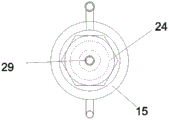
FIG. 3 is a structural side view of a hydrate membrane separator.
The various components in the figure are as follows:
the device comprises a gas steel cylinder 1, a gas pressure reducing valve 2, a first stop valve 3, a gas buffer tank 4, a cooling jacket 5, a gas blow-down valve 6, a first temperature sensor 7, a first three-way valve 8, a first pressure sensor 9, a second stop valve 10, a second three-way valve 11, a second pressure sensor 12, a second temperature sensor 13, a hydrate membrane separator 14, a hydrate membrane cooling jacket 15, a third stop valve 16, a first product gas tank 17, a fourth stop valve 18, a second product gas tank 19, a circulating water bath 20, a computer 21, a data acquisition instrument 22, a membrane assembly 23, a seal head 24, an air inlet pipe 25, a baffle 26, a hydrate membrane pipe 27, a gasket 28 and an air outlet 29.
Detailed Description
The following will further describe embodiments of the hydrate membrane module apparatus for gas separation according to the drawings of the present invention.
As shown in figures 1-3, a method for gas separationThe hydrate membrane device comprises a gas steel cylinder 1, a gas buffer tank 4, a first temperature sensor 7, a first three-way valve 8, a first pressure sensor 9, a second stop valve 10, a second three-way valve 11, a second pressure sensor 12, a second temperature sensor 13, a hydrate membrane separator 14, a first product gas tank 17, a second product gas tank 19, a circulating water bath 20, a computer 21 and a data acquisition instrument 22; the gas steel cylinder 1 is connected with a gas buffer tank 4 through a pipeline, a first temperature sensor 7 is arranged on the gas buffer tank 4, the top of the gas buffer tank 4 is connected with an air inlet pipe orifice of a hydrate membrane separator 14 through a pipeline, and a first three-way valve 8, a second stop valve 10 and a second three-way valve 11 are arranged on the pipeline between the gas buffer tank 4 and the hydrate membrane separator 14; the top of the hydrate membrane separator 14 is provided with a second temperature sensor 13; the side gas outlet pipe opening of the hydrate membrane separator 14 is connected with a second product gas tank 19; the outlet at the bottom of the hydrate membrane separator 14 is connected with a first product gas tank 17 through a pipeline; the first three-way valve 8 is connected with a first pressure sensor 9, the second three-way valve 11 is connected with a second pressure sensor 12, the first temperature sensor 7, the first pressure sensor 9, the second pressure sensor 12 and the second temperature sensor 13 are respectively connected with a data acquisition instrument 22, and the data acquisition instrument 22 is connected with a computer 21; a liquid inlet and a liquid outlet of the cooling jacket 5 are connected with the circulating water bath 20 through pipelines, and a liquid inlet and a liquid outlet of the membrane module cooling jacket 15 are connected with the circulating water bath 20 through pipelines; the device is used for realizing the CH pairing4/H2、CH4/CO2、CH4/N2、CO2/N2And (4) a mixed gas separation function. The outer layer of the gas buffer tank 4 is provided with a cooling jacket 5, and the top of the gas buffer tank 4 is provided with an emptying valve 6. The hydrate membrane separator 14 consists of a membrane module cooling jacket 15, a membrane module 23, a seal head 24, an air inlet pipe 25, a baffle 26, a hydrate membrane pipe 27, a gasket 28 and an air outlet 29, wherein the baffle 26 supports the hydrate membrane pipe 27, the gasket 28 seals the hydrate membrane pipe 27, and a feed gas enters from the air inlet pipe 25, permeates through the hydrate membrane pipe 27 and then is discharged from the air outlet 29; of the hydrate membrane separator 14The outer layer is arranged on the membrane module cooling jacket 15; the membrane assembly 23 is connected with the end enclosure 24 through threads, and the top of the end enclosure 24 is provided with a temperature threaded hole. The gasket 28 is selected from a silicone rubber gasket, a tetrafluoro graphite gasket or a fluorine rubber gasket. The hydrate membrane tube 27 is made of porous materials with certain mechanical strength, porous ceramics, cordierite, molecular sieves or foam carbon are selected, and the pore size is 50 nm-2500 nm. The present embodiment further includes a gas pressure reducing valve 2, a first cut-off valve 3, a second cut-off valve 10, a third cut-off valve 16, and a fourth cut-off valve 18; the gas pressure reducing valve 2 and the first stop valve 3 are positioned on a pipeline between the gas steel cylinder 1 and the gas buffer tank 4; the second stop valve 10 is positioned on a pipeline between the gas buffer tank 4 and the hydrate membrane separator 14; the third stop valve 16 is located on the conduit between the hydrate membrane separator 14 and the first product gas tank 17 and the fourth stop valve 18 is located on the conduit between the hydrate membrane separator 14 and the second product gas tank 19. The circulating water bath 20 is connected with the inlets and outlets of the hydrate film cooling jacket 15 and the cooling jacket 5, so that the circulating flowing low-temperature fluid can be cooled conveniently.
A hydrate membrane process for gas separation comprising the steps of:
(1) preparing an additive solution;
(2) membrane tube pretreatment stage: placing the hydrate membrane tube in a drying container, and heating and vacuumizing the hydrate membrane tube at the temperature of 25-150 ℃ for 0.5-24 h to enable the hydrate membrane tube to meet the required vacuum degree requirement; then injecting deionized water in a vacuum state, cooling, transferring the hydrate membrane tube from the deionized water to the prepared additive solution, and standing for 0.5-48 h;
(3) preparing a hydrate membrane: and standing the hydrate film tube soaked in the solution for 1-48 h at-30-3 ℃ to generate a hydrate film, standing the hydrate film tube for 1-48 h at 0-15 ℃, and melting and converting ice possibly generated into a hydrate. Then, the hydrate membrane tube is placed in an environment with the temperature of-30 ℃ to 3 ℃ for stable solidification for 0.5 to 24 hours, the water solution in the pores of the hydrate membrane tube is ensured to be completely hydrated, and finally the hydrate membrane tube is assembled in a hydrate membrane separator 14;
(4) a gas separation stage: opening a circulating water bath 20, and stabilizing the temperature of the gas buffer tank 4 and the membrane module cooling jacket 15 at-20-15 ℃; the emptying valve 6 is in a closed state, the first stop valve 3 is opened, mixed gas is introduced into the buffer tank 4, and the second stop valve 10 is opened to perform gas separation for a period of time; the third stop valve 16 is opened and permeate gas is collected using the first product gas tank 17. The fourth stop valve 18 is opened and the retentate gas is collected using the second product gas tank 19.
Example 1
(1) Preparing 5.56 mol% tetrahydrofuran solution;
(2) preparing a membrane tube by selecting a porous ceramic tube with a pore size of 50 nm;
(3) membrane tube pretreatment stage: placing the hydrate membrane tube in a drying container, and heating and vacuumizing the hydrate membrane tube at 60 ℃ for 4 hours to meet the required vacuum degree requirement; then injecting deionized water in a vacuum state, stopping vacuumizing and heating, cooling, and transferring the hydrate membrane tube from the deionized water to a prepared tetrahydrofuran solution for standing for 12 hours;
(4) preparing a hydrate membrane: standing the hydrate film tube soaked in the solution for 24h at-20 ℃ to completely generate a hydrate film, then standing the hydrate film tube for 24h at 0 ℃ to melt and convert ice possibly generated into a hydrate; then the hydrate membrane tube is placed in an environment with the temperature of minus 20 ℃ for stable solidification for 4h, and finally the hydrate membrane tube is assembled in a hydrate membrane separator 14 to ensure that all the water solution in the pores of the hydrate membrane tube forms hydrate;
(5) the circulating water bath 20 was opened and the gas surge tank 4 and membrane module cooling jacket 15 were stabilized at-10 ℃.
(6) Gas separation: the atmospheric valve 6 is closed, the first stop valve 3 is opened, and 80 mol% H is introduced2/CH4The mixed gas is introduced into the buffer tank 4, so that the gas pressure in the gas buffer tank 4 reaches 1.0 MPa. The second shut-off valve 10 is opened and gas separation is performed for a while.
(7) The third stop valve 16 is opened and permeate gas is collected using the first product gas tank 17. The fourth stop valve 18 is opened and the retentate gas is collected using the second product gas tank 19.
(8) Gas composition in the first product gas tank: h2Content of (2) 97.08 mol%, CH4The content of (B) is 2.92 mol%; gas composition in the second product gas tank: h2Content of (2) 32.68 mol%, CH4The content of (B) was 67.32 mol%.
Example 2
(1) Preparing 5.56 mol% tetrahydrofuran solution;
(2) selecting a carbon tube with a pore size of 600nm to prepare a membrane tube;
(3) membrane tube pretreatment stage: placing the hydrate membrane tube in a drying container, and heating and vacuumizing the hydrate membrane tube at 60 ℃ for 2 hours to meet the required vacuum degree requirement; then injecting deionized water in a vacuum state, cooling, transferring the hydrate membrane tube from the deionized water to the prepared additive solution, and standing for 12 hours;
(4) preparing a hydrate membrane: and (3) standing the hydrate film tube soaked in the solution at-20 ℃ for 12h to generate a hydrate film, and then standing the hydrate film tube at 0 ℃ for 12h to melt and convert ice possibly generated into a hydrate. Then the hydrate membrane tube is placed in an environment with the temperature of minus 20 ℃ for stable solidification for 12h, the water solution in the pores of the hydrate membrane tube is ensured to form the hydrate completely, and finally the hydrate membrane tube is assembled in a hydrate membrane separator 14;
(5) opening a circulating water bath 20, and stabilizing the temperature of the gas buffer tank 4 and the membrane module cooling jacket 15 at-5 ℃;
(6) gas separation: the atmospheric valve 6 is closed, the first stop valve 3 is opened, and 80 mol% H is introduced2/CH4The mixed gas is fed into the buffer tank 4, so that the gas pressure in the gas buffer tank 4 reaches 1.5 MPa. Opening the second stop valve 10 to perform gas separation for a period of time;
(7) the third stop valve 16 is opened and permeate gas is collected using the first product gas tank 17. Opening the fourth stop valve 18 and collecting the retentate gas using the second product gas tank 19;
(8) first productGas composition in the gas tank: h2Content of (3) is 97.41 mol%, CH4The content of (B) is 2.59 mol%; gas composition in the second product gas tank: h2Content of (3) is 29.13 mol%, CH4The content of (B) was 70.87 mol%.
Example 3
(1) Preparing 5.56 mol% 1, 1-dichloro-1-monofluoroethane solution;
(2) preparing a membrane tube by selecting a molecular sieve tube with a pore size of 1500 nm;
(3) membrane tube pretreatment stage: placing the hydrate membrane tube in a drying container, heating and vacuumizing the hydrate membrane tube at 80 ℃ for 8 hours to meet the required vacuum degree requirement; then injecting deionized water in a vacuum state, cooling, transferring the hydrate membrane tube from the deionized water to the prepared additive solution, and standing for 24 hours;
(4) preparing a hydrate membrane: and (3) standing the hydrate film tube soaked in the solution at-10 ℃ for 24h to generate a hydrate film, and then standing the hydrate film tube at 5 ℃ for 36h to melt and convert ice possibly generated into a hydrate. Then the hydrate membrane tube is placed in an environment with the temperature of minus 10 ℃ for stable solidification for 36h, the water solution in the pores of the hydrate membrane tube is ensured to form the hydrate completely, and finally the hydrate membrane tube is assembled in a hydrate membrane separator 14;
(5) opening a circulating water bath 20, and stabilizing the temperature of the gas buffer tank 4 and the membrane module cooling jacket 15 at-10 ℃;
(6) gas separation: the atmospheric valve 6 is closed, the first stop valve 3 is opened, and 80 mol% H is introduced2/CH4The mixed gas is fed into the buffer tank 4, so that the gas pressure in the gas buffer tank 4 reaches 2.0 MPa. Opening the second stop valve 10 to perform gas separation for a period of time;
(7) the third stop valve 16 is opened and permeate gas is collected using the first product gas tank 17. Opening the fourth stop valve 18 and collecting the retentate gas using the second product gas tank 19;
(8) gas composition in the first product gas tank: h2Content of (2) 98.52 mol%, CH4The content of (A) is 1.48 mol%; second product gas tankInner gas composition: h2Content of (2) is 24.53 mol%, CH4The content of (B) was 75.47 mol%.
Example 4
(1) Preparing 0.29 mol% tetrabutylammonium bromide solution;
(2) preparing a membrane tube by selecting a cordierite tube with a pore size of 2000 nm;
(3) membrane tube pretreatment stage: placing the hydrate membrane tube in a drying container, and heating and vacuumizing the hydrate membrane tube at 80 ℃ for 12 hours to meet the required vacuum degree requirement; then injecting deionized water in a vacuum state, cooling, transferring the hydrate membrane tube from the deionized water to the prepared additive solution, and standing for 36 hours;
(4) preparing a hydrate membrane: and (3) standing the hydrate film tube soaked in the solution at-5 ℃ for 36h to generate a hydrate film, and then standing the hydrate film tube at 5 ℃ for 48h to melt and convert ice possibly generated into a hydrate. Then the hydrate membrane tube is placed in an environment with the temperature of minus 5 ℃ for stable solidification for 24 hours, the water solution in the pores of the hydrate membrane tube is ensured to form a hydrate completely, and finally the hydrate membrane tube is assembled in a hydrate membrane separator 14;
(5) opening a circulating water bath 20, and stabilizing the temperature of the gas buffer tank 4 and the membrane module cooling jacket 15 at 0 ℃;
(6) gas separation: the atmospheric valve 6 is closed, the first stop valve 3 is opened, and 10 mol% CH is introduced4/CO2The mixed gas is introduced into the buffer tank 4, so that the gas pressure in the gas buffer tank 4 reaches 3.0 MPa. The second shut-off valve 10 is opened and gas separation is performed for a while.
(7) The third stop valve 16 is opened and permeate gas is collected using the first product gas tank 17. The fourth stop valve 18 is opened and the retentate gas is collected using the second product gas tank 19.
(8) Gas composition in the first product gas tank: CH (CH)4In an amount of 86.48 mol%, CO2The content of (A) is 13.52 mol%; gas composition in the second product gas tank: CH (CH)4Content of (3.77 mol%), CO2The content of (B) was 96.23 mol%.
Example 5
(1) Preparing 5.56 mol% 1, 1-dichloro-1-monofluoroethane solution;
(2) preparing a membrane tube by selecting a porous ceramic tube with the pore size of 2000 nm;
(3) membrane tube pretreatment stage: placing the hydrate membrane tube in a drying container, and heating and vacuumizing the hydrate membrane tube at 120 ℃ for 6 hours to meet the requirement of required vacuum degree; then injecting deionized water in a vacuum state, stopping vacuumizing and heating, cooling, and transferring the hydrate membrane tube from the deionized water to a prepared tetrahydrofuran solution for standing for 48 hours;
(4) preparing a hydrate membrane: standing the hydrate film tube soaked in the solution for 24h at-10 ℃ to completely generate a hydrate film, then standing the hydrate film tube for 24h at 0 ℃ to melt and convert ice possibly generated into a hydrate; then the hydrate membrane tube is placed in an environment with the temperature of minus 10 ℃ for stable solidification for 4h, and finally the hydrate membrane tube is assembled in a hydrate membrane separator 14 to ensure that all the water solution in the pores of the hydrate membrane tube forms hydrate;
(5) the circulating water bath 20 was opened and the gas surge tank 4 and membrane module cooling jacket 15 were stabilized at 0 ℃.
(6) Gas separation: the atmospheric valve 6 is closed, the first stop valve 3 is opened, and 10 mol% CH is introduced4/CO2The mixed gas is introduced into the buffer tank 4, so that the gas pressure in the gas buffer tank 4 reaches 4.0 MPa. The second shut-off valve 10 is opened and gas separation is performed for a while.
(7) The third stop valve 16 is opened and permeate gas is collected using the first product gas tank 17. The fourth stop valve 18 is opened and the retentate gas is collected using the second product gas tank 19.
(8) Gas composition in the first product gas tank: CH (CH)4Content of (2) is 84.66 mol%, CO2The content of (A) is 15.34 mol%; gas composition in the second product gas tank: CH (CH)4Content of (2) is 5.26 mol%, CO2The content of (B) was 94.74 mol%.
The above examples of the present invention are merely examples for clearly illustrating the present invention and are not intended to limit the embodiments of the present invention. Other variations and modifications will be apparent to persons skilled in the art in light of the above description. And are neither required nor exhaustive of all embodiments. Any modification, equivalent replacement, and improvement made within the spirit and principle of the present invention should be included in the protection scope of the claims of the present invention.

Claims (10)

1.一种用于气体分离的水合物膜装置,其特征在于,包括气体钢瓶(1)、气体缓冲罐(4)、第一温度传感器(7)、第一三通阀(8)、第一压力传感器(9)、第二截止阀(10)、第二三通阀(11)、第二压力传感器(12)、第二温度传感器(13)、水合物膜分离器(14)、第一产品气罐(17)、第二产品气罐(19)、循环水浴(20)、电脑(21)和数据采集仪(22);所述气体钢瓶(1)通过管道与气体缓冲罐(4)连接,所述气体缓冲罐(4)上设置有第一温度传感器(7),所述气体缓冲罐(4)顶部通过管道与水合物膜分离器(14)的进气管口连接,所述气体缓冲罐(4)与水合物膜分离器(14)之间的管道上设置有第一三通阀(8)、第二截止阀(10)和第二三通阀(11);所述水合物膜分离器(14)顶部设置有第二温度传感器(13);所述水合物膜分离器(14)的侧出气管口与第二产品气罐(19)连接;所述水合物膜分离器(14)底部出口通过管道与第一产品气罐(17)连接;所述第一三通阀(8)与第一压力传感器(9)连接,所述第二三通阀(11)与第二压力传感器(12)连接,所述第一温度传感器(7)、第一压力传感器(9)、第二压力传感器(12)和第二温度传感器(13)分别与数据采集仪(22)连接,所述数据采集仪(22)与电脑(21)连接;所述冷却夹套(5)进液口和出液口通过管道与循环水浴(20)连接,所述膜组件冷却夹套(15)进液口和出液口通过管道与循环水浴(20)连接;该装置用于实现对CH4/H2、CH4/CO2、CH4/N2、CO2/N2混合气的分离功能。1. A hydrate membrane device for gas separation, characterized in that it comprises a gas cylinder (1), a gas buffer tank (4), a first temperature sensor (7), a first three-way valve (8), a first three-way valve (8), a a pressure sensor (9), a second shut-off valve (10), a second three-way valve (11), a second pressure sensor (12), a second temperature sensor (13), a hydrate membrane separator (14), a second A product gas tank (17), a second product gas tank (19), a circulating water bath (20), a computer (21) and a data acquisition instrument (22); the gas cylinder (1) is connected to a gas buffer tank (4) through a pipeline ) connection, the gas buffer tank (4) is provided with a first temperature sensor (7), and the top of the gas buffer tank (4) is connected to the inlet pipe port of the hydrate membrane separator (14) through a pipeline, the A first three-way valve (8), a second stop valve (10) and a second three-way valve (11) are arranged on the pipeline between the gas buffer tank (4) and the hydrate membrane separator (14); the The top of the hydrate membrane separator (14) is provided with a second temperature sensor (13); the side gas outlet of the hydrate membrane separator (14) is connected to the second product gas tank (19); the hydrate membrane separator (14) is connected to the second product gas tank (19). The bottom outlet of the separator (14) is connected to the first product gas tank (17) through a pipeline; the first three-way valve (8) is connected to the first pressure sensor (9), and the second three-way valve (11) is connected with a second pressure sensor (12), the first temperature sensor (7), the first pressure sensor (9), the second pressure sensor (12) and the second temperature sensor (13) are respectively connected with the data acquisition instrument (22) ) connection, the data acquisition instrument (22) is connected to the computer (21); the liquid inlet and outlet of the cooling jacket (5) are connected to the circulating water bath (20) through pipes, and the membrane module cooling jacket (15) The liquid inlet and the liquid outlet are connected with the circulating water bath (20) through pipes; the device is used to realize the mixing of CH 4 /H 2 , CH 4 /CO 2 , CH 4 /N 2 , CO 2 /N 2 Gas separation function. 2.如权利要求1所述用于气体分离的水合物膜装置,其特征在于,所述的气体缓冲罐(4)的外层有冷却夹套(5),所述气体缓冲罐(4)的顶部设置有放空阀(6)。2. The hydrate membrane device for gas separation according to claim 1, characterized in that the outer layer of the gas buffer tank (4) is provided with a cooling jacket (5), and the gas buffer tank (4) A vent valve (6) is provided at the top of the . 3.如权利要求1所述用于气体分离的水合物膜装置,其特征在于,所述的水合物膜分离器(14)由膜组件冷却夹套(15)、膜组件(23)、封头(24)、进气管(25)、挡板(26)、水合物膜管(27)、垫圈(28)和出气口(29)组成;所述挡板(26)对水合物膜管(27)起支撑作用,所述垫圈(28)对水合物膜管(27)起密封作用,原料气从进气管(25)进入,渗透穿过水合物膜管(27)后从出气口(29)排出;所述水合物膜分离器(14)的外层设置于膜组件冷却夹套(15);所述的膜组件(23)与封头(24)通过螺纹相连接,封头(24)顶部开有温度螺纹孔。3. The hydrate membrane device for gas separation according to claim 1, wherein the hydrate membrane separator (14) is composed of a membrane module cooling jacket (15), a membrane module (23), a sealing A head (24), an air inlet pipe (25), a baffle plate (26), a hydrate membrane tube (27), a gasket (28) and an air outlet (29); the baffle plate (26) is opposite to the hydrate membrane tube (29). 27) plays a supporting role, the gasket (28) plays a sealing role on the hydrate membrane tube (27), the raw gas enters from the air inlet tube (25), penetrates through the hydrate membrane tube (27) and passes through the gas outlet (29) ) is discharged; the outer layer of the hydrate membrane separator (14) is arranged on the membrane module cooling jacket (15); the membrane module (23) is connected with the head (24) through threads, and the head (24) ) has a temperature threaded hole at the top. 4.如权利要求3所述用于气体分离的水合物膜装置,其特征在于,所述的垫圈(28)选自硅橡胶垫圈,四氟石墨垫圈或氟胶垫圈。4. The hydrate membrane device for gas separation according to claim 3, wherein the gasket (28) is selected from a silicone rubber gasket, a tetrafluoro-graphite gasket or a fluorine rubber gasket. 5.如权利要求3所述用于气体分离的水合物膜装置,其特征在于,所述的水合物膜管(27)具有一定机械强度的多孔材料,选择多孔陶瓷、堇青石、分子筛或泡沫炭,孔隙尺寸为50nm~2500nm。5. The hydrate membrane device for gas separation according to claim 3, wherein the hydrate membrane tube (27) has a porous material with a certain mechanical strength, selected from porous ceramics, cordierite, molecular sieve or foam Carbon with pore size ranging from 50 nm to 2500 nm. 6.如权利要求1所述用于气体分离的水合物膜装置,其特征在于,还包括气体减压阀(2)、第一截止阀(3)、第二截止阀(10)、第三截止阀(16)和第四截止阀(18);所述气体减压阀(2)和第一截止阀(3)位于气体钢瓶(1)与气体缓冲罐(4)之间的管道上;所述第二截止阀(10)位于气体缓冲罐(4)和水合物膜分离器(14)之间的管道上;所述第三截止阀(16)位于水合物膜分离器(14)与第一产品气罐(17)之间的管道上;所述第四截止阀(18)位于水合物膜分离器(14)与第二产品气罐(19)之间的管道上。6. The hydrate membrane device for gas separation according to claim 1, characterized in that it further comprises a gas pressure reducing valve (2), a first shut-off valve (3), a second shut-off valve (10), a third shut-off valve (10), a a shut-off valve (16) and a fourth shut-off valve (18); the gas pressure reducing valve (2) and the first shut-off valve (3) are located on the pipeline between the gas cylinder (1) and the gas buffer tank (4); The second stop valve (10) is located on the pipeline between the gas buffer tank (4) and the hydrate membrane separator (14); the third stop valve (16) is located between the hydrate membrane separator (14) and the hydrate membrane separator (14). On the pipeline between the first product gas tank (17); the fourth shut-off valve (18) is located on the pipeline between the hydrate membrane separator (14) and the second product gas tank (19). 7.一种用于气体分离的水合物膜法,其特征在于,包括以下步骤:7. A hydrate membrane method for gas separation, characterized in that, comprising the following steps: (1)膜管预处理阶段:将水合物膜管放置于干燥容器中,在25~150℃下对水合物膜管进行加热以及抽真空处理0.5~24h,使其达到所需的真空度要求;随后在真空状态下注入去离子水,冷却后将水合物膜管从去离子水中转移至配置的添加剂溶液中静置0.5~48h;(1) Pretreatment stage of membrane tube: place the hydrate membrane tube in a drying container, heat and vacuum the hydrate membrane tube at 25-150°C for 0.5-24 hours to make it meet the required vacuum degree requirements ; Then inject deionized water in a vacuum state, and after cooling, transfer the hydrate membrane tube from the deionized water to the prepared additive solution and let it stand for 0.5 to 48 hours; (2)水合物膜制备阶段:将浸泡溶液后的水合物膜管放置在-30℃~3℃环境中静置1~48h,使其生成水合物膜;随后将水合物膜管放在0~15℃的环境中静置1~48h,将可能生成的冰融化并转化为水合物;然后将水合物膜管放在-30℃~3℃的环境中稳定固化0.5~24h,确保水合物膜管孔隙内的水溶液全部形成水合物,最后把水合物膜管组装到水合物膜分离器(14)中;(2) Hydrate membrane preparation stage: place the hydrate membrane tube after soaking in the solution at -30℃~3℃ for 1~48h to form a hydrate membrane; then place the hydrate membrane tube at 0 Let stand in the environment of ~15℃ for 1 ~ 48h to melt the ice that may be formed and convert it into hydrate; then put the hydrate membrane tube in the environment of -30℃ ~ 3℃ to solidify stably for 0.5 ~ 24h to ensure the hydrate The aqueous solution in the pores of the membrane tube all forms hydrate, and finally the hydrate membrane tube is assembled into the hydrate membrane separator (14); (3)气体分离阶段:打开循环水浴(20),将气体缓冲罐(4)和膜组件冷却夹套(15)温度稳定在-20℃~15℃;使放空阀(6)处于关闭状态,打开第一截止阀(3),通入混合气到缓冲罐(4)中,打开第二截止阀(10),进行一段时间的气体分离;打开第三截止阀(16),使用第一产品气罐(17)收集渗透气,打开第四截止阀(18),使用第二产品气罐(19)收集渗余气。(3) Gas separation stage: open the circulating water bath (20), stabilize the temperature of the gas buffer tank (4) and the membrane module cooling jacket (15) at -20°C to 15°C; keep the vent valve (6) in a closed state, Open the first shut-off valve (3), introduce the mixed gas into the buffer tank (4), open the second shut-off valve (10), and carry out gas separation for a period of time; open the third shut-off valve (16), use the first product The gas tank (17) collects the permeate gas, the fourth shut-off valve (18) is opened, and the retentate gas is collected using the second product gas tank (19). 8.如权利要求7所述用于气体分离的水合物膜法,其特征在于,所述添加剂包括sII型水合物热力学促进剂,半笼型水合物热力学促进剂;所述添加剂选自四氢呋喃,季铵盐,1,1-二氯-1-一氟乙烷或环戊烷。8. The hydrate membrane method for gas separation according to claim 7, wherein the additive comprises a sII-type hydrate thermodynamic promoter, a semi-clathrate hydrate thermodynamic promoter; the additive is selected from tetrahydrofuran, Quaternary ammonium salt, 1,1-dichloro-1-monofluoroethane or cyclopentane. 9.如权利要求7所述用于气体分离的水合物膜法,其特征在于,混合气摩尔浓度为10%~90%。9 . The hydrate membrane method for gas separation according to claim 7 , wherein the molar concentration of the mixed gas is 10% to 90%. 10 . 10.如权利要求7所述用于气体分离的水合物膜法,其特征在于,通入缓冲罐的混合气体压力为0.5~5.0MPa。10 . The hydrate membrane method for gas separation according to claim 7 , wherein the pressure of the mixed gas introduced into the buffer tank is 0.5-5.0 MPa. 11 .
CN202110548442.XA 2021-05-19 2021-05-19 Hydrate membrane device and method for gas separation Pending CN113289462A (en)

Priority Applications (2)

Application Number Priority Date Filing Date Title
CN202110548442.XA CN113289462A (en) 2021-05-19 2021-05-19 Hydrate membrane device and method for gas separation
CN202210542716.9A CN114950082B (en) 2021-05-19 2022-05-18 Hydrate membrane device and method for gas separation

Applications Claiming Priority (1)

Application Number Priority Date Filing Date Title
CN202110548442.XA CN113289462A (en) 2021-05-19 2021-05-19 Hydrate membrane device and method for gas separation

Publications (1)

Publication Number Publication Date
CN113289462A true CN113289462A (en) 2021-08-24

Family

ID=77322891

Family Applications (2)

Application Number Title Priority Date Filing Date
CN202110548442.XA Pending CN113289462A (en) 2021-05-19 2021-05-19 Hydrate membrane device and method for gas separation
CN202210542716.9A Active CN114950082B (en) 2021-05-19 2022-05-18 Hydrate membrane device and method for gas separation

Family Applications After (1)

Application Number Title Priority Date Filing Date
CN202210542716.9A Active CN114950082B (en) 2021-05-19 2022-05-18 Hydrate membrane device and method for gas separation

Country Status (1)

Country Link
CN (2) CN113289462A (en)

Cited By (2)

* Cited by examiner, † Cited by third party
Publication number Priority date Publication date Assignee Title
GB2633327A (en) * 2023-09-05 2025-03-12 Aker Solutions As Processes and systems for the removal of nitrogen from natural gas
CN120247215A (en) * 2025-06-09 2025-07-04 湘南学院 A method for purifying wastewater containing heavy metal ions by hydration-adsorption coupling

Citations (4)

* Cited by examiner, † Cited by third party
Publication number Priority date Publication date Assignee Title
CN101947416A (en) * 2010-09-16 2011-01-19 华南理工大学 High-selectivity asymmetric moisture-permeable film as well as preparation method and application thereof
WO2013136310A1 (en) * 2012-03-16 2013-09-19 Aker Process Systems As Hydrocarbon gas treatment
CN108108540A (en) * 2017-12-12 2018-06-01 华南理工大学 A kind of method for simulating half clathrate hydrate UF membrane mixed gas of TBPB
CN110227331A (en) * 2019-06-13 2019-09-13 中国石油大学(北京) A kind of method and apparatus of hydrate-embrane method integrated separation mixed gas

Family Cites Families (5)

* Cited by examiner, † Cited by third party
Publication number Priority date Publication date Assignee Title
CA2108892A1 (en) * 1991-05-21 1992-11-22 Amos Korin Treatment of acid gas using hybrid membrane separation systems
CN105971581A (en) * 2016-06-30 2016-09-28 华南理工大学 Device and method for efficiently exploiting natural gas hydrate by adopting flue gas of power plant
CN108261890B (en) * 2018-02-06 2020-09-08 常州大学 Integrated CO capture in flue gas2And N2Collecting device
CN112755808B (en) * 2019-10-21 2022-12-09 中国石油化工股份有限公司 Gel composite membrane for gas separation by hydrate method and preparation method thereof
CN111486795B (en) * 2020-05-28 2021-11-12 中国石油大学(华东) Experimental device and method for researching growth and deposition of natural gas hydrate film in gas transmission pipeline

Patent Citations (4)

* Cited by examiner, † Cited by third party
Publication number Priority date Publication date Assignee Title
CN101947416A (en) * 2010-09-16 2011-01-19 华南理工大学 High-selectivity asymmetric moisture-permeable film as well as preparation method and application thereof
WO2013136310A1 (en) * 2012-03-16 2013-09-19 Aker Process Systems As Hydrocarbon gas treatment
CN108108540A (en) * 2017-12-12 2018-06-01 华南理工大学 A kind of method for simulating half clathrate hydrate UF membrane mixed gas of TBPB
CN110227331A (en) * 2019-06-13 2019-09-13 中国石油大学(北京) A kind of method and apparatus of hydrate-embrane method integrated separation mixed gas

Non-Patent Citations (2)

* Cited by examiner, † Cited by third party
Title
PRAVEEN LINGA 等: "Medium-pressure clathrate hydrate/membrane hybrid process for postcombustion capture of carbon dioxide", 《ENVIRONMENTAL SCIENCE & TECHNOLOGY》 *
孙肖媛: "添加剂对水合物膜法捕集二氧化碳影响的研究", 《中国优秀硕士学位论文全文数据库 基础科学辑》 *

Cited By (2)

* Cited by examiner, † Cited by third party
Publication number Priority date Publication date Assignee Title
GB2633327A (en) * 2023-09-05 2025-03-12 Aker Solutions As Processes and systems for the removal of nitrogen from natural gas
CN120247215A (en) * 2025-06-09 2025-07-04 湘南学院 A method for purifying wastewater containing heavy metal ions by hydration-adsorption coupling

Also Published As

Publication number Publication date
CN114950082A (en) 2022-08-30
CN114950082B (en) 2023-11-28

Similar Documents

Publication Publication Date Title
AU2015372685B2 (en) Subsea fluid processing system
Belaissaoui et al. Novel dense skin hollow fiber membrane contactor based process for CO2 removal from raw biogas using water as absorbent
CN113289462A (en) Hydrate membrane device and method for gas separation
ES2985580T3 (en) Purification and liquefaction of biogas by combining a crystallization system with a liquefaction exchanger
CN114408866B (en) Methane steam reforming reaction device based on high-purity gas product full recovery and use method thereof
CN116143074B (en) A system and method for purifying and separating raw coal gas from underground coal
CN210103452U (en) A skid-mounted high-purity hydrogen purification device
CN104176706A (en) Method for extracting high purity hydrogen from coke oven gas reformed gas
Medrano et al. Membranes utilization for biogas upgrading to synthetic natural gas
CN103320193B (en) Device and method for manufacturing high quality natural gas by purifying methane
WO2022136742A1 (en) Method for capturing a molecule of interest and associated capture system
CN113061475B (en) Liquefaction process method and device capable of adjusting carbon dioxide concentration and separating carbon dioxide from critical methane
CN108011119B (en) Method and system for resource utilization of hydrogen-containing exhaust gas coupled to fuel cell clean power generation
CN113277925B (en) Method for purifying liquid methane propellant sulfide
CN204436362U (en) A kind of utilize gas well mouth pressure to carry out UF membrane device and system
CN103113947A (en) A biogas separation and purification device and its method for absorbing CO2 and purifying biogas by alkaline method
CN103506017A (en) Polyether-b-polyamide and glycerol triacetate blend membrane as well as preparation method and application thereof
CN119164824A (en) A shale gas purification sampling device
CN221522485U (en) Biogas membrane purification and CNG compression system
Kalambe et al. Low pressure separation technique of biogas into CH4 and CO2 employing PDMS membrane
CN103695062B (en) The device of a kind of integrated purifying and purifying biogas and technique thereof
CN116675191A (en) A method for purifying helium from a helium-rich gas
CN111852404A (en) A kind of associated gas recovery and treatment device and method
CN203625335U (en) Integrated biogas purification device
CN110817802A (en) System and method for preparing ultrapure hydrogen by using composite purification process

Legal Events

Date Code Title Description
PB01 Publication
PB01 Publication
SE01 Entry into force of request for substantive examination
WD01 Invention patent application deemed withdrawn after publication

Application publication date: 20210824