CN113272300A - Novel compounds and their use in therapy - Google Patents
Novel compounds and their use in therapy Download PDFInfo
- Publication number
- CN113272300A CN113272300A CN201980084437.9A CN201980084437A CN113272300A CN 113272300 A CN113272300 A CN 113272300A CN 201980084437 A CN201980084437 A CN 201980084437A CN 113272300 A CN113272300 A CN 113272300A
- Authority
- CN
- China
- Prior art keywords
- compound
- cancer
- disease
- compounds
- carbamate
- Prior art date
- Legal status (The legal status is an assumption and is not a legal conclusion. Google has not performed a legal analysis and makes no representation as to the accuracy of the status listed.)
- Pending
Links
Images


Classifications
-
- C—CHEMISTRY; METALLURGY
- C07—ORGANIC CHEMISTRY
- C07D—HETEROCYCLIC COMPOUNDS
- C07D471/00—Heterocyclic compounds containing nitrogen atoms as the only ring hetero atoms in the condensed system, at least one ring being a six-membered ring with one nitrogen atom, not provided for by groups C07D451/00 - C07D463/00
- C07D471/02—Heterocyclic compounds containing nitrogen atoms as the only ring hetero atoms in the condensed system, at least one ring being a six-membered ring with one nitrogen atom, not provided for by groups C07D451/00 - C07D463/00 in which the condensed system contains two hetero rings
- C07D471/04—Ortho-condensed systems
-
- A—HUMAN NECESSITIES
- A61—MEDICAL OR VETERINARY SCIENCE; HYGIENE
- A61K—PREPARATIONS FOR MEDICAL, DENTAL OR TOILETRY PURPOSES
- A61K31/00—Medicinal preparations containing organic active ingredients
- A61K31/33—Heterocyclic compounds
- A61K31/395—Heterocyclic compounds having nitrogen as a ring hetero atom, e.g. guanethidine or rifamycins
- A61K31/435—Heterocyclic compounds having nitrogen as a ring hetero atom, e.g. guanethidine or rifamycins having six-membered rings with one nitrogen as the only ring hetero atom
- A61K31/4353—Heterocyclic compounds having nitrogen as a ring hetero atom, e.g. guanethidine or rifamycins having six-membered rings with one nitrogen as the only ring hetero atom ortho- or peri-condensed with heterocyclic ring systems
- A61K31/437—Heterocyclic compounds having nitrogen as a ring hetero atom, e.g. guanethidine or rifamycins having six-membered rings with one nitrogen as the only ring hetero atom ortho- or peri-condensed with heterocyclic ring systems the heterocyclic ring system containing a five-membered ring having nitrogen as a ring hetero atom, e.g. indolizine, beta-carboline
-
- A—HUMAN NECESSITIES
- A61—MEDICAL OR VETERINARY SCIENCE; HYGIENE
- A61K—PREPARATIONS FOR MEDICAL, DENTAL OR TOILETRY PURPOSES
- A61K45/00—Medicinal preparations containing active ingredients not provided for in groups A61K31/00 - A61K41/00
- A61K45/06—Mixtures of active ingredients without chemical characterisation, e.g. antiphlogistics and cardiaca
-
- A—HUMAN NECESSITIES
- A61—MEDICAL OR VETERINARY SCIENCE; HYGIENE
- A61P—SPECIFIC THERAPEUTIC ACTIVITY OF CHEMICAL COMPOUNDS OR MEDICINAL PREPARATIONS
- A61P35/00—Antineoplastic agents
-
- Y—GENERAL TAGGING OF NEW TECHNOLOGICAL DEVELOPMENTS; GENERAL TAGGING OF CROSS-SECTIONAL TECHNOLOGIES SPANNING OVER SEVERAL SECTIONS OF THE IPC; TECHNICAL SUBJECTS COVERED BY FORMER USPC CROSS-REFERENCE ART COLLECTIONS [XRACs] AND DIGESTS
- Y02—TECHNOLOGIES OR APPLICATIONS FOR MITIGATION OR ADAPTATION AGAINST CLIMATE CHANGE
- Y02A—TECHNOLOGIES FOR ADAPTATION TO CLIMATE CHANGE
- Y02A50/00—TECHNOLOGIES FOR ADAPTATION TO CLIMATE CHANGE in human health protection, e.g. against extreme weather
- Y02A50/30—Against vector-borne diseases, e.g. mosquito-borne, fly-borne, tick-borne or waterborne diseases whose impact is exacerbated by climate change
Landscapes
- Chemical & Material Sciences (AREA)
- Organic Chemistry (AREA)
- Health & Medical Sciences (AREA)
- Medicinal Chemistry (AREA)
- Pharmacology & Pharmacy (AREA)
- Life Sciences & Earth Sciences (AREA)
- Animal Behavior & Ethology (AREA)
- General Health & Medical Sciences (AREA)
- Public Health (AREA)
- Veterinary Medicine (AREA)
- Epidemiology (AREA)
- Chemical Kinetics & Catalysis (AREA)
- General Chemical & Material Sciences (AREA)
- Nuclear Medicine, Radiotherapy & Molecular Imaging (AREA)
- Pharmaceuticals Containing Other Organic And Inorganic Compounds (AREA)
- Nitrogen Condensed Heterocyclic Rings (AREA)
- Medicines That Contain Protein Lipid Enzymes And Other Medicines (AREA)
Abstract
本发明尤其提供本文所定义的化合物,及其在预防或治疗其中抑制N‑肉豆蔻酰基转移酶提供治疗或预防作用的疾病或病症例如癌症中的用途。 In particular, the present invention provides compounds as defined herein, and their use in the prevention or treatment of diseases or conditions, such as cancer, in which inhibition of N-myristoyltransferase provides a therapeutic or preventive effect. 
Description
Technical Field
The present invention relates to compounds of formula (I) or pharmaceutically acceptable carbamates, including salts of said carbamates, said compounds having activity as inhibitors of human N-myristoyltransferase. The invention also relates to the use of said compounds as medicaments, in particular in the treatment of diseases or conditions in which inhibition of human N-myristoyltransferase provides a therapeutic or prophylactic effect. Such diseases include viral infections (e.g., human rhinovirus, Human Immunodeficiency Virus (HIV), poliovirus, foot and mouth disease (foot and mouth disease) and enterovirus type 71 infections) and hyperproliferative diseases (e.g., cancer, including B-cell lymphoma and leukemia).
Background
N-myristoyl transferase (NMT) is a monomeric enzyme that is widely present in eukaryotes. NMT catalyzes the irreversible cotranslational transfer of myristic acid (saturated 14-carbon fatty acid) from myristoyl-CoA (myr-CoA) to a protein substrate containing an N-terminal glycine to form an amide bond (Farazi, t.a., g.waksman and j.i.gordon, j.biol.chem., 2001.276 (43): 39501-39504 page).
Human NMT is of two types: human NMT1(HsNMT1) and human NMT2(HsNMT 2). Inhibition of human NMT has been suggested AS a target for the treatment or prevention of various diseases or disorders, such AS hyperproliferative diseases (e.g., cancers such AS human colorectal cancer, gallbladder cancer, brain tumors, and lymphomas such AS B-cell lymphoma) (Resh MD.1993.Biochern.Biophys.acta 1115, 307-22; Bertiame LG, Beuachamp E, WO2017011907) and viral infections such AS HIV (Gottlinger HG, Sodroski JG, Haseltine WA.1989.Proc.Nat.Acad.Sci.USA 86: 5781-85; Bryant ML, Ratlner L.1990. Proc.Natl.Acad.Sci.87: 523-27) and Human Rhinoviruses (HRV) (JADavis MP, Bottley, G, Belles LP, lligton, RA, KianDton, Tuthlon, Thill J.USA: 523-27) and Human Rhinoviruses (HRV) (Jadavis MP, Bottley, G, Bellles LP, Wallington, RA, Huang J, Swingson, John J.J.2008, John J.74, John J.J., leatherbarrow RJ, Tuthill TJ, Solari R, Tate EW 2018 Nature Chemistry 10(6) 599-: e 1007203). Since NMT plays a key role in protein trafficking, mediating protein-protein interactions, stabilizing protein structure and signal transduction in living systems, inhibition of NMT enzymes can disrupt a variety of protein pathways. This is an attractive feature to reduce the risk of developing resistance in, for example, microbial infections and the treatment or prevention of proliferative disorders.
NMT has two binding pockets. One is the myr-CoA binding pocket and the other is the peptide binding pocket. Most NMT inhibitors reported to date target the peptide binding pocket.
Active compounds as NMT inhibitors have been previously disclosed, see for example WO00/37464(Roche), WO2010/026365(University of dunde), WO2013/083991 (innovative Innovations Limited) and WO2017/001812 (innovative Innovations Limited).
However, there is still a need for further active compounds as N-myristoyl transferase inhibitors, in particular those which combine a very strong inhibitory effect on human N-myristoyl transferase with oral administration with appropriate pharmacokinetic characteristics, such as a long half-life and good oral bioavailability.
Surprisingly, the present inventors have now found that chlorophenyl substituted imidazo [1,2-a ] pyridine compounds, which have a certain subset of a very specific substitution pattern, are potent inhibitors of human N-myristoyl transferase (they have a high enzymatic and cellular potency) and combine a high potency with a good metabolic stability, in particular a long in vivo half-life. The compounds are also orally bioavailable and, when administered orally, have been shown to prevent tumor growth in mice. The combination of said properties makes or anticipates that the compounds of the present invention are particularly suitable for use as medicaments, in particular for oral administration for the treatment of diseases such as cancer.
Brief description of the invention
The present invention provides compounds of formula (I), pharmaceutically acceptable amides, carbamates and salts thereof, including salts of said amides or carbamates,

wherein R is1Is H or-CH3(ii) a And is
R2Is H or F (hereinafter referred to as "the present compound").
More specifically, the present invention provides compounds of formula (Ia) or (Ib), or pharmaceutically acceptable amides, carbamates, or salts of compounds of formula (Ia) or (Ib), including salts of said amides or carbamates:

wherein R is1Is H or CH3。
Preferably, the compound of the invention is a compound of formula (Ia) or a pharmaceutically acceptable amide, carbamate or salt thereof, including salts of said amide or carbamate, in particular a compound of formula (Ia) or a pharmaceutically acceptable carbamate or salt, including salts of said carbamate, especially a compound of formula (Ia) or a pharmaceutically acceptable salt thereof.
The invention further provides a pharmaceutical composition comprising a compound according to the invention and a pharmaceutically acceptable carrier.
The invention also provides a compound according to the invention or a pharmaceutical composition according to the invention for use as a medicament.
The invention also provides a compound according to the invention or a pharmaceutical composition according to the invention for use in the prevention or treatment of a disease or condition in which inhibition of human N-myristoyl transferase provides a therapeutic or prophylactic effect.
The invention also provides the use of a compound according to the invention in the manufacture of a medicament for the prophylaxis or treatment of a disease or condition in which inhibition of human N-myristoyl transferase provides a therapeutic or prophylactic effect.
The invention also provides a method of treating or preventing a disease or condition in which inhibition of human N-myristoyl transferase provides a therapeutic or prophylactic effect in a subject, the method comprising administering to the subject a therapeutically effective amount of a compound according to the invention or a pharmaceutical composition according to the invention.
The present invention also provides kits (a kit of parts) comprising: (a) a first pharmaceutical composition comprising an NMT inhibitor according to the present inventors and a pharmaceutically acceptable carrier; and (b) a second pharmaceutical composition comprising an additional therapeutic agent, suitably an additional human N-myristoyl transferase inhibitor, and a pharmaceutically acceptable carrier.
Brief Description of Drawings
FIG. 1 shows MDA MB 231 cells injected for 10 days of treatment with example 1 ("NMTi") or control (phosphate buffered saline ("PBS")) and having at least 50mm3Tumor growth rate in tumor-swollen mice.
FIG. 2 shows MDA MB 231 cells injected for 10 days of treatment with example 1 ("NMTi") or control (phosphate buffered saline ("PBS")) and having at least 50mm3Mean weight of tumor-swollen mice.
Detailed Description
The present invention provides compounds of formula (I) or a pharmaceutically acceptable amide, carbamate, or salt thereof, including salts of such amides or carbamates,

wherein R is1Is H or-CH3(ii) a And is
R2Is H or F.
The compounds of the invention are NMT inhibitors.
The present inventors have found that the compounds of formula (I) are highly potent inhibitors of human NMT, HsNMT1 and HsNMT 2. In particular, the data in this application show that for human NMT1(HsNMT), the compound has a very low nanomolar IC50. (it has been determined that NMT inhibitor compounds generally inhibit HsNMT1 and HsNMT2 to the same extent (PLoS New targeted therapeutic Diseases 6 (4): e 1625); and the inventors are unaware of any small molecule NMT inhibitor that is selective for HsNMT 2). The potency of the compounds of the invention against HsNMT1 enzyme is so high that they have potency at the lowest measurable threshold determined in example (a). In order to correlate the potency of the compounds with the IC at the measurable threshold in test (a)50Values other NMT inhibitor compounds were distinguished in their potency, and the compounds of the invention were tested in a metabolic activity cell assay using 4 different cancer cell lines. Comparative example compounds similar to structure in particular the 5-fluorophenyl substituted 3- (2-aminoethyl) imidazo [1,2-a ] compounds disclosed in WO2017/001812 (experimental Innovations Limited) and taught as inhibitors of human NMT activity]The test compounds of the invention have significantly lower EC in all assays than the pyridine compounds50The value is obtained. Due to the data teaching in WO 2017/001812: the very high potency of the compounds of the present invention is especially surprising, since chlorophenyl analogs are less active human NMT inhibitors than fluorophenyl analogs having the same or very similar structure, and are less active in metabolic cell assays.
The test compounds of the present invention are both highly effective and have very good metabolic stability. The following examples (e), (f) and (g) show the rat hepatocyte half-life, the rat oral half-life and the human liver microsomal half-life of the compounds of the invention, as well as various comparative examples disclosed in WO2017/001812 (experimental Innovations Limited). From the inventors' studies, they considered that the very potent human NMT inhibitor IMP-1088 (which has been disclosed as compound 49 in WO2017/001812 (experimental Innovations Limited)) and analogues that are similarly potent as IMP-1088 have short in vitro and in vivo half-lives and very low metabolic stability. Thus, the very good metabolic stability of the test compounds of the present invention, as well as their high potency, is particularly surprising and advantageous.
The test compounds are also orally bioavailable and, when administered orally, have been shown to prevent tumor growth in mice.
The combination of properties makes the compounds of the invention or is expected to make the compounds of the invention particularly suitable for use as medicaments, and in particular for the oral administration of medicaments for the treatment of diseases such as cancer.
In a preferred embodiment, R2Is H. For example, the compounds of the present invention are of formula (Ia):

in which R is2In embodiments where H is present, the compounds of the invention may be selected from:

In another embodiment of the invention, R2Is F. For example, the compounds of the invention are of formula (Ib):

at R2In embodiments where F is present, the compound of the invention may be selected from:

In a particularly preferred embodiment of the invention, the compounds of the formula (I) are

In a further particularly preferred embodiment of the present invention, the compounds of the formula (I) are

(i.e., 4- (2- {2- [3- (2-aminoethyl) imidazo [1,2-a ] pyridin-6-yl ] -5-chlorophenoxy } ethyl) -N, N,1, 5-tetramethyl-1H-pyrazole-3-carboxamide).
In another embodiment of the invention, R1Is CH3. In said embodiment, the compound of formula (I) is

(i.e., 4- (2- {2- [3- (2-aminoethyl) imidazo [1,2-a ] pyridin-6-yl ] -5-chlorophenoxy } ethyl) -N, N,1, 5-tetramethyl-1H-pyrazole-3-carboxamide or 4- (2- {6- [3- (2-aminoethyl) imidazo [1,2-a ] pyridin-6-yl ] -3-chloro-2-fluorophenoxy } ethyl) -N, N,1, 5-tetramethyl-1H-pyrazole-3-carboxamide).
As shown in the examples, as HsNMT1 inhibitors, wherein R2The compounds of formula (I) representing H appear to be larger than in the case where R is2The compounds of formula (I) representing F are more effective.
The present invention includes isotopic forms, for example those in which a hydrogen atom is replaced by deuterium. Certain isotopic forms can have beneficial biological properties, such as greater metabolic stability or greater therapeutic activity than other isotopic forms; or specific isotopic forms may be used for biological imaging, for example, carbon-11, nitrogen-13 or fluorine-18 isotopic variations may be used for positron emission tomography.
The compounds of the present invention may form pharmaceutically acceptable amides, carbamates and/or salts.
Salts of the compounds of the invention which are suitable for use in medicine are those salts which: wherein the counterion is pharmaceutically acceptable. However, salts containing non-pharmaceutically acceptable counterions are within the scope of the invention, e.g., as intermediates in the preparation of the compounds of the invention and pharmaceutically acceptable salts, as well as physiologically functional derivatives thereof. The term "physiologically functional derivative" refers to a chemical derivative of a compound of formula (I) having the same physiological function as the free compound of formula (I), e.g. by transformation thereof in vivo. Amides and carbamates are examples of physiologically functional derivatives.
Suitable salts according to the invention include salts with organic or inorganic acids or bases. In particular, suitable salts with the acids according to the invention include those with inorganic acids, strong organic carboxylic acids, for example alkanecarboxylic acids of 1 to 4 carbon atoms, which are unsubstituted or substituted, for example by halogen, for example saturated or unsaturated dicarboxylic acids, such as hydroxycarboxylic acids, for example amino acids, or with organic sulfonic acids (C) which are unsubstituted or substituted, for example by halogen1-C4) Alkyl-or arylsulfonic acids. Pharmaceutically acceptable acid addition salts include those formed from hydrochloric, hydrobromic, sulfuric, nitric, citric, tartaric, acetic, phosphoric, lactic, pyruvic, acetic, trifluoroacetic, succinic, perchloric, fumaric, maleic, glycolic, lactic, salicylic, oxaloacetic, methanesulfonic, ethanesulfonic, p-toluenesulfonic, formic, benzoic, malonic, naphthalene-2-sulfonic, benzenesulfonic, isethionic, ascorbic, malic, phthalic, aspartic and glutamic acids, lysine and arginineThose salts formed by acids. For example, the salt may be a hydrochloric acid (HCl) salt. Other acids which may or may not themselves be pharmaceutically acceptable may be used as intermediates in obtaining the compounds of the present invention and their pharmaceutically acceptable acid addition salts.
The compounds of formula (I) may contain groups which are converted to amides or carbamates, and suitably to carbamates. Typical amide and carbamate groups formed from the basic nitrogen in the compounds of formula (I) include-NHC (O) RG、-NHCO2RGand-NHSO2RG、-NRGC(O)RG、-NRGCO2RGand-NRGSO2RG(appropriate-NHCO)2RGAnd NRGCO2RG) Wherein R isGIs selected from C1-8Alkyl radical, C2-8Alkenyl radical, C2-8Alkynyl, C3-8Cycloalkyl and C3-8Cycloalkyl radical C1-8Alkyl, halo C1-8Alkyl, dihalo C1-8Alkyl, trihalo C1-8Alkyl, phenyl and phenyl C1-4An alkyl group; more suitably, RGIs selected from C1-8Alkyl radical, C2-6Alkenyl radical, C2-6Alkynyl, C3-8Cycloalkyl and C3-8Cycloalkyl radical C1-8Alkyl, most suitably RGIs C1-8Alkyl radical (C)1-8Examples of alkyl groups include methyl, ethyl, n-propyl, isopropyl, n-butyl, tert-butyl, isobutyl, sec-butyl, pentyl, 1-ethylpropyl, 1-ethylbutyl and hexyl groups). For example, the pharmaceutically acceptable carbamate of the compound of formula (I) may be N- [2- (6- {2- [2- (3- (dimethyl) carbamoyl-1, 5-dimethyl-1H-pyrazol-4-yl) ethoxy]-4-chlorophenyl } imidazo [1,2-a]Pyridin-3-yl) ethyl]-carbamic acid tert-butyl ester (i.e. the product of step 1 of example 1, infra), or N- {2- [6- (4-chloro-2- {2- [1, 5-dimethyl-3- (methylcarbamoyl) -1H-pyrazol-4-yl]Ethoxy } phenyl) imidazo [1,2-a]Pyridin-3-yl]Ethyl } carbamic acid tert-butyl ester (i.e., the product of step 1 of example 2, infra), or N- {2- [6- (4-chloro-2- {2- [3- (dimethylcarbamoyl) -1, 5-dimethyl-1H-pyrazol-4-yl]Ethoxy } -3-fluorophenyl) imidazolesAnd [1,2-a ]]Pyridin-3-yl]Ethyl } carbamic acid tert-butyl ester (i.e., the product of step 1 of example 3, infra), or N- {2- [6- (4-chloro-2- {2- [1, 5-dimethyl-3- (methylcarbamoyl) -1H-pyrazol-4-yl]Ethoxy } -3-fluorophenyl) imidazo [1,2-a]Pyridin-3-yl]Ethyl } carbamic acid tert-butyl ester (i.e. the product of step 1, example 4, below).
Those skilled in the art of organic chemistry will understand that: many organic compounds can form complexes with solvents in which reactions occur or from which precipitation or crystallization occurs. These complexes are referred to as "solvates". For example, a complex with water is referred to as a "hydrate". Solvates (e.g., hydrates) may be present when a drug is introduced into a crystal lattice in stoichiometric or non-stoichiometric amounts with a solvent (e.g., water). Drugs are routinely tested for the presence of hydrates, as hydrates are encountered at any stage of the drug manufacturing process or during storage of the drug or dosage form. Byrn et al, Pharmaceutical Research, 1995.12 (7): 954-954 and Water-Insoluble Drug Formulation, second edition, R.Liu, CRC Press, 553, solvates are described, which are incorporated herein by reference. Thus, the skilled person will understand that: the compounds of the invention may thus be present in the form of solvates. Solvates of the compounds of the invention that are suitable for use in medicine are those in which the relevant solvent is pharmaceutically acceptable. For example, hydrates are exemplary of pharmaceutically acceptable solvates. However, solvates containing relevant solvents that are not pharmaceutically acceptable may be useful as intermediates in the preparation of the compounds of the present invention.
Particularly suitable pharmaceutically acceptable derivatives of the compounds of the invention are carbamates and salts, including salts of such carbamates.
In one embodiment, the compound is not a derivative such as an amide or carbamate. In one embodiment, the compound is not a salt.
Use of the Compounds of the invention
As mentioned above, inhibition of human NMT has been proposed as a target for the treatment or prevention of various diseases or disorders. The present invention provides compounds that are NMT inhibitors. As used herein, the term "NMT inhibitor" is intended to encompass any moiety (moiety) that binds to NMT and inhibits its activity. The inhibitor may act as a competitive inhibitor or a partially competitive inhibitor. The inhibitor may bind to NMT at the myr-CoA binding pocket or peptide binding pocket (or inhibit NMT by another mechanism). The compounds of the invention suitably bind and inhibit NMT via the peptide binding pocket.
Since the compounds of the invention are NMT inhibitors, the compounds of the invention may be useful for treating diseases or disorders associated with NMT activity, or may be useful for treating diseases or disorders by targeting NMT activity, for example for hyperproliferative diseases (e.g., cancer) and viral infections (e.g., picornaviral (picornaviral) infections). Accordingly, the present invention provides a compound of the invention or a pharmaceutical composition comprising a compound of the invention and a pharmaceutically acceptable carrier for use as a medicament. Also provided are compounds of the invention or pharmaceutical compositions comprising a compound of the invention and a pharmaceutically acceptable carrier for use in the treatment or prevention of a disease or condition in which inhibition of N-myristoyl transferase provides a therapeutic or prophylactic effect.
The invention also provides a method for treating or preventing a disease or disorder in a subject, wherein inhibiting N-myristoyl transferase provides a therapeutic or prophylactic effect in a subject (e.g., a mammal, such as a human), comprising administering to the subject a therapeutically effective amount of a compound of the invention or a pharmaceutical composition comprising a compound of the invention and a pharmaceutically acceptable carrier.
The invention also provides the use of a compound of the invention for the manufacture of a medicament for the treatment or prophylaxis of a disease or condition in which inhibition of N-myristoyl transferase provides a therapeutic or prophylactic effect.
Diseases and conditions in which inhibition of N-myristoyl transferase provides a therapeutic or prophylactic effect include hyperproliferative diseases, viral infections, neurological diseases, ischemia, osteoporosis, diabetes, autoimmune diseases and inflammatory diseases. Thus, the compounds of the present invention find use in the treatment or prevention of said conditions/diseases.
Because the compounds of the present invention are effective inhibitors of human NMT, in particular, the compounds of the present invention are expected to be particularly useful in the treatment and/or prevention of viral infections (e.g., Human Immunodeficiency Virus (HIV), Human Rhinovirus (HRV)) and hyperproliferative diseases (e.g., cancer), as well as other conditions for which inhibition of human NMT has been suggested as a therapeutic approach.
It is also expected that the compounds of the invention will find particular utility in diseases targeted to particular patient populations, i.e. the diseases are expected to be particularly affected by inhibition of N-myristoyl transferase and in particular human N-myristoyl transferase. Such diseases include hyperproliferative diseases, and in particular cancers, such as hematologic malignancies (e.g., lymphomas, and in particular B-cell lymphomas (e.g. high mantle zone lymphoma, follicular lymphoma, plasmacytoma, diffuse large B-cell lymphoma and Burkitt's lymphoma), myelomas (e.g. multiple myeloma) or leukemias (e.g. chronic lymphocytic leukemia, AML and B acute lymphocytic leukemia) or solid tumors (e.g. brain, lung, breast (e.g. triple negative breast or breast infiltrating), prostate, ovarian, colorectal (e.g. colon), gall bladder, kidney or liver cancer or neuroblastoma (e.g. retinoblastoma, glioblastoma, small cell lung cancer or astrocytoma)).
In a suitable embodiment, the compounds of the invention are used for the treatment of a disease or condition selected from the group consisting of a hyperproliferative disease and a viral infection.
In a particularly suitable embodiment, the compounds of the invention are useful for the treatment of a hyperproliferative disease, wherein the hyperproliferative disease is cancer. The cancer may be selected from colorectal cancer, gallbladder cancer, brain tumors, lymphomas (e.g., B-cell lymphomas (e.g., diffuse large B-cell lymphomas)), leukemias (e.g., Acute Myelogenous Leukemia (AML), and neuroblastoma).
The cancer may additionally or alternatively be a solid tumor selected from brain cancer, lung cancer, breast cancer (e.g. triple negative breast cancer or breast invasive cancer), prostate cancer, ovarian cancer, colorectal cancer (e.g. colon cancer), gall bladder cancer, renal cancer and liver cancer. For example, the cancer may be ovarian serosa adenocarcinoma, esophageal carcinoma, lung squamous cell carcinoma, lung adenocarcinoma, urothelial carcinoma of the bladder, uterine carcinosarcoma, gastric adenocarcinoma, breast infiltrating carcinoma, or hepatocellular carcinoma. In certain embodiments, the cancer is breast cancer, e.g., triple negative breast cancer or breast infiltrating cancer. In certain embodiments, the cancer is brain, breast, prostate, colon, gall bladder, or kidney cancer. In certain embodiments, the cancer is breast cancer, colon cancer, or gallbladder cancer.
The cancer may additionally or alternatively be a hematological malignancy selected from lymphoma (e.g. B-cell lymphoma, and in particular lymphoma selected from high mantle layer lymphoma, follicular lymphoma, plasmacytoma, diffuse large B-cell lymphoma and burkitt's lymphoma), myeloma (e.g. multiple myeloma) and leukemia (e.g. leukemia selected from chronic lymphocytic leukemia, AML and B-acute lymphocytic leukemia).
The cancer may additionally or alternatively be a blastoma, and in particular a neuroblastoma, such as a retinoblastoma, glioblastoma, small cell lung carcinoma or astrocytoma.
In one embodiment, the cancer may be selected from diffuse large B-cell lymphoma, burkitt's lymphoma, multiple myeloma, neuroblastoma, AML, and B-acute lymphocytic leukemia. In one embodiment, the cancer may be selected from diffuse large B-cell lymphoma, burkitt's lymphoma, neuroblastoma, AML, B-acute lymphocytic leukemia, and breast cancer. In another embodiment, the cancer may be selected from diffuse large B-cell lymphoma, neuroblastoma, B-acute lymphoblastic leukemia, and triple negative breast cancer. In another embodiment, the cancer may be selected from colorectal cancer, gallbladder cancer, brain tumors, lymphomas (e.g., diffuse large B-cell lymphoma), leukemias (e.g., acute myelogenous leukemia), and neuroblastoma (e.g., retinoblastoma or glioblastoma). In another embodiment, the cancer may be selected from diffuse large B-cell lymphoma, burkitt's lymphoma, multiple myeloma, neuroblastoma, AML, B acute lymphocytic leukemia, and triple negative breast cancer. In another embodiment, the cancer may be selected from multiple myeloma, neuroblastoma, AML, B-acute lymphoblastic leukemia, and triple negative breast cancer. In another embodiment, the cancer may be selected from multiple myeloma, neuroblastoma, and triple negative breast cancer.
In another particularly suitable embodiment, the compounds of the invention are used to treat viral infections, and in particular enteroviral infections or retroviral infections. For example, the enterovirus infection can be a picornavirus infection (e.g., rhinovirus, poliovirus, podovirus, coxsackievirus (coxsackievirus), hepatitis a virus, or enterovirus type 71 infection); and the retroviral infection may be a lentiviral infection (e.g., an HIV infection). Thus, the viral infection may be selected from rhinovirus infection (HRV, also known as common cold), lentivirus infection (e.g. HIV infection), poliovirus infection, foot and mouth disease virus infection, coxsackie virus infection, hepatitis a virus infection and enterovirus type 71 infection. In a particularly suitable embodiment, the compounds of the invention are used to treat a viral infection, wherein the viral infection is a picornaviral infection, and even more particularly a rhinoviral infection (HRV, also known as common cold).
The above viral infections cause a variety of diseases. For example: common cold caused by rhinovirus infection; various Picornavirus infections, particularly Coxsackie virus and Enterovirus 71, cause hand-foot-and-mouth disease and polio-like syndrome (polio-like syndrome); coxsackie virus may also cause flaccid paralysis, herpangina, acute hemorrhagic conjunctivitis, non-specific febrile disease, rash, upper respiratory disease, pericardial effusion, Insulin Dependent Diabetes Mellitus (IDDM), Sjogren's syndrome, myocarditis (heart inflammation), pericarditis (inflammation of the surrounding cardiac sac), meningitis (inflammation of the membranes around the brain and spinal cord) and pancreatitis (inflammation of the pancreas); enterovirus 71 can also cause serious neuropathy in children; the disease virus of the mouth and foot causes the mouth and foot disease; hepatitis a virus causes hepatitis a; whereas HIV infection can cause acquired immunodeficiency syndrome (AIDS). The compounds of the present invention are useful in the treatment of the above-mentioned diseases caused by the above-mentioned viral infections, as well as other diseases and conditions caused by enteroviral infections or retroviral infections.
Although the NMT inhibitor compounds of the present invention may be used as the sole active ingredient in a medicament, the NMT inhibitor compounds may also be used in combination with one or more other therapeutic substances. Thus, the invention also provides a compound of the invention and another therapeutic substance. The other therapeutic ingredients may be administered simultaneously, sequentially or separately. The present invention also provides a kit comprising: (a) a first pharmaceutical composition comprising a compound of the invention and a pharmaceutically acceptable carrier; and (b) a second pharmaceutical composition comprising another therapeutic substance and a pharmaceutically acceptable carrier.
The additional therapeutic agent may be an additional NMT inhibitor, for example an additional NMT inhibitor of the invention (i.e. an additional compound of formula (I) or a pharmaceutically acceptable carbamate or salt thereof, including salts of said amide or carbamate).
The NMT inhibitor compounds of the present invention may be used in combination with one or more other therapeutic substances useful in the treatment or prevention of diseases or conditions in which inhibition of N-myristoyl transferase provides a therapeutic or prophylactic effect (e.g., substances useful in the treatment or prevention of hyperproliferative diseases, viral infections, neuropathies, ischemia, osteoporosis, diabetes, autoimmune diseases, and inflammatory diseases, and in particular hyperproliferative diseases (e.g., cancer) and viral infections (e.g., HRV or HIV infections)). The individual components of the combination may be administered separately at different times during the course of therapy or concurrently in divided or single combination forms. Thus, the present invention is to be understood as embracing all such regimes of simultaneous or alternating treatment and the term "administering" is to be interpreted accordingly. It should be understood that: the scope of combinations of the NMT inhibitor compounds of the present invention with other therapeutic substances for the treatment or prevention of diseases or conditions in which inhibition of N-myristoyl transferase provides a therapeutic or prophylactic effect includes in principle any combination with any pharmaceutical composition that can be used for the treatment or prevention of a disease or condition in which inhibition of N-myristoyl transferase provides a therapeutic or prophylactic effect.
When used in combination with the compounds of the present invention, the other therapeutic agents may be used, for example, in the amounts shown in the Physicians' Desk Reference (PDR) or as otherwise determined by one of ordinary skill in the art.
When the NMT inhibitor compounds of the present invention are used in simultaneous or sequential combination with one or more other therapeutic substances, the following combination ratios and dosage ranges are suitable: when combined with another therapeutic substance, for example, the NMT inhibitor compounds of the present invention can be used in a weight ratio to the other therapeutic substance in the range of about 10:1 to about 1: 10.
In one embodiment, when the NMT inhibitor compounds of the present invention are used to treat or prevent cancer, the NMT inhibitor compounds of the present invention can be used in combination with one or more other therapeutic substances, either simultaneously or sequentially, for the treatment of cancer.
In one embodiment, when the NMT inhibitor compounds of the invention are used for the treatment or prevention of rhinovirus (HRV, also known as the common cold), the NMT inhibitor compounds of the invention may be used in combination with one or more other therapeutic substances and be used simultaneously or sequentially for the treatment of HRV and/or the treatment of asthma and/or the treatment of Chronic Obstructive Pulmonary Disease (COPD). For example, the other therapeutic substance may be selected from: prionavir (pleconaril), pirodavir (pirodavir), vapindavir BTA-798, V-073, rupintrivir (rupintrivir), enviroxime (enviroxime), IFN- β (SNG 001); corticosteroids (inhaled and oral, e.g., beclomethasone, fluticasone, budesonide, ciclesonide), beta agonists (e.g., salbutamol, levosalbutamol, terbutaline, pirbuterol, procaterol, clenbuterol, metaproterenol, fenoterol, bitolterol mesylate (bitolterol mesylate), ritodrine, isoprenaline, salmeterol, formoterol, bambuterol, clenbuterol, odaterol, and indacaterol), muscarinic antagonists (e.g., ipratropium and diphenhydramine), leukotriene receptor antagonists (e.g., montelukast, zafirlukast, zileuton), cromolins, PDE4 inhibitors (e.g., ibudilast), and anti-cytokine antibodies, e.g., anti-IgE-e.g., omalizumab), anti-IL 5 (e.g., meilizumab), brizulizumab (e.g., beauzumab), and resib (ralizab), anti-IL 4 (e.g., duribumab (dupilumab) and petralin (pitrakira)).
In one embodiment, the compounds of the invention comprise an isotopic atom, suitably a radioisotope atom. As defined herein, an isotopic atom is an elemental atom that is not the most common natural isotope. The compounds are useful as diagnostic agents for diagnosing diseases or conditions in which inhibition of NMT provides a therapeutic or prophylactic effect. Accordingly, the present invention also provides the use of a compound of the invention comprising an isotopic atom (suitably, a radioisotope atom) as a diagnostic agent for the diagnosis of a disease or condition in which inhibition of NMT provides a therapeutic or prophylactic effect.
Dosage and formulation
The amount of active ingredient required to achieve a therapeutic effect will, of course, vary with the particular compound, the route of administration, the individual being treated (including the type, species, age, weight, sex and medical condition of the individual and the renal and hepatic function of the individual) and the particular condition or disease being treated and its severity. An ordinarily skilled physician, veterinarian, or clinician can readily determine and prescribe the pharmaceutically effective amount required to prevent, counter or arrest the progress of the condition.
Due to the high potency of the compounds of the invention as NMT inhibitors, and at least the good pharmacokinetic properties (e.g. long half-life) of the test compounds, the compounds of the invention can generally be provided in lower total doses and/or administered less frequently than other known NMT inhibitors.
Advantageously, the compounds of the present invention may be administered in a single daily dose, or the total daily dose may be administered in divided doses, twice, three times or four times daily.
When used for the indicated effects, the oral dosage of the invention will be from about 0.01mg/kg body weight per day (mg/kg/day) to about 100 mg/kg/day, suitably from about 0.01mg/kg body weight per day (mg/kg/day) to about 10 mg/kg/day, and most suitably from 0.1 to 5.0 mg/kg/day for an adult. For oral administration, the compositions are suitably presented in tablets or other presentation form, provided in discrete units containing 0.01, 0.05, 0.1, 0.5, 1.0, 2.5, 5.0, 10.0, 15.0, 25.0, 50.0, 100 and 500 milligrams of the active ingredient for the symptomatic adjustment of the dosage to the patient to be treated. The medicament will generally comprise from about 0.01mg to about 500mg of the active ingredient, suitably from about 1mg to about 100mg of the active ingredient. The most suitable dosage range for intravenous administration during a constant rate infusion is from about 0.1 to about 10 mg/kg/minute. Advantageously, the compounds of the present invention may be administered in a single daily dose, or the total daily dose may be administered in divided doses, two, three or four times daily. In addition, the compounds of the present invention may be administered intranasally by suitable topical intranasal vehicles or by transdermal routes using those transdermal patch forms well known to those of ordinary skill in the art. For administration in the form of a transdermal delivery system, the dosage administration will, of course, be continuous rather than intermittent throughout the dosage regimen.
Although it is possible to administer the active ingredient alone, it is preferred to have it present in a pharmaceutical formulation or composition. Accordingly, the present invention provides a pharmaceutical formulation or composition comprising a compound of the present invention and a pharmaceutically acceptable diluent, excipient or carrier (collectively referred to herein as "carrier" material). The pharmaceutical composition of the present invention may take the form of a pharmaceutical formulation as described below.
Pharmaceutical formulations of the invention include those suitable for oral, parenteral (including subcutaneous, intradermal, intramuscular, intravenous [ bolus or infusion ] and intraarticular), intranasal (also known as nasal administration), inhalation (including fine particle powders or mists which may be generated by various types of metered dose pressurised aerosolizers, nebulizers or insufflators), insufflation, rectal, intraperitoneal and topical (including dermal, buccal, sublingual and intraocular) administration, although the most suitable route may depend, for example, on the condition and disorder of the recipient.
Suitable pharmaceutical formulations of the invention are those suitable for oral and parenteral administration; and more suitably those suitable for oral administration. The embodiments are particularly suitable, for example, for the treatment of hyperproliferative diseases and in particular cancer.
In another suitable embodiment, the compounds of the invention are administered intranasally, by inhalation (including fine particle powders or mists that can be produced by various types of metered dose pressurized aerosols, nebulizers or insufflators), or by insufflation. The embodiments are particularly suitable, for example, for treating Picornavirus infections, such as human rhinovirus infections. The method of administration ensures the administration of low doses of the compounds of the invention, which may lead to a reduction in side effects. For example, a daily dose of 10 to 0.01 μ g, suitably 1 to 0.01 μ g, and more suitably the compound of the invention is used in a range as low as 0.1 μ g (100 ng).
The formulations may conveniently be presented in unit dosage form and may be prepared by any of the methods well known in the art of pharmacy. All methods include the step of bringing into association the active ingredient with the carrier which constitutes one or more accessory ingredients. In general, the formulations are prepared by uniformly and intimately bringing into association the active ingredient with liquid carriers or finely divided solid carriers or both, and then, if necessary, shaping the product into the desired formulation.
Formulations of the present invention suitable for oral administration may be presented as discrete units such as capsules, cachets, pills, or tablets each containing a predetermined amount of the active ingredient; as a powder or granules; as a solution or suspension in an aqueous liquid or non-aqueous liquid, for example as an elixir, tincture, suspension or syrup; or as an oil-in-water liquid emulsion or a water-in-oil liquid emulsion. The active ingredient may also be presented in the form of a bolus (bolus), electuary or paste.
Tablets may be made by compression or molding, optionally together with one or more accessory ingredients. Compressed tablets may be prepared by compressing in a suitable machine the active ingredient in a free-flowing form such as a powder or granules, optionally mixed with a binder, lubricant, inert diluent, lubricant, surfactant or dispersing agent. Molded tablets may be prepared by molding in a suitable machine a mixture of the powdered compound moistened with an inert liquid diluent. The tablets may optionally be coated or scored and may be formulated so as to provide slow or controlled release of the active ingredient therein. The compounds of the invention may be administered, for example, in a form suitable for immediate release or extended release. Immediate or extended release may be achieved by use of a suitable pharmaceutical composition comprising a compound of the invention, or, particularly in the case of extended release, by use of a device such as a subcutaneous implant or osmotic pump. The compounds of the invention may also be administered in liposomes.
Exemplary compositions for oral administration include suspensions which may contain, for example, microcrystalline cellulose (for bulking), alginic acid or sodium alginate (as a suspending agent), methylcellulose (as a viscosity enhancing agent), and sweetening or flavoring agents, such as those known in the art; and immediate release tablets which may contain, for example, microcrystalline cellulose, dicalcium phosphate, starch, magnesium stearate, calcium sulfate, sorbitol, glucose and/or lactose and/or other excipients, binders, fillers, disintegrants, diluents and lubricants such as those known in the art. Suitable binders include starch, gelatin, natural sugars such as glucose or beta-lactose, corn sweeteners, natural and synthetic gums such as acacia, tragacanth or sodium alginate, carboxymethylcellulose, polyethylene glycol, waxes, and the like. Disintegrants include, but are not limited to, starch, methylcellulose, agar, bentonite, xanthan gum, and the like. The compounds of the present invention may also be delivered orally by sublingual and/or buccal administration. Molded tablets, compressed tablets or freeze-dried tablets are exemplary forms that may be used. Exemplary compositions include those of the compounds of the present invention formulated with fast dissolving diluents such as mannitol, lactose, sucrose and/or cyclodextrins. High molecular weight excipients such as cellulose (avicel) or polyethylene glycol (PEG) may also be included in the formulation. The formulations may also include excipients to aid mucosal adhesion, such as hydroxypropyl cellulose (HPC), hydroxypropyl methylcellulose (HPMC), sodium carboxymethyl cellulose (SCMC), maleic anhydride copolymers (e.g., Gantrez), and controlled release materials, such as polyacrylate copolymers (e.g., Carbopol 934). Lubricants, glidants, flavoring agents, coloring agents and stabilizers may also be added for ease of manufacture and use. Lubricants used in these dosage forms include sodium oleate, sodium stearate, magnesium stearate, sodium benzoate, sodium acetate, sodium chloride, and the like. For oral administration in liquid form, the oral pharmaceutical composition may be mixed with any oral, non-toxic, pharmaceutically acceptable inert carrier such as ethanol, glycerol, water and the like.
The compounds of the invention may also be administered in the form of liposome delivery systems, such as small unilamellar vesicles, large unilamellar vesicles and multilamellar vesicles. Liposomes can be formed from a variety of phospholipids, 1, 2-dipalmitoylphosphatidylcholine, phosphatidylethanolamine (cephalin), or phosphatidylcholine (lecithin).
Formulations for parenteral administration include aqueous and non-aqueous sterile injection solutions which may contain antioxidants, buffers, bacteriostats and solutes which render the formulation isotonic with the blood of the intended recipient; and aqueous and non-aqueous sterile suspensions, which may include suspending agents and thickening agents. The formulations may be presented in unit-dose or multi-dose containers, for example sealed ampoules and vials, and may be stored in a freeze-dried (lyophilized) condition requiring only the addition of the sterile liquid carrier, for example saline or water for injections, immediately prior to injection. Extemporaneous injection solutions and suspensions may be prepared from sterile powders, granules and tablets of the kind previously described. Exemplary compositions for parenteral administration include injectable solutions or suspensions which may contain, for example, a suitable non-toxic parenterally acceptable diluent or solvent, for example, mannitol, 1, 3-butanediol, water, ringer's solution, isotonic sodium chloride solution or other suitable dispersing or wetting and suspending agents, including synthetic mono-or diglycerides, and fatty acids, including oleic acid or Cremaphor.
Exemplary compositions for intranasal, aerosol or inhalation administration include solutions in saline, which may contain, for example, benzyl alcohol or other suitable preservatives, absorption promoters to enhance bioavailability, and/or other solubilizing or dispersing agents such as those known in the art.
Formulations for rectal administration may be presented as a suppository with conventional carriers such as cocoa butter, synthetic glycerides or polyethylene glycols. The carrier is typically solid at ordinary temperatures, but liquefies and/or dissolves in the rectal cavity to release the drug.
Formulations for topical administration in the mouth, e.g. buccally or sublingually, include hard lozenges (lozenes) of the active ingredient in a flavoured base, e.g. sucrose and acacia or tragacanth, and pastilles (pastilles) of the active ingredient in a base, e.g. gelatin and glycerol or sucrose and acacia. Exemplary compositions for topical administration include topical carriers such as Plastibase (mineral oil gelled with polyethylene).
Suitable unit dose formulations are those containing an effective dose or suitable fraction thereof of the active ingredient as hereinbefore described.
It will be appreciated that in addition to the ingredients particularly mentioned above, the formulations of the invention may include other materials conventional in the art having regard to the type of formulation in question, for example those suitable for oral administration may include flavouring agents.
Synthesis of Compounds of the invention
Many synthetic routes to the compounds of the invention may be devised by those skilled in the art, and the exemplary synthetic routes described below do not limit the invention. For the synthesis of heterocyclic compounds, there are many methods in the literature, for example Joule, j.a.; some possible synthetic routes are exemplified below by Mills, k., Heterocyclic Chemistry, 2010, 5 th edition, pub. wiley. When desired, any initially produced compound of the invention can be converted to another compound of the invention using known methods.
General procedure I
The present invention provides a process for the preparation of a compound of formula (I), said process comprising:
(i) subjecting the compound of formula (II) to deprotection conditions to produce a compound of formula (I),

wherein R is1Is H or-CH3(ii) a And is
R2Is H or F; and
(ii) optionally converting the compound of formula (I) into a pharmaceutically acceptable amide, carbamate, or salt thereof, including a salt of said amide or carbamate.
The step of subjecting the compound of formula (II) to deprotection conditions to produce the compound of formula (I) may comprise contacting the compound of formula (II) with an acid (e.g. HCl).
The compound of formula (II) may be produced, for example, by reacting a compound of formula (III) with methylamine or dimethylamine in the presence of a base such as triethylamine and a coupling agent such as 1-ethyl-3- (3-dimethylaminopropyl) carbodiimide (EDCI)

Wherein R is2Is H or F.
The compound of formula (III) may for example be produced from the reaction of a compound of formula (IV) under hydrolysis conditions (e.g. lithium hydroxide in THF/water),

wherein R is2Is H or F.
The compound of formula (IV) may be produced by reacting a compound of formula (V) with a compound of formula (VIa) or (VIb), for example using a Mitsunobu coupling agent such as (cyanomethylene) tributylphosphine (CMBP),


compounds of formula (VIa) may be produced, for example, by reacting a compound of formula (VII) with a compound of formula (VIIIa)

The compound of formula (VIb) may be produced, for example, by reacting a compound of formula (VII) with a compound of formula (VIIIb)


Examples
Synthesis of the Compounds of examples
General experimental content
LC-MS
Compounds to be purified under basic conditions were purified using an LC-MS system fitted with a YMC Actus Triart C185 μm (20X250mM) column or a Gemini NX 5 μm C18(100X30mM) column using a gradient elution with acetonitrile in water (containing 20mM ammonium bicarbonate) solution (10-45% for 30 min; then 95% acetonitrile for 2 min).
Hplc
The purity of example compounds 1 and 2 was determined by assay hplc using Eclipse extended 5 μm C18(150 × 4.6mM) or Shimadzu L Column 2 ODS 5 μm C18(150 × 4.6mM) Column with gradient elution, acetonitrile in water (containing 10mM ammonium acetate) over 12 min.
NMR
Recording at room temperature on 400MHz and 101MHz instruments respectively1H NMR and13c spectra, unless otherwise indicated, are referenced to residual solvent signal. The data are presented below: chemical shift (ppm), integral, multiplet (br broad, app apparent, s unimodal, d bimodal, t trimodal, q quartet, p quintetic, m multiplet) and coupling constant (Hz).
General procedure
Boc deprotection (method B)
The Boc protected amine was dissolved in dioxane and treated with HCl in dioxane (6M,2 mL). The reaction mixture was stirred at room temperature overnight. All volatiles were removed under reduced pressure and the product triturated with ether was redissolved in water and freeze dried.
Preparation of the starting Material
All starting materials for the preparation of intermediates and compounds of the examples were obtained commercially or by literature methods, except for methyl 4- (2-hydroxyethyl) -1, 5-dimethyl-1H-pyrazole-3-carboxylate, which was prepared as follows:
preparation of 4- (2-hydroxyethyl) -1, 5-dimethyl-1H-pyrazole-3-carboxylic acid methyl ester starting material:

step 1
A solution of 4-bromo-1, 5-dimethyl-1H-pyrazole-carbonitrile (8.0g,40mmol) in dry DMF (40mL) was treated with tributylvinylstannane (23.4mL, 80 mmol). After the mixture was purged with argon for 15min, tetrakis (triphenylphosphine) palladium (0) (2.3g, 2mmol) was added. The reaction was heated to 110 ℃ overnight, diluted with ethyl acetate and washed with potassium fluoride solution, water and brine, Na2SO4Drying, and concentrating under reduced pressure. The crude product was purified by flash column chromatography eluting with ethyl acetate/hexane (20:80) to give 4-vinyl-1, 5-dimethyl-1H-pyrazole-3-carbonitrile (4.0g, 68%).1H NMR(400MHz,CDCl3)6.45(dd,1H),5.80(dd,1H),5.34(dd,1H),3.82(s,3H),2.29(s,3H).
A solution of 4-vinyl-1, 5-dimethyl-1H-pyrazole-3-carbonitrile (1.2g, 8.2mmol) in dioxane (5mL) was treated with a solution of 9-BBN (0.5M in THF, 32mL, 16mmol) under a nitrogen atmosphere. The reaction was heated to 100 ℃ overnight. The mixture was cooled to 0 ℃ again and washed with ethanol (4.8mL), NaOH solution (6M, 2.4mL), H2O2(50% solution, 3.6 mL). The reaction mixture was heated at RT for 2h, diluted with DCM/methanol (95:5), dried over sodium sulfate and concentrated under reduced pressure. The crude product was purified by flash column chromatography eluting with DCM/MeOH (98:2) to give the title compound 4- (2-hydroxyethyl) -1, 5-dimethyl1H-pyrazole-3-carbonitrile (500mg, 37%).1H NMR(400MHz,CDCl3)3.81(s,3H),3.78(q,2H),2.74(t,2H),2.55(s,3H),1.86(t,1H).
A solution of 4- (2-hydroxyethyl) -1, 5-dimethyl-1H-pyrazole-3-carbonitrile (1.0g, 6.1mmol) in methanol (12mL) was treated with HCl in dioxane (4M,12 mL). The reaction mixture was stirred at 80 ℃ for 5h and evaporated under reduced pressure. The crude product was taken up in saturated NaHCO3The solution was basified and diluted with EtOAc, washed with water, brine, dried over sodium sulfate and evaporated under reduced pressure to give 4- (2-hydroxyethyl) -1, 5-dimethyl-1H-pyrazole-3-carboxylic acid methyl ester (1.1g, 92%).1H NMR(400MHz,CDCl3)3.90(s,3H),3.84(s,3H),3.77(q,2H),2.93(t,2H),2.23(s,3H),2.07(t,1H).
Preparation of intermediate 1
Intermediate 1

4- (2- {2- [3- (2- { (tert-butoxy) carbonyl ] amino } ethyl) imidazo [1,2-a ] pyridin-6-yl ] -5-chlorophenoxy } ethyl) -1, 5-dimethyl-1H-pyrazole-3-carboxylic acid
Step 1
Mixing N- (2- { 6-bromoimidazo [1,2-a ]]A solution of pyridin-3-yl } ethyl) carbamic acid tert-butyl ester (7.0g, 20.5mmol) was dissolved in dioxane/water (5:1, 175mL) and treated with 4-chloro-2-hydroxyphenylboronic acid (8.0g, 46.3mmol) and tetrakis (triphenylphosphine) palladium (0) (937mg, 2.0mmol) followed by potassium phosphate (13g, 61.7 mmol). The reaction mixture was purged with argon, then heated to 100 ℃ for 3h, cooled to room temperature, and filtered through a layer of celite and washed with ethyl acetate. The ethyl acetate layer was washed with Na2SO4Dried and evaporated under reduced pressure. The crude product was purified by column chromatography eluting with 3% MeOH in DCM to afford N- {2- [6- (4-chloro-2-hydroxyphenyl) imidazo [1, 2-a%]Pyridin-3-yl]Ethyl } carbamic acid tert-butyl ester (7.98g, 97%).1H NMR(400MHz,DMSO-d6)δ8.49(s,1H),7.43-7.62(m,4H),6.97-7.01(m,3H),5.76(s,1H),3.27(t,2H),3.05(t,2H),1.34(s,9H).
N- {2- [6- (4-chloro-2-hydroxyphenyl) imidazo [1,2-a]Pyridin-3-yl]A solution of tert-butyl ethyl } carbamate (5.0g,12.9mmol) in toluene (50mL) was reacted with methyl 4- (2-hydroxyethyl) -1, 5-dimethyl-1H-pyrazole-3-carboxylate (3.07g,15.5mmol) and cyanomethylenetributylphosphine (6.77mL,25.8mmol) at 100 deg.C for 16H. The reaction mixture was then diluted with ethyl acetate and washed with water and brine, over Na2SO4Dried and concentrated. The crude product was purified by column chromatography eluting with DCM: MeOH (95:5) to give 4- (2- {2- [3- (2- { [ (tert-butoxy) carbonyl]Amino } ethyl) imidazo [1,2-a]Pyridin-6-yl]-5-chlorophenoxy } ethyl) -1, 5-dimethyl-1H-pyrazole-3-carboxylic acid methyl ester (3.8g, 52%) as a brown gum.1H NMR(400MHz,DMSO-d6)δ8.39(s,1H),7.53(d,1H),7.45(s,1H),7.43(d,1H),7.24-7.27(m,2H),7.11(dd,1H),6.97(br,t,1H),5.75(s,1H),4.14(t,2H),3.71(s,3H),3.68(s,3H),2.99-3.03(m,4H),1.91(s,3H),1.30(s,9H).
4- (2- {2- [3- (2- { [ (tert-butoxy) carbonyl)]Amino } ethyl) imidazo [1,2-a]Pyridin-6-yl]A solution of methyl-5-chlorophenoxy } ethyl) -1, 5-dimethyl-1H-pyrazole-3-carboxylate (3.0g, 5.3mmol) in THF-water (4:1,50mL) was treated with methanol (0.1mL) followed by lithium hydroxide hydrate (444mg,10.6 mmol). The resulting mixture was stirred at rt for 16 h. The reaction mixture was cooled to 0 ℃ and acidified with a saturated citric acid solution and extracted with DCM. The final organic layer was dried over sodium sulfate and concentrated to give the desired product 4- (2- {2- [3- (2- { [ (tert-butoxy) carbonyl]Amino } ethyl) imidazo [1,2-a]Pyridin-6-yl]-5-chlorophenoxy } ethyl) -1, 5-dimethyl-1H-pyrazole-3-carboxylic acid (2.7g, 92%) as a brown solid.1H NMR(400MHz,DMSO-d6)δ8.42(s,1H),7.56(d,1H),7.44-7.55(m,2H),7.32(d,1H),7.27(s,1H),7.11(d,1H),6.98(m,1H),5.76(s,1H),4.13(t,2H),3.68(s,3H),3.32(t,2H),3.01-3.04(m,4H),1.93(s,3H),1.29(s,9H).
Intermediate 2

4- (2- {6- [3- (2- { [ (tert-butoxy) carbonyl ] amino } ethyl) imidazo [1,2-a ] pyridin-6-yl ] -3-chloro-2-fluorophenoxy } ethyl) -1, 5-dimethyl-1H-pyrazole-3-carboxylic acid
Step 1
Mixing N- (2- { 6-bromoimidazo [1,2-a ]]Pyridine-3-yl } ethyl) carbamic acid tert-butyl ester (1.0g,2.9mmol) solution was dissolved in dioxane/water (10:1,11mL) and treated with 4-chloro-3-fluoro-2-hydroxyphenylboronic acid (1.68g,8.8mmol) and tetrakis (triphenylphosphine) palladium (0) (340mg,0.29mmol) followed by potassium phosphate (1.87g,8.8 mmol). The reaction mixture was purged with argon, then heated to 100 ℃ for 5h, cooled to room temperature, and filtered through a layer of celite, washing with water and DCM. The organic layer was washed with water (20mL), brine (20mL) and Na2SO4Dried and evaporated under reduced pressure. The crude product was purified by column chromatography eluting with 4% MeOH in DCM to give N- {2- [6- (4-chloro-3-fluoro-2-hydroxyphenyl) -1H,8 aH-imidazo [1, 2-a%]Pyridin-3-yl]Tert-butyl ethyl } carbamate (600mg, 50%) as a brown solid.1H NMR(400MHz,DMSO-d6)δ8.42(s,1H),7.57(d,1H),7.41(d,1H),7.39(d,1H),7.28(d,1H),7.11(t,1H),6.98(dd,1H),3.30(t,2H),3.03(t,2H),1.30(s,9H).
N- {2- [6- (4-chloro-3-fluoro-2-hydroxyphenyl) -1H,8 aH-imidazo [1,2-a ]]Pyridin-3-yl]A solution of tert-butyl ethyl } carbamate (900mg,2.2mmol) in toluene (15mL) was reacted with methyl 4- (2-hydroxyethyl) -1, 5-dimethyl-1H-pyrazole-3-carboxylate (440mg,15.5mmol) and cyanomethylenetributylphosphine (1.2mL,4.4mmol) at 100 deg.C for 16H. The reaction mixture was then diluted with ethyl acetate and washed with water and brine, over Na2SO4Dried and concentrated. The crude product was purified by column chromatography eluting with DCM: MeOH (95:5) to give 4- (2- {6- [3- (2- { [ (tert-butoxy) carbonyl]Amino } ethyl) imidazo [1,2-a]Pyridin-6-yl]-3-chloro-2-fluorophenoxy } ethyl) -1, 5-dimethyl-1H-pyrazole-3-carboxylic acid methyl ester (700mg, 46%) as a brown gum.1H NMR(400MHz,DMSO-d6)12.4(s,1H),8.41(s,1H),7.54(d,1H),7.45(s,1H),7.40(d,1H),7.35(d,1H),7.31(d,1H),6.98(t,1H),5.76(s,1H),4.00(t,2H),3.64(s,3H),3.03(t,2H),2.88(t,2H),1.91(s,3H),1.29(s,9H).
4- (2- {6- [3- (2- { [ (tert-butoxy) carbonyl)]Amino } ethyl) imidazo [1,2-a]Pyridin-6-yl]A solution of methyl (3-chloro-2-fluorophenoxy) ethyl) -1, 5-dimethyl-1H-pyrazole-3-carboxylate (700mg,1.2mmol) in THF-water (4:1,12mL) was treated with methanol (0.1mL) followed by lithium hydroxide hydrate (100mg,2.4 mmol). The resulting mixture was stirred at rt for 16 h. The reaction mixture was cooled to 0 ℃ and acidified with a saturated citric acid solution and extracted with DCM. The final organic layer was dried over sodium sulfate and concentrated to give the desired product 4- (2- {6- [3- (2- { [ (tert-butoxy) carbonyl]Amino } ethyl) imidazo [1,2-a]Pyridin-6-yl]-3-chloro-2-fluorophenoxy } ethyl) -1, 5-dimethyl-1H-pyrazole-3-carboxylic acid (550mg, 80%).1H NMR(400MHz,DMSO-d6)δ8.42(s,1H),7.56(d,1H),7.44-7.55(m,2H),7.32(d,1H),7.27(s,1H),7.11(d,1H),6.98(m,1H),5.76(s,1H),4.13(t,2H),3.68(s,3H),3.32(t,2H),3.01-3.04(m,4H),1.93(s,3H),1.29(s,9H).
Preparation of examples 1 to 4
Example 1
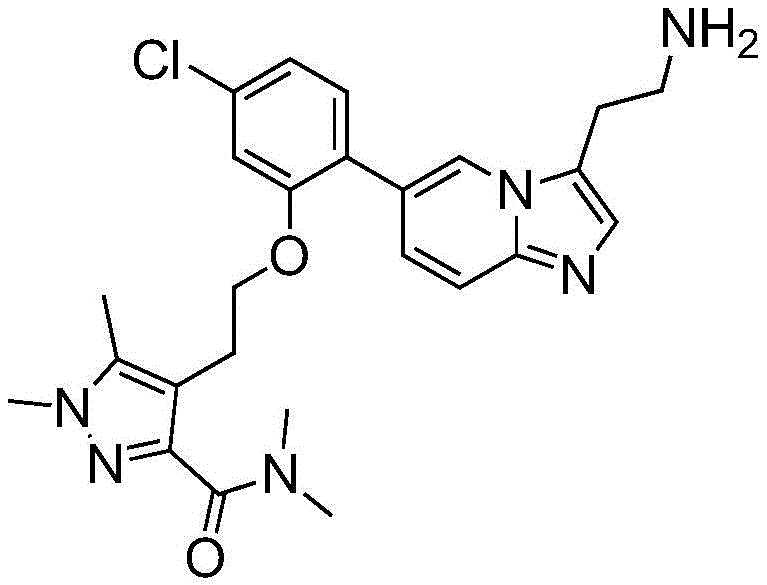
4- (2- {2- [3- (2-aminoethyl) imidazo [1,2-a ] pyridin-6-yl ] -5-chlorophenoxy } ethyl) -N, N,1, 5-tetramethyl-1H-pyrazole-3-carboxamide
Step 1
4- (2- {2- [3- ({ [2- (tert-butoxy) carbonyl)]Amino } ethyl) imidazo [1,2-a]Pyridin-6-yl]-4-chlorophenoxy } ethyl) -1, 5-dimethyl-1H-pyrazole-3-carboxylic acid (intermediate 1,1.8g,3.25mmol) in THF (20mL) was added carbonyldiimidazole (790mg,4.9mmol) and the reaction mixture was stirred at rt for 3H. The mixture was treated with triethylamine (1.4mL,9.7mmol) followed by dimethylamine solution (2M in THF, 3.2mL,6.5 mmol). The reaction mixture was stirred at rt for 16h, quenched by addition of saturated sodium bicarbonate solution and extracted with ethyl acetate. The organic extracts were dried over sodium sulfate and concentratedAnd (4) shrinking. The crude product was purified by preparative TLC (3% MeOH/DCM) to give N- [2- (6- {2- [2- (3- (dimethyl) carbamoyl-1, 5-dimethyl-1H-pyrazol-4-yl) ethoxy]-4-chlorophenyl } imidazo [1,2-a]Pyridin-3-yl) ethyl]Tert-butyl carbamate as off-white solid (1.0g, 53%).1H NMR(400MHz,DMSO-d6)δ8.38(s,1H),7.51(d,1H),7.42-7.45(m,2H),7.23-7.26(m,2H),7.11(dd,1H),6.98(m,1H),5.76(s,1H),4.12(t,2H),3.65(s,3H),3.36(t,2H),3.03(s,3H),3.00(t,2H),2.90(s,3H),2.84(t,2H),1.95(s,3H),1.29(d,9H).
According to the general procedure for Boc deprotection (method A), N- [2- (6- {2- [2- (3- (dimethyl) carbamoyl-1, 5-dimethyl-1H-pyrazol-4-yl) ethoxy]-4-chlorophenyl } imidazo [1,2-a]Pyridin-3-yl) ethyl]Tert-butyl carbamate (1.40g,2.4mmol) was treated with ethereal HCl (2M,70 mL). The solution was stirred at room temperature for 3h and evaporated under reduced pressure. The crude product was dissolved in water and lyophilized to give the title compound as an off-white solid (1.23g, 92%), hplc rt 6.3min, LC-MS MH+481;1H NMR(400MHz,DMSO-d6)δ14.9(br.s,1H),9.01(s,1H),8.36(br.s,3H),8.17(s,1H),8.02(dd,2H),7.55(d,1H),7.32(d,1H),7.17(d,1H),4.14(t,2H),3.70(s,3H),3.48(t,2H),3.19(t,2H),3.07(s,3H),2.91(s,3H),2.86(t,2H),2.07(s,3H).
Example 2

4- (2- {2- [3- (2-aminoethyl) imidazo [1,2-a ] pyridin-6-yl ] -5-chlorophenoxy } ethyl) -N,1, 5-trimethyl-1H-pyrazole-3-carboxamide
Step 1
4- (2- {2- [3- (2- { [ (tert-butoxy) carbonyl)]Amino } ethyl) imidazo [1,2-a]Pyridin-6-yl]A solution of-4-chlorophenoxy } ethyl) -1, 5-dimethyl-1H-pyrazole-3-carboxylic acid (intermediate 1,64mg,0.19mmol) in THF (2mL) was treated with triethylamine (0.048mL,0.35mmol), methylamine solution (2M in THF, 0.17mL,0.35mmol), hydroxybenzotriazole (23.4mg,0.17mmol) and EDCI (33.2mg,0.17 mmol). Mixing the reactionThe mixture was stirred at rt for 16h with saturated NaHCO3Quenched and extracted with ethyl acetate. The combined extracts were washed with water and brine, dried over sodium sulfate, and concentrated. The crude product was purified by preparative TLC (5% MeOH/DCM) to yield N- {2- [6- (4-chloro-2- {2- [1, 5-dimethyl-3- (methylcarbamoyl) -1H-pyrazol-4-yl]Ethoxy } phenyl) imidazo [1,2-a]Pyridin-3-yl]Ethyl tert-butyl carbamate as an off-white solid (30mg, 46%).1H NMR(400MHz,DMSO-d6)δ8.37(s,1H),7.90(d,1H),7.52(d,1H),7.42-7.45(m,2H),7.23-7.27(m,2H),7.09(d,1H),6.98(t,1H),5.75(s,1H),4.16(t,2H),4.02(q,1H),3.66(s,3H),3.31(t,2H),3.01(m,4H),2.68(s,3H),1.90(s,3H),1.30(d,9H).
Following the general procedure for Boc deprotection (method B), N- {2- [6- (4-chloro-2- {2- [1, 5-dimethyl-3- (methylcarbamoyl) -1H-pyrazol-4-yl)]Ethoxy } phenyl) imidazo [1,2-a]Pyridin-3-yl]Ethyl } carbamic acid tert-butyl ester (30mg,0.053mmol) is dissolved in dioxane (2mL), cooled to 0 deg.C, and treated with HCl in ether (2M,2 mL). The solution was stirred at room temperature for 3h and evaporated under reduced pressure. The crude product was dissolved in water and lyophilized to give the title compound as a light brown solid (20mg, 81%), hplc rt 3.9min, LC-MS MH+467;1H NMR(400MHz,DMSO-d6)δ14.7(br.s,1H),8.98(s,1H),8.19(br.s,3H),8.15(s,1H),8.05(d,1H),8.01(d,1H),7.89(q,1H),7.55(dd,1H),7.37(d,1H),7.19(dd,1H),4.18(t,2H),3.72(s,3H),3.46(t,2H),3.20(q,2H),3.04(t,2H),2.67(d,3H),2.07(s,3H).
Example 3

4- (2- {6- [3- (2-aminoethyl) imidazo [1,2-a ] pyridin-6-yl ] -3-chloro-2-fluorophenoxy } ethyl) -N,1, 5-tetramethyl-1H-pyrazole-3-carboxamide
Step 1
To 4- (2- {6- [3- (2- { [ (tert-butoxy) carbonyl)]Amino } ethyl) imidazo [1,2-a]Pyridin-6-yl]-3-chloro-2-fluorophenoxy } ethyl) -1, 5-dimethyl-1H-pyri-dineOxazole-3-carboxylic acid (intermediate 2,250mg,0.44mmol) in THF (2mL) was added dimethylamine (2M in THF, 0.66mL,1.31mmol) followed by triethylamine (0.31mL,2.18mmol), EDC hydrochloride (125mg,0.66mmol) and hydroxybenzotriazole (88mg,0.66mmol) and the reaction mixture stirred at rt for 2 days. The reaction mixture was quenched by addition of saturated sodium bicarbonate solution and extracted with ethyl acetate. The organic extracts were washed with water, brine, dried over sodium sulfate and concentrated. The crude product was purified by preparative TLC (3% MeOH/DCM) to afford N- {2- [6- (4-chloro-2- {2- [3- (dimethylcarbamoyl) -1, 5-dimethyl-1H-pyrazol-4-yl]Ethoxy } -3-fluorophenyl) imidazo [1,2-a]Pyridin-3-yl]Ethyl } carbamic acid tert-butyl ester (100mg, 38%).1H NMR(400MHz,DMSO-d6)δ8.41(s,1H),7.52(d,1H),7.44(s,1H),7.40(d,1H),7.36(d,1H),7.27(d,1H),6.98(dd,1H),3.95(t,2H),3.62(s,3H),3.28(t,2H),3.03(t,2H),2.94(s,3H),2.84(s,3H),2.71(t,2H),1.93(s,3H),1.30(d,9H).
According to the general procedure for deprotection of Boc (method A), N- {2- [6- (4-chloro-2- {2- [3- (dimethylcarbamoyl) -1, 5-dimethyl-1H-pyrazol-4-yl ] was reacted at 0 deg.C]Ethoxy } -3-fluorophenyl) imidazo [1,2-a]Pyridin-3-yl]Tert-butyl ethyl } carbamate (100mg,1.7mmol) was dissolved in ether (2mL) and treated with HCl in ether (2M,10 mL). The solution was stirred at room temperature for 3h and evaporated under reduced pressure. The crude product was triturated with ether and freeze dried to give the title compound (82mg, 98%), hplc rt 1.86min, LC-MS MH+499;1H NMR(400MHz,DMSO-d6)δ14.79(br.s,1H),9.00(s,1H),8.21(br.s,3H),8.18(s,1H),7.95(d,2H),7.51(t,1H),7.42(d,1H),3.97(t,2H),3.63(s,3H),3.43(t,2H),3.19(t,2H),2.98(s,3H),2.81(s,3H),2.68(t,2H),2.08(s,3H).
Example 4

4- (2- {6- [3- (2-aminoethyl) imidazo [1,2-a ] pyridin-6-yl ] -3-chloro-2-fluorophenoxy } ethyl) -N,1, 5-trimethyl-1H-pyrazole-3-carboxamide
Step 1
To 4- (2- {6- [3- (2- { [ (tert-butoxy) carbonyl)]Amino } ethyl) imidazo [1,2-a]Pyridin-6-yl]-3-chloro-2-fluorophenoxy } ethyl) -1, 5-dimethyl-1H-pyrazole-3-carboxylic acid (intermediate 2,250mg,0.44mmol) in THF (2mL), methylamine (2M in THF, 0.65mL,1.31mmol) was added followed by triethylamine (0.31mL,2.18mmol), EDC hydrochloride (126mg,0.66mmol) and hydroxybenzotriazole (89mg,0.66mmol), and the reaction mixture was stirred at rt for 2 days. The reaction mixture was quenched by addition of saturated sodium bicarbonate solution and extracted with ethyl acetate. The organic extracts were washed with water, brine, dried over sodium sulfate and concentrated. The crude product was purified by preparative TLC (3% MeOH/DCM) followed by preparative hplc to give N- {2- [6- (4-chloro-2- {2- [1, 5-dimethyl-3- (methylcarbamoyl) -1H-pyrazol-4-yl]Ethoxy } -3-fluorophenyl) imidazo [1,2-a]Pyridin-3-yl]Ethyl } carbamic acid tert-butyl ester (100mg, 39%).1H NMR(400MHz,DMSO-d6)δ7.75(d,1H),7.52(d,1H),7.44(s,1H),7.40(t,1H),7.36(d,1H),7.28(d,1H),6.98(dd,1H),4.03(t,2H),3.62(s,3H),3.28(t,2H),3.03(t,2H),2.89(t,3H),2.63(d,3H),1.91(s,3H),1.30(d,9H).
According to the general procedure for deprotection of Boc (method A), N- {2- [6- (4-chloro-2- {2- [1, 5-dimethyl-3- (methylcarbamoyl) -1H-pyrazol-4-yl ] was reacted at 0 deg.C]Ethoxy } -3-fluorophenyl) imidazo [1,2-a]Pyridin-3-yl]Tert-butyl ethyl } carbamate (100mg,1.7mmol) was dissolved in ether (2mL) and treated with HCl in ether (2M,10 mL). The solution was stirred at room temperature for 3h and evaporated under reduced pressure. The crude product was triturated with ether and freeze dried to give the title compound (82mg, 99%), hplc rt 1.83min, LC-MS MH+485;1H NMR(400MHz,DMSO-d6)δ14.75(br.s,1H),9.00(s,1H),8.17(br.s,3H),8.17(s,1H),7.99(d,2H),7.66(m,1H),7.51(t,1H),7.41(d,1H),4.01(t,2H),3.70(s,3H),3.40(t,2H),3.19(t,2H),2.87(t,3H),2.57(d,3H),2.08(s,3H).
Biological assay
Example (a): HsNMT1 IC50
According to Gonclaves, V.et al, Analytical Biochemistry, 2012, 421, 342-And Goncalves, v. et al, j.med.chem, 2012, 55, 3578, the IC of the above four inventive example compounds (examples 1-4) and six comparative examples (comparative examples 1,2, 3, 4, 5 and 6) to human NMT1 (hst NMT1) were measured based on assay with sensitive fluorescence of CoA detected by 7-diethylamino-3- (4-maleimido-phenyl) -4-methylcoumarin50The value is obtained.
The structure of the comparative example is as follows: comparative example 1 is example 70 of WO2017/001812 (4- (2- {2- [3- (2-aminoethyl) imidazo [1,2-a ] pyridin-6-yl ] -5-fluorophenoxy } ethyl) -N,1, 5-tetramethyl-1H-pyrazole-3-carboxamide); comparative example 2 is example 94 of WO2017/001812 (4- (2- {2- [3- (2-aminoethyl) imidazo [1,2-a ] pyridin-6-yl ] -5-fluorophenoxy } ethyl) -N,1, 5-trimethyl-1H-pyrazole-3-carboxamide); comparative example 3 is example 71([2- (6- { 4-fluoro-2- [2- (1,3, 5-trimethyl-1H-pyrazol-4-yl) ethoxy ] phenyl } imidazo [1,2-a ] pyridin-3-yl) ethyl ] (methyl) amine) of WO 2017/001812; comparative example 4 is example 78 of WO2017/001812 (4- [2- (2- {3- [ (dimethylamino) methyl ] imidazo [1,2-a ] pyridin-6-yl } -5-fluorophenoxy) ethyl ] -N,1, 5-tetramethyl-1H-pyrazole-3-carboxamide); comparative example 5 is example 17 of WO2017/001812 (1- (5- (4-fluoro-2- (2- (1,3, 5-trimethyl-1H-pyrazol-4-yl) ethoxy) phenyl) -1-methyl-1H-indazol-3-yl) -N, N-dimethylmethylamine); and comparative example 6 is example 30 of WO2017/001812 (1- (5- (3-fluoro-2- (2- (1,3, 5-trimethyl-1H-pyrazol-4-yl) ethoxy) phenyl) -1-methyl-1H-indazol-3-yl) -N, N-dimethylmethylamine). Methods for the synthesis of comparative examples 1,2, 3, 4, 5 and 6 are provided in WO 2017/001812.


Comparative examples 1 and 2 are most similar in structure to the compounds of the present invention. Comparative examples 5 and 6 are most similar in structure to the known potent human NMT inhibitor IMP-1088, which is disclosed as compound 49 in WO2017/001812 (innovative Innovations Limited).
As a result:
HsNMT1 IC for compounds 1-4 of the examples of the invention are provided in Table 3 below50The value is obtained. Table 3 also shows the HsNMT1 IC of comparative examples 1,2, 3, 4, 5 and 650The value is obtained.
The example compounds and comparative examples 1,2 and 4 all had an HsNMT1 IC of approximately 1nM50A value that is the lowest measurable threshold of the assay (i.e., the potency of the compound exceeds the measurable sensitivity of the enzyme inhibition assay). Thus, to differentiate the potency of the compounds, a multi-cell line assay (metabolic activity assay and assays) are used to differentiate the potency of the compounds.
Example (b) Metabolic Activity assay (MTS assay)
The NMT inhibitor activity of the examples of the invention was tested in an in vitro metabolic activity assay using the human cell line MRC 5. Comparative examples 1,2, 3, 4, 5 and 6 were also tested in the same metabolic activity assay. Since it is an inhibitor of human NMT1 and/or NMT2, an active compound having an inhibitory metabolic activity in the assay is expected to be useful as a substance for preventing and/or treating cancer. The compound with the highest activity in this assay is expected to be the most potent inhibitor of human NMT1 and/or NMT 2.
Cell preparation:
MRC5 cells (obtained from doctor David Mann group of Imperial school; cell type: fibroblasts from normal lung tissue) were grown in DMEM medium (supplemented with 10% FBS) and seeded in 96-well plates 24 hours before treatment. Cell suspensions were prepared by adjusting the cell density to the appropriate concentration (as shown in table 1 below), and 50 μ L of the cell suspension was transferred to B-G wells of 96-well plates at columns 2-11.
Table 1: number of cells to be seeded

The test method comprises the following steps:
mu.L of growth medium containing 0.2% DMSO (DMEM medium) was added to the B-G wells of columns 2 and 11 as a positive control, and 100. mu.L of growth medium containing puromycin (3. mu.g/mL; final concentration in plate 2. mu.g/mL) was added to the B-G wells of column 3 as a negative control. For each example (examples 1 and 2), and each comparative example tested (comparative examples 1,2, 3, 4, 5 and 6) (same final DMSO percentage, dilution factor ═ 3, starting from 15 μ M or 150 μ M), seven concentrations of NMT inhibitor stock solutions were prepared. 100 μ L of inhibitor stock solution was added to the B-G wells of columns 4-10 of a 96-well plate (final concentration of example compound or comparative example compound in the plate started at 10 μ M or 100 μ M; total volume per well was 150 μ L). The plates were incubated at 37 ℃ and 5% CO2Incubation at level.
After 72 hours, 20 μ L of MTS reagent (Promega, prepared according to the supplier's protocol) was added to each well of the 96-well plate. The plates were incubated at 37 ℃ for 2 hours and the absorbance of each well was measured at 490nm using an EnVision plate reader. The average absorbance value of the negative control (puromycin-treated cells) was subtracted from each value and the metabolic activity was calculated as a percentage relative to the positive control (DMSO-treated cells). EC was calculated using GraphPad50The value is obtained.
As a result:
the EC of example compounds 1 and 2 on the MRC5 cell line is provided in table 3 below50The value is obtained. Table 3 also shows the EC for the MRC5 cell line of comparative examples 1,2, 3, 4, 5 and 650The value is obtained.
From the results, it can be seen that example compounds 1 and 2 showed the highest activity in the metabolic activity assay, EC against MRC5 cell line50Values of less than 40nM thus indicate that the compounds are potent inhibitors of human NMT and are useful as anti-cancer agents. Comparative example 6 also showed high metabolic activity, while comparative example 4 had relatively high metabolic activity. Comparative examples 1,2, 3 and 5 are metabolically activeActivity in cell line assays was significantly lower.
Example (c) Measurement of
In vitro using human cell lines MDA MB 231, LY 12318 or BL-41 The activity of the NMT inhibitors of the examples of the invention was tested in the assay. Comparative examples 1 and 2 were also tested in the same assay. Since it is an inhibitor of human NMT1 and/or NMT2, an active compound having an inhibitory metabolic activity in this assay is expected to be useful as a substance for preventing and/or treating cancer. The compound with the highest activity in this assay is the most potent inhibitor of human NMT1 and/or
 NMT 2.
MDA MB 231 cells (obtained from professor Eric Aboagye of Hammersmith Hospital; cell type: triple negative breast cancer) were grown on low glucose DMEM, 5% CO2In medium (supplemented with 10% FBS); LY 12318 cells (doctor Martin Janz from Max Delrueck Center; cell type: xenografts from B-cell lymphoma patients) were grown in DMEM medium (supplemented with 10% FBS); BL-41 cells (obtained from Cell Services of Crick Institute; Cell type: Burkitt's lymphoma) were grown in RPMI-1640 medium, 5% CO2(supplemented with 10% FBS). 24 hours prior to treatment, MDA MB 231 cells, LY 12318 cells, or BL-41 cells were seeded in 96-well plates. Cell suspensions were prepared by adjusting the cell density to the appropriate concentration (as shown in table 2 below), and 50 μ L of the cell suspension was transferred to B-G wells of 96-well plates at columns 2-11.
Table 2: number of cells to be seeded

After 24 hours, a mixture containing 0.0004% DMSO (positive control), puromycin and staurosporine (negative control, final concentrations of 2. mu.g/mL and 1. mu.g/mL, respectively, was preparedM) or different concentrations of 50 μ L growth medium (low glucose DMEM supplemented with 10% FBS, 5% CO for MDA MB 231 cells) of each example (examples 1 and 2) or each comparative example (comparative examples 1 and 2) (dilution factor 3, starting from 20 μ M, final concentration in the plate starting from 10 μ M)2A culture medium; for LY 12318 cells, DMEM medium supplemented with 10% FBS at 5% CO2Performing the following steps; or RPMI-1640 medium supplemented with 10% FBS for BL-41 cells) and then added to the wells of a 96-well plate. The plates were incubated at 37 ℃ with 5% CO2Incubation at level.
After 72 hours, 20. mu.l/well were added according to the manufacturer's protocol (G8081, Promega) was added to the plates, and the plates were incubated at 37 ℃ for 4h for MDA MB 231 cells and BL-41 cells or at 37 ℃ for 3h for LY 12318 cells, and then the absorbance per well was measured at 570nm using an EnVision plate reader. The value of the negative control was subtracted from each value. Metabolic activity was calculated as a percentage relative to the positive control. EC calculation Using GraphPad Prism50The value is obtained.
As a result:
the EC of example Compounds 1 and 2 on MDA MB 231, LY 12318 and BL-41 cell lines is provided in Table 3 below50The value is obtained. Table 3 also shows the EC for the MDA MB 231, LY 12318 and BL-41 cell lines of comparative examples 1 and 250The value is obtained.
From the results, it can be seen that example compounds 1 and 2 are Highest activity was shown in the assay, EC per cell line50Values were all less than 70nM, indicating that the compounds are useful as anti-cancer agents. Comparative examples 1 and 2 were significantly less active in each cell line tested. Example compounds 3 and 4 are potent inhibitors of HsNMT1, although they do not appear to be as potent as
 example compounds 1 and 2.
Table 3: results of examples (a), (b) and (c)

Results were collected in more than one experiment, in particular the results of examples 3 and 4 were collected at a later time than the results of examples 1 and 2.
Example (d) in vivo study in mice
The effect of example 1 on the growth rate of mouse tumors was also investigated.
Mixing 5x 10⁶MDA MB 231 cells (obtained from professor Eric Aboagye, Hammersmith Hospital; cell type: triple negative breast cancer) were resuspended in PBS and 50. mu.l of cells/PBS were mixed with 50. mu.l of Matrigel to provide a total volume of 100. mu.L, which contained 50% Matrigel. The suspension was injected into the right flank of 16 Athymic Nude female mice. Mice were 5-6 weeks old, obtained from Charles Rivers laboratories. All experiments were completed under the guidance of London Home Office licensing and London Home Office Ethics Committee. When the tumor mass reaches 50mm3At this time, animals were randomly grouped (8 per group) and treated twice daily for 10 days by oral gavage with either PBS solution (control group) or 25mg/kg of example 1 suspended in PBS. Tumor growth rate was analyzed by caliper measurements daily after the start of the treatment period with example 1 ("NMTi") or control ("PBS"). According to the formula: (length x width)/2, tumor volume was calculated. Body weights of mice were also measured daily after the start of the treatment period with example 1 ("NMTi") or control ("PBS"). Mice were euthanized when tumor size exceeded 15mm diameter in any direction. For mice undergoing a 10 day treatment period with example 1 ("NMTi") or control ("PBS"), figure 1 shows the average tumor growth rate, while figure 2 shows the weight.
As a result:
as can be seen from figure 1, the reduced tumor growth rate in mice treated with example 1 of the invention indicates that the compounds of the invention have or are expected to have anti-tumor activity in vivo. In addition, the data also demonstrate that the compounds of the present invention are effective or expected to be effective when administered orally, and are therefore orally bioavailable. No change in body weight of the mice was observed.
The metabolic stability of the compounds of the invention was also investigated.
Example (e): half life of rat liver cell
The metabolic stability of example compound 1 was tested in a rat metabolic assay using hepatocytes derived from pooled (pooled) male Sprague-Dawley rats. Comparative examples 2, 3 and 4 were also tested in the same assay. By having a long half-life in human patients, compounds with good metabolic stability in the assay are expected to be particularly useful as agents for the prevention and/or treatment of cancer.
Frozen pooled rat hepatocytes obtained from Life technologies were thawed and purified according to the manufacturer's instructions. Test compounds (4mM) in DMSO were diluted with acetonitrile to provide a 100. mu.M stock solution, which was then further diluted with Krebs-Henseleit buffer (supplemented with CaCl) at pH 7.42、NaHCO3HEPES, fructose and glycine) to provide a 2 μ M working solution. mu.L of the working solution was incubated at 37 ℃ with 25. mu.L of rat hepatocyte suspension (containing 1X 10)6cells/mL) and at 95% relative humidity at 5% CO2Incubation at 37 ℃. The wells were incubated for appropriate time (0, 15, 30, 45, 60 and 75min) and then quenched with 250 μ L of acetonitrile containing the reference standard diltiazem, 7-ethoxycoumarin and propranolol (propranolol). The plate was shaken and sonicated for 5min, then cooled to 4 ℃ until all sampling was completed. All plates were centrifuged at 4000rpm for 20min to pellet debris. mu.L of the supernatant was diluted with 110. mu.L of water and quantified using LC-MS/MS.
The results were used to calculate the% remaining of the test compound at time point T ═ 100x — [ (AUC at time point T)/(AUC of T ═ 0) ]. The linear regression curves were fitted to a plot of the natural logarithm of AUC (ln) versus time. T-half (min) ═ 0.693/slope.
As a result:
table 4 provides the rat hepatocyte half-lives of example compound 1 and comparative examples 2, 3 and 4. The results show that example compound 1 has good metabolic stability in vitro. Thus, due to the long half-life in human patients, the compounds of the invention are expected to be particularly useful as medicaments, in particular as medicaments for the prevention and/or treatment of cancer. Comparative examples 3 and 4 have significantly shorter half-lives.
Example (f): half-life of rat or mouse
The example compound 1, as well as comparative examples 2 and 3, were tested for metabolic stability in male Sprague-Dawley rats. Comparative example 5 was tested for metabolic stability in male CD-1 mice. It is expected that a compound having good metabolic stability in rats or mice is particularly useful as a substance for preventing and/or treating cancer because of its long half-life in human patients.
Rat protocol:
male Sprague-Dawley rats were fasted for 4 hours prior to dosing. Each group of 3 rats was administered with example compound 1, comparative example 2 or comparative example 3:
(i) at a dose of 1mg/kg, animals were anesthetized with 3% v/v isoflurane-oxygen mixture using an administration volume of 2mL/kg and administered via the caudal vein; or
(ii) The dose of 3mg/kg was administered orally to conscious animals by gavage (OG) using a dosing volume of 5 mL/kg.
After 5min, 15min, 30min, 1h, 2h, 4h, 8h and 24h (intravenous) and after 15min, 30min, 1h, 2h, 4h, 8h and 24h (oral), 100 μ L of blood samples were collected and transferred to heparinized capillaries and then transferred to 0.5mL microcentrifuge tubes. All blood samples were processed for plasma by centrifugation at 1640X g for 5 minutes at 4 ℃ within half an hour of collection. Plasma samples were stored at-20 ℃ until all samples were collected. All samples were mixed with ice-cold acetonitrile containing Internal Standard (IS) at 1:4v/v and centrifuged at 4000rpm for 15min at 15 ℃. The supernatant was then half diluted with water and sampled for LCMS/MS analysis. The analyte peak area/IS peak area (ratio) IS considered for further data analysis as described below.
Calibration curve and QC samples: compound stocks were prepared and serial dilutions were further completed. Samples were added to blank plasma (1: 50). The calibration curve range is 1-1250 ppb. Three quality control samples were also prepared-high qc (hqc), medium qc (mqc), and low qc (lqc).
Mouse protocol:
same rat protocol except CD-1 mice were dosed at 5mg/kg iv and 10mg/kg po.
As a result:
table 4 provides the oral half-life of rats for example compound 1, and comparative examples 2 and 3. Table 4 also provides the oral half-life of the mice of comparative example 5. The results indicate that example compound 1 has good metabolic stability in vivo. Thus, due to the long half-life in human patients, the compounds of the present invention are expected to be particularly useful as medicaments, and in particular as medicaments for the prevention and/or treatment of cancer. Comparative examples 3 and 5 have significantly shorter in vivo half-lives than example compound 1.
Example (g): human liver microsomal half-life
The metabolic stability of example compound 1 was tested in an assay using human liver microsomes. Comparative examples 2, 3, 4, 5 and 6 were also tested with the same assay. Due to the long half-life in human patients, compounds with good metabolic stability in the assay are expected to be particularly useful as agents for the prevention and/or treatment of cancer.
Frozen human liver microsomes obtained from Corning (cat #452117) in the United states were thawed and diluted with 100mM phosphate buffer pH 7.4 to give a 1mg/mL solution. The NADPH Regeneration System (NRS) was made to contain 13mM NADP, 33mM glucose-6-phosphate, 33mM MgCl in 100mM phosphate buffer pH 7.42And 4U/mL glucose-6-phosphate dehydrogenase. Test compounds (4mM) in DMSO were diluted with acetonitrile to provide 100. mu.M stock solution, and then diluted with 100mM phosphate buffer, pH 7.4, to provide 2. mu.M working solution. Before use, the liver microsome solution and NRS were incubated at 37 ℃. To each well of the test plate, 60. mu.L of buffer, 50. mu.L of test compound solution, and 10. mu.L of NRS were dispensed. The reaction was initiated by adding 40. mu.L of liver microsome solution. The wells were incubated for appropriate times (0, 5, 10, 20, 3)0 and 60min) and then quenched with 300 μ L of acetonitrile containing the reference standards atenolol, propranolol, diclofenac, verapamil). All plates were centrifuged at 3500rpm for 20min at 15 ℃ to pellet debris. mu.L of the supernatant was diluted with 110. mu.L of water and quantified by LC-MS/MS.
The results were used to calculate the% remaining of test compound at time t as 100 ×~[ (AUC at time T)/(AUC at 0T)]. The linear regression curves were fitted to a plot of the natural logarithm of AUC (ln) versus time. T-half (min) ═ 0.693/slope.
As a result:
table 4 provides the half-lives of example compound 1 and comparative examples 2, 3, 4, 5 and 6 in human liver microsomes. The results show that example compound 1 has good metabolic stability in vitro. Thus, due to the long half-life in human patients, the compounds of the present invention are expected to be particularly useful as medicaments, and in particular as medicaments for the prevention and/or treatment of cancer. Comparative examples 3-6 have significantly shorter half-lives than example compound 1.
TABLE 4

Throughout this specification and the claims which follow, unless the context requires otherwise, the word "comprise", and variations such as "comprises" and "comprising", will be understood to imply the inclusion of a stated integer, step, group of integers or group of steps but not the exclusion of any other integer, step, group of integers or group of steps.
All patents and patent applications cited herein are incorporated by reference in their entirety.
Claims (18)


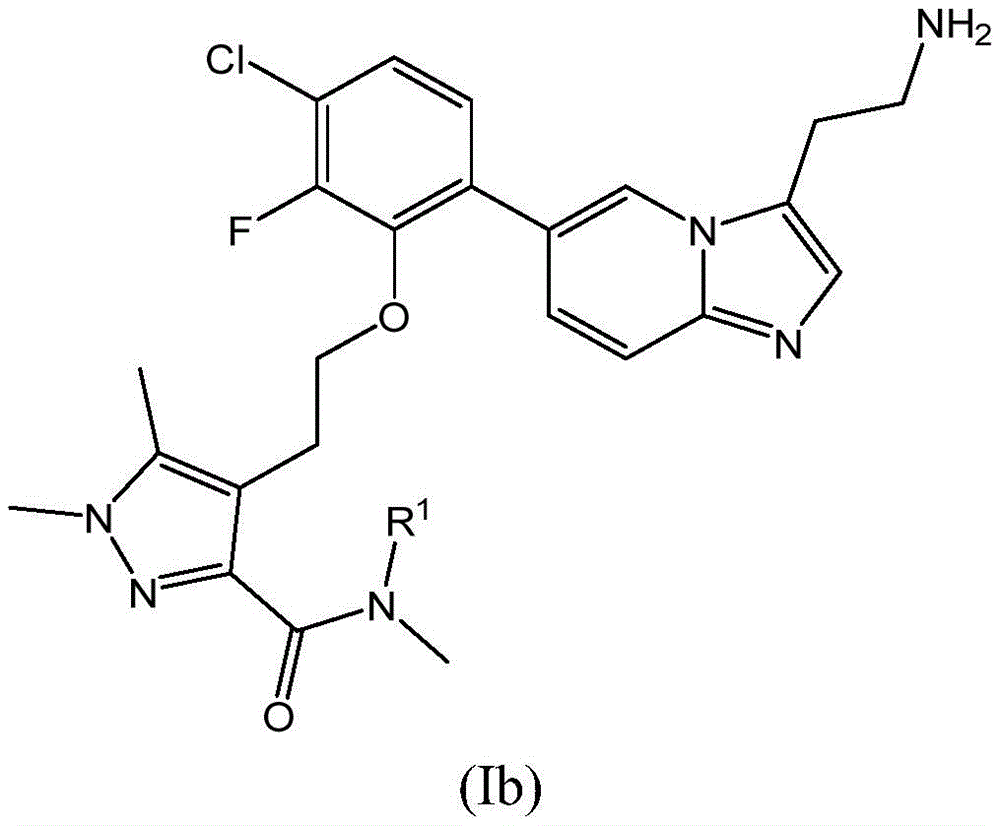


Applications Claiming Priority (3)
| Application Number | Priority Date | Filing Date | Title |
|---|---|---|---|
| GBGB1820659.9A GB201820659D0 (en) | 2018-12-19 | 2018-12-19 | Novel compostions and their use in therapy |
| GB1820659.9 | 2018-12-19 | ||
| PCT/GB2019/053613 WO2020128473A1 (en) | 2018-12-19 | 2019-12-19 | Novel compounds and their use in therapy |
Publications (1)
| Publication Number | Publication Date |
|---|---|
| CN113272300A true CN113272300A (en) | 2021-08-17 |
Family
ID=65147009
Family Applications (1)
| Application Number | Title | Priority Date | Filing Date |
|---|---|---|---|
| CN201980084437.9A Pending CN113272300A (en) | 2018-12-19 | 2019-12-19 | Novel compounds and their use in therapy |
Country Status (15)
| Country | Link |
|---|---|
| US (1) | US12304909B2 (en) |
| EP (1) | EP3898625B1 (en) |
| JP (1) | JP2022513915A (en) |
| KR (1) | KR20210106415A (en) |
| CN (1) | CN113272300A (en) |
| AU (1) | AU2019411529A1 (en) |
| BR (1) | BR112021011208A2 (en) |
| CA (1) | CA3117432A1 (en) |
| EA (1) | EA202191358A1 (en) |
| ES (1) | ES2980581T3 (en) |
| GB (1) | GB201820659D0 (en) |
| IL (1) | IL284053A (en) |
| MX (1) | MX2021007484A (en) |
| SG (1) | SG11202104261UA (en) |
| WO (1) | WO2020128473A1 (en) |
Cited By (2)
| Publication number | Priority date | Publication date | Assignee | Title |
|---|---|---|---|---|
| WO2025007800A1 (en) * | 2023-07-05 | 2025-01-09 | 南京同诺康医药科技有限公司 | Nmt inhibitor, and preparation method therefor and use thereof |
| WO2025077671A1 (en) * | 2023-10-09 | 2025-04-17 | 浙江海正药业股份有限公司 | Polysubstituted aryl derivative and preparation method therefor and use thereof |
Families Citing this family (5)
| Publication number | Priority date | Publication date | Assignee | Title |
|---|---|---|---|---|
| GB202014114D0 (en) * | 2020-09-08 | 2020-10-21 | Synairgen Res Ltd | Use of inhaled interferon-beta to treat virus-induced exacerbations in copd patients undergoing treatment with a systemic corticosteroid |
| GB202014736D0 (en) | 2020-09-18 | 2020-11-04 | Imperial College Innovations Ltd | Novel compounds and their use in therapy |
| GB202017367D0 (en) | 2020-11-02 | 2020-12-16 | Imperial College Innovations Ltd | Novel use |
| WO2024052685A1 (en) | 2022-09-09 | 2024-03-14 | MyricX Pharma Limited | Cytotoxic imidazo[1,2-a]pyridine compounds and their use in therapy |
| GB202403391D0 (en) | 2024-03-08 | 2024-04-24 | Myricx Pharma Ltd | Novel compounds and their use in therapy |
Citations (1)
| Publication number | Priority date | Publication date | Assignee | Title |
|---|---|---|---|---|
| WO2017001812A1 (en) * | 2015-06-29 | 2017-01-05 | Imperial Innovations Limited | Compounds and their use as inhibitors of n-myristoyl transferase |
Family Cites Families (6)
| Publication number | Priority date | Publication date | Assignee | Title |
|---|---|---|---|---|
| ES2217882T3 (en) | 1998-12-18 | 2004-11-01 | Basilea Pharmaceutica Ag | 4- (AMINOALCOXY) BENZOFURANS AS INHIBITORS OF N-MIRISTOILTRANSFERASA. |
| GB0815947D0 (en) | 2008-09-02 | 2008-10-08 | Univ Dundee | Compounds |
| GB201120993D0 (en) | 2011-12-06 | 2012-01-18 | Imp Innovations Ltd | Novel compounds and their use in therapy |
| JP7539760B2 (en) | 2015-07-17 | 2024-08-26 | パシレックス・ファーマシューティカルズ・インコーポレイテッド | Epigenetic silencing of NMT2 |
| GB201820660D0 (en) | 2018-12-19 | 2019-01-30 | Imperial Innovations Ltd | Cancer treatments |
| WO2020129475A1 (en) | 2018-12-20 | 2020-06-25 | 株式会社三五 | Method of producing exhaust treatment device |
-
2018
- 2018-12-19 GB GBGB1820659.9A patent/GB201820659D0/en not_active Ceased
-
2019
- 2019-12-19 ES ES19831814T patent/ES2980581T3/en active Active
- 2019-12-19 BR BR112021011208-1A patent/BR112021011208A2/en not_active Application Discontinuation
- 2019-12-19 SG SG11202104261UA patent/SG11202104261UA/en unknown
- 2019-12-19 WO PCT/GB2019/053613 patent/WO2020128473A1/en not_active Ceased
- 2019-12-19 EP EP19831814.9A patent/EP3898625B1/en active Active
- 2019-12-19 CN CN201980084437.9A patent/CN113272300A/en active Pending
- 2019-12-19 US US17/414,712 patent/US12304909B2/en active Active
- 2019-12-19 JP JP2021534344A patent/JP2022513915A/en active Pending
- 2019-12-19 MX MX2021007484A patent/MX2021007484A/en unknown
- 2019-12-19 AU AU2019411529A patent/AU2019411529A1/en not_active Abandoned
- 2019-12-19 KR KR1020217014856A patent/KR20210106415A/en not_active Withdrawn
- 2019-12-19 EA EA202191358A patent/EA202191358A1/en unknown
- 2019-12-19 CA CA3117432A patent/CA3117432A1/en active Pending
-
2021
- 2021-06-15 IL IL284053A patent/IL284053A/en unknown
Patent Citations (1)
| Publication number | Priority date | Publication date | Assignee | Title |
|---|---|---|---|---|
| WO2017001812A1 (en) * | 2015-06-29 | 2017-01-05 | Imperial Innovations Limited | Compounds and their use as inhibitors of n-myristoyl transferase |
Cited By (2)
| Publication number | Priority date | Publication date | Assignee | Title |
|---|---|---|---|---|
| WO2025007800A1 (en) * | 2023-07-05 | 2025-01-09 | 南京同诺康医药科技有限公司 | Nmt inhibitor, and preparation method therefor and use thereof |
| WO2025077671A1 (en) * | 2023-10-09 | 2025-04-17 | 浙江海正药业股份有限公司 | Polysubstituted aryl derivative and preparation method therefor and use thereof |
Also Published As
| Publication number | Publication date |
|---|---|
| EP3898625B1 (en) | 2024-04-17 |
| IL284053A (en) | 2021-08-31 |
| GB201820659D0 (en) | 2019-01-30 |
| MX2021007484A (en) | 2021-08-05 |
| US20220064158A1 (en) | 2022-03-03 |
| AU2019411529A1 (en) | 2021-05-27 |
| EP3898625C0 (en) | 2024-04-17 |
| US12304909B2 (en) | 2025-05-20 |
| KR20210106415A (en) | 2021-08-30 |
| BR112021011208A2 (en) | 2021-08-24 |
| CA3117432A1 (en) | 2020-06-25 |
| EP3898625A1 (en) | 2021-10-27 |
| JP2022513915A (en) | 2022-02-09 |
| EA202191358A1 (en) | 2021-09-22 |
| WO2020128473A1 (en) | 2020-06-25 |
| ES2980581T3 (en) | 2024-10-02 |
| SG11202104261UA (en) | 2021-05-28 |
Similar Documents
| Publication | Publication Date | Title |
|---|---|---|
| CN113272300A (en) | Novel compounds and their use in therapy | |
| US20240156820A1 (en) | Heterocyclic compounds, preparation methods and uses thereof | |
| CN103917536B (en) | 1-pyrazolyl-3-(4-((2-(phenylamino) pyrimidine-4-yl) epoxide) naphthalene-1-base) urea is used as p38 map kinase inhibitor | |
| US12599676B2 (en) | Cytotoxic imidazo[1,2-A]pyridine compounds and their use in therapy | |
| JP6207752B2 (en) | Quinazoline derivative and method for producing the same | |
| CN119371353B (en) | Pan-KRAS inhibitors and their medical uses | |
| KR101052387B1 (en) | Solid phase form of racemic ilaprazole | |
| RU2633694C2 (en) | Dyetherned phenylaminopyrimidine and pharmaceutical composition containing such connection | |
| TW201118078A (en) | Novel 2-pyridone compounds | |
| TW200304824A (en) | Nicotinamide derivatives useful as PDE4 inhibitors | |
| JP7054528B2 (en) | Crystal form of compound that suppresses protein kinase activity and its application | |
| JP7201800B2 (en) | 3,9-diazaspiro[5,5]undecane-based compounds as inhibitors of FLT3 and AXL | |
| WO2003045953A1 (en) | Crystals of taxane derivative and process for their production | |
| US12102610B2 (en) | Treprostinil salt | |
| TW202342041A (en) | Pharmaceutical composition and method for preparing active ingredient compound thereof | |
| KR20250117821A (en) | HDAC inhibitors and uses thereof | |
| JP2023535846A (en) | Salts of Nitrogen-Containing Heterocyclic Compounds and Solid Forms, Pharmaceutical Compositions and Uses of Salts Thereof | |
| WO2021164053A1 (en) | Pyrido[2,3-d]pyrimidine hiv-1 reverse transcriptase inhibitor, preparation method therefor and application thereof | |
| TW201319058A (en) | Novel compound | |
| JP2015003876A (en) | Triazole compound |
Legal Events
| Date | Code | Title | Description |
|---|---|---|---|
| PB01 | Publication | ||
| PB01 | Publication | ||
| SE01 | Entry into force of request for substantive examination | ||
| SE01 | Entry into force of request for substantive examination | ||
| WD01 | Invention patent application deemed withdrawn after publication | ||
| WD01 | Invention patent application deemed withdrawn after publication |
Application publication date: 20210817 |