CN113133078B - A lightweight inter-satellite switching device and method for a giant low-orbit satellite network - Google Patents
A lightweight inter-satellite switching device and method for a giant low-orbit satellite network Download PDFInfo
- Publication number
- CN113133078B CN113133078B CN202110418268.7A CN202110418268A CN113133078B CN 113133078 B CN113133078 B CN 113133078B CN 202110418268 A CN202110418268 A CN 202110418268A CN 113133078 B CN113133078 B CN 113133078B
- Authority
- CN
- China
- Prior art keywords
- satellite
- user
- low
- switching
- target
- Prior art date
- Legal status (The legal status is an assumption and is not a legal conclusion. Google has not performed a legal analysis and makes no representation as to the accuracy of the status listed.)
- Active
Links
Images


Classifications
-
- G—PHYSICS
- G06—COMPUTING OR CALCULATING; COUNTING
- G06F—ELECTRIC DIGITAL DATA PROCESSING
- G06F18/00—Pattern recognition
- G06F18/20—Analysing
- G06F18/23—Clustering techniques
-
- H—ELECTRICITY
- H04—ELECTRIC COMMUNICATION TECHNIQUE
- H04W—WIRELESS COMMUNICATION NETWORKS
- H04W36/00—Hand-off or reselection arrangements
- H04W36/08—Reselecting an access point
-
- H—ELECTRICITY
- H04—ELECTRIC COMMUNICATION TECHNIQUE
- H04B—TRANSMISSION
- H04B7/00—Radio transmission systems, i.e. using radiation field
- H04B7/14—Relay systems
- H04B7/15—Active relay systems
- H04B7/185—Space-based or airborne stations; Stations for satellite systems
- H04B7/195—Non-synchronous stations
-
- G—PHYSICS
- G06—COMPUTING OR CALCULATING; COUNTING
- G06N—COMPUTING ARRANGEMENTS BASED ON SPECIFIC COMPUTATIONAL MODELS
- G06N3/00—Computing arrangements based on biological models
- G06N3/004—Artificial life, i.e. computing arrangements simulating life
- G06N3/006—Artificial life, i.e. computing arrangements simulating life based on simulated virtual individual or collective life forms, e.g. social simulations or particle swarm optimisation [PSO]
-
- H—ELECTRICITY
- H04—ELECTRIC COMMUNICATION TECHNIQUE
- H04B—TRANSMISSION
- H04B7/00—Radio transmission systems, i.e. using radiation field
- H04B7/14—Relay systems
- H04B7/15—Active relay systems
- H04B7/185—Space-based or airborne stations; Stations for satellite systems
- H04B7/1853—Satellite systems for providing telephony service to a mobile station, i.e. mobile satellite service
- H04B7/18539—Arrangements for managing radio, resources, i.e. for establishing or releasing a connection
- H04B7/18541—Arrangements for managing radio, resources, i.e. for establishing or releasing a connection for handover of resources
-
- H—ELECTRICITY
- H04—ELECTRIC COMMUNICATION TECHNIQUE
- H04W—WIRELESS COMMUNICATION NETWORKS
- H04W36/00—Hand-off or reselection arrangements
- H04W36/0005—Control or signalling for completing the hand-off
- H04W36/0009—Control or signalling for completing the hand-off for a plurality of users or terminals, e.g. group communication or moving wireless networks
-
- H—ELECTRICITY
- H04—ELECTRIC COMMUNICATION TECHNIQUE
- H04W—WIRELESS COMMUNICATION NETWORKS
- H04W36/00—Hand-off or reselection arrangements
- H04W36/0005—Control or signalling for completing the hand-off
- H04W36/0055—Transmission or use of information for re-establishing the radio link
- H04W36/0072—Transmission or use of information for re-establishing the radio link of resource information of target access point
-
- H—ELECTRICITY
- H04—ELECTRIC COMMUNICATION TECHNIQUE
- H04W—WIRELESS COMMUNICATION NETWORKS
- H04W36/00—Hand-off or reselection arrangements
- H04W36/0005—Control or signalling for completing the hand-off
- H04W36/0083—Determination of parameters used for hand-off, e.g. generation or modification of neighbour cell lists
-
- H—ELECTRICITY
- H04—ELECTRIC COMMUNICATION TECHNIQUE
- H04W—WIRELESS COMMUNICATION NETWORKS
- H04W36/00—Hand-off or reselection arrangements
- H04W36/0005—Control or signalling for completing the hand-off
- H04W36/0083—Determination of parameters used for hand-off, e.g. generation or modification of neighbour cell lists
- H04W36/00835—Determination of neighbour cell lists
-
- H—ELECTRICITY
- H04—ELECTRIC COMMUNICATION TECHNIQUE
- H04W—WIRELESS COMMUNICATION NETWORKS
- H04W36/00—Hand-off or reselection arrangements
- H04W36/08—Reselecting an access point
- H04W36/083—Reselecting an access point wherein at least one of the access points is a moving node
-
- H—ELECTRICITY
- H04—ELECTRIC COMMUNICATION TECHNIQUE
- H04W—WIRELESS COMMUNICATION NETWORKS
- H04W84/00—Network topologies
- H04W84/02—Hierarchically pre-organised networks, e.g. paging networks, cellular networks, WLAN [Wireless Local Area Network] or WLL [Wireless Local Loop]
- H04W84/04—Large scale networks; Deep hierarchical networks
- H04W84/06—Airborne or Satellite Networks
Landscapes
- Engineering & Computer Science (AREA)
- Computer Networks & Wireless Communication (AREA)
- Signal Processing (AREA)
- Physics & Mathematics (AREA)
- General Physics & Mathematics (AREA)
- Astronomy & Astrophysics (AREA)
- Data Mining & Analysis (AREA)
- Theoretical Computer Science (AREA)
- Aviation & Aerospace Engineering (AREA)
- General Engineering & Computer Science (AREA)
- Life Sciences & Earth Sciences (AREA)
- Evolutionary Computation (AREA)
- Artificial Intelligence (AREA)
- Mathematical Physics (AREA)
- Evolutionary Biology (AREA)
- General Health & Medical Sciences (AREA)
- Molecular Biology (AREA)
- Computing Systems (AREA)
- Biomedical Technology (AREA)
- Health & Medical Sciences (AREA)
- Computational Linguistics (AREA)
- Biophysics (AREA)
- Bioinformatics & Cheminformatics (AREA)
- Bioinformatics & Computational Biology (AREA)
- Computer Vision & Pattern Recognition (AREA)
- Software Systems (AREA)
- Radio Relay Systems (AREA)
Abstract
一种巨型低轨卫星网络轻量级的星间切换装置及方法,属性提取子模块提取用户信息存储单元中每个切换用户的属性,依据每个切换用户的属性,由聚类器子模块对切换用户分簇形成用户簇,再由决策集生成器子模块生成每个用户簇的目标卫星集,根据低轨卫星信息存储单元中的管理域信息,判断每个低轨卫星中所有用户簇的目标卫星集中的每个目标卫星是否属于管理该低轨卫星的切换决策节点管理域内的低轨卫星,若是,则由中心式决策单元实现星间切换,否则,由分布式决策单元实现星间切换。本发明实现了轻量级的星间切换,降低了切换决策开销,提高了低轨卫星的资源利用率。

A lightweight inter-satellite switching device and method for a giant low-orbit satellite network, the attribute extraction sub-module extracts the attribute of each switching user in the user information storage unit, and according to the attribute of each switching user, the clusterer sub-module extracts the attribute of each switching user. Switch users into clusters to form user clusters, and then use the decision set generator sub-module to generate the target satellite set of each user cluster, and judge all user clusters in each low-orbit satellite according to the management domain information in the low-orbit satellite information storage unit. Whether each target satellite in the target satellite set belongs to the low-orbit satellite in the management domain of the switching decision node that manages the low-orbit satellite, if so, the central decision-making unit realizes the inter-satellite handover, otherwise, the distributed decision-making unit realizes the inter-satellite handover . The invention realizes lightweight inter-satellite handover, reduces the switching decision overhead, and improves the resource utilization rate of low-orbit satellites.
Description
技术领域technical field
本发明属于通信技术领域,更进一步涉及卫星通信技术领域中一种巨型低轨卫星网络轻量级的星间切换装置及方法。本发明可以用于巨型低轨卫星网络中切换用户的目标卫星选择,依据切换用户的属性,通过FCM聚类方法对切换用户分簇形成用户簇,中轨卫星或者地面站作为切换决策节点实现为用户簇选择目标卫星的目的。The invention belongs to the technical field of communication, and further relates to a lightweight inter-satellite switching device and method for a giant low-orbit satellite network in the technical field of satellite communication. The invention can be used for the target satellite selection of switching users in a giant low-orbit satellite network. According to the attributes of switching users, the switching users are clustered to form user clusters by the FCM clustering method. The purpose for which the user cluster selects the target satellite.
背景技术Background technique
以卫星星座系统为重要组成部分的天地一体化信息网络,是支撑我国经济发展及国防信息化建设的重要网络基础设施,已成为我国“新基建”的重点发展方向。为了满足日益增长的宽带无线接入需求,卫星星座逐渐趋于规模化,最终将形成上万颗卫星组成的巨型卫星星座,其中巨型低轨卫星星座更是由于其低成本、低时延的特点受到学术界和产业界的广泛关注,典型星座代表有Space-X系统,该系统现已发射600余颗低轨卫星,最终卫星数目将达到4万颗。巨型低轨卫星星座拥有以“两极覆盖”实现全球无缝连接,以“低时延”实现与5G应用场景融合,以“批量化建设”实现成本可控等独特优势,但是低轨卫星具有角速度大,高速移动的特点,导致与用户可见时间短,单颗卫星无法为用户提供持续服务问题。同时,用户数量规模的增加,带来了用户的目标卫星选择难、星间切换决策开销大、卫星负载失衡等问题,使得星间切换效率低,卫星资源利用率低。为了保障用户的服务连续性、维持卫星负载均衡,如何高效地为用户选择目标卫星是巨型低轨卫星网络星间切换技术需要解决的关键问题。The space-earth integrated information network with the satellite constellation system as an important part is an important network infrastructure supporting my country's economic development and national defense informatization construction, and has become the key development direction of my country's "new infrastructure". In order to meet the growing demand for broadband wireless access, the satellite constellation gradually tends to be large-scale, and will eventually form a giant satellite constellation consisting of tens of thousands of satellites. Among them, the giant low-orbit satellite constellation is due to its low cost and low latency characteristics. Widely concerned by academia and industry, the typical constellation is the Space-X system, which has launched more than 600 low-orbit satellites, and the final number of satellites will reach 40,000. The giant low-orbit satellite constellation has unique advantages such as realizing global seamless connection with "two-pole coverage", realizing integration with 5G application scenarios with "low latency", and realizing cost control with "batch construction", but low-orbit satellites have angular velocity. The characteristics of large and high-speed movement lead to short visible time with users, and a single satellite cannot provide continuous service for users. At the same time, the increase in the number of users has brought about problems such as difficulty in selecting target satellites for users, high cost of decision-making for inter-satellite handover, and satellite load imbalance, resulting in low inter-satellite handover efficiency and low utilization of satellite resources. In order to ensure the service continuity of users and maintain satellite load balance, how to efficiently select target satellites for users is a key problem that needs to be solved in the inter-satellite handover technology of giant low-orbit satellite networks.
北京邮电大学在其申请的专利文献“一种卫星网络切换方法及装置”(申请日:2017年6月30日,申请号:201710530650.0,申请公布号:CN107241135A)中公开了一种卫星切换方法及装置。该专利申请公开的装置包括模型确定模块、输入量获取模块、推理结果确定模块、切换因子确定模块以及切换模块。其中输入量获取模块需要获取所述用户终端以及覆盖所属用户终端的至少一个卫星的至少一个输入量,而切换模块最终根据切换因子模块提供的每个卫星的切换因子,选取最大的切换因子对应的待切换卫星作为目标卫星,将用户终端切换到目标卫星下。该装置存在的不足之处是,输入量模块中没有考虑到当输入量增加时,模糊推理准则的数量呈指数增长,计算的复杂度将会增加,大大增加了模糊推理的时间,从而导致选择目标卫星的判决时间将会延长。Beijing University of Posts and Telecommunications disclosed a satellite switching method and device in its patent document "A Satellite Network Handover Method and Device" (application date: June 30, 2017, application number: 201710530650.0, application publication number: CN107241135A) device. The device disclosed in this patent application includes a model determination module, an input quantity acquisition module, an inference result determination module, a switching factor determination module, and a switching module. The input quantity acquisition module needs to acquire at least one input quantity of the user terminal and at least one satellite covering the user terminal to which it belongs, and the switching module finally selects the maximum switching factor corresponding to the switching factor of each satellite provided by the switching factor module. The satellite to be switched is used as the target satellite, and the user terminal is switched to the target satellite. The disadvantage of this device is that the input quantity module does not take into account that when the input quantity increases, the number of fuzzy inference criteria increases exponentially, the computational complexity will increase, and the fuzzy inference time will be greatly increased, resulting in the selection of The decision time for the target satellite will be extended.
北京理工大学,中国电子科技集团公司第五十四研究所共同申请的专利文献“一种低轨卫星通信中基于负载均衡的联合切换方法”(申请日:2019年11月12日,申请号:201911102886.X,申请公布号:CN110809292A)中公开了一种卫星切换方法。该方法的具体步骤为:第一步,判断是否存在过载卫星来决定是否触发切换,并由基于移动用户接收相邻卫星的信号强度,以及相邻卫星负载情况的多属性决策的目标卫星选择方法选择合适的目标卫星;第二步,判断源卫星与目标卫星的参考信号接收功率和参考信号接收质量满足切换触发条件的时间是否大于时间迟滞门限来决定是否触发切换;第三步,若步骤1和2满足切换触发条件,则通过此发明提出的星间切换流程执行切换。该方法存在的不足之处是,多属性决策方法对权重的计算方法依赖性较大,面向低轨卫星网络将影响切换选择策略的可靠性,导致低轨卫星的资源利用率下降。The patent document "A Joint Handover Method Based on Load Balancing in Low-Earth Orbit Satellite Communication" jointly applied by Beijing Institute of Technology and the 54th Research Institute of China Electronics Technology Group Corporation (application date: November 12, 2019, application number: A satellite switching method is disclosed in 201911102886.X, application publication number: CN110809292A). The specific steps of the method are as follows: the first step is to determine whether there is an overloaded satellite to decide whether to trigger the handover, and the target satellite selection method is based on the multi-attribute decision based on the signal strength of the adjacent satellite received by the mobile user and the load condition of the adjacent satellite. Select the appropriate target satellite; the second step is to determine whether the time when the reference signal received power and reference signal received quality of the source satellite and the target satellite meet the handover trigger condition is greater than the time delay threshold to decide whether to trigger the handover; the third step, if
发明内容SUMMARY OF THE INVENTION
本发明的目的在于针对上述现有技术存在的不足,提出一种巨型低轨卫星网络轻量级的星间切换装置及方法,用于解决在巨型低轨卫星网络中切换用户数量增加时,选择目标卫星的判决时间将会延长,切换决策开销增加的问题以及切换选择策略的不可靠性引起的低轨卫星的负载不均衡,低轨卫星的资源利用率下降的问题。The purpose of the present invention is to provide a lightweight inter-satellite switching device and method for a giant low-orbit satellite network in view of the above-mentioned deficiencies in the prior art. The decision time of the target satellite will be prolonged, the problem of increased handover decision overhead and the unreliability of the handover selection strategy will cause the unbalanced load of low-orbit satellites and the decline of resource utilization of low-orbit satellites.
本发明实现目的的思路是,依据巨型低轨卫星网络中每个低轨卫星中的切换用户的属性,对于切换用户数量增加时选择目标卫星的判决时间延长的问题,采用聚类器子模块将所有切换用户通过FCM聚类方法分簇形成多个用户簇,得到每个用户簇的簇头,将每个用户簇簇头选择的目标卫星作为该用户簇内所有用户选择的目标卫星,减少了选择目标卫星的判决时间,降低了切换决策的开销;通过判断每个低轨卫星中所有用户簇的目标卫星集中的每个目标卫星是否属于管理该低轨卫星的切换决策节点的管理域内的低轨卫星,若低轨卫星上所有用户簇的目标卫星集中的每个目标卫星属于管理该低轨卫星的切换决策节点的管理域内的低轨卫星,则由中心式决策单元将每个低轨卫星中的所有用户簇进行中心式星间切换,否则,分布式决策单元将每个低轨卫星中的所有用户簇进行分布式星间切换,保证了低轨卫星的负载均衡,提高了低轨卫星的资源利用率。The idea of the present invention to achieve the purpose is that, according to the attributes of the switching users in each low-orbit satellite in the giant low-orbit satellite network, for the problem of prolonging the decision time for selecting the target satellite when the number of switching users increases, the clusterer sub-module is used to All switching users are clustered to form multiple user clusters through the FCM clustering method, the cluster head of each user cluster is obtained, and the target satellite selected by the cluster head of each user cluster is used as the target satellite selected by all users in the user cluster, reducing the number of users in the user cluster. The decision time for selecting the target satellite reduces the overhead of handover decision; by judging whether each target satellite in the target satellite set of all user clusters in each low-orbit satellite belongs to the low-orbit satellite in the management domain of the handover decision node that manages the low-orbit satellite. Orbit satellites, if each target satellite in the target satellite set of all user clusters on the low-orbit satellites belongs to the low-orbit satellites in the management domain of the handover decision node that manages the low-orbit satellites, the central decision-making unit will assign each low-orbit satellite to the low-orbit satellite. All user clusters in the system perform central inter-satellite handover, otherwise, the distributed decision-making unit will perform distributed inter-satellite handover for all user clusters in each low-orbit satellite, which ensures the load balance of low-orbit satellites and improves the efficiency of low-orbit satellites. resource utilization.
本发明的星间切换装置包括配置于切换决策节点中的管理信息存储功能模块和切换目标决策功能模块,所述管理信息存储功能模块包括低轨卫星信息存储单元和用户信息存储单元,所述切换目标决策功能模块包括属性提取子模块、聚类器子模块、决策集生成器子模块和决策子模块,所述决策子模块包括中心式决策单元和分布式决策单元;The inter-satellite switching device of the present invention includes a management information storage function module and a switching target decision function module arranged in a switching decision node, the management information storage function module includes a low-orbit satellite information storage unit and a user information storage unit, the switching The target decision function module includes an attribute extraction submodule, a clusterer submodule, a decision set generator submodule and a decision submodule, and the decision submodule includes a central decision unit and a distributed decision unit;
所述低轨卫星信息存储单元,用于存储切换决策节点的管理域信息,将该管理域信息输出给决策集生成器子模块;The low-orbit satellite information storage unit is used to store the management domain information of the switching decision node, and output the management domain information to the decision set generator sub-module;
所述用户信息存储单元,用于存储切换决策节点管理域内每个切换用户的属性,将存储的信息输出给属性提取子模块;The user information storage unit is used to store the attributes of each switching user in the management domain of the switching decision node, and output the stored information to the attribute extraction sub-module;
所述属性提取子模块,用于提取切换决策节点管理域内每个低轨卫星中的每个切换用户的属性,将提取的信息输出给聚类器子模块;The attribute extraction sub-module is used to extract the attributes of each handover user in each low-orbit satellite in the handover decision node management domain, and output the extracted information to the clusterer sub-module;
所述聚类器子模块,用于依据每个低轨卫星中的每个切换用户的属性进行分簇,确定每个用户簇的簇头:由每个低轨卫星中的切换用户数确定用户簇个数M,利用FCM聚类方法,将属性值相近或者相等的切换用户分为一个用户簇,得到该用户簇的簇头;The clusterer submodule is used for clustering according to the attribute of each switching user in each low-orbit satellite, and determining the cluster head of each user cluster: the user is determined by the number of switching users in each low-orbit satellite. The number of clusters is M. Using the FCM clustering method, the switching users with similar or equal attribute values are divided into a user cluster, and the cluster head of the user cluster is obtained;
所述决策集生成器子模块,用于生成每个用户簇的目标卫星集,进而根据低轨卫星信息存储单元中的管理域信息,判断每个低轨卫星中所有用户簇的目标卫星集中的每个目标卫星是否属于管理该低轨卫星的切换决策节点的管理域内的低轨卫星,对每个低轨卫星中所有用户簇的目标卫星集中的每个目标卫星属于管理该低轨卫星的切换决策节点的管理域内的低轨卫星,中心式决策单元将每个低轨卫星中的所有用户簇进行中心式星间切换,否则,分布式决策单元将每个低轨卫星中的所有用户簇进行分布式星间切换。The decision set generator sub-module is used to generate the target satellite set of each user cluster, and then according to the management domain information in the low-orbit satellite information storage unit, determine the target satellite set of all user clusters in each low-orbit satellite. Whether each target satellite belongs to the low-orbit satellite in the management domain of the handover decision node that manages the low-orbit satellite, each target satellite in the target satellite set of all user clusters in each low-orbit satellite belongs to the handover that manages the low-orbit satellite For the low-orbit satellites in the management domain of the decision node, the central decision-making unit performs central inter-satellite handover for all user clusters in each low-orbit satellite; otherwise, the distributed decision-making unit performs all user clusters in each low-orbit satellite. Distributed inter-satellite switching.
本发明的星间切换方法的步骤如下:The steps of the inter-satellite handover method of the present invention are as follows:
(1)将巨型低轨卫星网络中的切换用户接入到该用户可见的任意一个低轨卫星中;(1) access the switching user in the giant low-orbit satellite network to any low-orbit satellite visible to the user;
(2)低轨卫星信息存储单元存储切换决策节点的管理域信息,将该管理域信息输出给决策集生成器子模块,用户信息存储单元存储该管理域内每个切换用户的属性,将存储的信息输出给属性提取子模块;(2) The low-orbit satellite information storage unit stores the management domain information of the switching decision node, and outputs the management domain information to the decision set generator sub-module. The user information storage unit stores the attributes of each switching user in the management domain, and stores the stored information. The information is output to the attribute extraction sub-module;
(3)属性提取子模块提取切换决策节点管理域内每个低轨卫星中的每个切换用户的属性,将提取的信息输出给聚类器子模块;(3) The attribute extraction submodule extracts the attribute of each handover user in each low-orbit satellite in the handover decision node management domain, and outputs the extracted information to the clusterer submodule;
(4)聚类器子模块依据每个低轨卫星中的每个切换用户的属性进行分簇,确定每个用户簇的簇头:由每个低轨卫星中的切换用户数确定用户簇个数M,利用FCM聚类方法,将属性值相近或者相等的切换用户分为一个用户簇,得到该用户簇的簇头;(4) The clusterer sub-module performs clustering according to the attributes of each handover user in each low-orbit satellite, and determines the cluster head of each user cluster: the number of user clusters is determined by the number of handover users in each low-orbit satellite. Number M, use the FCM clustering method to divide the switching users with similar or equal attribute values into a user cluster, and obtain the cluster head of the user cluster;
(5)决策集生成器子模块生成每个用户簇的目标卫星集:(5) The decision set generator submodule generates the target satellite set for each user cluster:
(5a)巨型低轨卫星网络中的每个卫星周期性广播该卫星的资源信息;(5a) Each satellite in the giant low-orbit satellite network periodically broadcasts the resource information of the satellite;
(5b)每个切换用户根据接收到的广播信息及广播信息的信号强度组成该用户的测量报告;(5b) Each switching user composes the user's measurement report according to the received broadcast information and the signal strength of the broadcast information;
(5c)每个切换用户将测量报告反馈给其接入的低轨卫星,低轨卫星将接收的测量报告反馈给管理该低轨卫星的切换决策节点,切换决策节点中的决策集生成器子模块接收每个切换用户的测量报告;(5c) Each handover user feeds back the measurement report to the low-orbit satellite that it accesses, and the low-orbit satellite feeds back the received measurement report to the handover decision node that manages the low-orbit satellite, and the decision set generator sub in the handover decision node The module receives the measurement report of each handover user;
(5d)决策集生成器子模块根据划分的M个用户簇,将接收的切换用户的测量报告分为M组,由每个组的测量报告获得对应用户簇的目标卫星集;(5d) The decision set generator sub-module divides the received measurement reports of switching users into M groups according to the divided M user clusters, and obtains the target satellite set corresponding to the user clusters from the measurement reports of each group;
(6)决策集生成器子模块根据低轨卫星信息存储单元中的管理域信息,判断每个低轨卫星中所有用户簇的目标卫星集中的每个目标卫星是否属于管理该低轨卫星的切换决策节点的管理域内的低轨卫星,若是,则执行步骤7,否则,执行步骤8;(6) The decision set generator sub-module judges whether each target satellite in the target satellite set of all user clusters in each low-orbit satellite belongs to the handover of managing the low-orbit satellite according to the management domain information in the low-orbit satellite information storage unit For the low-orbit satellites in the management domain of the decision node, if yes, go to step 7, otherwise, go to step 8;
(7)中心式决策单元将每个低轨卫星中的所有用户簇进行中心式星间切换:(7) The central decision-making unit performs central inter-satellite handover for all user clusters in each low-orbit satellite:
(7a)将每个低轨卫星中具有相同目标卫星集的用户簇组成一个种群;(7a) Form a population of user clusters with the same set of target satellites in each low-orbit satellite;
(7b)将每个用户簇簇头选择的目标卫星作为该用户簇内所有用户选择的目标卫星;(7b) The target satellite selected by the cluster head of each user cluster is used as the target satellite selected by all users in the user cluster;
(7c)采用种群进化算法,将每个低轨卫星中的每个种群的每个用户簇切换到选取的目标卫星;(7c) adopting a population evolution algorithm to switch each user cluster of each population in each low-orbit satellite to the selected target satellite;
(8)分布式决策单元将每个低轨卫星中的所有用户簇进行分布式星间切换:(8) The distributed decision-making unit performs distributed inter-satellite handover for all user clusters in each low-orbit satellite:
(8a)将每个低轨卫星中具有相同目标卫星集的用户簇组成一个种群;(8a) Form a population of user clusters with the same set of target satellites in each LEO satellite;
(8b)将每个用户簇簇头选择的目标卫星作为该用户簇内所有用户选择的目标卫星;(8b) take the target satellite selected by the cluster head of each user cluster as the target satellite selected by all users in the user cluster;
(8c)采用分布式Q学习算法,将每个低轨卫星中的每个种群的每个用户簇切换到选取的目标卫星;(8c) using a distributed Q-learning algorithm to switch each user cluster of each population in each low-orbit satellite to the selected target satellite;
本发明与现有技术相比具有以下优点:Compared with the prior art, the present invention has the following advantages:
第一,由于本发明装置中的属性提取子模块,可提取切换决策节点管理域内每个低轨卫星中每个切换用户的属性,将每个低轨卫星中的所有切换用户通过FCM聚类方法分簇形成多个用户簇,得到每个用户簇的簇头,将每个用户簇簇头选择的目标卫星作为该用户簇内所有用户选择的目标卫星,克服了现有技术在切换用户数量增加时,带来的选择目标卫星的判决时间延长,切换决策开销增加的问题,使得本发明的装置具有减少选择目标卫星的判决时间,降低切换决策的开销的优点。First, due to the attribute extraction sub-module in the device of the present invention, the attribute of each handover user in each low-orbit satellite in the management domain of the handover decision node can be extracted, and all the handover users in each low-orbit satellite are passed through the FCM clustering method. Clustering to form multiple user clusters, obtaining the cluster head of each user cluster, and using the target satellite selected by the cluster head of each user cluster as the target satellite selected by all users in the user cluster, overcoming the increase in the number of switching users in the prior art When the target satellite is selected, the decision time for selecting the target satellite is prolonged and the switching decision overhead increases, so that the device of the present invention has the advantages of reducing the decision time for selecting the target satellite and reducing the switching decision overhead.
第二,由于本发明的星间切换方法中依据巨型低轨卫星网络中每个低轨卫星中的每个切换用户的属性,将所有切换用户聚类形成多个用户簇,若每个低轨卫星上所有用户簇的目标卫星集中的每个目标卫星属于管理该低轨卫星的切换决策节点的管理域内的低轨卫星,则将每个低轨卫星中的所有用户簇进行中心式星间切换,否则将每个低轨卫星中的所有用户簇进行分布式星间切换,克服了现有技术中星间切换方法由于不可靠性引起的低轨卫星资源利用率下降的问题,使得本发明为切换用户提供可靠的星间切换方法的同时,保证了低轨卫星负载的均衡,提高了低轨卫星的资源利用率。Second, in the inter-satellite handover method of the present invention, according to the attributes of each handover user in each low-orbit satellite in the giant low-orbit satellite network, all handover users are clustered to form multiple user clusters. If each target satellite in the target satellite set of all user clusters on the satellite belongs to the low-orbit satellite in the management domain of the handover decision node that manages the low-orbit satellite, all user clusters in each low-orbit satellite are subjected to central inter-satellite handover Otherwise, distributed inter-satellite handover is performed on all user clusters in each low-orbit satellite, which overcomes the problem that the resource utilization rate of low-orbit satellites decreases due to the unreliability of the inter-satellite handover method in the prior art, so that the present invention is The handover user provides a reliable inter-satellite handover method, and at the same time ensures the load balance of the low-orbit satellites and improves the resource utilization rate of the low-orbit satellites.
附图说明Description of drawings
图1为本发明装置的示意图;Fig. 1 is the schematic diagram of the device of the present invention;
图2为本发明方法的流程图;Fig. 2 is the flow chart of the method of the present invention;
图3为本发明三种星间切换方法的迭代次数结果直方图;Fig. 3 is the histogram of iteration times results of three inter-satellite handover methods of the present invention;
图4为本发明三种星间切换方法下选择每个目标卫星的切换用户数量结果直方图。FIG. 4 is a histogram of the number of handover users for selecting each target satellite under the three inter-satellite handover methods of the present invention.
具体实施方式Detailed ways
下面结合附图对本发明做进一步的描述。The present invention will be further described below with reference to the accompanying drawings.
参照图1,对本发明的星间切换装置做进一步的描述。Referring to FIG. 1 , the inter-satellite switching device of the present invention will be further described.
巨型低轨卫星网络轻量级的星间切换装置包括配置于切换决策节点中的管理信息存储功能模块和切换目标决策功能模块,所述管理信息存储功能模块包括低轨卫星信息存储单元和用户信息存储单元,所述切换目标决策功能模块包括属性提取子模块、聚类器子模块、决策集生成器子模块和决策子模块,所述决策子模块包括中心式决策单元和分布式决策单元。The lightweight inter-satellite switching device of the giant low-orbit satellite network includes a management information storage function module and a switching target decision function module configured in a switching decision node, and the management information storage function module includes a low-orbit satellite information storage unit and user information. A storage unit, the switching target decision function module includes an attribute extraction sub-module, a clusterer sub-module, a decision-set generator sub-module and a decision-making sub-module, and the decision-making sub-module includes a central decision unit and a distributed decision unit.
所述低轨卫星信息存储单元,用于存储切换决策节点的管理域信息,将该管理域信息输出给决策集生成器子模块。The low-orbit satellite information storage unit is used to store the management domain information of the handover decision node, and output the management domain information to the decision set generator sub-module.
所述用户信息存储单元,用于存储切换决策节点管理域内每个切换用户的属性,将存储的信息输出给属性提取子模块。The user information storage unit is used for storing the attributes of each switching user in the management domain of the switching decision node, and outputting the stored information to the attribute extraction sub-module.
所述属性提取子模块,用于提取切换决策节点管理域内每个低轨卫星中每个切换用户的属性,将提取的信息输出给聚类器子模块。The attribute extraction sub-module is used to extract the attributes of each handover user in each low-orbit satellite in the handover decision node management domain, and output the extracted information to the clusterer sub-module.
所述聚类器子模块,用于依据每个低轨卫星中的每个切换用户的属性进行分簇,确定每个用户簇的簇头:由每个低轨卫星中的切换用户数确定用户簇个数M,利用FCM聚类方法,将属性值相近或者相等的切换用户分为一个用户簇,得到该用户簇的簇头。The clusterer submodule is used for clustering according to the attribute of each switching user in each low-orbit satellite, and determining the cluster head of each user cluster: the user is determined by the number of switching users in each low-orbit satellite. The number of clusters is M. Using the FCM clustering method, the switching users with similar or equal attribute values are divided into a user cluster, and the cluster head of the user cluster is obtained.
所述决策集生成器子模块,用于生成每个用户簇的目标卫星集,进而根据低轨卫星信息存储单元中的管理域信息,判断每个低轨卫星中所有用户簇的目标卫星集中的每个目标卫星是否属于管理该低轨卫星的切换决策节点的管理域内的低轨卫星,对每个低轨卫星中所有用户簇的目标卫星集中的每个目标卫星属于管理该低轨卫星的切换决策节点的管理域内的低轨卫星,中心式决策单元将每个低轨卫星中的所有用户簇进行中心式星间切换,否则,分布式决策单元将每个低轨卫星中的所有用户簇进行分布式星间切换。The decision set generator sub-module is used to generate the target satellite set of each user cluster, and then according to the management domain information in the low-orbit satellite information storage unit, determine the target satellite set of all user clusters in each low-orbit satellite. Whether each target satellite belongs to the low-orbit satellite in the management domain of the handover decision node that manages the low-orbit satellite, each target satellite in the target satellite set of all user clusters in each low-orbit satellite belongs to the handover that manages the low-orbit satellite For the low-orbit satellites in the management domain of the decision node, the central decision-making unit performs central inter-satellite handover for all user clusters in each low-orbit satellite; otherwise, the distributed decision-making unit performs all user clusters in each low-orbit satellite. Distributed inter-satellite switching.
参照图2,对本发明的星间切换方法做进一步的描述。Referring to FIG. 2 , the inter-satellite handover method of the present invention will be further described.
步骤1,将巨型低轨卫星网络中的切换用户接入到该用户可见的任意一个低轨卫星中。Step 1: Connect the handover user in the giant low-orbit satellite network to any low-orbit satellite visible to the user.
步骤2,低轨卫星信息存储单元存储切换决策节点的管理域信息,将该管理域信息输出给决策集生成器子模块,用户信息存储单元存储该管理域内每个切换用户的属性,将存储的信息输出给属性提取子模块。
所述的切换决策节点的管理域信息指的是,在地面站部署受限的区域中,将中轨卫星作为切换决策节点,非受限的区域中将地面站作为切换决策节点,地面站部署受限的区域包括沙漠、海洋、山区;切换决策节点管理域信息包括管理的所有低轨卫星、每个低轨卫星中的所有切换用户及每个低轨卫星为切换用户提供服务的覆盖区域;每一个低轨卫星仅存在于一个切换决策节点的管理域内,切换决策节点负责管理域内切换用户的目标卫星选择,切换决策节点之间不存在信息的交互。The management domain information of the handover decision node refers to that in the area where the ground station deployment is restricted, the mid-orbit satellite is used as the handover decision node, and in the unrestricted area, the ground station is used as the handover decision node, and the ground station is deployed. Restricted areas include deserts, oceans, and mountains; handover decision node management domain information includes all low-orbit satellites under management, all handover users in each low-orbit satellite, and the coverage area that each low-orbit satellite provides services for handover users; Each low-orbit satellite only exists in the management domain of one handover decision node, and the handover decision node is responsible for the target satellite selection of the handover user in the management domain, and there is no information interaction between the handover decision nodes.
所述切换用户的属性包括带宽需求,用户对卫星网络服务的满意度,用户对带宽价格的满意度,其中,用户对卫星网络服务的满意度的取值范围为[1.2,2.0],用户对带宽价格的满意度的取值范围为[1.2,3.0]。The attributes of the switching user include bandwidth requirements, user satisfaction with satellite network services, and user satisfaction with bandwidth prices, where the value range of user satisfaction with satellite network services is [1.2, 2.0]. The value range of the satisfaction with the bandwidth price is [1.2, 3.0].
步骤3,属性提取子模块提取切换决策节点管理域内每个低轨卫星中每个切换用户的属性。
步骤4,聚类器子模块依据每个低轨卫星中的每个切换用户的属性进行分簇,确定每个用户簇的簇头。Step 4, the clusterer sub-module performs clustering according to the attributes of each handover user in each low-orbit satellite, and determines the cluster head of each user cluster.
由每个低轨卫星中的切换用户数确定用户簇个数M,利用FCM聚类方法,将属性值相近或者相等的切换用户分为一个用户簇,得到该用户簇的簇头。The number of user clusters M is determined by the number of switching users in each low-orbit satellite. Using the FCM clustering method, the switching users with similar or equal attribute values are divided into a user cluster, and the cluster head of the user cluster is obtained.
步骤5,决策集生成器子模块生成每个用户簇的目标卫星集。
巨型低轨卫星网络中的每个卫星周期性广播该卫星的资源信息。Each satellite in the giant low-orbit satellite network periodically broadcasts resource information for that satellite.
所述卫星的资源信息包括卫星剩余的带宽资源、卫星的带宽价格、卫星的抗干扰性。The resource information of the satellite includes the remaining bandwidth resources of the satellite, the bandwidth price of the satellite, and the anti-interference of the satellite.
每个切换用户根据接收到的广播信息及广播信息的信号强度组成该用户的测量报告。Each handover user composes the user's measurement report according to the received broadcast information and the signal strength of the broadcast information.
每个切换用户将测量报告反馈给其接入的低轨卫星,低轨卫星将接收的测量报告反馈给管理该低轨卫星的切换决策节点,切换决策节点中的决策集生成器子模块接收每个切换用户的测量报告。Each handover user feeds back the measurement report to the low-orbit satellite it accesses, and the low-orbit satellite feeds back the received measurement report to the handover decision node that manages the low-orbit satellite, and the decision set generator sub-module in the handover decision node receives each measurement report for each handover user.
决策集生成器子模块根据划分的M个用户簇,将接收的切换用户的测量报告分为M组,由每个组的测量报告获得对应用户簇的目标卫星集。The decision set generator sub-module divides the received measurement reports of the handover users into M groups according to the divided M user clusters, and obtains the target satellite set corresponding to the user cluster from the measurement reports of each group.
步骤6,决策集生成器子模块根据低轨卫星信息存储单元中的管理域信息,判断每个低轨卫星中所有用户簇的目标卫星集中的每个目标卫星是否属于管理该低轨卫星的切换决策节点的管理域内的低轨卫星,若是,则执行步骤7,否则,执行步骤8。
步骤7,中心式决策单元将每个低轨卫星中的所有用户簇进行中心式星间切换。Step 7, the central decision-making unit performs central inter-satellite handover for all user clusters in each low-orbit satellite.
将每个低轨卫星中具有相同目标卫星集的用户簇组成一个种群。The user clusters with the same target satellite set in each LEO satellite form a population.
将每个用户簇簇头选择的目标卫星作为该用户簇内所有用户选择的目标卫星。The target satellite selected by the cluster head of each user cluster is taken as the target satellite selected by all users in the user cluster.
采用种群进化算法,将每个低轨卫星中的每个种群的每个用户簇切换到选取的目标卫星。The population evolution algorithm is used to switch each user cluster of each population in each low-orbit satellite to the selected target satellite.
所述的种群进化算法的步骤如下:The steps of the population evolution algorithm are as follows:
第1步,从每个低轨卫星中的M个用户簇中选取一个未被选过的用户簇。Step 1: Select an unselected user cluster from the M user clusters in each low-orbit satellite.
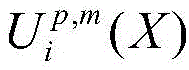
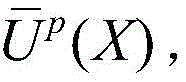
第2步,由切换决策节点计算所选用户簇簇头在对应种群中选择对应目标卫星集中任意一个目标卫星的效用函数


其中,dm表示第m个用户簇对卫星网络服务的满意度,αi表示目标卫星集中第i个目标卫星si的抗干扰性,其中,si∈I,I={s1,s2,...,si,...,sI},I表示所有目标卫星组成的目标卫星集,i表示目标卫星序号,I表示I包含的卫星个数,u′表示线性调节系数,取值为1,

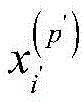

其中,


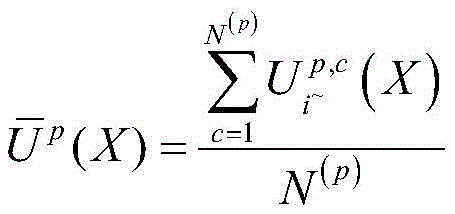
其中,c表示第p个种群fp中的用户簇的序号,c∈[1,N(p)],N(p)表示第p个种群fp中的用户簇总数量,i~表示第i~个目标卫星
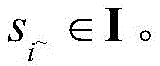
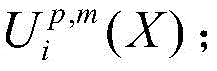
第3步,判断
第4步,从目标卫星集中选取一个未被选过的目标卫星。Step 4, select an unselected target satellite from the target satellite set.
第5步,由管理该低轨卫星的切换决策节点的中心式决策单元计算所选用户簇在对应种群中选择第四步选取目标卫星的效用函数
第6步,判断
第7步,判断是否选完目标卫星集中所有的目标卫星,若是,则将第一步所选的用户簇切换到第二步选择的目标卫星,否则,返回第4步。In step 7, it is judged whether all the target satellites in the target satellite set have been selected. If so, switch the user cluster selected in the first step to the target satellite selected in the second step, otherwise, go back to the fourth step.
第8步,判断是否选完每个低轨卫星中的所有的用户簇,若是,则每个低轨卫星中每个种群的每个用户簇切换到对应的目标卫星,否则,返回第1步。Step 8: Determine whether all user clusters in each low-orbit satellite have been selected. If so, switch each user cluster of each population in each low-orbit satellite to the corresponding target satellite, otherwise, return to
步骤8,分布式决策单元将每个低轨卫星中的所有用户簇进行分布式星间切换。Step 8: The distributed decision-making unit performs distributed inter-satellite handover for all user clusters in each low-orbit satellite.
将每个低轨卫星中具有相同目标卫星集的用户簇组成一个种群。The user clusters with the same target satellite set in each LEO satellite form a population.
将每个用户簇簇头选择的目标卫星作为该用户簇内所有用户选择的目标卫星。The target satellite selected by the cluster head of each user cluster is taken as the target satellite selected by all users in the user cluster.
采用分布式Q学习算法,将每个低轨卫星中的每个种群的每个用户簇切换到选取的目标卫星。Using a distributed Q-learning algorithm, each user cluster of each population in each low-orbit satellite is switched to the selected target satellite.
所述的分布式Q学习算法的步骤如下:The steps of the distributed Q-learning algorithm are as follows:
第1步:设置K为循环总次数,k=1,k为当前循环次数。Step 1: Set K as the total number of cycles, k=1, and k as the current number of cycles.
第2步,将每个低轨卫星中的每个用户簇在对应种群中选取目标卫星集中的任意一个目标卫星获得的决策知识值设为0。The second step is to set the decision knowledge value obtained by each user cluster in each low-orbit satellite by selecting any target satellite in the target satellite set in the corresponding population as 0.
第3步,从每个低轨卫星中的M个用户簇中选取一个未被选过的用户簇。Step 3: Select an unselected user cluster from the M user clusters in each low-orbit satellite.
第4步,判断rand()≤γ是否成立,若是,则执行第5步,否则,执行第6步,其中rand()产生0~1之间的随机数,γ为探索概率,取值为0.1。Step 4, judge whether rand()≤γ is established, if so, execute
第5步,所选用户簇随机选择目标卫星集中的任意一个目标卫星,执行第7步。In
第6步,所选用户簇选择在目标卫星集中使得决策知识值最大的目标卫星,执行第7步。In
第7步,由管理第5步或第6步选择的目标卫星的切换决策节点的分布式决策单元计算所选用户簇在对应种群中选取第5步或第6步选择的目标卫星的效用函数
第8步,更新所选用户簇在对应种群中选取第7步选择的目标卫星的决策知识值,决策知识值的更新公式如下:Step 8, update the selected user cluster and select the decision knowledge value of the target satellite selected in step 7 in the corresponding population. The update formula of the decision knowledge value is as follows:

其中,λ为学习速率,取值为0.1,β为衰减因子,取值为0.2。Among them, λ is the learning rate with a value of 0.1, and β is a decay factor with a value of 0.2.
第9步,判断是否选完每个低轨卫星中的所有的用户簇,若是,执行第10步,否则,k保持不变,返回第3步。Step 9: Determine whether all user clusters in each low-orbit satellite have been selected. If so, perform Step 10; otherwise, keep k unchanged and return to
第10步,令k=k+1,判断k≤K是否成立,若是,返回第3步,否则,每个低轨卫星中每个种群的每个用户簇切换到第7步选择的目标卫星。Step 10, let k=k+1, judge whether k≤K is established, if so, go back to
下面结合本发明的仿真实验对本发明的效果做进一步的描述。The effects of the present invention will be further described below in conjunction with the simulation experiments of the present invention.
1.仿真实验条件:1. Simulation experimental conditions:
本发明的仿真实验的平台为:Windows 10操作系统和Matlab2014b。The platform of the simulation experiment of the present invention is: Windows 10 operating system and Matlab2014b.
本发明仿真实验中设置接入到一个低轨卫星中的切换用户的数量为6000个,用户簇数量为200个,每个用户簇的目标卫星集为{s1,s2,s3,s4,s5,s6},200个用户簇组成一个种群,6个目标卫星分别为该种群分配[7000,7000,5000,7000,5000,5000]Mb的带宽资源。In the simulation experiment of the present invention, the number of switching users connected to a low-orbit satellite is set to 6000, the number of user clusters is 200, and the target satellite set of each user cluster is {s 1 , s 2 , s 3 , s 4 , s 5 , s 6 }, 200 user clusters form a population, and 6 target satellites allocate [7000, 7000, 5000, 7000, 5000, 5000] Mb of bandwidth resources to the population respectively.
2.仿真内容及其结果分析:2. Simulation content and result analysis:
本发明仿真实验是分别对以下三种星间切换方法进行仿真,获得三种星间切换方法的迭代次数以及三种星间切换方法下选择每个目标卫星的切换用户的数量,利用软件Matlab2014b依此绘制三种星间切换方法的迭代次数结果直方图(如图3所示)和三种星间切换方法下选择每个目标卫星的切换用户数量结果直方图(如图4所示)。The simulation experiment of the present invention is to simulate the following three inter-satellite handover methods respectively to obtain the iteration times of the three inter-satellite handover methods and the number of handover users for each target satellite selected under the three inter-satellite handover methods. This draws the histogram of the number of iterations of the three inter-satellite handover methods (as shown in Figure 3) and the histogram of the number of handover users for each target satellite selected under the three inter-satellite handover methods (as shown in Figure 4).
三种星间切换方法指的是:The three inter-satellite switching methods refer to:
第一种,对低轨卫星上所有用户簇的目标卫星集中的每个目标卫星属于管理该低轨卫星的切换决策节点的管理域内的低轨卫星,采用本发明步骤4提出的FCM聚类方法,进而执行本发明步骤7提出的种群进化算法,简称采用FCM聚类的种群进化方法。The first is to use the FCM clustering method proposed in step 4 of the present invention for each target satellite in the target satellite set of all user clusters on the low-orbit satellite that belongs to the low-orbit satellite in the management domain of the handover decision node that manages the low-orbit satellite. , and then execute the population evolution algorithm proposed in step 7 of the present invention, which is referred to as the population evolution method using FCM clustering.
第二种,对低轨卫星上所有用户簇的目标卫星集中的每个目标卫星属于管理该低轨卫星的切换决策节点的管理域内的低轨卫星,采用未进行FCM聚类的种群进化方法,简称未采用FCM聚类的种群进化方法。现有技术中的未进行FCM聚类的种群进化算法是指,D.Niyato等人在“Dynamics of Network Selection in Heterogeneous WirelessNetworks:An Evolutionary Game Approach,IEEE Transactions on VehicularTechnology,vol.58,no.4,pp.2008–2017,May.2009”中提出的种群进化算法,该算法在执行前不进行FCM聚类。Second, for each target satellite in the target satellite set of all user clusters on the low-orbit satellite that belongs to the low-orbit satellite in the management domain of the handover decision node that manages the low-orbit satellite, the population evolution method without FCM clustering is adopted, It is referred to as the population evolution method without FCM clustering. The population evolution algorithm without FCM clustering in the prior art refers to D.Niyato et al. in "Dynamics of Network Selection in Heterogeneous Wireless Networks: An Evolutionary Game Approach, IEEE Transactions on Vehicular Technology, vol.58, no.4, pp.2008–2017, May.2009", the population evolution algorithm, which does not perform FCM clustering before execution.
第三种,对低轨卫星上所有用户簇的目标卫星集中的每个目标卫星分别属于不同切换决策节点的管理域内的低轨卫星,采用本发明步骤4提出的聚类方法,进而执行本发明步骤8提出的分布式Q学习算法,简称分布式Q学习方法。The third method is to use the clustering method proposed in step 4 of the present invention for each target satellite in the target satellite set of all user clusters on the low-orbit satellites belonging to the low-orbit satellites in the management domains of different handover decision nodes, and then implement the present invention The distributed Q-learning algorithm proposed in step 8 is referred to as a distributed Q-learning method.
下面结合图3和图4的仿真结果对本发明的效果做进一步的描述。The effect of the present invention will be further described below with reference to the simulation results of FIG. 3 and FIG. 4 .
图3和图4中的白色矩形框对应采用FCM聚类的种群进化算法,灰色矩形框对应未采用FCM聚类的种群进化算法,黑色矩形框对应分布式Q学习方法。The white rectangles in Figures 3 and 4 correspond to the population evolution algorithm using FCM clustering, the gray rectangles correspond to the population evolution algorithms that do not use FCM clustering, and the black rectangles correspond to the distributed Q-learning method.
由图3可见,采用FCM聚类的种群进化算法迭代次数最少,收敛速度最快,甚至比未采用FCM聚类的种群进化算法的迭代次数降低了一个数量级。当切换用户数量增加时,采用FCM聚类的种群进化算法可以减少选择目标卫星的判决时间,降低了切换决策的开销。采用分布式Q学习,其迭代次数较采用FCM聚类的种群进化算法和未采用FCM聚类的种群进化算法大,但可实现由不同切换决策节点分别为该切换决策节点管理域内的切换用户执行星间切换。It can be seen from Figure 3 that the population evolution algorithm using FCM clustering has the fewest iterations and the fastest convergence speed, which is even an order of magnitude lower than that of the population evolution algorithm without FCM clustering. When the number of handover users increases, the population evolution algorithm using FCM clustering can reduce the decision time for selecting the target satellite and reduce the cost of handover decision. Using distributed Q-learning, the number of iterations is larger than that of the population evolution algorithm using FCM clustering and the population evolution algorithm not using FCM clustering, but it can be implemented by different handover decision nodes for the handover users in the management domain of the handover decision node. Switch between stars.
由图4可见,在三种星间切换方法中,切换用户按照6个目标卫星的带宽资源选择对应的目标卫星,保证了目标卫星的负载均衡,在三种星间切换方法中选择每个目标卫星的切换用户数量接近。同时,三种星间切换方法下计算得到的种群效用函数值接近,其中采用FCM聚类的种群进化方法的种群的效用函数值为-4.0391,未采用FCM聚类的种群进化方法的种群的效用函数值为-4.0381,分布式Q学习方法的种群的效用函数值为-4.0320。图4所显示的结果说明三种星间切换方法均能够使得切换用户尽可能多的获得卫星带宽资源,提高目标卫星的带宽资源利用率。It can be seen from Figure 4 that in the three inter-satellite handover methods, the handover user selects the corresponding target satellite according to the bandwidth resources of the six target satellites, which ensures the load balance of the target satellites, and selects each target in the three inter-satellite handover methods. The number of switching users of the satellite is close. At the same time, the population utility function values calculated under the three inter-satellite switching methods are close. The utility function value of the population using the population evolution method of FCM clustering is -4.0391, and the utility value of the population that does not use the population evolution method of FCM clustering. The function value is -4.0381, and the utility function value of the population of the distributed Q-learning method is -4.0320. The results shown in Fig. 4 show that the three inter-satellite handover methods can make handover users obtain as many satellite bandwidth resources as possible and improve the bandwidth resource utilization rate of the target satellite.
以上所述仅为本发明的较佳实施例而已,并不用以限制本发明,凡在本发明的精神和原则之内,所做的任何修改、等同替换、改进等,均应包括在本发明的保护范围之内。The above descriptions are only preferred embodiments of the present invention, and are not intended to limit the present invention. Any modifications, equivalent replacements, improvements, etc. made within the spirit and principles of the present invention shall be included in the present invention. within the scope of protection.
本发明书中未作详细描述的内容属于本领域技术人员的公知技术。Contents that are not described in detail in the present invention belong to the well-known technology of those skilled in the art.
Claims (7)





Priority Applications (2)
| Application Number | Priority Date | Filing Date | Title |
|---|---|---|---|
| CN202110418268.7A CN113133078B (en) | 2021-04-19 | 2021-04-19 | A lightweight inter-satellite switching device and method for a giant low-orbit satellite network |
| US17/723,423 US12058577B2 (en) | 2021-04-19 | 2022-04-18 | Lightweight inter-satellite handover device and method for mega low-earth-orbit satellite networks |
Applications Claiming Priority (1)
| Application Number | Priority Date | Filing Date | Title |
|---|---|---|---|
| CN202110418268.7A CN113133078B (en) | 2021-04-19 | 2021-04-19 | A lightweight inter-satellite switching device and method for a giant low-orbit satellite network |
Publications (2)
| Publication Number | Publication Date |
|---|---|
| CN113133078A CN113133078A (en) | 2021-07-16 |
| CN113133078B true CN113133078B (en) | 2022-04-08 |
Family
ID=76777474
Family Applications (1)
| Application Number | Title | Priority Date | Filing Date |
|---|---|---|---|
| CN202110418268.7A Active CN113133078B (en) | 2021-04-19 | 2021-04-19 | A lightweight inter-satellite switching device and method for a giant low-orbit satellite network |
Country Status (2)
| Country | Link |
|---|---|
| US (1) | US12058577B2 (en) |
| CN (1) | CN113133078B (en) |
Families Citing this family (12)
| Publication number | Priority date | Publication date | Assignee | Title |
|---|---|---|---|---|
| CN114449604B (en) * | 2022-02-14 | 2023-09-12 | 哈尔滨工业大学(深圳) | Low-orbit satellite switching method and device based on graph theory and multi-attribute decision combination |
| CN115361055B (en) * | 2022-08-16 | 2023-07-21 | 中国科学院上海微系统与信息技术研究所 | A method of inter-satellite handover in satellite communication system based on user group |
| CN115694607B (en) * | 2022-10-19 | 2024-07-23 | 航天科工空间工程网络技术发展(杭州)有限公司 | A satellite network management system and management method |
| CN115882927B (en) * | 2022-10-31 | 2025-10-10 | 北京邮电大学 | A distributed reasoning method and device for low-orbit satellite constellations |
| CN115987373B (en) * | 2022-12-06 | 2025-02-07 | 北方工业大学 | A centralized and active coordinated low-orbit satellite system switching method |
| CN116321336A (en) * | 2023-04-06 | 2023-06-23 | 中国电子科技集团公司第四十一研究所 | A Load-Based Adaptive Switching Method in LEO Satellite Communication |
| CN117042073B (en) * | 2023-09-04 | 2025-02-18 | 华能伊敏煤电有限责任公司 | Satellite switching method based on predictive feedback |
| WO2025251297A1 (en) * | 2024-06-07 | 2025-12-11 | 北京小米移动软件有限公司 | Handover policy determination method, communication device, communication system and storage medium |
| CN119966484B (en) * | 2024-12-06 | 2025-12-26 | 北京邮电大学 | Task-oriented multi-layer low-orbit satellite giant constellation clustering networking method |
| CN119743808B (en) * | 2024-12-16 | 2026-02-17 | 重庆邮电大学 | A terminal packet handover method in a low-orbit satellite IoT scenario |
| CN119962403B (en) * | 2025-04-09 | 2025-06-10 | 西北工业大学 | Star group orbit chase escaping decision-making method based on multi-near-end reinforcement learning |
| CN121356647B (en) * | 2025-10-17 | 2026-04-14 | 西安电子科技大学 | A high-speed continuous target tracking system and method based on inter-satellite cooperative computing |
Citations (5)
| Publication number | Priority date | Publication date | Assignee | Title |
|---|---|---|---|---|
| CN106686681A (en) * | 2017-01-05 | 2017-05-17 | 清华大学 | Cluster head satellite selection method and device |
| CN106937247A (en) * | 2017-01-23 | 2017-07-07 | 西安电子科技大学 | A Mobility Management Method for Satellite Networks Based on Mobile Foreign Agent Domain |
| CN112235792A (en) * | 2020-09-15 | 2021-01-15 | 西安电子科技大学 | A multi-type terminal access and handover authentication method, system, device and application |
| EP3766191A1 (en) * | 2018-03-16 | 2021-01-20 | Lockheed Martin Corporation | Quality of service level selection for peer satellite communications |
| CN112422171A (en) * | 2020-11-09 | 2021-02-26 | 西安电子科技大学 | A Joint Scheduling Method of Intelligent Resource under Uncertain Environment Remote Sensing Satellite Network |
Family Cites Families (14)
| Publication number | Priority date | Publication date | Assignee | Title |
|---|---|---|---|---|
| US5835857A (en) * | 1990-03-19 | 1998-11-10 | Celsat America, Inc. | Position determination for reducing unauthorized use of a communication system |
| US6298073B1 (en) * | 1998-06-26 | 2001-10-02 | Lefever Ronald Stanton | Method using elastic buffering for equalizing transmission delays in a non-earth-synchronous multiple satellite data transmission system |
| US6678520B1 (en) * | 1999-01-07 | 2004-01-13 | Hughes Electronics Corporation | Method and apparatus for providing wideband services using medium and low earth orbit satellites |
| JP2004140721A (en) * | 2002-10-21 | 2004-05-13 | Hitachi Ltd | Signal receiving method using artificial satellite, service providing method, artificial satellite control method, receiving terminal, and apparatus for controlling artificial satellite |
| US8902805B2 (en) * | 2008-10-24 | 2014-12-02 | Qualcomm Incorporated | Cell relay packet routing |
| US9769706B2 (en) * | 2013-02-07 | 2017-09-19 | Qualcomm Incorporated | Resource reservation for handover signaling |
| EP3120467B1 (en) * | 2014-03-19 | 2019-02-20 | Hughes Network Systems, LLC | Apparatus and method for efficient handover for low earth orbit (leo) satellite systems |
| US10244453B2 (en) * | 2015-10-13 | 2019-03-26 | Qualcomm Incorporated | Method and apparatus for inter-satellite handovers in low-earth orbit (LEO) satellite systems |
| US10667188B2 (en) * | 2017-06-21 | 2020-05-26 | Qualcomm Incoporated | Method and apparatus for multiplexing hybrid satellite constellations |
| CN107241135B (en) | 2017-06-30 | 2019-10-15 | 北京邮电大学 | A satellite network switching method and device |
| BR112020014846A2 (en) * | 2018-01-19 | 2020-12-08 | Hughes Network Systems, Llc | USER TERMINAL TRANSFER FORECAST IN WIRELESS COMMUNICATION SYSTEMS WITH NON-STATIONARY COMMUNICATION PLATFORMS |
| US10736016B2 (en) * | 2018-03-30 | 2020-08-04 | The Boeing Company | Mobile routing for non-geostationary orbit (NGSO) systems using virtual routing areas (VRAS) |
| CN110809292B (en) | 2019-11-12 | 2021-03-09 | 北京理工大学 | Combined switching method based on load balance in low-orbit satellite communication |
| CN116485924B (en) * | 2023-03-20 | 2023-09-29 | 西安电子科技大学 | Binarization method of CT section image of optical fiber coil containing artifact |
-
2021
- 2021-04-19 CN CN202110418268.7A patent/CN113133078B/en active Active
-
2022
- 2022-04-18 US US17/723,423 patent/US12058577B2/en active Active
Patent Citations (5)
| Publication number | Priority date | Publication date | Assignee | Title |
|---|---|---|---|---|
| CN106686681A (en) * | 2017-01-05 | 2017-05-17 | 清华大学 | Cluster head satellite selection method and device |
| CN106937247A (en) * | 2017-01-23 | 2017-07-07 | 西安电子科技大学 | A Mobility Management Method for Satellite Networks Based on Mobile Foreign Agent Domain |
| EP3766191A1 (en) * | 2018-03-16 | 2021-01-20 | Lockheed Martin Corporation | Quality of service level selection for peer satellite communications |
| CN112235792A (en) * | 2020-09-15 | 2021-01-15 | 西安电子科技大学 | A multi-type terminal access and handover authentication method, system, device and application |
| CN112422171A (en) * | 2020-11-09 | 2021-02-26 | 西安电子科技大学 | A Joint Scheduling Method of Intelligent Resource under Uncertain Environment Remote Sensing Satellite Network |
Non-Patent Citations (2)
| Title |
|---|
| Mission QoS and Satellite Service Lifetime Tradeoff;Di Zhou;《IEEE WIRELESS COMMUNICATIONS LETTERS》;20200303;全文 * |
| 一种基于演化博弈的低轨卫星切换算法研究;底晓强,于立伟,刘旭;《南京大学学报》;20180730;第4段 * |
Also Published As
| Publication number | Publication date |
|---|---|
| CN113133078A (en) | 2021-07-16 |
| US12058577B2 (en) | 2024-08-06 |
| US20220345967A1 (en) | 2022-10-27 |
Similar Documents
| Publication | Publication Date | Title |
|---|---|---|
| CN113133078B (en) | A lightweight inter-satellite switching device and method for a giant low-orbit satellite network | |
| CN112040510B (en) | Satellite network access selection method based on QoS constraints and load balancing | |
| CN109818669A (en) | A virtualization-based satellite service processing method, system and storage medium | |
| CN108717572A (en) | Imaging task schedulability prediction technique based on structural neural networks | |
| CN112469047A (en) | Method for deploying space-ground integrated intelligent network satellite nodes | |
| CN115001971A (en) | Virtual network mapping method for improving community discovery under heaven-earth integrated information network | |
| CN115865168A (en) | A satellite-ground TT&C link planning method based on reinforcement learning in low-orbit constellations | |
| CN118714662A (en) | A quality-of-service-aware air-ground integrated network resource orchestration method | |
| CN118316801A (en) | Service function chain deployment method based on deep reinforcement learning in star-ground fusion network | |
| CN101650879A (en) | Network optimization method of air traffic control (ATC) communication and navigation surveillance equipment | |
| Zhao et al. | SAC-Based Offloading and Resource Allocation Optimisation for a Low-Altitude Economy Network | |
| CN107622319A (en) | A kind of microgrid power Forecasting Methodology | |
| CN116187383A (en) | Determination Method of 3D NoC Optimal Test Plan Based on Improved Whale Optimization Algorithm | |
| CN120450347A (en) | A distribution network emergency repair scheduling method and system based on fault prediction | |
| CN114154685A (en) | Electric energy data scheduling method in smart power grid | |
| CN119743808A (en) | A terminal group switching method in a low-orbit satellite Internet of Things scenario | |
| Yan et al. | Joint Task Offloading and Beam Hopping for Satellite-Terrestrial-MEC Networks with MADRL | |
| Badini et al. | Energy-aware satellite handover based on deep reinforcement learning | |
| CN115801593B (en) | Walker constellation-oriented capacity maximization topological structure design method | |
| CN119136249A (en) | A method for allocating marine wireless network resources based on attention mechanism | |
| Wang et al. | A coordinated two-stages virtual network embedding algorithm based on reinforcement learning | |
| Yang et al. | Deep reinforcement learning-based satellite-ground links scheduling for mega satellite constellations | |
| CN117793797A (en) | 5G NR-U-based edge cloud networking architecture and service system for photovoltaic sites | |
| Li et al. | An electromagnetic situation calculation method based on edge computing and cloud computing | |
| CN121793106B (en) | A Method and System for WSN Cluster Head Election Based on Elite Multi-Objective Gold Mining Algorithm |
Legal Events
| Date | Code | Title | Description |
|---|---|---|---|
| PB01 | Publication | ||
| PB01 | Publication | ||
| SE01 | Entry into force of request for substantive examination | ||
| SE01 | Entry into force of request for substantive examination | ||
| GR01 | Patent grant | ||
| GR01 | Patent grant |