CN113106105B - Cotton gene and its use - Google Patents
Cotton gene and its use Download PDFInfo
- Publication number
- CN113106105B CN113106105B CN202110512178.4A CN202110512178A CN113106105B CN 113106105 B CN113106105 B CN 113106105B CN 202110512178 A CN202110512178 A CN 202110512178A CN 113106105 B CN113106105 B CN 113106105B
- Authority
- CN
- China
- Prior art keywords
- cotton
- gene
- ghwrky55
- vigs
- resistance
- Prior art date
- Legal status (The legal status is an assumption and is not a legal conclusion. Google has not performed a legal analysis and makes no representation as to the accuracy of the status listed.)
- Active
Links
Images




Classifications
-
- C—CHEMISTRY; METALLURGY
- C07—ORGANIC CHEMISTRY
- C07K—PEPTIDES
- C07K14/00—Peptides having more than 20 amino acids; Gastrins; Somatostatins; Melanotropins; Derivatives thereof
- C07K14/415—Peptides having more than 20 amino acids; Gastrins; Somatostatins; Melanotropins; Derivatives thereof from plants
-
- C—CHEMISTRY; METALLURGY
- C12—BIOCHEMISTRY; BEER; SPIRITS; WINE; VINEGAR; MICROBIOLOGY; ENZYMOLOGY; MUTATION OR GENETIC ENGINEERING
- C12N—MICROORGANISMS OR ENZYMES; COMPOSITIONS THEREOF; PROPAGATING, PRESERVING, OR MAINTAINING MICROORGANISMS; MUTATION OR GENETIC ENGINEERING; CULTURE MEDIA
- C12N15/00—Mutation or genetic engineering; DNA or RNA concerning genetic engineering, vectors, e.g. plasmids, or their isolation, preparation or purification; Use of hosts therefor
- C12N15/09—Recombinant DNA-technology
- C12N15/63—Introduction of foreign genetic material using vectors; Vectors; Use of hosts therefor; Regulation of expression
- C12N15/79—Vectors or expression systems specially adapted for eukaryotic hosts
- C12N15/82—Vectors or expression systems specially adapted for eukaryotic hosts for plant cells, e.g. plant artificial chromosomes (PACs)
- C12N15/8216—Methods for controlling, regulating or enhancing expression of transgenes in plant cells
- C12N15/8218—Antisense, co-suppression, viral induced gene silencing [VIGS], post-transcriptional induced gene silencing [PTGS]
-
- C—CHEMISTRY; METALLURGY
- C12—BIOCHEMISTRY; BEER; SPIRITS; WINE; VINEGAR; MICROBIOLOGY; ENZYMOLOGY; MUTATION OR GENETIC ENGINEERING
- C12N—MICROORGANISMS OR ENZYMES; COMPOSITIONS THEREOF; PROPAGATING, PRESERVING, OR MAINTAINING MICROORGANISMS; MUTATION OR GENETIC ENGINEERING; CULTURE MEDIA
- C12N15/00—Mutation or genetic engineering; DNA or RNA concerning genetic engineering, vectors, e.g. plasmids, or their isolation, preparation or purification; Use of hosts therefor
- C12N15/09—Recombinant DNA-technology
- C12N15/63—Introduction of foreign genetic material using vectors; Vectors; Use of hosts therefor; Regulation of expression
- C12N15/79—Vectors or expression systems specially adapted for eukaryotic hosts
- C12N15/82—Vectors or expression systems specially adapted for eukaryotic hosts for plant cells, e.g. plant artificial chromosomes (PACs)
- C12N15/8241—Phenotypically and genetically modified plants via recombinant DNA technology
- C12N15/8261—Phenotypically and genetically modified plants via recombinant DNA technology with agronomic (input) traits, e.g. crop yield
- C12N15/8271—Phenotypically and genetically modified plants via recombinant DNA technology with agronomic (input) traits, e.g. crop yield for stress resistance, e.g. heavy metal resistance
- C12N15/8279—Phenotypically and genetically modified plants via recombinant DNA technology with agronomic (input) traits, e.g. crop yield for stress resistance, e.g. heavy metal resistance for biotic stress resistance, pathogen resistance, disease resistance
- C12N15/8282—Phenotypically and genetically modified plants via recombinant DNA technology with agronomic (input) traits, e.g. crop yield for stress resistance, e.g. heavy metal resistance for biotic stress resistance, pathogen resistance, disease resistance for fungal resistance
Landscapes
- Health & Medical Sciences (AREA)
- Genetics & Genomics (AREA)
- Life Sciences & Earth Sciences (AREA)
- Chemical & Material Sciences (AREA)
- Organic Chemistry (AREA)
- Engineering & Computer Science (AREA)
- Molecular Biology (AREA)
- Zoology (AREA)
- Bioinformatics & Cheminformatics (AREA)
- Biomedical Technology (AREA)
- Wood Science & Technology (AREA)
- Biotechnology (AREA)
- General Engineering & Computer Science (AREA)
- General Health & Medical Sciences (AREA)
- Biochemistry (AREA)
- Biophysics (AREA)
- Physics & Mathematics (AREA)
- Microbiology (AREA)
- Plant Pathology (AREA)
- Cell Biology (AREA)
- Virology (AREA)
- Botany (AREA)
- Gastroenterology & Hepatology (AREA)
- Medicinal Chemistry (AREA)
- Proteomics, Peptides & Aminoacids (AREA)
- Measuring Or Testing Involving Enzymes Or Micro-Organisms (AREA)
- Breeding Of Plants And Reproduction By Means Of Culturing (AREA)
Abstract
Description
技术领域technical field
本发明涉及一种棉花基因及其用途。The invention relates to a cotton gene and its application.
背景技术Background technique
棉花黄萎病被称为棉花的“癌症”,是一种由大丽轮枝菌(Verticillium dahliae)引起的土传性真菌维管束病害。大丽轮枝菌侵染棉花后会造成叶片黄化、坏死、脱落以及植株死亡,严重影响棉花产量和品质,造成巨大经济损失。尽管育种家通过常规育种的方法选育了一批对黄萎病具有较强抗性且综合性状优良的棉花品种,但由于缺乏黄萎病抗源、黄萎病菌变异快和传统育种方法周期长,棉花抗黄萎病育种进展缓慢。因此运用现代基因工程技术来挖掘和鉴定抗病关键基因可以为棉花提供抗病基因资源,对棉花抗黄萎病育种具有重要的意义。Cotton Verticillium wilt, known as the "cancer" of cotton, is a soil-borne fungal vascular disease caused by Verticillium dahliae. The infection of cotton by Verticillium dahliae can cause leaf yellowing, necrosis, shedding and plant death, seriously affecting the yield and quality of cotton, and causing huge economic losses. Although breeders have bred a batch of cotton varieties with strong resistance to Verticillium wilt and excellent comprehensive traits through conventional breeding methods, due to the lack of sources of resistance to Verticillium wilt, the rapid variation of Verticillium dahliae and the long cycle of traditional breeding methods , cotton breeding for Verticillium wilt resistance progressed slowly. Therefore, the use of modern genetic engineering technology to mine and identify key genes for disease resistance can provide cotton with disease-resistant gene resources, which is of great significance for cotton breeding against Verticillium wilt.
WRKY转录因子为植物特有的一类转录因子,通常以基因家族形式存在,仅在拟南芥中就有74个WRKY基因家族成员。陆地棉基因组中已发现的WRKY转录因子有238个(PlantTFDB)。研究表明WRKY转录因子在植物体中不仅参与植物的生长与发育,而且在植物的抗病过程中也发挥着重要作用。其中GhWRKY3、GhWRKY4、GhWRKY7、GhWRKY22、GhWRKY33和GhWRKY40受黄萎病菌诱导上调表达。最新的研究发现GbWRKY1、GhWRKY70和GhWRKY70D13都通过抑制茉莉酸(JA)信号通路负调控棉花对黄萎病的抗病性,同时水杨酸(SA)的调控作用亦有报道。WRKY transcription factors are plant-specific transcription factors, usually in the form of gene families, and there are 74 WRKY gene family members in Arabidopsis alone. There are 238 WRKY transcription factors found in the upland cotton genome (PlantTFDB). Studies have shown that WRKY transcription factors not only participate in plant growth and development, but also play an important role in plant disease resistance. Among them, GhWRKY3, GhWRKY4, GhWRKY7, GhWRKY22, GhWRKY33 and GhWRKY40 were up-regulated by Verticillium dahliae. The latest study found that GbWRKY1, GhWRKY70 and GhWRKY70D13 all negatively regulate the resistance of cotton to Verticillium wilt by inhibiting the jasmonic acid (JA) signaling pathway, and the regulation of salicylic acid (SA) has also been reported.
发明内容Contents of the invention
本发明的目的在于提供一种棉花基因及其用途。The object of the present invention is to provide a cotton gene and its application.
为实现上述目的,所采取的技术方案:一种棉花基因,所述棉花基因的核苷酸序列如SEQ ID NO:1所示。将该棉花基因命名为GhWRKY55。To achieve the above purpose, the technical solution adopted: a cotton gene, the nucleotide sequence of the cotton gene is shown in SEQ ID NO:1. The cotton gene was named GhWRKY55.
本发明还提供了一种上述所述的棉花基因编码的蛋白质,所述蛋白质的氨基酸序列如SEQ ID NO:2所示。The present invention also provides a protein encoded by the aforementioned cotton gene, the amino acid sequence of which is shown in SEQ ID NO:2.
本发明还提供了一种用于增强棉花对黄萎病的抗性的VIGS载体,所述VIGS载体为含有用于沉默上述所述的棉花基因的DNA片段的烟草脆裂病毒载体pTRV2。优选地,扩增所述DNA片段的引物包括如SEQ ID NO:9和SEQ ID NO:10所示的引物。The present invention also provides a VIGS vector for enhancing the resistance of cotton to Verticillium wilt, the VIGS vector is the tobacco rattle virus vector pTRV2 containing the DNA fragment for silencing the above-mentioned cotton gene. Preferably, the primers for amplifying the DNA fragments include primers as shown in SEQ ID NO:9 and SEQ ID NO:10.
本发明还提供了一种用于增强棉花对黄萎病的抗性的VIGS体系,包括如上述所述的VIGS载体以及烟草脆裂病毒载体pTRV1。The present invention also provides a VIGS system for enhancing the resistance of cotton to Verticillium dahliae, including the above-mentioned VIGS vector and tobacco rattle virus vector pTRV1.
本发明还提供了一种增强棉花对黄萎病的抗性的方法,所述方法包括降低棉花中上述所述的棉花基因的表达。The present invention also provides a method for enhancing the resistance of cotton to Verticillium wilt, the method comprising reducing the expression of the above-mentioned cotton gene in cotton.
本发明还提供了一种增强棉花对黄萎病的抗性的方法,所述方法包括将棉花中上述所述的棉花基因沉默;优选地,所述棉花基因沉默是将上述所述的VIGS载体或上述所述的VIGS体系导入棉花中实现的。The present invention also provides a method for enhancing the resistance of cotton to Verticillium wilt, said method comprising silencing the above-mentioned cotton gene in cotton; preferably, said cotton gene silencing is the above-mentioned VIGS vector Or the aforementioned VIGS system is introduced into cotton and realized.
本发明还提供了一种抗黄萎病棉花的育种方法,所述育种方法包括降低棉花中上述所述的棉花基因的表达。The present invention also provides a breeding method for Verticillium wilt-resistant cotton, the breeding method includes reducing the expression of the above-mentioned cotton gene in cotton.
本发明还提供了一种抗黄萎病棉花的育种方法,所述育种方法包括将棉花中上述所述的棉花基因沉默。优选地,所述棉花基因沉默是将上述所述的VIGS载体或上述所述的VIGS体系导入棉花中实现的。The present invention also provides a breeding method for Verticillium wilt-resistant cotton, the breeding method comprising silencing the above-mentioned cotton gene in cotton. Preferably, the cotton gene silencing is achieved by introducing the aforementioned VIGS vector or the aforementioned VIGS system into cotton.
本发明还提供了上述所述的棉花基因、上述所述的蛋白质、上述所述的VIGS载体或上述所述的VIGS体系在增强棉花对黄萎病的抗性中的用途。The present invention also provides the use of the above-mentioned cotton gene, the above-mentioned protein, the above-mentioned VIGS vector or the above-mentioned VIGS system in enhancing the resistance of cotton to Verticillium wilt.
优选地,通过将棉花中上述所述的棉花基因沉默来增强棉花对黄萎病的抗性。Preferably, the resistance of cotton to Verticillium wilt is enhanced by silencing the aforementioned cotton genes in cotton.
有益效果:Beneficial effect:
本发明提供了一种棉花基因,该基因对于棉花对黄萎病的抗性具有负调控作用。The invention provides a cotton gene, which has a negative regulatory effect on the resistance of cotton to verticillium wilt.
附图说明Description of drawings
图1显示了抗病品种石大陆抗18-1(HR)接种黄萎病菌12(A)和24h(B)差异表达基因。HR0:蒸馏水处理石大陆抗18-1根系样品;HR12和HR24:石大陆抗18-1接种黄萎病菌12和24h根系样品。Figure 1 shows the differentially expressed genes of the resistant variety Shidaikang 18-1 (HR) inoculated with Verticillium dahliae 12 (A) and 24h (B). HR0: distilled water treated root samples of Shidaikang 18-1; HR12 and HR24: root samples of Shidaikang 18-1 inoculated with Verticillium dahliae 12 and 24h.
图2显示了GhWRKY55系统进化树分析图。GhWRKY55与AtWRKY55同源性较高。其中AtWRKY44(Arabidopsis thaliana,NP_181263.2),AtWRKY33(NP_181381.2),AtWRKY4(NP_172849.1),AtWRKY31(NP_567644.1),AtWRKY42(NP_192354.1),AtWRKY6(NP_564792.1),AtWRKY40(NP_178199.1),AtWRKY60(NP_180072.1),AtWRKY18(NP_567882.1),AtWRKY64(NP_176829.1),AtWRKY66(NP_178174.1),AtWRKY67(NP_564877.1),AtWRKY41(NP_192845.1),AtWRKY53(NP_194112.1),AtWRKY30(NP_568439.1),AtWRKY46(NP_182163.1),AtWRKY54(NP_181607.1),AtWRKY57(NP_177090.1),AtWRKY75(NP_196812.1),AtWRKY55(NP_181606.1),JcWRKY55(Jatropha curcas,AGQ04249.1),HaWRKY55(Helianthusannuus,XP_021975670.1),DcWRKY55(Dendrobium catenatum,XP_020690062.1),NaWRKY55(Nicotiana attenuata,XP_019246449.1),GmWRKY55(Glycine max,ABS18448),HvWRKY55(Hordeum vulgare,AFV67807)。Figure 2 shows the phylogenetic tree analysis diagram of GhWRKY55. GhWRKY55 has higher homology with AtWRKY55. Among them, AtWRKY44(Arabidopsis thaliana, NP_181263.2), AtWRKY33(NP_181381.2), AtWRKY4(NP_172849.1), AtWRKY31(NP_567644.1), AtWRKY42(NP_192354.1), AtWRKY6(NP_16487W92) 1), AtWRKY60(NP_180072.1), AtWRKY18(NP_567882.1), AtWRKY64(NP_176829.1), AtWRKY66(NP_178174.1), AtWRKY67(NP_564877.1), AtWRKY41(NP_192845.1), AtWRKY41(NP_192845.1), AtWRKY41(NP_192845.1) ),AtWRKY30(NP_568439.1),AtWRKY46(NP_182163.1),AtWRKY54(NP_181607.1),AtWRKY57(NP_177090.1),AtWRKY75(NP_196812.1),AtWRKY55(NP_181606.1),JcWRKY55(Jatropha curcas,AGQ04249 .1),HaWRKY55(Helianthusannuus,XP_021975670.1),DcWRKY55(Dendrobium catenatum,XP_020690062.1),NaWRKY55(Nicotiana attenuata,XP_019246449.1),GmWRKY55(Glycine max,ABS18448),HvWRKY55(Hordeum vulgare,AFV67807)。
图3显示了GhWRKY55多序列比对分析结果。GhWRKY55中含有典型的WRKY和C2HC锌指结构域。其中NaWRKY55、DcWRKY55、GmWRKY55、HaWRKY55、JcWRKY55、GhWRKY55和AtWRKY55序列与图2一致。Figure 3 shows the results of multiple sequence alignment analysis of GhWRKY55. GhWRKY55 contains typical WRKY and C2HC zinc finger domains. The sequences of NaWRKY55, DcWRKY55, GmWRKY55, HaWRKY55, JcWRKY55, GhWRKY55 and AtWRKY55 are consistent with those in Figure 2.
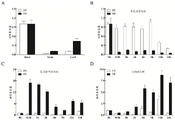
图4显示了GhWRKY55基因在棉花抗感材料中的表达模式分析结果。图中A为在棉花各个组织中的表达模式分析结果;B为接种黄萎病菌后的表达模式分析结果;C为MeJA处理后的表达模式分析结果;D为SA处理后的表达模式分析结果。Figure 4 shows the analysis results of the expression pattern of GhWRKY55 gene in cotton resistant and sensitive materials. In the figure, A is the analysis result of expression pattern in various tissues of cotton; B is the result of analysis of expression pattern after inoculation with Verticillium dahliae; C is the result of analysis of expression pattern after treatment with MeJA; D is the result of analysis of expression pattern after treatment with SA.
图5显示了军棉1号注射TRV:GhCHLI两周后的表型。Figure 5 shows the phenotype of Junmian No. 1 injected with TRV:GhCHLI two weeks later.
图6显示了GhWRKY55基因沉默功能分析结果。图中A为GhWRKY55在TRV:GhWRKY55和TRV:00中接种黄萎病菌后的表达模式分析结果;B为接种黄萎病菌21d后TRV:GhWRKY55和TRV:00的表型分析结果;C为接种黄萎病菌后14和21d病情指数分析结果;D为TRV:GhWRKY55和TRV:00的发病率分析结果;E为接种黄萎病菌14d后TRV:GhWRKY55和TRV:00植株茎秆病原菌恢复培养;F为接种黄萎病菌后14和21d后TRV:GhWRKY55和TRV:00植株茎秆中病原菌相对含量测定结果。Figure 6 shows the results of functional analysis of GhWRKY55 gene silencing. In the figure A is the expression pattern analysis result of GhWRKY55 after inoculation with Verticillium dahliae in TRV:GhWRKY55 and TRV:00; B is the phenotype analysis result of TRV:GhWRKY55 and TRV:00 after inoculation with Verticillium dahliae for 21 days; C is the result of inoculation with Verticillium dahliae Analysis results of disease index 14 and 21 days after Verticillium dahliae; D is the analysis result of the incidence of TRV:GhWRKY55 and TRV:00; E is the recovery culture of TRV:GhWRKY55 and TRV:00 plant stem pathogenic bacteria 14 days after inoculation with Verticillium dahliae; F is 14 and 21 days after inoculation with Verticillium dahliae, the relative content of pathogenic bacteria in the stems of TRV:GhWRKY55 and TRV:00 plants was measured.
图7显示了GhWRKY55超表达降低拟南芥对黄萎病菌的抗性。图中A为GhWRKY55在超表达拟南芥株系中的表达水平;B为接种黄萎病菌21d后转基因拟南芥的表型;C为GhWRKY55超表达转基因拟南芥在接种黄萎病菌14d台盼蓝染色;D为接种黄萎病菌后14、21和28d转基因拟南芥的病情指数统计(n=30);E为接种黄萎病菌后14d后GhWRKY55超表达转基因拟南芥植株茎秆中病原菌相对含量测定。统计方法为T检验(*P<0.05;**P<0.01),所得数据为平均值±标准差。Figure 7 shows that overexpression of GhWRKY55 reduces Arabidopsis resistance to Verticillium dahliae. In the figure, A is the expression level of GhWRKY55 in overexpressed Arabidopsis lines; B is the phenotype of transgenic Arabidopsis 21 days after inoculation with Verticillium dahliae; C is the expression level of GhWRKY55 overexpressed transgenic Arabidopsis 14 days after inoculation with Verticillium dahliae Pan blue staining; D is the disease index statistics of transgenic Arabidopsis thaliana 14, 21 and 28 days after inoculation with Verticillium dahliae (n=30); E is the stem of GhWRKY55 overexpressed transgenic Arabidopsis plants 14 days after inoculation with Verticillium dahliae Determination of the relative content of pathogenic bacteria. The statistical method was T test (*P<0.05; **P<0.01), and the obtained data were mean ± standard deviation.
具体实施方式Detailed ways
为更好的说明本发明的目的、技术方案和优点,下面将结合具体实施例对本发明作进一步说明。In order to better illustrate the purpose, technical solutions and advantages of the present invention, the present invention will be further described below in conjunction with specific examples.
申请人通过比较转录组学分析不同抗病性陆地棉材料响应黄萎病侵染的基因表达谱,发现GhWRKY55基因在抗病品种石大陆抗18-1中受黄萎病菌诱导后表达量显著降低,而在感病品种军棉1号中受诱导下调表达的时间晚于抗病品种且下调表达程度显著低于抗病品种。最新的研究表明,WRKY55属于III型WRKY转录因子,且该基因负调节拟南芥对丁香假单胞菌的抗性。本发明利用VIGS方法在棉花中瞬时沉默GhWRKY55基因的表达后接种黄萎病菌,发现该基因对棉花黄萎病抗性具有负调控作用。此外,将GhWRKY55基因在拟南芥中超表达,进一步证实GhWRKY55基因负调控棉花对黄萎病的抗病性。本发明为抗黄萎病棉花的育种提供了新的方法。The applicant analyzed the gene expression profiles of different disease-resistant upland cotton materials in response to Verticillium dahliae infection by comparative transcriptomics, and found that the expression level of the GhWRKY55 gene was significantly reduced after being induced by Verticillium dahliae in the disease-resistant variety Shidaikang 18-1 , while the down-regulated expression in the susceptible variety Junmian 1 was later than that in the resistant variety, and the degree of down-regulated expression was significantly lower than that in the resistant variety. Recent studies have shown that WRKY55 belongs to type III WRKY transcription factors, and this gene negatively regulates Arabidopsis resistance to Pseudomonas syringae. The present invention utilizes the VIGS method to inoculate Verticillium dahliae after transiently silencing the expression of the GhWRKY55 gene in cotton, and finds that the gene has a negative regulatory effect on cotton Verticillium dahlias resistance. In addition, the GhWRKY55 gene was overexpressed in Arabidopsis, further confirming that the GhWRKY55 gene negatively regulates the resistance of cotton to Verticillium wilt. The invention provides a new method for breeding cotton resistant to Verticillium wilt.
以下实施例中的定量试验,均设置了三次生物学重复和三次技术重复。In the quantitative experiments in the following examples, three biological repetitions and three technical repetitions were set.
实施例1:GhWRKY55基因克隆Embodiment 1: GhWRKY55 gene cloning
转录组分析发现GhWRKY55基因在抗病品种石大陆抗18-1在接种黄萎病菌后12和24h后表达量显著下降,分别达到了17.5和20.1倍(见图1A,B)。以石大陆抗18-1根部cDNA为模版,扩增GhWRKY55的cDNA序列。Transcriptome analysis found that the expression of GhWRKY55 gene in the disease-resistant variety Shidalu Kang 18-1 decreased significantly 12 and 24 hours after inoculation with Verticillium dahliae, reaching 17.5 and 20.1 times, respectively (see Figure 1A, B). The cDNA sequence of GhWRKY55 was amplified using the root cDNA of Shidalu Kang 18-1 as a template.
克隆所需引物如下:The primers required for cloning are as follows:
GhWRKY55-F:ATGGACCAACAACAACAACAACAGhWRKY55-F: ATGGACCAACAACAACAACAACA
GhWRKY55-R:TCAACAATGCTTCTTGTCCCCTGhWRKY55-R: TCAACAATGCTTCTTGTCCCCT
将扩增序列连接到PMDT-19载体上,筛选阳性克隆后送到上海生工生物工程股份有限公司进行测序。其核苷酸序列为SEQ ID NO:1所示,蛋白质序列如SEQ ID NO:2所示。The amplified sequence was connected to the PMDT-19 carrier, and positive clones were screened and sent to Shanghai Sangon Bioengineering Co., Ltd. for sequencing. Its nucleotide sequence is shown in SEQ ID NO:1, and its protein sequence is shown in SEQ ID NO:2.
将GhWRKY55与拟南芥和其他物种中一些已知的WRKY转录因子进行系统发育树的分析。A phylogenetic tree analysis of GhWRKY55 was performed with some known WRKY transcription factors in Arabidopsis and other species.
结果如图2所示,该序列与拟南芥AtWRKY55同源性最高,因此申请人将其命名为GhWRKY55。The results are shown in Figure 2, the sequence has the highest homology with Arabidopsis AtWRKY55, so the applicant named it GhWRKY55.
除GhWRKY55外,选取其他有代表性植物WRKY55氨基酸序列通过DANMAN软件进行多序列比对分析。Except for GhWRKY55, other representative plant WRKY55 amino acid sequences were selected for multiple sequence alignment analysis by DANMAN software.
结果如图3所示,GhWRKY55含有典型的WRKY和C2HC锌指结构域,因此该序列为III型WRKY转录因子中的一员。The results are shown in Figure 3, GhWRKY55 contains typical WRKY and C2HC zinc finger domains, so this sequence is a member of type III WRKY transcription factors.
实施例2:GhWRKY55表达模式分析Embodiment 2: GhWRKY55 expression pattern analysis
分别提取两叶一心期石大陆抗18-1(黄萎病抗病品种,HR)和军棉1号(黄萎病感病品种,HS)根、茎和叶RNA。提取方法参照天根生化科技有限公司(北京)的植物多糖多酚总RNA提取试剂盒。RNA was extracted from the roots, stems and leaves of Shidaikang 18-1 (Verticillium wilt-resistant variety, HR) and Junmian 1 (Verticillium wilt-susceptible variety, HS) at the two-leaf one-center stage. The extraction method refers to the plant polysaccharide polyphenol total RNA extraction kit of Tiangen Biochemical Technology Co., Ltd. (Beijing).
提取完成后,RNA完整性通过1.2%的琼脂糖凝胶电泳分析,RNA浓度和纯度检测通过Nanodrop ND-2000微量分光光度计鉴定。After extraction, RNA integrity was analyzed by 1.2% agarose gel electrophoresis, and RNA concentration and purity were detected by Nanodrop ND-2000 micro-spectrophotometer.
取1μg RNA模版参照诺唯赞生物科技有限公司(南京)的M-MLV ReverseTranscriptase试剂盒反转录合成cDNA的第一链。Take 1 μg of RNA template and reverse transcribe the first strand of cDNA with reference to the M-MLV Reverse Transcriptase Kit of Novozyme Biotechnology Co., Ltd. (Nanjing).
设计RT-qPCR引物,采用RT-qPCR方法分析GhWRKY55在不同抗病品种根、茎和叶中的表达特异性。基因的相对表达量根据2-ΔΔCT法计算。RT-qPCR primers were designed, and the expression specificity of GhWRKY55 in roots, stems and leaves of different disease-resistant varieties was analyzed by RT-qPCR method. The relative expression of genes was calculated according to the 2 -ΔΔCT method.
反应体系:稀释10倍的cDNA 1μL、2×SYBR Green Mix 5μL、10μmol/L正反向引物各0.2μL和ddH2O 3.6μL。Reaction system: 1 μL of 10-fold diluted cDNA, 5 μL of 2×SYBR Green Mix, 0.2 μL of 10 μmol/L forward and reverse primers, and 3.6 μL of ddH2O.
qPCR程序:95℃预变性3min,95℃ 10s,60℃ 15s,72℃ 15s,共40个循环。qPCR program: pre-denaturation at 95°C for 3min, 10s at 95°C, 15s at 60°C, 15s at 72°C, a total of 40 cycles.
该RT-qPCR引物序列如下:The RT-qPCR primer sequences are as follows:
GhWRKY55-qF:GTTCGGGTTCAGGTGGAAGAGGGhWRKY55-qF: GTTCGGGTTCAGGTGGAAGAGG
GhWRKY55-qR:GCCACTGCCGGATACTCAACATGhWRKY55-qR:GCCACTGCCGGATACTCAACAT
以GhUBQ7作为内参基因,引物如下:Using GhUBQ7 as an internal reference gene, the primers are as follows:
GhUBQ7-F:GAAGGCATTCCACCTGACCAACGhUBQ7-F: GAAGGCATTCCACCTGACCAAC
GhUBQ7-R:CTTGACCTTCTTCTTCTTGTGCTTGGhUBQ7-R: CTTGACCTTTCTTCTTCTTGTGCTTG
结果如图4A所示,GhWRKY55在石大陆抗18-1和军棉1号的根部优势表达。The results were shown in Figure 4A, GhWRKY55 was predominantly expressed in the roots of Shidalukang 18-1 and Junmian 1.
1、接种黄萎病菌后GhWRKY55基因的表达分析1. Expression analysis of GhWRKY55 gene after inoculation with Verticillium dahliae
1.1黄萎病菌的活化与培养1.1 Activation and cultivation of Verticillium dahliae
将200μL的黄萎病菌菌株“V991”孢子液均匀涂抹到PDA培养基上,避光培养7d后,选取适量菌丝块接种到Czapek’s培养基中,然后将培养基放置于150r/min的摇床上。25℃避光培养5-7d。调节孢子浓度为106个/ml待用。Spread 200 μL of Verticillium dahliae strain "V991" spore liquid evenly on the PDA medium, and after cultivating in the dark for 7 days, select an appropriate amount of hyphae to inoculate into Czapek's medium, and then place the medium on a shaker at 150r/min . Incubate at 25°C in the dark for 5-7 days. Adjust the spore concentration to 10 6 /ml for later use.
1.2PDA固体培养基配方:1.2 PDA solid medium formula:
去皮后的新鲜土豆200g切碎、加入500mL ddH2O让其在微波炉中高火煮沸10min。煮好后用纱布过滤,向滤液中添加葡萄糖15g,琼脂粉20g,ddH2O定容至1L。灭菌后分装到培养皿。200 g of peeled fresh potatoes were chopped, and 500 mL of ddH 2 O was added to boil it in a microwave oven on high heat for 10 min. After boiling, filter with gauze, add 15g of glucose, 20g of agar powder to the filtrate, and dilute to 1L with ddH 2 O. After sterilization, dispense into Petri dishes.
1.3Czapek’s培养基配方:1.3 Czapek's medium formula:
蔗糖30g、硝酸钠3g、硫酸镁1g、氯化钾1g、磷酸二氢钾1g和硫酸亚铁0.02g,ddH2O定容至1L,pH调至6.0,灭菌后备用。Sucrose 30g, sodium nitrate 3g, magnesium sulfate 1g, potassium chloride 1g, potassium dihydrogen phosphate 1g, ferrous sulfate 0.02g, ddH 2 O to 1L, pH to 6.0, sterilized for later use.
1.4黄萎病菌的接种1.4 Inoculation of Verticillium dahliae
采用伤根法对两叶一心期石大陆抗18-1和军棉1号棉花幼苗进行黄萎病菌接种,接种后的培养条件为16h光照/8h黑暗,昼夜温度分别为25℃和23℃。The cotton seedlings of Shidaikang 18-1 and Junmian 1 at the two-leaf and one-core stage were inoculated with Verticillium dahliae by root injury method. After inoculation, the culture conditions were 16 hours of light/8 hours of darkness, and the day and night temperatures were 25°C and 23°C, respectively.
提取接种后不同时间点(0、0.5、1、3、6、9、12和24h)棉花根部总RNA,进行黄萎病菌胁迫下GhWRKY55的表达特征分析。The total RNA of cotton roots was extracted at different time points (0, 0.5, 1, 3, 6, 9, 12 and 24 hours) after inoculation, and the expression characteristics of GhWRKY55 under the stress of Verticillium dahliae were analyzed.
结果如图4B所示,GhWRKY55在石大陆抗18-1抗病品种中受黄萎病菌诱导显著下调,而在军棉1号中受诱导时间明显滞后于石大陆抗18-1,仅在接种黄萎病菌12和24h下调表达。GhWRKY55的下调表达与棉花对黄萎病的抗病性有关。The results are shown in Figure 4B. GhWRKY55 was significantly down-regulated in Shidalukang 18-1 resistant variety induced by Verticillium dahliae, while the induction time in Junmian 1 was significantly later than that of Shidalukang 18-1. Verticillium dahliae down-regulated expression at 12 and 24h. The down-regulated expression of GhWRKY55 is related to the resistance of cotton to Verticillium wilt.
2、激素处理后GhWRKY55基因的表达分析2. Expression analysis of GhWRKY55 gene after hormone treatment
对两叶一心期石大陆抗18-1和军棉1号棉花幼苗分别喷施1mM SA(水杨酸)和100μM MeJA(茉莉酸甲酯),提取处理后不同时间点(0、0.5、1、3、6、9、12和24h)棉花根部总RNA,通过RT-qPCR方法检测GhWRKY55在SA和MeJA处理后的表达模式。Spray 1mM SA (salicylic acid) and 100μM MeJA (methyl jasmonate) on cotton seedlings of Shidaikang 18-1 and Junmian 1 at the two-leaf one-center stage, respectively, and at different time points (0, 0.5, 1 , 3, 6, 9, 12 and 24h) cotton root total RNA, and the expression pattern of GhWRKY55 after SA and MeJA treatment was detected by RT-qPCR method.
结果如4C和4D所示,在石大陆抗18-1中,GhWRKY55在SA和茉莉酸甲酯(MeJA)处理后均显著上调表达;在军棉1号中,该基因不受MeJA诱导,仅在SA处理6和12h后上调表达。GhWRKY55可能参与SA和MeJA介导的棉花抗病信号途径。The results were shown in 4C and 4D. In Shidalukang 18-1, the expression of GhWRKY55 was significantly up-regulated after SA and methyl jasmonate (MeJA) treatment; in Junmian 1, the gene was not induced by MeJA, only The expression was upregulated after 6 and 12h of SA treatment. GhWRKY55 may be involved in the SA and MeJA-mediated signal pathway of cotton disease resistance.
实施例3:VIGS技术鉴定GhWRKY55基因在棉花抗黄萎病中的功能Embodiment 3: VIGS technology identifies the function of GhWRKY55 gene in cotton resistance to Verticillium wilt
根据GhWRKY55基因的编码序列设计用于扩增GhWRKY55基因沉默片段的引物:According to the coding sequence of GhWRKY55 gene, the primers for amplifying the GhWRKY55 gene silence fragment are designed:
GhWRKY55-VIGS-F:CGGAATTCACAACAACAACAACACACCACCGhWRKY55-VIGS-F: CGGAATTCACAACAACAACAACACACCACC
GhWRKY55-VIGS-R:GGGGTACCGTTGTCATCGGGTGGAAGGTGhWRKY55-VIGS-R: GGGGTACCGTTGTCATCGGGTGGAAGGT
以抗病品种石大陆抗18-1根部的cDNA为模版,用上述引物扩增出GhWRKY55基因沉默片段,并连接到pTRV2载体。随后电击法转化农杆菌GV3101。以棉花镁离子螯合蛋白(GhCHLI)作为阳性对照,分别将TRV:GhCHLI(阳性对照),TRV:00(空载),TRV:GhWRKY55和pTRV1等体积混合后,静止3h,用去掉针头的1ml注射器将菌液注射进军棉1号棉花子叶。VIGS注射14d后,TRV:GhCHLI植株真叶出现明显的黄化表型(图5)。The GhWRKY55 gene silencing fragment was amplified with the above primers using the root cDNA of the disease-resistant variety Shidalu Kang 18-1 as a template, and connected to the pTRV2 vector. Then Agrobacterium GV3101 was transformed by electric shock method. Taking cotton magnesium ion chelating protein (GhCHLI) as a positive control, mix TRV:GhCHLI (positive control), TRV:00 (empty load), TRV:GhWRKY55 and pTRV1 in equal volumes respectively, let it rest for 3 hours, and use 1ml of the needle removed The syringe injects the bacterial solution into the cotyledon of Cotton No. 1 cotton. 14 days after VIGS injection, the true leaves of TRV:GhCHLI plants showed obvious yellowing phenotype (Fig. 5).
此时说明VIGS体系构建成功,可有效抑制目的基因的表达。This indicates that the VIGS system was successfully constructed and can effectively inhibit the expression of the target gene.
利用RT-qPCR检测GhWRKY55在TRV:00和TRV:GhWRKY55中的表达。The expression of GhWRKY55 in TRV:00 and TRV:GhWRKY55 was detected by RT-qPCR.
结果如图6A所示,VIGS注射两周后,GhWRKY55在TRV:GhWRKY55中的表达显著低于TRV:00。说明在TRV:GhWRKY55中GhWRKY55的表达明显受到抑制。The results are shown in Figure 6A, two weeks after VIGS injection, the expression of GhWRKY55 in TRV:GhWRKY55 was significantly lower than that in TRV:00. It indicated that the expression of GhWRKY55 was significantly inhibited in TRV:GhWRKY55.
待TRV:00和TRV:GhWRKY55棉花幼苗生长至两叶一心期,采用伤根法接种黄萎病菌V991。When TRV:00 and TRV:GhWRKY55 cotton seedlings grew to the stage of two leaves and one heart, they were inoculated with Verticillium dahliae V991 by root injury method.
结果如6B所示:接种黄萎病菌21d后,TRV:GhWRKY55植株发病较轻,TRV:00植株更为严重。在接种黄萎病菌14和21d后,根据病情指数分级标准,统计棉花病情指数。The results are shown in 6B: 21 days after inoculation with Verticillium dahliae, TRV:GhWRKY55 plants were less diseased, while TRV:00 plants were more severely affected. After 14 and 21 days of inoculation with Verticillium dahliae, according to the disease index grading standard, the cotton disease index was counted.
病情指数分级标准:Disease index grading standard:
0级:棉花叶片无明显黄化,萎蔫,叶片整体正常生长。Grade 0: Cotton leaves have no obvious yellowing and wilting, and the leaves grow normally as a whole.
1级:植株中少于25%的叶片发黄萎蔫。Grade 1: Less than 25% of the leaves on the plant are yellow and wilted.
2级:植株中多于25%但少于50%的叶片发黄萎蔫。Grade 2: more than 25% but less than 50% of the leaves of the plant are yellow and wilted.
3级:植株中多于50%但少于75%的叶片发黄萎蔫,有少数叶片脱落。Grade 3: More than 50% but less than 75% of the leaves of the plants are yellow and wilted, and a few leaves fall off.
4级:植株中多于75%的叶片发黄枯萎或脱落。Grade 4: More than 75% of the leaves on the plant turn yellow and wither or fall off.
病情指数=∑(病级株数×级数)/(调查棉株总数×4)×100Disease index = ∑ (number of disease-grade plants × series) / (total number of investigated cotton plants × 4) × 100
结果如图6C所示,在接种21d后,TRV:00植株出现大量叶片脱落,植株坏死,病情指数达到了0.72,而TRV:GhWRKY55沉默植株发病较轻,病情指数是0.45,显著低于TRV:00植株。The results are shown in Figure 6C. After inoculation for 21 days, TRV:00 plants had a large number of leaves shedding, plant necrosis, and the disease index reached 0.72, while TRV:GhWRKY55 silenced plants had a milder disease, and the disease index was 0.45, which was significantly lower than TRV: 00 plants.
结果如图6D所示,TRV:GhWRKY55植株茎秆褐变程度较轻,对黄萎病菌的抗性显著高于对照。The results were shown in Fig. 6D, TRV:GhWRKY55 plants had less browning degree of stems, and their resistance to Verticillium dahliae was significantly higher than that of the control.
为了进一步观察真菌恢复情况,分别随机选取10株TRV:00和TRV:GhWRKY55棉花植株,剪取子叶上部2cm处茎段,进行消毒、漂洗后置于灭过菌的培养皿中,用解剖刀将2cm茎段切成1cm,随后将茎段放置于含头孢霉素的PDA培养基中避光培养,7d后观察真菌生长状况。In order to further observe the recovery of the fungus, 10 TRV:00 and TRV:GhWRKY55 cotton plants were randomly selected, and the stem segments at the upper 2cm of the cotyledons were cut, disinfected, rinsed, and placed in a sterilized petri dish, and cut with a scalpel. The 2cm stem section was cut into 1cm, and then the stem section was placed in the PDA medium containing cephalosporin and cultured in the dark, and the growth of the fungus was observed after 7 days.
病原菌恢复培养结果如图6E所示,TRV:00茎杆中分离的黄萎病菌菌落数显著多于TRV:GhWRKY55。The results of the recovery culture of pathogenic bacteria are shown in Figure 6E, the number of Verticillium dahliae colonies isolated from the stems of TRV:00 was significantly more than that of TRV:GhWRKY55.
分别随机选取TRV:00和TRV:GhWRKY55各10株,剪取子叶上部2cm处茎段,用液氮充分研磨,通过CTAB法提取茎杆基因组DNA。通过qPCR鉴定黄萎病菌的含量。Ten plants of TRV:00 and TRV:GhWRKY55 were randomly selected respectively, and the stem segment at the upper 2cm of the cotyledons was cut off, fully ground with liquid nitrogen, and the genomic DNA of the stem was extracted by the CTAB method. The content of Verticillium dahliae was identified by qPCR.
GhUBQ7作为内参基因,引物序列如下:GhUBQ7 was used as an internal reference gene, and the primer sequences were as follows:
GhUBQ7-F:GAAGGCATTCCACCTGACCAACGhUBQ7-F: GAAGGCATTCCACCTGACCAAC
GhUBQ7-R:CTTGACCTTCTTCTTCTTGTGCTTGGhUBQ7-R: CTTGACCTTTCTTCTTCTTGTGCTTG
黄萎病菌特异引物如下:Specific primers for Verticillium dahliae are as follows:
ITS1-F:AAAGTTTTAATGGTTCGCTAAGAITS1-F: AAAGTTTTTAATGGTTCGCTAAGA
ST-Ve1-R:CTTGGTCATTTAGAGGAAGTAAST-Ve1-R: CTTGGTCATTTAGAGGAAGTAA
病原菌相对含量测定结果如图6F所示,TRV:GhWRKY55植株中的病原菌相对含量显著低于TRV:00。As shown in FIG. 6F , the relative content of pathogenic bacteria in TRV:GhWRKY55 plants was significantly lower than that in TRV:00.
实施例4:超表达鉴定GhWRKY55在拟南芥中的功能Embodiment 4: Overexpression identifies the function of GhWRKY55 in Arabidopsis
利用Gateway技术构建了植物超表达载体pGWB17-GhWRKY55,通过蘸花法转化野生型拟南芥,以此作为T0代植株,所收取的种子为T1代。将种子置于潮霉素抗性的1/2MS培养基中培养15d后统计拟南芥存活率,选取分离比为3:1的转基因拟南芥幼苗进行移栽,果荚成熟后收取T2代种子。按此方法直至获得GhWRKY55纯合超表达转基因拟南芥株系。The plant overexpression vector pGWB17-GhWRKY55 was constructed by using Gateway technology, and the wild-type Arabidopsis was transformed by the flower dipping method, which was used as the T0 generation plant, and the harvested seeds were the T1 generation. The seeds were cultured in hygromycin-resistant 1/2MS medium for 15 days, and the survival rate of Arabidopsis was counted. Transgenic Arabidopsis seedlings with a segregation ratio of 3:1 were selected for transplanting, and the T2 generation was harvested after the fruit pods matured. seed. Follow this method until the GhWRKY55 homozygous overexpression transgenic Arabidopsis line is obtained.
分别提取GhWRKY55纯合超表达转基因拟南芥株系AO55-1、AO55-2、AO55-3以及WT叶片总RNA,通过RT-qPCR来鉴定GhWRKY55在超表达植株和WT中的表达模式。结果如图7A所示,超表达转基因拟南芥株系中GhWRKY55表达量显著高于野生型。The total RNA of leaves of GhWRKY55 homozygous overexpression transgenic Arabidopsis lines AO55-1, AO55-2, AO55-3 and WT were extracted, and the expression pattern of GhWRKY55 in overexpression plants and WT was identified by RT-qPCR. Results As shown in Figure 7A, the expression level of GhWRKY55 in the overexpression transgenic Arabidopsis lines was significantly higher than that in the wild type.
接种黄萎病菌21d后,结果如图7B所示,超表达转基因拟南芥株系中叶片出现明显的变黄和枯萎的症状。而野生型植株则发病较轻。收集接种黄萎病菌14d后的超表达转基因拟南芥株系和野生植株叶片,将其浸泡在煮沸的台盼蓝溶液中1-1.5min。台盼蓝溶液由等体积的苯酚、乳酸、甘油以及1mg/ml的台盼蓝混合而成。随后用无菌水清洗,95%Ethanol/Lactophenol溶液脱色,再用50%乙醇冲洗。最后浸泡在50%甘油中,显微镜观察死细胞。21 days after being inoculated with Verticillium dahliae, the results are shown in Figure 7B, the leaves of the overexpressed transgenic Arabidopsis lines showed obvious symptoms of yellowing and wilting. The wild-type plants were mildly affected. The leaves of overexpressed transgenic Arabidopsis lines and wild plants 14 days after inoculation with Verticillium dahliae were collected, and soaked in boiled trypan blue solution for 1-1.5 min. The trypan blue solution was prepared by mixing equal volumes of phenol, lactic acid, glycerol and 1 mg/ml trypan blue. Then wash with sterile water, decolorize with 95% Ethanol/Lactophenol solution, and rinse with 50% ethanol. Finally soaked in 50% glycerol, microscopic observation of dead cells.
台盼蓝染色结果如图7C所示:超表达转基因拟南芥株系中着色较深,死亡细胞较多。野生型植株中着色较浅,细胞死亡较少。The results of trypan blue staining are shown in Figure 7C: the overexpression transgenic Arabidopsis lines were darker and had more dead cells. There was lighter coloration and less cell death in wild-type plants.
在接种黄萎病菌14,21和28d后,根据叶片黄化数量,统计拟南芥病情指数。14, 21 and 28 days after inoculation with Verticillium dahliae, according to the number of yellow leaves, the Arabidopsis disease index was calculated.
病情指数如图7D所示,在接种28d后,A055-1、AO55-2和AO55-3的病情指数分别达到了0.69,0.71和0.65;而WT植株发病较轻,病情指数仅为0.52,显著低于转基因拟南芥植株。As shown in Figure 7D, the disease index of A055-1, AO55-2, and AO55-3 reached 0.69, 0.71, and 0.65 after 28 days of inoculation; while the disease index of WT plants was relatively mild, and the disease index was only 0.52, which was significant lower than transgenic Arabidopsis plants.
分别选取GhWRKY55超表达转基因拟南芥株系AO55-1、AO55-2、AO55-3以及WT各10株,剪取整株叶片,用液氮充分研磨,通过CTAB法提取基因组DNA。通过qPCR鉴定黄萎病菌的含量,AtEF-la和黄萎病特异性引物(ITS1-F和ST-Ve1-R)分别作为拟南芥和黄萎病菌的内参基因。10 transgenic Arabidopsis lines AO55-1, AO55-2, AO55-3, and WT overexpressing GhWRKY55 were selected, and the whole leaves were cut out, fully ground with liquid nitrogen, and genomic DNA was extracted by CTAB method. The content of Verticillium dahliae was identified by qPCR, and AtEF-la and Verticillium dahlia-specific primers (ITS1-F and ST-Ve1-R) were used as internal reference genes of Arabidopsis and Verticillium dahliae, respectively.
AtEF-la-F:AACGGTGCCAGTGGGACGAtEF-la-F: AACGGTGCCAGTGGGACG
AtEF-la-R:CCTTGACAGCAACATTCTTGACATAtEF-la-R: CCTTGACAGCAACATTCTTGACAT
黄萎病菌特异引物为:Specific primers for Verticillium dahliae are:
ITS1-F:AAAGTTTTAATGGTTCGCTAAGAITS1-F: AAAGTTTTTAATGGTTCGCTAAGA
ST-Ve1-R:CTTGGTCATTTAGAGGAAGTAAST-Ve1-R: CTTGGTCATTTAGAGGAAGTAA
茎秆中病原菌相对含量结果如图7E所示,GhWRKY55超表达转基因拟南芥株系中病原菌相对含量显著高于野生型植株。The relative content of pathogenic bacteria in stems was shown in Figure 7E, the relative content of pathogenic bacteria in GhWRKY55 overexpressed transgenic Arabidopsis lines was significantly higher than that in wild-type plants.
本发明发现了GhWRKY55负调节棉花对黄萎病的抗病性,该基因可作为抗黄萎病棉花育种的候选基因。The invention discovers that GhWRKY55 negatively regulates the resistance of cotton to Verticillium wilt, and the gene can be used as a candidate gene for cotton breeding against Verticillium wilt.
最后所应当说明的是,以上实施例仅用以说明本发明的技术方案而非对本发明保护范围的限制,尽管参照较佳实施例对本发明作了详细说明,本领域的普通技术人员应当理解,可以对本发明的技术方案进行修改或者等同替换,而不脱离本发明技术方案的实质和范围。Finally, it should be noted that the above embodiments are only used to illustrate the technical solutions of the present invention rather than limit the protection scope of the present invention. Although the present invention has been described in detail with reference to the preferred embodiments, those of ordinary skill in the art should understand that, The technical solution of the present invention can be modified or equivalently replaced without departing from the spirit and scope of the technical solution of the present invention.
序列表 sequence listing
<110> 中国农业科学院深圳农业基因组研究所<110> Shenzhen Institute of Agricultural Genomics, Chinese Academy of Agricultural Sciences
<120> 一种棉花基因及其用途<120> A cotton gene and its application
<130> WK21-HCP-CN1-0182<130> WK21-HCP-CN1-0182
<160> 10<160> 10
<170> SIPOSequenceListing 1.0<170> SIP Sequence Listing 1.0
<210> 1<210> 1
<211> 1101<211> 1101
<212> DNA<212>DNA
<213> 陆地棉(Gossypium hirsutum)<213> Upland cotton (Gossypium hirsutum)
<400> 1<400> 1
atggaccaac aacaacaaca acacaccacc ttgtctctaa tccttgatgg gtgtaagtta 60atggaccaac aacaacaaca acacaccacc ttgtctctaa tccttgatgg gtgtaagtta 60
gctaaagagc ttgaagaatg catcgggaat ttgggtaacc agctacagcc tgaaatcctt 120gctaaagagc ttgaagaatg catcgggaat ttgggtaacc agctacagcc tgaaatcctt 120
tccaagtctt gtgatgatat cataaatatc tttgttactg caaagcaaag gttaaacaat 180tccaagtctt gtgatgatat cataaatatc tttgttactg caaagcaaag gttaaacaat 180
aatgcccatc atcatcatca tcatcatcat caagacccct ctttgtttac ccatcactta 240aatgcccatc atcatcatca tcatcatcat caagaccccct ctttgtttac ccatcactta 240
ctccacccac ctcaggattc atctgcacac cacatgcaga ctgatcccag tttgcaggaa 300ctccaccac ctcaggattc atctgcacac cacatgcaga ctgatccccag tttgcaggaa 300
tggttaaagt atggtgttat tacacaagca gtggacatga ttcaatcttg tagacccagc 360tggttaaagt atggtgttat tacacaagca gtggacatga ttcaatcttg tagacccagc 360
attagcatgg ggggagaaat ccaggctatg gatgtgtcag attctggtaa agctgcttct 420attagcatgg ggggagaaat ccaggctatg gatgtgtcag attctggtaa agctgcttct 420
tcttcctcat ctcaacgttc ccatagaagt aggaaggatg atgaagagaa atgcaaaacg 480tcttcctcat ctcaacgttc ccatagaagt aggaaggatg atgaagagaa atgcaaaacg 480
agagtagctg ctcctcagat gggaaatacc gaccttccac ccgatgacaa ctacacttgg 540agagtagctg ctcctcagat gggaaatacc gaccttccac ccgatgacaa ctacacttgg 540
agaaagtatg gacagaaaga aattctaggt tcaaagtacc ccagggcata ctacaggtgt 600agaaagtatg gacagaaaga aattctaggt tcaaagtacc ccagggcata ctacaggtgt 600
acacaccaaa aaatgtacaa ctgccctgca aagaagcaag tgcaacgtct agacaatgat 660acacaccaaa aaatgtacaa ctgccctgca aagaagcaag tgcaacgtct agacaatgat 660
ttttacacat ttgaagtaac ctacattggt cagcacacgt gcaccatgtc ctccaccgcg 720ttttacacat ttgaagtaac ctacattggt cagcacacgt gcaccatgtc ctccaccgcg 720
ccctcaattc cgcagccacc cccgctatta catgatcaga tggttatgac tcaagctatg 780ccctcaattc cgcagccacc cccgctatta catgatcaga tggttatgac tcaagctatg 780
gtgtctcagc ctgcactacc tcccatttct tcttctacta cttcatcatc aatagctcct 840gtgtctcagc ctgcactacc tcccatttct tcttctacta cttcatcatc aatagctcct 840
tttggaagct ggctttcaat ggaatttagc cttggttcgg gttcaggtgg aagaggtagc 900tttggaagct ggctttcaat ggaatttagc cttggttcgg gttcaggtgg aagaggtagc 900
ggcggtgctg gttcatcatc aggaggaggc tcagctacag gcagtcgata tggaagggat 960ggcggtgctg gttcatcatc aggaggaggc tcagctacag gcagtcgata tggaagggat 960
gttgagtatc cggcagtggc ggatatggct gatgtaatgt ttaattcagg aagcagcagc 1020gttgagtatc cggcagtggc ggatatggct gatgtaatgt ttaattcagg aagcagcagc 1020
agcaatagca tggattttat ttttccatgt gcagaagaca aatgggaggc ccccggctca 1080agcaatagca tggattttat ttttccatgt gcagaagaca aatgggaggc ccccggctca 1080
ggggacaaga agcattgttg a 1101ggggacaaga agcattgttg a 1101
<210> 2<210> 2
<211> 366<211> 366
<212> PRT<212> PRT
<213> 棉花(Gossypium hirsutum)<213> Cotton (Gossypium hirsutum)
<400> 2<400> 2
Met Asp Gln Gln Gln Gln Gln His Thr Thr Leu Ser Leu Ile Leu AspMet Asp Gln Gln Gln Gln Gln His Thr Thr Leu Ser Leu Ile Leu Asp
1 5 10 151 5 10 15
Gly Cys Lys Leu Ala Lys Glu Leu Glu Glu Cys Ile Gly Asn Leu GlyGly Cys Lys Leu Ala Lys Glu Leu Glu Glu Cys Ile Gly Asn Leu Gly
20 25 30 20 25 30
Asn Gln Leu Gln Pro Glu Ile Leu Ser Lys Ser Cys Asp Asp Ile IleAsn Gln Leu Gln Pro Glu Ile Leu Ser Lys Ser Cys Asp Asp Ile Ile
35 40 45 35 40 45
Asn Ile Phe Val Thr Ala Lys Gln Arg Leu Asn Asn Asn Ala His HisAsn Ile Phe Val Thr Ala Lys Gln Arg Leu Asn Asn Asn Asn Ala His His
50 55 60 50 55 60
His His His His His His Gln Asp Pro Ser Leu Phe Thr His His LeuHis His His His His His His Gln Asp Pro Ser Leu Phe Thr His His Leu
65 70 75 8065 70 75 80
Leu His Pro Pro Gln Asp Ser Ser Ala His His Met Gln Thr Asp ProLeu His Pro Pro Gln Asp Ser Ser Ser Ala His His Met Gln Thr Asp Pro
85 90 95 85 90 95
Ser Leu Gln Glu Trp Leu Lys Tyr Gly Val Ile Thr Gln Ala Val AspSer Leu Gln Glu Trp Leu Lys Tyr Gly Val Ile Thr Gln Ala Val Asp
100 105 110 100 105 110
Met Ile Gln Ser Cys Arg Pro Ser Ile Ser Met Gly Gly Glu Ile GlnMet Ile Gln Ser Cys Arg Pro Ser Ile Ser Met Gly Gly Glu Ile Gln
115 120 125 115 120 125
Ala Met Asp Val Ser Asp Ser Gly Lys Ala Ala Ser Ser Ser Ser SerAla Met Asp Val Ser Asp Ser Gly Lys Ala Ala Ser Ser Ser Ser Ser Ser
130 135 140 130 135 140
Gln Arg Ser His Arg Ser Arg Lys Asp Asp Glu Glu Lys Cys Lys ThrGln Arg Ser His Arg Ser Arg Lys Asp Asp Glu Glu Lys Cys Lys Thr
145 150 155 160145 150 155 160
Arg Val Ala Ala Pro Gln Met Gly Asn Thr Asp Leu Pro Pro Asp AspArg Val Ala Ala Pro Gln Met Gly Asn Thr Asp Leu Pro Pro Asp Asp
165 170 175 165 170 175
Asn Tyr Thr Trp Arg Lys Tyr Gly Gln Lys Glu Ile Leu Gly Ser LysAsn Tyr Thr Trp Arg Lys Tyr Gly Gln Lys Glu Ile Leu Gly Ser Lys
180 185 190 180 185 190
Tyr Pro Arg Ala Tyr Tyr Arg Cys Thr His Gln Lys Met Tyr Asn CysTyr Pro Arg Ala Tyr Tyr Arg Cys Thr His Gln Lys Met Tyr Asn Cys
195 200 205 195 200 205
Pro Ala Lys Lys Gln Val Gln Arg Leu Asp Asn Asp Phe Tyr Thr PhePro Ala Lys Lys Gln Val Gln Arg Leu Asp Asn Asp Phe Tyr Thr Phe
210 215 220 210 215 220
Glu Val Thr Tyr Ile Gly Gln His Thr Cys Thr Met Ser Ser Thr AlaGlu Val Thr Tyr Ile Gly Gln His Thr Cys Thr Met Ser Ser Thr Ala
225 230 235 240225 230 235 240
Pro Ser Ile Pro Gln Pro Pro Pro Leu Leu His Asp Gln Met Val MetPro Ser Ile Pro Gln Pro Pro Pro Leu Leu His Asp Gln Met Val Met
245 250 255 245 250 255
Thr Gln Ala Met Val Ser Gln Pro Ala Leu Pro Pro Ile Ser Ser SerThr Gln Ala Met Val Ser Gln Pro Ala Leu Pro Pro Ile Ser Ser Ser Ser
260 265 270 260 265 270
Thr Thr Ser Ser Ser Ile Ala Pro Phe Gly Ser Trp Leu Ser Met GluThr Thr Ser Ser Ser Ile Ala Pro Phe Gly Ser Trp Leu Ser Met Glu
275 280 285 275 280 285
Phe Ser Leu Gly Ser Gly Ser Gly Gly Arg Gly Ser Gly Gly Ala GlyPhe Ser Leu Gly Ser Gly Ser Gly Gly Arg Gly Ser Gly Gly Ala Gly
290 295 300 290 295 300
Ser Ser Ser Gly Gly Gly Ser Ala Thr Gly Ser Arg Tyr Gly Arg AspSer Ser Ser Gly Gly Gly Gly Ser Ala Thr Gly Ser Arg Tyr Gly Arg Asp
305 310 315 320305 310 315 320
Val Glu Tyr Pro Ala Val Ala Asp Met Ala Asp Val Met Phe Asn SerVal Glu Tyr Pro Ala Val Ala Asp Met Ala Asp Val Met Phe Asn Ser
325 330 335 325 330 335
Gly Ser Ser Ser Ser Asn Ser Met Asp Phe Ile Phe Pro Cys Ala GluGly Ser Ser Ser Ser Asn Ser Met Asp Phe Ile Phe Pro Cys Ala Glu
340 345 350 340 345 350
Asp Lys Trp Glu Ala Pro Gly Ser Gly Asp Lys Lys His CysAsp Lys Trp Glu Ala Pro Gly Ser Gly Asp Lys Lys His Cys
355 360 365 355 360 365
<210> 3<210> 3
<211> 23<211> 23
<212> DNA<212>DNA
<213> 人工序列(Artificial)<213> Artificial sequence (Artificial)
<400> 3<400> 3
atggaccaac aacaacaaca aca 23atggaccaac aacaacaaca aca 23
<210> 4<210> 4
<211> 22<211> 22
<212> DNA<212>DNA
<213> 人工序列(Artificial)<213> Artificial sequence (Artificial)
<400> 4<400> 4
tcaacaatgc ttcttgtccc ct 22tcaacaatgc ttcttgtccc
<210> 5<210> 5
<211> 22<211> 22
<212> DNA<212>DNA
<213> 人工序列(Artificial)<213> Artificial sequence (Artificial)
<400> 5<400> 5
gttcgggttc aggtggaaga gg 22gttcgggttc aggtggaaga gg 22
<210> 6<210> 6
<211> 22<211> 22
<212> DNA<212>DNA
<213> 人工序列(Artificial)<213> Artificial sequence (Artificial)
<400> 6<400> 6
gccactgccg gatactcaac at 22gccact gccg gatactcaac at 22
<210> 7<210> 7
<211> 22<211> 22
<212> DNA<212>DNA
<213> 人工序列(Artificial)<213> Artificial sequence (Artificial)
<400> 7<400> 7
gaaggcattc cacctgacca ac 22gaaggcattc cacctgacca
<210> 8<210> 8
<211> 25<211> 25
<212> DNA<212>DNA
<213> 人工序列(Artificial)<213> Artificial sequence (Artificial)
<400> 8<400> 8
cttgaccttc ttcttcttgt gcttg 25cttgaccttc ttcttcttgt gcttg 25
<210> 9<210> 9
<211> 30<211> 30
<212> DNA<212>DNA
<213> 人工序列(Artificial)<213> Artificial sequence (Artificial)
<400> 9<400> 9
cggaattcac aacaacaaca acacaccacc 30cggaattcac aacaacaaca acacaccacc 30
<210> 10<210> 10
<211> 28<211> 28
<212> DNA<212>DNA
<213> 人工序列(Artificial)<213> Artificial sequence (Artificial)
<400> 10<400> 10
ggggtaccgt tgtcatcggg tggaaggt 28ggggtaccgt tgtcatcggg tggaaggt 28
Claims (10)
Priority Applications (1)
| Application Number | Priority Date | Filing Date | Title |
|---|---|---|---|
| CN202110512178.4A CN113106105B (en) | 2021-05-11 | 2021-05-11 | Cotton gene and its use |
Applications Claiming Priority (1)
| Application Number | Priority Date | Filing Date | Title |
|---|---|---|---|
| CN202110512178.4A CN113106105B (en) | 2021-05-11 | 2021-05-11 | Cotton gene and its use |
Publications (2)
| Publication Number | Publication Date |
|---|---|
| CN113106105A CN113106105A (en) | 2021-07-13 |
| CN113106105B true CN113106105B (en) | 2022-11-15 |
Family
ID=76721692
Family Applications (1)
| Application Number | Title | Priority Date | Filing Date |
|---|---|---|---|
| CN202110512178.4A Active CN113106105B (en) | 2021-05-11 | 2021-05-11 | Cotton gene and its use |
Country Status (1)
| Country | Link |
|---|---|
| CN (1) | CN113106105B (en) |
Family Cites Families (4)
| Publication number | Priority date | Publication date | Assignee | Title |
|---|---|---|---|---|
| AU2003222018A1 (en) * | 2002-03-14 | 2003-09-29 | Yale University | Tobacco rattle virus vectors and related compositions and methods |
| CN109112149A (en) * | 2018-02-12 | 2019-01-01 | 华中农业大学 | Regulate and control cotton Calcium-dependent protein kinase GhCPK33 gene and the application of cotton verticillium wilt resistance |
| CN112322628B (en) * | 2020-09-27 | 2022-11-15 | 湖北大学 | Transcription factor GhWRKY1-like gene regulating cotton resistance to verticillium wilt and drought and its application |
| CN112410350B (en) * | 2020-12-14 | 2021-09-14 | 中国农业科学院植物保护研究所 | Upland cotton GhWRKY74 protein and coding gene and application thereof |
-
2021
- 2021-05-11 CN CN202110512178.4A patent/CN113106105B/en active Active
Also Published As
| Publication number | Publication date |
|---|---|
| CN113106105A (en) | 2021-07-13 |
Similar Documents
| Publication | Publication Date | Title |
|---|---|---|
| CN105255915B (en) | Application of the arabidopsis AtGDSL genes in the anti-sclerotiniose of rape and in promoting seed to sprout | |
| CN104829700A (en) | Corn CCCH-type zinc finger protein, and encoding gene ZmC3H54 and application thereof | |
| CN106244607B (en) | Application of Cotton Cytochrome P450 CYP94C1 Gene in Resistance to Verticillium Wilt | |
| CN113549635A (en) | Application of verticillium dahliae VdPRMT1 gene in improving disease resistance of crops or vegetables | |
| CN116334023A (en) | Application of Calcium-Dependent Protein Kinase Gene GhCDPK29 in Plant Resistance to Verticillium Wilt | |
| CN116947993A (en) | Rice blast resistance gene LBRG2, recombinant vector, recombinant engineering bacteria and functional identification method of gene LBRG2 | |
| CN118256515A (en) | Novel gene Osyht for promoting rice tillering and increasing yield | |
| CN114790449B (en) | Application of calpain gene GhCPK4 in verticillium resistance of plants | |
| CN106554964B (en) | Application of cotton GbABR1 gene in verticillium wilt resistance | |
| CN110358772B (en) | OsEBP89 gene for improving abiotic stress resistance of rice, and preparation method and application thereof | |
| CN118726380A (en) | Wheat stem rot resistance-related protein TaPSGP-6D and its encoding gene and application | |
| CN113234729B (en) | Gene GauRev2 capable of obviously improving verticillium wilt resistance of cotton and application thereof | |
| CN115992174B (en) | Application of cotton GbCCD gene in resistance to Verticillium wilt | |
| CN109825511B (en) | Ginkgo GbBBX25 Gene and Its Expression and Application | |
| CN109880830B (en) | Peach polypeptide hormone synthetic gene PpRGF1 and application thereof | |
| CN108034662B (en) | Application of wheat stripe rust PSTG _06025 gene in stripe rust prevention and treatment and cultivation method of stripe rust resistant wheat | |
| CN110004165A (en) | Peach auxin amidohydrolase gene PpIAAH1 and its application | |
| CN112029775B (en) | Cabbage mustard BoWRKY33 gene and application thereof | |
| CN113106105B (en) | Cotton gene and its use | |
| CN115976052B (en) | Wheat stem rot resistance gene TaHSP18.6, its expression product, recombinant vector and application | |
| CN113584051B (en) | Application of GhGAI Gene in Regulating Plant Flowering | |
| CN106282200B (en) | Application of sea island cotton GbNAC1 in resistance to Verticillium wilt | |
| CN117327729A (en) | Application of AtWRKY41 gene in improving plant resistance to root-knot nematode disease | |
| CN118374536A (en) | Application of grape VvHSF30 in regulating plant alkaline salt stress resistance | |
| CN118460571A (en) | A lily cell wall-related kinase LrWAK8 gene and its application |
Legal Events
| Date | Code | Title | Description |
|---|---|---|---|
| PB01 | Publication | ||
| PB01 | Publication | ||
| SE01 | Entry into force of request for substantive examination | ||
| SE01 | Entry into force of request for substantive examination | ||
| GR01 | Patent grant | ||
| GR01 | Patent grant | ||
| CP03 | Change of name, title or address |
Address after: No.7 Pengfei Road, Dapeng New District, Shenzhen, Guangdong 518124 Patentee after: Shenzhen Institute of Agricultural Genome, Chinese Academy of Agricultural Sciences (Shenzhen Branch of Guangdong Provincial Laboratory of Lingnan Modern Agricultural Science and Technology) Country or region after: China Address before: No. 7 Pengfei Road, Dapeng New District, Shenzhen, Guangdong Province Patentee before: AGRICULTURAL GENOMICS INSTITUTE AT SHENZHEN, CHINESE ACADEMY OF AGRICULTURAL SCIENCES Country or region before: China |
|
| CP03 | Change of name, title or address |