CN113076076A - Loudspeaker control method and device, computer equipment and storage medium - Google Patents
Loudspeaker control method and device, computer equipment and storage medium Download PDFInfo
- Publication number
- CN113076076A CN113076076A CN202110235436.9A CN202110235436A CN113076076A CN 113076076 A CN113076076 A CN 113076076A CN 202110235436 A CN202110235436 A CN 202110235436A CN 113076076 A CN113076076 A CN 113076076A
- Authority
- CN
- China
- Prior art keywords
- speaker
- external
- loudspeaker
- internal
- turned
- Prior art date
- Legal status (The legal status is an assumption and is not a legal conclusion. Google has not performed a legal analysis and makes no representation as to the accuracy of the status listed.)
- Pending
Links
Images




Classifications
-
- G—PHYSICS
- G06—COMPUTING OR CALCULATING; COUNTING
- G06F—ELECTRIC DIGITAL DATA PROCESSING
- G06F3/00—Input arrangements for transferring data to be processed into a form capable of being handled by the computer; Output arrangements for transferring data from processing unit to output unit, e.g. interface arrangements
- G06F3/16—Sound input; Sound output
- G06F3/162—Interface to dedicated audio devices, e.g. audio drivers, interface to CODECs
-
- G—PHYSICS
- G06—COMPUTING OR CALCULATING; COUNTING
- G06F—ELECTRIC DIGITAL DATA PROCESSING
- G06F3/00—Input arrangements for transferring data to be processed into a form capable of being handled by the computer; Output arrangements for transferring data from processing unit to output unit, e.g. interface arrangements
- G06F3/16—Sound input; Sound output
- G06F3/165—Management of the audio stream, e.g. setting of volume, audio stream path
Landscapes
- Engineering & Computer Science (AREA)
- Theoretical Computer Science (AREA)
- Multimedia (AREA)
- Health & Medical Sciences (AREA)
- Audiology, Speech & Language Pathology (AREA)
- General Health & Medical Sciences (AREA)
- Human Computer Interaction (AREA)
- Physics & Mathematics (AREA)
- General Engineering & Computer Science (AREA)
- General Physics & Mathematics (AREA)
- Circuit For Audible Band Transducer (AREA)
Abstract
The application relates to a loudspeaker control method, a loudspeaker control device, computer equipment and a storage medium. The method comprises the following steps: when an audio playing instruction is received, an internal loudspeaker of the audio playing device is controlled to be started, and after the internal loudspeaker is started, when first preset time is reached, an external loudspeaker of the audio playing device is controlled to be started. The method can eliminate the plosives generated at the beginning and the end of each playing of the audio, and improve the audio quality.
Description
Technical Field
The present application relates to the field of communications technologies, and in particular, to a method and an apparatus for controlling a speaker, a computer device, and a storage medium.
Background
Along with the market share of cloud loudspeaker constantly increases, the user uses the cloud loudspeaker when playing the audio frequency, also constantly promotes to the tone quality requirement. When the audio is played, the amplitude of the signal frequency generated by the internal loudspeaker in the playing device is small, and the emitted sound is small, so that the signal frequency amplitude of the internal loudspeaker is amplified by generally connecting the external loudspeaker in series, and the emitted sound volume is ensured to be large enough.
However, due to the fact that the serial connection mode of the external speakers and the internal speakers is not uniform, the audio can generate quite obvious and harsh plosives at the beginning and the end of each playing, the audio tone quality is obviously reduced, and the use experience of a client is poor.
Therefore, the audio playing method in the prior art has the problem of low audio quality.
Disclosure of Invention
In view of the above, it is necessary to provide a speaker control method, apparatus, computer device and storage medium capable of improving audio quality.
In a first aspect, the present application provides a speaker control method, including:
when an audio playing instruction is received, controlling an internal loudspeaker of the audio playing device to be started;
and after the internal loudspeaker is started, when the first preset time is up, controlling the external loudspeaker of the audio playing device to be started.
In one embodiment, the speaker control method further includes:
if the audio playing is detected to be finished, controlling an external loudspeaker to be closed;
and controlling the internal loudspeaker to be closed when a second preset time is up after the external loudspeaker is closed.
In one embodiment, the speaker control method further includes:
acquiring a user control instruction;
and controlling the external loudspeaker of the audio playing device to be started when the first preset time is up after the internal loudspeaker is started according to the user control instruction.
In one embodiment, controlling the turning on of an external speaker of an audio playback device includes:
acquiring a target control mode of a pin of an external loudspeaker;
and controlling the voltage or the level of a pin of the external loudspeaker according to the target control mode to realize the starting of the external loudspeaker.
In one embodiment, controlling the turning off of an external speaker of an audio playback device includes:
and controlling the voltage or the level of a pin of the external loudspeaker according to the target control mode so as to realize the closing of the external loudspeaker.
In one embodiment, obtaining a pin control mode of an external speaker includes:
selecting an interface based on a control mode, and acquiring a selection instruction;
and determining a target control mode according to the selection instruction.
In one embodiment, the target control mode includes any one of a mode of increasing the voltage of the GPIO pin, a mode of decreasing the voltage of the GPIO pin, and a mode of level-hopping of the GPIO pin.
In a second aspect, the present application provides a speaker control apparatus comprising:
the first control module is used for controlling an internal loudspeaker of the audio playing equipment to be started when receiving an audio playing instruction;
and the second control module is used for controlling the external loudspeaker of the audio playing device to be started when the first preset time is up after the internal loudspeaker is started.
In a third aspect, the present application provides a computer device comprising a memory and a processor, the memory storing a computer program, and the processor implementing the steps of the method in any one of the above embodiments of the first aspect when executing the computer program.
In a fourth aspect, the present application provides a computer-readable storage medium having stored thereon a computer program which, when executed by a processor, performs the steps of the method in any of the embodiments of the first aspect described above.
According to the loudspeaker control method, the loudspeaker control device, the computer equipment and the storage medium, when an audio playing instruction is received, the internal loudspeaker of the audio playing equipment is controlled to be started, after the internal loudspeaker is started, when the first preset time is up, the external loudspeaker of the audio playing equipment is controlled to be started again after the internal loudspeaker of the audio playing equipment is started, time difference exists between the starting of the internal loudspeaker and the starting of the external loudspeaker, therefore, the external loudspeaker cannot amplify the plosives generated when the internal loudspeaker is started, only audio information is amplified, and therefore audio quality is improved.
Drawings
FIG. 1 is a diagram of an exemplary embodiment of a loudspeaker control method;
fig. 2 is a flowchart illustrating a speaker control method according to another embodiment;
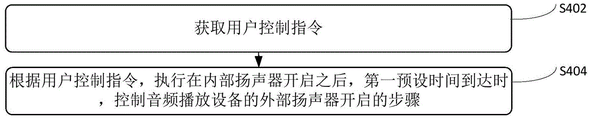
fig. 3 is a flowchart illustrating a speaker control method according to another embodiment;
fig. 4 is a flowchart illustrating a speaker control method according to another embodiment;
fig. 5 is a flowchart illustrating a speaker control method according to another embodiment;
fig. 6 is a flowchart illustrating a speaker control method according to another embodiment;
fig. 7 is a flowchart illustrating a speaker control method according to another embodiment;
FIG. 8 is a block diagram showing the structure of a speaker control apparatus according to an embodiment;
fig. 9 is a block diagram showing the structure of a speaker control apparatus according to an embodiment;
FIG. 10 is a diagram showing an internal structure of a computer device according to an embodiment.
Detailed Description
In order to make the objects, technical solutions and advantages of the present application more apparent, the present application is described in further detail below with reference to the accompanying drawings and embodiments. It should be understood that the specific embodiments described herein are merely illustrative of the present application and are not intended to limit the present application.
The speaker control method provided by the application can be applied to the application environment shown in fig. 1. The application environment includes: and the audio playing equipment is used for playing the audio information. Wherein, audio playback equipment includes: a processor 11, an internal speaker 12, an external speaker 13; the processor is used for controlling the opening and closing of the internal loudspeaker and the external loudspeaker after receiving the audio playing instruction so as to play audio. The internal speaker and the processor are connected in series, the external speaker and the internal speaker can be connected in series in a wired connection mode, and can also be connected in series in a wireless connection mode, and the connection is not limited herein. When playing audio information, the audio information can be played through an internal speaker, or can be played through an external speaker connected in series with the internal speaker, and because the frequency amplitude of the signal generated by the internal speaker is small, the frequency amplitude of the signal generated by the internal speaker can be amplified by the external speaker, so that the volume is increased.
In one embodiment, as shown in fig. 2, a speaker control method is provided, which is exemplified by the method applied to the audio playing device in fig. 1, and includes the following steps:
s202, when receiving the audio playing instruction, controlling the internal loudspeaker of the audio playing device to be started.
Specifically, when a user needs to play audio, an audio playing instruction may be input to the audio playing device, and the audio playing device obtains corresponding audio information according to the audio playing instruction and controls the internal speaker to be turned on. The audio playing instruction may be to play the detected audio information. The internal speaker may be turned on by turning on a path between the internal speaker and the processor, or by changing a voltage value or a current value corresponding to an input signal of the internal speaker, or by controlling level conversion of a speaker pin, which is not limited herein.
And S204, after the internal loudspeaker is started, when the first preset time is up, controlling the external loudspeaker of the audio playing device to be started.
The first preset time may be determined according to a time required for the audio signal to pass from the internal speaker to the external speaker, and the time unit may be in units of milliseconds or microseconds, which is not limited herein. Illustratively, the first preset time is 20 milliseconds, that is, after the internal speaker is turned on, the external speaker of the audio playing device is controlled to be turned on after 20 milliseconds.
Specifically, the external speaker of the audio playing device is controlled to be turned on by conducting a path between the external speaker and the internal speaker; the external speaker can be turned on by changing the voltage value or the current value corresponding to the input signal of the external speaker, and the external speaker can be turned on by controlling the level conversion of the external speaker pin without limitation. Illustratively, the voltage value of the input signal of the external speaker is 5V, and the voltage value of the input signal is increased to 8V, then the external speaker is turned on.
According to the loudspeaker control method, when an audio playing instruction is received, the internal loudspeaker of the audio playing device is controlled to be started, after the internal loudspeaker is started, when the first preset time is up, the external loudspeaker of the audio playing device is controlled to be started, it can be ensured that after the internal loudspeaker of the audio playing device is started, the external loudspeaker of the audio playing device is controlled to be started again, time difference exists between the starting of the internal loudspeaker and the starting of the external loudspeaker, therefore, the external loudspeaker cannot amplify the plosives generated when the internal loudspeaker is started, only audio information is amplified, and therefore audio quality is improved.
In the above embodiment, the processor is described to control the internal speaker and the external speaker to be turned on, and after the audio playing is finished, the processor is further required to control the internal speaker and the external speaker to be turned off, and now, an embodiment is described to control the internal speaker and the external speaker to be turned off, in an embodiment, as shown in fig. 3, the speaker control method further includes:
and S302, if the audio playing is detected to be finished, controlling the external loudspeaker to be closed.
Specifically, the processor detects the audio information in real time when playing the audio, and controls the external speaker to be turned off when the audio playing is finished. The external speaker may be turned off by disconnecting the path between the external speaker and the internal speaker, or by changing a jump of a voltage value of an input signal of the external speaker, which is not limited herein. Illustratively, the voltage value of the input signal of the external speaker is 8V, and the voltage value of the input signal is reduced to 5V, then the external speaker is turned off.
And S304, after the external loudspeaker is closed, controlling the internal loudspeaker to be closed when a second preset time is up.
The second preset time may be determined according to a time required for the audio signal to pass from the external speaker to the internal speaker, and the time unit may be in units of milliseconds or microseconds, which is not limited herein. Illustratively, the second preset time is 10 milliseconds, that is, after the external speaker is turned off, 10 milliseconds pass, and the internal speaker of the audio playing device is controlled to be turned off.
Specifically, the manner of controlling the internal speaker of the audio playing device to be turned off may be to turn on a path between the external speaker and the internal speaker, or to turn off the internal speaker by changing a voltage value or a current value corresponding to an input signal of the internal speaker, or to turn off the internal speaker by changing a level jump of a pin of the internal speaker, which is not limited herein.
In this embodiment, if it is detected that the audio playing is completed, the external speaker is controlled to be closed, after the external speaker is closed, when the second preset time is reached, the internal speaker is controlled to be closed, it can be ensured that the external speaker of the audio playing device is closed, then the internal speaker of the audio playing device is controlled to be closed, a time difference exists between the closing of the internal speaker and the closing of the external speaker, and therefore, the external speaker does not amplify the plosive generated when the internal speaker is closed, and therefore, the audio quality is improved.
In the above embodiment, it is described that the control of turning on and off the internal speaker and the external speaker is performed, where there is a time difference between turning on the internal speaker and turning on the external speaker, and there is a time difference between turning off the internal speaker and turning off the external speaker, and before playing audio using the internal speaker and the external speaker, it is required to determine whether the delay function of the audio playing device is turned on, and a user may select a mode of turning on the external speaker of the audio playing device after turning on the internal speaker of the audio playing device, and now, as shown in fig. 4, in an embodiment, before the step of controlling the external speaker of the audio playing device to turn on when a first preset time arrives after the internal speaker is turned on, the speaker control method further includes:
s402, acquiring a user control instruction;
the user control instruction is an instruction triggered by the fact that a user selects whether to start an internal loudspeaker of the audio equipment at first, then start an external loudspeaker of the audio equipment and then close the external loudspeaker of the audio equipment at first and then close the internal loudspeaker of the audio equipment at any time based on a user setting interface according to requirements.
Specifically, before the audio playback device runs, the user may select to turn on the internal speaker of the audio device first, then turn on the external speaker of the audio device, and then turn off the external speaker of the audio device first, and then turn off the internal speaker of the audio device, based on the user setting interface, so as to trigger the user control instruction.
S404, according to the user control instruction, executing the step of controlling the external loudspeaker of the audio playing device to be turned on when the first preset time is reached after the internal loudspeaker is turned on.
Specifically, the processor receives a user control instruction, and then may control the audio playback device to turn on the internal speaker of the audio device first, and turn on the external speaker of the audio device when a preset time is reached, and turn off the external speaker of the audio device first and then turn off the internal speaker of the audio device after the audio playback is completed, and if the user does not trigger the user control instruction based on the user setting interface, it is not necessary to control the delayed turning on and the advanced turning off of the external speaker.
In the embodiment, the user control instruction is obtained; and controlling the external loudspeaker of the audio playing device to be started when the first preset time is up after the internal loudspeaker is started according to the user control instruction. The delay opening and the advance closing of the external loudspeaker can be controlled according to the requirements of the user, and the requirements of the user on the audio quality are further met.
The foregoing embodiments have described controlling the turning on of the external speaker of the audio device, and a specific manner of controlling the turning on of the external speaker is now described with an embodiment, in which, as shown in fig. 5, controlling the turning on of the external speaker of the audio playback device includes:
s502, acquiring a target control mode of the pin of the external loudspeaker.
Optionally, the target control mode includes any one of a mode of increasing the voltage of the GPIO pin, a mode of decreasing the voltage of the GPIO pin, and a mode of level jump of the GPIO pin. The mode of increasing the voltage of the GPIO pin is a mode of increasing the voltage of the pin of the external loudspeaker; the mode of reducing the voltage of the GPIO pin is a mode of reducing the voltage of an external loudspeaker pin; the level jump mode of the GPIO pin is a mode in which the level of the pin of the external speaker changes from a high level to a low level, or a mode in which the level of the pin of the external speaker changes from a low level to a high level, and is not limited herein.
Specifically, the user can select the target control mode of the pin of the external speaker through the selection mode control interface, and when audio playing is performed, the target control mode of the pin of the external speaker can be automatically acquired. For example, if the user selects the level hopping mode of the GPIO pin based on the selection mode control interface, the level hopping mode of the GPIO pin is automatically obtained when the audio is played.
S504, controlling the voltage or the level of the pin of the external loudspeaker according to the target control mode to realize the starting of the external loudspeaker.
Specifically, after the target control mode is determined, the voltage or the level of the pin of the external speaker is controlled by the target control mode, so that the external speaker is turned on. For example, the target control mode is a level jump mode of the GPIO pin, and if the level of the pin of the external speaker is at a low level, the level of the pin of the external speaker may be controlled to change from the low level to a high level, that is, the external speaker is controlled to be turned on.
In this embodiment, the voltage or the level of the pin of the external speaker is controlled according to the target control mode by obtaining the target control mode of the pin of the external speaker, so as to turn on the external speaker. The method is simple and effective, and can control the starting of the external loudspeaker.
The foregoing embodiment describes a specific manner of controlling the external speaker of the audio device to be turned on, and now a specific manner of controlling the external speaker to be turned off is described with an embodiment, in which controlling the external speaker of the audio playback device to be turned off includes:
and controlling the voltage or the level of a pin of the external loudspeaker according to the target control mode so as to realize the closing of the external loudspeaker.
Specifically, the voltage or level of the pin of the external speaker is controlled in a target control mode, so that the external speaker is turned off. For example, the target control mode is a level jump mode of the GPIO pin, and if the level of the pin of the external speaker is at a high level, the level of the pin of the external speaker may be controlled to change from the high level to a low level, that is, the external speaker is controlled to be turned off.
In the embodiment, the external loudspeaker is turned off by controlling the voltage or the level of the pin of the external loudspeaker according to the target control mode, and the method is simple and effective and ensures the rapid turning off of the external loudspeaker.
The above embodiment describes the control of the on and off of the external speaker, and when the external speaker is controlled to be on and off, the pin control manner of the external speaker needs to be obtained to implement the on and off of the external speaker, and now further described with an embodiment, as shown in fig. 6, the obtaining of the pin control manner of the external speaker includes:
and S602, acquiring a selection instruction based on the control mode selection interface.
Specifically, the user can select the interface through the control mode, click the option of the target control mode, and trigger the selection instruction. The control mode selection interface comprises a plurality of candidate control modes of pins of the external loudspeaker; the selection instruction includes an identification of the selected one of the candidate control modes. The control mode selection interface can comprise a mode option for increasing the voltage of the GPIO pin, a mode option for reducing the voltage of the GPIO pin and a level jump mode option of the GPIO pin; the user can click any one of a mode option for increasing the voltage of the GPIO pin, a mode option for reducing the voltage of the GPIO pin and a level jump mode option of the GPIO pin to obtain a final candidate control mode and trigger a selection instruction.
And S604, determining a target control mode according to the selection command.
Specifically, after the selection instruction is acquired, the selection instruction includes an identifier of the candidate control mode, and the candidate control mode is determined to be the target control mode through the identifier. For example, if the obtaining selection instruction includes a mode identifier for reducing the voltage of the GPIO pin, the mode for reducing the voltage of the GPIO pin is determined as the target control mode.
In the embodiment, the selection instruction is obtained by selecting the interface based on the control mode, the target control mode is determined according to the identification of the candidate control mode, and the target control mode can be simply and intuitively reflected by the control mode selection interface, so that a user can conveniently select a proper and customary control mode to realize the opening and closing of the external pin.
To facilitate understanding of those skilled in the art, the speaker control method provided in the present application is described in detail below, and as shown in fig. 7, the method may include:
s701, selecting an interface based on a control mode, and acquiring a selection instruction; the control mode selection interface comprises a plurality of candidate control modes of the pins of the external loudspeaker; the selection instruction comprises an identifier of a selected candidate control mode;
s702, determining a target control mode according to the selection instruction.
And S703, controlling an internal loudspeaker of the audio playing device to be started when the audio playing instruction is received.
S704, according to the user control instruction, when the first preset time is reached after the internal loudspeaker is started, the target control mode of the pin of the external loudspeaker is obtained.
S705, controlling the voltage or level of the pin of the external loudspeaker according to the target control mode to realize the starting of the external loudspeaker.
S706, if the audio playing is detected to be finished, controlling the voltage or the level of the pin of the external loudspeaker according to the target control mode to close the external loudspeaker.
And S707, after the external loudspeaker is closed, controlling the internal loudspeaker to be closed when a second preset time is reached.
In this embodiment, when an audio playing instruction is received, the internal speaker of the audio playing device is controlled to be turned on, after the internal speaker is turned on, when a first preset time is reached, the external speaker of the audio playing device is controlled to be turned on, it can be ensured that after the internal speaker of the audio playing device is turned on, the external speaker of the audio playing device is controlled to be turned on again, a time difference exists between the turning-on of the internal speaker and the turning-on of the external speaker, and therefore, the external speaker cannot amplify the plosives generated when the internal speaker is turned on, and only amplifies audio information. Meanwhile, after the audio playing is detected to be finished, the external loudspeaker is controlled to be closed first, when the second preset time is up, the internal loudspeaker is controlled to be closed, the explosive sound generated by closing the internal loudspeaker can be prevented from being amplified through the external loudspeaker, and therefore the audio quality is improved.
It should be understood that although the various steps in the flowcharts of fig. 2-7 are shown in order as indicated by the arrows, the steps are not necessarily performed in order as indicated by the arrows. The steps are not performed in the exact order shown and described, and may be performed in other orders, unless explicitly stated otherwise. Moreover, at least some of the steps in fig. 2-7 may include multiple steps or multiple stages, which are not necessarily performed at the same time, but may be performed at different times, which are not necessarily performed in sequence, but may be performed in turn or alternately with other steps or at least some of the other steps.
In one embodiment, as shown in fig. 8, there is provided a speaker control apparatus including: a first control module 801 and a second control module 802, wherein:
the first control module 801 controls an internal speaker of the audio playback device to be turned on when receiving the audio playback instruction.
The second control module 802 controls the external speaker of the audio playing device to be turned on when the first preset time is reached after the internal speaker is turned on.
In this embodiment, when the first control module receives an audio playing instruction, the internal speaker of the audio playing device is controlled to be turned on, the second control module is controlled to be turned on after the internal speaker is turned on, when the first preset time is reached, the external speaker of the audio playing device is controlled to be turned on, it can be ensured that the internal speaker of the audio playing device is turned on, the external speaker of the audio playing device is controlled to be turned on again, there is a time difference between the turning-on of the internal speaker and the turning-on of the external speaker, therefore, the external speaker cannot amplify the plosives generated when the internal speaker is turned on, only audio information is amplified, and therefore, the audio quality is improved.
In one embodiment, as shown in fig. 9, the speaker control apparatus further includes:
and a third control module 901, configured to control the external speaker to close if it is detected that the audio playing is finished.
And a fourth control module 902, configured to control the internal speaker to turn off when a second preset time arrives after the external speaker turns off.
In one embodiment, referring to fig. 9, the speaker control apparatus further includes:
an obtaining module 903, configured to obtain a user control instruction;
the executing module 904 is configured to execute, according to the user control instruction, a step of controlling an external speaker of the audio playing device to be turned on when a first preset time arrives after the internal speaker is turned on.
In one embodiment, and with continued reference to FIG. 9, the second control module 802 includes:
an obtaining unit 9051, configured to obtain a target control mode of a pin of an external speaker;
and the first control unit 9052 is configured to control a voltage or a level of a pin of the external speaker according to a target control manner, so as to turn on the external speaker.
In one embodiment, the third control module 901 is specifically configured to control a voltage or a level of a pin of the external speaker according to a target control manner, so as to implement turning off of the external speaker.
In an embodiment, the obtaining unit 9051 is specifically configured to obtain a selection instruction based on the control mode selection interface;
and determining a target control mode according to the selection instruction. The target control mode comprises any one of a mode of increasing the voltage of the GPIO pin, a mode of reducing the voltage of the GPIO pin and a level jump mode of the GPIO pin.
For the specific definition of the speaker control device, reference may be made to the above definition of the speaker control method, which is not described herein again. The respective modules in the speaker control apparatus described above may be implemented in whole or in part by software, hardware, and a combination thereof. The modules can be embedded in a hardware form or independent from a processor in the computer device, and can also be stored in a memory in the computer device in a software form, so that the processor can call and execute operations corresponding to the modules.
In one embodiment, a computer device is provided, which may be a terminal, and its internal structure diagram may be as shown in fig. 10. The computer device includes a processor, a memory, a communication interface, a display screen, and an input device connected by a system bus. Wherein the processor of the computer device is configured to provide computing and control capabilities. The memory of the computer device comprises a nonvolatile storage medium and an internal memory. The non-volatile storage medium stores an operating system and a computer program. The internal memory provides an environment for the operation of an operating system and computer programs in the non-volatile storage medium. The communication interface of the computer device is used for carrying out wired or wireless communication with an external terminal, and the wireless communication can be realized through WIFI, an operator network, NFC (near field communication) or other technologies. The computer program is executed by a processor to implement a speaker control method. The display screen of the computer equipment can be a liquid crystal display screen or an electronic ink display screen, and the input device of the computer equipment can be a touch layer covered on the display screen, a key, a track ball or a touch pad arranged on the shell of the computer equipment, an external keyboard, a touch pad or a mouse and the like.
Those skilled in the art will appreciate that the architecture shown in fig. 10 is merely a block diagram of some of the structures associated with the disclosed aspects and is not intended to limit the computing devices to which the disclosed aspects apply, as particular computing devices may include more or less components than those shown, or may combine certain components, or have a different arrangement of components.
In one embodiment, a computer device is provided, comprising a memory and a processor, the memory having a computer program stored therein, the processor implementing the following steps when executing the computer program:
and when an audio playing instruction is received, controlling an internal loudspeaker of the audio playing device to be started.
And after the internal loudspeaker is started, when the first preset time is up, controlling the external loudspeaker of the audio playing device to be started.
In one embodiment, the processor, when executing the computer program, further performs the steps of:
and if the audio playing is detected to be finished, controlling the external loudspeaker to be closed.
And controlling the internal loudspeaker to be closed when a second preset time is up after the external loudspeaker is closed.
In one embodiment, the processor, when executing the computer program, further performs the steps of:
acquiring a user control instruction;
and controlling the external loudspeaker of the audio playing device to be started when the first preset time is up after the internal loudspeaker is started according to the user control instruction.
In one embodiment, the processor, when executing the computer program, further performs the steps of:
and acquiring a target control mode of the pin of the external loudspeaker.
And controlling the voltage or the level of a pin of the external loudspeaker according to the target control mode to realize the starting of the external loudspeaker.
In one embodiment, the processor, when executing the computer program, further performs the steps of:
and controlling the voltage or the level of a pin of the external loudspeaker according to the target control mode so as to realize the closing of the external loudspeaker.
In one embodiment, the processor, when executing the computer program, further performs the steps of:
and acquiring a selection instruction based on the control mode selection interface.
And determining a target control mode according to the selection instruction.
In one embodiment, a computer-readable storage medium is provided, having a computer program stored thereon, which when executed by a processor, performs the steps of:
and when an audio playing instruction is received, controlling an internal loudspeaker of the audio playing device to be started.
And after the internal loudspeaker is started, when the first preset time is up, controlling the external loudspeaker of the audio playing device to be started.
In one embodiment, the computer program when executed by the processor further performs the steps of:
and if the audio playing is detected to be finished, controlling the external loudspeaker to be closed.
And controlling the internal loudspeaker to be closed when a second preset time is up after the external loudspeaker is closed.
In one embodiment, the computer program when executed by the processor further performs the steps of:
acquiring a user control instruction;
and controlling the external loudspeaker of the audio playing device to be started when the first preset time is up after the internal loudspeaker is started according to the user control instruction.
In one embodiment, the computer program when executed by the processor further performs the steps of:
and acquiring a target control mode of the pin of the external loudspeaker.
And controlling the voltage or the level of a pin of the external loudspeaker according to the target control mode to realize the starting of the external loudspeaker.
In one embodiment, the computer program when executed by the processor further performs the steps of:
and controlling the voltage or the level of a pin of the external loudspeaker according to the target control mode so as to realize the closing of the external loudspeaker.
In one embodiment, the computer program when executed by the processor further performs the steps of:
and acquiring a selection instruction based on the control mode selection interface.
And determining a target control mode according to the selection instruction.
It will be understood by those skilled in the art that all or part of the processes of the methods of the embodiments described above can be implemented by hardware instructions of a computer program, which can be stored in a non-volatile computer-readable storage medium, and when executed, can include the processes of the embodiments of the methods described above. Any reference to memory, storage, database or other medium used in the embodiments provided herein can include at least one of non-volatile and volatile memory. Non-volatile Memory may include Read-Only Memory (ROM), magnetic tape, floppy disk, flash Memory, optical storage, or the like. Volatile Memory can include Random Access Memory (RAM) or external cache Memory. By way of illustration and not limitation, RAM can take many forms, such as Static Random Access Memory (SRAM) or Dynamic Random Access Memory (DRAM), among others.
The technical features of the above embodiments can be arbitrarily combined, and for the sake of brevity, all possible combinations of the technical features in the above embodiments are not described, but should be considered as the scope of the present specification as long as there is no contradiction between the combinations of the technical features.
The above-mentioned embodiments only express several embodiments of the present application, and the description thereof is more specific and detailed, but not construed as limiting the scope of the invention. It should be noted that, for a person skilled in the art, several variations and modifications can be made without departing from the concept of the present application, which falls within the scope of protection of the present application. Therefore, the protection scope of the present patent shall be subject to the appended claims.
Claims (10)
Priority Applications (1)
| Application Number | Priority Date | Filing Date | Title |
|---|---|---|---|
| CN202110235436.9A CN113076076A (en) | 2021-03-03 | 2021-03-03 | Loudspeaker control method and device, computer equipment and storage medium |
Applications Claiming Priority (1)
| Application Number | Priority Date | Filing Date | Title |
|---|---|---|---|
| CN202110235436.9A CN113076076A (en) | 2021-03-03 | 2021-03-03 | Loudspeaker control method and device, computer equipment and storage medium |
Publications (1)
| Publication Number | Publication Date |
|---|---|
| CN113076076A true CN113076076A (en) | 2021-07-06 |
Family
ID=76609785
Family Applications (1)
| Application Number | Title | Priority Date | Filing Date |
|---|---|---|---|
| CN202110235436.9A Pending CN113076076A (en) | 2021-03-03 | 2021-03-03 | Loudspeaker control method and device, computer equipment and storage medium |
Country Status (1)
| Country | Link |
|---|---|
| CN (1) | CN113076076A (en) |
Cited By (1)
| Publication number | Priority date | Publication date | Assignee | Title |
|---|---|---|---|---|
| CN114827832A (en) * | 2022-04-13 | 2022-07-29 | 西安广和通无线软件有限公司 | Method, device, equipment and storage medium for closing multistage operational amplifier |
Citations (8)
| Publication number | Priority date | Publication date | Assignee | Title |
|---|---|---|---|---|
| KR970047677U (en) * | 1995-12-26 | 1997-07-31 | Pop-Noise Rejector for PC Audio Amplifiers | |
| KR20060023905A (en) * | 2004-09-11 | 2006-03-15 | 엘지전자 주식회사 | Audio control device and method of mobile communication terminal |
| KR20150116168A (en) * | 2014-04-07 | 2015-10-15 | 황선원 | Hands Free Phone and Communication Method between/among HandPhones |
| CN107181997A (en) * | 2017-06-21 | 2017-09-19 | 滁州学院 | A kind of audio de-noising circuit and with wheat audio amplifier |
| WO2017166685A1 (en) * | 2016-03-31 | 2017-10-05 | 乐视控股(北京)有限公司 | Method and apparatus for switching to external loudspeaker |
| CN107472125A (en) * | 2017-08-11 | 2017-12-15 | 吉林大学 | A kind of automobile using active sound system and automobile using active sound control method |
| CN109525881A (en) * | 2018-11-29 | 2019-03-26 | 青岛海信电器股份有限公司 | Sound draws synchronous method, device and equipment |
| CN109587597A (en) * | 2018-10-29 | 2019-04-05 | 歌尔科技有限公司 | A kind of interaction control method of combination sound box, device and combination sound box |
-
2021
- 2021-03-03 CN CN202110235436.9A patent/CN113076076A/en active Pending
Patent Citations (8)
| Publication number | Priority date | Publication date | Assignee | Title |
|---|---|---|---|---|
| KR970047677U (en) * | 1995-12-26 | 1997-07-31 | Pop-Noise Rejector for PC Audio Amplifiers | |
| KR20060023905A (en) * | 2004-09-11 | 2006-03-15 | 엘지전자 주식회사 | Audio control device and method of mobile communication terminal |
| KR20150116168A (en) * | 2014-04-07 | 2015-10-15 | 황선원 | Hands Free Phone and Communication Method between/among HandPhones |
| WO2017166685A1 (en) * | 2016-03-31 | 2017-10-05 | 乐视控股(北京)有限公司 | Method and apparatus for switching to external loudspeaker |
| CN107181997A (en) * | 2017-06-21 | 2017-09-19 | 滁州学院 | A kind of audio de-noising circuit and with wheat audio amplifier |
| CN107472125A (en) * | 2017-08-11 | 2017-12-15 | 吉林大学 | A kind of automobile using active sound system and automobile using active sound control method |
| CN109587597A (en) * | 2018-10-29 | 2019-04-05 | 歌尔科技有限公司 | A kind of interaction control method of combination sound box, device and combination sound box |
| CN109525881A (en) * | 2018-11-29 | 2019-03-26 | 青岛海信电器股份有限公司 | Sound draws synchronous method, device and equipment |
Non-Patent Citations (2)
| Title |
|---|
| 孙小勇;阮颐;王甲;: "一种消除音频功放关机爆破声的电路设计", 集成电路应用, no. 12, 28 November 2018 (2018-11-28), pages 13 - 14 * |
| 炼成之路: "喇叭POP爆破音产生的原因与解决办法", Retrieved from the Internet <URL:https://m.elecfans.com/article/1193072.html> * |
Cited By (2)
| Publication number | Priority date | Publication date | Assignee | Title |
|---|---|---|---|---|
| CN114827832A (en) * | 2022-04-13 | 2022-07-29 | 西安广和通无线软件有限公司 | Method, device, equipment and storage medium for closing multistage operational amplifier |
| CN114827832B (en) * | 2022-04-13 | 2024-11-15 | 西安广和通无线软件有限公司 | Method, device, equipment and storage medium for closing multi-stage operational amplifier |
Similar Documents
| Publication | Publication Date | Title |
|---|---|---|
| US10720158B2 (en) | Low power detection of a voice control activation phrase | |
| CN105072564B (en) | Audio playing method and device based on Bluetooth connection | |
| US20180255360A1 (en) | Simulation Method and Apparatus for Watching Together in Live Broadcast | |
| US10635388B2 (en) | Sound effect processing method and mobile terminal | |
| WO2016184095A1 (en) | Operation event execution method and apparatus, and terminal | |
| CN112261225A (en) | Volume adjusting method and device, electronic equipment and storage medium | |
| CN107547732A (en) | A kind of media play volume adjusting method, device, terminal and storage medium | |
| JP6746775B2 (en) | Information providing device, terminal device, display system, program and information providing method | |
| US20140188483A1 (en) | Audio device and storage medium | |
| US12236925B2 (en) | Method and device for music play | |
| CN113076076A (en) | Loudspeaker control method and device, computer equipment and storage medium | |
| US20140376755A1 (en) | Method for providing hearing aid compatibility mode and electronic device thereof | |
| CN110472073B (en) | Random playback method, device and computer readable storage medium | |
| CN108419278A (en) | A channel control method and device | |
| CN105682010B (en) | Bluetooth connection control method and device in audio playing system and playing equipment | |
| EP3886457A1 (en) | Information processing device and information processing method | |
| US9118292B2 (en) | Bell sound outputting apparatus and method thereof | |
| CN108009057B (en) | Test method and device for password input, storage medium and electronic equipment | |
| CN108419133A (en) | A kind of application switching controls the method and device of audio output in the process | |
| CN105072534B (en) | Control method and terminal of wireless sound box system | |
| CN111148007A (en) | Tone quality adjusting method, wireless transmitting equipment, tone quality adjusting system and medium | |
| CN106781127A (en) | Doorbell control method and device | |
| CN111835914B (en) | Call control method, device, computer equipment and storage medium | |
| CN110321099B (en) | Sound card control method, device, terminal and storage medium | |
| CN115208976B (en) | Processing method and device for call channel switching, call equipment and storage medium |
Legal Events
| Date | Code | Title | Description |
|---|---|---|---|
| PB01 | Publication | ||
| PB01 | Publication | ||
| SE01 | Entry into force of request for substantive examination | ||
| SE01 | Entry into force of request for substantive examination | ||
| RJ01 | Rejection of invention patent application after publication | ||
| RJ01 | Rejection of invention patent application after publication |
Application publication date: 20210706 |