Application of composition in preparation of medicine for treating Alzheimer's disease
Technical Field
The invention relates to the field of medicines, and in particular relates to application of a composition in preparation of a medicine for treating Alzheimer's disease.
Background
Alzheimer's disease, also known as senile dementia, is a degenerative disease. Studies have shown that only 1% -2% of alzheimer's disease is inherited in an autosomal dominant inheritance, and the etiology of most alzheimer's patients is complex and unexplored. The disease course of alzheimer's disease is typically 5-12 years, during which the cognitive and memory impairment of the patient becomes more and more severe with age and even leads to death. In the related art, clinical drugs only slow down the cognitive and memory impairment of patients in the course of the disease and are not effective in preventing the death threat that alzheimer's disease may cause.
Therefore, the development of a drug or a pharmaceutical composition effective for the prevention or treatment of alzheimer's disease is of great significance for reducing the risk of alzheimer's disease.
Disclosure of Invention
The present invention is directed to solving at least one of the problems of the prior art described above. Therefore, the invention provides the application of the composition of the pelargonidin and the L-serine in treating neurodegenerative diseases such as Alzheimer's disease and the like by utilizing the protection effect on the nerve cell apoptosis on a glutamate-induced damaged cell model and the Tau protein phosphorylation inhibition effect on an okadaic acid-induced damaged cell model on the basis of toxicity and proliferation effect tests on mouse hippocampal neuronal cells (HT 22).
In a first aspect of the invention, a composition is provided comprising pelargonidin and L-serine.
The chemical structural formula of the pelargonidin is shown as a formula I:
the chemical structural formula of the L-serine is shown as a formula II:
pelargonidin (Pelargonidin) belongs to the group of anthocyanidins and can be extracted from daikon radish. Anthocyanins belong to natural pigments of flavone, and have effects in resisting oxidative stress, resisting neuritis and increasing synaptic plasticity.
L-Serine (L-Serine) is a non-essential amino acid in human bodies, is an important precursor participating in synthesis of purine, pyrimidine, phospholipid and other substances, and is widely applied to industries of medicines, foods, cosmetics and the like as a basic amino acid. The inventors found that there is a link between glycolysis, L-serine production and neuronal function reduction in astrocytes, and therefore, it is possible to contribute to the reduction of cognitive impairment during senile dementia (Alzheimer's disease) by adding L-serine to a diet as appropriate.
Hyperphosphorylation of Tau protein (p-Tau) is considered to be a key factor leading to senile dementia, and the mechanism is that p-Tau blocks axonal transport of neurons, leading to defective or even death of neuron functions. In the related art, detecting the expression level of p-Tau in cerebrospinal fluid is a common clinical means for diagnosing and predicting senile dementia.
Another important role played in the pathogenesis of senile dementia is the oxidative stress response, which makes the brain more vulnerable to oxidative stress than other organs of the body. In the brain, high oxygen consumption and inflammatory response lead to the central nervous system more easily generating Reactive Oxygen Species (ROS) and Nitric Oxide (NO), and cause dysfunction of the antioxidant system, and the accumulation of ROS in large quantities ultimately leads to the death of nerve cells, thus aggravating the kidneys of alzheimer's disease and even causing the death of patients.
According to an embodiment of the present invention, at least the following advantages are provided:
the inventor finds that the combination of the pelargonidin of 12.5 mu g/mL and the L-serine of 200nM has the strongest inhibition effect on the damage of glutamate to nerve cells in a certain proportioning range, and can reduce the apoptosis caused by glutamate treatment to the maximum extent; moreover, the combination can effectively reduce the hyperphosphorylation of Tau in cells caused by okadaic acid molding. In animal experiments, the combination of pelargonidin and L-serine can obviously improve the learning and memory ability and learning and memory behaviors of animals to space and direction, simultaneously relieve the inflammatory reaction of brain, inhibit the neuronal apoptosis caused by the inflammatory reaction and reduce the Tau protein phosphorylation caused by the neuronal apoptosis. The combination of the pelargonidin and the L-serine has complementary and synergistic effects, and the effect on neurodegenerative diseases such as Alzheimer's disease is far better than that of single medicine.
In the present invention, the action principle of pelargonidin and L-serine is shown in FIG. 1.
According to a first aspect of the invention, in some embodiments, the concentration of pelargonidin in the composition is between 3.125 and 100 ug/mL.
In some preferred embodiments, the concentration of pelargonidin in the composition is 6.25-25.0 ug/mL.
In some more preferred embodiments, the concentration of pelargonidin in the composition is 12.5 ug/mL.
According to a first aspect of the invention, in some embodiments, the concentration of L-serine in the composition is between 12.5nM and 200. mu.M.
In some preferred embodiments, the concentration of L-serine in the composition is 100 to 200 nM.
In some more preferred embodiments, the concentration of L-serine in the composition is 200 nM.
In a second aspect of the invention, there is provided a medicament comprising a composition according to the first aspect of the invention.
According to an embodiment of the present invention, at least the following advantages are provided:
the medicine contains the combination of pelargonidin and L-serine, can effectively inhibit damage of glutamate to nerve cells, and can effectively reduce hyperphosphorylation of Tau in cells caused by okadaic acid molding. In addition, the medicine can also improve the learning and memory ability and learning and memory behavior of animals to space and direction, relieve the inflammatory reaction of brain, and effectively treat neurodegenerative diseases such as Alzheimer's disease and the like.
According to a second aspect of the invention, in some embodiments, the above-mentioned medicament further comprises a pharmaceutically acceptable adjuvant.
In some preferred embodiments, the dosage form of the above-mentioned drugs includes solutions, tablets, pills, granules, powders, capsules, injections, and emulsions.
Of course, it should be understood that various dosage forms including but not limited to solution, tablet, pill, granule, powder, capsule, injection and emulsion can be adopted by those skilled in the art according to the actual use requirement.
In a third aspect of the present invention, there is provided a use of the composition according to the first aspect of the present invention for the preparation of a therapeutic agent or a medicament for alzheimer's disease.
It will of course be appreciated that in the above applications, the composition according to the first aspect of the invention may be used in various forms by those skilled in the art for the treatment or prevention of alzheimer's disease.
The forms include pharmaceuticals and food products.
In a fourth aspect of the invention, there is provided the use of a composition according to the first aspect of the invention in the manufacture of a medicament or medicament for the treatment of huntington's disease.
It will of course be appreciated that in the above applications, the composition according to the first aspect of the invention may be used in various forms by those skilled in the art for the treatment or prophylaxis of huntington's disease.
The forms include pharmaceuticals and food products.
According to a fourth aspect of the invention, in some embodiments, the huntington's disease comprises dementia or chorea-like movements caused by huntington's disease.
Neuroinflammation, oxidative stress and abnormal immune activation play an important role in the development and progression of huntington's disease, which causes immune dysfunction in the central and peripheral nervous systems, and the progression of the disease is closely related to the levels of inflammatory factors in the body. The composition of the present invention is effective in reducing the level of oxidative stress and inflammation in the brain, thereby ameliorating the development of huntington's disease.
Drawings
FIG. 1 is a schematic diagram showing the action of pelargonidin and L-serine in the examples of the present invention;
FIG. 2 shows the effect of different concentrations of pelargonidin (A) and different concentrations of L-serine (B) on the activity of cells in the examples of the present invention; wherein HT22 mouse hippocampal neuron cells without any treatment are used as blank Control (Control);
FIG. 3 shows the effect of different concentrations of combination of Geraniin and L-serine on the glutamate-induced damage model in the present example, wherein A is the different concentrations of Geraniin, B is the different concentrations of L-serine, C is the combination of Geraniin 6.25ug/mL, D is the combination of Geraniin 12.5ug/mL, E is the combination of Geraniin 25.0ug/mL, F is the combination of Geraniin 50.0ug/mL, and G is the combination of Geraniin 100 ug/mL; among them, HT22 mouse hippocampal neuronal cells which were not treated at all were used as a blank Control (Control), and HT22 mouse hippocampal neuronal cells which were treated with glutamate without pelargonidin and L-serine were used as a Model group (Model);
FIG. 4 shows the effect of different concentrations of combination of Geraniin and L-serine on the glutamate-induced damage model in the present example, wherein A is the different concentrations of Geraniin, B is the different concentrations of L-serine, C is the combination of Geraniin at 3.125ug/mL, D is the combination of Geraniin at 6.25ug/mL, E is the combination of Geraniin at 12.5ug/mL, F is the combination of Geraniin at 25.0ug/mL, and G is the combination of Geraniin at 50.0 ug/mL; wherein HT22 mouse hippocampal neuronal cells without any treatment were used as a blank Control (Control), HT22 mouse hippocampal neuronal cells treated with glutamate without pelargonidin and L-serine were used as a Model group (Model), and pelargonidin at 12.5. mu.g/mL and L-serine at 200nM were used as a best experiment group (Combine);
FIG. 5 is a graph of the effect of 12.5. mu.g/mL pelargonidin and 200nM L-serine (Combine) on cellular protein expression in a glutamate-induced nerve cell injury assay in an example of the present invention;
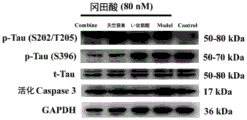
FIG. 6 is a graph showing the effect of 12.5. mu.g/mL pelargonidin and 200nM L-serine (Combine) on cellular protein expression in the Ookadaic acid-induced neuronal damage assay in an example of the present invention;
FIG. 7 is a graph showing the trend of the body weight of experimental animals in the example of the present invention, wherein Combine represents pelargonidin +200nM L-serine at 12.5. mu.g/ml;
fig. 8 is statistics of new object identification experiment results in the embodiment of the present invention, where a: the time of the animal's exploration for a new object; b: the number of times the animal explores the new object; combine represents 12.5. mu.g/ml pelargonidin +200nM L-serine; asterisks indicate significance of Student's t tests of Model cohorts and Control cohorts and corresponding experimental cohorts and Model cohorts, # P <0.05, # P <0.01, # P < 0.001; among them, HT22 mouse hippocampal neuronal cells which were not treated at all were used as a blank Control (Control), and HT22 mouse hippocampal neuronal cells which were treated with glutamate without pelargonidin and L-serine were used as a Model group (Model);
fig. 9 is a graph of the results of the Mirros water maze experiment in the example of the present invention, a: a hidden latency period; b: target area exploration time; c: a target area route; combine represents 12.5. mu.g/ml pelargonidin +200nM L-serine; asterisks indicate significance of Student's t tests of Model cohorts and Control cohorts and corresponding experimental cohorts and Model cohorts, # P <0.05, # P <0.01, # P < 0.001; among them, HT22 mouse hippocampal neuronal cells which were not treated at all were used as a blank Control (Control), and HT22 mouse hippocampal neuronal cells which were treated with glutamate without pelargonidin and L-serine were used as a Model group (Model);
FIG. 10 shows the NO content in the serum of mice in the example of the present invention, and Combine represents pelargonidin +200nM L-serine at 12.5. mu.g/ml; asterisks indicate significance of Student's t tests of Model cohorts and Control cohorts and corresponding experimental cohorts and Model cohorts, # P <0.05, # P <0.01, # P < 0.001; among them, HT22 mouse hippocampal neuronal cells which were not treated at all were used as a blank Control (Control), and HT22 mouse hippocampal neuronal cells which were treated with glutamate without pelargonidin and L-serine were used as a Model group (Model);
FIG. 11 shows the expression levels of different proteins in the cerebral cortex of mice in the present example, and combination indicates that 12.5. mu.g/ml pelargonidin +200nM L-serine; HT22 mouse hippocampal neuronal cells without any treatment were used as a blank Control (Control), and HT22 mouse hippocampal neuronal cells treated with glutamate without pelargonidin and L-serine were used as a Model group (Model).
Detailed Description
In order to make the objects, technical solutions and technical effects of the present invention more clear, the present invention will be described in further detail with reference to specific embodiments. It should be understood that the detailed description and specific examples, while indicating the preferred embodiment of the invention, are intended for purposes of illustration only and are not intended to limit the scope of the invention.
The experimental materials and reagents used are, unless otherwise specified, all consumables and reagents which are conventionally available from commercial sources.
Cytotoxicity detection of pelargonidin and L-serine
HT22 mouse hippocampal neuronal cells were used as experimental subjects to test the cytotoxicity of pelargonidin and L-serine, respectively.
The specific experimental steps are as follows:
HT22 mouse hippocampal neurons (5X 10) were seeded in 96-well plates5One/well), incubated for 24 h. Then, different concentration gradients of pelargonidin and different concentration gradients of L-serine were prepared with dimethyl sulfoxide (DMSO) and DMEM medium (containing 10% FBS (fetal bovine serum) and 1% penicillin-streptomycin double antibody solution), respectively. The prepared pelargonidin and L-serine were added to each well separately (to give final pelargonidin concentrations of 6.25, 12.5, 25.0, 50.0 and 100ug/mL, and L-serine concentrations of 12.5, 25.0, 50.0, 100 and 200nM, respectively). After 24h of administration, the culture medium was discarded and replaced with fresh DMEM medium (containing 10% FBS, 1% penicillin-streptomycin double antibody solution and 10% CCK8) for 2 h. Absorbance was measured at 450nm using a multifunctional microplate reader.
As shown in FIG. 2, both of pelargonidin at 6.25-100 ug/mL and L-serine at 12.5-200 nM did not have cytotoxic effect on HT22 cells. Furthermore, the inventors have found that high doses of pelargonidin (50. mu.g/mL and 100. mu.g/mL) also have a certain cell proliferation promoting effect on HT22 cells.
Concentration ratio experiment of pelargonidin and L-serine
In this example, glutamate was used to construct a model of neuronal cell injury.
Concentration ratio combination experiment 1
HT22 mouse hippocampal neurons (5X 10) were seeded in 96-well plates5One/well), incubated for 24 h. Then, different concentration gradients of pelargonidin and different concentration gradients of L-serine were prepared with dimethyl sulfoxide (DMSO) and DMEM medium (containing 10% FBS (fetal bovine serum) and 1% penicillin-streptomycin double antibody solution), respectively. The prepared pelargonidin and L-serine were added to each well separately (grouped as shown in Table 2), along with 7mM glutamate. After 24h of administration, the culture medium was discarded and replaced with fresh DMEM medium (containing 10% FBS, 1% penicillin-streptomycin double antibody solution and 10% CCK8) for 2 h. Absorbance was measured at 450nm using a multifunctional microplate reader.
Among them, HT22 mouse hippocampal neuronal cells without any treatment were used as a blank Control (Control), and HT22 mouse hippocampal neuronal cells treated with glutamate without pelargonidin and L-serine were used as a Model group (Model).
Table 2 concentration ratio combination experiment 1 experimental grouping
The results are shown in FIG. 3. The result shows that the combination of the pelargonidin of 12.5 mu g/mL and the L-serine of 200nM has the strongest inhibition effect on the damage of the glutamate to nerve cells, and can effectively reduce the apoptosis caused by the glutamate treatment.
Concentration ratio combination experiment 2
HT22 mouse hippocampal neurons (5X 10) were seeded in 96-well plates5One/well), incubated for 24 h. Then, different concentration gradients of pelargonidin and different concentration gradients of L-serine were prepared with dimethyl sulfoxide (DMSO) and DMEM medium (containing 10% FBS (fetal bovine serum) and 1% penicillin-streptomycin double antibody solution), respectively. The prepared pelargonidin and L-serine were added to each well separately (grouped as shown in Table 3), along with 7mM glutamate. After 24h of administration, the culture medium was discarded and replaced with fresh DMEM medium (containing 10% FBS, 1% penicillin-streptomycin double antibody solution and 10% CCK8) for 2 h. Absorbance was measured at 450nm using a multifunctional microplate reader.
Among them, HT22 mouse hippocampal neuronal cells without any treatment were used as a blank Control (Control), HT22 mouse hippocampal neuronal cells treated with glutamate without pelargonidin and L-serine were used as a Model group (Model), and pelargonidin at 12.5. mu.g/mL and L-serine at 200nM were used as a best experiment group (Combine).
Table 3 concentration ratio combination experiment 2 experimental groups
The results are shown in FIG. 4. The result shows that the increase of L-serine can improve the inhibition effect of glutamate on nerve cell damage to a certain extent, but is still weaker than the combination of 12.5 mu g/mL pelargonium and 200nM L-serine on the whole, which indicates that the combination of 12.5 mu g/mL pelargonium and 200nM L-serine has the strongest inhibition effect on the nerve cell damage by glutamate in a certain proportioning range, and can reduce the apoptosis caused by glutamate treatment to the greatest extent.
In vitro mechanism of action of L-serine and pelargonidin
A Western blot method is adopted to verify the in vitro action mechanism of the L-serine and the pelargonidin.
(1) Glutamate-induced nerve cell injury:
HT22 mouse hippocampal neurons (5X 10) were seeded in 96-well plates5One/well), incubated for 24 h. Then, solutions of pelargonidin and L-serine were prepared with dimethyl sulfoxide (DMSO) and DMEM medium (containing 10% FBS (fetal bovine serum) and 1% penicillin-streptomycin double antibody solution), respectively. A mixture of pelargonidin (final concentration 12.5. mu.g/mL) and L-serine (final concentration 200nM) was added to each well, along with 7mM glutamate. After 24h of administration, cells were detected using Western blot methods conventional in the art.
The gel electrophoresis pattern is shown in FIG. 5. As can be seen from FIG. 5, glutamate induced an increase in the expression of N-methyl-D aspartate receptor in cells, and the optimal combination of pelargonidin (12.5. mu.g/mL) and L-serine (200nM) reduced the expression of N-methyl-D aspartate receptor in cells and inhibited HT22 apoptosis.
(2) Okadaic acid induced nerve cell damage:
HT22 mouse hippocampal neurons (5X 10) were seeded in 96-well plates5One/well), incubated for 24 h. Then, solutions of pelargonidin and L-serine were prepared with dimethyl sulfoxide (DMSO) and DMEM medium (containing 10% FBS (fetal bovine serum) and 1% penicillin-streptomycin double antibody solution), respectively. Will be matched withA mixture of pelargonidin (final concentration 12.5. mu.g/mL) and L-serine (final concentration 200nM) was added to each well, along with 80nM Okadaic Acid (Okadaic Acid). After 24h of administration, cells were detected using Western blot methods conventional in the art.
The gel electrophoresis pattern is shown in FIG. 6. As can be seen from FIG. 6, the optimal combination of pelargonidin (12.5. mu.g/mL) and L-serine (200nM) was effective in reducing the hyperphosphorylation of intracellular Tau caused by okadaic acid molding.
Pharmacodynamic test of combination of pelargonidin and L-serine on APP/PS1 double-transgenic animal model
(1) Experimental materials:
34 APP/PS1 female mice of 10 months of age were selected and randomly divided into 4 groups (model group, pelargonidin group, L-serine group, pelargonidin + L-serine group) of 8-9 mice each. The blank control group was 9C 57 female mice of the same age.
(2) Mirros water maze experiment:
the optimum combination in the above examples was converted into equivalent amounts, and the amounts of pelargonidin and L-serine administered were calculated. The dose of pelargonidin was 42mg/kg (mouse body weight), the dose of L-serine was 0.0706mg/kg (mouse body weight), and the dose of pelargonidin + L-serine was 42mg/kg pelargonidin +0.0706mg/kg L-serine. All drugs were administered by oral gavage.
The administration was continued and the physiological indices (body weight) of the mice were examined. Performing a new object identification test (ORT) on the mice on the 19 th day of administration to test the recognition memory capacity of the mice, performing a Mirros water maze test on the 22 th day of administration, killing the mice 30 days after administration, collecting blood, and detecting the NO content in the serum; brain tissues were collected and subjected to proteomic analysis to obtain the expression levels of different proteins in mouse cortex.
Wherein, the new object identification experiment and the Mirros water maze experiment are carried out according to the routine operation in the field.
The results are shown in FIGS. 7 to 11. The experimental results show that APP/PS1 mice have obvious learning and memory disorder at the age of 10 months, and the weight of the mice increases slowly with time (figure 7). In the new object identification experiment, the learning and memory behavior of mice was improved after administration of pelargonidin and L-serine, respectively, but the learning and memory behavior of animals was significantly improved after administration of the combination (fig. 8). Similarly, in the Morris water maze experiment, although the separate administration of pelargonidin and L-serine can affect the learning and memory ability of the animal in space and direction, the effect of the single administration is weaker than that of the combined administration, and the learning and memory ability of the animal in space and direction is remarkably improved after the combined administration (figure 9).
Further detection on biochemical indexes of mice shows that the content of NO in serum is increased due to inflammatory reaction in APP/PS1 mice, and although the content of NO in serum is remarkably reduced after the pelargonidin and L-serine are independently administered, the effect after the combined administration is better than that after the pelargonidin and the L-serine are respectively administered (figure 10).
Through the detection of the expression quantity of different proteins in the cerebral cortex of the mouse, the treatment of learning and memory injury by the combined use of the pelargonidin and the L-serine can be inferred to be realized through two ways, wherein the first way is to relieve the inflammatory reaction of the brain, inhibit the neuronal apoptosis caused by the inflammatory reaction and further reduce the Tau protein phosphorylation caused by the neuronal apoptosis; the second approach is that the drug combination achieves a therapeutic effect by inhibiting amyloid production (fig. 11).
In conclusion, for a series of neurodegenerative diseases related to brain inflammatory reaction, such as alzheimer disease and huntington chorea, the pharmaceutical composition provided by the embodiment of the invention can significantly reduce the content of NO in the cerebral cortex, inhibit or reduce the inflammatory reaction in brain tissues, and thus has a potential therapeutic effect. The drug combination in the embodiment of the invention is helpful for developing therapeutic preparations or drugs for neurodegenerative diseases such as Alzheimer's disease and Huntington's chorea.
The above embodiments are preferred embodiments of the present invention, but the present invention is not limited to the above embodiments, and any other changes, modifications, substitutions, combinations, and simplifications which do not depart from the spirit and principle of the present invention should be construed as equivalents thereof, and all such changes, modifications, substitutions, combinations, and simplifications are intended to be included in the scope of the present invention.