CN112877297A - Method for preparing cat distemper virus monoclonal antibody by using bioreactor - Google Patents
Method for preparing cat distemper virus monoclonal antibody by using bioreactor Download PDFInfo
- Publication number
- CN112877297A CN112877297A CN202110329016.7A CN202110329016A CN112877297A CN 112877297 A CN112877297 A CN 112877297A CN 202110329016 A CN202110329016 A CN 202110329016A CN 112877297 A CN112877297 A CN 112877297A
- Authority
- CN
- China
- Prior art keywords
- culture
- bioreactor
- cell
- distemper virus
- antibody
- Prior art date
- Legal status (The legal status is an assumption and is not a legal conclusion. Google has not performed a legal analysis and makes no representation as to the accuracy of the status listed.)
- Pending
Links
Images

Classifications
-
- C—CHEMISTRY; METALLURGY
- C12—BIOCHEMISTRY; BEER; SPIRITS; WINE; VINEGAR; MICROBIOLOGY; ENZYMOLOGY; MUTATION OR GENETIC ENGINEERING
- C12N—MICROORGANISMS OR ENZYMES; COMPOSITIONS THEREOF; PROPAGATING, PRESERVING, OR MAINTAINING MICROORGANISMS; MUTATION OR GENETIC ENGINEERING; CULTURE MEDIA
- C12N5/00—Undifferentiated human, animal or plant cells, e.g. cell lines; Tissues; Cultivation or maintenance thereof; Culture media therefor
- C12N5/10—Cells modified by introduction of foreign genetic material
- C12N5/12—Fused cells, e.g. hybridomas
- C12N5/16—Animal cells
- C12N5/163—Animal cells one of the fusion partners being a B or a T lymphocyte
-
- C—CHEMISTRY; METALLURGY
- C07—ORGANIC CHEMISTRY
- C07K—PEPTIDES
- C07K16/00—Immunoglobulins [IG], e.g. monoclonal or polyclonal antibodies
- C07K16/08—Immunoglobulins [IG], e.g. monoclonal or polyclonal antibodies against material from viruses
- C07K16/081—DNA viruses
-
- C—CHEMISTRY; METALLURGY
- C12—BIOCHEMISTRY; BEER; SPIRITS; WINE; VINEGAR; MICROBIOLOGY; ENZYMOLOGY; MUTATION OR GENETIC ENGINEERING
- C12N—MICROORGANISMS OR ENZYMES; COMPOSITIONS THEREOF; PROPAGATING, PRESERVING, OR MAINTAINING MICROORGANISMS; MUTATION OR GENETIC ENGINEERING; CULTURE MEDIA
- C12N2500/00—Specific components of cell culture medium
- C12N2500/90—Serum-free medium, which may still contain naturally-sourced components
Landscapes
- Health & Medical Sciences (AREA)
- Life Sciences & Earth Sciences (AREA)
- Chemical & Material Sciences (AREA)
- Organic Chemistry (AREA)
- Genetics & Genomics (AREA)
- Engineering & Computer Science (AREA)
- Biotechnology (AREA)
- General Health & Medical Sciences (AREA)
- Bioinformatics & Cheminformatics (AREA)
- Immunology (AREA)
- Wood Science & Technology (AREA)
- Zoology (AREA)
- Biomedical Technology (AREA)
- Biochemistry (AREA)
- General Engineering & Computer Science (AREA)
- Cell Biology (AREA)
- Microbiology (AREA)
- Virology (AREA)
- Biophysics (AREA)
- Medicinal Chemistry (AREA)
- Molecular Biology (AREA)
- Proteomics, Peptides & Aminoacids (AREA)
- Preparation Of Compounds By Using Micro-Organisms (AREA)
- Micro-Organisms Or Cultivation Processes Thereof (AREA)
Abstract
The invention discloses a method for preparing a feline distemper virus monoclonal antibody by using a bioreactor, which comprises the following steps: step one, subcloning hybridoma cells by using a limiting dilution method, selecting single cells to a serum-free culture medium for suspension culture to obtain a cell strain A805 with high survival rate and strong antibody secretion capacity, wherein the preservation number is as follows: CGMCC No. 21902; step two, preparing the anti-feline distemper virus monoclonal by using a bioreactor, wherein: culturing hybridoma cells in the bioreactor in two stages, namely a cell growth stage and an antibody secretion stage; and step three, harvesting cell culture solution as an antibody, and centrifuging to remove cell debris to obtain a finished product of the anti-feline distemper virus monoclonal antibody. The method improves titer of monoclonal antibody against pestivirus, overcomes the disadvantages of conventional production of antibody from ascites, and makes antibody product free of foreign protein, stable physicochemical properties, and small batch difference.
Description
Technical Field
The invention relates to a preparation method of a feline distemper virus monoclonal antibody.
Background
Feline distemper (Feline distemper) is also known as Feline panleukopenia (Feline panleukopenia), Feline infectious gastroenteritis (enterogastritis felum), or Feline movement disorder (Feline ataxia syndrome). In 1928, Verge and Cristoporon prove that the disease is caused by viruses, the feline distemper virus is firstly separated from Hammon and Ender reports in 1930, and a feline distemper virus is firstly separated from natural cases in 1984 in China.
Feline panleukopenia virus (Feline panleukopenia virus) is a member of the parvoviridae, genus parvovirus. The virus can infect animals such as tigers, leopards, minks, raccoons and the like in addition to domestic cats. The young cats usually have acute onset of disease and are manifested by symptoms of high fever, vomiting, diarrhea and the like, and the death rate is up to 90% in severe cases. The vaccination of the feline distemper vaccine is one of the most effective ways for preventing the feline distemper. In recent years, although the vaccine is widely used, cases infected with feline distemper virus are reported all over the world, and great economic losses are caused to pets and breeding industries.
The monoclonal antibody is secreted by a single cell and has high uniformity of physicochemical properties, and has the biggest characteristics of strong specificity, high purity, simple and easy expanded production and low economic cost.
To date, the main method of preparation of monoclonal antibodies has been collection of ascites from mice. Injecting specific hybridoma cells into the abdominal cavity of a BALB/c mouse, proliferating the cells in the abdominal cavity, enlarging the abdominal part of the mouse 7-10 days later, and collecting ascites. The concentration of the antibody collected by the method is high, but the method is complex to operate, low in yield and incapable of realizing large-scale production, the mouse is susceptible to other diseases, and a large amount of impurity proteins and the like exist in ascites. At present, the hybridoma cells are cultured by applying a bioreactor, and the problems are mainly that the concentration of the secreted antibody is low and needs to be concentrated, so that the economic cost is greatly improved. The research on a preparation method for producing the anti-feline distemper virus monoclonal antibody by using a bioreactor without concentration is urgently needed.
Disclosure of Invention
The invention aims to provide a method for preparing a feline distemper virus monoclonal antibody by using a bioreactor, which improves the titer of the feline distemper virus monoclonal antibody, overcomes the defect of producing the antibody by using the traditional ascites, and ensures that an antibody product has no foreign protein, stable physicochemical property and small batch difference. By using the culture medium with definite components, the aims of simplified process, controllable quality and improved yield are achieved.
The purpose of the invention is realized by the following technical scheme:
a method for preparing a feline distemper virus monoclonal antibody by using a bioreactor comprises the following steps:
step one, subcloning hybridoma cells by using a limiting dilution method, selecting single cells to a serum-free culture medium for suspension culture, and obtaining a cell strain A805 with high survival rate and strong antibody secretion capacity, wherein:
the hybridoma cells are selected from mouse hybridoma cell strains capable of stably secreting anti-feline distemper virus monoclonal antibodies, 1 cell strain A805 with high survival rate and strong antibody secretion capacity is selected by a limiting dilution method, and the cell strain A805 is classified and named as hybridoma cells (A)hybridoma) The culture medium is preserved in China general microbiological culture Collection center (CGMCC), and the address is as follows: the microbial research institute of department of China, Xilu No. 1 Hospital, Beijing, Chaoyang, and the preservation number is: CGMCC No.21902, with a preservation date of 2021 years, 2 months and 25 days;
the suspension culture conditions are as follows: the temperature is 37 ℃, the stirring speed is 70 rpm, the dissolved oxygen is 40 percent, and the pH value is 6.85;
step two, preparing the anti-feline distemper virus monoclonal by using a bioreactor, wherein:
culturing hybridoma cells in a cell growth stage (namely culturing cell proliferation) and an antibody secretion stage in the bioreactor, and performing centrifugal separation on the obtained cell liquid without concentration to obtain a finished product of the anti-feline fever virus monoclonal antibody;
the cell growth stage mainly obtains the number of cells, and the antibody secretion stage mainly obtains a large amount of secreted antibodies continuously and stably;
culture conditions for the growth phase of the cells: the temperature is 37 ℃, the stirring speed is 50-90 rpm, the Dissolved Oxygen (DO) is 40 +/-10%, and the pH is 6.8 +/-0.2;
culture conditions of the antibody secretion phase: the temperature is 34 ℃, the stirring speed is 50-90 rpm, the Dissolved Oxygen (DO) is 40 +/-10%, and the pH is 6.8 +/-0.2;
the bioreactor is a stirring bioreactor;
the culture medium used for culturing the cells in the bioreactor is a serum-free culture medium, and the culture medium is divided into two parts: a basal medium and a supplemented medium;
the culture method in the bioreactor is a fed batch culture method;
the batch culture method comprises the steps of putting a culture medium with the volume of 60% of that of a tank body into a bioreactor, inoculating cells into the bioreactor according to the cell density of 1.0E 6-1.2E 6, growing the cells in the bioreactor, and harvesting products at one time;
the fed batch culture method is characterized in that a fed medium is supplemented in the culture process, wherein: batch culture: seed cell inoculation amount 5 x 10⁵Cell density of about 2.5 x 10 after 24 hours of culture in the reactor6When the cells are cultured per ml, feeding a fed-batch culture medium, feeding the fed-batch culture medium with the total culture volume of 3% every 24 hours, sampling from the reactor every day to detect the cell density and the survival rate, detecting the antibody titer through a hemagglutination inhibition test, and completely harvesting when the titer reaches 1:640 (which is reached by adding the cells for 6-7 days);
the culture mode in the bioreactor is a monopolar culture method and/or a step-by-step amplification culture method;
the monopolar culture method is a 10L monopolar culture method, and the step-by-step amplification culture method is a 10L-50L-200L step-by-step amplification culture method;
the 10L single-stage culture method uses shake flask culture cells as seed cells, inoculates the seed cells into a 10L stirring bioreactor for culture, and adds a feed medium, wherein: seed cell inoculation amount 5 x 10⁵Cell density of about 2.5 x 10 after 24 hours of culture in the reactor6When the culture medium is cultured per ml, beginning to add the fed-batch culture medium, and feeding the fed-batch culture medium with the total culture volume of 3 percent every 24 hours, wherein the temperature is 37 ℃, the stirring speed is 50-90 rpm, the Dissolved Oxygen (DO) is 40 +/-10 percent, and the pH is 6.8 +/-0.2;
the 10L-50L-200L stepwise amplification culture method comprises the steps of taking cells cultured in a 10L bioreactor as seed cells, amplifying the seed cells into a 50L bioreactor for culture, and amplifying the seed cells into a 200L bioreactor for culture by taking the cells cultured in the 50L bioreactor as seed cells to produce an antibody, wherein: seed cell inoculation amount 5 x 10⁵Cell density of about 2.5 x 10 after 24 hours of culture in the reactor6When the culture medium is cultured per ml, beginning to add the fed-batch culture medium, and feeding the fed-batch culture medium with the total culture volume of 3 percent every 24 hours, wherein the temperature is 37 ℃, the stirring speed is 50-90 rpm, the Dissolved Oxygen (DO) is 40 +/-10 percent, and the pH is 6.8 +/-0.2;
and step three, harvesting cell culture solution as the antibody, centrifuging to remove cell debris, and subpackaging the product.
In order to clearly convey the scope of the invention, the invention is defined by the following terms:
the 'hybridoma cell line' in the invention is formed by fusing a mouse spleen cell with the secretion of the anti-feline distemper virus monoclonal antibody and an SP2/0 cell with unlimited division, and the formed hybridoma cell has the characteristics of antibody secretion and wireless proliferation, and comprises but is not limited to the A805 cell exemplified by the invention.
The basal medium and the feed medium referred to in the present invention are serum-free media, which include but are not limited to the present invention.
Compared with the prior art, the invention has the following advantages:
1. the invention employs a limiting dilution method to clone cells resisting the feline distemper virus, and screens out a cell strain with good growth state and high survival rate, and the cell strain can stably grow in a serum-free culture medium.
2. The invention adopts a monopolar culture method or a step-by-step amplification culture method, the production process is automatically controlled, the harvested cell culture solution can reach the required titer without concentration, the production cost is reduced, and the product quality is improved.
3. The method uses the bioreactor to culture the hybridoma cells by serum-free suspension to prepare the anti-feline distemper virus monoclonal without membrane concentration to achieve the required antibody titer, and the serum-free culture medium applied by the method has definite components and does not use bovine serum, thereby avoiding the residue of specific protein in the serum and ensuring the product quality. The culture medium has the advantages of definite components, controllable production process and quality, good stability and the like.
Preservation information:
the preservation unit is called as follows: china general microbiological culture Collection center;
the preservation unit is abbreviated as: CGMCC;
the address of the depository: the institute of microbiology, institute of Zhongkou institute of Xilu No. 1 Homew, Beijing, Chaoyang, North Cheng;
the preservation date is as follows: 25/2/2021;
the preservation number is: CGMCC No. 21902.
Drawings
FIG. 1 is a flow chart of the present invention for preparing a monoclonal antibody against feline distemper virus using a bioreactor.
Detailed Description
The technical solution of the present invention is further described below with reference to the accompanying drawings, but not limited thereto, and any modification or equivalent replacement of the technical solution of the present invention without departing from the spirit and scope of the technical solution of the present invention shall be covered by the protection scope of the present invention.
The invention provides a method for preparing a cat fever virus monoclonal antibody by using a bioreactor, wherein cells used in the method are murine hybridoma cells, the cells are from Beijing epoch Henry animal epidemic prevention technology Co., Ltd, serum-free culture medium is purchased from Bizhi Biotechnology Co., Ltd, cell culture shaking tables are purchased from American Jingqi Co., Ltd, DMEM culture medium is purchased from Sammer Feishll technology (China) Co., Ltd, and bovine serum is purchased from Lanzhou Rongqing Co., Ltd.
First, hybridoma cell recovery
Taking out the feline fever monoclonal antibody hybridoma cells from liquid nitrogen, carrying out water bath at 37 ℃ to rapidly melt the cells, transferring the cells into a centrifuge tube filled with 10ml of fresh DMEM medium, centrifuging for 3min at 1000rpm, removing supernatant, adding 8ml of DMEM medium containing 15% serum, slightly blowing the cells until the cells are completely dispersed, transferring the cells into a T25 ventilated square bottle, putting the square bottle into a carbon dioxide incubator (37 ℃, 5% carbon dioxide), and carrying out passage on the cells every other day.
Second, cell cloning
Staining and counting by using placenta blue, diluting the cell suspension into 90 cells/10 ml by using a DMEM (DMEM) medium containing 15% serum, culturing the cell suspension, adding the diluted cell suspension into a 96-well cell culture plate, culturing the cell suspension in a 5% carbon dioxide incubator at 37 ℃ in a volume of 100 mu l per well for 3 days, observing the formation of clone cells under a microscope, recording the growth hole of only a single clone cell, taking cell supernatant in 8-9 days, and carrying out hemagglutination and hemagglutination inhibition experiment detection. And selecting 10 strains of cells with fast growth and high titer for enlarged culture and freezing.
Serum-free suspension adaptive culture of hybridoma cells
Recovering 10 cloned cells, culturing and subculturing for 2 times, gently blowing and beating the cells by an elbow pipette according to the proportion of 1 multiplied by 10 after the cells grow into a compact monolayer6Density per ml, inoculated in shake flask culture under air-permeable culture conditions 125, at which time the medium is DMEM containing 15% serum. The culture conditions were 37 ℃, 5% carbon dioxide, shaker speed 130rpm, and amplitude 5 cm. The cells were sampled every other day to observe the growth of the cells, and the cells were cultured in serum-free medium at 1X 10⁶The medium was passaged at individual/ml density and slowly replaced with DMEM medium containing 15% serum. Passage is carried out for 5-7 times, the survival rate of the counted cells is more than 90%, the cells grow in a doubling way every other day, namely, the cell strain is judged to be acclimatized to a serum-free culture medium for suspension culture, and at the moment, the cells are picked up5 hybridoma cells were selected and acclimated to serum-free medium.
And (3) performing fed-batch culture on the 5 strains in a 125 shake flask, and selecting a strain with the titer of 1: 1280.
Four, 10L bioreactor for culturing hybridoma
The bioreactor used in this example was a stirred bioreactor (purchased from Sadolis) equipped with a macroaeration device and serum medium purchased from Kyoto Biotech, Inc.
(1) Preparing seed cells: inoculating the selected cell strain acclimatized to serum-free suspension medium into 125ml shake flask for culturing until cell density reaches 4 × 10⁶And (4) after seed/ml, subculturing the seed/ml mixture into a 500ml shake flask, and carrying out expanded culture on the seed cells under the culture conditions of 37 ℃, 5% carbon dioxide and the rotation speed of a shaking table of 130rpm to obtain the seed cells.
(2) Preparation of the bioreactor: cleaning a bioreactor tank body, calibrating a pH electrode, installing the pH electrode on the tank body, wrapping a pipeline, performing a leak detection test on a respirator and the tank body, performing high-pressure steam sterilization (121 ℃, 1 h) after the leak detection test is completed, and naturally cooling to room temperature. The interlayer of the tank body is injected with water to control the temperature. Aseptically connecting the aseptically filtered serum-free basal medium to a reactor, and adding the aseptically filtered serum-free basal medium into a tank body. The electrode probe is immersed in the amount of the added culture medium, parameters are set, the temperature of the reactor is opened, stirring is carried out, and dissolved oxygen calibration is carried out by leading air in. And after 12 hours, dissolved oxygen calibration is carried out for standby.
(3) Hybridoma cell inoculation bioreactor: after counting the seed cells in the shake flask, the inoculation density is 1 × 10⁶Inoculating the cells/ml into a 10L reactor, wherein the inoculation volume is not less than 3L, and then gradually supplementing the cells to the working volume according to the cell density. A serum-free basal medium is adopted in the culture process, and the cell density and the cell survival rate are monitored every day.
(4) Inoculation into a 50L bioreactor: the obtained hybridoma cells cultured in 10L bioreactor were used as seed cells, inoculated into 50L bioreactor, and cultured at an inoculation density of 1 × 10⁶Per ml, culture parameters are: the temperature was 37 ℃, the stirring speed was 50rpm, the DO was 40%, and the pH was 6.8. CulturingThe process adopts a serum-free basal medium, and the cell density and the cell survival rate are monitored every day.
(5) Inoculation into a 200L bioreactor: the obtained hybridoma cells cultured in 50L bioreactor were used as seed cells, inoculated into 200L bioreactor, and cultured at an inoculation density of 1 × 10⁶Per ml, culture parameters are: the temperature was 37 ℃, the stirring speed was 50rpm, the DO was 40%, and the pH was 6.8. Cell density and cell viability were monitored daily during the cell growth and antibody secretion phases. When the cell density reaches 2X 10⁶At individual/ml, serum-free feed medium was supplemented daily. When the cell density reaches 3X 10⁶At one/ml, the temperature was lowered to 34 ℃. Cell fluid was harvested by feeding medium culture addition from day 7 to day 9.
(6) And (4) centrifuging the harvested cell sap at 4000rpm to remove cell debris, and performing sterile subpackaging.
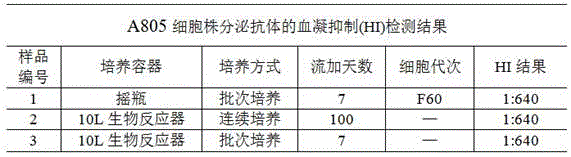
(7) The product is tested according to the requirements of the pharmacopoeia of the people's republic of China, no bacteria, mycoplasma and mould grow, and the test results are shown in table 1.
TABLE 1 Hemagglutination Inhibition (HI) assay results for antibody secreted by A805 cell line
Claims (7)
1. A murine hybridoma cell strain A805 secreting a monoclonal antibody to feline distemper virus (distemper) has a preservation number of: CGMCC No. 21902.
2. A method for preparing a feline distemper virus monoclonal antibody by using a bioreactor, which is characterized by comprising the following steps of:
the method comprises the following steps of firstly, subcloning hybridoma cells by using a limiting dilution method, selecting single cells to a serum-free culture medium for suspension culture, and obtaining a cell strain A805 with high survival rate and strong antibody secretion capacity;
step two, preparing the anti-feline distemper virus monoclonal by using a bioreactor, wherein: culturing hybridoma cells in the bioreactor in two stages, namely a cell growth stage and an antibody secretion stage;
and step three, harvesting cell culture solution as an antibody, and centrifuging to remove cell debris to obtain a finished product of the anti-feline distemper virus monoclonal antibody.
3. The method for preparing monoclonal antibody against feline distemper virus using bioreactor as claimed in claim 2, wherein in the first step, the suspension culture conditions are as follows: the temperature was 37 ℃, the stirring speed was 70 rpm, the dissolved oxygen was 40%, and the pH was 6.85.
4. The method for preparing monoclonal antibody against feline distemper virus using bioreactor as claimed in claim 2, wherein the culture conditions in cell growth stage in the second step are as follows: the temperature is 37 ℃, the stirring speed is 50-90 rpm, the dissolved oxygen is 40 +/-10%, and the pH is 6.8 +/-0.2; culture conditions for antibody secretion stage: the temperature is 34 ℃, the stirring speed is 50-90 rpm, the dissolved oxygen is 40 +/-10%, and the pH is 6.8 +/-0.2.
5. The method for preparing monoclonal antibody against feline distemper virus according to claim 2, wherein in the second step, the bioreactor is an agitated bioreactor.
6. The method for preparing monoclonal antibody against feline distemper virus (CTV) according to claim 2, wherein the culture in the bioreactor in the second step is fed-batch culture under the following conditions: seed cell inoculation amount 5 x 10⁵Cell density after 24 hours of culture in the reactor was 2.5 x 10⁶At the time of each ml, feeding the fed-batch culture medium with the volume of 3 percent of the total culture volume every 24 hours, sampling from the reactor every day to detect the cell density and the survival rate, detecting the antibody titer through a hemagglutination inhibition test, and completely harvesting when the titer reaches 1: 640.
7. The method for preparing monoclonal antibodies against feline distemper virus according to claim 2, wherein the culture method in the bioreactor in the second step is a monopolar culture method and/or a stepwise amplification culture method, wherein: the monopolar culture method is a 10L monopolar culture method, and the stepwise amplification culture method is a 10L-50L-200L stepwise amplification culture method.
Priority Applications (1)
| Application Number | Priority Date | Filing Date | Title |
|---|---|---|---|
| CN202110329016.7A CN112877297A (en) | 2021-03-27 | 2021-03-27 | Method for preparing cat distemper virus monoclonal antibody by using bioreactor |
Applications Claiming Priority (1)
| Application Number | Priority Date | Filing Date | Title |
|---|---|---|---|
| CN202110329016.7A CN112877297A (en) | 2021-03-27 | 2021-03-27 | Method for preparing cat distemper virus monoclonal antibody by using bioreactor |
Publications (1)
| Publication Number | Publication Date |
|---|---|
| CN112877297A true CN112877297A (en) | 2021-06-01 |
Family
ID=76042591
Family Applications (1)
| Application Number | Title | Priority Date | Filing Date |
|---|---|---|---|
| CN202110329016.7A Pending CN112877297A (en) | 2021-03-27 | 2021-03-27 | Method for preparing cat distemper virus monoclonal antibody by using bioreactor |
Country Status (1)
| Country | Link |
|---|---|
| CN (1) | CN112877297A (en) |
Citations (15)
| Publication number | Priority date | Publication date | Assignee | Title |
|---|---|---|---|---|
| GB1467503A (en) * | 1973-06-04 | 1977-03-16 | Rohm & Haas | Process for the production of attenuated feline panleukopenia virus and vaccine |
| WO2005072214A2 (en) * | 2004-01-21 | 2005-08-11 | Merial Limited | Improved inactivated fcv vaccines |
| WO2005080416A1 (en) * | 2004-01-20 | 2005-09-01 | Pharmacia & Upjohn Company Llc | Feline calicivirus vaccines |
| WO2010037402A1 (en) * | 2008-10-02 | 2010-04-08 | Dako Denmark A/S | Molecular vaccines for infectious disease |
| CA2777692A1 (en) * | 2009-10-14 | 2011-04-21 | Sanjay Kapil | Isolation of a virus related to canine parvovirus-2 from a raccoon |
| EP2319534A1 (en) * | 2004-09-13 | 2011-05-11 | Wyeth LLC | Hemorrhagic feline calicivirus, calicivirus vaccine and method for preventing calicivirus infection or disease |
| CN102120768A (en) * | 2010-12-08 | 2011-07-13 | 北京世纪元亨动物防疫技术有限公司 | Method for producing curative canine parvovirus virus monoclonal antibody by using bioreactor |
| CN102936612A (en) * | 2012-09-04 | 2013-02-20 | 武汉中博生物股份有限公司 | Method for preparing anti-canine distemper virus monoclonal antibody by adopting bioreactor |
| AU2013204339A1 (en) * | 2005-07-28 | 2013-05-09 | Zoetis Services Llc | Methods of vaccine administration, new feline caliciviruses, and treatments for immunizing animals against feline parvovirus and feline herpes virus |
| CN110964102A (en) * | 2018-09-28 | 2020-04-07 | 洛阳普泰生物技术有限公司 | Monoclonal antibody capable of simultaneously combining with canine, feline and mink parvoviruses, variable region sequence thereof, hybridoma cell strain and application |
| CN111549002A (en) * | 2020-06-01 | 2020-08-18 | 哈尔滨元亨生物药业有限公司 | Method for producing canine parvovirus monoclonal antibody by using high-density culture mode |
| AU2020103111A4 (en) * | 2020-10-29 | 2021-01-07 | Guangxi Veterinary Research Institute | Preparation Method of Feline Feline panleukopenia virus Therapeutic Antibody |
| CN112553168A (en) * | 2020-12-23 | 2021-03-26 | 江苏省农业科学院 | Hybridoma cell 3A6 strain secreting monoclonal antibody against feline parvovirus VP2 protein and application thereof |
| WO2021205401A1 (en) * | 2020-04-09 | 2021-10-14 | Aprilbio Co., Ltd. | Recombinant proteins comprising feline granulocyte colony-stimulating factor and antigen binding fragment for serum albumin, and uses thereof |
| WO2022169984A1 (en) * | 2021-02-03 | 2022-08-11 | The University Of North Carolina At Chapel Hill | Protein m analogs and fusion proteins and their use for inhibiting antibody function |
-
2021
- 2021-03-27 CN CN202110329016.7A patent/CN112877297A/en active Pending
Patent Citations (16)
| Publication number | Priority date | Publication date | Assignee | Title |
|---|---|---|---|---|
| GB1467503A (en) * | 1973-06-04 | 1977-03-16 | Rohm & Haas | Process for the production of attenuated feline panleukopenia virus and vaccine |
| WO2005080416A1 (en) * | 2004-01-20 | 2005-09-01 | Pharmacia & Upjohn Company Llc | Feline calicivirus vaccines |
| WO2005072214A2 (en) * | 2004-01-21 | 2005-08-11 | Merial Limited | Improved inactivated fcv vaccines |
| EP2319534A1 (en) * | 2004-09-13 | 2011-05-11 | Wyeth LLC | Hemorrhagic feline calicivirus, calicivirus vaccine and method for preventing calicivirus infection or disease |
| AU2013204339A1 (en) * | 2005-07-28 | 2013-05-09 | Zoetis Services Llc | Methods of vaccine administration, new feline caliciviruses, and treatments for immunizing animals against feline parvovirus and feline herpes virus |
| WO2010037402A1 (en) * | 2008-10-02 | 2010-04-08 | Dako Denmark A/S | Molecular vaccines for infectious disease |
| US20120258126A1 (en) * | 2008-10-02 | 2012-10-11 | Dako Denmark A/S | Molecular Vaccines for Infectious Disease |
| CA2777692A1 (en) * | 2009-10-14 | 2011-04-21 | Sanjay Kapil | Isolation of a virus related to canine parvovirus-2 from a raccoon |
| CN102120768A (en) * | 2010-12-08 | 2011-07-13 | 北京世纪元亨动物防疫技术有限公司 | Method for producing curative canine parvovirus virus monoclonal antibody by using bioreactor |
| CN102936612A (en) * | 2012-09-04 | 2013-02-20 | 武汉中博生物股份有限公司 | Method for preparing anti-canine distemper virus monoclonal antibody by adopting bioreactor |
| CN110964102A (en) * | 2018-09-28 | 2020-04-07 | 洛阳普泰生物技术有限公司 | Monoclonal antibody capable of simultaneously combining with canine, feline and mink parvoviruses, variable region sequence thereof, hybridoma cell strain and application |
| WO2021205401A1 (en) * | 2020-04-09 | 2021-10-14 | Aprilbio Co., Ltd. | Recombinant proteins comprising feline granulocyte colony-stimulating factor and antigen binding fragment for serum albumin, and uses thereof |
| CN111549002A (en) * | 2020-06-01 | 2020-08-18 | 哈尔滨元亨生物药业有限公司 | Method for producing canine parvovirus monoclonal antibody by using high-density culture mode |
| AU2020103111A4 (en) * | 2020-10-29 | 2021-01-07 | Guangxi Veterinary Research Institute | Preparation Method of Feline Feline panleukopenia virus Therapeutic Antibody |
| CN112553168A (en) * | 2020-12-23 | 2021-03-26 | 江苏省农业科学院 | Hybridoma cell 3A6 strain secreting monoclonal antibody against feline parvovirus VP2 protein and application thereof |
| WO2022169984A1 (en) * | 2021-02-03 | 2022-08-11 | The University Of North Carolina At Chapel Hill | Protein m analogs and fusion proteins and their use for inhibiting antibody function |
Non-Patent Citations (9)
| Title |
|---|
| S.CHENG 等: "Monoclonal Antibody scFv 1N8 Anti-N Protein of Canine Distemper Virus", 《MONOCLONAL ANTIBODIES IN IMMUNODIAGNOSIS AND IMMUNOTHERAPY》 * |
| 单振振: "抗猫细小病毒单克隆抗体的制备及病毒检测方法的建立", 《中国优秀硕士学位论文全文数据库(电子期刊)》 * |
| 张峻 等: "猫瘟热病毒血凝抑制与血清中和抗体滴度关系研究", 《科学研究》 * |
| 渠川玫等: "分泌抗犬细小病毒单克隆抗体杂交瘤细胞株的建立", 《中国兽医杂志》 * |
| 田丽红 等: "虎源猫瘟热病毒VP2蛋白特异性单克隆抗体的制备", 《经济动物学报》 * |
| 田克恭: "犬细小病毒单克隆抗体研究进展", 《中国兽医杂志》 * |
| 范文斌 等主编: "《发酵工艺技术》", 31 August 2014, 重庆大学出版社 * |
| 郭海明等: "犬细小病毒单克隆抗体在治疗犬细小病毒病中的临床应用", 《兽医导刊》 * |
| 钱建飞 等: "抗猫泛白细胞减少症病毒单克隆抗体的制备及其生物学特性鉴定", 《中国兽医学报》 * |
Similar Documents
| Publication | Publication Date | Title |
|---|---|---|
| CN110042061B (en) | High yield gibberellin GA3Gibberella fujikuroi mutant strain and application thereof | |
| US11629338B2 (en) | Method for acclimating and suspending Vero and second order production process for virus | |
| CN107312746A (en) | A kind of extensive full suspension culture method of porcine circovirus 2 type | |
| CN102660461A (en) | Microbial preparation for shortening tobacco fermentation period and application of microbial preparation | |
| CN102120768B (en) | Method for producing curative canine parvovirus virus monoclonal antibody by using bioreactor | |
| CN117025551B (en) | A strain of bovine nodular dermatitis virus, an inactivated vaccine prepared therefrom, and a method for preparing the vaccine. | |
| CN108570454A (en) | MDBK tames suspension process and second order virus production technique | |
| CN101289655B (en) | A kind of technology for preparing porcine circovirus | |
| CN110846262B (en) | A Serratia marcescens strain SZ201 and its application | |
| CN121160611A (en) | Cat kidney cell line suitable for serum-free suspension culture and application thereof | |
| CN116355857A (en) | Suspension-cultured bovine kidney cells, and preparation method and application thereof | |
| CN119040226B (en) | Rice chitin-phagostimulant with biocontrol and growth-promoting effects and application thereof | |
| CN112877297A (en) | Method for preparing cat distemper virus monoclonal antibody by using bioreactor | |
| CN104894054A (en) | Monkey embryo renal epithelial cell Marc-145 suspension adapted strain and application thereof in culture of PRRSV (porcine reproductive and respiratory syndrome virus) and production of PRRSV vaccine | |
| CN110241090B (en) | Method for producing porcine pseudorabies virus antigen by full suspension cell culture | |
| CN117070475B (en) | Bovine rotavirus serum-free suspension culture method, product and application thereof | |
| CN112725285B (en) | A method for preparing canine distemper virus monoclonal antibodies using a bioreactor | |
| CN102807961A (en) | Streptococcus suis 7-type high-density fermentation medium and special strain | |
| CN106237324B (en) | Method for producing transmissible gastroenteritis of swine vaccine by using full suspension technology | |
| CN116218763A (en) | A kind of whole suspension cell culture method of porcine epidemic diarrhea virus strain | |
| CN104740627B (en) | A kind of large-scale method for producing of pseudo- mad dog attenuated live vaccines for animals | |
| CN115948277A (en) | A strain of Lactobacillus plantarum with low temperature tolerance and biocontrol antagonistic properties and its application | |
| CN112795530A (en) | Method for culturing canine distemper virus and canine parvovirus and application | |
| CN102154221B (en) | Preparation of porcine circovirus II-type virus seed and storage method thereof | |
| CN119040239B (en) | A method for producing chlamydospores by liquid fermentation of Subseptate Digitaria tenuisporium |
Legal Events
| Date | Code | Title | Description |
|---|---|---|---|
| PB01 | Publication | ||
| PB01 | Publication | ||
| SE01 | Entry into force of request for substantive examination | ||
| SE01 | Entry into force of request for substantive examination | ||
| RJ01 | Rejection of invention patent application after publication | ||
| RJ01 | Rejection of invention patent application after publication |
Application publication date: 20210601 |