CN112290125B - Preparation methods of PEO-based polymer/ceramic composite material, electrolyte and battery anode - Google Patents
Preparation methods of PEO-based polymer/ceramic composite material, electrolyte and battery anode Download PDFInfo
- Publication number
- CN112290125B CN112290125B CN202010767143.0A CN202010767143A CN112290125B CN 112290125 B CN112290125 B CN 112290125B CN 202010767143 A CN202010767143 A CN 202010767143A CN 112290125 B CN112290125 B CN 112290125B
- Authority
- CN
- China
- Prior art keywords
- peo
- electrolyte
- lithium
- based polymer
- polymer
- Prior art date
- Legal status (The legal status is an assumption and is not a legal conclusion. Google has not performed a legal analysis and makes no representation as to the accuracy of the status listed.)
- Active
Links
- 239000000919 ceramic Substances 0.000 title claims abstract description 147
- 229920000642 polymer Polymers 0.000 title claims abstract description 101
- 239000003792 electrolyte Substances 0.000 title claims abstract description 79
- 239000002131 composite material Substances 0.000 title claims abstract description 75
- 238000002360 preparation method Methods 0.000 title claims abstract description 23
- 229920003171 Poly (ethylene oxide) Polymers 0.000 claims abstract description 137
- 239000000843 powder Substances 0.000 claims abstract description 72
- MYRTYDVEIRVNKP-UHFFFAOYSA-N 1,2-Divinylbenzene Chemical compound C=CC1=CC=CC=C1C=C MYRTYDVEIRVNKP-UHFFFAOYSA-N 0.000 claims abstract description 50
- 229920006037 cross link polymer Polymers 0.000 claims abstract description 46
- 239000002202 Polyethylene glycol Substances 0.000 claims abstract description 39
- 239000002994 raw material Substances 0.000 claims abstract description 22
- 125000004386 diacrylate group Chemical group 0.000 claims abstract description 18
- 229920001223 polyethylene glycol Polymers 0.000 claims abstract description 18
- 239000002245 particle Substances 0.000 claims abstract description 12
- 238000000034 method Methods 0.000 claims description 36
- 239000000725 suspension Substances 0.000 claims description 34
- CSCPPACGZOOCGX-UHFFFAOYSA-N Acetone Chemical compound CC(C)=O CSCPPACGZOOCGX-UHFFFAOYSA-N 0.000 claims description 26
- LFQSCWFLJHTTHZ-UHFFFAOYSA-N Ethanol Chemical compound CCO LFQSCWFLJHTTHZ-UHFFFAOYSA-N 0.000 claims description 23
- 238000004132 cross linking Methods 0.000 claims description 20
- 238000000498 ball milling Methods 0.000 claims description 16
- 239000002904 solvent Substances 0.000 claims description 16
- 238000003756 stirring Methods 0.000 claims description 16
- 238000006116 polymerization reaction Methods 0.000 claims description 15
- 229910021525 ceramic electrolyte Inorganic materials 0.000 claims description 14
- -1 polyoxyethylene Polymers 0.000 claims description 14
- HBBGRARXTFLTSG-UHFFFAOYSA-N Lithium ion Chemical group [Li+] HBBGRARXTFLTSG-UHFFFAOYSA-N 0.000 claims description 13
- 229910001416 lithium ion Inorganic materials 0.000 claims description 13
- 238000002156 mixing Methods 0.000 claims description 13
- ZUHZGEOKBKGPSW-UHFFFAOYSA-N tetraglyme Chemical compound COCCOCCOCCOCCOC ZUHZGEOKBKGPSW-UHFFFAOYSA-N 0.000 claims description 13
- 229910003002 lithium salt Inorganic materials 0.000 claims description 11
- 159000000002 lithium salts Chemical class 0.000 claims description 11
- 229920001343 polytetrafluoroethylene Polymers 0.000 claims description 11
- 239000004810 polytetrafluoroethylene Substances 0.000 claims description 11
- 239000011265 semifinished product Substances 0.000 claims description 11
- OKTJSMMVPCPJKN-UHFFFAOYSA-N Carbon Chemical compound [C] OKTJSMMVPCPJKN-UHFFFAOYSA-N 0.000 claims description 10
- IAZDPXIOMUYVGZ-UHFFFAOYSA-N Dimethylsulphoxide Chemical compound CS(C)=O IAZDPXIOMUYVGZ-UHFFFAOYSA-N 0.000 claims description 9
- 239000003960 organic solvent Substances 0.000 claims description 8
- KMTRUDSVKNLOMY-UHFFFAOYSA-N Ethylene carbonate Chemical compound O=C1OCCO1 KMTRUDSVKNLOMY-UHFFFAOYSA-N 0.000 claims description 7
- 229910052733 gallium Inorganic materials 0.000 claims description 7
- 239000002048 multi walled nanotube Substances 0.000 claims description 7
- WEVYAHXRMPXWCK-UHFFFAOYSA-N Acetonitrile Chemical compound CC#N WEVYAHXRMPXWCK-UHFFFAOYSA-N 0.000 claims description 6
- 238000010438 heat treatment Methods 0.000 claims description 6
- 230000001678 irradiating effect Effects 0.000 claims description 6
- IIPYXGDZVMZOAP-UHFFFAOYSA-N lithium nitrate Chemical compound [Li+].[O-][N+]([O-])=O IIPYXGDZVMZOAP-UHFFFAOYSA-N 0.000 claims description 6
- 239000000839 emulsion Substances 0.000 claims description 5
- 229910052738 indium Inorganic materials 0.000 claims description 5
- 229910052742 iron Inorganic materials 0.000 claims description 5
- 239000000243 solution Substances 0.000 claims description 5
- 239000000126 substance Substances 0.000 claims description 5
- XTHFKEDIFFGKHM-UHFFFAOYSA-N Dimethoxyethane Chemical compound COCCOC XTHFKEDIFFGKHM-UHFFFAOYSA-N 0.000 claims description 4
- 229910052782 aluminium Inorganic materials 0.000 claims description 4
- IEJIGPNLZYLLBP-UHFFFAOYSA-N dimethyl carbonate Chemical compound COC(=O)OC IEJIGPNLZYLLBP-UHFFFAOYSA-N 0.000 claims description 4
- 230000005484 gravity Effects 0.000 claims description 4
- 239000011259 mixed solution Substances 0.000 claims description 4
- 239000002954 polymerization reaction product Substances 0.000 claims description 4
- 239000007774 positive electrode material Substances 0.000 claims description 4
- 238000010532 solid phase synthesis reaction Methods 0.000 claims description 4
- 229910052804 chromium Inorganic materials 0.000 claims description 3
- 239000010416 ion conductor Substances 0.000 claims description 3
- 229910005949 NiCo2O4 Inorganic materials 0.000 claims description 2
- 238000007605 air drying Methods 0.000 claims description 2
- 229910010293 ceramic material Inorganic materials 0.000 claims description 2
- 229910021389 graphene Inorganic materials 0.000 claims description 2
- MHCFAGZWMAWTNR-UHFFFAOYSA-M lithium perchlorate Chemical compound [Li+].[O-]Cl(=O)(=O)=O MHCFAGZWMAWTNR-UHFFFAOYSA-M 0.000 claims description 2
- 229910001486 lithium perchlorate Inorganic materials 0.000 claims description 2
- 229910052706 scandium Inorganic materials 0.000 claims description 2
- 229910052715 tantalum Inorganic materials 0.000 claims description 2
- 239000000853 adhesive Substances 0.000 claims 2
- 230000001070 adhesive effect Effects 0.000 claims 2
- 239000010405 anode material Substances 0.000 claims 1
- 238000004519 manufacturing process Methods 0.000 claims 1
- WMFOQBRAJBCJND-UHFFFAOYSA-M Lithium hydroxide Chemical compound [Li+].[OH-] WMFOQBRAJBCJND-UHFFFAOYSA-M 0.000 description 23
- 239000010408 film Substances 0.000 description 23
- 229920000671 polyethylene glycol diacrylate Polymers 0.000 description 23
- 229910052744 lithium Inorganic materials 0.000 description 17
- WHXSMMKQMYFTQS-UHFFFAOYSA-N Lithium Chemical compound [Li] WHXSMMKQMYFTQS-UHFFFAOYSA-N 0.000 description 16
- MRELNEQAGSRDBK-UHFFFAOYSA-N lanthanum(3+);oxygen(2-) Chemical compound [O-2].[O-2].[O-2].[La+3].[La+3] MRELNEQAGSRDBK-UHFFFAOYSA-N 0.000 description 9
- 238000005303 weighing Methods 0.000 description 8
- 238000005520 cutting process Methods 0.000 description 7
- 230000000694 effects Effects 0.000 description 6
- 239000011521 glass Substances 0.000 description 6
- 239000000203 mixture Substances 0.000 description 6
- 238000012360 testing method Methods 0.000 description 6
- 239000010409 thin film Substances 0.000 description 6
- 238000001035 drying Methods 0.000 description 5
- 235000019441 ethanol Nutrition 0.000 description 5
- 239000003517 fume Substances 0.000 description 5
- 239000011148 porous material Substances 0.000 description 5
- MCMNRKCIXSYSNV-UHFFFAOYSA-N ZrO2 Inorganic materials O=[Zr]=O MCMNRKCIXSYSNV-UHFFFAOYSA-N 0.000 description 4
- 229910052799 carbon Inorganic materials 0.000 description 4
- 239000000463 material Substances 0.000 description 4
- 238000002791 soaking Methods 0.000 description 4
- 239000007787 solid Substances 0.000 description 4
- XLYOFNOQVPJJNP-UHFFFAOYSA-N water Substances O XLYOFNOQVPJJNP-UHFFFAOYSA-N 0.000 description 4
- 239000000835 fiber Substances 0.000 description 3
- 238000011049 filling Methods 0.000 description 3
- 230000004048 modification Effects 0.000 description 3
- 238000012986 modification Methods 0.000 description 3
- KTUFCUMIWABKDW-UHFFFAOYSA-N oxo(oxolanthaniooxy)lanthanum Chemical compound O=[La]O[La]=O KTUFCUMIWABKDW-UHFFFAOYSA-N 0.000 description 3
- RVTZCBVAJQQJTK-UHFFFAOYSA-N oxygen(2-);zirconium(4+) Chemical compound [O-2].[O-2].[Zr+4] RVTZCBVAJQQJTK-UHFFFAOYSA-N 0.000 description 3
- 239000012071 phase Substances 0.000 description 3
- 238000005507 spraying Methods 0.000 description 3
- 229910001928 zirconium oxide Inorganic materials 0.000 description 3
- LCGLNKUTAGEVQW-UHFFFAOYSA-N Dimethyl ether Chemical compound COC LCGLNKUTAGEVQW-UHFFFAOYSA-N 0.000 description 2
- 229910013553 LiNO Inorganic materials 0.000 description 2
- 229910001290 LiPF6 Inorganic materials 0.000 description 2
- PNEYBMLMFCGWSK-UHFFFAOYSA-N aluminium oxide Inorganic materials [O-2].[O-2].[O-2].[Al+3].[Al+3] PNEYBMLMFCGWSK-UHFFFAOYSA-N 0.000 description 2
- 239000011230 binding agent Substances 0.000 description 2
- 238000006243 chemical reaction Methods 0.000 description 2
- 238000001816 cooling Methods 0.000 description 2
- 238000007334 copolymerization reaction Methods 0.000 description 2
- 239000003431 cross linking reagent Substances 0.000 description 2
- 238000002425 crystallisation Methods 0.000 description 2
- 230000008025 crystallization Effects 0.000 description 2
- 239000008151 electrolyte solution Substances 0.000 description 2
- 238000007731 hot pressing Methods 0.000 description 2
- 125000002887 hydroxy group Chemical group [H]O* 0.000 description 2
- GLXDVVHUTZTUQK-UHFFFAOYSA-M lithium;hydroxide;hydrate Chemical compound [Li+].O.[OH-] GLXDVVHUTZTUQK-UHFFFAOYSA-M 0.000 description 2
- 239000005518 polymer electrolyte Substances 0.000 description 2
- 238000001179 sorption measurement Methods 0.000 description 2
- 239000007921 spray Substances 0.000 description 2
- 238000000967 suction filtration Methods 0.000 description 2
- 229920000049 Carbon (fiber) Polymers 0.000 description 1
- UFHFLCQGNIYNRP-UHFFFAOYSA-N Hydrogen Chemical compound [H][H] UFHFLCQGNIYNRP-UHFFFAOYSA-N 0.000 description 1
- 229910010918 LiLaZrO Inorganic materials 0.000 description 1
- 229910013872 LiPF Inorganic materials 0.000 description 1
- 101150058243 Lipf gene Proteins 0.000 description 1
- 229910052779 Neodymium Inorganic materials 0.000 description 1
- 229910052777 Praseodymium Inorganic materials 0.000 description 1
- 229910052772 Samarium Inorganic materials 0.000 description 1
- 229910010252 TiO3 Inorganic materials 0.000 description 1
- QVGXLLKOCUKJST-UHFFFAOYSA-N atomic oxygen Chemical compound [O] QVGXLLKOCUKJST-UHFFFAOYSA-N 0.000 description 1
- 239000003990 capacitor Substances 0.000 description 1
- 239000004917 carbon fiber Substances 0.000 description 1
- 239000003575 carbonaceous material Substances 0.000 description 1
- 238000012512 characterization method Methods 0.000 description 1
- 239000007795 chemical reaction product Substances 0.000 description 1
- 229910052593 corundum Inorganic materials 0.000 description 1
- 239000011808 electrode reactant Substances 0.000 description 1
- 239000002001 electrolyte material Substances 0.000 description 1
- 229910052732 germanium Inorganic materials 0.000 description 1
- 229910052739 hydrogen Inorganic materials 0.000 description 1
- 239000001257 hydrogen Substances 0.000 description 1
- 238000001453 impedance spectrum Methods 0.000 description 1
- 230000006872 improvement Effects 0.000 description 1
- 230000010354 integration Effects 0.000 description 1
- 239000002608 ionic liquid Substances 0.000 description 1
- 238000002372 labelling Methods 0.000 description 1
- 229910052746 lanthanum Inorganic materials 0.000 description 1
- 239000007788 liquid Substances 0.000 description 1
- QSZMZKBZAYQGRS-UHFFFAOYSA-N lithium;bis(trifluoromethylsulfonyl)azanide Chemical compound [Li+].FC(F)(F)S(=O)(=O)[N-]S(=O)(=O)C(F)(F)F QSZMZKBZAYQGRS-UHFFFAOYSA-N 0.000 description 1
- 229910052748 manganese Inorganic materials 0.000 description 1
- 230000007246 mechanism Effects 0.000 description 1
- 229910044991 metal oxide Inorganic materials 0.000 description 1
- 150000004706 metal oxides Chemical class 0.000 description 1
- VNWKTOKETHGBQD-UHFFFAOYSA-N methane Chemical compound C VNWKTOKETHGBQD-UHFFFAOYSA-N 0.000 description 1
- 229910052760 oxygen Inorganic materials 0.000 description 1
- 239000001301 oxygen Substances 0.000 description 1
- BPUBBGLMJRNUCC-UHFFFAOYSA-N oxygen(2-);tantalum(5+) Chemical compound [O-2].[O-2].[O-2].[O-2].[O-2].[Ta+5].[Ta+5] BPUBBGLMJRNUCC-UHFFFAOYSA-N 0.000 description 1
- 238000003825 pressing Methods 0.000 description 1
- 230000008569 process Effects 0.000 description 1
- 238000001878 scanning electron micrograph Methods 0.000 description 1
- 239000007784 solid electrolyte Substances 0.000 description 1
- 229910001936 tantalum oxide Inorganic materials 0.000 description 1
- PBCFLUZVCVVTBY-UHFFFAOYSA-N tantalum pentoxide Inorganic materials O=[Ta](=O)O[Ta](=O)=O PBCFLUZVCVVTBY-UHFFFAOYSA-N 0.000 description 1
- 229910052718 tin Inorganic materials 0.000 description 1
- 238000011282 treatment Methods 0.000 description 1
- 125000000391 vinyl group Chemical group [H]C([*])=C([H])[H] 0.000 description 1
- 229910001845 yogo sapphire Inorganic materials 0.000 description 1
- 229910052726 zirconium Inorganic materials 0.000 description 1
Images


Classifications
-
- H—ELECTRICITY
- H01—ELECTRIC ELEMENTS
- H01M—PROCESSES OR MEANS, e.g. BATTERIES, FOR THE DIRECT CONVERSION OF CHEMICAL ENERGY INTO ELECTRICAL ENERGY
- H01M10/00—Secondary cells; Manufacture thereof
- H01M10/05—Accumulators with non-aqueous electrolyte
- H01M10/056—Accumulators with non-aqueous electrolyte characterised by the materials used as electrolytes, e.g. mixed inorganic/organic electrolytes
- H01M10/0564—Accumulators with non-aqueous electrolyte characterised by the materials used as electrolytes, e.g. mixed inorganic/organic electrolytes the electrolyte being constituted of organic materials only
- H01M10/0565—Polymeric materials, e.g. gel-type or solid-type
-
- H—ELECTRICITY
- H01—ELECTRIC ELEMENTS
- H01M—PROCESSES OR MEANS, e.g. BATTERIES, FOR THE DIRECT CONVERSION OF CHEMICAL ENERGY INTO ELECTRICAL ENERGY
- H01M12/00—Hybrid cells; Manufacture thereof
- H01M12/08—Hybrid cells; Manufacture thereof composed of a half-cell of a fuel-cell type and a half-cell of the secondary-cell type
-
- H—ELECTRICITY
- H01—ELECTRIC ELEMENTS
- H01M—PROCESSES OR MEANS, e.g. BATTERIES, FOR THE DIRECT CONVERSION OF CHEMICAL ENERGY INTO ELECTRICAL ENERGY
- H01M4/00—Electrodes
- H01M4/02—Electrodes composed of, or comprising, active material
- H01M4/13—Electrodes for accumulators with non-aqueous electrolyte, e.g. for lithium-accumulators; Processes of manufacture thereof
-
- H—ELECTRICITY
- H01—ELECTRIC ELEMENTS
- H01M—PROCESSES OR MEANS, e.g. BATTERIES, FOR THE DIRECT CONVERSION OF CHEMICAL ENERGY INTO ELECTRICAL ENERGY
- H01M4/00—Electrodes
- H01M4/02—Electrodes composed of, or comprising, active material
- H01M4/13—Electrodes for accumulators with non-aqueous electrolyte, e.g. for lithium-accumulators; Processes of manufacture thereof
- H01M4/139—Processes of manufacture
-
- Y—GENERAL TAGGING OF NEW TECHNOLOGICAL DEVELOPMENTS; GENERAL TAGGING OF CROSS-SECTIONAL TECHNOLOGIES SPANNING OVER SEVERAL SECTIONS OF THE IPC; TECHNICAL SUBJECTS COVERED BY FORMER USPC CROSS-REFERENCE ART COLLECTIONS [XRACs] AND DIGESTS
- Y02—TECHNOLOGIES OR APPLICATIONS FOR MITIGATION OR ADAPTATION AGAINST CLIMATE CHANGE
- Y02E—REDUCTION OF GREENHOUSE GAS [GHG] EMISSIONS, RELATED TO ENERGY GENERATION, TRANSMISSION OR DISTRIBUTION
- Y02E60/00—Enabling technologies; Technologies with a potential or indirect contribution to GHG emissions mitigation
- Y02E60/10—Energy storage using batteries
Landscapes
- Chemical & Material Sciences (AREA)
- Engineering & Computer Science (AREA)
- General Chemical & Material Sciences (AREA)
- Chemical Kinetics & Catalysis (AREA)
- Electrochemistry (AREA)
- Manufacturing & Machinery (AREA)
- Materials Engineering (AREA)
- Physics & Mathematics (AREA)
- Condensed Matter Physics & Semiconductors (AREA)
- Dispersion Chemistry (AREA)
- General Physics & Mathematics (AREA)
- Inorganic Chemistry (AREA)
- Conductive Materials (AREA)
- Compositions Of Macromolecular Compounds (AREA)
Abstract
The invention provides a PEO-based polymer/ceramic composite material, an electrolyte, a lithium-air battery anode and a preparation method thereof, wherein the PEO-based polymer/ceramic composite material comprises 60-85 wt% of ternary cross-linked polymer and 15-40 wt% of inorganic ceramic powder, which are filled in the ternary cross-linked polymer, based on the weight of the PEO-based polymer/ceramic composite material; wherein the raw materials of the ternary crosslinked polymer comprise: 40-60 wt% of polyethylene oxide, 25-40 wt% of polyethylene glycol diacrylate and 10-30 wt% of divinylbenzene based on the weight of the ternary crosslinked polymer, wherein the particle size D90 of the inorganic ceramic powder is 0.5-5 microns. The PEO-based polymer/ceramic composite and the electrolyte of the present invention have high electrical conductivity and mechanical properties.
Description
Technical Field
The invention belongs to the technical field of lithium air batteries, and particularly relates to a preparation method of a PEO-based polymer/ceramic composite material, an electrolyte and a battery anode.
Background
A lithium air battery is a battery that uses lithium as the negative electrode and oxygen as the positive electrode reactant. The lithium air battery has a higher energy density than the lithium ion battery. In general, lithium air batteries can be classified into six types: an organic system, a water system, an ionic liquid system, an organic-water dual-electrolyte system, an all-solid system and a lithium-air super capacitor battery.
Liquid lithium-air batteries such as organic systems, water systems, dual-electrolyte organic-water systems, etc. have the disadvantages of easy leakage, large influence of gravity on the working state, etc. In order to solve these disadvantages, solid electrolytes have been developed, and among them, polymer electrolytes represented by PEO have been eagerly studied because of their excellent lithium ion conductivity and good chemical stability.
However, pure PEO has insufficient mechanical strength and poor molecular chain activity, which has an effect on the transport of lithium ions, limiting its application in lithium air batteries.
Thus, there remains a need for modification treatments for PEO polymer electrolytes to enhance their performance.
Disclosure of Invention
In view of the above, the present invention is directed to a PEO-based polymer/ceramic composite, an electrolyte, a positive electrode for a lithium air battery, and a method for preparing the same, which have high electrical conductivity and mechanical properties.
The purpose of the invention is realized by the following technical scheme.
In a first aspect, the present invention provides a PEO-based polymer/ceramic composite, wherein the PEO-based polymer/ceramic composite comprises, based on the weight of the PEO-based polymer/ceramic composite, 60 to 85 wt% of a ternary crosslinked polymer and 15 to 40 wt% of an inorganic ceramic powder, the inorganic ceramic powder being filled in the ternary crosslinked polymer; wherein the raw materials of the ternary crosslinked polymer comprise: 40-60 wt% of polyethylene oxide (PEO), 25-40 wt% of polyethylene glycol diacrylate (PEGDA) and 10-30 wt% of Divinylbenzene (DVB) based on the weight of the ternary crosslinked polymer, wherein the particle size D90 of the inorganic ceramic powder is 0.5-5 microns.
The inventor finds that PEGDA and DVB are used as cross-linking agents, so that PEO, PEGDA and DVB form a ternary cross-linked structure, inorganic ceramic powder is filled, the mechanical strength is improved, and an electrolyte formed after the PEO-based polymer/ceramic composite material is soaked in the electrolyte has high conductivity. Without wishing to be bound by theory, it is believed that the crosslinking copolymerization inhibits crystallization of PEO, increases the mobility of PEO segments, and further increases the activity of conducting lithium ions, and the mechanical strength of the resulting ternary crosslinked polymer is greatly increased by the crosslinking of the polymer. Further, inorganic ceramic powder is filled in the ternary cross-linked polymer, so that the mechanical strength can be further improved, pores can be formed at the boundary of the ternary cross-linked polymer, the ternary cross-linked polymer filled with the inorganic ceramic powder can fully absorb electrolyte, the conductivity is further improved, the electrolyte is absorbed and filled, and the problem of too fast volatilization of the electrolyte can be avoided due to the adsorption effect.
According to the present invention, there is provided a PEO-based polymer/ceramic composite material, wherein polyethylene oxide (PEO) has a structure represented by formula I:

wherein m is a natural number.
In the present invention, polyethylene oxide known in the art may be used. The polyethylene oxide may have a weight average molecular weight of 200,000 to 1,000,000 g/mol. In some embodiments, the polyethylene oxide may have a weight average molecular weight of 200,000 to 800,000g/mol, and in some embodiments 400,000 to 600,000 g/mol.
According to the PEO-based polymer/ceramic composite material provided by the invention, the structure of the polyethylene glycol diacrylate is shown as the formula II:

wherein n is a natural number.
The number average molecular weight of the polyethylene glycol diacrylate suitable for use in the present invention may be 300 to 2000 g/mol. In some embodiments, the polyethylene glycol diacrylate may have a number average molecular weight of 300 to 1000g/mol, and in some embodiments, 600 to 800 g/mol.
According to the present invention, there is provided a PEO-based polymer/ceramic composite material, wherein the raw material of the ternary crosslinked polymer further comprises a photoinitiator. In some embodiments, the photoinitiator is a photoinitiator 1173 of formula III:

the reaction mechanism of PEO, PEGDA and DVB is illustrated below by way of example of a photoinitiator 1173. When photoinitiator 1173 is exposed to uv light, its hydroxyl groups lose hydrogen to form free radicals and react with the vinyl groups in PEGDA or DVB to oxidize its carbon double bonds to single bonds and react with the hydroxyl groups in PEO to link them together, forming a network of molecular chain structures. After the reaction, the photoinitiator 1173 evaporates upon heating, leaving behind a crosslinked PEO/PEGDA/DVB structure.
According to the present invention, there is provided a PEO-based polymer/ceramic composite material, wherein the inorganic ceramic powder is a lithium ion inorganic ceramic powder.
The lithium ion inorganic ceramic powder suitable for use in the present invention is one or more selected from the following oxides: li1+ aM1 aTi2-a(PO4)3,0≤a≤0.5,M1Is Al, Ga, In or Sc; li1+bAlbGe2-b(PO4)3,0≤b≤1.2;Li7- cLa3Zr2-cM2 cO12,0≤c≤1.2,M2Is Al, Ga, Fe or Ta; a perovskite-type lithium ion conductor; (Li)0.5La0.5)Ti1- dM3 dO3,0≤d≤0.5,M3Sn, Zr, Mn or Ge; li3eLn2/3-eTiO3E is more than or equal to 0 and less than or equal to 2/3, Ln is La, Pr, Nd or Sm; li2fSr0.5fM4 0.5-fTa0.5-fO3,0≤f≤0.5,M4Is Cr, Fe. Co, Ga or In.
Examples of perovskite-type lithium ion conductors suitable for use in the present invention include, but are not limited to: li2-gSr1-2gM5 1/2- gTa1/2+gO3,0≤g≤0.5,M5Cr, Fe, Co, Ga or In.
According to the PEO-based polymer/ceramic composite material provided by the invention, the particle size D90 of the inorganic ceramic powder is 2-3 microns.
According to the PEO-based polymer/ceramic composite material provided by the invention, the content of the inorganic ceramic powder is 15-25% of the weight of the PEO-based polymer/ceramic composite material.
According to the present invention, there is provided a PEO-based polymer/ceramic composite, wherein, preferably, the raw material of the ternary crosslinked polymer comprises: based on the weight of the ternary crosslinked polymer, 45-55 wt% of polyethylene oxide (PEO), 25-35 wt% of polyethylene glycol diacrylate (PEGDA) and 15-20 wt% of Divinylbenzene (DVB) are included.
According to the present invention, there is provided a PEO-based polymer/ceramic composite, wherein the inorganic ceramic powder is filled into the ternary crosslinked polymer via a method comprising the steps of: the inorganic ceramic powder is mixed with the raw material of the ternary cross-linked polymer, and then photo-initiated polymerization is carried out.
In a second aspect, the present invention provides a method for preparing a PEO-based polymer/ceramic composite, wherein the preparation method comprises the steps of:
(1) adding polyoxyethylene, polyethylene glycol diacrylate and inorganic ceramic powder into an organic solvent, and mixing to obtain a suspension;
(2) and (2) adding divinylbenzene and a photoinitiator into the suspension obtained in the step (1) for crosslinking polymerization, and removing volatile components to obtain the PEO-based polymer/ceramic composite material.
According to the present invention, there is provided a method for preparing a PEO-based polymer/ceramic composite, wherein the inorganic ceramic powder may be prepared by a method known in the art. In some embodiments, for example, the inorganic ceramic powder is prepared by a solid phase synthesis method.
In some preferred embodiments, the inorganic ceramic powder is prepared via a process comprising the steps of:
(101) preparing inorganic ceramic by adopting a solid-phase synthesis method;
(102) and (4) carrying out wet ball milling on the inorganic ceramic material prepared in the step (101) to obtain inorganic ceramic powder with the particle size D90 of 1-5 micrometers, preferably 2-3 micrometers.
In the present invention, the inorganic ceramic powder is a lithium ion inorganic ceramic powder, and when the inorganic ceramic is prepared by a solid phase synthesis method in the step (101), the inorganic ceramic powder may be prepared according to a stoichiometric ratio. Preferably, however, the lithium source is in excess of 10-20%.
In the present invention, the solvent used in the wet ball milling in the step (102) may be ethanol or acetone, and preferably ethanol.
According to the method for preparing a PEO-based polymer/ceramic composite material provided by the invention, the organic solvent in the step (1) is acetone or acetonitrile.
According to the present invention, there is provided a method for preparing a PEO-based polymer/ceramic composite, wherein the step (1) comprises:
(103) adding polyoxyethylene and polyethylene glycol diacrylate into an organic solvent, heating and stirring until the polyoxyethylene and the polyethylene glycol diacrylate are dissolved to obtain a polymer solution;
(104) adding inorganic ceramic powder into the polymer solution obtained in the step (103), and stirring to obtain a suspension.
According to the preparation method of the PEO-based polymer/ceramic composite material, the heating and stirring temperature in the step (103) is 30-50 ℃, and the time is preferably 1-1.5 h.
According to the preparation method of the PEO-based polymer/ceramic composite material, the stirring in the step (104) is carried out at the temperature of 30-50 ℃, and the time is preferably 30-60 min.
According to the present invention, there is provided a method for preparing a PEO-based polymer/ceramic composite, wherein the step (2) comprises:
(201) adding divinylbenzene and a photoinitiator into the suspension obtained in the step (1) in a dark room environment, and uniformly stirring to obtain a mixed solution;
(202) irradiating the mixed solution obtained in the step (201) by using an ultraviolet lamp for cross-linking polymerization to obtain a cross-linking polymerization reaction product;
(203) and (3) naturally volatilizing and/or removing volatile substances in the crosslinked polymerization reaction product obtained in the step (202) by means of a forced air drying oven to obtain the PEO-based polymer/ceramic composite material.
According to the preparation method of the PEO-based polymer/ceramic composite material, the stirring in the step (201) is carried out at the temperature of 30-50 ℃, and the time is preferably 30-60 min.
According to the present invention, there is provided a method for preparing a PEO-based polymer/ceramic composite, wherein the step (203) comprises: and (3) naturally volatilizing to remove volatile substances in the reaction product obtained in the step (202), and further removing residual volatile substances by means of an air-blast drying oven to obtain the PEO-based polymer/ceramic composite material.
In a third aspect, the present invention provides a PEO-based polymer/ceramic electrolyte, wherein the PEO-based polymer/ceramic electrolyte comprises, based on the weight of the PEO-based polymer/ceramic electrolyte, 95 to 99% of the PEO-based polymer/ceramic composite and 1 to 5% of an electrolyte, and the electrolyte is impregnated into the PEO-based polymer/ceramic composite.
In accordance with the present invention, there is provided a PEO-based polymer/ceramic electrolyte, wherein the electrolyte solution includes an electrolyte solvent and a lithium salt.
Examples of electrolyte solvents suitable for use in the present invention include, but are not limited to: tetraglyme (TEGDME), dimethyl sulfoxide (DMSO), Ethylene Carbonate (EC), dimethyl carbonate (DMC) and ethylene glycol dimethyl ether (DME).
Examples of lithium salts suitable for use in the present invention include, but are not limited to: lithium bistrifluoromethanesulfonimide (LiTFSI), lithium hexafluorophosphate (LiPF)6) Lithium perchlorate (LiClO)4) And lithium nitrate (LiNO)3)。
According to the PEO-based polymer/ceramic electrolyte provided by the invention, the concentration of the lithium salt in the electrolyte can be 0.5-2 mol/L, for example, 1 mol/L.
In a fourth aspect, the present invention provides a method of preparing a PEO-based polymer/ceramic electrolyte, wherein the method of preparing comprises:
(3) and infiltrating the PEO-based polymer/ceramic composite material with electrolyte to obtain the PEO-based polymer/ceramic electrolyte.
In a fifth aspect, the present invention provides a lithium-air battery positive electrode, wherein the lithium-air battery positive electrode comprises an air electrode sheet layer and an electrolyte layer formed from the PEO-based polymer/ceramic composite, the electrolyte layer being attached to the air electrode sheet layer.
The positive electrode of the lithium-air battery is an integrated electrode, and the air electrode sheet layer and the electrolyte layer are combined together, so that the impedance at the interface can be greatly reduced, and the performance of the battery is improved.
According to the lithium-air battery positive electrode provided by the invention, the air electrode sheet layer comprises a positive electrode material.
Examples of suitable positive electrode materials for use in the present invention include, but are not limited to: carbon materials such as multiwall carbon nanotubes, bp2000 carbon powder, and three-dimensional graphene; metal oxides, e.g. NiCo2O4、CoMn2O4And PrBaCo2O6。
According to the lithium-air battery positive electrode provided by the invention, the air electrode sheet layer can further comprise a binder.
In the present invention, Polytetrafluoroethylene (PTFE) emulsion may be used as the binder.
According to the lithium-air battery positive electrode provided by the invention, the electrolyte layer further comprises an electrolyte. The amount of electrolyte may be the same as the corresponding amount in the PEO-based polymer/ceramic electrolyte.
In the present invention, the weight ratio of the air electrode sheet layer and the electrolyte layer can be confirmed according to the specific requirements of the lithium-air battery, and the present invention has no particular requirements for this.
In a sixth aspect, the present invention provides a method for preparing a positive electrode of a lithium-air battery, wherein the method comprises the following steps:
(a) providing an air electrode plate;
(b) adding polyoxyethylene, polyethylene glycol diacrylate and inorganic ceramic powder into an organic solvent, and mixing to obtain a suspension;
(c) adding divinylbenzene and a photoinitiator into the suspension obtained in the step (b) for crosslinking polymerization, and removing volatile components to obtain a ternary crosslinked polymer filled with inorganic ceramic powder;
(d) combining the air electrode plate with the ternary cross-linked polymer filled with the inorganic ceramic powder to obtain a semi-finished product of the positive electrode of the lithium-air battery;
(e) and (d) infiltrating the semi-finished product of the positive electrode of the lithium-air battery obtained in the step (d) with electrolyte to obtain the positive electrode of the lithium-air battery.
According to the method for preparing the positive electrode of the lithium-air battery provided by the invention, the air electrode sheet can be prepared in step (a) by any method known in the art. In some embodiments, multiwall carbon nanotubes are used as the positive electrode material, and the multiwall carbon nanotubes are formed into the air electrode sheet through a suction filtration method.
According to the method for preparing a positive electrode for a lithium-air battery provided by the present invention, the steps (b) and (c) may be performed according to the steps (1) and (2) of the method for preparing a PEO-based polymer/ceramic electrolyte.
The preparation method of the lithium-air battery positive electrode provided by the invention comprises the following steps of (d) combining the air electrode sheet with the ternary crosslinked polymer filled with the inorganic ceramic powder by the following method:
(d1) the air electrode plate is pressed with the ternary cross-linked polymer filled with the inorganic ceramic powder;
(d2) placing the air electrode sheet on the polymer gel formed during the cross-linking polymerization in the step (c), and combining the two by gravity;
(d3) performing the cross-linking polymerization reaction in the step (c) on the air electrode sheet.
According to the method for preparing the positive electrode of the lithium-air battery provided by the invention, the step (d1) comprises the following steps: and heating the ternary cross-linked polymer filled with the inorganic ceramic powder to soften the ternary cross-linked polymer, and pressing the ternary cross-linked polymer with the air electrode sheet.
According to the preparation method of the lithium-air battery positive electrode provided by the invention, in the step (d2), the air electrode plate is naturally combined with the ternary cross-linked polymer filled with the inorganic ceramic powder by utilizing the self-gravity of the air electrode plate in the cross-linking polymerization reaction. It is believed that this will facilitate the combination of the two when the mass of the air electrode sheet is relatively large.
According to the preparation method of the lithium-air battery positive electrode provided by the invention, in the step (d3), the cross-linking polymerization reaction in the step (c) is carried out on the air electrode sheet, and the air electrode sheet is naturally combined by the self gravity of the ternary cross-linked polymer (or cross-linking polymerization reaction system) filled with inorganic ceramic powder. It is believed that the air electrode sheet has a relatively small mass, which facilitates the combination of the two.
According to the preparation method of the positive electrode of the lithium-air battery provided by the invention, in the step (e), the polymer layer absorbs the electrolyte to fill the gap.
It will be understood by those skilled in the art that the steps of the present invention are numbered for labeling purposes only and do not represent the order of their operations. For example, step (a) may be performed before steps (b) and (c) or after steps (b) and (c), and the present invention has no particular requirement.
The invention has the following advantages:
(1) the PEO-based polymer/ceramic composite material and the electrolyte have high conductivity and mechanical properties. DVB is used as a cross-linking agent to copolymerize PEO and PEGDA, and inorganic ceramic powder with a specific particle size is filled, so that the conductivity and mechanical strength of the composite material and the electrolyte are improved. Without wishing to be bound by theory, it is believed that the crosslinking copolymerization inhibits crystallization of PEO, increases the mobility of PEO segments, and further increases the activity of conducting lithium ions, and the mechanical strength of the resulting ternary crosslinked polymer is greatly increased by the crosslinking of the polymer. Furthermore, the inorganic ceramic powder is filled in the ternary cross-linked polymer, so that the mechanical strength can be further improved, and pores can be formed at the boundary of the ternary cross-linked polymer, so that the ternary cross-linked polymer filled with the inorganic ceramic powder can fully absorb the electrolyte, the conductivity is further improved, the electrolyte is absorbed and filled, and the problem of too fast volatilization of the electrolyte can be avoided due to the adsorption effect.
(2) The positive electrode of the lithium-air battery is an integrated electrode, and the air electrode sheet layer and the electrolyte layer are combined together, so that the impedance at the interface can be greatly reduced, and the performance of the battery is improved.
Drawings
The accompanying drawings, which are incorporated in and constitute a part of this application, illustrate embodiments of the invention and, together with the description, serve to explain the invention and not to limit the invention. In the drawings:
FIG. 1 is an SEM image of one embodiment of a PEO-based polymer/ceramic composite according to the present invention;
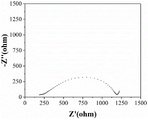
fig. 2 is an impedance spectrum of a lithium air battery fabricated using a PEO-based polymer/ceramic composite according to the present invention;
fig. 3 is a discharge curve of a lithium air battery prepared using the PEO-based polymer/ceramic composite according to the present invention.
Detailed Description
The technical solutions in the embodiments of the present invention will be described clearly and completely below, and it is obvious that the described embodiments are only a part of the embodiments of the present invention, and not all of the embodiments. The following description of at least one exemplary embodiment is merely illustrative in nature and is in no way intended to limit the invention, its application, or uses. All other embodiments, which can be derived by a person skilled in the art from the embodiments given herein without making any creative effort, shall fall within the protection scope of the present invention.
It is noted that the terminology used herein is for the purpose of describing particular embodiments only and is not intended to be limiting of example embodiments according to the present application. As used herein, the singular forms "a", "an" and "the" are intended to include the plural forms as well, and it should be understood that when the terms "comprises" and/or "comprising" are used in this specification, they specify the presence of stated features, steps, operations, devices, components, and/or combinations thereof, unless the context clearly indicates otherwise.
Example 1
7 3 2 121. Preparation of inorganic ceramic powder-LiLaZrO (abbreviated as "LLZO")
Lanthanum oxide (La)2O3) Zirconium oxide (ZrO)2) Lithium hydroxide (LiOH. H)2O) according to the mole ratio of LiOH H2O:La2O3:ZrO2Weighing and mixing the components in a ratio of 7.7:1.5:2, wherein LiOH & H2O is in excess of 10%. And (3) putting the mixed raw materials into a ball milling tank, adding absolute ethyl alcohol accounting for 20% of the weight of the raw materials, ball milling for 24 hours, taking out the raw materials, drying, putting the LLZO raw materials into a crucible, and preserving the heat of the LLZO raw materials for 10 hours at 1100 ℃ by using a box furnace to obtain the phase-formed inorganic ceramic powder of the primary phase. And crushing, mixing and ball-milling the primarily-formed inorganic ceramic powder for 24 hours again by using a ball-milling tank, raising the temperature to 1150 ℃ by using a box furnace, and preserving the temperature for 12 hours to obtain the ceramic block. The obtained ceramic block was crushed, ball-milled for 24 hours, and a powder having a particle size D90 of 2 μm was selected using a sieve.
2. Preparation of PEO-based Polymer/ceramic composite and electrolyte
Weighing 0.5g of polyethylene oxide (PEO) with the weight-average molecular weight of 600,000g/mol, 0.3g of polyethylene glycol diacrylate (PEGDA) with the number-average molecular weight of 700g/mol and 0.3g of the LLZO powder prepared in the step 1, mixing and filling into a brown glass bottle, adding 10ml of acetone, stirring at 40 ℃ for 1-2 h to dissolve the PEO and the PEGDA in the acetone, and uniformly distributing the LLZO powder in the suspension.
And (3) moving the glass bottle filled with the suspension to a dark room, adding 0.2g of Divinylbenzene (DVB) and 0.05g of photoinitiator 1173(HMPP), and stirring for 30min to uniformly mix the materials to obtain a mixed electrolyte suspension.
Pouring the mixed electrolyte suspension into a Polytetrafluoroethylene (PTFE) culture dish, paving, irradiating for 5s by using an ultraviolet lamp with the wavelength of 365nm and the power of 8W, then placing the culture dish in a fume hood to naturally evaporate acetone solvent to dryness to obtain the PEO-based polymer/ceramic composite material, and cutting the PEO-based polymer/ceramic composite material into round thin film sheets.
The surface of the prepared circular thin film piece was observed by a scanning electron microscope, and the result is shown in fig. 1.
As can be seen from FIG. 1, the circular thin film sheet prepared in this example forms a PEO/PEGDA/DVB skeleton (ternary cross-linked polymer), and has pores and is low in compactness.
Soaking the round thin film sheet with 0.1ml of electrolyte with the concentration of 1mol/L to obtain the PEO-based polymer/ceramic electrolyte, wherein the solvent of the electrolyte is tetraethylene glycol dimethyl ether (TEGDME), the lithium salt is lithium bistrifluoromethanesulfonylimide (LiTFSI), and the content of the electrolyte is 5% by weight of the electrolyte.
3. Preparation of lithium-air Battery Anode
Weighing 0.05g of multi-walled carbon nanotube and 0.5g of PTFE emulsion with the solid content of 60 wt%, adding 10ml of absolute ethyl alcohol, oscillating the absolute ethyl alcohol by using a cell crusher to enable the multi-walled carbon nanotube to form suspension in the ethyl alcohol, then carrying out suction filtration on the suspension to form a film on filter paper, cutting the film into a shape of a circular sheet, wherein each sheet contains 3mg of multi-walled carbon nanotube, carrying out hot pressing on the film and the circular film sheet prepared in the step 2 at the temperature of 60 ℃, and cooling to form an integrated lithium-air battery anode semi-finished product.
During battery assembly, the electrolyte described in the step 2 is used for soaking the integrated lithium air battery anode semi-finished product, so that the electrolyte is absorbed by the polymer electrode.
Example 2
6.9 0.1 3 2 121. Preparation of inorganic ceramic powder LiAlLaZrO (abbreviated as "LALZO")
Lanthanum oxide (La)2O3) Zirconium oxide (ZrO)2) Lithium hydroxide (LiOH. H)2O), alumina (Al)2O3) According to the mole ratio of LiOH, H2O:Al2O3:La2O3:ZrO2Weighing and mixing the components in a ratio of 7.59:0.05:1.5:2, wherein LiOH & H2O is in excess of 10%. And (3) putting the mixed raw materials into a ball milling tank, adding absolute ethyl alcohol accounting for 20% of the weight of the raw materials, ball milling for 24 hours, taking out the raw materials, drying, putting the LALZO raw materials into a crucible, and preserving the heat of the crucible at 1100 ℃ for 10 hours by using a box furnace to obtain the phase-formed inorganic ceramic powder with the primary phase. And (3) crushing, mixing and ball-milling the primarily-formed inorganic ceramic powder for 24 hours again by using a ball-milling tank, then heating to 1100 ℃ by using a box furnace, and preserving heat for 8 hours to obtain the ceramic block. The obtained ceramic block was crushed, ball-milled for 24 hours, molded with a roller mill for 24 hours, and finally sieved with a sieve to obtain a powder having a particle diameter D90 of 3 μm.
2. Preparation of PEO-based Polymer/ceramic composite and electrolyte
Weighing 0.55g of PEO with the weight-average molecular weight of 600,000g/mol, 0.25g of PEGDA with the number-average molecular weight of 700g/mol and 0.2g of LALZO powder prepared in the step 1, mixing and filling into a brown glass bottle, adding 10ml of acetone, stirring at 40 ℃, keeping for 1-2 h, dissolving PEO and PEGDA in acetone, and uniformly distributing the LALZO powder in the suspension.
And (3) moving the glass bottle filled with the suspension to a dark room, adding 0.15g of DVB and 0.04g of photoinitiator 1173, and stirring for 30min to uniformly mix the materials to obtain a mixed electrolyte suspension.
Pouring the mixed electrolyte suspension into a PTFE culture dish, paving, irradiating for 10s by using an ultraviolet lamp with the wavelength of 365nm and the power of 8W, then placing the mixture in a fume hood to naturally evaporate the solvent to dryness to obtain the PEO-based polymer/ceramic composite material, and cutting into round thin film sheets.
The surface of the prepared circular film sheet is observed by a scanning electron microscope, and the circular film sheet prepared by the embodiment forms a PEO/PEGDA/DVB skeleton (ternary cross-linked polymer), has pores and is low in density.
Soaking the circular film sheet with 0.05ml of electrolyte with the concentration of 1mol/L to obtain the PEO-based polymer/ceramic electrolyte, wherein the solvent of the electrolyte is dimethyl sulfoxide (DMSO), and the lithium salt is lithium nitrate (LiNO)3) The content of the electrolyte solution was 3% by weight of the electrolyte.
3. Preparation of lithium air Battery cathode
Weighing 0.01g of bp2000 carbon powder and 0.1g of PTFE emulsion with the solid content of 60 wt%, adding 10ml of absolute ethyl alcohol, oscillating the absolute ethyl alcohol by using a cell crusher to enable the bp2000 carbon powder to form suspension in the ethyl alcohol, spraying the suspension on fiber carbon paper by using a spray gun, cutting the suspension into a wafer shape, carrying out hot pressing on the wafer and the round film sheet prepared in the step 2 at the temperature of 50 ℃, and cooling to form an integrated semi-finished product of the lithium-air battery anode.
During battery assembly, the electrolyte described in step 2 is used to soak the integrated lithium-air battery anode semi-finished product, so that the electrolyte is absorbed by the polymer electrode.
Example 3
6.4 3 1.4 0.6 121. Preparation of inorganic ceramic powder-LiLaZrTaO (abbreviated as "LLZTO")
Lanthanum oxide (La)2O3) Zirconium oxide (ZrO)2) Lithium hydroxide (LiOH. H)2O), tantalum oxide (Ta)2O5) According to the mole ratio of LiOH H2O:La2O3:ZrO2:Ta2O5Weighing and mixing the components in a ratio of 7.68:1.5:1.4:0.3, wherein LiOH & H2O is in excess of 20%. Putting the mixed raw materials into a ball milling tank, adding absolute ethyl alcohol accounting for 20% of the weight of the raw materials, carrying out ball milling for 24 hours, taking out, drying, putting the LLZTO raw materials into a crucible, preserving heat for 6 hours at 900 ℃ by using a box furnace, taking out, crushing the LLZTO raw materials by using a ball mill, continuing for 24 hours, carrying out secondary pre-phase forming after drying, preserving heat for 15 hours at 1100 ℃ to obtain primary phase-formed inorganic ceramic powder. Crushing, mixing and ball-milling the primarily-phased inorganic ceramic powder for 24h by using a ball-milling tank, and then usingRaising the temperature to 1100 ℃ in a box furnace, and preserving the heat for 10 hours to obtain the ceramic block. The obtained ceramic block was crushed, ball-milled for 24 hours, molded with a roller mill for 24 hours, and finally sieved with a sieve to obtain powder particles having a particle diameter D90 of 3 μm.
2. Preparation of PEO-based Polymer/ceramic composite and electrolyte
Weighing 0.45g of PEO with the weight-average molecular weight of 600,000g/mol, 0.35g of PEGDA with the number-average molecular weight of 700g/mol and 0.25g of LTLZO powder prepared in the step 1, mixing and filling into a brown glass bottle, adding 10ml of acetone, stirring at 40 ℃ for 1-2 h to dissolve the PEO and the PEGDA in the acetone, and uniformly distributing the LLZTO powder in the suspension.
And (3) moving the glass bottle filled with the suspension to a dark room, adding 0.2g of DVB and 0.05g of photoinitiator 1173, and stirring for 30min to uniformly mix the materials to obtain a mixed electrolyte suspension.
Pouring the mixed electrolyte suspension into a PTFE culture dish, paving, irradiating for 5s by using an ultraviolet lamp with the wavelength of 365nm and the power of 8W, then placing the mixture in a fume hood to naturally evaporate the solvent to dryness to obtain the PEO-based polymer/ceramic composite material, and cutting into round thin film sheets.
The surface of the prepared circular film sheet is observed by a scanning electron microscope, and the circular film sheet prepared by the embodiment forms a PEO/PEGDA/DVB skeleton (ternary cross-linked polymer), has pores and is low in density.
Soaking a lithium-air battery anode semi-finished product by adopting 0.03ml of electrolyte with the concentration of 1mol/L to ensure that the electrolyte is absorbed by a polymer electrode, wherein the solvent of the electrolyte is Ethylene Carbonate (EC) and dimethyl carbonate (DMC) with the mass ratio of 1:1, and the lithium salt is LiPF6The content of the electrolyte was 2%.
3. Preparation of lithium-air Battery Anode
0.02g of PrBaCo is weighed2O6And 0.2g of PTFE emulsion having a solid content of 60 wt%, 10ml of anhydrous ethanol was added, and the mixture was shaken by a cell crusher to thereby prepare PrBaCo2O6Forming a suspension in ethanol, and spraying with a spray gunAnd spraying the carbon fiber powder on fiber carbon paper, and cutting into a wafer shape to obtain the air electrode slice.
And (3) placing the air electrode plate into a PTFE culture dish, paving, pouring the mixed electrolyte suspension obtained in the step (2), irradiating the mixed electrolyte suspension for 5s by using an ultraviolet lamp with the wavelength of 365nm and the power of 8W, then placing the mixed electrolyte suspension in a fume hood to naturally evaporate the solvent, completing integration between the air electrode plate and the electrolyte, and cutting the air electrode plate into a circular sheet to obtain the semi-finished product of the positive electrode of the lithium-air battery.
When the battery is assembled, an electrolyte with the concentration of 1mol/L is used for infiltrating a lithium air battery anode semi-finished product, so that the electrolyte is absorbed by a polymer electrode, wherein the solvent of the electrolyte is Ethylene Carbonate (EC) and dimethyl carbonate (DMC) with the mass ratio of 1:1, and the lithium salt is LiPF6。
Testing and characterization
1. Mechanical Properties
The tensile strength of the PEO-based polymer/ceramic composite films prepared in the examples was measured according to the Chinese standard GB 13022-1991 using a universal tensile tester. In addition, a suspension was prepared by adding corresponding amounts of PEO having a weight average molecular weight of 600,000g/mol and inorganic ceramic powder to acetone, stirring under the same conditions, and then placed in a fume hood to dry the solvent acetone naturally to dryness, to obtain a film sheet as a control, and the tensile strength thereof was measured. The test results are shown in Table 1.
TABLE 1 tensile Strength of PEO-based Polymer/ceramic composite film sheets
| Tensile Strength (MPa) | |
| Example 1 | 12.3 |
| Example 1 comparison | 2.1 |
| Example 2 | 10.5 |
| Example 2 comparison | 2.4 |
| Example 3 | 11.2 |
| Example 3 comparison | 2.3 |
As can be seen from Table 1, the PEO-based polymer/ceramic composite film sheet (without electrolyte) prepared by the present invention has improved mechanical properties.
2. Battery performance testing
The PEO-based polymer/ceramic composite material prepared by the invention is tested by using a lithium air battery clamp (Swaglock), the positive electrode is made of fiber carbon paper and sprayed with BP2000 carbon powder, the negative electrode is made of a lithium metal sheet, a PEO-based polymer/ceramic composite material film (namely a circular film sheet of the PEO-based polymer/ceramic composite material prepared in the embodiment) is sandwiched between the positive electrode and the negative electrode, the electrolyte is soaked into the circular film sheet, the concentration of the electrolyte is 1mol/L, the solvent is tetraethylene glycol dimethyl ether (TEGDME), the lithium salt is lithium bistrifluoromethanesulfonylimide (LiTFSI), and the addition amount is 5 uL.
The parameters of the lithium-air battery impedance test were as follows: the alternating current frequency is 0.1 Hz-105 Hz, the initial voltage is the open-circuit voltage of the battery, and the constant temperature is 25 ℃.
The parameters of the lithium-air battery discharge test were as follows: constant current discharge at 0.1mA/cm2Cut-off voltage 2V, constant temperature 25 ℃.
The impedance graph and the discharge curve of the PEO-based polymer/ceramic composite prepared in example 1 are shown in fig. 2 and 3. The ohmic resistance of the material was measured from the impedance line shown in FIG. 2, and the conductivity was calculated to be 4.92X 10⁻⁵S cm-1. Meanwhile, according to the battery test shown in fig. 3, the battery made of the electrolyte material has a stable voltage platform of 2.75V when being discharged.
The electrical conductivity of the PEO-based polymer/ceramic composite prepared in example 1 was measured. PEO/PEGDA/DVB crosslinked film without inorganic ceramic powder added was prepared as a control according to the method of example 1, which was infiltrated with the same amount of electrolyte.
The results showed that the PEO-based polymer/ceramic composite prepared in example 1 had an electrical conductivity of 4.92X 10⁻⁵S cm-1While the conductivity of the PEO/PEGDA/DVB crosslinked film was 1.24X 10⁻⁷S cm-1。
The same method was used to measure the electrical conductivity of the PEO-based polymer/ceramic composite materials prepared in examples 2-3 and the PEO/PEGDA/DVB crosslinked films according to their respective methods without the addition of the inorganic ceramic powder. The PEO-based polymer/ceramic composite prepared in example 2 had a conductivity of 3.78X 10⁻⁵S cm-1While the conductivity of the PEO/PEGDA/DVB crosslinked film was 1.18X 10⁻⁷S cm-1. The PEO-based polymer/ceramic composite prepared in example 3 had a conductivity of 4.36X 10⁻⁵S cm-1While the conductivity of the PEO/PEGDA/DVB crosslinked film was 1.32X 10⁻⁷S cm-1。
Without wishing to be bound by theory, it is believed that the PEO/PEGDA/DVB cross-linked film has reduced segmental mobility due to cross-linking and is too dense internally, and the electrolyte that can actually be absorbed (adsorbed) has a small mass and low ionic conductivity.
The above description is only a preferred embodiment of the present invention and is not intended to limit the present invention, and various modifications and changes may be made by those skilled in the art. Any modification, equivalent replacement, or improvement made within the spirit and principle of the present invention should be included in the protection scope of the present invention.
Claims (7)
1. A method for preparing a PEO-based polymer/ceramic composite, wherein the PEO-based polymer/ceramic composite comprises 60-85 wt% of a ternary crosslinked polymer and 15-40 wt% of an inorganic ceramic powder, which is filled in the ternary crosslinked polymer, based on the weight of the PEO-based polymer/ceramic composite; wherein the raw materials of the ternary crosslinked polymer comprise: 40-60 wt% of polyethylene oxide, 25-40 wt% of polyethylene glycol diacrylate and 10-30 wt% of divinylbenzene based on the weight of the ternary crosslinked polymer, wherein the particle size D90 of the inorganic ceramic powder is 0.5-5 microns;
wherein the inorganic ceramic powder is lithium ion inorganic ceramic powder;
wherein the lithium ion inorganic ceramic powder is one or more selected from the following oxides: li1+aM1 aTi2-a(PO4)3,0≤a≤0.5,M1Is Al, Ga, In or Sc; li1+bAlbGe2-b(PO4)3,0≤b≤1.2;Li7-cLa3Zr2-cM2 cO12,0≤c≤1.2,M2Is Al, Ga, Fe or Ta; a perovskite-type lithium ion conductor; li2-gSr1-2gM5 1/2-gTa1/2+gO3,0≤g≤0.5,M5Is Cr, Fe, Co, Ga or In;
the preparation method of the PEO-based polymer/ceramic composite material comprises the following steps:
(1) adding polyoxyethylene, polyethylene glycol diacrylate and inorganic ceramic powder into an organic solvent, and mixing to obtain a suspension;
(2) adding divinylbenzene and a photoinitiator into the suspension obtained in the step (1) for crosslinking polymerization, and removing volatile components to obtain a PEO-based polymer/ceramic composite material;
wherein the inorganic ceramic powder is prepared by a method comprising the following steps:
(101) preparing inorganic ceramic by adopting a solid-phase synthesis method;
(102) performing wet ball milling on the inorganic ceramic material prepared in the step (101) to obtain a particle size D90 of 1-5 microns;
wherein, the solvent adopted by the wet ball milling in the step (102) is ethanol or acetone;
wherein the organic solvent in the step (1) is acetone or acetonitrile;
wherein the step (1) further comprises:
(103) adding polyoxyethylene and polyethylene glycol diacrylate into an organic solvent, heating and stirring until the polyoxyethylene and the polyethylene glycol diacrylate are dissolved to obtain a polymer solution;
(104) adding inorganic ceramic powder into the polymer solution obtained in the step (103), and stirring to obtain a suspension;
wherein the step (2) further comprises:
(201) under the condition of keeping out of the sun, adding divinylbenzene and a photoinitiator into the suspension obtained in the step (1), and uniformly stirring to obtain a mixed solution;
(202) irradiating the mixed solution obtained in the step (201) by using an ultraviolet lamp for cross-linking polymerization to obtain a cross-linking polymerization reaction product;
(203) and (3) naturally volatilizing and/or removing volatile substances in the crosslinked polymerization reaction product obtained in the step (202) by means of a forced air drying oven to obtain the PEO-based polymer/ceramic composite material.
2. The method of producing a PEO-based polymer/ceramic composite of claim 1 wherein the polyethylene oxide has a weight average molecular weight of 200,000 to 1,000,000 g/mol;
the number average molecular weight of the polyethylene glycol diacrylate is 300-2000 g/mol;
the raw material of the ternary cross-linked polymer also comprises a photoinitiator which is a photoinitiator 1173 shown in a formula III;

3. the method for preparing a PEO-based polymer/ceramic composite of claim 1 or 2, wherein,
the particle size D90 of the inorganic ceramic powder is 2-3 microns;
the content of the inorganic ceramic powder is 15-25% by weight of the PEO-based polymer/ceramic composite material;
the ternary crosslinked polymer comprises the following raw materials: based on the weight of the ternary crosslinked polymer, 45-55 wt% of polyethylene oxide, 25-35 wt% of polyethylene glycol diacrylate and 15-20 wt% of divinyl benzene;
the inorganic ceramic powder is filled into the ternary crosslinked polymer via a method comprising the steps of: the inorganic ceramic powder is mixed with the raw material of the ternary cross-linked polymer, and then photo-initiated polymerization is carried out.
4. A PEO-based polymer/ceramic electrolyte, wherein the PEO-based polymer/ceramic electrolyte comprises 95-99% of the PEO-based polymer/ceramic composite prepared according to the method for preparing a PEO-based polymer/ceramic composite according to any one of claims 1 to 3, and 1-5% of an electrolyte, by weight of the PEO-based polymer/ceramic electrolyte, the electrolyte being impregnated into the PEO-based polymer/ceramic composite;
wherein the electrolyte comprises an electrolyte solvent and a lithium salt;
the electrolyte solvent is one or more selected from tetraethylene glycol dimethyl ether, dimethyl sulfoxide, ethylene carbonate, dimethyl carbonate and ethylene glycol dimethyl ether;
the lithium salt is one or more of lithium bis (trifluoromethane) sulfonyl imide, lithium hexafluorophosphate, lithium perchlorate and lithium nitrate;
wherein the concentration of lithium salt in the electrolyte is 0.5-2 mol/L.
5. A lithium-air battery positive electrode, wherein the lithium-air battery positive electrode comprises an air electrode sheet layer and an electrolyte layer formed of a PEO-based polymer/ceramic composite prepared by the PEO-based polymer/ceramic composite preparation method according to any one of claims 1 to 3, the electrolyte layer being attached to the air electrode sheet layer;
the air electrode sheet layer comprises a positive electrode material; the anode material is multi-walled carbon nanotube, bp2000 carbon powder, three-dimensional graphene and NiCo2O4、CoMn2O4Or PrBaCo2O6;
Wherein, the air electrode sheet layer further comprises an adhesive, and the adhesive is polytetrafluoroethylene emulsion.
6. A method for preparing a positive electrode for a lithium-air battery, for preparing the positive electrode for a lithium-air battery of claim 5, wherein the method comprises the steps of:
(a) providing an air electrode plate;
(b) adding polyoxyethylene, polyethylene glycol diacrylate and inorganic ceramic powder into an organic solvent, and mixing to obtain a suspension;
(c) adding divinylbenzene and a photoinitiator into the suspension obtained in the step (b) for crosslinking polymerization, and removing volatile components to obtain a ternary crosslinked polymer filled with inorganic ceramic powder;
(d) combining the air electrode plate with the ternary cross-linked polymer filled with the inorganic ceramic powder to obtain a semi-finished product of the positive electrode of the lithium-air battery;
(e) and (e) infiltrating the semi-finished product of the positive electrode of the lithium-air battery obtained in the step (d) with electrolyte to obtain the positive electrode of the lithium-air battery.
7. The method of manufacturing a positive electrode for a lithium-air battery according to claim 6, wherein the step (d) combines the air electrode sheet with the ternary crosslinked polymer filled with inorganic ceramic powder by:
(d1) the air electrode plate is pressed with the ternary cross-linked polymer filled with the inorganic ceramic powder;
(d2) placing the air electrode sheet on the polymer gel formed during the cross-linking polymerization in the step (c), and combining the two by gravity;
(d3) performing the cross-linking polymerization reaction in the step (c) on the air electrode sheet.
Priority Applications (1)
| Application Number | Priority Date | Filing Date | Title |
|---|---|---|---|
| CN202010767143.0A CN112290125B (en) | 2020-08-03 | 2020-08-03 | Preparation methods of PEO-based polymer/ceramic composite material, electrolyte and battery anode |
Applications Claiming Priority (1)
| Application Number | Priority Date | Filing Date | Title |
|---|---|---|---|
| CN202010767143.0A CN112290125B (en) | 2020-08-03 | 2020-08-03 | Preparation methods of PEO-based polymer/ceramic composite material, electrolyte and battery anode |
Publications (2)
| Publication Number | Publication Date |
|---|---|
| CN112290125A CN112290125A (en) | 2021-01-29 |
| CN112290125B true CN112290125B (en) | 2022-05-20 |
Family
ID=74420674
Family Applications (1)
| Application Number | Title | Priority Date | Filing Date |
|---|---|---|---|
| CN202010767143.0A Active CN112290125B (en) | 2020-08-03 | 2020-08-03 | Preparation methods of PEO-based polymer/ceramic composite material, electrolyte and battery anode |
Country Status (1)
| Country | Link |
|---|---|
| CN (1) | CN112290125B (en) |
Citations (5)
| Publication number | Priority date | Publication date | Assignee | Title |
|---|---|---|---|---|
| CN103000971A (en) * | 2011-09-15 | 2013-03-27 | 北汽福田汽车股份有限公司 | Lithium air battery and production method thereof |
| CN103370825A (en) * | 2011-02-15 | 2013-10-23 | 株式会社Lg化学 | Integrated electrode assembly and secondary battery using same |
| CN108808081A (en) * | 2018-08-15 | 2018-11-13 | 中国科学院长春应用化学研究所 | A kind of secondary lithium batteries hybridization electrolyte and preparation method thereof and lithium secondary battery |
| CN110093054A (en) * | 2018-01-30 | 2019-08-06 | 比亚迪股份有限公司 | Cross-linking type copolymer and polymer dielectric and preparation method thereof and all-solid lithium-ion battery |
| CN111009706A (en) * | 2018-10-08 | 2020-04-14 | 三星电子株式会社 | Composite cathode and lithium-air battery including the same |
Family Cites Families (9)
| Publication number | Priority date | Publication date | Assignee | Title |
|---|---|---|---|---|
| JP2003197264A (en) * | 2001-12-28 | 2003-07-11 | Tdk Corp | Polymer electrolyte battery and method of manufacturing the same |
| KR100431966B1 (en) * | 2002-01-03 | 2004-05-22 | 김동원 | Multi-layered Gelling Separators and Rechargeable Lithium Batteries Using Same |
| JP5179410B2 (en) * | 2009-03-05 | 2013-04-10 | 日東電工株式会社 | Battery separator and manufacturing method thereof, and lithium ion secondary battery and manufacturing method thereof |
| EP2660919B1 (en) * | 2011-03-03 | 2018-06-13 | LG Chem, Ltd. | Integrated electrode assembly and secondary battery using same |
| CN103947027B (en) * | 2011-10-13 | 2016-12-21 | 赛昂能源有限公司 | Electrode structure and manufacture method thereof |
| EP3282505B1 (en) * | 2016-08-08 | 2020-02-05 | Samsung Electronics Co., Ltd | Positive electrode for metal air battery, metal air battery including the same, and method of preparing the positive electrode for metal air battery |
| EP3637524A4 (en) * | 2017-05-26 | 2021-11-17 | Beijing Normal University | GELATINATED SYSTEM AND APPLICATIONS IN A LITHIUM AIR BATTERY, SUPER CAPACITOR OR CAPACITOR BATTERY IN ORGANIC SYSTEM |
| KR20200093540A (en) * | 2017-11-30 | 2020-08-05 | 니폰 제온 가부시키가이샤 | Binder composition for non-aqueous secondary battery electrode, slurry composition for non-aqueous secondary battery electrode, electrode for non-aqueous secondary battery, and non-aqueous secondary battery |
| KR102598534B1 (en) * | 2018-08-20 | 2023-11-03 | 현대자동차주식회사 | Lithium air battery and manufacturing methoh thereof |
-
2020
- 2020-08-03 CN CN202010767143.0A patent/CN112290125B/en active Active
Patent Citations (5)
| Publication number | Priority date | Publication date | Assignee | Title |
|---|---|---|---|---|
| CN103370825A (en) * | 2011-02-15 | 2013-10-23 | 株式会社Lg化学 | Integrated electrode assembly and secondary battery using same |
| CN103000971A (en) * | 2011-09-15 | 2013-03-27 | 北汽福田汽车股份有限公司 | Lithium air battery and production method thereof |
| CN110093054A (en) * | 2018-01-30 | 2019-08-06 | 比亚迪股份有限公司 | Cross-linking type copolymer and polymer dielectric and preparation method thereof and all-solid lithium-ion battery |
| CN108808081A (en) * | 2018-08-15 | 2018-11-13 | 中国科学院长春应用化学研究所 | A kind of secondary lithium batteries hybridization electrolyte and preparation method thereof and lithium secondary battery |
| CN111009706A (en) * | 2018-10-08 | 2020-04-14 | 三星电子株式会社 | Composite cathode and lithium-air battery including the same |
Also Published As
| Publication number | Publication date |
|---|---|
| CN112290125A (en) | 2021-01-29 |
Similar Documents
| Publication | Publication Date | Title |
|---|---|---|
| Li et al. | A PEO-based gel polymer electrolyte for lithium ion batteries | |
| Hu et al. | Flexible organic–inorganic hybrid solid electrolytes formed via thiol–acrylate photopolymerization | |
| Tran et al. | Sandwich-structured composite polymer electrolyte based on PVDF-HFP/PPC/Al-doped LLZO for high-voltage solid-state lithium batteries | |
| CN107346833B (en) | Composite solid polymer electrolyte film and preparation method thereof | |
| Lu et al. | Novel cross-linked copolymer gel electrolyte supported by hydrophilic polytetrafluoroethylene for rechargeable lithium batteries | |
| CN108039511B (en) | A polar gel electrolyte and its application in solid-state lithium-sulfur batteries | |
| Xin et al. | A cross-linked poly (ethylene oxide)-based electrolyte for all-solid-state lithium metal batteries with long cycling stability | |
| JP7007466B2 (en) | Composite Polymer Electrolyte (CPE) Membranes for Secondary Solid Li Metallic Batteries and Methods for Their Manufacture | |
| CN107069085A (en) | One class flexible solid method for preparing polymer electrolytes and application | |
| CN117458012B (en) | Sulfide solid electrolyte membrane, preparation method thereof and all-solid alkali metal ion battery | |
| CN111253521A (en) | Organic-inorganic-ionic liquid composite solid electrolyte, preparation method and application thereof | |
| CN107394262A (en) | A kind of preparation method of composite solid electrolyte | |
| CN110224174A (en) | A kind of compound organic solid electrolyte of metal organic frame and preparation method and application | |
| CN109244537A (en) | Composite solid electrolyte, preparation method and its application | |
| CN112042035A (en) | Solid electrolyte, method for manufacturing the same, and all-solid battery including the solid electrolyte | |
| CN101511940A (en) | Polymer electrolyte emulsion and use thereof | |
| CN109037766A (en) | A kind of biodegradable composite solid electrolyte film and preparation method thereof | |
| Lu et al. | Ion-selective gel polymer electrolyte and cathode binder derived from a shared polyether to synergistically mitigate polysulfides shuttling in lithium sulfur batteries | |
| Li et al. | A hybridized solid-gel nonflammable Li-Battery | |
| CN115472906A (en) | Preparation method of acrylate-based polymer solid state electrolyte and lithium-ion battery | |
| CN117154204A (en) | Preparation and application of a high sodium ion selective flame retardant composite gel electrolyte | |
| KR20200042905A (en) | Binder composition for non-aqueous secondary battery electrode, slurry composition for non-aqueous secondary battery electrode, electrode for non-aqueous secondary battery, and non-aqueous secondary battery | |
| Soontornnon et al. | Cross-Linked Ethylene Carbonate-Based Copolymer Composite Electrolytes Filled with Tio2 for Lithium Metal Batteries | |
| Chen et al. | Novel PEO-based solid polymer electrolyte with high elasticity and high ionic conductivity for room temperature lithium metal batteries | |
| CN113131005A (en) | Polymer electrolyte membrane and preparation method thereof, and metal lithium battery and preparation method thereof |
Legal Events
| Date | Code | Title | Description |
|---|---|---|---|
| PB01 | Publication | ||
| PB01 | Publication | ||
| SE01 | Entry into force of request for substantive examination | ||
| SE01 | Entry into force of request for substantive examination | ||
| CB02 | Change of applicant information | ||
| CB02 | Change of applicant information |
Address after: 100176 floor 10, building 1, zone 2, yard 9, Taihe 3rd Street, Beijing Economic and Technological Development Zone, Daxing District, Beijing Applicant after: Beijing National New Energy Vehicle Technology Innovation Center Co.,Ltd. Address before: 100089 1705 100176, block a, building 1, No. 10, Ronghua Middle Road, Beijing Economic and Technological Development Zone, Daxing District, Beijing Applicant before: BEIJING NEW ENERGY VEHICLE TECHNOLOGY INNOVATION CENTER Co.,Ltd. |
|
| GR01 | Patent grant | ||
| GR01 | Patent grant |