CN112137961A - Rapamycin composition and preparation method thereof - Google Patents
Rapamycin composition and preparation method thereof Download PDFInfo
- Publication number
- CN112137961A CN112137961A CN202011061905.1A CN202011061905A CN112137961A CN 112137961 A CN112137961 A CN 112137961A CN 202011061905 A CN202011061905 A CN 202011061905A CN 112137961 A CN112137961 A CN 112137961A
- Authority
- CN
- China
- Prior art keywords
- rapamycin
- rapamycin composition
- organic phase
- preparing
- composition
- Prior art date
- Legal status (The legal status is an assumption and is not a legal conclusion. Google has not performed a legal analysis and makes no representation as to the accuracy of the status listed.)
- Pending
Links
Images


Classifications
-
- A—HUMAN NECESSITIES
- A61—MEDICAL OR VETERINARY SCIENCE; HYGIENE
- A61K—PREPARATIONS FOR MEDICAL, DENTAL OR TOILETRY PURPOSES
- A61K9/00—Medicinal preparations characterised by special physical form
- A61K9/10—Dispersions; Emulsions
- A61K9/127—Synthetic bilayered vehicles, e.g. liposomes or liposomes with cholesterol as the only non-phosphatidyl surfactant
-
- A—HUMAN NECESSITIES
- A61—MEDICAL OR VETERINARY SCIENCE; HYGIENE
- A61K—PREPARATIONS FOR MEDICAL, DENTAL OR TOILETRY PURPOSES
- A61K31/00—Medicinal preparations containing organic active ingredients
- A61K31/33—Heterocyclic compounds
- A61K31/395—Heterocyclic compounds having nitrogen as a ring hetero atom, e.g. guanethidine or rifamycins
- A61K31/435—Heterocyclic compounds having nitrogen as a ring hetero atom, e.g. guanethidine or rifamycins having six-membered rings with one nitrogen as the only ring hetero atom
- A61K31/4353—Heterocyclic compounds having nitrogen as a ring hetero atom, e.g. guanethidine or rifamycins having six-membered rings with one nitrogen as the only ring hetero atom ortho- or peri-condensed with heterocyclic ring systems
- A61K31/436—Heterocyclic compounds having nitrogen as a ring hetero atom, e.g. guanethidine or rifamycins having six-membered rings with one nitrogen as the only ring hetero atom ortho- or peri-condensed with heterocyclic ring systems the heterocyclic ring system containing a six-membered ring having oxygen as a ring hetero atom, e.g. rapamycin
-
- A—HUMAN NECESSITIES
- A61—MEDICAL OR VETERINARY SCIENCE; HYGIENE
- A61K—PREPARATIONS FOR MEDICAL, DENTAL OR TOILETRY PURPOSES
- A61K47/00—Medicinal preparations characterised by the non-active ingredients used, e.g. carriers or inert additives; Targeting or modifying agents chemically bound to the active ingredient
- A61K47/06—Organic compounds, e.g. natural or synthetic hydrocarbons, polyolefins, mineral oil, petrolatum or ozokerite
- A61K47/24—Organic compounds, e.g. natural or synthetic hydrocarbons, polyolefins, mineral oil, petrolatum or ozokerite containing atoms other than carbon, hydrogen, oxygen, halogen, nitrogen or sulfur, e.g. cyclomethicone or phospholipids
-
- A—HUMAN NECESSITIES
- A61—MEDICAL OR VETERINARY SCIENCE; HYGIENE
- A61K—PREPARATIONS FOR MEDICAL, DENTAL OR TOILETRY PURPOSES
- A61K47/00—Medicinal preparations characterised by the non-active ingredients used, e.g. carriers or inert additives; Targeting or modifying agents chemically bound to the active ingredient
- A61K47/06—Organic compounds, e.g. natural or synthetic hydrocarbons, polyolefins, mineral oil, petrolatum or ozokerite
- A61K47/28—Steroids, e.g. cholesterol, bile acids or glycyrrhetinic acid
-
- A—HUMAN NECESSITIES
- A61—MEDICAL OR VETERINARY SCIENCE; HYGIENE
- A61K—PREPARATIONS FOR MEDICAL, DENTAL OR TOILETRY PURPOSES
- A61K47/00—Medicinal preparations characterised by the non-active ingredients used, e.g. carriers or inert additives; Targeting or modifying agents chemically bound to the active ingredient
- A61K47/50—Medicinal preparations characterised by the non-active ingredients used, e.g. carriers or inert additives; Targeting or modifying agents chemically bound to the active ingredient the non-active ingredient being chemically bound to the active ingredient, e.g. polymer-drug conjugates
- A61K47/51—Medicinal preparations characterised by the non-active ingredients used, e.g. carriers or inert additives; Targeting or modifying agents chemically bound to the active ingredient the non-active ingredient being chemically bound to the active ingredient, e.g. polymer-drug conjugates the non-active ingredient being a modifying agent
- A61K47/54—Medicinal preparations characterised by the non-active ingredients used, e.g. carriers or inert additives; Targeting or modifying agents chemically bound to the active ingredient the non-active ingredient being chemically bound to the active ingredient, e.g. polymer-drug conjugates the non-active ingredient being a modifying agent the modifying agent being an organic compound
- A61K47/549—Sugars, nucleosides, nucleotides or nucleic acids
-
- A—HUMAN NECESSITIES
- A61—MEDICAL OR VETERINARY SCIENCE; HYGIENE
- A61K—PREPARATIONS FOR MEDICAL, DENTAL OR TOILETRY PURPOSES
- A61K47/00—Medicinal preparations characterised by the non-active ingredients used, e.g. carriers or inert additives; Targeting or modifying agents chemically bound to the active ingredient
- A61K47/50—Medicinal preparations characterised by the non-active ingredients used, e.g. carriers or inert additives; Targeting or modifying agents chemically bound to the active ingredient the non-active ingredient being chemically bound to the active ingredient, e.g. polymer-drug conjugates
- A61K47/51—Medicinal preparations characterised by the non-active ingredients used, e.g. carriers or inert additives; Targeting or modifying agents chemically bound to the active ingredient the non-active ingredient being chemically bound to the active ingredient, e.g. polymer-drug conjugates the non-active ingredient being a modifying agent
- A61K47/56—Medicinal preparations characterised by the non-active ingredients used, e.g. carriers or inert additives; Targeting or modifying agents chemically bound to the active ingredient the non-active ingredient being chemically bound to the active ingredient, e.g. polymer-drug conjugates the non-active ingredient being a modifying agent the modifying agent being an organic macromolecular compound, e.g. an oligomeric, polymeric or dendrimeric molecule
- A61K47/61—Medicinal preparations characterised by the non-active ingredients used, e.g. carriers or inert additives; Targeting or modifying agents chemically bound to the active ingredient the non-active ingredient being chemically bound to the active ingredient, e.g. polymer-drug conjugates the non-active ingredient being a modifying agent the modifying agent being an organic macromolecular compound, e.g. an oligomeric, polymeric or dendrimeric molecule the organic macromolecular compound being a polysaccharide or a derivative thereof
-
- A—HUMAN NECESSITIES
- A61—MEDICAL OR VETERINARY SCIENCE; HYGIENE
- A61K—PREPARATIONS FOR MEDICAL, DENTAL OR TOILETRY PURPOSES
- A61K47/00—Medicinal preparations characterised by the non-active ingredients used, e.g. carriers or inert additives; Targeting or modifying agents chemically bound to the active ingredient
- A61K47/50—Medicinal preparations characterised by the non-active ingredients used, e.g. carriers or inert additives; Targeting or modifying agents chemically bound to the active ingredient the non-active ingredient being chemically bound to the active ingredient, e.g. polymer-drug conjugates
- A61K47/51—Medicinal preparations characterised by the non-active ingredients used, e.g. carriers or inert additives; Targeting or modifying agents chemically bound to the active ingredient the non-active ingredient being chemically bound to the active ingredient, e.g. polymer-drug conjugates the non-active ingredient being a modifying agent
- A61K47/68—Medicinal preparations characterised by the non-active ingredients used, e.g. carriers or inert additives; Targeting or modifying agents chemically bound to the active ingredient the non-active ingredient being chemically bound to the active ingredient, e.g. polymer-drug conjugates the non-active ingredient being a modifying agent the modifying agent being an antibody, an immunoglobulin or a fragment thereof, e.g. an Fc-fragment
- A61K47/6835—Medicinal preparations characterised by the non-active ingredients used, e.g. carriers or inert additives; Targeting or modifying agents chemically bound to the active ingredient the non-active ingredient being chemically bound to the active ingredient, e.g. polymer-drug conjugates the non-active ingredient being a modifying agent the modifying agent being an antibody, an immunoglobulin or a fragment thereof, e.g. an Fc-fragment the modifying agent being an antibody or an immunoglobulin bearing at least one antigen-binding site
- A61K47/6849—Medicinal preparations characterised by the non-active ingredients used, e.g. carriers or inert additives; Targeting or modifying agents chemically bound to the active ingredient the non-active ingredient being chemically bound to the active ingredient, e.g. polymer-drug conjugates the non-active ingredient being a modifying agent the modifying agent being an antibody, an immunoglobulin or a fragment thereof, e.g. an Fc-fragment the modifying agent being an antibody or an immunoglobulin bearing at least one antigen-binding site the antibody targeting a receptor, a cell surface antigen or a cell surface determinant
-
- A—HUMAN NECESSITIES
- A61—MEDICAL OR VETERINARY SCIENCE; HYGIENE
- A61K—PREPARATIONS FOR MEDICAL, DENTAL OR TOILETRY PURPOSES
- A61K47/00—Medicinal preparations characterised by the non-active ingredients used, e.g. carriers or inert additives; Targeting or modifying agents chemically bound to the active ingredient
- A61K47/50—Medicinal preparations characterised by the non-active ingredients used, e.g. carriers or inert additives; Targeting or modifying agents chemically bound to the active ingredient the non-active ingredient being chemically bound to the active ingredient, e.g. polymer-drug conjugates
- A61K47/69—Medicinal preparations characterised by the non-active ingredients used, e.g. carriers or inert additives; Targeting or modifying agents chemically bound to the active ingredient the non-active ingredient being chemically bound to the active ingredient, e.g. polymer-drug conjugates the conjugate being characterised by physical or galenical forms, e.g. emulsion, particle, inclusion complex, stent or kit
- A61K47/6905—Medicinal preparations characterised by the non-active ingredients used, e.g. carriers or inert additives; Targeting or modifying agents chemically bound to the active ingredient the non-active ingredient being chemically bound to the active ingredient, e.g. polymer-drug conjugates the conjugate being characterised by physical or galenical forms, e.g. emulsion, particle, inclusion complex, stent or kit the form being a colloid or an emulsion
- A61K47/6911—Medicinal preparations characterised by the non-active ingredients used, e.g. carriers or inert additives; Targeting or modifying agents chemically bound to the active ingredient the non-active ingredient being chemically bound to the active ingredient, e.g. polymer-drug conjugates the conjugate being characterised by physical or galenical forms, e.g. emulsion, particle, inclusion complex, stent or kit the form being a colloid or an emulsion the form being a liposome
-
- A—HUMAN NECESSITIES
- A61—MEDICAL OR VETERINARY SCIENCE; HYGIENE
- A61K—PREPARATIONS FOR MEDICAL, DENTAL OR TOILETRY PURPOSES
- A61K47/00—Medicinal preparations characterised by the non-active ingredients used, e.g. carriers or inert additives; Targeting or modifying agents chemically bound to the active ingredient
- A61K47/50—Medicinal preparations characterised by the non-active ingredients used, e.g. carriers or inert additives; Targeting or modifying agents chemically bound to the active ingredient the non-active ingredient being chemically bound to the active ingredient, e.g. polymer-drug conjugates
- A61K47/69—Medicinal preparations characterised by the non-active ingredients used, e.g. carriers or inert additives; Targeting or modifying agents chemically bound to the active ingredient the non-active ingredient being chemically bound to the active ingredient, e.g. polymer-drug conjugates the conjugate being characterised by physical or galenical forms, e.g. emulsion, particle, inclusion complex, stent or kit
- A61K47/6905—Medicinal preparations characterised by the non-active ingredients used, e.g. carriers or inert additives; Targeting or modifying agents chemically bound to the active ingredient the non-active ingredient being chemically bound to the active ingredient, e.g. polymer-drug conjugates the conjugate being characterised by physical or galenical forms, e.g. emulsion, particle, inclusion complex, stent or kit the form being a colloid or an emulsion
- A61K47/6911—Medicinal preparations characterised by the non-active ingredients used, e.g. carriers or inert additives; Targeting or modifying agents chemically bound to the active ingredient the non-active ingredient being chemically bound to the active ingredient, e.g. polymer-drug conjugates the conjugate being characterised by physical or galenical forms, e.g. emulsion, particle, inclusion complex, stent or kit the form being a colloid or an emulsion the form being a liposome
- A61K47/6913—Medicinal preparations characterised by the non-active ingredients used, e.g. carriers or inert additives; Targeting or modifying agents chemically bound to the active ingredient the non-active ingredient being chemically bound to the active ingredient, e.g. polymer-drug conjugates the conjugate being characterised by physical or galenical forms, e.g. emulsion, particle, inclusion complex, stent or kit the form being a colloid or an emulsion the form being a liposome the liposome being modified on its surface by an antibody
-
- A—HUMAN NECESSITIES
- A61—MEDICAL OR VETERINARY SCIENCE; HYGIENE
- A61P—SPECIFIC THERAPEUTIC ACTIVITY OF CHEMICAL COMPOUNDS OR MEDICINAL PREPARATIONS
- A61P9/00—Drugs for disorders of the cardiovascular system
- A61P9/10—Drugs for disorders of the cardiovascular system for treating ischaemic or atherosclerotic diseases, e.g. antianginal drugs, coronary vasodilators, drugs for myocardial infarction, retinopathy, cerebrovascula insufficiency, renal arteriosclerosis
-
- C—CHEMISTRY; METALLURGY
- C07—ORGANIC CHEMISTRY
- C07K—PEPTIDES
- C07K16/00—Immunoglobulins [IG], e.g. monoclonal or polyclonal antibodies
- C07K16/18—Immunoglobulins [IG], e.g. monoclonal or polyclonal antibodies against material from animals or humans
- C07K16/28—Immunoglobulins [IG], e.g. monoclonal or polyclonal antibodies against material from animals or humans against receptors, cell surface antigens or cell surface determinants
Landscapes
- Health & Medical Sciences (AREA)
- Chemical & Material Sciences (AREA)
- Life Sciences & Earth Sciences (AREA)
- Medicinal Chemistry (AREA)
- General Health & Medical Sciences (AREA)
- Animal Behavior & Ethology (AREA)
- Pharmacology & Pharmacy (AREA)
- Public Health (AREA)
- Veterinary Medicine (AREA)
- Epidemiology (AREA)
- Engineering & Computer Science (AREA)
- Bioinformatics & Cheminformatics (AREA)
- Dispersion Chemistry (AREA)
- Chemical Kinetics & Catalysis (AREA)
- General Chemical & Material Sciences (AREA)
- Immunology (AREA)
- Oil, Petroleum & Natural Gas (AREA)
- Molecular Biology (AREA)
- Biophysics (AREA)
- Organic Chemistry (AREA)
- Biochemistry (AREA)
- Cell Biology (AREA)
- Proteomics, Peptides & Aminoacids (AREA)
- Genetics & Genomics (AREA)
- Urology & Nephrology (AREA)
- Vascular Medicine (AREA)
- Cardiology (AREA)
- Heart & Thoracic Surgery (AREA)
- Nuclear Medicine, Radiotherapy & Molecular Imaging (AREA)
- Medicinal Preparation (AREA)
- Pharmaceuticals Containing Other Organic And Inorganic Compounds (AREA)
Abstract
The invention discloses a rapamycin composition and a preparation method thereof, wherein the rapamycin composition comprises the following effective components in parts by weight: 1-10 parts of rapamycin; 0.5-20 parts of high-molecular polymer carrier; 0.1-1 part of lymph targeting substance; the lymph targeting substance is at least one of sodium hyaluronate, aptamer and antibody; the preparation method comprises the following steps: preparing an organic phase solution: adding rapamycin into an organic phase solvent to obtain an organic phase solution; the preparation method of the emulsion comprises the following steps: adding a high molecular polymer carrier into an aqueous phase solvent, and then dropwise adding an organic phase solution into the aqueous phase solvent to obtain an emulsion; homogenizing: adding a lymph targeting substance into the emulsion, mixing and homogenizing to obtain a rapamycin composition; the rapamycin composition can target lymphatic system, and treat atherosclerosis and related cardiovascular and cerebrovascular diseases through lymphatic system.
Description
Technical Field
The invention relates to a rapamycin composition and a preparation method thereof, belonging to the technical field of medicines.
Background
Atherosclerosis is a chronic inflammatory disease, an abnormal response of the vessel wall to various injuries, but its mechanism of action has been questioned. In early studies, a large number of lymphatic vessels were found around atherosclerotic vessels, but the relationship between the two was not clear. Recent studies have found that lymphatic vessels are not only involved in the initiation and regression of arterial inflammation, but also play a positive role in reverse cholesterol transport. Lymphatic vessels have functions of refluxing tissue fluid, immune cells, lipoproteins, and the like along with blood vessels in tissues, and also, the excretion of plaque cholesterol requires transport depending on lymphatic vessels. Studies have shown that with the slowing of lymphatic drainage, a local accumulation of plasma material will occur in the vessel wall. Lymphatic vessels in the adventitia of an aorta constitute a network in the media and the peripheral regions of the adventitia, and lymphatic drainage plays an important role in draining infiltrated colloids and macromolecules from the arterial wall, and accumulation of these colloids and macromolecules is considered as a key element in the development of atherosclerotic lesions.
Rapamycin (Rapamycin, RAPA) is a macrolide antibiotic used primarily in the treatment of immune rejection in transplants. In recent years, more and more researches and clinical medication find that the rapamycin has good effect in treating rare lymphatic abnormal diseases. In clinical treatment, rapamycin is found to have successful clinical cases in treating carbophil lymphoma (KLA), Lymphangiomyomatosis (LAM), large-area capillary-lymphatic-vein malformation, and lymphoid hamartoma. However, the study of rapamycin in atherosclerosis has not been reported.
Disclosure of Invention
In order to overcome the defects of the prior art, the first object of the invention is to provide a rapamycin composition which can target the lymphatic system and treat atherosclerosis diseases, related cardiovascular and cerebrovascular diseases and the like through the lymphatic system.
The second object of the present invention is to provide a process for producing the rapamycin composition described above.
The first purpose of the invention can be achieved by adopting the following technical scheme: a rapamycin composition comprises the following effective components in parts by weight:
1-10 parts of rapamycin;
0.5-20 parts of high-molecular polymer carrier;
0.1-1 part of lymph targeting substance;
the lymph targeting substance is at least one of sodium hyaluronate, aptamer and antibody;
the capacity of the aptamer for specifically binding to the lymphatic endothelial cells is more than or equal to 50 percent;
the antibody is at least one of lymphatic endothelial hyaluronic acid receptor antibody and human recombinant prox protein antibody.
Further, the high molecular polymer carrier is at least one of polyethylene glycol, PLGA, PEO, PVP, polypropylene, polyamino acid, polysorbate, polyoxyethylene ester fatty acid, methoxy polyethylene glycol block copolymer and mPEG-PLA.
Further, the molecular weight of sodium hyaluronate is 5000-.
Further, the number of bases of the aptamer is 20-120 bp.
Further, the overlapping rate of the nucleotide sequence of the aptamer and one sequence in SEQ ID NO.1-10 is more than or equal to 50%.
Further, the rapamycin composition also includes a phospholipid; the phospholipid is at least one of lecithin, cephalin, phosphatidylserine, phosphatidylglycerol, phosphatidylinositol, sphingomyelin, diphosphatidylglycerol, dipalmitoylphosphatidylcholine, dioleoylphosphatidylethanolamine and distearoylphosphatidylethanolamine.
Further, the weight portion of the phospholipid is 1-20 portions.
Further, the rapamycin composition also includes cholesterol.
Further, the weight portion of the cholesterol is 0.1-1 portion.
The second purpose of the invention can be achieved by adopting the following technical scheme: a method of preparing a rapamycin composition, comprising:
preparing an organic phase solution: adding rapamycin into an organic phase solvent to obtain an organic phase solution;
the preparation method of the emulsion comprises the following steps: adding a high molecular polymer carrier into an aqueous phase solvent, then dropwise adding an organic phase solution into the aqueous phase solvent, and mixing to obtain an emulsion;
homogenizing: and adding the lymph targeting substance into the emulsion, mixing and homogenizing to obtain the rapamycin composition.
Further, in the step of preparing the organic phase solution, the organic solvent is at least one of absolute ethyl alcohol, dichloromethane, tert-butyl alcohol, acetone and methanol.
Further, in the step of preparing the emulsion, the mixing mode is as follows: stirring at room temperature for 30min-3h, with a stirring speed of 300-1200 rpm.
Further, the method also comprises a freeze-drying step: adding a freeze-drying protective agent into the rapamycin composition, filtering and sterilizing by using a microporous filter membrane, and freeze-drying.
Further, in the lyophilization step, the lyoprotectant is added in an amount of 5-20g per 100mL of the rapamycin composition.
Compared with the prior art, the invention has the beneficial effects that:
1. the rapamycin composition can target a lymphatic system, improves the drug accumulation of rapamycin in the lymphatic system, has a half-life period in blood of more than 50 hours, can directly reach the lymphatic system, can be continuously used for treating lymphatic related diseases such as atherosclerosis, reduces atherosclerotic plaques, and treats the atherosclerosis and related cardiovascular and cerebrovascular diseases and the like through the lymphatic system;
2. the preparation method of the rapamycin composition uses a lymph targeting substance to carry out hydrophilic surface modification, the average particle size is controlled between 50 nm and 200nm, the drug-loading rate is 0.1 to 20 percent, the encapsulation rate can reach more than 70 percent, and the rapamycin composition has uniform and stable particle size distribution;
3. the rapamycin composition is prepared by coating rapamycin with a high molecular polymer carrier, embedding a lymph target on the surface of the rapamycin, and dispersing the coating structure into nanoscale coating particles through the dispersibility of an organic phase solvent and a water phase solvent.
Drawings
FIG. 1 is an external view of examples 1 to 5;
FIG. 2 is a liposomal mimetic diagram of the rapamycin composition of example 4;
FIG. 3 is a graph of the particle size distribution of a rapamycin composition;
FIG. 4 is a TEM image of a rapamycin composition;
FIG. 5 is a graph of cell viability;
FIG. 6 bar graph of rapamycin enrichment;
FIG. 7 is a graph of the effect of atherosclerosis in a blank set;
FIG. 8 is a graph of the effect of atherosclerosis in a control group;
FIG. 9 is a graph of the atherosclerotic effect of the drug groups;
figure 10 plaque area bar graph.
Detailed Description
The invention will be further described with reference to the accompanying drawings and the detailed description below:
a rapamycin composition comprises the following effective components in parts by weight:

wherein the lymph targeting substance is at least one of sodium hyaluronate, aptamer and antibody.
Wherein the molecular weight of the sodium hyaluronate is 5000-.
Wherein the aptamer has an overlap of 50% or more of the nucleotide sequence of SEQ ID No.1-10, wherein 50% or more can be at least 50%, at least 60%, at least 70%, at least 80%, or at least 90%, and 50% or more of the ability to specifically bind to lymphatic endothelial cells is at least 50%, i.e., at least 50%, at least 60%, at least 70%, at least 75%, at least 80%, at least 85%, at least 90%, at least 91%, at least 92%, at least 93%, at least 94%, at least 95%, at least 96%, at least 97%, at least 98%, at least 99%, or at least 100%.
Wherein the antibody is at least one of lymphatic endothelial hyaluronic acid receptor antibody (LYVE-1) and humanized recombinant prox protein antibody.
The lymph targeting substance carries out specific recognition on lymph endothelial cells, so that the rapamycin composition realizes the effect of targeting lymph.
Wherein the high molecular polymer carrier is at least one of polyethylene glycol (including polyethylene glycol-2000, polyethylene glycol-4000, polyethylene glycol-10000, polyethylene glycol-15000 and the like), PLGA (polylactic acid-glycolic acid copolymer), PEO (polyethylene oxide), PVP (polyvinylpyrrolidone), polypropylene, polyamino acid, polysorbate, polyoxyethylene ester fatty acid, methoxy polyethylene glycol block copolymer and mPEG-PLA; compared with a carrier with small molecular weight, the slow release agent formed by the high molecular polymer carrier has relatively long hydrophilic time, can improve the slow release time of the injection formed by the rapamycin in vivo and prolongs the half-life period; the carrier can be degraded under natural physiological conditions, so that the carrier is discharged out of the body through metabolism without producing stimulation or foreign body reaction on the body.
Wherein the phospholipid is at least one of lecithin, cephalin, phosphatidylserine, phosphatidylglycerol, phosphatidylinositol, sphingomyelin, diphosphatidylglycerol, dipalmitoylphosphatidylcholine, dioleoylphosphatidylethanolamine and distearoylphosphatidylethanolamine.
High molecular polymer, phospholipid, cholesterol and other substances are modified on the lymph targeting substance, so that the rapamycin composition can be better formed.
A process for preparing a rapamycin composition comprising:
preparing an organic phase solution: adding rapamycin, phospholipid and cholesterol into 40-200 parts of organic phase solvent to obtain organic phase solution;
the preparation method of the emulsion comprises the following steps: adding a high molecular polymer carrier into an aqueous phase solvent, then dropwise adding the organic phase solution into 300-20000 parts of the aqueous phase solvent according to 1-10 drops/min, and stirring at room temperature (25 ℃) for 30-3 h at the stirring speed of 300-1200rpm to obtain an emulsion; under the condition of room temperature, the raw materials are relatively stable, and the organic phase solvent is easy to volatilize;
homogenizing: adding the lymph targeting substance into the emulsion, stirring for 30min-3h, and homogenizing for 5-20 times after mixing at the homogenizing pressure of 300-1000bar to obtain the rapamycin composition;
a freeze-drying step: adding a lyoprotectant into the rapamycin composition, wherein the addition amount of the lyoprotectant is 5-20g/100mL of the rapamycin composition, then filtering and sterilizing by a microporous filter membrane with the pore diameter of 0.22-0.45 μm, and freeze-drying.
The rapamycin composition is prepared by the steps of firstly preparing an organic phase solution, then slowly releasing the organic phase solution into an aqueous phase solvent, forming a nano-scale solution by the rapamycin, the phospholipid, the cholesterol and the high molecular polymer carrier through physical force along with stirring of the aqueous phase solvent according to the difference of dissolution rates, and removing free rapamycin through a filtering mode, thereby obtaining the rapamycin composition with low risk on blood health.
Wherein the aqueous phase solvent is at least one of distilled water, physiological flushing liquid, cell culture solution, body fluid, buffer solution and glucose injection; the aqueous phase solvent provides a better dispersion medium for the organic phase solvent, and the dispersibility of the rapamycin in the aqueous phase solvent can be effectively improved through the dispersion action of the hydrophilic high molecular polymer carrier and the organic phase solvent, so that nano-grade particles are formed.
Wherein the freeze-drying protective agent is at least one of lactose, glucose, mannitol and sucrose.
The rapamycin composition can target a lymphatic system, improves the drug accumulation of rapamycin in the lymphatic system, has a slow release effect after 24-48 hours of residence time in the lymphatic system, has a half-life period in blood of more than 50 hours, can directly reach the lymphatic system, and can be continuously used, the injection amount of rapamycin calculated by active ingredients in the rapamycin composition is more than 10 mug/mL, and atherosclerotic plaques are reduced after continuous use.
Example 1:
the rapamycin composition of example 1, comprising the following active ingredients:


organic phase solvent: 10mL of absolute ethyl alcohol; aqueous phase solvent: 15mL of PBS buffer +150mL of purified water.
A process for preparing a rapamycin composition comprising:
preparing an organic phase solution: adding rapamycin, lecithin and cholesterol into an organic phase solvent to obtain an organic phase solution;
the preparation method of the emulsion comprises the following steps: adding PEG2000-DSPE into an aqueous phase solvent, then dropwise adding an organic phase solution into the aqueous phase solvent according to 5 drops/min, mixing at a stirring speed of 500rpm, and stirring at a room temperature of 600rpm for 1h to obtain an emulsion;
homogenizing: adding sodium hyaluronate into the emulsion, stirring for 1h, mixing, and homogenizing for 6 times at a homogenizing pressure of 600bar to obtain a rapamycin composition;
a freeze-drying step: lactose (lyoprotectant) was added to the rapamycin composition in an amount of 10g/100mL of rapamycin composition, followed by sterile filtration through a 0.22 μm pore size microfiltration membrane and freeze-drying.
Example 2:
the rapamycin composition of example 2, comprising the following active ingredients:
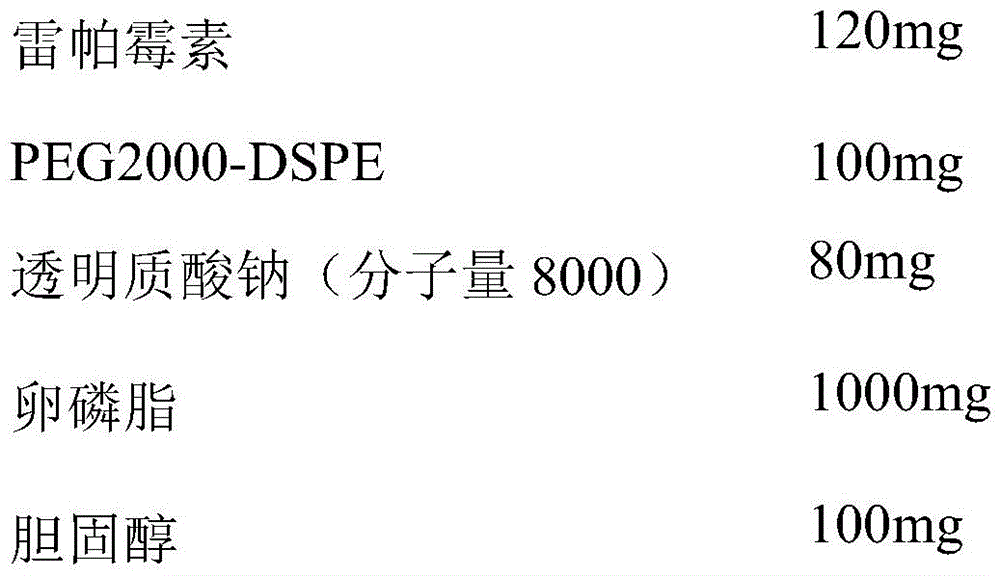
organic phase solvent: 10mL of absolute ethyl alcohol; aqueous phase solvent: 15mL of PBS buffer +150mL of purified water.
The rapamycin composition was prepared as in example 1.
Example 3:
the rapamycin composition of example 3, comprising the following active ingredients:

organic phase solvent: 10mL of dichloromethane; aqueous phase solvent: 15mL of PBS buffer +150mL of purified water. The rapamycin composition was prepared as in example 1.
Example 4:
the rapamycin composition of example 4, comprising the following active ingredients:

organic phase solvent: 10mL of absolute ethyl alcohol; aqueous phase solvent: 15mL of PBS buffer +150mL of purified water.
The rapamycin composition was prepared as in example 1.
Example 5:
the rapamycin composition of example 5, comprising the following active ingredients:


organic phase solvent: 10mL of dichloromethane; aqueous phase solvent: 15mL of PBS buffer +150mL of purified water.
The rapamycin composition was prepared as in example 1.
Example 6:
the rapamycin composition of example 6, comprising the following active ingredients:

organic phase solvent: 10mL of absolute ethyl alcohol; aqueous phase solvent: 15mL of PBS buffer +150mL of purified water.
A process for preparing a rapamycin composition comprising:
preparing an organic phase solution: adding rapamycin, lecithin and cholesterol into an organic phase solvent to obtain an organic phase solution;
the preparation method of the emulsion comprises the following steps: adding PEG2000-DSPE into an aqueous phase solvent, then dropwise adding an organic phase solution into the aqueous phase solvent according to 5 drops/min, mixing at a stirring speed of 450rpm, and stirring at a room temperature of 600rpm for 1h to obtain an emulsion;
homogenizing: adding sodium hyaluronate into the emulsion, stirring for 1h, mixing, and homogenizing for 10 times at a homogenizing pressure of 500bar to obtain a rapamycin composition;
a freeze-drying step: lactose (lyoprotectant) was added to the rapamycin composition in an amount of 10g/100mL of rapamycin composition, followed by sterile filtration through a 0.22 μm pore size microfiltration membrane and freeze-drying.
Example 7:
the rapamycin composition of example 7, comprising the following active ingredients:

organic phase solvent: 10mL of absolute ethyl alcohol; aqueous phase solvent: 15mL of PBS buffer +150mL of purified water.
The rapamycin composition was prepared as in example 6.
Example 8:
the rapamycin composition of example 8, comprising the following active ingredients:

organic phase solvent: 10mL of absolute ethyl alcohol; aqueous phase solvent: 15mL of PBS buffer +150mL of purified water.
A process for preparing a rapamycin composition comprising:
preparing an organic phase solution: adding rapamycin, lecithin and cholesterol into an organic phase solvent to obtain an organic phase solution;
the preparation method of the emulsion comprises the following steps: adding PEG2000-DSPE into an aqueous phase solvent, then dropwise adding an organic phase solution into the aqueous phase solvent according to 5 drops/min, mixing at a stirring speed of 500rpm, and stirring at room temperature of 500rpm for 1h to obtain an emulsion;
homogenizing: adding lymphatic endothelial hyaluronic acid receptor antibody (LYVE-1) into the emulsion, stirring for 1h, mixing, homogenizing for 10 times at 400bar to obtain rapamycin composition;
a freeze-drying step: lactose (lyoprotectant) was added to the rapamycin composition in an amount of 10g/100mL of rapamycin composition, followed by sterile filtration through a 0.45 μm pore size microfiltration membrane and freeze-drying.
Example 9:
the rapamycin composition of example 9, comprising the following active ingredients:

organic phase solvent: 10mL of absolute ethyl alcohol; aqueous phase solvent: 15mL of PBS buffer +150mL of purified water.
A process for preparing a rapamycin composition comprising:
preparing an organic phase solution: adding rapamycin, lecithin and cholesterol into an organic phase solvent to obtain an organic phase solution;
the preparation method of the emulsion comprises the following steps: adding PEG2000-DSPE into an aqueous phase solvent, then dropwise adding an organic phase solution into the aqueous phase solvent according to 5 drops/min, mixing at a stirring speed of 500rpm, and stirring at room temperature of 500rpm for 1h to obtain an emulsion;
homogenizing: adding an aptamer SEQ ID NO.1 into the emulsion, stirring for 1h, mixing, and homogenizing for 10 times at a homogenizing pressure of 400bar to obtain the rapamycin composition;
a freeze-drying step: lactose (lyoprotectant) was added to the rapamycin composition in an amount of 10g/100mL of rapamycin composition, followed by sterile filtration through a 0.22 μm pore size microfiltration membrane and freeze-drying.
Example 10:
the rapamycin composition of example 10, comprising the following active ingredients:

organic phase solvent: 10mL of dichloromethane; aqueous phase solvent: 15mL of PBS buffer +150mL of purified water.
A process for preparing a rapamycin composition comprising:
preparing an organic phase solution: adding rapamycin, lecithin and cholesterol into an organic phase solvent to obtain an organic phase solution;
the preparation method of the emulsion comprises the following steps: adding PEG2000-DSPE into an aqueous phase solvent, then dropwise adding an organic phase solution into the aqueous phase solvent according to 5 drops/min, mixing at a stirring speed of 500rpm, and stirring at a room temperature of 600rpm for 1h to obtain an emulsion;
homogenizing: adding an aptamer SEQ ID NO.3 into the emulsion, stirring for 1h, mixing, and homogenizing for 6 times at a homogenizing pressure of 600bar to obtain the rapamycin composition;
a freeze-drying step: lactose (lyoprotectant) was added to the rapamycin composition in an amount of 10g/100mL of rapamycin composition, followed by sterile filtration through a 0.22 μm pore size microfiltration membrane and freeze-drying.
And (3) performance detection:
1) evaluation of appearance, measurement of average particle diameter, potential and encapsulation efficiency were carried out on the rapamycin compositions obtained in examples 1 to 10;
wherein, the appearance evaluation standard is as follows: the original volume is maintained, the collapse and shrinkage are avoided, the color is uniform, no specks are generated, and the texture is fine; the appearance is shown in FIG. 1, with the compositions of examples 1-5 in order from left to right.
Average particle size: the particle size and the particle size distribution of the nanoparticles are measured by a Malvern laser particle sizer, and the principle is that the particle size is measured by utilizing the characteristics of light scattering and light diffraction when the particles are irradiated by light and the principle that the scattering intensity and the diffraction intensity of the light are related to the particle size and the optical characteristics.
FIG. 2 is a mimetic diagram of liposome of the rapamycin composition of example 4, in which the spherical portion is rapamycin as an active ingredient, and the linear portion is a high molecular polymer carrier and a lymphatic target; FIG. 3 is a graph of the particle size distribution of a rapamycin composition; FIG. 4 is a TEM image of the rapamycin composition.
Encapsulation efficiency: the encapsulation efficiency is preferably more than 70%.
And (4) determining the total content of the medicine by referring to a content determination item method.
The content of the drug is determined by high performance liquid chromatography, methanol-acetonitrile-water (volume ratio 43: 40:17) is used as mobile phase, the flow rate is 1mL/min, the column temperature is 40 ℃, and the detection wavelength is 278 nm.
The envelope rate calculation formula is as follows: the encapsulation rate is encapsulated drug quantity/total content of main drugs multiplied by 100 percent
TABLE 1 variation in appearance, redispersibility, encapsulation efficiency and average particle size of rapamycin compositions


The encapsulation rate of the rapamycin composition obtained by the invention is more than 70%.
2) Cytotoxicity experiments were performed using the MTT kit method and HCT116 cells at 1X 10, human Vascular Smooth Muscle Cells (VSMC), Human Umbilical Vein Endothelial Cells (HUVEC)4Inoculum size of VSMC at 7X 10/well3Inoculum size of HUVEC cells at 1X 10/well4The inoculum size per well was inoculated in 96 well plates/5% CO2Cultured in 37 ℃ incubator for 24 hours at a concentration (based on rapamycin sodium active ingredient) of 80. mu.g/mL, 40.00. mu.g/mL, 30.00. mu.g/mL, 20.00. mu.g/mL, 10.00. mu.g/mL, 5.00. mu.g/mL, 2.50. mu.g/mL, respectively1.25, 0.65, 0.3125 and 0. mu.g/mL of the rapamycin composition of example 4, after 48h of treatment, the results are shown in FIG. 5, which significantly inhibited the proliferation of the above cells, and 48h after administration, HCT116 had an IC50 of 5ug/mL, VSMC had an IC50 of 13ug/mL, and HUVEC cells had a concentration of 17 ug/mL.
3) Lymph targeting of rapamycin-targeted nano-formulations
Animals: new Zealand white rabbits, 4-6kg, were purchased from Experimental animals center, Guangdong province.
Group and experimental protocol: blank group: saline, 1mL volume for ear margin intravenous injection, control group (R): rapamycin as a drug substance, diluted to a desired concentration (administration amount of 0.5mg/kg) with physiological saline, intravenous injection into the ear margin, drug group (Target-RL): 1.5mg/mL of example 4 was injected into the ear margin intravenously, rabbit lymph was taken 1h, 2h, 4h, 8h, and 24h after the injection, rapamycin in the lymph was extracted, and the rapamycin content in the lymph was measured. Whether the rapamycin composition is targeted to the lymphatic system is determined by its drug content. The results are shown in fig. 6, and it can be seen that compared with the bulk drug, the rapamycin composition is more enriched in lymph fluid at different time points, and the difference is significant, which proves that the rapamycin composition has a lymph targeting effect.
4) Therapeutic effect of rapamycin composition on atherosclerosis
Animals: apolipoprotein Gene knockout mice (ApoE-/-mice), 18-25g, purchased from the department of laboratory animals at Beijing university.
Preparation of atherosclerosis model mice: after the chicken are raised in an SPF environment (room temperature: 23 ℃, relative humidity: 65%, 12h alternating light and shade) for 8 weeks, high-fat feed starts to be fed, and after the chicken are fed with the high-fat feed for 12 weeks, modeling is successful, and dosing starts. The administration scheme is shown in the group and the administration scheme, blood vessels are stained, the fraction of the plaque area is calculated, and the calculation formula of the plaque area fraction is AA: P/P0. Data are expressed as mean soil standard deviation, statistical analysis is performed by using t test, P <0.05 has significant difference, and all data are analyzed by software.
Groups and dosing regimens: blank group: normal saline is injected into the abdominal cavity once every two days, and the volume is 0.2 mL; control group: rapamycin original solution is diluted to the required concentration (dosage is 1.5mg/kg) by normal saline, and is injected into the abdominal cavity once every two days; drug group: dosage: 1.5mg/kg example 4, intraperitoneal injection, every two days for 3 months. During this period, the state change of the mice was observed. After the administration, mice are anesthetized, blood is taken to detect blood fat and some inflammatory factors, blood vessels are taken to observe plaque conditions, as shown in figures 7-9, atherosclerosis effect graphs of a blank group, a control group and a drug group are shown, after the administration, the blood vessel plaques are obviously reduced, as shown in figure 10, the plaque area/total blood vessel area of each group is respectively as follows: blank group: 52.18% ± 3.497%, control group: 48.33% ± 2.851%, drug group: 28.32% ± 5.461%, (p < 0.05).
Various other changes and modifications to the above-described embodiments and concepts will become apparent to those skilled in the art from the above description, and all such changes and modifications are intended to be included within the scope of the present invention as defined in the appended claims.


SEQUENCE LISTING
<110> Secretaceae
<120> rapamycin composition and preparation method thereof
<130> 2020
<160> 10
<170> PatentIn version 3.5
<210> 1
<211> 81
<212> DNA
<213> Artificial Synthesis (Artificial Sequence)
<400> 1
cccctgcagg tgattttgct caagttgctc gtcgcgatac gtttggttgg tgtggttggc 60
agtatcgcta atcaggcgga t 81
<210> 2
<211> 81
<212> DNA
<213> Artificial Synthesis (Artificial Sequence)
<400> 2
cccctgcagg tgattttgct caagttgctt gtcgcgatac gtttggttgg tgtggttggc 60
agtatcgcta atcaggcgga t 81
<210> 3
<211> 81
<212> DNA
<213> Artificial Synthesis (Artificial Sequence)
<400> 3
cccctgcagg tgattttgct caagttgctc atcgcgatac gtttggttgg tgtggttggc 60
agtatcgcta atcaggcgga t 81
<210> 4
<211> 81
<212> DNA
<213> Artificial Synthesis (Artificial Sequence)
<400> 4
cccctgcagg tgattttgct caagttactt gtcgcgatac gtttggttgg tgtggttggc 60
agtatcgcta atcaggcgga t 81
<210> 5
<211> 81
<212> DNA
<213> Artificial Synthesis (Artificial Sequence)
<400> 5
cccctgcagg tgattttgct caagttgctc gtcgcgatac gtttggttgg tgtggttggg 60
agtatcgcta atcaggcgga t 81
<210> 6
<211> 81
<212> DNA
<213> Artificial Synthesis (Artificial Sequence)
<400> 6
cccctgcagg tgattttgct caagttgctt gtcgcgatac gttcggttgg tgtggttggc 60
agtatcgcta atcaggcgga t 81
<210> 7
<211> 81
<212> DNA
<213> Artificial Synthesis (Artificial Sequence)
<400> 7
cccctgcagg tgattttgct caagttgttc gtcgcgatac gtttggttgg tgtggttggc 60
agtatcgcta atcaggcgga t 81
<210> 8
<211> 81
<212> DNA
<213> Artificial Synthesis (Artificial Sequence)
<400> 8
cccctgcagg tgattttgct caagttgctc gttgcgatac gtttggttgg tgtggttggc 60
agtatcgcta atcaggcgga t 81
<210> 9
<211> 81
<212> DNA
<213> Artificial Synthesis (Artificial Sequence)
<400> 9
cccctgcagg tgattttgct caagttgctt gccgcgatac gtttggttgg tgtggttggc 60
agtatcgcta atcaggcgga t 81
<210> 10
<211> 81
<212> DNA
<213> Artificial Synthesis (Artificial Sequence)
<400> 10
cccctgcagg tgattttgct caagttgctc atcgcgatac ggttggttgg tgtggttggc 60
agtatcgcta atcaggcgga t 81
Claims (10)
1. A rapamycin composition is characterized by comprising the following effective components in parts by weight:
1-10 parts of rapamycin;
0.5-20 parts of high-molecular polymer carrier;
0.1-1 part of lymph targeting substance;
the lymph targeting substance is at least one of sodium hyaluronate, an aptamer and an antibody;
the capacity of the aptamer for specifically binding to the lymphatic endothelial cells is more than or equal to 50 percent;
the antibody is at least one of lymphatic endothelial hyaluronic acid receptor antibody and humanized recombinant prox protein antibody.
2. The rapamycin composition of claim 1, wherein the polymeric carrier is at least one of polyethylene glycol, PLGA, PEO, PVP, polypropylene, polyamino acids, polysorbate, polyoxyethylene ester fatty acids, methoxypolyethylene glycol block copolymers, and mPEG-PLA.
3. The rapamycin composition of claim 1, wherein the nucleotide sequence of the aptamer has an overlap of at least 50% with a sequence of any one of SEQ ID nos. 1-10.
4. The rapamycin composition of claim 1, wherein the rapamycin composition further comprises a phospholipid; the phospholipid is at least one of lecithin, cephalin, phosphatidylserine, phosphatidylglycerol, phosphatidylinositol, sphingomyelin, diphosphatidylglycerol, dipalmitoylphosphatidylcholine, dioleoylphosphatidylethanolamine and distearoylphosphatidylethanolamine.
5. The rapamycin composition of claim 1, wherein the rapamycin composition further comprises cholesterol.
6. A process for preparing a rapamycin composition comprising:
preparing an organic phase solution: adding rapamycin into an organic phase solvent to obtain an organic phase solution;
the preparation method of the emulsion comprises the following steps: adding a high molecular polymer carrier into an aqueous phase solvent, and then dropwise adding an organic phase solution into the aqueous phase solvent to obtain an emulsion;
homogenizing: and adding the lymph targeting substance into the emulsion, mixing and homogenizing to obtain the rapamycin composition.
7. The process for preparing a rapamycin composition as in claim 6 wherein in the step of preparing the organic phase solution, the organic solvent is at least one of absolute ethanol, dichloromethane, t-butanol, acetone and methanol.
8. The process for preparing a rapamycin composition as claimed in claim 6 wherein in the step of preparing the emulsion, the mixing is carried out in the following manner: stirring at room temperature for 30min-3h, with a stirring speed of 300-1200 rpm.
9. The process for preparing a rapamycin composition according to claim 6 further comprising the step of lyophilizing: adding a freeze-drying protective agent into the rapamycin composition, filtering and sterilizing by using a microporous filter membrane, and freeze-drying.
10. The process for preparing a rapamycin composition according to claim 9 wherein in the lyophilization step, the lyoprotectant is added in an amount from 5 to 20g per 100mL of the rapamycin composition.
Priority Applications (3)
| Application Number | Priority Date | Filing Date | Title |
|---|---|---|---|
| CN202011061905.1A CN112137961A (en) | 2020-09-30 | 2020-09-30 | Rapamycin composition and preparation method thereof |
| PCT/CN2021/097356 WO2022068242A1 (en) | 2020-09-30 | 2021-05-31 | Rapamycin composition and preparation method therefor |
| US18/024,054 US20230277511A1 (en) | 2020-09-30 | 2021-05-31 | Rapamycin (rapa) composition and preparation method thereof |
Applications Claiming Priority (1)
| Application Number | Priority Date | Filing Date | Title |
|---|---|---|---|
| CN202011061905.1A CN112137961A (en) | 2020-09-30 | 2020-09-30 | Rapamycin composition and preparation method thereof |
Publications (1)
| Publication Number | Publication Date |
|---|---|
| CN112137961A true CN112137961A (en) | 2020-12-29 |
Family
ID=73951317
Family Applications (1)
| Application Number | Title | Priority Date | Filing Date |
|---|---|---|---|
| CN202011061905.1A Pending CN112137961A (en) | 2020-09-30 | 2020-09-30 | Rapamycin composition and preparation method thereof |
Country Status (3)
| Country | Link |
|---|---|
| US (1) | US20230277511A1 (en) |
| CN (1) | CN112137961A (en) |
| WO (1) | WO2022068242A1 (en) |
Cited By (2)
| Publication number | Priority date | Publication date | Assignee | Title |
|---|---|---|---|---|
| WO2022068242A1 (en) * | 2020-09-30 | 2022-04-07 | 严鹏科 | Rapamycin composition and preparation method therefor |
| CN115337468A (en) * | 2022-08-23 | 2022-11-15 | 苏州中天医疗器械科技有限公司 | Cell-targeting rapamycin drug balloon and preparation method and application thereof |
Citations (4)
| Publication number | Priority date | Publication date | Assignee | Title |
|---|---|---|---|---|
| US20100278725A1 (en) * | 2005-08-12 | 2010-11-04 | Jiang Liu | Methods and devices for lymphatic targeting |
| WO2013062489A1 (en) * | 2011-10-28 | 2013-05-02 | National University Of Singapore | Lymphatic vessel endothelial hyaluronic acid receptor-1 (lyve-1+) macrophages and uses thereof |
| CN108815160A (en) * | 2018-07-18 | 2018-11-16 | 严鹏科 | A kind of rapamycin liposome nano granule and preparation method thereof |
| CN110623925A (en) * | 2019-09-26 | 2019-12-31 | 严鹏科 | Rapamycin nanometer sustained release agent and preparation method thereof |
Family Cites Families (7)
| Publication number | Priority date | Publication date | Assignee | Title |
|---|---|---|---|---|
| US8912215B2 (en) * | 2011-12-13 | 2014-12-16 | Everon Biosciences, Inc. | Rapamycin composition |
| CN103290019B (en) * | 2013-06-14 | 2014-03-12 | 严鹏科 | Atherosclerosis targeting aptamer as well as preparation method and application thereof |
| RU2763916C2 (en) * | 2015-09-23 | 2022-01-11 | Дженентек, Инк. | Optimized options of anti-vegf antibodies |
| KR102643344B1 (en) * | 2016-06-20 | 2024-03-07 | 인사이트 코포레이션 | Crystalline solid forms of a bet inhibitor |
| EP3601603A4 (en) * | 2017-03-27 | 2020-12-30 | Caris Science, Inc. | OLIGONUCLEOTIDE PROBES AND USES THEREOF |
| CN111632039B (en) * | 2020-06-10 | 2022-09-27 | 中国科学院苏州纳米技术与纳米仿生研究所 | Multifunctional nano delivery system and preparation method and application thereof |
| CN112137961A (en) * | 2020-09-30 | 2020-12-29 | 严鹏科 | Rapamycin composition and preparation method thereof |
-
2020
- 2020-09-30 CN CN202011061905.1A patent/CN112137961A/en active Pending
-
2021
- 2021-05-31 US US18/024,054 patent/US20230277511A1/en active Pending
- 2021-05-31 WO PCT/CN2021/097356 patent/WO2022068242A1/en not_active Ceased
Patent Citations (4)
| Publication number | Priority date | Publication date | Assignee | Title |
|---|---|---|---|---|
| US20100278725A1 (en) * | 2005-08-12 | 2010-11-04 | Jiang Liu | Methods and devices for lymphatic targeting |
| WO2013062489A1 (en) * | 2011-10-28 | 2013-05-02 | National University Of Singapore | Lymphatic vessel endothelial hyaluronic acid receptor-1 (lyve-1+) macrophages and uses thereof |
| CN108815160A (en) * | 2018-07-18 | 2018-11-16 | 严鹏科 | A kind of rapamycin liposome nano granule and preparation method thereof |
| CN110623925A (en) * | 2019-09-26 | 2019-12-31 | 严鹏科 | Rapamycin nanometer sustained release agent and preparation method thereof |
Non-Patent Citations (3)
| Title |
|---|
| NATALIE L. ET AL.: ""From sewer to savior-targeting the lymphatic system to promote drug exposure and activity"", 《NATURE REVIEWS DRUG DISCOVERY》 * |
| 钟文飞等: "动脉粥样硬化靶向适配子的亲和力筛选", 《中国医药导报》 * |
| 马永贵等: "《人体解剖学和组织胚胎学》", 31 May 2015, 华中科技大学出版社 * |
Cited By (3)
| Publication number | Priority date | Publication date | Assignee | Title |
|---|---|---|---|---|
| WO2022068242A1 (en) * | 2020-09-30 | 2022-04-07 | 严鹏科 | Rapamycin composition and preparation method therefor |
| CN115337468A (en) * | 2022-08-23 | 2022-11-15 | 苏州中天医疗器械科技有限公司 | Cell-targeting rapamycin drug balloon and preparation method and application thereof |
| CN115337468B (en) * | 2022-08-23 | 2024-01-30 | 苏州中天医疗器械科技有限公司 | Cell targeting rapamycin medicine balloon, and preparation method and application thereof |
Also Published As
| Publication number | Publication date |
|---|---|
| US20230277511A1 (en) | 2023-09-07 |
| WO2022068242A1 (en) | 2022-04-07 |
Similar Documents
| Publication | Publication Date | Title |
|---|---|---|
| Tang et al. | Soft materials as biological and artificial membranes | |
| Sun et al. | Delivery of siRNA using folate receptor-targeted pH-sensitive polymeric nanoparticles for rheumatoid arthritis therapy | |
| Thapa et al. | Multilayer-coated liquid crystalline nanoparticles for effective sorafenib delivery to hepatocellular carcinoma | |
| Peng et al. | A rapid-acting, long-acting insulin formulation based on a phospholipid complex loaded PHBHHx nanoparticles | |
| Song et al. | Rifampicin Loaded Mannosylated Cationic Nanostructured Lipid Carriers for Alveolar Macrophage-specific Delivery: Song et al. | |
| JP5833727B2 (en) | Drug delivery device | |
| Shang et al. | Enhancing cancer chemo-immunotherapy by biomimetic nanogel with tumor targeting capacity and rapid drug-releasing in tumor microenvironment | |
| KR101870316B1 (en) | Preparation Method of Polymeric Micelle Containing Anionic Drugs | |
| CN110623925B (en) | Rapamycin nanometer sustained release agent and preparation method thereof | |
| CN115089561B (en) | Cell membrane-coated prodrug nanoparticles, preparation method and application | |
| CN108024960A (en) | Pharmaceutical composition containing anionic drug and preparation method thereof | |
| Qiu et al. | Application of targeted drug delivery by cell membrane-based biomimetic nanoparticles for inflammatory diseases and cancers | |
| CN102188377A (en) | Method for preparing medicine encapsulating liposome | |
| WO2020262150A1 (en) | Lipid nanoparticle | |
| CN116531332A (en) | Microthrombus targeted liposome drug delivery system based on NETs regulation and preparation method and application thereof | |
| CN112137961A (en) | Rapamycin composition and preparation method thereof | |
| Xin et al. | Disease-specific corona mediated co-delivery of MTX and siRNA-TNFα by a polypeptide nanoplatform with antigen-scavenging functions in psoriasis | |
| Wu et al. | Treg-derived extracellular vesicles: roles in diseases and theranostics | |
| CN108403659A (en) | A kind of hard emulsion receives microballoon and its preparation method and application | |
| Shaw et al. | Microfluidics-generated PLA nanoparticles: impact of purification method on macrophage interactions, anti-inflammatory effects, biodistribution, and protein corona formation | |
| Li et al. | Inhaled pH-Responsive polymyxin B-loaded albumin nanoparticles against pneumonia caused by carbapenem resistant Klebsiella pneumoniae | |
| Du et al. | Nanocomposite hydrogel to deliver the immunomodulator lenalidomide and anti-inflammatory hesperidin locally to joints affected by rheumatoid arthritis | |
| Zhao et al. | Advances in Pulmonary Protein Delivery Systems | |
| CN104045823A (en) | Glycyrrhetinic acid derivative, and preparation method and application thereof | |
| CN103735514A (en) | Polyethylene glycol vitamin E succinate and calprotectin modified nanoparticle and preparation method thereof |
Legal Events
| Date | Code | Title | Description |
|---|---|---|---|
| PB01 | Publication | ||
| PB01 | Publication | ||
| SE01 | Entry into force of request for substantive examination | ||
| SE01 | Entry into force of request for substantive examination |