CN112043257B - A motion-robust non-contact video heart rate detection method - Google Patents
A motion-robust non-contact video heart rate detection method Download PDFInfo
- Publication number
- CN112043257B CN112043257B CN202010983599.0A CN202010983599A CN112043257B CN 112043257 B CN112043257 B CN 112043257B CN 202010983599 A CN202010983599 A CN 202010983599A CN 112043257 B CN112043257 B CN 112043257B
- Authority
- CN
- China
- Prior art keywords
- video image
- interest
- total
- frame video
- kth
- Prior art date
- Legal status (The legal status is an assumption and is not a legal conclusion. Google has not performed a legal analysis and makes no representation as to the accuracy of the status listed.)
- Active
Links
- 238000001514 detection method Methods 0.000 title claims abstract description 20
- 230000001815 facial effect Effects 0.000 claims abstract description 68
- 238000000034 method Methods 0.000 claims abstract description 18
- 238000010219 correlation analysis Methods 0.000 claims abstract description 12
- 238000012545 processing Methods 0.000 claims abstract description 6
- 230000000875 corresponding effect Effects 0.000 claims description 38
- 239000011159 matrix material Substances 0.000 claims description 27
- 238000002156 mixing Methods 0.000 claims description 8
- 230000002596 correlated effect Effects 0.000 claims description 5
- 239000011541 reaction mixture Substances 0.000 claims 1
- 230000017105 transposition Effects 0.000 claims 1
- 238000000354 decomposition reaction Methods 0.000 abstract description 6
- 230000008569 process Effects 0.000 abstract description 5
- 238000009532 heart rate measurement Methods 0.000 abstract 1
- 238000005516 engineering process Methods 0.000 description 6
- 102000001554 Hemoglobins Human genes 0.000 description 3
- 108010054147 Hemoglobins Proteins 0.000 description 3
- 238000010586 diagram Methods 0.000 description 3
- 230000000737 periodic effect Effects 0.000 description 3
- 238000013186 photoplethysmography Methods 0.000 description 3
- 238000000926 separation method Methods 0.000 description 3
- 230000008901 benefit Effects 0.000 description 2
- 210000004204 blood vessel Anatomy 0.000 description 2
- 230000008030 elimination Effects 0.000 description 2
- 238000003379 elimination reaction Methods 0.000 description 2
- 230000004886 head movement Effects 0.000 description 2
- 238000003384 imaging method Methods 0.000 description 2
- 238000012544 monitoring process Methods 0.000 description 2
- 238000005070 sampling Methods 0.000 description 2
- 208000024172 Cardiovascular disease Diseases 0.000 description 1
- 238000010521 absorption reaction Methods 0.000 description 1
- 230000009286 beneficial effect Effects 0.000 description 1
- 239000008280 blood Substances 0.000 description 1
- 210000004369 blood Anatomy 0.000 description 1
- 230000008859 change Effects 0.000 description 1
- 239000003086 colorant Substances 0.000 description 1
- 230000008602 contraction Effects 0.000 description 1
- 238000013480 data collection Methods 0.000 description 1
- 238000011161 development Methods 0.000 description 1
- 238000003745 diagnosis Methods 0.000 description 1
- 238000000605 extraction Methods 0.000 description 1
- 230000008921 facial expression Effects 0.000 description 1
- 230000014509 gene expression Effects 0.000 description 1
- 230000036541 health Effects 0.000 description 1
- 230000031700 light absorption Effects 0.000 description 1
- 230000007774 longterm Effects 0.000 description 1
- 238000000691 measurement method Methods 0.000 description 1
- 230000002265 prevention Effects 0.000 description 1
- 238000004393 prognosis Methods 0.000 description 1
- 239000000523 sample Substances 0.000 description 1
Images


Classifications
-
- A—HUMAN NECESSITIES
- A61—MEDICAL OR VETERINARY SCIENCE; HYGIENE
- A61B—DIAGNOSIS; SURGERY; IDENTIFICATION
- A61B5/00—Measuring for diagnostic purposes; Identification of persons
- A61B5/0059—Measuring for diagnostic purposes; Identification of persons using light, e.g. diagnosis by transillumination, diascopy, fluorescence
- A61B5/0077—Devices for viewing the surface of the body, e.g. camera, magnifying lens
-
- A—HUMAN NECESSITIES
- A61—MEDICAL OR VETERINARY SCIENCE; HYGIENE
- A61B—DIAGNOSIS; SURGERY; IDENTIFICATION
- A61B5/00—Measuring for diagnostic purposes; Identification of persons
- A61B5/0059—Measuring for diagnostic purposes; Identification of persons using light, e.g. diagnosis by transillumination, diascopy, fluorescence
- A61B5/0082—Measuring for diagnostic purposes; Identification of persons using light, e.g. diagnosis by transillumination, diascopy, fluorescence adapted for particular medical purposes
-
- A—HUMAN NECESSITIES
- A61—MEDICAL OR VETERINARY SCIENCE; HYGIENE
- A61B—DIAGNOSIS; SURGERY; IDENTIFICATION
- A61B5/00—Measuring for diagnostic purposes; Identification of persons
- A61B5/02—Detecting, measuring or recording for evaluating the cardiovascular system, e.g. pulse, heart rate, blood pressure or blood flow
- A61B5/024—Measuring pulse rate or heart rate
-
- A—HUMAN NECESSITIES
- A61—MEDICAL OR VETERINARY SCIENCE; HYGIENE
- A61B—DIAGNOSIS; SURGERY; IDENTIFICATION
- A61B5/00—Measuring for diagnostic purposes; Identification of persons
- A61B5/72—Signal processing specially adapted for physiological signals or for diagnostic purposes
-
- A—HUMAN NECESSITIES
- A61—MEDICAL OR VETERINARY SCIENCE; HYGIENE
- A61B—DIAGNOSIS; SURGERY; IDENTIFICATION
- A61B5/00—Measuring for diagnostic purposes; Identification of persons
- A61B5/72—Signal processing specially adapted for physiological signals or for diagnostic purposes
- A61B5/7203—Signal processing specially adapted for physiological signals or for diagnostic purposes for noise prevention, reduction or removal
- A61B5/7207—Signal processing specially adapted for physiological signals or for diagnostic purposes for noise prevention, reduction or removal of noise induced by motion artifacts
Landscapes
- Health & Medical Sciences (AREA)
- Life Sciences & Earth Sciences (AREA)
- Engineering & Computer Science (AREA)
- Surgery (AREA)
- General Health & Medical Sciences (AREA)
- Biophysics (AREA)
- Biomedical Technology (AREA)
- Heart & Thoracic Surgery (AREA)
- Medical Informatics (AREA)
- Molecular Biology (AREA)
- Physics & Mathematics (AREA)
- Animal Behavior & Ethology (AREA)
- Pathology (AREA)
- Public Health (AREA)
- Veterinary Medicine (AREA)
- Physiology (AREA)
- Signal Processing (AREA)
- Cardiology (AREA)
- Artificial Intelligence (AREA)
- Computer Vision & Pattern Recognition (AREA)
- Psychiatry (AREA)
- Image Analysis (AREA)
Abstract
本发明公开了一种运动鲁棒的非接触式视频心率检测方法,其步骤包括:首先获取若干个面部感兴趣区域,对于每个区域,得到该区域多个颜色通道信号,采用集合经验模态分解将这些信号分解为若干本征模态函数并组成本征模态函数集合,其次得到该区域特征点的轨迹作为运动信号,构成运动信号数据集;采用典型相关分析处理上述两个集合,将相关性大于某一阈值的典型相关变量判定为运动噪声,将其置“0”并重构本征模态函数集合;接着对不同区域得到的多个重构的本征模态函数集合做多重集典型相关分析处理,最后从第一组典型相关变量中筛选出脉冲信号从而得到心率。本发明能够去除非接触式心率检测中存在的运动噪声,从而得到更准确的心率测量。

The invention discloses a motion-robust non-contact video heart rate detection method, the steps of which include: firstly acquire several facial regions of interest, and for each region, obtain signals of multiple color channels in the region, and adopt the collective empirical mode Decomposition decomposes these signals into several eigenmode functions and forms a set of eigenmode functions, and then obtains the trajectory of the feature points in the area as the motion signal to form a motion signal data set; using canonical correlation analysis to process the above two sets, the The typical correlation variables whose correlation is greater than a certain threshold are judged as motion noise, set them to "0" and reconstruct the set of intrinsic mode functions; then do multiple Collect canonical correlation analysis and processing, and finally filter the pulse signal from the first group of canonical correlation variables to obtain the heart rate. The invention can remove motion noise existing in non-contact heart rate detection, thereby obtaining more accurate heart rate measurement.
Description
技术领域technical field
本发明属于生物医学信号处理的技术领域,尤其涉及一种运动鲁棒的非接触式视频心率检测方法。The invention belongs to the technical field of biomedical signal processing, and in particular relates to a motion robust non-contact video heart rate detection method.
背景技术Background technique
心率作为一种人体的重要生理参数,它的长期监测对心血管疾病的早期预防和预后诊断,以及对人类健康的监护都具有重大的意义。传统上的临床心率检测手段需要利用心电图机的十二导联线接触人体的多个部位,操作繁杂,自动化程度不高,对使用者有较高的专业知识要求,不适用于特殊场景下的心率检测。Heart rate is an important physiological parameter of the human body, and its long-term monitoring is of great significance to the early prevention and prognosis diagnosis of cardiovascular diseases, as well as the monitoring of human health. The traditional clinical heart rate detection method needs to use the twelve-lead wire of the electrocardiograph to contact multiple parts of the human body. The operation is complicated and the degree of automation is not high. It requires high professional knowledge for the user and is not suitable for special scenarios. Heart rate detection.
光学体积描记术(Photoplethysmography,PPG)是另一种常用的心率检测的方法,操作较为简便,但是这种接触式测量方法的最大缺点和心电图机类似,就是需要和人体接触。近年来,随着便携式成像设备的快速发展,特别是对于智能手机和笔记本电脑,有一种趋势是将传统的接触式PPG转换为成像光学体积描记术(imaging Photoplethysmography,iPPG)。iPPG技术主要原理是心脏的周期性收缩和舒张会引起体表血管容积发生周期性改变,然后血液所含血红蛋白含量也随之发生周期性变化导致血红蛋白对入射光线的吸收发生变化,最后引起反射光强度产生相应变化,通过视频图像来捕捉这些细微的变化,经过人脸识别,盲源分离和信号处理技术,可以得到心率。相比于PPG技术,iPPG技术优势在于只需要低成本的数码相机,不需要接触探头或者专用光源,简单却有效。但是目前大多数实现iPPG技术的方法仅仅适用于测试者保持相对静止的情况,然而,实际应用时受试者很难保持完全静止,即受试者头部难免会有头部运动(刚性运动)或者面部表情(非刚性运动),从而会引入运动噪声。由于心脏搏动引起的体表血管容积变化导致血红蛋白对光吸收变化的幅度远远小于运动噪声带来的变化幅度,如何消除这种运动噪声的影响对于非接触式视频心率检测方法的推广使用具有重要研究意义。Photoplethysmography (Photoplethysmography, PPG) is another commonly used heart rate detection method, which is relatively easy to operate, but the biggest disadvantage of this contact measurement method is similar to that of an electrocardiogram machine, that is, it needs to be in contact with the human body. In recent years, with the rapid development of portable imaging devices, especially for smartphones and laptops, there has been a trend to convert traditional contact PPG to imaging photoplethysmography (iPPG). The main principle of iPPG technology is that the periodic contraction and relaxation of the heart will cause periodic changes in the volume of blood vessels on the body surface, and then the hemoglobin content in the blood will also undergo periodic changes, resulting in changes in the absorption of incident light by hemoglobin, and finally causing reflected light. The intensity changes accordingly, and these subtle changes are captured through video images, and the heart rate can be obtained through face recognition, blind source separation and signal processing technology. Compared with PPG technology, the advantage of iPPG technology is that it only needs a low-cost digital camera, and does not require contact probes or special light sources. It is simple but effective. However, most of the current methods for implementing iPPG technology are only applicable to the situation where the tester remains relatively still. However, it is difficult for the subject to remain completely still in practical applications, that is, the subject's head will inevitably have head movement (rigid movement) Or facial expressions (non-rigid motion), which would introduce motion noise. Because the changes in the volume of blood vessels on the surface of the body caused by the heartbeat cause the change in the light absorption of hemoglobin to be much smaller than that caused by motion noise, how to eliminate the impact of this motion noise is of great importance for the promotion and use of non-contact video heart rate detection methods. Significance.
发明内容Contents of the invention
本发明是为解决上述技术所存在的不足,提供了一种运动鲁棒的非接触式视频心率检测方法,以期能去除运动噪声对非接触式视频心率检测的影响,从而提高非接触式视频心率检测的准确性。The present invention is to solve the shortcomings of the above-mentioned technologies, and provides a motion-robust non-contact video heart rate detection method, in order to remove the influence of motion noise on the non-contact video heart rate detection, thereby improving the non-contact video heart rate detection accuracy.
本发明为解决技术问题采用如下技术方案:The present invention adopts following technical scheme for solving technical problems:
本发明一种运动鲁棒的非接触式视频心率检测方法的特点是按照如下步骤进行:The feature of a kind of motion robust non-contact video heart rate detection method of the present invention is to carry out according to the following steps:
步骤1:获取Ttotal帧视频图像,并在第一帧视频图像中确定K个面部感兴趣区域;对Ttotal帧视频图像均计算第k个面部感兴趣区域的R,G,B三个颜色通道的平均像素值,从而获得Ttotal帧视频图像的第k个面部感兴趣区域对应的颜色通道信号
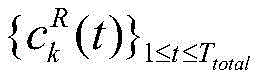


步骤2:利用集合经验模态分解将Ttotal帧视频图像的第k个面部感兴趣区域对应的颜色通道信号


步骤3:将Ttotal帧视频图像的第k个面部感兴趣区域对应的三个颜色通道的本征模态函数矩阵


步骤4:获取第一帧视频图像中第k个面部感兴趣区域的Pk个特征点,并通过追踪算法得到Pk个特征点在Ttotal帧视频图像的运动信号,再从中取纵向方向的运动信号,从而获得Ttotal帧视频图像的的第k个面部感兴趣区域的纵向方向运动信号数据集

步骤5:根据式(1)的关系式,采用典型相关分析法处理所述第k个面部感兴趣区域的本征模态函数集合{Xk(t)}1≤t≤T以及纵向方向运动信号数据集

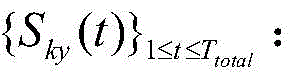

并有:And a:

式(2)中,I=min(N,Pk),1≤i≤I,且


步骤6:将所述第k个面部感兴趣区域的相关系数高于阈值rTh的典型相关变量对


步骤7:采用多重集典型相关分析法对所述K个本征模态函数集合


式(3)中,
步骤8:将所述第1个典型相关变量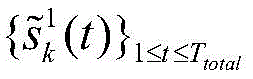
从K个频域信号中选出心率频率范围内主频能量最大的信号,并将其对应的候选心率信号作为包含心率信息的脉冲信号,Select the signal with the largest main frequency energy in the heart rate frequency range from the K frequency domain signals, and use the corresponding candidate heart rate signal as a pulse signal containing heart rate information,
采用峰值检测法对所述包含心率信息的脉冲信号进行检测,得到峰值数Npeaks,从而得到Ttotal帧视频图像对应的平均心率值HR=Npeaks×60/(Ttotal/fps),其中,fps为视频采样率。The pulse signal containing the heart rate information is detected by a peak detection method to obtain the peak number N peaks , thereby obtaining the average heart rate value HR=N peaks ×60/(T total /fps) corresponding to the T total frame video image, wherein, fps is the video sampling rate.
与已有技术相比,本发明有益效果体现在:Compared with the prior art, the beneficial effects of the present invention are reflected in:
1、本发明通过分析运动情况下颜色通道信号分解得到的本征模态函数集合以及特征点运动信号数据集的相关性,采用典型相关分析处理,将相关性高的典型相关变量认为是刚性运动噪声,然后将相关性大于阈值的典型相关变量置“0”并重构本征模态函数集合,去除了面部感兴趣区域本征模态函数所包含的刚性运动噪声,这样做的直接好处是去除了刚性运动噪声对视频心率检测的影响,相比于传统的盲源分离方法,能够在运动噪声频率和心率频率接近的情况下得到准确的心率检测。1. The present invention analyzes the correlation between the eigenmode function set and the feature point motion signal data set obtained by analyzing the color channel signal decomposition under the condition of motion, adopts typical correlation analysis and processing, and considers the typical correlation variables with high correlation as rigid motion Noise, and then set the typical correlation variables whose correlation is greater than the threshold to "0" and reconstruct the eigenmode function set to remove the rigid motion noise contained in the eigenmode function of the facial region of interest. The direct benefit of this is The influence of rigid motion noise on video heart rate detection is removed. Compared with the traditional blind source separation method, accurate heart rate detection can be obtained when the frequency of motion noise is close to the frequency of heart rate.
2、本发明采用多区域联合盲源分离方法提取心率成分,由于不同区域的非刚性运动噪声干扰是不同的,而心率成分是相同的,所以将面部感兴趣区域划分为多个区域,对去除了刚性运动噪声的本征模态函数集合采用多重集典型相关分析的方法,提取最相关的典型相关变量,这样能够去除不同区域非刚性运动噪声的干扰,并从中筛选出包含心率信息的脉冲信号,这样做能更加保证视频心率提取的准确性。2. The present invention adopts a multi-area joint blind source separation method to extract heart rate components. Since the interference of non-rigid motion noise in different areas is different, but the heart rate components are the same, the facial area of interest is divided into multiple areas. The eigenmode function set of rigid motion noise adopts the method of multiple set canonical correlation analysis to extract the most relevant canonical correlation variables, which can remove the interference of non-rigid motion noise in different areas, and filter out the pulse signal containing heart rate information , so that the accuracy of video heart rate extraction can be more guaranteed.
附图说明Description of drawings
图1为本发明方法的流程图;Fig. 1 is the flowchart of the inventive method;
图2为本发明用于划分面部感兴趣区域的面部特征点示意图;Fig. 2 is the facial feature point schematic diagram that the present invention is used for dividing facial region of interest;
图3为本发明面部感兴趣区域划分示意图。FIG. 3 is a schematic diagram of facial region-of-interest division according to the present invention.
具体实施方式detailed description
本实施例中,如图1所示,一种运动鲁棒的非接触式视频心率检测方法,是首先获取多个面部感兴趣区域,对于每个区域,利用集合经验模态分解方法获得面部感兴趣区域颜色通道信号对应的本征模态函数,将其组成本征模态函数集合,并对面部感兴趣区域内特征点追踪获得运动信号数据集,利用典型相关分析方法对两个集合进行处理,得到若干典型相关变量,其中相关性较大的典型相关变量代表刚性运动噪声,根据设定的阈值,将相关性大于阈值的典型相关变量置“0”再重构成新的本征模态函数集合,得到面部感兴趣区域去除刚性运动噪声的本征模态函数集合;之后采用多区域联合盲源分离的方法处理每个面部感兴趣区域得到的重构的本征模态函数集合来去除非刚性运动噪声的干扰;将处理得到的第一组典型相关变量作为候选心率信号,然后对这些候选心率信号做傅里叶变换,得到它们的频域信号,频域信号中心率频率范围内主频能量最大的候选心率信号作为包含心率信息的脉冲信号,最后采用峰值检测的方法得到心率。具体来说,是按照如下步骤进行的:In this embodiment, as shown in Figure 1, a motion-robust non-contact video heart rate detection method is to firstly acquire multiple facial regions of interest, and for each region, use the ensemble empirical mode decomposition method to obtain facial sense The intrinsic mode function corresponding to the color channel signal of the region of interest is composed of the intrinsic mode function set, and the feature points in the facial region of interest are tracked to obtain the motion signal data set, and the two sets are processed by the typical correlation analysis method , to obtain several typical correlation variables, among which the typical correlation variables with higher correlation represent rigid motion noise. According to the set threshold, the typical correlation variables with correlation greater than the threshold are set to "0" and then reconstructed into a new eigenmode function set to obtain the set of intrinsic mode functions for removing rigid motion noise in the facial region of interest; The interference of rigid motion noise; the first group of typical related variables obtained from the processing are used as candidate heart rate signals, and then Fourier transform is performed on these candidate heart rate signals to obtain their frequency domain signals. The candidate heart rate signal with the largest energy is used as a pulse signal containing heart rate information, and finally the heart rate is obtained by using the method of peak detection. Specifically, proceed as follows:
步骤1:利用简单的低成本网络摄像头采集一段时间内受试者自然运动状态下的视频数据,数据采集速度为30帧/秒,分辨率为640×480,其中受试者面对摄像头,面部可以自然运动。采集数据获取Ttotal帧视频图像,并采用openpose在第一帧视频图像进行人脸特征点检测,得到运动情况下人脸特征点,如图2所示,总共有68个面部特征点以及8个姿势特征点;将部分特征点连接,从而在第一帧视频图像中确定K个面部感兴趣区域,且K=4,图3为面部感兴趣区域划分示意图;对Ttotal帧视频图像均计算第k个面部感兴趣区域的R,G,B三个颜色通道的平均像素值,从而获得Ttotal帧视频图像的第k个面部感兴趣区域对应的颜色通道信号


步骤2:由于颜色通道信号只有三个通道,直接做典型相关分析容易使得到的典型相关变量存在混叠,所以利用集合经验模态分解将Ttotal帧视频图像的第k个面部感兴趣区域对应的颜色通道信号


条件一:极值点的数量和过零点的数量相等或者相差一个;Condition 1: The number of extreme points and the number of zero-crossing points are equal or differ by one;
条件二:由局部最大值和局部最小值分别定义的包络在任一时间点t上的均值为零;Condition 2: The mean value of the envelope defined by the local maximum and local minimum at any time point t is zero;
步骤3:将Ttotal帧视频图像的第k个面部感兴趣区域对应的三个颜色通道的本征模态函数矩阵

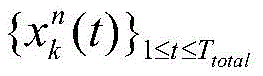
步骤4:通过最小特征值算法,获取第一帧视频图像中第k个面部感兴趣区域的Pk个特征点,并通过追踪算法得到Pk个特征点在Ttotal帧视频图像的运动信号,因为在刚性运动的影响下,纵向方向和横向方向的运动信号具有很高的相关性,可以只使用一个方向的运动信号作为运动噪声数据,所以只取纵向方向运动信号,从而获得Ttotal帧视频图像的的第k个面部感兴趣区域的纵向方向运动信号数据集


步骤5:由于头部运动会使得颜色通道信号分解得到的本证模态函数数据集和面部特征点运动信号数据集具有很高的相关性,所以根据式(1)的关系式,采用典型相关分析法处理第k个面部感兴趣区域的本征模态函数集合{Xk(t)}1≤t≤T以及纵向方向运动信号数据集


并有:And a:

式(2)中,I=min(N,Pk),1≤i≤I,且


步骤6:将第k个面部感兴趣区域的相关系数高于阈值rTh的典型相关变量对


步骤7:采用多重集典型相关分析法对K个本征模态函数集合


式(3)中,
步骤8:将第1个典型相关变量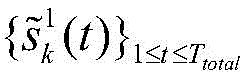
从K个频域信号中选出心率频率范围内主频能量最大的信号,并将其对应的候选心率信号作为包含心率信息的脉冲信号,Select the signal with the largest main frequency energy in the heart rate frequency range from the K frequency domain signals, and use the corresponding candidate heart rate signal as a pulse signal containing heart rate information,
采用峰值检测法对包含心率信息的脉冲信号进行检测,得到峰值数Npeaks,从而得到Ttotal帧视频图像对应的平均心率值HR=Npeaks×60/(Ttotal/fps),其中,fps为视频采样率。Use the peak detection method to detect the pulse signal containing the heart rate information to obtain the peak number N peaks , thereby obtaining the average heart rate value HR=N peaks ×60/(T total /fps) corresponding to the T total frame video image, where fps is Video sampling rate.
Claims (1)





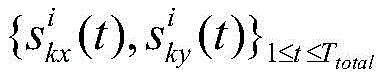

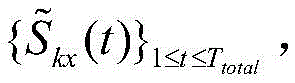


Priority Applications (1)
| Application Number | Priority Date | Filing Date | Title |
|---|---|---|---|
| CN202010983599.0A CN112043257B (en) | 2020-09-18 | 2020-09-18 | A motion-robust non-contact video heart rate detection method |
Applications Claiming Priority (1)
| Application Number | Priority Date | Filing Date | Title |
|---|---|---|---|
| CN202010983599.0A CN112043257B (en) | 2020-09-18 | 2020-09-18 | A motion-robust non-contact video heart rate detection method |
Publications (2)
| Publication Number | Publication Date |
|---|---|
| CN112043257A CN112043257A (en) | 2020-12-08 |
| CN112043257B true CN112043257B (en) | 2022-12-20 |
Family
ID=73603789
Family Applications (1)
| Application Number | Title | Priority Date | Filing Date |
|---|---|---|---|
| CN202010983599.0A Active CN112043257B (en) | 2020-09-18 | 2020-09-18 | A motion-robust non-contact video heart rate detection method |
Country Status (1)
| Country | Link |
|---|---|
| CN (1) | CN112043257B (en) |
Families Citing this family (4)
| Publication number | Priority date | Publication date | Assignee | Title |
|---|---|---|---|---|
| CN113361526B (en) * | 2021-07-16 | 2022-09-27 | 合肥工业大学 | Non-contact respiration rate monitoring method fusing shoulder and chest area information |
| CN114431849B (en) * | 2022-01-10 | 2023-08-11 | 厦门大学 | Aquatic animal heart rate detection method based on video image processing |
| CN115153473B (en) * | 2022-06-10 | 2024-04-19 | 合肥工业大学 | Non-contact heart rate detection method based on multivariate singular spectrum analysis |
| CN117743832B (en) * | 2024-02-21 | 2024-07-12 | 深圳市大数据研究院 | Motion interference robust non-contact heartbeat physiological signal measurement method and system |
Citations (5)
| Publication number | Priority date | Publication date | Assignee | Title |
|---|---|---|---|---|
| CN107506716A (en) * | 2017-08-17 | 2017-12-22 | 华东师范大学 | A kind of contactless real-time method for measuring heart rate based on video image |
| WO2019055919A1 (en) * | 2017-09-15 | 2019-03-21 | University Of Maryland, College Park | Heart rate measurement for fitness exercises using video |
| CN110269600A (en) * | 2019-08-06 | 2019-09-24 | 合肥工业大学 | Based on polynary empirical mode decomposition and the contactless video heart rate detection method for combining blind source separating |
| CN110367950A (en) * | 2019-07-22 | 2019-10-25 | 西安爱特眼动信息科技有限公司 | Contactless physiologic information detection method and system |
| CN110384491A (en) * | 2019-08-21 | 2019-10-29 | 河南科技大学 | A kind of heart rate detection method based on common camera |
Family Cites Families (1)
| Publication number | Priority date | Publication date | Assignee | Title |
|---|---|---|---|---|
| US20150302158A1 (en) * | 2014-04-21 | 2015-10-22 | Microsoft Corporation | Video-based pulse measurement |
-
2020
- 2020-09-18 CN CN202010983599.0A patent/CN112043257B/en active Active
Patent Citations (5)
| Publication number | Priority date | Publication date | Assignee | Title |
|---|---|---|---|---|
| CN107506716A (en) * | 2017-08-17 | 2017-12-22 | 华东师范大学 | A kind of contactless real-time method for measuring heart rate based on video image |
| WO2019055919A1 (en) * | 2017-09-15 | 2019-03-21 | University Of Maryland, College Park | Heart rate measurement for fitness exercises using video |
| CN110367950A (en) * | 2019-07-22 | 2019-10-25 | 西安爱特眼动信息科技有限公司 | Contactless physiologic information detection method and system |
| CN110269600A (en) * | 2019-08-06 | 2019-09-24 | 合肥工业大学 | Based on polynary empirical mode decomposition and the contactless video heart rate detection method for combining blind source separating |
| CN110384491A (en) * | 2019-08-21 | 2019-10-29 | 河南科技大学 | A kind of heart rate detection method based on common camera |
Non-Patent Citations (1)
| Title |
|---|
| 抗运动干扰的人脸视频心率估计;杨昭等;《电子与信息学报》;20180711;第40卷(第6期);1345-1352 * |
Also Published As
| Publication number | Publication date |
|---|---|
| CN112043257A (en) | 2020-12-08 |
Similar Documents
| Publication | Publication Date | Title |
|---|---|---|
| CN112043257B (en) | A motion-robust non-contact video heart rate detection method | |
| CN110269600B (en) | Non-contact video heart rate detection method based on multivariate empirical mode decomposition and combined blind source separation | |
| Qi et al. | Video-based human heart rate measurement using joint blind source separation | |
| CN114387479B (en) | A non-contact heart rate measurement method and system based on face video | |
| CN111938622B (en) | Heart rate detection method, device and system and readable storage medium | |
| CN110384491A (en) | A kind of heart rate detection method based on common camera | |
| CN113591769B (en) | Non-contact heart rate detection method based on photoplethysmography | |
| CN111839492B (en) | A non-contact measurement method of heart rate based on facial video sequence | |
| CN110236515A (en) | A non-contact heart rate detection method based on near-infrared video | |
| CN112001862B (en) | Non-contact type apparent heart rate detection method for eliminating motion noise of video heart impact signal | |
| CN111281367A (en) | Anti-interference non-contact heart rate detection method based on face video | |
| CN114246570B (en) | Near-infrared heart rate detection method by fusing peak signal-to-noise ratio and Peerson correlation coefficient | |
| CN113456042A (en) | Non-contact facial blood pressure measuring method based on 3D CNN | |
| CN109009052A (en) | The embedded heart rate measurement system and its measurement method of view-based access control model | |
| Li et al. | An improvement for video-based heart rate variability measurement | |
| CN114569101A (en) | Non-contact heart rate detection method and device and electronic equipment | |
| CN114271800A (en) | Non-invasive continuous blood pressure monitoring method in office environment and application | |
| CN115153473A (en) | Non-contact heart rate detection method based on multivariate singular spectrum analysis | |
| CN116439680A (en) | Non-contact blood pressure measurement method based on face video | |
| CN112294282A (en) | Self-calibration method of emotion detection device based on RPPG | |
| Nakonechnyi et al. | Estimation of heart rate and its variability based on wavelet analysis of photoplethysmographic signals in real time | |
| Zou et al. | Non-contact real-time heart rate measurement algorithm based on PPG-standard deviation | |
| CN116725506A (en) | Robust heart rate monitoring method based on near infrared camera | |
| CN114869259A (en) | GP-XGboost-based non-contact heart rate measurement method | |
| Ben Salah et al. | Contactless heart rate estimation from facial video using skin detection and multi-resolution analysis |
Legal Events
| Date | Code | Title | Description |
|---|---|---|---|
| PB01 | Publication | ||
| PB01 | Publication | ||
| SE01 | Entry into force of request for substantive examination | ||
| SE01 | Entry into force of request for substantive examination | ||
| GR01 | Patent grant | ||
| GR01 | Patent grant |