CN112000916A - Oil pipeline axial wax deposition distribution rule judgment method based on mass flow change - Google Patents
Oil pipeline axial wax deposition distribution rule judgment method based on mass flow change Download PDFInfo
- Publication number
- CN112000916A CN112000916A CN202010904407.2A CN202010904407A CN112000916A CN 112000916 A CN112000916 A CN 112000916A CN 202010904407 A CN202010904407 A CN 202010904407A CN 112000916 A CN112000916 A CN 112000916A
- Authority
- CN
- China
- Prior art keywords
- oil
- wall
- wax
- temperature
- formula
- Prior art date
- Legal status (The legal status is an assumption and is not a legal conclusion. Google has not performed a legal analysis and makes no representation as to the accuracy of the status listed.)
- Pending
Links
Images


Classifications
-
- G—PHYSICS
- G06—COMPUTING OR CALCULATING; COUNTING
- G06F—ELECTRIC DIGITAL DATA PROCESSING
- G06F17/00—Digital computing or data processing equipment or methods, specially adapted for specific functions
- G06F17/10—Complex mathematical operations
Landscapes
- Engineering & Computer Science (AREA)
- Physics & Mathematics (AREA)
- Theoretical Computer Science (AREA)
- Mathematical Physics (AREA)
- Data Mining & Analysis (AREA)
- General Physics & Mathematics (AREA)
- Mathematical Analysis (AREA)
- Mathematical Optimization (AREA)
- Computational Mathematics (AREA)
- Pure & Applied Mathematics (AREA)
- Databases & Information Systems (AREA)
- Software Systems (AREA)
- General Engineering & Computer Science (AREA)
- Algebra (AREA)
- Investigating Or Analyzing Materials Using Thermal Means (AREA)
Abstract
本发明提供了一种基于质量流变化的输油管道轴向蜡沉积分布规律判断方法,属于油品管道运输领域,包括:选择输油管线,测量输油管线及化验油品的相关参数;采集油品的温度数据;计算在输油管线初期没有发生沉积时的实际壁面温度Twall;计算在实际管壁温度Twall条件下的蜡分子扩散系数Dwo,wall;计算得到蜡分子在油壁处的浓度差Coil-Cwall;计算蜡分子的质量流Jwax,如果质量流增大,则沉积层厚度增加,否则沉积层厚度减小。该方法实现管道沿线蜡沉积分布的时时在线快速评估,提高了清管方案制定的效率,缩短了输油管线清管周期计算的时间,提高了输油管线运行的安全性。
The invention provides a method for judging the distribution law of axial wax deposition in oil pipelines based on changes in mass flow, belonging to the field of oil pipeline transportation, comprising: selecting oil pipelines, measuring oil pipelines and testing relevant parameters of oil products; Temperature data; calculate the actual wall temperature T wall when there is no deposition in the early stage of the oil pipeline; calculate the wax molecule diffusion coefficient D wo,wall under the condition of the actual pipe wall temperature T wall ; calculate the concentration difference of wax molecules at the oil wall C oil -C wall ; Calculate the mass flow of wax molecules J wax , if the mass flow increases, the thickness of the deposition layer increases, otherwise the thickness of the deposition layer decreases. The method realizes instant online rapid assessment of wax deposition distribution along the pipeline, improves the efficiency of formulating the pigging plan, shortens the calculation time of the pigging cycle of the oil pipeline, and improves the operation safety of the oil pipeline.
Description
技术领域technical field
本发明属于油品管道运输技术领域,具体涉及一种基于质量流变化的输油管道轴向蜡沉积分布规律判断方法。The invention belongs to the technical field of oil pipeline transportation, in particular to a method for judging the distribution law of axial wax deposition in oil pipelines based on mass flow changes.
背景技术Background technique
管输系统中蜡沉积的发生会导致管道的有效流通面积减小,增大输送摩擦阻力,输送压力升高,降低管道的输送能力,严重时甚至会发生蜡堵事故,大大增加了含蜡原油输送的难度和风险,造成巨大的经济损失。因此,管流蜡沉积一直是国内外石油工业研究的重点和热点问题。The occurrence of wax deposition in the pipeline transportation system will reduce the effective flow area of the pipeline, increase the transportation frictional resistance, increase the transportation pressure, and reduce the transportation capacity of the pipeline. The difficulty and risk of transportation cause huge economic losses. Therefore, pipe-flow wax deposition has always been the focus and hotspot of petroleum industry research at home and abroad.
目前,在工程上清管是缓解管输蜡沉积层过厚问题的一种有效方法。但是,如何快速合理的确定清管周期是管道安全经济运行的关键。要确定合理的清管周期,首先要充分掌握管道沿线的蜡沉积厚度分布,故预测管道沿线蜡沉积层厚度分布就显得尤为重要。目前已经存在的蜡沉积预测方法,主要集中了蜡沉积动力学模型,即基于分子扩散理论,考虑蜡沉过程中温度、流速等其因素的影响,建立相关蜡沉积预测模型。At present, pigging on engineering is an effective method to alleviate the problem of excessively thick wax deposits in pipeline transportation. However, how to quickly and reasonably determine the pigging cycle is the key to the safe and economical operation of the pipeline. To determine a reasonable pigging period, first of all, it is necessary to fully grasp the thickness distribution of wax deposits along the pipeline, so it is particularly important to predict the thickness distribution of wax deposits along the pipeline. The existing wax deposition prediction methods mainly focus on the wax deposition kinetic model, that is, based on the molecular diffusion theory, considering the influence of temperature, flow rate and other factors in the wax deposition process, the relevant wax deposition prediction model is established.
不管是含蜡原油的实际管道输送还是室内外的实验模拟系统,操作温度都是影响蜡沉积形成与否和厚度的重要因素,也是蜡沉积研究的热点问题。因此,国内外学者针对温度对蜡沉积的影响进行了大量的室内实验研究,并取得了一些成果。虽然许多学者研究了温度对蜡沉积规律的影响,但是仍存在分歧,没有统一的结论:式中一部分认为油壁温差增大会导致蜡沉积量增多,一部分则认为油壁温差增大会使得蜡沉积量减少。造成这一现状的原因主要有以下几点:(1)实验装置差异。目前蜡沉积的研究主要采用冷指、冷板和环道三种实验装置,环道装置能够近似地模拟实际管流条件下的蜡沉积情况,但冷指和冷板装置以其操作简单,所需实验油样少的特点也被广泛使用;(2)油品性质不同。国外研究者一般多采用轻质油或者按不同比例配制的模拟油,而国内学者一般都用现场的含蜡原油,含蜡量较高;(3)沉积时间不同。不同的实验者根据油品或实验要求设定的沉积时间不同,但是沉积过程是一个缓慢变化的过程,因此不同的沉积时间会导致蜡沉积量的不同;(4)实验温度选取不同。这一现象也导致在工程上评估蜡沉积沿输油管线分布时出现偏差。Whether it is the actual pipeline transportation of waxy crude oil or the indoor and outdoor experimental simulation systems, operating temperature is an important factor affecting the formation and thickness of wax deposits, and it is also a hot issue in wax deposition research. Therefore, domestic and foreign scholars have conducted a large number of laboratory experiments on the effect of temperature on wax deposition, and have achieved some results. Although many scholars have studied the effect of temperature on the wax deposition law, there are still differences and no unified conclusion: some of the formulas believe that the increase of the oil wall temperature difference will lead to an increase in the amount of wax deposition, and some believe that the increase of the oil wall temperature difference will increase the amount of wax deposition. reduce. The main reasons for this situation are as follows: (1) Differences in experimental devices. At present, the research on wax deposition mainly adopts three experimental devices: cold finger, cold plate and ring channel. The ring channel device can approximately simulate the wax deposition under actual pipe flow conditions, but the cold finger and cold plate device are easy to operate, so The characteristics of less oil samples to be tested are also widely used; (2) the properties of oil products are different. Foreign researchers generally use light oil or simulated oil prepared in different proportions, while domestic scholars generally use on-site waxy crude oil with higher wax content; (3) The deposition time is different. Different experimenters set different deposition times according to oil products or experimental requirements, but the deposition process is a slowly changing process, so different deposition times will lead to different deposition amounts of wax; (4) Different experimental temperatures are selected. This phenomenon also leads to bias in engineering estimates of the distribution of wax deposits along oil pipelines.
因此,本发明提出了一种基于质量流变化的输油管道轴向蜡沉积分布规律判断方法。Therefore, the present invention proposes a method for judging the distribution law of axial wax deposition in oil pipelines based on mass flow changes.
发明内容SUMMARY OF THE INVENTION
为了克服上述现有技术存在的不足,本发明提供了一种基于质量流变化的输油管道轴向蜡沉积分布规律判断方法。In order to overcome the above-mentioned deficiencies of the prior art, the present invention provides a method for judging the distribution law of axial wax deposition in an oil pipeline based on mass flow changes.
为了实现上述目的,本发明提供如下技术方案:In order to achieve the above object, the present invention provides the following technical solutions:
基于质量流变化的输油管道轴向蜡沉积分布规律判断方法,包括以下步骤:A method for judging the distribution law of axial wax deposition in oil pipelines based on changes in mass flow includes the following steps:
步骤1、选择输油管线,测量输油管线及化验油品的相关参数;Step 1. Select the oil pipeline, measure the relevant parameters of the oil pipeline and test oil;
步骤2、结合实际工况条件,基于现场SCADA系统采集油品的温度数据;Step 2. Combine the actual working conditions and collect the temperature data of the oil based on the on-site SCADA system;
步骤3、将采集的温度数据带入传热关系公式(1),计算在输油管线初期没有发生沉积时的实际壁面温度Twall;Step 3, bring the collected temperature data into the heat transfer relation formula (1), calculate the actual wall surface temperature T wall when deposition does not occur in the early stage of the oil pipeline;

式中,U—测试段总传热系数,W/(m2·℃);αin—油流到壁面的放热系数,W/(m2·℃);To—油流的温度,℃;Tc—冷却液的温度,℃;In the formula, U—the total heat transfer coefficient of the test section, W/(m 2 ·℃); α in —the heat release coefficient of the oil flowing to the wall, W/(m 2 ·℃); T o —the temperature of the oil flow, °C; T c - temperature of cooling liquid, °C;
步骤4、结合相关参数,根据实际壁面温度公式(2)计算在实际壁面温度Twall条件下的蜡分子扩散系数Dwo,wall;Step 4, in conjunction with relevant parameters, calculate the wax molecule diffusion coefficient D wo,wall under the actual wall temperature T wall condition according to the actual wall temperature formula (2);

式中,

步骤5、根据油品的溶解度曲线得到蜡分子在油流和管壁处的浓度Coil、Cwall,继而计算得到蜡分子在油壁处的浓度差Coil-Cwall;
步骤6、根据公式Jwax=Dwo,wall(Coil-Cwall)计算蜡分子的质量流Jwax;Step 6, calculate the mass flow J wax of wax molecules according to formula J wax = D wo, wall (C oil -C wall );
如果质量流增大,则沉积层厚度增加,否则沉积层厚度减小。If the mass flow increases, the thickness of the deposited layer increases, otherwise the thickness of the deposited layer decreases.
优选地,所述步骤3中输油管线的实际壁面温度的获取包括以下步骤:Preferably, the acquisition of the actual wall temperature of the oil pipeline in the step 3 includes the following steps:
步骤A、按照经典的分子扩散方程式(3),蜡沉积的形成主要取决于分子扩散系数——蜡分子扩散效率、温度浓度梯度(蜡在原油中溶解度曲线的斜率)——蜡分子的沉积能力、温度梯度——蜡分子的扩散动力三个因素;Step A. According to the classical molecular diffusion equation (3), the formation of wax deposition mainly depends on the molecular diffusion coefficient - the diffusion efficiency of wax molecules, the temperature concentration gradient (the slope of the solubility curve of wax in crude oil) - the deposition ability of wax molecules , temperature gradient - three factors of the diffusion kinetics of wax molecules;

式中:


步骤B、对公式(3)进行化简,获得蜡分子的质量流Jwax,Step B, formula (3) is simplified to obtain the mass flow J wax of wax molecules,

式中,Tinterface指界面处的温度,interface指界面处;In the formula, T interface refers to the temperature at the interface, and interface refers to the interface;
步骤C、蜡沉积层厚度的增长由蜡分子在壁面处的对流扩散质量流Jwax决定,且在计算未形成沉积层前的质量流时,将式(4)变形简化为式(5)来计算未发生沉积时的质量流,Step C, the growth of the thickness of the wax deposition layer is determined by the convective diffusion mass flow J wax of the wax molecules at the wall surface, and when calculating the mass flow before the deposition layer is formed, the deformation of formula (4) is simplified to formula (5) to obtain Calculate the mass flow when no deposition occurs,
Jwax=Dm,wall(Coil-Cwall) (5)J wax =D m,wall (C oil -C wall ) (5)
式中,Dm,wall为实际壁面温度Twall下的蜡分子扩散系数;where D m,wall is the diffusion coefficient of wax molecules at the actual wall temperature T wall ;
步骤D、通过Hayduk-Minhas关系式计算,如式(6)所示,Step D. Calculate by Hayduk-Minhas relational formula, as shown in formula (6),

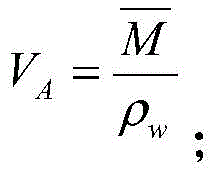
式中,Coil—油流主体温度TO下的蜡分子浓度;Cwall—实际壁面温度Twall下的蜡分子浓度;μ—油流在温度为T0时的粘度值,Pa·s;
步骤E、在热量传递的计算中,测试段的能量传递是一个稳态过程,不考虑测试段散失到空气中的热量,油流所散失的热量和冷却液吸收的热量相等,不考虑油流流动过程中的摩擦生热,由热平衡关系可得出测试段的总传热系数的计算公式为:Step E. In the calculation of heat transfer, the energy transfer of the test section is a steady-state process. The heat lost to the air in the test section is not considered. The heat lost by the oil flow is equal to the heat absorbed by the coolant, regardless of the oil flow. Frictional heat is generated in the flow process. From the heat balance relationship, the calculation formula of the total heat transfer coefficient of the test section can be obtained as follows:

式中,U—测试段总传热系数,W/(m2·℃);αin—油流到壁面的放热系数,W/(m2·℃);αout—内管外壁到冷却液的放热系数,W/(m2·℃);λp—管材的导热系数,W/(m·℃),钢管的导热系数在46-50W/(m·℃)之间;din—内管的内管径,m;dout—内管的外管径,m;In the formula, U—the total heat transfer coefficient of the test section, W/(m 2 ·°C); α in —the heat release coefficient of the oil flowing to the wall, W/(m 2 ·°C); α out —the outer wall of the inner tube to the cooling Heat release coefficient of liquid, W/(m 2 ·℃); λ p —thermal conductivity of pipe, W/(m·℃), thermal conductivity of steel pipe is between 46-50W/(m·℃); d in - the inner diameter of the inner tube, m; d out - the outer diameter of the inner tube, m;
油流-壁面处的温度梯度可按照测试管段的热平衡关系求得,The temperature gradient between the oil flow and the wall can be obtained according to the heat balance relationship of the test pipe section,

式中,
壁面处的温度可以由测试段的总传热系数计算得到:The temperature at the wall can be calculated from the overall heat transfer coefficient of the test section:

式中,Twall—壁面处的实际温度,℃。In the formula, T wall - the actual temperature at the wall, °C.
优选地,所述输油管线的相关参数包括管径、导热系数;所述油品的相关参数包括密度、分子量、溶解度、粘度。Preferably, the relevant parameters of the oil pipeline include pipe diameter and thermal conductivity; the relevant parameters of the oil product include density, molecular weight, solubility, and viscosity.
本发明提供的基于质量流变化的输油管道轴向蜡沉积分布规律判断方法利用经典的分子扩散理论,基于现场SCADA系统采集的温度数据,通过计算蜡分子扩散质量流,提出了如何判断温度对沉积层规律影响的方法及步骤,实现管道沿线蜡沉积分布的时时在线快速评估,提高了清管方案制定的效率,缩短了输油管线清管周期计算的时间,提高了输油管线运行的安全性。The method for judging the distribution law of axial wax deposition in oil pipelines based on mass flow changes provided by the present invention utilizes the classical molecular diffusion theory, based on the temperature data collected by the on-site SCADA system, and by calculating the mass flow of wax molecular diffusion, proposes how to judge the effect of temperature on deposition The method and steps of the influence of layer regularity can realize the instant online rapid assessment of wax deposition distribution along the pipeline, improve the efficiency of pigging plan formulation, shorten the calculation time of the pigging cycle of the oil pipeline, and improve the safety of the oil pipeline operation.
附图说明Description of drawings
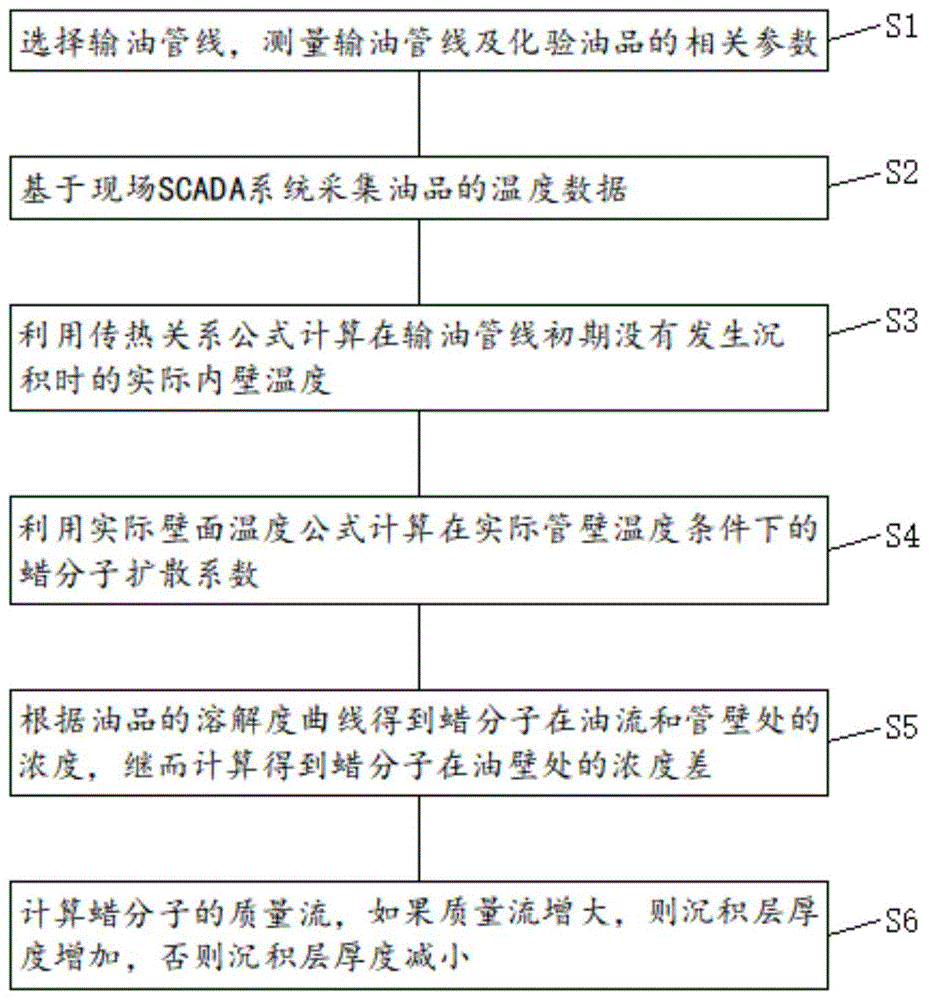
图1为本发明实施例1的基于质量流变化的输油管道轴向蜡沉积分布规律判断方法的流程图;1 is a flowchart of a method for judging the distribution law of axial wax deposition in an oil pipeline based on mass flow variation according to Embodiment 1 of the present invention;
图2为含蜡原油蜡浓度-温度曲线;Fig. 2 is the wax concentration-temperature curve of waxy crude oil;
图3为含蜡原油粘温曲线。Figure 3 shows the viscosity-temperature curve of waxy crude oil.
具体实施方式Detailed ways
为了使本领域技术人员更好的理解本发明的技术方案并能予以实施,下面结合附图和具体实施例对本发明进行详细说明。以下实施例仅用于更加清楚地说明本发明的技术方案,而不能以此来限制本发明的保护范围。In order to enable those skilled in the art to better understand the technical solutions of the present invention and implement them, the present invention will be described in detail below with reference to the accompanying drawings and specific embodiments. The following examples are only used to illustrate the technical solutions of the present invention more clearly, and cannot be used to limit the protection scope of the present invention.
实施例1Example 1
本发明提供了一种基于质量流变化的输油管道轴向蜡沉积分布规律判断方法,具体如图1所示,包括以下步骤:The present invention provides a method for judging the distribution law of axial wax deposition in oil pipelines based on mass flow changes, as shown in FIG. 1 , including the following steps:
步骤1、选择输油管线,测量输油管线及化验油品的相关参数;Step 1. Select the oil pipeline, measure the relevant parameters of the oil pipeline and test oil;
本实施例中,输油管线的相关参数包括管径、导热系数;油品的相关参数包括密度、分子量、溶解度、粘度;In this embodiment, the relevant parameters of the oil pipeline include pipe diameter and thermal conductivity; the relevant parameters of the oil product include density, molecular weight, solubility, and viscosity;
步骤2、结合实际工况条件,基于现场SCADA系统采集油品的温度数据;Step 2. Combine the actual working conditions and collect the temperature data of the oil based on the on-site SCADA system;
步骤3、将采集的温度数据带入传热关系公式(1),计算在输油管线初期没有发生沉积时的实际壁面温度Twall;Step 3, bring the collected temperature data into the heat transfer relation formula (1), calculate the actual wall surface temperature T wall when deposition does not occur in the early stage of the oil pipeline;

式中,U—测试段总传热系数,W/(m2·℃);αin—油流到壁面的放热系数,W/(m2·℃);To—油流的温度,℃;Tc—冷却液的温度,℃;In the formula, U—the total heat transfer coefficient of the test section, W/(m 2 ·℃); α in —the heat release coefficient of the oil flowing to the wall, W/(m 2 ·℃); T o —the temperature of the oil flow, °C; T c - temperature of cooling liquid, °C;
步骤4、结合相关参数,根据实际壁面温度公式(2)计算在实际壁面温度Twall条件下的蜡分子扩散系数Dwo,wall;Step 4, in conjunction with relevant parameters, calculate the wax molecule diffusion coefficient D wo,wall under the actual wall temperature T wall condition according to the actual wall temperature formula (2);

式中,

步骤5、根据油品的溶解度曲线得到蜡分子在油流和管壁处的浓度Coil、Cwall,继而计算得到蜡分子在油壁处的浓度差Coil-Cwall;
步骤6、根据公式Jwax=Dwo,wall(Coil-Cwall)计算蜡分子的质量流Jwax;Step 6, calculate the mass flow J wax of wax molecules according to formula J wax = D wo, wall (C oil -C wall );
如果质量流增大,则沉积层厚度增加,否则沉积层厚度减小。If the mass flow increases, the thickness of the deposited layer increases, otherwise the thickness of the deposited layer decreases.
上述计算结果中,质量流Jwax的最大值对应沉积层厚度的最大值。在实际管输中,已知油品的首站出站温度,通过现场数据采集系统SCADA得到沿程温度分布,然后按照上述计算过程得到输油管线未发生沉积时沿线的蜡分子质量流,继而从中寻找出最大质量流对应的温度点或温度区,相对应的沿程位置即为管输过程中沉积层最厚的位置点,即可依据此点的沉积量制定相应清管方案。In the above calculation results, the maximum value of the mass flow J wax corresponds to the maximum value of the thickness of the deposited layer. In the actual pipeline transportation, the temperature of the first station of the oil product is known, and the temperature distribution along the route is obtained through the on-site data acquisition system SCADA, and then the mass flow of wax molecules along the oil pipeline without sedimentation is obtained according to the above calculation process, and then from the Find out the temperature point or temperature zone corresponding to the maximum mass flow, and the corresponding position along the route is the position of the thickest sedimentary layer in the pipeline transportation process, and the corresponding pigging plan can be formulated according to the sedimentation amount at this point.
进一步地,本实施例中,步骤3中输油管线的实际壁面温度的获取包括以下步骤:Further, in this embodiment, the acquisition of the actual wall temperature of the oil pipeline in step 3 includes the following steps:
步骤A、按照经典的分子扩散方程式(3),蜡沉积的形成主要取决于分子扩散系数——蜡分子扩散效率、温度浓度梯度(蜡在原油中溶解度曲线的斜率)——蜡分子的沉积能力、温度梯度——蜡分子的扩散动力三个因素;Step A. According to the classical molecular diffusion equation (3), the formation of wax deposition mainly depends on the molecular diffusion coefficient - the diffusion efficiency of wax molecules, the temperature concentration gradient (the slope of the solubility curve of wax in crude oil) - the deposition ability of wax molecules , temperature gradient - three factors of the diffusion kinetics of wax molecules;

式中:

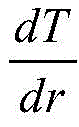
步骤B、对公式(3)进行化简,获得蜡分子的质量流Jwax,Step B, formula (3) is simplified to obtain the mass flow J wax of wax molecules,

式中,Tinterface指界面处的温度,interface指界面处;In the formula, T interface refers to the temperature at the interface, and interface refers to the interface;
步骤C、蜡沉积层厚度的增长由蜡分子在壁面处的对流扩散质量流Jwax决定,且在计算未形成沉积层前的质量流时,将式(4)变形简化为式(5)来计算未发生沉积时的质量流,Step C, the growth of the thickness of the wax deposition layer is determined by the convective diffusion mass flow J wax of the wax molecules at the wall surface, and when calculating the mass flow before the deposition layer is formed, the deformation of formula (4) is simplified to formula (5) to obtain Calculate the mass flow when no deposition occurs,
Jwax=Dm,wall(Coil-Cwall) (5)J wax =D m,wall (C oil -C wall ) (5)
式中,Dm,wall为实际壁面温度Twall下的蜡分子扩散系数;where D m,wall is the diffusion coefficient of wax molecules at the actual wall temperature T wall ;
步骤D、通过Hayduk-Minhas关系式计算,如式(6)所示,Step D. Calculate by Hayduk-Minhas relational formula, as shown in formula (6),

式中,Coil—油流主体温度TO下的蜡分子浓度,根据含蜡原油的DSC数据进行计算得到蜡分子在原油中的溶解度曲线,如图2所示;Cwall—实际壁面温度Twall下的蜡分子浓度;μ—油流在温度为T0时的粘度值,Pa·s,含蜡原油的粘度曲线如图2所示,含蜡原油粘温曲线如图3所示;
步骤E、在热量传递的计算中,测试段的能量传递是一个稳态过程,不考虑测试段散失到空气中的热量,油流所散失的热量和冷却液吸收的热量相等,不考虑油流流动过程中的摩擦生热,由热平衡关系可得出测试段的总传热系数的计算公式为:Step E. In the calculation of heat transfer, the energy transfer of the test section is a steady-state process. The heat lost to the air in the test section is not considered. The heat lost by the oil flow is equal to the heat absorbed by the coolant, regardless of the oil flow. Frictional heat is generated in the flow process. From the heat balance relationship, the calculation formula of the total heat transfer coefficient of the test section can be obtained as follows:

式中,U—测试段总传热系数,W/(m2·℃);αin—油流到壁面的放热系数,W/(m2·℃);αout—内管外壁到冷却液的放热系数,W/(m2·℃);λp—管材的导热系数,W/(m·℃),钢管的导热系数在46-50W/(m·℃)之间;din—内管的内管径,m;dout—内管的外管径,m;In the formula, U—the total heat transfer coefficient of the test section, W/(m 2 ·°C); α in —the heat release coefficient of the oil flowing to the wall, W/(m 2 ·°C); α out —the outer wall of the inner tube to the cooling Heat release coefficient of liquid, W/(m 2 ·℃); λ p —thermal conductivity of pipe, W/(m·℃), thermal conductivity of steel pipe is between 46-50W/(m·℃); d in - the inner diameter of the inner tube, m; d out - the outer diameter of the inner tube, m;
油流-壁面处的温度梯度可按照测试管段的热平衡关系求得,The temperature gradient between the oil flow and the wall can be obtained according to the heat balance relationship of the test pipe section,

式中,
壁面处的温度可以由测试段的总传热系数计算得到:The temperature at the wall can be calculated from the overall heat transfer coefficient of the test section:

式中,Twall—壁面处的实际温度,℃;where T wall is the actual temperature at the wall, °C;
通过计算、比较质量流Jwax随温度的变化情况就可以得出蜡沉积层厚度随温度的变化规律。By calculating and comparing the variation of mass flow J wax with temperature, the variation law of wax deposition layer thickness with temperature can be obtained.
本实施例提供的基于质量流变化的输油管道轴向蜡沉积分布规律判断方法利用经典的分子扩散理论,基于现场SCADA系统采集的温度数据,通过计算蜡分子扩散质量流,提出了如何判断温度对沉积层规律影响的方法及步骤,实现管道沿线蜡沉积分布的时时在线快速评估,提高了清管方案制定的效率,缩短了输油管线清管周期计算的时间,提高了输油管线运行的安全性。The method for judging the distribution law of axial wax deposition in oil pipelines based on mass flow changes provided in this embodiment uses the classical molecular diffusion theory, based on the temperature data collected by the on-site SCADA system, and calculates the mass flow of wax molecular diffusion. The method and steps of the influence of sedimentary layer regularity can realize the real-time online rapid assessment of wax deposition distribution along the pipeline, improve the efficiency of pigging plan formulation, shorten the calculation time of the pigging cycle of the oil pipeline, and improve the safety of the oil pipeline operation.
以上所述实施例仅为本发明较佳的具体实施方式,本发明的保护范围不限于此,任何熟悉本领域的技术人员在本发明披露的技术范围内,可显而易见地得到的技术方案的简单变化或等效替换,均属于本发明的保护范围。The above-mentioned embodiments are only preferred specific embodiments of the present invention, and the protection scope of the present invention is not limited thereto. Any person skilled in the art can obviously obtain the simplicity of the technical solution within the technical scope disclosed in the present invention. Changes or equivalent replacements all belong to the protection scope of the present invention.
Claims (3)




Priority Applications (1)
| Application Number | Priority Date | Filing Date | Title |
|---|---|---|---|
| CN202010904407.2A CN112000916A (en) | 2020-09-01 | 2020-09-01 | Oil pipeline axial wax deposition distribution rule judgment method based on mass flow change |
Applications Claiming Priority (1)
| Application Number | Priority Date | Filing Date | Title |
|---|---|---|---|
| CN202010904407.2A CN112000916A (en) | 2020-09-01 | 2020-09-01 | Oil pipeline axial wax deposition distribution rule judgment method based on mass flow change |
Publications (1)
| Publication Number | Publication Date |
|---|---|
| CN112000916A true CN112000916A (en) | 2020-11-27 |
Family
ID=73464982
Family Applications (1)
| Application Number | Title | Priority Date | Filing Date |
|---|---|---|---|
| CN202010904407.2A Pending CN112000916A (en) | 2020-09-01 | 2020-09-01 | Oil pipeline axial wax deposition distribution rule judgment method based on mass flow change |
Country Status (1)
| Country | Link |
|---|---|
| CN (1) | CN112000916A (en) |
Cited By (1)
| Publication number | Priority date | Publication date | Assignee | Title |
|---|---|---|---|---|
| CN116165102A (en) * | 2023-02-24 | 2023-05-26 | 常州大学 | Method for determining effective diffusion coefficient of wax molecules and computer equipment |
Citations (6)
| Publication number | Priority date | Publication date | Assignee | Title |
|---|---|---|---|---|
| RU2099632C1 (en) * | 1996-04-29 | 1997-12-20 | Акционерное научно-проектное внедренческое общество "НГС-оргпроектэкономика" | Method of determination of thickness of mud-and-paraffin deposits in oil line |
| CA2218029A1 (en) * | 1997-10-10 | 1999-04-10 | John Nenniger | Method and apparatus for measuring deposits in pipelines |
| CN206431116U (en) * | 2017-02-19 | 2017-08-22 | 东北石油大学 | It is a kind of to evaluate the experimental rig that the defeated shearing effect of pipe influences on wax deposit |
| CN110208500A (en) * | 2019-07-01 | 2019-09-06 | 中国石油化工股份有限公司 | A kind of crude oil pipeline wax deposit pigging analogue experiment method |
| DE102018205458A1 (en) * | 2018-04-11 | 2019-10-17 | Ford Global Technologies, Llc | Inlet assembly for low pressure exhaust gas recirculation |
| CN210534149U (en) * | 2019-07-01 | 2020-05-15 | 中国石油化工股份有限公司 | Crude oil pipeline wax deposit pigging simulation experiment device |
-
2020
- 2020-09-01 CN CN202010904407.2A patent/CN112000916A/en active Pending
Patent Citations (6)
| Publication number | Priority date | Publication date | Assignee | Title |
|---|---|---|---|---|
| RU2099632C1 (en) * | 1996-04-29 | 1997-12-20 | Акционерное научно-проектное внедренческое общество "НГС-оргпроектэкономика" | Method of determination of thickness of mud-and-paraffin deposits in oil line |
| CA2218029A1 (en) * | 1997-10-10 | 1999-04-10 | John Nenniger | Method and apparatus for measuring deposits in pipelines |
| CN206431116U (en) * | 2017-02-19 | 2017-08-22 | 东北石油大学 | It is a kind of to evaluate the experimental rig that the defeated shearing effect of pipe influences on wax deposit |
| DE102018205458A1 (en) * | 2018-04-11 | 2019-10-17 | Ford Global Technologies, Llc | Inlet assembly for low pressure exhaust gas recirculation |
| CN110208500A (en) * | 2019-07-01 | 2019-09-06 | 中国石油化工股份有限公司 | A kind of crude oil pipeline wax deposit pigging analogue experiment method |
| CN210534149U (en) * | 2019-07-01 | 2020-05-15 | 中国石油化工股份有限公司 | Crude oil pipeline wax deposit pigging simulation experiment device |
Non-Patent Citations (2)
| Title |
|---|
| 全青: "油气水三相蜡沉积实验研究", 《中国优秀博士学位论文全文数据库(电子期刊) 工程科技I辑》, vol. 2018, no. 02, pages 15 - 31 * |
| 郭凯;张华;: "原油管道内壁蜡沉积模拟软件开发及沉积特性", 兰州理工大学学报, no. 02 * |
Cited By (1)
| Publication number | Priority date | Publication date | Assignee | Title |
|---|---|---|---|---|
| CN116165102A (en) * | 2023-02-24 | 2023-05-26 | 常州大学 | Method for determining effective diffusion coefficient of wax molecules and computer equipment |
Similar Documents
| Publication | Publication Date | Title |
|---|---|---|
| CN111706785B (en) | Natural gas dendritic pipe network leakage pipe section identification method | |
| Bin et al. | Turbulent convective heat transfer with molten salt in a circular pipe | |
| Tong et al. | Experimental study of steam–air condensation over a vertically longitudinal finned tube | |
| Xu et al. | Performance evaluation of ground source heat pump using linear and nonlinear regressions and artificial neural networks | |
| Liu et al. | Dynamic heat transfer analysis of liquefied natural gas ambient air vaporizer under frost conditions | |
| Tong et al. | An experimental investigation of pure steam and steam–air mixtures condensation outside a vertical pin-fin tube | |
| Cui et al. | A new model for predicting performance of fin-and-tube heat exchanger under frost condition | |
| CN108302026A (en) | A kind of high-temperature long-shaft pump for liquid salts performance detection testing bench | |
| Liu et al. | Thermal dynamic and failure research on an air-fuel heat exchanger for aero-engine cooling | |
| CN106547945A (en) | A kind of energy efficiency test method for being applied to trilogy supply region energy supplying system | |
| Su et al. | Study on the multi-factors interaction of annular pulsating heat pipe based on response surface method and temperature curve analysis | |
| Shi et al. | Engineering acid dew temperature: the limitation for flue gas heat recovery | |
| Wang et al. | Optimization of the flow resistance characteristics of the direct return flat plate solar collector field | |
| Zhao et al. | Effect of flow rate on condensation of CO2-water vapor mixture on a vertical flat plate | |
| CN110375924B (en) | Power plant valve leakage quantitative evaluation system | |
| Kwon et al. | Air-side heat transfer characteristics of ambient air vaporizers with various geometric parameters under cryogenic frosting conditions | |
| CN112000916A (en) | Oil pipeline axial wax deposition distribution rule judgment method based on mass flow change | |
| Mohsin ALsayah et al. | Examining the impact of filling ratio on thermosyphon performance in passive energy recovery processes with dual effects of evaporative cooling: an experimental study | |
| CN117744264A (en) | Supercritical heat exchanger design method based on quasi-phase change partition | |
| Tao et al. | Heat transfer evaluation of saturated pool boiling outside slender tube bundle in passive residual heat removal system of molten salt reactor | |
| CN107133468B (en) | Online soft measurement method for air intake of cooling fan section of indirect air cooling tower | |
| Zhao et al. | Effect of specific heat capacity on the thermal characteristics of waxy crude oil pipeline during its shutdown | |
| CN104199804B (en) | Flow failure mode determination method of buried hot oil pipeline in high water content soil | |
| CN103225882A (en) | Early warning, controlling system and method for flue gas waste heat recovery device based on heat transfer oil | |
| CN110017919B (en) | Low-temperature infusion pipeline heat leakage testing system and measuring method |
Legal Events
| Date | Code | Title | Description |
|---|---|---|---|
| PB01 | Publication | ||
| PB01 | Publication | ||
| SE01 | Entry into force of request for substantive examination | ||
| SE01 | Entry into force of request for substantive examination | ||
| RJ01 | Rejection of invention patent application after publication | ||
| RJ01 | Rejection of invention patent application after publication |
Application publication date: 20201127 |