CN111934939A - Network node fault detection method, device and system - Google Patents
Network node fault detection method, device and system Download PDFInfo
- Publication number
- CN111934939A CN111934939A CN202010979356.XA CN202010979356A CN111934939A CN 111934939 A CN111934939 A CN 111934939A CN 202010979356 A CN202010979356 A CN 202010979356A CN 111934939 A CN111934939 A CN 111934939A
- Authority
- CN
- China
- Prior art keywords
- network node
- switch
- control packet
- session connection
- session
- Prior art date
- Legal status (The legal status is an assumption and is not a legal conclusion. Google has not performed a legal analysis and makes no representation as to the accuracy of the status listed.)
- Granted
Links
- 238000001514 detection method Methods 0.000 title claims abstract description 95
- 238000000034 method Methods 0.000 claims abstract description 44
- 238000012544 monitoring process Methods 0.000 claims description 30
- 238000010586 diagram Methods 0.000 description 11
- 230000008569 process Effects 0.000 description 10
- 230000005540 biological transmission Effects 0.000 description 7
- 230000006870 function Effects 0.000 description 5
- 230000003993 interaction Effects 0.000 description 5
- 230000007246 mechanism Effects 0.000 description 3
- 230000002159 abnormal effect Effects 0.000 description 2
- 230000002457 bidirectional effect Effects 0.000 description 2
- 230000002085 persistent effect Effects 0.000 description 2
- 238000011160 research Methods 0.000 description 2
- 238000004364 calculation method Methods 0.000 description 1
- 230000008859 change Effects 0.000 description 1
- 230000007547 defect Effects 0.000 description 1
- 230000001934 delay Effects 0.000 description 1
- 238000013461 design Methods 0.000 description 1
- 238000011161 development Methods 0.000 description 1
- 238000012986 modification Methods 0.000 description 1
- 230000004048 modification Effects 0.000 description 1
- 230000006855 networking Effects 0.000 description 1
- 238000012545 processing Methods 0.000 description 1
- 238000003672 processing method Methods 0.000 description 1
- 230000000750 progressive effect Effects 0.000 description 1
- 238000013519 translation Methods 0.000 description 1
Images



Classifications
-
- H—ELECTRICITY
- H04—ELECTRIC COMMUNICATION TECHNIQUE
- H04L—TRANSMISSION OF DIGITAL INFORMATION, e.g. TELEGRAPHIC COMMUNICATION
- H04L41/00—Arrangements for maintenance, administration or management of data switching networks, e.g. of packet switching networks
- H04L41/06—Management of faults, events, alarms or notifications
- H04L41/0631—Management of faults, events, alarms or notifications using root cause analysis; using analysis of correlation between notifications, alarms or events based on decision criteria, e.g. hierarchy, tree or time analysis
-
- H—ELECTRICITY
- H04—ELECTRIC COMMUNICATION TECHNIQUE
- H04L—TRANSMISSION OF DIGITAL INFORMATION, e.g. TELEGRAPHIC COMMUNICATION
- H04L67/00—Network arrangements or protocols for supporting network services or applications
- H04L67/14—Session management
- H04L67/141—Setup of application sessions
Landscapes
- Engineering & Computer Science (AREA)
- Computer Networks & Wireless Communication (AREA)
- Signal Processing (AREA)
- Data Exchanges In Wide-Area Networks (AREA)
Abstract
本申请公开了一种网络节点故障检测方法、装置及系统,其中,应用于网络节点的方法包括:在所述网络节点与交换机之间的会话连接建立完成的情况下,所述网络节点利用所述会话连接向所述交换机发送第一控制报文,所述第一控制报文至少用于所述交换机监测所述网络节点是否出现故障;所述网络节点监测在预设的第一时长内是否接收到所述交换机通过所述会话连接发送的第二控制报文;所述网络节点在所述第一时长内没有接收到所述交换机通过所述会话连接发送的第二控制报文的情况下,所述网络节点向所述交换机输出第一检测结果,所述第一检测结果表征所述网络节点出现故障。

The present application discloses a network node fault detection method, device and system, wherein the method applied to the network node includes: when the session connection between the network node and the switch is established, the network node uses the The session connection sends a first control message to the switch, and the first control message is at least used by the switch to monitor whether the network node is faulty; the network node monitors whether the network node is faulty within a preset first time period. receiving the second control packet sent by the switch through the session connection; in the case that the network node does not receive the second control packet sent by the switch through the session connection within the first time period , the network node outputs a first detection result to the switch, where the first detection result indicates that the network node is faulty.
Description
技术领域technical field
本申请涉及计算机网络技术领域,尤其涉及一种网络节点故障检测方法、装置及系统。The present application relates to the technical field of computer networks, and in particular, to a method, device and system for detecting network node faults.
背景技术Background technique
通常DPDK(Intel Data Plane Development Kit)服务是作为集群统一整体向外提供服务。其中,DPDK集群由一组运行DPDK服务的网络结点组成。具体的,三层交换机与DPDK集群基于等价多路径路由ECMP(Equal-Cost Multipath Routing)和开放式最短路径优先OSPF(Open Shortest Path First)方式进行部署,基于此,在三层交换机上通过ECMP进行负载均衡,并将流量均衡导入到DPDK集群中的网络节点,并且,在三层交换机上通过OSPF协议可以动态感知DPDK集群中出现故障的网络节点,当网络节点上出现服务故障时,从路由表中摘掉该节点并将流量导到其他节点上,从而保证流量不被中断。Usually, the DPDK (Intel Data Plane Development Kit) service provides services as a unified cluster as a whole. Among them, the DPDK cluster consists of a group of network nodes running DPDK services. Specifically, Layer 3 switches and DPDK clusters are deployed based on Equal-Cost Multipath Routing (Equal-Cost Multipath Routing) and Open Shortest Path First (OSPF). Based on this, ECMP is used on Layer 3 switches. Load balancing is performed, and traffic balance is imported to the network nodes in the DPDK cluster, and the OSPF protocol on the Layer 3 switch can dynamically sense the faulty network nodes in the DPDK cluster. The node is removed from the table and the traffic is directed to other nodes, thus ensuring that the traffic is not interrupted.
但是根据OSPF的Hello协议检测机制,三层交换机上通过OSPF会周期性地发送和接收报文,来发现和检测邻居是否存在。如果连续四个Hello时间周期内,没有收到邻居的Hello报文,则宣布和邻居直连的链路失效。Hello缺省时间为10秒,默认需要4 * 10秒(即40秒)时间才能检测出来。如果还有另外加上更新和传递时间,以及防止网络震荡设置的算法延迟时间,那么检测故障的耗时会更长。But according to OSPF's Hello protocol detection mechanism, Layer 3 switches periodically send and receive packets through OSPF to discover and detect whether neighbors exist. If no Hello packet is received from the neighbor within four consecutive Hello time periods, the link directly connected to the neighbor is declared invalid. The default time for Hello is 10 seconds, and it takes 4 * 10 seconds (ie 40 seconds) to detect by default. If there are additional update and delivery times, and algorithmic delays set to prevent network flapping, it will take longer to detect failures.
因此,亟需一种能够快速检测网络节点故障的技术方案。Therefore, there is an urgent need for a technical solution capable of quickly detecting network node failures.
发明内容SUMMARY OF THE INVENTION
有鉴于此,本申请提供一种网络节点故障检测方法、装置及系统,包括:In view of this, the present application provides a network node fault detection method, device and system, including:
一种网络节点故障检测方法,其特征在于,应用于网络节点,所述方法包括:A network node fault detection method, characterized in that, applied to a network node, the method comprising:
在所述网络节点与交换机之间的会话连接建立完成的情况下,所述网络节点利用所述会话连接向所述交换机发送第一控制报文,所述第一控制报文至少用于所述交换机监测所述网络节点是否出现故障;When the establishment of the session connection between the network node and the switch is completed, the network node sends a first control packet to the switch by using the session connection, where the first control packet is at least used for the The switch monitors whether the network node fails;
所述网络节点监测在预设的第一时长内是否接收到所述交换机通过所述会话连接发送的第二控制报文;monitoring, by the network node, whether a second control packet sent by the switch through the session connection is received within a preset first time period;
所述网络节点在所述第一时长内没有接收到所述交换机通过所述会话连接发送的第二控制报文的情况下,所述网络节点向所述交换机输出第一检测结果,所述第一检测结果表征所述网络节点出现故障。If the network node does not receive the second control packet sent by the switch through the session connection within the first time period, the network node outputs the first detection result to the switch, and the first detection result is sent to the switch by the network node. A detection result indicates that the network node is faulty.
上述方法,优选的,在所述网络节点利用所述会话连接向所述交换机发送第一控制报文之前,所述方法还包括:In the above method, preferably, before the network node sends the first control packet to the switch by using the session connection, the method further includes:
所述网络节点建立与所述交换机之间的所述会话连接;the network node establishes the session connection with the switch;
其中,所述网络节点建立与所述交换机之间的所述会话连接,包括:Wherein, establishing the session connection between the network node and the switch includes:
所述网络节点向所述交换机发送第三控制报文,所述第三控制报文至少包含所述网络节点处于默认会话状态的信息;sending, by the network node, a third control message to the switch, where the third control message at least includes information that the network node is in a default session state;
所述网络节点在接收到所述交换机发送的第四控制报文的情况下,所述网络节点向所述交换机发送第五控制报文,所述第四控制报文至少包含所述交换机处于所述默认会话状态的信息,所述第五控制报文至少包含所述网络节点处于初始化会话状态的信息;In the case that the network node receives the fourth control packet sent by the switch, the network node sends a fifth control packet to the switch, where the fourth control packet at least contains the information where the switch is located. the information of the default session state, and the fifth control message at least includes the information that the network node is in the initialized session state;
所述网络节点在接收到所述交换机发送的第六控制报文的情况下,所述网络节点向所述交换机发送第七控制报文,以建立所述网络节点与所述交换机之间的会话连接,所述第七控制报文至少包含所述网络节点处于正常会话状态的信息;所述第六控制报文中至少包含所述交换机处于所述初始化会话状态的信息。When the network node receives the sixth control packet sent by the switch, the network node sends a seventh control packet to the switch, so as to establish a session between the network node and the switch The seventh control packet contains at least the information that the network node is in the normal session state; the sixth control packet at least contains the information that the switch is in the initialized session state.
上述方法,优选的,所述网络节点在预设时长内没有接收到所述交换机通过所述会话连接发送的第二控制报文的情况下,所述方法还包括:In the above method, preferably, when the network node does not receive the second control packet sent by the switch through the session connection within a preset time period, the method further includes:
所述网络节点重新建立与所述交换机之间的所述会话连接。The network node re-establishes the session connection with the switch.
一种网络节点故障检测方法,应用于交换机,所述方法包括:A network node fault detection method, applied to a switch, includes:
在所述交换机与网络节点之间的会话连接建立完成的情况下,所述交换机利用所述会话连接向所述网络节点发送第二控制报文,所述第二控制报文至少用于所述网络节点监测是否出现故障;When the establishment of the session connection between the switch and the network node is completed, the switch sends a second control packet to the network node by using the session connection, where the second control packet is at least used for the Network node monitoring for faults;
所述交换机监测在预设的第二时长内是否接收到所述网络节点通过所述会话连接发送的第一控制报文;monitoring, by the switch, whether the first control message sent by the network node through the session connection is received within a preset second time period;
所述交换机在所述第二时长内没有接收到所述网络节点通过所述会话连接发送的第一控制报文的情况下,所述交换机生成第二检测结果,所述第二检测结果表征所述网络节点出现故障。In the case that the switch does not receive the first control packet sent by the network node through the session connection within the second time period, the switch generates a second detection result, and the second detection result represents the The network node is faulty.
上述方法,优选的,在生成第二检测结果之后,所述方法还包括:The above method, preferably, after generating the second detection result, the method further comprises:
所述交换机删除与出现故障的网络节点相对应的路由信息。The switch deletes the routing information corresponding to the failed network node.
上述方法,优选的,在所述交换机利用所述会话连接向所述网络节点发送第二控制报文之前,所述方法还包括:In the above method, preferably, before the switch sends the second control packet to the network node by using the session connection, the method further includes:
所述交换机建立与所述网络节点之间的所述会话连接;the switch establishes the session connection with the network node;
其中,所述交换机建立与所述网络节点之间的所述会话连接,包括:Wherein, establishing the session connection between the switch and the network node includes:
所述交换机在接收到所述网络节点发送的第三控制报文的情况下,所述交换机向所述网络节点发送第四控制报文,所述第三控制报文至少包含所述网络节点处于默认会话状态的信息,所述第四控制报文至少包含所述交换机处于所述默认会话状态的信息;When the switch receives the third control packet sent by the network node, the switch sends a fourth control packet to the network node, where the third control packet at least includes the network node in information about the default session state, the fourth control packet contains at least the information that the switch is in the default session state;
所述交换机在接收到所述网络节点发送的第五控制报文的情况下,所述交换机向所述网络节点发送第六控制报文,所述第五控制报文至少包含所述网络节点处于初始化会话状态的信息,所述第六控制报文至少包含所述交换机处于所述初始化会话状态的信息;In the case that the switch receives the fifth control packet sent by the network node, the switch sends a sixth control packet to the network node, and the fifth control packet at least contains the information that the network node is in. information about the initialized session state, the sixth control packet contains at least the information that the switch is in the initialized session state;
所述交换机在接收到所述网络节点发送的第七控制报文的情况下,所述交换机设置处于正常会话状态,以建立所述交换机与所述网络节点之间的会话连接;所述第七控制报文至少包含所述网络节点处于所述正常会话状态的信息。When the switch receives the seventh control message sent by the network node, the switch is set in a normal session state to establish a session connection between the switch and the network node; the seventh The control message contains at least information that the network node is in the normal session state.
上述方法,优选的,所述交换机在所述第二时长内没有接收到所述网络节点通过所述会话连接发送的第一控制报文的情况下,所述方法还包括:In the above method, preferably, when the switch does not receive the first control packet sent by the network node through the session connection within the second time period, the method further includes:
所述交换机重新建立与所述网络节点之间的所述会话连接。The switch re-establishes the session connection with the network node.
一种网络节点故障检测装置,应用于网络节点,所述装置包括:A network node fault detection device, applied to a network node, the device includes:
第一发送单元,用于在所述网络节点与交换机之间的会话连接建立完成的情况下,利用所述会话连接向所述交换机发送第一控制报文,所述第一控制报文至少用于所述交换机监测所述网络节点是否出现故障;A first sending unit, configured to send a first control packet to the switch by using the session connection when the establishment of the session connection between the network node and the switch is completed, and the first control packet uses at least a Monitoring at the switch whether the network node is faulty;
第一监测单元,用于监测在预设的第一时长内是否接收到所述交换机通过所述会话连接发送的第二控制报文;a first monitoring unit, configured to monitor whether a second control message sent by the switch through the session connection is received within a preset first time period;
结果输出单元,用于在所述第一监测单元在所述第一时长内没有接收到所述交换机通过所述会话连接发送的第二控制报文的情况下,向所述交换机输出第一检测结果,所述第一检测结果表征所述网络节点出现故障。A result output unit, configured to output the first detection to the switch when the first monitoring unit does not receive the second control packet sent by the switch through the session connection within the first time period As a result, the first detection result indicates that the network node is faulty.
一种网络节点故障检测装置,应用于交换机,所述装置包括:A network node failure detection device, applied to a switch, the device comprising:
第二发送单元,用于在所述交换机与网络节点之间的会话连接建立完成的情况下,利用所述会话连接向所述网络节点发送第二控制报文,所述第二控制报文至少用于所述网络节点监测是否出现故障;a second sending unit, configured to send a second control packet to the network node by using the session connection when the establishment of the session connection between the switch and the network node is completed, the second control packet at least for the network node to monitor whether a fault occurs;
第二监测单元,用于监测在预设的第二时长内是否接收到所述网络节点通过所述会话连接发送的第一控制报文;a second monitoring unit, configured to monitor whether the first control message sent by the network node through the session connection is received within a preset second time period;
结果生成单元,用于在所述第二监测单元在所述第二时长内没有接收到所述网络节点通过所述会话连接发送的第一控制报文的情况下,生成第二检测结果,所述第二检测结果表征所述网络节点出现故障。A result generating unit, configured to generate a second detection result when the second monitoring unit does not receive the first control packet sent by the network node through the session connection within the second time period, where The second detection result indicates that the network node is faulty.
一种网络节点故障检测系统,包括:A network node fault detection system, comprising:
交换机和至少一个网络节点,在所述网络节点与交换机之间的会话连接建立完成的情况下,所述网络节点用于利用所述会话连接向所述交换机发送第一控制报文,所述交换机用于利用所述会话连接向所述网络节点发送第二控制报文,所述第一控制报文至少用于所述交换机监测所述网络节点是否出现故障,所述第二控制报文至少用于所述网络节点监测是否出现故障;A switch and at least one network node, when the establishment of a session connection between the network node and the switch is completed, the network node is configured to use the session connection to send a first control message to the switch, and the switch is used to send a second control message to the network node by using the session connection, the first control message is at least used by the switch to monitor whether the network node is faulty, and the second control message is at least used for monitoring whether a fault occurs at the network node;
其中,所述网络节点还用于:监测在预设的第一时长内是否接收到所述交换机通过所述会话连接发送的第二控制报文;在所述第一时长内没有接收到所述交换机通过所述会话连接发送的第二控制报文的情况下,向所述交换机输出第一检测结果,所述第一检测结果表征所述网络节点出现故障;Wherein, the network node is further configured to: monitor whether the second control message sent by the switch through the session connection is received within a preset first time period; In the case of a second control packet sent by the switch through the session connection, output a first detection result to the switch, where the first detection result indicates that the network node is faulty;
所述交换机还用于:监测在预设的第二时长内是否接收到所述网络节点通过所述会话连接发送的第一控制报文;在所述第二时长内没有接收到所述网络节点通过所述会话连接发送的第一控制报文的情况下,生成第二检测结果,所述第二检测结果表征所述网络节点出现故障。The switch is further configured to: monitor whether the first control message sent by the network node through the session connection is received within a preset second time period; and the network node is not received within the second time period In the case of the first control packet sent through the session connection, a second detection result is generated, where the second detection result indicates that the network node is faulty.
从上述技术方案可以看出,本申请公开的一种网络节点故障检测方法、装置及系统中,在网络节点和交换机之间的会话连接建立之后,通过在网络节点和交换机两侧分别向对方发送控制报文,进而在任一方监测到在预设的时长内没有接收到对方发送的控制报文时就可以确定网络节点出现故障。由此,本申请中通过网络节点和交换机之间的会话连接互相发送控制报文来节省报文的反复传输耗时,从而在发现控制报文接收超时的情况下能够及时检测到网络节点的故障,从而实现快速的网络节点故障检测。It can be seen from the above technical solutions that in the method, device and system for detecting a network node failure disclosed in the present application, after the session connection between the network node and the switch is established, the network node and the switch respectively send messages to each other on both sides of the network node and the switch. control packets, and further, when either party detects that it does not receive the control packets sent by the other party within a preset period of time, it can be determined that the network node is faulty. Therefore, in the present application, the network node and the switch send control packets to each other through the session connection to save the time-consuming of repeated transmission of the packets, so that the failure of the network node can be detected in time when it is found that the control packet is received overtime. , so as to realize fast network node failure detection.
附图说明Description of drawings
为了更清楚地说明本申请实施例的技术方案,下面将对实施例描述中所需要使用的附图作简单地介绍,显而易见地,下面描述中的附图仅仅是本申请的一些实施例,对于本领域普通技术人员来讲,在不付出创造性劳动的前提下,还可以根据这些附图获得其他的附图。In order to illustrate the technical solutions of the embodiments of the present application more clearly, the following briefly introduces the drawings that are used in the description of the embodiments. Obviously, the drawings in the following description are only some embodiments of the present application. For those of ordinary skill in the art, other drawings can also be obtained from these drawings without any creative effort.
图1为DPDK集群与三层交换机的示意图;Figure 1 is a schematic diagram of a DPDK cluster and a Layer 3 switch;
图2为本申请实施例一提供的一种网络节点故障检测方法中网络节点和交换机之间的交互示意图;2 is a schematic diagram of interaction between a network node and a switch in a network node fault detection method provided in Embodiment 1 of the present application;
图3为本申请实施例二提供的一种适用于网络节点的网络节点故障检测装置的结构示意图;3 is a schematic structural diagram of a network node fault detection device suitable for a network node according to Embodiment 2 of the present application;
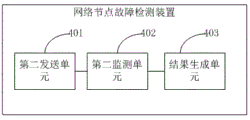
图4为本申请实施例三提供的一种适用于交换机的网络节点故障检测装置的结构示意图;4 is a schematic structural diagram of a network node fault detection device suitable for a switch according to Embodiment 3 of the present application;
图5为本申请实施例四提供的一种网络节点故障检测系统的架构图。FIG. 5 is an architectural diagram of a network node fault detection system according to Embodiment 4 of the present application.
具体实施方式Detailed ways
在计算机网络中,DPDK服务专注于网络应用中数据包的高性能处理。具体体现在DPDK应用程序是运行在用户空间上利用自身提供的数据平面库来收发数据。与传统的数据包处理方式相比,DPDK服务具有多种优势。因此,DPDK服务通常用来被实现Linux虚拟服务器LVS(LinuxVirtualServer)、源网络地址转换SNAT(Source Network AddressTranslation)等服务,部署通常与三层交换机L3_Switch互联。三层交换机和DPDK集群采用OSPF和ECMP协议进行部署。如图1中所示,通过ECMP实现三层交换机到多个DPDK节点间的负载均衡,如DPDK1和DPDK2,通过OSPF协议感知DPDK节点的服务状态,当服务故障时,从路由表中摘掉该结点并将流量导到其他节点,从而保证流量不被中断。In computer networking, DPDK services focus on high-performance processing of data packets in network applications. Specifically, the DPDK application program runs on the user space and uses the data plane library provided by itself to send and receive data. DPDK services have several advantages over traditional packet processing methods. Therefore, DPDK services are usually used to implement services such as Linux Virtual Server LVS (Linux Virtual Server), Source Network Address Translation (SNAT), etc. The deployment is usually interconnected with the Layer 3 switch L3_Switch. Layer 3 switches and DPDK clusters are deployed using OSPF and ECMP protocols. As shown in Figure 1, the load balancing between Layer 3 switches and multiple DPDK nodes is realized through ECMP, such as DPDK1 and DPDK2, the service status of DPDK nodes is sensed through OSPF protocol, and the service status of DPDK nodes is removed from the routing table when the service fails node and direct traffic to other nodes, thus ensuring that traffic is not interrupted.
本申请的发明人经过研究发现:目前基于DPDK服务的就是通过原始的OSPF协议来进行检测网络问题的。但是根据OSPF Hello协议检测机制,OSPF会周期性地发送和接收报文,来发现和检测邻居是否存在。如果连续四个Hello时间周期内,没有收到邻居的Hello报文,则宣布和邻居直连的链路失效。Hello缺省时间为10秒,默认需要4 * 10秒(即40秒)时间才能检测出来。如果还有另外加上LSA UPDATE传递时间,加上防止网络震荡设置的SPF算法延迟时间,收敛时间会更大。即便将Hello时间周期设置为最小的1秒,通过计算,收敛时间也接近10秒,这个时间无法满足对可靠性要求高的网络环境。The inventors of the present application have found through research that the current DPDK-based service detects network problems through the original OSPF protocol. However, according to the OSPF Hello protocol detection mechanism, OSPF periodically sends and receives packets to discover and detect whether neighbors exist. If no Hello packet is received from the neighbor within four consecutive Hello time periods, the link directly connected to the neighbor is declared invalid. The default time for Hello is 10 seconds, and it takes 4 * 10 seconds (ie 40 seconds) to detect by default. If the LSA UPDATE delivery time and the SPF algorithm delay time set to prevent network flapping are added, the convergence time will be even greater. Even if the Hello time period is set to a minimum of 1 second, according to calculation, the convergence time is close to 10 seconds, which cannot meet the network environment with high reliability requirements.
鉴于以上缺陷,本申请的发明人经过进一步研究,提出一种能够加速网络节点故障检测的技术方案,当DPDK服务节点出现故障之后,能加速故障检测,进而加速故障联动,使三层交换机上的OSPF协议尽快感知,尽快改变路由条目,将流量切换到其余服务正常节点,将服务出问题的时间降到最低。In view of the above defects, the inventor of the present application, after further research, proposes a technical solution that can speed up the fault detection of network nodes. When the DPDK service node fails, the fault detection can be accelerated, and the fault linkage can be accelerated. The OSPF protocol senses as soon as possible, changes routing entries as soon as possible, and switches traffic to other nodes with normal services to minimize the time of service problems.
下面将结合本申请实施例中的附图,对本申请实施例中的技术方案进行清楚、完整地描述,显然,所描述的实施例仅仅是本申请一部分实施例,而不是全部的实施例。基于本申请中的实施例,本领域普通技术人员在没有做出创造性劳动前提下所获得的所有其他实施例,都属于本申请保护的范围。The technical solutions in the embodiments of the present application will be clearly and completely described below with reference to the drawings in the embodiments of the present application. Obviously, the described embodiments are only a part of the embodiments of the present application, but not all of the embodiments. Based on the embodiments in the present application, all other embodiments obtained by those of ordinary skill in the art without creative efforts shall fall within the protection scope of the present application.
参考图2所示,为本申请实施例一提供的一种网络节点故障检测方法中网络节点和交换机之间的交互示意图,该方法适用于具有网络节点和交换机的计算机网络中,如链接有三层交换机的DPDK集群,DPDK集群中包含有一个或多个实现DPDK服务的节点,可以简称为DPDK节点。本申请中的技术方案主要用于快速检测网络节点的故障,从而改善DPDK服务质量。Referring to FIG. 2, a schematic diagram of the interaction between a network node and a switch in a network node fault detection method provided in Embodiment 1 of the present application is applicable to a computer network with network nodes and switches. The DPDK cluster of the switch. The DPDK cluster contains one or more nodes that implement DPDK services, which can be referred to as DPDK nodes for short. The technical solutions in the present application are mainly used to quickly detect the failure of network nodes, thereby improving the DPDK service quality.
具体的,本实施例中的方法可以包括以下流程:Specifically, the method in this embodiment may include the following processes:
步骤201:网络节点利用会话连接向交换机发送第一控制报文。Step 201: The network node sends a first control message to the switch by using the session connection.
其中,第一控制报文至少用于交换机监测网络节点是否出现故障。Wherein, the first control message is at least used by the switch to monitor whether the network node is faulty.
需要说明的是,步骤201是在网络节点与交换机之间的会话连接建立完成的情况下被执行。It should be noted that step 201 is executed when the establishment of the session connection between the network node and the switch is completed.
具体的,在会话连接建立完成的情况下,网络节点生成第一控制报文并利用会话连接向交换机发送第一控制报文。例如,网络节点可以按照预设的报文发送间隔利用会话连接向交换机发送第一控制报文。Specifically, when the session connection is established, the network node generates a first control packet and sends the first control packet to the switch by using the session connection. For example, the network node may send the first control message to the switch by using the session connection according to a preset message sending interval.
其中,第一控制报文中可以包含有网络节点当前所处的会话连接状态,如默认会话状态、初始化会话状态或正常会话状态等,其中,默认会话状态是指会话连接的默认初始状态,可以记为DOWN状态,初始化会话状态是指会话连接在默认初始状态进行初始化后的状态,可以记为INIT状态,而正常会话状态是指会话连接的能够进行报文传输的状态,可以记为UP状态。另外,第一控制报文中还可以包含有用于检测报文是否超时的时长配置信息,如第二时长的配置信息。The first control packet may include the current session connection state of the network node, such as a default session state, an initialized session state, or a normal session state, where the default session state refers to the default initial state of the session connection, which may be Recorded as the DOWN state, the initialized session state refers to the state of the session connection after initialization in the default initial state, which can be recorded as the INIT state, while the normal session state refers to the state of the session connection that can transmit packets, which can be recorded as the UP state. . In addition, the first control packet may further include duration configuration information for detecting whether the packet times out, such as configuration information of the second duration.
步骤202:交换机利用会话连接向网络节点发送第二控制报文。Step 202: The switch sends a second control message to the network node by using the session connection.
其中,第二控制报文至少用于网络节点监测是否出现故障。Wherein, the second control message is at least used for the network node to monitor whether a fault occurs.
需要说明的是,步骤202是在网络节点与交换机之间的会话连接建立完成的情况下被执行。It should be noted that, step 202 is executed when the establishment of the session connection between the network node and the switch is completed.
具体的,在会话连接建立完成的情况下,交换机生成第二控制报文并利用会话连接向网络节点发送第二控制报文。例如,交换机可以按照预设的报文发送间隔利用会话连接向网络节点发送第二控制报文。Specifically, when the session connection is established, the switch generates a second control packet and sends the second control packet to the network node by using the session connection. For example, the switch may send the second control message to the network node by using the session connection according to the preset message sending interval.
其中,第二控制报文中可以包含有交换机当前所处的会话连接状态,如默认会话状态、初始化会话状态或正常会话状态等,第二控制报文中还可以包含有用于检测报文是否超时的时长配置信息,如第一时长的配置信息。The second control packet may include the current session connection status of the switch, such as the default session status, initialized session status, or normal session status, etc., and the second control packet may also include information for detecting whether the packet times out The configuration information of the duration, such as the configuration information of the first duration.
需要说明的是,步骤201和步骤202的执行顺序不受序号的大小限制,也可以先执行步骤202,再执行步骤201,或者同时执行,也就是说,网络节点发送第一控制报文和交换机发送第二控制报文,两者之间互不影响。It should be noted that the execution order of step 201 and step 202 is not limited by the size of the sequence number, and step 202 may be performed first, then step 201, or performed simultaneously, that is, the network node sends the first control packet and the switch The second control message is sent, and the two do not affect each other.
步骤203:网络节点监测在第一时长内是否接收到交换机通过会话连接发送的第二控制报文。Step 203: The network node monitors whether the second control packet sent by the switch through the session connection is received within the first time period.
其中,第一时长可以为预先设置的数值。具体的,网络节点在上一次接收到交换机发送的第二控制报文之后就开始计时,例如可以重置检测时间定时器,由此,在定时器所记录的时长到达第一时长而网络节点仍然没有接收到交换机发送的新的第二控制报文的情况下,即在第一时长内网络节点没有接收到交换机通过会话连接发送的第二控制报文,那么就可以执行后续步骤204,而如果定时器所记录的时长到达第一时长之前网络节点就接收到交换机发送的第二控制报文,那么就可以重新开始计时,以继续监测接收交换机发送的第二控制报文是否超时。The first duration may be a preset value. Specifically, the network node starts timing after receiving the second control packet sent by the switch last time. For example, the detection time timer can be reset. Therefore, when the duration recorded by the timer reaches the first duration, the network node is still If the new second control packet sent by the switch is not received, that is, the network node has not received the second control packet sent by the switch through the session connection within the first time period, the subsequent step 204 may be executed, and if Before the duration recorded by the timer reaches the first duration, the network node receives the second control packet sent by the switch, and can restart the timing to continue monitoring whether the second control packet sent by the receiving switch times out.
需要说明的是,网络节点在监测到第一时长内没有接收到交换机通过会话连接发送的第二控制报文的情况下,可以设置网络节点处于默认会话状态,在默认会话状态下,网络节点与交换机之间的会话连接处于非正常状态,以表征网络节点无法与交换机之间进行报文传输,因此,在步骤203中在监测到第一时长内没有接收到交换机通过会话连接发送的第二控制报文时,可以执行步骤205。It should be noted that when the network node detects that it does not receive the second control packet sent by the switch through the session connection within the first time period, the network node can be set to be in the default session state. The session connection between the switches is in an abnormal state, which indicates that the network node cannot perform packet transmission with the switch. Therefore, in step 203, the second control message sent by the switch through the session connection is not received within the monitored first time period. When the message is received, step 205 may be executed.
步骤204:网络节点向交换机输出第一检测结果。Step 204: The network node outputs the first detection result to the switch.
其中,第一检测结果表征网络节点出现故障。The first detection result indicates that the network node is faulty.
步骤205:网络节点重新建立与交换机之间的所述会话连接。Step 205: The network node re-establishes the session connection with the switch.
步骤206:交换机在接收到网络节点输出的第一检测结果之后,删除与出现故障的网络节点相对应的路由信息。Step 206: After receiving the first detection result output by the network node, the switch deletes the routing information corresponding to the faulty network node.
步骤207:交换机监测在预设的第二时长内是否接收到网络节点通过会话连接发送的第一控制报文;Step 207: the switch monitors whether the first control message sent by the network node through the session connection is received within the preset second time period;
其中,第二时长可以为预先设置的数值,第二时长可以与第一时长相同,也可以不同。具体的,交换机在上一次接收到网络节点发送的第一控制报文之后就开始计时,例如可以重置检测时间定时器,由此,在定时器所记录的时长到达第二时长而交换机仍然没有接收到网络节点发送的新的第一控制报文的情况下,即在第二时长内交换机没有接收到网络节点通过会话连接发送的第一控制报文,那么就可以执行后续步骤208,而如果定时器所记录的时长到达第二时长之前交换机就接收到网络节点发送的第一控制报文,那么就可以重新开始计时,以继续监测接收网络节点发送的第一控制报文是否超时。The second duration may be a preset value, and the second duration may be the same as or different from the first duration. Specifically, the switch starts timing after receiving the first control packet sent by the network node last time. For example, the detection time timer can be reset. Therefore, when the duration recorded by the timer reaches the second duration, the switch still does not In the case of receiving the new first control packet sent by the network node, that is, the switch does not receive the first control packet sent by the network node through the session connection within the second time period, then the subsequent step 208 may be executed, and if Before the duration recorded by the timer reaches the second duration, the switch receives the first control packet sent by the network node, and then restarts timing to continue monitoring whether the first control packet sent by the receiving network node times out.
需要说明的是,交换机在监测到第二时长内没有接收到网络节点通过会话连接发送的第一控制报文的情况下,可以设置交换机处于默认会话状态,在默认会话状态下,网络节点与交换机之间的会话连接处于非正常状态,以表征交换机无法与网络节点之间进行报文传输,因此,在步骤207中在监测到第二时长内没有接收到网络节点通过会话连接发送的第一控制报文时,可以执行步骤209。It should be noted that, when the switch detects that it does not receive the first control packet sent by the network node through the session connection within the second time period, the switch can be set to be in the default session state. In the default session state, the network node and the switch The session connection between the two is in an abnormal state, which means that the switch cannot perform packet transmission with the network node. Therefore, in step 207, the first control sent by the network node through the session connection is not received within the second period of time monitored. When the message is received, step 209 may be executed.
步骤208:交换机生成第二检测结果,执行步骤210。Step 208 : the switch generates a second detection result, and step 210 is executed.
其中,第二检测结果表征网络节点出现故障。Wherein, the second detection result indicates that the network node is faulty.
步骤209:交换机重新建立与网络节点之间的会话连接。Step 209: The switch re-establishes the session connection with the network node.
步骤210:交换机删除与出现故障的网络节点相对应的路由信息。Step 210: The switch deletes the routing information corresponding to the faulty network node.
由上述方案可知,本申请实施例一提供的一种网络节点故障检测方法中,在网络节点和交换机之间的会话连接建立之后,通过在网络节点和交换机两侧分别向对方发送控制报文,进而在任一方监测到在预设的时长内没有接收到对方发送的控制报文时就可以确定网络节点出现故障。由此,本实施例中通过网络节点和交换机之间的会话连接互相发送控制报文来节省报文的反复传输耗时,从而在发现控制报文接收超时的情况下能够及时检测到网络节点的故障,从而实现快速的网络节点故障检测。It can be seen from the above solution that, in a network node fault detection method provided in Embodiment 1 of the present application, after the session connection between the network node and the switch is established, control packets are sent to each other on both sides of the network node and the switch, respectively. Further, when either party detects that it has not received the control message sent by the other party within a preset time period, it can be determined that the network node is faulty. Therefore, in this embodiment, the network node and the switch send control packets to each other through the session connection to save the time-consuming of repeated transmission of the packets, so that the network node can be detected in time when it is found that the reception of the control packet times out. faults, so as to achieve fast network node fault detection.
具体实现中,在步骤201之前,网络节点需要先建立与交换机之前的会话连接,同样的,在步骤202之前,交换机需要建立与网络节点之间的会话连接,具体如图2中所示:In the specific implementation, before step 201, the network node needs to establish a session connection with the switch. Similarly, before step 202, the switch needs to establish a session connection with the network node, as shown in Figure 2:
步骤211:网络节点向交换机发送第三控制报文。Step 211: The network node sends a third control message to the switch.
其中,网络节点在初始状态下设置处于默认会话状态,此时,网络节点生成第三控制报文,这里的第三控制报文中可以包含网络节点处于默认会话状态的信息,还可以包含有其他信息。The network node is set to be in the default session state in the initial state, and at this time, the network node generates a third control packet, where the third control packet may include information that the network node is in the default session state, and may also include other information.
具体的,网络节点可以利用交换机的IP地址向交换机发送第三控制报文。例如,网络节点通过监听本地OSPF进程的Neighbour IP地址信息,获取到交换机的IP地址,进而发送第三控制报文。Specifically, the network node may send the third control packet to the switch by using the IP address of the switch. For example, the network node obtains the IP address of the switch by monitoring the Neighbour IP address information of the local OSPF process, and then sends the third control packet.
步骤212:交换机在接收到网络节点发送的第三控制报文的情况下,交换机向网络节点发送第四控制报文。Step 212: When the switch receives the third control packet sent by the network node, the switch sends a fourth control packet to the network node.
其中,交换机在接收到网络节点发送的包含网络节点处于默认会话状态的信息的第三控制报文之后,交换机设置处于会话连接的默认会话状态,基于此,交换机生成第四控制报文,这里的第四控制报文中可以包含交换机处于默认会话状态的信息,还可以包含其他信息。Wherein, after the switch receives the third control packet sent by the network node and contains the information that the network node is in the default session state, the switch sets the default session state of the session connection. Based on this, the switch generates a fourth control packet, where the The fourth control packet may include information that the switch is in a default session state, and may also include other information.
步骤213:网络节点在接收到交换机发送的第四控制报文的情况下,网络节点向交换机发送第五控制报文。Step 213: When the network node receives the fourth control packet sent by the switch, the network node sends the fifth control packet to the switch.
其中,网络节点在接收到交换机发送的包含交换机处于默认会话状态的信息的第四控制报文之后,网络节点设置处于会话连接的初始化状态,基于此,网络节点生成第五控制报文,这里的第五控制报文中可以包含网络节点处于初始化会话状态的信息,还可以包含有其他信息。Wherein, after the network node receives the fourth control message sent by the switch and contains the information that the switch is in the default session state, the network node is set to be in the initialization state of the session connection. Based on this, the network node generates a fifth control message, where the The fifth control message may include information that the network node is in an initialized session state, and may also include other information.
步骤214:交换机在接收到网络节点发送的第五控制报文的情况下,交换机向网络节点发送第六控制报文。Step 214: When the switch receives the fifth control packet sent by the network node, the switch sends the sixth control packet to the network node.
其中,交换机在接收到网络节点发送的包含网络节点处于初始化会话状态的信息的第五控制报文之后,交换机设置处于会话连接的初始化会话状态,基于此,交换机生成第六控制报文,这里的第六控制报文中可以包含交换机处于初始化会话状态的信息,还可以包含其他信息。Wherein, after the switch receives the fifth control packet sent by the network node and contains the information that the network node is in the initialized session state, the switch sets the switch to be in the initialized session state of the session connection. Based on this, the switch generates a sixth control packet, where the The sixth control packet may include information that the switch is in an initialized session state, and may also include other information.
步骤215:网络节点在接收到交换机发送的第六控制报文的情况下,网络节点向交换机发送第七控制报文。Step 215: When the network node receives the sixth control packet sent by the switch, the network node sends the seventh control packet to the switch.
其中,网络节点在接收到交换机发送的包含交换机处于初始化会话状态的信息的第六控制报文之后,网络节点设置处于会话连接的正常会话状态,基于此,网络节点生成第七控制报文,这里的第七控制报文中可以包含网络节点处于正常会话状态的信息,还可以包含其他信息。Wherein, after the network node receives the sixth control message sent by the switch and contains the information that the switch is in the initialized session state, the network node sets the normal session state of the session connection. Based on this, the network node generates the seventh control message, here The seventh control packet may contain information that the network node is in a normal session state, and may also contain other information.
步骤216:交换机在接收到网络节点发送的第七控制报文的情况下,交换机设置处于正常会话状态。Step 216: When the switch receives the seventh control packet sent by the network node, the switch sets the switch to be in a normal session state.
由此,网络节点和交换机之间建立完成两者之间的会话连接。Thus, a session connection between the network node and the switch is established and completed.
参考图3,为本申请实施例二提供的一种网络节点故障检测装置的结构示意图,该装置可以配置在图2所示交互图中的网络节点中,用以实现图2中网络节点所执行的功能,如链接有三层交换机的DPDK集群中的节点。本申请中的技术方案主要用于快速检测网络节点的故障,从而改善DPDK服务质量。Referring to FIG. 3, it is a schematic structural diagram of a network node fault detection device provided in Embodiment 2 of the present application. The device may be configured in the network node in the interaction diagram shown in FIG. 2, so as to realize the execution of the network node in FIG. 2 features such as linking nodes in a DPDK cluster with Layer 3 switches. The technical solutions in the present application are mainly used to quickly detect the failure of network nodes, thereby improving the DPDK service quality.
具体的,本实施例所述装置包括以下功能单元:Specifically, the device described in this embodiment includes the following functional units:
第一发送单元301,用于在所述网络节点与交换机之间的会话连接建立完成的情况下,利用所述会话连接向所述交换机发送第一控制报文,所述第一控制报文至少用于所述交换机监测所述网络节点是否出现故障;The
第一监测单元302,用于监测在预设的第一时长内是否接收到所述交换机通过所述会话连接发送的第二控制报文;a
结果输出单元303,用于在所述第一监测单元302在所述第一时长内没有接收到所述交换机通过所述会话连接发送的第二控制报文的情况下,向所述交换机输出第一检测结果,所述第一检测结果表征所述网络节点出现故障。The
由上述方案可知,本申请实施例二提供的一种网络节点故障检测装置中,在网络节点和交换机之间的会话连接建立之后,通过在网络节点和交换机两侧分别向对方发送控制报文,进而在任一方监测到在预设的时长内没有接收到对方发送的控制报文时就可以确定网络节点出现故障。由此,本实施例中通过网络节点和交换机之间的会话连接互相发送控制报文来节省报文的反复传输耗时,从而在发现控制报文接收超时的情况下能够及时检测到网络节点的故障,从而实现快速的网络节点故障检测。It can be seen from the above solution that, in the network node fault detection device provided in the second embodiment of the present application, after the session connection between the network node and the switch is established, the network node and the switch respectively send control packets to each other on both sides, Further, when either party detects that it has not received the control message sent by the other party within a preset time period, it can be determined that the network node is faulty. Therefore, in this embodiment, the network node and the switch send control packets to each other through the session connection to save the time-consuming of repeated transmission of the packets, so that the network node can be detected in time when it is found that the reception of the control packet times out. faults, so as to achieve fast network node fault detection.
需要说明的是,本实施例中的网络节点故障检测装置可以是芯片,组件或模块,网络节点故障检测装置包括处理器和存储器,第一发送单元301、第一监测单元302和结果输出单元303等均作为程序单元存储在存储器中,由处理器执行存储在存储器中的上述程序单元来实现相应的功能。It should be noted that the device for detecting network node failure in this embodiment may be a chip, a component or a module, and the device for detecting network node failure includes a processor and a memory, a
处理器中可以包含内核,由内核去存储器中调取相应的程序单元。内核可以设置一个或多个,通过调整内核参数来实现以下方案:The processor may include a kernel, and the kernel calls the corresponding program unit from the memory. The kernel can set one or more of the following schemes by adjusting the kernel parameters:
在所述网络节点与交换机之间的会话连接建立完成的情况下,所述网络节点利用所述会话连接向所述交换机发送第一控制报文,所述第一控制报文至少用于所述交换机监测所述网络节点是否出现故障;When the establishment of the session connection between the network node and the switch is completed, the network node sends a first control packet to the switch by using the session connection, where the first control packet is at least used for the The switch monitors whether the network node fails;
所述网络节点监测在预设的第一时长内是否接收到所述交换机通过所述会话连接发送的第二控制报文;monitoring, by the network node, whether a second control packet sent by the switch through the session connection is received within a preset first time period;
所述网络节点在所述第一时长内没有接收到所述交换机通过所述会话连接发送的第二控制报文的情况下,所述网络节点向所述交换机输出第一检测结果,所述第一检测结果表征所述网络节点出现故障。If the network node does not receive the second control packet sent by the switch through the session connection within the first time period, the network node outputs the first detection result to the switch, and the first detection result is sent to the switch by the network node. A detection result indicates that the network node is faulty.
存储器可能包括计算机可读介质中的非永久性存储器,随机存取存储器(RAM)和/或非易失性内存等形式,如只读存储器(ROM)或闪存(flash RAM),存储器包括至少一个存储芯片。Memory may include non-persistent memory in computer readable media, random access memory (RAM) and/or non-volatile memory, such as read only memory (ROM) or flash memory (flash RAM), the memory including at least one memory chip.
参考图4,为本申请实施例三提供的一种网络节点故障检测装置的结构示意图,该装置可以配置在图2所示交互图中的交换机中,用以实现图2中交换机所执行的功能,如三层交换机。本申请中的技术方案主要用于快速检测网络节点的故障,从而改善DPDK服务质量。Referring to FIG. 4 , it is a schematic structural diagram of a network node fault detection apparatus provided in Embodiment 3 of the present application. The apparatus may be configured in the switch in the interaction diagram shown in FIG. 2 to implement the functions performed by the switch in FIG. 2 . , such as a Layer 3 switch. The technical solutions in the present application are mainly used to quickly detect the failure of network nodes, thereby improving the DPDK service quality.
具体的,本实施例中的装置可以包括以下功能单元:Specifically, the apparatus in this embodiment may include the following functional units:
第二发送单元401,用于在所述交换机与网络节点之间的会话连接建立完成的情况下,利用所述会话连接向所述网络节点发送第二控制报文,所述第二控制报文至少用于所述网络节点监测是否出现故障;The
第二监测单元402,用于监测在预设的第二时长内是否接收到所述网络节点通过所述会话连接发送的第一控制报文;A
结果生成单元403,用于在所述第二监测单元402在所述第二时长内没有接收到所述网络节点通过所述会话连接发送的第一控制报文的情况下,生成第二检测结果,所述第二检测结果表征所述网络节点出现故障。A
由上述方案可知,本申请实施例三提供的一种网络节点故障检测装置中,在网络节点和交换机之间的会话连接建立之后,通过在网络节点和交换机两侧分别向对方发送控制报文,进而在任一方监测到在预设的时长内没有接收到对方发送的控制报文时就可以确定网络节点出现故障。由此,本实施例中通过网络节点和交换机之间的会话连接互相发送控制报文来节省报文的反复传输耗时,从而在发现控制报文接收超时的情况下能够及时检测到网络节点的故障,从而实现快速的网络节点故障检测。It can be seen from the above solution that, in the network node fault detection device provided in the third embodiment of the present application, after the session connection between the network node and the switch is established, the network node and the switch respectively send control packets to each other on both sides, Further, when either party detects that it has not received the control message sent by the other party within a preset time period, it can be determined that the network node is faulty. Therefore, in this embodiment, the network node and the switch send control packets to each other through the session connection to save the time-consuming of repeated transmission of the packets, so that the network node can be detected in time when it is found that the reception of the control packet times out. faults, so as to achieve fast network node fault detection.
需要说明的是,本实施例中的网络节点故障检测装置可以是芯片,组件或模块,网络节点故障检测装置包括处理器和存储器,第二发送单元401、第二监测单元402和结果生成单元403等均作为程序单元存储在存储器中,由处理器执行存储在存储器中的上述程序单元来实现相应的功能。It should be noted that the device for detecting network node failure in this embodiment may be a chip, a component or a module, and the device for detecting network node failure includes a processor and a memory, a
处理器中可以包含内核,由内核去存储器中调取相应的程序单元。内核可以设置一个或多个,通过调整内核参数来实现以下方案:The processor may include a kernel, and the kernel calls the corresponding program unit from the memory. The kernel can set one or more of the following schemes by adjusting the kernel parameters:
在所述交换机与网络节点之间的会话连接建立完成的情况下,所述交换机利用所述会话连接向所述网络节点发送第二控制报文,所述第二控制报文至少用于所述网络节点监测是否出现故障;When the establishment of the session connection between the switch and the network node is completed, the switch sends a second control packet to the network node by using the session connection, where the second control packet is at least used for the Network node monitoring for faults;
所述交换机监测在预设的第二时长内是否接收到所述网络节点通过所述会话连接发送的第一控制报文;monitoring, by the switch, whether the first control message sent by the network node through the session connection is received within a preset second time period;
所述交换机在所述第二时长内没有接收到所述网络节点通过所述会话连接发送的第一控制报文的情况下,所述交换机生成第二检测结果,所述第二检测结果表征所述网络节点出现故障。In the case that the switch does not receive the first control packet sent by the network node through the session connection within the second time period, the switch generates a second detection result, and the second detection result represents the The network node is faulty.
存储器可能包括计算机可读介质中的非永久性存储器,随机存取存储器(RAM)和/或非易失性内存等形式,如只读存储器(ROM)或闪存(flash RAM),存储器包括至少一个存储芯片。Memory may include non-persistent memory in computer readable media, random access memory (RAM) and/or non-volatile memory, such as read only memory (ROM) or flash memory (flash RAM), the memory including at least one memory chip.
参考图5,为本申请实施例四提供的一种网络节点故障检测系统的架构图,该系统中可以包括以下终端:Referring to FIG. 5 , which is an architecture diagram of a network node fault detection system provided in Embodiment 4 of the present application, the system may include the following terminals:
交换机501和至少一个网络节点502。A
其中,交换机501可以为三层交换机,网络节点502是指DPDK集群中的节点。The
具体的,在交换机501中配置能够实现网络节点故障检测的检测程序,并在网络节点502中配置能够实现网络节点故障检测的检测程序,基于此,交换机501与各个网络节点502之间通过各自的检测程序建立交换机501与各个网络节点502之间的会话连接,如下:Specifically, a detection program capable of realizing network node failure detection is configured in the
网络节点向交换机发送第三控制报文,这里的第三控制报文中可以包含网络节点处于默认会话状态的信息,还可以包含有其他信息;The network node sends a third control packet to the switch, where the third control packet may include information that the network node is in a default session state, and may also include other information;
交换机在接收到网络节点发送的第三控制报文的情况下,交换机设置处于会话连接的默认会话状态,交换机向网络节点发送第四控制报文,这里的第四控制报文中可以包含交换机处于默认会话状态的信息,还可以包含其他信息。When the switch receives the third control packet sent by the network node, the switch is set in the default session state of session connection, and the switch sends a fourth control packet to the network node. Information about the default session state, and may also contain other information.
网络节点在接收到交换机发送的第四控制报文的情况下,网络节点设置处于会话连接的初始化状态,网络节点向交换机发送第五控制报文,这里的第五控制报文中可以包含网络节点处于初始化会话状态的信息,还可以包含有其他信息;When the network node receives the fourth control packet sent by the switch, the network node is set to be in the initialization state of the session connection, and the network node sends a fifth control packet to the switch, where the fifth control packet may include the network node Information in the state of the initialized session, and may also contain other information;
交换机在接收到网络节点发送的第五控制报文的情况下,交换机设置处于会话连接的初始化会话状态,交换机向网络节点发送第六控制报文,这里的第六控制报文中可以包含交换机处于初始化会话状态的信息,还可以包含其他信息;When the switch receives the fifth control packet sent by the network node, the switch is set to be in the initial session state of the session connection, and the switch sends the sixth control packet to the network node. Information to initialize session state, and may also contain other information;
网络节点在接收到交换机发送的第六控制报文的情况下,网络节点设置处于会话连接的正常会话状态,网络节点向交换机发送第七控制报文,这里的第七控制报文中可以包含网络节点处于正常会话状态的信息,还可以包含其他信息;When the network node receives the sixth control packet sent by the switch, the network node is set to be in the normal session state of the session connection, and the network node sends the seventh control packet to the switch, where the seventh control packet may include the network Information that the node is in a normal session state, and can also contain other information;
交换机在接收到网络节点发送的第七控制报文的情况下,交换机设置处于正常会话状态。由此,网络节点和交换机之间建立完成两者之间的会话连接。When the switch receives the seventh control packet sent by the network node, the switch is set to be in a normal session state. Thus, a session connection between the network node and the switch is established and completed.
而在网络节点502与交换机501之间的会话连接建立完成的情况下,网络节点502用于利用会话连接向交换机501发送第一控制报文,交换机501用于利用会话连接向网络节点502发送第二控制报文,第一控制报文至少用于交换机501监测网络节点502是否出现故障,第二控制报文至少用于网络节点502监测是否出现故障;When the session connection between the
具体的,网络节点502还用于:监测在预设的第一时长内是否接收到交换机501通过会话连接发送的第二控制报文;在第一时长内没有接收到交换机501通过会话连接发送的第二控制报文的情况下,向交换机501输出第一检测结果,第一检测结果表征网络节点502出现故障;Specifically, the
交换机501还用于:监测在预设的第二时长内是否接收到网络节点502通过会话连接发送的第一控制报文;在第二时长内没有接收到网络节点502通过会话连接发送的第一控制报文的情况下,生成第二检测结果,第二检测结果表征网络节点502出现故障。The
从上述技术方案可以看出,本申请实施例四提供的一种网络节点故障检测系统中,在网络节点和交换机之间的会话连接建立之后,通过在网络节点和交换机两侧分别向对方发送控制报文,进而在任一方监测到在预设的时长内没有接收到对方发送的控制报文时就可以确定网络节点出现故障。由此,本实施例中通过网络节点和交换机之间的会话连接互相发送控制报文来节省报文的反复传输耗时,从而在发现控制报文接收超时的情况下能够及时检测到网络节点的故障,从而实现快速的网络节点故障检测。It can be seen from the above technical solutions that, in the network node fault detection system provided by the fourth embodiment of the present application, after the session connection between the network node and the switch is established, the network node and the switch respectively send control messages to each other on both sides. Then, when either party detects that it has not received the control message sent by the other party within a preset period of time, it can be determined that the network node is faulty. Therefore, in this embodiment, the network node and the switch send control packets to each other through the session connection to save the time-consuming of repeated transmission of the packets, so that the network node can be detected in time when it is found that the reception of the control packet times out. faults, so as to achieve fast network node fault detection.
以下以DPDK节点的故障检测为例,对本申请的技术方案进行说明:The following describes the technical solution of the present application by taking the fault detection of the DPDK node as an example:
首先,本申请中在DPDK节点上实现单独运行的双向检测程序,并与三层交换机上的双向检测程序进行通信,来快速检测链路状态,当链路出现故障的时候,能及时通告三层交换机上的OSPF进程,从而实现路由快速变更,网络迅速达到收敛的目标。First of all, in this application, a bidirectional detection program that runs independently is implemented on the DPDK node, and communicates with the bidirectional detection program on the three-layer switch to quickly detect the link status. When the link fails, the three-layer can be notified in time. The OSPF process on the switch realizes rapid route change and the network quickly achieves the goal of convergence.
需要说明的是,DPDK节点连接的对端是三层交换机,通常都是包含BFD协议,基于此,本申请在DPDK节点启动检测程序之前,将对端三层交换机BFD协议预先配置好,然后将检测程序在DPDK结点上作为单独进程运行。It should be noted that the peer connected to the DPDK node is a Layer 3 switch, which usually includes the BFD protocol. Based on this, this application pre-configures the BFD protocol of the peer Layer 3 switch before the DPDK node starts the detection procedure, and then The detection program runs as a separate process on the DPDK node.
以下将DPDK节点简称为本端,将三层交换机简称为对端,将DPDK节点上运行的检测程序简称为程序,对本申请的技术方案进行举例说明:Hereinafter, the DPDK node is referred to as the end, the Layer 3 switch is referred to as the peer, and the detection program running on the DPDK node is referred to as the program.
首先,程序所在节点或交换机具有三种状态,如下:First, the node or switch where the program is located has three states, as follows:
DOWN状态,即程序的初始默认状态;DOWN state, that is, the initial default state of the program;
INIT状态,即程序收到对端携带状态DOWN的报文后,程序进入INIT状态,即初始化状态;INIT state, that is, after the program receives the message carrying the state DOWN from the peer, the program enters the INIT state, that is, the initialization state;
UP状态,即程序收到对端携带状态INIT的报文后,程序进入UP状态,即为正常工作,常规发送检测报文的状态。UP state, that is, the program enters the UP state after receiving the message carrying the state INIT from the peer end, that is, the state of normal work and regular sending of detection messages.
其中,控制报文为本端检测程序与对端BFD程序之间的交互报文,携带程序状态字段、报文发送间隔信息等。The control message is an interaction message between the detection program at the end and the BFD program at the opposite end, and carries a program status field, message sending interval information, and the like.
详细的工作流程如下:The detailed workflow is as follows:
1、程序启动,监听本地OSPF进程的Neighbour IP地址信息,即三层交换机的IP地址,作为检测程序通信的目的地址;1. The program starts and monitors the Neighbour IP address information of the local OSPF process, that is, the IP address of the Layer 3 switch, as the destination address of the detection program communication;
2、程序本地会话进入默认的DOWN状态,发送控制报文,携带自身的状态。2. The local session of the program enters the default DOWN state, and sends a control message carrying its own state.
3、程序收到对端发送的状态为DOWN的控制报文后,程序本地会话状态进入INIT状态,并且将发出本地状态为INIT的控制报文。对端程序经过相应的流程。3. After the program receives the control message with the status of DOWN sent by the opposite end, the local session state of the program enters the INIT state, and will send out the control message with the local state of INIT. The peer program goes through the corresponding process.
4、程序收到对端状态为INIT的控制报文后,本地会话状态进入UP状态。对端程序经过相应的流程。4. After the program receives the control message whose peer state is INIT, the local session state enters the UP state. The peer program goes through the corresponding process.
5、双方进入UP状态,两端会话建立成功,同时通过上层OSPF进程对端状态为UP,并开始通过发送检测报文来检测链路状态。5. Both parties enter the UP state, the session between the two ends is successfully established, and the peer state is UP through the upper-layer OSPF process, and starts to detect the link state by sending detection packets.
6、双方在控制报文中填入通过配置的报文发送间隔、本端程序状态,并按配置指定的发包间隔(报文发送间隔)发送控制报文,同时每当收到对端发出的控制报文,就会重置检测时间定时器,保持会话为UP状态。6. Both parties fill in the configured message sending interval and the program status of the local end in the control message, and send the control message according to the configuration specified sending interval (message sending interval). If the control message is sent, the detection time timer will be reset and the session will be kept in the UP state.
7、如果双方检测时间超时仍未收到对端的控制报文,会话进入DOWN状态,并且通告OSPF进程链路检测失败。7. If the two parties have not received the control packet from the opposite end after the detection time expires, the session enters the DOWN state, and the OSPF process is notified that the link detection fails.
8、OSPF进程会立即联动相应删除对应的路由,实现故障的快速收敛。8. The OSPF process will immediately link and delete the corresponding routes to achieve fast convergence of faults.
9、协议状态恢复到步骤2。9. The protocol status is restored to step 2.
可见,本申请中,当DPDK服务节点出现故障之后,能够实现一种链路检测机制,并且快速通过OSPF协议进行联动,将服务受影响的时间降到最低。It can be seen that in this application, when the DPDK service node fails, a link detection mechanism can be implemented, and the linkage can be quickly carried out through the OSPF protocol to minimize the time that the service is affected.
本说明书中各个实施例采用递进的方式描述,每个实施例重点说明的都是与其他实施例的不同之处,各个实施例之间相同相似部分互相参见即可。对于实施例公开的装置而言,由于其与实施例公开的方法相对应,所以描述的比较简单,相关之处参见方法部分说明即可。The various embodiments in this specification are described in a progressive manner, and each embodiment focuses on the differences from other embodiments, and the same and similar parts between the various embodiments can be referred to each other. For the device disclosed in the embodiment, since it corresponds to the method disclosed in the embodiment, the description is relatively simple, and the relevant part can be referred to the description of the method.
专业人员还可以进一步意识到,结合本文中所公开的实施例描述的各示例的单元及算法步骤,能够以电子硬件、计算机软件或者二者的结合来实现,为了清楚地说明硬件和软件的可互换性,在上述说明中已经按照功能一般性地描述了各示例的组成及步骤。这些功能究竟以硬件还是软件方式来执行,取决于技术方案的特定应用和设计约束条件。专业技术人员可以对每个特定的应用来使用不同方法来实现所描述的功能,但是这种实现不应认为超出本申请的范围。Professionals may further realize that the units and algorithm steps of each example described in conjunction with the embodiments disclosed herein can be implemented in electronic hardware, computer software, or a combination of the two, in order to clearly illustrate the possibilities of hardware and software. Interchangeability, the above description has generally described the components and steps of each example in terms of function. Whether these functions are performed in hardware or software depends on the specific application and design constraints of the technical solution. Skilled artisans may implement the described functionality using different methods for each particular application, but such implementations should not be considered beyond the scope of this application.
结合本文中所公开的实施例描述的方法或算法的步骤可以直接用硬件、处理器执行的软件模块,或者二者的结合来实施。软件模块可以置于随机存储器(RAM)、内存、只读存储器(ROM)、电可编程ROM、电可擦除可编程ROM、寄存器、硬盘、可移动磁盘、CD-ROM、或技术领域内所公知的任意其它形式的存储介质中。The steps of a method or algorithm described in conjunction with the embodiments disclosed herein may be directly implemented in hardware, a software module executed by a processor, or a combination of the two. Software modules can be placed in random access memory (RAM), internal memory, read only memory (ROM), electrically programmable ROM, electrically erasable programmable ROM, registers, hard disk, removable disk, CD-ROM, or any other in the technical field. in any other known form of storage medium.
对所公开的实施例的上述说明,使本领域专业技术人员能够实现或使用本申请。对这些实施例的多种修改对本领域的专业技术人员来说将是显而易见的,本文中所定义的一般原理可以在不脱离本申请的精神或范围的情况下,在其它实施例中实现。因此,本申请将不会被限制于本文所示的这些实施例,而是要符合与本文所公开的原理和新颖特点相一致的最宽的范围。The above description of the disclosed embodiments enables any person skilled in the art to make or use the present application. Various modifications to these embodiments will be readily apparent to those skilled in the art, and the generic principles defined herein may be implemented in other embodiments without departing from the spirit or scope of the present application. Therefore, this application is not intended to be limited to the embodiments shown herein, but is to be accorded the widest scope consistent with the principles and novel features disclosed herein.
Claims (10)
Priority Applications (1)
| Application Number | Priority Date | Filing Date | Title |
|---|---|---|---|
| CN202010979356.XA CN111934939B (en) | 2020-09-17 | 2020-09-17 | Network node fault detection method, device and system |
Applications Claiming Priority (1)
| Application Number | Priority Date | Filing Date | Title |
|---|---|---|---|
| CN202010979356.XA CN111934939B (en) | 2020-09-17 | 2020-09-17 | Network node fault detection method, device and system |
Publications (2)
| Publication Number | Publication Date |
|---|---|
| CN111934939A true CN111934939A (en) | 2020-11-13 |
| CN111934939B CN111934939B (en) | 2021-02-02 |
Family
ID=73335296
Family Applications (1)
| Application Number | Title | Priority Date | Filing Date |
|---|---|---|---|
| CN202010979356.XA Active CN111934939B (en) | 2020-09-17 | 2020-09-17 | Network node fault detection method, device and system |
Country Status (1)
| Country | Link |
|---|---|
| CN (1) | CN111934939B (en) |
Cited By (1)
| Publication number | Priority date | Publication date | Assignee | Title |
|---|---|---|---|---|
| CN112769698A (en) * | 2021-01-06 | 2021-05-07 | 网宿科技股份有限公司 | Method and device for realizing routing |
Citations (7)
| Publication number | Priority date | Publication date | Assignee | Title |
|---|---|---|---|---|
| US20090046579A1 (en) * | 2007-08-16 | 2009-02-19 | Wenhu Lu | Lesser disruptive open shortest path first handling of bidirectional forwarding detection state changes |
| CN101459547A (en) * | 2007-12-13 | 2009-06-17 | 华为技术有限公司 | Label forwarding path failure detection method and system |
| US7561527B1 (en) * | 2003-05-02 | 2009-07-14 | David Katz | Bidirectional forwarding detection |
| CN101808022A (en) * | 2010-04-22 | 2010-08-18 | 中兴通讯股份有限公司 | Method and device for realizing bidirectional forwarding detection |
| CN105591768A (en) * | 2014-10-21 | 2016-05-18 | 中兴通讯股份有限公司 | Fault detection method and fault detection device |
| CN106487696A (en) * | 2015-08-28 | 2017-03-08 | 中兴通讯股份有限公司 | Link failure detection method and device |
| CN107612776A (en) * | 2017-09-22 | 2018-01-19 | 华为技术有限公司 | A communication connection detection method and device |
-
2020
- 2020-09-17 CN CN202010979356.XA patent/CN111934939B/en active Active
Patent Citations (7)
| Publication number | Priority date | Publication date | Assignee | Title |
|---|---|---|---|---|
| US7561527B1 (en) * | 2003-05-02 | 2009-07-14 | David Katz | Bidirectional forwarding detection |
| US20090046579A1 (en) * | 2007-08-16 | 2009-02-19 | Wenhu Lu | Lesser disruptive open shortest path first handling of bidirectional forwarding detection state changes |
| CN101459547A (en) * | 2007-12-13 | 2009-06-17 | 华为技术有限公司 | Label forwarding path failure detection method and system |
| CN101808022A (en) * | 2010-04-22 | 2010-08-18 | 中兴通讯股份有限公司 | Method and device for realizing bidirectional forwarding detection |
| CN105591768A (en) * | 2014-10-21 | 2016-05-18 | 中兴通讯股份有限公司 | Fault detection method and fault detection device |
| CN106487696A (en) * | 2015-08-28 | 2017-03-08 | 中兴通讯股份有限公司 | Link failure detection method and device |
| CN107612776A (en) * | 2017-09-22 | 2018-01-19 | 华为技术有限公司 | A communication connection detection method and device |
Cited By (1)
| Publication number | Priority date | Publication date | Assignee | Title |
|---|---|---|---|---|
| CN112769698A (en) * | 2021-01-06 | 2021-05-07 | 网宿科技股份有限公司 | Method and device for realizing routing |
Also Published As
| Publication number | Publication date |
|---|---|
| CN111934939B (en) | 2021-02-02 |
Similar Documents
| Publication | Publication Date | Title |
|---|---|---|
| CN110912780B (en) | High-availability cluster detection method, system and controlled terminal | |
| US8488444B2 (en) | Fast remote failure notification | |
| US7561527B1 (en) | Bidirectional forwarding detection | |
| US8543718B2 (en) | Technique for efficiently and dynamically maintaining bidirectional forwarding detection on a bundle of links | |
| EP2093944B1 (en) | A method, a system and a router for implementing communication between the ip devices | |
| TWI461030B (en) | Resource Retention Agreement under the condition of fast rerouting | |
| US11349735B2 (en) | Faster fault-detection mechanism, for example using bidirectional forwarding detection (BFD), on network nodes and/or hosts multihomed using a link aggregation group (LAG) | |
| CN101170459B (en) | Method of Fault Detection and Link Restoration Based on Bidirectional Forwarding Link | |
| CN104205748B (en) | Has redundancy between the frame of coordinated traffic direction | |
| CN102480753B (en) | Link state detection method and device | |
| US20090252173A1 (en) | Method For Improving Efficiency Of Redundancy Protocols | |
| CN102780635B (en) | The method of pretection switch, TOR switch and system is realized based on TRILL network | |
| WO2012000234A1 (en) | Method, apparatus and system for fast switching between links | |
| CN104168193A (en) | Virtual router redundancy protocol fault detection method and router equipment | |
| EP3813306B1 (en) | Message processing method and communications system | |
| CN101425942A (en) | Method, apparatus and system for bidirectional forwarding detection implementation | |
| CN112187633A (en) | Link fault convergence method and device, electronic equipment and storage medium | |
| CN101296126B (en) | Link fault announcing method, interface management unit and router | |
| CN104702498A (en) | Method and device for reducing the number of optical connections through coordination protection | |
| CN111934939A (en) | Network node fault detection method, device and system | |
| CN113452543B (en) | Detection of multi-host misconfiguration | |
| WO2022083763A1 (en) | Method and apparatus for establishing border gateway protocol (bgp) neighbors, device and system | |
| CN102891798A (en) | Heartbeat message transmission method and heartbeat message transmission device | |
| JP2024503289A (en) | METHODS AND APPARATUS FOR DETECTING BGP SESSION STATE AND NETWORK DEVICE | |
| CN115022334A (en) | Flow distribution method, device, electronic device and storage medium |
Legal Events
| Date | Code | Title | Description |
|---|---|---|---|
| PB01 | Publication | ||
| PB01 | Publication | ||
| SE01 | Entry into force of request for substantive examination | ||
| SE01 | Entry into force of request for substantive examination | ||
| GR01 | Patent grant | ||
| GR01 | Patent grant |