CN111727044A - Heterobicyclic Carboxylic Acids for the Treatment of Cancer or Inflammatory Diseases - Google Patents
Heterobicyclic Carboxylic Acids for the Treatment of Cancer or Inflammatory Diseases Download PDFInfo
- Publication number
- CN111727044A CN111727044A CN201980011401.8A CN201980011401A CN111727044A CN 111727044 A CN111727044 A CN 111727044A CN 201980011401 A CN201980011401 A CN 201980011401A CN 111727044 A CN111727044 A CN 111727044A
- Authority
- CN
- China
- Prior art keywords
- cancer
- compound
- formula
- amino
- carbonyl
- Prior art date
- Legal status (The legal status is an assumption and is not a legal conclusion. Google has not performed a legal analysis and makes no representation as to the accuracy of the status listed.)
- Pending
Links
Images


Classifications
-
- C—CHEMISTRY; METALLURGY
- C07—ORGANIC CHEMISTRY
- C07D—HETEROCYCLIC COMPOUNDS
- C07D495/00—Heterocyclic compounds containing in the condensed system at least one hetero ring having sulfur atoms as the only ring hetero atoms
- C07D495/02—Heterocyclic compounds containing in the condensed system at least one hetero ring having sulfur atoms as the only ring hetero atoms in which the condensed system contains two hetero rings
- C07D495/04—Ortho-condensed systems
-
- A—HUMAN NECESSITIES
- A61—MEDICAL OR VETERINARY SCIENCE; HYGIENE
- A61K—PREPARATIONS FOR MEDICAL, DENTAL OR TOILETRY PURPOSES
- A61K31/00—Medicinal preparations containing organic active ingredients
- A61K31/33—Heterocyclic compounds
- A61K31/395—Heterocyclic compounds having nitrogen as a ring hetero atom, e.g. guanethidine or rifamycins
- A61K31/40—Heterocyclic compounds having nitrogen as a ring hetero atom, e.g. guanethidine or rifamycins having five-membered rings with one nitrogen as the only ring hetero atom, e.g. sulpiride, succinimide, tolmetin, buflomedil
- A61K31/407—Heterocyclic compounds having nitrogen as a ring hetero atom, e.g. guanethidine or rifamycins having five-membered rings with one nitrogen as the only ring hetero atom, e.g. sulpiride, succinimide, tolmetin, buflomedil condensed with other heterocyclic ring systems, e.g. ketorolac, physostigmine
-
- A—HUMAN NECESSITIES
- A61—MEDICAL OR VETERINARY SCIENCE; HYGIENE
- A61K—PREPARATIONS FOR MEDICAL, DENTAL OR TOILETRY PURPOSES
- A61K31/00—Medicinal preparations containing organic active ingredients
- A61K31/33—Heterocyclic compounds
- A61K31/395—Heterocyclic compounds having nitrogen as a ring hetero atom, e.g. guanethidine or rifamycins
- A61K31/40—Heterocyclic compounds having nitrogen as a ring hetero atom, e.g. guanethidine or rifamycins having five-membered rings with one nitrogen as the only ring hetero atom, e.g. sulpiride, succinimide, tolmetin, buflomedil
- A61K31/403—Heterocyclic compounds having nitrogen as a ring hetero atom, e.g. guanethidine or rifamycins having five-membered rings with one nitrogen as the only ring hetero atom, e.g. sulpiride, succinimide, tolmetin, buflomedil condensed with carbocyclic rings, e.g. carbazole
- A61K31/404—Indoles, e.g. pindolol
-
- A—HUMAN NECESSITIES
- A61—MEDICAL OR VETERINARY SCIENCE; HYGIENE
- A61K—PREPARATIONS FOR MEDICAL, DENTAL OR TOILETRY PURPOSES
- A61K31/00—Medicinal preparations containing organic active ingredients
- A61K31/33—Heterocyclic compounds
- A61K31/395—Heterocyclic compounds having nitrogen as a ring hetero atom, e.g. guanethidine or rifamycins
- A61K31/41—Heterocyclic compounds having nitrogen as a ring hetero atom, e.g. guanethidine or rifamycins having five-membered rings with two or more ring hetero atoms, at least one of which being nitrogen, e.g. tetrazole
- A61K31/42—Oxazoles
- A61K31/423—Oxazoles condensed with carbocyclic rings
-
- A—HUMAN NECESSITIES
- A61—MEDICAL OR VETERINARY SCIENCE; HYGIENE
- A61K—PREPARATIONS FOR MEDICAL, DENTAL OR TOILETRY PURPOSES
- A61K31/00—Medicinal preparations containing organic active ingredients
- A61K31/33—Heterocyclic compounds
- A61K31/395—Heterocyclic compounds having nitrogen as a ring hetero atom, e.g. guanethidine or rifamycins
- A61K31/435—Heterocyclic compounds having nitrogen as a ring hetero atom, e.g. guanethidine or rifamycins having six-membered rings with one nitrogen as the only ring hetero atom
- A61K31/4353—Heterocyclic compounds having nitrogen as a ring hetero atom, e.g. guanethidine or rifamycins having six-membered rings with one nitrogen as the only ring hetero atom ortho- or peri-condensed with heterocyclic ring systems
- A61K31/437—Heterocyclic compounds having nitrogen as a ring hetero atom, e.g. guanethidine or rifamycins having six-membered rings with one nitrogen as the only ring hetero atom ortho- or peri-condensed with heterocyclic ring systems the heterocyclic ring system containing a five-membered ring having nitrogen as a ring hetero atom, e.g. indolizine, beta-carboline
-
- A—HUMAN NECESSITIES
- A61—MEDICAL OR VETERINARY SCIENCE; HYGIENE
- A61K—PREPARATIONS FOR MEDICAL, DENTAL OR TOILETRY PURPOSES
- A61K31/00—Medicinal preparations containing organic active ingredients
- A61K31/33—Heterocyclic compounds
- A61K31/395—Heterocyclic compounds having nitrogen as a ring hetero atom, e.g. guanethidine or rifamycins
- A61K31/435—Heterocyclic compounds having nitrogen as a ring hetero atom, e.g. guanethidine or rifamycins having six-membered rings with one nitrogen as the only ring hetero atom
- A61K31/44—Non condensed pyridines; Hydrogenated derivatives thereof
- A61K31/4427—Non condensed pyridines; Hydrogenated derivatives thereof containing further heterocyclic ring systems
- A61K31/4439—Non condensed pyridines; Hydrogenated derivatives thereof containing further heterocyclic ring systems containing a five-membered ring with nitrogen as a ring hetero atom, e.g. omeprazole
-
- A—HUMAN NECESSITIES
- A61—MEDICAL OR VETERINARY SCIENCE; HYGIENE
- A61K—PREPARATIONS FOR MEDICAL, DENTAL OR TOILETRY PURPOSES
- A61K31/00—Medicinal preparations containing organic active ingredients
- A61K31/33—Heterocyclic compounds
- A61K31/395—Heterocyclic compounds having nitrogen as a ring hetero atom, e.g. guanethidine or rifamycins
- A61K31/495—Heterocyclic compounds having nitrogen as a ring hetero atom, e.g. guanethidine or rifamycins having six-membered rings with two or more nitrogen atoms as the only ring heteroatoms, e.g. piperazine or tetrazines
- A61K31/505—Pyrimidines; Hydrogenated pyrimidines, e.g. trimethoprim
- A61K31/519—Pyrimidines; Hydrogenated pyrimidines, e.g. trimethoprim ortho- or peri-condensed with heterocyclic rings
-
- A—HUMAN NECESSITIES
- A61—MEDICAL OR VETERINARY SCIENCE; HYGIENE
- A61K—PREPARATIONS FOR MEDICAL, DENTAL OR TOILETRY PURPOSES
- A61K31/00—Medicinal preparations containing organic active ingredients
- A61K31/33—Heterocyclic compounds
- A61K31/395—Heterocyclic compounds having nitrogen as a ring hetero atom, e.g. guanethidine or rifamycins
- A61K31/535—Heterocyclic compounds having nitrogen as a ring hetero atom, e.g. guanethidine or rifamycins having six-membered rings with at least one nitrogen and one oxygen as the ring hetero atoms, e.g. 1,2-oxazines
-
- A—HUMAN NECESSITIES
- A61—MEDICAL OR VETERINARY SCIENCE; HYGIENE
- A61K—PREPARATIONS FOR MEDICAL, DENTAL OR TOILETRY PURPOSES
- A61K39/00—Medicinal preparations containing antigens or antibodies
- A61K39/395—Antibodies; Immunoglobulins; Immune serum, e.g. antilymphocytic serum
- A61K39/39533—Antibodies; Immunoglobulins; Immune serum, e.g. antilymphocytic serum against materials from animals
- A61K39/3955—Antibodies; Immunoglobulins; Immune serum, e.g. antilymphocytic serum against materials from animals against proteinaceous materials, e.g. enzymes, hormones, lymphokines
-
- A—HUMAN NECESSITIES
- A61—MEDICAL OR VETERINARY SCIENCE; HYGIENE
- A61K—PREPARATIONS FOR MEDICAL, DENTAL OR TOILETRY PURPOSES
- A61K45/00—Medicinal preparations containing active ingredients not provided for in groups A61K31/00 - A61K41/00
-
- A—HUMAN NECESSITIES
- A61—MEDICAL OR VETERINARY SCIENCE; HYGIENE
- A61K—PREPARATIONS FOR MEDICAL, DENTAL OR TOILETRY PURPOSES
- A61K45/00—Medicinal preparations containing active ingredients not provided for in groups A61K31/00 - A61K41/00
- A61K45/06—Mixtures of active ingredients without chemical characterisation, e.g. antiphlogistics and cardiaca
-
- A—HUMAN NECESSITIES
- A61—MEDICAL OR VETERINARY SCIENCE; HYGIENE
- A61P—SPECIFIC THERAPEUTIC ACTIVITY OF CHEMICAL COMPOUNDS OR MEDICINAL PREPARATIONS
- A61P19/00—Drugs for skeletal disorders
- A61P19/02—Drugs for skeletal disorders for joint disorders, e.g. arthritis, arthrosis
-
- A—HUMAN NECESSITIES
- A61—MEDICAL OR VETERINARY SCIENCE; HYGIENE
- A61P—SPECIFIC THERAPEUTIC ACTIVITY OF CHEMICAL COMPOUNDS OR MEDICINAL PREPARATIONS
- A61P29/00—Non-central analgesic, antipyretic or antiinflammatory agents, e.g. antirheumatic agents; Non-steroidal antiinflammatory drugs [NSAID]
-
- A—HUMAN NECESSITIES
- A61—MEDICAL OR VETERINARY SCIENCE; HYGIENE
- A61P—SPECIFIC THERAPEUTIC ACTIVITY OF CHEMICAL COMPOUNDS OR MEDICINAL PREPARATIONS
- A61P35/00—Antineoplastic agents
-
- A—HUMAN NECESSITIES
- A61—MEDICAL OR VETERINARY SCIENCE; HYGIENE
- A61P—SPECIFIC THERAPEUTIC ACTIVITY OF CHEMICAL COMPOUNDS OR MEDICINAL PREPARATIONS
- A61P35/00—Antineoplastic agents
- A61P35/02—Antineoplastic agents specific for leukemia
-
- C—CHEMISTRY; METALLURGY
- C07—ORGANIC CHEMISTRY
- C07D—HETEROCYCLIC COMPOUNDS
- C07D471/00—Heterocyclic compounds containing nitrogen atoms as the only ring hetero atoms in the condensed system, at least one ring being a six-membered ring with one nitrogen atom, not provided for by groups C07D451/00 - C07D463/00
- C07D471/02—Heterocyclic compounds containing nitrogen atoms as the only ring hetero atoms in the condensed system, at least one ring being a six-membered ring with one nitrogen atom, not provided for by groups C07D451/00 - C07D463/00 in which the condensed system contains two hetero rings
- C07D471/04—Ortho-condensed systems
-
- C—CHEMISTRY; METALLURGY
- C07—ORGANIC CHEMISTRY
- C07D—HETEROCYCLIC COMPOUNDS
- C07D487/00—Heterocyclic compounds containing nitrogen atoms as the only ring hetero atoms in the condensed system, not provided for by groups C07D451/00 - C07D477/00
- C07D487/02—Heterocyclic compounds containing nitrogen atoms as the only ring hetero atoms in the condensed system, not provided for by groups C07D451/00 - C07D477/00 in which the condensed system contains two hetero rings
- C07D487/04—Ortho-condensed systems
-
- A—HUMAN NECESSITIES
- A61—MEDICAL OR VETERINARY SCIENCE; HYGIENE
- A61K—PREPARATIONS FOR MEDICAL, DENTAL OR TOILETRY PURPOSES
- A61K39/00—Medicinal preparations containing antigens or antibodies
- A61K2039/505—Medicinal preparations containing antigens or antibodies comprising antibodies
-
- A—HUMAN NECESSITIES
- A61—MEDICAL OR VETERINARY SCIENCE; HYGIENE
- A61K—PREPARATIONS FOR MEDICAL, DENTAL OR TOILETRY PURPOSES
- A61K39/00—Medicinal preparations containing antigens or antibodies
- A61K2039/54—Medicinal preparations containing antigens or antibodies characterised by the route of administration
- A61K2039/541—Mucosal route
- A61K2039/542—Mucosal route oral/gastrointestinal
Landscapes
- Health & Medical Sciences (AREA)
- Chemical & Material Sciences (AREA)
- Life Sciences & Earth Sciences (AREA)
- Medicinal Chemistry (AREA)
- Veterinary Medicine (AREA)
- Public Health (AREA)
- General Health & Medical Sciences (AREA)
- Animal Behavior & Ethology (AREA)
- Pharmacology & Pharmacy (AREA)
- Organic Chemistry (AREA)
- Epidemiology (AREA)
- General Chemical & Material Sciences (AREA)
- Chemical Kinetics & Catalysis (AREA)
- Nuclear Medicine, Radiotherapy & Molecular Imaging (AREA)
- Rheumatology (AREA)
- Pain & Pain Management (AREA)
- Engineering & Computer Science (AREA)
- Bioinformatics & Cheminformatics (AREA)
- Immunology (AREA)
- Orthopedic Medicine & Surgery (AREA)
- Physical Education & Sports Medicine (AREA)
- Endocrinology (AREA)
- Hematology (AREA)
- Mycology (AREA)
- Microbiology (AREA)
- Oncology (AREA)
- Pharmaceuticals Containing Other Organic And Inorganic Compounds (AREA)
- Medicines That Contain Protein Lipid Enzymes And Other Medicines (AREA)
- Medicines Containing Antibodies Or Antigens For Use As Internal Diagnostic Agents (AREA)
Abstract
The present invention provides the use of an EP4 receptor antagonist compound represented by formula I (or a pharmaceutically acceptable salt thereof) as defined herein, the administration of such an EP4 antagonist alone, or the administration of such an EP4 antagonist in combination with antibody therapy, radiotherapy, anti-metabolic chemotherapy, to a subject in need thereof for the treatment of cancer or an inflammatory disease.
Description
Cross Reference to Related Applications
This application claims priority to PCT application number PCT/CN2018/075198 filed on 5.2.2018, the contents of which are incorporated herein in their entirety.
Background
Prostaglandins are mediators that trigger pain, fever and other symptoms associated with inflammation. Prostaglandin E2(PGE2), in particular, is the major eicosanoid detected under inflammatory conditions. In addition, it is involved in various physiological and/or pathological conditions such as hyperalgesia, uterine contraction, digestive peristalsis, arousal, inhibition of gastric acid secretion, blood pressure, platelet function, bone metabolism, angiogenesis, and the like. PGE2Four receptor subtypes (EP)1,EP2,EP3And EP4) Shows different pharmacological properties and has been cloned separately. EP4The subtype, a G protein-coupled receptor, stimulates cAMP production and is distributed in various tissues, suggesting that it is in PGE2Plays an important role in mediated biological activities. Patent application publications WO 96/06822, WO 96/11902, EP752421-A1, WO03/16254, WO05/021508 and WO07/121578 disclose compounds useful for treating prostaglandin-induced diseases. Three review articles describe the prostaglandin receptor and most commonly selective agonists and antagonistsCharacteristics and therapeutic utility: the methods for preparing the arachidonic acid: from biotechnology to therapeutic applications, Folco, Samuelsson, Maclouf and Velo eds, Plenum Press, New York, 1996, Chapter 14, p 137-154; journal of lipid mediators and cell signaling, 1996, volume 14, pages 83-87; prostaglandin and other lipid mediators, 2002, volume 69, page 557-573.
PGE2 is beneficial in promoting inflammatory immune responses; in any event, PGE2 has been recognized as an important component of the immunosuppressive environment produced by many solid tumors (Whiteside, Expert Opinion in Biological Therapy, 2010, 10, 1019-1035), with sustained levels in the tumor microenvironment promoting accumulation and enhanced activity of a variety of immunosuppressive cells, including tumor-associated macrophages (TAMs), Treg cells and myeloid-derived suppressor cells (MDSCs), thereby promoting tumor immune escape, there is increasing evidence that elevated cAMP levels through EP4 are the primary signals leading to immune cell immunosuppression (Yokoyama U et al, Pharmacol. rev., 2013,65:1010-1052), studies have also shown that antagonists of prostaglandin E receptor 4(EP4) can block signaling of prostaglandin E2(PGE2) through interaction of PGE2 with the subtype of prostaglandin E receptor 4, thereby effectively inducing inflammation (Chen et al, British J, 2010, 160, 292-310). In the context of APCmin mutations, knockout of EP4 in mice shows delayed tumorigenesis compared to wild-type animals, indicating tumorigenic activity of PGE2-EP4 signaling in host immune cells (Mutoh M et al, Cancer Res.,2002, 62: 28-32). Consistently, selective EP4 receptor antagonists have been shown to slow tumor progression and tumor metastasis without affecting cancer cell proliferation in vitro in various preclinical tumor models (Yang et al, cancer res.,2006, 66: 9665-.
Based on such studies, PGE2EP of receptor4Antagonists of the subtype are therefore effective in the treatment of EP4Receptor-mediated diseases or conditions, such as cancer and inflammatory diseases or conditions (e.g., acute and chronic pain, osteoarthritis, rheumatoid arthritis).
Disclosure of Invention
The compounds of the present invention are antagonists of the EP4 receptor and are therefore useful in the treatment of prostaglandin E2 mediated diseases or conditions. The EP4 antagonists described in the present invention have an antagonistic effect on prostaglandins after biotransformation in vivo and are therefore useful in therapy, in particular in the treatment of a disease or condition selected from: pain, neuropathic pain, visceral pain, inflammatory pain, nociceptive pain, chronic pain, acute pain, fever or inflammation caused by rheumatic fever, influenza or other viral infections, pain in the back and neck of the waist, bone, post-partum pain, dysmenorrhea, headache, migraine, toothache, sprains and strains, myositis, neuralgia, fibromyalgia, synovitis, arthritis, including rheumatoid arthritis, degenerative joint disease (osteoarthritis), gout and ankylosing spondylitis, bursitis, burns, including radiation and corrosive chemical injuries, sunburn, pain after surgery and dental surgery, bone fractures, immune and autoimmune diseases; cellular tumor transformation or metastatic tumor growth; diabetic retinopathy, tumor angiogenesis; prostaglandin-induced smooth muscle contraction associated with dysmenorrhea, premature labor, allergic rhinitis, atopic dermatitis, asthma or eosinophil-related disease, hyperimmunoasmia, Castleman's disease, myeloma; alzheimer's disease, sleep disorders, endocrine disorders; glaucoma, and glaucoma; bone loss; osteoporosis, promoting bone formation; paget's disease: peptic ulcer, gastritis, regional enteritis, ulcerative colitis, diverticulitis or other gastrointestinal lesions; gastrointestinal bleeding and patients undergoing chemotherapy; blood coagulation disorders selected from the group consisting of low prothrombin, hemophilia, other bleeding problems; kidney disease; thrombosis; occlusive vascular disease; before an operation; and anticoagulation; sympathetic maintenance pain; amputation, pain caused by skin conditions (e.g. eczema, psoriasis); ophthalmic diseases such as glaucoma, retinitis, retinopathy, uveitis, and acute injury to eye tissue (e.g., conjunctivitis); lung diseases (e.g. bronchitis, emphysema, allergic rhinitis, respiratory distress syndrome, pigeon-friend disease, farmer's lung, COPD); gastrointestinal respiratory diseases (e.g., aphtha, crohn's disease, atopic gastritis, gastric ulcer, colitis, celiac disease, crohn's disease, irritable bowel syndrome, inflammatory bowel disease, gastrointestinal reflective disease); organ transplantation; other diseases with an inflammatory component, such as vascular disease, migraine, polyarteritis nodosa, thyroiditis, aplastic anemia, hodgkin's disease, scleral tumor, myasthenia gravis, multiple sclerosis, paraneoplastic disease, nephrotic syndrome, becker's syndrome, polymyositis, gingivitis, myocardial ischemia, fever, systemic lupus erythematosus, tendonitis, bursitis and sjogren's syndrome; platelet dysfunction (e.g., occlusive vascular disease); promoting urination; impotence or erectile dysfunction; bone diseases characterized by abnormal bone metabolism or resorption, such as osteoporosis; hypercalcemia, hyperparathyroidism, paget's disease of the bone, osteolysis, hypercalcemia of malignancy with or without bone metastasis, rheumatoid arthritis, periodontitis, osteoarthritis, bone pain, osteopenia, cancerous cachexia, calculus, lithiasis (especially urolithiasis), solid cancer, gout and ankylosing spondylitis, tendonitis and bursitis; bone resorption, hemodynamic side effects of NSAIDs and COX-2 inhibitors, cardiovascular disease, hypertension or myocardial ischemia; functional or organic venous insufficiency; varicose vein treatment; hemorrhoids; a state of shock associated with significantly reduced arterial pressure (e.g., septic shock); neurodegenerative diseases and neurodegeneration, such as dementia, especially degenerative dementia (including senile dementia, Alzheimer's disease, pick's disease, Huntington's chorea, Parkinson's disease and Creutzfeld-Jakob disease, ALS, motor neuron disease); vascular dementia (including multi-infarct dementia); and dementia associated with intracranial space occupying lesions; trauma; infections and related conditions (including hiv infection); metabolizing; a toxin; hypoxia and vitamin deficiency; age-related mile (mile) cognitive impairment, particularly age-related memory impairment; neuroprotection, neurodegeneration following stroke, cardiac arrest, pulmonary bypass, brain trauma, spinal cord injury; tinnitus, type 1 diabetes complications (e.g., diabetic microangiopathy, diabetic nephropathy, macular degeneration, glaucoma), nephrotic syndrome, aplastic anemia, uveitis, kawasaki disease, and sarcoma; renal insufficiency (e.g., nephritis, particularly mesangial proliferative glomerulonephritis, nephrotic syndrome), hepatic insufficiency (hepatitis, cirrhosis), gastrointestinal insufficiency (diarrhea), alcoholic cirrhosis, amyloidosis, atherosclerosis, heart disease, cirrhosis, osteoporosis, post-organ transplant reactions, glucocorticoid-induced osteoporosis, tooth loss, bone fractures, multiple myeloma, various edemas, hypertension, premenstrual tension, lithangiuria, oliguria, hyperhematuria, urticaria, contact dermatitis, rhesus dermatitis, urinary frequency, learning disorders, gingivitis, periodontitis, lung injury, liver injury, constipation, and the like, in a mammalian subject, particularly a human.
The present invention relates to methods of treating inflammatory diseases, neoplasia and cancer with heterocyclic amide derivatives that act as EP4 receptor antagonists. Pharmaceutical compositions for the same treatment are also included within the scope of the invention.
The present invention includes a method of treating inflammatory diseases susceptible to nonsteroidal anti-inflammatory drugs, comprising administering to a patient in need of such treatment a non-toxic therapeutically effective amount of a compound of formula I. Included in this embodiment are the above methods wherein the patient is also at risk for a thrombotic cardiovascular event and/or a gastrointestinal ulcer/hemorrhage.
Another embodiment of the present invention encompasses methods of treating prostaglandin E2 mediated diseases, which are advantageously treated by agents that selectively antagonize EP4, rather than by agents that inhibit COX-1/COX-2, comprising administering to a patient in need of such treatment a non-toxic effective amount of a compound of formula I. Included in this embodiment is the above method, wherein the patient is also at risk for a thrombotic cardiovascular event.
For example, but not limited to, the compounds described herein may be used in cancer immunotherapy targeting host immunosuppressive cells in the tumor microenvironment, which may be the myeloid or lymphoid lineage. In one embodiment, the compounds described herein may be used to treat patients with various tumor types, including those with high levels of myeloid infiltrates. This level of myeloid invasion can be determined, for example, based on cancer genomic map (TCGA) and other sources. Such tumor types can also be identified based on protein or gene (e.g., mRNA) expression analysis.
Tumor types may include, but are not limited to, pancreatic adenocarcinoma, clear cell renal carcinoma, squamous cell carcinoma of the head and neck (SCCHN), non-small cell lung cancer (NSCLC), colorectal cancer (CRC), hepatocellular carcinoma (HCC), serous epithelial ovarian cancer, cervical cancer, transitional cell bladder cancer, skin cancer, glioblastoma, renal cancer, prostate cancer. Pancreatic cancer and Triple Negative Breast Cancer (TNBC). In a more specific aspect of the invention, there is provided a method of treating cancer and/or generating a memory immune response comprising administering a compound represented by formula (I):

wherein:
R1and R2Independently selected from hydrogen, C1-6Alkyl radical, C1-6Cycloalkyl radical, C1-6Fluorocycloalkyl group, C1-6A fluoroalkyl group; or R1,R2And the carbon atoms to which they are both attached together complete a three-to six-membered carbocyclic ring, which ring is optionally substituted by RcSubstitution; or R1And R2Together with the carbon atoms to which they are both attached, form a three-to six-membered ring containing one or two heteroatoms, e.g. S, O or NRbWherein R isbSelected from hydrogen, C1-6Alkyl radical, C1-6Cycloalkyl radical, C1-6Fluorocycloalkyl group, C1-6Fluoroalkyl, aryl, heteroaryl, C (O) C1-6Alkyl, C (O) aryl, S (O)2Alkyl, and S (O)2An aryl group;
y is O or S;
x is a bond, ═ CH-, CH2O, or S;
Ar1and Ar2Independently selected from C3-6Cycloalkyl, aryl, heteroaryl and heterocyclyl, or C3-6Fused analogues of cycloalkyl, aryl, heteroaryl and heterocyclylWherein Ar is1And Ar2Optionally substituted by 1-3RcSubstituted by groups;
Rcindependently selected from halogen or R1,
Rarepresents-CO2H,-CO2M,-C(O)NHS(O)2Raa,
RaaIs selected from C1-6Alkyl radical, C1-6Haloalkyl, C1-6Cycloalkyl radical, C1-6Cyclohaloalkyl, aryl and heteroaryl;
m is an ester prodrug group; and

In one embodiment of the present invention, the substrate is, is that
 Wherein A, B and C' are each independently selected from N, CH and C (Rc); g is-C (O), -C (S) -, or-S (O)2-; l is-CH2-, S, O or NRc.
In a further embodiment of the method according to the invention, is that
 Wherein A, B and C' are each independently N, CH or C (Rc); x, L and G are each independently a bond, -CH2-, O, S or N (Rd); rd is H, aryl, or alkyl.
In a further embodiment of the method according to the invention, is that
 Wherein R iscAs previously defined.
In a further embodiment of the method according to the invention, is that
 Wherein A, B and C' are each independently selected from N, CH and C (R)c)。
In a further embodiment of the method according to the invention, is that
 wherein-K-L-M-is selected from: -C (R)3)=C(R)–N–,–C(R4)=N–C(R)–,–C(R4)=N–N–,–N=C(R4)–N–,–N=N–N–,–C(R4)2–N=C–,–N(R4)–C(R)=C–,–N(R4) -N ═ C-, -O-N ═ C-and-S-N ═ C-, where R is3Selected from hydrogen, halogen, C1-6Alkyl radical, C1-6Fluoroalkyl radicals, C1-6Alkoxy radical, C1-6Fluoroalkoxy and acetyl; each R4Independently selected from hydrogen, C1-6Alkyl radical, C1-6Fluoroalkyl radicals, C1-6Alkoxy radical, C1-4Fluoroalkoxy and acetyl.
In a further embodiment of the method according to the invention, a 6, 5-heterobicyclic moiety selected from:

in one embodiment, the invention relates to compounds of formula I wherein R is1Is methyl and R2Is hydrogen; or wherein R is1Is methyl, R2Is methyl; or wherein R is1And R2Together with the carbon atoms to which they are both attached form a three-to six-membered carbocyclic ring.
In another embodiment, the invention relates to compounds of formula I wherein Ar is1Is phenyl, optionally substituted by one to three RcSubstituted by groups; or a compound of formula I, wherein Ar2Is phenyl, Ar2Optionally substituted by 1-3RcAnd (4) substituting the group.
The invention also includes prodrugs of formula I. The prodrug may be an ester or an amide or another suitable group. Preferred prodrugs include ester derivatives of formula Ia wherein RdRepresents an alkyl group having 1 to 10 carbon atoms or an aralkyl group having 7 to 12 carbon atoms, an aryl group or a heteroaryl group.
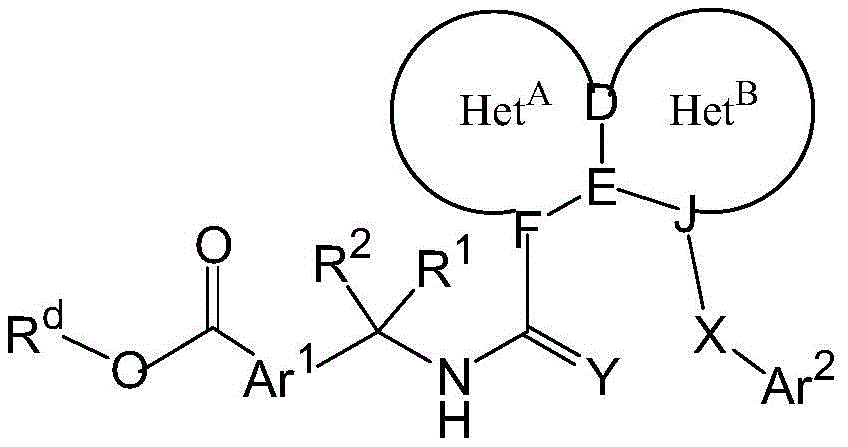

Another preferred prodrug of formula I is an ester derivative containing one or more nitric oxide releasing groups (formula Ib), wherein T is any suitable linking structure.

One embodiment of a nitric oxide releasing prodrug compound of an EP4 antagonist is a compound represented by formula Ic:

wherein
Z is O, S or NRe,ReIs hydrogen, alkyl or aryl;
v is independently selectedFrom O and S, and each V is independently connected to C1-10Any one carbon atom of an alkyl group; and
n is 1,2,3 or 4.
Another embodiment of the nitric oxide releasing prodrug compounds of EP4 antagonists are those of formula Id,

wherein
Z is O, S or NRe;ReIs hydrogen, alkyl or aryl;
v is O or S; each V is independently connected to C1-C110On one carbon atom of the alkyl group;
Rfselected from hydrogen, halogen, alkoxy, alkylthio, CN, CF3Alkyl, alkylsulfonyl, S (O)2NH2And S (O)2NH-alkyl; and
w is
Preferably, the nitric oxide releasing prodrug compounds of the EP4 antagonists are those of formula Ie, If or Ig:

wherein n is an integer from 1 to 10;

wherein n and m are integers from 1 to 10;

wherein n is an integer of 1 to 6, and RgIs H, halogen, alkyl, haloalkyl.
The compounds of the invention are useful for treating or preventing neoplasia in a subject in need of such treatment or prevention. Treatment includes partial or total inhibition of tumor formation, spread or metastasis, and partial or total destruction of tumor cells. The term "prevention" includes complete prevention of the onset of clinically significant neoplasia or prevention of the onset of clinically significant neoplasia stages in an individual at risk. This definition is also intended to include preventing the initiation of malignant cells or preventing or reversing the progression of premalignant cells to malignant cells. This includes prophylactic treatment of persons at risk of developing neoplasms. The term "subject" for therapeutic purposes includes any human or mammalian subject, and preferably a human subject, having any one of the known tumors. For the method of prevention, the subject is any human or animal subject, and preferably a human subject at risk of developing a tumor. The subject may be at risk due to exposure to carcinogens, genetic predisposition to tumors, and the like.
Antitumor activity of EP4 antagonists in combination with various combinations of: irradiating; antibodies to cytotoxic t lymphocyte antigen 4 (anti-CTLA 4); an antibody to programmed death ligand 1 (anti-PDL 1); antibodies to programmed cell death protein 1 (anti-PD 1); and an antimetabolite has been detected. The results of this examination indicate that the combination of the EP4 antagonist with other therapies has improved and/or synergistic anti-tumor activity compared to single agent treatment alone, which in certain embodiments may result in a memory immune response against tumors, even against different cancers. Accordingly, in one aspect of the present invention, there is provided a method of treating cancer in a subject in need thereof, the method comprising administering an EP4 antagonist in combination with a therapy selected from the group consisting of radiation therapy, antibody therapy and anti-metabolic chemotherapy. In a more specific aspect of the invention, the antibody therapy is selected from CTLA4 antibody therapy, PDL1 antibody therapy and PD1 antibody therapy. In some embodiments, the cancer is a metastatic cancer. In another aspect of the present invention, there is provided a method of generating a memory immune response in a subject in need thereof, the method comprising administering an amount of an EP4 antagonist in combination with a therapy selected from the group consisting of radiation therapy, antibody therapy and an anti-tumor drug. Substitute for Chinese traditional medicineThanks to chemotherapeutics. In another more specific aspect of the invention, the antibody therapy is selected from CTLA4 antibody therapy, PDL1 antibody therapy and PD1 antibody therapy. The invention also includes a method of treating cancer with an effective amount of a compound of the invention or a combination of an effective amount of a compound of the invention and an effective amount of: radioactive rays; antibodies against cytotoxic t lymphocyte antigen 4 (anti-CTLA 4); an antibody against programmed death ligand 1 (anti-PDL 1); an antibody against programmed cell death protein 1 (anti-PD 1); indoleamine-2, 3-dioxygenase (IDO) inhibitors; a tryptophan-2, 3-dioxygenase (TDO) inhibitor; and an antimetabolite. These antibodies may be selected from, but are not limited to, MDX-010(ipilimumab, Bristol-Myers Squibb), CP-675,206(tremelimumab, Pfizer), MPDL3280A (Roche), MDX-1106(nivolumab, Bristol-Myers Squibb), labrolizumab (Merck), and pembrolizumab (margarib) Merck)。
Drawings
FIG. 1 shows the inhibitory effect of Compound 1(INV-1121) on mouse tumor growth;
FIG. 2 shows the inhibition of tumor growth in mice by different treatments with or without Compound 1;
FIG. 3 shows the results of in vivo inhibition of the growth of B16F10 melanoma;
FIG. 4 shows in vivo inhibition of the growth of Lewis lung carcinoma;
FIG. 5 shows the temperature change of the paw of a mouse administered with a test compound;
figure 6 shows the reduction in paw swelling in mice administered test compound.
Detailed Description
Definition of
The abbreviations used herein have their conventional meaning in the chemical and biological arts.
An "EP 4 antagonist" refers to a compound that inhibits or blocks cell signaling triggered by the interaction of PGE2 with EP4 receptors. Examples include, but are not limited to, compounds of formula (1) as taught herein, including INV-1120 and INV-1121 as described in PCT/US2009/0537482 and WO 2010/019796.
The term "treating a prostaglandin E2 mediated disease or condition" refers to the treatment or prevention of any chronic disease or condition, which is advantageously treated or prevented by a selective EP4 antagonist. The term includes the alleviation of pain, fever and inflammation of various diseases including rheumatic fever, symptoms associated with influenza or other viral infections, the common cold, lower back pain, neck pain, dysmenorrhea, headache, migraine, toothache, sprains and strains, rheumatoid arthritis, myositis, neuralgia, synovitis, arthritis, including rheumatoid arthritis, degenerative joint disease (osteoarthritis), gout, ankylosing spondylitis, bursitis, burns, injuries, and post-operative pain and inflammation. In addition, such compounds can inhibit cellular neoplastic transformation and metastatic tumor growth, and thus are useful for treating and/or preventing cancer.
The terms "treat", "treating" or "treating" refer to reducing, inhibiting and/or reversing the progression of cancer in a subject in need thereof. The term "treatment" includes any indication of successful treatment or amelioration of cancer, including any objective or subjective parameter, such as reduction; (iii) alleviating; alleviating a symptom or making the subject more tolerant to injury, pathology, or disease; slow or slow the rate of progression, etc. The measurement of treatment or improvement may be based on, for example, the results of physical examination, pathological examination, and/or diagnostic examination as is known in the art. Treatment may also refer to a reduction in the occurrence or onset of cancer, or its recurrence (e.g., prolongation of remission time), as compared to what would occur if no measures were taken.
The term "neoplasia (neoplasma)" includes benign and cancerous tumors, hyperplasia and polyps. Thus, the compounds of the present invention are useful in the treatment or prevention of benign tumors, hyperplasia and polyps, including squamous cell papillomas, basal cell papillomas, transitional cell papillomas, adenomas, gastrinomas, cholangiocellular adenomas, hepatocellular adenomas, renal tubular adenomas, cytomas, hemangiomas, melanocytic nevi, fibroids, myxomas, lipomas, leiomyomas, rhabdomas, benign teratomas, hemangiomas, osteomas, chondromas and meningiomas. The compounds of the invention are also useful in the treatment or prevention of cancerous tumors, hyperplasia and polyps, including squamous cell carcinoma, basal cell carcinoma, transitional cell carcinoma, adenocarcinoma, malignant gastrinoma, cholangiocellular carcinoma, hepatocellular carcinoma, renal cell carcinoma, malignant melanoma, fibrosarcoma, sarcoma, liposarcoma, leiomyosarcoma, rhabdomyosarcoma, malignant teratoma, angiosarcoma, kaposi's sarcoma, lymphangiosarcoma, osteosarcoma, chondrosarcoma, malignant meningioma, non-hodgkin's lymphoma, hodgkin's lymphoma and leukemia. For the purposes of this specification, "neoplasm (neoplasma)" includes brain cancer, bone cancer, epithelial cell-derived tumors (epithelial cancers), basal cell cancers, adenocarcinoma, gastrointestinal tract cancers, such as lip cancer, oral cancer, esophageal cancer, small intestine cancer, and stomach cancer. Cancer, colon cancer, rectal cancer, liver cancer, bladder cancer, pancreatic cancer, ovarian cancer, cervical cancer, lung cancer, breast cancer and skin cancer, such as squamous cell and basal cell carcinoma, prostate cancer, renal cell carcinoma and the like, known cancers affecting the epithelium, stroma or blood cells of the whole body. The compounds of the invention are useful for treating or preventing any of the above cancers. The compounds of the invention are useful for treating or preventing benign and cancerous tumors, hyperplasia and polyps of the following cell types: squamous epithelium, basal cells, transitional epithelium, glandular epithelium, G-cells, biliary epithelium, hepatocytes, renal tubular epithelium, melanocytes, fibrous connective tissue, cardiac skeleton, adipose tissue, smooth muscle, skeletal muscle, germ cells, blood vessels, lymphatic vessels, bone, cartilage, meninges, lymphoid cells, and hematopoietic cells. The compounds are useful for treating subjects having adenomatous polyps, including subjects having Familial Adenomatous Polyposis (FAP). In addition, the compounds are useful for preventing polyp formation in patients at risk for FAP. Preferably, the compounds of the invention are useful for the treatment or prevention of the following cancers: colorectal cancer, esophageal gastric cancer, breast cancer, head and neck cancer, skin cancer, lung cancer, liver cancer, gall bladder cancer, pancreatic cancer, bladder cancer, endocervical cancer, prostate cancer, thyroid cancer, and brain cancer.
As used herein, "cancer" may include cancers that are the result of genetic mutation of a gene. Examples of such cancers include, but are not limited to, breast cancer, cancers associated with the li-framuminemia syndrome, such as childhood sarcoma, leukemia and brain cancer, cancers associated with the lingeri syndrome, such as colon cancer, bile duct cancer, brain cancer, endometrial cancer, kidney cancer, ovarian cancer, pancreatic cancer, small intestine cancer, stomach cancer and ureter cancer, lung cancer, melanoma, prostate cancer, retinoblastoma, thyroid cancer and uterine cancer. In addition, cancer may be the result of acquired mutations, such as dietary, environmental and/or lifestyle-induced mutations or somatic mutations. Examples of such cancers may include, but are not limited to, adrenal gland cancer, adrenal cortex cancer, bladder cancer, brain cancer, primary brain cancer, glioma, glioblastoma, breast cancer, cervical cancer, colon cancer (non-limiting examples of which include colorectal cancer such as colon adenocarcinoma and colon cancer), endometrial cancer, epidermal carcinoma, esophageal cancer, gall bladder cancer, genitourinary tract cancer, head and neck cancer, kidney cancer, liver cancer, lung cancer (non-limiting examples of which include adenocarcinoma, small cell lung cancer and non-small cell lung cancer), lymphoma (non-limiting examples of which include B-cell lymphoma, T-cell lymphoma, hodgkin's lymphoma, non-hodgkin's lymphoma), melanoma, malignant carcinoid, malignant pancreatic insulinoma, myeloma, multiple myeloma, ovarian cancer, pancreatic cancer (e.g., exocrine pancreatic cancer), prostate cancer, renal cell carcinoma, skin cancer, for example, squamous cell carcinoma, gastric cancer, testicular cancer, thyroid follicular cancer, Wilms ' tumor, choriocarcinoma, mycosis, malignant hypercalcemia, cervical hyperplasia, leukemia, acute lymphocytic leukemia, chronic lymphocytic leukemia, hairy cell lymphoma, Burkholderia lymphoma, acute myelogenous leukemia, chronic myelogenous leukemia, myelodysplastic syndrome, promyelocytic leukemia, chronic myelogenous leukemia, acute myelogenous leukemia, fibrosarcoma, rhabdomyosarcoma (habdomyomatcoma), astrocytoma, neuroblastoma, rhabdomyosarcoma, idiopathic thrombocytopenia, Hodgkin's disease, non-Hodgkin's lymphoma, soft tissue sarcoma, osteogenic sarcoma, primary macroglobulinemia, seminoma, teratoma, osteosarcoma, xenodermic melanoma, keratokeratokeratoma and retinoblastoma.
"alkyl" by itself or as another constituent means, unless otherwise specified, a straight-chain (i.e., unbranched) or branched-chain, or cyclic hydrocarbon radical, or both, which may be fully saturated, mono-unsaturated, or polyunsaturated, and which may include both divalent and polyvalent radicals. Containing the specified number of carbon atoms, e.g. C1-10Or C1-6And refers to one to ten or one to six carbon atoms. Examples of saturated hydrocarbon radicals include, but are not limited to, methyl, ethyl, propyl, isopropyl, n-butyl, t-butyl, isobutyl, sec-butyl, cyclohexyl, (cyclohexyl) methyl, cyclopropylmethyl, and the n-pentyl, n-hexyl, n-heptyl, n-octyl, and like homologues and isomers, and the like. Unsaturated alkyl groups contain one or more double, or triple, bonds. Examples of unsaturated alkyl groups include, but are not limited to, ethenyl, 2-propenyl, crotyl, 2-isopentenyl, 2- (butadiene), 2, 4-pentadiene, 3- (1, 4-pentadiene), ethynyl, 1-and 3-propynyl, 3-butynyl, and higher homologs and isomers. Alkyl groups limited to hydrocarbon groups are referred to as "homoalkyl".
"fluoroalkyl" refers to an alkyl group as defined above in which one or more hydrogen atoms are replaced by fluorine atoms.
"alkylene" by itself or as an alternative means a divalent radical derived from an alkyl group, such as, but not limited to, -CH2CH2CH2CH2-、-CH2CH=CHCH2-、-CH2C≡CCH2-、-CH2CH2CH(CH2CH2CH3)CH2-. Typically, alkyl (or alkylene) groups contain 1 to 24 carbon atoms, and those containing 10 or fewer carbon atoms are the preferred radicals for the present invention. "lower alkyl" or "lower alkylene" refers to a short chain alkyl or alkylene group, typically having eight or fewer carbon atoms。
"alkynyl" refers to a carbon chain containing at least one carbon-carbon triple bond, and can be straight or branched chain or combinations thereof. Examples of alkynyl groups include ethynyl, propargyl, 3-methyl-1-pentynyl, 2-heptynyl, and the like.
"cycloalkyl" refers to a monocyclic or bicyclic saturated carbocyclic ring, each ring having 3 to 10 carbon atoms. A "fused analog" of a cycloalkyl refers to a single ring fused to an aryl or heteroaryl group, wherein the point of attachment is on the non-aromatic moiety. Examples of cycloalkyl and fused analogues thereof include cyclopropyl, cyclobutyl, cyclopentyl, cyclohexyl, cycloheptyl, tetrahydronaphthyl, decahydronaphthyl, indanyl and the like.
"alkoxy" refers to a straight or branched chain alkoxy group having the indicated number of carbon atoms. C1-6Alkoxy groups, for example, include methoxy, ethoxy, propoxy, isopropoxy, and the like.
Unless otherwise indicated, "heteroalkyl," by itself or in combination with another term, refers to a stable straight or branched chain or cyclic hydrocarbon group, or combinations thereof, consisting of at least one carbon atom and at least one heteroatom selected from O, N, P, Si and S, wherein the nitrogen, phosphorus and sulfur atoms may optionally be oxidized and the nitrogen heteroatom may optionally be quaternized. The heteroatoms O, N, P and S and Si may be located anywhere within the heteroalkyl group, or where the alkyl group is attached to the rest of the molecule. Examples include, but are not limited to-CH2-CH2-O-CH3,-CH2-CH2-NH-CH3,-CH2-CH2-N(CH3)-CH3,-CH2-S-CH2-CH3,-CH2-CH3,-S(O)-CH3,-CH2-CH2-S(O)2-CH3,-CH=CH-O-CH3,-Si(CH3)3、-CH2-CH=N-OCH3、-CH=CH-N(CH3)-CH3、-O-CH3、-O-CH2-CH3and-CN. There may be two or three consecutive heteroatoms, e.g. -CH2-NH-OCH3and-CH2-O-Si(CH3)3. Same as thatThe term "heteroalkylene" by itself or as part of another substituent refers to a divalent radical derived from a heteroalkyl group, such as, but not limited to, CH2-CH2-S-CH2-CH2-and-CH2-S-CH2-CH2-NH-CH2-. For heteroalkylene groups, heteroatoms can also occupy one or both of the chain ends (e.g., monooxyalkylene, dioxyalkylene, monoaminoalkylene, bisaminoalkylene, and the like). Further, for alkylene and heteroalkylene linking groups, the written orientation of the formula of the linking group does not imply an orientation of the linking group. For example, the formulae-C (O) OR ' -represents-C (O) OR ' -and-R ' OC (O) -. As noted above, heteroalkyl groups, as used herein, include those groups attached to the remainder of the molecule through a heteroatom, such as-C (O) R ', -C (O) NR ', -NR ' R ' -OR ', -SR ' and/OR-SO 2R '. By first reciting "heteroalkyl," and then reciting a particular heteroalkyl, such as — NR 'R "or the like, it is understood that heteroalkyl and — NR' R" are not redundant or mutually exclusive. Rather, specific heteroalkyl groups are listed to increase clarity. Thus, the term "heteroalkyl" should not be construed as excluding a particular heteroalkyl group, such as-NR' R "or the like.
"Cycloalkoxy" refers to a cycloalkyl group as defined above bonded to an oxygen atom, such as cyclopropoxy.
"fluoroalkoxy" refers to an alkoxy group as defined above in which one or more hydrogen atoms are replaced by fluorine atoms.
"aryl" refers to a monocyclic or bicyclic aromatic ring containing only carbon atoms. "fused analog" of an aryl group refers to an aryl group fused to a monocyclic cycloalkyl or monocyclic heterocyclyl group, wherein the point of attachment is on the aromatic group. Examples of aryl and fused analogues thereof include phenyl, naphthyl, indanyl, indenyl, tetrahydronaphthyl, 2, 3-dihydrobenzofuranyl, dihydrobenzopyranyl, 1, 4-benzodioxole, and the like.
"heteroaryl" means a monocyclic or bicyclic aromatic ring containing at least one heteroatom selected from N, O and S, each ring containing 5 to 6 atoms. "fused analog" of heteroaryl refers to heteroaryl fused to a monocyclic cycloalkyl or a monocyclic heterocyclyl, wherein the point of attachment is on the aromatic group. Examples of heteroaryl groups include pyrrolyl, isoxazolyl, isothiazolyl, pyrazolyl, pyridyl, oxazolyl, oxadiazolyl, thiadiazolyl, thiazolyl, imidazolyl, triazolyl, tetrazolyl, furanyl, triazinyl, thiophene, pyrimidine, pyridazinyl, pyrazinyl, benzoxazole, benzothiazole, benzimidazole, benzofuran, benzothienyl, furan (2,3-b) pyridine, quinoline, indole, isoquinolyl and the like.
At Ar1And Ar2Wherein said aryl and said heteroaryl groups mentioned in the definitions of (1) are unsubstituted or contain at least one substituent α, said substituent α is selected from the group consisting of a halogen atom, an alkyl group having 1 to 4 carbon atoms, an alkoxy group having 1 to 4 carbon atoms, a haloalkyl group having 1 to 4 carbon atoms, a haloalkoxy group having 1 to 4 carbon atoms, a cyano group, an alkynyl group having 2 to 6 carbon atoms, an alkanoyl group having 1 to 5 carbon atoms, a cycloalkyl group having 3 to 7 ring atoms, a heteroaromatic group, an aromatic group, an alkoxy group having 7 to 10 carbon atoms, an arylcarbonyl group, two adjacent-X groups being optionally combined to form a hydrocarbylene or alkenylene group having 3 or 4 carbon atoms, an aminocarbonyl group, an alkenyl group having 2 to 5 carbon atoms, a sulfanyl group having 1 to 4 carbon atoms, an aminosulfinyl group, an aminosulfonyl group, a hydroxy group, a hydroxyalkyl group having 1 to 4 carbon atoms, a nitro group, an amino group, a carboxyl group, an alkoxycarbonyl group having 2 to 5 carbon atoms, an alkoxy group having 1 to 4 carbon atoms, an alkylsulfonylamino group having 1 to 4 carbon atoms, a dialkylamino group having 1 to 4 carbon atoms, a monoalkylamino group, a dialkylamino group having 1 to 6 carbon atoms, or a dialkylamino group (a monoalkylamino group having 1 to 6 carbon atoms, a monoalkylamino group having 1 to 6 carbon atom, a monoalkylamino group, a dialkylamino group having 1 to 6 carbon atom, a monoalkylamino group having 1 to 6 carbon atom, a monoalkylamino group, a dialkylamino group having 1 to 6 carbon atom, a monoalkylamino group, a dialkylamino group having 1 to 6 carbon atom, a monoalkylamino group, a dialkylamino,a heteroaralkyl group having 1 to 4 carbon atoms in the alkyl group, a heteroaralkoxy group having 1 to 4 carbon atoms in the alkoxy group, and an alkylsulfonylamino group having 1 to 4 carbon atoms.
"Heterocyclyl" means a monocyclic or bicyclic saturated ring containing at least one heteroatom selected from N, S and O, each of said rings having from 3 to 10 atoms, wherein the point of attachment may be carbon or nitrogen. "fused analog" of a heterocyclyl refers to a monocyclic heterocycle fused to an aryl or heteroaryl group, wherein the point of attachment is on a non-aromatic group. Examples of "heterocyclyl" and fused analogues thereof include pyrrolidinyl, piperidinyl, piperazinyl, imidazolidinyl, 2, 3-dihydrofuran (2,3-b) pyridinyl, benzoxazinyl, tetrahydrohydroquinone, tetrahydroisoquinolinyl, tetrahydroindole, and the like. The term also includes partially unsaturated non-aromatic monocyclic rings, such as 2-or 4-pyridones linked through nitrogen or N-substituted- (1H, 3H) -pyrimidine-2, 4-dione (N-substituted uracil).
Unless otherwise specified, "halo" or "halogen" by itself or as part of another substituent refers to a fluorine, chlorine, bromine or iodine atom. Additionally, terms such as "haloalkyl" are meant to include monohaloalkyl and polyhaloalkyl. For example, the term "halo (C)1-4) Alkyl "is meant to include, but is not limited to, trifluoromethyl, 2,2, 2-trifluoroethyl, 4-chlorobutyl, 3-bromopropyl, and the like.
"prodrug" refers to an agent that can be converted in vivo to the parent drug. Prodrugs are often useful because, in some cases, they may be easier to administer than the parent drug. For example, by oral administration, they may be bioavailable, whereas the parent drug may not. Prodrugs may also have better solubility than the parent drug in terms of the drug component. An example, but not limiting of a prodrug, is a moiety of formula I, which is administered as an ester compound ("prodrug") to facilitate transport across the cell membrane, water solubility being detrimental to its mobility, but when it is metabolically hydrolyzed to a carboxylic acid, water solubility is beneficial once the active moiety enters the cell. Yet another example of a prodrug, again not intended to limit the scope of the term, may be a short peptide bound to an acid group that is ultimately converted intracellularly to the active ingredient.
The cancer to be treated is selected from breast cancer, cervical cancer, colorectal cancer, endometrial cancer, glioblastoma, head and neck cancer, kidney cancer, liver cancer, lung cancer, medulloblastoma, ovarian cancer, pancreatic cancer, prostate cancer, skin cancer and urinary tract cancer.
In a more specific aspect of the invention, methods of treating cancer and/or generating a memory immune response are provided. Such methods comprise administering to a subject in need of treatment a compound of formula (I):

wherein:
R1,R2each independently selected from hydrogen, C1-6Alkyl radical, C1-6Cycloalkyl radical, C1-6Fluorocycloalkyl group, C1-6A fluoroalkyl group; or R1,R2And the carbon atoms to which they are both attached together complete a three-to six-membered carbocyclic ring, which ring is optionally substituted by RcSubstitution; or R1,R2Together with the carbon atoms to which they are both attached, form a three-to six-membered ring containing one or two heteroatoms, e.g. S, O or NRbWherein R isbSelected from hydrogen, C1-6Alkyl radical, C1-6Cycloalkyl radical, C1-6Fluorocycloalkyl group, C1-6Fluoroalkyl, aryl, heteroaryl, C (O) C1-6Alkyl, C (O) aryl, S (O)2Alkyl, S (O)2An aryl group;
y is O or S;
x is a bond, ═ CH-, CH2O, or S;
Ar1and Ar2Each independently selected from C3-6Cycloalkyl, aryl, heteroaryl and heterocyclyl, or C3-6Fused analogues of cycloalkyl, aryl, heteroaryl and heterocyclyl, wherein Ar is1And Ar2Optionally substituted by 1-3RcSubstituted by groups;
Rcindependently selected from halogen or R1,
Rarepresents-CO2H,-CO2M,-C(O)NHS(O)2Raa,
Raa is selected from C1-6Alkyl radical, C1-6Haloalkyl, C1-6Cycloalkyl radical, C1-6Cyclohaloalkyl, aryl and heteroaryl;
m is an ester prodrug group; and is Is a 6,6-5,5-5,6 or 6, 5-bicyclic template.
In one embodiment of the present invention, is that
 Wherein A, B and C' are each independently N, CH, or C (R)c) (ii) a G is-C (O) -, -C (S) -or-S (O)2-; l is selected from-CH2-, S, O and NRc。
In another embodiment of the present invention, the substrate is, is that
 Wherein A, B and C' are each independently selected from N, CH or C (R)c) (ii) a X, L and G are independently selected from the group consisting of a bond, -CH2-, O, S or N (Rd); rd is H, aryl or alkyl.
In another embodiment of the present invention, the substrate is, is
is wherein R iscAs previously defined.
In another embodiment of the present invention, the substrate is, is that
 Wherein A, B and C' are each independently selected from N, CH and C (R)c)。
In another embodiment of the present invention, the substrate is, is that
 wherein-K-L-M-is selected from: -C (R)3)=C(R)–N–,–C(R4)=N–C(R)–,–C(R4)=N–N–,–N=C(R4)–N–,–N=N–N–,–C(R4)2–N=C–,–N(R4)–C(R)=C–,–N(R4) -N ═ C-, -O-N ═ C-and-S-N ═ C-, where R is3Selected from hydrogen, halogen, C1-6Alkyl radical, C1-6Fluoroalkyl radicals, C1-6Alkoxy radical, C1-6Fluoroalkoxy and acetyl; each R4Independently selected from hydrogen, C1-6Alkyl radical, C1-6Fluoroalkyl radicals, C1-6Alkoxy radical, C1-4Fluoroalkoxy and acetyl.
In another embodiment of the present invention, the substrate is, a 6, 5-heterobicyclic moiety selected from:

in one embodiment, the invention relates to compounds of formula I wherein R is1Is methyl and R2Is hydrogen; or wherein R is1Is methyl, R2Is methyl; or, wherein R1And R2Together with the carbon atoms to which they are both attached form a three-to six-membered carbocyclic ring.
In another embodiment, the invention relates to compounds of formula I wherein Ar is1Is phenyl, optionally substituted by 1-3RcSubstituted by groups; or a compound of formula I, wherein Ar2Is phenyl, optionally substituted with 1-3RcAnd (4) substituting the group.
The invention also includes prodrugs of formula I. The prodrug may be an ester or an amide or another suitable group. Preferred prodrugs include ester derivatives of formula Ia wherein RdRepresents an alkyl group having 1 to 10 carbon atoms or an aralkyl group having 7 to 12 carbon atoms, an aryl group or a heteroaryl group.

Another preferred prodrug of formula I is a monoester derivative, containing one or more nitric oxide releasing groups (formula Ib),

wherein T is any suitable linking structure.
EP4One embodiment of an NO-releasing prodrug of an antagonist is a compound of formula Ic:

wherein,
z is O, S or NRe, Re is hydrogen, alkyl or aryl;
v is independently selected from O and S, and each V is independently connected to C1-10Any one carbon atom of an alkyl group; and
n is 1,2,3 or 4.
Another embodiment of NO-releasing prodrug compounds of EP4 antagonists are those of formula Id

Wherein,
z is O, S or NRe, Re is hydrogen, alkyl or aryl;
v is O or S; each V is independently connected to C1-10One carbon atom of an alkyl group;
Rfselected from hydrogen, halogen, alkoxy, alkylthio, CN, CF3Alkyl, alkylsulfonyl, S (O)2NH2And S (O)2NH-alkyl; and
w is
Preferably, the NO-releasing prodrug compounds of the EP4 antagonist are those of formula Ie, If or Ig:

wherein n is an integer from 1 to 10;

wherein n and m are integers from 1 to 10;

wherein n is an integer from 1 to 6; rgIs H, halogen, alkyl, haloalkyl.
In some embodiments, the compound of formula (I) is:

or a pharmaceutically acceptable salt thereof.
It will be appreciated that certain compounds of formula I (or salts, prodrugs, or conjugates) may sometimes be isolated if they exist as isomeric forms, including tautomers, cis or trans isomers, and optically active, racemic or diastereomeric forms. It is apparent that the present invention includes any tautomer of the compound of formula I or mixtures thereof; or a mixture of diastereomers, as well as individual diastereomers, and the invention encompasses compounds of formula I, which may exist as a mixture of enantiomers, as well as individual diastereomers, and any mixtures or structures which possess the property of antagonizing the EP4 receptor, it being well understood in the industry how to prepare or isolate particular forms, and how to determine the EP4 receptor antagonistic properties by standard assays, including those described below.
In addition, certain compounds of formula I (or salts, prodrugs or conjugates thereof) may exhibit polymorphism or may form solvates with water or organic solvents. The invention also includes any form of the polymorphic form, any solvate or any mixture thereof.
As noted above, the invention includes pharmaceutically acceptable salts of the compounds of formula I. The basic compounds of the present invention have one or more functional groups that are sufficiently basic to react with a wide variety of inorganic and organic acids to provide physiologically acceptable counterions to form pharmaceutically acceptable salts. The invention also includes other acceptable forms of the prodrugs of formula I which are formed in conventional manner with functional groups of the compounds, for example with amino, hydroxyl or carboxyl groups.
The invention also relates to a method for antagonizing the EP4 receptor by administering an effective amount of a compound of formula I.
The invention also includes a method of treating a human or animal subject suffering from a disease caused by PGE2 acting at the EP4 receptor, which method comprises administering to said subject an effective amount of a compound of formula I.
The invention also includes the use of a compound of formula I for the manufacture of a medicament for the treatment of a disease or condition caused by PGE2 acting at the EP4 receptor.
Optical isomer-diastereoisomer-geometric isomer-tautomer
The compounds of formula I contain one or more asymmetric centers and thus can give rise to racemates and racemic mixtures, single enantiomers, diastereomeric mixtures and individual diastereomers. The present invention is intended to also include all such isomers of the compounds of formula I through Ig.
Some of the compounds described herein contain olefinic double bonds and, unless otherwise indicated, are meant to include both E and Z geometric isomers.
The compounds described herein may have different points of attachment of hydrogen, which are referred to as tautomers. For example, ketones and their enol forms are referred to as keto-enol tautomers. The compounds of formulae I to Ig encompass the individual tautomers and mixtures thereof.
The compounds of formula I may be separated into diastereoisomers of enantiomers; isolated by fractional crystallization, for example from a suitable solvent such as MeOH or EtOAc or mixtures thereof. The enantiomers thus obtained may be separated into individual stereoisomers by conventional means, for example by using an optically active amine as resolving agent, or by passage over a chiral HPLC column.
In addition, any enantiomer of the compound of formula I may be obtained by stereosynthesis using optically pure starting materials or reagents of known structure.
Salt (salt)
The term "pharmaceutically acceptable salts" refers to salts prepared from pharmaceutically acceptable non-toxic bases or acids, including inorganic or organic bases and inorganic or organic acids. Salts derived from inorganic bases include aluminum, ammonium, calcium, copper, iron, ferrous, lithium, magnesium, manganese, potassium, sodium, zinc, and the like. Particularly preferred are the ammonium, calcium, magnesium, potassium and sodium salts. Salts derived from pharmaceutically acceptable organic non-toxic bases include primary, secondary and tertiary amine salts, substituted amines including naturally occurring substituted amines, cyclic amines, anion exchange resins such as arginine, betaine, caffeine, choline, N' -dibenzylethylenediamine, diethylamine, 2-diethylethanolamine, 2-dimethylethanolamine, ethanolamine, ethylenediamine, N-ethylmorpholine, N-ethylpiperidine, glucamine, glucosamine, histidine, hydrabamine, isopropanolamine, lysine, methylglucamine, morpholine, piperazine, piperidine, polyamine resins, procaine, purines, theobromine, triethylamine, trimethylamine, tripropylamine, tromethamine and the like.
If the compound of the present invention is a base, salts may be prepared from pharmaceutically acceptable non-toxic acids, including inorganic and organic acids. These acids include acetic, benzenesulfonic, benzoic, camphoric, citric, ethanesulfonic, fumaric, gluconic, glutamic, hydrobromic, hydrochloric, caproylethanesulfonic, lactic, maleic, malic, mandelic, sulfonic, mucic, nitric, pamoic, pantothenic, phosphoric, succinic, sulfuric, tartaric, p-toluenesulfonic acid and the like. Particularly preferred are citric, hydrobromic, hydrochloric, maleic, phosphoric, sulfuric and tartaric acids.
It should be noted that the compounds of formula I also include pharmaceutically acceptable salts.
The terms "crystal polymorph," "polymorph," or "crystal form" refer to a crystal structure in which a compound (or a salt or solvate thereof) can be crystallized in a stacked arrangement of different crystals, all of which have the same elemental composition. Different crystal forms typically have different X-ray diffraction patterns, infrared spectra, melting points, densities, hardness, crystal shape, optical and electrical properties, stability and solubility; recrystallization solvent, crystallization rate, storage temperature and other factors may lead to the formation of a crystal. Crystalline polymorphs of a compound may be prepared by crystallization under different conditions, it being understood that the compounds disclosed herein may exist in crystalline form, as a mixture of crystals, or as an anhydride or hydrate thereof.
The compounds of formula I may also be used in combination with one or more chemotherapeutic agents, such as aromatase inhibitors, antiestrogens, antiandrogens (especially for prostate cancer) or gonadotropin agonists, topoisomerase I inhibitors or topoisomerase II inhibitors, microtubule active agents, alkylating agents, antineoplastic metabolic drugs or platinum compounds, compounds targeting/reducing the activity of protein or lipid kinases or the activity of protein or lipid phosphatases, other antiangiogenic compounds or compounds which induce cellular differentiation processes, bradykinin I receptors or angiotensin II antagonists, cyclooxygenase inhibitors, bisphosphonates, rapamycin derivatives, such as everolimus, heparanase inhibitors (preventing heparan sulfate degradation), such as Pl88, a biological response modifier, preferably a lymphokine or interferon, such as type II interferon, an inhibitor of ubiquitination, or an inhibitor of the prevention of the anti-apoptotic pathway, an inhibitor of Ras tumor isoforms, such as H-Ras, K-Ras and N-Ras, or a farnesyl transferase inhibitor, such as L-744832 or DK8G557, a telomerase inhibitor, e.g., a telomere inhibitor, a protease inhibitor, a matrix metalloproteinase inhibitor, a methionine aminopeptidase inhibitor, e.g., benzamide or a derivative thereof, or a proteosome inhibitor, e.g., PS 341, a histone acetyltransferase inhibitor, e.g., vorinostat, MG0103 or MS 275.
PTP 1B inhibitors
It is understood that, unless otherwise expressly indicated, treatment refers not only to treatment of established symptoms, but also to prophylactic treatment.
The term "therapeutically effective amount" refers to an amount of a drug or pharmaceutical product that can be determined by a researcher, veterinarian or medical doctor or other clinician based on the biological or medicinal response of a tissue, system, animal or human. The term also encompasses dosages of a pharmaceutical product that prevent or reduce the risk of a medical event occurring when administered by a researcher, veterinarian, medical doctor or other clinician. The dosage level of the EP4 antagonist can reach the conventional dosage level. The appropriate dosage level will depend on the effect of the EP4 antagonist selected, but generally an appropriate dosage is about 0.001 to 100mg/kg per day, preferably 0.005 to 30mg/kg per day, especially 0.05 to 10mg/kg per day. The compound may be administered once, twice or three times daily.
Formulation of
The invention also provides a pharmaceutical composition for use in the above method of treatment. The compositions of the present invention comprise a compound of formula I, as an active ingredient or pharmaceutically acceptable salt thereof, in a dosage sufficient to antagonize EP4 receptor, and may further comprise a pharmaceutically acceptable carrier and other optional therapeutic ingredients. The term "pharmaceutically acceptable salts" refers to salts prepared from pharmaceutically acceptable non-toxic bases, including inorganic and organic bases. Derivative salts of inorganic bases include aluminum, ammonium, calcium, copper, iron, ferrous, lithium, magnesium, manganese, potassium, sodium, zinc, and the like. Particularly preferred are the ammonium, calcium, magnesium, potassium and sodium salts. Salts derived from pharmaceutically acceptable organic non-toxic bases include, primary, secondary and tertiary amine salts, substituted amines including naturally occurring substituted amines, cyclic amines, anion exchange resins such as arginine, betaine, caffeine, choline, N-dibenzylethylenediamine, diethylethylamine, 2-diethylaminoethanol, 2-dimethylethanolamine, ethanolamine, ethylenediamine, N-ethylmorpholine, N-ethylpiperidine, glucamine, glucosamine, histidine, hydrabamine, isopropylamine, lysine, methylglucamine, morpholine, piperazine, piperidine, polyamine resins, procaine, purines, theobromine, triethylamine, trimethylamine, tripropylamine, tromethamine and the like.
It will be apparent that in the discussion of the methods of treatment herein, reference to a compound of formula I is also meant to include pharmaceutically acceptable salts.
The drug containing the active ingredient (i.e., the compound of formula I) may be in a suitable oral dosage form such as a tablet, troche, aqueous or oily suspension, dispersed emulsion or granule, emulsion, hard or soft capsule or syrup or elixir. Medicaments for oral use may be prepared according to methods known to the pharmaceutical ingredient manufacturer and such compositions may include one or more agents such as sweetening agents, flavoring agents, coloring agents and preserving agents in order to provide elegant and palatable pharmaceutical preparations. Tablets contain the active ingredient in admixture with non-toxic pharmaceutically acceptable excipients which are suitable for the manufacture of tablets. Examples of such excipients are inert diluents, such as calcium carbonate, sodium carbonate, lactose, calcium phosphate or sodium phosphate; granulating, disintegrating agents, e.g., corn starch or alginic acid; binding agents, such as, for example, starch, gelatin or acacia, and lubricating agents, such as, for example, magnesium stearate, stearic acid or talc. The tablet may be uncoated or coated to delay degradation and absorption in the gastrointestinal tract and thereby maintain activity over a longer period. For example, a time delay material such as glycerol monostearate or glycerol distearate may be employed. The coating may also be carried out using the techniques described in U.S. Pat. Nos. 4256108, 4166452 and 4265874 (the contents of which are incorporated herein by reference) to form osmotic therapeutic tablets with controlled release.
Combination therapy
The compounds of formula I in combination with other drugs are useful in the treatment/prevention/inhibition of cancers or diseases for which the compounds of formula I may be useful. Thus, other drugs may be administered either simultaneously or sequentially with the compound of formula I, according to the usual route of administration and dosage. When the compound of formula I is administered simultaneously with one or more other drugs, it is preferred that the pharmaceutical composition contains both the other drug and the compound of formula I. Thus, the pharmaceutical compositions of the present invention may include one or more additional active ingredients in addition to the compound of formula I. When the compounds of the invention are used in combination with other therapeutic agents, they may be administered simultaneously or sequentially by any convenient route.
In another aspect, the present invention provides a combination comprising a compound of formula I or a pharmaceutically acceptable derivative or salt thereof and another therapeutic agent or agent.
The combinations referred to above may conveniently be presented using pharmaceutical formulations and thus pharmaceutical formulations comprising a combination as hereinbefore defined together with a pharmaceutically acceptable carrier or excipient constitute a further aspect of the invention. The individual components of such a combination may be administered separately or sequentially or simultaneously in a combined pharmaceutical formulation.
In some embodiments of the invention, a method of inhibiting tumor growth or treating cancer is provided wherein an EP4 antagonist is administered in combination with other therapies or agents useful for inhibiting tumor growth and/or treating cancer, i.e., combination therapies. As used herein, administration of two or more agents/therapies (including EP4 antagonists, radiation therapy, antibody therapy, anti-metabolic chemotherapy, or any combination thereof) "in combination" means that the therapies are administered sufficiently close in time that administration or presence of one drug alters the biological effect of the other drug. The therapies may be administered simultaneously or sequentially. Simultaneous administration can be, for example, by mixing two or more agents prior to administration, or by administering at the same time but at different anatomical sites, or by using different routes of administration, or by administering within a sufficiently short time that the results obtained are indistinguishable from those obtained by administering the agents/therapies at the same point in time. For example, one or more agents may be administered concurrently with radiation, either by administering one or more agents at the same time point as the radiation is administered, or within a sufficiently short time that no difference in the results obtained is obtained from administration of an agent and radiation at the same time. The agents/therapies can be administered sequentially, by administering the agents/therapies at different time points, e.g., at a time point before or after administration of one or more other agents/therapies, such that the agent/combination therapy can enhance the efficacy of the cancer treatment. In some embodiments, the EP4 antagonist is administered at a time point prior to the initial administration of radiation therapy, antibody therapy and/or antimetabolite chemotherapy. Alternatively, radiation therapy, antibody therapy and/or anti-metabolic chemotherapy may be administered at a time point prior to administration of the EP4 antagonist, and optionally, radiation therapy, antibody therapy and/or anti-metabolic chemotherapy may be administered again at a time point after administration of the EP4 antagonist. In some embodiments, administration of an EP4 antagonist in combination with radiation therapy, antibody therapy and/or anti-metabolic chemotherapy results in an enhanced effect of the radiation therapy, antibody therapy and/or anti-metabolic chemotherapy such that, for example, a smaller radiation dose, antibody therapy and/or anti-metabolic chemotherapy may be therapeutically effective. In some embodiments of the invention, the treatment of cancer may include an ectopic effect and/or provide a memory immune response. The "distant" effect is a phenomenon in the treatment of metastatic cancer, wherein local treatment of a particular tumor or cancer by, for example, radiation therapy, results in the shrinkage and disappearance of those diseases, tumors or cancers that are not local, e.g., metastatic, away from the local treatment site, resulting in the disappearance of the systemic disease, tumor or cancer of the subject or patient. The distal effect is different from effects that may occur on tissue adjacent to the local treatment, such as bystander effects that may be caused by radiation therapy. A "memory immune response" occurs when the cancer treatment provided promotes adaptation of the immune system and the subject's or patient's immune response can slow, reduce or prevent relapse, i.e., prolong remission of the disease, tumor or cancer being treated by the subject or patient. In some embodiments, the memory immune response may slow, reduce or prevent the development of a tumor or cancer different from the cancer being treated, e.g., by epitope spreading. As used herein, an EP4 antagonist, antibody and/or antimetabolite can be formulated according to known techniques for administration in a pharmaceutical carrier. See, for example, Remington, pharmaceutical sciences and practices (9 th edition 1995). In the manufacture of the pharmaceutical preparations according to the invention, the active compound (including physiologically acceptable salts thereof) is usually admixed with an acceptable carrier. The carrier must be acceptable in the sense of being compatible with any other ingredients in the formulation and must not be deleterious to the patient. The carrier may be a solid or a liquid, or both, and is preferably formulated with the compound as a unit dose formulation, e.g. a tablet, which may contain from 0.01% or 0.5% to 95% or 99% by weight of the active compound. One or more active compounds may be incorporated into the formulations of the present invention by any of the well-known pharmaceutical techniques, including mixing the components, optionally including one or more accessory ingredients and/or excipients. In some embodiments, any of the compositions, carriers, adjunct ingredient excipients, and/or formulations of the present invention comprise an ingredient from a natural or non-natural source. In other embodiments, any of the components of the compositions, carriers, auxiliary ingredients, excipients and/or formulations of the present invention may be provided in sterile form. Non-limiting examples of sterile carriers include endotoxin-free water or pyrogen-free water. The EP4 antagonist, antibody and/or antimetabolite may be administered to a subject by any suitable route, including orally (including buccal administration, and also including administration via a gastric feeding tube), intraperitoneally, parenterally, inhalation spray, topically (i.e., to the skin and mucosal surfaces, including airway surfaces), transdermally, rectally, nasally (including nasogastric feeding tubes), sublingually, buccally, vaginally or via an implanted reservoir. The term "parenteral" as used herein includes subcutaneous, intramuscular, intradermal, intravenous, intraarticular, intrasynovial, intraosseous, intrathecal, intrahepatic, intralesional and intracranial injection or infusion techniques. In a particular embodiment, the EP4 antagonist, antibody and/or antimetabolite is administered orally. In another specific embodiment, the EP4 antagonist, antibody and/or antimetabolite is administered intravenously. In some embodiments, the amount of EP4 antagonist, antibody and/or antimetabolite that can be combined with the excipient materials to produce a single dosage form of the composition will vary depending on the host treated and the particular route of administration. In some embodiments, the EP4 antagonist, antibody and/or antimetabolite is provided as part of a sterile composition/formulation comprising the EP4 antagonist, antibody and/or antimetabolite and an acceptable carrier and/or excipient. In some embodiments, an effective amount of an EP4 antagonist is administered to a subject. An effective amount is typically 0.01mg/kg to 500mg/kg body weight per day. In some embodiments, pharmaceutically acceptable compositions can be formulated such that a dose of 0.01mg/kg to 200mg/kg or 0.01mg/kg to 100mg/kg body weight of the compound per day can be administered to a patient receiving these compositions (e.g., a dose of 0.75mg to 7.5g or 15g based on a 75kg human). In certain embodiments, the compositions of the invention are formulated to provide a dose of 0.01mg/kg to 70mg/kg (e.g., a dose of 0.75mg to 5.25g based on a 75kg human). In some embodiments, an effective dose of an EP4 antagonist is from about 0.5 to about 250mg/kg, 1 to about 250mg/kg, about 2 to about 200mg/kg, about 3 to about 120mg/kg, about 5 to about 250mg/kg, about 10 to about 200mg/kg, or about 20 to about 120 mg/kg. In some embodiments, an effective dose comprises about 0.5mg/kg, 1mg/kg, 2mg/kg, 3mg/kg, 4mg/kg, 5mg/kg, 6mg/kg, 8mg/kg, 10mg/kg, 20mg/kg, 25mg/kg, 40mg/kg, 50mg/kg, 60mg/kg, 75mg/kg, 100mg/kg, 120mg/kg, 150mg/kg, 175mg/kg, 200mg/kg, 225mg/kg, 250mg/kg and 300 mg/kg. The dosage form may be, for example, in the form of tablets or capsules, and an effective dose may be provided in the form of one or more tablets, capsules, or the like, and provided once daily or throughout the day at, for example, 4, 8, or 12 small time intervals. For example, a tablet or capsule may contain 10, 25, 50, 75, 100, 150, 200, 250, 300, 350, 400, 450, 500, 600, 700, 800, 900, 1000, 1100, or 1250 milligrams of the compound. For example, in some embodiments, administration of an EP4 antagonist to a human subject can include a daily dose of the EP4 antagonist in the range of 100-1250, 150-1000, 200-800, or 250-750mg, which daily dose can be administered all once a day, or at a batch interval. Liquid formulations can also be prepared so that any dose can be easily and conveniently dispensed. Antibodies, such as anti-CTLA 4, anti-PDL 1 or anti-PD 1, are typically admixed with a non-toxic pharmaceutically acceptable carrier substance (e.g., saline or phosphate buffered saline) prior to administration, and may be administered using any medically appropriate method, including, for example, but not limited to, intravenous or intra-arterial, and injection into cerebrospinal fluid. In some cases, it may be advantageous to administer the agent intraperitoneally, intradermally, intracavity, intrathecally or directly to the tumor or to the artery supplying the tumor. In some embodiments, an effective dose of the antibody is about 5 to about 250mg/kg, about 10 to about 200mg/kg, or about 20 to about 120 mg/kg. In some embodiments, an effective dose comprises 5mg/kg, 10mg/kg, 20mg/kg, 25mg/kg, 40mg/kg, 50mg/kg, 60mg/kg, 75mg/kg, 100mg/kg, 120mg/kg, 150mg/kg, 175mg/kg, 200mg/kg, 225mg/kg, 250mg/kg and 300 mg/kg. The dosage form may be, for example, in the form of tablets or capsules, and the effective dose may be provided in the form of one or more tablets, capsules, or the like, and administered once daily or at regular intervals throughout the day, for example, at intervals of 4, 8, or 12 hours. The tablet or capsule may comprise, for example, 10, 25, 50, 75, 100, 150, 200, 250, 300, 350, 400, 450, 500, 600, 700, 800, 900 or 1000mg of antibody. Liquid formulations can also be prepared so that any dose can be easily and conveniently dispensed. In some embodiments, an effective amount of the antibody is administered to the subject. An effective amount is typically 0.01mg/kg to 500mg/kg body weight per day. In some embodiments, pharmaceutically acceptable compositions can be formulated such that a dose of 0.01mg/kg to 200mg/kg or 0.01mg/kg to 100mg/kg body weight of the compound per day can be administered to a patient receiving these compositions (e.g., a dose of 0.75mg to 7.5 grams or 15 grams, based on 75 kilograms of human). In certain embodiments, the compositions of the invention are pre-formulated to provide a dose of 0.01mg/kg to 70mg/kg (e.g., a dose of 0.75mg to 5.25g based on a 75kg human). An effective amount of an antibody can be, for example, 0.05mg/kg, 0.1mg/kg, 1mg/kg, 2mg/kg, 3mg/kg, 4mg/kg, 5mg/kg, 6mg/kg, 7mg/kg, or 8mg/kg per dose (e.g., a dose of 3.75 mg to 600 mg based on 75kg of human). The dosage of the antibody may be administered once a week, twice, three times, four times, five times or more, once a week, once every two weeks, or even once every three weeks during the course of treatment. The administration time may be once daily, once every two days, once every three days, once every four days, once every five days, once a week, once every two weeks or once every three weeks. The antibody-containing formulation can be prepared so that any dose can be easily and conveniently dispensed.
The term "simultaneous administration" refers to the administration of one or more therapeutic agents substantially simultaneously. The term "simultaneous administration" includes not only the administration of two agents in a single pharmaceutical dosage form, but also the administration of each active agent in separate individual pharmaceutical dosage forms. Where separate dosage formulations are used, the agents may be administered at substantially the same time, i.e., simultaneously.
The term "sequential administration" refers to administration of agents at separate staggered times. Thus, for example, the agents may be administered sequentially such that the patient achieves the beneficial pharmacological effects of aspirin and a compound of the invention substantially simultaneously. Thus, for example, if both a compound of the invention and aspirin are administered once daily, the time of sequential administration of the two drugs may be separated by up to twelve hours.
An "effective amount" or "therapeutically effective amount" refers to an amount effective to treat cancer, as indicated, for example, by clinical testing and evaluation, patient observation, and the like. An "effective amount" may further refer to an amount that causes a detectable change in a biological or chemical activity. The detectable change can be detected and/or further quantified by one skilled in the art for a relevant mechanism or process. Furthermore, an "effective amount" may refer to an amount that maintains a desired physiological state, i.e., reduces or prevents a significant decrease in a condition and/or promotes an improvement in a condition. An "effective amount" may further refer to a therapeutically effective amount. As used herein, "subject" refers to a mammalian subject, particularly a human subject, including a male or female subject, and includes neonatal, infant, juvenile, adolescent, adult or elderly subjects, and further includes various ethnicities and populations.
The terms "antibody" and "antibodies" as used herein include all types of immunoglobulins that may be suitable for use in the medical applications disclosed herein, including IgG, IgM, IgA, IgD and IgE or fragments thereof. The antibody may be monoclonal or polyclonal, and may be derived from any species, including, for example, mouse, rat, rabbit, horse, or human. "antibody" also includes antibody fragments that retain specific binding to a protein or epitope, e.g., CTLA4, PDL1, or PD1, which binds to an antibody used in the present invention. Such fragments may be generated by known techniques. Antibodies may be chimeric or humanized, particularly when they are used for therapeutic purposes. Antibodies can be obtained or prepared using methods known in the art. "antibody therapy" refers to the medical use of an antibody that binds to a target cell or protein to treat cancer and/or stimulate an immune response in a subject, thereby causing recognition, attack and/or destruction of cancer cells in the subject, and in some embodiments of the invention, activates or stimulates a memory immune response in the subject, thereby causing subsequent recognition, attack and/or destruction of cancer cells in the subject. "CTLA 4 antibody therapy" refers to the use of antibodies against cytotoxic t lymphocyte antigen 4 (anti-CTLA 4) to modulate an immune response in a subject. In some embodiments, the CTLA4 antibody inhibits or blocks the effect of CTLA4 signaling that results in inhibition of T cell activation in the attack and destruction of cancer cells. Antibodies suitable for this use include, but are not limited to, antibodies that are CTLA4 antagonists or CTLA4 antibodies described in U.S. patent nos. 8,685,394 and 8,709,417. Some embodiments of antibodies include MDX-010(ipilimumab, Bristol-Myers Squibb) and CP-675,206(tremelimumab, Pfizer). In a particular embodiment, the antibody is ipilimumab. "PDL 1 antibody therapy" refers to the use of an antibody against programmed death ligand 1 (anti-PDL 1) to modulate the immune response in a subject. In some embodiments, the PDL1 antibody inhibits or blocks the interaction of PDL1 with programmed cell death protein 1(PD1), wherein the blocking of the interaction between PDL1 and PD1 inhibits the negative regulation of T cell activation by PD1 to attack and destroy cancer cells. Antibodies suitable for this use include, but are not limited to, the antibodies listed in U.S. patent nos. 8,217,149, 8,383,796, 8,552,154, and 8,617,546. In a particular embodiment, the antibody is MPDL3280A (Roche). "PD 1 antibody therapy" refers to the use of an antibody against programmed cell death protein 1PD1 (anti-PD 1) in modulating an immune response in a subject. In some embodiments, the PD1 antibody inhibits or blocks the interaction of PD1 with PDL1, wherein the inhibition or blocking of the interaction between PDL1 and PD1 inhibits the negative regulation of T cell activation by PD1 to attack and destroy cancer cells. Antibodies suitable for this use include, but are not limited to, those listed in U.S. Pat. nos. 7,029,674, 7,488,802, 7,521,051, 8,008,449, 8,354,509, 8,617,546 and 8,709,417. Specific embodiments of antibodies include nipagumab (Bristol-Myers Squibb), labralizumab (Merck), and bevacizumab (KEYTRUDA, Merck).
By "anti-metabolic chemotherapy" is meant the use of anti-metabolic chemotherapy in the treatment of a subject. By "antimetabolite" is meant a group of molecules that block DNA and RNA synthesis. Examples of antimetabolites include, but are not limited to, antifolates, fluoropyrimidines, deoxynucleoside analogs, and thiopurines. Antifolates include methotrexate and pemetrexed. Fluoropyrimidines include fluorouracil and capecitabine. The deoxynucleoside analogs include cytarabine, gemcitabine, decitabine, 5' -azacytidine (VIDAZA), fludarabine, nelarabine, cladribine, clofarabine, and penstatin. Thioguanine includes thioguanine and mercaptopurine. In one embodiment, the antimetabolite is gemcitabine. In another embodiment, the antimetabolite is capecitabine. In order that the invention described herein may be more fully understood, the following examples are set forth. It should be understood that these examples are for illustrative purposes only and should not be construed as limiting the invention in any way.
Examples of the present invention
Example 1 pharmacodynamic testing of colon cancer CT26 transplantable tumors in mice
1.1 cell culture
CT26 tumor cell line in RPMI-1640 medium supplemented with 10% heat-inactivated fetal bovine serum, 5% CO in air2In vitro monolayer culture was performed at 37 ℃. Tumor cells were routinely subcultured twice a week, no more than 4-5 passages, by trypsin-EDTA treatment. Cells grown in the exponential growth phase were harvested and counted to inoculate the tumors.
1.2 tumor inoculation method
The lower right flank of each mouse was inoculated subcutaneously with 95% viable tumor cells (3 × 10) in 0.1ml serum-free RPMI 1640 medium5) For tumor development. When the average tumor size reaches about 100mm3In time, a test compound of the invention is administered to each mouse. Each group consisted of 6 mice. Mice were randomized into different treatment groups as shown in the table below "groups and treatments". Mice were lightly anesthetized prior to implantation. Care was taken to lift the skin with sterile forceps and inject the cells to ensure subcutaneous delivery of the cells. No tumors grown in whole or in part Intradermally (ID) or Intramuscularly (IM) were used.
1.3 in vivo antitumor pharmacology
CT26 cells at 37 ℃ and 5% CO2Maintain in RPMI 1640 medium supplemented with 10% FBS under atmosphere cell detachment was obtained using standard trypsinization methods, cell number and viability information was quantified using NC-200 automated cell counter compound 1(INV-1121) was thoroughly suspended in 0.5% Methylcellulose (MC) by sonication at 4 ℃ for 15 min, then administered orally (p.o.) to animals BALB/c mice injected subcutaneously (s.c.) with live 1 × 1054T1 cells. The mice appeared within 5 days for about 36mm3The tumor of (2). Tumor-bearing mice carrying CT26 were randomly divided into 5 groups of 10 mice each. Group a received vehicle (0.5% MC); group B received 0.1mg/kg of Compound 1; group C received 1mg/kg of Compound 1,group D received 25mg/kg of Compound 1; and, group E received 150mg/kg of Compound 1. All treatments were given orally compound 1 daily for 21 consecutive days. Tumor volume and body weight were measured twice weekly. The study was terminated 27 days after tumor cell injection. Tumor volumes are expressed as mean values: t SEM. On day 27, tumor volume differences between the treated groups of mice were analyzed by one-way anova and Tukey test. P < 0.05 values were considered significant.
1.4 measurement of parameters
For routine monitoring, not only tumor growth but also behavior such as motility, food and water consumption (by cage side examination only), Body Weight (BW), eye/hair extinction and any other abnormal effects were monitored in all study animals. All mortality and/or abnormal clinical signs were recorded.
1.4.1 body weight
Body weights of all animals were measured twice weekly throughout the study. The measurement data will be designated as the study design. Body weight change (in%) was calculated using the following formula:
weight change (%) ((X day weight-day 0 weight)/day 0 weight) × 100
1.4.2 tumor measurement
Tumor size was measured twice weekly using calipers and tumor volume (mm) was estimated using the following formula3):TV=a×b2The TV was used to calculate the value of tumor growth inhibition (TGI, an indicator of antitumor effect) using the formula TGI ═ 1-T/C × 100%, where "T" and "C" are the average relative volumes of the tumors (percent tumor growth) in the treated and control groups, respectively, when the average tumor volume exceeded 2000mm3Or when the body weight is severely reduced, the experiment is terminated.
1.5 in vivo antitumor Activity
Compound 1(INV-1121) was examined for its activity in tumor growth using a mouse colon CT26 syngeneic tumor model, as described above. The compounds inhibit tumor growth orally daily, usually in the range of 0.1mg/kg-150mg/kg in a dose-effective manner (FIG. 1). Some inhibition was observed at both lower doses (0.1 and 1.0mg/kg), but not statistically significant. On the other hand, significant and comparable antitumor activity was detected at doses of 25 and 150mg/kg, indicating that in the in vivo experimental setting, 25mg/kg reached the optimal effective dose. None of the tested doses showed total toxicity as judged by animal body weight and overall animal behavior (figure 1), indicating that the animal species tested in vivo had excellent tolerability. The inhibitory effect of compound 1 on tumor growth is shown in figure 1.
Example 2: in vivo pharmacodynamic testing of colon cancer growth of subcutaneous murine colon adenocarcinoma (MC38)
All animal studies were reviewed and approved by the animal Care and use Committee of the Bessel Israel medical Care center, Boston, Mass in a pathogen-free facility, up to 5 animals per cage, without the use of sterile water and food, daily welfare assessments and animal sacrifice were performed according to the guidelines of the Committee.MC 38 mouse colon adenocarcinoma cells (Kerafast, Boston, MA, USA) (Millipore Sigma) were cultured in DMEM supplemented with 10% FBS, 1% GPS, 0.1mM non-essential amino acids (Millipore Sigma), 1mM sodium pyruvate (Millipore Sigma), 10mM hepes, and 50mg/mL gentamicin sulfate (Millipore Sigma)6cells/mL in PBS were injected into mice.
Cells were injected subcutaneously into the middle of the back of 6-week-old male C57BL/6 mice (jackson laboratories, Bar Harbor, ME) at a dose of 100 ul/mouse. Mice were treated systemically with compound 1(INV-1120, 60 mg/kg/day), anti-PD 1(200ug Q3 days), INV-1120(60 mg/kg/day) and anti-PD 1(200ug Q3 days), or vehicle (0.45% methylcellulose), in a total of 100ul, administered orally via a tube. Treatment was started on day 10 after tumor cell injection when tumors reached approximately 2004mm3To 224mm3. Tumor size (width) measurement with calipers2× Length × 0.52.52 mm3)。
After 15 days of treatment, 60 mg/kg/day INV-1120(n ═ 5 mice) inhibited primary MC38 mouse colon adenocarcinoma (p <0.0001) relative to control (n ═ 5 mice).
After 21 days of treatment, anti-PD 1(200ug Q3 days) (n ═ 5 mice) inhibited primary MC38 mouse colon adenocarcinoma (p <0.01) relative to control (n ═ 5 mice).
After 21 days of treatment, 60 mg/kg/day INV-1120 and anti-PD 1(200ug Q3 days) (n ═ 5 mice) inhibited MC38 primary mouse colon adenocarcinoma (p <0.00001) compared to control (n ═ 5 mice).
FIG. 2 shows the inhibition of tumor growth by different treatments with or without Compound 1
Example 3 in vivo pharmacodynamic testing of B16F10 melanoma (B16F10) growth
B16F10(1 × 10)6Cells) were injected subcutaneously into the middle of the back of 6-week-old male C57BL/6 mice (jackson laboratories, bangang, ME) at 100 ul/mouse. Mice were treated systemically with compound 1(INV-1120, 90 mg/kg/day), anti-PD 1(200ug Q3 days), INV-1120(90 mg/kg/day) and anti-PD 1(200ug Q3 days), or vehicle (0.45% methylcellulose), in a total of 100ul, administered orally via a tube. Treatment was started on day 10 after tumor cell injection, when tumors reached approximately 100mm3To 116mm3. Tumor size (width) measurement with calipers2× Length × 0.52.52 mm3)。
After 8 days of treatment, 90 mg/kg/day INV-1120(n ═ 5 mice) inhibited the growth of primary 16F10 melanoma (p <0.001) relative to the control group (n ═ 5 mice).
After 8 days of treatment, anti-PD 1(200ug Q3 days) inhibited the growth of primary 16F10 melanoma (n ═ 5 mice) (p <0.01) relative to the control group (n ═ 5 mice).
After 8 days of treatment, 90 mg/kg/day INV-1120 and anti-PD 1(200ug Q3 days) (n ═ 5 mice) inhibited the growth of primary 16F10 melanoma (p <0.0001) compared to the control group (n ═ 5 mice).
Example 4: in vivo pharmacodynamic testing for LLC (Liuyi lung cancer) growth
LLC (1 × 10)6Cells) were injected subcutaneously into the middle of the back of 6-week-old male C57BL/6 mice (jackson laboratories, BarHarbor, ME)According to 100 ul/mouse. Mice were treated systemically with INV-1120(90 mg/kg/day), anti-PD 1(200ug Q3 days), INV-1120(90 mg/kg/day) and anti-PD 1(200ug Q3 days), or vehicle (0.45% methylcellulose), in a total of 100ul, administered orally via a tube. When the tumor reaches about 249mm3To 297mm3Treatment is initiated. Tumor size (width) measurement with calipers2× Length × 0.52.52 mm3)。
After 9 days of treatment, 90 mg/kg/day INV-1120(n ═ 5 mice) inhibited the growth of primary lewis lung cancer (p <0.01) compared to the control group (n ═ 5 mice).
After 9 days of treatment, anti-PD 1(200ug Q3 days) (n ═ 5 mice) inhibited the growth of primary lewis lung carcinoma compared to the control group (n ═ 5 mice), p ═ 0.056.
After 9 days of treatment, 90 mg/kg/day INV-1120 and anti-PD 1(200ug Q3 days) (n ═ 5 mice) inhibited the growth of primary lewis lung cancer (p <0.01) compared to the control group (n ═ 5 mice).
FIG. 4 shows the in vivo inhibition of the growth of Lewis lung carcinoma.
The data discussed above in examples 1-4 and shown in figures 1-4 indicate that the heterocyclic amide EP4 antagonists of the present invention have significant anti-tumor growth activity in various immunocompetent animal cancer models. The combined treatment of the heterocyclic amide EP4 antagonist plus monoclonal antibody significantly enhanced anti-tumor activity compared to treatment with the antibody alone, and thus can be used clinically for the treatment of cancer.
Example 5 in vivo anti-inflammatory Activity
Animal studies were performed to determine the anti-arthritic activity of the salts of formula (I).
Preparation of animals
Preparation of the formulations
1.00277g of CMC-Na was added to 100mL of distilled water and heated in a water bath at 60 ℃ until the CMC-Na was completely dissolved to obtain 1% CMC-Na.
18mg/kg celecoxib capsules: 18.09mg of celecoxib were placed in a grinder, to which 10mL of 1% CMC-Na solution was slowly added. The mixture was milled until celecoxib was completely dissolved.
10mg/kg of C-003 solution: 10.08mg of the test compound (4- (1- { [ 2-methyl-4- (4-trifluoromethyl-benzyl) -4H-thieno [3,2-b ] pyrrole-3-carbonyl ] -amino } -cyclopropyl) -benzoic acid diethanolamine salt (hereinafter referred to as INV-1120 diethanolamine salt) was added to the grinder, to which 10mL of a 1% CMC-Na solution was slowly added until the INV-1120 diethanolamine salt was completely dissolved.
30mg/kg INV-1120 solution: 30.3mg of INV-1120 diethanolamine salt was added to the grinder, to which was slowly added 10mL of 1% CMC-Na solution until the INV-1120 diethanolamine salt was completely dissolved.
1.0mL of 10mg/kg INV-1120 diethanolamine solution was mixed with 9mL of 1% CMC-Na to make 1mg/kg INV-1120.
1.0mL of 30mg/kg INV-1120 diethanolamine solution was mixed with 9mL of 1% CMC-Na to make 3mg/kg INV-1120.
Establishing an AIA model
After the mice received anesthesia, the right foot was washed with medical alcohol. Mice of the control group were given 50uL PBS, and the right feet of mice of the other groups were treated with 50uL CDA solution. The day before modeling, the basal size (volume) of each mouse was measured, the date of modeling was D1, and starting from D13, the test compound was gavaged daily at a dosing volume of 1mL/100g body weight for 12 days (end at D24).
Regular inspection of animals
Mice were examined every three days and photographed for their water intake, food intake and body weight; checking their hind feet for weight bearing capacity once every four days; the swelling volume, swelling thickness and temperature of the feet and their behavior were examined every three days.
The test results, as shown in fig. 5 to 6, indicate that the tested compounds have the effect of reducing the temperature and swelling (volume and thickness) of the feet of arthritic mice. In addition, mice administered with the test compound showed greater weight gain and ability to bear weight than mice not administered with the test compound. In addition, the test animals exhibit an improved behavioral pattern (e.g., balance ability).
Example 6 in vivo anti-inflammatory Activity
Tris (hydroxymethyl) aminomethane salt of 4- (1- { [ 2-methyl-4- (4-trifluoromethyl-benzyl) -4H-thieno [3,2-b ] pyrrole-3-carbonyl ] -amino } -cyclopropyl) benzoic acid was also used for the study of activity in the treatment of mouse arthritis as described above. After treatment with this compound, the salt resulted in an even more effective reduction of swelling of the arthritic foot in mice and a better balancing or coordination capacity of the mice.
Claims (36)


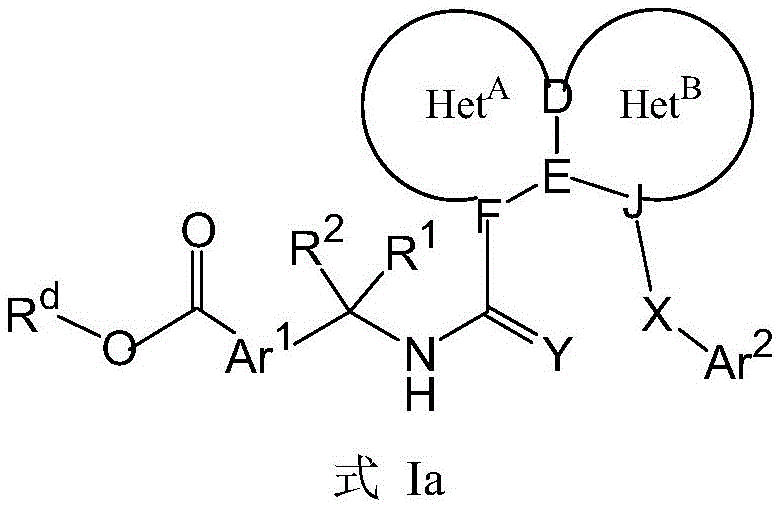


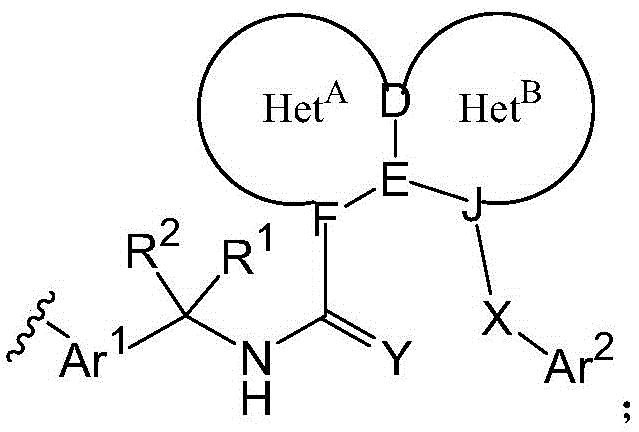


Priority Applications (1)
| Application Number | Priority Date | Filing Date | Title |
|---|---|---|---|
| CN202311816268.8A CN117643587A (en) | 2018-02-05 | 2019-02-02 | Heterobicyclic carboxylic acids for the treatment of cancer |
Applications Claiming Priority (3)
| Application Number | Priority Date | Filing Date | Title |
|---|---|---|---|
| CNPCT/CN2018/075198 | 2018-02-05 | ||
| CNPCT/CN2018/075198 | 2018-02-05 | ||
| PCT/CN2019/074618 WO2019149286A1 (en) | 2018-02-05 | 2019-02-02 | Heterobicyclic carboxylic acids for treating cancer or inflammatory diseases |
Related Child Applications (1)
| Application Number | Title | Priority Date | Filing Date |
|---|---|---|---|
| CN202311816268.8A Division CN117643587A (en) | 2018-02-05 | 2019-02-02 | Heterobicyclic carboxylic acids for the treatment of cancer |
Publications (1)
| Publication Number | Publication Date |
|---|---|
| CN111727044A true CN111727044A (en) | 2020-09-29 |
Family
ID=67479088
Family Applications (2)
| Application Number | Title | Priority Date | Filing Date |
|---|---|---|---|
| CN201980011401.8A Pending CN111727044A (en) | 2018-02-05 | 2019-02-02 | Heterobicyclic Carboxylic Acids for the Treatment of Cancer or Inflammatory Diseases |
| CN202311816268.8A Pending CN117643587A (en) | 2018-02-05 | 2019-02-02 | Heterobicyclic carboxylic acids for the treatment of cancer |
Family Applications After (1)
| Application Number | Title | Priority Date | Filing Date |
|---|---|---|---|
| CN202311816268.8A Pending CN117643587A (en) | 2018-02-05 | 2019-02-02 | Heterobicyclic carboxylic acids for the treatment of cancer |
Country Status (8)
| Country | Link |
|---|---|
| US (1) | US20200352906A1 (en) |
| EP (1) | EP3749323A4 (en) |
| JP (2) | JP2021513512A (en) |
| KR (1) | KR20200118037A (en) |
| CN (2) | CN111727044A (en) |
| AU (1) | AU2019214193B2 (en) |
| CA (1) | CA3090485C (en) |
| WO (1) | WO2019149286A1 (en) |
Cited By (4)
| Publication number | Priority date | Publication date | Assignee | Title |
|---|---|---|---|---|
| CN111936502A (en) * | 2018-03-02 | 2020-11-13 | 深圳市原力生命科学有限公司 | Heterobicyclic carboxylic acids and their salts |
| CN114790186A (en) * | 2021-01-25 | 2022-07-26 | 武汉人福创新药物研发中心有限公司 | Fused ring compound as EP4 antagonist and preparation method and application thereof |
| WO2022161422A1 (en) * | 2021-01-28 | 2022-08-04 | 深圳晶泰科技有限公司 | Heterocyclic amide derivative, preparation method therefor, and application thereof |
| WO2024041559A1 (en) * | 2022-08-24 | 2024-02-29 | Shenzhen Ionova Life Science Co., Ltd. | Heterobicyclic compounds as ep4 receptor antagonists |
Families Citing this family (1)
| Publication number | Priority date | Publication date | Assignee | Title |
|---|---|---|---|---|
| EP3983412A4 (en) * | 2019-06-11 | 2023-12-27 | Teon Therapeutics, Inc. | PROSTAGLANDIN E2 RECEPTOR 4 ANTAGONISTS AND USES THEREOF |
Citations (3)
| Publication number | Priority date | Publication date | Assignee | Title |
|---|---|---|---|---|
| US20100234383A1 (en) * | 2009-03-13 | 2010-09-16 | Gilles Klopman | Treating, preventing or ameliorating a hyperproliferative disease/disorder |
| CN102149384A (en) * | 2008-08-14 | 2011-08-10 | 加拿大贝达药业有限公司 | Heterocyclic amide derivatives as EP4 receptor antagonists |
| WO2017066633A1 (en) * | 2015-10-16 | 2017-04-20 | Eisai R&D Management Co., Ltd. | Ep4 antagonists |
Family Cites Families (27)
| Publication number | Priority date | Publication date | Assignee | Title |
|---|---|---|---|---|
| US4166452A (en) | 1976-05-03 | 1979-09-04 | Generales Constantine D J Jr | Apparatus for testing human responses to stimuli |
| US4256108A (en) | 1977-04-07 | 1981-03-17 | Alza Corporation | Microporous-semipermeable laminated osmotic system |
| US4265874A (en) | 1980-04-25 | 1981-05-05 | Alza Corporation | Method of delivering drug with aid of effervescent activity generated in environment of use |
| WO1995033746A1 (en) * | 1994-06-08 | 1995-12-14 | E.I. Du Pont De Nemours And Company | Cyclic sulfonamide herbicides |
| GB9417532D0 (en) | 1994-08-31 | 1994-10-19 | Zeneca Ltd | Aromatic compounds |
| GB9420557D0 (en) | 1994-10-12 | 1994-11-30 | Zeneca Ltd | Aromatic compounds |
| EP0752421B1 (en) | 1995-07-07 | 2005-10-12 | AstraZeneca AB | Ortho-substituted aromatic compounds, containing three (het)aryl moieties, their preparation and their use as prostaglandin E2-(PGE2)-antagonists |
| AR036993A1 (en) | 2001-04-02 | 2004-10-20 | Wyeth Corp | USE OF AGENTS THAT MODULATE THE INTERACTION BETWEEN PD-1 AND ITS LINKS IN THE SUBMODULATION OF IMMUNOLOGICAL ANSWERS |
| CN101284773A (en) | 2001-08-09 | 2008-10-15 | 小野药品工业株式会社 | Carboxylic acid derivative compounds and drugs comprising these compounds as the active ingredient |
| JP4511943B2 (en) | 2002-12-23 | 2010-07-28 | ワイス エルエルシー | Antibody against PD-1 and use thereof |
| EP1599202A1 (en) * | 2003-02-17 | 2005-11-30 | Pharmacia Italia S.p.A. | Tetracyclic pyrazole derivatives as kinase inhibitors, process for their preparation and pharmaceutical compositions comprising them |
| EA009201B1 (en) | 2003-09-03 | 2007-12-28 | Пфайзер Инк. | Phenyl or pyridyl amide compounds as prostaglandin e2 antagonists |
| GB0329353D0 (en) | 2003-12-19 | 2004-01-21 | Amersham Biosciences Uk Ltd | Cytochrome C protein and assay |
| CN103059138B (en) | 2005-05-09 | 2015-10-28 | 小野药品工业株式会社 | The human monoclonal antibodies of programmed death-1 (PD-1) and use anti-PD-1 antibody to carry out the method for Therapeutic cancer |
| WO2007005874A2 (en) | 2005-07-01 | 2007-01-11 | Medarex, Inc. | Human monoclonal antibodies to programmed death ligand 1 (pd-l1) |
| US7968578B2 (en) | 2006-04-24 | 2011-06-28 | Merck Frosst Canada Ltd. | Indole amide derivatives as EP4 receptor antagonists |
| EP3222634A1 (en) | 2007-06-18 | 2017-09-27 | Merck Sharp & Dohme B.V. | Antibodies to human programmed death receptor pd-1 |
| WO2010014784A2 (en) | 2008-08-01 | 2010-02-04 | Bristol-Myers Squibb Company | Combination of anti-ctla4 antibody with diverse therapeutic regimens for the synergistic treatment of proliferative diseases |
| US8552154B2 (en) | 2008-09-26 | 2013-10-08 | Emory University | Anti-PD-L1 antibodies and uses therefor |
| KR101050829B1 (en) | 2008-10-02 | 2011-07-20 | 서울대학교산학협력단 | Anticancer agents comprising an anti-PD-1 antibody or an anti-PD-L1 antibody |
| NZ717213A (en) | 2008-12-09 | 2017-10-27 | Genentech Inc | Anti-pd-l1 antibodies and their use to enhance t-cell function |
| CN102740887B (en) | 2009-09-30 | 2015-04-15 | 斯隆凯特林防癌纪念中心 | Combination immunotherapy for the treatment of cancer |
| RS55566B1 (en) * | 2010-09-21 | 2017-05-31 | Eisai R&D Man Co Ltd | PHARMACEUTICAL COMPOSITION |
| LT3009426T (en) * | 2013-06-12 | 2018-07-25 | Kaken Pharmaceutical Co., Ltd. | 4-alkynyl imidazole derivative and medicine comprising same as active ingredient |
| WO2015179615A1 (en) * | 2014-05-23 | 2015-11-26 | Eisai R&D Management Co., Ltd | Combination therapies for the treatment of cancer |
| JP6689297B2 (en) * | 2015-07-23 | 2020-04-28 | 武田薬品工業株式会社 | Heterocyclic compound |
| TWI805255B (en) * | 2016-07-07 | 2023-06-11 | 日商小野藥品工業股份有限公司 | Antagonist and immune checkpoint inhibitor |
-
2019
- 2019-02-02 CN CN201980011401.8A patent/CN111727044A/en active Pending
- 2019-02-02 WO PCT/CN2019/074618 patent/WO2019149286A1/en not_active Ceased
- 2019-02-02 KR KR1020207022656A patent/KR20200118037A/en not_active Ceased
- 2019-02-02 US US16/967,130 patent/US20200352906A1/en not_active Abandoned
- 2019-02-02 CN CN202311816268.8A patent/CN117643587A/en active Pending
- 2019-02-02 AU AU2019214193A patent/AU2019214193B2/en active Active
- 2019-02-02 JP JP2020541422A patent/JP2021513512A/en active Pending
- 2019-02-02 CA CA3090485A patent/CA3090485C/en active Active
- 2019-02-02 EP EP19747026.3A patent/EP3749323A4/en active Pending
-
2024
- 2024-04-08 JP JP2024062032A patent/JP2024096821A/en active Pending
Patent Citations (3)
| Publication number | Priority date | Publication date | Assignee | Title |
|---|---|---|---|---|
| CN102149384A (en) * | 2008-08-14 | 2011-08-10 | 加拿大贝达药业有限公司 | Heterocyclic amide derivatives as EP4 receptor antagonists |
| US20100234383A1 (en) * | 2009-03-13 | 2010-09-16 | Gilles Klopman | Treating, preventing or ameliorating a hyperproliferative disease/disorder |
| WO2017066633A1 (en) * | 2015-10-16 | 2017-04-20 | Eisai R&D Management Co., Ltd. | Ep4 antagonists |
Non-Patent Citations (5)
Cited By (8)
| Publication number | Priority date | Publication date | Assignee | Title |
|---|---|---|---|---|
| CN111936502A (en) * | 2018-03-02 | 2020-11-13 | 深圳市原力生命科学有限公司 | Heterobicyclic carboxylic acids and their salts |
| CN111936502B (en) * | 2018-03-02 | 2024-05-31 | 深圳市原力生命科学有限公司 | Heterobicyclic carboxylic acids and their salts |
| US12240860B2 (en) | 2018-03-02 | 2025-03-04 | Foshan Ionova Biotherapeutics Co., Inc. | Heterobicyclic carboxylic acids and salts thereof |
| CN114790186A (en) * | 2021-01-25 | 2022-07-26 | 武汉人福创新药物研发中心有限公司 | Fused ring compound as EP4 antagonist and preparation method and application thereof |
| WO2022161422A1 (en) * | 2021-01-28 | 2022-08-04 | 深圳晶泰科技有限公司 | Heterocyclic amide derivative, preparation method therefor, and application thereof |
| CN116783201A (en) * | 2021-01-28 | 2023-09-19 | 深圳众格生物科技有限公司 | Heterocyclic amide derivatives and their preparation methods and applications |
| CN116783201B (en) * | 2021-01-28 | 2025-12-30 | 深圳众格生物科技有限公司 | Heterocyclic amide derivatives, their preparation methods and applications |
| WO2024041559A1 (en) * | 2022-08-24 | 2024-02-29 | Shenzhen Ionova Life Science Co., Ltd. | Heterobicyclic compounds as ep4 receptor antagonists |
Also Published As
| Publication number | Publication date |
|---|---|
| JP2024096821A (en) | 2024-07-17 |
| US20200352906A1 (en) | 2020-11-12 |
| CA3090485C (en) | 2024-01-16 |
| AU2019214193B2 (en) | 2022-06-16 |
| EP3749323A1 (en) | 2020-12-16 |
| EP3749323A4 (en) | 2021-11-03 |
| WO2019149286A1 (en) | 2019-08-08 |
| KR20200118037A (en) | 2020-10-14 |
| JP2021513512A (en) | 2021-05-27 |
| AU2019214193A1 (en) | 2020-08-27 |
| CA3090485A1 (en) | 2019-08-08 |
| CN117643587A (en) | 2024-03-05 |
Similar Documents
| Publication | Publication Date | Title |
|---|---|---|
| ES2872555T3 (en) | HPK1 inhibitors and methods of using them | |
| ES2360933T3 (en) | CONDENSED HETEROARILO DERIVATIVES. | |
| CN111727044A (en) | Heterobicyclic Carboxylic Acids for the Treatment of Cancer or Inflammatory Diseases | |
| TW202019900A (en) | Ptpn11 inhibitors | |
| AU2019229130B2 (en) | Heterobicyclic carboxylic acids and salts thereof | |
| BR112020008827A2 (en) | modulators of the integrated stress pathway | |
| BR112020008836A2 (en) | MODULATORS OF THE INTEGRATED STRESS ROUTE | |
| KR20120062839A (en) | Compounds and compositions as protein kinase inhibitors | |
| CN102459187A (en) | Janus Kinase Inhibiting Compounds and Methods | |
| BR112020013164A2 (en) | amino-fluorpiperidine derivatives as a kinase inhibitor | |
| JP2019038848A (en) | Use of maleimide derivatives to prevent and treat leukemia | |
| BR112017016278B1 (en) | Use of a compound having btk inhibitory activity or a salt thereof to produce a preventive and/or therapeutic agent for the prevention or treatment of an immune disease | |
| HK40029801A (en) | Heterobicyclic carboxylic acids for treating cancer or inflammatory diseases | |
| HK40103495A (en) | Heterobicyclic carboxylic acids for the treatment of cancer | |
| JP2026053473A (en) | Heterobicyclic carboxylates for the treatment of cancer or inflammatory diseases | |
| HK40034311A (en) | Heterobicyclic carboxylic acids and salts thereof | |
| HK40057478B (en) | Hpk1 inhibitors and methods of using same | |
| HK40034311B (en) | Heterobicyclic carboxylic acids and salts thereof | |
| BR112019026096B1 (en) | COMPOUND, MEDICINE, AND USE OF THE COMPOUND | |
| BR112020013759B1 (en) | Triazole compounds substituted by heterocyclamine as modulators of rho-associated protein kinase, pharmaceutical composition comprising said compounds and their uses. | |
| NZ754629A (en) | Novel bicyclic bromodomain inhibitors |
Legal Events
| Date | Code | Title | Description |
|---|---|---|---|
| PB01 | Publication | ||
| PB01 | Publication | ||
| SE01 | Entry into force of request for substantive examination | ||
| SE01 | Entry into force of request for substantive examination | ||
| REG | Reference to a national code |
Ref country code: HK Ref legal event code: DE Ref document number: 40029801 Country of ref document: HK |