CN111537654B - HPLC analysis method of N- (phenylsulfonyl) benzamide compound - Google Patents
HPLC analysis method of N- (phenylsulfonyl) benzamide compound Download PDFInfo
- Publication number
- CN111537654B CN111537654B CN202010643069.1A CN202010643069A CN111537654B CN 111537654 B CN111537654 B CN 111537654B CN 202010643069 A CN202010643069 A CN 202010643069A CN 111537654 B CN111537654 B CN 111537654B
- Authority
- CN
- China
- Prior art keywords
- parts
- solvent
- solvents
- mobile phase
- volume
- Prior art date
- Legal status (The legal status is an assumption and is not a legal conclusion. Google has not performed a legal analysis and makes no representation as to the accuracy of the status listed.)
- Active
Links
Images











Classifications
-
- G—PHYSICS
- G01—MEASURING; TESTING
- G01N—INVESTIGATING OR ANALYSING MATERIALS BY DETERMINING THEIR CHEMICAL OR PHYSICAL PROPERTIES
- G01N30/00—Investigating or analysing materials by separation into components using adsorption, absorption or similar phenomena or using ion-exchange, e.g. chromatography or field flow fractionation
- G01N30/02—Column chromatography
-
- G—PHYSICS
- G01—MEASURING; TESTING
- G01N—INVESTIGATING OR ANALYSING MATERIALS BY DETERMINING THEIR CHEMICAL OR PHYSICAL PROPERTIES
- G01N30/00—Investigating or analysing materials by separation into components using adsorption, absorption or similar phenomena or using ion-exchange, e.g. chromatography or field flow fractionation
- G01N30/02—Column chromatography
- G01N30/04—Preparation or injection of sample to be analysed
- G01N30/06—Preparation
-
- G—PHYSICS
- G01—MEASURING; TESTING
- G01N—INVESTIGATING OR ANALYSING MATERIALS BY DETERMINING THEIR CHEMICAL OR PHYSICAL PROPERTIES
- G01N30/00—Investigating or analysing materials by separation into components using adsorption, absorption or similar phenomena or using ion-exchange, e.g. chromatography or field flow fractionation
- G01N30/02—Column chromatography
- G01N30/86—Signal analysis
- G01N30/8696—Details of Software
Landscapes
- Physics & Mathematics (AREA)
- Health & Medical Sciences (AREA)
- Life Sciences & Earth Sciences (AREA)
- Chemical & Material Sciences (AREA)
- Analytical Chemistry (AREA)
- Biochemistry (AREA)
- General Health & Medical Sciences (AREA)
- General Physics & Mathematics (AREA)
- Immunology (AREA)
- Pathology (AREA)
- Organic Low-Molecular-Weight Compounds And Preparation Thereof (AREA)
Abstract
本发明公开了一种N‑(苯基磺酰基)苯甲酰胺化合物的HPLC分析方法。本发明涉及一种物质X的HPLC分析方法;所述的物质X为如式I‑A和/或I‑B所示化合物;所述的HPLC分析方法包括以下步骤:手性色谱柱中,用流动相对物质X进行洗脱,即可;所述的手性色谱柱为多糖衍生物耐溶剂型手性色谱柱;所述的手性色谱柱的柱温为25‑35℃;所述的洗脱为等度洗脱;所述的流动相包括烷烃类溶剂、醇类溶剂、卤代烃类溶剂和醚类溶剂,按体积份数计,所述的烷烃类溶剂为600‑800份,所述的醇类溶剂为50‑350份,所述的卤代烃类溶剂为30‑100份,所述的醚类溶剂为50‑200份。本发明的分析方法能够分离异构体,并能够准确测定异构体的纯度。

The invention discloses an HPLC analysis method for N-(phenylsulfonyl)benzamide compounds. The present invention relates to an HPLC analysis method for a substance X; the substance X is a compound shown in formula I-A and/or I-B; the HPLC analysis method comprises the following steps: in a chiral chromatographic column, use The mobile phase is eluted with substance X; the chiral chromatographic column is a polysaccharide derivative solvent-resistant chiral chromatographic column; the column temperature of the chiral chromatographic column is 25-35°C; Detoxification is isocratic elution; the mobile phase includes an alkane solvent, an alcohol solvent, a halogenated hydrocarbon solvent and an ether solvent, and in parts by volume, the alkane solvent is 600-800 parts, so The alcohol solvent is 50-350 parts, the halogenated hydrocarbon solvent is 30-100 parts, and the ether solvent is 50-200 parts. The analytical method of the present invention can separate the isomers, and can accurately measure the purity of the isomers.
Description
技术领域technical field
本发明属于药物分析技术领域,具体而言,涉及N-(苯基磺酰基)苯甲酰胺化合物的HPLC分析方法。The invention belongs to the technical field of drug analysis, and in particular relates to an HPLC analysis method for N-(phenylsulfonyl)benzamide compounds.
背景技术Background technique
细胞凋亡是程序性细胞死亡的过程,是组织稳态的必需生物学过程。在哺乳动物中,它已被证明可以调节早期胚胎发育。在生命的晚期,细胞死亡是一种默认机制,通过该机制除去潜在危险细胞,例如携带癌症缺陷的细胞。已知若干种凋亡途径。最重要的凋亡途径之一涉及Bcl-2蛋白家族,其是细胞凋亡的线粒体(也称为“内在”)途径的关键调节剂。参见Danial和Korsmeyer,Cell 776:205-219(2004)。结构同源结构域BH1、BH2、BH3和BH4是Bcl-2家族蛋白的特征。Bcl-2蛋白质家族可以进一步分为三个亚族,这取决于每种蛋白质含有多少同源结构域及其生物活性,即它是否具有促凋亡或抗细胞凋亡功能。Apoptosis is the process of programmed cell death, an essential biological process for tissue homeostasis. In mammals, it has been shown to regulate early embryonic development. Later in life, cell death is the default mechanism by which potentially dangerous cells, such as those carrying cancer defects, are removed. Several apoptotic pathways are known. One of the most important apoptotic pathways involves the Bcl-2 family of proteins, which are key regulators of the mitochondrial (also called "intrinsic") pathway of apoptosis. See Danial and Korsmeyer, Cell 776:205-219 (2004). The structural homology domains BH1, BH2, BH3 and BH4 are characteristic of the Bcl-2 family of proteins. The Bcl-2 protein family can be further divided into three subfamilies, depending on how many homeodomains each protein contains and its biological activity, i.e. whether it has pro- or anti-apoptotic functions.
Bcl-2蛋白的第一亚组含有具有全部四个同源结构域的蛋白质,即BH1、BH2、BH3和BH4。它们的一般作用是抗细胞凋亡,即保护细胞免于开始细胞死亡过程。诸如Bcl-2、Bcl-w、Bcl-xL、Mcl-1和Bfl-1/Al的蛋白质是该第一亚组的成员。属于Bcl-2蛋白的第二亚组的蛋白质含有三个同源结构域BH1、BH2和BH3,并具有促凋亡作用。第二个亚组的两个主要代表性蛋白质是Bax和Bak。Bcl-2蛋白的第三个亚组由仅含有BH3结构域的蛋白质组成,该亚组的成员通常被称为“仅BH3蛋白质”。它们对细胞的生物学作用是促细胞凋亡的。Bim、Bid、Bad、Bik、Noxa、Hrk、Bmf和Puma是第三个蛋白质亚家族的例子。The first subset of Bcl-2 proteins contains proteins with all four homology domains, namely BH1, BH2, BH3 and BH4. Their general action is anti-apoptotic, ie, protecting cells from initiating the process of cell death. Proteins such as Bcl-2, Bcl-w, Bcl-xL, Mcl-1 and Bfl-1/Al are members of this first subset. Proteins belonging to the second subset of Bcl-2 proteins contain three homology domains, BH1, BH2 and BH3, and have pro-apoptotic effects. The two main representative proteins of the second subgroup are Bax and Bak. A third subgroup of Bcl-2 proteins consists of proteins containing only the BH3 domain, and members of this subgroup are often referred to as "BH3-only proteins". Their biological effect on cells is pro-apoptotic. Bim, Bid, Bad, Bik, Noxa, Hrk, Bmf and Puma are examples of a third protein subfamily.
失调的凋亡途径涉及许多重要疾病的病理学,例如神经变性病症(上调的细胞凋亡),例如阿尔茨海默氏病;和增殖性疾病(下调的细胞凋亡),例如癌症、自身免疫疾病和促血栓形成病症。Dysregulated apoptotic pathways are involved in the pathology of many important diseases, such as neurodegenerative disorders (up-regulated apoptosis), such as Alzheimer's disease; and proliferative diseases (down-regulated apoptosis), such as cancer, autoimmunity Disease and prothrombotic disorders.
下调的细胞凋亡(更具体地,Bcl-2蛋白质家族)可能参与癌性恶性肿瘤的发作。研究表明,例如,抗凋亡蛋白Bcl-2和Bcl-xL在许多癌细胞类型中过表达。参见Zhang,NatureReviews Drug Discovery 1:101(2002);Kirkin等,Biochimica et Biophysica Acta1644:229-249 (2004);和Amundson等,Cancer Research 60:6101-6110(2000)。这种失调的作用是改变细胞的存活,否则细胞会在正常条件下发生细胞凋亡。与不受调节的增殖相关的这些缺陷的重复被认为是癌症进化的起点。这些发现使得用于靶向癌症的药物发现成为可能的新策略。Down-regulated apoptosis (more specifically, the Bcl-2 family of proteins) may be involved in the onset of cancerous malignancies. Studies have shown, for example, that the anti-apoptotic proteins Bcl-2 and Bcl-xL are overexpressed in many cancer cell types. See Zhang, Nature Reviews Drug Discovery 1:101 (2002); Kirkin et al, Biochimica et Biophysica Acta 1644:229-249 (2004); and Amundson et al, Cancer Research 60:6101-6110 (2000). The effect of this dysregulation is to alter the survival of cells that would otherwise undergo apoptosis under normal conditions. The duplication of these defects associated with unregulated proliferation is thought to be the starting point of cancer evolution. These findings enable new strategies for drug discovery targeting cancer.
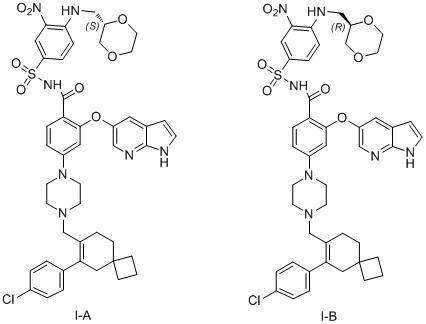
WO2018/027097A1公开了用于治疗对Bc1-2蛋白抑制有反应的疾病、障碍或病症(例如癌症)的N-(苯基磺酰基)苯甲酰胺及相关化合物,并具体公开了代表性化合物:N-((4-(((1,4-二噁烷-2-基)甲基)氨基)-3-硝基苯基)磺酰基)-2-((1H-吡咯并[2,3-b]吡啶-5-基)氧基)-4-(4-((6-(4-氯苯基)螺[3.5]壬-6-烯-7-基)甲基)哌嗪-1-基)苯甲酰胺(下称式1化合物),其结构式如下:WO2018/027097A1 discloses N-(phenylsulfonyl)benzamide and related compounds for the treatment of diseases, disorders or conditions (such as cancer) responsive to Bc1-2 protein inhibition, and specifically discloses representative compounds: N-((4-(((1,4-dioxan-2-yl)methyl)amino)-3-nitrophenyl)sulfonyl)-2-((1H-pyrrolo[2,3 -b]pyridin-5-yl)oxy)-4-(4-((6-(4-chlorophenyl)spiro[3.5]non-6-en-7-yl)methyl)piperazine-1 - base) benzamide (hereinafter referred to as the compound of formula 1), its structural formula is as follows:
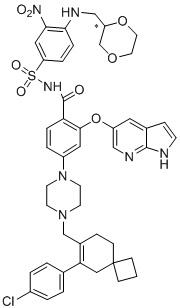
式I化合物Compounds of formula I
该化合物在苯胺处含有一个手性中心,含有一对有效对映体。药物一般是通过与靶点之间的识别和匹配发挥药理活性,在许多情况下,手性化合物的一对对映体在生物体内的药理活性、代谢过程、代谢速率及毒性等存在显著的差异。另外在吸收、分布和排泄等方面也存在差异,还有对映体之间也有可能相互转化。从已知药效方面考虑,可能存在四种不同的情况:This compound contains a chiral center at the aniline and contains a pair of effective enantiomers. Drugs generally exert their pharmacological activity through recognition and matching with their targets. In many cases, a pair of enantiomers of chiral compounds have significant differences in their pharmacological activities, metabolic processes, metabolic rates and toxicity in vivo. . In addition, there are differences in absorption, distribution and excretion, as well as the possibility of mutual conversion between enantiomers. Considering the known efficacy, there may be four different situations:
1)只有一种对映体具有所要求的药理活性,而另一种对映体没有药理作用,例如:β-受体阻断剂普萘洛尔(propranolol)的两个对映异构体的体外活性相差98倍,非甾体抗炎药萘普生(naproxen)的(S)-构型对映体的活性比其对映体的活性强35倍。又如天然的尼古丁(nicotine)的毒性要比其非天然的对映体的毒性大得多。1) Only one enantiomer has the required pharmacological activity, and the other enantiomer has no pharmacological effect, for example: two enantiomers of the beta-blocker propranolol (propranolol) The in vitro activities differed by 98-fold, and the (S)-configuration enantiomer of the NSAID naproxen was 35-fold more active than its enantiomer. Another example is that the toxicity of natural nicotine is much greater than that of its unnatural enantiomer.
2)一对对映体中的两个化合物都有同等的或近乎同等的药理活性;2) Both compounds in a pair of enantiomers have equal or nearly equal pharmacological activity;
3)两种对映体具有不同的药理活性;3) The two enantiomers have different pharmacological activities;
4)各对映体药理活性相同但不相等。4) The pharmacological activities of each enantiomer are the same but not equal.
为了保证式I化合物的研发和生产质量,需要对原料药及其制剂的质量进行控制。因此,研究获得一种式I化合物的异构体检查和含量测定的检测方法,对控制药品生产质量具有重要意义。In order to ensure the research and development and production quality of the compound of formula I, it is necessary to control the quality of the raw materials and their preparations. Therefore, it is of great significance to study and obtain a detection method for the isomer inspection and content determination of the compound of formula I to control the quality of drug production.
发明内容SUMMARY OF THE INVENTION
本发明的目的在于克服现有技术中缺少式I化合物的分离检测技术,而提供N-(苯基磺酰基)苯甲酰胺化合物的HPLC分析方法,该方法能够分离异构体,并能够准确测定异构体的纯度。The object of the present invention is to overcome the lack of separation and detection technology of the compound of formula I in the prior art, and provide an HPLC analysis method of N-(phenylsulfonyl)benzamide compound, which can separate isomers and can accurately measure Isomer purity.
本发明提供了一种物质X的HPLC分析方法;所述的物质X为如式I-A和/或I-B所示化合物;The present invention provides an HPLC analysis method for substance X; the substance X is a compound represented by formula I-A and/or I-B;

所述的HPLC分析方法包括以下步骤:手性色谱柱中,用流动相对物质X进行洗脱,即可;所述的手性色谱柱为多糖衍生物耐溶剂型手性色谱柱;所述的手性色谱柱的柱温为25-35℃;所述的洗脱为等度洗脱;所述的洗脱的流速为0.5-3 ml/min;所述HPLC分析方法的检测波长为200-300 nm;The HPLC analysis method includes the following steps: in the chiral chromatographic column, elution is performed with a mobile phase substance X; the chiral chromatographic column is a polysaccharide derivative solvent-resistant chiral chromatographic column; the The column temperature of the chiral chromatographic column is 25-35°C; the elution is isocratic; the flow rate of the elution is 0.5-3 ml/min; the detection wavelength of the HPLC analysis method is 200- 300 nm;
所述的流动相包括烷烃类溶剂、醇类溶剂、卤代烃类溶剂和醚类溶剂,The mobile phase includes alkane solvents, alcohol solvents, halogenated hydrocarbon solvents and ether solvents,
按体积份数计,所述的烷烃类溶剂为600-800份,所述的醇类溶剂为50-350份,所述的卤代烃类溶剂为30-100份,所述的醚类溶剂为50-200份。In parts by volume, the alkane solvent is 600-800 parts, the alcohol solvent is 50-350 parts, the halogenated hydrocarbon solvent is 30-100 parts, and the ether solvent is 30-100 parts. for 50-200 servings.
在本发明某些实施方案中,所述的烷烃类溶剂可为本领域常规的烷烃类溶剂,又可为C5-C10烷烃类溶剂,例如正己烷。In certain embodiments of the present invention, the alkane-based solvent may be a conventional alkane-based solvent in the art, or may be a C 5 -C 10 alkane-based solvent, such as n-hexane.
在本发明某些实施方案中,所述的醇类溶剂可为本领域常规的醇类溶剂,又可为C1-C3醇类溶剂,例如乙醇和/或异丙醇,优选异丙醇。In certain embodiments of the present invention, the alcohol solvent may be a conventional alcohol solvent in the art, or may be a C 1 -C 3 alcohol solvent, such as ethanol and/or isopropanol, preferably isopropanol .
在本发明某些实施方案中,所述的卤代烃类溶剂可为本领域常规的卤代烃类溶剂,例如二氯甲烷。In certain embodiments of the present invention, the halogenated hydrocarbon solvent may be a conventional halogenated hydrocarbon solvent in the art, such as dichloromethane.
在本发明某些实施方案中,所述的醚类溶剂可为本领域常规的醚类溶剂,例如四氢呋喃。In certain embodiments of the present invention, the ether solvent may be a conventional ether solvent in the art, such as tetrahydrofuran.
在本发明某些实施方案中,按体积份数计,所述的烷烃类溶剂可为650-750份,例如700份。In certain embodiments of the present invention, the alkane solvent may be 650-750 parts by volume, for example, 700 parts.
在本发明某些实施方案中,按体积份数计,所述的醇类溶剂可为60-300份,例如70份、100份、130份或300份,优选60-110份,例如60-80份或90-110份。In certain embodiments of the present invention, the alcohol solvent may be 60-300 parts by volume, such as 70 parts, 100 parts, 130 parts or 300 parts, preferably 60-110 parts, such as 60- 80 servings or 90-110 servings.
在本发明某些实施方案中,按体积份数计,所述的卤代烃类溶剂可为40-90份,例如50份或80份,优选40-60份或70-90份。In certain embodiments of the present invention, the halogenated hydrocarbon solvent may be 40-90 parts by volume, such as 50 parts or 80 parts, preferably 40-60 parts or 70-90 parts.
在本发明某些实施方案中,按体积份数计,所述的醚类溶剂可为70-160份,例如80份、120份或150份,优选140-160份。In certain embodiments of the present invention, the ether solvent may be 70-160 parts by volume, such as 80 parts, 120 parts or 150 parts, preferably 140-160 parts.
在本发明某些实施方案中,所述的流动相还可进一步包括羧酸类溶剂。所述的羧酸类溶剂可为醋酸。按体积份数计,所述的羧酸类溶剂可为0.5-2.5份,又可为0.5-1.5份,例如1份。In certain embodiments of the present invention, the mobile phase may further include a carboxylic acid solvent. The carboxylic acid solvent can be acetic acid. In parts by volume, the carboxylic acid solvent may be 0.5-2.5 parts, or 0.5-1.5 parts, for example, 1 part.
在本发明某些实施方案中,所述的流动相还可进一步包括有机胺。所述的有机胺可为二乙胺和/或三乙胺,优选二乙胺。按体积份数计,所述的有机胺可为0.1-4份,又可为0.1-2.5份,例如0.2份、0.5份、1份和2份,优选0.1-1.5份,又可为0.1-0.3份。当所述的有机胺为二乙胺和三乙胺时,所述的二乙胺和三乙胺的体积比可为1:0.5-1:1.5,例如1:1。In certain embodiments of the present invention, the mobile phase may further comprise an organic amine. The organic amine can be diethylamine and/or triethylamine, preferably diethylamine. In parts by volume, the organic amine can be 0.1-4 parts, and 0.1-2.5 parts, such as 0.2 parts, 0.5 parts, 1 part and 2 parts, preferably 0.1-1.5 parts, and 0.1-1. 0.3 servings. When the organic amines are diethylamine and triethylamine, the volume ratio of the diethylamine and triethylamine may be 1:0.5-1:1.5, such as 1:1.
在本发明某些实施方案中,所述的流动相由烷烃类溶剂、醇类溶剂、卤代烃类溶剂和醚类溶剂组成。In certain embodiments of the present invention, the mobile phase is composed of alkane-based solvents, alcohol-based solvents, halogenated hydrocarbon-based solvents and ether-based solvents.
在本发明某些实施方案中,所述的流动相由烷烃类溶剂、醇类溶剂、卤代烃类溶剂和醚类溶剂组成;按体积份数计,所述的烷烃类溶剂为650-750份,所述的醇类溶剂为60-300份,所述的卤代烃类溶剂为40-90份,所述的醚类溶剂为70-160份。In some embodiments of the present invention, the mobile phase is composed of alkane solvents, alcohol solvents, halogenated hydrocarbon solvents and ether solvents; in parts by volume, the alkane solvents are 650-750 60-300 parts of the alcohol solvent, 40-90 parts of the halogenated hydrocarbon solvent, and 70-160 parts of the ether solvent.
在本发明某些实施方案中,所述的流动相由烷烃类溶剂、醇类溶剂、卤代烃类溶剂和醚类溶剂组成;按体积份数计,所述的烷烃类溶剂为650-750份,所述的醇类溶剂为60-110份,所述的卤代烃类溶剂为40-90份,所述的醚类溶剂为140-160份;所述的烷烃类溶剂为正己烷,所述的醇类溶剂为乙醇和/或异丙醇,所述的卤代烃类溶剂为二氯甲烷,所述的醚类溶剂为四氢呋喃。In some embodiments of the present invention, the mobile phase is composed of alkane solvents, alcohol solvents, halogenated hydrocarbon solvents and ether solvents; in parts by volume, the alkane solvents are 650-750 The described alcohol solvent is 60-110 parts, the halogenated hydrocarbon solvent is 40-90 parts, the ether solvent is 140-160 parts; the alkane solvent is n-hexane, The alcohol solvent is ethanol and/or isopropanol, the halogenated hydrocarbon solvent is dichloromethane, and the ether solvent is tetrahydrofuran.
在本发明某些实施方案中,所述的流动相由下述组分组成;按体积份数计,正己烷700份、乙醇100份、二氯甲烷50份、四氢呋喃150份。In some embodiments of the present invention, the mobile phase is composed of the following components; in parts by volume, 700 parts of n-hexane, 100 parts of ethanol, 50 parts of dichloromethane, and 150 parts of tetrahydrofuran.
在本发明某些实施方案中,所述的流动相由下述组分组成;按体积份数计,正己烷700份、异丙醇70份、二氯甲烷80份、四氢呋喃150份。In some embodiments of the present invention, the mobile phase is composed of the following components; in parts by volume, 700 parts of n-hexane, 70 parts of isopropanol, 80 parts of dichloromethane, and 150 parts of tetrahydrofuran.
在本发明某些实施方案中,所述的流动相由烷烃类溶剂、醇类溶剂、卤代烃类溶剂、醚类溶剂和羧酸类溶剂组成;按体积份数计,所述的烷烃类溶剂为600-800份,所述的醇类溶剂为50-350份,所述的卤代烃类溶剂为30-100份,所述的醚类溶剂为50-200份,所述的羧酸类溶剂为0.5-2.5份。In some embodiments of the present invention, the mobile phase is composed of alkane solvents, alcohol solvents, halogenated hydrocarbon solvents, ether solvents and carboxylic acid solvents; in parts by volume, the alkane solvents The solvent is 600-800 parts, the alcohol solvent is 50-350 parts, the halogenated hydrocarbon solvent is 30-100 parts, the ether solvent is 50-200 parts, the carboxylic acid is Solvent-like is 0.5-2.5 parts.
在本发明某些实施方案中,所述的流动相由烷烃类溶剂、醇类溶剂、卤代烃类溶剂、醚类溶剂和羧酸类溶剂组成;按体积份数计,所述的烷烃类溶剂为650-750份,所述的醇类溶剂为60-300份,所述的卤代烃类溶剂为40-90份,所述的醚类溶剂为70-160份,所述的羧酸类溶剂为0.5-1.5份。In some embodiments of the present invention, the mobile phase is composed of alkane solvents, alcohol solvents, halogenated hydrocarbon solvents, ether solvents and carboxylic acid solvents; in parts by volume, the alkane solvents The solvent is 650-750 parts, the alcohol solvent is 60-300 parts, the halogenated hydrocarbon solvent is 40-90 parts, the ether solvent is 70-160 parts, the carboxylic acid is Solvent-like is 0.5-1.5 parts.
在本发明某些实施方案中,所述的流动相由烷烃类溶剂、醇类溶剂、卤代烃类溶剂、醚类溶剂和羧酸类溶剂组成;按体积份数计,所述的烷烃类溶剂为650-750份,所述的醇类溶剂为60-80份,所述的卤代烃类溶剂为70-90份,所述的醚类溶剂为140-160份,所述的羧酸类溶剂为0.5-1.5份;所述的烷烃类溶剂为正己烷,所述的醇类溶剂为乙醇和/或异丙醇,所述的卤代烃类溶剂为二氯甲烷,所述的醚类溶剂为四氢呋喃,所述的羧酸类溶剂为醋酸。In some embodiments of the present invention, the mobile phase is composed of alkane solvents, alcohol solvents, halogenated hydrocarbon solvents, ether solvents and carboxylic acid solvents; in parts by volume, the alkane solvents The solvent is 650-750 parts, the alcohol solvent is 60-80 parts, the halogenated hydrocarbon solvent is 70-90 parts, the ether solvent is 140-160 parts, and the carboxylic acid is 140-160 parts. The solvent is 0.5-1.5 parts; the alkane solvent is n-hexane, the alcohol solvent is ethanol and/or isopropanol, the halogenated hydrocarbon solvent is dichloromethane, and the ether The carboxylic acid type solvent is tetrahydrofuran, and the carboxylic acid type solvent is acetic acid.
在本发明某些实施方案中,所述的流动相由下述组分组成;按体积份数计,正己烷00份、异丙醇70份、二氯甲烷80份、四氢呋喃150份、醋酸1份。In some embodiments of the present invention, the mobile phase is composed of the following components: by volume, 00 parts of n-hexane, 70 parts of isopropanol, 80 parts of dichloromethane, 150 parts of tetrahydrofuran, 1 part of acetic acid share.
在本发明某些实施方案中,所述的流动相由烷烃类溶剂、醇类溶剂、卤代烃类溶剂、醚类溶剂和有机胺组成;按体积份数计,所述的烷烃类溶剂为600-800份,所述的醇类溶剂为50-350份,所述的卤代烃类溶剂为30-100份,所述的醚类溶剂为50-200份,所述的有机胺为0.1-4份。In some embodiments of the present invention, the mobile phase is composed of alkane solvents, alcohol solvents, halogenated hydrocarbon solvents, ether solvents and organic amines; in parts by volume, the alkane solvents are 600-800 parts, the alcohol solvent is 50-350 parts, the halogenated hydrocarbon solvent is 30-100 parts, the ether solvent is 50-200 parts, and the organic amine is 0.1 -4 parts.
在本发明某些实施方案中,所述的流动相由烷烃类溶剂、醇类溶剂、卤代烃类溶剂、醚类溶剂和有机胺组成;按体积份数计,所述的烷烃类溶剂为650-750份,所述的醇类溶剂为60-300份,所述的卤代烃类溶剂为40-90份,所述的醚类溶剂为70-160份,所述的有机胺为0.1-2.5份;所述的烷烃类溶剂为正己烷,所述的醇类溶剂为乙醇和/或异丙醇,所述的卤代烃类溶剂为二氯甲烷,所述的醚类溶剂为四氢呋喃,所述的有机胺为二乙胺和/或三乙胺。In some embodiments of the present invention, the mobile phase is composed of alkane solvents, alcohol solvents, halogenated hydrocarbon solvents, ether solvents and organic amines; in parts by volume, the alkane solvents are 650-750 parts, the alcohol solvent is 60-300 parts, the halogenated hydrocarbon solvent is 40-90 parts, the ether solvent is 70-160 parts, and the organic amine is 0.1 -2.5 parts; the alkane solvent is n-hexane, the alcohol solvent is ethanol and/or isopropanol, the halogenated hydrocarbon solvent is methylene chloride, and the ether solvent is tetrahydrofuran , the organic amine is diethylamine and/or triethylamine.
在本发明某些实施方案中,所述的流动相由烷烃类溶剂、醇类溶剂、卤代烃类溶剂、醚类溶剂和有机胺组成;按体积份数计,所述的烷烃类溶剂为650-750份,所述的醇类溶剂为90-110份,所述的卤代烃类溶剂为40-60份,所述的醚类溶剂为140-160份,所述的有机胺为0.1-1.5份;所述的烷烃类溶剂为正己烷,所述的醇类溶剂为异丙醇,所述的卤代烃类溶剂为二氯甲烷,所述的醚类溶剂为四氢呋喃;所述的有机胺为二乙胺。In some embodiments of the present invention, the mobile phase is composed of alkane solvents, alcohol solvents, halogenated hydrocarbon solvents, ether solvents and organic amines; in parts by volume, the alkane solvents are 650-750 parts, the alcohol solvent is 90-110 parts, the halogenated hydrocarbon solvent is 40-60 parts, the ether solvent is 140-160 parts, and the organic amine is 0.1 -1.5 parts; the alkane solvent is n-hexane, the alcohol solvent is isopropanol, the halogenated hydrocarbon solvent is dichloromethane, and the ether solvent is tetrahydrofuran; the The organic amine is diethylamine.
在本发明某些实施方案中,所述的流动相由下述组分组成;按体积份数计,正己烷700份、乙醇130份、二氯甲烷50份、四氢呋喃120份、二乙胺1份、三乙胺1份。In some embodiments of the present invention, the mobile phase is composed of the following components: by volume, 700 parts of n-hexane, 130 parts of ethanol, 50 parts of dichloromethane, 120 parts of tetrahydrofuran, and 1 part of diethylamine part, 1 part of triethylamine.
在本发明某些实施方案中,所述的流动相由下述组分组成;按体积份数计,正己烷700份、异丙醇100份、二氯甲烷50份、四氢呋喃150份、二乙胺1份、三乙胺1份。In some embodiments of the present invention, the mobile phase is composed of the following components; by volume, 700 parts of n-hexane, 100 parts of isopropanol, 50 parts of dichloromethane, 150 parts of tetrahydrofuran, 150 parts of diethyl alcohol 1 part of amine, 1 part of triethylamine.
在本发明某些实施方案中,所述的流动相由下述组分组成;按体积份数计,正己烷700份、乙醇150份、异丙醇150份、二氯甲烷50份、四氢呋喃80份、二乙胺1份。In some embodiments of the present invention, the mobile phase is composed of the following components; by volume, 700 parts of n-hexane, 150 parts of ethanol, 150 parts of isopropanol, 50 parts of dichloromethane, and 80 parts of tetrahydrofuran. part, 1 part of diethylamine.
在本发明某些实施方案中,所述的流动相由下述组分组成;按体积份数计,正己烷700份、异丙醇100份、二氯甲烷50份、四氢呋喃150份、二乙胺1份。In some embodiments of the present invention, the mobile phase is composed of the following components; by volume, 700 parts of n-hexane, 100 parts of isopropanol, 50 parts of dichloromethane, 150 parts of tetrahydrofuran, 150 parts of diethyl alcohol 1 part of amine.
在本发明某些实施方案中,所述的流动相由下述组分组成;按体积份数计,正己烷700份、乙醇130份、二氯甲烷50份、四氢呋喃120份、二乙胺2份。In some embodiments of the present invention, the mobile phase is composed of the following components; in parts by volume, 700 parts of n-hexane, 130 parts of ethanol, 50 parts of dichloromethane, 120 parts of tetrahydrofuran, 2 parts of diethylamine share.
在本发明某些实施方案中,所述的流动相由烷烃类溶剂、醇类溶剂、卤代烃类溶剂、醚类溶剂、羧酸类溶剂和有机胺组成;按体积份数计,所述的烷烃类溶剂为600-800份,所述的醇类溶剂为50-350份,所述的卤代烃类溶剂为30-100份,所述的醚类溶剂为50-200份,所述的羧酸类溶剂为0.5-2.5份,所述的有机胺为0.1-4份。In some embodiments of the present invention, the mobile phase is composed of alkane solvents, alcohol solvents, halogenated hydrocarbon solvents, ether solvents, carboxylic acid solvents and organic amines; in parts by volume, the The alkane solvent is 600-800 parts, the alcohol solvent is 50-350 parts, the halogenated hydrocarbon solvent is 30-100 parts, the ether solvent is 50-200 parts, the The carboxylic acid solvent is 0.5-2.5 parts, and the organic amine is 0.1-4 parts.
在本发明某些实施方案中,所述的流动相由烷烃类溶剂、醇类溶剂、卤代烃类溶剂、醚类溶剂、羧酸类溶剂和有机胺组成;按体积份数计,所述的烷烃类溶剂为650-750份,所述的醇类溶剂为60-300份,所述的卤代烃类溶剂为40-90份,所述的醚类溶剂为70-160份,所述的羧酸类溶剂为0.5-1.5份,所述的有机胺为0.1-2.5份。In some embodiments of the present invention, the mobile phase is composed of alkane solvents, alcohol solvents, halogenated hydrocarbon solvents, ether solvents, carboxylic acid solvents and organic amines; in parts by volume, the The alkane solvent is 650-750 parts, the alcohol solvent is 60-300 parts, the halogenated hydrocarbon solvent is 40-90 parts, the ether solvent is 70-160 parts, the The carboxylic acid solvent is 0.5-1.5 parts, and the organic amine is 0.1-2.5 parts.
在本发明某些实施方案中,所述的流动相由烷烃类溶剂、醇类溶剂、卤代烃类溶剂、醚类溶剂、羧酸类溶剂和有机胺组成;按体积份数计,所述的烷烃类溶剂为650-750份,所述的醇类溶剂为60-80份,所述的卤代烃类溶剂为70-90份,所述的醚类溶剂为140-160份,所述的羧酸类溶剂为0.5-1.5份,所述的有机胺为0.1-1.5份;所述的烷烃类溶剂为正己烷,所述的醇类溶剂为乙醇和/或异丙醇,所述的卤代烃类溶剂为二氯甲烷,所述的醚类溶剂为四氢呋喃;所述的羧酸类溶剂为醋酸,所述的有机胺为二乙胺和/或三乙胺。In some embodiments of the present invention, the mobile phase is composed of alkane solvents, alcohol solvents, halogenated hydrocarbon solvents, ether solvents, carboxylic acid solvents and organic amines; in parts by volume, the The alkane solvent is 650-750 parts, the alcohol solvent is 60-80 parts, the halogenated hydrocarbon solvent is 70-90 parts, the ether solvent is 140-160 parts, the The carboxylic acid solvent is 0.5-1.5 part, the organic amine is 0.1-1.5 part; the alkane solvent is n-hexane, the alcohol solvent is ethanol and/or isopropanol, the The halogenated hydrocarbon solvent is dichloromethane, the ether solvent is tetrahydrofuran; the carboxylic acid solvent is acetic acid, and the organic amine is diethylamine and/or triethylamine.
在本发明某些实施方案中,所述的流动相由烷烃类溶剂、醇类溶剂、卤代烃类溶剂、醚类溶剂、羧酸类溶剂和有机胺组成;按体积份数计,所述的烷烃类溶剂为650-750份,所述的醇类溶剂为60-80份,所述的卤代烃类溶剂为70-90份,所述的醚类溶剂为140-160份,所述的羧酸类溶剂为0.5-1.5份,所述的有机胺为0.1-0.3份;所述的烷烃类溶剂为正己烷,所述的醇类溶剂为异丙醇,所述的卤代烃类溶剂为二氯甲烷,所述的醚类溶剂为四氢呋喃;所述的羧酸类溶剂为醋酸,所述的有机胺为二乙胺。In some embodiments of the present invention, the mobile phase is composed of alkane solvents, alcohol solvents, halogenated hydrocarbon solvents, ether solvents, carboxylic acid solvents and organic amines; in parts by volume, the The alkane solvent is 650-750 parts, the alcohol solvent is 60-80 parts, the halogenated hydrocarbon solvent is 70-90 parts, the ether solvent is 140-160 parts, the The carboxylic acid solvent is 0.5-1.5 part, the organic amine is 0.1-0.3 part; the alkane solvent is n-hexane, the alcohol solvent is isopropanol, and the halogenated hydrocarbon is The solvent is dichloromethane, the ether solvent is tetrahydrofuran; the carboxylic acid solvent is acetic acid, and the organic amine is diethylamine.
在本发明某些实施方案中,所述的流动相由下述组分组成;按体积份数计,正己烷700份、异丙醇70份、二氯甲烷80份、四氢呋喃150份、醋酸1份、二乙胺0.2份。In some embodiments of the present invention, the mobile phase is composed of the following components: by volume, 700 parts of n-hexane, 70 parts of isopropanol, 80 parts of dichloromethane, 150 parts of tetrahydrofuran, 1 part of acetic acid part, 0.2 part of diethylamine.
在本发明某些实施方案中,所述的流动相由下述组分组成;按体积份数计,正己烷700份、异丙醇70份、二氯甲烷80份、四氢呋喃150份醋酸1份、二乙胺0.5份。In some embodiments of the present invention, the mobile phase is composed of the following components; by volume, 700 parts of n-hexane, 70 parts of isopropanol, 80 parts of dichloromethane, 150 parts of tetrahydrofuran and 1 part of acetic acid , 0.5 part of diethylamine.
在本发明某些实施方案中,所述的流动相由下述组分组成;按体积份数计,正己烷700份、异丙醇70份、二氯甲烷80份、四氢呋喃150份、醋酸1份、二乙胺1份。In some embodiments of the present invention, the mobile phase is composed of the following components: by volume, 700 parts of n-hexane, 70 parts of isopropanol, 80 parts of dichloromethane, 150 parts of tetrahydrofuran, 1 part of acetic acid part, 1 part of diethylamine.
在本发明某些实施方案中,所述的物质X可以以溶液的形式添加到所述的手性色谱柱上。所述的物质X的溶液的制备方法可为方法一或方法二:In certain embodiments of the present invention, the substance X can be added to the chiral chromatography column in the form of a solution. The preparation method of the solution of described substance X can be method one or method two:
方法一:将物质X溶于溶剂,即可;Method 1: Dissolve the substance X in the solvent, that’s all;
方法二:提取含物质X的制剂,即可。Method 2: Extract the preparation containing substance X.
所述的提取可通过本领域常规的手段进行提取。The extraction can be performed by conventional means in the art.
所述的溶液中的溶剂可与所述的流动相相同,或为卤代烃类溶剂和所述的流动相的混合溶剂,所述的卤代烃类溶剂和所述的流动相的体积比可为0.5:1-2:1,例如1:1。所述的卤代烃类溶剂可为二氯甲烷。The solvent in the solution can be the same as the mobile phase, or a mixed solvent of the halogenated hydrocarbon solvent and the mobile phase, and the volume ratio of the halogenated hydrocarbon solvent to the mobile phase Can be 0.5:1-2:1, eg 1:1. The halogenated hydrocarbon solvent can be dichloromethane.
在本发明某些实施方案中,所述的手性色谱柱可为多糖衍生物耐溶剂型手性色谱柱(其通过化学键合型结合的方式将多糖衍生物固定在硅胶上),又可为硅胶表面键合有纤维素-三(3,5-二氯苯基氨基甲酸酯)的糖衍生物耐溶剂型手性色谱柱,例如DaicelChiralpak IC手性色谱柱,又例如Daicel Chiralpak IC (250 mm×4.6 mm, 5.0 µm)。In some embodiments of the present invention, the chiral chromatographic column can be a solvent-resistant chiral chromatographic column of polysaccharide derivatives (which immobilizes the polysaccharide derivatives on silica gel by chemical bonding), or can be Solvent-resistant chiral columns with sugar derivatives of cellulose-tris(3,5-dichlorophenylcarbamate) bonded to the silica surface, such as Daicel Chiralpak IC chiral columns, such as Daicel Chiralpak IC (250 mm × 4.6 mm, 5.0 µm).
在本发明某些实施方案中,所述的手性色谱柱的柱温可为本领域常规的柱温,又可为25-35℃,例如33℃。In certain embodiments of the present invention, the column temperature of the chiral chromatographic column may be a conventional column temperature in the field, and may also be 25-35°C, for example, 33°C.
在本发明某些实施方案中,所述的物质X的溶液的进样体积可为本领域常规的进样体积,又可为1-30 μL,又可为10-20 μL。In certain embodiments of the present invention, the injection volume of the solution of the substance X may be a conventional injection volume in the field, and may be 1-30 μL, or 10-20 μL.
在本发明某些实施方案中,所述的洗脱可为等度洗脱。In certain embodiments of the present invention, the elution may be isocratic.
在本发明某些实施方案中,所述的洗脱的流速可为本领域常规的流速,又可为0.5-3 ml/min,又可为1-2 ml/min。In some embodiments of the present invention, the flow rate of the elution can be a conventional flow rate in the art, and can also be 0.5-3 ml/min, or 1-2 ml/min.
在本发明某些实施方案中,所述HPLC分析方法的检测波长可为本领域常规的检测波长,又可为200-300 nm,又可为260-290 nm,例如265 nm、282 nm或287 nm。In some embodiments of the present invention, the detection wavelength of the HPLC analysis method can be a conventional detection wavelength in the field, or can be 200-300 nm, or 260-290 nm, such as 265 nm, 282 nm or 287 nm nm.
在符合本领域常识的基础上,上述各优选条件,可任意组合,即得本发明各较佳实例。On the basis of conforming to common knowledge in the art, the above preferred conditions can be combined arbitrarily to obtain preferred examples of the present invention.
本发明所用试剂和原料均市售可得。The reagents and raw materials used in the present invention are all commercially available.
本发明的积极进步效果在于:本发明所提供的式I化合物的HPLC分析方法具有使用可靠,稳定性较好,数据重现性强的优点,可以很好地将异构体分离,并能够准确测定异构体的纯度。The positive improvement effect of the present invention is: the HPLC analysis method of the compound of formula I provided by the present invention has the advantages of reliable use, good stability and strong data reproducibility, can well separate isomers, and can accurately The purity of the isomers was determined.
附图说明Description of drawings
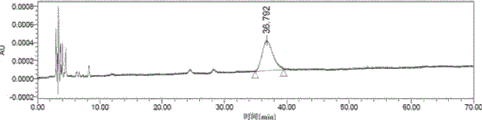
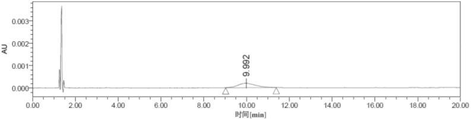
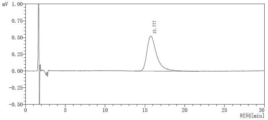
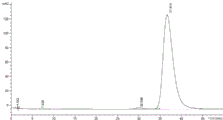
图1是实施例1中(R)-式I化合物定位溶液的HPLC谱图。Fig. 1 is the HPLC chromatogram of (R)-formula I compound localization solution in Example 1.
图2是实施例1中(S)-式I化合物定位溶液的HPLC谱图。Fig. 2 is the HPLC chromatogram of (S)-formula I compound positioning solution in Example 1.
图3是实施例1中式I化合物分离度溶液的HPLC谱图。Figure 3 is the HPLC spectrum of the solution of the compound of formula I in Example 1 with a resolution.
图4是实施例1中供试品溶液I的HPLC谱图。Fig. 4 is the HPLC spectrogram of need testing solution I in embodiment 1.
图5是实施例2中(R)-式I化合物定位溶液的HPLC谱图。Figure 5 is the HPLC spectrum of the (R)-formula I compound localization solution in Example 2.
图6是实施例2中(S)-式I化合物定位溶液的HPLC谱图。Figure 6 is the HPLC spectrum of the (S)-formula I compound localization solution in Example 2.
图7是实施例2中式I化合物分离度溶液的HPLC谱图。7 is the HPLC spectrum of the solution of the compound of formula I in Example 2 with a resolution.
图8是实施例3中(R)-式I化合物定位溶液的HPLC谱图。FIG. 8 is the HPLC chromatogram of the (R)-formula I compound localization solution in Example 3. FIG.
图9是实施例3中(S)-式I化合物定位溶液的HPLC谱图。FIG. 9 is the HPLC spectrum of the (S)-formula I compound positioning solution in Example 3. FIG.
图10是实施例3中式I化合物分离度溶液的HPLC谱图。10 is the HPLC spectrum of the solution of the compound of formula I in Example 3 with a resolution.
图11是实施例3中供试品溶液的HPLC谱图。Figure 11 is the HPLC spectrum of the test solution in Example 3.
图12是实施例4中(R)-式I化合物定位溶液的HPLC谱图。FIG. 12 is the HPLC chromatogram of the (R)-formula I compound localization solution in Example 4. FIG.
图13是实施例4中(S)-式I化合物定位溶液的HPLC谱图。FIG. 13 is the HPLC chromatogram of the (S)-formula I compound localization solution in Example 4. FIG.
图14是实施例4中式I化合物分离度溶液的HPLC谱图。14 is the HPLC chromatogram of the solution of the compound of formula I in Example 4 with a resolution.
图15是实施例5中(R)-式I化合物定位溶液的HPLC谱图。FIG. 15 is the HPLC spectrum of the (R)-formula I compound localization solution in Example 5. FIG.
图16是实施例5中(S)-式I化合物定位溶液的HPLC谱图。FIG. 16 is the HPLC spectrum of the (S)-formula I compound localization solution in Example 5. FIG.
图17是实施例5中式I化合物分离度溶液的HPLC谱图。17 is the HPLC spectrum of the solution of the compound of formula I in Example 5 with a resolution.
图18是实施例6中式I化合物分离度溶液的HPLC谱图。18 is the HPLC spectrum of the solution of the compound of formula I in Example 6 with a resolution.
图19是实施例7中式I化合物分离度溶液的HPLC谱图。19 is the HPLC spectrum of the solution of the compound of formula I in Example 7 with a resolution.
图20是实施例8中式I化合物分离度溶液的HPLC谱图。20 is the HPLC chromatogram of the solution of the compound of formula I in Example 8 with a resolution.
图21是实施例9中式I化合物分离度溶液的HPLC谱图。21 is the HPLC chromatogram of the solution of the compound of formula I in Example 9 with a resolution.
图22是实施例10中式I化合物分离度溶液的HPLC谱图。Figure 22 is the HPLC chromatogram of the resolution solution of the compound of formula I in Example 10.
图23是实施例11中式I化合物分离度溶液的HPLC谱图。23 is the HPLC chromatogram of the solution of the compound of formula I in Example 11 with a resolution.
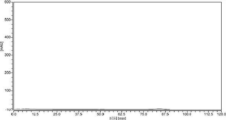
图24是对比例1中式I化合物分离度溶液的HPLC谱图。24 is the HPLC spectrum of the solution of the compound of formula I in Comparative Example 1 with a resolution.
图25是对比例2中式I化合物分离度溶液的HPLC谱图。25 is the HPLC spectrum of the solution of the compound of formula I in Comparative Example 2 with a resolution.
图26是对比例3中式I化合物分离度溶液的HPLC谱图。26 is the HPLC spectrum of the solution of the compound of formula I in Comparative Example 3 with a resolution.
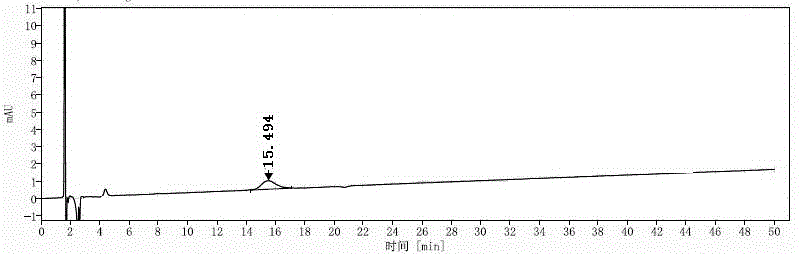
图27是实施例1供试品溶液II的HPLC谱图。Figure 27 is the HPLC spectrum of the test solution II of Example 1.
具体实施方式Detailed ways
下面通过实施例的方式进一步说明本发明,但并不因此将本发明限制在所述的实施例范围之中。下列实施例中未注明具体条件的实验方法,按照常规方法和条件,或按照商品说明书选择。The present invention is further described below by way of examples, but the present invention is not limited to the scope of the described examples. The experimental methods that do not specify specific conditions in the following examples are selected according to conventional methods and conditions, or according to the product description.
下述实施例中,(R)-式I化合物参照专利申请CN109311871A制得。(S)-式I化合物、式I化合物(R和S构型的混合物)参照(R)-式I化合物的制备方法进行制备,换用原料即可。本发明通过本领域常规的手段制得式I化合物的片剂。In the following examples, (R)-compound of formula I was prepared with reference to patent application CN109311871A. (S)-The compound of formula I and the compound of formula I (the mixture of R and S configuration) are prepared with reference to the preparation method of the compound of (R)-formula I, and the raw materials can be changed. In the present invention, the tablet of the compound of formula I is prepared by means conventional in the art.
色谱柱:Daicel Chiralpak IC (250 mm×4.6 mm, 5.0 µm),购买厂家:江苏明捷科学仪器有限公司;生产厂家:大赛璐(Daicel)。Chromatographic column: Daicel Chiralpak IC (250 mm×4.6 mm, 5.0 µm), purchased from: Jiangsu Mingjie Scientific Instrument Co., Ltd.; manufacturer: Daicel.
实施例1:式I化合物手性纯度的测定Example 1: Determination of the chiral purity of the compound of formula I
高效液相色谱条件:HPLC conditions:
色谱柱:Daicel Chiralpak IC (250 mm×4.6 mm, 5.0 µm)。Column: Daicel Chiralpak IC (250 mm × 4.6 mm, 5.0 µm).
流动相体积配比:正己烷/异丙醇/二氯甲烷/四氢呋喃/醋酸/二乙胺=700/70/80/150/1/0.2。Mobile phase volume ratio: n-hexane/isopropanol/dichloromethane/tetrahydrofuran/acetic acid/diethylamine=700/70/80/150/1/0.2.
检测波长:282nm。Detection wavelength: 282nm.
流速:2.0ml/min。Flow rate: 2.0ml/min.
柱温33℃。The column temperature was 33°C.
进样体积:20μl。Injection volume: 20 μl.
稀释剂:二氯甲烷与流动相体积配比1:1。Diluent: The volume ratio of dichloromethane and mobile phase is 1:1.
实验步骤Experimental procedure
溶液配制:取式I化合物约20mg,精密称定置于10ml量瓶中,加入5ml二氯甲烷,待样品完全溶解后,用流动相稀释至刻度,摇匀,作为供试品溶液I;Solution preparation: take about 20mg of the compound of formula I, accurately weigh and place it in a 10ml measuring bottle, add 5ml of dichloromethane, after the sample is completely dissolved, dilute to the mark with a mobile phase, shake up, and use it as the test solution I;
取式I化合物的片剂1片研磨成细粉,转移至10ml容量瓶中,加入5ml二氯甲烷,超声5min,用流动相稀释至刻度,经有机滤膜过滤,取滤液作为供试品溶液II;Take 1 tablet of the compound of formula I and grind it into fine powder, transfer it to a 10ml volumetric flask, add 5ml of dichloromethane, ultrasonicate for 5min, dilute to the mark with a mobile phase, filter through an organic filter membrane, and take the filtrate as the test solution II;
称量(S)-式I化合物对照品约20mg,置于100ml量瓶中,加入50 ml二氯甲烷,待完全溶解后,用流动相稀释至刻度,摇匀,再从此溶液中精密量取1ml置于100ml量瓶中,加稀释剂至刻度,摇匀,作为(S)-式I化合物定位溶液;Weigh about 20 mg of (S)-formula I compound reference substance, put it in a 100 ml volumetric flask, add 50 ml of dichloromethane, after it is completely dissolved, dilute to the mark with mobile phase, shake well, and then accurately measure from this solution 1ml is placed in a 100ml volumetric flask, add diluent to the mark, shake well, as (S)-formula I compound positioning solution;
称量(R)-式I化合物对照品约20mg,置于100ml量瓶中,加50ml二氯甲烷溶解后,用流动相稀释至刻度,摇匀,再从此溶液中精密量取1ml置100ml量瓶中,加稀释剂至刻度,摇匀,作为(R)-式I化合物定位溶液;Weigh about 20mg of (R)-formula I compound reference substance, put it in a 100ml volumetric flask, add 50ml of dichloromethane to dissolve, dilute to the mark with mobile phase, shake well, and then accurately measure 1ml from this solution and place it in 100ml In the bottle, add the diluent to the mark, shake it up, and use it as the (R)-formula I compound positioning solution;
分别称量(S)-式I化合物对照品约20mg、(R)-式I化合物对照品约1mg置于同一10ml量瓶中,加5ml二氯甲烷溶解后,用流动相稀释至刻度,摇匀,作为分离度溶液。Weigh (S) - about 20 mg of formula I compound reference substance and about 1 mg of (R) - formula I compound reference substance, respectively, and place them in the same 10 ml volumetric flask, add 5 ml of dichloromethane to dissolve, dilute to the mark with mobile phase, and shake. Homogeneous as a resolution solution.
精密量取(S)-式I化合物定位溶液、(R)-式I化合物定位溶液、分离度溶液、供试品溶液各20μl注入液相色谱仪,记录液相色谱图,按照面积归一化法计算(参见表1)。Precisely measure 20 μl of (S)-formula I compound positioning solution, (R)-formula I compound positioning solution, resolution solution, and test solution, and inject 20 μl into the liquid chromatograph, record the liquid chromatogram, and normalize it according to the area. method (see Table 1).
表1 系统适用性测试结果Table 1 System suitability test results

根据表1及图1-图4、图27可以看出,(R)-式I化合物与(S)-式I化合物可以得到有效分离,分离度为1.9,峰形良好,峰纯度良好,符合标准。According to Table 1 and Figures 1 to 4 and Figure 27, it can be seen that the (R)-formula I compound and the (S)-formula I compound can be effectively separated, the resolution is 1.9, the peak shape is good, and the peak purity is good. standard.
本发明所提供的分析方法,根据中国药典2015版,完成方法学验证,验证系统适用性、专属性、灵敏度、线性和范围、精密度、准确度、重现性以及溶液稳定性实验。经过这些验证,本发明提供的分析方法使用可靠,稳定性较好。The analytical method provided by the present invention, according to the 2015 edition of the Chinese Pharmacopoeia, completes the methodology verification, and verifies the system applicability, specificity, sensitivity, linearity and range, precision, accuracy, reproducibility and solution stability experiments. After these verifications, the analysis method provided by the present invention is reliable in use and has good stability.
实施例2:式I化合物手性纯度的测定Example 2: Determination of the chiral purity of the compound of formula I
高效液相色谱条件:HPLC conditions:
色谱柱:Daicel Chiralpak IC (250 mm×4.6 mm, 5.0 µm)。Column: Daicel Chiralpak IC (250 mm × 4.6 mm, 5.0 µm).
流动相体积配比:二乙胺/三乙胺/四氢呋喃/乙醇/二氯甲烷/正己烷=1/1/120/130/50/700。Mobile phase volume ratio: diethylamine/triethylamine/tetrahydrofuran/ethanol/dichloromethane/n-hexane=1/1/120/130/50/700.
检测波长:287nm。Detection wavelength: 287nm.
流速:1.0ml/min。Flow rate: 1.0ml/min.
柱温:33℃。Column temperature: 33°C.
进样体积:20μl。Injection volume: 20 μl.
稀释剂:组成同流动相。Diluent: The composition is the same as the mobile phase.
实验步骤Experimental procedure
溶液配制:取式I化合物约20mg,精密称定置于50ml量瓶中,加稀释剂溶解并稀释至刻度,摇匀,作为供试品溶液;Solution preparation: take about 20 mg of the compound of formula I, accurately weigh it and place it in a 50ml measuring bottle, add a diluent to dissolve and dilute to the mark, shake well, and use it as the test solution;
取(S)-式I化合物对照品约20mg,精密称定置于50ml量瓶中,用稀释剂溶解后稀释至刻度,摇匀,精密量取1ml溶液置20ml量瓶,用稀释剂稀释至刻度,摇匀,再精密量取1ml此溶液置20ml量瓶,用稀释液稀释至刻度,摇匀,作为(S)-式I化合物定位溶液;Take about 20mg of (S)-formula I compound reference substance, accurately weigh it into a 50ml measuring bottle, dissolve it with a diluent and dilute to the mark, shake well, accurately measure 1ml of the solution and place it in a 20ml measuring bottle, and dilute it to the mark with a diluent , shake well, then accurately measure 1ml of this solution and place it in a 20ml measuring bottle, dilute it to the mark with diluent, shake well, and use it as the (S)-formula I compound positioning solution;
取(R)-式I化合物对照品约20mg,精密称定置于50ml量瓶中,用稀释剂溶解后稀释至刻度,摇匀,精密量取1ml溶液置20ml量瓶,用稀释剂稀释至刻度,摇匀,再精密量取1ml此溶液置20ml量瓶,用稀释液稀释至刻度,摇匀,作为(R)-式I化合物定位溶液;Take about 20mg of (R)-formula I compound reference substance, accurately weigh it into a 50ml measuring bottle, dissolve it with a diluent and dilute to the mark, shake well, accurately measure 1ml of the solution and place it in a 20ml measuring bottle, and dilute it to the mark with a diluent , shake well, then precisely measure 1ml of this solution and put it in a 20ml measuring bottle, dilute it to the mark with diluent, shake well, and use it as the (R)-formula I compound positioning solution;
取(S)-式I化合物对照品约20mg,精密称定,置50ml量瓶中,量取(R)-式I化合物定位溶液原液1ml,稀释剂溶解后,稀释至刻度,摇匀,作为分离度溶液。精密量取(S)式I化合物定位溶液、(R)-式I化合物定位溶液、分离度溶液各20μl注入液相色谱仪,记录液相色谱图,按照面积归一化法计算(参见表2)。Take about 20 mg of (S)-formula I compound reference substance, accurately weigh it, put it in a 50ml measuring bottle, measure 1ml of (R)-formula I compound positioning solution stock solution, after the diluent is dissolved, dilute to the mark, shake well, as Resolution solution. Precisely measure 20 μl of each of (S) compound of formula I positioning solution, (R)-formula I compound positioning solution, and resolution solution, inject 20 μl into the liquid chromatograph, record the liquid chromatogram, and calculate according to the area normalization method (see Table 2). ).
表2 系统适用性测试结果Table 2 System suitability test results

根据表2及图5-图7可以看出,(R)-式I化合物与(S)-式I化合物可以分离,分离度为1.0,峰纯度良好。According to Table 2 and Figures 5 to 7, it can be seen that (R)-formula I compound and (S)-formula I compound can be separated, the resolution is 1.0, and the peak purity is good.
实施例3:式I化合物手性纯度的测定Example 3: Determination of the chiral purity of the compound of formula I
高效液相色谱条件:HPLC conditions:
色谱柱:Daicel Chiralpak IC (250 mm×4.6 mm, 5.0 µm)。Column: Daicel Chiralpak IC (250 mm × 4.6 mm, 5.0 µm).
流动相体积配比:四氢呋喃/乙醇/二氯甲烷/正己烷=150/100/50/700。Mobile phase volume ratio: tetrahydrofuran/ethanol/dichloromethane/n-hexane=150/100/50/700.
检测波长:282nm。Detection wavelength: 282nm.
流速:1.0ml/min。Flow rate: 1.0ml/min.
柱温:33℃。Column temperature: 33°C.
进样体积:10μl。Injection volume: 10 μl.
稀释剂:二氯甲烷与流动相体积比为1:1。Diluent: The volume ratio of dichloromethane to mobile phase is 1:1.
实验步骤Experimental procedure
溶液配制:取式I化合物约30mg,精密称定置于20ml量瓶中,用10ml 二氯甲烷溶解后,用流动相稀释至刻度,摇匀,作为供试品溶液;Solution preparation: take about 30mg of the compound of formula I, accurately weigh it and place it in a 20ml measuring bottle, dissolve it with 10ml of dichloromethane, dilute it to the mark with a mobile phase, shake well, and use it as a test solution;
取(S)-式I化合物对照品约30mg,精密称定置于20ml量瓶中,用10ml 二氯甲烷溶解后,用流动相稀释至刻度,摇匀,精密量取溶液1ml至50ml量瓶中,用稀释剂稀释至刻度,摇匀,再精密量取此溶液1ml置20ml量瓶中,用稀释剂稀释至刻度,摇匀,作为(S)-式I化合物定位溶液;Take about 30mg of (S)-formula I compound reference substance, accurately weigh it into a 20ml measuring bottle, dissolve it with 10ml dichloromethane, dilute it to the mark with mobile phase, shake well, and accurately measure 1ml of the solution into a 50ml measuring bottle , dilute to the mark with diluent, shake well, then precisely measure 1ml of this solution and put it in a 20ml measuring bottle, dilute to the mark with diluent, shake well, as (S)-formula I compound positioning solution;
取(R)-式I化合物对照品约30mg,精密称定置于20ml量瓶中,用10ml DCM溶解后,用流动相稀释至刻度,摇匀,精密量取溶液1ml至50ml量瓶中,用稀释剂稀释至刻度,摇匀,再精密量取此溶液1ml置20ml量瓶中,用稀释剂稀释至刻度,摇匀,作为(R)-式I化合物定位溶液;Take about 30mg of (R)-formula I compound reference substance, accurately weigh it into a 20ml volumetric flask, dissolve it with 10ml DCM, dilute it to the mark with mobile phase, shake well, accurately measure 1ml of the solution into a 50ml volumetric flask, and use Dilute the diluent to the mark, shake it up, then precisely measure 1ml of this solution and put it in a 20ml measuring bottle, dilute it with the diluent to the mark, shake it up, and use it as the (R)-formula I compound positioning solution;
取(S)-式I化合物约30mg,精密称定置于20ml量瓶中,量取(R)-式I化合物定位溶液原液2ml,加10ml 二氯甲烷溶解,用流动相稀释至刻度,摇匀,作为分离度溶液。精密量取(S)-式I化合物定位溶液、(R)-式I化合物定位溶液、分离度溶液、供试品溶液各10μl注入液相色谱仪,记录液相色谱图,按照面积归一化法计算(参见表3)Take about 30mg of (S)-formula I compound, accurately weigh it into a 20ml measuring bottle, measure 2ml of (R)-formula I compound positioning solution stock solution, add 10ml of dichloromethane to dissolve, dilute to the mark with mobile phase, shake well , as the resolution solution. Precisely measure (S)-formula I compound positioning solution, (R)-formula I compound positioning solution, resolution solution, and test solution each 10 μl into the liquid chromatograph, record the liquid chromatogram, and normalize it according to the area method (see Table 3)
表3 系统适用性测试结果Table 3 System suitability test results
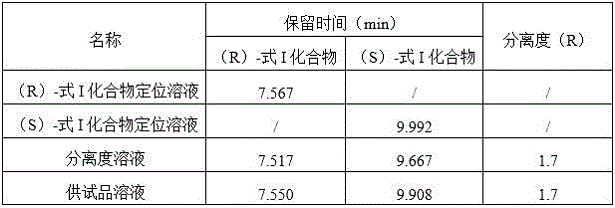
根据表3及图8-图11可以看出,(R)-式I化合物与(S)-式I化合物可以得到有效分离,分离度为1.7,峰纯度良好,符合标准。According to Table 3 and Figures 8 to 11, it can be seen that (R)-formula I compound and (S)-formula I compound can be effectively separated, the resolution is 1.7, and the peak purity is good, which meets the standard.
实施例4:式I化合物手性纯度的测定Example 4: Determination of the chiral purity of the compound of formula I
高效液相色谱条件:HPLC conditions:
色谱柱:Daicel Chiralpak IC (250 mm×4.6 mm, 5.0 µm)。Column: Daicel Chiralpak IC (250 mm × 4.6 mm, 5.0 µm).
流动相体积配比:正己烷/异丙醇/二氯甲烷/四氢呋喃=700/70/80/150。Mobile phase volume ratio: n-hexane/isopropanol/dichloromethane/tetrahydrofuran=700/70/80/150.
检测波长:282nm。Detection wavelength: 282nm.
流速:2.0ml/min。Flow rate: 2.0ml/min.
柱温:33℃。Column temperature: 33°C.
进样体积:10μl。Injection volume: 10 μl.
稀释剂:二氯甲烷与流动相体积比为1:1。Diluent: The volume ratio of dichloromethane to mobile phase is 1:1.
实验步骤Experimental procedure
溶液配制:取式I化合物约20mg,精密称定置于20ml量瓶中,加入10ml二氯甲烷,待样品完全溶解后,用流动相稀释至刻度,摇匀,作为供试品溶液;Solution preparation: take about 20mg of the compound of formula I, accurately weigh it and place it in a 20ml measuring bottle, add 10ml of dichloromethane, after the sample is completely dissolved, dilute to the mark with mobile phase, shake well, and use it as the test solution;
取(S)-式I化合物约20mg,精密称定置于20ml量瓶中,加入10ml二氯甲烷,待样品完全溶解后,用流动相稀释至刻度,摇匀,精密量取溶液1ml至50ml量瓶中,用稀释剂稀释至刻度,摇匀,再精密量取此溶液1ml置20ml量瓶中,用稀释剂稀释至刻度,摇匀,作为(S)-式I化合物定位溶液;Take about 20 mg of (S)-formula I compound, accurately weigh it into a 20 ml volumetric flask, add 10 ml of dichloromethane, after the sample is completely dissolved, dilute to the mark with mobile phase, shake well, and accurately measure 1 ml to 50 ml of the solution In the bottle, dilute to the mark with diluent, shake well, then precisely measure 1ml of this solution and place it in a 20ml measuring bottle, dilute it to the mark with diluent, shake well, as (S)-formula I compound positioning solution;
取(R)-式I化合物约20mg,精密称定置于20ml量瓶中,加入10ml二氯甲烷,待样品完全溶解后,用流动相稀释至刻度,摇匀,精密量取溶液2ml至10ml量瓶中,用稀释剂稀释至刻度,摇匀,作为(R)-式I化合物定位溶液;Take about 20 mg of (R)-formula I compound, accurately weigh it into a 20 ml volumetric flask, add 10 ml of dichloromethane, after the sample is completely dissolved, dilute to the mark with mobile phase, shake well, and accurately measure 2 ml to 10 ml of the solution In a bottle, dilute to the mark with diluent, shake well, and use as (R)-formula I compound positioning solution;
取(S)-式I化合物约20mg,精密称定置于20ml量瓶中,量取(R)-式I化合物定位溶液原液0.5ml,加10ml二氯甲烷溶解,用流动相稀释至刻度,摇匀,作为分离度溶液。精密量取(S)-式I化合物定位溶液、(R)-式I化合物定位溶液、分离度溶液各10μl注入液相色谱仪,记录液相色谱图,按照面积归一化法计算(参见表4)Take about 20 mg of (S)-formula I compound, accurately weigh it into a 20ml measuring bottle, measure 0.5ml of (R)-formula I compound positioning solution stock solution, add 10ml of dichloromethane to dissolve, dilute to the mark with mobile phase, shake Homogeneous as a resolution solution. Precisely measure 10 μl of (S)-formula I compound positioning solution, (R)-formula I compound positioning solution, and resolution solution, and inject 10 μl into the liquid chromatograph, record the liquid chromatogram, and calculate according to the area normalization method (see Table 1). 4)
表4 系统适用性测试结果Table 4 System suitability test results
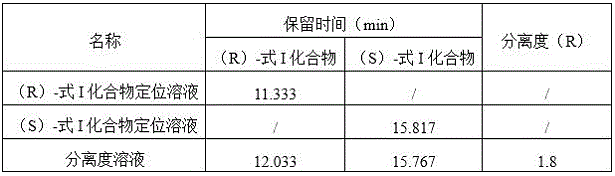
根据表4及图12-图14可以看出,(R)-式I化合物与(S)-式I化合物可以分离,分离度为1.8,峰形良好,峰纯度良好,符合标准。According to Table 4 and Figures 12 to 14, it can be seen that (R)-formula I compound and (S)-formula I compound can be separated, the resolution is 1.8, the peak shape is good, and the peak purity is good, which meets the standard.
实施例5:式I化合物手性纯度的测定Example 5: Determination of the chiral purity of the compound of formula I
高效液相色谱条件:HPLC conditions:
色谱柱:Daicel Chiralpak IC (250 mm×4.6 mm, 5.0 µm)。Column: Daicel Chiralpak IC (250 mm × 4.6 mm, 5.0 µm).
流动相体积配比:正己烷/异丙醇/二氯甲烷/四氢呋喃/醋酸=700/70/80/150/1。Mobile phase volume ratio: n-hexane/isopropanol/dichloromethane/tetrahydrofuran/acetic acid=700/70/80/150/1.
检测波长:282nm。Detection wavelength: 282nm.
流速:2.0ml/min。Flow rate: 2.0ml/min.
柱温33℃。The column temperature was 33°C.
进样体积:20μl。Injection volume: 20 μl.
稀释剂:二氯甲烷与流动相体积比为1:1。Diluent: The volume ratio of dichloromethane to mobile phase is 1:1.
实验步骤Experimental procedure
溶液配制:取式I化合物约30mg,精密称定置于20ml量瓶中,用10ml 二氯甲烷溶解后,用流动相稀释至刻度,摇匀,作为供试品溶液;Solution preparation: take about 30mg of the compound of formula I, accurately weigh it and place it in a 20ml measuring bottle, dissolve it with 10ml of dichloromethane, dilute it to the mark with a mobile phase, shake well, and use it as a test solution;
取(S)-式I化合物对照品约30mg,精密称定置于20ml量瓶中,用10ml 二氯甲烷溶解后,用流动相稀释至刻度,摇匀,精密量取溶液1ml至50ml量瓶中,用稀释剂稀释至刻度,摇匀,再精密量取此溶液1ml置20ml量瓶中,用稀释剂稀释至刻度,摇匀,作为(S)-式I化合物定位溶液;Take about 30mg of (S)-formula I compound reference substance, accurately weigh it into a 20ml measuring bottle, dissolve it with 10ml dichloromethane, dilute it to the mark with mobile phase, shake well, and accurately measure 1ml of the solution into a 50ml measuring bottle , dilute to the mark with diluent, shake well, then precisely measure 1ml of this solution and put it in a 20ml measuring bottle, dilute to the mark with diluent, shake well, as (S)-formula I compound positioning solution;
取(R)-式I化合物对照品约30mg,精密称定置于20ml量瓶中,用10ml二氯甲烷溶解后,用流动相稀释,摇匀,精密量取溶液1ml至50ml量瓶中,用稀释剂稀释至刻度,摇匀,再精密量取此溶液1ml置20ml量瓶中,用稀释剂稀释至刻度,摇匀,作为(R)-式I化合物定位溶液;Take about 30mg of (R)-formula I compound reference substance, accurately weigh it into a 20ml volumetric flask, dissolve it with 10ml of dichloromethane, dilute it with mobile phase, shake well, and accurately measure 1ml of the solution into a 50ml volumetric flask, use Dilute the diluent to the mark, shake it up, then precisely measure 1ml of this solution and put it in a 20ml measuring bottle, dilute it with the diluent to the mark, shake it up, and use it as the (R)-formula I compound positioning solution;
取(S)-式I化合物约30mg,精密称定置于20ml量瓶中,量取(R)-式I化合物定位溶液原液2ml,加10ml 二氯甲烷溶解,用流动相稀释至刻度,摇匀,作为分离度溶液。精密量取(S)-式I化合物定位溶液、(R)-式I化合物定位溶液、分离度溶液各10μl注入液相色谱仪,记录液相色谱图,按照面积归一化法计算(参见表5)。Take about 30mg of (S)-formula I compound, accurately weigh it into a 20ml measuring bottle, measure 2ml of (R)-formula I compound positioning solution stock solution, add 10ml of dichloromethane to dissolve, dilute to the mark with mobile phase, shake well , as the resolution solution. Precisely measure 10 μl of (S)-formula I compound positioning solution, (R)-formula I compound positioning solution, and resolution solution, and inject 10 μl into the liquid chromatograph, record the liquid chromatogram, and calculate according to the area normalization method (see Table 1). 5).
表5 系统适用性测试结果
根据表5及图15-图17可以看出,(R)-式I化合物与(S)- 式I化合物可以得到有效分离,分离度为2.1,峰形良好,峰纯度良好,符合标准。According to Table 5 and Figure 15 to Figure 17, it can be seen that (R)-formula I compound and (S)-formula I compound can be effectively separated, the resolution is 2.1, the peak shape is good, and the peak purity is good, which meets the standard.
实施例6:式I手性纯度的测定Example 6: Determination of the chiral purity of formula I
高效液相色谱条件:HPLC conditions:
色谱柱:Daicel Chiralpak IC (250 mm×4.6 mm, 5.0 µm)。Column: Daicel Chiralpak IC (250 mm × 4.6 mm, 5.0 µm).
流动相体积配比:正己烷/异丙醇/二氯甲烷/四氢呋喃/醋酸/二乙胺=700/70/80/150/1/1.0。Mobile phase volume ratio: n-hexane/isopropanol/dichloromethane/tetrahydrofuran/acetic acid/diethylamine=700/70/80/150/1/1.0.
检测波长:282nm。Detection wavelength: 282nm.
流速:2.0ml/min。Flow rate: 2.0ml/min.
柱温:33℃。Column temperature: 33°C.
进样体积:20μl。Injection volume: 20 μl.
稀释剂:二氯甲烷与流动相体积配比1:1。Diluent: The volume ratio of dichloromethane and mobile phase is 1:1.
实验步骤Experimental procedure
溶液配制:取式I化合物约20mg,精密称定置于10ml量瓶中,加入5ml DCM,待样品完全溶解后,用稀释剂稀释至刻度,摇匀,作为供试品溶液;Solution preparation: take about 20 mg of the compound of formula I, accurately weigh it and place it in a 10 ml measuring bottle, add 5 ml of DCM, after the sample is completely dissolved, dilute to the mark with a diluent, shake well, and use it as the test solution;
分别称量(S)-式I化合物对照品约20mg、(R)-式I化合物对照品约1mg置同一10ml量瓶中,加5ml DCM溶解后,用流动相稀释至刻度,摇匀,作为分离度溶液。精密量取分离度溶液20μl注入液相色谱仪,记录液相色谱图,按照面积归一化法计算(参见表6)。Weigh about 20 mg of (S)-compound of formula I reference substance and about 1 mg of (R)-compound of formula I reference substance into the same 10ml measuring flask, add 5ml of DCM to dissolve, dilute to the mark with mobile phase, shake well, as Resolution solution. Precisely measure 20 μl of the resolution solution and inject it into the liquid chromatograph, record the liquid chromatogram, and calculate according to the area normalization method (see Table 6).
表6 系统适用性测试结果
根据表6及图18可以看出,(R)-式I化合物与(S)-式I化合物可以得到有效分离,分离度为1.6,峰形良好,峰纯度良好,符合标准。According to Table 6 and Figure 18, it can be seen that (R)-formula I compound and (S)-formula I compound can be effectively separated, the resolution is 1.6, the peak shape is good, and the peak purity is good, which meets the standard.
实施例7:式I化合物手性纯度的测定Example 7: Determination of the chiral purity of the compound of formula I
高效液相色谱条件:HPLC conditions:
色谱柱:Daicel Chiralpak IC (250 mm×4.6 mm, 5.0 µm)。Column: Daicel Chiralpak IC (250 mm × 4.6 mm, 5.0 µm).
流动相体积配比:正己烷/异丙醇/二氯甲烷/四氢呋喃/醋酸/二乙胺=700/70/80/150/1/0.5。Mobile phase volume ratio: n-hexane/isopropanol/dichloromethane/tetrahydrofuran/acetic acid/diethylamine=700/70/80/150/1/0.5.
检测波长:282nm。Detection wavelength: 282nm.
流速:2.0ml/min。Flow rate: 2.0ml/min.
柱温:33℃。Column temperature: 33°C.
进样体积:20μl。Injection volume: 20 μl.
稀释剂:二氯甲烷与流动相体积配比1:1。Diluent: The volume ratio of dichloromethane and mobile phase is 1:1.
实验步骤Experimental procedure
溶液配制:取式I化合物约20mg,精密称定置于10ml量瓶中,加入5ml 二氯甲烷,待样品完全溶解后,用流动相稀释至刻度,摇匀,作为供试品溶液;Solution preparation: take about 20 mg of the compound of formula I, accurately weigh it and place it in a 10 ml measuring bottle, add 5 ml of dichloromethane, after the sample is completely dissolved, dilute to the mark with mobile phase, shake well, and use it as the test solution;
分别称量(S)-式I化合物对照品约20mg、(R)-式I化合物对照品约1mg置同一10ml量瓶中,加5ml 二氯甲烷溶解后,用流动相稀释至刻度,摇匀,作为分离度溶液。精密量取分离度溶液20μl注入液相色谱仪,记录液相色谱图,按照面积归一化法计算(参见表7)。Weigh (S)-compound of formula I reference substance about 20mg, (R)-compound of formula I reference substance about 1mg, put into the same 10ml measuring flask, add 5ml of dichloromethane to dissolve, dilute to the mark with mobile phase, shake well , as the resolution solution. Precisely measure 20 μl of the resolution solution and inject it into the liquid chromatograph, record the liquid chromatogram, and calculate according to the area normalization method (see Table 7).
表7 系统适用性测试结果
根据表7及图19可以看出,(R)-式I化合物与(S)-式I化合物可以得到有效分离,分离度为1.8,峰形良好,峰纯度良好,符合标准。According to Table 7 and Figure 19, it can be seen that (R)-formula I compound and (S)-formula I compound can be effectively separated, the resolution is 1.8, the peak shape is good, and the peak purity is good, which meets the standard.
实施例8:式I化合物手性纯度的测定Example 8: Determination of the chiral purity of the compound of formula I
高效液相色谱条件:HPLC conditions:
色谱柱:Daicel Chiralpak IC (250 mm×4.6 mm, 5.0 µm)。Column: Daicel Chiralpak IC (250 mm × 4.6 mm, 5.0 µm).
流动相体积配比:四氢呋喃/异丙醇/二氯甲烷/正己烷/二乙胺/三乙胺=150/100/50/700/1/1。Mobile phase volume ratio: tetrahydrofuran/isopropanol/dichloromethane/n-hexane/diethylamine/triethylamine=150/100/50/700/1/1.
检测波长:265nm。Detection wavelength: 265nm.
流速:1.0ml/min。Flow rate: 1.0ml/min.
柱温:33℃。Column temperature: 33°C.
进样体积:10μl。Injection volume: 10 μl.
稀释剂:组成同流动性。Diluent: The composition is the same as the fluidity.
实验步骤Experimental procedure
溶液配制:分别取(R)-式I化合物对照品约2mg和(S)-式I化合物对照品约20mg,精密称定置于20ml量瓶中,摇匀,作为分离度溶液。Solution preparation: respectively take about 2 mg of (R)-formula I compound reference substance and (S)-formula I compound reference substance of about 20 mg, accurately weigh them and place them in a 20ml volumetric flask, shake well, and use as a resolution solution.
精密量取分离度溶液10μl注入液相色谱仪,记录液相色谱图,按照面积归一化法计算(参见表8)Precisely measure 10 μl of the resolution solution and inject it into the liquid chromatograph, record the liquid chromatogram, and calculate according to the area normalization method (see Table 8)
表8 系统适用性测试结果
根据表8及图20可以看出,(R)-式I化合物与(S)-式I化合物可以分离,分离度为1.1。According to Table 8 and Figure 20, it can be seen that (R)-formula I compound and (S)-formula I compound can be separated, and the separation degree is 1.1.
实施例9:式I化合物手性纯度的测定Example 9: Determination of the chiral purity of the compound of formula I
高效液相色谱条件:HPLC conditions:
色谱柱:Daicel Chiralpak IC (250 mm×4.6 mm, 5.0 µm)。Column: Daicel Chiralpak IC (250 mm × 4.6 mm, 5.0 µm).
流动相体积配比:四氢呋喃/乙醇/异丙醇/二氯甲烷/正己烷/二乙胺=80/150/150/50/700/1。Mobile phase volume ratio: tetrahydrofuran/ethanol/isopropanol/dichloromethane/n-hexane/diethylamine=80/150/150/50/700/1.
检测波长:265nm。Detection wavelength: 265nm.
流速:1.0ml/min。Flow rate: 1.0ml/min.
柱温:33℃。Column temperature: 33°C.
进样体积:10μl。Injection volume: 10 μl.
稀释剂:组成同流动性。Diluent: The composition is the same as the fluidity.
实验步骤Experimental procedure
溶液配制:分别取(R)-式I化合物对照品和(S)-式I化合物对照品约20mg,精密称定置于20ml量瓶中,用稀释剂溶解后稀释至刻度,摇匀,作为分离度溶液。Solution preparation: take about 20 mg of (R)-formula I compound reference substance and (S)-formula I compound reference substance respectively, accurately weigh and place them in a 20ml volumetric flask, dissolve with diluent and then dilute to the mark, shake well, as a separation method. degree solution.
精密量取分离度溶液10μl注入液相色谱仪,记录液相色谱图,按照面积归一化法计算(参见表9)Precisely measure 10 μl of the resolution solution and inject it into the liquid chromatograph, record the liquid chromatogram, and calculate according to the area normalization method (see Table 9)
表9 系统适用性测试结果
根据表9及图21可以看出,(R)-式I化合物与(S)-式I化合物可以分离,分离度为1.3。According to Table 9 and Figure 21, it can be seen that (R)-formula I compound and (S)-formula I compound can be separated, and the separation degree is 1.3.
实施例10:式I化合物手性纯度的测定Example 10: Determination of the chiral purity of the compound of formula I
高效液相色谱条件:HPLC conditions:
色谱柱:Daicel Chiralpak IC (250 mm×4.6 mm, 5.0 µm)。Column: Daicel Chiralpak IC (250 mm × 4.6 mm, 5.0 µm).
流动相体积配比:四氢呋喃/异丙醇/二氯甲烷/正己烷/二乙胺=150/100/50/700/1。Mobile phase volume ratio: tetrahydrofuran/isopropanol/dichloromethane/n-hexane/diethylamine=150/100/50/700/1.
检测波长:265nm。Detection wavelength: 265nm.
流速:1.0ml/min。Flow rate: 1.0ml/min.
柱温33℃。The column temperature was 33°C.
进样体积:10μl。Injection volume: 10 μl.
稀释剂:组成同流动性。Diluent: The composition is the same as the fluidity.
实验步骤Experimental procedure
溶液配制:分别取(R)-式I化合物对照品和(S)-式I化合物对照品约20mg,精密称定置于20ml量瓶中,摇匀,作为分离度溶液。Solution preparation: respectively take about 20 mg of (R)-formula I compound reference substance and (S)-formula I compound reference substance, accurately weigh and place them in a 20ml volumetric flask, shake well, and use as a resolution solution.
精密量取分离度溶液10μl注入液相色谱仪,记录液相色谱图,按照面积归一化法计算(参见表10)Precisely measure 10 μl of the resolution solution and inject it into the liquid chromatograph, record the liquid chromatogram, and calculate according to the area normalization method (see Table 10)
表10 系统适用性测试结果
根据表10及图22可以看出,(R)-式I化合物与(S)-式I化合物可以很好的分离,分离度为2.0。According to Table 10 and Figure 22, it can be seen that (R)-formula I compound and (S)-formula I compound can be well separated, and the separation degree is 2.0.
实施例11:式I手性纯度的测定Example 11: Determination of the chiral purity of formula I
高效液相色谱条件:HPLC conditions:
色谱柱:Daicel Chiralpak IC (250 mm×4.6 mm, 5.0 µm)。Column: Daicel Chiralpak IC (250 mm × 4.6 mm, 5.0 µm).
流动相体积配比:四氢呋喃/乙醇/二氯甲烷/正己烷/二乙胺=120/130/50/700/2。Mobile phase volume ratio: tetrahydrofuran/ethanol/dichloromethane/n-hexane/diethylamine=120/130/50/700/2.
检测波长:265nm。Detection wavelength: 265nm.
流速:1.0ml/min。Flow rate: 1.0ml/min.
柱温:33℃。Column temperature: 33°C.
进样体积:10μl。Injection volume: 10 μl.
稀释剂:组成同流动性。Diluent: The composition is the same as the fluidity.
实验步骤Experimental procedure
溶液配制:分别取(R)-式I化合物对照品和(S)-式I化合物对照品约20mg,精密称定置于20ml量瓶中,用稀释剂溶解后稀释至刻度,摇匀,作为分离度溶液。Solution preparation: take about 20mg of (R)-formula I compound reference substance and (S)-formula I compound reference substance respectively, accurately weigh and place them in a 20ml volumetric flask, dissolve with diluent and then dilute to the mark, shake well, as a separation method. degree solution.
精密量取分离度溶液10μl注入液相色谱仪,记录液相色谱图,按照面积归一化法计算(参见表11)Precisely measure 10 μl of the resolution solution and inject it into the liquid chromatograph, record the liquid chromatogram, and calculate according to the area normalization method (see Table 11)
表11 系统适用性测试结果
根据表11及图23可以看出,(R)-式I化合物与(S)-式I化合物可以分离,分离度为1.5。According to Table 11 and Figure 23, it can be seen that (R)-formula I compound and (S)-formula I compound can be separated, and the separation degree is 1.5.
对比例1:式I化合物手性纯度的测定Comparative Example 1: Determination of the chiral purity of the compound of formula I
流动相体积配比:乙醇/正己烷/二乙胺=300/700/1。Mobile phase volume ratio: ethanol/n-hexane/diethylamine=300/700/1.
检测波长:265nm。Detection wavelength: 265nm.
流速:1.0ml/min。Flow rate: 1.0ml/min.
柱温:33℃。Column temperature: 33°C.
进样体积:10μl。Injection volume: 10 μl.
稀释剂:组成同流动相。Diluent: The composition is the same as the mobile phase.
实验步骤Experimental procedure
溶液配制:分别取(R)-式I化合物对照品和(S)-式I化合物对照品约20mg,精密称定置于20ml量瓶中,用稀释剂溶解后稀释至刻度,摇匀,作为分离度溶液。Solution preparation: take about 20mg of (R)-formula I compound reference substance and (S)-formula I compound reference substance respectively, accurately weigh and place them in a 20ml volumetric flask, dissolve with diluent and then dilute to the mark, shake well, as a separation method. degree solution.
精密量取分离度溶液10μl注入液相色谱仪,记录液相色谱图,按照面积归一化法计算。Precisely measure 10 μl of the resolution solution and inject it into a liquid chromatograph, record the liquid chromatogram, and calculate according to the area normalization method.
根据图24可以看出,(R)-式I化合物和(S)-式I化合物该条件下120min皆未出峰,该条件不合适。According to Figure 24, it can be seen that both (R)-formula I compound and (S)-formula I compound did not produce peaks under these conditions for 120 min, and the conditions were not suitable.
对比例2:式I化合物手性纯度的测定Comparative Example 2: Determination of the chiral purity of the compound of formula I
高效液相色谱条件:HPLC conditions:
色谱柱:Daicel Chiralpak IC (250 mm×4.6 mm, 5.0 µm)。Column: Daicel Chiralpak IC (250 mm × 4.6 mm, 5.0 µm).
流动相体积配比:正己烷/乙醇/二氯甲烷/二乙胺=600/200/200/1。Mobile phase volume ratio: n-hexane/ethanol/dichloromethane/diethylamine=600/200/200/1.
检测波长:265nm。Detection wavelength: 265nm.
流速:1.0ml/min。Flow rate: 1.0ml/min.
柱温:33℃。Column temperature: 33°C.
进样体积:20μl。Injection volume: 20 μl.
稀释剂:组成同流动相。Diluent: The composition is the same as the mobile phase.
实验步骤Experimental procedure
溶液配制:分别取(R)-式I化合物对照品和(S)-式I化合物对照品约20mg,精密称定置于50ml量瓶中,摇匀,作为分离度溶液。Solution preparation: respectively take about 20 mg of (R)-formula I compound reference substance and (S)-formula I compound reference substance, accurately weigh and place them in a 50ml volumetric flask, shake well, and use as a resolution solution.
精密量取分离度溶液20μl注入液相色谱仪,记录液相色谱图,按照面积归一化法计算(参见表12)Precisely measure 20 μl of the resolution solution and inject it into the liquid chromatograph, record the liquid chromatogram, and calculate according to the area normalization method (see Table 12)
表12 系统适用性测试结果
N/A表示已检测,由于分离度差而无法计算获得。N/A means detected, and cannot be calculated due to poor resolution.
根据表12及图25可以看出,(R)-式I化合物与(S)-式I化合物分离较差。It can be seen from Table 12 and Figure 25 that the (R)-formula I compound is poorly separated from the (S)-formula I compound.
对比例3:式I化合物手性纯度的测定Comparative Example 3: Determination of the chiral purity of the compound of formula I
高效液相色谱条件:HPLC conditions:
色谱柱:Daicel Chiralpak IC (250 mm×4.6 mm, 5.0 µm)。Column: Daicel Chiralpak IC (250 mm × 4.6 mm, 5.0 µm).
流动相体积配比:四氢呋喃/乙醇/正己烷/二乙胺=80/250/650/1。Mobile phase volume ratio: tetrahydrofuran/ethanol/n-hexane/diethylamine=80/250/650/1.
检测波长:265nm。Detection wavelength: 265nm.
流速:1.0ml/min。Flow rate: 1.0ml/min.
柱温:33℃。Column temperature: 33°C.
进样体积:10μl。Injection volume: 10 μl.
稀释剂:组成同流动相。Diluent: The composition is the same as the mobile phase.
实验步骤Experimental procedure
溶液配制:分别取(R)-式I化合物对照品和(S)-式I化合物对照品约20mg,精密称定置于20ml量瓶中,摇匀,作为分离度溶液。Solution preparation: respectively take about 20 mg of (R)-formula I compound reference substance and (S)-formula I compound reference substance, accurately weigh and place them in a 20ml volumetric flask, shake well, and use as a resolution solution.
精密量取分离度溶液10μl注入液相色谱仪,记录液相色谱图,按照面积归一化法计算(参见表13)Precisely measure 10 μl of the resolution solution and inject it into the liquid chromatograph, record the liquid chromatogram, and calculate according to the area normalization method (see Table 13)
表13 系统适用性测试结果
N/A表示已检测,由于分离度差而无法计算获得。N/A means detected, and cannot be calculated due to poor resolution.
根据表13及图26可以看出,(R)-式I化合物与(S)-式I化合物分离度较差。It can be seen from Table 13 and Figure 26 that the (R)-formula I compound and (S)-formula I compound have poor resolution.
Claims (13)
Priority Applications (1)
| Application Number | Priority Date | Filing Date | Title |
|---|---|---|---|
| CN202010643069.1A CN111537654B (en) | 2020-07-07 | 2020-07-07 | HPLC analysis method of N- (phenylsulfonyl) benzamide compound |
Applications Claiming Priority (1)
| Application Number | Priority Date | Filing Date | Title |
|---|---|---|---|
| CN202010643069.1A CN111537654B (en) | 2020-07-07 | 2020-07-07 | HPLC analysis method of N- (phenylsulfonyl) benzamide compound |
Publications (2)
| Publication Number | Publication Date |
|---|---|
| CN111537654A CN111537654A (en) | 2020-08-14 |
| CN111537654B true CN111537654B (en) | 2020-11-10 |
Family
ID=71979773
Family Applications (1)
| Application Number | Title | Priority Date | Filing Date |
|---|---|---|---|
| CN202010643069.1A Active CN111537654B (en) | 2020-07-07 | 2020-07-07 | HPLC analysis method of N- (phenylsulfonyl) benzamide compound |
Country Status (1)
| Country | Link |
|---|---|
| CN (1) | CN111537654B (en) |
Families Citing this family (2)
| Publication number | Priority date | Publication date | Assignee | Title |
|---|---|---|---|---|
| WO2021227763A1 (en) * | 2020-05-14 | 2021-11-18 | Ascentage Pharma (Suzhou) Co., Ltd. | Hplc analysis method for n- (phenylsulfonyl) benzamide compound |
| CN114533677A (en) * | 2020-11-25 | 2022-05-27 | 苏州亚盛药业有限公司 | Solid dispersion, preparation method and application thereof |
Family Cites Families (4)
| Publication number | Priority date | Publication date | Assignee | Title |
|---|---|---|---|---|
| TWI535712B (en) * | 2010-08-06 | 2016-06-01 | 阿斯特捷利康公司 | Chemical compounds |
| KR20190003699A (en) * | 2016-05-05 | 2019-01-09 | 글락소스미스클라인 인털렉츄얼 프로퍼티 (넘버 2) 리미티드 | Zest enhancer homolog 2 inhibitor |
| US10829488B2 (en) * | 2016-08-05 | 2020-11-10 | The Regents Of The University Of Michigan | N-(phenylsulfonyl)benzamides and related compounds as bcl-2 inhibitors |
| CN110759908B (en) * | 2017-06-26 | 2021-03-12 | 深圳市塔吉瑞生物医药有限公司 | N-benzenesulfonyl benzamide compound for inhibiting Bcl-2 protein and composition and application thereof |
-
2020
- 2020-07-07 CN CN202010643069.1A patent/CN111537654B/en active Active
Also Published As
| Publication number | Publication date |
|---|---|
| CN111537654A (en) | 2020-08-14 |
Similar Documents
| Publication | Publication Date | Title |
|---|---|---|
| Munoz et al. | A novel p38α MAPK inhibitor suppresses brain proinflammatory cytokine up-regulation and attenuates synaptic dysfunction and behavioral deficits in an Alzheimer's disease mouse model | |
| Naas et al. | Palladium-catalyzed oxidative direct C3-and C7-alkenylations of indazoles: Application to the synthesis of Gamendazole | |
| CN111537654B (en) | HPLC analysis method of N- (phenylsulfonyl) benzamide compound | |
| Qiu et al. | Identification of new shikonin derivatives as antitumor agents targeting STAT3 SH2 domain | |
| Ravikumar et al. | Tryptophan and tyrosine catabolic pattern in neuropsychiatric disorders | |
| CN107305202A (en) | The HPLC methods and impurity that analysis methanesulfonic acid pleasure is cut down for Buddhist nun and its preparation impurity make the purposes of reference standard | |
| Covington et al. | Atropoisomerism in biflavones: the absolute configuration of (−)-agathisflavone via chiroptical spectroscopy | |
| Hao et al. | Identification of hyperuricemia alleviating peptides from yellow tuna Thunnus albacares | |
| Kelani et al. | Development of an eco-friendly HPLC method for the stability indicating assay of binary mixture of ibuprofen and phenylephrine | |
| CN110997666A (en) | N-formyl palbociclib, preparation method and application thereof, palbociclib preparation and quality control method thereof | |
| CN116925054B (en) | A kind of lignan compound in lilac and its preparation method and application | |
| WO2021227763A1 (en) | Hplc analysis method for n- (phenylsulfonyl) benzamide compound | |
| Zhu et al. | Peripheral evolution of tanshinone IIA and cryptotanshinone for discovery of a potent and specific NLRP3 inflammasome inhibitor | |
| Jiao et al. | Synthesis and in vitro anti‐inflammatory activity of novel dendrobine amide/sulfonamide derivatives | |
| CN114235998B (en) | Method for the determination of related substances in carteolol hydrochloride and its eye drops by ultra-high performance liquid chromatography | |
| WO2020238529A1 (en) | Parecoxib impurity reference substance and preparation method therefor | |
| Peslalz et al. | Selective Activation of a TRPC6 Ion Channel Over TRPC3 by Metalated Type-B Polycyclic Polyprenylated Acylphloroglucinols | |
| Emery et al. | Preclinical validation of [18F] 2FNQ1P as a specific PET radiotracer of 5-HT6 receptors in rat, pig, non-human primate and human brain tissue | |
| Namballa et al. | Semisynthetic Transformations on (+)-Boldine Reveal a 5-HT2A/2CR Antagonist | |
| KR102660247B1 (en) | Crystal form, salt form and method for preparing the same of 4-(naphthalen-1-yl)-4H-1, 2, 4-triazole compound | |
| Wang et al. | Detection of two genotoxic impurities in drug substance and preparation of imatinib mesylate by LC–MS/MS | |
| Zhang et al. | Asparagine and glutamine residues participate in protein covalent binding by epoxide metabolite of 8-epidiosbulbin E acetate in vitro and in vivo | |
| WO2019149159A1 (en) | Composition comprising oxadiazole derivative, preparation method therefor and use thereof | |
| CN111032635B (en) | N-formyl vortioxetine and its preparation method and solid preparation of vortioxetine | |
| Gao et al. | Design and Synthesis of Marine Polybrominated Diphenyl Ether Derivatives as Potential Anti‐Inflammatory Agents |
Legal Events
| Date | Code | Title | Description |
|---|---|---|---|
| PB01 | Publication | ||
| PB01 | Publication | ||
| SE01 | Entry into force of request for substantive examination | ||
| SE01 | Entry into force of request for substantive examination | ||
| GR01 | Patent grant | ||
| GR01 | Patent grant |