Disclosure of Invention
The embodiment of the application provides a picture text processing method and device, electronic equipment and a storage medium, which can simplify the operation flow and the level complexity of a user.
A picture text processing method comprises the following steps:
acquiring a user operation instruction carrying position information; the position information is used for indicating the operation position of the user on the picture;
according to the user operation instruction, identifying a target text corresponding to the position information from the picture;
and superposing a display text interface on the picture, and displaying the target text on the text display interface.
In one embodiment, the identifying, according to the user operation instruction, a target text corresponding to the position information from the picture includes:
identifying all texts on the picture according to the user operation instruction;
and determining the target text from all the texts according to the position information.
In one embodiment, the determining the target text from the total texts according to the position information includes:
determining a first punctuation mark with a forward operation position indicated by the position information and a second punctuation mark with a backward operation position from all texts, wherein the first punctuation mark is adjacent to the second punctuation mark;
determining the text between the first punctuation mark and the second punctuation mark as the target text.
In one embodiment, the identifying, according to the operation instruction, a text corresponding to the position information from the picture includes:
determining a target area on the picture according to the operation position indicated by the position information;
identifying text within the target area;
and determining the target text from the texts in the target area according to the position information.
In one embodiment, the determining the target text from the texts in the target area according to the position information includes:
determining a first punctuation mark with a forward operation position indicated by the position information and a second punctuation mark with a backward operation position from a text in the target area, wherein the first punctuation mark is adjacent to the second punctuation mark;
determining the text between the first punctuation mark and the second punctuation mark as the target text.
In one embodiment, the first punctuation mark is a first specific punctuation mark forward of the operation position, and the second punctuation mark is a first punctuation mark backward of the operation position.
In one embodiment, the method further comprises:
determining the head and tail positions of the target text on the picture, and respectively inserting dragging handles at the head and tail positions;
acquiring a dragging operation instruction of a user on the dragging handle;
and updating the text displayed in the text display interface according to the dragging operation instruction.
In one embodiment, the updating the text displayed in the text display interface according to the dragging operation instruction includes:
determining the positions of the two dragging handles according to the dragging operation instruction;
identifying text information between the positions of the two dragging handles from the picture as an updated target text;
and displaying the updated target text in the text display interface.
In one embodiment, an operation control is disposed on the text display interface, and the method further includes:
and when the operation control is detected to be triggered, executing target operation corresponding to the operation control on the target text.
In one embodiment, when the operation control is a copy control, the target operation is a copy operation;
and when the operation control is a sharing control, the target operation is a sharing operation.
In one embodiment, a functionality control is disposed on the text display interface, and the method further includes:
and when the function control is detected to be triggered, setting the attribute of the target text and/or the attribute of the text display interface.
In one embodiment, the attributes of the target text include at least one of a font size, a font format, and a font color of the target text;
the attribute of the text display interface comprises at least one of a background pattern, a background color, a shape, a size, and a position of the text display interface.
In one embodiment, the size of the text display interface is proportional to the size of the target text.
In one embodiment, the method further comprises:
receiving a moving operation instruction input by a user; the moving operation instruction comprises a moving track;
and moving the text display interface according to the moving track.
A picture text processing apparatus comprising:
the acquisition module is used for acquiring a user operation instruction carrying position information; the position information is used for indicating the operation position of the user on the picture;
the identification module is used for identifying a target text corresponding to the position information from the picture according to the user operation instruction;
and the display module is used for superposing and displaying a text display interface on the picture and displaying the target text on the text display interface.
An electronic device comprising a memory and a processor, the memory having stored therein a computer program that, when executed by the processor, causes the processor to perform the steps of the photo text processing method as set forth in any one of the embodiments of the photo text processing method.
A computer-readable storage medium, on which a computer program is stored which, when being executed by a processor, carries out the steps of the picture text processing method as set forth in any one of the embodiments of the picture text processing method.
According to the image text processing method and device, the electronic equipment and the storage medium, the terminal obtains the user operation instruction carrying the position information, identifies the target text corresponding to the position information from the image according to the user operation instruction, superimposes the display text interface on the image, and displays the target text on the display text interface. When a user needs to operate the text on the picture, a user operation instruction can be triggered at a corresponding position on the picture, the terminal identifies a target text corresponding to the operation position, the terminal can directly superpose a display text display interface on the picture and display the target text on the text display interface without jumping to a next-level display interface to display the text, so that the hierarchical display is simpler, the user can directly operate the target text displayed on the text display interface without jumping to the next-level display interface to operate the target text, the user operation flow is simplified, in addition, the user needs which texts, the corresponding text position is operated in the picture, the terminal identifies and displays the target text corresponding to the operation position on the text display interface, the terminal does not need to display all the texts on the picture, and the load brought by the text displayed by the terminal is reduced, moreover, the user can directly operate the required text without searching the required text from all the texts like the prior art, thereby reducing the operation time of the user.
Detailed Description
In order to make the objects, technical solutions and advantages of the present application more apparent, the present application is described in further detail below with reference to the accompanying drawings and embodiments. It should be understood that the specific embodiments described herein are merely illustrative of the present application and are not intended to limit the present application.
It will be understood that the terms "first," "second," and the like, as used herein, may be used herein to describe various elements or components, but these elements are not limited by these terms. These terms are only used to distinguish one element or element from another element or element. For example, a first client may be referred to as a second client, and similarly, a second client may be referred to as a first client, without departing from the scope of the present application. Both the first client and the second client are clients, but they are not the same client.
Fig. 1 is a schematic diagram of an application environment of a picture text processing method in an embodiment. As shown in fig. 1, the application environment includes a user and a terminal. The terminal wants a user to display a picture, the user can perform long-time pressing, double-click, sliding and other operations on the picture, and when the terminal receives the operations of the user, the terminal identifies a text corresponding to the operation position on the picture and displays the text on a text display interface which is overlapped and displayed on the upper layer of the picture. The terminal may be a mobile phone, a computer, an iPad, a game machine, and the like, and the embodiment of the present application is not limited.
FIG. 2 is a flow diagram of a method for picture text processing in one embodiment. The picture text processing method in this embodiment is described by taking the example of running on the terminal in fig. 1. As shown in fig. 2, the method for processing the picture text comprises the following steps:
s201, obtaining a user operation instruction carrying position information; the position information is used for indicating the operation position of the user on the picture.
The user may input the user operation instruction in multiple ways, for example, long-press a certain position of the picture, double-click a certain position of the picture, or perform operations such as sliding on the picture, and the like, and correspondingly, the operation position may be a position where the user long-presses, a position where the user double-clicks the picture, or a position where the user slides on the picture, and the like. The user operation instruction is used for indicating the terminal to identify a text corresponding to the operation position of the user on the picture.
In this embodiment, when a user browses a picture through a display interface of a terminal, if the picture includes a text and the user needs to operate the text, the user may trigger the user operation instruction in a long-press, double-click, or sliding manner, and instruct the terminal to identify the text corresponding to the operation position.
And S202, identifying a target text corresponding to the position information from the picture according to the user operation instruction.
The target text may be a sentence of text in a picture, a text paragraph, or even all texts, and the embodiments of the present application are not limited.
In this embodiment, after acquiring the user operation instruction, the terminal starts to identify the target text corresponding to the position information from the picture. The terminal can recognize all texts in the picture and then determine a target text corresponding to the operation position from all texts. Or, the terminal may also intercept a certain range of small pictures from the picture according to the position information, identify texts on the intercepted small pictures, and determine texts corresponding to the operation positions of the user from the texts on the small pictures.
In this embodiment, the target text corresponding to the position information may be a text, a paragraph text, or the like that extends back and forth according to the operation position indicated by the position information and that determines the operation position as the target text; or a target area is extended by taking the operation position as the center and extending a certain size up and down and taking the picture width as the size left and right, and a complete sentence or paragraph in the target area is taken as a target text; or, a sentence between two punctuations before and after the operation position corresponding to the position information may also be used as a target text, and the like, which is not limited in the embodiment of the present application.
S203, displaying a text display interface on the picture in an overlapping mode, and displaying the target text on the text display interface.
In this embodiment, after the terminal identifies the target text, a text display interface is superimposed and displayed on the picture, and the target text is displayed on the text display interface. The text display interface can be a display interface generated in advance, and after the terminal identifies the target text, the text display interface can be directly called to display the target text. Or, after the target text is recognized, the terminal may also generate a text display interface in real time, and display the text display interface above the picture in an overlapping manner to display the target text, which is not limited in the embodiment of the present application. The size of the text display interface may be preset, or may be obtained according to the size of the target text, which is not limited in the embodiment of the present application.
The text displayed on the text display interface is editable, for example, the user may copy, share, edit, and the like the text displayed on the text display interface.
As shown in fig. 2a, a picture is displayed on the terminal display interface, and when a user needs to operate some characters in the picture, the user can press a corresponding position on the picture with a long finger. As shown in fig. 2b, when the user presses the corresponding position on the picture for a long time, a user operation instruction is triggered, the operation instruction records the position information pressed by the user for a long time, the terminal identifies the corresponding target text according to the position information, and displays a text display interface on the picture in an overlapping manner, and displays the identified target text on the text display interface.
According to the picture text processing method provided by the embodiment of the application, the terminal obtains the user operation instruction carrying the position information, identifies the target text corresponding to the position information from the picture according to the user operation instruction, displays the text display interface on the picture in an overlapping mode, and displays the target text on the text display interface. When a user needs to operate the text on the picture, a user operation instruction can be triggered at a corresponding position on the picture, the terminal identifies a target text corresponding to the operation position, the terminal can directly superpose a display text display interface on the picture and display the target text on the text display interface without jumping to a next-level display interface to display the text, so that the hierarchical display is simpler, the user can directly operate the target text displayed on the text display interface without jumping to the next-level display interface to operate the target text, the user operation flow is simplified, in addition, the user needs which texts, the corresponding text position is operated in the picture, the terminal identifies and displays the target text corresponding to the operation position on the text display interface, the terminal does not need to display all the texts on the picture, and the load brought by the text displayed by the terminal is reduced, moreover, the user can directly operate the required text without searching the required text from all the texts like the prior art, thereby reducing the operation time of the user.
In the embodiment shown in fig. 2, the terminal may recognize the target text in a plurality of different ways, and different methods for recognizing the target text are described below.
Fig. 3 is a flowchart of a method for processing a picture text according to an embodiment. The embodiment of the application relates to a specific time limit process of identifying all texts on a picture by a terminal and determining a target text from all the texts according to position information. As shown in fig. 3, the method comprises the steps of:
s301, identifying all texts on the picture according to the user operation instruction.
In this embodiment, after the terminal acquires the user operation instruction, all texts on the picture are recognized. The terminal may recognize the text on the picture by using an Optical Character Recognition (OCR) technology, or may recognize the text on the picture by using a neural network algorithm, which is not limited in the embodiment of the present application.
S302, determining a target text from all texts according to the position information.
In this embodiment, the terminal needs to determine the target text from all the texts according to the position information, that is, determine the target text from all the texts according to the operation position of the user. A sentence with an operation position extended according to the semantic extension may be determined as the target text in units of a sentence, or a paragraph may be determined as the target text in units of a paragraph, and the embodiment of the present application is not limited thereto.
According to the picture text processing method provided by the embodiment of the application, the terminal firstly identifies all texts on the picture according to the user operation instruction, and then determines the target text from all the texts according to the position information, so that the target text can be accurately identified by combining semantic information, the problems of incomplete semantics, sentence break and the like are avoided, and the text identification accuracy is improved.
In one embodiment, as shown in fig. 4, the step S302 "determining the target text from the whole text according to the position information" may include the steps of:
s401, determining a first punctuation mark with a forward operation position and a second punctuation mark with a backward operation position, which are indicated by the position information, from all texts, wherein the first punctuation mark is adjacent to the second punctuation mark.
In this embodiment, the terminal may extend before and after the operation position according to the semantic direction, and determine a first punctuation mark before the operation position and a second punctuation mark after the operation position. As shown in fig. 2a, at the position where the user's finger is pressed long, the text is extended forward and backward according to the semantic meaning, and the text is divided into periods "at the end of the first line. "determine as the first punctuation mark, the first comma of the second line of text" and "determine as the second punctuation mark.
Optionally, the first punctuation mark is a first specific punctuation mark with a forward operation position, and the second punctuation mark is a first punctuation mark with a backward operation position. In this embodiment, punctuation marks may be determined according to semantic information, and punctuation before and after a complete sentence is used as a specific punctuation mark to determine a sentence as a target text. For example, the specific punctuation mark may be a punctuation mark such as a period, a question mark, an exclamation mark, etc., which is not limited in the embodiments of the present application. As shown in fig. 2b, at the position where the user's finger is pressed long, the text is extended forward and backward according to the semantic meaning, and the first line of the text is ended with a period ". "is determined as the first punctuation mark, the first question mark of the third line of the text"? "is determined as the second punctuation mark.
S402, determining the text between the first punctuation mark and the second punctuation mark as a target text.
In the present embodiment, the terminal determines the text between two adjacent punctuation marks as the target text, for example, "ggggghhhhhhhhhhhhhhhhhhhhhhkkkk" in fig. 2a, "as the target text, or determines the text between two specific adjacent punctuation marks as the target text, as shown in fig. 2b," ggggggghhhhhhhhhhhhhhkkkk, XXXXXXXXXX, xxxxxxxxxxxx? "determined as the target text.
According to the picture text processing method provided by the embodiment of the application, the terminal determines the first punctuation mark before the operation position indicated by the position information and the second punctuation mark after the operation position from all texts, determines the text between the first punctuation mark and the second punctuation mark as the target text, and can quickly and accurately identify the target text through the punctuation marks.
Fig. 5 is a flowchart of another method for processing picture texts according to an embodiment. The embodiment of the application relates to a specific implementation process of determining a target area on a picture according to an operation position, identifying a text of the target area and determining the target text from the text of the target area by a terminal. As shown in fig. 5, the method comprises the steps of:
and S501, determining a target area on the picture according to the operation position indicated by the position information.
In this embodiment, the terminal may determine a target area on the picture according to the operation position indicated by the position information, for example, form a rectangular frame with a width equal to a preset length and a width equal to the picture width, with the operation position as a center, and use the rectangular frame as the target area.
And S502, recognizing the text in the target area.
In the embodiment of the application, the terminal may directly recognize the text in the target area on the picture after determining the target area on the picture, or the terminal may also recognize the text in the intercepted target area after determining the target area and intercepting the target area from the picture. No recognition is made for text outside the target area on the picture. Optionally, the terminal may recognize the text on the picture by using an OCR technology, and may also recognize the text on the picture by using a neural network algorithm, which is not limited in the embodiment of the present application.
S503, determining a target text from the texts in the target area according to the position information.
In this embodiment, the terminal needs to determine the target text from the text in the target area according to the position information, that is, determine the target text from the text in the target area according to the operation position of the user. A sentence with an operation position extended according to the semantic extension may be determined as the target text in units of a sentence, or a paragraph may be determined as the target text in units of a paragraph, and the embodiment of the present application is not limited thereto.
In one embodiment, as shown in fig. 6, the step S503 "determining the target text from the texts in the target area according to the position information" may include the following steps:
s601, determining a first punctuation mark with a forward operation position and a second punctuation mark with a backward operation position, which are indicated by the position information, from the text in the target area, wherein the first punctuation mark is adjacent to the second punctuation mark.
S602, determining the text between the first punctuation mark and the second punctuation mark as a target text.
Optionally, the first punctuation mark is a first specific punctuation mark with a forward operation position, and the second punctuation mark is a first punctuation mark with a backward operation position.
In the embodiment of the present application, the implementation principle and the beneficial effect of step S601 and step S602 may refer to the implementation principle and the beneficial effect of step S401 and step S402 of fig. 4, and are not described herein again.
According to the image text processing method provided by the embodiment of the application, the terminal determines the target area on the image according to the operation position indicated by the position information, identifies the text in the target area, determines the target text from the text in the target area according to the position information, and only needs to identify the text in the target area, so that all the texts on the image do not need to be identified, and the terminal load brought by the identification of the text is reduced.
In one embodiment, the terminal may further insert a dragging handle in the text of the picture, so that the user can select the required text. As shown in fig. 7, the method for processing the picture text further includes the following steps:
s701, determining the head and tail positions of the target text on the picture, and respectively inserting a dragging handle at the head and tail positions.
In this embodiment, after the terminal determines the target text, a dragging handle may be further inserted into the starting and ending positions of the target text on the picture, and the user may drag the dragging handle to select the desired text. As shown in fig. 7a, two cursor-shaped dragging handles are respectively inserted at the head and tail positions of the target text, and the user can drag the handle at the starting position or drag the handle at the ending position on the display interface of the terminal to select the desired text.
And S702, acquiring a dragging operation instruction of the user to the dragging handle.
In this embodiment, the user operates the drag handle to trigger the drag operation instruction, as shown in fig. 7b, the user drags the drag handle at the end position of the target text to the end of the third line of text, and after the user finishes the drag operation, the drag operation instruction is generated.
And S703, updating the text displayed in the text display interface according to the dragging operation instruction.
In this embodiment, the terminal may obtain a text between the two dragging handles as a new target text according to the dragging instruction, and display the new target text in the text display interface.
Optionally, step S703 may include: determining the positions of two dragging handles according to the dragging operation instruction; recognizing text information between the positions of the two dragging handles on the picture as an updated target text; and displaying the updated target text in a text display interface.
In this embodiment, the terminal acquires the positions of the two drag handles according to the drag operation instruction, and recognizes text information between the positions of the two drag handles as updated target text from the picture, as shown in fig. 7b, the text between the two drag handles is "ggggghhhhhhhhhhhhhhhhhhkkkk, xxxxxxxxxxxxxxxxxxxx, xxxxxxxxxxxxxxxxxxxxxxxxxxxxxxxxxxxxxxxxxxxxxxxxxxxxxxxxxxxxxxxxxxxxxxxxxxxxxxxxxxxxxxxxxxxxxxxxxxxxxxxxxxxxxxxxxxxxxxxxxxxxxxxxxxxxxxxxxxxxxxxxxxxxxxxxxxxxxxxxxxxxhhhhhhhhhhhhhhhkkkkkk, xxxxxxxxxxxxxxxxxxxxxxxxxxxxxxxxxxxxxxxxxxxxxxxxxxxxxxxxxxxxxxxxxxxxxxxxxxxxxxxxxxxxxxxxxxxxxxxxxxxxxxxxare? Xxxxxxxxxxxxxx, "are displayed within the text display area as updated target text.
Optionally, in this embodiment, the size of the text display interface is proportional to the size of the target text.
In this embodiment, the size of the text display interface is directly proportional to the size of the target text, that is, the terminal may adjust the size of the text display interface according to the size of the target text, or adjust the size of the target text according to the size of the text display interface, so that the ratio of the text display interface is more beautiful and harmonious.
According to the picture text processing method provided by the embodiment of the application, the terminal determines the head and tail positions of the target text on the picture, the dragging handles are respectively inserted into the head and tail positions, the dragging operation instruction of the user on the dragging handles is obtained, the text displayed in the text display interface is updated according to the dragging operation instruction, when the target text needs to be updated by the user, the user can select the required text through the dragging handles, the terminal can accurately identify the text information required by the user, the user operation is simple and convenient, and the user requirements are greatly met. And moreover, the terminal is prevented from carrying out level skipping, and the level operation is simple.
In some embodiments, some controls can be further arranged on the text display interface, so that the target text and the text display interface can be arranged. Optionally, an operation control is set on the text display interface, and the picture text processing method further includes: and when the operation control is detected to be triggered, executing target operation corresponding to the operation control on the target text.
In this embodiment, an operation control may be set on the text display interface to implement different operations on the target text. As shown in fig. 8, a copy control and a sharing control are arranged on the text display interface, a target operation corresponding to the copy control is a copy operation, and a target operation corresponding to the sharing control is a sharing operation. For example, when the terminal detects that the user clicks the copy control, the target text in the text display interface is copied, and when the terminal detects that the user clicks the sharing control, the target text in the text display interface is shared to the application or page specified by the user. Other operation controls may also be set according to requirements, which is not limited in the embodiments of the present application.
In one embodiment, a text display interface is provided with a function control, and the picture text processing method further includes: and when the function control is detected to be triggered, setting the attribute of the target text and/or the attribute of the text display interface. The attribute of the target text comprises at least one of the font size, the font format and the font color of the target text; the attribute of the text display interface includes at least one of a background pattern, a background color, a shape, a size, and a position of the text display interface.
In this embodiment, as shown in fig. 9, a function control "set" may be set on the text display interface, and the user clicks the function control, as shown in fig. 9a, a setting interface pops up, where the setting interface may include setting options such as font size, font format, font color, background pattern, background color, shape, size, and position of the text display interface, and the user may set the attribute of the target text and the attribute of the text display interface on the setting interface. Or, as shown in fig. 9b, a plurality of function controls such as a font size, a font format, a font color, a background pattern, a background color, a shape, a size, and a position may also be directly set on the text display interface, and it is only necessary for the user to set which content operates the corresponding function control.
According to the picture text processing method provided by the embodiment of the application, the text display interface is provided with the operation control, when the operation control is detected to be triggered, the target operation corresponding to the operation control is executed on the target text, and/or the text display interface is provided with the function control, and when the function control is detected to be triggered, the attribute of the target text and/or the attribute of the text display interface are/is set. The user can conveniently set the attributes of the target text or the text display interface, and the requirements of different users are met.
In some scenarios, in order to meet the user requirement, the user may also drag the text display interface directly, and optionally, the method for processing the picture text may further include: receiving a moving operation instruction input by a user; the moving operation instruction comprises a moving track; and moving the text display interface according to the moving track.
In this embodiment, the user can directly drag the text display interface, the terminal records the movement operation track of the user, and the text display interface is moved according to the movement operation track, so as to meet the user requirement. For example, the user may move the text display interface to any position of the display interface, for example, the text display interface may be dragged up or down, or the text display interface may be dragged to a position on the picture where there is no text, and the like, which is not limited in the embodiments of the present application.
It should be understood that although the various steps in the flowcharts of fig. 2-7 are shown in order as indicated by the arrows, the steps are not necessarily performed in order as indicated by the arrows. The steps are not performed in the exact order shown and described, and may be performed in other orders, unless explicitly stated otherwise. Moreover, at least some of the steps in fig. 2-7 may include multiple sub-steps or multiple stages that are not necessarily performed at the same time, but may be performed at different times, and the order of performance of the sub-steps or stages is not necessarily sequential, but may be performed in turn or alternating with other steps or at least some of the sub-steps or stages of other steps.
Fig. 10 is a block diagram of a picture text processing apparatus according to an embodiment. As shown in fig. 10, the apparatus includes:
the acquiring module 21 is configured to acquire a user operation instruction carrying position information; the position information is used for indicating the operation position of the user on the picture;
the identification module 22 is used for identifying a target text corresponding to the position information from the picture according to the user operation instruction;
and the display module 23 is configured to display a text display interface on the picture in an overlapping manner, and display the target text on the text display interface.
In one embodiment, the identification module 22 is configured to identify all texts on the picture according to a user operation instruction; and determining the target text from all the texts according to the position information.
In one embodiment, the identifying module 22 is configured to determine, from all texts, a first punctuation mark with a forward operation position indicated by the position information and a second punctuation mark with a backward operation position, where the first punctuation mark is adjacent to the second punctuation mark; and determining the text between the first punctuation mark and the second punctuation mark as the target text.
In one embodiment, the identifying module 22 is configured to determine a target area on the picture according to the operation position indicated by the position information; identifying text within the target area; and determining a target text from the texts in the target area according to the position information.
In one embodiment, the identifying module 22 is configured to determine, from the text in the target area, a first punctuation mark with a forward operation position indicated by the position information and a second punctuation mark with a backward operation position, where the first punctuation mark is adjacent to the second punctuation mark; and determining the text between the first punctuation mark and the second punctuation mark as the target text.
In one embodiment, the first punctuation mark is a first specific punctuation mark with a forward operation position, and the second punctuation mark is a first punctuation mark with a backward operation position.
In one embodiment, as shown in fig. 11, the apparatus further comprises:
the inserting module 24 is configured to determine the head and tail positions of the target text on the picture, and insert the dragging handles at the head and tail positions respectively;
the obtaining module 21 is further configured to obtain a dragging operation instruction of the user on the dragging handle;
the display module 23 is further configured to update the text displayed in the text display interface according to the dragging operation instruction.
In one embodiment, the display module 23 is further configured to determine the positions of the two dragging handles according to the dragging operation instruction; recognizing text information between the positions of the two dragging handles on the picture as an updated target text; and displaying the updated target text in a text display interface.
In one embodiment, as shown in fig. 11, the apparatus further comprises:
and the detecting module 25 is configured to execute a target operation corresponding to the operation control on the target text when it is detected that the operation control is triggered.
In one embodiment, when the operation control is a copy control, the target operation is a copy operation;
and when the operation control is the sharing control, the target operation is the sharing operation.
In one embodiment, the detection module 25 is further configured to set a property of the target text and/or a property of the text display interface when detecting that the function control is triggered.
In one embodiment, the attributes of the target text include at least one of a font size, a font format, and a font color of the target text; the attribute of the text display interface includes at least one of a background pattern, a background color, a shape, a size, and a position of the text display interface.
In one embodiment, the size of the text display interface is proportional to the size of the target text.
In one embodiment, the display module 23 is further configured to receive a movement operation instruction input by a user; the moving operation instruction comprises a moving track; and moving the text display interface according to the moving track.
The implementation principle and the beneficial effect of the image text processing apparatus provided in the embodiment of the present application may refer to the implementation principle and the beneficial effect of the method embodiment, and are not described herein again.
The division of the modules in the apparatus for processing picture and text is only for illustration, and in other embodiments, the apparatus for processing picture and text may be divided into different modules as required to complete all or part of the functions of the apparatus for processing picture and text.
For specific limitations of the apparatus for processing the picture text, reference may be made to the above limitations of the method for processing the picture text, which are not described herein again. The various modules in the picture text processing device can be wholly or partially realized by software, hardware and a combination thereof. The modules can be embedded in a hardware form or independent from a processor in the computer device, and can also be stored in a memory in the computer device in a software form, so that the processor can call and execute operations corresponding to the modules.
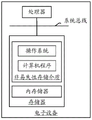
Fig. 12 is a schematic diagram of an internal structure of an electronic device in one embodiment. As shown in fig. 12, the electronic device includes a processor and a memory connected by a system bus. Wherein, the processor is used for providing calculation and control capability and supporting the operation of the whole electronic equipment. The memory may include a non-volatile storage medium and an internal memory. The non-volatile storage medium stores an operating system and a computer program. The computer program can be executed by a processor to implement a picture text processing method provided in the following embodiments. The internal memory provides a cached execution environment for the operating system computer programs in the non-volatile storage medium. The electronic device may be any terminal device such as a mobile phone, a tablet computer, a PDA (Personal Digital Assistant), a Point of Sales (POS), a vehicle-mounted computer, and a wearable device.
The implementation of each module in the picture text processing apparatus provided in the embodiment of the present application may be in the form of a computer program. The computer program may be run on a terminal or a server. Program modules constituted by such computer programs may be stored on the memory of the electronic device. Which when executed by a processor, performs the steps of the method described in the embodiments of the present application.
The embodiment of the application also provides a computer readable storage medium. One or more non-transitory computer-readable storage media containing computer-executable instructions that, when executed by one or more processors, cause the processors to perform the steps of the pictorial text processing method.
A computer program product containing instructions which, when run on a computer, cause the computer to perform a method of picture text processing.
Any reference to memory, storage, database, or other medium used herein may include non-volatile and/or volatile memory. Non-volatile memory can include read-only memory (ROM), Programmable ROM (PROM), Electrically Programmable ROM (EPROM), Electrically Erasable Programmable ROM (EEPROM), or flash memory. Volatile memory can include Random Access Memory (RAM), which acts as external cache memory. By way of illustration and not limitation, RAM is available in a variety of forms, such as Static RAM (SRAM), Dynamic RAM (DRAM), Synchronous DRAM (SDRAM), double data rate SDRAM (DDR SDRAM), Enhanced SDRAM (ESDRAM), synchronous Link (Synchlink) DRAM (SLDRAM), Rambus Direct RAM (RDRAM), direct bus dynamic RAM (DRDRAM), and bus dynamic RAM (RDRAM).
The above-mentioned embodiments only express several embodiments of the present application, and the description thereof is more specific and detailed, but not construed as limiting the scope of the present application. It should be noted that, for a person skilled in the art, several variations and modifications can be made without departing from the concept of the present application, which falls within the scope of protection of the present application. Therefore, the protection scope of the present patent shall be subject to the appended claims.