CN111096063A - Processing method and device for Discontinuous Reception (DRX) and computer storage medium - Google Patents
Processing method and device for Discontinuous Reception (DRX) and computer storage medium Download PDFInfo
- Publication number
- CN111096063A CN111096063A CN201980003490.1A CN201980003490A CN111096063A CN 111096063 A CN111096063 A CN 111096063A CN 201980003490 A CN201980003490 A CN 201980003490A CN 111096063 A CN111096063 A CN 111096063A
- Authority
- CN
- China
- Prior art keywords
- drx
- group
- power saving
- saving signal
- groups
- Prior art date
- Legal status (The legal status is an assumption and is not a legal conclusion. Google has not performed a legal analysis and makes no representation as to the accuracy of the status listed.)
- Granted
Links
Images


Classifications
-
- H—ELECTRICITY
- H04—ELECTRIC COMMUNICATION TECHNIQUE
- H04W—WIRELESS COMMUNICATION NETWORKS
- H04W52/00—Power management, e.g. Transmission Power Control [TPC] or power classes
- H04W52/02—Power saving arrangements
- H04W52/0209—Power saving arrangements in terminal devices
- H04W52/0225—Power saving arrangements in terminal devices using monitoring of external events, e.g. the presence of a signal
- H04W52/0229—Power saving arrangements in terminal devices using monitoring of external events, e.g. the presence of a signal where the received signal is a wanted signal
- H04W52/0235—Power saving arrangements in terminal devices using monitoring of external events, e.g. the presence of a signal where the received signal is a wanted signal where the received signal is a power saving command
-
- H—ELECTRICITY
- H04—ELECTRIC COMMUNICATION TECHNIQUE
- H04W—WIRELESS COMMUNICATION NETWORKS
- H04W52/00—Power management, e.g. Transmission Power Control [TPC] or power classes
- H04W52/02—Power saving arrangements
- H04W52/0209—Power saving arrangements in terminal devices
- H04W52/0212—Power saving arrangements in terminal devices managed by the network, e.g. network or access point is leader and terminal is follower
- H04W52/0219—Power saving arrangements in terminal devices managed by the network, e.g. network or access point is leader and terminal is follower where the power saving management affects multiple terminals
-
- H—ELECTRICITY
- H04—ELECTRIC COMMUNICATION TECHNIQUE
- H04W—WIRELESS COMMUNICATION NETWORKS
- H04W76/00—Connection management
- H04W76/20—Manipulation of established connections
- H04W76/28—Discontinuous transmission [DTX]; Discontinuous reception [DRX]
-
- Y—GENERAL TAGGING OF NEW TECHNOLOGICAL DEVELOPMENTS; GENERAL TAGGING OF CROSS-SECTIONAL TECHNOLOGIES SPANNING OVER SEVERAL SECTIONS OF THE IPC; TECHNICAL SUBJECTS COVERED BY FORMER USPC CROSS-REFERENCE ART COLLECTIONS [XRACs] AND DIGESTS
- Y02—TECHNOLOGIES OR APPLICATIONS FOR MITIGATION OR ADAPTATION AGAINST CLIMATE CHANGE
- Y02D—CLIMATE CHANGE MITIGATION TECHNOLOGIES IN INFORMATION AND COMMUNICATION TECHNOLOGIES [ICT], I.E. INFORMATION AND COMMUNICATION TECHNOLOGIES AIMING AT THE REDUCTION OF THEIR OWN ENERGY USE
- Y02D30/00—Reducing energy consumption in communication networks
- Y02D30/70—Reducing energy consumption in communication networks in wireless communication networks
Landscapes
- Engineering & Computer Science (AREA)
- Computer Networks & Wireless Communication (AREA)
- Signal Processing (AREA)
- Mobile Radio Communication Systems (AREA)
Abstract
The embodiment of the disclosure discloses a processing method, a device and a computer storage medium for Discontinuous Reception (DRX), wherein the method comprises the following steps: issuing an indication notification at least for indicating that at least one first DRX group of two or more DRX groups of User Equipment (UE) does not apply DRX parameters or does not apply power saving signals.
Description
Technical Field
The present disclosure relates to communications technologies, and in particular, to a method and an apparatus for processing DRX discontinuous reception, and a computer storage medium.
Background
In order to achieve the purpose of power saving, a power saving signal is introduced in a new generation communication system. After a plurality of Discontinuous Reception (DRX) groups are introduced, there is a high possibility that no DRX configuration is available in a primary cell, which may result in a failure to send a power saving signal, and thus a large amount of power consumption of a User Equipment (UE) is easily caused.
Disclosure of Invention
The disclosure provides a processing method and device for Discontinuous Reception (DRX) and a computer storage medium.
According to a first aspect of the embodiments of the present disclosure, a method for processing discontinuous reception DRX is provided, including:
issuing an indication notification at least for indicating that at least one first DRX group of two or more DRX groups of User Equipment (UE) does not apply DRX parameters or does not apply power saving signals.
In the above scheme, the method includes:
and not sending the power saving signal of the first DRX group on the cell corresponding to the first DRX group.
In the above scheme, the two or more DRX groups further include a second DRX group; the method further comprises the following steps:
transmitting a power saving signal for the second DRX group on the first DRX group; the second DRX group is a DRX group of the two or more DRX groups to which the DRX parameter is applied.
In the foregoing solution, the signal parameters of the power saving signal of the second DRX group at least include the following parameters:
a period of the power saving signal;
a start-stop time of the power saving signal.
In the above scheme, the cycle is configured according to a DRX cycle configured for the second DRX packet;
the start-stop time comprises a start time, the time point corresponding to the start time is a point offset by a preset offset amount with respect to a specified reference point, and the specified reference point is a start point of a configured duration for the second DRX packet.
In the above scheme, the two or more DRX groups further include a second DRX group; the method comprises the following steps:
and sending a power saving signal of a second DRX group on at least one cell corresponding to the second DRX group, wherein the second DRX group is the DRX group which applies the DRX parameters in the two or more DRX groups.
In the above scheme, the method further comprises:
receiving first auxiliary information sent by the UE; determining two or more DRX groups based on the first assistance information;
and/or
Receiving second auxiliary information sent by the UE;
determining the first DRX group of two or more DRX groups to which no DRX parameter is applied or the DRX group to which no power saving signal is applied, based on the second assistance information.
According to a second aspect of the embodiments of the present disclosure, a method for processing a DRX parameter is provided, including:
receiving an indication notice issued by a base station;
determining, based on the indication notification, that a first DRX group of the two or more DRX groups does not apply DRX parameters or apply a power save signal.
In the above scheme, the method further comprises:
and not monitoring the power saving signal of the first DRX group on the cell corresponding to the first DRX group.
In the above scheme, the two or more DRX groups further include a second DRX group; the method further comprises the following steps:
monitoring a power saving signal of the second DRX group on the first DRX group; the second DRX group is the DRX group of the two or more DRX groups to which the DRX parameter is applied.
In the foregoing solution, the signal parameters of the power saving signal of the second DRX group at least include the following parameters:
a period of the power saving signal;
a start-stop time of the power saving signal.
In the above scheme, the cycle is configured according to a DRX cycle configured for the second DRX packet;
the start-stop time comprises a start time, the time point corresponding to the start time is a point offset by a preset offset amount with respect to a specified reference point, and the specified reference point is a start point of a configured duration for the second DRX packet.
In the foregoing solution, the two or more DRX groups further include a second DRX group, and the method further includes:
and monitoring the power saving signal of the second DRX group on at least one cell corresponding to the second DRX group.
In the above scheme, the method further comprises:
transmitting first auxiliary information to a base station; the first assistance information is used to determine two or more DRX groups;
and/or
Transmitting second assistance information to the base station; the second assistance information is used to determine the first DRX group to which DRX parameters are not applied or a DRX group to which a power saving signal is not used.
According to a third aspect of the embodiments of the present disclosure, there is provided a processing apparatus for discontinuous reception DRX, including:
the sending processing unit is configured to issue an indication notification, where the indication notification is at least used for indicating that a first DRX group of two or more DRX groups of the User Equipment (UE) does not apply the DRX parameter or does not apply the power saving signal.
According to a fourth aspect of the embodiments of the present disclosure, there is provided a processing apparatus for discontinuous reception DRX, including:
the receiving and sending unit is configured to receive an indication notice issued by the base station;
an interception processing unit configured to determine that a first DRX group of the two or more DRX groups does not apply the DRX parameter or does not apply the power saving signal based on the indication notification.
According to a fifth aspect of the embodiments of the present disclosure, there is provided a processing apparatus for discontinuous reception DRX, including:
a processor;
a memory for storing executable instructions;
the processor is configured to implement any one of the processing methods applied to the DRX of discontinuous reception according to the base station side technical solution by executing the executable instruction.
According to a sixth aspect of the embodiments of the present disclosure, there is provided a processing apparatus for discontinuous reception DRX, including:
a processor;
a memory for storing executable instructions;
wherein the processor is configured to implement any one of the aforementioned processing methods applied to the DRX of UE side technical solution by executing the executable instruction.
According to a seventh aspect of the embodiments of the present disclosure, a computer storage medium is provided, where an executable instruction is stored in the computer storage medium, and after the executable instruction is executed by a processor, the method for processing DRX in discontinuous reception according to any one of the foregoing solutions applied to the base station side is implemented.
According to an eighth aspect of the embodiments of the present disclosure, there is provided a computer storage medium, where executable instructions are stored in the computer storage medium, and after the executable instructions are executed by a processor, the method for processing DRX in discontinuous reception according to any one of the foregoing technical solutions applied to the UE side can be implemented.
The technical scheme provided by the embodiment of the disclosure can have the following beneficial effects:
issuing an indication notification, wherein the indication notification is at least used for indicating at least one first DRX group of two or more DRX groups of User Equipment (UE) not to apply DRX parameters or not to apply power saving signals; as such, the UE is facilitated to determine, based on the indication notification, that a first DRX group of the plurality of DRX groups does not apply DRX parameters, thereby facilitating saving power consumption for monitoring power saving signals on the first DRX group.
It is to be understood that both the foregoing general description and the following detailed description are exemplary and explanatory only and are not restrictive of the disclosure.
Drawings
The accompanying drawings, which are incorporated in and constitute a part of this specification, illustrate embodiments consistent with the invention and together with the description, serve to explain the principles of the invention.
Fig. 1 is a block diagram illustrating a wireless communication system in accordance with an exemplary embodiment;
fig. 2 is a first flowchart illustrating a method for handling discontinuous reception DRX according to an exemplary embodiment;
fig. 3 is a flowchart illustrating a method for handling discontinuous reception DRX according to an exemplary embodiment;
fig. 4 is a first block diagram of a processing device for discontinuous reception DRX according to an exemplary embodiment;
fig. 5 is a block diagram two illustrating a processing apparatus for discontinuous reception DRX according to an exemplary embodiment;
fig. 6 is a block diagram one illustrating an apparatus 800 for processing for discontinuous reception, DRX, in accordance with an example embodiment;
fig. 7 is a block diagram two illustrating an apparatus 900 for processing of discontinuous reception, DRX, according to an example embodiment.
Detailed Description
Reference will now be made in detail to the exemplary embodiments, examples of which are illustrated in the accompanying drawings. When the following description refers to the accompanying drawings, like numbers in different drawings represent the same or similar elements unless otherwise indicated. The embodiments described in the following exemplary embodiments do not represent all embodiments consistent with the examples of the present application. Rather, they are merely examples of apparatus and methods consistent with certain aspects of the embodiments of the application, as detailed in the appended claims.
The terminology used in the embodiments of the present disclosure is for the purpose of describing particular embodiments only and is not intended to be limiting of the embodiments of the present disclosure. As used in the disclosed embodiments and the appended claims, the singular forms "a," "an," and "the" are intended to include the plural forms as well, unless the context clearly indicates otherwise. It should also be understood that the term "and/or" as used herein refers to and encompasses any and all possible combinations of one or more of the associated listed items.
It is to be understood that although the terms first, second, third, etc. may be used herein to describe various information in the embodiments of the present disclosure, such information should not be limited by these terms. These terms are only used to distinguish one type of information from another. For example, first information may also be referred to as second information, and similarly, second information may also be referred to as first information, without departing from the scope of embodiments of the present disclosure. The words "if" and "if" as used herein may be interpreted as "at … …" or "at … …" or "in response to a determination", depending on the context.
Referring to fig. 1, a schematic structural diagram of a wireless communication system according to an embodiment of the present disclosure is shown. As shown in fig. 1, the wireless communication system is a communication system based on a cellular mobile communication technology, and may include: several terminals 11 and several base stations 12.
The base station 12 may be a network side device in a wireless communication system. The wireless communication system may be a fourth generation mobile communication (4G) system, which is also called a Long Term Evolution (LTE) system; alternatively, the wireless communication system may be a 5G system, which is also called a New Radio (NR) system or a 5G NR system. Alternatively, the wireless communication system may be a next-generation system of a 5G system. Among them, the Access Network in the 5G system may be referred to as NG-RAN (New Generation-Radio Access Network, New Generation Radio Access Network). Or a Machine-Type Communication (MTC) system.
The base station 12 may be an evolved node b (eNB) used in a 4G system. Alternatively, the base station 12 may be a base station (gNB) adopting a centralized distributed architecture in the 5G system. When the base station 12 employs a centralized Distributed architecture, it typically includes a Central Unit (CU) and at least two Distributed Units (DU). A Packet Data Convergence Protocol (PDCP) layer, a Radio Link layer Control Protocol (RLC) layer, and a Media Access Control (MAC) layer are provided in the central unit; a Physical (PHY) layer protocol stack is disposed in the distribution unit, and the embodiment of the present disclosure does not limit the specific implementation manner of the base station 12.
The base station 12 and the terminal 11 may establish a wireless connection over a wireless air interface. In various embodiments, the wireless air interface is based on a fourth generation mobile communication network technology (4G) standard; or the wireless air interface is based on a fifth generation mobile communication network technology (5G) standard, for example, the wireless air interface is a new air interface; alternatively, the wireless air interface may be a wireless air interface based on a 5G next generation mobile communication network technology standard.
In some embodiments, an E2E (End to End) connection may also be established between terminals 11. Such as V2V (Vehicle to Vehicle) communication, V2I (Vehicle to Infrastructure) communication, and V2P (Vehicle to peer) communication in Vehicle networking communication (V2X).
In some embodiments, the wireless communication system may further include a network management device 13.
In order to meet the requirements of User Equipment (UE) peak rate and system capacity improvement, a Carrier Aggregation (CA) characteristic is introduced into Release10 in a Long Term Evolution (LTE) system, where carrier aggregation may be divided into continuous carrier aggregation and discontinuous carrier aggregation. For continuous carrier aggregation, the UE needs only one transceiver; for different frequency bands (bands) of non-contiguous carrier aggregation, different radio frequency links (RF chains) are required.
In the power saving item of Release16, a power saving signal is introduced, and the usage manner of the power saving signal is to inform whether the UE wakes up during the next onDuration period to monitor a Physical Downlink Control Channel (PDCCH). In a Carrier Aggregation (CA) scenario, a power saving signal is only transmitted in a Primary Cell (Pcell, Primary Secondary Cell, PSCell) and a Secondary Cell (Scell), that is, a set of power saving signal parameters are shared by the Pcell/PSCell and the Secondary Cell. The power saving signal may wake up for all Pcell and Scell, or carry an Identity (ID) of Pcell/PScell or Scell that needs to wake up in the power saving signal. However, after the introduction of the multi-DRX group, it is likely that no power saving signal can be sent due to no DRX configuration on the Pcell/PScell at all.
Based on the above wireless communication system, how to save the power of the UE, various embodiments of the method of the present disclosure are proposed.
Fig. 2 is a flowchart illustrating a discontinuous reception DRX processing method according to an exemplary embodiment, where the discontinuous reception DRX processing method is used in a base station, as shown in fig. 2, and includes the following steps.
In step S11, an indication notification is issued at least for indicating that at least one first Discontinuous Reception (DRX) group of two or more DRX groups of a User Equipment (UE) does not apply a DRX parameter or apply a power saving signal.
In this embodiment, the first DRX group includes:
a DRX group of Primary cells (Primary Cell, PCell, or Primary Secondary Cell, PSCell).
Wherein, different DRX groups applying DRX parameters can have different power saving signals.
In some embodiments, the power save signal for each of the two or more DRX groups is different; or the power saving signals of at least two DRX groups in the two or more DRX groups are different.
According to the technical scheme of the embodiment of the disclosure, the indication notice for indicating that the first DRX group in the multiple DRX groups of the UE does not apply the DRX parameters is issued, so that the UE can determine that the first DRX group in the multiple DRX groups does not apply the DRX parameters or does not apply the power saving signals based on the indication notice, and the power consumption for monitoring the power saving signals on the first DRX group is saved.
In some embodiments, the two or more DRX groups further comprise a second DRX group; the method further comprises the following steps:
transmitting a power saving signal for the second DRX group on the first DRX group; the second DRX group is a DRX group of the two or more DRX groups to which the DRX parameter is applied.
Thus, the power saving signal of the DRX group using the power saving signal can be transmitted on the DRX group not using the power saving signal, and the problem that the power saving signal cannot be transmitted because the DRX configuration is not arranged on a certain cell such as a main cell can be solved.
Wherein, the signal parameter of the power saving signal comprises:
a period of the power saving signal;
a start-stop time of the power saving signal.
Wherein the cycle is configured in accordance with a DRX cycle configured for the second DRX packet.
Wherein the start-stop time comprises a start time, the time point corresponding to the start time is a point offset by a preset offset amount with respect to a specified reference point, and the specified reference point is a start point of a configured duration for the second DRX packet.
In some embodiments, the method further comprises:
and sending the power saving signal of the second DRX group on at least one cell corresponding to the second DRX group.
In this way, the power saving signal of the DRX group using the power saving signal is transmitted on the DRX group using the power saving signal, so that the flexibility of parameter configuration of the power saving signal is improved, and the power consumption for monitoring the power saving signal is reduced.
In some embodiments, the method further comprises:
and not sending the power saving signal of the first DRX group on the cell corresponding to the first DRX group.
In this way, for the first DRX group, since the DRX parameters are not applied, the power saving signal is not used, and power consumption of the UE for power saving signal monitoring can be reduced.
In some embodiments, the method further comprises:
transmitting first auxiliary information to a base station; the first assistance information is used to determine two or more DRX groups.
As such, the base station is facilitated to determine two or more DRX groups based on the first assistance information.
In some embodiments, the method further comprises:
transmitting second assistance information to the base station; the second assistance information is used to determine the first DRX group to which no DRX parameter is applied or the DRX group to which no power saving signal is applied.
Wherein, the DRX group to which the power saving signal is not applied includes, but is not limited to, the first packet.
As such, the base station is facilitated to determine the first DRX group to which the DRX parameter is not applied or the DRX group to which the power saving signal is not applied based on the second assistance information.
In some embodiments, the indication notification is added to the first system message or the first dedicated signaling, and the first system message or the first dedicated signaling is sent to the UE, so that the UE acquires the indication notification from the first system message or the first dedicated signaling.
In this way, the indication notification can be notified to the UE through the first system message or the first dedicated signaling, thereby improving reliability of power saving signal configuration information transmission.
The technical means described in the above embodiments may be arbitrarily combined without conflict.
In view of the fact that the first DRX group in the foregoing embodiments is a DRX group including a primary cell (PCell or PSCell), the present disclosure further provides a method for processing a DRX parameter, including:
issuing an indication notification, wherein the indication notification is at least used for indicating at least one first DRX group of two or more DRX groups of User Equipment (UE) not to apply DRX parameters or not to apply power saving signals; wherein the first DRX group does not include a DRX group of a primary cell (PCell or PSCell).
That is, the first DRX group includes only a DRX group of a Secondary Cell (SCell).
Wherein, different DRX groups applying DRX parameters can have different power saving signals.
In some embodiments, the power save signal for each of the two or more DRX groups is different; or the power saving signals of at least two DRX groups in the two or more DRX groups are different.
According to the technical scheme of the embodiment of the disclosure, the indication notice for indicating that the first DRX group in the multiple DRX groups of the UE does not apply the DRX parameters is issued, so that the UE can determine that the first DRX group in the multiple DRX groups does not apply the DRX parameters or does not apply the power saving signals based on the indication notice, and the power consumption for monitoring the power saving signals on the first DRX group is saved.
In some embodiments, the two or more DRX groups further comprise a second DRX group; the method further comprises the following steps:
transmitting a power saving signal for the second DRX group on the first DRX group; the second DRX group is a DRX group of the two or more DRX groups to which the DRX parameter is applied.
Thus, the power saving signal of the DRX group using the power saving signal can be transmitted on the DRX group not using the power saving signal, and the problem that the power saving signal cannot be transmitted because the DRX configuration is not arranged on a certain cell such as a main cell can be solved.
Wherein, the signal parameter of the power saving signal comprises:
a period of the power saving signal;
a start-stop time of the power saving signal.
Wherein the cycle is configured in accordance with a DRX cycle configured for the second DRX packet.
Wherein the start-stop time comprises a start time, the time point corresponding to the start time is a point offset by a preset offset amount with respect to a specified reference point, and the specified reference point is a start point of a configured duration for the second DRX packet.
In some embodiments, the method further comprises:
and sending the power saving signal of the second DRX group on at least one cell corresponding to the second DRX group.
In this way, the power saving signal of the DRX group using the power saving signal is transmitted on the DRX group using the power saving signal, so that the flexibility of parameter configuration of the power saving signal is improved, and the power consumption for monitoring the power saving signal is reduced.
In some embodiments, the method further comprises:
and not sending the power saving signal of the first DRX group on the cell corresponding to the first DRX group.
In this way, for the first DRX group, since the DRX parameters are not applied, the power saving signal is not used, and power consumption of the UE for power saving signal monitoring can be reduced.
In some embodiments, the method further comprises:
transmitting first auxiliary information to a base station; the first assistance information is used to determine two or more DRX groups.
As such, the base station is facilitated to determine two or more DRX groups based on the first assistance information.
In some embodiments, the method further comprises:
transmitting second assistance information to the base station; the second assistance information is used to determine a first DRX group to which the DRX parameter is not applied or a DRX group to which a power saving signal is not applied.
As such, the base station is facilitated to determine the first DRX group to which the DRX parameter is not applied or the DRX group to which the power saving signal is not applied based on the second assistance information.
In some embodiments, the indication notification is added to the first system message or the first dedicated signaling, and the first system message or the first dedicated signaling is sent to the UE, so that the UE acquires the indication notification from the first system message or the first dedicated signaling.
In this way, the indication notification can be notified to the UE through the first system message or the first dedicated signaling, thereby improving reliability of power saving signal configuration information transmission.
Fig. 3 is a flowchart illustrating a discontinuous reception DRX processing method according to an exemplary embodiment, where as shown in fig. 3, the discontinuous reception DRX processing method is used in a UE, and includes the following steps:
in step S21, receiving an indication notification issued by the base station;
in step S22, it is determined that the first DRX group of the two or more DRX groups does not apply the DRX parameters or apply the power saving signal based on the indication notification.
In some embodiments, the first DRX group comprises:
a DRX group corresponding to a primary cell (PCell or PSCell).
In some embodiments, the first DRX group comprises:
a DRX group corresponding to a secondary cell (SCell).
Wherein, different DRX groups applying DRX parameters can have different power saving signals.
In some embodiments, the power save signal for each of the two or more DRX groups is different; or the power saving signals of at least two DRX groups in the two or more DRX groups are different.
In this way, the first DRX group without DRX parameters in the plurality of DRX groups can be determined based on the indication notice issued by the base station, thereby being beneficial to saving the power consumption for monitoring the power saving signal on the first DRX group.
In some embodiments, the two or more DRX groups further comprise a second DRX group; the method further comprises the following steps:
monitoring a power saving signal of the second DRX group on the first DRX group; the second DRX group is the DRX group of the two or more DRX groups to which the DRX parameter is applied.
Therefore, the power saving signal of the second DRX group is monitored on the first DRX group, and the power consumption of the UE for monitoring the power saving signal can be saved.
In some embodiments, the signal parameters of the power saving signal include:
a period of the power saving signal;
a start-stop time of the power saving signal.
Wherein the cycle is configured in accordance with a DRX cycle configured for the second DRX packet.
Wherein the start-stop time comprises a start time, the time point corresponding to the start time is a point offset by a preset offset amount with respect to a specified reference point, and the specified reference point is a start point of a configured duration for the second DRX packet.
In some embodiments, the method further comprises:
and monitoring the power saving signal of the second DRX group on at least one cell corresponding to the second DRX group.
In this way, the power saving signal of the DRX group using the power saving signal is monitored on the DRX group using the power saving signal, so that the flexibility of monitoring the power saving signal is improved, and the power consumption for monitoring the power saving signal is reduced.
In some embodiments, the method further comprises: and not monitoring the power saving signal of the first DRX group on the cell corresponding to the first DRX group.
As such, power consumption for monitoring power save signals on the first DRX group is facilitated to be saved.
In some embodiments, the method further comprises:
transmitting first auxiliary information to a base station; the first assistance information is used to determine two or more DRX groups.
As such, the base station is facilitated to determine two or more DRX groups based on the first assistance information.
In some embodiments, the method further comprises:
transmitting second assistance information to the base station; the second assistance information is used to determine a first DRX group to which the DRX parameter is not applied or a DRX group to which a power saving signal is not applied.
As such, the base station is facilitated to determine the first DRX group to which the DRX parameter is not applied, or to which the power saving signal is not used, based on the second assistance information.
Fig. 4 is a block diagram illustrating a first apparatus for processing discontinuous reception DRX according to an exemplary embodiment. The processing device for discontinuous reception DRX is applied to the base station side, and referring to fig. 4, the device includes a transmission processing unit 10.
The sending processing unit 10 is configured to issue an indication notification, where the indication notification is at least used for indicating that at least one first DRX group of two or more DRX groups of the UE does not apply the DRX parameters or does not apply the power saving signal.
In some embodiments, the first DRX group comprises:
a DRX group corresponding to a Primary Cell (PCell or PSCell).
In some embodiments, the first DRX group comprises:
a DRX group corresponding to a Secondary Cell (SCell).
In some embodiments, the sending processing unit 10 is configured to:
and not sending the power saving signal of the first DRX group on the cell corresponding to the first DRX group.
In some embodiments, the two or more DRX groups further include a second DRX group; the transmission processing unit 10 is configured to:
transmitting a power saving signal for the second DRX group on the first DRX group; the second DRX group is a DRX group of the two or more DRX groups to which the DRX parameter is applied.
In some embodiments, the signal parameters of the power saving signal of the second DRX group include at least the following parameters:
a period of the power saving signal;
a start-stop time of the power saving signal.
Wherein the cycle is configured in accordance with a DRX cycle configured for the second DRX packet;
the start-stop time comprises a start time, the time point corresponding to the start time is a point offset by a preset offset amount with respect to a specified reference point, and the specified reference point is a start point of a configured duration for the second DRX packet.
In some embodiments, the two or more DRX groups further include a second DRX group; the method comprises the following steps:
and sending a power saving signal of a second DRX group on at least one cell corresponding to the second DRX group, wherein the second DRX group is the DRX group which applies the DRX parameters in the two or more DRX groups.
In the above scheme, the power saving signal of each DRX group of the two or more DRX groups is different; or the power saving signals of at least two DRX groups in the two or more DRX groups are different.
In some embodiments, the apparatus further comprises:
a receiving processing unit 20 configured to receive first assistance information transmitted by the UE;
a determining unit 30 configured to determine two or more DRX groups based on the first assistance information;
the receiving processing unit 20 is further configured to receive second assistance information transmitted by the UE;
the determining unit 30 is further configured to determine a first DRX group of the two or more DRX groups to which no DRX parameter is applied or a DRX group to which no power saving signal is applied, based on the second assistance information.
With regard to the apparatus in the above-described embodiment, the specific manner in which each module performs the operation has been described in detail in the embodiment related to the method, and will not be elaborated here.
In practical applications, the specific structures of the sending Processing Unit 10, the receiving Processing Unit 20 and the determining Unit 30 can be implemented by a Central Processing Unit (CPU), a Microprocessor (MCU), a Digital Signal Processor (DSP), a Programmable Logic Controller (PLC), etc. in the DRX discontinuous reception Processing apparatus or the base station to which the DRX discontinuous reception Processing apparatus belongs.
The device for processing DRX discontinuous reception according to this embodiment may be disposed at the base station.
It should be understood by those skilled in the art that the functions of each processing module in the processing apparatus for DRX discontinuous reception according to the embodiment of the present disclosure may be understood by referring to the foregoing description of the processing method applied to DRX discontinuous reception on the base station side, and each processing module in the processing apparatus for DRX discontinuous reception according to the embodiment of the present disclosure may be implemented by an analog circuit that implements the functions described in the embodiment of the present disclosure, or may be implemented by running software that performs the functions described in the embodiment of the present disclosure on a terminal.
The processing apparatus for discontinuous reception DRX according to the embodiment of the present disclosure, by issuing the indication notification for indicating that the first DRX group of the multiple DRX groups of the UE does not apply the DRX parameter, facilitates the UE to determine that the first DRX group of the multiple DRX groups does not apply the DRX parameter based on the indication notification, thereby facilitating saving power consumption for monitoring a power saving signal on the first DRX group.
Fig. 5 is a block diagram illustrating a device for processing DRX discontinuous reception according to an exemplary embodiment. The processing apparatus for discontinuous reception DRX is applied to the UE side, and referring to fig. 5, the apparatus includes a transceiving unit 40 and a monitoring processing unit 50.
A transceiving unit 40 configured to receive an indication notification issued by a base station;
an interception processing unit 50 configured to determine that a first DRX group of the two or more DRX groups does not apply the DRX parameter or does not apply the power saving signal based on the indication notification.
In some embodiments, the first DRX group comprises:
a DRX group corresponding to a primary cell (PCell or PSCell).
In some embodiments, the first DRX group comprises:
a DRX group corresponding to a secondary cell, SCell.
In some embodiments, the listening processing unit 50 is further configured to:
and not monitoring the power saving signal of the first DRX group on the cell corresponding to the first DRX group.
In some embodiments, the two or more DRX groups further include a second DRX group; the snoop processing unit 50 is further configured to:
monitoring a power saving signal of the second DRX group on the first DRX group; the second DRX group is the DRX group of the two or more DRX groups to which the DRX parameter is applied.
In some embodiments, the signal parameters of the power saving signal of the second DRX group include at least the following parameters:
a period of the power saving signal;
a start-stop time of the power saving signal.
Wherein the cycle is configured in accordance with a DRX cycle configured for the second DRX packet;
the start-stop time comprises a start time, the time point corresponding to the start time is a point offset by a preset offset amount with respect to a specified reference point, and the specified reference point is a start point of a configured duration for the second DRX packet.
In some embodiments, the two or more DRX groups further include a second DRX group, and the monitoring processing unit 50 is further configured to:
and monitoring the power saving signal of the second DRX group on at least one cell corresponding to the second DRX group. In the above scheme, the power saving signal of each DRX group of the two or more DRX groups is different; or the power saving signals of at least two DRX groups in the two or more DRX groups are different.
In some embodiments, the transceiving unit 40 is further configured to:
transmitting first auxiliary information to a base station; the first assistance information is used to determine two or more DRX groups;
and/or
Transmitting second assistance information to the base station; the second assistance information is used to determine a first DRX group to which the DRX parameter is not applied or a DRX group to which a power saving signal is not applied.
With regard to the apparatus in the above-described embodiment, the specific manner in which each module performs the operation has been described in detail in the embodiment related to the method, and will not be elaborated here.
In practical applications, the specific structures of the transceiver unit 40 and the monitoring processing unit 50 can be implemented by a CPU, an MCU, a DSP, or a PLC in the processing device for receiving DRX discontinuously or the UE to which the processing device for receiving DRX discontinuously belongs.
The device for processing DRX discontinuous reception according to this embodiment may be disposed at the UE side.
It should be understood by those skilled in the art that the functions of each processing module in the processing apparatus for DRX discontinuous reception according to the embodiments of the present disclosure may be understood by referring to the foregoing description of the processing method for DRX discontinuous reception applied to the UE side, and each processing module in the processing apparatus for DRX discontinuous reception according to the embodiments of the present disclosure may be implemented by an analog circuit that implements the functions described in the embodiments of the present disclosure, or may be implemented by running software that performs the functions described in the embodiments of the present disclosure on a terminal.
The processing apparatus for discontinuous reception DRX according to the embodiment of the present disclosure can determine, based on an indication notification issued by a base station, a first DRX group of a plurality of DRX groups to which a DRX parameter is not applied, thereby helping to save power consumption for monitoring a power saving signal on the first DRX group.
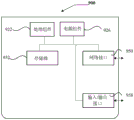
Fig. 6 is a block diagram illustrating an apparatus 800 for implementing a process for discontinuous reception, DRX, in accordance with an example embodiment. For example, the apparatus 800 may be a mobile phone, a computer, a digital broadcast terminal, a messaging device, a game console, a tablet device, a medical device, an exercise device, a personal digital assistant, and the like.
Referring to fig. 6, the apparatus 800 may include one or more of the following components: a processing component 802, a memory 804, a power component 806, a multimedia component 808, an audio component 810, an Input/Output (I/O) interface 812, a sensor component 814, and a communication component 816.
The processing component 802 generally controls overall operation of the device 800, such as operations associated with display, telephone calls, data communications, camera operations, and recording operations. The processing components 802 may include one or more processors 820 to execute instructions to perform all or a portion of the steps of the methods described above. Further, the processing component 802 can include one or more modules that facilitate interaction between the processing component 802 and other components. For example, the processing component 802 can include a multimedia module to facilitate interaction between the multimedia component 808 and the processing component 802.
The memory 804 is configured to store various types of data to support operations at the apparatus 800. Examples of such data include instructions for any application or method operating on device 800, contact data, phonebook data, messages, pictures, videos, and so forth. The Memory 804 may be implemented by any type of volatile or non-volatile Memory device or combination thereof, such as Static Random-Access Memory (SRAM), Electrically-Erasable Programmable Read-Only Memory (EEPROM), Erasable Programmable Read-Only Memory (EPROM), Programmable Read-Only Memory (PROM), Read-Only Memory (ROM), magnetic Memory, flash Memory, magnetic disk or optical disk.
The multimedia component 808 includes a screen that provides an output interface between the device 800 and a user. In some embodiments, the screen may include a Liquid Crystal Display (LCD) and a Touch Panel (TP). If the screen includes a touch panel, the screen may be implemented as a touch screen to receive an input signal from a user. The touch panel includes one or more touch sensors to sense touch, slide, and gestures on the touch panel. The touch sensor may not only sense the boundary of a touch or slide action, but also detect the duration and pressure associated with the touch or slide operation. In some embodiments, the multimedia component 808 includes a front facing camera and/or a rear facing camera. The front camera and/or the rear camera may receive external multimedia data when the device 800 is in an operating mode, such as a shooting mode or a video mode. Each front camera and rear camera may be a fixed optical lens system or have a focal length and optical zoom capability.
The audio component 810 is configured to output and/or input audio signals. For example, the audio component 810 includes a Microphone (MIC) configured to receive external audio signals when the apparatus 800 is in an operating mode, such as a call mode, a recording mode, and a voice recognition mode. The received audio signals may further be stored in the memory 804 or transmitted via the communication component 816. In some embodiments, audio component 810 also includes a speaker for outputting audio signals.
The I/O interface 812 provides an interface between the processing component 802 and peripheral interface modules, which may be keyboards, click wheels, buttons, etc. These buttons may include, but are not limited to: a home button, a volume button, a start button, and a lock button.
The sensor assembly 814 includes one or more sensors for providing various aspects of state assessment for the device 800. For example, the sensor assembly 814 may detect the open/closed status of the device 800, the relative positioning of components, such as a display and keypad of the device 800, the sensor assembly 814 may also detect a change in the position of the device 800 or a component of the device 800, the presence or absence of user contact with the device 800, the orientation or acceleration/deceleration of the device 800, and a change in the temperature of the device 800. Sensor assembly 814 may include a proximity sensor configured to detect the presence of a nearby object without any physical contact. The sensor assembly 814 may also include a photosensor, such as a Complementary Metal Oxide Semiconductor (CMOS) or Charge-coupled device (CCD) image sensor, for use in imaging applications. In some embodiments, the sensor assembly 814 may also include an acceleration sensor, a gyroscope sensor, a magnetic sensor, a pressure sensor, or a temperature sensor.
The communication component 816 is configured to facilitate communications between the apparatus 800 and other devices in a wired or wireless manner. The device 800 may access a wireless network based on a communication standard, such as Wi-Fi, 2G, or 3G, or a combination thereof. In an exemplary embodiment, the communication component 816 receives a broadcast signal or broadcast related information from an external broadcast management system via a broadcast channel. In an exemplary embodiment, the communication component 816 further includes a Near Field Communication (NFC) module to facilitate short-range communications. For example, the NFC module may be implemented based on Radio Frequency Identification (RFID) technology, Infrared Data Association (IrDA) technology, Ultra Wide Band (UWB) technology, Bluetooth (BT) technology, and other technologies.
In an exemplary embodiment, the apparatus 800 may be implemented by one or more Application Specific Integrated Circuits (ASICs), Digital Signal Processors (DSPs), Digital Signal Processing Devices (DSPDs), Programmable Logic Devices (PLDs), Field Programmable Gate Arrays (FPGAs), controllers, microcontrollers, microprocessors or other electronic components for performing the above-described Processing method applied to the discontinuous reception DRX at the user terminal side.
In an exemplary embodiment, a non-transitory computer storage medium including executable instructions, such as the memory 804 including executable instructions, that are executable by the processor 820 of the device 800 to perform the above-described method is also provided. For example, the non-transitory computer storage medium may be a ROM, a Random Access Memory (RAM), a CD-ROM, a magnetic tape, a floppy disk, an optical data storage device, and the like.
Fig. 7 is a block diagram illustrating an apparatus 900 for processing for discontinuous reception, DRX, in accordance with an example embodiment. For example, the apparatus 900 may be provided as a server. Referring to fig. 7, the apparatus 900 includes a processing component 922, which further includes one or more processors, and memory resources, represented by memory 932, for storing instructions, such as applications, that are executable by the processing component 922. The application programs stored in memory 932 may include one or more modules that each correspond to a set of instructions. Further, the processing component 922 is configured to execute instructions to perform the above-described processing method applied to discontinuous reception DRX on the base station side.
The device 900 may also include a power component 926 configured to perform power management of the device 900, a wired or wireless network interface 950 configured to connect the device 900 to a network, and an input output (I/O) interface 958. The apparatus 900 may operate based on an operating system stored in the memory 932, such as Windows Server, Mac OS XTM, UnixTM, LinuxTM, FreeBSDTM, or the like.
The technical solutions described in the embodiments of the present disclosure can be arbitrarily combined without conflict.
Other embodiments of the invention will be apparent to those skilled in the art from consideration of the specification and practice of the invention disclosed herein. This application is intended to cover any variations, uses, or adaptations of the invention following, in general, the principles of the invention and including such departures from the present disclosure as come within known or customary practice within the art to which the invention pertains. It is intended that the specification and examples be considered as exemplary only, with a true scope and spirit of the invention being indicated by the following claims.
It will be understood that the invention is not limited to the precise arrangements described above and shown in the drawings and that various modifications and changes may be made without departing from the scope thereof. The scope of the invention is limited only by the appended claims.
Claims (20)
Applications Claiming Priority (1)
| Application Number | Priority Date | Filing Date | Title |
|---|---|---|---|
| PCT/CN2019/124115 WO2021114050A1 (en) | 2019-12-09 | 2019-12-09 | Discontinuous reception (drx) processing method and device, and computer storage medium |
Publications (2)
| Publication Number | Publication Date |
|---|---|
| CN111096063A true CN111096063A (en) | 2020-05-01 |
| CN111096063B CN111096063B (en) | 2023-09-19 |
Family
ID=70400286
Family Applications (1)
| Application Number | Title | Priority Date | Filing Date |
|---|---|---|---|
| CN201980003490.1A Active CN111096063B (en) | 2019-12-09 | 2019-12-09 | Discontinuous reception DRX processing method, device and computer storage medium |
Country Status (3)
| Country | Link |
|---|---|
| US (1) | US20230018840A1 (en) |
| CN (1) | CN111096063B (en) |
| WO (1) | WO2021114050A1 (en) |
Cited By (3)
| Publication number | Priority date | Publication date | Assignee | Title |
|---|---|---|---|---|
| WO2022083418A1 (en) * | 2020-10-23 | 2022-04-28 | 大唐移动通信设备有限公司 | Energy saving signal transmission method and apparatus |
| WO2022188157A1 (en) * | 2021-03-12 | 2022-09-15 | 北京小米移动软件有限公司 | Power-saving processing method and apparatus for ue, and communication device and storage medium |
| CN115623563A (en) * | 2021-07-15 | 2023-01-17 | 维沃移动通信有限公司 | Power saving signal monitoring method, device, equipment and medium |
Families Citing this family (1)
| Publication number | Priority date | Publication date | Assignee | Title |
|---|---|---|---|---|
| CN109496446A (en) * | 2018-10-19 | 2019-03-19 | 北京小米移动软件有限公司 | Channel-monitoring method and device |
Citations (5)
| Publication number | Priority date | Publication date | Assignee | Title |
|---|---|---|---|---|
| CN103841594A (en) * | 2012-11-21 | 2014-06-04 | 中兴通讯股份有限公司 | Discontinuous reception management method, user equipment and base station |
| CN108616969A (en) * | 2016-12-20 | 2018-10-02 | 华为技术有限公司 | Data transmission method for uplink, data receiver method and equipment |
| US20180332655A1 (en) * | 2017-05-12 | 2018-11-15 | Qualcomm Incorporated | Techniques for multi-state drx in new radio |
| US20180338332A1 (en) * | 2017-05-16 | 2018-11-22 | Qualcomm Incorporated | Service specific short drx cycles |
| CN110546999A (en) * | 2019-07-25 | 2019-12-06 | 北京小米移动软件有限公司 | Change processing and monitoring method of wake-up signal, communication equipment and storage medium |
Family Cites Families (4)
| Publication number | Priority date | Publication date | Assignee | Title |
|---|---|---|---|---|
| US20100208660A1 (en) * | 2009-02-19 | 2010-08-19 | Samsung Electronics Co., Ltd. | Method for distributed drx operation for ease of scheduling and effective power saving |
| US10764825B2 (en) * | 2015-09-25 | 2020-09-01 | Sony Corporation | Wireless telecommunications system |
| CN108377551B (en) * | 2016-11-04 | 2022-07-12 | 华为技术有限公司 | DRX (discontinuous reception) processing method and device |
| CN110536382B (en) * | 2018-08-10 | 2022-07-29 | 中兴通讯股份有限公司 | Method and device for processing packet wake-up signal, base station, terminal and storage medium |
-
2019
- 2019-12-09 WO PCT/CN2019/124115 patent/WO2021114050A1/en not_active Ceased
- 2019-12-09 US US17/757,061 patent/US20230018840A1/en active Pending
- 2019-12-09 CN CN201980003490.1A patent/CN111096063B/en active Active
Patent Citations (5)
| Publication number | Priority date | Publication date | Assignee | Title |
|---|---|---|---|---|
| CN103841594A (en) * | 2012-11-21 | 2014-06-04 | 中兴通讯股份有限公司 | Discontinuous reception management method, user equipment and base station |
| CN108616969A (en) * | 2016-12-20 | 2018-10-02 | 华为技术有限公司 | Data transmission method for uplink, data receiver method and equipment |
| US20180332655A1 (en) * | 2017-05-12 | 2018-11-15 | Qualcomm Incorporated | Techniques for multi-state drx in new radio |
| US20180338332A1 (en) * | 2017-05-16 | 2018-11-22 | Qualcomm Incorporated | Service specific short drx cycles |
| CN110546999A (en) * | 2019-07-25 | 2019-12-06 | 北京小米移动软件有限公司 | Change processing and monitoring method of wake-up signal, communication equipment and storage medium |
Non-Patent Citations (8)
| Title |
|---|
| ERICSSON: "R2-1817967 \"DRX enhancement for NR-U\"", 3GPP TSG_RAN\\WG2_RL2, no. 2 * |
| INTERDIGITAL: "R2-1913606 "Further considerations for the WUS"", 《3GPP TSG_RAN\WG2_RL2》 * |
| INTERDIGITAL: "R2-1913606 "Further considerations for the WUS"", 《3GPP TSG_RAN\WG2_RL2》, 4 October 2019 (2019-10-04) * |
| SAMSUNG: "R2-1916152 "Further Considerations on multiple C-DRX"", 《3GPP TSG_RAN\WG2_RL2》 * |
| SAMSUNG: "R2-1916152 "Further Considerations on multiple C-DRX"", 《3GPP TSG_RAN\WG2_RL2》, 8 November 2019 (2019-11-08) * |
| XIAOMI COMMUNICATIONS: "R2-1912910 "Simulations on PDCCH-WUS not applying to the DRX short cycles"", 《3GPP TSG_RAN\WG2_RL2》 * |
| XIAOMI COMMUNICATIONS: "R2-1912910 "Simulations on PDCCH-WUS not applying to the DRX short cycles"", 《3GPP TSG_RAN\WG2_RL2》, 3 October 2019 (2019-10-03) * |
| ZTE: "\"S2-124879 was 4730 was 4406 Extended long DRX\"", 3GPP TSG_SA\\WG2_ARCH * |
Cited By (4)
| Publication number | Priority date | Publication date | Assignee | Title |
|---|---|---|---|---|
| WO2022083418A1 (en) * | 2020-10-23 | 2022-04-28 | 大唐移动通信设备有限公司 | Energy saving signal transmission method and apparatus |
| WO2022188157A1 (en) * | 2021-03-12 | 2022-09-15 | 北京小米移动软件有限公司 | Power-saving processing method and apparatus for ue, and communication device and storage medium |
| CN115623563A (en) * | 2021-07-15 | 2023-01-17 | 维沃移动通信有限公司 | Power saving signal monitoring method, device, equipment and medium |
| WO2023284876A1 (en) * | 2021-07-15 | 2023-01-19 | 维沃移动通信有限公司 | Power-saving signal monitoring method and apparatus, and device and medium |
Also Published As
| Publication number | Publication date |
|---|---|
| WO2021114050A1 (en) | 2021-06-17 |
| CN111096063B (en) | 2023-09-19 |
| US20230018840A1 (en) | 2023-01-19 |
Similar Documents
| Publication | Publication Date | Title |
|---|---|---|
| CN111699723B (en) | Communication processing method and device, and storage medium | |
| CN112673697B (en) | DRX configuration method and device, communication equipment and storage medium | |
| CN111406378B (en) | Communication method, device and computer storage medium | |
| WO2022178832A1 (en) | Information transmission method and apparatus, and communication device and storage medium | |
| CN110771222B (en) | Paging configuration method, device, communication equipment and storage medium | |
| CN111344993B (en) | Monitoring method, instruction issuing method and device, communication equipment and storage | |
| CN111357239A (en) | Communication processing method, device and computer storage medium | |
| CN111955049B (en) | State control method, device, communication equipment and storage medium | |
| CN114223312A (en) | Data transmission method, device, communication equipment and storage medium | |
| CN111096063B (en) | Discontinuous reception DRX processing method, device and computer storage medium | |
| CN114128366A (en) | Paging parameter determination method, device, communication equipment and storage medium | |
| CN110521275A (en) | Monitoring processing, policy distribution method and device, communication equipment and storage | |
| CN110945921A (en) | Method, device, equipment and medium for determining activation time of scheduled carrier | |
| CN110999527A (en) | Method, device and computer storage medium for processing wireless link failure | |
| WO2021120208A1 (en) | Paging method and apparatus, communication device and storage medium | |
| CN110999526B (en) | Short-cycle configuration method, device, communication equipment and storage medium | |
| CN111771421A (en) | Information processing method and device, communication device and storage medium | |
| CN111201814B (en) | Discontinuous reception processing method and device | |
| US12402096B2 (en) | Communication processing method and apparatus, and computer storage medium | |
| CN114503503B (en) | Method, device, communication equipment and storage medium for suspending monitoring | |
| CN113228553A (en) | Information transmission method, device, communication equipment and storage medium | |
| US12495360B2 (en) | Packet scheduling method and apparatus, user equipment, and storage medium | |
| CN115462099B (en) | Information transmission method, device, communication equipment and storage medium | |
| CN115088309A (en) | Information transmission method, device, communication equipment and storage medium |
Legal Events
| Date | Code | Title | Description |
|---|---|---|---|
| PB01 | Publication | ||
| PB01 | Publication | ||
| SE01 | Entry into force of request for substantive examination | ||
| SE01 | Entry into force of request for substantive examination | ||
| GR01 | Patent grant | ||
| GR01 | Patent grant |