CN111092199B - Method for simultaneously improving over-discharge capacity, low-voltage discharge capacity and storage performance of lithium battery - Google Patents
Method for simultaneously improving over-discharge capacity, low-voltage discharge capacity and storage performance of lithium battery Download PDFInfo
- Publication number
- CN111092199B CN111092199B CN201911060581.7A CN201911060581A CN111092199B CN 111092199 B CN111092199 B CN 111092199B CN 201911060581 A CN201911060581 A CN 201911060581A CN 111092199 B CN111092199 B CN 111092199B
- Authority
- CN
- China
- Prior art keywords
- active material
- negative electrode
- lithium
- battery
- lithium battery
- Prior art date
- Legal status (The legal status is an assumption and is not a legal conclusion. Google has not performed a legal analysis and makes no representation as to the accuracy of the status listed.)
- Active
Links
Images


Classifications
-
- H—ELECTRICITY
- H01—ELECTRIC ELEMENTS
- H01M—PROCESSES OR MEANS, e.g. BATTERIES, FOR THE DIRECT CONVERSION OF CHEMICAL ENERGY INTO ELECTRICAL ENERGY
- H01M4/00—Electrodes
- H01M4/02—Electrodes composed of, or comprising, active material
- H01M4/36—Selection of substances as active materials, active masses, active liquids
-
- H—ELECTRICITY
- H01—ELECTRIC ELEMENTS
- H01M—PROCESSES OR MEANS, e.g. BATTERIES, FOR THE DIRECT CONVERSION OF CHEMICAL ENERGY INTO ELECTRICAL ENERGY
- H01M10/00—Secondary cells; Manufacture thereof
- H01M10/05—Accumulators with non-aqueous electrolyte
- H01M10/052—Li-accumulators
- H01M10/0525—Rocking-chair batteries, i.e. batteries with lithium insertion or intercalation in both electrodes; Lithium-ion batteries
-
- H—ELECTRICITY
- H01—ELECTRIC ELEMENTS
- H01M—PROCESSES OR MEANS, e.g. BATTERIES, FOR THE DIRECT CONVERSION OF CHEMICAL ENERGY INTO ELECTRICAL ENERGY
- H01M10/00—Secondary cells; Manufacture thereof
- H01M10/05—Accumulators with non-aqueous electrolyte
- H01M10/056—Accumulators with non-aqueous electrolyte characterised by the materials used as electrolytes, e.g. mixed inorganic/organic electrolytes
- H01M10/0564—Accumulators with non-aqueous electrolyte characterised by the materials used as electrolytes, e.g. mixed inorganic/organic electrolytes the electrolyte being constituted of organic materials only
- H01M10/0566—Liquid materials
- H01M10/0567—Liquid materials characterised by the additives
-
- Y—GENERAL TAGGING OF NEW TECHNOLOGICAL DEVELOPMENTS; GENERAL TAGGING OF CROSS-SECTIONAL TECHNOLOGIES SPANNING OVER SEVERAL SECTIONS OF THE IPC; TECHNICAL SUBJECTS COVERED BY FORMER USPC CROSS-REFERENCE ART COLLECTIONS [XRACs] AND DIGESTS
- Y02—TECHNOLOGIES OR APPLICATIONS FOR MITIGATION OR ADAPTATION AGAINST CLIMATE CHANGE
- Y02E—REDUCTION OF GREENHOUSE GAS [GHG] EMISSIONS, RELATED TO ENERGY GENERATION, TRANSMISSION OR DISTRIBUTION
- Y02E60/00—Enabling technologies; Technologies with a potential or indirect contribution to GHG emissions mitigation
- Y02E60/10—Energy storage using batteries
Landscapes
- Chemical & Material Sciences (AREA)
- Electrochemistry (AREA)
- Engineering & Computer Science (AREA)
- General Chemical & Material Sciences (AREA)
- Chemical Kinetics & Catalysis (AREA)
- Manufacturing & Machinery (AREA)
- Materials Engineering (AREA)
- Physics & Mathematics (AREA)
- Condensed Matter Physics & Semiconductors (AREA)
- General Physics & Mathematics (AREA)
- Inorganic Chemistry (AREA)
- Battery Electrode And Active Subsutance (AREA)
- Secondary Cells (AREA)
Abstract
Description
技术领域technical field
本发明涉及了锂离子电池领域,特别是涉及了同时提升锂电池过放能力、低压放电能力和存储性能的方法。The invention relates to the field of lithium-ion batteries, in particular to a method for simultaneously improving the lithium battery's over-discharge capability, low-voltage discharge capability and storage performance.
背景技术Background technique
作为当今国际公认的理想化学能源,锂离子电池具有体积小、电容量大、电压高等优点,被广泛用于移动电话、手提电脑等电子产品。近年来市场对新型锂离子电池的需求不仅仅要求能量密度高和长循环稳定性,而且同时要求功率密度高具有大倍率放电能力和长存储性能,从而可以用在纯电动车、混合电动车和电动工具等应用中。As an internationally recognized ideal chemical energy source, lithium-ion batteries have the advantages of small size, large capacity, and high voltage, and are widely used in electronic products such as mobile phones and laptop computers. In recent years, the market demand for new lithium-ion batteries not only requires high energy density and long-term cycle stability, but also requires high power density, high-rate discharge capability and long-term storage performance, so that it can be used in pure electric vehicles, hybrid electric vehicles and applications such as power tools.
电池在实际使用和存储过程中,总会出现过放电的情形:如长循环大倍率地放电易引起电池的过放现象,进而加速电池寿命缩短。又如使用不当现象:3C产品或电动工具放电结束了,用户也经常会强迫重启电器。相当于是强迫电池进行了大电流过放电,会引起电池寿命快速的衰减。还有当电池用于电动汽车时,要以多个电池并在一起形成一串,再串联起来形成模组,组装成电池包。无论生产如何管控,电池总是存在一致性的问题,就算是新鲜电池的一致性很好,随着循环的进行也会出现电池一致性的问题。无论哪种情形都不可避免地出现某个或多个电池过放现象。发生过放现象时,最危险的是电池电压接近甚至达到0V,这时负极电位通常会上升到析铜电位(约3.5V),正极电位也易下降到铝溶解的电位(约-1V),析出的铜或者溶解后再次还原的铝会刺破隔膜造成严重的内短路,降低了电池组的寿命,也易造成安全隐患。During the actual use and storage of the battery, there will always be over-discharge: if the battery is discharged at a high rate for a long period of time, it will easily cause the over-discharge phenomenon of the battery, which will accelerate the shortening of the battery life. Another example is the phenomenon of improper use: 3C products or electric tools are discharged, and users often force restart the electrical appliances. It is equivalent to forcing the battery to over-discharge with a large current, which will cause a rapid decline in battery life. Also, when the battery is used in an electric vehicle, multiple batteries must be connected together to form a string, and then connected in series to form a module and assembled into a battery pack. No matter how the production is controlled, there is always a problem with the consistency of the battery. Even if the consistency of the fresh battery is very good, the problem of battery consistency will appear as the cycle progresses. In either case, it is inevitable that one or more batteries will be over-discharged. When over-discharge occurs, the most dangerous thing is that the battery voltage is close to or even reaches 0V. At this time, the potential of the negative electrode usually rises to the potential of copper precipitation (about 3.5V), and the potential of the positive electrode is also easy to drop to the potential of aluminum dissolution (about -1V). The precipitated copper or the re-reduced aluminum after dissolution will pierce the diaphragm and cause a serious internal short circuit, which reduces the life of the battery pack and easily causes safety hazards.
为了提高锂离子电池耐过放性能,现有技术中通常采用的方法有三种:(一)采用保护电路对电池予以保护。例如CN101159375A公开了一种锂电池供电控制保护电路及控制保护方法,通过对电池电压的检测,控制电池的供电,防止过放电,并且可以通过软件彻底关断电池的电路和方法。该电路由电压比较模块(1)、软件关断检测模块(2)、硬件关断检测模块 (3)、硬件开通检测模块(4)组成;其中,电压比较模块使用型号为HT7027的电压检测芯片(U1), 电压检测芯片的1端与硬件关断检测模块(3)中的关断按键(S2)的一端相接,开通按钮(S1)与 硬件开通检测模块中的开关晶体管(Q1)的发射极相接,开关晶体管(Q1)的发射极为电池输入端,集电极为电池输出端;软件关断检测模块中的关断晶体管(Q3)的输入端接单片机的控制脚, 输出端接电压检测芯片的输出脚。但是采用保护电路的成本较高,而且采用保护电路并不能延缓或阻止电芯过放至接近0V时出现的安全隐患。(二)额外引入过放保护添加剂。例如CN103840130A公开了一种防止过放电的锂电池碳负极,用于解决现有碳负极容量消耗殆尽,电位会迅速上升,进而发生负极集流体铜的溶解和在正极表面的析出的问题。本发明包括集流体,集流体的两面涂覆有经过真空干燥的负极浆料层,所述负极浆料层由碳活性材料、过放电功能添加剂、导电剂和粘结剂混合而成;过放电功能添加剂为钛酸锂。本发明使得碳负极电池在放电下限电压以后还有一部分容量,从而可以避免因为过放导致的集流体铜溶解和析出,提高了电池的储存寿命和使用寿命。CN105304859A公开了一种锂离子电池负极及其制备方法、含有该锂离子电池负极的锂离子电池,其特征在于,所述的负极包括集流体、设置在集流体上的防过放涂层以及设置在防过放涂层上的负极活性材料层;所述防过放涂层由钛酸锂和粘结剂组成,所述钛酸锂的化学式为LixTi5O12,其中4≤x≤9。所述锂离子电池负极的制备方法包括:1)将钛酸锂与粘结剂、溶剂混合后配制成浆料;将所述浆料涂覆于负极集流体表面,干燥辊压后得到表面具有防过放涂层的集流体;2)将负极浆料涂覆于步骤(1)中得到的表面具有防过放涂层的集流体的表面,干燥辊压后得到所述锂离子电池负极。本发明提供的锂离子电池负极,通过在集流体与负极活性材料层之间设置一层含有钛酸锂的防过放涂层,能够有效的避免锂离子电池过放状态下SEI膜分解,并同时解决了电池过放状态下现有负极集流体易氧化溶解的问题。但额外引入过放保护添加剂是通过低的首效和低的放电电压平台进行,但也因其合成困难成本较高且循环性能差,从而制约了其应用。(三)加入低电压下可发生氧化还原电对的添加剂进行过放保护。但这种方法通常是一次性的保护,一旦添加剂在负极表面发生氧化还原,这种情况是不可逆的导致电池容量是不可恢复,寿命终止。可见,现有技术中的这些方法技术方案复杂,并不能很好的解决电池过放问题。In order to improve the over-discharge resistance of lithium-ion batteries, there are three methods commonly used in the prior art: (1) Protecting the battery by using a protection circuit. For example, CN101159375A discloses a lithium battery power supply control and protection circuit and control and protection method. By detecting the battery voltage, the power supply of the battery is controlled to prevent over-discharge, and the circuit and method can completely shut down the battery through software. The circuit consists of a voltage comparison module (1), a software shutdown detection module (2), a hardware shutdown detection module (3), and a hardware startup detection module (4); among them, the voltage comparison module uses a voltage detection chip of the model HT7027 (U1), one end of the voltage detection chip is connected to one end of the shutdown button (S2) in the hardware shutdown detection module (3), and the switch transistor (Q1) in the hardware shutdown detection module (3) is connected to the switch transistor (Q1) of the activation button (S1). The emitters are connected, the emitter of the switching transistor (Q1) is the battery input terminal, and the collector is the battery output terminal; the input terminal of the shutdown transistor (Q3) in the software shutdown detection module is connected to the control pin of the microcontroller, and the output terminal is connected to the voltage Check the output pin of the chip. However, the cost of using a protection circuit is relatively high, and the use of a protection circuit cannot delay or prevent potential safety hazards that occur when the cell is over-discharged to close to 0V. (2) Additional introduction of over-discharge protection additives. For example, CN103840130A discloses a lithium battery carbon negative electrode that prevents overdischarge, which is used to solve the problem that the existing carbon negative electrode capacity is exhausted, the potential will rise rapidly, and then the dissolution of copper in the negative electrode current collector and the precipitation on the surface of the positive electrode will occur. The invention includes a current collector, the two sides of the current collector are coated with a vacuum-dried negative electrode slurry layer, and the negative electrode slurry layer is formed by mixing carbon active materials, over-discharge functional additives, conductive agents and binders; over-discharge The functional additive is lithium titanate. The invention enables the carbon negative electrode battery to still have a part of capacity after the discharge lower limit voltage, thereby avoiding the dissolution and precipitation of current collector copper caused by over-discharge, and improving the storage life and service life of the battery. CN105304859A discloses a negative electrode of a lithium ion battery and a preparation method thereof, and a lithium ion battery containing the negative electrode of the lithium ion battery. The negative electrode active material layer on the anti-over-discharge coating; the anti-over-discharge coating is composed of lithium titanate and a binder, and the chemical formula of the lithium titanate is LixTi5O12, where 4≤x≤9. The preparation method of the negative electrode of the lithium ion battery includes: 1) mixing lithium titanate with a binder and a solvent to prepare a slurry; coating the slurry on the surface of the negative electrode current collector, drying and rolling to obtain a surface with The current collector of the anti-over-discharge coating; 2) coating the negative electrode slurry on the surface of the current collector with the anti-over-discharge coating on the surface obtained in step (1), and drying and rolling to obtain the negative electrode of the lithium ion battery. The negative electrode of the lithium ion battery provided by the present invention can effectively avoid the decomposition of the SEI film in the overdischarge state of the lithium ion battery by providing an anti-overdischarge coating layer containing lithium titanate between the current collector and the negative electrode active material layer, and At the same time, it solves the problem that the existing negative current collector is easy to oxidize and dissolve under the state of over-discharge of the battery. However, the additional introduction of over-discharge protection additives is carried out through a low first effect and low discharge voltage platform, but it is also difficult to synthesize, high cost and poor cycle performance, which restricts its application. (3) Add additives that can generate redox couples under low voltage for over-discharge protection. However, this method is usually a one-time protection. Once the additive is oxidized and reduced on the surface of the negative electrode, this situation is irreversible, resulting in irreversible battery capacity and end of life. It can be seen that the technical solutions of these methods in the prior art are complex and cannot solve the battery over-discharge problem well.
为了提升锂离子电池的存储性能,现有技术中一般采取方法有两种:一是低SOC和温度较低下存储以减小高SOC态和高温加速对锂的消耗;二是添加SEI成膜剂让SEI更稳定,不易在存储过程中破坏,以减小对活性锂的消耗。但因活性锂总是不可避免地被消耗,导致上述方法的效果都不明显。In order to improve the storage performance of lithium-ion batteries, there are generally two methods in the prior art: one is to store at low SOC and lower temperature to reduce the consumption of lithium in high SOC state and high temperature acceleration; the other is to add SEI to form a film The agent makes the SEI more stable and less likely to be damaged during storage, so as to reduce the consumption of active lithium. However, because the active lithium is always inevitably consumed, the effects of the above methods are not obvious.
因此,急需要一种不额外地加入添加剂,就能同时提升锂离子电池耐过放能力、低电压放电能力和存储性能的方法,抑制电池差异化迅速扩大的问题,从而提升电池包的使用寿命。Therefore, there is an urgent need for a method that can simultaneously improve the over-discharge resistance, low-voltage discharge capacity, and storage performance of lithium-ion batteries without adding additional additives, so as to suppress the problem of rapid expansion of battery differentiation, thereby improving the service life of battery packs. .
发明内容Contents of the invention
为了弥补已有技术的缺陷,本发明提供同时提升锂电池过放能力、低压放电能力和存储性能的方法,通过简单的对电极材料的首效进行匹配就可以在提升过放能力的同时改善存储性能,具有很大的生产价值。In order to make up for the defects of the prior art, the present invention provides a method for improving the over-discharge capacity, low-voltage discharge capacity and storage performance of lithium batteries at the same time. By simply matching the first effect of the electrode material, the storage capacity can be improved while the over-discharge capacity is improved. performance, with great production value.
本发明所要解决的技术问题通过以下技术方案予以实现:The technical problem to be solved by the present invention is realized through the following technical solutions:
同时提升锂电池过放能力、低压放电能力和存储性能的方法,所述锂电池包括正极、负极和电解液,所述正极包含正极活性材料,所述负极包含负极活性材料,其中所述负极活性材料的首次库伦效率至少比所述正极活性材料的首次库伦效率高出2.8%。A method for improving the over-discharge capability, low-voltage discharge capability and storage performance of a lithium battery at the same time, the lithium battery includes a positive electrode, a negative electrode and an electrolyte, the positive electrode contains a positive electrode active material, and the negative electrode contains a negative electrode active material, wherein the negative electrode is active The first Coulombic efficiency of the material is at least 2.8% higher than the first Coulombic efficiency of the positive electrode active material.
进一步地,所述锂电池的放电平台电压为1.0V-1.5V。Further, the discharge platform voltage of the lithium battery is 1.0V-1.5V.
进一步地,所述正极活性材料的首次库伦效率为70%-91%;所述负极活性材料的首次库伦效率为85%-95%。Further, the first coulombic efficiency of the positive electrode active material is 70%-91%; the first coulombic efficiency of the negative electrode active material is 85%-95%.
进一步地,所述正极活性材料为低电压下可嵌锂材料;所述负极活性材料为石墨、锡合金、硅氧复合材料或硅碳复合材料中的一种或几种。Further, the positive electrode active material is a material capable of intercalating lithium under low voltage; the negative electrode active material is one or more of graphite, tin alloy, silicon-oxygen composite material or silicon-carbon composite material.
进一步地,所述正极活性材料为具有层状结构的高镍三元材料。Further, the positive electrode active material is a nickel-rich ternary material with a layered structure.
进一步地,所述具有层状结构的高镍三元材料的化学式为LiNixM1-xO2,其中M为Co、Mn、Al中的至少一种,0.5≤x≤1。Further, the chemical formula of the nickel-rich ternary material with a layered structure is LiNi x M 1-x O 2 , wherein M is at least one of Co, Mn, and Al, and 0.5≤x≤1.
进一步地,所述正极活性材料为具有尖晶石结构的LiMn2O4。Further, the positive electrode active material is LiMn 2 O 4 with a spinel structure.
进一步地,所述电解液中含有占电解液总质量0.5-2%的SEI膜成膜添加剂。Further, the electrolyte contains SEI film-forming additives accounting for 0.5-2% of the total mass of the electrolyte.
进一步地,所述SEI膜成膜添加剂为碳酸亚乙烯酯。Further, the SEI film-forming additive is vinylene carbonate.
进一步地,所述正极和负极的N/P之比为1.02-1.2。Further, the N/P ratio of the positive electrode and the negative electrode is 1.02-1.2.
本发明具有如下有益效果:The present invention has following beneficial effect:
本发明采用在电池设计筛选材料时选用负极活性材料的首效高于正极活性材料首效的电极材料,使得负极活性材料的首次库伦效率至少比所述正极活性材料的首次库伦效率高出2.8%,使负极拥有更多的活性锂,能使电池曲线表现在低电压1.0-1.5V之间有一个放电平台,可以同时提升锂电池过放能力、低压放电能力和存储性能。The present invention adopts the electrode material whose first effect of the negative electrode active material is higher than that of the positive electrode active material when designing and screening materials for the battery, so that the first coulombic efficiency of the negative electrode active material is at least 2.8% higher than the first coulombic efficiency of the positive electrode active material , so that the negative electrode has more active lithium, which can make the battery curve show a discharge platform between the low voltage of 1.0-1.5V, which can simultaneously improve the over-discharge capacity, low-voltage discharge capacity and storage performance of the lithium battery.
通过本发明的方法可在负极不析铜下,有效提高锂电池的耐过放能力;本发明可在低电压1.0-1.5V之间有一个放电平台,可增加电池在低电压下的放电容量,拓宽了电池的使用电压窗口。本发明可有效改善电池的存储性能,提高存储容量恢复率和容量保持率。The method of the invention can effectively improve the over-discharge resistance of the lithium battery under the condition that the negative electrode does not separate copper; the invention can have a discharge platform between the low voltage of 1.0-1.5V, which can increase the discharge capacity of the battery at low voltage , broaden the battery voltage window. The invention can effectively improve the storage performance of the battery, and increase the storage capacity recovery rate and capacity retention rate.
本发明在没有引入过放保护添加剂,不增加额外的工艺和成本下,通过本方法可快速筛选出电极活性材料并对其进行匹配,可以大量节省开发成本。The present invention does not introduce over-discharge protection additives and does not increase additional processes and costs. The method can quickly screen out electrode active materials and match them, which can save a lot of development costs.
附图说明Description of drawings
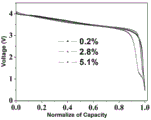
图1为本发明不同正负极活性材料首次库伦效率差的过放对比图;Fig. 1 is the over-discharge comparison diagram of the first coulombic efficiency difference of different positive and negative active materials of the present invention;
图2为实施例1和对比例1中过放循环图;Fig. 2 is over-discharge cycle diagram in
图3为实施例1和对比例1中过放容量保持率图;Fig. 3 is over-discharge capacity retention figure in
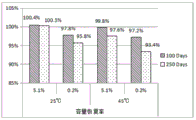
图4为实施例1和对比例1中存储容量恢复率图。FIG. 4 is a diagram of storage capacity recovery rates in Example 1 and Comparative Example 1. FIG.
具体实施方式Detailed ways
本发明中所用原料、设备,若无特别说明,均为本领域的常用原料、设备;本发明中所用方法,若无特别说明,均为本领域的常规方法。Raw materials used in the present invention, equipment, if not specified, are commonly used raw materials, equipment in this area; Method used in the present invention, if not specified, are conventional methods in this area.
如无特殊说明,本说明书中的术语的含义与本领域技术人员一般理解的含义相同,但如有冲突,则以本说明书中的定义为准。Unless otherwise specified, the meanings of the terms in this specification are the same as those generally understood by those skilled in the art, but if there is any conflict, the definitions in this specification shall prevail.
本文中“包括”、“包含”、“含”、“含有”、“具有”或其它变体意在涵盖非封闭式包括,这些术语之间不作区分。术语“包含”是指可加入不影响最终结果的其它步骤和成分。术语“包含”还包括术语“由…组成”和“基本上由…组成”。本发明的组合物和方法/工艺包含、由其组成和基本上由本文描述的必要元素和限制项以及本文描述的任一的附加的或任选的成分、组分、步骤或限制项组成。Herein "comprises", "comprising", "comprising", "containing", "having" or other variations thereof are intended to cover non-closed inclusions and no distinction is made between these terms. The term "comprising" means that other steps and ingredients can be added which do not affect the end result. The term "comprising" also includes the terms "consisting of" and "consisting essentially of". The compositions and methods/processes of the present invention comprise, consist of and consist essentially of the essential elements and limitations described herein and any additional or optional ingredients, components, steps or limitations described herein.
在说明书和权利要求书中使用的涉及组分量、工艺条件等的所有数值或表述在所有情形中均应理解被“约”修饰。涉及相同组分或性质的所有范围均包括端点,该端点可独立地组合。由于这些范围是连续的,因此它们包括在最小值与最大值之间的每一数值。还应理解的是,本申请引用的任何数值范围预期包括该范围内的所有子范围。All numbers or expressions referring to amounts of components, process conditions, etc. used in the specification and claims are to be understood as modified by "about" in all instances. All ranges referring to the same component or property are inclusive of endpoints, which are independently combinable. Since these ranges are continuous, they include every value between the minimum and maximum values. It should also be understood that any numerical range recited herein is intended to include all subranges within that range.
正如背景技术所描述的,现有技术中存在没有合适的方法能够在不额外地加入添加剂,就能同时提升锂离子电池耐过放能力、低电压放电能力和存储性能的方法的问题。为了解决上述技术问题,发明人经过大量研究发现,通过简单的对正极活性材料和负极活性材料的首效进行匹配就可以在提升过放能力的同时改善存储性能,具有很大的生产价值。As described in the background art, there is no suitable method in the prior art that can simultaneously improve the over-discharge resistance, low-voltage discharge capacity and storage performance of lithium-ion batteries without adding additional additives. In order to solve the above technical problems, the inventors have found through a lot of research that simply matching the first effect of the positive active material and the negative active material can improve the storage performance while improving the over-discharge capability, which has great production value.
同时提升锂电池过放能力、低压放电能力和存储性能的方法,所述锂电池包括正极、负极和电解液,所述正极包含正极活性材料,所述负极包含负极活性材料,其中所述负极活性材料的首次库伦效率至少比所述正极活性材料的首次库伦效率高出2.8%。A method for improving the over-discharge capability, low-voltage discharge capability and storage performance of a lithium battery at the same time, the lithium battery includes a positive electrode, a negative electrode and an electrolyte, the positive electrode contains a positive electrode active material, and the negative electrode contains a negative electrode active material, wherein the negative electrode is active The first Coulombic efficiency of the material is at least 2.8% higher than the first Coulombic efficiency of the positive electrode active material.
现有技术中,正极活性材料的首次库伦效率和负极活性材料的首次库伦效果往往很接近,发明人经过大量研究发现,使负极活性材料的首次库伦效率至少比所述正极活性材料的首次库伦效率高出2.8%,可以同时提升锂电池过放能力、低压放电能力和存储性能,这是本领域技术人员无法从现有技术预料的技术效果。本发明正是基于上述发现和认识而完成。In the prior art, the first Coulombic efficiency of the positive electrode active material and the first Coulombic efficiency of the negative electrode active material are often very close. The inventors have found through a lot of research that the first Coulombic efficiency of the negative electrode active material is at least higher than the first Coulombic efficiency of the positive electrode active material. 2.8% higher, can simultaneously improve lithium battery over-discharge capacity, low-voltage discharge capacity and storage performance, which is a technical effect that those skilled in the art cannot expect from the prior art. The present invention has been accomplished based on the above findings and recognitions.
本发明中,负极活性材料的首次库伦效率至少比所述正极活性材料的首次库伦效率高出2.8%,可以使负极拥有更多的活性锂,在低电压下过多的锂可嵌入到层状正极的表层形成Li2MO2型的新相,其中M为Ni、Co和Mn等过渡金属元素,可实现电池低压下放电。电池曲线表现在低电压1.0-1.5V之间有一个放电平台,防止负极电势过高,从而提高其耐过放性能。同时因为在负极存储了过量的活性锂,使得电池在存储过程中,有较多的锂提供消耗,防止消耗更多的活性锂,所以又提高了电池存储性能,特别是低电压下的存储性能。本方法是在没有引入过放添加剂的情况下对电池耐过放能力和存储性能进行了提升,并没有引入额外的工艺和成本,为筛选正负极活性材料提供指导,具有较大的实际意义。In the present invention, the first Coulombic efficiency of the negative electrode active material is at least 2.8% higher than the first Coulombic efficiency of the positive electrode active material, so that the negative electrode can have more active lithium, and too much lithium can be inserted into the layered The surface layer of the positive electrode forms a new phase of Li 2 MO 2 type, in which M is transition metal elements such as Ni, Co and Mn, which can realize the discharge of the battery at low voltage. The battery curve shows that there is a discharge platform between the low voltage 1.0-1.5V, which prevents the negative electrode potential from being too high, thereby improving its over-discharge resistance performance. At the same time, because the excess active lithium is stored in the negative electrode, more lithium is provided for consumption during the storage process of the battery, preventing the consumption of more active lithium, so the storage performance of the battery is improved, especially the storage performance at low voltage. . This method improves the over-discharge resistance and storage performance of the battery without introducing over-discharge additives, without introducing additional processes and costs, and provides guidance for screening positive and negative active materials, which has great practical significance .
发明人在研究中发现,即使负极活性材料的首次库伦效率大于所述正极活性材料的首次库伦效率,但负极活性材料的首次库伦效率同所述正极活性材料的首次库伦效率之差在2.8%以内,此时多出来的活性锂大部分用于SEI膜,其对提升锂电池过放能力、低压放电能力和存储性能没有明显效果。The inventor found in the research that even if the first Coulombic efficiency of the negative active material is greater than the first Coulombic efficiency of the positive active material, the difference between the first Coulombic efficiency of the negative active material and the first Coulombic efficiency of the positive active material is within 2.8%. At this time, most of the extra active lithium is used for the SEI film, which has no obvious effect on improving the over-discharge capacity, low-voltage discharge capacity and storage performance of the lithium battery.
本发明中,所述锂电池的放电平台电压为1.0V-1.5V。本发明中在低电压1.0-1.5V之间拥有一个放电平台,此放电平台的形成是由于所述的正极和负极组成的电池后首效损失之后,在负极中多余的活性锂重新嵌入到正极材料的表面形成的Li2MO2型的新相,M为Ni、Co和Mn等过渡金属元素。因为这个新相生成,正极材料表面及次表面的锂层配位结构,由原来的锂八面体配位到锂四面体配位转变。这种结构转变使得正极材料拥有了低电压的脱锂平台,使得电池拥有在全电池开放电压低于1.5V时,负极电势仍然很低。防止全电池在过放末期,负极电势过高。因为新相Li2MO2型具备一定的可逆性,所以全电池具备了较强的抑制循环过程中负极电势上升的能力和较好的耐过放能力。在低电压1.0-1.5V之间拥有一个放电平台,意味着电池拥有在常规平台如2.75-4.2V的电压窗口额外的活性锂。这部分锂可用于在电池存储时因SEI膜不断形成对锂的消耗,从而提升电池的存储性能。In the present invention, the discharge platform voltage of the lithium battery is 1.0V-1.5V. In the present invention, there is a discharge platform between the low voltage 1.0-1.5V. The formation of this discharge platform is due to the loss of the first effect of the battery composed of the positive electrode and the negative electrode, and the redundant active lithium in the negative electrode is re-embedded into the positive electrode material. A new phase of Li 2 MO 2 type is formed on the surface, and M is transition metal elements such as Ni, Co and Mn. Because of the formation of this new phase, the coordination structure of the lithium layer on the surface and subsurface of the positive electrode material changes from the original lithium octahedral coordination to the lithium tetrahedral coordination. This structural transformation enables the positive electrode material to have a low-voltage delithiation platform, so that the battery has a low potential of the negative electrode when the full battery open voltage is lower than 1.5V. Prevent the full battery at the end of over-discharge, the negative electrode potential is too high. Because the new phase Li 2 MO 2 has a certain degree of reversibility, the full battery has a strong ability to suppress the potential rise of the negative electrode during cycling and a good ability to withstand over-discharge. Having a discharge platform between the low voltage 1.0-1.5V means that the battery has extra active lithium in the voltage window of the conventional platform such as 2.75-4.2V. This part of lithium can be used to consume lithium due to the continuous formation of the SEI film during battery storage, thereby improving the storage performance of the battery.
所述正极活性材料的首次库伦效率为70%-91%,例如可为70%、72%、75%、78%、80%、82%、84%、86%、88%、或91%,或这些数值形成的区间范围。The first coulombic efficiency of the positive electrode active material is 70%-91%, such as 70%, 72%, 75%, 78%, 80%, 82%, 84%, 86%, 88%, or 91%, Or an interval range formed by these values.
所述负极活性材料的首次库伦效率为85%-95%,例如可为85%、87%、89%、91%、93%、或95%,或这些数值形成的区间范围。The first Coulombic efficiency of the negative electrode active material is 85%-95%, for example, it may be 85%, 87%, 89%, 91%, 93%, or 95%, or an interval range formed by these values.
活性材料的首次库伦效率通常与材料种类,元素占比,合成方法与工艺,掺杂与否,以及包覆与否等等都密切相关。为了使得负极活性材料的首次库伦效率至少比所述正极活性材料的首次库伦效率高出2.8%,发明人对现有技术中的正极活性材料和负极活性材料进行筛选。本发明中,所述正极活性材料为低电压下可嵌锂材料,通过选择低电压下可嵌锂材料作为正极活性材料可以在低电压下发生电化学嵌锂行为生成Li2MO2型的新相,M为Ni、Co和Mn等过渡金属元素。作为举例,所述正极活性材料可以为具有层状结构的高镍三元材料其中,所述具有层状结构的高镍三元材料的化学式为LiNixM1-xO2,其中M为Co、Mn、Al中的至少一种,0.5≤x≤1;所述正极活性材料还可以为具有尖晶石结构的LiMn2O4。The first coulombic efficiency of active materials is usually closely related to the type of material, the proportion of elements, the synthesis method and process, whether it is doped or not, and whether it is coated or not. In order to make the first coulombic efficiency of the negative active material at least 2.8% higher than that of the positive active material, the inventors screened the positive and negative active materials in the prior art. In the present invention, the positive electrode active material is a material that can intercalate lithium at low voltage, and by selecting a material that can intercalate lithium at low voltage as the positive electrode active material, electrochemical lithium intercalation behavior can occur at low voltage to generate a new type of Li2MO2 phase, and M is transition metal elements such as Ni, Co and Mn. As an example, the positive electrode active material may be a high-nickel ternary material with a layered structure, wherein the chemical formula of the high-nickel ternary material with a layered structure is LiNi x M 1-x O 2 , where M is Co , at least one of Mn, Al, 0.5≤x≤1; the positive electrode active material can also be LiMn 2 O 4 with a spinel structure.
所述负极活性材料为石墨、锡合金、硅氧复合材料或硅碳复合材料中的一种或几种。更优选地,为了追求高能量密度的电池,负极活性材料为石墨和硅氧复合材料,更优选地,负极活性材料为石墨和硅碳复合材料。The negative electrode active material is one or more of graphite, tin alloy, silicon-oxygen composite material or silicon-carbon composite material. More preferably, in order to pursue a battery with high energy density, the negative electrode active material is graphite and silicon-oxygen composite material, more preferably, the negative electrode active material is graphite and silicon-carbon composite material.
需要说明的是,所述正极除了包括正极活性材料,还包括正极导电剂和正极粘结剂。本发明对正极导电剂和正极粘结剂的种类和用量均不作具体限定,以本领域技术人员熟知的种类和常规加入量即可。It should be noted that, in addition to the positive electrode active material, the positive electrode also includes a positive electrode conductive agent and a positive electrode binder. The present invention does not specifically limit the type and amount of the positive electrode conductive agent and the positive electrode binder, and the type and conventional addition amount well known to those skilled in the art will suffice.
需要说明的是,所述负极除了包括负极活性材料,还包括负极导电剂和负极粘结剂。本发明对负极导电剂和负极粘结剂的种类和用量均不作具体限定,以本领域技术人员熟知的种类和常规加入量即可。It should be noted that, in addition to the negative electrode active material, the negative electrode also includes a negative electrode conductive agent and a negative electrode binder. The present invention does not specifically limit the type and amount of the negative electrode conductive agent and the negative electrode binder, and the types and conventional addition amounts well known to those skilled in the art will suffice.
所述电解液中含有占电解液总质量0.5-2%的SEI膜成膜添加剂。本发明中通过添加SEI膜成膜添加剂,可以进一步减小成膜时对活性锂的消耗,提高活性锂在负极的存余量。The electrolyte contains SEI film-forming additives accounting for 0.5-2% of the total mass of the electrolyte. In the present invention, by adding an SEI film-forming additive, the consumption of active lithium during film formation can be further reduced, and the remaining amount of active lithium in the negative electrode can be increased.
本发明中,对SEI膜成膜添加剂的种类不作具体限定,以本领域技术人员熟知的SEI膜成膜添加剂即可,本领域技术人员可以根据实际生产情况、产品要求及质量要求进行选择和调整。作为举例,所述SEI膜成膜添加剂为碳酸亚乙烯酯(VC)。In the present invention, the types of SEI film-forming additives are not specifically limited, and SEI film-forming additives well known to those skilled in the art can be used. Those skilled in the art can select and adjust according to actual production conditions, product requirements and quality requirements . As an example, the SEI film-forming additive is vinylene carbonate (VC).
需要说明的是,电解液中除了含有SEI膜成膜添加剂,还含有其通常含有的各种组分,这些都为本技术人员均可通过技术手册得知或通过常规实验方法获知,本发明未对这些组分进行改进,在此不再赘述。It should be noted that in addition to containing SEI film-forming additives in the electrolyte, it also contains various components that it usually contains. These are known to those skilled in the art through technical manuals or through conventional experimental methods. The present invention does not These components are improved and will not be repeated here.
本发明中,所述正极和负极的N/P之比为1.02-1.2。本发明中,通过将所述正极和负极的N/P之比控制在1.02-1.2的范围以防止负极析锂,若超过此范围,则会在材料表面成膜,消耗更多的锂。In the present invention, the N/P ratio of the positive electrode and the negative electrode is 1.02-1.2. In the present invention, the N/P ratio of the positive electrode and the negative electrode is controlled within the range of 1.02-1.2 to prevent the negative electrode from decomposing lithium. If it exceeds this range, a film will be formed on the surface of the material and more lithium will be consumed.
下面结合实施例对本发明进行详细的说明,实施例仅是本发明的优选实施方式,不是对本发明的限定。The present invention will be described in detail below in conjunction with examples, which are only preferred implementations of the present invention, and are not limitations of the present invention.
实施例1Example 1
同时提升锂电池过放能力、低压放电能力和存储性能的方法,所述锂电池包括正极、负极和电解液;所述正极包含正极活性材料,所述正极活性材料为具有层状结构的高镍三元材料,所述具有层状结构的高镍三元材料的化学式为LiNi0.8Co0.1Mn0.1O2;所述正极活性材料的首次库伦效率为87%;所述负极包含负极活性材料,所述负极活性材料为人造石墨混加5%的硅碳复合材料;所述负极活性材料的首次库伦效率为92.1%;所述负极活性材料的首次库伦效率比所述正极活性材料的首次库伦效率高出5.1%。A method for simultaneously improving over-discharge capability, low-voltage discharge capability and storage performance of a lithium battery, wherein the lithium battery includes a positive electrode, a negative electrode and an electrolyte; the positive electrode includes a positive electrode active material, and the positive electrode active material is high nickel with a layered structure Ternary material, the chemical formula of the high-nickel ternary material with layered structure is LiNi 0.8 Co 0.1 Mn 0.1 O 2 ; the first coulombic efficiency of the positive electrode active material is 87%; the negative electrode contains the negative electrode active material, so The negative active material is artificial graphite mixed with 5% silicon-carbon composite material; the first coulombic efficiency of the negative active material is 92.1%; the first coulombic efficiency of the negative active material is higher than the first coulombic efficiency of the positive active material 5.1% out.
所述正极和负极的N/P之比为1.05。The N/P ratio of the positive and negative electrodes was 1.05.
所述锂电池的卷芯由正极、负极、隔膜用卷绕工艺或叠片工艺所制得;所述锂电池的放电平台电压为1.0V-1.5V。The winding core of the lithium battery is made by a positive electrode, a negative electrode, and a separator by a winding process or a stacking process; the discharge platform voltage of the lithium battery is 1.0V-1.5V.
所述电解液中含有占电解液总质量0.5-2%的SEI膜成膜添加剂,所述SEI膜成膜添加剂为碳酸亚乙烯酯(VC)。The electrolyte contains 0.5-2% of SEI film-forming additive accounting for the total mass of the electrolyte, and the SEI film-forming additive is vinylene carbonate (VC).
实施例2Example 2
同时提升锂电池过放能力、低压放电能力和存储性能的方法,所述锂电池包括正极、负极和电解液;所述正极包含正极活性材料,所述正极活性材料为具有层状结构的高镍三元材料,所述具有层状结构的高镍三元材料的化学式为LiNi0.6Co0.2Mn0.2O2;所述正极活性材料的首次库伦效率为70%;所述负极包含负极活性材料,所述负极活性材料为人造石墨混加5%的硅氧复合材料;所述负极活性材料的首次库伦效率为85%;其中所述负极活性材料的首次库伦效率比所述正极活性材料的首次库伦效率高出15%。A method for simultaneously improving over-discharge capability, low-voltage discharge capability and storage performance of a lithium battery, wherein the lithium battery includes a positive electrode, a negative electrode and an electrolyte; the positive electrode includes a positive electrode active material, and the positive electrode active material is high nickel with a layered structure Ternary material, the chemical formula of the high-nickel ternary material with a layered structure is LiNi 0.6 Co 0.2 Mn 0.2 O 2 ; the first Coulombic efficiency of the positive active material is 70%; the negative electrode contains the negative active material, so The negative active material is artificial graphite mixed with 5% silicon-oxygen composite material; the first coulombic efficiency of the negative active material is 85%; wherein the first coulombic efficiency of the negative active material is higher than the first coulombic efficiency of the positive active material 15% higher.
所述正极和负极的N/P之比为1.02。The N/P ratio of the positive and negative electrodes was 1.02.
所述锂电池的卷芯由正极、负极、隔膜用卷绕工艺或叠片工艺所制得;所述锂电池的放电平台电压为1.0V-1.5V。The winding core of the lithium battery is made by a positive electrode, a negative electrode, and a separator by a winding process or a stacking process; the discharge platform voltage of the lithium battery is 1.0V-1.5V.
所述电解液中含有占电解液总质量0.5%的SEI膜成膜添加剂,所述SEI膜成膜添加剂为碳酸亚乙烯酯(VC)。The electrolyte contains 0.5% of the SEI film-forming additive accounting for the total mass of the electrolyte, and the SEI film-forming additive is vinylene carbonate (VC).
实施例3Example 3
同时提升锂电池过放能力、低压放电能力和存储性能的方法,所述锂电池包括正极、负极和电解液;所述正极包含正极活性材料,所述正极活性材料为具有尖晶石结构的LiMn2O4;所述正极活性材料的首次库伦效率为91%;所述负极包含负极活性材料,所述负极活性材料为人造石墨混加5%的锡合金;所述负极活性材料的首次库伦效率为95%;其中所述负极活性材料的首次库伦效率比所述正极活性材料的首次库伦效率高出7%。A method for simultaneously improving the over-discharge capability, low-voltage discharge capability and storage performance of a lithium battery, wherein the lithium battery includes a positive electrode, a negative electrode and an electrolyte; the positive electrode includes a positive electrode active material, and the positive electrode active material is LiMn with a spinel structure 2 O 4 ; the first coulombic efficiency of the positive active material is 91%; the negative electrode includes a negative active material, and the negative active material is artificial graphite mixed with 5% tin alloy; the first coulombic efficiency of the negative
所述正极和负极的N/P之比为1.2。The N/P ratio of the positive and negative electrodes was 1.2.
所述锂电池的卷芯由正极、负极、隔膜用卷绕工艺或叠片工艺所制得;所述锂电池的放电平台电压为1.0V-1.5V。The winding core of the lithium battery is made by a positive electrode, a negative electrode, and a separator by a winding process or a stacking process; the discharge platform voltage of the lithium battery is 1.0V-1.5V.
所述电解液中含有占电解液总质量2%的SEI膜成膜添加剂,所述SEI膜成膜添加剂为碳酸亚乙烯酯(VC)。The electrolyte contains an SEI film-forming additive accounting for 2% of the total mass of the electrolyte, and the SEI film-forming additive is vinylene carbonate (VC).
对比例1Comparative example 1
一种锂电池,所述锂电池包括正极、负极和电解液;所述正极包含正极活性材料,所述正极活性材料为具有层状结构的高镍三元材料,所述具有层状结构的高镍三元材料的化学式为LiNi0.8Co0.1Mn0.1O2;所述正极活性材料的首次库伦效率为83.3%;所述负极包含负极活性材料,所述负极活性材料为人造石墨混加5%的硅碳复合材料,所述负极活性材料的首次库伦效率为83.5%;所述负极活性材料的首次库伦效率比所述正极活性材料的首次库伦效率高出0.2%。A lithium battery, the lithium battery includes a positive pole, a negative pole and an electrolyte; the positive pole contains a positive active material, the positive active material is a high-nickel ternary material with a layered structure, and the high-nickel ternary material with a layered structure The chemical formula of the nickel ternary material is LiNi 0.8 Co 0.1 Mn 0.1 O 2 ; the first coulombic efficiency of the positive electrode active material is 83.3%; the negative electrode contains the negative electrode active material, and the negative electrode active material is artificial graphite mixed with 5% For the silicon-carbon composite material, the first Coulombic efficiency of the negative active material is 83.5%; the first Coulombic efficiency of the negative active material is 0.2% higher than the first Coulombic efficiency of the positive active material.
所述正极和负极的N/P之比为1.05。The N/P ratio of the positive and negative electrodes was 1.05.
所述锂电池的卷芯由正极、负极、隔膜用卷绕工艺或叠片工艺所制得。The winding core of the lithium battery is made by a positive electrode, a negative electrode, and a diaphragm by a winding process or a stacking process.
所述电解液中含有占电解液总质量0.5-2%的SEI膜成膜添加剂,所述SEI膜成膜添加剂为碳酸亚乙烯酯(VC)。The electrolyte contains 0.5-2% of SEI film-forming additive accounting for the total mass of the electrolyte, and the SEI film-forming additive is vinylene carbonate (VC).
对比例2Comparative example 2
一种锂电池,所述锂电池包括正极、负极和电解液;所述正极包含正极活性材料,所述正极活性材料为具有层状结构的高镍三元材料,所述具有层状结构的高镍三元材料的化学式为LiNi0.8Co0.1Mn0.1O2;所述正极活性材料的首次库伦效率为89.7%;所述负极包含负极活性材料,所述负极活性材料为人造石墨混加5%的硅碳复合材料,所述负极活性材料的首次库伦效率为92.5%;所述负极活性材料的首次库伦效率比所述正极活性材料的首次库伦效率高出2.8%。A lithium battery, the lithium battery includes a positive pole, a negative pole and an electrolyte; the positive pole contains a positive active material, the positive active material is a high-nickel ternary material with a layered structure, and the high-nickel ternary material with a layered structure The chemical formula of the nickel ternary material is LiNi 0.8 Co 0.1 Mn 0.1 O 2 ; the first coulombic efficiency of the positive electrode active material is 89.7%; the negative electrode contains the negative electrode active material, and the negative electrode active material is artificial graphite mixed with 5% For the silicon-carbon composite material, the first Coulombic efficiency of the negative active material is 92.5%; the first Coulombic efficiency of the negative active material is 2.8% higher than the first Coulombic efficiency of the positive active material.
所述正极和负极的N/P之比为1.05。The N/P ratio of the positive and negative electrodes was 1.05.
所述锂电池的卷芯由正极、负极、隔膜用卷绕工艺或叠片工艺所制得。The winding core of the lithium battery is made by a positive electrode, a negative electrode, and a diaphragm by a winding process or a stacking process.
所述电解液中含有占电解液总质量0.5-2%的SEI膜成膜添加剂,所述SEI膜成膜添加剂为碳酸亚乙烯酯(VC)。The electrolyte contains 0.5-2% of SEI film-forming additive accounting for the total mass of the electrolyte, and the SEI film-forming additive is vinylene carbonate (VC).
测试例test case
将实施例1和对比例1-2的锂电池从满电态4.2V过电到0.5V得到电压容量曲线,从而得到容量-电压曲线图,如图1所示,当正负极活性材料首次库伦效率之差为2%时,才有一个不明显的平台,相差到达5%时,低电压放电平台才显著。The lithium batteries of Example 1 and Comparative Example 1-2 were overcharged from a full charge state of 4.2V to 0.5V to obtain a voltage-capacity curve, thereby obtaining a capacity-voltage curve, as shown in Figure 1, when the positive and negative active materials are first When the difference of Coulomb efficiency is 2%, there is an inconspicuous platform, and when the difference reaches 5%, the low-voltage discharge platform is obvious.
为验证本发明产品性能,对实施例1和对比例1-2所制得的锂电池分别进行了相关性能测试,具体方法如下:In order to verify the performance of the product of the present invention, relevant performance tests were carried out on the lithium batteries prepared in Example 1 and Comparative Examples 1-2, the specific methods are as follows:
(1)耐过放能力测试(1) Over-discharge resistance test
将锂离子电池置于常温的环境中进行充放电过放循环测试,循环电压窗口为0.5-4.2V,充电电流为0.5C,截止电流为0.05C,放电电流为1C。Put the lithium-ion battery in a normal temperature environment for charge-discharge over-discharge cycle test. The cycle voltage window is 0.5-4.2V, the charge current is 0.5C, the cut-off current is 0.05C, and the discharge current is 1C.
试验结果如图2所示,实施例1中的锂电池循环衰减速率小于对比例1中锂电池衰减速率;循环100次,实施例1中的锂电池的容量保持率为91.6%,对比例1中锂电池的容量保持率为88.5%。负极活性材料的首次库伦效率比正极活性材料的首次库伦效率高出5.1%的A锂离子电池因为拥有较低的放电电压平台,防止了放电未期负极电势过高和铜溶解,也使得电池具有低电压放电的能力。The test results are shown in Figure 2. The rate of decay of the lithium battery in Example 1 is less than that of the lithium battery in Comparative Example 1; after 100 cycles, the capacity retention rate of the lithium battery in Example 1 is 91.6%. The capacity retention rate of lithium batteries is 88.5%. The first coulombic efficiency of the negative active material is 5.1% higher than that of the positive active material. A lithium-ion battery has a lower discharge voltage platform, which prevents the negative electrode potential from being too high and copper dissolution in the end of discharge, and also makes the battery have Ability to discharge at low voltage.
(2)容量保持率测试(2) Capacity retention test
将锂电池分别置于25±2和45±2℃的恒温环境中进行常温和高温长期满电存储测试。容量保持率测试方法:存储后将锂电池置于常温静置3h,放电得到电池残余容量;残余容量与初始容量的比值即为容量保持率。如图3所示,常温存储100天后,实施例1和对比例1中的锂电池的容量保持率分别为101.9%和98.9%,250天实施例1和对比例1中的锂电池的容量保持率分别为100.7%和97.2%;高温存储100天实施例1和对比例1中的锂电池的容量保持率分别为98.3%和96.6%,250天实施例1和对比例1中的锂电池的容量保持率分别为94.7%和91.1%。因为高温环境会加速活性锂的消耗,实施例1中的锂电池中含有更多的多余的活性锂,所以它具有更好的高温存储性能。Lithium batteries were placed in a constant temperature environment of 25±2 and 45±2°C for long-term full-charge storage tests at room temperature and high temperature. Capacity retention test method: After storage, place the lithium battery at room temperature for 3 hours, then discharge to obtain the residual capacity of the battery; the ratio of the residual capacity to the initial capacity is the capacity retention rate. As shown in Figure 3, after storage at room temperature for 100 days, the capacity retention rates of the lithium batteries in Example 1 and Comparative Example 1 were 101.9% and 98.9%, respectively, and the capacity retention rates of the lithium batteries in Example 1 and Comparative Example 1 were 250 days. The ratios are respectively 100.7% and 97.2%; the capacity retention ratios of the lithium batteries in Example 1 and Comparative Example 1 are respectively 98.3% and 96.6% in high temperature storage for 100 days, and the capacity retention rates of the lithium batteries in Example 1 and Comparative Example 1 are 250 days. The capacity retention rates were 94.7% and 91.1%, respectively. Because the high-temperature environment will accelerate the consumption of active lithium, the lithium battery in Example 1 contains more redundant active lithium, so it has better high-temperature storage performance.
(3)存储恢复率测试(3) Storage recovery rate test
将锂电池分别置于25±2和45±2℃的恒温环境中进行常温和高温长期满电存储测试。容量恢复率测试方法:存储后将锂电池置于常温静置3h,放空电,再充满放空3次得到恢复容量;恢复容量与初始容量的比值即为存储恢复率。如图4所示,常温存储100天实施例1和对比例1中的锂电池的存储恢复率分别为100.4%和97.8%,250天实施例1和对比例1中的锂电池的存储恢复率分别为100.3%和95.8%;高温存储100天实施例1和对比例1中的锂电池的存储恢复率分别为99.8%和97.2%,250天实施例1和对比例1中的锂电池的存储恢复率分别为97.6%和93.4%。由上可知,多余的活性锂同时有助于提高存储锂的容量恢复率。Lithium batteries were placed in a constant temperature environment of 25±2 and 45±2°C for long-term full-charge storage tests at room temperature and high temperature. Capacity recovery rate test method: After storage, place the lithium battery at room temperature for 3 hours, discharge it, and then charge and discharge it 3 times to obtain the recovery capacity; the ratio of the recovery capacity to the initial capacity is the storage recovery rate. As shown in Figure 4, the storage recovery rates of the lithium batteries in Example 1 and Comparative Example 1 stored at room temperature for 100 days were 100.4% and 97.8% respectively, and the storage recovery rates of the lithium batteries in Example 1 and Comparative Example 1 for 250 days 100.3% and 95.8% respectively; the storage recovery rate of the lithium battery in Example 1 and Comparative Example 1 in high temperature storage for 100 days was 99.8% and 97.2% respectively, and the storage recovery rate of the lithium battery in 250 days Example 1 and Comparative Example 1 The recovery rates were 97.6% and 93.4%, respectively. It can be seen from the above that the excess active lithium also helps to improve the capacity recovery rate of stored lithium.
以上所述实施例仅表达了本发明的实施方式,其描述较为具体和详细,但并不能因此而理解为对本发明专利范围的限制,但凡采用等同替换或等效变换的形式所获得的技术方案,均应落在本发明的保护范围之内。The above-described embodiments only express the implementation manner of the present invention, and its description is more specific and detailed, but it should not be interpreted as limiting the scope of the patent of the present invention, as long as the technical solutions obtained in the form of equivalent replacement or equivalent transformation are adopted , should fall within the protection scope of the present invention.
Claims (1)
Priority Applications (1)
| Application Number | Priority Date | Filing Date | Title |
|---|---|---|---|
| CN201911060581.7A CN111092199B (en) | 2019-11-01 | 2019-11-01 | Method for simultaneously improving over-discharge capacity, low-voltage discharge capacity and storage performance of lithium battery |
Applications Claiming Priority (1)
| Application Number | Priority Date | Filing Date | Title |
|---|---|---|---|
| CN201911060581.7A CN111092199B (en) | 2019-11-01 | 2019-11-01 | Method for simultaneously improving over-discharge capacity, low-voltage discharge capacity and storage performance of lithium battery |
Publications (2)
| Publication Number | Publication Date |
|---|---|
| CN111092199A CN111092199A (en) | 2020-05-01 |
| CN111092199B true CN111092199B (en) | 2023-04-11 |
Family
ID=70393182
Family Applications (1)
| Application Number | Title | Priority Date | Filing Date |
|---|---|---|---|
| CN201911060581.7A Active CN111092199B (en) | 2019-11-01 | 2019-11-01 | Method for simultaneously improving over-discharge capacity, low-voltage discharge capacity and storage performance of lithium battery |
Country Status (1)
| Country | Link |
|---|---|
| CN (1) | CN111092199B (en) |
Families Citing this family (4)
| Publication number | Priority date | Publication date | Assignee | Title |
|---|---|---|---|---|
| CN114079050B (en) * | 2020-08-31 | 2026-04-10 | 贝特瑞新材料集团股份有限公司 | Silicon-oxygen composite materials, their preparation methods, negative electrode materials and lithium-ion batteries |
| CN114695968B (en) * | 2022-06-01 | 2022-09-02 | 四川新能源汽车创新中心有限公司 | Lithium ion battery with NP ratio less than 1 and preparation method thereof |
| CN117154188B (en) | 2023-10-30 | 2024-04-12 | 宁德时代新能源科技股份有限公司 | Lithium ion battery, battery and power utilization device |
| CN118040014B (en) * | 2024-04-10 | 2025-04-29 | 瑞浦兰钧能源股份有限公司 | Secondary battery and preparation method and application thereof |
Citations (4)
| Publication number | Priority date | Publication date | Assignee | Title |
|---|---|---|---|---|
| JP2012169300A (en) * | 2012-06-06 | 2012-09-06 | Hitachi Maxell Energy Ltd | Nonaqueous secondary battery |
| CN105047986A (en) * | 2015-07-04 | 2015-11-11 | 广东烛光新能源科技有限公司 | A kind of electrochemical energy storage device and preparation method thereof |
| KR20160037863A (en) * | 2016-03-21 | 2016-04-06 | 주식회사 엘지화학 | Lithium secondary battery |
| CN106785007A (en) * | 2017-03-27 | 2017-05-31 | 中天储能科技有限公司 | A kind of lithium ion battery of coulombic efficiency first high |
Family Cites Families (2)
| Publication number | Priority date | Publication date | Assignee | Title |
|---|---|---|---|---|
| US6514638B2 (en) * | 1997-05-27 | 2003-02-04 | Tdk Corporation | Non-aqueous electrolyte secondary battery including positive and negative electrodes |
| US10305104B2 (en) * | 2010-04-02 | 2019-05-28 | A123 Systems, LLC | Li-ion battery cathode materials with over-discharge protection |
-
2019
- 2019-11-01 CN CN201911060581.7A patent/CN111092199B/en active Active
Patent Citations (4)
| Publication number | Priority date | Publication date | Assignee | Title |
|---|---|---|---|---|
| JP2012169300A (en) * | 2012-06-06 | 2012-09-06 | Hitachi Maxell Energy Ltd | Nonaqueous secondary battery |
| CN105047986A (en) * | 2015-07-04 | 2015-11-11 | 广东烛光新能源科技有限公司 | A kind of electrochemical energy storage device and preparation method thereof |
| KR20160037863A (en) * | 2016-03-21 | 2016-04-06 | 주식회사 엘지화학 | Lithium secondary battery |
| CN106785007A (en) * | 2017-03-27 | 2017-05-31 | 中天储能科技有限公司 | A kind of lithium ion battery of coulombic efficiency first high |
Also Published As
| Publication number | Publication date |
|---|---|
| CN111092199A (en) | 2020-05-01 |
Similar Documents
| Publication | Publication Date | Title |
|---|---|---|
| WO2022206877A1 (en) | Electrochemical device and electronic device | |
| CN111092199B (en) | Method for simultaneously improving over-discharge capacity, low-voltage discharge capacity and storage performance of lithium battery | |
| CN101262078A (en) | Rapidly chargeable lithium-ion battery and preparation method thereof | |
| CN107331893B (en) | A high temperature lithium ion battery electrolyte and preparation method thereof, and high temperature lithium ion battery | |
| CN103259046B (en) | The preparation method of the high rate lithium iron phosphate cell of quickly-chargeable | |
| CN102544586A (en) | Lithium ion battery preparation method and lithium ion battery | |
| CN106571456A (en) | Anode compounded material of lithium ion battery | |
| CN100431203C (en) | Non-aqueous electrolyte secondary battery | |
| JP2012146590A (en) | Positive electrode for nonaqueous electrolyte secondary battery, method for producing positive electrode, and nonaqueous electrolyte secondary battery | |
| CN105470473B (en) | Positive electrode active material and secondary battery | |
| CN114420899B (en) | Lithium ion battery | |
| WO2011070748A1 (en) | Non-aqueous electrolyte secondary battery, and method for charging same | |
| CN115312762B (en) | Active material, positive electrode, battery device, and method | |
| CN114784398A (en) | A method for improving the electrochemical performance of lithium-rich manganese-based lithium-ion batteries | |
| CN116130597A (en) | Battery and electric equipment | |
| WO2025200884A1 (en) | Secondary battery and electric device | |
| WO2025200221A1 (en) | Battery, negative electrode sheet, preparation method for negative electrode sheet, and electric device | |
| WO2024239342A1 (en) | Secondary battery and electric device | |
| CN111883765A (en) | Lithium battery positive active material, preparation method thereof and lithium battery | |
| CN117199535A (en) | An electrolyte, electrochemical device and electronic device | |
| CN117199534A (en) | An electrolyte, electrochemical device and electronic equipment | |
| KR101142533B1 (en) | Metal based Zn Negative Active Material and Lithium Secondary Battery Comprising thereof | |
| CN114975900A (en) | Cathode composite material for supplementing lithium, charging and discharging method for supplementing lithium and application thereof | |
| CN101110477B (en) | An electrochemical energy storage and energy conversion device | |
| WO2012043733A1 (en) | Method for manufacturing nonaqueous electrolyte secondary battery |
Legal Events
| Date | Code | Title | Description |
|---|---|---|---|
| PB01 | Publication | ||
| PB01 | Publication | ||
| SE01 | Entry into force of request for substantive examination | ||
| SE01 | Entry into force of request for substantive examination | ||
| GR01 | Patent grant | ||
| GR01 | Patent grant | ||
| PP01 | Preservation of patent right | ||
| PP01 | Preservation of patent right |
Effective date of registration: 20240305 Granted publication date: 20230411 |