CN110970410A - Wafer Level Optical Module - Google Patents
Wafer Level Optical Module Download PDFInfo
- Publication number
- CN110970410A CN110970410A CN201910820589.2A CN201910820589A CN110970410A CN 110970410 A CN110970410 A CN 110970410A CN 201910820589 A CN201910820589 A CN 201910820589A CN 110970410 A CN110970410 A CN 110970410A
- Authority
- CN
- China
- Prior art keywords
- optical
- wafer
- optical components
- substrate
- light
- Prior art date
- Legal status (The legal status is an assumption and is not a legal conclusion. Google has not performed a legal analysis and makes no representation as to the accuracy of the status listed.)
- Granted
Links
Images







Classifications
-
- H—ELECTRICITY
- H05—ELECTRIC TECHNIQUES NOT OTHERWISE PROVIDED FOR
- H05K—PRINTED CIRCUITS; CASINGS OR CONSTRUCTIONAL DETAILS OF ELECTRIC APPARATUS; MANUFACTURE OF ASSEMBLAGES OF ELECTRICAL COMPONENTS
- H05K1/00—Printed circuits
- H05K1/02—Details
- H05K1/0274—Optical details, e.g. printed circuits comprising integral optical means
-
- H—ELECTRICITY
- H05—ELECTRIC TECHNIQUES NOT OTHERWISE PROVIDED FOR
- H05K—PRINTED CIRCUITS; CASINGS OR CONSTRUCTIONAL DETAILS OF ELECTRIC APPARATUS; MANUFACTURE OF ASSEMBLAGES OF ELECTRICAL COMPONENTS
- H05K5/00—Casings, cabinets or drawers for electric apparatus
- H05K5/06—Hermetically-sealed casings
- H05K5/065—Hermetically-sealed casings sealed by encapsulation, e.g. waterproof resin forming an integral casing, injection moulding
-
- H—ELECTRICITY
- H10—SEMICONDUCTOR DEVICES; ELECTRIC SOLID-STATE DEVICES NOT OTHERWISE PROVIDED FOR
- H10F—INORGANIC SEMICONDUCTOR DEVICES SENSITIVE TO INFRARED RADIATION, LIGHT, ELECTROMAGNETIC RADIATION OF SHORTER WAVELENGTH OR CORPUSCULAR RADIATION
- H10F77/00—Constructional details of devices covered by this subclass
- H10F77/40—Optical elements or arrangements
- H10F77/407—Optical elements or arrangements indirectly associated with the devices
-
- H—ELECTRICITY
- H10—SEMICONDUCTOR DEVICES; ELECTRIC SOLID-STATE DEVICES NOT OTHERWISE PROVIDED FOR
- H10H—INORGANIC LIGHT-EMITTING SEMICONDUCTOR DEVICES HAVING POTENTIAL BARRIERS
- H10H20/00—Individual inorganic light-emitting semiconductor devices having potential barriers, e.g. light-emitting diodes [LED]
- H10H20/80—Constructional details
- H10H20/81—Bodies
- H10H20/813—Bodies having a plurality of light-emitting regions, e.g. multi-junction LEDs or light-emitting devices having photoluminescent regions within the bodies
-
- H—ELECTRICITY
- H10—SEMICONDUCTOR DEVICES; ELECTRIC SOLID-STATE DEVICES NOT OTHERWISE PROVIDED FOR
- H10H—INORGANIC LIGHT-EMITTING SEMICONDUCTOR DEVICES HAVING POTENTIAL BARRIERS
- H10H20/00—Individual inorganic light-emitting semiconductor devices having potential barriers, e.g. light-emitting diodes [LED]
- H10H20/80—Constructional details
- H10H20/81—Bodies
- H10H20/819—Bodies characterised by their shape, e.g. curved or truncated substrates
- H10H20/821—Bodies characterised by their shape, e.g. curved or truncated substrates of the light-emitting regions, e.g. non-planar junctions
-
- H—ELECTRICITY
- H10—SEMICONDUCTOR DEVICES; ELECTRIC SOLID-STATE DEVICES NOT OTHERWISE PROVIDED FOR
- H10H—INORGANIC LIGHT-EMITTING SEMICONDUCTOR DEVICES HAVING POTENTIAL BARRIERS
- H10H20/00—Individual inorganic light-emitting semiconductor devices having potential barriers, e.g. light-emitting diodes [LED]
- H10H20/80—Constructional details
- H10H20/85—Packages
- H10H20/857—Interconnections, e.g. lead-frames, bond wires or solder balls
-
- H—ELECTRICITY
- H10—SEMICONDUCTOR DEVICES; ELECTRIC SOLID-STATE DEVICES NOT OTHERWISE PROVIDED FOR
- H10W—GENERIC PACKAGES, INTERCONNECTIONS, CONNECTORS OR OTHER CONSTRUCTIONAL DETAILS OF DEVICES COVERED BY CLASS H10
- H10W74/00—Encapsulations, e.g. protective coatings
- H10W74/10—Encapsulations, e.g. protective coatings characterised by their shape or disposition
- H10W74/111—Encapsulations, e.g. protective coatings characterised by their shape or disposition the semiconductor body being completely enclosed
-
- H—ELECTRICITY
- H10—SEMICONDUCTOR DEVICES; ELECTRIC SOLID-STATE DEVICES NOT OTHERWISE PROVIDED FOR
- H10W—GENERIC PACKAGES, INTERCONNECTIONS, CONNECTORS OR OTHER CONSTRUCTIONAL DETAILS OF DEVICES COVERED BY CLASS H10
- H10W90/00—Package configurations
-
- H—ELECTRICITY
- H10—SEMICONDUCTOR DEVICES; ELECTRIC SOLID-STATE DEVICES NOT OTHERWISE PROVIDED FOR
- H10H—INORGANIC LIGHT-EMITTING SEMICONDUCTOR DEVICES HAVING POTENTIAL BARRIERS
- H10H20/00—Individual inorganic light-emitting semiconductor devices having potential barriers, e.g. light-emitting diodes [LED]
- H10H20/80—Constructional details
- H10H20/85—Packages
- H10H20/855—Optical field-shaping means, e.g. lenses
-
- H—ELECTRICITY
- H10—SEMICONDUCTOR DEVICES; ELECTRIC SOLID-STATE DEVICES NOT OTHERWISE PROVIDED FOR
- H10W—GENERIC PACKAGES, INTERCONNECTIONS, CONNECTORS OR OTHER CONSTRUCTIONAL DETAILS OF DEVICES COVERED BY CLASS H10
- H10W70/00—Package substrates; Interposers; Redistribution layers [RDL]
- H10W70/01—Manufacture or treatment
- H10W70/05—Manufacture or treatment of insulating or insulated package substrates, or of interposers, or of redistribution layers
-
- H—ELECTRICITY
- H10—SEMICONDUCTOR DEVICES; ELECTRIC SOLID-STATE DEVICES NOT OTHERWISE PROVIDED FOR
- H10W—GENERIC PACKAGES, INTERCONNECTIONS, CONNECTORS OR OTHER CONSTRUCTIONAL DETAILS OF DEVICES COVERED BY CLASS H10
- H10W70/00—Package substrates; Interposers; Redistribution layers [RDL]
- H10W70/60—Insulating or insulated package substrates; Interposers; Redistribution layers
-
- H—ELECTRICITY
- H10—SEMICONDUCTOR DEVICES; ELECTRIC SOLID-STATE DEVICES NOT OTHERWISE PROVIDED FOR
- H10W—GENERIC PACKAGES, INTERCONNECTIONS, CONNECTORS OR OTHER CONSTRUCTIONAL DETAILS OF DEVICES COVERED BY CLASS H10
- H10W70/00—Package substrates; Interposers; Redistribution layers [RDL]
- H10W70/60—Insulating or insulated package substrates; Interposers; Redistribution layers
- H10W70/62—Insulating or insulated package substrates; Interposers; Redistribution layers characterised by their interconnections
- H10W70/65—Shapes or dispositions of interconnections
- H10W70/652—Cross-sectional shapes
Landscapes
- Engineering & Computer Science (AREA)
- Microelectronics & Electronic Packaging (AREA)
- Led Device Packages (AREA)
- Light Receiving Elements (AREA)
Abstract
The present disclosure relates to wafer level optical modules. An optical module is disclosed herein that can be formed onto a wafer. The wafer may include a substrate and one or more optical components at least partially encapsulated by the substrate. Each of the optical components is configured to emit light or sense light. The wafer may also include one or more Printed Circuit Board (PCB) strips at least partially encapsulated by the substrate, allowing electrical conduction from the first side of the substrate to the second side of the substrate. The wafer may also include at least one redistribution layer to electrically couple at least one of the optical components to at least one of the PCB strips.
Description
Cross Reference to Related Applications
This patent application claims priority and benefit from U.S. provisional patent application No.62/738,304, filed 2018, 9, 28, the disclosure of which is incorporated herein by reference in its entirety.
Background
The present disclosure generally relates to an optical module having a light source and/or a light detector integrated into a substrate (e.g., a wafer).
This section is intended to introduce the reader to various aspects of art that may be related to various aspects of the present disclosure, which are described and/or claimed below. This discussion is believed to be helpful in providing the reader with background information to facilitate a better understanding of the various aspects of the present disclosure. Accordingly, it should be understood that these statements are to be read in this light, and not as admissions of prior art.
Electronic devices often use optical components, such as light sources (e.g., Light Emitting Diodes (LEDs), Laser Diodes (LDs), etc.) and/or light sensors (e.g., photodiodes), to assist in various tasks, which may include visual effects and/or sensory processing. In some cases, such light sources and/or light sensors may be integrated with the processing circuitry and/or control circuitry, e.g., on a Printed Circuit Board (PCB). In addition, one or more light sources and/or light sensors may be arranged on a separate PCB.
The optical module comprises an arrangement of light sources and/or light sensors for optical input and/or output of the electronic device. Generally, the light source and/or light sensor are mounted on a PCB to provide appropriate electrical connections. Many optical modules use wire bonds to attach the electrical connections of the optical components to the PCB. However, such wire bonds may be susceptible to damage (e.g., from gravity shock, direct contact, etc.). Furthermore, wire bonding may take up additional space on the PCB surface, limiting the placement of the light source and/or light sensor and increasing the thickness of the overall optical module.
In addition, some optical modules may include optical shields to provide optical isolation between surface mount light sources, light sensors, and/or other components of the electronic device. Such light shields may further increase the thickness profile of the optical module.
Disclosure of Invention
The following sets forth a summary of certain embodiments disclosed herein. It should be understood that these aspects are presented merely to provide the reader with a brief summary of these particular embodiments and that these aspects are not intended to limit the scope of this disclosure. Indeed, the present disclosure may encompass a variety of aspects that may not be set forth below.
One or more light sources (e.g., Light Emitting Diodes (LEDs), Laser Diodes (LDs), etc.) and/or light sensors (e.g., photodiodes), collectively referred to herein as optics or optical elements, may be disposed on a substrate (e.g., a wafer) for use in an optical module. The optical module may be used for a number of tasks, including, for example, visual effects (e.g., indicator lights, optical entertainment displays, etc.), proximity sensors, ambient light sensors, heart rate sensors, pulse oximetry sensors, image sensors (e.g., Charge Coupled Devices (CCDs)), facial recognition, and so forth. As will be appreciated, such embodiments are given by way of illustration only and thus are not limiting.
In some implementations, the light source and/or light sensor can be integrated into the wafer using wafer level packaging. That is, in contrast to surface mounting, the light source and/or light sensor optical components may be directly incorporated into the die. Furthermore, one or more integrated optical components may be at least partially covered at both the top and bottom to enable electrical connection and/or optical separation from other optical components. For example, some electrical connections (e.g., from the top of the optical component) may be routed through the wafer to external connections (e.g., Surface Mount Technology (SMT) pads, solder bumps, etc.) using Printed Circuit Board (PCB) strips to enable connection to the controller and/or processor. The routing of the electrical connections within the wafer allows fan-out of the electrical connections to achieve optimal placement of the optical components in the optical module. The present disclosure relates at least to an optical module using wafer level packaging and an exemplary process for manufacturing the optical module.
Drawings
Various aspects of this disclosure may be better understood upon reading the following detailed description and upon reference to the drawings in which:
fig. 1 is a block diagram of an electronic device including an optical module according to an embodiment;
fig. 2 is an example of the electronic device of fig. 1, according to an embodiment;
fig. 3 is another example of the electronic device of fig. 1, according to an embodiment;
fig. 4 is another example of the electronic device of fig. 1, according to an embodiment;
fig. 5 is another example of a wearable version of the electronic device of fig. 1, according to an embodiment;
figure 6A is a top view of an exemplary wafer level packaged optical module according to an embodiment;
figure 6B is a bottom view of an exemplary wafer level packaged optical module according to an embodiment;
figure 7 is a cross-sectional view of the wafer level packaged optical module of figure 6, according to an embodiment;
FIG. 8 is an exemplary optical module incorporating a lens according to an embodiment;
fig. 9 is an exemplary optical module incorporating a cover (e.g., a crystal) according to an embodiment;
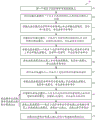
fig. 10 is a flow diagram of a process for forming a wafer according to an embodiment;
FIG. 11 is a flow diagram of a process for incorporating an optical component into a wafer according to an embodiment;
fig. 12A to 12O are descriptions of steps for incorporating an optical component into a wafer according to an embodiment; and is
Fig. 13 is a flow diagram of a process for incorporating an optical module into an electronic device, according to an embodiment.
Detailed Description
One or more specific embodiments will be described below. In an effort to provide a concise description of these embodiments, not all features of an actual implementation are described in the specification. It should be appreciated that in the development of any such actual implementation, as in any engineering or design project, numerous implementation-specific decisions must be made to achieve the developers' specific goals, such as compliance with system-related and business-related constraints, which may vary from one implementation to another. Moreover, it should be appreciated that such a development effort might be complex and time consuming, but would nevertheless be a routine undertaking of design, fabrication, and manufacture for those of ordinary skill having the benefit of this disclosure.
One or more light sources (e.g., Light Emitting Diodes (LEDs), Laser Diodes (LDs), etc.) and/or light sensors (e.g., photodiodes) may be disposed on a substrate (e.g., a wafer) used in an optical module. Optical modules may be used for a variety of tasks, including, for example, visual effects (e.g., indicator lights, optical entertainment displays, etc.), proximity sensors, ambient light sensors, heart rate sensors, pulse oximetry sensors, image sensors (e.g., Charge Coupled Devices (CCDs)), fingerprint scanners, facial recognition, and so forth. It is to be understood that such embodiments are presented by way of example only, and not limitation.
As described above, some optical modules may utilize surface mount light sources and/or light sensors and use wire bonding to make electrical connections to the light sources and/or light sensors. However, wire bonds may be susceptible to damage (e.g., gravity shock, direct contact, etc.). Furthermore, wire bonds may occupy additional space on the surface of the substrate, limiting the placement of light sources and/or light sensors and increasing the thickness of the overall optical module. Further, the surface mount light source and/or the light sensor may include a light shield to provide optical isolation between the surface mount light source, the light sensor, and/or other components of the electronic device. Such light shields may further increase the thickness profile of the optical module.
However, in the present disclosure, the light source and/or light sensor may be integrated into the wafer using wafer level packaging. That is, in contrast to surface mounting, the optical component may be directly incorporated into the die. Furthermore, the integrated optical component may be at least partially covered at both the top and bottom to enable electrical connection and/or optical separation from other optical components. In some embodiments, the surface of the cover may include a black solder mask to enable additional optical isolation. Depending on the implementation, integrating the optical components into the wafer may provide optical isolation between the optical components without the need for additional light shields that may increase the thickness of the optical module.
In addition, electrical connections to the optical components may also be integrated into the wafer, as opposed to using wire bonding. For example, the optical component may be at least partially covered on both the top side and the bottom side, and electrical connections (e.g., from the top of the optical component) may be routed through the wafer to external connections (e.g., Surface Mount Technology (SMT) pads, solder bumps, etc.) using, for example, conductive vias or Printed Circuit Board (PCB) strips. By utilizing electrical connections within the wafer, wire bonds can be eliminated.
Thus, the use of wafer level optical modules may result in improved reliability and robustness, for example, due to the absence of wire bonds. In addition, the packaged die may be easier to handle than open package designs. Furthermore, wafer level optical modules may have a smaller overall profile and/or have built-in optical isolation between components, for example, by recessing the optical components relative to the surface of the wafer.
To aid in illustration, FIG. 1 shows an electronic device 10 that may include an electronic display 12. As discussed in more detail below, the electronic device 10 may be any suitable electronic device 10, such as a health monitor, a camera, a pulse and/or blood oxygen sensor, an ambient light sensor, a facial recognition sensor, a fingerprint scanner, or the like. Additionally, other electronic devices 10 that may include optical modules include computers, mobile phones, portable media devices, tablets, televisions, virtual reality helmets, vehicle dashboards, and the like. Accordingly, it should be noted that FIG. 1 is merely one example of a particular implementation and is intended to illustrate the types of components that may be present in electronic device 10.
In one embodiment, the electronic device 10 may include an electronic display 12, one or more input devices 14, one or more input/output (I/O) ports 16, a processor core complex 18 having one or more processors or processor cores, a local memory 20, a main memory storage device 22, a network interface 24, a power supply 26, and an optical module 27. The various components described in fig. 1 may include hardware elements (e.g., circuitry), software elements (e.g., a tangible, non-transitory computer-readable medium storing instructions), or a combination of hardware and software elements. It should be noted that the various depicted components may be combined into fewer components or separated into additional components. For example, the local memory 20 and the main memory storage device 22 may be included in a single component.
As shown, the processor core complex 18 is operatively coupled to a local memory 20 and a main memory storage device 22. Thus, the processor core complex 18 may execute instructions stored in the local memory 20 and/or the main memory storage device 22 to perform operations such as generating and/or transmitting image data. As such, the processor core complex 18 may include one or more general purpose microprocessors, one or more Application Specific Integrated Circuits (ASICs), one or more Field Programmable Gate Arrays (FPGAs), or any combination thereof.
In addition to instructions, the local memory 20 and/or the main memory storage device 22 may store data to be processed by the processor core complex 18. Thus, in some embodiments, the local memory 20 and/or the main memory storage device 22 may include one or more tangible, non-transitory computer-readable media. For example, local memory 20 may include Random Access Memory (RAM), and main memory storage device 22 may include read-only memory (ROM), rewritable non-volatile memory (such as flash memory, hard drives, optical disks, and so forth).
As shown, the processor core complex 18 is also operatively coupled to a network interface 24. In some embodiments, the network interface 24 may facilitate data communication with another electronic device and/or a communication network. For example, the network interface 24 (e.g., a radio frequency system) may enable the electronic device 10 to communicatively couple to a Personal Area Network (PAN) (e.g., a bluetooth network), a Local Area Network (LAN) (e.g., an 802.11x Wi-Fi network), and/or a Wide Area Network (WAN) (such as a 4G network or an LTE cellular network).
Further, as shown, the processor core complex 18 is operatively coupled to a power supply 26. In some embodiments, the power supply 26 may provide power to one or more components in the electronic device 10 (such as the processor core complex 18 and/or the electronic display 12). Accordingly, the power source 26 may include any suitable energy source, such as a rechargeable lithium-polymer (Li-poly) battery and/or an Alternating Current (AC) power converter.
Additionally, as shown, the processor core complex 18 is operatively coupled to one or more I/O ports 16. In some embodiments, the I/O ports 16 may enable the electronic device 10 to interface with other electronic devices. For example, when a portable storage device is connected, the I/O ports 16 may enable the processor core complex 18 to communicate data with the portable storage device.
As shown, the electronic device 10 is also operatively coupled with one or more input devices 14. In some embodiments, input device 14 may facilitate user interaction with electronic device 10 by, for example, receiving user input. Thus, the input device 14 may include buttons, a keyboard, a mouse, a touch pad, and the like. Additionally, in some embodiments, the input device 14 may include touch sensing components in the electronic display 12. In such embodiments, the touch sensing component may receive user input by detecting the occurrence and/or location of an object touching the surface of the electronic display 12. In some embodiments, optical module 27 may be used as input device 14. For example, the optical module 27 may be used to identify the user (e.g., via a fingerprint scanner or facial recognition sensor), identify user movement, or identify health aspects of the user (e.g., heart rate, oxygen saturation, etc.). It should be understood that such examples are given for illustrative purposes only and thus are not limiting.
In addition to enabling user input, the electronic display 12 may include a display panel having one or more display pixels. Electronic display 12 may control light emission from its display pixels to present a visual representation of information, such as a Graphical User Interface (GUI) of an operating system, an application interface, a still image, or video content, by displaying frames based at least in part on corresponding image data (e.g., image pixel data located at each pixel location).
As shown, the electronic display 12 is operatively coupled to the processor core complex 18. In this manner, the electronic display 12 may display an image based at least in part on image data received from an image data source (e.g., the processor core complex 18). Additionally or alternatively, the electronic display 12 may display an image based at least in part on image data received via the network interface 24, the input device 14, and/or the I/O port 16.
As mentioned above, the electronic device 10 may be any suitable electronic device. For ease of illustration, one example of a suitable electronic device 10, and in particular, a handheld device 10A, is shown in FIG. 2. In some embodiments, handheld device 10A may be a cellular telephone, a media player, a personal data organizer, a handheld game platform, or the like. For illustrative purposes, handheld device 10A may be a smartphone, such as any available from Apple inc The model number.
As shown, the handheld device 10A includes a housing 28 (e.g., an outer shell). In some embodiments, the housing 28 may protect the internal components from physical damage and/or shield the internal components from electromagnetic interference. Additionally, as shown, a housing 28 may surround the electronic display 12. In the depicted embodiment, the electronic display 12 displays a Graphical User Interface (GUI)30 having an array of icons 32. For example, an application may be launched when the icon 32 is selected by the input device 14 or touch sensing component of the electronic display 12.
Further, as shown, the input device 14 may be accessed through an opening in the housing 28. As described above, input device 14 may enable a user to interact with handheld device 10A. For example, the input device 14 may enable a user to activate or deactivate the handheld device 10A, navigate a user interface to a home screen, navigate a user interface to a user-configurable application screen, activate voice recognition features, provide volume control, and/or switch between vibrate and ringer modes. As shown, the I/O ports 16 are accessible through openings in the housing 28. In some embodiments, the I/O ports 16 may include, for example, audio jacks to connect to external devices. In addition to or instead of optical module 27 being used as input device 14, optical module 27 may also be used in handheld device 10A to function as or in conjunction with camera 34 and/or ambient light sensor 35. The camera 34 may use the optical module 27 during image acquisition or use the optical module 27 to help identify optimal optical image acquisition settings by detecting the surrounding environment. Additionally, an ambient light sensor 35 (which may also use optical module 27) may assist in determining the ambient light intensity. Such measurements may be used, for example, to adjust the lighting effects of the camera 34, the backlight of the electronic display 12, or other components of the handheld device 10A.
For further explanation, another example of a suitable electronic device 10, and in particular a tablet device 10B, is shown in fig. 3. For illustrative purposes, tablet device 10B may be any available from Apple inc The model number. Another example of a suitable
 electronic device 10, embodied as a computer 10C, is shown in FIG. 4. For illustrative purposes, computer 10C may be any available from Apple Inc Or
Or The model number.
Another example of a suitable electronic device 10 is shown in fig. 5, which is, in particular, a wearable device 10D (e.g., a watch, health monitor, etc.). For illustrative purposes, wearable device 10D may be an Apple available from Apple inc As with the other
 electronic devices 10, the wearable device 10D may include an ambient light sensor 35, which may be a light sensorThe ambient light sensor has an optical module 27 for adjusting the brightness of the electronic display 12, for example. Additionally or alternatively, the wearable device 10D may include an optical module 27 implemented as the health sensor 36 or into the health sensor 36. In some embodiments, the health sensor 36 may detect the user's heart rate, blood pressure, oxygen saturation, and/or other parameters corresponding to the user. In some embodiments, optical module 27 may illuminate one or more lights onto the user and detect a light response associated with one or more health parameters of the user.
Transparent backing 37 (e.g., crystal, glass, plastic, etc.) may help facilitate optical transmission between optical module 27 and a user (e.g., the user's skin), as well as protect optical module 27 and/or other components of wearable device 10D from external elements and/or damage. Furthermore, as described above, in contrast to surface mounting, optical module 27 using wafer level packaging may have a thinner profile. As such, wearable device 10D may also benefit from a smaller (e.g., thinner) profile.
Fig. 6A shows an exemplary optical module 27 from a top perspective, and fig. 6B shows optical module 27 from a bottom perspective. As described above, optical module 27 may include one or more optical components, such as LEDs 38 and/or photodiodes 40, integrated into wafer 42. It should be understood that other types of light emitting components (e.g., laser diodes, electroluminescent materials, etc.) and photodetectors (e.g., photodiode 40, Light Emitting and Absorbing Diode (LEAD), etc.) may also be used. Furthermore, the optical component may emit or be sensitive to light having any suitable wavelength (e.g., infrared, ultraviolet, or visible light), depending on the implementation. For example, the LEDs 38 may emit visible light (e.g., red, green, and/or blue light), ultraviolet, or infrared light, or a combination thereof. Additionally, a plurality of different LEDs 38 may be incorporated into the optical module 27.
Depending on the implementation, the optical components may work in parallel, for example, emitting light onto the subject and sensing the light response (e.g., light refraction, reflection, and/or emission), for example, in the health sensor 36. In one embodiment, for example, for use in the health sensor 36, the optical module 27 may include four green LEDs 38 and two infrared LEDs 38. In some embodiments, the green LED38 may be used to sense heart rate due to high signal-to-noise ratio, resistance to motion distortion, and/or high absorption rate in hemoglobin. Furthermore, red and/or infrared light may be used for detection deeper into the skin of the patient, since red and infrared light is less readily absorbed and thus penetrates deeper into the skin, as is known in the art of pulse oximetry. Additionally or alternatively, the optical components may be used alone, for example to illuminate an object for viewing by a user, or to sense ambient light not associated with the optical module 27, for example to adjust the brightness of the electronic display 12.
In some embodiments, the layout of the optical components in the wafer 42 may include a plurality (e.g., 2, 4, 5, 8, 14, etc.) of photodiodes 40 substantially surrounding one or more LEDs 38, and thus a light shield may be created between the photodiodes 40 and the LEDs 38. The light blocking member prevents light from the LED38 from directly illuminating the photodiode 40. Multiple LEDs 38 may be used to provide different wavelength light emissions and/or to increase the light output intensity. Similarly, a plurality of photodiodes 40 may be used to detect light of a particular wavelength and/or to increase the light sensitivity of the optical module 27. It should be understood that other optical component layouts may also be used based on the particular implementation. The layout of the external connections 44 of the optical components may also be arranged according to the implementation, and in one embodiment may include the external connections 44 on a single side (e.g., bottom) and may be located along the outer edge of the wafer 42 to facilitate connecting the optical module 27 to the processor core complex 18 or other components of the electronic device 10. Although shown as square, the external connections 44 may include other shapes (e.g., rounded shapes) depending on the implementation.
Fig. 7 is a cross-sectional view 46 of an exemplary optical module 27 having multiple optical components (e.g., LEDs 38 and photodiodes 40). The optical components may be secured to a substrate mold 48 of a wafer 42 with one or more of a plurality of layers (e.g., redistribution layer (RDL)50, passivation layer (PSV)52, Under Bump Metallization (UBM) layer 54, solder bumps 56, photoresist layer 58, etc.) on respective sides of substrate mold 48. In some embodiments, wafer 42 may be approximately 300 micrometers (μm) thick. Depending on the implementation, the wafer thickness may vary (e.g., less than 200 μm, less than 350 μm, less than 500 μm, less than 1 millimeter (mm), or greater than 1 mm).
The RDL50 may be made of any suitable electrically conductive material (e.g., copper, gold, etc.) and may be used to connect and/or route the electrical connections 60 of the optical components to the external connections 44 of the optical module 27. For example, the spacing, layout, and/or orientation may make it impractical to provide external connections 44 (e.g., UBM layer 54 and/or solder bumps 56) directly underneath each electrical connection 60 (e.g., with respect to fig. 7). Accordingly, the RDL50 can route the electrical connections 60 of the optical component to another portion of the wafer 42 before connecting to the external connections 44. RDL50 may also be used to organize external connections 44, for example, based on the implementation.
In some embodiments, the optical component may have electrical connections 60 on the top (e.g., the active side of the optical component). To allow electrical communication between the topside electrical connections 60 and the external connections 44 on the bottom of the wafer 42, the RDL50 may route the electrical connections 60 to a Printed Circuit Board (PCB) strip 62. PCB strip 62 provides a conductive path through substrate mold 48. The use of such PCB strips 62 may reduce manufacturing costs and/or time by simplifying the manufacturing process. For example, rather than creating conductive vias by drilling or etching holes into substrate mold 48, PCB strips 62 may be placed together with optical components to build substrate mold 48 around them. RDL50 may electrically connect the top side of the optical components to PCB strip 62, allowing electrical connections 60 and optical components to be below the surface of wafer 42. Furthermore, as noted above, it may not be practical to provide external connections 44 (e.g., UBM layer 54 and/or solder bumps 56) directly underneath each electrical connection 60. Similarly, it may not be desirable to provide external connections 44 directly underneath PCB strip 62, and/or it may not be practical to do so. As such, RDL50 may also route connections from PCB strip 62 to external connections 44. In some embodiments, there may be one or more RDLs 50 on either side of the optical component and PCB strips 62 to route the electrical connections 60.
Further, when implemented into the electronic device 10, the optical module 27 may incorporate one or more lenses 64 and/or covers 66, as shown in fig. 8 and 9. In some embodiments, the lens 64 may help focus the light input and/or light output of one or more of the optical components. The lens 64 may be of any suitable type, such as a simple lens, a compound lens, a bi-convex lens, a Fresnel lens, or the like. In some embodiments, a fresnel lens may produce improved focus while maintaining a small form factor. Additionally or alternatively, a diffuser (not shown) may be implemented to scatter light emitted or received by one or more of the optical components. In addition, the lens 64 or diffuser may be located directly on the surface of the wafer 42, or it may be attached to the cover 66 or integrated into the cover 66.
A cover 66 may be placed over the optical components to protect the optical components from elements such as dust, moisture, and fingerprints and damage. To allow light to pass through the cover 66, the cover 66 may be transparent, translucent, and/or transparent to at least some wavelengths of light to which the optical module 27 is sensitive. For example, for wearable device 10D, cover 66 may be a transparent backing 37 (e.g., a crystal, sapphire, glass, or plastic backing). In some embodiments, the cover 66 may also provide a means of mounting the wafer 42 to the electronic device 10 by attaching to the housing 28 of the electronic device 10. For example, the spacer 68 may adhere to both the cover 66 and the surface of the wafer 42 and secure the wafer 42 in a fixed position relative to the housing 28 of the electronic device 10.
Fig. 10 is a flowchart 70 of an exemplary overview of manufacturing the optical module 27. One or more optical components are encased by the substrate such that at least the active area of the optical components and the electrical connections (e.g., on the top side of the substrate) remain exposed (process block 72). As described in further detail below, one or more layers of different materials may then be built around the optical components to form wafer 42. For example, one or more RDLs 50 may be stacked onto the topside electrical connections 60 of each of the optical components, routing the electrical connections 60 within the wafer 42 to the external connections 44 (process block 74). The molding and/or layering of materials may be accomplished by any suitable process (e.g., deposition, brushing, spraying, dipping, etc.). In addition, the excess material may be removed by any suitable process (e.g., stripping, etching, polishing, drilling, grinding, ablating, etc.). Additionally, in some embodiments, a template or mask may be used, for example, to place only the desired layers (e.g., PSV 52, RDL50, substrate mold 48, photoresist layer 58, etc.) in the desired locations. For example, one or more PSVs 52 may also be stacked onto RDL50 to sag the optical components into wafer 42 and/or provide electrical isolation (process block 76). Additionally, a dark photoresist layer 58 (e.g., black solder mask) may be layered onto the top side of the wafer 42, such as onto the PSV 52 (process block 78). As described above, photoresist layer 58 may help optically isolate the optical components from each other and/or from ambient light.
Fig. 11 is a flowchart 80 of an exemplary process of manufacturing optical module 27. In some embodiments, the optical components and/or PCB strips may first be arranged onto a carrier (process block 81). Such an arrangement may be accomplished, for example, by a pick and place process with the optical component facing downward (e.g., the active side facing the carrier). In some embodiments, using a pick and place process may increase manufacturing yield, as "known good" components may be selected one by one for optical module 27, thereby increasing manufacturing efficiency. Further, any suitable support (e.g., stainless steel support) may be used. After the optical components and/or PCB strips 62 are placed onto the carrier, the substrate mold 48 may be overlaid on the arranged optical components and/or PCB strips to form the wafer 42, which is then removed from the carrier (process block 82). The wafer 42 may be flipped over and the first PSV 52 may be layered (e.g., coated, exposed, developed, and/or cured) onto the active side of the optical component and any excess PSV material may also be removed (process block 83). The RDL50 may be layered onto the first PSV 52 (process block 84), followed by the second PSV 52, and any excess material may be removed (process block 85). Additionally, a photoresist layer 58 may be added to the topmost PSV 52 and any excess material removed (process block 86). It should be understood that material added to the active side of the optical components may be disposed in a stack and/or removed so that the light-conducting zone of each optical component is exposed and connects electrical connection 60 to RDL 50.
As described above, upon completion, wafer 42 may have a profile with a thickness of less than 500 μm (e.g., less than 350 μm, 300 μm, or 200 μm). Larger profile wafers 42 (having a profile greater than 500 μm or 1mm) may also be created depending on the implementation and choice of optical components. Additionally, in some embodiments, multiple wafers 42 may be prepared simultaneously to further improve manufacturing yield and efficiency. For example, in one embodiment, an 8 inch square or 8 inch diameter carrier may carry multiple sets of optical components as the layers are built around the optical components. Thus, a whole piece of several wafers 42 may be diced into individual wafers 42.
To aid in illustration, fig. 12A-12O illustrate exemplary steps for fabricating optical module 27. Fig. 12A shows a plurality of optical components (e.g., LEDs 38 and photodiodes 40) and PCB strip 62 disposed on a carrier 94. In some embodiments, an adhesive 96 (e.g., double-sided tape, glue, etc.) may be implemented to hold the optical components and PCB strip 62 in place. Fig. 12B shows the overlay of the substrate mold 48 to surround the optical components and PCB strip 62 to create the start of the wafer 42. Fig. 12C shows the wafer 42 flipped relative to fig. 12B, with the carrier 94 removed. Fig. 12D shows the first PSV 52 layered onto the active side of the wafer 42 while not covering the electrical connections 60 of the optical components or the PCB strip 62. Fig. 12E shows RDL50 stacked onto PSV 52 and electrically connecting each top electrical connection 60 of the optical component to PCB strip 62. Fig. 12F shows a second PSV 52 which is laminated onto the first PSV 52 and the RDL 50. Figure 12G shows a photoresist layer 58 applied to the surface of the active side of wafer 42. As described above, the layers on the active side of wafer 42 leave at least a portion of light-conducting zone 98 of the optical component exposed.
Fig. 12H shows the wafer 42 flipped over with respect to fig. 12G, exposing the bottom of the wafer 42 and the substrate mold 48. Fig. 12I and 12J show that at least some of the substrate mold 48 is removed, thereby exposing the bottom side electrical connections 60 of the optical components and the PCB strips 62. Fig. 12K shows that the first PSV 52 is layered to the bottom of the substrate mold 48 while leaving access to the electrical connections 60. Fig. 12L shows that the first RDL50 is stacked to be connected to the electrical connection 60. Fig. 12M shows a second PSV 52 stacked atop the first RDL50 and PSV 52. As described above, multiple RDLs 50 and PSVs 52 may be stacked to enable additional routing of electrical connections. Upon completion of the lamination arrangement, solder bumps 56 may be added to RDL50 to make external connections 44, as shown in fig. 12N. Fig. 12O shows a wafer 42 with an optical module 27 manufactured as an example.
As described above, wafer 42 may also include lens 64 and/or cover 66 when wafer 42 is integrated into electronic device 10. FIG. 13 is a flowchart 100 of an exemplary process for creating an electronic device 10 having an optical module 27. The lens 64 may be placed over one or more optical components (process block 102). In some embodiments, some optical components may have lenses 64 or diffusers, while other optical components do not. For example, each light source (e.g., LED 38) may have a lens 64, while each photodiode 40 is unassisted, and vice versa. Additionally, the overlay 66 may be placed over the optical component (process block 104). The cover 66 may provide structural support, protective support, and/or mounting support. The lens 64 and/or the cover 66 may be secured to the wafer 42 by any suitable means, such as adhesives, fasteners, and/or clamping.
When integrated into the electronic device 10, the external connections 44 of the optical module 27 may be electrically connected to one or more other components of the electronic device 10 (e.g., the processor core complex 18, the power supply 26, the I/O ports 16, the network interface 24, etc.) (process block 106). The optical module 27 may also be mounted to the electronic device 10 (process block 108), for example, such that the optical components are in optical communication with the surroundings of the electronic device 10. As described above, in one embodiment, the optical module may be integrated into the wearable device 10D (e.g., watch, health sensor, etc.), and the optical module 27 may be mounted toward the skin of the user. Other embodiments may include integration into various electronic devices 10 and/or have an orientation toward the sky, the user's face, or other surroundings.
Although the processes of flowchart 70, flowchart 80, flowchart 100, and fig. 12A-12O referenced above are presented in a given order, in certain embodiments, the illustrated steps may be reordered, altered, deleted, and/or may occur concurrently. For example, the bottom (e.g., non-active side) of the wafer 42 may be layered with the RDL50 and PSV 52 before the top (e.g., active side) of the wafer 42. Additionally, the referenced flow diagrams 70, 80, 100 are presented as illustrative tools, and additional decision blocks and/or process blocks may be added depending on the implementation.
The specific embodiments described above have been shown by way of example, and it should be understood that these embodiments may be susceptible to various modifications and alternative forms. It should be further understood that the claims are not intended to be limited to the particular forms disclosed, but rather to cover all modifications, equivalents, and alternatives falling within the spirit and scope of this disclosure.
The technology described and claimed herein is cited and applied to specific examples of physical and practical nature that significantly improve the art, and thus are not abstract, intangible, or purely theoretical. Furthermore, if any claim appended to the end of this specification contains one or more elements designated as "means for [ performing ] [ function ]. or" step for [ performing ] [ function ]. these elements will be construed in accordance with 35u.s.c.112 (f). However, for any claim containing elements specified in any other way, these elements will not be construed according to 35u.s.c.112 (f).
Claims (20)
1. An optics wafer, the optics wafer comprising:
a substrate;
one or more optical components at least partially encapsulated by the substrate, wherein each optical component of the one or more optical components is configured to emit or sense light;
one or more Printed Circuit Board (PCB) strips at least partially encapsulated by the substrate, wherein the one or more PCB strips are configured to allow electrical conduction from a first side of the substrate to a second side of the substrate; and
at least one redistribution layer configured to electrically couple at least one of the one or more optical components to at least one of the one or more PCB strips.
2. The optical wafer of claim 1, wherein each of the one or more optical components comprises an active side exposed on the first side of the substrate, wherein the active side of each of the one or more optical components is located in a recess formed by at least one passivation layer, wherein the recess is configured to act as a light shield between the one or more optical components.
3. The optics wafer of claim 1, wherein each of the one or more optical components comprises an active side exposed on the first side of the substrate, wherein the first side of the substrate comprises a dark photoresist layer configured to reduce optical interference between the one or more optical components.
4. The optics wafer of claim 1, wherein the one or more optical components comprise one or more Light Emitting Diodes (LEDs), one or more photodiodes, or any combination thereof.
5. The optics wafer of claim 4, wherein the one or more LEDs comprise a plurality of LEDs and the one or more photodiodes comprise a plurality of photodiodes, wherein the plurality of photodiodes are arranged circumferentially around the plurality of LEDs.
6. The optics wafer of claim 1, comprising a plurality of passivation layers configured to provide electrical isolation between electrical connections of the optics wafer.
7. The optics wafer of claim 1, comprising a plurality of external electrical connections configured to couple the optics wafer to an electronic device.
8. The optics wafer of claim 7, wherein the external electrical connections comprise an under bump metallization layer or solder bumps or both.
9. The optics wafer of claim 7, comprising a cover configured to be integrated into a housing of the electronic device and configured to allow optical communication between the one or more optical components and an environment of the housing.
10. The optics wafer of claim 1, comprising a lens configured to focus light into or out of at least one of the one or more optical components.
11. The optics wafer of claim 10, wherein the lens comprises a fresnel lens.
12. An optical module, the optical module comprising:
a wafer, the wafer comprising:
a substrate having a first side and a second side; and
a plurality of optical components at least partially encapsulated by the substrate, wherein the plurality of optical components comprises one or more light sources and one or more light sensors, wherein each optical component of the plurality of optical components comprises an active side exposed on the first side of the substrate, wherein the first side of the substrate comprises a dark-colored light-blocking layer configured to optically isolate the one or more light sources from the one or more light sensors; and
a cover configured to protect the wafer from environmental influences.
13. The optical module of claim 12, wherein the die comprises one or more Printed Circuit Board (PCB) strips configured to electrically couple electrical contacts of at least one of the plurality of optical components on the first side of the substrate to communication contacts on the second side of the substrate opposite the first side of the substrate.
14. The optical module of claim 12 wherein the cover is configured to secure the optical module to an electronic device and to allow optical communication between the optical module and the environment outside of the electronic device.
15. The optical module of claim 12, wherein the cover comprises a lens configured to focus or diffuse light emitted by the one or more light sources or light received by the one or more light sensors.
16. A wearable device, the wearable device comprising:
a housing;
an optical module disposed in the housing, the optical module comprising:
a wafer;
one or more optical components at least partially surrounded by the wafer, wherein each optical component of the one or more optical components is configured to emit or sense light;
one or more Printed Circuit Board (PCB) strips at least partially surrounded by the wafer, wherein the one or more PCB strips are configured to electrically couple contacts of at least one of the one or more optical components to one or more contacts through the wafer; and
a processor disposed within the housing, electrically coupled to the one or more optical components via the one or more contacts, and configured to communicate electrical signals with the one or more optical components.
17. The wearable device of claim 16, wherein the housing comprises a transparent portion configured to allow optical communication between the one or more optical components and an environment external to the housing.
18. The wearable device of claim 17, wherein the transparent portion of the housing is configured to abut against a user's skin when in operation.
19. The wearable device of claim 16, wherein the one or more optical components comprise one or more light sources and one or more light sensors, and wherein the one or more light sources are configured to illuminate an object and the one or more light sensors are configured to sense a response to the illumination.
20. The wearable device of claim 16, wherein the wearable device comprises a watch.
Applications Claiming Priority (4)
| Application Number | Priority Date | Filing Date | Title |
|---|---|---|---|
| US201862738304P | 2018-09-28 | 2018-09-28 | |
| US62/738,304 | 2018-09-28 | ||
| US16/375,493 | 2019-04-04 | ||
| US16/375,493 US10993317B2 (en) | 2018-09-28 | 2019-04-04 | Wafer level optical module |
Publications (2)
| Publication Number | Publication Date |
|---|---|
| CN110970410A true CN110970410A (en) | 2020-04-07 |
| CN110970410B CN110970410B (en) | 2023-09-05 |
Family
ID=69946827
Family Applications (1)
| Application Number | Title | Priority Date | Filing Date |
|---|---|---|---|
| CN201910820589.2A Active CN110970410B (en) | 2018-09-28 | 2019-08-29 | Wafer Level Optical Module |
Country Status (2)
| Country | Link |
|---|---|
| US (1) | US10993317B2 (en) |
| CN (1) | CN110970410B (en) |
Cited By (1)
| Publication number | Priority date | Publication date | Assignee | Title |
|---|---|---|---|---|
| WO2022228480A1 (en) * | 2021-04-30 | 2022-11-03 | 荣耀终端有限公司 | Wearable device based on photoplethysmography (ppg) and control method therefor |
Families Citing this family (4)
| Publication number | Priority date | Publication date | Assignee | Title |
|---|---|---|---|---|
| US10811400B2 (en) * | 2018-09-28 | 2020-10-20 | Apple Inc. | Wafer level optical module |
| US11966090B2 (en) * | 2021-03-03 | 2024-04-23 | Taiwan Semiconductor Manufacturing Co., Ltd. | Heterogeneous packaging integration of photonic and electronic elements |
| TWI788907B (en) | 2021-07-07 | 2023-01-01 | 隆達電子股份有限公司 | Detection device |
| US20240006396A1 (en) * | 2022-07-01 | 2024-01-04 | Advanced Semiconductor Engineering, Inc. | Optical device |
Citations (12)
| Publication number | Priority date | Publication date | Assignee | Title |
|---|---|---|---|---|
| US20100117103A1 (en) * | 2007-03-07 | 2010-05-13 | Jan Marfeld | Light-Emitting Module and Method of Manufacture for a Light-Emitting Module |
| US20100224767A1 (en) * | 2009-03-04 | 2010-09-09 | Tdk Corporation | Photodetector, method for manufacturing the same, and photodetection system |
| US20110233702A1 (en) * | 2010-03-25 | 2011-09-29 | Sony Corporation | Semiconductor apparatus, method of manufacturing semiconductor apparatus, method of designing semiconductor apparatus, and electronic apparatus |
| CN102386156A (en) * | 2010-09-02 | 2012-03-21 | 精材科技股份有限公司 | Chip package |
| US20130164867A1 (en) * | 2011-12-22 | 2013-06-27 | Stmicroelectronics Pte Ltd. | Embedded wafer level optical package structure and manufacturing method |
| US20140231635A1 (en) * | 2013-02-20 | 2014-08-21 | Maxim Integrated Products, Inc. | Multichip wafer level package (wlp) optical device |
| US20150137148A1 (en) * | 2013-11-18 | 2015-05-21 | Stmicroelectronics Pte Ltd. | Optical sensor package |
| US20150173631A1 (en) * | 2013-06-24 | 2015-06-25 | Fitbit, Inc. | Heart rate data collection |
| US20150262983A1 (en) * | 2014-03-14 | 2015-09-17 | Avago Technologies General Ip (Singapore) Pte. Ltd. | METHODS FOR PERFORMING EXTENDED WAFER-LEVEL PACKAGING (eWLP) AND eWLP DEVICES MADE BY THE METHODS |
| US20160163747A1 (en) * | 2014-12-08 | 2016-06-09 | Seiko Epson Corporation | Photoelectric conversion device and electronic apparatus |
| US20180122786A1 (en) * | 2016-11-01 | 2018-05-03 | Innolux Corporation | Display devices and methods for forming the same |
| US20180190631A1 (en) * | 2016-12-30 | 2018-07-05 | Lg Display Co., Ltd. | Display device and multi-screen display device using the same |
Family Cites Families (2)
| Publication number | Priority date | Publication date | Assignee | Title |
|---|---|---|---|---|
| US9696199B2 (en) * | 2015-02-13 | 2017-07-04 | Taiwan Biophotonic Corporation | Optical sensor |
| US10622302B2 (en) * | 2018-02-14 | 2020-04-14 | Taiwan Semiconductor Manufacturing Company, Ltd. | Via for semiconductor device connection and methods of forming the same |
-
2019
- 2019-04-04 US US16/375,493 patent/US10993317B2/en not_active Expired - Fee Related
- 2019-08-29 CN CN201910820589.2A patent/CN110970410B/en active Active
Patent Citations (12)
| Publication number | Priority date | Publication date | Assignee | Title |
|---|---|---|---|---|
| US20100117103A1 (en) * | 2007-03-07 | 2010-05-13 | Jan Marfeld | Light-Emitting Module and Method of Manufacture for a Light-Emitting Module |
| US20100224767A1 (en) * | 2009-03-04 | 2010-09-09 | Tdk Corporation | Photodetector, method for manufacturing the same, and photodetection system |
| US20110233702A1 (en) * | 2010-03-25 | 2011-09-29 | Sony Corporation | Semiconductor apparatus, method of manufacturing semiconductor apparatus, method of designing semiconductor apparatus, and electronic apparatus |
| CN102386156A (en) * | 2010-09-02 | 2012-03-21 | 精材科技股份有限公司 | Chip package |
| US20130164867A1 (en) * | 2011-12-22 | 2013-06-27 | Stmicroelectronics Pte Ltd. | Embedded wafer level optical package structure and manufacturing method |
| US20140231635A1 (en) * | 2013-02-20 | 2014-08-21 | Maxim Integrated Products, Inc. | Multichip wafer level package (wlp) optical device |
| US20150173631A1 (en) * | 2013-06-24 | 2015-06-25 | Fitbit, Inc. | Heart rate data collection |
| US20150137148A1 (en) * | 2013-11-18 | 2015-05-21 | Stmicroelectronics Pte Ltd. | Optical sensor package |
| US20150262983A1 (en) * | 2014-03-14 | 2015-09-17 | Avago Technologies General Ip (Singapore) Pte. Ltd. | METHODS FOR PERFORMING EXTENDED WAFER-LEVEL PACKAGING (eWLP) AND eWLP DEVICES MADE BY THE METHODS |
| US20160163747A1 (en) * | 2014-12-08 | 2016-06-09 | Seiko Epson Corporation | Photoelectric conversion device and electronic apparatus |
| US20180122786A1 (en) * | 2016-11-01 | 2018-05-03 | Innolux Corporation | Display devices and methods for forming the same |
| US20180190631A1 (en) * | 2016-12-30 | 2018-07-05 | Lg Display Co., Ltd. | Display device and multi-screen display device using the same |
Cited By (1)
| Publication number | Priority date | Publication date | Assignee | Title |
|---|---|---|---|---|
| WO2022228480A1 (en) * | 2021-04-30 | 2022-11-03 | 荣耀终端有限公司 | Wearable device based on photoplethysmography (ppg) and control method therefor |
Also Published As
| Publication number | Publication date |
|---|---|
| US10993317B2 (en) | 2021-04-27 |
| CN110970410B (en) | 2023-09-05 |
| US20200107435A1 (en) | 2020-04-02 |
Similar Documents
| Publication | Publication Date | Title |
|---|---|---|
| CN110970410B (en) | Wafer Level Optical Module | |
| US10811400B2 (en) | Wafer level optical module | |
| US11170195B2 (en) | Fingerprint identification apparatus and electronic device | |
| US11442503B2 (en) | Wearable bands with embedded circuitry | |
| US10553179B2 (en) | Electronic devices with ambient light sensors | |
| US11222190B2 (en) | Fingerprint identification apparatus and electronic device | |
| CN113343829B (en) | Fingerprint recognition device and electronic device | |
| CN110770749B (en) | Fingerprint identification device and electronic equipment | |
| KR20180005588A (en) | Fingerprint Sensor, Fingerprint Sensor Package and Fingerprint Sensing System using light sources of display panel | |
| TW201715695A (en) | Wafer level optoelectronic device package and manufacturing method thereof | |
| CN210142340U (en) | Fingerprint identification device and electronic equipment | |
| US9354111B2 (en) | Wafer level lens in package | |
| TW201639181A (en) | Wafer level optoelectronic device package with crosstalk barrier and manufacturing method thereof | |
| TWI514555B (en) | Optical touch screen imager | |
| US10445551B2 (en) | Fingerprint identification device, mobile device using the same and method for manufacturing fingerprint identification device | |
| WO2020034144A1 (en) | Optical sensing module and manufacturing method therefor | |
| CN109156079B (en) | Optical sensing module and manufacturing method thereof | |
| US10734435B2 (en) | Image capturing module and manufacturing method thereof | |
| TW202123874A (en) | Display incorporating optical identification function | |
| US20180300524A1 (en) | Image capturing module and manufacturing method thereof | |
| CN120199743A (en) | Semiconductor device, display device, photoelectric conversion device, and electronic device |
Legal Events
| Date | Code | Title | Description |
|---|---|---|---|
| PB01 | Publication | ||
| PB01 | Publication | ||
| SE01 | Entry into force of request for substantive examination | ||
| SE01 | Entry into force of request for substantive examination | ||
| GR01 | Patent grant | ||
| GR01 | Patent grant |