CN110825088A - Multi-view vision guiding ship body cleaning robot system and cleaning method - Google Patents
Multi-view vision guiding ship body cleaning robot system and cleaning method Download PDFInfo
- Publication number
- CN110825088A CN110825088A CN201911201037.XA CN201911201037A CN110825088A CN 110825088 A CN110825088 A CN 110825088A CN 201911201037 A CN201911201037 A CN 201911201037A CN 110825088 A CN110825088 A CN 110825088A
- Authority
- CN
- China
- Prior art keywords
- hull
- cleaning
- module
- area
- cleaning robot
- Prior art date
- Legal status (The legal status is an assumption and is not a legal conclusion. Google has not performed a legal analysis and makes no representation as to the accuracy of the status listed.)
- Granted
Links
Images


Classifications
-
- G—PHYSICS
- G05—CONTROLLING; REGULATING
- G05D—SYSTEMS FOR CONTROLLING OR REGULATING NON-ELECTRIC VARIABLES
- G05D1/00—Control of position, course, altitude or attitude of land, water, air or space vehicles, e.g. using automatic pilots
- G05D1/02—Control of position or course in two dimensions
- G05D1/021—Control of position or course in two dimensions specially adapted to land vehicles
- G05D1/0231—Control of position or course in two dimensions specially adapted to land vehicles using optical position detecting means
- G05D1/0238—Control of position or course in two dimensions specially adapted to land vehicles using optical position detecting means using obstacle or wall sensors
- G05D1/024—Control of position or course in two dimensions specially adapted to land vehicles using optical position detecting means using obstacle or wall sensors in combination with a laser
-
- G—PHYSICS
- G05—CONTROLLING; REGULATING
- G05D—SYSTEMS FOR CONTROLLING OR REGULATING NON-ELECTRIC VARIABLES
- G05D1/00—Control of position, course, altitude or attitude of land, water, air or space vehicles, e.g. using automatic pilots
- G05D1/02—Control of position or course in two dimensions
- G05D1/021—Control of position or course in two dimensions specially adapted to land vehicles
- G05D1/0231—Control of position or course in two dimensions specially adapted to land vehicles using optical position detecting means
- G05D1/0242—Control of position or course in two dimensions specially adapted to land vehicles using optical position detecting means using non-visible light signals, e.g. IR or UV signals
-
- G—PHYSICS
- G05—CONTROLLING; REGULATING
- G05D—SYSTEMS FOR CONTROLLING OR REGULATING NON-ELECTRIC VARIABLES
- G05D1/00—Control of position, course, altitude or attitude of land, water, air or space vehicles, e.g. using automatic pilots
- G05D1/02—Control of position or course in two dimensions
- G05D1/021—Control of position or course in two dimensions specially adapted to land vehicles
- G05D1/0231—Control of position or course in two dimensions specially adapted to land vehicles using optical position detecting means
- G05D1/0246—Control of position or course in two dimensions specially adapted to land vehicles using optical position detecting means using a video camera in combination with image processing means
- G05D1/0253—Control of position or course in two dimensions specially adapted to land vehicles using optical position detecting means using a video camera in combination with image processing means extracting relative motion information from a plurality of images taken successively, e.g. visual odometry, optical flow
-
- G—PHYSICS
- G05—CONTROLLING; REGULATING
- G05D—SYSTEMS FOR CONTROLLING OR REGULATING NON-ELECTRIC VARIABLES
- G05D1/00—Control of position, course, altitude or attitude of land, water, air or space vehicles, e.g. using automatic pilots
- G05D1/02—Control of position or course in two dimensions
- G05D1/021—Control of position or course in two dimensions specially adapted to land vehicles
- G05D1/0257—Control of position or course in two dimensions specially adapted to land vehicles using a radar
-
- G—PHYSICS
- G05—CONTROLLING; REGULATING
- G05D—SYSTEMS FOR CONTROLLING OR REGULATING NON-ELECTRIC VARIABLES
- G05D1/00—Control of position, course, altitude or attitude of land, water, air or space vehicles, e.g. using automatic pilots
- G05D1/02—Control of position or course in two dimensions
- G05D1/021—Control of position or course in two dimensions specially adapted to land vehicles
- G05D1/0276—Control of position or course in two dimensions specially adapted to land vehicles using signals provided by a source external to the vehicle
-
- G—PHYSICS
- G05—CONTROLLING; REGULATING
- G05D—SYSTEMS FOR CONTROLLING OR REGULATING NON-ELECTRIC VARIABLES
- G05D1/00—Control of position, course, altitude or attitude of land, water, air or space vehicles, e.g. using automatic pilots
- G05D1/02—Control of position or course in two dimensions
- G05D1/021—Control of position or course in two dimensions specially adapted to land vehicles
- G05D1/0276—Control of position or course in two dimensions specially adapted to land vehicles using signals provided by a source external to the vehicle
- G05D1/0278—Control of position or course in two dimensions specially adapted to land vehicles using signals provided by a source external to the vehicle using satellite positioning signals, e.g. GPS
-
- G—PHYSICS
- G06—COMPUTING OR CALCULATING; COUNTING
- G06V—IMAGE OR VIDEO RECOGNITION OR UNDERSTANDING
- G06V20/00—Scenes; Scene-specific elements
- G06V20/10—Terrestrial scenes
-
- B—PERFORMING OPERATIONS; TRANSPORTING
- B63—SHIPS OR OTHER WATERBORNE VESSELS; RELATED EQUIPMENT
- B63B—SHIPS OR OTHER WATERBORNE VESSELS; EQUIPMENT FOR SHIPPING
- B63B59/00—Hull protection specially adapted for vessels; Cleaning devices specially adapted for vessels
- B63B59/06—Cleaning devices for hulls
Landscapes
- Engineering & Computer Science (AREA)
- Physics & Mathematics (AREA)
- Remote Sensing (AREA)
- Radar, Positioning & Navigation (AREA)
- General Physics & Mathematics (AREA)
- Aviation & Aerospace Engineering (AREA)
- Automation & Control Theory (AREA)
- Electromagnetism (AREA)
- Multimedia (AREA)
- Optics & Photonics (AREA)
- Theoretical Computer Science (AREA)
- Computer Vision & Pattern Recognition (AREA)
- Control Of Position, Course, Altitude, Or Attitude Of Moving Bodies (AREA)
Abstract
本发明涉及一种多目视觉导引船体清洁机器人系统及清洁方法。该系统包括:依次连接的多个单目摄像头、船体工作站模块、船体工作站控制模块和清洁机器人模块,各单目摄像头位于船体旁侧,各单目摄像头用于采集视觉范围内部分船体表面图像,船体工作站模块用于接收各部分船体表面图像并将各船体表面图像传送至船体工作站控制模块,船体工作站控制模块对各船体表面图像信息进行处理,完成整幅船体图像的拼接,确定整幅船体的图像并标注船体表面待清洁区域、待清洁区域的位置信息和清洁路径,清洁机器人模块用于根据接收的船体表面待清洁区域、待清洁区域的位置信息和清洁路径对船体进行清洁。本发明能够提高船体清洁的效率和改善船体清洁的效果。
The invention relates to a multi-eye vision-guided ship hull cleaning robot system and a cleaning method. The system includes: a plurality of monocular cameras, a hull workstation module, a hull workstation control module and a cleaning robot module connected in sequence, each monocular camera is located on the side of the hull, and each monocular camera is used to collect part of the hull surface image within the visual range, The hull workstation module is used to receive the images of each part of the hull surface and transmit each hull surface image to the hull workstation control module. The image is marked with the area to be cleaned on the hull surface, the location information of the area to be cleaned, and the cleaning path. The cleaning robot module is used to clean the hull according to the received area on the hull surface, the location information of the area to be cleaned, and the cleaning path. The invention can improve the efficiency of ship hull cleaning and improve the effect of ship hull cleaning.
Description
技术领域technical field
本发明涉及船体清洁领域,特别是涉及一种多目视觉导引船体清洁机器人系统及清洁方法。The invention relates to the field of ship hull cleaning, in particular to a multi-eye vision-guided ship hull cleaning robot system and a cleaning method.
背景技术Background technique
船只长时间在海洋中行驶时,历经海水长时间的浸泡和腐蚀会加快船舶生锈的速度,附着大量海洋微生物,锈迹和杂物会使船只的速度下降,油耗增加。不仅耽误了航期,而且还缩减船舶的使用寿命。因此除杂除锈是船舶工业中一道不可缺少的工艺,但是目前主要以使用喷砂除杂除锈的人工清刷方式为主,不仅耗时耗力,而且效率低下,清洗效果一般,严重时还会破坏船壁涂层,对船壁造成一定程度的损坏。When a ship travels in the ocean for a long time, the long-term immersion and corrosion in seawater will accelerate the speed of the ship's rust, and the adhesion of a large number of marine microorganisms, rust and debris will reduce the speed of the ship and increase the fuel consumption. Not only delays the sailing period, but also reduces the service life of the ship. Therefore, impurity and rust removal is an indispensable process in the shipbuilding industry. However, at present, the manual cleaning method mainly uses sandblasting to remove impurities and rust, which is not only time-consuming and labor-intensive, but also inefficient. The cleaning effect is average. It will also destroy the wall coating, causing a certain degree of damage to the wall.
发明内容SUMMARY OF THE INVENTION
本发明的目的是提供一种多目视觉导引船体清洁机器人系统及清洁方法,能够提高船体清洁的效率和改善船体清洁的效果。The purpose of the present invention is to provide a multi-eye vision-guided ship hull cleaning robot system and a cleaning method, which can improve the efficiency of ship hull cleaning and the effect of ship hull cleaning.
为实现上述目的,本发明提供了如下方案:For achieving the above object, the present invention provides the following scheme:
一种多目视觉导引船体清洁机器人系统,包括:依次连接的多个单目摄像头、船体工作站模块、船体工作站控制模块和清洁机器人模块,各所述单目摄像头位于船体旁侧,各所述单目摄像头用于采集视觉范围内部分船体表面图像,所述船体工作站模块用于接收各所述部分船体表面图像并将各所述船体表面图像传送至所述船体工作站控制模块,所述船体工作站控制模块对各所述船体表面图像信息进行处理,完成整幅船体图像的拼接,确定整幅船体的图像并标注船体表面待清洁区域、待清洁区域的位置信息和清洁路径,所述清洁机器人模块用于根据接收的所述船体表面待清洁区域、所述待清洁区域的位置信息和所述清洁路径对船体进行清洁。A multi-eye vision-guided hull cleaning robot system, comprising: a plurality of monocular cameras, a hull workstation module, a hull workstation control module and a cleaning robot module connected in sequence, each of the monocular cameras is located on the side of the hull, and each of the The monocular camera is used to collect part of the hull surface images within the visual range, and the hull workstation module is used to receive each of the partial hull surface images and transmit each of the hull surface images to the hull workstation control module, and the hull workstation The control module processes each of the hull surface image information, completes the stitching of the entire hull image, determines the entire hull image, and marks the hull surface area to be cleaned, the location information of the area to be cleaned and the cleaning path, the cleaning robot module It is used for cleaning the hull according to the received area of the hull surface to be cleaned, the location information of the area to be cleaned and the cleaning path.
可选的,所述清洁机器人模块包括机器人本体、激光雷达和红外传感器,所述激光雷达用于采集船体表面障碍物信息,所述红外传感器用于采集机器人本体和障碍物之间的距离信息,所述船体工作站控制模块分别与所述激光雷达和所述红外传感器连接,所述船体工作站控制模块用于根据所述船体表面障碍物信息和所述距离信息对障碍物进行标识。Optionally, the cleaning robot module includes a robot body, a lidar, and an infrared sensor, the lidar is used to collect obstacle information on the surface of the ship, and the infrared sensor is used to collect distance information between the robot body and the obstacle, The hull workstation control module is respectively connected with the laser radar and the infrared sensor, and the hull workstation control module is used to identify obstacles according to the obstacle information on the hull surface and the distance information.
可选的,所述清洁机器人模块包括定位子模块,所述定位子模块与所述船体工作站控制模块连接。Optionally, the cleaning robot module includes a positioning sub-module, and the positioning sub-module is connected to the hull workstation control module.
可选的,所述定位子模块包括陀螺仪和北斗导航系统,所述陀螺仪和所述北斗导航系统用于对所述机器人本体的位置信息进行定位,所述船体工作站控制模块分别与所述陀螺仪和所述北斗导航系统连接。Optionally, the positioning sub-module includes a gyroscope and a Beidou navigation system, and the gyroscope and the Beidou navigation system are used to locate the position information of the robot body, and the hull workstation control module is respectively connected with the The gyroscope is connected to the Beidou navigation system.
可选的,所述清洁机器人模块包括伺服电机和高压水枪,所述船体工作站控制模块分别与所述伺服电机和所述高压水枪连接,所述高压水枪用于对所述船体工作站控制模块确定的船体表面待清洁区域进行清洗,所述伺服电机用于为所述机器人本体提供动力。Optionally, the cleaning robot module includes a servo motor and a high-pressure water gun, the hull workstation control module is respectively connected with the servo motor and the high-pressure water gun, and the high-pressure water gun is used to determine the value of the hull workstation control module. The area to be cleaned on the surface of the hull is cleaned, and the servo motor is used to provide power for the robot body.
可选的,所述高压水枪采用水平180度可旋转可调压的高压水枪。Optionally, the high-pressure water gun adopts a horizontal 180-degree rotatable and pressure-adjustable high-pressure water gun.
可选的,所述船体工作站控制模块采用多线程分层协作控制结构。Optionally, the hull workstation control module adopts a multi-threaded layered cooperative control structure.
可选的,所述清洁机器人模块清洁方式有两种:船体整体清洁和船体局部清洁;对于船体整体清洁,所述船体工作站控制模块用于控制各所述单目摄像头对所述清洁机器人模块进行视觉导引,保证清洁机器人模块完成图像重叠区域清洁以及跨区域协同清洁的任务;对于船体局部清洁,所述船体工作站控制模块根据污渍面积大小和位置,规划所述清洁机器人模块到达指定位置,完成局部清洁,对清洁后的区域进行判断是否需要二次清洁。Optionally, there are two cleaning methods for the cleaning robot module: overall cleaning of the hull and partial cleaning of the hull; for the overall cleaning of the hull, the hull workstation control module is used to control each of the monocular cameras to perform cleaning on the cleaning robot module. Visual guidance ensures that the cleaning robot module completes the tasks of image overlapping area cleaning and cross-area collaborative cleaning; for local hull cleaning, the hull workstation control module plans the cleaning robot module to reach the designated position according to the size and position of the stain area, and completes the Partial cleaning, and judge whether the cleaned area needs a second cleaning.
可选的,所述清洁机器人模块对清洁路径的路径规划是基于栅格形式建模完成的。Optionally, the path planning of the cleaning path by the cleaning robot module is completed based on grid modeling.
一种多目视觉导引船体清洁机器人系统清洁方法,包括:A cleaning method for a multi-eye vision-guided ship hull cleaning robot system, comprising:
获取多个单目摄像头采集的部分船体图像;Obtain part of the hull images collected by multiple monocular cameras;
根据各所述部分船体图像进行船体整体图像拼接,得到船体整体图像;According to each part of the hull image, the overall image of the hull is stitched to obtain the overall image of the hull;
根据所述船体整体图像,确定待清洁区域;Determine the area to be cleaned according to the overall image of the hull;
根据所述待清洁区域,选取清洁模式;According to the area to be cleaned, select a cleaning mode;
根据所述清洁模式和所述清洁区域,规划清洁路径;planning a cleaning path according to the cleaning mode and the cleaning area;
根据所述清洁路径控制清洁机器人本体到达所述清洁区域对船体进行清洁;Control the cleaning robot body to reach the cleaning area according to the cleaning path to clean the hull;
判断清洁后的船体是否合格;Judging whether the cleaned hull is qualified;
若是,则停止清洁;If so, stop cleaning;
若否,则继续获取多个单目摄像头采集的部分船体图像。If not, continue to acquire part of the hull images collected by multiple monocular cameras.
根据本发明提供的具体实施例,本发明公开了以下技术效果:According to the specific embodiments provided by the present invention, the present invention discloses the following technical effects:
本发明提供一种多目视觉导引船体清洁机器人系统,该系统包括:依次连接的多个单目摄像头、船体工作站模块、船体工作站控制模块和清洁机器人模块,各所述单目摄像头位于船体旁侧,各所述单目摄像头用于采集视觉范围内部分船体表面图像,所述船体工作站模块用于接收各所述部分船体表面图像并将各所述船体表面图像传送至所述船体工作站控制模块,所述船体工作站控制模块对各所述船体表面图像信息进行处理,完成整幅船体图像的拼接,确定整幅船体的图像并标注船体表面待清洁区域、待清洁区域的位置信息和清洁路径,所述清洁机器人模块用于根据接收的所述船体表面待清洁区域、所述待清洁区域的位置信息和所述清洁路径对船体进行清洁。本发明采用机器人进行船体清洗的方式代替传统人工进行清洗的方式,提高了船体清洁的效率和改善了船体清洁的效果。The invention provides a multi-eye vision-guided ship hull cleaning robot system, the system comprises: a plurality of monocular cameras, a hull workstation module, a hull workstation control module and a cleaning robot module connected in sequence, each of the monocular cameras is located beside the hull Each of the monocular cameras is used to collect part of the hull surface image within the visual range, and the hull workstation module is used to receive each of the part of the hull surface image and transmit each of the hull surface images to the hull workstation control module , the hull workstation control module processes the image information of each hull surface, completes the splicing of the entire hull image, determines the image of the entire hull, and marks the hull surface area to be cleaned, the location information of the area to be cleaned and the cleaning path, The cleaning robot module is used for cleaning the hull according to the received area of the hull surface to be cleaned, the position information of the area to be cleaned and the cleaning path. The invention adopts the method of cleaning the hull of the ship by a robot instead of the traditional method of cleaning the hull manually, thereby improving the cleaning efficiency of the hull and the effect of cleaning the hull.
附图说明Description of drawings
为了更清楚地说明本发明实施例或现有技术中的技术方案,下面将对实施例中所需要使用的附图作简单地介绍,显而易见地,下面描述中的附图仅仅是本发明的一些实施例,对于本领域普通技术人员来讲,在不付出创造性劳动性的前提下,还可以根据这些附图获得其他的附图。In order to more clearly illustrate the embodiments of the present invention or the technical solutions in the prior art, the accompanying drawings required in the embodiments will be briefly introduced below. Obviously, the drawings in the following description are only some of the present invention. In the embodiments, for those of ordinary skill in the art, other drawings can also be obtained according to these drawings without creative labor.
图1是本发明多目视觉导引船体清洁机器人系统结构组成图;Fig. 1 is the structure composition diagram of the multi-eye vision-guided hull cleaning robot system of the present invention;
图2是本发明多目视觉导系统工作示意图;Fig. 2 is the working schematic diagram of the multi-eye vision guidance system of the present invention;
图3是本发明图像匹配对极约束原理图;Fig. 3 is the principle diagram of image matching of the present invention to polar constraint;
图4是本发明多目视觉导引船体清洁机器人系统清洁方法流程图。Fig. 4 is a flow chart of the cleaning method of the multi-vision vision-guided ship hull cleaning robot system of the present invention.
具体实施方式Detailed ways
下面将结合本发明实施例中的附图,对本发明实施例中的技术方案进行清楚、完整地描述,显然,所描述的实施例仅仅是本发明一部分实施例,而不是全部的实施例。基于本发明中的实施例,本领域普通技术人员在没有做出创造性劳动前提下所获得的所有其他实施例,都属于本发明保护的范围。The technical solutions in the embodiments of the present invention will be clearly and completely described below with reference to the accompanying drawings in the embodiments of the present invention. Obviously, the described embodiments are only a part of the embodiments of the present invention, but not all of the embodiments. Based on the embodiments of the present invention, all other embodiments obtained by those of ordinary skill in the art without creative efforts shall fall within the protection scope of the present invention.
本发明的目的是提供一种多目视觉导引船体清洁机器人系统,能够提高船体清洁的效率和改善船体清洁的效果。The purpose of the present invention is to provide a multi-eye vision-guided hull cleaning robot system, which can improve the efficiency of hull cleaning and the effect of hull cleaning.
为使本发明的上述目的、特征和优点能够更加明显易懂,下面结合附图和具体实施方式对本发明作进一步详细的说明。In order to make the above objects, features and advantages of the present invention more clearly understood, the present invention will be described in further detail below with reference to the accompanying drawings and specific embodiments.
图1是本发明多目视觉导引船体清洁机器人系统结构组成图。如图1所示,一种多目视觉导引船体清洁机器人系统包括:依次连接的多个单目摄像头1、船体工作站模块2、船体工作站控制模块3和清洁机器人模块4,各所述单目摄像头1位于船体旁侧,各所述单目摄像头1用于采集视觉范围内部分船体表面图像,所述船体工作站模块2用于接收各所述部分船体表面图像并将各所述船体表面图像传送至所述船体工作站控制模块3,所述船体工作站控制模块3对各所述船体表面图像信息进行处理,完成整幅船体图像的拼接,确定整幅船体的图像并标注船体表面待清洁区域、待清洁区域的位置信息和清洁路径,所述清洁机器人模块4用于根据接收的所述船体表面待清洁区域、所述待清洁区域的位置信息和所述清洁路径对船体进行清洁。船体工作站模块2给清洁机器人模块4供电,船体工作站模块2能够实时监测清洁机器人电量状况,预测使用情况,清洁任务完成或电量不足时,发出语音提示。Fig. 1 is a structural composition diagram of a multi-eye vision-guided hull cleaning robot system of the present invention. As shown in Figure 1, a multi-eye vision-guided hull cleaning robot system includes: a plurality of monocular cameras 1, a hull workstation module 2, a hull workstation control module 3 and a cleaning robot module 4 connected in sequence, each of the monocular cameras The camera 1 is located on the side of the hull, each of the monocular cameras 1 is used to collect part of the hull surface image within the visual range, and the hull workstation module 2 is used to receive each of the part of the hull surface image and transmit each of the hull surface images. To the hull workstation control module 3, the hull workstation control module 3 processes the image information of each hull surface, completes the splicing of the entire hull image, determines the image of the entire hull, and marks the area to be cleaned and the area to be cleaned on the hull surface. The location information and cleaning path of the cleaning area, the cleaning robot module 4 is configured to clean the hull according to the received area of the hull surface to be cleaned, the location information of the area to be cleaned, and the cleaning path. The hull workstation module 2 supplies power to the cleaning robot module 4. The hull workstation module 2 can monitor the power status of the cleaning robot in real time, predict the usage, and issue a voice prompt when the cleaning task is completed or the power is insufficient.
所述清洁机器人模块4包括机器人本体、激光雷达和红外传感器,所述激光雷达用于采集船体表面障碍物信息,所述红外传感器用于采集机器人本体和障碍物之间的距离信息,所述船体工作站控制模块3分别与所述激光雷达和所述红外传感器连接,所述船体工作站控制模块3用于根据所述船体表面障碍物信息和所述机器人本体和障碍物之间的距离信息对障碍物进行标识。所述清洁机器人模块4包括定位子模块,所述定位子模块与所述船体工作站控制模块3连接。所述定位子模块包括陀螺仪和北斗导航系统,所述陀螺仪和所述北斗导航系统用于对所述机器人本体的位置信息进行定位,所述船体工作站控制模块3分别与所述陀螺仪和所述北斗导航系统连接。所述清洁机器人模块4包括伺服电机和高压水枪,所述船体工作站控制模块3分别与所述伺服电机和所述高压水枪连接,所述高压水枪用于对所述船体工作站控制模块3确定的船体表面待清洁区域进行清洗,所述伺服电机用于为所述机器人本体提供动力。所述高压水枪采用水平180度可旋转可调压的高压水枪。所述机器人本体采用永磁吸附和全地形双履带底盘的结构。The cleaning robot module 4 includes a robot body, a lidar, and an infrared sensor. The lidar is used to collect information on obstacles on the surface of the hull. The infrared sensor is used to collect distance information between the robot body and the obstacles. The workstation control module 3 is respectively connected with the lidar and the infrared sensor, and the hull workstation control module 3 is used to detect obstacles according to the obstacle information on the hull surface and the distance information between the robot body and the obstacle. to identify. The cleaning robot module 4 includes a positioning sub-module, and the positioning sub-module is connected with the hull workstation control module 3 . The positioning sub-module includes a gyroscope and a Beidou navigation system. The gyroscope and the Beidou navigation system are used to locate the position information of the robot body. The hull workstation control module 3 is respectively connected with the gyroscope and the Beidou navigation system. The Beidou navigation system is connected. The cleaning robot module 4 includes a servo motor and a high-pressure water gun, and the hull workstation control module 3 is respectively connected with the servo motor and the high-pressure water gun, and the high-pressure water gun is used for the hull determined by the hull workstation control module 3. The surface area to be cleaned is cleaned, and the servo motor is used to provide power for the robot body. The high-pressure water gun adopts a horizontal 180-degree rotatable and pressure-adjustable high-pressure water gun. The robot body adopts the structure of permanent magnet adsorption and all-terrain dual track chassis.
所述船体工作站控制模块3采用多线程分层协作控制结构,所述多线程分层协作控制结构包括:主线程、设备协作层、路径规划层和动作执行层;所述主线程通过多个不同线程控制清洁机器人模块4完成清洁工作;所述设备协作层包括各个线程之间的通讯和数据传输,协助子线程处理数据;所述路径规划层包括规划清洁机器人模块4的清洁路线以及自主规划局部清洁路线;所述动作执行层完成上述子线程下达的命令。The hull workstation control module 3 adopts a multi-threaded hierarchical cooperative control structure, which includes: a main thread, an equipment cooperation layer, a path planning layer and an action execution layer; The thread controls the cleaning robot module 4 to complete the cleaning work; the equipment cooperation layer includes communication and data transmission between various threads, assisting the sub-threads to process data; the path planning layer includes planning the cleaning route of the cleaning robot module 4 and the autonomous planning part Clean the route; the action execution layer completes the command issued by the above-mentioned sub-thread.
所述清洁机器人模块4清洁方式有两种:船体整体清洁和船体局部清洁;对于船体整体清洁,所述船体工作站控制模块3用于控制各所述单目摄像头对所述清洁机器人模块4进行视觉导引,保证清洁机器人模块4完成图像重叠区域清洁以及跨区域协同清洁的任务;对于船体局部清洁,所述船体工作站控制模块3根据污渍面积大小和位置,规划所述清洁机器人模块4到达指定位置,完成局部清洁,对清洁后的区域进行判断是否需要二次清洁。There are two cleaning methods for the cleaning robot module 4: the overall cleaning of the hull and the partial cleaning of the hull; for the overall cleaning of the hull, the hull workstation control module 3 is used to control each of the monocular cameras to perform vision on the cleaning robot module 4. Guidance to ensure that the cleaning robot module 4 completes the tasks of image overlapping area cleaning and cross-region collaborative cleaning; for local cleaning of the hull, the hull workstation control module 3 plans the cleaning robot module 4 to reach the designated position according to the size and location of the stain area , complete the local cleaning, and judge whether the cleaned area needs a second cleaning.
图2是本发明多目视觉导系统工作示意图。FIG. 2 is a working schematic diagram of the multi-eye vision guidance system of the present invention.
所述清洁机器人模块4对清洁路径的路径规划是基于栅格形式建模完成的。该方法是利用栅格数组表示环境,能够同时处理障碍物变化的规划方法。清洁机器人模块4周围的环境信息以占据栅格的方式保存在了一个二维的循环缓存区中,这个缓存区能够随清洁机器人模块4的移动而循环更新,并且使用均匀B样条来表示轨迹,以非线性的方式对轨迹进行优化。The path planning of the cleaning path by the cleaning robot module 4 is completed based on grid modeling. This method is a planning method that uses a grid array to represent the environment and can deal with changes in obstacles at the same time. The environmental information around the cleaning robot module 4 is stored in a two-dimensional circular buffer in the form of a grid. This buffer can be cyclically updated with the movement of the cleaning robot module 4, and a uniform B-spline is used to represent the trajectory , the trajectory is optimized in a non-linear fashion.
将局部轨迹规划问题表征成B样条优化问题,样条值可用下式计算。The local trajectory planning problem is represented as a B-spline optimization problem, and the spline value can be calculated by the following formula.

所述pi为时刻t对应的控制点,Bi,k(t)为基函数,基函数可以通过德布尔-考克斯递归公式计算得到。均匀B样条控制点间的时间间隔是固定的。The p i is a control point corresponding to time t, and B i,k (t) is a basis function, which can be calculated by the De Boer-Cox recursion formula. The time interval between uniform B-spline control points is fixed.
所述清洁机器人模块4为了在行进途中避开障碍物,使用一个2D循环缓存区来表征环境地图。为了方便查询,将平面离散为一个尺寸为r的小方块,这样就建立了平面中任一点p到特定的小方块索引x的映射,以及逆映射。循环缓存区由大小为N的连续数组和定义了坐标系位置的偏移索引o组成。清洁机器人模块4可以检查到平面中任一点所对应的小方块是否在循环缓存区所表示的范围内,以及它具体的存储位置。In order to avoid obstacles on the way, the cleaning robot module 4 uses a 2D circular buffer to represent the environment map. In order to facilitate the query, the plane is discretized into a small square of size r, so that the mapping from any point p in the plane to a specific small square index x, and the inverse mapping are established. The circular buffer consists of a contiguous array of size N and an offset index o that defines the position of the coordinate system. The cleaning robot module 4 can check whether the small square corresponding to any point in the plane is within the range represented by the circular buffer area, and its specific storage location.
将数组的大小限制为N=2p,上述操作可以用以下两种方式来进行:Constraining the size of the array to N=2 p , the above operation can be done in the following two ways:
insideVolume(x)=!((x-o)&(~(2p-1)))insideVolume(x)=! ((xo)&(~(2 p -1)))
address(x)=(x-o)&(2p-1)address(x)=(xo)&(2 p -1)
从传感器中心点出发,使用光线投射法来更新地图,对地图使用欧几里得距离变换(EDT)来查询到地图范围内某一点与障碍物的距离以及距离变化的梯度。Starting from the center point of the sensor, the map is updated using the ray casting method, and the Euclidean distance transform (EDT) is used on the map to query the distance between a point and an obstacle within the map range and the gradient of the distance change.
所述将B样条的优化表示成非线性优化的方式,优化函数如下式:The optimization of the B-spline is expressed as a nonlinear optimization method, and the optimization function is as follows:
Etotal=Eep+Ec+Eq E total =E ep +E c +E q
所述Eep表示全局路径跟踪误差的耗散函数The E ep represents the dissipation function of the global path tracking error

所述p(t)为样条值。The p(t) is a spline value.
所述Ec是障碍物距离的耗散函数The E c is the dissipation function of the obstacle distance


所述Eq是平滑性的耗散函数The E q is the smoothness of the dissipation function

所述应用优化的方式得到全局路径,然后以当前位置作为起始点,进行迭代。每个时刻作为全局路径的输入计算出跟踪的目标点,作为跟踪误差的耗散函数参数;障碍物耗散函数的参数则来自于循环缓存区以及EDT。每次优化之后,当前被优化的控制点中,第一个控制点就固定下来,传送给控制器去计算新的控制输入。而新的控制点会被添加进来,如此循环往复得到清洁机器人模块4的清洁路径。The global path is obtained by applying the optimization method, and then the current position is used as the starting point to iterate. Each moment is used as the input of the global path to calculate the tracking target point, which is used as the dissipation function parameter of the tracking error; the parameters of the obstacle dissipation function come from the circular buffer area and the EDT. After each optimization, the first control point among the currently optimized control points is fixed and sent to the controller to calculate the new control input. And new control points will be added, and the cleaning path of the cleaning robot module 4 is obtained in a cycle.
以船体旁侧的多个单目摄像头分别作为坐标系,相邻摄像头观察到相同区域作为匹配区域,通过对图像进行预处理,采用Hessian-affine特征检测来提取特征点,采用基于兼容性的挖掘方法来搜索一致性的邻接点来进行图像匹配。图像匹配中,如果两对点正确对应,那么这两对点对应的局部仿射变换应该是相近的。Using multiple monocular cameras on the side of the hull as the coordinate system, adjacent cameras observe the same area as the matching area, and by preprocessing the image, Hessian-affine feature detection is used to extract feature points, and compatibility-based mining is used. method to search for consistent neighbors for image matching. In image matching, if two pairs of points correspond correctly, then the local affine transformations corresponding to the two pairs of points should be similar.
根据单目摄像头采集的图像采用Harris-Laplace尺度不变算子在尺度空间图像上检测角点,并添加尺度参数。在当前尺度图像上搜索每一个候选点进行拉普拉斯响应值计算,满足Harris矩阵绝大值大于给定阈值条件的特征点予以保留。The Harris-Laplace scale-invariant operator is used to detect corners on the scale space image according to the image collected by the monocular camera, and the scale parameter is added. Search each candidate point on the current scale image to calculate the Laplacian response value, and the feature points that satisfy the condition that the absolute maximum value of the Harris matrix is greater than the given threshold are reserved.
F(x,y,σn)=σ2|Lxx(x,y,σn)+Lyy(x,y,σn)|≥thresholdL F(x, y, σ n )=σ 2 |L xx (x, y, σ n )+L yy (x, y, σ n )|≥threshold L
式中σn为每层图像的尺度因子,thresholdL为阈值条件。where σ n is the scale factor of each layer image, and threshold L is the threshold condition.
并将检测到的角点与上下两层临近的拉普拉斯响应值进行比较,当前层的响应值大于临近上下两层。The detected corners are compared with the adjacent Laplace response values of the upper and lower layers, and the response value of the current layer is greater than that of the adjacent upper and lower layers.

满足上述两步的尺度特征就是在尺度空间上提取的尺度不变特征点,提取到特征点的同时得到了特征点的局部仿射变换信息。The scale feature that satisfies the above two steps is the scale-invariant feature point extracted in the scale space, and the local affine transformation information of the feature point is obtained when the feature point is extracted.

上式A为仿射信息。The above formula A is affine information.
由上述局部仿射变换可以得到匹配点间的转换关系:The transformation relationship between matching points can be obtained from the above local affine transformation:

其中
对于一对特征点对应,分别匹配点之间的转换关系,并计算两个转换关系的相近程度,以此作为点对应关系的一致性度量指标:For a pair of feature point correspondences, the transformation relationships between the points are matched respectively, and the similarity of the two transformation relationships is calculated, which is used as the consistency measure of the point correspondence:

其中ρ表示转化后的坐标,e表示对应点转化后的相似程度,采用高斯核对上述指标进行归一化:Among them, ρ represents the transformed coordinates, e represents the degree of similarity of the corresponding points after transformation, and the Gaussian kernel is used to normalize the above indicators:

对于任一点对应ci,通过上述方式找到其最接近的k个点对应,组成图Gi,即为该点对应的局部一致性点对应集合。For any point corresponding to c i , the closest k points corresponding to it are found through the above method, and the composition graph G i is the corresponding set of local consistency points corresponding to the point.
图3是本发明图像匹配对极约束原理图。如图3所示,点o1,o2和P三个点可以确定一个平面,称为极平面。o1与o2连线与像平面I1I2的交点分别为e1和e2,e1和e2称为极点,o1o2被称为基线。称极平面与两个像平面I1I2之间的相交线l1l2为极线。由图像可知p1对应的I2上的特征点,必然落在l2极线上。FIG. 3 is a schematic diagram of the image matching polar constraint principle of the present invention. As shown in Figure 3, three points o 1 , o 2 and P can determine a plane, called the polar plane. The intersection points of the line connecting o 1 and o 2 with the image plane I 1 and I 2 are e 1 and e 2 respectively, e 1 and e 2 are called poles, and o 1 o 2 is called baseline. The intersection line l 1 l 2 between the polar plane and the two image planes I 1 I 2 is called the polar line. It can be seen from the image that the feature points on I 2 corresponding to p 1 must fall on the polar line of l 2 .
假设p1的齐次坐标为(x,y,1)T,p2的齐次坐标为
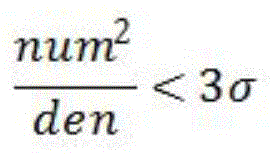
图像特征点误差认为满足(u,σ)的正态分布,p2一定在极线l上,让点p2到极线l的距离小于3σ。The image feature point error is considered to satisfy the normal distribution of (u, σ), p 2 must be on the epipolar line l, and the distance from the point p 2 to the epipolar line l is less than 3σ.
a=f00*x+f01*y+f02 a=f 00 *x+f 01 *y+f 02
b=f10*x+f11*y+f12 b=f 10 *x+f 11 *y+f 12
c=f20*x+f21*y+f22 c=f 20 *x+f 21 *y+f 22
由上面步骤既可以得到图像之间的匹配点,从而完成视觉拼接,得到船体的整张图像。Through the above steps, the matching points between the images can be obtained, so as to complete the visual stitching and obtain the entire image of the hull.
图4是本发明多目视觉导引船体清洁机器人系统清洁方法流程图。如图4所示,一种多目视觉导引船体清洁机器人系统清洁方法包括:Fig. 4 is a flow chart of the cleaning method of the multi-vision vision-guided ship hull cleaning robot system of the present invention. As shown in Figure 4, a cleaning method for a multi-eye vision-guided hull cleaning robot system includes:
步骤101:获取多个单目摄像头采集的部分船体图像。Step 101: Acquire part of the hull images collected by multiple monocular cameras.
步骤102:根据各所述部分船体图像进行船体整体图像拼接,得到船体整体图像,具体的,船体工作站模块接收多个单目摄像头采集的部分船体图像进行拼接。Step 102 : Perform overall image stitching of the hull according to each of the partial hull images to obtain the overall hull image. Specifically, the hull workstation module receives the partial hull images collected by a plurality of monocular cameras for stitching.
步骤103:根据所述船体整体图像,确定待清洁区域,具体的,确定待清洁区域的面积大小和位置信息。Step 103: Determine the area to be cleaned according to the overall image of the hull, specifically, determine the area size and location information of the area to be cleaned.
步骤104:根据所述待清洁区域,选取清洁模式,具体的,所述清洁模式包括两种:船体整体清洁和船体局部清洁;对于船体整体清洁,控制各所述单目摄像头对清洁机器人模块进行视觉导引,保证清洁机器人模块完成图像重叠区域清洁以及跨区域协同清洁的任务;对于船体局部清洁,根据污渍面积大小和位置,规划所述清洁机器人模块到达指定位置,完成局部清洁,对清洁后的区域进行判断是否需要二次清洁。Step 104: Select a cleaning mode according to the area to be cleaned. Specifically, the cleaning mode includes two types: overall cleaning of the hull and partial cleaning of the hull; for the overall cleaning of the hull, control each of the monocular cameras to perform cleaning on the cleaning robot module. Visual guidance ensures that the cleaning robot module completes the tasks of image overlapping area cleaning and cross-area collaborative cleaning; for local cleaning of the hull, according to the size and location of the stain area, plan the cleaning robot module to reach the designated position, complete the local cleaning, and clean after cleaning. The area is judged whether it needs secondary cleaning.
步骤105:根据所述清洁模式和所述清洁区域,规划清洁路径。Step 105: Plan a cleaning path according to the cleaning mode and the cleaning area.
步骤106:根据所述清洁路径控制清洁机器人本体到达所述清洁区域对船体进行清洁。Step 106: Control the cleaning robot body to reach the cleaning area to clean the hull according to the cleaning path.
步骤107:判断清洁后的船体是否合格,具体的,通过采集船体图像判断所述船体是否还存在清洁不到位的情况。Step 107: Determine whether the cleaned hull is qualified. Specifically, it is determined whether the hull is not cleaned properly by collecting images of the hull.
步骤108:若清洁后的船体合格,则停止清洁。Step 108: If the cleaned hull is qualified, stop cleaning.
步骤109:若清洁后的船体不合格,则继续获取多个单目摄像头采集的部分船体图像,即进行二次清洁。Step 109: If the cleaned hull is unqualified, continue to acquire part of the hull images collected by the multiple monocular cameras, that is, perform secondary cleaning.
本说明书中各个实施例采用递进的方式描述,每个实施例重点说明的都是与其他实施例的不同之处,各个实施例之间相同相似部分互相参见即可。The various embodiments in this specification are described in a progressive manner, and each embodiment focuses on the differences from other embodiments, and the same and similar parts between the various embodiments can be referred to each other.
本文中应用了具体个例对本发明的原理及实施方式进行了阐述,以上实施例的说明只是用于帮助理解本发明的方法及其核心思想;同时,对于本领域的一般技术人员,依据本发明的思想,在具体实施方式及应用范围上均会有改变之处。综上所述,本说明书内容不应理解为对本发明的限制。In this paper, specific examples are used to illustrate the principles and implementations of the present invention. The descriptions of the above embodiments are only used to help understand the methods and core ideas of the present invention; meanwhile, for those skilled in the art, according to the present invention There will be changes in the specific implementation and application scope. In conclusion, the contents of this specification should not be construed as limiting the present invention.
Claims (10)
Priority Applications (1)
| Application Number | Priority Date | Filing Date | Title |
|---|---|---|---|
| CN201911201037.XA CN110825088B (en) | 2019-11-29 | 2019-11-29 | A multi-eye vision-guided ship hull cleaning robot system and cleaning method |
Applications Claiming Priority (1)
| Application Number | Priority Date | Filing Date | Title |
|---|---|---|---|
| CN201911201037.XA CN110825088B (en) | 2019-11-29 | 2019-11-29 | A multi-eye vision-guided ship hull cleaning robot system and cleaning method |
Publications (2)
| Publication Number | Publication Date |
|---|---|
| CN110825088A true CN110825088A (en) | 2020-02-21 |
| CN110825088B CN110825088B (en) | 2021-10-01 |
Family
ID=69543210
Family Applications (1)
| Application Number | Title | Priority Date | Filing Date |
|---|---|---|---|
| CN201911201037.XA Active CN110825088B (en) | 2019-11-29 | 2019-11-29 | A multi-eye vision-guided ship hull cleaning robot system and cleaning method |
Country Status (1)
| Country | Link |
|---|---|
| CN (1) | CN110825088B (en) |
Cited By (7)
| Publication number | Priority date | Publication date | Assignee | Title |
|---|---|---|---|---|
| CN111352426A (en) * | 2020-03-17 | 2020-06-30 | 广西柳工机械股份有限公司 | Vehicle obstacle avoidance method, vehicle obstacle avoidance device, vehicle obstacle avoidance system and vehicle |
| CN112362062A (en) * | 2020-11-07 | 2021-02-12 | 福州旺星人智能科技有限公司 | Building property intelligent management method and system |
| CN113012149A (en) * | 2021-04-14 | 2021-06-22 | 北京铁道工程机电技术研究所股份有限公司 | Intelligent cleaning robot path planning method and system |
| CN113359780A (en) * | 2021-07-28 | 2021-09-07 | 陕西欧卡电子智能科技有限公司 | Unmanned ship cleaning path planning method and device, computer equipment and storage medium |
| CN117381803A (en) * | 2023-12-13 | 2024-01-12 | 深圳市辉熙智能科技有限公司 | Automatic cleaning method of cleaning robot and cleaning robot |
| CN117434938A (en) * | 2023-07-31 | 2024-01-23 | 南通中远海运船务工程有限公司 | A ship cleaning intelligent control system and its control method |
| EP4319152A4 (en) * | 2021-03-22 | 2024-08-14 | Tas Global Co., Ltd. | IMAGE PROCESSING METHOD FOR PROCESSING A PLURALITY OF CAMERA IMAGES OF A SHIP CLEANING ROBOT TO GENERATE AN IMAGE, COMPUTER READABLE RECORDING MEDIUM, COMPUTER PROGRAM, AND ROBOT CONTROL METHOD USING SAME |
Citations (27)
| Publication number | Priority date | Publication date | Assignee | Title |
|---|---|---|---|---|
| WO2002075469A1 (en) * | 2001-03-15 | 2002-09-26 | Aktiebolaget Electrolux | Method and device for determining position of an autonomous apparatus |
| WO2004018158A2 (en) * | 2002-08-21 | 2004-03-04 | Neal Solomon | Organizing groups of self-configurable mobile robotic agents |
| CN102033222A (en) * | 2010-11-17 | 2011-04-27 | 吉林大学 | Large-scale multi-target ultrasonic tracking and positioning system and method |
| CN103179401A (en) * | 2013-03-19 | 2013-06-26 | 燕山大学 | Method and device for multi-agent collaborative video acquisition and image information stitching processing |
| WO2014043414A2 (en) * | 2012-09-14 | 2014-03-20 | Raytheon Company | Hull robot with hull separation countermeasures |
| US20140076225A1 (en) * | 2012-09-14 | 2014-03-20 | Raytheon Company | Autonomous Hull Inspection |
| CN204059320U (en) * | 2014-03-19 | 2014-12-31 | 燕山大学 | Robot for water surface cleaner |
| CN104463786A (en) * | 2014-12-03 | 2015-03-25 | 中国科学院自动化研究所 | Mobile robot figure stitching method and device |
| CN104535047A (en) * | 2014-09-19 | 2015-04-22 | 燕山大学 | Multi-agent target tracking global positioning system and method based on video stitching |
| CN105068550A (en) * | 2015-08-21 | 2015-11-18 | 燕山大学 | Auction mode-based underwater robot multi-target selection strategy |
| CN105302131A (en) * | 2014-07-22 | 2016-02-03 | 德国福维克控股公司 | Method for cleaning or processing a room using an automatically moved device |
| CN105339551A (en) * | 2013-06-23 | 2016-02-17 | 阿迪博茨有限公司 | Method and apparatus for mobile additive manufacturing |
| CN205050322U (en) * | 2015-06-24 | 2016-02-24 | 燕山大学 | Centralized control formula multirobot motion control wireless communication device |
| CN105607635A (en) * | 2016-01-05 | 2016-05-25 | 东莞市松迪智能机器人科技有限公司 | Automatic guided vehicle panoramic optical vision navigation control system and omnidirectional automatic guided vehicle |
| EP3082006A2 (en) * | 2015-04-16 | 2016-10-19 | Samsung Electronics Co., Ltd. | Cleaning robot and method of controlling the same |
| WO2017018848A1 (en) * | 2015-07-29 | 2017-02-02 | Lg Electronics Inc. | Mobile robot and control method thereof |
| CN106709868A (en) * | 2016-12-14 | 2017-05-24 | 云南电网有限责任公司电力科学研究院 | Image stitching method and apparatus |
| CN106843242A (en) * | 2017-03-21 | 2017-06-13 | 天津海运职业学院 | A kind of multi-robots system of under-water body cleaning |
| CN107471218A (en) * | 2017-09-07 | 2017-12-15 | 南京理工大学 | A kind of tow-armed robot hand eye coordination method based on multi-vision visual |
| EP3327697A1 (en) * | 2010-09-24 | 2018-05-30 | iRobot Corporation | Systems and methods for vslam optimization |
| US20180224862A1 (en) * | 2017-02-03 | 2018-08-09 | Samsung Electronics Co., Ltd | Robot cleaner and method of controlling the same |
| CN109460040A (en) * | 2018-12-28 | 2019-03-12 | 珠海凯浩电子有限公司 | It is a kind of that map system and method are established by mobile phone shooting photo array floor |
| CN109565548A (en) * | 2016-08-17 | 2019-04-02 | 三星电子株式会社 | It controls the method for more view field images and supports the electronic equipment of this method |
| CN109782772A (en) * | 2019-03-05 | 2019-05-21 | 浙江国自机器人技术有限公司 | A kind of air navigation aid, system and cleaning robot |
| CN109938650A (en) * | 2019-05-20 | 2019-06-28 | 尚科宁家(中国)科技有限公司 | A kind of panoramic shooting mould group and the sweeping robot based on the camera module |
| CN109978767A (en) * | 2019-03-27 | 2019-07-05 | 集美大学 | The ground laser SLAM drawing method based on multirobot collaboration |
| CN110063694A (en) * | 2019-04-28 | 2019-07-30 | 彭春生 | A kind of binocular sweeping robot and working method |
-
2019
- 2019-11-29 CN CN201911201037.XA patent/CN110825088B/en active Active
Patent Citations (27)
| Publication number | Priority date | Publication date | Assignee | Title |
|---|---|---|---|---|
| WO2002075469A1 (en) * | 2001-03-15 | 2002-09-26 | Aktiebolaget Electrolux | Method and device for determining position of an autonomous apparatus |
| WO2004018158A2 (en) * | 2002-08-21 | 2004-03-04 | Neal Solomon | Organizing groups of self-configurable mobile robotic agents |
| EP3327697A1 (en) * | 2010-09-24 | 2018-05-30 | iRobot Corporation | Systems and methods for vslam optimization |
| CN102033222A (en) * | 2010-11-17 | 2011-04-27 | 吉林大学 | Large-scale multi-target ultrasonic tracking and positioning system and method |
| WO2014043414A2 (en) * | 2012-09-14 | 2014-03-20 | Raytheon Company | Hull robot with hull separation countermeasures |
| US20140076225A1 (en) * | 2012-09-14 | 2014-03-20 | Raytheon Company | Autonomous Hull Inspection |
| CN103179401A (en) * | 2013-03-19 | 2013-06-26 | 燕山大学 | Method and device for multi-agent collaborative video acquisition and image information stitching processing |
| CN105339551A (en) * | 2013-06-23 | 2016-02-17 | 阿迪博茨有限公司 | Method and apparatus for mobile additive manufacturing |
| CN204059320U (en) * | 2014-03-19 | 2014-12-31 | 燕山大学 | Robot for water surface cleaner |
| CN105302131A (en) * | 2014-07-22 | 2016-02-03 | 德国福维克控股公司 | Method for cleaning or processing a room using an automatically moved device |
| CN104535047A (en) * | 2014-09-19 | 2015-04-22 | 燕山大学 | Multi-agent target tracking global positioning system and method based on video stitching |
| CN104463786A (en) * | 2014-12-03 | 2015-03-25 | 中国科学院自动化研究所 | Mobile robot figure stitching method and device |
| EP3082006A2 (en) * | 2015-04-16 | 2016-10-19 | Samsung Electronics Co., Ltd. | Cleaning robot and method of controlling the same |
| CN205050322U (en) * | 2015-06-24 | 2016-02-24 | 燕山大学 | Centralized control formula multirobot motion control wireless communication device |
| WO2017018848A1 (en) * | 2015-07-29 | 2017-02-02 | Lg Electronics Inc. | Mobile robot and control method thereof |
| CN105068550A (en) * | 2015-08-21 | 2015-11-18 | 燕山大学 | Auction mode-based underwater robot multi-target selection strategy |
| CN105607635A (en) * | 2016-01-05 | 2016-05-25 | 东莞市松迪智能机器人科技有限公司 | Automatic guided vehicle panoramic optical vision navigation control system and omnidirectional automatic guided vehicle |
| CN109565548A (en) * | 2016-08-17 | 2019-04-02 | 三星电子株式会社 | It controls the method for more view field images and supports the electronic equipment of this method |
| CN106709868A (en) * | 2016-12-14 | 2017-05-24 | 云南电网有限责任公司电力科学研究院 | Image stitching method and apparatus |
| US20180224862A1 (en) * | 2017-02-03 | 2018-08-09 | Samsung Electronics Co., Ltd | Robot cleaner and method of controlling the same |
| CN106843242A (en) * | 2017-03-21 | 2017-06-13 | 天津海运职业学院 | A kind of multi-robots system of under-water body cleaning |
| CN107471218A (en) * | 2017-09-07 | 2017-12-15 | 南京理工大学 | A kind of tow-armed robot hand eye coordination method based on multi-vision visual |
| CN109460040A (en) * | 2018-12-28 | 2019-03-12 | 珠海凯浩电子有限公司 | It is a kind of that map system and method are established by mobile phone shooting photo array floor |
| CN109782772A (en) * | 2019-03-05 | 2019-05-21 | 浙江国自机器人技术有限公司 | A kind of air navigation aid, system and cleaning robot |
| CN109978767A (en) * | 2019-03-27 | 2019-07-05 | 集美大学 | The ground laser SLAM drawing method based on multirobot collaboration |
| CN110063694A (en) * | 2019-04-28 | 2019-07-30 | 彭春生 | A kind of binocular sweeping robot and working method |
| CN109938650A (en) * | 2019-05-20 | 2019-06-28 | 尚科宁家(中国)科技有限公司 | A kind of panoramic shooting mould group and the sweeping robot based on the camera module |
Non-Patent Citations (1)
| Title |
|---|
| 陈光明 等: "基于高压水射流的船体清洗机器人关键技术分析", 《流体机械》 * |
Cited By (10)
| Publication number | Priority date | Publication date | Assignee | Title |
|---|---|---|---|---|
| CN111352426A (en) * | 2020-03-17 | 2020-06-30 | 广西柳工机械股份有限公司 | Vehicle obstacle avoidance method, vehicle obstacle avoidance device, vehicle obstacle avoidance system and vehicle |
| CN111352426B (en) * | 2020-03-17 | 2021-03-02 | 广西柳工机械股份有限公司 | A vehicle obstacle avoidance method, a vehicle obstacle avoidance device, a vehicle obstacle avoidance system, and a vehicle |
| CN112362062A (en) * | 2020-11-07 | 2021-02-12 | 福州旺星人智能科技有限公司 | Building property intelligent management method and system |
| EP4319152A4 (en) * | 2021-03-22 | 2024-08-14 | Tas Global Co., Ltd. | IMAGE PROCESSING METHOD FOR PROCESSING A PLURALITY OF CAMERA IMAGES OF A SHIP CLEANING ROBOT TO GENERATE AN IMAGE, COMPUTER READABLE RECORDING MEDIUM, COMPUTER PROGRAM, AND ROBOT CONTROL METHOD USING SAME |
| CN113012149A (en) * | 2021-04-14 | 2021-06-22 | 北京铁道工程机电技术研究所股份有限公司 | Intelligent cleaning robot path planning method and system |
| CN113012149B (en) * | 2021-04-14 | 2024-03-15 | 北京铁道工程机电技术研究所股份有限公司 | Intelligent cleaning robot path planning method and system |
| CN113359780A (en) * | 2021-07-28 | 2021-09-07 | 陕西欧卡电子智能科技有限公司 | Unmanned ship cleaning path planning method and device, computer equipment and storage medium |
| CN117434938A (en) * | 2023-07-31 | 2024-01-23 | 南通中远海运船务工程有限公司 | A ship cleaning intelligent control system and its control method |
| CN117381803A (en) * | 2023-12-13 | 2024-01-12 | 深圳市辉熙智能科技有限公司 | Automatic cleaning method of cleaning robot and cleaning robot |
| CN117381803B (en) * | 2023-12-13 | 2024-02-13 | 深圳市辉熙智能科技有限公司 | Automatic cleaning method of cleaning robot and cleaning robot |
Also Published As
| Publication number | Publication date |
|---|---|
| CN110825088B (en) | 2021-10-01 |
Similar Documents
| Publication | Publication Date | Title |
|---|---|---|
| CN110825088A (en) | Multi-view vision guiding ship body cleaning robot system and cleaning method | |
| Wei et al. | A non-contact measurement method of ship block using image-based 3D reconstruction technology | |
| WO2020056874A1 (en) | Automatic parking system and method based on visual recognition | |
| CN107505939B (en) | A full coverage path planning method for mobile robots | |
| CN106950985B (en) | Automatic delivery method and device | |
| Li et al. | Weld line recognition and path planning with spherical tank inspection robots | |
| CN118492790B (en) | A method, system, device and medium for calculating the pose of a welding robot. | |
| CN110758658A (en) | A method of using drones and unmanned ships to collaboratively clean up floating garbage on the water | |
| CN106780631A (en) | A kind of robot closed loop detection method based on deep learning | |
| CN108415434B (en) | Robot scheduling method | |
| CN115709331A (en) | Welding robot full-autonomous visual guidance method and system based on target detection | |
| CN101251379A (en) | A real-time binocular vision guidance method for underwater vehicles | |
| US20230419531A1 (en) | Apparatus and method for measuring, inspecting or machining objects | |
| Yang et al. | A novel 3D seam extraction method based on multi-functional sensor for V-Type weld seam | |
| CN113763562A (en) | Elevation feature detection and elevation feature processing method based on binocular vision | |
| CN114353799A (en) | Indoor rapid global positioning method for unmanned platform carrying multi-line laser radar | |
| Hu et al. | A novel 3D detection system with target keypoint estimation for underwater pipelines | |
| CN101301711A (en) | Automatic Welding and Positioning System for Reinforcing Plate of Container Top Corner | |
| Chen et al. | An enhanced dynamic Delaunay triangulation-based path planning algorithm for autonomous mobile robot navigation | |
| CN114770520A (en) | Method for planning welding track and posture of robot | |
| Majdik et al. | New approach in solving the kidnapped robot problem | |
| Chi et al. | Research on image-based 3d reconstruction method in underwater welding scenes | |
| CN114972491B (en) | Visual SLAM methods, electronic devices, storage media and products | |
| CN108917721B (en) | Unstable satellite and rocket docking ring binocular measurement method | |
| DK202330187A1 (en) | A mobile line marking robot with visual odometry |
Legal Events
| Date | Code | Title | Description |
|---|---|---|---|
| PB01 | Publication | ||
| PB01 | Publication | ||
| SE01 | Entry into force of request for substantive examination | ||
| SE01 | Entry into force of request for substantive examination | ||
| GR01 | Patent grant | ||
| GR01 | Patent grant |