CN110691566A - Iris covering implant - Google Patents
Iris covering implant Download PDFInfo
- Publication number
- CN110691566A CN110691566A CN201880020879.2A CN201880020879A CN110691566A CN 110691566 A CN110691566 A CN 110691566A CN 201880020879 A CN201880020879 A CN 201880020879A CN 110691566 A CN110691566 A CN 110691566A
- Authority
- CN
- China
- Prior art keywords
- covering
- iris
- implant
- frame
- implants
- Prior art date
- Legal status (The legal status is an assumption and is not a legal conclusion. Google has not performed a legal analysis and makes no representation as to the accuracy of the status listed.)
- Pending
Links
Images




Classifications
-
- A—HUMAN NECESSITIES
- A61—MEDICAL OR VETERINARY SCIENCE; HYGIENE
- A61F—FILTERS IMPLANTABLE INTO BLOOD VESSELS; PROSTHESES; DEVICES PROVIDING PATENCY TO, OR PREVENTING COLLAPSING OF, TUBULAR STRUCTURES OF THE BODY, e.g. STENTS; ORTHOPAEDIC, NURSING OR CONTRACEPTIVE DEVICES; FOMENTATION; TREATMENT OR PROTECTION OF EYES OR EARS; BANDAGES, DRESSINGS OR ABSORBENT PADS; FIRST-AID KITS
- A61F2/00—Filters implantable into blood vessels; Prostheses, i.e. artificial substitutes or replacements for parts of the body; Appliances for connecting them with the body; Devices providing patency to, or preventing collapsing of, tubular structures of the body, e.g. stents
- A61F2/02—Prostheses implantable into the body
- A61F2/14—Eye parts, e.g. lenses or corneal implants; Artificial eyes
-
- A—HUMAN NECESSITIES
- A61—MEDICAL OR VETERINARY SCIENCE; HYGIENE
- A61F—FILTERS IMPLANTABLE INTO BLOOD VESSELS; PROSTHESES; DEVICES PROVIDING PATENCY TO, OR PREVENTING COLLAPSING OF, TUBULAR STRUCTURES OF THE BODY, e.g. STENTS; ORTHOPAEDIC, NURSING OR CONTRACEPTIVE DEVICES; FOMENTATION; TREATMENT OR PROTECTION OF EYES OR EARS; BANDAGES, DRESSINGS OR ABSORBENT PADS; FIRST-AID KITS
- A61F2/00—Filters implantable into blood vessels; Prostheses, i.e. artificial substitutes or replacements for parts of the body; Appliances for connecting them with the body; Devices providing patency to, or preventing collapsing of, tubular structures of the body, e.g. stents
- A61F2/02—Prostheses implantable into the body
- A61F2/14—Eye parts, e.g. lenses or corneal implants; Artificial eyes
- A61F2/148—Implantation instruments specially adapted therefor
-
- A—HUMAN NECESSITIES
- A61—MEDICAL OR VETERINARY SCIENCE; HYGIENE
- A61F—FILTERS IMPLANTABLE INTO BLOOD VESSELS; PROSTHESES; DEVICES PROVIDING PATENCY TO, OR PREVENTING COLLAPSING OF, TUBULAR STRUCTURES OF THE BODY, e.g. STENTS; ORTHOPAEDIC, NURSING OR CONTRACEPTIVE DEVICES; FOMENTATION; TREATMENT OR PROTECTION OF EYES OR EARS; BANDAGES, DRESSINGS OR ABSORBENT PADS; FIRST-AID KITS
- A61F2/00—Filters implantable into blood vessels; Prostheses, i.e. artificial substitutes or replacements for parts of the body; Appliances for connecting them with the body; Devices providing patency to, or preventing collapsing of, tubular structures of the body, e.g. stents
- A61F2/02—Prostheses implantable into the body
- A61F2/14—Eye parts, e.g. lenses or corneal implants; Artificial eyes
- A61F2/15—Implant having one or more holes, e.g. for nutrient transport, for facilitating handling
-
- A—HUMAN NECESSITIES
- A61—MEDICAL OR VETERINARY SCIENCE; HYGIENE
- A61F—FILTERS IMPLANTABLE INTO BLOOD VESSELS; PROSTHESES; DEVICES PROVIDING PATENCY TO, OR PREVENTING COLLAPSING OF, TUBULAR STRUCTURES OF THE BODY, e.g. STENTS; ORTHOPAEDIC, NURSING OR CONTRACEPTIVE DEVICES; FOMENTATION; TREATMENT OR PROTECTION OF EYES OR EARS; BANDAGES, DRESSINGS OR ABSORBENT PADS; FIRST-AID KITS
- A61F2/00—Filters implantable into blood vessels; Prostheses, i.e. artificial substitutes or replacements for parts of the body; Appliances for connecting them with the body; Devices providing patency to, or preventing collapsing of, tubular structures of the body, e.g. stents
- A61F2/0059—Cosmetic or alloplastic implants
-
- A—HUMAN NECESSITIES
- A61—MEDICAL OR VETERINARY SCIENCE; HYGIENE
- A61F—FILTERS IMPLANTABLE INTO BLOOD VESSELS; PROSTHESES; DEVICES PROVIDING PATENCY TO, OR PREVENTING COLLAPSING OF, TUBULAR STRUCTURES OF THE BODY, e.g. STENTS; ORTHOPAEDIC, NURSING OR CONTRACEPTIVE DEVICES; FOMENTATION; TREATMENT OR PROTECTION OF EYES OR EARS; BANDAGES, DRESSINGS OR ABSORBENT PADS; FIRST-AID KITS
- A61F2220/00—Fixations or connections for prostheses classified in groups A61F2/00 - A61F2/26 or A61F2/82 or A61F9/00 or A61F11/00 or subgroups thereof
- A61F2220/0008—Fixation appliances for connecting prostheses to the body
-
- A—HUMAN NECESSITIES
- A61—MEDICAL OR VETERINARY SCIENCE; HYGIENE
- A61F—FILTERS IMPLANTABLE INTO BLOOD VESSELS; PROSTHESES; DEVICES PROVIDING PATENCY TO, OR PREVENTING COLLAPSING OF, TUBULAR STRUCTURES OF THE BODY, e.g. STENTS; ORTHOPAEDIC, NURSING OR CONTRACEPTIVE DEVICES; FOMENTATION; TREATMENT OR PROTECTION OF EYES OR EARS; BANDAGES, DRESSINGS OR ABSORBENT PADS; FIRST-AID KITS
- A61F2250/00—Special features of prostheses classified in groups A61F2/00 - A61F2/26 or A61F2/82 or A61F9/00 or A61F11/00 or subgroups thereof
-
- A—HUMAN NECESSITIES
- A61—MEDICAL OR VETERINARY SCIENCE; HYGIENE
- A61F—FILTERS IMPLANTABLE INTO BLOOD VESSELS; PROSTHESES; DEVICES PROVIDING PATENCY TO, OR PREVENTING COLLAPSING OF, TUBULAR STRUCTURES OF THE BODY, e.g. STENTS; ORTHOPAEDIC, NURSING OR CONTRACEPTIVE DEVICES; FOMENTATION; TREATMENT OR PROTECTION OF EYES OR EARS; BANDAGES, DRESSINGS OR ABSORBENT PADS; FIRST-AID KITS
- A61F2250/00—Special features of prostheses classified in groups A61F2/00 - A61F2/26 or A61F2/82 or A61F9/00 or A61F11/00 or subgroups thereof
- A61F2250/0014—Special features of prostheses classified in groups A61F2/00 - A61F2/26 or A61F2/82 or A61F9/00 or A61F11/00 or subgroups thereof having different values of a given property or geometrical feature, e.g. mechanical property or material property, at different locations within the same prosthesis
-
- A—HUMAN NECESSITIES
- A61—MEDICAL OR VETERINARY SCIENCE; HYGIENE
- A61F—FILTERS IMPLANTABLE INTO BLOOD VESSELS; PROSTHESES; DEVICES PROVIDING PATENCY TO, OR PREVENTING COLLAPSING OF, TUBULAR STRUCTURES OF THE BODY, e.g. STENTS; ORTHOPAEDIC, NURSING OR CONTRACEPTIVE DEVICES; FOMENTATION; TREATMENT OR PROTECTION OF EYES OR EARS; BANDAGES, DRESSINGS OR ABSORBENT PADS; FIRST-AID KITS
- A61F9/00—Methods or devices for treatment of the eyes; Devices for putting in contact-lenses; Devices to correct squinting; Apparatus to guide the blind; Protective devices for the eyes, carried on the body or in the hand
Landscapes
- Health & Medical Sciences (AREA)
- Ophthalmology & Optometry (AREA)
- Cardiology (AREA)
- Oral & Maxillofacial Surgery (AREA)
- Transplantation (AREA)
- Engineering & Computer Science (AREA)
- Biomedical Technology (AREA)
- Heart & Thoracic Surgery (AREA)
- Vascular Medicine (AREA)
- Life Sciences & Earth Sciences (AREA)
- Animal Behavior & Ethology (AREA)
- General Health & Medical Sciences (AREA)
- Public Health (AREA)
- Veterinary Medicine (AREA)
- Prostheses (AREA)
Abstract
Description
技术领域technical field
本发明特别涉及虹膜覆盖植入物。The present invention particularly relates to iris covering implants.
背景技术Background technique
年轻人的眼睛可以从远物体到近物体自然地聚焦。该聚焦的深层机制被称为适应过程。该适应过程由三个主要方面组成:首先,随着物体靠近,眼球会聚,然后对于给定的亮度,瞳孔收缩程度增大,最后通过睫状肌收缩调节晶状体形状。Young people's eyes can focus naturally from far to near objects. The underlying mechanism of this focusing is called the adaptation process. This adaptation process consists of three main aspects: first, the eye converges as the object approaches, then for a given brightness, the pupil constricts more, and finally the lens shape is adjusted by ciliary muscle contraction.
随着眼睛自然老化,眼睛变得越来越难以适应近处物体。在老化时,研究对象逐渐失去其近视力,并且仅能够对远处物体创建清晰的图像。这种自然的视觉影响被称为老视。据评估,到2020年,大约20亿人将不得不应对这种光学影响。老视的体验为人的视力模糊,并且当人正在阅读文献或用计算机工作时会频繁出现老视。未治疗的患者可以通过将所观察的物质移动得比他们先前实践的位置更远的位置来进行补偿。老视的根源在于晶状体的老化,晶状体变得更大和更硬,并且因此更难以变形,然而会聚和瞳孔收缩似乎不受影响。As the eye naturally ages, it becomes increasingly difficult for the eye to adjust to near objects. As they age, study subjects gradually lose their near vision and are only able to create clear images of distant objects. This natural visual impact is called presbyopia. It is estimated that by 2020, about 2 billion people will have to deal with this optical impact. Presbyopia is experienced as blurred vision and occurs frequently when a person is reading literature or working with a computer. Untreated patients can compensate by moving the observed material farther than they had previously practiced. Presbyopia is rooted in the aging of the lens, which becomes larger and stiffer, and therefore more difficult to deform, yet convergence and pupil constriction appear to be unaffected.
已经进行了许多尝试来矫正老视。最常规和传统的解决方案是使用一副阅读眼镜:由于保持远的视力,研究对象可以佩戴眼镜以便能够例如阅读书籍。虽然这种解决方案根本不是侵入性的,但是佩戴眼镜对于患者来说可能既不美观也不实用,这是因为他/她需要根据他正在观察的物体的距离来戴上和摘下眼镜。为了解决这些问题,已经开发了多焦点和渐变眼镜。多焦点和渐变眼镜至少提供用于远距观察的第一折射矫正以及用于观察近距物体的第二折射矫正;有时利用渐进曲率变化实现多个距离的视力。Many attempts have been made to correct presbyopia. The most conventional and traditional solution is to use a pair of reading glasses: due to the preservation of distance vision, the research subjects can wear glasses in order to be able to read books, for example. Although this solution is not invasive at all, wearing glasses may be neither aesthetic nor practical for the patient, since he/she needs to put on and take off the glasses depending on the distance of the object he is viewing. To address these issues, multifocal and gradient glasses have been developed. Multifocal and progressive eyeglasses provide at least a first refractive correction for distance viewing and a second refractive correction for viewing near objects; vision at multiple distances is sometimes achieved using progressive curvature changes.
已经进行了外科手术尝试来以更侵入性的方式永久性地矫正通常被认为是老化标志的老视的症状,并且在不需要眼镜的情况下恢复视力范围。常规治疗是进行人的一只眼睛的折射能力的静态调节。这样,另一只眼睛用于远视,并且大脑处理两只眼睛的两个信号以产生适合于近视和远视图像(单视)的新的视觉深度。Surgical attempts have been made to permanently correct the symptoms of presbyopia, often considered a sign of aging, in a more invasive manner, and restore range of vision without the need for glasses. Conventional treatment is to perform a static adjustment of the refractive power of one eye of a person. In this way, the other eye is used for farsightedness, and the brain processes the two signals from both eyes to generate a new visual depth suitable for nearsighted and farsighted images (single vision).
存在不同的方法来矫正眼睛的近视。可以通过例如用激光重新整形角膜或将折射植入物放置在角膜组织(角膜嵌体)内来对角膜进行改变。另一种解决方案是用植入物代替晶状体,该植入物适于一组特定的视距,并被称为多焦点眼内晶状体(或MIOL)。这种类型的装置包括用于至少两个特定距离的不同矫正。然而,这种类型的治疗具有如下缺点:例如导致在夜视中的亮度损失、光晕、眩光和闪光。Different methods exist to correct nearsightedness in the eye. Changes to the cornea can be made, for example, by reshaping the cornea with a laser or by placing a refractive implant within the corneal tissue (corneal inlay). Another solution is to replace the lens with an implant that is adapted to a specific set of visual distances and is known as a multifocal intraocular lens (or MIOL). Devices of this type include different corrections for at least two specific distances. However, this type of treatment has disadvantages such as causing loss of brightness in night vision, halos, glare and flashes.
还可以注意到例如巩膜植入物等试图恢复视力范围的原创性尝试,巩膜植入物例如集中于悬韧带张力的释放但没有获得预期的性能。It may also be noted that original attempts to restore the range of vision, such as scleral implants, for example, focused on the release of suspensory ligament tension but did not achieve the desired performance.
然而,上述解决方案都没有被证明是令人满意的。However, none of the above solutions have proven to be satisfactory.
发明内容SUMMARY OF THE INVENTION
考虑到以上所述,本发明的发明人已寻找出了一种新的有效植入物来补偿老视。In view of the above, the inventors of the present invention have sought out a new effective implant to compensate for presbyopia.
当寻找这种新的植入物时,本发明的发明人构思出一种新的植入物构造,并且已经发现这种新的植入物构造的其它应用。While searching for this new implant, the inventors of the present invention conceived a new implant configuration and have discovered other applications for this new implant configuration.
根据本发明的一个方面,新的虹膜植入物构造是用于至少部分地覆盖眼睛虹膜的虹膜覆盖植入物,该覆盖植入物包括主体,主体具有为不透明面的第一面以及位于相反的第二面上的至少一个附接构件,至少一个附接构件从主体向外延伸并被固定到主体,该至少一个附接构件包括能够通过夹紧来将主体附接到眼睛虹膜的至少两个夹紧部分。According to one aspect of the present invention, a new iris implant configuration is an iris covering implant for at least partially covering the iris of an eye, the covering implant comprising a body having a first face that is an opaque face and an opposite At least one attachment member on the second face of the at least one attachment member extending outwardly from the body and secured to the body, the at least one attachment member comprising at least two attachment members capable of attaching the body to the iris of the eye by clamping a clamping part.
虹膜覆盖植入物适于位于人眼虹膜上并附接到虹膜。The iris covering implant is adapted to be positioned on and attached to the iris of a human eye.
附接构件或每个附接构件被固定或连接到覆盖植入物,这意味着附接构件(一个或多个)不是仅用于将植入物放置和附接到虹膜上且随后被移除的工具。与之相反,在植入物在眼睛中使用的整个持续时间期间,附接构件(一个或多个)在原位保持与虹膜部分的夹紧接合。换句话说,与工具相反的是,在使用植入物期间,附接构件(一个或多个)保持为以永久性方式附接到虹膜的前表面。因此,使用这种附接构件(一个或多个)并不意味着不能使用外部工具帮助将覆盖植入物定位在虹膜上。The or each attachment member is fixed or connected to the covering implant, which means that the attachment member(s) are not only used to place and attach the implant to the iris and then removed. removal tool. In contrast, the attachment member(s) remain in clamping engagement with the iris portion in situ throughout the duration of use of the implant in the eye. In other words, in contrast to the tool, the attachment member(s) remain permanently attached to the anterior surface of the iris during use of the implant. Thus, the use of such attachment member(s) does not imply that external tools cannot be used to assist in positioning the overlying implant on the iris.
附接构件或每个附接构件的夹紧部分可以在虹膜上,即在虹膜的前表面的一部分,特别是在虹膜的脊(天然虹膜褶皱)上执行夹紧功能,以将虹膜部分或脊夹紧在两个面对的部分之间。因此,可以将覆盖植入物固定到虹膜且不刺穿或穿过虹膜组织。这可以在不严重损伤具有孔的组织的情况下移除覆盖植入物。The gripping portion of the or each attachment member may perform a gripping function on the iris, i.e. on a portion of the front surface of the iris, in particular on the ridges of the iris (the natural iris fold) to clamp the iris portion or ridge. Clamped between two facing parts. Thus, the covering implant can be secured to the iris without piercing or passing through the iris tissue. This allows the overlying implant to be removed without severely damaging the tissue with the hole.
两个夹紧部分在它们的初始位置(夹紧位置)彼此靠近,以能够将虹膜脊夹紧两个面对的部分之间。两个夹紧部分可以以彼此相距小于3mm的距离,优选地小于或等于2mm,例如小于或等于2mm定位。如果附接构件或每个附接件的两个面对的部分之间的距离较大,则夹紧虹膜脊将是不可能的,或者将证明是非常困难的。The two clamping parts are close to each other in their initial position (clamping position) to be able to clamp the iris ridge between the two facing parts. The two gripping parts may be positioned at a distance from each other of less than 3 mm, preferably less than or equal to 2 mm, eg less than or equal to 2 mm. If the distance between the two facing parts of the attachment members or each attachment is large, then clamping the iris ridge will not be possible, or will prove very difficult.
应注意的是,夹紧部分的自由端(其与连接到第二面的端部相反)均可以具有扩大部分或头部,其中该扩大部分或头部具有适于牢固且安全地夹紧虹膜脊的形状,例如具有与另一夹紧部分的平坦表面面对的平坦表面。It should be noted that the free end of the gripping portion (which is opposite to the end connected to the second face) may each have an enlarged portion or head, wherein the enlarged portion or head has a suitable for gripping the iris securely and securely. The shape of the ridge, for example, has a flat surface facing the flat surface of the other clamping portion.
虹膜具有盘或环形的形状,并且无论植入物的形状如何,虹膜覆盖植入物用于覆盖虹膜的至少一部分。通常来说,植入物可以位于虹膜的半径上,并朝向虹膜的中心取向。The iris has the shape of a disc or ring, and regardless of the shape of the implant, the iris covering implant is used to cover at least a portion of the iris. Generally, the implant may be located on the radius of the iris and oriented towards the center of the iris.
虹膜覆盖植入物可以具有不同形状,例如在一些情况下整体形状为环节、角形扇区或区域等。Iris covering implants can have different shapes, such as in some cases the overall shape is a segment, an angular sector or area, and the like.
通常来说,虹膜覆盖植入物具有两个相反的面:第一面,其是不透光的;以及第二面,其设置有用于与眼睛虹膜(更具体地说,虹膜的前表面)配合的附接构件,以将虹膜覆盖植入物附接到虹膜(身体的两个功能区)。于是不透明面意图通过眼睛的角膜是可见的。第一面和第二面被限定为是相反的,其中第一面和第二面是主体的面,这两个面都在相反的方向上取向,当植入物被附接到虹膜时,一个面用于面向角膜,而另一个面用于面向虹膜的表面。两个面可以不严格地为一个在另一个之上延伸。一个面甚至可以比另一个面延伸得更多,使得该面的延伸部分不与另一个面重叠。Generally speaking, iris covering implants have two opposing sides: a first side, which is opaque to light; and a second side, which is provided for contact with the iris of the eye (more specifically, the front surface of the iris) Cooperating attachment members to attach the iris covering implant to the iris (two functional areas of the body). The opaque surface is then intended to be visible through the cornea of the eye. The first face and the second face are defined as being opposite, wherein the first face and the second face are faces of the body, both faces are oriented in opposite directions, when the implant is attached to the iris, One face is used to face the cornea and the other face is used for the surface facing the iris. Two faces may not strictly extend one above the other. One face can even extend more than the other face so that the extension of the face does not overlap the other face.
由于至少一个附接构件,这种虹膜覆盖物植入物是有效的且容易安装在虹膜(瞳孔边缘)上。Due to the at least one attachment member, this iris onlay implant is efficient and easy to fit on the iris (pupil edge).
此外,虹膜覆盖物不用于与虹膜角膜角接触,这避免了高眼压和随后的严重并发症。虹膜覆盖物也不用于与角膜内皮接触,这避免了内皮衰竭和随后的严重并发症。In addition, the iris onlay is not used to make contact with the iridocorneal angle, which avoids high intraocular pressure and subsequent serious complications. The iris covering is also not used for contact with the corneal endothelium, which avoids endothelial failure and subsequent serious complications.
利用这种覆盖植入物,可以避免虹膜的不同严重程度的并发症:感染、前葡萄膜炎、高眼压、青光眼、内皮衰竭、角膜水肿和代偿失调。With this covering implant, complications of different severity of the iris can be avoided: infection, anterior uveitis, ocular hypertension, glaucoma, endothelial failure, corneal edema and decompensation.
美容用人工虹膜前房植入物的继发性并发症的实例可见于Yusrah Shweikh,Sally Ameen和Ali Mearza,BMC Ophthalmology,201515:97的病例报告。Examples of secondary complications of cosmetic artificial iris anterior chamber implants can be found in a case report by Yusrah Shweikh, Sally Ameen and Ali Mearza, BMC Ophthalmology, 2015 15:97.
覆盖植入物用于放置到眼睛的前房中,即,放置在房水内。Overlay implants are used for placement into the anterior chamber of the eye, ie, in the aqueous humor.
长期来看,这种新的植入物构造不会产生生物相容性问题。在安装这种覆盖植入物之后,不会发生炎症反应。In the long term, this new implant configuration does not create biocompatibility issues. After installation of this covering implant, no inflammatory reaction occurs.
更通常地说,这种覆盖植入物可以用于眼睛的光学增强,包括老视、规则屈光不正或规则散光的补偿。More generally, such covering implants can be used for optical enhancement of the eye, including compensation for presbyopia, regular refractive error, or regular astigmatism.
更具体地说,这种覆盖植入物可以通过通常与其它覆盖植入物一起同时形成用于减小收缩虹膜的孔的直径的隔膜,来用于老视矫正或补偿。More specifically, such covering implants can be used for presbyopia correction or compensation by forming a septum for reducing the diameter of the aperture that constricts the iris, often together with other covering implants.
作为选择,这种覆盖植入物可以用于虹膜前表面的视觉或美容增强、改变或修复(通过角膜可被视为“眼睛的颜色”)。Alternatively, such an overlay implant can be used for visual or cosmetic enhancement, alteration or repair of the anterior surface of the iris (which can be seen as "eye color" through the cornea).
在这种应用中,覆盖植入物可以单独使用或与其它覆盖植入物组合使用,以例如隐藏虹膜畸形或局部或完全改变颜色。In such applications, overlay implants may be used alone or in combination with other overlay implants to, for example, conceal iris deformities or change color locally or completely.
在这些应用中,虹膜覆盖植入物在一位置处附接在虹膜上,使得不透明面位于虹膜上方。这里,覆盖功能不需要不透明面延伸到虹膜内边缘之外。In these applications, the iris covering implant is attached to the iris at a location such that the opaque surface is above the iris. Here, the overlay function does not require the opaque surface to extend beyond the inner edge of the iris.
当寻找补偿老视的方法时,本发明的发明人注意到,缩小眼睛的孔(瞳孔)以增加景深是令人感兴趣的。具体而言,本发明的发明人注意到,晶状体改变其形状的能力随着时间而降低,但是瞳孔收缩保持起作用。本发明的发明人还注意到,不再能够适应晶状体的老年人加重了瞳孔收缩的现象。与摄影者增加照相机的景深的方式类似的是,瞳孔收缩导致瞳孔直径减小,从而抑制边缘光线。因此,被保留且穿过完全收缩的瞳孔的近轴光线能够在用于更宽的视距范围的视网膜上产生清晰图像。使用小孔抑制这些边缘光线被称为小孔(stenopeic)效应或"针孔效应"。然而,本发明的发明人已认识到,即使老年人加剧了瞳孔收缩的现象,这也不足以补偿包括老视在内的眼睛老化的其它影响。When looking for a way to compensate for presbyopia, the inventors of the present invention noticed that it is of interest to narrow the aperture (pupil) of the eye to increase the depth of field. Specifically, the inventors of the present invention have noticed that the ability of the lens to change its shape decreases over time, but pupil constriction remains functional. The inventors of the present invention have also noticed that the phenomenon of pupil constriction is exacerbated by the elderly who are no longer able to accommodate the lens. Similar to the way photographers increase the depth of field of a camera, pupil constriction results in a reduction in pupil diameter, thereby suppressing marginal rays. Thus, paraxial rays that are preserved and pass through the fully constricted pupil can produce sharp images on the retina for a wider range of viewing distances. The use of pinholes to suppress these edge rays is known as the stenopeic effect or "pinhole effect". However, the inventors of the present invention have recognized that even if the phenomenon of pupil constriction is exacerbated by the elderly, this is not sufficient to compensate for other effects of eye aging, including presbyopia.
基于这些陈述,本发明的发明人已想到通过使用例如上述类型的若干个虹膜覆盖植入物来进一步减小收缩虹膜的直径(增强自然瞳孔收缩)以矫正老视。Based on these statements, the inventors of the present invention have conceived of further reducing the diameter of the constricted iris (enhancing natural pupil constriction) to correct presbyopia by using several iris covering implants, for example of the type described above.
当多个覆盖植入物被安装在虹膜上时,多个覆盖植入物以放射状分布布置在虹膜(瞳孔)的中心孔周围,并被附接到虹膜。多个覆盖植入物可以朝向中心孔的中心沿径向会聚。When a plurality of covering implants are mounted on the iris, the plurality of covering implants are arranged in a radial distribution around the central aperture of the iris (pupil) and are attached to the iris. The plurality of covering implants may converge radially towards the center of the central bore.
每个覆盖植入物可以在一定位置被附接在虹膜的前表面上,使得覆盖植入物的具有光学功能的不透明面的至少一个区域形成相对于虹膜的内边缘的悬臂部分,该悬臂部分在外侧限定瞳孔。因此,当通过角膜观察时,不透明光学面在中央孔(瞳孔)中延伸超出虹膜内边缘。具有不透明光学区域的悬臂部分可以被看作是隔膜部分。Each covering implant may be attached to the anterior surface of the iris in a position such that at least one region of the optically functional opaque face of the covering implant forms a cantilevered portion relative to the inner edge of the iris, the cantilevered portion The pupil is defined on the outside. Thus, the opaque optical surface extends beyond the inner edge of the iris in the central aperture (pupil) when viewed through the cornea. The cantilever portion with the opaque optical region can be regarded as the diaphragm portion.
覆盖植入物可以布置在虹膜上,使得当瞳孔扩大时(对于远距视觉和/或在黑暗条件下),覆盖植入物彼此远离。Covering implants may be placed on the iris such that when the pupil dilates (for distance vision and/or in dark conditions), the covering implants move away from each other.
当瞳孔收缩(对于近距视觉和/或在日光条件下发生该收缩现象)时,覆盖植入物彼此靠近地定位,以一起形成隔膜,并进一步减小虹膜的自然缩小的中心孔的直径。When the pupil constricts, which occurs for near vision and/or under daylight conditions, the covering implants are positioned close to each other to together form a septum and further reduce the diameter of the iris's naturally constricted central aperture.
通过进一步缩小自然收缩的虹膜的孔,可以获得边缘光线的抑制,并且可以增加景深(针孔效应),且不会显著和永久性地降低植入眼的光适应能力(例如必须保持远距视觉的亮度)。By further narrowing the aperture of the naturally retracted iris, marginal light suppression can be achieved and depth of field can be increased (pinhole effect) without significantly and permanently reducing the light adaptation of the implanted eye (eg distance vision must be maintained) brightness).
这种隔膜构造可以产生有效地改善近距视觉的小孔效应。This diaphragm configuration can create a pinhole effect that effectively improves near vision.
仅在需要时才获得这种针孔效应,即,无论瞳孔的位置如何,该效应都是非永久性的,且覆盖植入物总是存在于虹膜上,并随虹膜移动。当瞳孔扩大时,覆盖植入物彼此远离,因此不会产生针孔效应。当瞳孔收缩时,该效应可以大致渐进地起作用。因此,植入物可以被认为是动态的,这是因为植入物在眼睛中的位置随着虹膜运动而变化,并且植入物的技术效果是动态产生的,即在虹膜的收缩运动期间产生。This pinhole effect is only obtained when needed, ie, regardless of the pupil position, the effect is non-permanent and the covering implant is always present on the iris and moves with the iris. When the pupil dilates, the covering implants move away from each other, so there is no pinhole effect. This effect can work roughly progressively when the pupil constricts. Therefore, the implant can be considered dynamic because the position of the implant in the eye changes with the movement of the iris, and the technical effect of the implant is generated dynamically, i.e. during the contraction movement of the iris .
由于这种新的虹膜植入物构造,对于远距视觉或低光条件(中间视觉)视觉,光量没有显著减少。该植入物可以适应亮度和聚焦的条件。该植入物适应于患者的眼睛特异性,并动态地适应,使得在夜间或黑暗条件下的视力不受限制,且针孔直径可以完美地配合(根据眼睛定制)。Thanks to this new iris implant configuration, there is no significant reduction in the amount of light for distance vision or vision in low light conditions (intermediate vision). The implant can be adapted to the conditions of brightness and focus. The implant adapts to the patient's eye specificity and adapts dynamically, allowing unrestricted vision at night or in dark conditions, and the pinhole diameter can be perfectly matched (customized to the eye).
应注意的是,主体的执行光学功能的部分不必是主体的可拆卸或可移除的部分,而是可以集成在覆盖植入物中。It should be noted that the part of the body that performs the optical function need not be a detachable or removable part of the body, but can be integrated in the covering implant.
根据其它可行的特征:According to other possible characteristics:
-不透明面至少在与至少一个附接构件相对于主体的第二面而言的延伸方向大致垂直的平面中延伸;- the opaque face extends at least in a plane substantially perpendicular to the direction of extension of the at least one attachment member with respect to the second face of the body;
-至少两个部分能够在外力的作用下在包含至少一个附接构件相对于主体的第二面而言的延伸方向的平面中彼此远离地移动(该延伸方向与主体的第二面大致垂直,并且如果两个面平行,则该延伸方向可以垂直于第一面),主体能够在受到外力时在平面内弹性地弯曲,从而使至少两个部分从初始位置彼此远离地移动,所述至少两个部分在没有任何外力的情况下能够返回到其初始位置(夹紧位置)(该弹性弯曲移动可以重复多次且不会对植入物造成任何损坏);两个面对的部分在它们的初始位置以允许将虹膜脊夹在两个面对的部分之间的距离彼此隔开,并且可以沿趋于增加两个面对的部分之间的初始距离的方向彼此远离地移动;该方向可以是轴向(垂直于两个面对的部分)和附接构件的向外延伸的方向的组合;在弯曲位置,两个部分以如下距离彼此隔开,该距离可以将这些部分放置在虹膜边缘的两侧;应注意的是,由于整个主体材料的固有特性(即使主体的一些部分可以被认为是用于促进主体的弯曲,不仅主体的一个区域,而是整个主体在该弯曲期间变形;主体的弯曲通常不会超出给定角度范围,例如90°;通常来说,主体不能被弯曲成使得主体的两个极限弯曲部分彼此接触(如在纸张的折叠运动中)),即这不是折叠运动;弯曲运动是围绕纵向(垂直于上述平面)进行的,并且弯曲力可以施加在主体的两个相反的外围边缘上,这两个外围边缘沿着横向彼此间隔开(这两个边缘与纵向平行地延伸);因此,将主体附接/固定到虹膜前表面的一个或多个部分是非常简单的,这是因为这不需要在不同方向上引起主体的复杂变形来实现附接。- the at least two parts are movable away from each other under the action of an external force in a plane containing the direction of extension of the at least one attachment member with respect to the second face of the body (the direction of extension being substantially perpendicular to the second face of the body, And if the two faces are parallel, the extending direction may be perpendicular to the first face), the body can bend elastically in a plane when subjected to an external force, thereby moving at least two parts away from each other from the initial position, the at least two Each part is able to return to its initial position (clamping position) without any external force (this elastic bending movement can be repeated many times without causing any damage to the implant); the two facing parts are in their The initial positions are spaced apart from each other by a distance that allows the iris ridge to be sandwiched between the two facing parts, and can be moved away from each other in a direction that tends to increase the initial distance between the two facing parts; this direction can be is a combination of the axial direction (perpendicular to the two facing parts) and the direction of the outward extension of the attachment member; in the flexed position, the two parts are separated from each other by a distance that would place the parts at the iris edge both sides of the body; it should be noted that due to the inherent properties of the entire body material (even though some parts of the body can be considered to facilitate bending of the body, not only one area of the body, but the entire body deforms during that bending; the body The bending of the main body usually does not exceed a given angle range, such as 90°; in general, the body cannot be bent such that the two extreme bending parts of the main body touch each other (as in the folding motion of the paper)), i.e. this is not a folding motion ; the bending movement is carried out about the longitudinal direction (perpendicular to the above-mentioned plane), and the bending force can be exerted on two opposite peripheral edges of the body, which are spaced apart from each other in the transverse direction (the two edges are parallel to the longitudinal direction) Therefore, attaching/fixing the body to one or more parts of the anterior surface of the iris is very simple, since it does not require complex deformation of the body in different directions to achieve the attachment.
-主体具有至少两个接纳部分,至少两个接纳部分均适于接纳用于使主体弹性弯曲的器械或器械的一部分;每个接纳部分可以采用朝向主体的外部(即在远离主体的方向上)开口的凹槽的形状;- the main body has at least two receiving parts, each of which is adapted to receive an instrument or a part of an instrument for elastically bending the main body; each receiving part may be adopted towards the outside of the main body (ie in a direction away from the main body) the shape of the opening groove;
-至少一个附接构件与主体是一体的;与例如以可拆卸的方式随后被固定到覆盖植入物的附接构件相比,这简化了覆盖植入物的概念;- at least one attachment member is integral with the main body; this simplifies the concept of an overlying implant compared to an attachment member that is subsequently fixed to the overlying implant, eg in a detachable manner;
-至少两个附接构件沿着第一方向彼此间隔开,该第一方向与至少一个附接构件的延伸方向大致垂直,该主体具有沿着至少一个附接构件相对于主体的第二面而言的延伸方向的厚度,主体的厚度在主体的位于布置有至少两个附接构件的两个区域之间的区域中是减小的;- at least two attachment members are spaced apart from each other along a first direction substantially perpendicular to the direction of extension of the at least one attachment member, the body having a second face relative to the body along the at least one attachment member the thickness in the extension direction of the language, the thickness of the main body is reduced in a region of the main body located between the two regions in which the at least two attachment members are arranged;
-主体包括设置有至少一个附接构件的框架以及与框架组装起来的覆盖构件,覆盖构件包括不透明面;两部分主体可以容易地制造;这种构造可以例如通过选择合适的材料、着色等来定制覆盖构件,而框架可以是与所有覆盖植入物所共用的(例如,每个覆盖构件对应于一个框架);当覆盖构件是完全不透明时,覆盖构件从上方(根据穿过角膜所取的视图,面向虹膜)遮盖至少一个附接构件;当进行组装时,覆盖构件在框架上方延伸,并覆盖框架的至少一部分,特别是至少覆盖设置有附接构件(一个或多个)的部分;框架可以沿两个平面方向与附接构件(一个或多个)的延伸方向垂直地延伸;覆盖构件(例如,其可以如瓦片那样弯曲)还可以沿相同的两个平面方向延伸,并具有纵向延伸部,该纵向延伸部将覆盖(重叠或遍及)框架的整个纵向延伸部或至少覆盖设置有附接构件(一个或多个)的部分;- the body comprises a frame provided with at least one attachment member and a covering member assembled with the frame, the covering member comprising an opaque face; the two-part body can be easily manufactured; this construction can be customized, for example, by choosing suitable materials, colouring, etc. covering members, while the frame may be common to all covering implants (eg, one frame per covering member); when the covering member is fully opaque, the covering member is viewed from above (according to the view taken through the cornea , facing the iris) covering at least one attachment member; when assembled, the covering member extends over the frame and covers at least a portion of the frame, in particular at least the portion provided with the attachment member(s); the frame may Extends in two planar directions perpendicular to the direction of extension of the attachment member(s); the covering member (which may be curved like a tile, for example) may also extend in the same two planar directions and have a longitudinal extension a longitudinal extension that will cover (overlapping or spanning) the entire longitudinal extension of the frame or at least the portion where the attachment member(s) are provided;
-框架和覆盖构件彼此机械地接合;覆盖构件可以接合在框架内,或者反之亦然;覆盖物可以被插入在框架中所限定的狭槽中;- the frame and the cover member are mechanically engaged with each other; the cover member may be engaged within the frame, or vice versa; the cover may be inserted into a slot defined in the frame;
-框架具有两个接纳部分,两个接纳部分均适于接纳覆盖构件;这种接纳部分可以相对于框架向内取向,并且例如可以彼此面对;这种接纳部分可以采用轨道或凹槽的形状;两个接纳部分可以位于框架的两个相反边缘上或靠近两个相反边缘,这两个相反边缘沿着横向彼此间隔开(当主体具有纵向延伸时,这些边缘与主体的纵向平行地延伸);- the frame has two receiving portions, both of which are adapted to receive the cover member; such receiving portions may be oriented inwardly relative to the frame and may, for example, face each other; such receiving portions may take the shape of rails or grooves ; the two receiving portions may be located on or near two opposite edges of the frame, which are spaced apart from each other in the transverse direction (where the body has a longitudinal extension, these edges extend parallel to the longitudinal direction of the body) ;
-框架包括两个平行间隔开的梁,其中两个附接构件分别位于两个梁上;两个平行的梁可以垂直于主体的纵向,并垂直于框架的上述两个相反的边缘(当现有特征与先前特征组合时);- the frame comprises two parallel spaced beams on which the two attachment members are located; the two parallel beams may be perpendicular to the longitudinal direction of the main body and perpendicular to the above-mentioned two opposite edges of the frame (when present when a feature is combined with a previous feature);
-覆盖构件还包括与框架组装起来的机械部分;- the cover member also includes a mechanical part assembled with the frame;
-机械部分是不透明的、透明的或着色的,以获得特定的视觉外观;- Mechanical parts are opaque, transparent or tinted for a specific visual appearance;
-覆盖构件和框架均能够弹性变形;这可以容易地将覆盖构件安装到框架;覆盖构件可以采用柔性箔或瓦的形状;- both the cover member and the frame are elastically deformable; this makes it easy to mount the cover member to the frame; the cover member can take the shape of a flexible foil or tile;
-至少一个附接构件是夹紧构件;夹紧构件可以夹紧虹膜的前表面的一部分;可以使用若干个夹紧构件;- at least one attachment member is a clamping member; the clamping member may clamp a portion of the front surface of the iris; several clamping members may be used;
-主体包括设置有至少一个附接构件的框架以及包括不透明面的覆盖构件,框架和覆盖构件由单件制成;当覆盖构件完全不透明时,覆盖构件从上方(根据穿过角膜所取的视图,面向虹膜)遮盖至少一个附接构件;- the main body comprises a frame provided with at least one attachment member and a cover member comprising an opaque face, the frame and the cover member being made of a single piece; when the cover member is completely opaque, the cover member from above (according to the view taken through the cornea , facing the iris) covering at least one attachment member;
-不透明面具有为不透明光学面的至少一个区域;该特征对应于虹膜覆盖植入物,特别是隔膜植入物,并且虹膜覆盖植入物在被植入在眼睛虹膜上时具有光学功能;- the opaque face has at least one area that is an opaque optical face; this feature corresponds to an iris covering implant, in particular a septum implant, and the iris covering implant has an optical function when implanted on the iris of the eye;
-不透明光学面属于延伸到框架之外(沿纵向)的光学部分;这里,光学部分期望位于瞳孔边缘上方(超出虹膜内边缘),从而当覆盖植入物被附接到虹膜时减小虹膜的直径;应注意的是,覆盖构件的整个不透明面在框架上方延伸,并延伸到框架之外,仅延伸到框架之外的区域具有光学功能(隔膜);在另一实施例中,不透明光学面构成覆盖构件的唯一不透明区域;光学部分可以纵向地或轴向地延伸至机械部分;- The opaque optical face belongs to the optic portion that extends out of the frame (in the longitudinal direction); here, the optic portion is desirably located above the pupil edge (beyond the inner edge of the iris), thereby reducing the iris when the covering implant is attached to the iris diameter; it should be noted that the entire opaque face of the cover member extends above the frame and beyond the frame, only the area extending outside the frame has an optical function (diaphragm); in another embodiment, the opaque optical face constitutes the only opaque area of the cover member; the optical part may extend longitudinally or axially to the mechanical part;
-不透明光学部分和机械部分可以一起形成单件,这被证明是容易制造的。- The opaque optical part and the mechanical part can be formed together in a single piece, which proves to be easy to manufacture.
本发明的另一方面涉及一种虹膜覆盖植入物,其用于至少部分地覆盖眼睛虹膜,该覆盖植入物包括主体,主体具有为不透明面的第一面以及位于相反的第二面上的至少一个附接构件,至少一个附接构从主体向外延伸,至少一个附接构件能够将主体附接到眼睛虹膜,以与虹膜的自然运动一起运动。因此,这种虹膜覆盖植入物(隔膜植入物)是由虹膜的运动控制的动态植入物(或整个植入物的一部分)。这种虹膜覆盖植入物可以具有光学矫正功能,并且突出到虹膜的中心孔内,以执行光学矫正。仅当需要光学矫正时,即仅当瞳孔处于收缩位置时,突出部才可以介入,例如减小瞳孔尺寸。因此,虹膜覆盖植入物可以与瞳孔的自然运动一起用作动态隔膜。关于本发明的上述第一方面给出的任何解释和特征也可以应用于这里。Another aspect of the present invention relates to an iris covering implant for at least partially covering the iris of an eye, the covering implant comprising a body having a first face that is an opaque face and an opposing second face The at least one attachment member of the at least one attachment member extends outwardly from the body, and the at least one attachment member is capable of attaching the body to the iris of the eye for movement with the natural movement of the iris. Therefore, such an iris covering implant (septal implant) is a dynamic implant (or part of the entire implant) controlled by the movement of the iris. Such iris covering implants may have optical correction and protrude into the central hole of the iris to perform optical correction. Only when optical correction is required, ie only when the pupil is in a retracted position, the protrusion may intervene, eg to reduce pupil size. Therefore, the iris-covering implant can act as a dynamic diaphragm along with the natural movement of the pupil. Any of the explanations and features given in relation to the above-mentioned first aspect of the invention may also be applied here.
本发明还涉及一种外科器械包,其包括如上所述两个方面中的任何一个方面(具有该方面的主要特征或还具有至少一些可行的其它特征)中所限定的多个(例如两个或多于两个或三个)覆盖植入物。然后,将这些覆盖植入物例如通过角膜切口放置在眼睛内,并且随后利用例如合适的手术镊子等专门设计的手术器械通过上述附接构件附接到虹膜的前表面。多个覆盖植入物形成多部件虹膜(眼内)植入物,多部件虹膜植入物在附接到眼睛虹膜时用作隔膜(老视治疗)。当多个覆盖植入物都被附接到虹膜并且虹膜充分收缩时,多个覆盖植入物一起提供如上所述的小孔效应。多部件虹膜植入物是由虹膜的自然运动控制的动态植入物。The present invention also relates to a surgical kit comprising a plurality (eg two) as defined in either of the two aspects described above (having the main features of that aspect or also having at least some possible other features) or more than two or three) covering the implant. These covering implants are then placed in the eye, eg, through a corneal incision, and then attached to the anterior surface of the iris by the aforementioned attachment members using specially designed surgical instruments, eg, suitable surgical forceps. The multiple covering implants form a multi-part iris (intraocular) implant, which when attached to the iris of the eye acts as a diaphragm (presbyopia treatment). When multiple covering implants are all attached to the iris and the iris is sufficiently retracted, the multiple covering implants together provide the pinhole effect as described above. Multi-component iris implants are dynamic implants that are controlled by the natural movement of the iris.
本发明还涉及一种外科器械包,其包括如上所述两个方面中的任何一个方面(具有该方面的主要特征或者还具有至少一些可行的其它特征)中限定的多个(例如两个或多于两个或三个)覆盖植入物,多个覆盖植入物形成多部件虹膜(眼内)植入物,多部件虹膜植入物在借助于上述附接构件而附接到眼睛虹膜时用作部分或全部人工虹膜。这里,覆盖植入物用于至少部分地替代虹膜上的前表面的视觉方面。在实践中,覆盖植入物用于至少部分地覆盖天然虹膜。这可以复制、改变或增强天然虹膜表面的美观/视觉外观。多部件虹膜植入物是由虹膜的自然运动控制的动态植入物。The present invention also relates to a surgical kit comprising a plurality (eg two or more) as defined in either of the two aspects described above (having the main features of that aspect or also having at least some other possible features) more than two or three) covering implants, a plurality of covering implants forming a multi-part iris (intraocular) implant which is attached to the iris of the eye by means of the above-mentioned attachment means When used as part or all of the artificial iris. Here, the covering implant is used to at least partially replace the visual aspect of the anterior surface on the iris. In practice, covering implants are used to at least partially cover the natural iris. This can replicate, alter or enhance the aesthetic/visual appearance of the natural iris surface. Multi-component iris implants are dynamic implants that are controlled by the natural movement of the iris.
本发明还涉及如上所述两个方面中的任何一个方面(具有该方面的主要特征或者还具有至少一些可行的其它特征)中限定的若干个(例如两个或多于两个或三个)覆盖植入物的组件,多个覆盖植入物形成单个虹膜(眼内)植入物,该单个虹膜植入物在借助于上述附接构件而附接到眼睛虹膜时用作隔膜。该组件用于整体被放置在虹膜上。多部件虹膜植入物是由虹膜的自然运动控制的动态植入物。The invention also relates to several (eg two or more than two or three) defined in any one of the two aspects described above (having the main features of that aspect or also having at least some possible other features) An assembly of covering implants, a plurality of covering implants forming a single iris (intraocular) implant that acts as a diaphragm when attached to the iris of the eye by means of the above-described attachment members. The assembly is intended to be placed on the iris as a whole. Multi-component iris implants are dynamic implants that are controlled by the natural movement of the iris.
本发明还涉及如上所述两个方面中的任何一个方面(具有该方面的主要特征或者还具有至少一些可行的其它特征)中限定的若干个(例如两个或多于两个或三个)覆盖植入物的组件,多个覆盖植入物形成单个虹膜(眼内)植入物,该单个虹膜植入物在借助于上述附接构件而附接到眼睛虹膜时用作部分或全部人造虹膜。该组件用于整体被放置在虹膜上。多部件虹膜植入物是由虹膜的自然运动控制的动态植入物。The invention also relates to several (eg two or more than two or three) defined in any one of the two aspects described above (having the main features of that aspect or also having at least some possible other features) Assembly of covering implants, a plurality of covering implants forming a single iris (intraocular) implant which, when attached to the iris of the eye by means of the above-mentioned attachment member, serves as a partial or total artificial iris. The assembly is intended to be placed on the iris as a whole. Multi-component iris implants are dynamic implants that are controlled by the natural movement of the iris.
附图说明Description of drawings
参考附图描述的详细方面可以完成上述更一般的方面,并且因此可以与上述更一般的方面组合。应注意的是,上述更一般的方面可以应用于除此后描述的那些实施例之外的其它实施例。The more general aspects described above may be accomplished with reference to the detailed aspects described with reference to the accompanying drawings, and thus may be combined with the more general aspects described above. It should be noted that the more general aspects described above may be applied to other embodiments than those described hereinafter.
在以下参照附图仅以非限制性示例的方式给出的描述中,将示出其它特征和优点,在附图中:Further features and advantages will appear in the following description, given by way of non-limiting example only with reference to the accompanying drawings, in which:
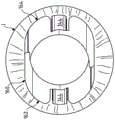
图1至图3示出了根据本发明的实施例的覆盖植入物的框架;1 to 3 illustrate a frame covering an implant according to an embodiment of the present invention;
图4A至图4C示出了根据本发明的实施例的覆盖植入物的覆盖构件;4A-4C illustrate a covering member covering an implant according to an embodiment of the present invention;
图5A至图5C示出了将覆盖植入物附接到虹膜上的原理;Figures 5A-5C illustrate the principle of attaching a covering implant to the iris;
图6A至图6C示出了图1至图3的框架与图4A至图4C的覆盖构件的组装操作;6A to 6C illustrate the assembly operation of the frame of FIGS. 1 to 3 and the cover member of FIGS. 4A to 4C;
图7是附接构件的变型实施例的视图;Figure 7 is a view of a variant embodiment of the attachment member;
图8A至图8C示出了根据本发明的另一实施例的整体式覆盖植入物;8A-8C illustrate a monolithic covering implant according to another embodiment of the present invention;
图9A至图9C示出了附接构件的不同的可行的变型实施例;Figures 9A to 9C show different possible variant embodiments of the attachment member;
图10A至图10E示出了覆盖植入物的不透明光学部分的不同的可行构造;10A-10E illustrate different possible configurations for covering the opaque optical portion of the implant;
图11A至图11C是不同的连续视图,示出了瞳孔收缩以及与用于图10A的覆盖植入物的虹膜附接的覆盖植入物的相关构造;Figures 11A-11C are different sequential views showing pupil constriction and the associated configuration of the covering implant for attachment to the iris of the covering implant of Figure 10A;
图12A至图12C是不同的连续视图,示出了瞳孔收缩以及与用于图10D至图10E的覆盖植入物的虹膜附接的覆盖植入物的相关构造;Figures 12A-12C are different sequential views showing pupil constriction and the associated configuration of the covering implant for iris attachment of the covering implant of Figures 10D-10E;
图13A至图13D是示出了与虹膜附接的若干个覆盖植入物的不透明光学部分的不同的可行构造的视图;13A-13D are views showing several different possible configurations of the opaque optical portion of the covering implant attached to the iris;
图14A至图14D示出了用于将覆盖植入物植入在虹膜上的可行的外科方法的主要步骤;Figures 14A-14D illustrate the main steps of a possible surgical method for implanting an overlay implant on the iris;
图15示出了根据本发明的实施例的不具有光学功能的覆盖植入物;Figure 15 shows a covering implant without optical functionality according to an embodiment of the present invention;
图16A至图16D示出了根据本发明的实施例的具有光学和覆盖功能的另一覆盖植入物的不同视图;Figures 16A-16D show different views of another covering implant with optical and covering functions according to embodiments of the present invention;
图17示出了定位在虹膜上的图16A至图16D的覆盖植入物;Figure 17 shows the covering implant of Figures 16A-16D positioned on the iris;
图18示出了根据本发明的实施例的定位在虹膜上的不具有光学功能的另一覆盖植入物;Figure 18 illustrates another covering implant without optical functionality positioned on the iris according to an embodiment of the present invention;
图19A至图19C示意性地示出了根据本发明的实施例的覆盖植入物的安装约束。19A-19C schematically illustrate installation constraints of a covering implant according to an embodiment of the present invention.
具体实施方式Detailed ways
在第一实施例中,虹膜(眼内)覆盖植入物对虹膜执行覆盖或重叠功能,覆盖植入物用于被固定在虹膜上。因为虹膜总是被植入物的至少一部分或部件覆盖,所以无论植入物的实施例和功能/应用如何,将在说明书的其余部分中使用术语“覆盖植入物”。In a first embodiment, an iris (intraocular) covering implant performs a covering or overlapping function on the iris, the covering implant is intended to be fixed on the iris. Since the iris is always covered by at least a portion or component of the implant, the term "covering the implant" will be used in the remainder of the description regardless of the embodiment and function/application of the implant.
这里,如图1至图7所示,覆盖植入物由两部分制成。覆盖植入物由生物相容性材料或生物相容性材料的组合或混合物制成。例如,覆盖植入物由硅或亲水性丙烯酸树脂或疏水性丙烯酸或弹性体制成,并且例如可以是能用二氧化硅或EMA(甲基丙烯酸乙酯)或HEMA(甲基丙烯酸羟乙酯)或两个前述实例的组合(共聚物)进行增强的交联聚二甲基硅氧烷(适于医疗用途的材料)。Here, as shown in Figures 1 to 7, the covering implant is made of two parts. Overlay implants are made of biocompatible materials or a combination or mixture of biocompatible materials. For example, the covering implant is made of silicon or a hydrophilic acrylic resin or a hydrophobic acrylic or an elastomer, and can for example be made of silicon dioxide or EMA (ethyl methacrylate) or HEMA (hydroxyethyl methacrylate) ) or a combination (copolymer) of the two preceding examples for reinforcement of crosslinked polydimethylsiloxanes (materials suitable for medical use).
如图1至图3所示,覆盖植入物10(图6C中仅示出了组装后的覆盖植入物10)包括主体,该主体包括设置有至少一个附接构件的框架12。As shown in FIGS. 1-3 , the covering implant 10 (only the assembled covering
框架由允许框架弹性变形的材料或材料的组合制成。PMMA可以是合适材料的实例(总体上是透明或着色的)。The frame is made of a material or combination of materials that allows the frame to deform elastically. PMMA can be an example of a suitable material (generally transparent or colored).
在本实施例中,存在两个附接构件14和16,这两个附接构件14和16布置在框架的一个且相同的侧部或侧面(这里向下取向)上。这里,附接构件与覆盖植入物、特别是与框架一体地制成。在变型实施例中,可以设想单个附接构件或多于两个附接构件。In this embodiment, there are two
框架12具有沿着纵轴X的总体轴向或纵向延伸部以及沿着横轴Y的横向延伸部。框架12还沿着限定其厚度的轴线Z与平面X、Y垂直地延伸(图2)。The
附接构件14和16沿着与平面XY大致垂直的总体方向(轴线Z)从框架12向外延伸。
这里,框架12包括两个横梁18和20,横梁18和20沿轴线X彼此轴向地间隔开,从而在横梁18和20之间留下中心开口22。横梁18和20沿横轴Y(图1)延伸。Here, the
两个横梁18和20各自的两个相反端部中的每一个端部与两个平行的纵向或轴向支撑构件24和26连接。在另一实施例中,可以设想多于两个的横梁或将两个支撑构件连接起来的单个梁。单个梁可以具有纵轴(X),且无需具有与支撑构件相同的延伸部。Each of the two opposite ends of each of the two
例如,框架由单件制成,并且可以通过注射成型工艺或标准机加工而制成。For example, the frame is made from a single piece and can be made by an injection molding process or standard machining.
为了简化起见,将对横梁18进行以下描述,并且该描述对于横梁20来说是相同的。For simplicity, the following description of
当在前视图或俯视图(图1)中观察时,每个横梁均具有相当窄的中央部分(例如横梁18的中央部分18a),中央部分朝向两个相反端部18b和18c变大,在两个相反端部18b和18c处中央部分分别与支撑构件24和26连接。每个梁在其两个相反的横向侧(这些侧相对于纵轴X沿横向延伸)具有图1中的弯曲轮廓。然而,对于梁,可以设想其它的前视图或俯视图形状。When viewed in front or top view (FIG. 1), each beam has a relatively narrow central portion (eg, central portion 18a of beam 18) that becomes larger toward opposite ends 18b and 18c, The central portions are connected to support
当在横截面(图2的AA横截面)中观察时,每个横梁在沿着与轴线Z平行的方向截取的主体部分18d中均具有相当平坦和薄的形状。主体部分18d包括中央部分18a以及位于其任一部分上的侧向延伸部。总体上,主体部分18d可以在与梁的2/3长度大致对应的尺寸上延伸。然而,可以设想其它比率。在主体部分18d之外,梁包括变大的侧向部分18e和18f,侧向部分18e和18f的厚度(沿轴线Z截取)增大,例如逐渐增大。该厚度增大确保了与支撑构件24和26的牢固机械连接。此外,该厚度增大使梁的侧向延伸部区域中的变形(例如弯曲)最小。换句话说,主体部分的厚度减小有利于梁的例如弯曲等变形,这将有助于附接构件的开口。Each beam has a rather flat and thin shape in the body portion 18d taken in a direction parallel to the axis Z when viewed in cross section (AA cross section in Figure 2). The body portion 18d includes a central portion 18a and lateral extensions on any portion thereof. In general, the body portion 18d may extend in a dimension that corresponds approximately to 2/3 the length of the beam. However, other ratios are contemplated. Beyond the main body portion 18d, the beam includes enlarged lateral portions 18e and 18f of increasing thickness (taken along the axis Z), eg gradually increasing. This increased thickness ensures a strong mechanical connection to the
如上所述,横梁在其中央部分和主体部分中的变薄构造可以在图2的平面中例如通过如两个箭头所示的弯曲使框架弹性变形。As mentioned above, the thinned configuration of the beam in its central and main portions may elastically deform the frame in the plane of Figure 2, eg by bending as indicated by the two arrows.
在本实施例中,两个附接构件14和16分别位于梁18和20的中央部分18a和20a的下侧。In this embodiment, the two
每个附接构件均可以是夹紧构件,并且可以包括至少两个夹紧部分或爪14a、14b和16a、16b。Each attachment member may be a clamping member and may include at least two clamping portions or
在本实施例中,如图1至图3所示,两个爪在它们的稳定且未变形的初始位置彼此间隔开。根据要夹紧在两个爪之间的物体,爪之间的间隙可以更宽或更窄。通常来说,沿横轴Y的间隙或距离小于或等于3mm。In this embodiment, as shown in Figures 1 to 3, the two jaws are spaced apart from each other in their stable and undeformed initial positions. Depending on the object to be clamped between the two jaws, the gap between the jaws can be wider or narrower. Typically, the gap or distance along the transverse axis Y is less than or equal to 3 mm.
图5A非常示意性地示出了覆盖植入物10的夹紧爪14a和14b的初始位置。在图5A至图5C中,覆盖植入物10如随后描述的图6C中那样被完全组装。图5A至图5C所示的附接原理也适用于整体式覆盖植入物。FIG. 5A shows very schematically the initial position of the clamping
当外部弯曲力施加在两个支撑构件上时,在这里沿轴线Y,框架12在图5A的平面(也是图2的如箭头所示的平面)中弯曲,并且每个夹紧构件的两个爪彼此远离,特别是沿横轴Y彼此远离,从而扩大间隙(图5B)。使覆盖植入物朝向虹膜的前表面(沿轴线Z)移动,并且爪靠近该表面,以定位在虹膜脊的任一部分上。When an external bending force is exerted on the two support members, here along axis Y, the
当不再施加弯曲力时,框架返回到图5A的其初始位置,并且爪可以将虹膜脊P(天然虹膜褶皱)夹在爪之间(图5C)。When the bending force is no longer applied, the frame returns to its original position of Figure 5A, and the jaws can sandwich the iris ridge P (natural iris fold) between the jaws (Figure 5C).
轴向支撑构件24和26(图1至图3)均具有如下的横向轮廓或横截面,该横向轮廓或横截面可以沿整个长度相同或可以有目的地局部呈现出一些受控的不规则部。当覆盖植入物主体的第二部分(覆盖构件)沿轴向接合到框架中时,该受控的不规则部可以用作覆盖植入物主体的第二部分的轴向止动件。
在本实施例中,轴向支撑构件24和26可以执行用于容纳外科器械或外科器械的一部分(例如镊子)的第一功能,外科器械或外科器械的一部分可以在框架上施加外部弯曲力,以使框架弯曲并使爪如上所述地打开。In this embodiment, the
关于这方面,轴向支撑构件24和26均可以包括相对于框架(图2和图3)向外取向(即与梁18和20相反)的第一接纳部分24a和26a。In this regard,
这里,第一接纳部分采用纵向或轴向凹槽的形状,该纵向或轴向凹槽向外开口至框架的外部,并沿着支撑构件的长度延伸。两个凹槽分别在两个相反的方向上向外开口。每个凹槽具有凹形形状,该凹形形状可以以互补的方式与器械或器械的一部分的形状相适应。凹槽的开口可以将中心定位在两个梁18和20所延伸的平面XY中。在可选构造中,凹槽可以替代性地向上取向,即,可以具有与上述平面形成角度的开口。Here, the first receiving portion takes the shape of a longitudinal or axial groove that opens outwards to the outside of the frame and extends along the length of the support member. The two grooves respectively open outward in two opposite directions. Each groove has a concave shape which can be adapted to the shape of the instrument or part of the instrument in a complementary manner. The opening of the groove can be centered in the plane XY in which the two
此外,轴向支撑构件24和26均可以包括与第一接纳部分基本相反的第二接纳部分24b和26b。两个第二接纳部分彼此面对,并且在它们之间限定有横向空间。两个第二接纳部分更特别地与横梁18和20的上侧或上面(上侧位于XY平面中)一起在两个第二接纳部分之间限定适于容纳覆盖构件的壳体或狭槽。Additionally, each of the
第二接纳部分24b和26b可以采用相对于框架向内取向(即大致朝向梁)的导轨或凹槽的形状。第二接纳部分24b和26b更特别地位于距梁的上侧一定距离的位置处(图2)。在本实施例中,第二接纳部分24b和26b均形成在支撑构件的与第一接纳装置相同的部分中。更具体地说,每个第二接纳部分均可以由限定相邻向外取向凹槽(第一接纳部分)的两个边缘中的一个边缘形成。该边缘被成形为将取向改变为朝向框架内部并形成弯曲。因此,该弯曲限定了向内取向的凹部,并可以容纳覆盖构件。The
覆盖植入物主体10还包括覆盖构件30(图4A至图4C),该覆盖构件30用于与框架12组装起来。本发明还可以涉及具有多于两个部件的覆盖植入物,例如框架和/或覆盖构件可以由多于一个部件制成。The
覆盖构件30包括两个部分(参见图4A,其是俯视图或正视图):The
-机械部分32;以及- the
-不透明光学部分34。- Opaque
在本实施例中,这两个部分一起形成单件。这两个部分均可以沿Z轴(图2)具有相同厚度。这里,覆盖构件可以采用箔的形式,例如相对薄的箔。In this embodiment, the two parts together form a single piece. Both parts may have the same thickness along the Z-axis (FIG. 2). Here, the cover member may take the form of a foil, eg a relatively thin foil.
借助于上述第二接纳部分24和26,机械部分32将与框架12组装起来。The
机械部分32和不透明光学部分34沿纵轴X彼此对准。机械部分32和不透明光学部分34这两者都在平面XY(其与两个梁18和20的延伸平面平行)中延伸。The
这里,图4A中可见的覆盖构件具有面(上表面),该面具有分别对应于部分32和34的两个区域。当覆盖构件与框架组装起来时,该上表面形成与框架的承载附接构件的面相反的第一面。Here, the cover member visible in FIG. 4A has a face (upper surface) with two regions corresponding to the
机械部分32可以是透光的,并保持虹膜的初始形态(因此,覆盖构件的上表面的相应第一区域不是非透明的)。作为选择,机械部分32可以被着色或形成纹理,以产生视觉效果(例如像虹膜的颜料)。因此,覆盖构件的上表面的相应第一区域是不透明的。The
当从上方观察时(如图4A所示),机械部分32具有大致矩形的形状,该大致矩形的形状包括两个大致平行的纵向边缘32a、32b和具有凸起形状的后边缘32c。When viewed from above (as shown in Figure 4A), the
不透明光学部分34以能根据实施例变化的合适形状沿轴向延伸至机械部分32的前区域。部分34具有不透光(即对光不透明)的作用,以产生小孔或针孔效应。这里,覆盖构件的上表面的第二区域34a是不透明的。通常,部分34可以在其整个厚度上是不透明的(图4A和图4C),使得当覆盖植入物10被安装在眼睛的虹膜上时,该部分34将取向在眼睛正在观察的方向上。因此,不透明光学部分34构造为接收入射光,并阻挡相应的光线。在优选实施例中,部分34是黑色光学部分。在可选实施例中,可以设想用于面34a的其它不透明视觉外观,例如彩色、着色的视觉外观。The opaque
这里,不透明光学部分34具有两个会聚边缘34b和34c,这两个会聚边缘34b和34c分别从纵向边缘32a和32b中延伸出来,并终止于沿横向延伸且与两个倾斜边缘34b和34c连接的端部边缘32d。Here, the opaque
当所有的覆盖植入物都被安装在眼睛的瞳孔周围的虹膜上并且瞳孔处于其最收缩的位置(这将在随后看到)时,边缘34b和34c具有与相邻覆盖植入物的其它不透明光学部分边缘的几何形状相适应的几何形状。这里,对于覆盖植入物的所有不透明光学部分边缘,边缘的倾斜角都相同,使得两个相邻覆盖植入物的两个相邻会聚边缘相接触。因此,在该实施例中,没有光能够在两个相邻边缘之间穿过。图11C示出了在所有覆盖植入物10彼此处于紧密关系的情况下的该瞳孔位置。应注意的是,在其它覆盖植入物构造中,光可以在相邻覆盖植入物之间穿过,且不会有害地影响小孔效应。尤其当相邻覆盖植入物之间的间隙表示整个隔膜的小而可忽略的部分(例如,约3%或5%)时是如此情况。When all of the covering implants are mounted on the iris around the pupil of the eye and the pupil is in its most constricted position (as will be seen later), edges 34b and 34c have other covering implants with adjacent covering implants. The geometry of the edges of the opaque optical section is adapted to the geometry. Here, the inclination angle of the edges is the same for all the edges of the opaque optic portion of the covering implant, so that the two adjacent converging edges of two adjacent covering implants are in contact. Therefore, in this embodiment, no light can pass between two adjacent edges. Figure 11C shows this pupil position with all of the covering
这里,端部边缘34d在俯视图中具有凹形形状,当所有覆盖植入物被安装在眼睛的虹膜上并且虹膜处于瞳孔的最收缩位置时,该凹形形状能够尽可能多地再现总体上的大致圆形轮廓。Here, the
换句话说,当所有覆盖植入物处于彼此相邻的紧密关系(瞳孔的最收缩位置)时,不透明光学部分形成并用作尽可能均匀(不透明度的连续性)的整个隔膜。In other words, when all the covering implants are in close relationship to each other (the most constricted position of the pupil), the opaque optical portion forms and serves as the entire septum that is as uniform as possible (continuity of opacity).
将在后文描述不透明光学部分的不同的其它可行形状。Various other possible shapes of the opaque optical portion will be described later.
如图4A所示,不透明光学部分34由线34e界定,该线34e位于机械部分32的边界处,并将这两个部分分开。线34e具有与边缘34d大致相同的曲率,从而在它们之间限定环状或环形的一部分。所有这些在瞳孔的最收缩位置并排放置的不透明部分形成连续的不透明环形或环状(图11C的隔膜)。As shown in FIG. 4A, the opaque
如图4A所示,光学部分34的长度或轴向延伸部小于机械部分32的长度或轴向延伸部,并且例如可以是机械部分32的长度的一半。例如,这两个部分的总长度为2.22mm。As shown in FIG. 4A , the length or axial extension of
覆盖构件能够弹性变形,即,在本文中通过围绕覆盖构件的纵轴(平行于轴线X)弯曲。弯曲运动在平面Y和Z中进行。The cover member can be elastically deformed, ie in this case by bending about its longitudinal axis (parallel to the axis X) of the cover member. The bending motion takes place in planes Y and Z.
通常,覆盖构件30整体在平面(平面XY)中延伸。然而,如图4B和图4C所示,覆盖构件30发生弹性变形,以与框架组装在一起,这将随后看到。这是因为梁18和20具有凸起的侧向部分(见图2)。在覆盖构件因弯曲而弹性变形并与框架组装起来之后,覆盖构件内部保持有残余应力使得可以在框架内保持就位。Generally, the
如图4B和图4C所示,覆盖构件30在其初始非变形位置具有沿其纵轴的大致弯曲的形状(例如如瓦片那样)。As shown in Figures 4B and 4C, the
这里,覆盖构件30是柔性的,并可以由例如硅或亲水性丙烯酸树脂或疏水性丙烯酸或弹性体制成。Here, the covering
图6A至图6C示出了覆盖构件30和框架12的组装过程。6A to 6C illustrate the assembly process of the
在图6A中,覆盖构件30由镊子保持为稍微折叠的构造,并且在后部区域(边缘32c)面向框架的情况下沿着纵轴X朝向框架移动。框架被放置成框架的第二接纳部分24b和26b向上取向而附接构件向下取向。应注意的是,框架12没有前部和后部(然而,这可以是其它框架实施例的情况),这使得组装过程更容易和更快。In Figure 6A, the
在任何组装操作之前,如上所述地弯曲覆盖构件30(这通过使用如图6A所示的常规镊子来完成)以形成弯曲形状,该弯曲形状与由框架的上表面(梁18和20的上表面)和框架的凸起的侧向部分24b和26b(例如侧向支撑构件24和26的张开的内部形状)限定的内部框架轮廓大致对应。在横截面中,内部框架轮廓为大致U形形状,并限定了用于容纳覆盖构件30的开口壳体。Prior to any assembly operations, the
纵向边缘32a和32b接合或插入到横梁18和20上方的第二接纳部分24b和26b中,并且然后如图6B所示那样使纵向边缘32a和32b沿着这些部分(例如在轨道或凹槽中)滑动。The
轴向推动覆盖构件30直到不透明光学部分34基本上到达第二接纳部分24b和26b的自由端为止(图6C)。可以在第二接纳部分内部设置合适的局部构造件(一个或多个),以阻止覆盖构件30沿轴向的滑动。例如,可以使用由整套的两个第二接纳部分形成的凸耳或略微圆锥形的形状。The
当覆盖构件已经与框架组装起来时,这两个部分借助摩擦和接触压力被保持在一起。When the cover member has been assembled with the frame, the two parts are held together by friction and contact pressure.
因此,不透明光学部分34沿轴向(沿轴线X)延伸到框架之外来作为悬臂梁。无论覆盖构件(尤其是不透明光学部分)的形状如何,以上都是适用的。这种构造可以将覆盖植入物附接在虹膜上的如下位置:使得仅不透明光学部分延伸到虹膜边缘或瞳孔边缘之外(参见例如图11A中的覆盖植入物10与虹膜边缘E之间的相对位置)。Thus, the opaque
应注意的是,在图6C中,机械部分32的后部也从框架中突出,以用作配重部。在其它实施例中,机械部分可以与框架齐平。It should be noted that in Figure 6C the rear of the
这里未示出的其它实施例可以包括倒置构造,其中框架接合在覆盖构件内部。覆盖构件可以被设计为包含用于容纳框架的接纳部分。例如,两个接纳部分可以分别从覆盖构件的两个大致平行的边缘(例如边缘32a和32b)例如沿与覆盖构件垂直的方向延伸,并且可以作为帽在三个或四个侧面(上侧面和两个向下延伸的侧方侧面)将放置在下方的框架覆盖起来,其中可能存在的倾斜终止部分在框架下方延伸以形成下侧面。可以通过将框架沿轴向接合到覆盖构件的下接纳部分中来实现覆盖构件和框架构件的组装。Other embodiments not shown here may include an inverted configuration in which the frame is engaged inside the cover member. The cover member may be designed to contain a receiving portion for receiving the frame. For example, the two receiving portions may respectively extend from two substantially parallel edges of the cover member (eg, edges 32a and 32b ), eg, in a direction perpendicular to the cover member, and may act as caps on three or four sides (upper and The two downwardly extending lateral sides) cover the frame placed underneath, where possible inclined terminations extend below the frame to form the lower side. Assembly of the cover member and frame member may be accomplished by axially engaging the frame into the lower receiving portion of the cover member.
应注意的是,上述组装过程同样适用于包括具有不同构造的框架和可能具有的覆盖构件的任何其它覆盖植入物实施例。例如,框架可以仅具有一个横梁或多于如上文已经设想的两个横梁。It should be noted that the assembly process described above is equally applicable to any other covering implant embodiments including frames with different configurations and possibly covering members. For example, the frame may have only one beam or more than two beams as already envisaged above.
图7示出了具有单个附接构件的框架40的变型实施例。这里,附接构件是从一个横梁44沿轴向延伸到另一个横梁46的夹紧构件42。Figure 7 shows a variant embodiment of the
夹紧构件42具有两个轴向延伸的抓取部分或爪,该抓取部分或爪的作用与图5A至图5C中的爪14A和14b的作用相同。每个爪均被附接到两个梁的下表面。在该实施例中,框架的所有其它部件与先前框架的部件相同。Clamping
应注意的是,在其它变型实施例中,附接构件可以相对于彼此不同地布置,例如,附接构件无需沿着框架的相同轴向(沿着轴线X)布置而是在侧向偏移的位置布置。图7的实施例及其变型例可以应用于如上文或下文所提及的任何其它覆盖植入物实施例和变型例。It should be noted that in other variant embodiments the attachment members may be arranged differently relative to each other, eg the attachment members need not be arranged along the same axial direction of the frame (along axis X) but are offset laterally location arrangement. The embodiment of Figure 7 and its variants may be applied to any other covering implant embodiments and variants as mentioned above or below.
图8A和图8B示出了虹膜覆盖植入物50,虹膜覆盖植入物50包括被制成单件以便于制造且由外科医生实施的主体。主体包括整体形成的覆盖构件52和框架54。这里,框架没有第二接纳部分。覆盖构件52具有机械部分52a和不透明光学部分52b,机械部分52a和不透明光学部分52b可以具有与包括两部分主体的实施例和变型例相同的特征和优点。框架54还包括附接构件56,附接构件56具有与包括两部分主体的实施例和变型例相同的特征和功能。框架的下侧在两个附接构件之间凹入,从而为框架(这里未示出)提供柔性。以上描述的所有内容也适用于本实施例。具体而言,上文或下文提到的不同的附接构件构造可以同样应用于图8A至图8B的实施例。Figures 8A and 8B illustrate an
图9A至图9C示出了固定在虹膜覆盖植入物的框架下方的附接构件的多个可行构造。图9A至图9C示出了具有尺寸不同的两个间隔开的夹紧部分或爪的夹紧构件。Figures 9A-9C illustrate a number of possible configurations of the attachment member secured under the frame of the iris covering implant. 9A-9C illustrate a gripping member having two spaced apart gripping portions or jaws of different sizes.
在图9A中,框架60设置有夹紧构件62,夹紧构件62具有两个相对的头部62a和62b,头部62a和62b通过相应的向下延伸的臂62c和62d连接到框架60的下侧。In Figure 9A, the
在图9B和图9C中,相应的框架70和80具有夹紧构件72和82,夹紧构件72和82具有越来越大的头部和越来越长的臂。In Figures 9B and 9C, respective frames 70 and 80 have gripping
可以设想其它可行的构造,例如具有不同的头部形状、不同数量的抓取部分或爪等。Other possible configurations are conceivable, such as having different head shapes, different numbers of gripping portions or claws, and the like.
对于前述实施例,附接构件可以位于两个间隔开的横梁的中央部分下方或可以布置在另一位置处。如图7所示,在框架下方可以设置单个附接构件。框架的形状也可以变化。上文描述的关于附接构件(一个或多个)的所有内容(尤其是参照图5A至图5C的内容)也可以应用于这里。For the foregoing embodiments, the attachment members may be located below the central portions of the two spaced apart beams or may be arranged at another location. As shown in Figure 7, a single attachment member may be provided below the frame. The shape of the frame can also vary. Everything described above with respect to the attachment member(s) (in particular with reference to Figures 5A-5C) applies here as well.
应注意的是,在图9A至图9C中,每个框架的相反的第一接纳部分已经示意性地表示为相对于横梁的中间平面X和Y的对称凹槽。It should be noted that, in Figures 9A to 9C, the opposite first receiving portion of each frame has been schematically represented as a symmetrical groove with respect to the mid-plane X and Y of the beam.
在图9A至图9C的当前实施例中,覆盖植入物的主体(框架和覆盖构件)可以制成为单件,并且因此不需要第二接纳部分。In the current embodiment of Figures 9A-9C, the main body (frame and covering member) of the covering implant can be made in one piece, and thus no second receiving portion is required.
然而,图9A至图9C也适用于主体如图1至图7中那样为两部分的覆盖植入物。However, Figures 9A to 9C also apply to covering implants whose main body is two-part as in Figures 1 to 7 .
图9A至图9C的附接构件可以用于任何前述实施例和变型例中。The attachment members of FIGS. 9A-9C may be used in any of the foregoing embodiments and variations.
图10A至图10E示出了安装到框架12上的覆盖构件的多种可行的构造,包括已经描述的图10A的覆盖构件。Figures 10A-10E illustrate various possible configurations of cover members mounted to frame 12, including the cover member of Figure 10A already described.
图10B至图10E示出了不同的覆盖构件构造,在这些覆盖构件构造中,机械部分32保持为与图10A中的机械部分相同,而不透明光学部分彼此不同并且与不透明光学部分34也不同。FIGS. 10B-10E illustrate different cover member configurations in which the
在图10B中,覆盖构件30'具有大致T形的形状,其中不透明光学部分34'对应于T形的横杆。In Figure 10B, the cover member 30' has a generally T-shaped shape, with the opaque optical portion 34' corresponding to the crossbars of the T-shape.
不透明光学部分34'具有大致弯曲的形状,例如豆子形状,该大致弯曲的形状具有中心弯曲区域34'a和两个侧部区域34'b和34'c,当从上方观察时,两个侧部区域34'b和34'c以张开的方式沿横向延伸到部分32和框架12之外。当从上方观察时,中心弯曲区域34'a与机械部分32轴向对准。The opaque optical portion 34' has a generally curved shape, such as a bean shape, having a central curved region 34'a and two side regions 34'b and 34'c, the two sides when viewed from above Sectional regions 34'b and 34'c extend laterally beyond
对于图10A中的部分34,部分34'具有圆形边缘(没有锐角)。基于相同的原因,中心弯曲区域34'a具有与部分34相同类型的曲率。For
侧部区域34'b和34'c没有位于如图10B的平面中。Side regions 34'b and 34'c do not lie in the plane of Figure 10B.
图10C表示从图10B中的箭头F(从隔膜的端侧,不透明光学部分34'位于该端侧)截取的整个覆盖植入物的正视图。在该附图中,侧部区域34'b和34'c相对于XY平面P'(这里XY平面P'在图10C中为水平的)倾斜,在XY平面P'中,横梁18和20基本上至少在它们的主中央部分中延伸。在该倾斜位置,侧部区域34'b形成了在平面P'上方延伸的上部区域,并且侧部区域34'c形成了在平面P'下方延伸的下部区域。Figure 10C shows a front view of the entire covering implant taken from arrow F in Figure 10B (from the end side of the septum where the opaque optical portion 34' is located). In this figure, the side regions 34'b and 34'c are inclined with respect to the XY plane P' (here the XY plane P' is horizontal in Figure 10C) in which the
该构造使得可以在隔膜关闭期间(当光瞳正在收缩时)适当地布置相邻的不透明光学部分,使得不透明光学部分不与其他部分机械地干涉。因此,当从上方观察时,相邻的不透明光学部分可以部分地重叠。This configuration makes it possible to properly arrange adjacent opaque optical parts during the closure of the diaphragm (when the pupil is constricting) so that the opaque optical parts do not mechanically interfere with other parts. Thus, adjacent opaque optical portions may partially overlap when viewed from above.
这种构造允许利用所有覆盖植入物的所有相邻不透明光学部分提供有效且均匀的不透明隔膜或覆盖物。This configuration allows for an effective and uniform opaque membrane or covering to be provided with all adjacent opaque optical portions covering the implant.
在图10D中,当与覆盖构件30和30'一样从上方观察时,覆盖构件30"具有不对称的形状。与之相反,覆盖构件30"具有大致L形的形状,其中不透明光学部分34"侧向地延伸。不透明光学部分34"具有中心区域34"a,当从上方观察时,该中心区域34"a与机械部分32轴向对准。不透明光学部分34"还具有侧部区域34"b,该侧部区域相对于部分34"a和32的对准轴线沿倾斜和向前的方向(从上方观察)横向地延伸。In FIG. 10D , when viewed from above like
不透明光学部分34"具有弯曲的端部边缘34"c,端部边缘34"c沿其长度为大致凹形,从而当在整个隔膜植入物的最闭合构造(瞳孔完全收缩)中所有覆盖植入物彼此相邻时,再现大致圆形的轮廓。The
更具体地说,不透明光学部分34"具有双凹部,而不是不透明光学部分34和34'的单个凹部。More specifically, the opaque
图10E示出了不采用框架12的覆盖构件30"的后视图(沿图10D的箭头G的视图)。FIG. 10E shows a rear view (a view along arrow G of FIG. 10D ) of the
如该横向视图所示,不透明光学部分34"不位于不透明光学部分34'所在的平面中,而是与机械部分大致所在的平面P"(这里为水平面)成角度。As shown in this lateral view, the opaque
该构造可以在隔膜关闭期间(当光瞳正在收缩时)适当地布置相邻的不透明光学部分,使得不透明光学部分不与其他部分机械地干涉。因此,当从上方观察时,相邻的不透明光学部分可以部分地重叠。This configuration can appropriately arrange adjacent opaque optical portions during diaphragm closure (when the pupil is constricting) such that the opaque optical portions do not mechanically interfere with other portions. Thus, adjacent opaque optical portions may partially overlap when viewed from above.
该构造允许利用覆盖植入物的所有相邻不透明光学部分提供有效且连续的不透明隔膜或覆盖物。以上关于图1至图9C所述的所有内容(例如附接构件(一个或多个)、两部分或单部分的覆盖构件)也可以应用于图10A至图10E的实施例。This configuration allows for an effective and continuous opaque membrane or covering to be provided with covering all adjacent opaque optical portions of the implant. Everything described above with respect to Figures 1-9C (eg, attachment member(s), two-part or single-part covering members) can also be applied to the embodiments of Figures 10A-10E.
图11A至图11C示出了植入(特别是附接)在人虹膜I的前表面上的多个虹膜覆盖植入物10。当多个覆盖植入物10没有被植入在虹膜上时,多个覆盖植入物10形成准备好供外科医生使用的外科器械包。11A-11C show a plurality of
在变型例中,外科器械包可以包括需要在外科医生进行任何虹膜植入之前组装在一起的独立的覆盖构件和独立的框架(当覆盖植入物不是单件时)。In variations, the surgical kit may include separate cover members and separate frames (when the cover implant is not a single piece) that need to be assembled together before the surgeon performs any iris implantation.
图11A至图11C示出了瞳孔的不同位置。11A-11C show different positions of the pupil.
在图11A的初始扩张位置(完全张开),覆盖植入物10相对于中心孔O1的中心沿径向布置,其中覆盖植入物10的纵轴(X)沿径向取向并彼此远离。In the initial expanded position (fully expanded) of Figure 11A, the covering
由虹膜括约肌边缘E限定的中心孔O1处于其最大直径(例如7mm)。The central aperture O1 defined by the iris sphincter edge E is at its largest diameter (eg 7 mm).
覆盖植入物10具有相当小的不透明光学部分34,使得在覆盖植入物10彼此远离的扩张位置,覆盖植入物10可以被认为不影响视力。The covering
在图11B中,瞳孔部分地收缩,并且中心孔缩小到O2(减小的直径例如为4.5mm)。In Figure 11B, the pupil is partially constricted, and the central aperture is reduced to O2 (reduced diameter, eg, 4.5 mm).
通过虹膜的移动使覆盖植入物10移动,并且使覆盖植入物10更靠近孔的中心以及彼此远离(通过虹膜的自然移动来控制动态植入物的移动)。The overlying
在图11C中,瞳孔完全收缩,并且中心孔缩小到O3(减小的直径例如为3mm)。In Figure 11C, the pupil is fully constricted, and the central aperture is reduced to O3 (reduced diameter, eg, 3 mm).
覆盖植入物10两两相互接触或者非常接近地相互接触,使得不透明光学部分34一起形成围绕缩小孔O3的基本连续的不透明隔膜或区域(例如这里是带状区域)。这产生针孔或小孔效应,从而增加了视觉深度。The covering
这里,由于不透明光学部分34的形状被调节为在相同平面中并排定位,因此相邻覆盖植入物10之间的紧密接触或接近是可行的。Here, since the shape of the opaque
图12A至图12C示出了如图11A至图11C所示植入(特别是附接)在人虹膜I的前表面上并且具有相同瞳孔运动的图10D至图10E的多个虹膜覆盖植入物30"。Figures 12A-12C show the multiple iris overlay implants of Figures 10D-10E implanted (specifically attached) on the anterior surface of the human iris I as shown in Figures 11A-11C and with the
与覆盖植入物10相反的是,覆盖植入物30"由于它们向上倾斜或凸起的侧部区域34"b而不处于平面构造(见图10E)。In contrast to
在图12A的扩张位置,覆盖植入物30"的机械部分32彼此间隔开,而相邻的不透明光学部分34"彼此相当接近。然而,这并不重要,因为孔O1足够大。In the expanded position of Figure 12A, the
在图12B中,覆盖植入物30"由于其横向延伸的不透明光学部分34",特别是由于不透明光学部分34"的凸起的侧部区域34"b而彼此重叠。每个不透明光学部分34"的侧部区域34"b在左侧位置与相邻不透明光学部分34"的中心区域34"a部分地重叠。这种构造在孔O2周围产生了基本连续的不透明的环形或环状隔膜(这因此开始了针孔效应过程),而在相应的图11b中,覆盖植入物10彼此远离(还没有产生针孔效应)。在图12B中,覆盖植入物30"的机械部分32如图11B所示一样相距一距离。In Figure 12B, the covering
在图12C中,当瞳孔缩小到孔O3时,覆盖植入物30"彼此更靠近。覆盖植入物30"通过机械部分32两两或非常接近地彼此接触(如图11C所示一样)。不透明光学部分34"的侧部区域34"b不再沿图12B的环形或环形状布置。现在侧部区域34"b朝向孔O3的外侧成角度地偏移,即从环形形状向外取向。In Figure 12C, when the pupil narrows to orifice O3, the covering
图13A至图13D示出了在瞳孔的最收缩位置中的不透明光学部分的不同构造。收缩瞳孔的直径用D表示。Figures 13A-13D show different configurations of the opaque optical portion in the most constricted position of the pupil. The diameter of the constricted pupil is denoted by D.
在这些附图中,不透明光学部分可以两两重叠(因为不透明光学部分不是平面构造),而无需以规则的方式重叠。In these figures, the opaque optical portions may overlap two by two (since the opaque optical portions are not of a planar configuration), and need not overlap in a regular manner.
当相应的覆盖植入物彼此靠近时,这些不透明光学部分的所有的端部或终止边缘至少部分地面向瞳孔的中心孔O3。All ends or terminating edges of these opaque optical portions at least partially face the central aperture O3 of the pupil when the respective covering implants are brought close to each other.
重要的是,中心孔O3的由这些端部边缘界定的轮廓位于环形区域AZ内,环形区域AZ居中位于与在最收缩瞳孔位置的隔膜的目标直径对应的直径或圆D1上,以获得期望的小孔效应。区域Z在外侧由两条圆形线C1和C2界定,这两条圆形线C1和C2表示相对于目标D1的公差裕值。It is important that the contour of the central aperture O3 delimited by these end edges lies within the annular area AZ centered on the diameter or circle D1 corresponding to the target diameter of the diaphragm at the position of the most constricted pupil, in order to obtain the desired pinhole effect. The zone Z is delimited on the outside by two circular lines C1 and C2 which represent the tolerance margin with respect to the target D1 .
在图13A中,不透明光学部分具有如图4A中的包括凹入端部边缘34d的构造,但是不透明光学部分相对于XY平面构造是倾斜的,以能够如图13A中所示那样重叠。不透明光学部分布置为形成界定孔O3的轮廓S1,该孔O3的形状是不规则的但是被包含在区域Z内。In Figure 13A, the opaque optic portion has a configuration including a
在图13B中,不透明光学部分具有包括直线端部边缘34'd的构造,并相对于XY平面构造是倾斜的,以能够如图13B所示那样重叠。不透明光学部分布置为形成界定孔O3的轮廓S2,这里,孔O3的形状是规则的(六面体)并且被包含在区域Z内。In Figure 13B, the opaque optical portion has a configuration that includes straight end edges 34'd, and is inclined relative to the XY plane configuration to enable overlapping as shown in Figure 13B. The opaque optical parts are arranged to form an outline S2 delimiting the hole O3, here the shape of the hole O3 is regular (hexahedron) and contained within the zone Z.
在图13C中,不透明光学部分具有这样的构造:端部边缘34"d凹凸不平,并且不透明光学部分相对于XY平面构造是倾斜的,以能够如图13C所示那样重叠。不透明光学部分布置为形成界定孔O3的轮廓S3,这里,O3的形状是不规则的并且被包含在区域Z内。In Figure 13C, the opaque optical portion has a configuration in which the
在图13D中,不透明光学部分具有这样的构造:端部边缘34”'d具有凹形形状,并且不透明光学部分相对于XY平面构造是倾斜的,以能够如图13D所示那样重叠。不透明光学部分的构造与图10D和图10E中的不透明光学部分的构造相比具有倒置形状(侧向延伸部分在中心区域34"a的右侧)。不透明光学部分布置为形成界定孔O3的轮廓S4,这里,孔O3的形状是不规则的并且被包含在区域Z内。参见图11A至图13D所述的所有内容也可应用于如上文参见图1至图10E所述的任何其它覆盖植入物构造。In Figure 13D, the opaque optical portion has a configuration in which the
图14A至图14D示出了用于在虹膜I的前表面上植入如上述覆盖植入物中的任何一种覆盖植入物(例如覆盖植入物10)那样的多个虹膜覆盖植入物的可行的外科方法的主要步骤。14A-14D illustrate multiple iris overlay implants such as any of the overlay implants described above (eg overlay implant 10) for implantation on the anterior surface of iris 1 The main steps of a viable surgical approach to the material.
在本实施例中,覆盖植入物可以形成外科器械包的一部分。In this embodiment, the covering implant may form part of a surgical kit.
在第一步骤(图14A)中,例如使用例如手术刀100等常规手术器械来切开眼睛的角膜Cr。作为选择,可以使用飞秒激光器来形成切口Inc。该切口可以是边缘自密封透明角膜隧道切口或自密封巩膜隧道切口。切口的宽度可以在1mm和4mm之间变化。In a first step (FIG. 14A), the cornea Cr of the eye is incised, for example using conventional surgical instruments such as
在进一步的步骤中(图14B),使用例如专用折叠镊子等另一器械110来抓紧覆盖植入物10并通过切口Inc引入覆盖植入物10。In a further step (FIG. 14B), another
镊子包括一对臂112和114,臂112和114沿着覆盖植入物10的纵向边缘(支撑构件24和26)与覆盖植入物10的侧面接触。具体而言,臂112和114接合到相应的第一接纳部分24a和26a(第一接纳部分具有与臂的形状相适应的形状,即用于容纳圆柱形或大致圆柱形的半圆柱形)中,以承载覆盖植入物10。The forceps include a pair of
作为选择,可以将覆盖植入物10装入到专用的药筒注射器中,然后通过角膜或巩膜隧道切口插入到眼睛的前房中。Alternatively, the covering
当覆盖植入物10位于虹膜上方时(图14B),可以在所需位置夹紧镊子,使得臂112和114如图14C中放大的相对箭头所示那样对覆盖植入物的第一接纳部分24a和26a施加夹紧力。该夹紧作用使覆盖植入物如参照图5A至图5C所述的那样弹性弯曲(弯曲运动围绕纵向发生)。然后使附接构件14和16在虹膜径向脊(虹膜表面的自然褶皱)P上方打开,以夹紧在与瞳孔边缘E相邻的位置。When the
因此,覆盖植入物10朝向径向脊移动(例如,如果患者处于水平位置则向下移动)直到径向脊位于两个夹紧部分或爪之间。在正确定位在脊P的任一部分上之后,夹紧作用可以停止,使得两个夹紧部分或爪可以如图14D所示那样夹紧脊,结果覆盖植入物框架弹性返回。因此,覆盖植入物从器械中释放,并且如图11A所示那样定位,其中框架12和机械部分32位于虹膜上方,并且悬臂式不透明光学部分34位于瞳孔的孔O1上方。Thus, the covering
以与待植入的覆盖植入物10的数量一样多的次数重复相同的过程(参见图14B)。The same process is repeated as many times as the number of covering
应注意的是,可以利用专用角膜标记器或利用包括将可见激光图案通过角膜投射到虹膜表面上的任何其它光学装置来引导覆盖植入物的径向和纵向定位,该角膜标记器浸渍有无菌生物相容性墨水以指示中心光学清晰区域(最小隔膜直径)和任何适当数量的等距间隔的半径。It should be noted that the radial and longitudinal positioning of the covering implant can be guided with a dedicated corneal marker impregnated with or without any other optical device including projecting a visible laser pattern through the cornea onto the iris surface. Bacterial biocompatible ink to indicate a central optically clear area (minimum septum diameter) and any suitable number of equidistantly spaced radii.
更通常的是,外科医生可以穿过角膜使用定位辅助系统,该定位辅助系统特别包括表示植入物在虹膜上的最佳位置的光导目标(例如具有可见波长的激光)。More generally, the surgeon may use a positioning aid system through the cornea, which particularly includes a light guide target (eg, a laser having visible wavelengths) that represents the optimal position of the implant on the iris.
该方法可以在瞳孔处于其更收缩的位置的情况下执行,以优化植入物定位,从而在该位置具有最小直径的人造隔膜,并且具有确保没有机械阻挡的植入物的相对定位。The method can be performed with the pupil in its more constricted position to optimize implant positioning, with the smallest diameter artificial septum in that position, and with relative positioning of the implant ensuring no mechanical obstruction.
通常来说,虹膜覆盖植入物的不透明光学部分(或至少覆盖构件的不透明光学面)可以根据各种几何形状(例如参见图10A至图10E、图13A至图13D和图16至图17)设计,以在瞳孔直径随着光适应或调节而改变时优化动态隔膜效果的光学连续性。不透明部分(或至少覆盖构件的不透明光学面)的形状可以包括额外的过大凸缘,该过大凸缘可以是倾斜的,以产生与相邻覆盖植入物的重叠效果。In general, the opaque optical portion of the iris covering implant (or at least the opaque optical face of the covering member) can be adapted according to various geometries (see, eg, Figures 10A-10E, 13A-13D, and 16-17) Designed to optimize the optical continuity of the dynamic diaphragm effect when pupil diameter changes with light adaptation or accommodation. The shape of the opaque portion (or at least the opaque optical face of the covering member) may include additional oversized flanges which may be beveled to create an overlapping effect with adjacent covering implants.
图15至图18示出了根据本发明的新的虹膜覆盖植入物的其它应用。Figures 15 to 18 illustrate other applications of the new iris covering implant according to the present invention.
图15示出了虹膜覆盖植入物120的实施例,该虹膜覆盖植入物120用于仅部分地覆盖虹膜(这里不存在光学隔膜功能)。Figure 15 shows an embodiment of an iris covering implant 120 for covering only partially the iris (where there is no optical diaphragm function).
覆盖植入物120包括与图4A的覆盖构件32对应的覆盖构件122以及与图1至图3的框架12对应的框架124,并且例如上文所述那样,框架124与覆盖构件122组装在一起。覆盖构件122具有不透明面(从俯视图中可以看到上表面;附接构件位于框架的相反面上),并且可以是完全不透明的。作为选择,覆盖植入物120可以制成为单件。The covering implant 120 includes a covering member 122 corresponding to the covering
覆盖构件122和可能的框架124的轴向延伸部(沿轴线X)可以延长,以覆盖虹膜前表面的更大面积。The axial extension (along axis X) of the cover member 122 and possibly the frame 124 may be elongated to cover a larger area of the anterior surface of the iris.
图16A至图16D示出了若干个覆盖植入物132和134(这里示出了两个面对的区段,例如每个区段具有U形形状,但是在可选实施例中可以使用多于两个区段)的组件的实施例,覆盖植入物132和134形成单个眼内植入物,这里,该眼内植入物既用作隔膜又用作局部人工虹膜(虹膜覆盖物)。局部虹膜覆盖物可以覆盖/重叠局部虹膜畸形等。Figures 16A-16D show several covering
两个覆盖植入物132和134通过滑动构造而彼此组装起来。然而,可以设想其它可选的组装构造。The two covering
每个覆盖植入物均包括具有框架136和覆盖构件140的主体,并且框架136如图1至图3中的框架12那样具有附接构件138(图16D)。覆盖构件140具有不透明面(从俯视图中可以看到上表面;附接构件位于框架的相反面上)并且可以是全部不透明的。Each covering implant includes a body having a
每个覆盖构件140和142均具有两个部分:Each
-相同的主体部分144,其与图4A中的机械部分32相同;- the
-次要部分,其具有都连接到主体部分144的两个横向延伸臂148、150和152、154。- a secondary part having two laterally extending
两个覆盖构件的两个臂彼此对齐。The two arms of the two cover members are aligned with each other.
两个臂中的一个臂大致位于如图16A至图16C的平面(平面构造)那样的平面中,而另一个臂相对于第一臂处于升高位置,并与第一臂成一角度。One of the two arms lies generally in a plane like the plane of Figures 16A-16C (planar configuration), while the other arm is in a raised position relative to and at an angle to the first arm.
图16D示出了两个面对的覆盖构件的倾斜的凸起臂148和154,覆盖构件彼此机械接合以形成组件。Figure 16D shows the angled raised
该构造可以使得覆盖构件的每个凸起臂在较小或较大程度上与另一个覆盖构件的相应的平面臂重叠(见图16A至图16C)。This configuration may be such that each raised arm of a cover member overlaps to a lesser or greater extent with a corresponding planar arm of another cover member (see Figures 16A-16C).
每个凸起臂均设置有例如凸耳、肋部等突出构件148a和154a(图16D),并且每个平面臂均设置有纵向槽150a和152a(图16A),其中突出构件能够沿轴向滑动(沿轴线X),使得两个覆盖构件可以如图16A至图16C中那样相对于彼此移动。这里,突出构件从臂的下表面向下延伸。Each raised arm is provided with protruding
每个覆盖构件的两个臂均包括与不透明光学区域对应的第一区域Z1,该区域用于起到隔膜(其是具有光学面的光学部分)的作用。Both arms of each cover member comprise a first zone Z1 corresponding to the opaque optical zone for functioning as a diaphragm, which is an optical part with an optical face.
每个覆盖构件的两个臂均还包括与不透明非光学区域对应的第二区域Z2和Z2'。区域Z2和Z2'具有位于第一中心区域Z1的侧方的两个间隔开的部分。Both arms of each cover member also include second zones Z2 and Z2' corresponding to the opaque non-optical zones. Zones Z2 and Z2' have two spaced apart portions flanking the first central zone Z1.
上述滑动构造被第二区域Z2和Z2'承载,特别是被位于第一中心区域Z1的侧方的两个间隔开的部分承载。The above-mentioned sliding configuration is carried by the second zones Z2 and Z2', in particular by the two spaced-apart portions located to the side of the first central zone Z1.
在图16A中,圆圈C3标识具有中心孔O10的自然扩张瞳孔。在该位置,两个区域Z1在孔O10上方延伸,并且区域Z2和Z2'在孔O10上方部分地延伸。In Figure 16A, circle C3 identifies a naturally dilated pupil with central aperture O10. In this position, two zones Z1 extend over hole O10 and zones Z2 and Z2' extend partially over hole O10.
在图16B和图16C中,圆圈C4和C5分别标识越来越收缩的瞳孔位置。在这些位置,两个区域Z1分别在缩小的孔O11和O12上方延伸,并且区域Z2和Z2'不再与这些孔重叠。两个区域Z1特别是在图16C的完全收缩位置用作隔膜。区域Z2和Z2'用作人造虹膜,并覆盖天然虹膜的一部分。In Figures 16B and 16C, circles C4 and C5 respectively identify increasingly constricted pupil locations. In these positions, the two zones Z1 extend over the reduced apertures O11 and O12, respectively, and the zones Z2 and Z2' no longer overlap these apertures. The two zones Z1 act as diaphragms especially in the fully retracted position of Figure 16C. Zones Z2 and Z2' serve as artificial iris and cover part of the natural iris.
在本实施例中,主体部分144和区域Z2、Z2'均具有透明表面或不透明表面(着色、纹理化和/或着色或不着色),以基于局部掩盖变形等和/或美学原因(颜色变化等)而覆盖虹膜。In this embodiment, both the
区域Z1具有例如黑面等不透明光学面(整个区域可以是不透明的),以在如图16C所示彼此移动靠近时起到隔膜的作用。Zone Z1 has an opaque optical surface such as a black surface (the entire area may be opaque) to function as a diaphragm when moved closer to each other as shown in Figure 16C.
图17示出了与虹膜I的前表面附接起来的图16A至图16D的组件130。17 shows the
根据患者眼睛的解剖结构和他/她的光学病症,可以设想其它构造。具体而言,可以设想不同形状的虹膜覆盖植入物、臂等来或多或少地覆盖天然虹膜。Other configurations can be envisaged depending on the anatomy of the patient's eye and his/her optical condition. In particular, iris covering implants, arms, etc. of different shapes can be envisaged to cover the natural iris more or less.
图18示出了若干个虹膜覆盖植入物的不具有光学隔膜功能的另一组件160。组件160表示至少部分覆盖天然虹膜的人造虹膜植入物。这里,覆盖植入物162和164具有与组件130的U形形状类似的U形形状,但是作为选择,可以采用任何其它形状。每个覆盖植入物的两个臂在虹膜上方具有比组件130的覆盖面积大的覆盖面积,以与虹膜更大程度地重叠。这里,臂的延伸到虹膜边缘之外的光学区域被去除。每个覆盖植入物的两个臂均相对于覆盖构件的主体部分144沿横向延伸,并相对于主体部分144向后延伸,以在两侧与主体部分144相接。臂的形状可以根据组件130的要被覆盖的虹膜区域而变化,并且可以覆盖整个虹膜(对于放置该植入物,必须考虑一些规则,随后将描述)或不覆盖整个虹膜。FIG. 18 shows another
这里,组件的特征和优点也适用于组件160。Here, the features and advantages of the assembly also apply to
图19A至图19C示出了覆盖植入物在虹膜I的前表面上的植入。这可以应用于任何上述覆盖植入物。19A to 19C show the implantation of a covering implant on the anterior surface of the iris I. This can be applied to any of the aforementioned covering implants.
在图19A中,示出了一组若干个覆盖植入物170,覆盖植入物170围绕瞳孔安装在虹膜上。图19A示出了上部视图和下部视图:在上部视图中,虹膜处于扩张位置,而在下部视图中,虹膜处于完全收缩位置。虹膜的整个外径(在其基部处)被称为D,并且C表示虹膜在两个极限位置之间的径向位移或行程。例如,瞳孔直径在扩张位置可以等于7mm,在完全收缩位置可以等于3mm,这导致行程C为2mm。In Figure 19A, a set of several covering
图19B表示基部具有角度α的截锥体的形状,基部具有小于或等于D-C的宽度L和高度h。Figure 19B shows the shape of a truncated cone with a base having an angle a, the base having a width L and a height h less than or equal to D-C.
该体积表示典型的体积V,根据本发明的覆盖植入物(一个或多个)可以安装在该体积V中,应理解的是,必须采取安全裕值,以避免放置将接触或太靠近虹膜角膜角(图19C中的角θ)的植入物。This volume represents a typical volume V in which the covering implant(s) according to the present invention may be installed, it being understood that safety margins must be taken to avoid placement that will touch or be too close to the iris Implants at corneal angle (angle Θ in Figure 19C).
图19C示出了在给定角膜Cr的尺寸和形状的情况下被授权在虹膜(为了简化起见,虹膜在此未示出)上安装植入物的空间。Figure 19C shows the space authorized to install the implant on the iris (for simplicity, the iris is not shown here) given the size and shape of the cornea Cr.
体积V被示出在偏移位置(这不对应于任何实际设计),以突出显示没有被授权用于安装植入物的宽度C。Volume V is shown in an offset position (which does not correspond to any actual design) to highlight width C that is not authorized for installation of the implant.
通常来说,允许的体积的角度α小于角度θ,例如小于该角度的60%,以避免植入物(一个或多个)与角膜Cr之间的任何接触。Generally speaking, the angle α of the allowable volume is less than the angle θ, eg less than 60% of this angle, to avoid any contact between the implant(s) and the cornea Cr.
基于相同的原因,长度或宽度L也优选小于D-C。For the same reason, the length or width L is also preferably smaller than D-C.
基于与上述相同的原因,高度h小于前房的最大轴向距离A,并且例如小于该距离的60%。For the same reasons as above, the height h is less than the maximum axial distance A of the anterior chamber, and for example less than 60% of this distance.
换句话说,在将覆盖植入物放置在虹膜上之前必须考虑的约束取决于虹膜的实际直径、虹膜在其两个极端位置期间的实际行进和角膜的高度。In other words, the constraints that must be considered before placing the covering implant on the iris depend on the actual diameter of the iris, the actual travel of the iris during its two extreme positions and the height of the cornea.
例如,对于平均植入物(即基于对多个患者获得的生物数据测量的平均值的植入物)而言,由于空间生理学原因,平均植入物的长度或宽度L和高度不应超过7.5mm和1.5mm。无论如何,植入物的尺寸应尽可能小。For example, for an average implant (ie an implant based on an average of biological data measurements obtained from multiple patients), the average implant length or width L and height should not exceed 7.5 for spatial physiology reasons mm and 1.5mm. In any case, the size of the implant should be as small as possible.
Claims (19)
Applications Claiming Priority (3)
| Application Number | Priority Date | Filing Date | Title |
|---|---|---|---|
| EP17162905.8A EP3378440A1 (en) | 2017-03-24 | 2017-03-24 | Iris cover implant |
| EP17162905.8 | 2017-03-24 | ||
| PCT/EP2018/057661 WO2018172569A1 (en) | 2017-03-24 | 2018-03-26 | Iris cover implant |
Publications (1)
| Publication Number | Publication Date |
|---|---|
| CN110691566A true CN110691566A (en) | 2020-01-14 |
Family
ID=58428138
Family Applications (1)
| Application Number | Title | Priority Date | Filing Date |
|---|---|---|---|
| CN201880020879.2A Pending CN110691566A (en) | 2017-03-24 | 2018-03-26 | Iris covering implant |
Country Status (8)
| Country | Link |
|---|---|
| US (1) | US20200015955A1 (en) |
| EP (2) | EP3378440A1 (en) |
| CN (1) | CN110691566A (en) |
| AU (1) | AU2018238718A1 (en) |
| BR (1) | BR112019019767A2 (en) |
| CA (1) | CA3056711A1 (en) |
| RU (1) | RU2019128939A (en) |
| WO (1) | WO2018172569A1 (en) |
Families Citing this family (1)
| Publication number | Priority date | Publication date | Assignee | Title |
|---|---|---|---|---|
| CA3001477A1 (en) | 2015-11-06 | 2017-05-11 | Alcon Inc. | Accommodating intraocular lenses and methods of manufacturing |
Citations (3)
| Publication number | Priority date | Publication date | Assignee | Title |
|---|---|---|---|---|
| CN1494879A (en) * | 2002-09-24 | 2004-05-12 | C | Implants to change iris color |
| WO2004098464A2 (en) * | 2003-05-07 | 2004-11-18 | Heino Hermeking | Iris prosthetic system |
| CN101669059A (en) * | 2007-02-23 | 2010-03-10 | 像素光学公司 | Ophthalmic dynamic aperture |
-
2017
- 2017-03-24 EP EP17162905.8A patent/EP3378440A1/en not_active Withdrawn
-
2018
- 2018-03-26 EP EP18711983.9A patent/EP3600152A1/en not_active Withdrawn
- 2018-03-26 AU AU2018238718A patent/AU2018238718A1/en not_active Abandoned
- 2018-03-26 RU RU2019128939A patent/RU2019128939A/en unknown
- 2018-03-26 WO PCT/EP2018/057661 patent/WO2018172569A1/en not_active Ceased
- 2018-03-26 BR BR112019019767A patent/BR112019019767A2/en not_active Application Discontinuation
- 2018-03-26 US US16/495,308 patent/US20200015955A1/en not_active Abandoned
- 2018-03-26 CN CN201880020879.2A patent/CN110691566A/en active Pending
- 2018-03-26 CA CA3056711A patent/CA3056711A1/en not_active Abandoned
Patent Citations (3)
| Publication number | Priority date | Publication date | Assignee | Title |
|---|---|---|---|---|
| CN1494879A (en) * | 2002-09-24 | 2004-05-12 | C | Implants to change iris color |
| WO2004098464A2 (en) * | 2003-05-07 | 2004-11-18 | Heino Hermeking | Iris prosthetic system |
| CN101669059A (en) * | 2007-02-23 | 2010-03-10 | 像素光学公司 | Ophthalmic dynamic aperture |
Also Published As
| Publication number | Publication date |
|---|---|
| US20200015955A1 (en) | 2020-01-16 |
| BR112019019767A2 (en) | 2020-04-14 |
| EP3378440A1 (en) | 2018-09-26 |
| WO2018172569A1 (en) | 2018-09-27 |
| EP3600152A1 (en) | 2020-02-05 |
| AU2018238718A1 (en) | 2019-10-03 |
| CA3056711A1 (en) | 2018-09-27 |
| RU2019128939A (en) | 2021-04-26 |
Similar Documents
| Publication | Publication Date | Title |
|---|---|---|
| JP6756665B2 (en) | Adjustable intraocular lens | |
| US4134160A (en) | Intraocular lens | |
| US6200342B1 (en) | Intraocular lens with accommodative properties | |
| US6197058B1 (en) | Corrective intraocular lens system and intraocular lenses and lens handling device therefor | |
| CA2787997C (en) | Multi-zonal monofocal intraocular lens for correcting optical aberrations | |
| US8137399B2 (en) | Implantable prismatic device, and related methods and systems | |
| US10758339B2 (en) | Intraocular lens assembly | |
| US6537281B1 (en) | Corrective intraocular lens system, intraocular lenses, and lens handling and installation devices for use therewith | |
| US10390939B2 (en) | Micro-incision IOL and positioning of the IOL in the eye | |
| KR102652996B1 (en) | Intraocular pseudophakic contact lenses and related systems and methods | |
| US20040006387A1 (en) | Intraocular lens | |
| KR102387677B1 (en) | Intraocular pseudophakic contactlens wiht mechanism for securing by anterior leaflet of capsular wall and related system and method | |
| KR20090041390A (en) | Polyspheric accommodating intraocular lens | |
| JP2007526077A (en) | Two optical elements that form a lens with variable optical power in combination for use as an intraocular lens | |
| JP2005169131A (en) | Accommodating intraocular lens having t-shaped haptic | |
| GB2095119A (en) | Circular keratotomy with insert for myopia correction | |
| CN1346250A (en) | Implants for correcting presbyopia in phakic eyes | |
| KR102950908B1 (en) | Intraocular artificial lens contact lens having a mechanism for fixation by anterior leaflet of the ciliary body wall, related system and method | |
| US20050113913A1 (en) | Ocular implant for correcting vision problems | |
| KR20210035861A (en) | Compliant intraocular lens | |
| JP2002360616A (en) | Intraocular lens | |
| CN110691566A (en) | Iris covering implant | |
| CN112043459B (en) | Intraocular lens and method for optimizing depth of focus and peripheral image quality of field of view | |
| JP7717400B2 (en) | Intraocular pseudophakic contact lens (IOPCL)-based telescopic approach for treating age-related macular degeneration (AMD) or other ocular diseases | |
| KR20250066894A (en) | Astignatism axis adjustable intraocular lens |
Legal Events
| Date | Code | Title | Description |
|---|---|---|---|
| PB01 | Publication | ||
| PB01 | Publication | ||
| SE01 | Entry into force of request for substantive examination | ||
| SE01 | Entry into force of request for substantive examination | ||
| WD01 | Invention patent application deemed withdrawn after publication |
Application publication date: 20200114 |
|
| WD01 | Invention patent application deemed withdrawn after publication |