CN110598386B - Block chain-based data processing method, device, equipment and storage medium - Google Patents
Block chain-based data processing method, device, equipment and storage medium Download PDFInfo
- Publication number
- CN110598386B CN110598386B CN201910922075.8A CN201910922075A CN110598386B CN 110598386 B CN110598386 B CN 110598386B CN 201910922075 A CN201910922075 A CN 201910922075A CN 110598386 B CN110598386 B CN 110598386B
- Authority
- CN
- China
- Prior art keywords
- user
- data
- blockchain
- friend relation
- application
- Prior art date
- Legal status (The legal status is an assumption and is not a legal conclusion. Google has not performed a legal analysis and makes no representation as to the accuracy of the status listed.)
- Active
Links
Images


Classifications
-
- G—PHYSICS
- G06—COMPUTING OR CALCULATING; COUNTING
- G06F—ELECTRIC DIGITAL DATA PROCESSING
- G06F21/00—Security arrangements for protecting computers, components thereof, programs or data against unauthorised activity
- G06F21/30—Authentication, i.e. establishing the identity or authorisation of security principals
- G06F21/31—User authentication
-
- G—PHYSICS
- G06—COMPUTING OR CALCULATING; COUNTING
- G06F—ELECTRIC DIGITAL DATA PROCESSING
- G06F21/00—Security arrangements for protecting computers, components thereof, programs or data against unauthorised activity
- G06F21/30—Authentication, i.e. establishing the identity or authorisation of security principals
- G06F21/44—Program or device authentication
-
- G—PHYSICS
- G06—COMPUTING OR CALCULATING; COUNTING
- G06F—ELECTRIC DIGITAL DATA PROCESSING
- G06F21/00—Security arrangements for protecting computers, components thereof, programs or data against unauthorised activity
- G06F21/30—Authentication, i.e. establishing the identity or authorisation of security principals
- G06F21/45—Structures or tools for the administration of authentication
-
- Y—GENERAL TAGGING OF NEW TECHNOLOGICAL DEVELOPMENTS; GENERAL TAGGING OF CROSS-SECTIONAL TECHNOLOGIES SPANNING OVER SEVERAL SECTIONS OF THE IPC; TECHNICAL SUBJECTS COVERED BY FORMER USPC CROSS-REFERENCE ART COLLECTIONS [XRACs] AND DIGESTS
- Y02—TECHNOLOGIES OR APPLICATIONS FOR MITIGATION OR ADAPTATION AGAINST CLIMATE CHANGE
- Y02D—CLIMATE CHANGE MITIGATION TECHNOLOGIES IN INFORMATION AND COMMUNICATION TECHNOLOGIES [ICT], I.E. INFORMATION AND COMMUNICATION TECHNOLOGIES AIMING AT THE REDUCTION OF THEIR OWN ENERGY USE
- Y02D10/00—Energy efficient computing, e.g. low power processors, power management or thermal management
Landscapes
- Engineering & Computer Science (AREA)
- Computer Security & Cryptography (AREA)
- Theoretical Computer Science (AREA)
- Computer Hardware Design (AREA)
- Software Systems (AREA)
- Physics & Mathematics (AREA)
- General Engineering & Computer Science (AREA)
- General Physics & Mathematics (AREA)
- Management, Administration, Business Operations System, And Electronic Commerce (AREA)
- Financial Or Insurance-Related Operations Such As Payment And Settlement (AREA)
Abstract
The application discloses a data processing method, device, equipment and storage medium based on a blockchain, and belongs to the technical field of blockchains. The method comprises the following steps: receiving a friend relation data acquisition request of a first application program, wherein the friend relation data acquisition request comprises an application identifier of the first application program, a blockchain account identifier of a first user and an application identifier of a second application program; verifying the validity of the blockchain account identifier of the first user; and when the validity verification of the blockchain account identifier of the first user is passed, acquiring target friend relation data from the target blockchain based on the blockchain account identifier of the first user. Through the process, the friend relation data of the same user in different application programs can be connected based on the blockchain account identification, sharing of the friend relation data in different application programs is achieved, the data processing effect is good, and the user experience of each application program is improved.
Description
Technical Field
The embodiment of the application relates to the technical field of blockchains, in particular to a data processing method, device and equipment based on blockchains and a storage medium.
Background
With the continuous development and perfection of internet technology, terminals such as mobile phones and computers are becoming an indispensable part of life, and various application programs can be installed in these terminals. In any application program, the user can establish friend relation with other users, so that better play, communication and the like among friends are facilitated. Typically, data related to the friends relationship generated by the user in any application is stored in the background server of the application.
However, data related to friend relations, which are generated by the same user in different application programs, are usually stored in different background servers, and cannot be shared, so that the processing effect of the data is poor.
Disclosure of Invention
The embodiment of the application provides a data processing method, device, equipment and storage medium based on a blockchain, which can be used for solving the problem of poor data processing effect in the related technology. The technical scheme is as follows:
in one aspect, an embodiment of the present application provides a data processing method based on a blockchain, where the method is applied to any node device in a blockchain system, and a plurality of node devices in the blockchain system are configured with a target blockchain, where the target blockchain is used to store friend relationship data in a plurality of application programs, and the method includes:
Receiving a friend relation data acquisition request of a first application program, wherein the friend relation data acquisition request comprises an application identifier of the first application program, a blockchain account identifier of a first user bound with a user identifier of the first user and an application identifier of a second application program;
verifying the validity of the blockchain account identifier of the first user;
and when the validity verification of the blockchain account identifier of the first user is passed, acquiring target friend relation data from the target blockchain based on the blockchain account identifier of the first user, wherein the target friend relation data is friend relation data in the second application program corresponding to the blockchain account identifier of the first user.
In another aspect, there is provided a blockchain-based data processing apparatus, the apparatus including:
the device comprises a receiving module, a processing module and a processing module, wherein the receiving module is used for receiving a friend relation data acquisition request of a first application program, and the friend relation data acquisition request comprises an application identifier of the first application program, a blockchain account identifier of a first user which is bound with a user identifier of the first user and an application identifier of a second application program;
The verification module is used for verifying the validity of the blockchain account identifier of the first user;
and the acquisition module is used for acquiring target friend relation data from the target blockchain based on the blockchain account identifier of the first user when the validity verification of the blockchain account identifier of the first user is passed, wherein the target friend relation data are friend relation data in the second application program corresponding to the blockchain account identifier of the first user.
In one possible implementation manner, the obtaining module is configured to obtain candidate friend relationship data corresponding to the blockchain account identifier of the first user from the target blockchain based on the blockchain account identifier of the first user; and acquiring friend relation data in the second application program from the candidate friend relation data based on the application identification of the second application program.
In one possible implementation manner, the friend relationship data includes friend relationship establishment data and friend relationship release data, and the obtaining module is configured to obtain all the friend relationship establishment data and all the friend relationship release data corresponding to the blockchain account identifier of the first user from the target blockchain; and for any friend relation establishment data in the all friend relation establishment data, when the friend relation release data corresponding to the any friend relation establishment data does not exist in the all friend relation release data, the any friend relation establishment data is used as candidate friend relation data corresponding to the blockchain account identifier of the first user.
In one possible implementation manner, the verification module is further configured to perform authority verification on the first application program and the second application program based on an application identifier of the first application program and an application identifier of the second application program; and when the authority verification of the first application program and the second application program is passed, verifying the validity of the blockchain account identifier of the first user.
In one possible implementation manner, the receiving module is further configured to receive a registration request of any user, where the registration request of any user includes an identity of the any user;
the apparatus further comprises:
the generation module is used for generating a blockchain account identifier of any user corresponding to the identity identifier of the any user based on the identity identifier of the any user;
the feedback module is used for feeding back the blockchain account identification of any user to the any user;
and the storage module is used for storing the blockchain account identification of any user in the blockchain system.
In one possible implementation manner, the receiving module is further configured to receive friend relationship data in any application program, where the friend relationship data includes an application identifier of the any application program, a blockchain account identifier of a second user, and a blockchain account identifier of a third user;
The verification module is further used for verifying friend relation data in any application program;
and the storage module is also used for storing the friend relation data in any application program on the target blockchain when the verification of the friend relation data in any application program is passed.
In one possible implementation, the friend relationship data in the any application program is generated by a server of the any application program, and the server of the any application program is used for storing the binding relationship between the user identification and the blockchain account identification of each user in the any application program.
In another aspect, a computer device is provided, the computer device including a processor and a memory, the memory having stored therein at least one piece of program code, the at least one piece of program code loaded and executed by the processor to implement any of the blockchain-based data processing methods described above.
In another aspect, a computer readable storage medium having at least one program code stored therein, the at least one program code loaded and executed by a processor to implement any of the blockchain-based data processing methods described above is also provided.
The technical scheme provided by the embodiment of the application at least brings the following beneficial effects:
and storing friend relation data in a plurality of application programs on a target blockchain in advance, and acquiring a target friend relation in a second application program from the target blockchain based on the blockchain account identifier of the user, which is bound with the user identifier of the user, when a friend relation data acquisition request of the first application program is received. Through the process, the friend relation data of the same user in different application programs can be connected based on the blockchain account identification, so that the friend relation data sharing in different application programs is realized, the data processing effect is good, and the user experience of each application program is improved.
Drawings
In order to more clearly illustrate the technical solutions of the embodiments of the present application, the drawings that are needed in the description of the embodiments will be briefly introduced below, and it is obvious that the drawings in the following description are only some embodiments of the present application, and that other drawings may be obtained according to these drawings without inventive effort for a person skilled in the art.
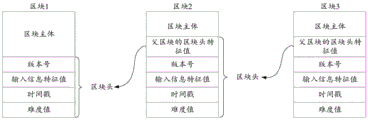
FIG. 1 is a schematic diagram of a plurality of blocks in a blockchain provided in an embodiment of the present application;
FIG. 2 is a schematic diagram of an implementation environment of a blockchain-based data processing method provided in an embodiment of the present application;
FIG. 3 is a flow chart of a blockchain-based data processing method provided by an embodiment of the present application;
fig. 4 is an interface schematic diagram of a terminal of a first user displaying target friend relationship data according to an embodiment of the present application;
FIG. 5 is a schematic diagram of a data processing process according to an embodiment of the present application;
FIG. 6 is a schematic diagram of a blockchain-based data processing device provided in an embodiment of the present application;
FIG. 7 is a schematic diagram of a blockchain-based data processing device according to an embodiment of the present application;
fig. 8 is a schematic structural diagram of a server according to an embodiment of the present application;
fig. 9 is a schematic structural diagram of a terminal according to an embodiment of the present application.
Detailed Description
For the purpose of making the objects, technical solutions and advantages of the present application more apparent, the embodiments of the present application will be described in further detail below with reference to the accompanying drawings.
Several terms which are referred to in this application are first explained.
Blockchain system: refers to a system that stores data using blockchain technology (Blockchain Technology). The blockchain technology is also called as a distributed ledger wall technology, and is an internet database technology, and is characterized by decentralization, disclosure and transparency, so that everybody can participate in database records. Blockchain techniques may be a distributed infrastructure and computing scheme that utilizes a blockchain data structure to validate and store data, a distributed node consensus algorithm to generate and update data, a cryptographic approach to secure data transmission and access, and an intelligent contract consisting of automated script code to program and manipulate data. The data stored in the blockchain system has high stability and reliability, and the blockchain system is a tamper-proof and trusted database. Therefore, compared with the traditional method that the background server of the application program is directly utilized to store the friend relation data in the application program, the method has the advantage that the blockchain system is adopted to store the friend relation data, so that the safety and reliability of the data are improved.
The blockchain system can comprise a plurality of node devices, and data sharing can be carried out between the node devices. Each node device may receive input information during normal operation and maintain shared data within the blockchain system based on the received input information. In order to ensure the information intercommunication in the blockchain system, information connection can exist between every node equipment in the blockchain system, and the node equipment can transmit information through the information connection. For example, when any node device in the blockchain system receives input information, the any node device may send a block generated based on the input information to other node devices in the blockchain system, the other node devices perform a consensus process on the block, and when the consensus of the other node devices on the block passes, the any node device in the blockchain system adds the block to the blockchain, so that the data stored on each node device in the blockchain system is consistent.
TABLE 1

Each node device in the blockchain system has a node device identifier corresponding to the node device, and each node device in the blockchain system can store the node device identifiers of other node devices in the blockchain system so as to broadcast the generated blocks to other node devices in the blockchain system according to the node device identifiers of the other node devices. Each node device may maintain a node device identifier list as shown in table 1, and store the node device name and the node device identifier in the node device identifier list. The node device identifier may be an IP (Internet Protocol, protocol of interconnection between networks) address, and any other information that can be used to identify the node device, and table 1 is only illustrated by taking an IP address as an example.
Each node device in the blockchain system is configured with at least one identical blockchain. Each blockchain consists of a plurality of blocks, fig. 1 is a schematic diagram of a plurality of blocks in a blockchain provided by an embodiment of the present application, wherein an initiation block includes a block header and a block main body, the block header stores an input information characteristic value, a version number, a timestamp and a difficulty value, and the block main body stores input information; the next block of the starting block takes the starting block as a father block, the next block also comprises a block head and a block main body, the block head stores the input information characteristic value of the current block, the block head characteristic value of the father block, the version number, the timestamp and the difficulty value, and the like, so that the block data stored in each block in the block chain are associated with the block data stored in the father block, and the safety of the input information in the block is ensured.
Block height: the number of blockchains in the backbone, i.e., the number of blockchains attached.
Consensus algorithm: the method refers to a mathematical algorithm for realizing trust establishment and rights acquisition among different node devices in a block chain system. In a blockchain system, the verification and confirmation of a transaction can be completed in a short time through voting of special node devices, and if a plurality of node devices with irrelevant interests can reach consensus for one transaction, all the node devices in the system can be considered to reach consensus for the same.
It should be noted that the terms "first," "second," and the like in the description and in the claims of the present application are used for distinguishing between similar objects and not necessarily for describing a particular sequential or chronological order. It is to be understood that the data so used may be interchanged where appropriate such that embodiments of the present application described herein may be implemented in sequences other than those illustrated or otherwise described herein. The implementations described in the following exemplary examples are not representative of all implementations consistent with the present application. Rather, they are merely examples of apparatus and methods consistent with some aspects of the present application as detailed in the accompanying claims.
FIG. 2 is a schematic diagram of an implementation environment of a blockchain-based data processing method according to an embodiment of the present application. The implementation environment may include: a terminal 21, a server 22 and a blockchain system 23. Included in the blockchain system 23 are a plurality of node devices 230.
The terminal 21 may be provided with various applications such as a game application or a communication application. The user may initiate a friend relationship processing instruction in the application program of the terminal 21, and then the terminal 21 sends the friend relationship processing instruction to the server 22, and the server 22 performs validity verification on the friend relationship processing instruction. The user may also initiate a buddy relationship data acquisition request in the application of terminal 21, and terminal 21 then sends the buddy relationship data acquisition request to blockchain system 23.
The server 22 may be a background server of the application for providing background services for the application. The server 22 may provide an installation package for the application for various operating systems for download and installation on the terminal 21. The server 22 maintains user data associated with each registered user, such as the user's user identification and binding of the user identification to the blockchain account identification, and the like. The server 22 may receive the friend relationship processing instruction sent by the terminal 21, generate friend relationship data when the validity of the friend relationship processing instruction passes verification, and then send the friend relationship data to the blockchain system 23.
In some alternative embodiments, the server 22 itself may also operate and store data as one or more node devices in the blockchain system 23.
The plurality of node devices 230 in the blockchain system 23 may be configured with a target blockchain. The target blockchain is used for storing friend relation data in a plurality of application programs. The target blockchain in the blockchain system 23 is composed of a plurality of blocks, and the blocks adjacent to each other in front and back have an association relationship, so that the data in any block can be detected through the next block when being tampered, thereby avoiding the data in the blockchain from being tampered and ensuring the safety and reliability of the data in the blockchain. Node device 230 in blockchain system 23 may store the buddy relationship data on the target blockchain; node device 230 may also obtain friend relationship data from the target blockchain and send the friend relationship data to terminal 21.
In one possible implementation, the terminal 21 may be a smart device such as a cell phone, tablet, personal computer, or the like. The server 22 may be a server, a server cluster comprising a plurality of servers, or a cloud computing service center. The node device 230 refers to a computer device, which may be a terminal or a server, which is not limited in this embodiment of the present application.
The terminal 21 establishes a communication connection with the server 22 through a wired and/or wireless network, the terminal 21 establishes a communication connection with the blockchain system 23 through a wired and/or wireless network, and the server 22 establishes a communication connection with the blockchain system 23 through a wired and/or wireless network. The wired network may be a metropolitan area network, a local area network, an optical fiber network, etc., and the wireless network may be a mobile communication network or a wireless fidelity network (Wireless Fidelity, wiFi).
Those skilled in the art will appreciate that the above described terminal 21, server 22 and blockchain system 23 are by way of example only, and that other existing or future possible terminals, servers or blockchain systems are applicable to and within the scope of the present application and are incorporated herein by reference.
Based on the implementation environment shown in fig. 2, the embodiment of the application provides a data processing method based on a blockchain, and the method is applied to any node device in the blockchain system for example. FIG. 3 is a flowchart of a data processing method based on a blockchain, which is provided in an embodiment of the present application, and as shown in FIG. 3, the method provided in the embodiment of the present application may include the following steps:
301. the first node device generates a blockchain account identifier of any user based on the registration request of any user, and stores the blockchain account identifier of any user in the blockchain system.
Wherein, any user refers to any user initiating a registration request; the registration request is used for indicating that the any user needs to register in the blockchain system, and the registration request of the any user comprises the identity of the any user. The identity of the user is used to identify the unique social identity of the user, for example, the identity of the user may be the name of the user, the identity card number of the user, the communication number of the user, and the like. The blockchain account identification is used to identify a unique identity of the user in the blockchain system, and the blockchain account identification may be generated based on the identity of the user. It should be noted that, for the same user, the user may correspond to different user identifiers in different application programs, but the user uniquely corresponds to an identifier and the identifier uniquely corresponds to a blockchain account identifier. Wherein the user identification is used for identifying registration information of the user in the application program, such as a registration account number, a login password and the like.
The specific implementation procedure of step 301 may include steps 301A to 301C:
step 301A: the first node device receives a registration request for any user.
The registration request of any user can be sent to the blockchain system by the terminal of any user. The terminal of any user may be installed with an application or web page capable of initiating a registration request, in which a registration portal for registering in the blockchain system is laid out. The terminal of any user needs to acquire the registration request of any user before sending the registration request of any user to the blockchain system.
In one possible implementation manner, the process of acquiring the registration request of any user by the terminal of any user may be: when the terminal of any user detects the triggering operation of any user on the registration entry, the identity of any user is obtained, and the registration request of any user is generated based on the identity of any user. The method for obtaining the identity of any user by the terminal of any user may be to obtain the identity manually filled by any user, or may be to obtain the identity imported by any user, etc., which is not limited in this embodiment of the present application.
In one possible implementation, the process of receiving, by the first node device, the registration request of any user may be: after a terminal of any user sends a user identification of any user to a blockchain system, a management node device in the blockchain system receives a registration request of any user; the management node equipment queries a blockchain for storing the blockchain account identification in the blockchain system based on the registration request of any user; the management node device sends the registration request of any user to the first node device configured with the blockchain; the first node device receives a registration request for any user. In the embodiment of the application, the node device which receives the registration request of any user sent by the management node device is used as the first node device.
In one possible implementation manner, in order to ensure data security in a process that the management node device sends a registration request of any user to the first node device, before the management node device sends the registration request of any user to any first node device, the management node device may encrypt the registration request of any user according to a public key of any first node device, and then send the obtained encrypted data to any first node device. After receiving the encrypted data, the first node device can decrypt the encrypted data according to the private key to obtain the registration request of the user. By the method, the registration request of any user can be effectively prevented from being tampered, and the transmission security of the registration request of any user is improved.
It should be noted that, the management node device may send the registration request of any user to one or more first node devices, and since each first node device is configured with a blockchain for storing the blockchain account identifier, whichever first node device receives the registration request of any user, the following steps 301B and 301C can be performed based on the registration request of any user.
Step 301B: the first node equipment generates a blockchain account identifier of any user corresponding to the identity identifier of the any user based on the identity identifier of the any user, and feeds back the blockchain account identifier of the any user to the any user.
In one possible implementation, the process of generating, by the first node device, the blockchain account identifier of any user corresponding to the identity of the any user based on the identity of the any user may be implemented based on an intelligent contract in the blockchain system. In one possible implementation manner, the identity of any user can be used as a triggering manner of the intelligent contract, and when the identity of any user is obtained, the intelligent contract can be automatically triggered, so that the first node equipment executes the process of generating the blockchain account identifier of any user corresponding to the identity of any user based on the identity of any user; and when the identity of any user is not acquired, the intelligent contract is not triggered. The content of the smart contract is not limited by the embodiments of the present application.
In one possible implementation manner, the first node device may verify the identity of any user before generating the blockchain account identifier of the any user corresponding to the identity of the any user, and when the verification passes, then generate the blockchain account identifier of the any user corresponding to the identity of the any user. The method for verifying the identity of the any user by the first node device is not limited, for example, when the identity of the any user includes the name of the any user and the identity card number of the any user, the first node device may verify whether the name of the any user matches with the identity card number, and so on.
After generating the blockchain account identifier of the any user corresponding to the identity identifier of the any user, the first node device may feed back the blockchain account identifier of the any user to the any user, so that the any user knows the blockchain account identifier of the person in the blockchain system. After the user knows the blockchain account identifier of the user in the blockchain system, the user identifier and the blockchain account identifier can be bound in any application program, and the binding relation between the user identifier and the blockchain account identifier is stored by a server of any application program.
Step 301C: the first node device stores the blockchain account identification of any user in the blockchain system.
After the first node device generates the blockchain account identifier of any user, the blockchain account identifier of any user can be stored on the blockchain used for storing the blockchain account identifier in the blockchain system. The stored procedure may include the following two steps:
step 1: the first node device generates a target block based on the blockchain account identification of the any user.
In the blockchain technology, data can be stored in a block in the form of electronic records, and in the embodiment of the application, when the packing condition is met, the first node device can pack the blockchain account identifier of any user to generate a target block. The meeting the packing condition may refer to meeting a time interval required for packing data or meeting the number of data required for packing data, which is not limited in the embodiment of the present application.
In one possible implementation, the process of generating the target block by the first node device may be as follows:
the first node equipment takes the blockchain account identifier of any user as input information, stores the input information into a memory pool, and updates a hash tree used for recording the input information; then, updating the update time stamp to the time when new input information is received, trying different random numbers, and calculating the characteristic value for a plurality of times, so that the calculated characteristic value can meet the following formula:
SHA256(SHA256(version+prev_hash+merkle_root+ntime+nbits+x))<TARGET
Wherein SHA256 is a eigenvalue algorithm used to calculate eigenvalues; version (version number) is version information of the related block protocol in the block chain; the prev_hash is the block header characteristic value of the parent block of the target block, and the parent block of the target block is the block with the largest block height on the current block chain; the merkle_root is a characteristic value of input information; ntime is the update time of the update timestamp; the nbits is the current difficulty, is a fixed value in a period of time, and is determined again after exceeding a fixed period of time; x is a random number; TARGET is a eigenvalue threshold that can be determined from nbits.
Thus, when the random number meeting the formula is calculated, the information can be correspondingly stored to generate the block head and the block main body, and the target block is obtained.
It should be noted that the above description of the target block generation process is merely an exemplary description of a block generation manner, and the embodiment of the present application does not limit what block generation manner is specifically adopted.
Step 2: the first node device adds the target block to the blockchain for storing the blockchain account identification based on a consensus mechanism.
The blockchain system may agree on the target block to determine whether the data in the target block is accurate, i.e., verify the data in the target block. In one possible implementation manner, after the first node device generates the target block, the target block may be sent to other node devices according to node device identifiers of other node devices in the blockchain system, the other node devices may verify the target block, each of the other node devices may broadcast a verification result in the blockchain system, and when the number of node devices that pass the verification result in the blockchain system is greater than a reference proportion or greater than a reference number, the first node device may determine that the target block passes the reference proportion in a consensus manner, and then add the target block to a blockchain in the blockchain system for storing the blockchain account identifier. The reference proportion refers to the proportion that the number of node devices passing through the verification result occupies the number of all node devices in the block chain system, and the reference proportion can be set empirically or can be freely adjusted according to application scenes, and the embodiment of the application is not limited to this. For example, the reference ratio may be set to 1/3 or the like. Likewise, the reference number may be empirically set, or may be freely adjusted according to the total number of all node devices in the blockchain system, for example, the reference number may be set to 100, or the like. The consensus process described above may be implemented based on a consensus mechanism, which may be, for example, a workload certification mechanism, a rights certification mechanism, or the like. It should be noted that the above consensus process is only an exemplary description, and the embodiments of the present application are not limited thereto.
Through the steps 1 and 2, the first node device may store the blockchain account identifier of the any user on the blockchain used for storing the blockchain account identifier, and synchronize the blockchain account identifier of the any user to each node device configured with the blockchain used for storing the blockchain account identifier.
When the first node device receives the registration request of the user, the blockchain account identifier of the user may be generated through the steps 301A to 301C, and then the blockchain account identifier of the user is stored on the blockchain for storing the blockchain account identifier. The stored blockchain account identifier on the blockchain is not allowed to be tampered, and only a new block stored with the new blockchain account identifier is allowed to be added on the blockchain. The block characteristic value of the new block is related to the block characteristic value of the previous block, so that the purpose of connecting the blocks adjacent to each other in front and back in the block chain in series is realized, and any data tampering in the block chain can be detected by tracing the block characteristic value stored in the next block. And the blockchain account identifiers of the users are stored in the blockchain system, so that the effectiveness of the received blockchain account identifiers of the users can be verified conveniently.
302. The second node device receives the friend relationship data in any application program.
The friend relation data comprises application identifications of any application program and blockchain account identifications of two users involved in the friend relation data. For correspondence with the claims, two users referred to herein may be referred to as a second user and a third user, respectively. That is, the following is true. The buddy relationship data includes an application identification of any application, a blockchain account identification of the second user, and a blockchain account identification of the third user. The second user may refer to a user actively applying for establishing a friend relationship with the third user or deleting the friend relationship. The friend relationship data refers to data related to friend relationships, including but not limited to friend relationship establishment data and friend relationship release data. The friend relation establishing data refers to data for establishing a friend relation between two users with non-friend relations, and can include data such as a time stamp for establishing the friend relation, a place for establishing the friend relation and the like; the friend relationship releasing data refers to data for releasing friend relationship between two users with friend relationship, and may include a time stamp for releasing friend relationship, a place for releasing friend relationship, and the like.
In one possible implementation, the friendship data in any application is generated by a server of the any application. The process of the second node device receiving the friendship data in any application may include steps 302A through 302D:
step 302A: and the server of any application program receives the friend relation processing instruction of the second user in the any application program.
The friendship process instruction may include a user identification of the second user, a user identification of the third user, an application identification of the any application, and a friendship process type. The friend relation processing type comprises the steps of establishing a friend relation and releasing the friend relation. The second user is a user initiating the friend relation processing instruction, and the third user is a user establishing or releasing the friend relation with the second user.
In one possible implementation, the process of receiving, by the server, the friend relationship processing instruction of the second user in the any application program may be: when the terminal of the second user detects that the second user initiates the friend relation processing instruction in any application program, the terminal of the second user sends the friend relation processing instruction to the server, and therefore the server receives the friend relation processing instruction of the second user in any application program. The terminal of the second user refers to a terminal of the second user logging in any application program. In one possible implementation manner, the case where the terminal of the second user detects that the second user initiates the friend relationship processing instruction in any application program includes, but is not limited to, the following two types:
Case one: when the terminal of the second user detects the triggering operation of the second user on the friend relation processing entrance in the virtual character introduction interface of the third user, the terminal of the second user can be considered to detect that the second user initiates a friend relation processing instruction in any application program.
The virtual character introduction interface of the third user is an interface for introducing information related to the virtual character of the third user. The friend relation processing portal may be a friend relation portal establishment portal or a friend relation portal release portal. Specifically, when the third user and the second user are in a non-friend relationship, a friend relationship establishment entry can be displayed in the interface; when the third user and the second user are in a friend relationship, a friend relationship releasing entry can be displayed in the interface. When the second user triggers the friend relation processing entrance, the terminal of the second user can be considered to detect that the second user initiates the friend relation processing instruction in any application program. It should be noted that, in the embodiment of the present application, the form of the friend relationship processing portal is not limited, for example, the friend relationship processing portal may be in the form of a button or an icon, etc.
And a second case: when the terminal of the second user detects the target operation of the second user on the virtual role of the third user, the terminal of the second user can be considered to detect that the second user initiates a friend relation processing instruction in any application program.
The target operation may be any operation preset by the second user and stored in the server and corresponding to the friend relation processing instruction, or may be a default operation stored in the server and corresponding to the friend relation processing instruction, which is not limited in the embodiment of the present application. For example, the target operation may be the second user clicking on the virtual character of the third user, or the second user performing a sliding operation from bottom to top in the virtual character of the third user, or the like.
When the terminal of the second user detects the operation of the second user corresponding to the friend relation processing instruction, the second user can be considered to trigger the friend relation processing instruction, and at the moment, the terminal of the second user detects that the second user initiates the friend relation processing instruction in any application program. It should be noted that, the target operations corresponding to the friend relation establishment instruction and the friend relation release instruction may be the same or different, which is not limited in the embodiment of the present application.
Step 302B: and the server of any application program performs validity verification on the friend relation processing instruction, and when the validity verification of the friend relation processing instruction is passed, friend relation data in any application program is generated based on the friend relation processing instruction.
After receiving the friend relation processing instruction, the server performs validity verification on the friend relation processing instruction to verify whether the friend relation processing instruction is valid or not. When the validity verification is passed, the server generates friend relation data in any application program based on the friend relation processing instruction; and when the validity verification fails, the server can send error reporting information to the terminal of the second user, wherein the error reporting information is used for prompting the second user that new friend relation data cannot be generated.
In one possible implementation manner, the process of verifying the validity of the friend relation processing instruction by the server may be: the server obtains data generated by the second user in the application program according to the user identification of the second user in the friend relation processing instruction; and analyzing whether the second user has authority to initiate the friend relation processing instruction according to the data generated by the second user in the application program. When the data generated by the second user in the application program indicates that the second user has no authority to initiate the friend relation processing instruction, the validity verification of the friend relation processing instruction can be determined to be failed; when the data generated by the second user in the application program indicates that the second user has authority to initiate the friend relation processing instruction, the validity verification of the friend relation processing instruction can be determined to pass.
The method for the server to analyze whether the second user has permission to initiate the friend relation processing instruction according to the data generated by the second user in the application program is not limited in the embodiment of the application. For example, the server may analyze whether the second user has permission to initiate the friend relationship processing instruction according to the credit score in the data generated by the second user in the application program, and when the credit score is not higher than the credit threshold, indicate that the second user has no permission to initiate the friend relationship processing instruction; and when the credit score is higher than the credit threshold value, the second user is authorized to initiate the friend relation processing instruction.
When the validity of the friend relation processing instruction passes, the server can generate friend relation data in any application program based on the friend relation processing instruction, wherein the friend relation data comprises an application identifier of the any application program, a blockchain account identifier of the second user and a blockchain account identifier of the third user. Specifically, the process of generating the friend relationship data in any application program by the server based on the friend relationship processing instruction may be: the server obtains a blockchain account identifier of a second user corresponding to the user identifier of the second user and a blockchain account identifier of a third user corresponding to the user identifier of the third user based on the user identifier of the second user and the user identifier of the third user in the friend relation processing instruction; and generating friend relation data in any application program based on the blockchain account identification of the second user, the blockchain account identification of the third user and the friend relation processing type. It should be noted that, the binding relationship between the user identifier and the blockchain account identifier of each user in the any application program is stored in the server, and the storage form of the binding relationship between the user identifier and the blockchain account identifier of each user in the embodiment of the present application is not limited, for example, the storage form may be a list form or the like.
In one possible implementation, the process of generating the friend relationship data in any application by the server based on the blockchain account identification of the second user, the blockchain account identification of the third user, and the friend relationship processing type includes: when the friend relation processing type is friend relation establishment, the server generates friend relation establishment data in any application program based on the blockchain account identifier of the second user and the blockchain account identifier of the third user; and when the friend relation processing type is the friend relation canceling data in any application program is generated based on the blockchain account identifier of the second user and the blockchain account identifier of the third user.
In one possible implementation manner, when the friend relation processing type is friend relation establishment data of any application program, the server may further send a friend relation processing instruction to the terminal of the third user to obtain response information of the third user fed back by the terminal of the third user; when the response information indicates that the third user does not agree to add the second user as a friend, the server can send a response of failure in adding the friend to the terminal of the second user. When the response information indicates that the third user agrees to add the second user as a friend, the server can generate friend relation establishment data in any application program, and at this time, the friend relation establishment data can also comprise association data of the second user and the third user. Such as the affinity of the second user and the third user, the number of times the second user and the third user team play, etc.
It should be noted that, after generating the friend relationship data, the server may store the friend relationship data of the application program in the server, so as to provide the friend relationship data of the application program for the login user of the application program.
Step 302C: and the server of any application program sends the friend relation data in the application program to the blockchain system.
After the server generates the friend relation data, the friend relation data can be sent to the blockchain system, so that the blockchain system stores the friend relation data.
Step 302D: a second node device in the blockchain system receives the friend relationship data in the any application program.
After the server sends the friend relation data to the blockchain system, the second node device in the blockchain system can receive the friend relation data. The second node device may be any node device that is configured with a target blockchain for storing friendship data in a plurality of applications. The second node device may be the same as the first node device or different from the first node device, which is not limited in the embodiment of the present application.
303. And the second node equipment verifies the friend relation data in any application program, and stores the friend relation data in any application program on the target blockchain when the verification of the friend relation data in any application program is passed.
After receiving the friend relation data in any application program, the second node device can verify the friend relation data in any application program, and when the verification is passed, the friend relation data in any application program is stored on the target blockchain; when the verification is not passed, error information can be fed back to the server of any application program.
In one possible implementation, the second node device verifying the friend relationship data in the any application may include step 303A and step 303B:
step 303A: the second node equipment performs authority verification on any application program based on the application identifier of any application program in the friend relation data, and when the authority verification of any application program is not passed, the second node equipment indicates that the friend relation data verification in any application program is not passed; when the authority verification of any application passes, step 303B is performed.
In one possible implementation manner, the process of performing authority verification on any application program by the second node device based on the application identifier of the application program may be: the second node device invokes an authentication service to verify the authority of the application identifier of any application program. The authentication service may be a CA (Certificate Authority, digital certificate authority) service or other service, among others. Taking the authentication service as the CA service as an example, since the CA service issues digital certificates for all applications that sign up successfully, when the second node device receives a request for processing a friend relationship of any application, the second node device may invoke the CA service to authenticate the digital certificate of the any application, and when the digital certificate passes the authentication, it indicates that the authority verification of the any application passes, and at this time, the second node device may execute step 303B.
Step 303B: the second node equipment performs validity verification on the blockchain account identifier of the second user and the blockchain account identifier of the third user, and when the validity verification fails, the second node equipment indicates that the friend relation data verification in any application program fails; and when the validity verification passes, the friend relation data in any application program is verified to pass.
In one possible implementation, the process of verifying the validity of the blockchain account identifier of the second user and the blockchain account identifier of the third user by the second node device may be: the second node equipment matches the blockchain account identifier of the second user and the blockchain account identifier of the third user with the blockchain account identifiers stored in the blockchain system, and when the blockchain account identifier of the second user and the blockchain account identifier of the third user are successfully matched, the validity verification of the blockchain account identifier of the second user and the blockchain account identifier of the third user is passed; when the matching of the blockchain account identifier of the second user and/or the blockchain account identifier of the third user fails, the second node device can reject to store the friend relationship data in any application program.
And when the verification of the friend relation data in any application program is passed, the second node equipment stores the friend relation data in any application program on the target blockchain. This storage process can be seen in step 301C, and will not be described here.
When the second node device receives the friend relationship data in any application program, the second node device may store the friend relationship data in any application program on the target blockchain through steps 302 to 303. The stored friend relation data on the target blockchain is not allowed to be tampered, and only new blocks storing new friend relation data are allowed to be added on the target blockchain. The block characteristic value of the new block is related to the block characteristic value of the previous block, so that the purpose of connecting the blocks adjacent to each other in front and back in the block chain in series is realized, and any data tampering in the first block chain can be detected by tracing the block characteristic value stored in the next block. It should be noted that, through the steps, friend relationship data of the same user in different application programs can be related through the blockchain account identification, so that the friend relationship data of the user in each application program can be conveniently searched in a target blockchain based on the blockchain account identification of the user.
304. And the third node equipment receives the friend relation data acquisition request of the first application program.
The friend relation data acquisition request comprises an application identifier of the first application program, a blockchain account identifier of the first user, which is bound with a user identifier of the first user, and an application identifier of the second application program. The first user refers to a user initiating the friend relation data acquisition request, the first application program refers to an application program which the first user logs in currently, and the second application program refers to an application program of a friend relation to be acquired. The second application may refer to at least one application selected by the first user, or may refer to at least one application by default of the terminal of the first user. The at least one application program defaulted by the terminal of the first user may refer to at least one application program having an association relationship with the first application program. When there is at least one application selected by the first user, the at least one application selected by the first user may be used as the second application; when there is no at least one application selected by the first user, the at least one application by default of the terminal of the first user may be taken as the second application.
The buddy relationship data acquisition request of the first application may be sent by the terminal of the first user into the blockchain system. The terminal of the first user firstly acquires a friend relation data acquisition request, and then sends the friend relation data acquisition request to the blockchain system. In one possible implementation manner, the manner of obtaining the friend relationship data obtaining request by the terminal of the first user includes, but is not limited to, the following three ways:
mode one: when the terminal of the first user detects that the first user is converted from the unregistered state to the logged state, that is, when the first user successfully logs in the first application program, the terminal of the first user automatically acquires a friend relation data acquisition request.
Mode two: a terminal of a first user displays a data acquisition inlet in an interface of a first application program; when the triggering operation of the data acquisition entrance is detected, the terminal of the first user acquires a friend relation data acquisition request.
Wherein, the data acquisition portal can be in the form of a button or icon, etc. The condition that the terminal of the first user detects the triggering operation of the data acquisition portal may be different according to the type of the terminal of the first user, which is not limited in the embodiment of the present application. For example, the case where the terminal of the first user detects the triggering operation of the data acquisition portal may be that the terminal of the first user detects the pressure touch operation of the data acquisition portal, or may be that the terminal of the first user detects the clicking operation of the data acquisition portal, or the like. The clicking operation may be performed by a mouse, or may be performed by a keyboard to input a shortcut key.
Mode three: the method comprises the steps that a reference time interval for refreshing friend relation data is preset, and a terminal of a first user automatically acquires a friend relation data acquisition request once every other reference time interval.
The reference time interval may be set empirically, or may be freely adjusted according to the type of the application program, which is not limited in the embodiment of the present application. For example, the reference time interval may be set to 2 minutes or the like.
After the terminal of the first user obtains the friend relation data obtaining request, the friend relation obtaining request can be sent to the blockchain system, and therefore third node equipment in the blockchain system can receive the friend relation obtaining request. The third node device may be any node device assigned a target blockchain. The third node device may be the same as the first node device and/or the second node device, or may be different from the first node device and/or the second node device, which is not limited in the embodiments of the present application.
After receiving the request for obtaining the friend relation data of the first application program, the third node device may perform system verification on the request for obtaining the friend relation data, and execute step 305 when the system verification passes. The process of performing system verification on the friend relation data acquisition request by the third node device may be: the third node equipment sends the friend relation data acquisition request to verification node equipment in the blockchain system; when at least one verification node device receives a friend relation data acquisition request, verifying whether the friend relation data acquisition request meets a verification strategy or not, and returning a verification passing message to a third node device after verification is passed; and the third node equipment receives the verification passing message returned by one or more verification node equipment, and when the received verification passing message meets the verification policy, the verification passing of the validity of the friend relation data acquisition request is indicated. The authentication policy may specify the number of authentication node devices used for authentication, the authentication method, the authentication passing condition, and the like. The verification mode can be to verify whether the friend relation data acquisition request is generated according to a preset format, whether the block chain account identification of the first user is missed or not and the like; the verification passing condition may be a minimum number of verification node devices that pass verification or a minimum proportion of all node devices of the blockchain system that pass verification, or the like. By performing system verification on the friend-relationship data acquisition request, reliability of the friend-relationship data acquisition request can be improved. For example, assuming that the authentication policy specifies that at least 5 authentication node devices are required to perform authentication, and that at least 3 authentication node devices are required to pass authentication, the third node device sends a friend relationship data acquisition request to the 5 authentication node devices, and when an authentication pass message returned by the at least 3 authentication node devices is received, it is indicated that the validity of the friend relationship data acquisition request passes authentication.
In one possible implementation manner, when the third node device passes the system verification of the friend relation data acquisition request, the third node device may perform authority verification on the first application program and the second application program based on the application identifier of the first application program and the application identifier of the second application program in the friend relation data acquisition request; when the rights of the first application and the second application pass, step 305 is executed again. The process of verifying the authority may be described in step 303A, and will not be described here.
305. And the third node equipment performs validity verification on the blockchain account identifier of the first user.
In one possible implementation, the process of verifying the validity of the blockchain account identifier of the first user by the third node device may be: the third node device matches the blockchain account identifier of the first user with the blockchain account identifiers stored in the blockchain system, and when the blockchain account identifier of the first user is successfully matched, the validity verification of the blockchain account identifier of the first user is passed, and at this time, step 306 is executed; when the matching of the blockchain account identification of the first user fails, the verification of the validity of the blockchain account identification of the first user is not passed, and at this time, error reporting information can be fed back to the terminal of the first user.
306. And when the validity verification of the blockchain account identifier of the first user is passed, the third node equipment acquires target friend relation data from the target blockchain based on the blockchain account identifier of the first user.
The target friend relation data are friend relation data in a second application program corresponding to the blockchain account identification of the first user. Based on the target friend relationship data, the friend relationship data of the first user in the second application program can be obtained, so that the friend relationship data in different application programs can be shared.
In one possible implementation, the process of obtaining, by the third node device, the target friend relationship data from the target blockchain may include the following two steps:
step 1: and the third node equipment acquires candidate friend relation data corresponding to the blockchain account identifier of the first user from the target blockchain based on the blockchain account identifier of the first user.
In one possible implementation, the process of obtaining, by the third node device, candidate friend relationship data corresponding to the blockchain account identifier of the first user from the target blockchain may be: the third node equipment acquires all friend relation establishment data and all friend relation release data corresponding to the blockchain account identifier of the first user from the target blockchain; and for any friend relation establishment data in all the friend relation establishment data, when the friend relation release data corresponding to the any friend relation establishment data does not exist in all the friend relation release data, using the any friend relation establishment data as candidate friend relation data corresponding to the blockchain account identifier of the first user.
Specifically, the process of the third node device obtaining all the friend relationship establishment data and all the friend relationship release data corresponding to the blockchain account identifier of the first user from the target blockchain may be: the third node equipment acquires all the blocks corresponding to the blockchain account identification of the first user from the target blockchain, and acquires all the friend relation establishment data and all the friend relation release data corresponding to the blockchain account identification of the first user from all the blocks.
When the friend relation releasing data corresponding to any friend relation establishing data exists in all the friend relation releasing data, the fact that any friend relation establishing data is invalid is indicated, that is, the friend relation corresponding to any friend relation establishing data is released. When the friend relation release data corresponding to any friend relation establishment data does not exist in all the friend relation release data, the fact that the any friend relation establishment data is valid is indicated, that is, the friend relation corresponding to any friend relation establishment data still exists. The candidate friend relationship data obtained through the process refers to related data of users still having friend relationship with the first user.
Step 2: and the third node equipment acquires friend relation data in the second application program from the candidate friend relation data based on the application identification of the second application program.
And acquiring friend relation data in the second application program corresponding to the application identifier of the second application program from the candidate friend relation data, and taking the friend relation data in the second application program as target friend relation data. The obtained target friend relation data is related data of the user with the friend relation still existing in the second application program.
It should be noted that the application identifier of the second application program may not be included in the friend relationship data acquisition request. In this case, the third node device uses all the other friend relationship data except the friend relationship data in the first application program in the candidate friend relationship data as the target friend relationship data. The target friend relationship data at this time refers to related data of users still having friend relationships in other respective application programs except the first application program, which are stored in the first blockchain.
After the third node device obtains the target friend relation data, the obtained target friend relation data can be sent to the terminal of the first user, so that the terminal of the first user can display the target friend relation data. By the method, the first user can know the related data of the user with the friend relationship in the second application program in the first application program, and directly play and communicate with the user without adding the user as a friend again, so that the first user is beneficial to improving the use experience of the first application program.
The interface for the terminal of the first user to display the target friend relationship data may be shown in fig. 4, where three target friend relationship data are shown in fig. 4, and each target friend relationship data includes a blockchain account identifier of a user having a friend relationship with the first user, a source for establishing the friend relationship, and a timestamp for establishing the friend relationship. The source for establishing the friend relationship can be any second application program except the first application program.
The whole data processing process can be as shown in fig. 5, a user a initiates an instruction for establishing a friend relation with a user B in an application program, a relation chain checking module in a server checks the instruction for establishing the friend relation, and response information of the user B is obtained when the verification is passed; when the response information indicates that the user B agrees to add the user A as friends, the server calls a relation chain calculation module, and the relation chain calculation module obtains the association data of the user A and the user B and generates friend relation data. Then a relation chain calculation module in the server can locally store the friend relation data and can also send the friend relation data to a blockchain system; after receiving the friend relation data, any node equipment in the blockchain system can carry out authority verification on the application program and validity verification on the blockchain account identification of the user through an authentication service module in the node equipment, and after verification is passed, the friend relation data can be stored in a target blockchain through the friend relation service module in the node equipment.
When node equipment in the blockchain system receives a friend relation data acquisition request, authority verification of an application program and validity verification of a blockchain account identifier of a user can be carried out through an authentication service module in the node equipment, and after verification is passed, target friend relation data is acquired through a friend relation service module in the node equipment; the node equipment sends the target friend relation data to the terminal of the user A through a friend relation acquisition module of the terminal of the user A. In addition, the server may also send the locally stored friend relationship data to the terminal of the user a through the friend relationship acquisition module of the terminal of the user a. By the method, the friend relation data can be stably stored and maintained for a long time, is not limited by operators and regional conditions of application programs, is beneficial to establishing a long-term stable friend relation in the virtual world for users, and meets the requirement of users on long-term friend making of the virtual world.
In one possible implementation manner, the third node device may further receive a historical friend relationship data query request of the first application program, and obtain the target historical friend relationship data based on the historical friend relationship data query request. The historical friend relation data query request comprises a blockchain account identifier of the first user and a blockchain account identifier of the fourth user. The fourth user refers to at least one user other than the first user. The process of obtaining the target historical friend relationship data by the third node device based on the historical friend relationship data query request may be: the third node equipment acquires all friend relation data corresponding to the blockchain account identifier of the first user from the target blockchain based on the blockchain account identifier of the first user; and taking the friend relation data corresponding to the blockchain account identifier of the fourth user in all the friend relation data as target historical friend relation data. The obtained target historical friend relation data refer to all historical friend relation data of the first user and the fourth user in each application program, which are stored in the target blockchain, and the historical friend relation data comprise all friend relation establishment data and all friend relation release data of the first user and the fourth user in each application program. After the target historical friend relation data is obtained, the third node device can send the target historical friend relation data to the terminal of the first user, and the terminal of the first user displays the target historical friend relation data so that the first user can know all the historical friend relation data generated by the first user and the fourth user in each application program.
In the embodiment of the application, friend relation data in a plurality of application programs are stored on a target blockchain in advance, and when a friend relation data acquisition request of a first application program is received, a target friend relation in a second application program is acquired from the target blockchain based on a blockchain account identifier of a user, which is bound with a user identifier of the user. Through the process, the friend relation data of the same user in different application programs can be connected based on the blockchain account identification, so that the friend relation data sharing in different application programs is realized, the data processing effect is good, and the user experience of each application program is improved.
Based on the same technical concept, fig. 6 is a schematic diagram of a data processing apparatus based on a blockchain provided in an embodiment of the present application, referring to fig. 6, the apparatus includes:
the receiving module 601 is configured to receive a friend relationship data acquisition request of a first application program, where the friend relationship data acquisition request includes an application identifier of the first application program, a blockchain account identifier of the first user bound to a user identifier of the first user, and an application identifier of a second application program;
A verification module 602, configured to perform validity verification on the blockchain account identifier of the first user;
the obtaining module 603 is configured to obtain, based on the blockchain account identifier of the first user, target friend relationship data from a target blockchain when the validity verification of the blockchain account identifier of the first user is passed, where the target friend relationship data is friend relationship data in a second application program corresponding to the blockchain account identifier of the first user.
In one possible implementation, the obtaining module 603 is configured to obtain candidate friend relationship data corresponding to the blockchain account identifier of the first user from the target blockchain based on the blockchain account identifier of the first user; and acquiring friend relation data in the second application program from the candidate friend relation data based on the application identification of the second application program.
In one possible implementation, the friend relationship data includes friend relationship establishment data and friend relationship release data, and an obtaining module 603 is configured to obtain all the friend relationship establishment data and all the friend relationship release data corresponding to the blockchain account identifier of the first user from the target blockchain; and for any friend relation establishment data in all the friend relation establishment data, when the friend relation release data corresponding to any friend relation establishment data does not exist in all the friend relation release data, using any friend relation establishment data as candidate friend relation data corresponding to the blockchain account identifier of the first user.
In one possible implementation, the verification module 602 is further configured to perform authority verification on the first application program and the second application program based on the application identifier of the first application program and the application identifier of the second application program; and when the authority verification of the first application program and the second application program is passed, verifying the validity of the blockchain account identifier of the first user.
In one possible implementation manner, the receiving module 601 is further configured to receive a registration request of any user, where the registration request of any user includes an identity of any user;
fig. 7 is a block chain based data processing apparatus provided in an embodiment of the present application, referring to fig. 7, the apparatus further includes:
a generating module 604, configured to generate a blockchain account identifier of any user corresponding to the identity identifier of any user based on the identity identifier of any user;
a feedback module 605 for feeding back the blockchain account identification of any user to any user;
a storage module 606 for storing blockchain account identifications for any user in the blockchain system.
In one possible implementation manner, the receiving module 601 is further configured to receive friend relationship data in any application program, where the friend relationship data includes an application identifier of any application program, a blockchain account identifier of the second user, and a blockchain account identifier of the third user;
The verification module 602 is further configured to verify friend relationship data in any application program;
the storage module 606 is further configured to store the friend relationship data in any application program on the target blockchain when the verification of the friend relationship data in any application program is passed.
In one possible implementation, the friendship data in any application is generated by a server of any application, which is configured to store a binding relationship between a user identifier and a blockchain account identifier of each user in any application.
In the embodiment of the application, friend relation data in a plurality of application programs are stored on a target blockchain in advance, and when a friend relation data acquisition request of a first application program is received, a target friend relation in a second application program is acquired from the target blockchain based on a blockchain account identifier of a user, which is bound with a user identifier of the user. Through the process, the friend relation data of the same user in different application programs can be connected based on the blockchain account identification, so that the friend relation data sharing in different application programs is realized, the data processing effect is good, and the user experience of each application program is improved.
It should be noted that, when the apparatus provided in the foregoing embodiment performs the functions thereof, only the division of the foregoing functional modules is used as an example, in practical application, the foregoing functional allocation may be performed by different functional modules according to needs, that is, the internal structure of the device is divided into different functional modules, so as to perform all or part of the functions described above. In addition, the apparatus and the method embodiments provided in the foregoing embodiments belong to the same concept, and specific implementation processes of the apparatus and the method embodiments are detailed in the method embodiments and are not repeated herein.
Fig. 8 is a schematic structural diagram of a server according to an embodiment of the present application, where the server may refer to any node device in the foregoing embodiment, and may also refer to a server in the foregoing embodiment. The server may include one or more processors (Central Processing Units, CPU) 801 and one or more memories 802, where the one or more memories 802 store at least one program code that is loaded and executed by the one or more processors 801 to implement the blockchain-based data processing method provided by the above-described method embodiments. Of course, the server may also have a wired or wireless network interface, a keyboard, an input/output interface, and other components for implementing the functions of the device, which are not described herein.
Fig. 9 is a schematic structural diagram of a terminal according to an embodiment of the present application. The terminal may refer to any node device in the foregoing embodiments, or may refer to any terminal in the foregoing embodiments. The terminal may be: a smart phone, a tablet computer, an MP3 player (Moving Picture Experts Group Audio Layer III, motion picture expert compression standard audio plane 3), an MP4 (Moving Picture Experts Group Audio Layer IV, motion picture expert compression standard audio plane 4) player, a notebook computer, or a desktop computer. Terminals may also be referred to by other names as user equipment, portable terminals, laptop terminals, desktop terminals, etc.
Generally, the terminal includes: a processor 901 and a memory 902.
The memory 902 may include one or more computer-readable storage media, which may be non-transitory. The memory 902 may also include high-speed random access memory, as well as non-volatile memory, such as one or more magnetic disk storage devices, flash memory storage devices. In some embodiments, a non-transitory computer readable storage medium in memory 902 is used to store at least one instruction for execution by processor 901 to implement the blockchain-based data processing methods provided by the method embodiments in the present application.
In some embodiments, the terminal may further optionally include: a peripheral interface 903, and at least one peripheral. The processor 901, memory 902, and peripheral interface 903 may be connected by a bus or signal line. The individual peripheral devices may be connected to the peripheral device interface 903 via buses, signal lines, or circuit boards. Specifically, the peripheral device includes: at least one of radio frequency circuitry 904, a touch display 905, a camera assembly 906, audio circuitry 907, a positioning assembly 908, and a power source 909.
The peripheral interface 903 may be used to connect at least one peripheral device associated with an I/O (Input/Output) to the processor 901 and the memory 902. In some embodiments, the processor 901, memory 902, and peripheral interface 903 are integrated on the same chip or circuit board; in some other embodiments, either or both of the processor 901, the memory 902, and the peripheral interface 903 may be implemented on separate chips or circuit boards, which is not limited in this embodiment.
The Radio Frequency circuit 904 is configured to receive and transmit RF (Radio Frequency) signals, also known as electromagnetic signals. The radio frequency circuit 904 communicates with a communication network and other communication devices via electromagnetic signals. The radio frequency circuit 904 converts an electrical signal into an electromagnetic signal for transmission, or converts a received electromagnetic signal into an electrical signal. Optionally, the radio frequency circuit 904 includes: antenna systems, RF transceivers, one or more amplifiers, tuners, oscillators, digital signal processors, codec chipsets, subscriber identity module cards, and so forth. The radio frequency circuit 904 may communicate with other terminals via at least one wireless communication protocol. The wireless communication protocol includes, but is not limited to: metropolitan area networks, various generations of mobile communication networks (2G, 3G, 4G, and 5G), wireless local area networks, and/or WiFi (Wireless Fidelity ) networks. In some embodiments, the radio frequency circuit 904 may also include NFC (Near Field Communication ) related circuits, which are not limited in this application.
The display 905 is used to display a UI (User Interface). The UI may include graphics, text, icons, video, and any combination thereof. When the display 905 is a touch display, the display 905 also has the ability to capture touch signals at or above the surface of the display 905. The touch signal may be input as a control signal to the processor 901 for processing. At this time, the display 905 may also be used to provide virtual buttons and/or a virtual keyboard, also referred to as soft buttons and/or a soft keyboard. In some embodiments, the display 905 may be one and disposed on the front panel of the terminal; in other embodiments, the display 905 may be at least two, respectively disposed on different surfaces of the terminal or in a folded design; in still other embodiments, the display 905 may be a flexible display disposed on a curved surface or a folded surface of the terminal. Even more, the display 905 may be arranged in an irregular pattern other than rectangular, i.e., a shaped screen. The display 905 may be made of LCD (Liquid Crystal Display ), OLED (Organic Light-Emitting Diode) or other materials.
The camera assembly 906 is used to capture images or video. Optionally, the camera assembly 906 includes a front camera and a rear camera. Typically, the front camera is disposed on the front panel of the terminal and the rear camera is disposed on the rear surface of the terminal. In some embodiments, the at least two rear cameras are any one of a main camera, a depth camera, a wide-angle camera and a tele camera, so as to realize that the main camera and the depth camera are fused to realize a background blurring function, and the main camera and the wide-angle camera are fused to realize a panoramic shooting and Virtual Reality (VR) shooting function or other fusion shooting functions. In some embodiments, camera assembly 906 may also include a flash. The flash lamp can be a single-color temperature flash lamp or a double-color temperature flash lamp. The dual-color temperature flash lamp refers to a combination of a warm light flash lamp and a cold light flash lamp, and can be used for light compensation under different color temperatures.
The audio circuit 907 may include a microphone and a speaker. The microphone is used for collecting sound waves of users and the environment, converting the sound waves into electric signals, and inputting the electric signals to the processor 901 for processing, or inputting the electric signals to the radio frequency circuit 904 for voice communication. For the purpose of stereo acquisition or noise reduction, a plurality of microphones can be respectively arranged at different parts of the terminal. The microphone may also be an array microphone or an omni-directional pickup microphone. The speaker is used to convert electrical signals from the processor 901 or the radio frequency circuit 904 into sound waves. The speaker may be a conventional thin film speaker or a piezoelectric ceramic speaker. When the speaker is a piezoelectric ceramic speaker, not only the electric signal can be converted into a sound wave audible to humans, but also the electric signal can be converted into a sound wave inaudible to humans for ranging and other purposes. In some embodiments, the audio circuit 907 may also include a headphone jack.
The location component 908 is used to locate the current geographic location of the terminal to enable navigation or LBS (Location Based Service, location-based services).
The power supply 909 is used to supply power to the various components in the terminal. The power supply 909 may be an alternating current, a direct current, a disposable battery, or a rechargeable battery. When the power supply 909 includes a rechargeable battery, the rechargeable battery can support wired or wireless charging. The rechargeable battery may also be used to support fast charge technology.
In some embodiments, the terminal further includes one or more sensors 910. The one or more sensors 910 include, but are not limited to: acceleration sensor 911, gyroscope sensor 912, pressure sensor 913, fingerprint sensor 914, optical sensor 915, and proximity sensor 916.
The acceleration sensor 911 can detect the magnitudes of accelerations on three coordinate axes of a coordinate system established with a terminal. For example, the acceleration sensor 911 may be used to detect components of gravitational acceleration in three coordinate axes. The processor 901 may control the touch display 905 to display a user interface in a landscape view or a portrait view according to the gravitational acceleration signal acquired by the acceleration sensor 911. The acceleration sensor 911 may also be used for the acquisition of motion data of a game or a user.
The gyro sensor 912 may detect a body direction and a rotation angle of the terminal, and the gyro sensor 912 may collect a 3D motion of the user to the terminal in cooperation with the acceleration sensor 911. The processor 901 may implement the following functions according to the data collected by the gyro sensor 912: motion sensing (e.g., changing UI according to a tilting operation by a user), image stabilization at shooting, game control, and inertial navigation.
The pressure sensor 913 may be provided at a side frame of the terminal and/or at a lower layer of the touch display 905. When the pressure sensor 913 is disposed on a side frame of the terminal, a grip signal of the terminal by a user may be detected, and the processor 901 performs left-right hand recognition or quick operation according to the grip signal collected by the pressure sensor 913. When the pressure sensor 913 is disposed at the lower layer of the touch display 905, the processor 901 performs control of the operability control on the UI interface according to the pressure operation of the user on the touch display 905. The operability controls include at least one of a button control, a scroll bar control, an icon control, and a menu control.
The fingerprint sensor 914 is used for collecting the fingerprint of the user, and the processor 901 identifies the identity of the user according to the fingerprint collected by the fingerprint sensor 914, or the fingerprint sensor 914 identifies the identity of the user according to the collected fingerprint. Upon recognizing that the user's identity is a trusted identity, the processor 901 authorizes the user to perform relevant sensitive operations including unlocking the screen, viewing encrypted information, downloading software, paying for and changing settings, etc. The fingerprint sensor 914 may be provided on the front, back or side of the terminal. When a physical key or a vendor Logo is provided on the terminal, the fingerprint sensor 914 may be integrated with the physical key or the vendor Logo.
The optical sensor 915 is used to collect the intensity of ambient light. In one embodiment, the processor 901 may control the display brightness of the touch display 905 based on the intensity of ambient light collected by the optical sensor 915. Specifically, when the ambient light intensity is high, the display brightness of the touch display 905 is turned up; when the ambient light intensity is low, the display brightness of the touch display panel 905 is turned down. In another embodiment, the processor 901 may also dynamically adjust the shooting parameters of the camera assembly 906 based on the ambient light intensity collected by the optical sensor 915.
A proximity sensor 916, also referred to as a distance sensor, is typically provided on the front panel of the terminal. The proximity sensor 916 is used to collect the distance between the user and the front of the terminal. In one embodiment, when the proximity sensor 916 detects that the distance between the user and the front face of the terminal gradually decreases, the processor 901 controls the touch display 905 to switch from the bright screen state to the off screen state; when the proximity sensor 916 detects that the distance between the user and the front surface of the terminal gradually increases, the processor 901 controls the touch display 905 to switch from the off-screen state to the on-screen state.
It will be appreciated by those skilled in the art that the structure shown in fig. 9 is not limiting of the terminal and may include more or fewer components than shown, or may combine certain components, or may employ a different arrangement of components.
In an exemplary embodiment, a computer readable storage medium having stored therein at least one program code loaded and executed by a processor of a computer device to implement any of the above-described blockchain-based data processing methods is also provided.
Alternatively, the above-mentioned computer readable storage medium may be a Read-Only Memory (ROM), a random access Memory (Random Access Memory, RAM), a Read-Only optical disk (CD-ROM), a magnetic tape, a floppy disk, an optical data storage device, and the like.
It should be understood that references herein to "a plurality" are to two or more. "and/or", describes an association relationship of an association object, and indicates that there may be three relationships, for example, a and/or B, and may indicate: a exists alone, A and B exist together, and B exists alone. The character "/" generally indicates that the context-dependent object is an "or" relationship.
The foregoing description of the exemplary embodiments of the present application is not intended to limit the invention to the particular embodiments disclosed, but on the contrary, the intention is to cover all modifications, equivalents, alternatives, and alternatives falling within the spirit and scope of the invention.
Claims (16)
1. A blockchain-based data processing method, wherein the method is applied to any node device in a blockchain system, a plurality of node devices in the blockchain system are configured with a target blockchain, and the target blockchain is used for storing friend relationship data in a plurality of application programs, the method comprising:
receiving a friend relation data acquisition request of a first application program, wherein the friend relation data acquisition request comprises an application identifier of the first application program, a blockchain account identifier of a first user bound with a user identifier of the first user and an application identifier of a second application program;
verifying the validity of the blockchain account identifier of the first user;
and when the validity verification of the blockchain account identifier of the first user is passed, acquiring target friend relation data from the target blockchain based on the blockchain account identifier of the first user, wherein the target friend relation data is friend relation data in the second application program corresponding to the blockchain account identifier of the first user.
2. The method of claim 1, wherein the obtaining target buddy relationship data from the target blockchain based on the blockchain account identification of the first user comprises:
Based on the blockchain account identifier of the first user, candidate friend relation data corresponding to the blockchain account identifier of the first user is obtained from the target blockchain;
and acquiring friend relation data in the second application program from the candidate friend relation data based on the application identification of the second application program.
3. The method of claim 2, wherein the buddy relationship data comprises buddy relationship establishment data and buddy relationship release data, the obtaining candidate buddy relationship data corresponding to the first user's blockchain account identifier from the target blockchain comprises:
acquiring all friend relation establishment data and all friend relation release data corresponding to the blockchain account identifier of the first user from the target blockchain;
and for any friend relation establishment data in the all friend relation establishment data, when the friend relation release data corresponding to the any friend relation establishment data does not exist in the all friend relation release data, the any friend relation establishment data is used as candidate friend relation data corresponding to the blockchain account identifier of the first user.
4. The method of claim 1, wherein after receiving the request for obtaining the friendship data for the first application, the method further comprises:
performing authority verification on the first application program and the second application program based on the application identification of the first application program and the application identification of the second application program;
and when the authority verification of the first application program and the second application program is passed, verifying the validity of the blockchain account identifier of the first user.
5. The method of claim 1, wherein prior to verifying the validity of the blockchain account identification of the first user, the method further comprises:
receiving a registration request of any user, wherein the registration request of any user comprises an identity of any user;
generating a blockchain account identifier of the any user corresponding to the identity identifier of the any user based on the identity identifier of the any user, and feeding back the blockchain account identifier of the any user to the any user;
the blockchain account identification of any user is stored in the blockchain system.
6. The method of claim 1, wherein prior to receiving the request for the first application to obtain the friendship data, the method further comprises:
the method comprises the steps of receiving friend relation data in any application program, wherein the friend relation data comprises an application identifier of the any application program, a blockchain account identifier of a second user and a blockchain account identifier of a third user;
and verifying the friend relation data in any application program, and storing the friend relation data in any application program on the target blockchain when the verification of the friend relation data in any application program is passed.
7. The method of claim 6, wherein the friendship data in any application is generated by a server of the any application, the server of any application being configured to store a binding relationship between a user identification and a blockchain account identification of each user in the any application.
8. A blockchain-based data processing device having a target blockchain configured thereon for storing friendship data in a plurality of applications, the device comprising:
The device comprises a receiving module, a processing module and a processing module, wherein the receiving module is used for receiving a friend relation data acquisition request of a first application program, and the friend relation data acquisition request comprises an application identifier of the first application program, a blockchain account identifier of a first user which is bound with a user identifier of the first user and an application identifier of a second application program;
the verification module is used for verifying the validity of the blockchain account identifier of the first user;
and the acquisition module is used for acquiring target friend relation data from the target blockchain based on the blockchain account identifier of the first user when the validity verification of the blockchain account identifier of the first user is passed, wherein the target friend relation data are friend relation data in the second application program corresponding to the blockchain account identifier of the first user.
9. The apparatus of claim 8, wherein the obtaining module is configured to obtain candidate friend relationship data corresponding to the blockchain account identifier of the first user from the target blockchain based on the blockchain account identifier of the first user; and acquiring friend relation data in the second application program from the candidate friend relation data based on the application identification of the second application program.
10. The apparatus of claim 9, wherein the friend relationship data includes friend relationship establishment data and friend relationship release data, and wherein the acquisition module is configured to acquire all the friend relationship establishment data and all the friend relationship release data corresponding to the blockchain account identifier of the first user from the target blockchain; and for any friend relation establishment data in the all friend relation establishment data, when the friend relation release data corresponding to the any friend relation establishment data does not exist in the all friend relation release data, the any friend relation establishment data is used as candidate friend relation data corresponding to the blockchain account identifier of the first user.
11. The apparatus of claim 8, wherein the authentication module is further configured to perform rights authentication for the first application and the second application based on an application identification of the first application and an application identification of the second application; and when the authority verification of the first application program and the second application program is passed, verifying the validity of the blockchain account identifier of the first user.
12. The apparatus of claim 8, wherein the receiving module is further configured to receive a registration request of any user, the registration request of any user including an identity of the any user;
the apparatus further comprises:
the generation module is used for generating a blockchain account identifier of any user corresponding to the identity identifier of the any user based on the identity identifier of the any user;
the feedback module is used for feeding back the blockchain account identification of any user to the any user;
and the storage module is used for storing the blockchain account identification of any user in the blockchain system.
13. The apparatus of claim 8, wherein the receiving module is further configured to receive buddy relationship data in any application, the buddy relationship data including an application identification of the any application, a blockchain account identification of a second user, and a blockchain account identification of a third user;
the verification module is further used for verifying friend relation data in any application program;
the apparatus further comprises:
and the storage module is used for storing the friend relation data in any application program on the target blockchain when the verification of the friend relation data in any application program is passed.
14. The apparatus of claim 13, wherein the friendship data in any application is generated by a server of the any application, the server of any application being configured to store a binding of a user identification and a blockchain account identification of each user in the any application.
15. A computer device comprising a processor and a memory having stored therein at least one program code that is loaded and executed by the processor to implement the blockchain-based data processing method of any of claims 1 to 7.
16. A computer readable storage medium having stored therein at least one program code, the at least one program code loaded and executed by a processor to implement a blockchain-based data processing method as in any of claims 1 to 7.
Priority Applications (1)
| Application Number | Priority Date | Filing Date | Title |
|---|---|---|---|
| CN201910922075.8A CN110598386B (en) | 2019-09-27 | 2019-09-27 | Block chain-based data processing method, device, equipment and storage medium |
Applications Claiming Priority (1)
| Application Number | Priority Date | Filing Date | Title |
|---|---|---|---|
| CN201910922075.8A CN110598386B (en) | 2019-09-27 | 2019-09-27 | Block chain-based data processing method, device, equipment and storage medium |
Publications (2)
| Publication Number | Publication Date |
|---|---|
| CN110598386A CN110598386A (en) | 2019-12-20 |
| CN110598386B true CN110598386B (en) | 2023-05-30 |
Family
ID=68864159
Family Applications (1)
| Application Number | Title | Priority Date | Filing Date |
|---|---|---|---|
| CN201910922075.8A Active CN110598386B (en) | 2019-09-27 | 2019-09-27 | Block chain-based data processing method, device, equipment and storage medium |
Country Status (1)
| Country | Link |
|---|---|
| CN (1) | CN110598386B (en) |
Families Citing this family (4)
| Publication number | Priority date | Publication date | Assignee | Title |
|---|---|---|---|---|
| CN112906064B (en) | 2020-07-31 | 2022-05-17 | 支付宝(杭州)信息技术有限公司 | Method and device for generating description information |
| CN112131489A (en) * | 2020-09-28 | 2020-12-25 | 青岛海尔科技有限公司 | Friend relationship management method, system, storage medium and electronic device |
| CN112153624B (en) * | 2020-10-14 | 2023-03-28 | 中国联合网络通信集团有限公司 | Roaming method and device |
| CN112491914B (en) * | 2020-12-04 | 2022-06-24 | 山西特信环宇信息技术有限公司 | Block chain bidirectional authentication method, communication method and system |
Citations (14)
| Publication number | Priority date | Publication date | Assignee | Title |
|---|---|---|---|---|
| CN105681161A (en) * | 2015-08-20 | 2016-06-15 | 腾讯科技(深圳)有限公司 | Method, device and system for adding friend account |
| CN106100981A (en) * | 2016-08-22 | 2016-11-09 | 布比(北京)网络技术有限公司 | Social network data exchange method and device |
| CN107451485A (en) * | 2017-06-02 | 2017-12-08 | 阿里巴巴集团控股有限公司 | A kind of data processing method and equipment based on block chain |
| CN108712395A (en) * | 2018-04-27 | 2018-10-26 | 腾讯科技(深圳)有限公司 | Blockchain-based account management method, device, server and storage medium |
| CA3061638A1 (en) * | 2017-04-28 | 2018-11-01 | Anonos Inc. | Systems and methods for enforcing centralized privacy controls in de-centralized systems |
| CN108833255A (en) * | 2018-04-27 | 2018-11-16 | 深圳市元征科技股份有限公司 | Communication means, system and block chain node device based on block chain |
| CN108985930A (en) * | 2018-06-13 | 2018-12-11 | 湖南搜云网络科技股份有限公司 | Information processing method and device, block chain node and storage medium |
| CN109120669A (en) * | 2018-07-03 | 2019-01-01 | 泰链(厦门)科技有限公司 | Method, medium and system based on the internet P2P building block chain |
| CN109471903A (en) * | 2018-10-25 | 2019-03-15 | 深圳壹账通智能科技有限公司 | Method, device and computer equipment for sharing blockchain information |
| CN109584096A (en) * | 2019-01-30 | 2019-04-05 | 翟红鹰 | Master and apprentice's social contact method, terminal device and storage medium based on block chain |
| CN109617952A (en) * | 2018-11-28 | 2019-04-12 | 立旃(上海)科技有限公司 | Customer relationship method for building up and device based on block chain |
| CN110008743A (en) * | 2019-03-26 | 2019-07-12 | 阿里巴巴集团控股有限公司 | Data attribute identification method, device and equipment in a kind of piece of chain type account book |
| CN110035052A (en) * | 2018-12-28 | 2019-07-19 | 阿里巴巴集团控股有限公司 | A kind of method, apparatus that checking historical transactional information and electronic equipment |
| CN110163604A (en) * | 2019-04-29 | 2019-08-23 | 华中科技大学 | A kind of block chain assets transfer method based on multi-party verification |
Family Cites Families (2)
| Publication number | Priority date | Publication date | Assignee | Title |
|---|---|---|---|---|
| US20170132615A1 (en) * | 2015-11-11 | 2017-05-11 | Bank Of America Corporation | Block chain alias for person-to-person payments |
| CN107257340B (en) * | 2017-06-19 | 2019-10-01 | 阿里巴巴集团控股有限公司 | A kind of authentication method, authentication data processing method and equipment based on block chain |
-
2019
- 2019-09-27 CN CN201910922075.8A patent/CN110598386B/en active Active
Patent Citations (14)
| Publication number | Priority date | Publication date | Assignee | Title |
|---|---|---|---|---|
| CN105681161A (en) * | 2015-08-20 | 2016-06-15 | 腾讯科技(深圳)有限公司 | Method, device and system for adding friend account |
| CN106100981A (en) * | 2016-08-22 | 2016-11-09 | 布比(北京)网络技术有限公司 | Social network data exchange method and device |
| CA3061638A1 (en) * | 2017-04-28 | 2018-11-01 | Anonos Inc. | Systems and methods for enforcing centralized privacy controls in de-centralized systems |
| CN107451485A (en) * | 2017-06-02 | 2017-12-08 | 阿里巴巴集团控股有限公司 | A kind of data processing method and equipment based on block chain |
| CN108712395A (en) * | 2018-04-27 | 2018-10-26 | 腾讯科技(深圳)有限公司 | Blockchain-based account management method, device, server and storage medium |
| CN108833255A (en) * | 2018-04-27 | 2018-11-16 | 深圳市元征科技股份有限公司 | Communication means, system and block chain node device based on block chain |
| CN108985930A (en) * | 2018-06-13 | 2018-12-11 | 湖南搜云网络科技股份有限公司 | Information processing method and device, block chain node and storage medium |
| CN109120669A (en) * | 2018-07-03 | 2019-01-01 | 泰链(厦门)科技有限公司 | Method, medium and system based on the internet P2P building block chain |
| CN109471903A (en) * | 2018-10-25 | 2019-03-15 | 深圳壹账通智能科技有限公司 | Method, device and computer equipment for sharing blockchain information |
| CN109617952A (en) * | 2018-11-28 | 2019-04-12 | 立旃(上海)科技有限公司 | Customer relationship method for building up and device based on block chain |
| CN110035052A (en) * | 2018-12-28 | 2019-07-19 | 阿里巴巴集团控股有限公司 | A kind of method, apparatus that checking historical transactional information and electronic equipment |
| CN109584096A (en) * | 2019-01-30 | 2019-04-05 | 翟红鹰 | Master and apprentice's social contact method, terminal device and storage medium based on block chain |
| CN110008743A (en) * | 2019-03-26 | 2019-07-12 | 阿里巴巴集团控股有限公司 | Data attribute identification method, device and equipment in a kind of piece of chain type account book |
| CN110163604A (en) * | 2019-04-29 | 2019-08-23 | 华中科技大学 | A kind of block chain assets transfer method based on multi-party verification |
Non-Patent Citations (2)
| Title |
|---|
| 基于区块链的数据治理协同方法;宋俊典;戴炳荣;蒋丽雯;赵尧;李超;王晓强;;计算机应用(第09期);全文 * |
| 融合精算定价的互助保险区块链实现;张宁;赵爽;;保险职业学院学报(第03期);全文 * |
Also Published As
| Publication number | Publication date |
|---|---|
| CN110598386A (en) | 2019-12-20 |
Similar Documents
| Publication | Publication Date | Title |
|---|---|---|
| CN110687821B (en) | Intelligent home control system and method based on block chain | |
| CN110245144B (en) | Protocol data management method, device, storage medium and system | |
| CN111355732B (en) | Link detection method and device, electronic equipment and storage medium | |
| CN110826103B (en) | Method, device, equipment and storage medium for processing document authority based on blockchain | |
| CN110597924B (en) | Block chain-based user identification processing method, device, equipment and storage medium | |
| CN111340482B (en) | Conflict detection method, device, node equipment and storage medium | |
| CN110602206A (en) | Data sharing method and device based on block chain and storage medium | |
| CN111080443B (en) | Block chain-based service processing method, device, equipment and storage medium | |
| CN110598386B (en) | Block chain-based data processing method, device, equipment and storage medium | |
| CN110689460A (en) | Traffic accident data processing method, device, equipment and medium based on block chain | |
| CN110677262B (en) | Information notarization method, device and system based on blockchain | |
| CN110517032B (en) | Resource transfer method, system, device, server and storage medium | |
| CN110543502A (en) | Credit data processing method, device and equipment based on block chain and storage medium | |
| CN110581891A (en) | Game data processing method, device, equipment and storage medium based on block chain | |
| CN111327427B (en) | Method, device, node equipment, system and storage medium for submitting alternative blocks | |
| CN111212074B (en) | Blockchain-based qualification identification method, device, equipment and storage medium | |
| CN110727894B (en) | Target material setting method, device, equipment and storage medium | |
| CN110532324B (en) | Block chain-based bulletin information display method, device, equipment and storage medium | |
| CN110569631B (en) | Account number detection method, device, equipment and storage medium based on block chain | |
| CN110597840A (en) | Partner relationship establishing method, device, equipment and storage medium based on block chain | |
| CN108683684B (en) | Method, device and system for logging in to a target instant messaging application | |
| CN116436606B (en) | Identity authority verification method, device, server, storage medium and product | |
| CN113688379B (en) | Platform registration method, device and computer equipment | |
| CN117407389B (en) | Blockchain node access method, device, equipment, storage medium and product | |
| CN114154099B (en) | Routing information processing method, device, equipment and storage medium |
Legal Events
| Date | Code | Title | Description |
|---|---|---|---|
| PB01 | Publication | ||
| PB01 | Publication | ||
| SE01 | Entry into force of request for substantive examination | ||
| SE01 | Entry into force of request for substantive examination | ||
| GR01 | Patent grant | ||
| GR01 | Patent grant |