Disclosure of Invention
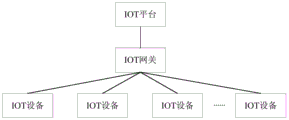
The technical problem to be solved by the embodiments of the present invention is to provide a method and an apparatus for configuring internet of things devices, so as to solve the problem in the prior art that an IOT platform is overloaded when a large amount of IOT devices are configured.
In a first aspect, the present application provides a configuration method for an internet of things device, including: the edge device acquires the first block, writes the first block into a local account book, and indicates at least one IOT device to update local configuration data by using the configuration file when the at least one IOT device in the to-be-configured device list is located in a local network associated with the edge device.
The first block may be sent to the edge device after the consensus network performs consensus, or sent to the edge device by the device configuration file distribution node. After the edge device acquires the first block, the edge device may verify the first block, for example: and verifying whether the signature of the first block is correct or not, and writing the first block into a local account book after the verification is passed. The first block comprises device configuration operation record data, and the device configuration operation record data comprises a device list to be configured and a configuration file. Optionally, the device configuration operation record data may come from a device configuration file publishing node, where the device configuration file publishing node may be a blockchain node in a blockchain network, and the edge device is also a blockchain node in the blockchain network. The blockchain network comprises a plurality of blockchain nodes, and the blockchain nodes can be device configuration file distribution nodes or edge devices.
By implementing the embodiment of the invention, the edge device writes the first block after achieving the consensus into the local account book, so that the data in the first block is prevented from being tampered; according to the device list to be configured and the configuration file in the first block, when at least one IOT device in the device list to be configured is located in the associated local network, the edge device indicates the at least one IOT device to use the configuration file for configuration, so that the edge device only needs to configure the IOT device in the local network, does not need to configure the overall IOT device, and avoids the edge device bearing too heavy processing overhead.
In one possible design, before the edge device writes the first block to the local ledger, the method further includes:
the edge device determines that at least one IOT device in the device list to be configured exists in a local network associated with the edge device.
The edge device is associated with a local network, the local network comprises one or more IOT devices, the to-be-configured device list comprises one or more IOT devices, the edge device judges whether at least one IOT device is located in the local network or not in the to-be-configured device list, if so, the edge device verifies the first block, and after the verification is passed, the edge device writes the first block into a local account book. Optionally, when the edge device determines that at least one IOT device is not located in the local network in the to-be-configured list, the device configuration operation record data is irrelevant to the IOT device in the local network, and the edge device discards the first block, so as to save a local storage space.
In one possible design, further comprising:
the edge device receives a configuration success response including a first hash value from a target IOT device; wherein the first hash value is generated by the target IOT device according to the updated local configuration data, and the target IOT device is any one of the at least one IOT device;
the edge device indicates any N block chain link points in the block chain network to verify the configuration success response, wherein N is an integer greater than 0;
after the verification is passed, the edge device requests each block link node in the block link network to write a second block including the first hash value into a corresponding local account book.
In one possible design, further comprising:
the edge device receiving an authentication request from the target IOT device; wherein the validation request includes a second hash value generated by the target IOT device from current local configuration data in the event of a failure;
the edge device acquires the first hash value from the second block;
the edge device compares whether the first hash value and the second hash value are the same,
if not, the edge device acquires the configuration file from the first block;
the edge device instructs the target IOT device to update local configuration data according to the configuration file.
In one possible design, the validation request further includes a file identification and/or a version number;
the edge device obtaining the configuration file from the first block comprises:
and the edge device inquires the corresponding first block according to the file identifier and/or the file version number, and acquires the configuration file from the first block.
In one possible design, before the edge device receives the authentication request from the target IOT device, the method further includes:
the edge device receives a network registration request from the target IOT device; wherein the network registration request is used for requesting to join the local network associated with the edge device;
the edge device carries out identity verification on the target IOT device;
and after the identity authentication is passed, the edge device sends a registration success response of successfully joining the local network to the target IOT device.
In one possible design, the network registration request further includes a file identification and/or a file version number; the device configuration operation record data comprises a file identifier and/or a file version number;
the method further comprises the following steps:
when the target IOT device is located in the device list to be configured, the edge device compares whether the file identifier and/or the file version number included in the device configuration operation record data are the same as the file identifier and/or the file version number included in the network registration request;
if so, the edge device instructs the target IOT device to update local configuration data using the configuration file.
In a second aspect, the present application provides a configuration method of an internet of things device, including:
the IOT equipment receives a configuration file from the edge equipment;
the IOT equipment updates local configuration data according to the configuration file;
the IOT equipment obtains a first hash value according to the updated local configuration data;
the IOT device sends a configuration success response including the first hash value to the edge device.
By implementing the embodiment of the invention, the IOT equipment updates according to the configuration file sent by the edge equipment, performs hash operation on the updated local configuration data to obtain the first hash value, and notifies the edge equipment of the first hash value, so that whether the local configuration data of the IOT equipment is changed or not can be detected by comparing the hash value before the change with the hash value after the change, and the automatic detection of the IOT equipment fault can be realized quickly.
In one possible design, after the IOT device sends a configuration success response including the first hash value to the edge device, the IOT device further includes:
when the IOT equipment determines that a fault occurs, a second hash value is obtained according to the current local configuration data;
the IOT device sending a validation request including the second hash value to the edge device;
the IOT device receiving a configuration indication of the edge device; wherein the configuration indication comprises a configuration file;
and the IOT equipment updates local configuration data according to the configuration file.
In one possible design, the determining of the failure by the IOT device includes:
determining that a fault occurs when the IOT equipment is not connected to the IOT platform within a preset time; or
And when the IOT equipment receives the fault indication message from the IOT platform, determining that a fault occurs.
In one possible design, before obtaining the second hash value according to the current local configuration data when the IOT device determines that a failure occurs, the method further includes:
when the IOT equipment moves to a local network associated with the edge equipment, sending a network registration request to the edge equipment;
the IOT device receives a registration success response sent by the edge device to successfully join the local network.
In one possible design, the network registration request further includes a file identification and/or a file version number.
In a third aspect, the present application provides a configuration method for an internet of things device, including:
the equipment configuration file publishing node acquires equipment configuration operation record data; the device configuration operation record data comprises a device list to be configured and a configuration file, and the device configuration file issuing node is a block chain node in a block chain network;
the equipment configuration file publishing node indicates any N block chain link points in the block chain network to verify the equipment configuration operation record data; wherein N is a positive integer greater than 0;
in the case of passing the verification, the device configuration file issuing node requests each block link node in the block link network to write a first block including the device configuration operation record data into a respective local book.
In one possible design, the device configuration file distribution node instructing any N block link points in the block chain network to verify the device configuration operation record data includes:
verifying one or more of:
verifying whether the configuration data items in the configuration file are legal or not;
verifying whether the configuration data items in the configuration files conflict with configuration data items stored in a local account book of the equipment configuration file publishing node;
verifying whether the equipment configuration file publishing node is legal or not;
and verifying whether the file configuration file server has the authority of configuring the IOT equipment in the equipment list to be configured.
In one possible design, each blockchain node in the blockchain network is pre-stored or pre-configured with one or more of a legal configuration data item list, identity information of a legal publisher, and configuration authority information.
In a fourth aspect, the present application provides a configuration device for an internet of things device, including:
a receiving unit, configured to acquire a first block; the first block comprises device configuration operation record data, the device configuration operation record data comprises a device list to be configured and a configuration file, and the block chain node in the edge device block chain network;
the processing unit is used for writing the first block into a local account book;
the processing unit is further configured to instruct, when at least one IOT device in the to-be-configured device list is located in the local network associated with the configuration apparatus, the at least one IOT device to update local configuration data using the configuration file.
In one possible design of the system, the system may be,
the processing unit is further configured to determine that at least one IOT device in the to-be-configured device list is located in the local network associated with the edge device.
In one possible design of the system, the system may be,
the receiving unit is further configured to receive a configuration success response including the first hash value from the target IOT device; wherein the first hash value is generated by the target IOT device according to the updated local configuration data, and the target IOT device is any one of the at least one IOT device;
the processing unit is further configured to instruct any N block link points in the block chain network to verify the configuration success response, where N is an integer greater than 0;
and after the verification is passed, requesting each block link node in the block chain network to write a second block comprising the first hash value into a corresponding local account book.
In one possible design of the system, the system may be,
the receiving unit is further configured to receive an authentication request from the target IOT device; wherein the validation request includes a second hash value generated by the target IOT device from current local configuration data in the event of a failure;
the processing unit is further to:
obtaining the first hash value from the second block;
comparing whether the first hash value and the second hash value are identical,
if not, acquiring the configuration file from the first block;
and instructing the target IOT equipment to update local configuration data according to the configuration file.
In one possible design, the validation request further includes a file identification and/or a version number;
the processing unit is configured to obtain the configuration file from the first block, and includes:
and inquiring the corresponding first block according to the file identifier and/or the file version number, and acquiring the configuration file from the first block.
In one possible design, further comprising: a transmitting unit;
the receiving unit is further configured to receive a network registration request from the target IOT device; wherein the network registration request is used for requesting to join the local network associated with the edge device;
the processing unit is further to:
performing identity authentication on the target IOT equipment;
and after the identity authentication is passed, indicating the sending unit to send a registration success response of successfully joining the local network to the target IOT equipment.
In one possible design, the network registration request further includes a file identification and/or a file version number; the device configuration operation record data comprises a file identifier and/or a file version number;
the processing unit is further to:
when the target IOT device is located in the device list to be configured, the edge device compares whether the file identifier and/or the file version number included in the device configuration operation record data are the same as the file identifier and/or the file version number included in the network registration request;
if so, the edge device instructs the target IOT device to update local configuration data using the configuration file.
In a fifth aspect, the present application provides a configuration device for an internet of things device, including:
a receiving unit for receiving a configuration file from an edge device;
the processing unit is used for updating local configuration data according to the configuration file;
the processing unit is further configured to obtain a first hash value according to the updated local configuration data;
a sending unit, configured to send a configuration success response including the first hash value to the edge device.
In one possible design, the processing unit is further configured to:
when a fault is determined, a second hash value is obtained according to the current local configuration data;
instructing the sending unit to send a verification request including the second hash value to the edge device;
instructing the receiving unit to receive a configuration indication of the edge device; wherein the configuration indication comprises a configuration file;
and updating local configuration data according to the configuration file.
In one possible design, the processing unit is configured to determine that a fault has occurred, and includes:
determining that a fault occurs under the condition that the IOT platform is not connected within a preset time length; or
Determining that a failure occurs when the receiving unit receives a failure indication message from the IOT platform.
In one possible design, the processing unit is further configured to:
when moving to the local network associated with the edge device, instructing the sending unit to send a network registration request to the edge device;
and instructing the receiving unit to receive a registration success response sent by the edge device and successfully joining the local network.
In one possible design, the network registration request further includes a file identification and/or a file version number.
In a sixth aspect, the present application provides a configuration device for an internet of things device, including:
the receiving unit is used for acquiring device configuration operation record data; the device configuration operation record data comprises a device list to be configured and a configuration file, and the device configuration file issuing node is a block chain node in a block chain network;
the processing unit is used for indicating any N block chain link points in the block chain network to verify the equipment configuration operation record data; wherein N is a positive integer greater than 0;
the processing unit is further configured to, in a case that the verification passes, request each blockchain link point in the blockchain network to write a first block including the device configuration operation record data into a respective local ledger.
In one possible design, the processing unit is configured to instruct any N block link points in the block chain network to verify the device configuration operation record data, and the method includes:
verifying one or more of:
verifying whether the configuration data items in the configuration file are legal or not;
verifying whether the configuration data items in the configuration files conflict with configuration data items stored in a local account book of the equipment configuration file publishing node;
verifying whether the equipment configuration file publishing node is legal or not;
and verifying whether the file configuration file server has the authority of configuring the IOT equipment in the equipment list to be configured.
In one possible design, each blockchain node in the blockchain network is pre-stored or pre-configured with one or more of a legal configuration data item list, identity information of a legal publisher, and configuration authority information.
Yet another aspect of the present application provides an apparatus, comprising: a memory and a processor; wherein the memory stores a set of program codes, and the processor is configured to call the program codes stored in the memory and execute the method of the aspects.
Yet another aspect of the present application provides a computer-readable storage medium having stored therein instructions, which when executed on a computer, cause the computer to perform the method of the above-described aspects.
Yet another aspect of the present application provides a computer program product containing instructions which, when run on a computer, cause the computer to perform the method of the above-described aspects.
Detailed Description
Fig. 1b is a schematic diagram of an architecture of a communication system provided in the present application, where the communication system includes one or more device profile publication nodes, one or more edge devices, and one or more IOT devices. Each edge device manages a local network, the local network includes one or more IOT devices, and the edge device can communicate with the IOT devices in the local network in a wireless or wired manner. One or more device profile publication nodes and one or more edge devices form a blockchain network, i.e., each device profile publication node and each edge device are blockchain nodes. The block chain network is a system which is used for jointly maintaining a set of traceable and non-falsifiable chain data by mutually incomplete trusted computers on a distributed network through a consensus rule, the block chain network is a decentralized system because the data and the platform are not unilaterally controlled by any mechanism, and the block chain network is a decentralized basic computing framework with high safety, high reliability and credibility.
Specifically, each blockchain node in the blockchain network maintains a local account book, and the local account book stores a plurality of blocks forming a blockchain; data is recorded in the blocks, newly written data forms a new block, the new block is added at the end of the current block chain, each block stores the hash value corresponding to the data recorded in the previous block while storing the data, if a block in the block chain is modified independently, the block behind the block cannot be linked with the block, and therefore, the modification of any block in the block chain is traceable. The process of writing the block into the local account book comprises the following steps: when a client node needs to write a block into a block chain network, the client node selects one or more block chain nodes in the block chain network as end nodes, the selected end nodes verify the block to be written, each end node generates a signed verification result (end) to the client node, the client node determines that the block to be written passes the verification according to the received verification result, and submits the block to be written to a consensus network, the consensus network comprises a plurality of ordering (consensus) nodes, the consensus network adopts a consensus algorithm to identify the block, one ordering of the consensus network broadcasts the block to block chain link points in the block chain network, and after each block chain link point node reaches the block, the block is verified, and the block is written into a local account book after the verification passes.
It should be noted that the block link points in the block chain network may be a client node, an endringing node, and an ordering node at the same time.
Optionally, the communication system according to the embodiment of the present invention further includes one or more device profile servers, where each device profile publishing node is connected to one or more device profile servers, where a device profile server may be deployed by an iostp, a telecommunications carrier, or a device vendor, and the device profile server and the device profile publishing node may communicate via a secure channel, for example: the device configuration file server communicates with the device configuration file publishing node through SSL/TLS (Secure Sockets Layer/Transport Layer Security), HTTPS (Hyper Text Transfer Protocol over Secure Socket Layer, Secure Socket based), VPN (Virtual Private Network).
It should be noted that the number and form of each device in the communication system in fig. 1b are only examples, and do not limit the embodiment of the present invention.
The embodiment of the present application can be applied to a wireless communication system, and it should be noted that the wireless communication system mentioned in the embodiment of the present application includes but is not limited to: narrowband Band-Internet of Things (NB-IoT), Global System for Mobile Communications (GSM), Enhanced Data rates for GSM Evolution (EDGE), Wideband Code Division Multiple Access (WCDMA), Code Division Multiple Access (Code Division Multiple Access, CDMA2000), Time Division synchronous Code Division Multiple Access (Time Division-Synchronization Code Division Multiple Access, TD-SCDMA), Long Term Evolution (Long Term Evolution, LTE), NR (New Radio, New air interface) and next generation 5G Mobile communication systems, Enhanced Mobile broadband (Enhanced Mobile broadband, broadcast, mtc-Massive llc), and mtc-Type communication.
In the embodiment of the present application, the internet of things device (internet) includes, but is not limited to, a smart meter (e.g., a smart water meter, a smart electricity meter, a smart gas meter), a smart appliance (e.g., a refrigerator, a microwave oven, a water heater, a washing machine), a monitoring device, and the like.
Referring to fig. 2, which is an interaction schematic diagram of a configuration method of an internet of things device according to an embodiment of the present invention, in the embodiment of the present invention, the method includes:
s201, the device configuration file publishing node acquires device configuration operation record data.
Specifically, the device configuration operation record data includes a configuration file and a device list to be configured, where the configuration file is used to configure the IOT device, and the configuration file may include one or more configuration data items, for example: the configuration file is used for configuring the reporting period, the reported parameter type and the like of the IOT equipment. The device to be configured list is used to indicate one or more IOT devices that need to be configured, and optionally, the device to be configured list may include one or more of a device identifier, a device model, a device group identifier, a device manufacturer identifier, a device belonging organization, and an area identifier. For example: the device list to be configured comprises one or more device identifiers, which indicate that the IOT devices corresponding to the one or more device identifiers need to be configured; or the to-be-configured device list comprises one or more device group identifiers, which indicate that all the IOT devices in one or more device groups need to be configured; or the device list to be configured includes one or more device manufacturer identifiers, which indicate that all IOT devices of one or more device manufacturers need to be configured; or the device list to be configured includes one or more organization identifiers, which indicate that all IOT devices to which one or an organization belongs need to be configured; or the device list to be configured includes one or more area identifiers, which indicate that all IOT devices in one or more areas need to be configured.
Optionally, the device configuration operation record data further includes one or more of an identifier of the configuration file and a version number of the configuration file.
S202, verifying the device configuration operation record data by the device configuration file publishing node.
Specifically, the device configuration file indicates any N block link points in the block chain network to verify the acquired device configuration operation record data, where N is an integer greater than or equal to 1, and the main verification process includes: the device configuration file publishing node indicates one or more endrsing nodes in the block chain network to verify the device configuration operation record data, the one or more endrsing nodes generate signed verification results to the device configuration file publishing node, the verification results comprise two conditions of passing verification or failing verification, and the device configuration file publishing node determines that the device configuration operation record data passes verification or fails verification according to the verification results. The one or more endringing nodes may be pre-specified, or may be temporarily specified after acquiring the device configuration operation record data, which is not limited in this embodiment. Optionally, N is greater than or equal to 1/2 of the number of blockchain nodes in the blockchain network. In the case where the device configuration operation recording data passes, S203 is executed; otherwise, the flow is terminated.
Optionally, the verifying device configuration operation record data includes one or more of the following:
and verifying whether the configuration data items in the configuration file are legal.
And verifying whether the configuration data items in the local account book and the configuration data items in the configuration files conflict or not. For example: the reporting period of the IOT device recorded in the block chain account book is 20 minutes, and the reporting period recorded in the configuration file is 10 minutes, so that the two conflict.
And verifying whether the publisher of the device configuration operation record data is legal or not. Wherein, the publisher of the device configuration operation record data can be IOTSP, telecom operator or device manufacturer.
And verifying whether the IOT equipment corresponding to the equipment list to be configured has the configuration authority.
S203, the device configuration file issuing node requests each block link node in the block link network to write the first block including the device configuration operation record data into its own local account book.
Specifically, the device configuration file publishing node submits the first block including the device configuration operation record data to a consensus (ordering) network, the consensus network includes one or more ordering nodes, and after the consensus network agrees on the first block by using a preset consensus algorithm, the consensus algorithm includes but is not limited to: any one of PoW (Proof of Work), PoS (Proof of rights and interests), DPoS (denial of rights and interests), PBFT (Practical Byzantine Fault Tolerance algorithm), any one of ordering nodes in the consensus network broadcasts a first block to each block link point in the block chain network, and each block link point receives the first block, verifies the first block, and writes the first block into a respective local account book after verification.
The equipment configuration file publishing node receives a first block from the consensus network, verifies the first block, and writes the first block into a local block chain account book after verification.
S204, the edge device acquires the first block.
Optionally, the edge device receives the first block from the consensus network, and the edge device verifies the first block.
And S205, the edge device writes the first block into a local account book.
Specifically, the edge device verifies the first block, for example: the edge device verifies the digital signature of the first block, after the verification is passed, the edge device determines that the edge device in the to-be-configured device list writes the first block into the local account book, and the process of writing the first block into the local account book by the edge device may refer to the description of the prior art, which is not described herein again.
Optionally, the edge device analyzes the device configuration operation record data in the first block, where the device configuration operation record data includes a device list to be configured and a configuration file, and when the edge device determines that there is no IOT device in the device list to be configured and located in the local network associated with the edge device, the edge device may not write the first block into the local account book, discard the first block, and the edge device only needs to write the block associated with the local network, so that the storage space of the edge device can be saved. For example: the to-be-configured device list includes device 1, device 2, and device 3, and the local network associated with the edge device includes device 4, device 5, and device 6, so that there is no IOT device in the to-be-configured device list located in the local network, and the edge device discards the first tile including the to-be-configured device list.
S206, the edge device sends the configuration indication to the IOT device, and the IOT device receives the configuration indication from the edge device.
Specifically, when the edge device determines that at least one IOT device is located in the local network associated with the edge device in the to-be-configured device list, the edge device sends a configuration instruction to the at least one IOT device, where the configuration instruction includes a configuration file. For example: the to-be-configured device list includes IOT device 1, IOT device 2, and IOT device 3, the local network managed by the edge device includes IOT device 2, IOT device 4, and IOT device 5, and then the edge device determines that IOT device 2 in the to-be-configured device list exists in the local network managed by the edge device, the edge device sends a configuration instruction including a configuration file to IOT device 2, and IOT device 2 receives the configuration instruction including the configuration file from the edge device. It should be noted that the number of IOT devices in the list to be configured may be one or more,
and S207, the IOT equipment updates the local configuration data according to the configuration file.
Specifically, the IOT device updates the local data configuration data according to the configuration data items in the configuration file.
By implementing the embodiment of the invention, one or more equipment configuration file publishing nodes and one or more edge equipment form the block chain network, the edge equipment only configures the IOT equipment in the associated local network, the load of the edge equipment is small, the network configuration taking the IOT platform as the center in the prior art is avoided, the decentralized network configuration is realized, and the processing overhead of the IOT platform is reduced.
To describe in detail the configuration method of the internet of things device according to the embodiment of the present invention, fig. 3a provides a schematic diagram of a specific structure of a communication system, where the communication system in fig. 3a includes a device profile publishing node, an edge device 1, an edge device 2, a device profile server, an IOT device 11, an IOT device 12, an IOT device 21, and an IOT device 22. The device configuration file publishing node, the edge device 1 and the edge device 2 form a blockchain network, a local network managed by the edge device 1 includes an IOT device 11 and an IOT device 12, and a local network managed by the edge device 2 includes an IOT device 21 and an IOT device 22.
Referring to fig. 3b and fig. 3c, another interaction schematic diagram of a configuration method of an internet of things device according to an embodiment of the present invention is provided, where a communication system according to an embodiment of the present invention is based on the network architecture of fig. 3a, the method includes:
s301, the device configuration file server sends device configuration operation record data to the device configuration file publishing node, and the device configuration file publishing node receives the device configuration operation record data from the device configuration file server.
Specifically, the device profile server may communicate with the device profile publishing node through a secure channel, and the device profile server may be deployed by a telecommunications carrier, an iostp, or a device manufacturer, that is, the publisher of the device configuration operation record data may be the telecommunications carrier, the iostp, or the device manufacturer. The device configuration operation record data includes a device to be configured and a configuration file, the device configuration operation record data includes a configuration file and a device list to be configured, the configuration file is used for configuring the IOT device, and the configuration file may include one or more configuration data items, for example: the configuration file is used for configuring the reporting period, the reported parameter type and the like of the IOT equipment. The device to be configured list is used to indicate one or more IOT devices that need to be configured, and optionally, the device to be configured list may be used to indicate one or more of a device identifier, a device model, a device group identifier, a device manufacturer identifier, a device affiliated organization, and a device affiliated area identifier. Assume that the list of devices to be configured includes IOT devices 11.
Optionally, the device configuration operation record data may further include one or more of an identification of the configuration file and a version number of the configuration file.
S302, the equipment configuration file publishing node verifies the equipment configuration operation record data, and the verification result is that the equipment configuration operation record data passes.
Specifically, the device configuration file indicates any N endrsing nodes in the blockchain network to perform verification operation on the device configuration operation record data, and a specific process of the verification may refer to the description in the embodiment of fig. 2, where N is an integer greater than 1. Optionally, N is greater than or equal to 1/2 of the number of blockchain nodes in the blockchain network, where in this embodiment, if the number of blockchain nodes in the blockchain network is 3, N is an integer greater than or equal to 2. Executing S303 under the condition that any N block chain link point verification devices in the block chain network verify that the configuration operation record data passes; otherwise, the flow is terminated.
Optionally, the verifying device configuration operation record data includes one or more of the following:
and verifying whether the configuration data items in the configuration file are legal.
And verifying whether the configuration data items in the local account book and the configuration data items in the configuration files conflict or not. For example: the reporting period of the IOT device recorded in the block chain account book is 20 minutes, and the reporting period recorded in the configuration file is 10 minutes, so that the two conflict.
And verifying whether the publisher of the device configuration operation record data is legal or not. Wherein, the publisher of the device configuration operation record data can be IOTSP, telecom operator or device manufacturer.
And verifying whether the IOT equipment corresponding to the equipment list to be configured has the configuration authority.
S303, the device configuration file publishing node writes the first block including the device configuration operation record data into the local ledger.
Specifically, the device configuration file publishing node generates a first block according to the device configuration operation record data and submits the first block to the consensus network, or the device configuration file publishing node submits the device configuration operation record data to the consensus network (not shown in fig. 3 a), and the consensus network generates the first block including the device configuration operation record data; the nodes in the consensus network are a plurality of nodes in a block chain network, and the nodes in the consensus network also become endringing nodes. After the consensus network achieves consensus on the first block by adopting a consensus algorithm, the consensus network broadcasts the first block to each block chain node in the block chain network.
The device configuration file publishing node is also a blockchain node in the blockchain network, receives the first block from the consensus network, verifies the first block, writes the first block into the local account book after the verification is passed, and refers to the description in the existing blockchain network in the process of writing into the blockchain account book, which is not described herein again.
S304, the edge device 2 writes the first block into the local ledger.
Specifically, the edge device 2 is a blockchain node in the blockchain network, the edge device 2 receives the first block from the consensus network, verifies the first block, and after the verification is passed, the process of writing the first block into the local account book by the edge device 2 may refer to the description in the existing blockchain protocol, which is not described herein again.
Optionally, the edge device 2 analyzes the device configuration operation record data in the first block chain, and obtains a to-be-configured list including the IOT device 11, the local network associated with the edge device 2 includes the IOT device 21 and the IOT device 22, the edge device 2 determines that the IOT device in the to-be-configured list is not in the local network, and the edge device 2 discards the first block and does not write the first block into the local account book.
S305, the edge device 1 writes the first block into the local account book.
Specifically, the edge device 1 is a blockchain node in a blockchain network, the edge device 1 receives a first block from the consensus network, verifies the first block, and after the verification is passed, the process that the edge device 1 writes the first block into the local account book may refer to the description in the existing blockchain protocol, which is not described herein again.
Optionally, the edge device 1 analyzes the device configuration operation record data in the first block, and obtains a to-be-configured device list including the IOT device 11, a local network associated with the edge device 1 includes the IOT device 11 and the IOT device 12, the edge device 1 determines that the IOT device in the to-be-configured list is located in the local network, and the edge device 1 needs to write the first block into the local account book.
It should be noted that the execution sequence of S303 to S305 is not limited in this embodiment, and the three steps may be executed in any order.
S306, the edge device 1 sends the configuration instruction to the IOT device 11, and the IOT device 11 receives the configuration instruction from the edge device 11.
Specifically, the configuration instruction includes the configuration file described in S301, the edge device 1 analyzes the device configuration operation record data in the first block, the obtained to-be-configured device list includes the IOT device 11, the edge device 1 determines that the to-be-configured device list and the IOT device co-existing in the local network are the IOT device 11, and the edge device 1 sends the configuration file in the first block to the IOT device 11.
Optionally, the configuration indication further includes one or more of an identifier and a version number of the configuration file.
S307, the IOT device 11 updates the local configuration data according to the configuration file.
Specifically, the IOT device 11 updates the local configuration data according to the configuration data item in the configuration file, for example: the IOT device 11 updates the local configuration data according to the reporting period and the reporting parameter type in the configuration file.
S308, the IOT device 11 obtains the first hash value according to the updated local configuration data.
Specifically, the IOT device 11 performs a hash operation on the updated local configuration data according to a preset hash algorithm to obtain a first hash value, where the hash algorithm includes but is not limited to: any one of SHA-1, SHA-224, SHA-256, SHA-384, and SHA-512.
S309, IOT device 11 sends a configuration success response to edge device 1, and edge device 1 receives the configuration success response from the IOT device.
Specifically, the configuration success response indicates that the IOT device 11 successfully completes the configuration process according to the configuration file, and the configuration success response may carry the first hash value calculated in S308.
Optionally, the configuration success response further includes an identifier and a version number of the configuration file.
And S310, the edge device 1 verifies the configuration success response, and generates a second block comprising the first hash value after the verification is passed.
Specifically, the edge device 1 indicates any N block link points in the block chain network to verify the successful configuration response, and when the edge device 1 determines that the verification results of the N block link points for verifying the successful configuration response all pass, the edge device 1 generates a second block including the first hash value, submits the second block to the consensus network, and the consensus network broadcasts the second block to each block chain network in the block chain network after agreeing on the second block according to the consensus algorithm. Wherein verifying the configuration success response comprises: verifying whether the identity of the edge device 1 is legal and/or whether the IOT device 11 is located in the list of devices to be configured.
Optionally, the second block further includes one or more of an identifier and a version number of a configuration file corresponding to the first hash value.
S311, the edge device 1 writes the second block into the local account book.
Specifically, the edge device 1 is a blockchain node in the blockchain network, the edge device 1 receives the second block from the consensus network, verifies the second block, and writes the second block into the local account book through the verification by the edge device 1, where the writing process may refer to description of a blockchain protocol in the prior art, and is not described herein again.
S312, the edge device 2 writes the second block into the local ledger.
Specifically, the edge device 2 is a blockchain node in the blockchain network, and the edge device 2 receives the second block from the consensus network, verifies the second block, and writes the second block into the local account book through the edge device 2 after the verification.
S313, the device configuration file issuing node writes the second block into the local account book.
Specifically, the device configuration file publishing node is a blockchain node in a blockchain network, receives a second block from the consensus network, verifies the second block, and writes the second block into the local account book by the device configuration file publishing node after the verification is passed.
S314, the IOT device 11 detects the occurrence of the failure.
Specifically, the method for detecting the failure by the IOT device 11 may be: when detecting that the IOT device 11 cannot be connected to the IOT platform within the preset time, determining that a fault occurs, for example: the IOT device 11 determines that it is faulty within 30 minutes because it cannot connect to the IOT platform; or the IOT platform detects that the data reported by the IOT device 11 is overtime, and determines that the IOT device 11 fails.
S315, the IOT device 11 generates a second hash value according to the current local configuration data.
Specifically, the IOT device performs hash operation on the current local configuration data according to a preset hash algorithm to obtain a second hash value, where S315 and S308 use the same hash algorithm.
S316, the IOT device 11 sends an authentication request to the edge device 1, and the edge device 1 receives the authentication request from the IOT device 11.
Wherein, the verification request includes the second hash value calculated in S315. Optionally, the verification request may further carry one or more of an identifier and a version number of the configuration file.
S317, the edge device 1 compares whether the first hash value and the second hash value in the second chunk are the same.
Specifically, the edge device 1 obtains the second block from the local account book, analyzes the first hash value in the second block, compares whether the first hash value is the same as the first hash value included in the verification request, and if not, indicates that the IOT device 11 fails.
S318 the edge device 1 obtains the configuration file in the first block.
Specifically, when determining that the IOT device 11 fails, the edge device 1 parses the first block to obtain the configuration file. Optionally, the edge device 1 obtains the corresponding first block according to the identifier and/or the version number of the configuration file carried in the verification request, and then obtains the corresponding configuration file from the first block.
S319, the edge device 1 sends the configuration restoration instruction to the IOT device 11, and the IOT device 11 receives the configuration restoration instruction from the edge device 1.
The configuration restoration instruction includes a configuration file, and the configuration restoration instruction is used to instruct the IOT device 11 to restore the local configuration data according to the configuration file.
And S320, the IOT device 11 updates the local configuration data according to the configuration file.
Since the configuration files in S320 and S207 are the same, the local configuration data updated in S320 is the same as the local configuration data updated in S307.
S321, the IOT device 11 obtains the first hash value according to the updated local configuration data.
Specifically, the local configuration data updated in S320 is the same as the local configuration data updated in S307, and the hash algorithm used in S325 is the same as the hash algorithm used in S308, so that the hash value generated according to the local configuration data obtained after updating in S325 is also the first hash value.
S322, the IOT device 11 sends a recovery success response to the edge device 11, and the edge device 1 receives the recovery success response from the IOT device 11.
S323, the edge device 1 verifies the configuration success response.
Specifically, the edge device 1 instructs one or more arbitrary block chain networks in the block chain networks to verify the successful configuration response, generates a third block including the first hashed result after the verification is passed, submits the third block to the consensus network, and broadcasts the third block to each block link point in the block chain network after the consensus network agrees on the third block according to the consensus algorithm.
By implementing the embodiment of the invention, when the IOT equipment fails, the edge equipment for managing the IOT equipment sends the configuration file in the local account book to the IOT equipment according to the request of the IOT equipment so as to realize the automatic recovery of the local configuration data of the IOT equipment, the fault recovery process does not need the participation of an IOT platform, the configuration recovery process taking the IOT platform as the center in the prior art is avoided, and the processing overhead of the IOT platform is reduced.
S324, the edge device 1 writes the third block into the local account book.
Specifically, the edge device 1 receives a third block from the consensus network, verifies the third block, and writes the third block into the local account book after the third block passes the verification.
And S325, the edge device 2 writes the third block into the local account book.
Specifically, the edge device 2 receives the third block from the consensus network, verifies the third block, and writes the third block into the local account book after the verification is passed.
And S326, the device configuration file issuing node writes the third block into the local account book.
Specifically, the device configuration file issuing node receives a third block from the consensus network, verifies the third block, and writes the third block into the local account book after the verification is passed.
It is assumed that the IOT device 11 is originally located in the local network associated with the edge device 3, and subsequently, due to mobility, when the IOT device 11 moves into the local network associated with the edge device 1 and the IOT device 11 detects that the IOT device 11 moves into the local network associated with the edge device 1, the IOT device 11 sends a network registration request to the edge device 1, where the network registration request may carry an identifier of the IOT device 11, the edge device 1 receives the network registration request from the IOT device 11, performs identity authentication on the IOT device 11, after the authentication is passed, the edge device 1 adds the IOT device 11 to the local network, and the edge device 1 sends a registration success response to the IOT device 11. The management process of the edge device 1 on the local network can refer to the description of fig. 3b and 3c, and is not described herein again.
Optionally, the device configuration operation record data further includes a configuration file identifier and/or a file version number, the network registration request further includes a file identifier and/or a file version number, when the edge device 1 determines that the IOT device 11 is located in the device list to be configured, and compares the file identifier and/or the file version number in the network registration request with the file identifier and/or the file version number in the device configuration operation record received in S301, the edge device 1 sends a configuration instruction to the IOT device 11, where the configuration instruction includes a configuration file, and instructs the IOT device 11 to update the local configuration data according to the configuration file, and a specific process may refer to the description in fig. 3b and fig. 3c, which is not described herein again. It should be noted that the configuration indication and the registration success response may be the same message or two separate messages, which is not limited in this embodiment.
Further optionally, the network registration request further includes a hash value generated by the IOT device 11 according to the current local configuration data.
The above-mentioned drawings illustrate in detail a configuration method of an internet of things device according to an embodiment of the present invention, and a configuration apparatus (hereinafter referred to as apparatus 4) of an internet of things device according to an embodiment of the present invention is provided below.
In a possible implementation, the apparatus 4 shown in fig. 4 may implement the edge device side of the embodiments shown in fig. 2, fig. 3b and fig. 3c, and the apparatus 4 includes a receiving unit 401 and a processing unit 402.
A receiving unit 401, configured to obtain a first block; the first block comprises device configuration operation record data, the device configuration operation record data comprises a device list to be configured and a configuration file, and the block chain node in the edge device block chain network.
A processing unit 402, configured to write the first block into a local ledger.
The processing unit 402 is further configured to instruct at least one IOT device in the to-be-configured device list to update local configuration data using the configuration file when the at least one IOT device is located in a local network associated with configuration 4.
Optionally, the processing unit 402 is further configured to determine that at least one IOT device in the to-be-configured device list is located in the local network associated with the edge device.
Optionally, the receiving unit 401 is further configured to receive a configuration success response including the first hash value from the target IOT device; wherein the first hash value is generated by the target IOT device according to the updated local configuration data, and the target IOT device is any one of the at least one IOT device;
a processing unit 402, further configured to instruct any N block link points in the block chain network to verify the configuration success response, where N is an integer greater than 0;
and after the verification is passed, requesting each block link node in the block chain network to write a second block comprising the first hash value into a corresponding local account book.
Optionally, the receiving unit 401 is further configured to receive an authentication request from the target IOT device; wherein the validation request includes a second hash value generated by the target IOT device from current local configuration data in the event of a failure;
the processing unit 402 is further configured to:
obtaining the first hash value from the second block;
comparing whether the first hash value and the second hash value are identical,
if not, acquiring the configuration file from the first block;
and instructing the target IOT equipment to update local configuration data according to the configuration file.
Optionally, the verification request further includes a file identifier and/or a version number;
the processing unit is configured to obtain the configuration file from the first block, and includes:
and inquiring the corresponding first block according to the file identifier and/or the file version number, and acquiring the configuration file from the first block.
Optionally, the method further includes: a transmitting unit;
the receiving unit 401 is further configured to receive a network registration request from the target IOT device; wherein the network registration request is used for requesting to join the local network associated with the edge device;
the processing unit 402 is further configured to:
performing identity authentication on the target IOT equipment;
and after the identity authentication is passed, indicating the sending unit to send a registration success response of successfully joining the local network to the target IOT equipment.
Optionally, the network registration request further includes a file identifier and/or a file version number; the device configuration operation record data comprises a file identifier and/or a file version number;
the processing unit is further to:
when the target IOT device is located in the device list to be configured, the edge device compares whether the file identifier and/or the file version number included in the device configuration operation record data are the same as the file identifier and/or the file version number included in the network registration request;
if so, the edge device instructs the target IOT device to update local configuration data using the configuration file.
The device 4 may be an edge device, and the device 4 may also be a field-programmable gate array (FPGA), an application-specific integrated chip (asic), a system on chip (SoC), a Central Processing Unit (CPU), a Network Processor (NP), a digital signal processing circuit, a Micro Controller Unit (MCU), or a Programmable Logic Device (PLD) or other integrated chips.
In another possible implementation manner, the apparatus 4 shown in fig. 4 may implement the device profile publishing node in the embodiments shown in fig. 2, fig. 3b, and fig. 3c, and the apparatus 4 includes a receiving unit 401 and a processing unit 402.
A receiving unit 401, configured to obtain device configuration operation record data; the device configuration operation record data comprises a device list to be configured and a configuration file, and the device configuration file issuing node is a block chain node in a block chain network.
A processing unit 402, configured to instruct any N block link points in the block chain network to verify the device configuration operation record data; wherein N is a positive integer greater than 0.
The processing unit 402 is further configured to, in case that the verification passes, request each blockchain link point in the blockchain network to write a first block including the device configuration operation record data into a respective local ledger.
Optionally, the processing unit 402 is configured to instruct any N block link points in the block chain network to verify the device configuration operation record data, including:
verifying one or more of:
verifying whether the configuration data items in the configuration file are legal or not;
verifying whether the configuration data items in the configuration files conflict with configuration data items stored in a local account book of the equipment configuration file publishing node;
verifying whether the equipment configuration file publishing node is legal or not;
and verifying whether the file configuration file server has the authority of configuring the IOT equipment in the equipment list to be configured.
Optionally, each blockchain node in the blockchain network prestores or preconfigures one or more of a legal configuration data item list, identity information of a legal publisher, and configuration authority information.
The device 4 may be an IOT device, and the device 4 may also be a field-programmable gate array (FPGA), an application-specific integrated chip (asic), a system on chip (SoC), a Central Processing Unit (CPU), a Network Processor (NP), a digital signal processing circuit, a Micro Controller Unit (MCU), or a Programmable Logic Device (PLD) or other integrated chips.
The embodiment of the present invention and the method embodiments of fig. 2, fig. 3b, and fig. 3c are based on the same concept, and the technical effects brought by the embodiment are also the same, and the specific process may refer to the description of the method embodiments of fig. 2, fig. 3b, and fig. 3c, and will not be described again here.
Referring to fig. 5, the apparatus 5 shown in fig. 5 may implement the device profile publishing node of the embodiments shown in fig. 2, fig. 3b and fig. 3c, and the apparatus 5 includes a receiving unit 501, a processing unit 502 and a sending unit 503.
A receiving unit 501, configured to receive a configuration file from an edge device.
A processing unit 502, configured to update local configuration data according to the configuration file.
The processing unit 502 is further configured to obtain a first hash value according to the updated local configuration data;
a sending unit 503, configured to send a configuration success response including the first hash value to the edge device.
Optionally, the processing unit 502 is further configured to:
when a fault is determined, a second hash value is obtained according to the current local configuration data;
instructing the sending unit to send a verification request including the second hash value to the edge device;
instructing the receiving unit to receive a configuration indication of the edge device; wherein the configuration indication comprises a configuration file;
and updating local configuration data according to the configuration file.
Optionally, the processing unit 502 is configured to determine that a fault occurs, and includes:
determining that a fault occurs under the condition that the IOT platform is not connected within a preset time length; or
Determining that a failure occurs when the receiving unit receives a failure indication message from the IOT platform.
Optionally, the processing unit 502 is further configured to:
when moving to the local network associated with the edge device, instructing the sending unit 501 to send a network registration request to the edge device;
the instruction receiving unit 502 receives a registration success response sent from the edge device to successfully join the local network.
Optionally, the network registration request further includes a file identifier and/or a file version number.
Fig. 6 is a schematic structural diagram of an apparatus according to an embodiment of the present invention, which is hereinafter referred to as an apparatus 6 for short, where the apparatus 6 may be integrated in the foregoing edge device, IOT device, or device profile publishing node, as shown in fig. 6, the apparatus includes: memory 602, processor 601, transmitter 604, and receiver 603.
The memory 602 may be a separate physical unit, which may be connected to the processor 601, the transmitter 604 and the receiver 603 via a bus. The memory 602, processor 601, transmitter 604, and receiver 601 may also be integrated, implemented in hardware, etc.
The transmitter 604 and the receiver 603 may also be connected to an antenna, through which the receiver 603 receives information transmitted by other devices, and accordingly, the transmitter 604 transmits information to other devices through the antenna.
The memory 602 is used for storing a program for implementing the above method embodiment, or various modules of the apparatus embodiment, and the processor 601 calls the program to execute the operations of the above method embodiment.
Optionally, when part or all of the configuration method of the internet of things device in the foregoing embodiment is implemented by software, the random access device may also include only a processor. The memory for storing the program is located outside the random access device, and the processor is connected to the memory through a circuit/wire for reading and executing the program stored in the memory.
The processor may be a Central Processing Unit (CPU), a Network Processor (NP), or a combination of a CPU and an NP.
The processor may further include a hardware chip. The hardware chip may be an application-specific integrated circuit (ASIC), a Programmable Logic Device (PLD), or a combination thereof. The PLD may be a Complex Programmable Logic Device (CPLD), a field-programmable gate array (FPGA), a General Array Logic (GAL), or any combination thereof.
The memory may include volatile memory (volatile memory), such as random-access memory (RAM); the memory may also include a non-volatile memory (non-volatile memory), such as a flash memory (flash memory), a Hard Disk Drive (HDD) or a solid-state drive (SSD); the memory may also comprise a combination of memories of the kind described above.
In the above embodiments, the sending module or the transmitter performs the sending steps of the above various method embodiments, the receiving module or the receiver performs the receiving steps of the above various method embodiments, and other steps are performed by other modules or processors. The transmitting module and the receiving module may constitute a transceiver module, and the receiver and the transmitter may constitute a transceiver.
The embodiment of the application also provides a computer storage medium, in which a computer program is stored, where the computer program is used to execute the configuration method of the internet of things device provided in the embodiment.
Embodiments of the present application further provide a computer program product containing instructions, which when run on a computer, causes the computer to execute the configuration method of the internet of things device provided in the foregoing embodiments.
As will be appreciated by one skilled in the art, embodiments of the present application may be provided as a method, system, or computer program product. Accordingly, the present application may take the form of an entirely hardware embodiment, an entirely software embodiment or an embodiment combining software and hardware aspects. Furthermore, the present application may take the form of a computer program product embodied on one or more computer-usable storage media (including, but not limited to, disk storage, CD-ROM, optical storage, and the like) having computer-usable program code embodied therein.
The present application is described with reference to flowchart illustrations and/or block diagrams of methods, apparatus (systems), and computer program products according to embodiments of the application. It will be understood that each flow and/or block of the flow diagrams and/or block diagrams, and combinations of flows and/or blocks in the flow diagrams and/or block diagrams, can be implemented by computer program instructions. These computer program instructions may be provided to a processor of a general purpose computer, special purpose computer, embedded processor, or other programmable data processing apparatus to produce a machine, such that the instructions, which execute via the processor of the computer or other programmable data processing apparatus, create means for implementing the functions specified in the flowchart flow or flows and/or block diagram block or blocks.
These computer program instructions may also be stored in a computer-readable memory that can direct a computer or other programmable data processing apparatus to function in a particular manner, such that the instructions stored in the computer-readable memory produce an article of manufacture including instruction means which implement the function specified in the flowchart flow or flows and/or block diagram block or blocks.
These computer program instructions may also be loaded onto a computer or other programmable data processing apparatus to cause a series of operational steps to be performed on the computer or other programmable apparatus to produce a computer implemented process such that the instructions which execute on the computer or other programmable apparatus provide steps for implementing the functions specified in the flowchart flow or flows and/or block diagram block or blocks.