CN110215623B - Method and device for realizing orthogonal double-layer grating rotation intensity modulation based on subfield optimization - Google Patents
Method and device for realizing orthogonal double-layer grating rotation intensity modulation based on subfield optimization Download PDFInfo
- Publication number
- CN110215623B CN110215623B CN201910500342.2A CN201910500342A CN110215623B CN 110215623 B CN110215623 B CN 110215623B CN 201910500342 A CN201910500342 A CN 201910500342A CN 110215623 B CN110215623 B CN 110215623B
- Authority
- CN
- China
- Prior art keywords
- intensity
- matrix
- subfields
- field
- subfield
- Prior art date
- Legal status (The legal status is an assumption and is not a legal conclusion. Google has not performed a legal analysis and makes no representation as to the accuracy of the status listed.)
- Active
Links
Images




Classifications
-
- A—HUMAN NECESSITIES
- A61—MEDICAL OR VETERINARY SCIENCE; HYGIENE
- A61N—ELECTROTHERAPY; MAGNETOTHERAPY; RADIATION THERAPY; ULTRASOUND THERAPY
- A61N5/00—Radiation therapy
- A61N5/10—X-ray therapy; Gamma-ray therapy; Particle-irradiation therapy
- A61N5/103—Treatment planning systems
- A61N5/1031—Treatment planning systems using a specific method of dose optimization
-
- A—HUMAN NECESSITIES
- A61—MEDICAL OR VETERINARY SCIENCE; HYGIENE
- A61N—ELECTROTHERAPY; MAGNETOTHERAPY; RADIATION THERAPY; ULTRASOUND THERAPY
- A61N5/00—Radiation therapy
- A61N5/10—X-ray therapy; Gamma-ray therapy; Particle-irradiation therapy
- A61N5/103—Treatment planning systems
- A61N5/1036—Leaf sequencing algorithms
-
- A—HUMAN NECESSITIES
- A61—MEDICAL OR VETERINARY SCIENCE; HYGIENE
- A61N—ELECTROTHERAPY; MAGNETOTHERAPY; RADIATION THERAPY; ULTRASOUND THERAPY
- A61N5/00—Radiation therapy
- A61N5/10—X-ray therapy; Gamma-ray therapy; Particle-irradiation therapy
- A61N5/1042—X-ray therapy; Gamma-ray therapy; Particle-irradiation therapy with spatial modulation of the radiation beam within the treatment head
- A61N5/1045—X-ray therapy; Gamma-ray therapy; Particle-irradiation therapy with spatial modulation of the radiation beam within the treatment head using a multi-leaf collimator, e.g. for intensity modulated radiation therapy or IMRT
- A61N5/1047—X-ray therapy; Gamma-ray therapy; Particle-irradiation therapy with spatial modulation of the radiation beam within the treatment head using a multi-leaf collimator, e.g. for intensity modulated radiation therapy or IMRT with movement of the radiation head during application of radiation, e.g. for intensity modulated arc therapy or IMAT
-
- A—HUMAN NECESSITIES
- A61—MEDICAL OR VETERINARY SCIENCE; HYGIENE
- A61N—ELECTROTHERAPY; MAGNETOTHERAPY; RADIATION THERAPY; ULTRASOUND THERAPY
- A61N5/00—Radiation therapy
- A61N5/10—X-ray therapy; Gamma-ray therapy; Particle-irradiation therapy
- A61N5/1048—Monitoring, verifying, controlling systems and methods
- A61N5/1071—Monitoring, verifying, controlling systems and methods for verifying the dose delivered by the treatment plan
-
- A—HUMAN NECESSITIES
- A61—MEDICAL OR VETERINARY SCIENCE; HYGIENE
- A61N—ELECTROTHERAPY; MAGNETOTHERAPY; RADIATION THERAPY; ULTRASOUND THERAPY
- A61N5/00—Radiation therapy
- A61N5/10—X-ray therapy; Gamma-ray therapy; Particle-irradiation therapy
- A61N5/103—Treatment planning systems
- A61N5/1031—Treatment planning systems using a specific method of dose optimization
- A61N2005/1032—Genetic optimization methods
-
- A—HUMAN NECESSITIES
- A61—MEDICAL OR VETERINARY SCIENCE; HYGIENE
- A61N—ELECTROTHERAPY; MAGNETOTHERAPY; RADIATION THERAPY; ULTRASOUND THERAPY
- A61N5/00—Radiation therapy
- A61N5/10—X-ray therapy; Gamma-ray therapy; Particle-irradiation therapy
- A61N5/103—Treatment planning systems
- A61N5/1031—Treatment planning systems using a specific method of dose optimization
- A61N2005/1034—Monte Carlo type methods; particle tracking
Landscapes
- Health & Medical Sciences (AREA)
- Engineering & Computer Science (AREA)
- Biomedical Technology (AREA)
- Pathology (AREA)
- Nuclear Medicine, Radiotherapy & Molecular Imaging (AREA)
- Radiology & Medical Imaging (AREA)
- Life Sciences & Earth Sciences (AREA)
- Animal Behavior & Ethology (AREA)
- General Health & Medical Sciences (AREA)
- Public Health (AREA)
- Veterinary Medicine (AREA)
- Radiation-Therapy Devices (AREA)
Abstract
本发明提供一种基于子野优化的正交双层光栅旋转调强的实现方法及装置,涉及医疗技术领域。该方法包括:将旋转弧离散化成等间距的多个射野;利用共轭梯度法计算射野强度矩阵;通过双层光栅静态分割算法,计算每个射野的子野,以获得每个射野的前第一预定数目个贡献最大的子野;从前第一预定数目个贡献最大的子野中选取两个形状接近的子野,并分布到旋转弧,进行插值以得到离散子野;计算沉积矩阵;迭代计算子野的形状和权重;采用蒙特卡洛剂量算法计算调强剂量分布。通过将共轭梯度法用于射野强度矩阵计算,并且迭代计算每个离散子野的形状和权重,防止优化计算过程陷入局部最优解,保证了计划的质量,从而提高了治疗效率。

The invention provides a method and a device for realizing rotational intensity modulation of an orthogonal double-layer grating based on subfield optimization, and relates to the field of medical technology. The method includes: discretizing the rotating arc into a plurality of equally spaced fields; calculating the intensity matrix of the field by using the conjugate gradient method; calculating the subfields of each field by using the double-layer grating static segmentation algorithm, so as to obtain each field The first predetermined number of subfields with the largest contribution in the field; two subfields with similar shapes are selected from the first predetermined number of subfields with the greatest contribution, and distributed to the rotating arc, and interpolated to obtain discrete subfields; calculate the deposition matrix; iteratively calculate the shape and weight of the subfield; use the Monte Carlo dose algorithm to calculate the intensity-modulated dose distribution. By using the conjugate gradient method for the calculation of the intensity matrix of the field, and iteratively calculating the shape and weight of each discrete subfield, the optimization calculation process is prevented from falling into a local optimal solution, the quality of the plan is guaranteed, and the treatment efficiency is improved.
Description
技术领域technical field
本发明涉及医疗技术领域,具体涉及一种基于子野优化的正交双层光栅旋转调强的实现方法及装置。The invention relates to the field of medical technology, in particular to a method and a device for realizing rotational intensity modulation of an orthogonal double-layer grating based on subfield optimization.
背景技术Background technique
放射治疗作为肿瘤的一种局部治疗手段,一直在不断寻求解决的一个基本问题是,如何较好地处理肿瘤组织和周围正常组织的剂量关系,使肿瘤得到最大限度的局部控制而周围正常组织和器官的放射损伤最小。临床经验证明,肿瘤的局部控制与正常组织的放射损伤有一定的关系。多数情况下,肿瘤控制率与正常组织损伤成正比例,即提高肿瘤的局部控制率必然造成对正常组织的更多的损伤。临床经验也证明,通过改进照射技术、选择合理的时间剂量因子,在保持同等水平的肿瘤控制率的情况下,可减低正常组织的放射损伤。As a local treatment method for tumors, radiotherapy has been constantly seeking to solve a basic problem, which is how to better deal with the dose relationship between tumor tissue and surrounding normal tissue, so that the tumor can be controlled to the maximum extent and the surrounding normal tissue and surrounding normal tissue can be controlled. Radiation damage to organs is minimal. Clinical experience has proved that there is a certain relationship between the local control of tumors and the radiation damage of normal tissues. In most cases, the tumor control rate is proportional to normal tissue damage, that is, increasing the local tumor control rate will inevitably result in more damage to normal tissue. Clinical experience has also proved that by improving irradiation technology and selecting a reasonable time and dose factor, radiation damage to normal tissues can be reduced while maintaining the same level of tumor control rate.
旋转调强作为目前发展最先进的调强技术,相比于固定射野逆向调强,在保证靶区剂量均匀性一致的前提下,降低危及器官受量,具有显著的剂量学优势。同时通过机架和光栅配合运动,节省了治疗时间。目前旋转调强技术主要使用的是单层光栅或平行双层光栅实现,但对于常规的单层光栅,由于叶片只能在一个方向上运动,其叶片厚度方向的适形能力有限;对于平行的双层光栅,虽然其叶片厚度方向相比于单层光栅的适形能力有所提高,但还是受限于叶片厚度的影响,并不能运动或者形成任意位置的照射单元。另外,对于复杂的照射强度,单层光栅或者平行双层光栅需要多个子野才能完成照射,旋转调强过程中可能就需要使用多个照射弧。基于上述原因,在应用单层光栅或平行双层光栅下,旋转调强难以进一步提高治疗效率。Rotational IM is the most advanced IM technology currently in development. Compared with fixed-field reverse IM, it can reduce the dose to organs at risk under the premise of ensuring consistent dose uniformity in the target area, and has significant dosimetric advantages. At the same time, through the coordinated movement of the frame and the grating, the treatment time is saved. At present, the rotation intensity modulation technology is mainly realized by single-layer grating or parallel double-layer grating, but for conventional single-layer grating, since the blade can only move in one direction, the conformability of the blade thickness direction is limited; Although the conformal ability of the double-layer grating in the blade thickness direction is improved compared with that of the single-layer grating, it is still limited by the influence of the blade thickness and cannot move or form an irradiation unit at any position. In addition, for complex irradiation intensities, single-layer gratings or parallel double-layer gratings require multiple subfields to complete irradiation, and multiple irradiation arcs may be required in the process of rotational intensity modulation. Based on the above reasons, it is difficult to further improve the treatment efficiency by rotating intensity modulation under the application of single-layer grating or parallel double-layer grating.
发明内容SUMMARY OF THE INVENTION
本发明的目的在于,针对上述现有技术中的不足,提供一种基于子野优化的正交双层光栅旋转调强的实现方法及装置,以解决旋转调强难以进一步提高治疗效率的问题。The purpose of the present invention is to provide a method and device for realizing rotational intensity modulation of orthogonal double-layer gratings based on subfield optimization, in order to solve the problem that rotational intensity modulation is difficult to further improve treatment efficiency.
为实现上述目的,本发明采用的技术方案如下:For achieving the above object, the technical scheme adopted in the present invention is as follows:
第一方面,本发明提供了一种基于子野优化的正交双层光栅旋转调强的实现方法,包括:In a first aspect, the present invention provides a method for realizing rotational intensity modulation of an orthogonal double-layer grating based on subfield optimization, including:
将用于放射治疗的旋转弧离散化成等间距的多个射野,所述多个射野具有固定的机架角度;discretizing the arc of rotation for radiation therapy into a plurality of equally spaced fields, the plurality of fields having a fixed gantry angle;
利用共轭梯度法计算所述多个射野的射野强度矩阵;using the conjugate gradient method to calculate the field intensity matrix of the plurality of fields;
通过双层光栅静态分割算法,计算每个射野的子野,以获得每个射野的前第一预定数目个贡献最大的子野;Calculate the subfields of each field through the double-layer grating static segmentation algorithm to obtain the first predetermined number of subfields with the greatest contribution of each field;
从所述前第一预定数目个贡献最大的子野中选取两个形状接近的子野,并分布到旋转弧,进行插值以得到离散子野;Select two subfields with similar shapes from the first predetermined number of subfields with the greatest contribution, and distribute them to the rotation arc, and perform interpolation to obtain discrete subfields;
计算所获得的离散子野所在位置的沉积矩阵;Calculate the deposition matrix of the obtained discrete subfield locations;
迭代计算每个离散子野的形状和权重;Iteratively calculate the shape and weight of each discrete subfield;
采用蒙特卡洛剂量算法计算调强剂量分布。The intensity-modulated dose distribution was calculated using the Monte Carlo dose algorithm.
可选地,在所述将用于放射治疗的旋转弧离散化成等间距的多个射野之前,还包括:Optionally, before the discretizing the arc of rotation used for radiotherapy into a plurality of equidistant fields, the method further includes:
确定用于放射治疗的旋转弧的个数、方向和范围;Determine the number, direction and extent of arcs of rotation for radiation therapy;
设置待放射治疗的器官的约束条件。Set constraints for the organ to be radiotreated.
可选地,所述通过双层光栅静态分割算法,计算每个射野的子野,以获得每个射野的前第一预定数目个贡献最大的子野,包括:Optionally, calculating the subfields of each field by using a double-layer grating static segmentation algorithm to obtain the first predetermined number of subfields with the greatest contribution of each field, including:
采用预定采样间隔对所述射野强度矩阵进行重新采样,以获取重新采样强度矩阵;Re-sampling the field intensity matrix at a predetermined sampling interval to obtain a re-sampled intensity matrix;
对所述重新采样强度矩阵按照强度进行等级划分,以获得等间隔划分的阶梯形强度等级;Classifying the resampled intensity matrix according to intensity to obtain stepped intensity grades divided at equal intervals;
强度等级从二开始逐步增大,通过双层光栅静态分割算法计算分割每个射野的子野,直到分割出的子野数大于等于所述第一预定数目,从而获得每个射野的前第一预定数目个贡献最大的子野。The intensity level gradually increases from 2, and the sub-fields that divide each field are calculated by the double-layer grating static segmentation algorithm, until the number of divided sub-fields is greater than or equal to the first predetermined number, so as to obtain the front of each field. The first predetermined number of subfields that contribute the most.
可选地,所述强度等级从二开始逐步增大,通过双层光栅静态分割算法计算分割每个射野的子野,直到分割出的子野数大于等于所述第一预定数目,从而获得每个射野的前第一预定数目个贡献最大的子野,包括:Optionally, the intensity level is gradually increased from two, and the sub-fields that divide each field are calculated by a double-layer grating static segmentation algorithm until the number of divided sub-fields is greater than or equal to the first predetermined number, so as to obtain: The first predetermined number of subfields with the largest contribution of each field, including:
1)设定强度等级为二;1) Set the intensity level to two;
2)在所述重新采样强度矩阵中选择当前最大强度的三分之一作为分割强度值,在此分割强度值下选出当前分割矩阵;2) in the described resampling intensity matrix, one third of the current maximum intensity is selected as the division intensity value, and the current division matrix is selected under this division intensity value;
3)计算所述当前分割矩阵的轮廓;3) calculate the outline of the current segmentation matrix;
4)用上下左右叶片适形轮廓外围,计算实际分割矩阵;4) Calculate the actual segmentation matrix with the contour of the upper, lower, left and right blades conforming to the contour;
5)计算所述实际分割矩阵与期望分割矩阵的差异,若所述实际分割矩阵大于期望分割矩阵,则调整叶片位置,使得所述实际分割矩阵小于或等于期望分割矩阵;5) Calculate the difference between the actual segmentation matrix and the expected segmentation matrix, and if the actual segmentation matrix is greater than the expected segmentation matrix, adjust the blade position so that the actual segmentation matrix is smaller than or equal to the expected segmentation matrix;
6)从每个射野的总分割矩阵中减去所述实际分割矩阵,以得到新的总分割矩阵;6) subtracting the actual segmentation matrix from the total segmentation matrix of each field to obtain a new total segmentation matrix;
7)计算实际叶片形成的子野面积,若所述子野面积小于阈值,则不保留该子野叶片位置;若所述子野面积大于阈值,保留该子野叶片位置,子野数增加1;7) Calculate the sub-field area formed by the actual leaves. If the sub-field area is smaller than the threshold, the position of the sub-field leaves is not reserved; if the sub-field area is greater than the threshold, the sub-field leaf position is retained, and the number of sub-fields is increased by 1 ;
8)如果所述新的总分割矩阵为0,则进行步骤9),否则转到步骤2);8) If the new total segmentation matrix is 0, then proceed to step 9), otherwise go to step 2);
9)若子野数大于或等于所述第一预定数目,结束分割,否则转到步骤1),强度等级增加1,继续分割。9) If the number of subfields is greater than or equal to the first predetermined number, end the segmentation, otherwise go to step 1), increase the intensity level by 1, and continue the segmentation.
可选地,所述从所述前第一预定数目个贡献最大的子野中选取两个形状接近的子野,并分布到旋转弧,进行插值以得到离散子野,包括:Optionally, selecting two subfields with similar shapes from the first predetermined number of subfields with the greatest contribution, and distributing them to the rotation arc, and performing interpolation to obtain discrete subfields, including:
针对所得到的第一预定数目个贡献最大的子野,分别计算子野间叶片运动距离;For the obtained first predetermined number of subfields with the greatest contribution, calculate the blade movement distances between the subfields respectively;
选取运动距离较小的两个子野,将所述两个子野分别分配到相邻角度上;Two sub-fields with smaller motion distances are selected, and the two sub-fields are respectively allocated to adjacent angles;
通过子野位置插值得到射野机架角度处的子野形状,从而获得具有预定间距的离散子野,并且将所述离散子野的权重设置为1。The shape of the subfield at the angle of the portal rack is obtained by interpolation of the position of the subfield, so as to obtain discrete subfields with predetermined distances, and the weight of the discrete subfields is set to 1.
可选地,所述迭代计算每个离散子野的形状和权重,包括:Optionally, the iterative calculation of the shape and weight of each discrete subfield includes:
a)采用遗传算法计算每个离散子野的形状;a) using genetic algorithm to calculate the shape of each discrete subfield;
b)采用共轭梯度法计算每个离散子野的权重;b) Calculate the weight of each discrete subfield by using the conjugate gradient method;
c)迭代执行步骤a)和b),直到迭代次数达到指定值或目标函数值小于预设阈值。c) Iteratively execute steps a) and b) until the number of iterations reaches a specified value or the objective function value is less than a preset threshold.
可选地,所述步骤a)包括:Optionally, the step a) includes:
A)在射野范围内,对初始离散子野进行二维二进制编码,叶片遮挡部分值为0,射束的强度为0,叶片打开部分值为1,该射束的强度为1;A) Within the range of the field, perform two-dimensional binary coding on the initial discrete subfield, the value of the shielded part of the blade is 0, the intensity of the beam is 0, the value of the open part of the blade is 1, and the intensity of the beam is 1;
B)初始种群包含第二预定数目个个体,每个个体代表一个计划下的第三预定数目个子野,每个个体对应一个与预设目标函数有关的适应度值,在保证所有适应度值均为正数的情况下,确定目标函数最大值;B) The initial population contains a second predetermined number of individuals, each individual represents a third predetermined number of subfields under a plan, and each individual corresponds to a fitness value related to the preset objective function. In the case of a positive number, determine the maximum value of the objective function;
C)随机选择两个父代个体,在对应的子野上依照交叉概率进行交叉操作;C) randomly select two parent individuals, and perform the crossover operation on the corresponding child fields according to the crossover probability;
D)按照变异概率对子野进行变异操作;D) mutate the subfield according to the mutation probability;
E)重复步骤C)和D),在所得到的子野违反光栅物理限制、剂量率和机架角度限制时,当次操作将被终止,重新选择个体进行交叉、变异操作,在个体的适应度值达到预定阈值或个体的适应度值和群体适应度值不再上升时,结束步骤E)。E) Repeat steps C) and D), when the obtained subfield violates the physical constraints of the grating, the dose rate and the gantry angle constraints, the current operation will be terminated, and the individuals will be re-selected for crossover and mutation operations. When the degree value reaches a predetermined threshold or the fitness value of the individual and the group fitness value no longer rise, the step E) is ended.
可选地,在所述采用蒙特卡洛剂量算法计算调强剂量分布之后,还包括:输出调强剂量分布。Optionally, after the Monte Carlo dose algorithm is used to calculate the intensity-modulated dose distribution, the method further includes: outputting the intensity-modulated dose distribution.
第二方面,本发明提供了一种基于子野优化的正交双层光栅旋转调强的实现装置,包括:In a second aspect, the present invention provides an implementation device for orthogonal double-layer grating rotation intensity modulation based on subfield optimization, including:
旋转弧离散模块,用于将用于放射治疗的旋转弧离散化成等间距的多个射野,所述多个射野具有固定的机架角度;a rotating arc discretization module for discretizing the rotating arc for radiotherapy into a plurality of equidistant fields, the plurality of fields having a fixed gantry angle;
射野强度矩阵计算模块,用于利用共轭梯度法计算所述多个射野的射野强度矩阵;a portal intensity matrix calculation module, configured to calculate the portal intensity matrices of the multiple portals by using the conjugate gradient method;
子野计算模块,用于通过双层光栅静态分割算法,计算每个射野的子野,以获得每个射野的前第一预定数目个贡献最大的子野;The subfield calculation module is used to calculate the subfields of each field through the double-layer grating static segmentation algorithm, so as to obtain the first predetermined number of subfields with the largest contribution of each field;
离散子野获取模块,用于从所述前第一预定数目个贡献最大的子野中选取两个形状接近的子野,并分布到旋转弧,进行插值以得到离散子野;a discrete subfield obtaining module, configured to select two subfields with similar shapes from the first predetermined number of subfields with the greatest contribution, distribute them to the rotation arc, and perform interpolation to obtain discrete subfields;
沉积矩阵计算模块,用于计算所获得的离散子野所在位置的沉积矩阵;The deposition matrix calculation module is used to calculate the deposition matrix of the obtained discrete subfields;
迭代计算模块,用于迭代计算每个离散子野的形状和权重;The iterative calculation module is used to iteratively calculate the shape and weight of each discrete subfield;
调强剂量分布计算模块,用于采用蒙特卡洛剂量算法计算调强剂量分布。The intensity-modulated dose distribution calculation module is used to calculate the intensity-modulated dose distribution using the Monte Carlo dose algorithm.
可选地,所述装置还包括预处理模块,用于:Optionally, the device further includes a preprocessing module for:
确定用于放射治疗的旋转弧的个数、方向和范围;Determine the number, direction and extent of arcs of rotation for radiation therapy;
设置待放射治疗的器官的约束条件。Set constraints for the organ to be radiotreated.
可选地,子野计算模块,具体用于:Optionally, the subfield calculation module is specifically used for:
采用预定采样间隔对所述射野强度矩阵进行重新采样,以获取重新采样强度矩阵;Re-sampling the field intensity matrix at a predetermined sampling interval to obtain a re-sampled intensity matrix;
对所述重新采样强度矩阵按照强度进行等级划分,以获得等间隔划分的阶梯形强度等级;Classifying the resampled intensity matrix according to intensity to obtain stepped intensity grades divided at equal intervals;
强度等级从二开始逐步增大,通过双层光栅静态分割算法计算分割每个射野的子野,直到分割出的子野数大于等于所述第一预定数目,从而获得每个射野的前第一预定数目个贡献最大的子野。The intensity level gradually increases from 2, and the sub-fields that divide each field are calculated by the double-layer grating static segmentation algorithm, until the number of divided sub-fields is greater than or equal to the first predetermined number, so as to obtain the front of each field. The first predetermined number of subfields that contribute the most.
可选地,子野计算模块,还具体用于:Optionally, the subfield computing module is also specifically used for:
1)设定强度等级为二;1) Set the intensity level to two;
2)在所述重新采样强度矩阵中选择当前最大强度的三分之一作为分割强度值,在此分割强度值下选出当前分割矩阵;2) in the described resampling intensity matrix, one third of the current maximum intensity is selected as the division intensity value, and the current division matrix is selected under this division intensity value;
3)计算所述当前分割矩阵的轮廓;3) calculate the outline of the current segmentation matrix;
4)用上下左右叶片适形轮廓外围,计算实际分割矩阵;4) Calculate the actual segmentation matrix with the contour of the upper, lower, left and right blades conforming to the contour;
5)计算所述实际分割矩阵与期望分割矩阵的差异,若所述实际分割矩阵大于期望分割矩阵,则调整叶片位置,使得所述实际分割矩阵小于或等于期望分割矩阵;5) Calculate the difference between the actual segmentation matrix and the expected segmentation matrix, and if the actual segmentation matrix is greater than the expected segmentation matrix, adjust the blade position so that the actual segmentation matrix is smaller than or equal to the expected segmentation matrix;
6)从每个射野的总分割矩阵中减去所述实际分割矩阵,以得到新的总分割矩阵;6) subtracting the actual segmentation matrix from the total segmentation matrix of each field to obtain a new total segmentation matrix;
7)计算实际叶片形成的子野面积,若所述子野面积小于阈值,则不保留该子野叶片位置;若所述子野面积大于阈值,保留该子野叶片位置,子野数增加1;7) Calculate the sub-field area formed by the actual leaves. If the sub-field area is smaller than the threshold, the position of the sub-field leaves is not reserved; if the sub-field area is greater than the threshold, the sub-field leaf position is retained, and the number of sub-fields is increased by 1 ;
8)如果所述新的总分割矩阵为0,则进行步骤9),否则转到步骤2);8) If the new total segmentation matrix is 0, then proceed to step 9), otherwise go to step 2);
9)若子野数大于或等于所述第一预定数目,结束分割,否则转到步骤1),强度等级增加1,继续分割。9) If the number of subfields is greater than or equal to the first predetermined number, end the segmentation, otherwise go to step 1), increase the intensity level by 1, and continue the segmentation.
可选地,离散子野获取模块,具体用于:Optionally, a discrete subfield acquisition module, which is specifically used for:
针对所得到的第一预定数目个贡献最大的子野,分别计算子野间叶片运动距离;For the obtained first predetermined number of subfields with the greatest contribution, calculate the blade movement distances between the subfields respectively;
选取运动距离较小的两个子野,将所述两个子野分别分配到相邻角度上;Two sub-fields with smaller motion distances are selected, and the two sub-fields are respectively allocated to adjacent angles;
通过子野位置插值得到射野机架角度处的子野形状,从而获得具有预定间距的离散子野,并且将所述离散子野的权重设置为1。The shape of the subfield at the angle of the portal rack is obtained by interpolation of the position of the subfield, so as to obtain discrete subfields with predetermined distances, and the weight of the discrete subfields is set to 1.
可选地,迭代计算模块,具体用于:Optionally, an iterative calculation module, specifically for:
a)采用遗传算法计算每个离散子野的形状;a) using genetic algorithm to calculate the shape of each discrete subfield;
b)采用共轭梯度法计算每个离散子野的权重;b) Calculate the weight of each discrete subfield by using the conjugate gradient method;
c)迭代执行步骤a)和b),直到迭代次数达到指定值或目标函数值小于预设阈值。c) Iteratively execute steps a) and b) until the number of iterations reaches a specified value or the objective function value is less than a preset threshold.
可选地,迭代计算模块,还具体用于:Optionally, the iterative calculation module is also specifically used for:
A)在射野范围内,对初始离散子野进行二维二进制编码,叶片遮挡部分值为0,射束的强度为0,叶片打开部分值为1,该射束的强度为1;A) Within the range of the field, perform two-dimensional binary coding on the initial discrete subfield, the value of the shielded part of the blade is 0, the intensity of the beam is 0, the value of the open part of the blade is 1, and the intensity of the beam is 1;
B)初始种群包含第二预定数目个个体,每个个体代表一个计划下的第三预定数目个子野,每个个体对应一个与预设目标函数有关的适应度值,在保证所有适应度值均为正数的情况下,确定目标函数最大值;B) The initial population contains a second predetermined number of individuals, each individual represents a third predetermined number of subfields under a plan, and each individual corresponds to a fitness value related to the preset objective function. In the case of a positive number, determine the maximum value of the objective function;
C)随机选择两个父代个体,在对应的子野上依照交叉概率进行交叉操作;C) randomly select two parent individuals, and perform the crossover operation on the corresponding child fields according to the crossover probability;
D)按照变异概率对子野进行变异操作;D) mutate the subfield according to the mutation probability;
E)重复步骤C)和D),在所得到的子野违反光栅物理限制、剂量率和机架角度限制时,当次操作将被终止,重新选择个体进行交叉、变异操作,在个体的适应度值达到预定阈值或个体的适应度值和群体适应度值不再上升时,结束步骤E)。E) Repeat steps C) and D), when the obtained subfield violates the physical constraints of the grating, the dose rate and the gantry angle constraints, the current operation will be terminated, and the individuals will be re-selected for crossover and mutation operations. When the degree value reaches a predetermined threshold or the fitness value of the individual and the group fitness value no longer rise, the step E) is ended.
可选地,所述装置还包括输出模块,用于:输出调强剂量分布。Optionally, the device further includes an output module for: outputting the intensity-modulated dose distribution.
第三方面,本发明还提供了一种放射治疗装置,所述装置的光栅为两层移动路径相互正交或呈锐角设置的双层光栅,所述装置采用根据第一方面所述的基于子野优化的正交双层光栅旋转调强的实现方法来控制,或者包括根据第二方面所述的基于子野优化的正交双层光栅旋转调强的控制装置。In a third aspect, the present invention also provides a radiotherapy device, wherein the grating of the device is a double-layer grating with two layers of moving paths orthogonal to each other or arranged at an acute angle, and the device adopts the A field-optimized orthogonal double-layer grating rotation intensity modulation implementation method, or the control device for a sub-field-optimized orthogonal double-layer grating rotation intensity modulation control device according to the second aspect.
本发明的有益效果包括:The beneficial effects of the present invention include:
本发明提供的基于子野优化的正交双层光栅旋转调强的实现方法包括:将用于放射治疗的旋转弧离散化成等间距的多个射野,所述多个射野具有固定的机架角度;利用共轭梯度法计算所述多个射野的射野强度矩阵;通过双层光栅静态分割算法,计算每个射野的子野,以获得每个射野的前第一预定数目个贡献最大的子野;从所述前第一预定数目个贡献最大的子野中选取两个形状接近的子野,并分布到旋转弧,进行插值以得到离散子野;计算所获得的离散子野所在位置的沉积矩阵;迭代计算每个离散子野的形状和权重;采用蒙特卡洛剂量算法计算调强剂量分布。通过将共轭梯度法用于射野强度矩阵计算,并且迭代计算每个离散子野的形状和权重,防止优化计算过程陷入局部最优解,保证了计划的质量,从而提高了治疗效率。The method for realizing the rotational intensity modulation of the orthogonal double-layer grating based on subfield optimization provided by the present invention includes: discretizing the rotational arc used for radiotherapy into a plurality of equidistant fields, and the plurality of fields have fixed Calculate the field intensity matrix of the multiple fields by using the conjugate gradient method; calculate the subfields of each field through the double-layer grating static segmentation algorithm to obtain the first predetermined number of each field two sub-fields with the largest contribution; select two sub-fields with similar shapes from the first predetermined number of sub-fields with the greatest contribution, and distribute them to the rotation arc, and perform interpolation to obtain discrete sub-fields; calculate the obtained discrete sub-fields The deposition matrix at the location of the field; iteratively calculate the shape and weight of each discrete subfield; use the Monte Carlo dose algorithm to calculate the intensity-modulated dose distribution. By using the conjugate gradient method for the calculation of the intensity matrix of the field, and iteratively calculating the shape and weight of each discrete subfield, the optimization calculation process is prevented from falling into a local optimal solution, the quality of the plan is guaranteed, and the treatment efficiency is improved.
附图说明Description of drawings
为了更清楚地说明本发明实施例的技术方案,下面将对实施例中所需要使用的附图作简单地介绍,应当理解,以下附图仅示出了本发明的某些实施例,因此不应被看作是对范围的限定,对于本领域普通技术人员来讲,在不付出创造性劳动的前提下,还可以根据这些附图获得其他相关的附图。In order to illustrate the technical solutions of the embodiments of the present invention more clearly, the following briefly introduces the accompanying drawings used in the embodiments. It should be understood that the following drawings only show some embodiments of the present invention, and therefore do not It should be regarded as a limitation of the scope, and for those of ordinary skill in the art, other related drawings can also be obtained according to these drawings without any creative effort.
图1示出了本发明实施例提供的解决多连通区域子野分割的正交双层光栅的示例性图片一;FIG. 1 shows an
图2示出了本发明实施例提供的解决多连通区域子野分割的正交双层光栅的示例性图片二;FIG. 2 shows an exemplary picture 2 of an orthogonal double-layer grating for solving sub-field segmentation of multi-connected regions provided by an embodiment of the present invention;
图3示出了本发明实施例提供的基于子野优化的正交双层光栅旋转调强的实现方法的流程示意图;FIG. 3 shows a schematic flowchart of a method for implementing an orthogonal double-layer grating rotational intensity modulation based on subfield optimization provided by an embodiment of the present invention;
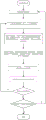
图4示出了本发明实施例提供的正交双层光栅分割算法流程图;4 shows a flowchart of an orthogonal double-layer grating segmentation algorithm provided by an embodiment of the present invention;
图5示出了本发明实施例提供的子野二维二进制编码示意图;FIG. 5 shows a schematic diagram of a two-dimensional binary encoding of a subfield provided by an embodiment of the present invention;
图6示出了本发明实施例提供的遗传算法交叉操作示意图;6 shows a schematic diagram of a genetic algorithm crossover operation provided by an embodiment of the present invention;
图7示出了本发明实施例提供的遗传算法变异操作示意图。FIG. 7 shows a schematic diagram of a mutation operation of a genetic algorithm provided by an embodiment of the present invention.
具体实施方式Detailed ways
下面将结合本发明实施例中的附图,对本发明实施例中的技术方案进行清楚、完整地描述,显然,所描述的实施例仅仅是本发明一部分实施例,而不是全部的实施例。基于本发明中的实施例,本领域普通技术人员在没有作出创造性劳动前提下所获得的所有其他实施例,都属于本发明保护的范围。The technical solutions in the embodiments of the present invention will be clearly and completely described below with reference to the accompanying drawings in the embodiments of the present invention. Obviously, the described embodiments are only a part of the embodiments of the present invention, but not all of the embodiments. Based on the embodiments of the present invention, all other embodiments obtained by those of ordinary skill in the art without creative efforts shall fall within the protection scope of the present invention.
旋转调强是目前发展最先进的调强技术,相比于传统的固定射野逆向调强,在保证靶区剂量均匀性一致的前提下,降低危及器官受量,具有显著的剂量学优势。同时通过机架和光栅配合运动,节省了治疗时间。最初的旋转治疗没有优化过程,将一个弧划分成若干个方向,每个方向上的子野形状根据射野方向观(Beam’s Eye View,BEV)中的形状确定。后来发展了旋转调强优化,采用一些优化方法,优化得到每个方向上的子野形状和权重。Rotational IM is the most advanced IM technology developed at present. Compared with the traditional fixed-field inverse IM, it can reduce the dose to organs at risk under the premise of ensuring consistent dose uniformity in the target area, and has significant dosimetric advantages. At the same time, through the coordinated movement of the frame and the grating, the treatment time is saved. The initial rotation therapy did not have an optimization process, and an arc was divided into several directions, and the shape of the subfield in each direction was determined according to the shape in the Beam's Eye View (BEV). Later, the rotation intensity modulation optimization was developed, and some optimization methods were used to optimize the shape and weight of the subfield in each direction.
目前旋转调强技术主要使用的是单层光栅或平行双层光栅实现,但单层光栅及平行双层光栅在子野分割时存在两个问题:叶片厚度方向的适形度不够;一个复杂的射野,需要多个子野才能够形成,照射效率低,而正交双层光栅能够有效地解决这两个问题。At present, the rotation intensity modulation technology is mainly realized by single-layer grating or parallel double-layer grating, but there are two problems in the subfield segmentation of single-layer grating and parallel double-layer grating: the conformity of the blade thickness direction is not enough; a complex The radiation field requires multiple subfields to form, and the irradiation efficiency is low, and the orthogonal double-layer grating can effectively solve these two problems.
为此本发明提供了一种基于遗传算法和共轭梯度算法的双层正交光栅逆向旋转调强的子野优化方法及装置。方法的核心是先将旋转射野离散成若干固定射野,对固定射野进行强度优化,并通过双层光栅静态分割算法得到分割后的子野形状,然后通过一定的筛选规则,得到形状相近的一组初始子野,接着将遗传算法用于双层光栅叶片形状调整、将共轭梯度算法子野权重调整,在调整过程中综合考虑光栅运动速度、剂量率和机架运动速度的限制。下面将对本发明的方法进行详细描述。To this end, the present invention provides a subfield optimization method and device for double-layer orthogonal grating reverse rotation intensity modulation based on genetic algorithm and conjugate gradient algorithm. The core of the method is to first discretize the rotating field into several fixed fields, optimize the intensity of the fixed fields, and obtain the shape of the segmented subfields through a double-layer grating static segmentation algorithm, and then obtain similar shapes through certain screening rules. Then, the genetic algorithm is used to adjust the blade shape of the double-layer grating, and the weight of the sub-field of the conjugate gradient algorithm is adjusted. In the adjustment process, the constraints of the grating motion speed, the dose rate and the gantry motion speed are comprehensively considered. The method of the present invention will be described in detail below.
如图1和图2所示,本发明所提出的方法基于的设备为一种正交双层多叶准直器,共有上下两层叶片,每一层的叶片运动方向为沿垂直于射线方向,且两层叶片运动方向为正交,该光栅相对于传统单层光栅,及双层平行光栅来说,适形度更高,两个方向均能够达到小于1mm的走位精度。As shown in FIG. 1 and FIG. 2 , the device based on the method proposed in the present invention is an orthogonal double-layer multi-leaf collimator, which has two layers of blades, and the movement direction of the blades of each layer is along the direction perpendicular to the ray. , and the moving directions of the two-layer blades are orthogonal. Compared with the traditional single-layer grating and the double-layer parallel grating, the grating has a higher degree of conformity, and can achieve a positioning accuracy of less than 1 mm in both directions.
本发明提供的基于子野优化的正交双层光栅旋转调强的实现方法,包括:将用于放射治疗的旋转弧离散化成等间距的多个射野,所述多个射野具有固定的机架角度;利用共轭梯度法计算所述多个射野的射野强度矩阵;通过双层光栅静态分割算法,计算每个射野的子野,以获得每个射野的前第一预定数目个贡献最大的子野;从所述前第一预定数目个贡献最大的子野中选取两个形状接近的子野,并分布到旋转弧,进行插值以得到离散子野;计算所获得的离散子野所在位置的沉积矩阵;迭代计算每个离散子野的形状和权重;采用蒙特卡洛剂量算法计算调强剂量分布。The method for realizing the rotational intensity modulation of the orthogonal double-layer grating based on the subfield optimization provided by the present invention includes: discretizing the rotational arc used for radiotherapy into multiple equidistant fields, and the multiple fields have fixed gantry angle; use the conjugate gradient method to calculate the field intensity matrix of the multiple fields; calculate the subfields of each field through the double-layer grating static segmentation algorithm, so as to obtain the first predetermined value of each field The number of sub-fields with the greatest contribution; two sub-fields with similar shapes are selected from the first predetermined number of sub-fields with the greatest contributions, and distributed to the rotation arc, and interpolation is performed to obtain discrete sub-fields; the obtained discrete sub-fields are calculated The deposition matrix of the location of the subfield; iteratively calculate the shape and weight of each discrete subfield; use the Monte Carlo dose algorithm to calculate the intensity-modulated dose distribution.
本发明通过将共轭梯度法用于射野强度矩阵计算,并且迭代计算每个离散子野的形状和权重,防止优化计算过程陷入局部最优解,保证了计划的质量,从而提高了治疗效率。By using the conjugate gradient method for the calculation of the intensity matrix of the field, and iteratively calculating the shape and weight of each discrete subfield, the invention prevents the optimization calculation process from falling into a local optimal solution, ensures the quality of the plan, and improves the treatment efficiency .
下面将参考图3至图7详细描述正交双层光栅的旋转调强实现的具体步骤。The specific steps for realizing the rotational intensity modulation of the orthogonal double-layer grating will be described in detail below with reference to FIGS. 3 to 7 .
将用于放射治疗的旋转弧(Arc)离散化成等间距的多个射野,所述多个射野具有固定的机架角度,利用共轭梯度法(CG)计算所述多个射野的射野强度矩阵。具体地,将Arc离散成等间距的若干固定机架角度的射野,机架角度间距为Δθ,用共轭梯度法优化射野强度分布,这里我们采用最常用的二次型物理目标函数,其形式如下:The arc of rotation (Arc) used for radiotherapy is discretized into multiple fields of equal spacing, the multiple fields have a fixed gantry angle, and the conjugate gradient method (CG) is used to calculate the multiple fields. Field Intensity Matrix. Specifically, Arc is discretized into several fixed gantry angles at equal intervals, and the gantry angle spacing is Δθ, and the conjugate gradient method is used to optimize the intensity distribution of the field. Here we use the most commonly used quadratic physical objective function, Its form is as follows:
Fobj(xk)=α·FOAR(xk)+β·FPTV(xk)Fobj(x k )=α·F OAR (x k )+β·F PTV (x k )


其中,FOAR(xk)为与所有OAR有关的目标函数项,FPTV(xk)为与所有靶区有关的目标函数项。NOAR为OAR的个数,NTi为第i个OAR中的采样点数。NTPTV为靶区中的采样点数。当器官中的点剂量违反约束时δj=1,否则δj=0。ωj为第j个点的权重。dj为第j个点的计算剂量,pj为第j个点的处方剂量。α,β为控制靶区和OAR的重要性的归一化因子。Nray为射束(ray,又称笔形束,pencil beam)的总个数。ajm为单位强度的第m个射束对第j个点的剂量贡献。整个ajm构成的矩阵称为能量特征矩阵(或沉积矩阵)。
通过双层光栅静态分割算法(参见图4),计算每个射野的子野,以获得每个射野的前第一预定数目(例如,前三)个贡献最大的子野。具体地,首先进行强度矩阵重新采样:通过上述过程得到的优化的射野强度分布矩阵P[p×q],进行重新采样得矩阵D[M×N],矩阵在垂直方向和水平方向的采样间隔设为0.25cm;然后进行矩阵强度等级划分:将上一步骤中的强度分布,按照强度等间隔划分为阶梯形的强度等级,强度等级越高,分割后的矩阵与原矩阵的误差就越小,但同时子野数增加。强度级从2开始逐步增大,直到分割出的子野数大于等于3。The subfields of each field are calculated to obtain the top first predetermined number (eg, top three) of the most contributing subfields for each field by a bilayer grating static segmentation algorithm (see FIG. 4 ). Specifically, the intensity matrix is first resampled: the optimized field intensity distribution matrix P [p×q] obtained through the above process is resampled to obtain a matrix D [M×N] , the matrix is sampled in the vertical and horizontal directions The interval is set to 0.25cm; then the matrix intensity level is divided: the intensity distribution in the previous step is divided into stepped intensity levels according to the intensity at equal intervals. The higher the intensity level, the greater the error between the divided matrix and the original matrix. Small, but at the same time the number of sub-wilds increases. The intensity level increases gradually from 2 until the number of divided subfields is greater than or equal to 3.
具体分割方法如下:1)设定强度等级为2;2)确定分割矩阵:强度矩阵选择当前最大强度的三分之一作为分割强度值,在此分割强度值下选出本次分割的矩阵;3)计算所述当前分割矩阵的轮廓;4)用上下左右叶片适形轮廓外围,不需要适形的叶片,闭合在远端,计算实际分割矩阵;5)计算所述实际分割矩阵与期望分割矩阵的差异,若所述实际分割矩阵大于期望分割矩阵,则调整叶片位置,使得所述实际分割矩阵小于或等于期望分割矩阵;6)从每个射野的总分割矩阵中减去上一步的实际分割矩阵,以得到新的总分割矩阵;7)计算实际叶片形成的子野面积,若所述子野面积小于阈值,则不保留该子野叶片位置;若所述子野面积大于阈值,保留该子野叶片位置,子野数增加1;8)如果所述新的总分割矩阵为0,则进行步骤9),否则转到步骤2);9)若子野数大于或等于所述第一预定数目,结束分割,否则转到步骤1),强度等级增加1,继续分割。The specific segmentation method is as follows: 1) setting the intensity level to 2; 2) determining the segmentation matrix: the intensity matrix selects one third of the current maximum intensity as the segmentation intensity value, and selects the matrix for this segmentation under this segmentation intensity value; 3) Calculate the outline of the current segmentation matrix; 4) Use the upper, lower, left, and right blades to conform to the contour periphery, and do not need conformal blades, close at the far end, and calculate the actual segmentation matrix; 5) Calculate the actual segmentation matrix and the desired segmentation If the actual segmentation matrix is greater than the expected segmentation matrix, adjust the blade position so that the actual segmentation matrix is less than or equal to the expected segmentation matrix; 6) Subtract the previous step from the total segmentation matrix of each field. Actual segmentation matrix to obtain a new total segmentation matrix; 7) Calculate the subfield area formed by the actual leaves, if the subfield area is less than the threshold, the leaf position of the subfield is not retained; if the subfield area is greater than the threshold, Keep the leaf position of the subfield, and increase the number of subfields by 1; 8) If the new total segmentation matrix is 0, go to step 9), otherwise go to step 2); 9) If the number of subfields is greater than or equal to the first A predetermined number, end the segmentation, otherwise go to step 1), increase the intensity level by 1, and continue the segmentation.
从前第一预定数目个(例如三个)贡献最大的子野中选取2个形状接近的子野,并分布到旋转弧,进行插值以得到离散子野。Two sub-fields with similar shapes are selected from the first predetermined number (eg, three) of sub-fields with the greatest contribution, and distributed to the rotation arc, and interpolation is performed to obtain discrete sub-fields.
具体地,对于三个贡献最大的子野,分别计算子野间叶片运动距离,选取运动距离较小的两个子野,将这两个子野分别分配到相邻角度上。计算子野间运动距离的公式如下:Specifically, for the three sub-fields with the greatest contribution, the blade movement distances between the sub-fields are calculated respectively, and the two sub-fields with smaller movement distances are selected, and the two sub-fields are allocated to adjacent angles respectively. The formula for calculating the movement distance between subfields is as follows:

其中,NMLC为光栅的层数,本例中值为2,即两层光栅;Mi为第i个光栅的叶片对数,Li,j,segm、Li,j,segn分别为子野segm和子野segn在第i层光栅第j对叶片中A边叶片的位置,Ri,j,segm、Ri,j,segn分别为子野segm和子野segn在第i层光栅第j对叶片中B边叶片的位置。Among them, N MLC is the number of layers of the grating, which is 2 in this example, that is, two layers of gratings; M i is the number of leaf pairs of the ith grating , and Li, j, segm , Li , j, and segn are the sub-layers, respectively. The position of the A-edge blade in the j-th pair of blades of the i-th grating with the wild segm and the sub-field segn, Ri ,j,segm ,R i,j,segn are the sub-field segm and the sub-field segn in the j-th pair of the i-th grating respectively The position of the B-side blade in the blade.
假设此射野机架角度为θi,则保留的2个子野的机架角度分别为θi+Δθ/2和θi-Δθ/2,同时通过子野位置插值得到θi处的子野形状。这样,就可以得到Arc上一些列机架角度间距为Δθ/2的离散子野,并设置这些子野的权重为1。Assuming that the gantry angle of this field is θ i , the gantry angles of the two reserved subfields are θ i +Δθ/2 and θ i -Δθ/2 respectively, and the subfield at θ i is obtained by interpolation of the subfield positions. shape. In this way, a series of discrete subfields with an angular spacing of Δθ/2 on the Arc can be obtained, and the weight of these subfields is set to 1.
计算所获得的离散子野所在位置的沉积矩阵,以更新上述步骤所计算的ajm。Calculate the deposition matrix of the obtained discrete subfield locations to update a jm calculated in the above steps.
迭代计算每个离散子野的形状和权重,具体包括:a)采用遗传算法(GA)计算每个离散子野的形状;b)采用共轭梯度法(CG)计算每个离散子野的权重;c)迭代执行步骤a)和b),直到迭代次数达到指定值或目标函数值小于预设阈值。Iteratively calculate the shape and weight of each discrete subfield, including: a) using the genetic algorithm (GA) to calculate the shape of each discrete subfield; b) using the conjugate gradient method (CG) to calculate the weight of each discrete subfield ; c) Iteratively execute steps a) and b) until the number of iterations reaches a specified value or the value of the objective function is less than a preset threshold.
其中,步骤a)具体包括如下步骤:Wherein, step a) specifically comprises the following steps:
A)在射野范围内,对初始离散子野进行二维二进制编码,叶片遮挡部分值为0,射束的强度为0,叶片打开部分值为1,该射束的强度为1(参见图5);A) Within the range of the field, perform two-dimensional binary coding on the initial discrete subfield, the value of the shielded part of the blade is 0, the intensity of the beam is 0, the value of the open part of the blade is 1, and the intensity of the beam is 1 (see Fig. 5);
B)初始种群包含第二预定数目(例如,N)个个体,每个个体代表一个计划下的第三预定数目(例如,NSt。tal)个子野,每个个体对应一个与预设目标函数有关的适应度值,在保证所有适应度值均为正数的情况下,确定目标函数最大值;适应度值(Fitness)计算公式如下:B) The initial population contains a second predetermined number (eg, N) of individuals, each of which represents a third predetermined number (eg, NS t.tal ) of subfields under a plan, and each individual corresponds to a predetermined objective function Regarding the fitness value, the maximum value of the objective function is determined under the condition that all fitness values are positive numbers; the fitness value (Fitness) calculation formula is as follows:
Fitness(s)=Fmax-Fobj(s)Fitness(s)=Fmax- Fobj (s)

其中,Fmax为目标函数最大值,Fobj为目标函数,可根据第一代种群中所有个体对应的目标函数最大值确定,保证所有适应度值均为正数即可;Among them, F max is the maximum value of the objective function, and F obj is the objective function, which can be determined according to the maximum value of the objective function corresponding to all individuals in the first-generation population, and it is sufficient to ensure that all fitness values are positive numbers;
C)交叉:随机选择两个父代个体,在对应的子野上依照交叉概率进行交叉操作(参见图6);C) Crossover: randomly select two parent individuals, and perform the crossover operation on the corresponding child field according to the crossover probability (see Figure 6);
D)变异:按照变异概率对子野进行变异操作,即随机选中子野的一个叶片,再随机决定该叶片是打开或闭合(参见图7);D) Mutation: The mutation operation is performed on the subfield according to the mutation probability, that is, a leaf of the subfield is randomly selected, and then it is randomly determined whether the leaf is open or closed (see Figure 7);
E)重复步骤C)和D),在所得到的子野违反光栅物理限制、剂量率和机架角度限制时,当次操作将被终止,重新选择个体进行交叉、变异操作,在最优个体的适应度值达到预定阈值或最优个体的适应度值和群体适应度值不再上升时,结束步骤E),跳出循环。E) Repeat steps C) and D), when the obtained subfield violates the physical constraints of the grating, the dose rate and the gantry angle constraints, the current operation will be terminated, and individuals will be re-selected for crossover and mutation operations. When the fitness value reaches a predetermined threshold or the fitness value of the optimal individual and the group fitness value no longer rise, end step E) and jump out of the loop.
用CG算法优化子野的权重:在每次子野形状优化后,用前述步骤中的CG算法对子野权重进行优化,此时仍需考虑光栅速度、剂量率和机架角度限制。需要注意的是,该步骤中ajm代表的是单位权重的第m个子野对第j个点的剂量贡献。Use the CG algorithm to optimize the subfield weights: After each subfield shape optimization, use the CG algorithm in the previous steps to optimize the subfield weights. At this time, the constraints of grating speed, dose rate and gantry angle still need to be considered. It should be noted that in this step, a jm represents the dose contribution of the mth subfield of unit weight to the jth point.
采用蒙特卡洛剂量算法(MC)计算最终调强剂量分布,保证剂量的准确性。可选地,在所述采用蒙特卡洛剂量算法计算调强剂量分布之后,还包括:输出调强放疗(IMRT)的调强剂量分布。The Monte Carlo dose algorithm (MC) was used to calculate the final intensity-modulated dose distribution to ensure the accuracy of the dose. Optionally, after the Monte Carlo dose algorithm is used to calculate the intensity-modulated dose distribution, the method further includes: outputting the intensity-modulated dose distribution of intensity-modulated radiotherapy (IMRT).
综上所述,本发明实施例提供的基于子野优化的双层正交光栅逆向旋转调强放疗的实现方法,能够有效的解决单层光栅及平行双层光栅在实现逆向旋转调强中的问题,即:叶片厚度方向的适形度不够;对于复杂的照射强度,需要多个照射弧,执行效率低。同时,遗传算法与共轭梯度算法结合使用,防止陷入局部最优解,提升优化效果。应用本发明,能够明显的提升适形度和治疗效率,对于临床有着极其重要的意义。To sum up, the implementation method of double-layer orthogonal grating reverse-rotation intensity-modulated radiotherapy based on subfield optimization provided by the embodiment of the present invention can effectively solve the problem of single-layer grating and parallel double-layer grating in realizing reverse-rotation intensity-modulated radiation therapy. The problem is that the conformity of the blade thickness direction is not enough; for complex irradiation intensity, multiple irradiation arcs are required, and the execution efficiency is low. At the same time, the genetic algorithm is used in combination with the conjugate gradient algorithm to prevent falling into the local optimal solution and improve the optimization effect. The application of the present invention can significantly improve the conformity and the treatment efficiency, and has extremely important clinical significance.
另外,本发明提供了一种基于子野优化的正交双层光栅旋转调强的实现装置,包括:旋转弧离散模块,用于将用于放射治疗的旋转弧离散化成等间距的多个射野,所述多个射野具有固定的机架角度;射野强度矩阵计算模块,用于利用共轭梯度法计算所述多个射野的射野强度矩阵;子野计算模块,用于通过双层光栅静态分割算法,计算每个射野的子野,以获得每个射野的前第一预定数目个贡献最大的子野;离散子野获取模块,用于从所述前第一预定数目个贡献最大的子野中选取两个形状接近的子野,并分布到旋转弧,进行插值以得到离散子野;沉积矩阵计算模块,用于计算所获得的离散子野所在位置的沉积矩阵;迭代计算模块,用于迭代计算每个离散子野的形状和权重;调强剂量分布计算模块,用于采用蒙特卡洛剂量算法计算调强剂量分布。In addition, the present invention provides an implementation device for orthogonal double-layer grating rotational intensity modulation based on subfield optimization, comprising: a rotational arc discretization module for discretizing the rotational arc used for radiotherapy into multiple radiation beams with equal intervals The plurality of fields have fixed gantry angles; the field intensity matrix calculation module is used to calculate the field intensity matrices of the plurality of fields by using the conjugate gradient method; the subfield calculation module is used to pass The double-layer grating static segmentation algorithm calculates the subfields of each field to obtain the first predetermined number of subfields with the greatest contribution of each field; the discrete subfield acquisition module is used to obtain the first predetermined number of subfields from the previous Two subfields with similar shapes are selected from the number of subfields with the greatest contribution, and they are distributed to the rotating arc, and interpolated to obtain discrete subfields; the deposition matrix calculation module is used to calculate the obtained deposition matrix of the location of the discrete subfields; The iterative calculation module is used to iteratively calculate the shape and weight of each discrete subfield; the intensity-modulated dose distribution calculation module is used to calculate the intensity-modulated dose distribution by using the Monte Carlo dose algorithm.
可选地,所述装置还包括预处理模块,用于:确定用于放射治疗的旋转弧的个数、方向和范围;设置待放射治疗的器官的约束条件。Optionally, the apparatus further includes a preprocessing module for: determining the number, direction and range of the arc of rotation for radiotherapy; setting constraints of the organ to be radiotherapy.
可选地,子野计算模块,具体用于:采用预定采样间隔对所述射野强度矩阵进行重新采样,以获取重新采样强度矩阵;对所述重新采样强度矩阵按照强度进行等级划分,以获得等间隔划分的阶梯形强度等级;强度等级从二开始逐步增大,通过双层光栅静态分割算法计算分割每个射野的子野,直到分割出的子野数大于等于所述第一预定数目,从而获得每个射野的前第一预定数目个贡献最大的子野。Optionally, the subfield calculation module is specifically configured to: use a predetermined sampling interval to resample the field intensity matrix to obtain a resampled intensity matrix; divide the resampled intensity matrix according to the intensity to obtain a resampled intensity matrix. Equally spaced stepped intensity levels; the intensity levels gradually increase from 2, and the sub-fields that divide each field are calculated by the double-layer grating static segmentation algorithm until the number of divided sub-fields is greater than or equal to the first predetermined number , so as to obtain the first predetermined number of subfields with the greatest contribution of each field.
可选地,子野计算模块,还具体用于:1)设定强度等级为二;2)在所述重新采样强度矩阵中选择当前最大强度的三分之一作为分割强度值,在此分割强度值下选出当前分割矩阵;3)计算所述当前分割矩阵的轮廓;4)用上下左右叶片适形轮廓外围,计算实际分割矩阵;5)计算所述实际分割矩阵与期望分割矩阵的差异,若所述实际分割矩阵大于期望分割矩阵,则调整叶片位置,使得所述实际分割矩阵小于或等于期望分割矩阵;6)从每个射野的总分割矩阵中减去所述实际分割矩阵,以得到新的总分割矩阵;7)计算实际叶片形成的子野面积,若所述子野面积小于阈值,则不保留该子野叶片位置;若所述子野面积大于阈值,保留该子野叶片位置,子野数增加1;8)如果所述新的总分割矩阵为0,则进行步骤9),否则转到步骤2);9)若子野数大于或等于所述第一预定数目,结束分割,否则转到步骤1),强度等级增加1,继续分割。可选地,所述第一预定数目例如为三。Optionally, the sub-field calculation module is also specifically used to: 1) set the intensity level to two; 2) select one third of the current maximum intensity in the resampled intensity matrix as the division intensity value, where the division Select the current segmentation matrix under the intensity value; 3) calculate the outline of the current segmentation matrix; 4) use the upper, lower, left, and right blades to conform to the contour periphery to calculate the actual segmentation matrix; 5) Calculate the difference between the actual segmentation matrix and the desired segmentation matrix , if the actual segmentation matrix is greater than the expected segmentation matrix, adjust the blade position so that the actual segmentation matrix is smaller than or equal to the expected segmentation matrix; 6) subtract the actual segmentation matrix from the total segmentation matrix of each field, 7) Calculate the sub-field area formed by the actual leaves, if the sub-field area is smaller than the threshold, the leaf position of the sub-field is not retained; if the sub-field area is greater than the threshold, keep the sub-field Leaf position, the number of subfields is increased by 1; 8) If the new total segmentation matrix is 0, go to step 9), otherwise go to step 2); 9) If the number of subfields is greater than or equal to the first predetermined number, End the segmentation, otherwise go to step 1), increase the intensity level by 1, and continue the segmentation. Optionally, the first predetermined number is, for example, three.
可选地,离散子野获取模块,具体用于:针对所得到的第一预定数目个贡献最大的子野,分别计算子野间叶片运动距离;选取运动距离较小的两个子野,将所述两个子野分别分配到相邻角度上;通过子野位置插值得到射野机架角度处的子野形状,从而获得具有预定间距的离散子野,并且将所述离散子野的权重设置为1。Optionally, the discrete subfield acquisition module is specifically used to: for the obtained first predetermined number of subfields with the greatest contribution, respectively calculate the blade motion distance between the subfields; The two subfields are respectively assigned to adjacent angles; the subfield shape at the angle of the portal gantry is obtained by interpolation of the subfield positions, so as to obtain discrete subfields with a predetermined distance, and the weight of the discrete subfields is set as 1.
可选地,迭代计算模块,具体用于:a)采用遗传算法计算每个离散子野的形状;b)采用共轭梯度法计算每个离散子野的权重;c)迭代执行步骤a)和b),直到迭代次数达到指定值或目标函数值小于预设阈值。Optionally, the iterative calculation module is specifically used for: a) using a genetic algorithm to calculate the shape of each discrete subfield; b) using a conjugate gradient method to calculate the weight of each discrete subfield; c) iteratively executing steps a) and b) until the number of iterations reaches the specified value or the objective function value is less than the preset threshold.
可选地,迭代计算模块,还具体用于:A)在射野范围内,对初始离散子野进行二维二进制编码,叶片遮挡部分值为0,射束的强度为0,叶片打开部分值为1,该射束的强度为1;B)初始种群包含第二预定数目个个体,每个个体代表一个计划下的第三预定数目个子野,每个个体对应一个与预设目标函数有关的适应度值,在保证所有适应度值均为正数的情况下,确定目标函数最大值;C)随机选择两个父代个体,在对应的子野上依照交叉概率进行交叉操作;D)按照变异概率对子野进行变异操作;E)重复步骤C)和D),在所得到的子野违反光栅物理限制、剂量率和机架角度限制时,当次操作将被终止,重新选择个体进行交叉、变异操作,在个体的适应度值达到预定阈值或个体的适应度值和群体适应度值不再上升时,结束步骤E)。可选地,所述装置还包括输出模块,用于:输出调强剂量分布。Optionally, the iterative calculation module is also specifically used to: A) perform two-dimensional binary coding on the initial discrete subfield within the range of the field, the value of the shielded part of the blade is 0, the intensity of the beam is 0, and the value of the open part of the blade is 0; is 1, the intensity of the beam is 1; B) the initial population contains a second predetermined number of individuals, each individual represents a third predetermined number of subfields under a plan, and each individual corresponds to a preset objective function related to Fitness value, in the case of ensuring that all fitness values are positive numbers, determine the maximum value of the objective function; C) Randomly select two parent individuals, and perform crossover operations on the corresponding child fields according to the crossover probability; D) According to the mutation Probabilistically perform mutation operation on the subfield; E) Repeat steps C) and D), when the obtained subfield violates the physical constraints of the grating, the dose rate and the gantry angle constraints, the operation will be terminated, and the individual will be re-selected for crossover , mutation operation, when the fitness value of the individual reaches a predetermined threshold or the fitness value of the individual and the group fitness value no longer rise, end step E). Optionally, the device further includes an output module for: outputting the intensity-modulated dose distribution.
另外,本发明还提供了一种放射治疗装置,该放射治疗装置的光栅为两层移动路径相互正交或呈锐角设置的双层光栅,该放射治疗装置采用如上所述的基于子野优化的正交双层光栅旋转调强的实现方法来控制,或者包括如上所述的基于子野优化的正交双层光栅旋转调强的控制装置。In addition, the present invention also provides a radiotherapy device, the grating of the radiotherapy device is a double-layer grating with two layers of moving paths orthogonal to each other or arranged at an acute angle, the radiotherapy device adopts the above-mentioned subfield optimization-based Orthogonal double-layer grating rotation intensity modulation is controlled by the implementation method, or includes the above-mentioned control device for orthogonal double-layer grating rotation intensity modulation based on subfield optimization.
上述实施例只为说明本发明的技术构思及特点,其目的在于让本领域普通技术人员能够了解本发明的内容并加以实施,并不能以此限制本发明的保护范围,凡根据本发明精神实质所作的等效变化或修饰,都应涵盖在本发明的保护范围内。The above-mentioned embodiments are only to illustrate the technical concept and characteristics of the present invention, and their purpose is to enable those of ordinary skill in the art to understand the content of the present invention and implement it, and cannot limit the protection scope of the present invention with this. The equivalent changes or modifications made should be covered within the protection scope of the present invention.
Claims (8)
Priority Applications (3)
| Application Number | Priority Date | Filing Date | Title |
|---|---|---|---|
| CN201910500342.2A CN110215623B (en) | 2019-06-11 | 2019-06-11 | Method and device for realizing orthogonal double-layer grating rotation intensity modulation based on subfield optimization |
| US17/618,693 US12161882B2 (en) | 2019-06-11 | 2019-11-12 | Method and device for IMAT using orthogonal double layer multi leaves collimators |
| PCT/CN2019/117278 WO2020248489A1 (en) | 2019-06-11 | 2019-11-12 | Method and device for implementing subfield optimization-based orthogonal double-layer grating rotation intensity modulation |
Applications Claiming Priority (1)
| Application Number | Priority Date | Filing Date | Title |
|---|---|---|---|
| CN201910500342.2A CN110215623B (en) | 2019-06-11 | 2019-06-11 | Method and device for realizing orthogonal double-layer grating rotation intensity modulation based on subfield optimization |
Publications (2)
| Publication Number | Publication Date |
|---|---|
| CN110215623A CN110215623A (en) | 2019-09-10 |
| CN110215623B true CN110215623B (en) | 2020-11-10 |
Family
ID=67816300
Family Applications (1)
| Application Number | Title | Priority Date | Filing Date |
|---|---|---|---|
| CN201910500342.2A Active CN110215623B (en) | 2019-06-11 | 2019-06-11 | Method and device for realizing orthogonal double-layer grating rotation intensity modulation based on subfield optimization |
Country Status (3)
| Country | Link |
|---|---|
| US (1) | US12161882B2 (en) |
| CN (1) | CN110215623B (en) |
| WO (1) | WO2020248489A1 (en) |
Families Citing this family (8)
| Publication number | Priority date | Publication date | Assignee | Title |
|---|---|---|---|---|
| CN110215623B (en) | 2019-06-11 | 2020-11-10 | 苏州雷泰智能科技有限公司 | Method and device for realizing orthogonal double-layer grating rotation intensity modulation based on subfield optimization |
| CN111681736B (en) | 2020-06-08 | 2023-05-12 | 苏州雷泰医疗科技有限公司 | Orthogonal double-layer grating dynamic intensity modulation segmentation method based on quadrant division |
| CN112043974B (en) * | 2020-09-08 | 2021-07-06 | 苏州雷泰医疗科技有限公司 | A Dynamic Intensity Modulation Method and Device Based on Orthogonal Double Layer Grating Rotation Sweep |
| CN112043976B (en) * | 2020-09-28 | 2022-11-25 | 上海联影医疗科技股份有限公司 | Radiotherapy plan adjustment system and device |
| CN113181562B (en) * | 2021-02-25 | 2022-06-24 | 中科超精(南京)科技有限公司 | Rotary multi-layer multi-leaf grating system and direct sub-field optimization method thereof |
| CN115721873B (en) * | 2021-08-30 | 2026-02-10 | 西安大医集团股份有限公司 | A method, apparatus and equipment for determining rotational speed |
| CN114768115B (en) * | 2022-03-31 | 2024-10-01 | 苏州雷泰医疗科技有限公司 | Multi-leaf grating dynamic segmentation method and device with controllable seed field number |
| US20250090864A1 (en) * | 2023-09-14 | 2025-03-20 | Siemens Healthineers International Ag | Apparatus and method for facilitating optimization of a radiation treatment plan for a particular patient using at least one multi-leaf collimator |
Citations (4)
| Publication number | Priority date | Publication date | Assignee | Title |
|---|---|---|---|---|
| CN101848745A (en) * | 2007-10-16 | 2010-09-29 | 皇家飞利浦电子股份有限公司 | Method and apparatus for intensity modulated arc therapy sequencing and optimization |
| CN101927060A (en) * | 2009-06-18 | 2010-12-29 | 东莞市益普生医疗设备发展有限公司 | Method for enhancing field conformity degree in Tomo therapy |
| CN105413068A (en) * | 2015-12-31 | 2016-03-23 | 上海联影医疗科技有限公司 | Optimization method for solving flux map and radiotherapy equipment |
| CN107921278A (en) * | 2015-06-12 | 2018-04-17 | 爱可瑞公司 | Use the multi-diaphragm collimator leaf location verification of multiple-authentication system |
Family Cites Families (47)
| Publication number | Priority date | Publication date | Assignee | Title |
|---|---|---|---|---|
| US5818902A (en) * | 1996-03-01 | 1998-10-06 | Elekta Ab | Intensity modulated arc therapy with dynamic multi-leaf collimation |
| US6526123B2 (en) * | 1997-09-29 | 2003-02-25 | Moshe Ein-Gal | Multiple layer multileaf collimator |
| EP1102610B1 (en) * | 1998-08-06 | 2007-01-17 | Wisconsin Alumni Research Foundation | Apparatus for preparing a radiation therapy plan |
| US6167114A (en) * | 1998-08-10 | 2000-12-26 | Siemens Medical Systems, Inc. | System and method for calculating scatter radiation including a collimator thickness |
| US7046762B2 (en) * | 1999-11-05 | 2006-05-16 | Georgia Tech Research Corporation | Systems and methods for global optimization of treatment planning for external beam radiation therapy |
| US6314159B1 (en) * | 1999-12-08 | 2001-11-06 | Siemens Medical Systems, Inc. | System and method for optimizing radiation treatment with an intensity modulating multi-leaf collimator |
| US6477229B1 (en) * | 2000-05-12 | 2002-11-05 | Siemens Medical Solutions Usa, Inc. | Radiation therapy planning |
| US6757355B1 (en) * | 2000-08-17 | 2004-06-29 | Siemens Medical Solutions Usa, Inc. | High definition radiation treatment with an intensity modulating multi-leaf collimator |
| US6697452B2 (en) * | 2001-02-16 | 2004-02-24 | The Board Of Trustees Of The Leland Stanford Junior University | Verification method of monitor units and fluence map in intensity modulated radiation therapy |
| US6907105B2 (en) * | 2001-09-25 | 2005-06-14 | Bc Cancer Agency | Methods and apparatus for planning and delivering intensity modulated radiation fields with a rotating multileaf collimator |
| US6661871B2 (en) * | 2001-09-28 | 2003-12-09 | Siemens Medical Solutions Usa, Inc. | System and method for optimizing radiation treatment with an intensity modulating multi-leaf collimator by minimizing junctions |
| US6907282B2 (en) | 2001-11-09 | 2005-06-14 | Siemens Medical Solutions Usa, Inc. | Intensity map resampling for multi-leaf collimator compatibility |
| US6853705B2 (en) * | 2003-03-28 | 2005-02-08 | The University Of North Carolina At Chapel Hill | Residual map segmentation method for multi-leaf collimator-intensity modulated radiotherapy |
| KR20060126454A (en) * | 2003-10-07 | 2006-12-07 | 노모스 코포레이션 | Planning system, method and apparatus for adaptive radiation therapy |
| US7283611B1 (en) * | 2004-03-22 | 2007-10-16 | The University Of Notre Dame | Segmentation algorithmic approach to step-and-shoot intensity modulated radiation therapy |
| US7734010B2 (en) * | 2005-05-13 | 2010-06-08 | Bc Cancer Agency | Method and apparatus for planning and delivering radiation treatment |
| WO2007008899A2 (en) * | 2005-07-11 | 2007-01-18 | University Of Florida Research Foundation, Inc. | Variable feathering field splitting for intensity modulated fields of large size |
| CN101247852B (en) * | 2005-07-25 | 2011-12-07 | 卡尔·奥托 | Method and apparatus for planning and delivering radiation therapy |
| US7880154B2 (en) * | 2005-07-25 | 2011-02-01 | Karl Otto | Methods and apparatus for the planning and delivery of radiation treatments |
| EP2066404A1 (en) * | 2006-09-28 | 2009-06-10 | University Of Maryland | Arc-sequencing technique for intensity modulated arc therapy |
| WO2008106522A2 (en) * | 2007-02-27 | 2008-09-04 | Wisconsin Alumni Research Foundation | System and method for optimization of a radiation therapy plan in the presence of motion |
| JP2011524185A (en) * | 2008-05-08 | 2011-09-01 | ザ・ジョンズ・ホプキンス・ユニバーシティ | Real-time dose calculation using graphics processing unit acceleration of convolution / overlay dose calculation method in radiotherapy |
| US8401148B2 (en) * | 2009-10-30 | 2013-03-19 | Tomotherapy Incorporated | Non-voxel-based broad-beam (NVBB) algorithm for intensity modulated radiation therapy dose calculation and plan optimization |
| JP5805757B2 (en) * | 2010-06-22 | 2015-11-04 | オットー カール | System and method for estimating radiation dose and manipulating the estimated radiation dose |
| US8229071B2 (en) * | 2010-07-12 | 2012-07-24 | Siemens Medical Solutions Usa, Inc. | Gated burst mode radiation treatment of moving targets |
| US8238519B2 (en) * | 2010-07-12 | 2012-08-07 | Siemens Medical Solutions Usa, Inc. | Rotational radiation treatment of moving targets |
| US8615068B2 (en) * | 2011-09-23 | 2013-12-24 | Wisconsin Alumni Research Foundation | System and method for intensity modulated arc therapy treatment planning |
| US9750955B2 (en) * | 2011-09-29 | 2017-09-05 | The Johns Hopkins University | Dose computation for radiation therapy using heterogeneity compensated superposition |
| CN102915784B (en) * | 2012-08-24 | 2016-08-03 | 山东新华医疗器械股份有限公司 | Double-layer multi-blade collimator |
| US9381376B2 (en) * | 2012-10-12 | 2016-07-05 | Varian Medical Systems International Ag | Systems, devices, and methods for quality assurance of radiation therapy |
| CN103083821B (en) * | 2013-01-27 | 2015-12-23 | 合肥克瑞斯信息科技有限公司 | The system and method for a kind of direct optimization static intensity modulating Ziye shape and machine jumping figure thereof |
| GB201406134D0 (en) * | 2014-04-04 | 2014-05-21 | Elekta Ab | Image-guided radiation therapy |
| US9486646B2 (en) * | 2014-08-29 | 2016-11-08 | Wisconsin Alumni Research Foundation | System and method for control of external beam radiation |
| CN104318122B (en) | 2014-11-06 | 2017-05-10 | 中国科学院合肥物质科学研究院 | Disturbance-based intensity modulated arc therapy optimization method |
| US9987504B2 (en) * | 2015-04-02 | 2018-06-05 | Varian Medical Systems International Ag | Portal dosimetry systems, devices, and methods |
| US10617891B2 (en) * | 2015-04-23 | 2020-04-14 | Sun Nuclear Corporation | Radiation detector calibration |
| CN105031820B (en) * | 2015-09-01 | 2018-04-03 | 上海联影医疗科技有限公司 | Intensity modulated radiation therapy reverse optimization method and device |
| WO2017070433A1 (en) * | 2015-10-23 | 2017-04-27 | The Regents Of The University Of California | A platform for intensity modulated radiation therapy |
| CN105709341B (en) * | 2016-01-15 | 2018-03-27 | 中国科学院合肥物质科学研究院 | A kind of tune hadron open country optimization method based on gradient method and unrestrained water completion method |
| US10918888B2 (en) * | 2017-02-28 | 2021-02-16 | Sun Nuclear Corporation | Radiation therapy treatment verification with electronic portal imaging device transit images |
| US10857386B2 (en) * | 2017-03-30 | 2020-12-08 | The Regents Of The University Of California | System and method for volumetric modulated arc therapy |
| US11458331B2 (en) * | 2017-04-28 | 2022-10-04 | Elekta Instrument Ab | Convex inverse planning method |
| US10744343B2 (en) * | 2017-04-28 | 2020-08-18 | Elekta Instrument Ab | Convex inverse planning method |
| CN107823806B (en) * | 2017-09-15 | 2019-11-19 | 中北大学 | A method and system for direct field optimization of intensity-modulated radiation therapy |
| CN108175953B (en) * | 2017-12-29 | 2020-07-21 | 苏州雷泰医疗科技有限公司 | Dynamic grating-based intensity modulation optimization method and radiotherapy equipment |
| CN109621228B (en) * | 2018-12-12 | 2022-06-28 | 上海联影医疗科技股份有限公司 | Radiation dose calculation device, radiation dose calculation apparatus, and storage medium |
| CN110215623B (en) * | 2019-06-11 | 2020-11-10 | 苏州雷泰智能科技有限公司 | Method and device for realizing orthogonal double-layer grating rotation intensity modulation based on subfield optimization |
-
2019
- 2019-06-11 CN CN201910500342.2A patent/CN110215623B/en active Active
- 2019-11-12 US US17/618,693 patent/US12161882B2/en active Active
- 2019-11-12 WO PCT/CN2019/117278 patent/WO2020248489A1/en not_active Ceased
Patent Citations (4)
| Publication number | Priority date | Publication date | Assignee | Title |
|---|---|---|---|---|
| CN101848745A (en) * | 2007-10-16 | 2010-09-29 | 皇家飞利浦电子股份有限公司 | Method and apparatus for intensity modulated arc therapy sequencing and optimization |
| CN101927060A (en) * | 2009-06-18 | 2010-12-29 | 东莞市益普生医疗设备发展有限公司 | Method for enhancing field conformity degree in Tomo therapy |
| CN107921278A (en) * | 2015-06-12 | 2018-04-17 | 爱可瑞公司 | Use the multi-diaphragm collimator leaf location verification of multiple-authentication system |
| CN105413068A (en) * | 2015-12-31 | 2016-03-23 | 上海联影医疗科技有限公司 | Optimization method for solving flux map and radiotherapy equipment |
Also Published As
| Publication number | Publication date |
|---|---|
| WO2020248489A1 (en) | 2020-12-17 |
| US12161882B2 (en) | 2024-12-10 |
| CN110215623A (en) | 2019-09-10 |
| US20220241612A1 (en) | 2022-08-04 |
Similar Documents
| Publication | Publication Date | Title |
|---|---|---|
| CN110215623B (en) | Method and device for realizing orthogonal double-layer grating rotation intensity modulation based on subfield optimization | |
| JP3775993B2 (en) | System for creating radiation treatment plans | |
| CN110237439B (en) | A Static Tone-Modulated Subfield Optimization Method for Orthogonal Double-layer Grating Devices | |
| Ulrich et al. | Development of an optimization concept for arc-modulated cone beam therapy | |
| WO2021003957A1 (en) | Intensity-modulated arc segmentation method and device for orthogonal double-layer optical grating | |
| EP3576842B1 (en) | Warm start initialization for external beam radiotherapy plan optimization | |
| Teoh et al. | Proton vs photon: a model-based approach to patient selection for reduction of cardiac toxicity in locally advanced lung cancer | |
| US10828511B2 (en) | System and method for optimizing a treatment plan for irradiation therapy | |
| Bergman et al. | Direct aperture optimization for IMRT using Monte Carlo generated beamlets | |
| JP7423628B2 (en) | Systems and methods for passive ion radiotherapy planning and delivery | |
| EP3302699A1 (en) | Method of selecting beam geometries | |
| CN105561485B (en) | The optimization device of radiotherapy treatment planning | |
| Otto et al. | Enhancement of IMRT delivery through MLC rotation | |
| Yang et al. | An improved beam splitting method for intensity modulated proton therapy | |
| MacDonald et al. | Intra‐arc binary collimation algorithm for the optimization of stereotactic radiotherapy treatment of multiple metastases with multiple prescriptions | |
| CN111437521B (en) | A Non-Uniform Volume Arc Intensity Modulation Method | |
| Tang et al. | Stochastic versus deterministic kernel-based superposition approaches for dose calculation of intensity-modulated arcs | |
| JP7357059B2 (en) | Systems and methods for passive ion radiotherapy planning | |
| CN110876839A (en) | Dose calculation method for non-uniform grid distribution simulation linear accelerator treatment plan | |
| Song et al. | Dosimetric effects of gantry angular acceleration and deceleration in volumetric modulated radiation therapy | |
| US20240139543A1 (en) | Pre-calculated collimator model for dose calculation source modeling | |
| CN113797450B (en) | A method and device for optimizing the intensity distribution of radiotherapy plans and radiotherapy equipment | |
| CN113521561B (en) | Method, storage medium and device for realizing orthogonal double-layer grating reverse rotation intensity modulation | |
| Oliver et al. | Incorporating geometric ray tracing to generate initial conditions for intensity modulated arc therapy optimization | |
| Holmes | A method to incorporate leakage and head scatter corrections into a tomotherapy inverse treatment planning algorithm |
Legal Events
| Date | Code | Title | Description |
|---|---|---|---|
| PB01 | Publication | ||
| PB01 | Publication | ||
| SE01 | Entry into force of request for substantive examination | ||
| SE01 | Entry into force of request for substantive examination | ||
| GR01 | Patent grant | ||
| GR01 | Patent grant |