CN109996055B - Position zero delay - Google Patents
Position zero delay Download PDFInfo
- Publication number
- CN109996055B CN109996055B CN201811471216.0A CN201811471216A CN109996055B CN 109996055 B CN109996055 B CN 109996055B CN 201811471216 A CN201811471216 A CN 201811471216A CN 109996055 B CN109996055 B CN 109996055B
- Authority
- CN
- China
- Prior art keywords
- video
- video image
- target
- time
- target viewing
- Prior art date
- Legal status (The legal status is an assumption and is not a legal conclusion. Google has not performed a legal analysis and makes no representation as to the accuracy of the status listed.)
- Active
Links
Images




Classifications
-
- H—ELECTRICITY
- H04—ELECTRIC COMMUNICATION TECHNIQUE
- H04N—PICTORIAL COMMUNICATION, e.g. TELEVISION
- H04N13/00—Stereoscopic video systems; Multi-view video systems; Details thereof
- H04N13/30—Image reproducers
- H04N13/366—Image reproducers using viewer tracking
- H04N13/383—Image reproducers using viewer tracking for tracking with gaze detection, i.e. detecting the lines of sight of the viewer's eyes
-
- G—PHYSICS
- G01—MEASURING; TESTING
- G01S—RADIO DIRECTION-FINDING; RADIO NAVIGATION; DETERMINING DISTANCE OR VELOCITY BY USE OF RADIO WAVES; LOCATING OR PRESENCE-DETECTING BY USE OF THE REFLECTION OR RERADIATION OF RADIO WAVES; ANALOGOUS ARRANGEMENTS USING OTHER WAVES
- G01S3/00—Direction-finders for determining the direction from which infrasonic, sonic, ultrasonic or electromagnetic waves, or particle emission, not having a directional significance, are being received
-
- H—ELECTRICITY
- H04—ELECTRIC COMMUNICATION TECHNIQUE
- H04N—PICTORIAL COMMUNICATION, e.g. TELEVISION
- H04N13/00—Stereoscopic video systems; Multi-view video systems; Details thereof
- H04N13/10—Processing, recording or transmission of stereoscopic or multi-view image signals
- H04N13/106—Processing image signals
- H04N13/139—Format conversion, e.g. of frame-rate or size
-
- H—ELECTRICITY
- H04—ELECTRIC COMMUNICATION TECHNIQUE
- H04N—PICTORIAL COMMUNICATION, e.g. TELEVISION
- H04N13/00—Stereoscopic video systems; Multi-view video systems; Details thereof
- H04N13/10—Processing, recording or transmission of stereoscopic or multi-view image signals
- H04N13/106—Processing image signals
- H04N13/161—Encoding, multiplexing or demultiplexing different image signal components
-
- H—ELECTRICITY
- H04—ELECTRIC COMMUNICATION TECHNIQUE
- H04N—PICTORIAL COMMUNICATION, e.g. TELEVISION
- H04N13/00—Stereoscopic video systems; Multi-view video systems; Details thereof
- H04N13/10—Processing, recording or transmission of stereoscopic or multi-view image signals
- H04N13/106—Processing image signals
- H04N13/172—Processing image signals image signals comprising non-image signal components, e.g. headers or format information
- H04N13/178—Metadata, e.g. disparity information
-
- H—ELECTRICITY
- H04—ELECTRIC COMMUNICATION TECHNIQUE
- H04N—PICTORIAL COMMUNICATION, e.g. TELEVISION
- H04N13/00—Stereoscopic video systems; Multi-view video systems; Details thereof
- H04N13/10—Processing, recording or transmission of stereoscopic or multi-view image signals
- H04N13/194—Transmission of image signals
-
- H—ELECTRICITY
- H04—ELECTRIC COMMUNICATION TECHNIQUE
- H04N—PICTORIAL COMMUNICATION, e.g. TELEVISION
- H04N21/00—Selective content distribution, e.g. interactive television or video on demand [VOD]
- H04N21/20—Servers specifically adapted for the distribution of content, e.g. VOD servers; Operations thereof
- H04N21/23—Processing of content or additional data; Elementary server operations; Server middleware
- H04N21/234—Processing of video elementary streams, e.g. splicing of video streams or manipulating encoded video stream scene graphs
- H04N21/2343—Processing of video elementary streams, e.g. splicing of video streams or manipulating encoded video stream scene graphs involving reformatting operations of video signals for distribution or compliance with end-user requests or end-user device requirements
- H04N21/234345—Processing of video elementary streams, e.g. splicing of video streams or manipulating encoded video stream scene graphs involving reformatting operations of video signals for distribution or compliance with end-user requests or end-user device requirements the reformatting operation being performed only on part of the stream, e.g. a region of the image or a time segment
-
- H—ELECTRICITY
- H04—ELECTRIC COMMUNICATION TECHNIQUE
- H04N—PICTORIAL COMMUNICATION, e.g. TELEVISION
- H04N21/00—Selective content distribution, e.g. interactive television or video on demand [VOD]
- H04N21/20—Servers specifically adapted for the distribution of content, e.g. VOD servers; Operations thereof
- H04N21/23—Processing of content or additional data; Elementary server operations; Server middleware
- H04N21/234—Processing of video elementary streams, e.g. splicing of video streams or manipulating encoded video stream scene graphs
- H04N21/2343—Processing of video elementary streams, e.g. splicing of video streams or manipulating encoded video stream scene graphs involving reformatting operations of video signals for distribution or compliance with end-user requests or end-user device requirements
- H04N21/23439—Processing of video elementary streams, e.g. splicing of video streams or manipulating encoded video stream scene graphs involving reformatting operations of video signals for distribution or compliance with end-user requests or end-user device requirements for generating different versions
-
- H—ELECTRICITY
- H04—ELECTRIC COMMUNICATION TECHNIQUE
- H04N—PICTORIAL COMMUNICATION, e.g. TELEVISION
- H04N21/00—Selective content distribution, e.g. interactive television or video on demand [VOD]
- H04N21/80—Generation or processing of content or additional data by content creator independently of the distribution process; Content per se
- H04N21/81—Monomedia components thereof
- H04N21/816—Monomedia components thereof involving special video data, e.g 3D video
Landscapes
- Engineering & Computer Science (AREA)
- Multimedia (AREA)
- Signal Processing (AREA)
- Library & Information Science (AREA)
- Physics & Mathematics (AREA)
- General Physics & Mathematics (AREA)
- Radar, Positioning & Navigation (AREA)
- Remote Sensing (AREA)
- Two-Way Televisions, Distribution Of Moving Picture Or The Like (AREA)
Abstract
本发明涉及位置零时延。基于观看跟踪数据,确定观看者对由第一视频图像描绘的三维3D场景的观看方向。所述第一视频图像在第一时间点之前已在视频流中流式传输到流式传输客户端装置,且在所述第一时间点通过所述流式传输客户端装置向所述观看者再现。基于所述观看者的观看方向,在将在所述视频流中流式传输到所述流式传输客户端装置的第二视频图像中识别目标观看部分以在所述第一时间点之后的第二时间点再现。以比用以对所述第二视频图像中的剩余非目标观看部分进行编码的时空分辨率更高的目标时空分辨率将所述目标观看部分编码到所述视频流中。

The present invention relates to position zero delay. Based on the viewing tracking data, the viewing direction of the viewer for the three-dimensional 3D scene depicted by the first video image is determined. the first video image has been streamed in a video stream to a streaming client device prior to a first point in time and is rendered to the viewer by the streaming client device at the first point in time . Identifying, based on the viewing direction of the viewer, a target viewing portion in a second video image to be streamed in the video stream to the streaming client device for a second time after the first point in time Time point reproduction. The target viewing portion is encoded into the video stream at a target spatiotemporal resolution higher than the spatiotemporal resolution used to encode the remaining non-target viewing portion in the second video image.
Description
相关申请的交叉参考CROSS-REFERENCE TO RELATED APPLICATIONS
本申请要求2017年12月6日提交的第62/595,544号美国专利申请的优先权,所述美国专利申请以全文引用的方式并入本文。This application claims priority to US Patent Application No. 62/595,544, filed on December 6, 2017, which is incorporated herein by reference in its entirety.
技术领域technical field
本发明大体上涉及显示图像,且确切地说,涉及以位置零时延再现显示图像以用于增强现实(AR)、虚拟现实(VR)、混合现实(MR)等等。The present invention relates generally to displaying images, and more particularly, to displaying images with positional zero-latency rendering for use in augmented reality (AR), virtual reality (VR), mixed reality (MR), and the like.
背景技术Background technique
为了在观看者可自由移动观看者的观看位置和方向的视频应用中支持低时延图像再现,可能需要提供高速连接(例如,光学数据连接、局部有线连接等)以支持在极短时间间隔中将大量图像数据发射到观看者的客户端装置(例如,平视显示器、可穿戴式装置、头戴装置等),例如在帧间隔(例如,小于8毫秒等)内。这可能造成在视频应用中观看者的客户端装置具有过多的外部布线且体积太大而无法容纳于可穿戴式装置的小占据面积中。To support low-latency image reproduction in video applications where the viewer can freely move the viewer's viewing position and orientation, it may be necessary to provide high-speed connections (eg, optical data connections, local wired connections, etc.) to support extremely short time intervals A large amount of image data is transmitted to the viewer's client device (eg, head-up display, wearable device, headset, etc.), eg, within frame intervals (eg, less than 8 milliseconds, etc.). This may result in a viewer's client device in video applications having too much external wiring and being too bulky to fit in the small footprint of the wearable device.
可以使用无线网络将图像数据流式传输到客户端装置。然而,可以极短时间延迟或时延发射到客户端装置的图像数据的量显著受限。跟踪观看者的场和观看位置且告知服务器也花费时间。从测量观看者的观看位置和方向时的第一时间点以及观看者的客户端装置最终再现基于观看者的先前测得的观看位置和方向而产生/选择的图像时的第二时间点的往返时间延迟会很显著,从而严重影响观看者对于视频应用的体验的沉浸质量。The image data can be streamed to the client device using a wireless network. However, the amount of image data that can be transmitted to a client device with a very short time delay or delay is significantly limited. Tracking the viewer's field and viewing position and informing the server also takes time. Round trip from the first point in time when the viewing position and orientation of the viewer is measured and the second point in time when the viewer's client device finally reproduces the image generated/selected based on the viewer's previously measured viewing position and orientation The time delay can be significant, significantly affecting the immersive quality of the viewer's experience with the video application.
在这一部分中描述的方法是可以实行的方法,但不一定是在先前就已经想到或实行的方法。因此,除非另有指示,否则不应假设在这一部分中描述的任一种方法仅凭借它们包含在这一部分中就能够作为现有技术。类似地,除非另有指示,否则相对于一或多个方法所说明的问题不应假设为已被这一部分中的任何现有技术所辨识。The methods described in this section are methods that can be practiced, but not necessarily methods that have been previously thought or practiced. Therefore, unless otherwise indicated, it should not be assumed that any of the approaches described in this section qualify as prior art merely by virtue of their inclusion in this section. Similarly, unless otherwise indicated, the problems described with respect to one or more approaches should not be assumed to have been identified by any prior art in this section.
发明内容SUMMARY OF THE INVENTION
本发明的一方面涉及一种用于流式传输视频数据的方法,其包括:基于在第一时间之后从流式传输客户端装置接收的观看跟踪数据,确定观看者相对于由第一视频图像描绘的三维(3D)场景的目标观看方向,所述第一视频图像(a)在所述第一时间点之前已在视频流中流式传输到所述流式传输客户端装置,且(b)在所述第一时间点已通过所述流式传输客户端装置向所述观看者再现;基于所述观看者的所述目标观看方向,识别第二视频图像中的目标观看部分以在所述第一时间点之后的第二时间点之前在所述视频流中流式传输到所述流式传输客户端装置且在所述第二时间点再现;将所述第二视频图像中的所述目标观看部分以高于用以对所述第二视频图像中在所述目标观看部分外部的剩余非目标观看部分进行编码的非目标时空分辨率的目标时空分辨率编码到所述视频流中;经由所述视频流将包括以所述目标时空分辨率编码的所述目标观看部分和以所述非目标时空分辨率编码的所述剩余非目标观看部分的所述第二视频图像发射到所述流式传输客户端装置;其中所述方法由一或多个计算装置执行。One aspect of the invention pertains to a method for streaming video data, comprising determining, based on viewing tracking data received from a streaming client device after a first time, relative to a viewer's relationship to a video image generated by a first video image. a target viewing direction of the depicted three-dimensional (3D) scene, the first video image (a) having been streamed in a video stream to the streaming client device prior to the first point in time, and (b) has been rendered to the viewer by the streaming client device at the first point in time; based on the target viewing direction of the viewer, identifying a target viewing portion in the second video image to be displayed at the viewer streaming to the streaming client device in the video stream before a second point in time after the first point in time and reproducing at the second point in time; converting the object in the second video image encoding a viewing portion into the video stream at a target spatiotemporal resolution higher than a non-target spatiotemporal resolution used to encode remaining non-target viewing portions of the second video image outside the target viewing portion; via the video stream transmits to the stream the second video image including the target viewing portion encoded at the target spatiotemporal resolution and the remaining non-target viewing portion encoded at the non-target spatiotemporal resolution transmission client device; wherein the method is performed by one or more computing devices.
在本发明的另一方面中,一种用于向观看者呈现视频数据的方法,其包括:在第一时间点之前从视频流解码第一视频图像,所述视频流由视频流式传输服务器流式传输;在所述第一时间点在显示装置上向观看者再现所述第一视频图像的同时,收集观看跟踪数据,观看者相对于由所述第一视频图像描绘的三维(3D)场景的目标观看方向是基于所述观看跟踪数据确定;在所述第一时间点之后的第二时间点之前将所述观看跟踪数据发送到所述视频流式传输服务器;在所述第二时间点之前从所述视频流解码第二视频图像,所述第二视频图像包括目标观看部分,所述目标观看部分具有高于用以对所述第二视频图像中在所述目标观看部分外部的剩余非目标观看部分进行编码的非目标时空分辨率的目标时空分辨率,所述第二视频图像中的所述目标观看部分已由所述流式传输服务器基于从在所述第二时间点之前发送到所述视频流式传输服务器的所述观看跟踪数据确定的所述观看者的所述目标观看方向而识别;致使所述第二视频图像中的所述目标观看部分的至少一部分在所述第二时间点在所述显示装置上向所述观看者再现;其中所述方法由一或多个计算装置执行。In another aspect of the invention, a method for presenting video data to a viewer comprising: decoding a first video image from a video stream before a first point in time, the video stream being sent by a video streaming server streaming; collecting viewing tracking data while the first video image is reproduced to a viewer on a display device at the first point in time, the viewer relative to a three-dimensional (3D) image depicted by the first video image a target viewing direction for a scene is determined based on the viewing tracking data; sending the viewing tracking data to the video streaming server before a second point in time after the first point in time; at the second time point before decoding a second video image from the video stream, the second video image including a target viewing portion, the target viewing portion having a the target spatiotemporal resolution of the non-target spatiotemporal resolution at which the remaining non-target viewing portion, the target viewing portion in the second video image, has been encoded by the streaming server based on from before the second point in time identifying the target viewing direction of the viewer determined by the viewing tracking data sent to the video streaming server; causing at least a portion of the target viewing portion in the second video image to be in the A second point in time is rendered to the viewer on the display device; wherein the method is performed by one or more computing devices.
附图说明Description of drawings
借助于实例而非限制在附图的图中说明本发明,且附图中相似参考标号指代类似元件,且其中:The invention is illustrated by way of example and not limitation in the figures of the accompanying drawings in which like reference numerals refer to like elements, and wherein:
图1说明从上游装置发射/流式传输到观看者的客户端装置的视频图像的实例序列;1 illustrates an example sequence of video images transmitted/streamed from an upstream device to a viewer's client device;
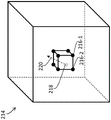
图2A到图2C说明以差分时空分辨率编码的实例视频图像;图2D说明观看者的实例视野;图2E说明多视图图像的经取样视图所源自的实例观看体积;2A-2C illustrate an example video image encoded at differential spatiotemporal resolution; FIG. 2D illustrates an example field of view of a viewer; FIG. 2E illustrates an example viewing volume from which sampled views of a multiview image originate;
图3A到图3C说明实例视频流式传输服务器和客户端;3A-3C illustrate example video streaming servers and clients;
图4A和图4B说明实例过程流;以及4A and 4B illustrate example process flows; and
图5说明在其上可实施如本文中所描述的计算机或计算装置的实例硬件平台。5 illustrates an example hardware platform on which a computer or computing device as described herein may be implemented.
具体实施方式Detailed ways
本文中描述涉及以位置零时延再现显示图像以用于AR、VR、MR等等的实例实施例。在以下描述中,出于解释的目的,阐述许多特定细节以便提供对本发明的透彻理解。然而,很明显,可以在没有这些特定细节的情况下实践本发明。在其它情况下,并未详尽地描述众所周知的结构和装置,以免不必要地封闭、模糊或混淆本发明。Example embodiments are described herein that involve rendering display images with positional zero-latency for AR, VR, MR, and the like. In the following description, for purposes of explanation, numerous specific details are set forth in order to provide a thorough understanding of the present invention. It will be apparent, however, that the present invention may be practiced without these specific details. In other instances, well-known structures and devices have not been described in detail so as not to unnecessarily obscure, obscure or obscure the present invention.
本文中根据以下提纲描述实例实施例:Example embodiments are described herein according to the following outline:
1.一般概述1. General overview
2.位置零时延2. Position zero delay
3.具有位置零时延的视频图像序列3. Video image sequence with positional zero-latency
4.环绕区4. Surround area
5.视野5. Vision
6.3D和多视图图像6. 3D and multi-view images
7.流式传输服务器和客户端7. Streaming Server and Client
8.实例过程流8. Instance process flow
9.实施方案机制-硬件概述9. Implementation Mechanisms - Hardware Overview
10.等效物、延伸、替代方案和杂项10. Equivalents, Extensions, Alternatives and Miscellaneous
1.一般概述1. General overview
此概述呈现本发明的实例实施例的一些方面的基本描述。应注意,此概述并未深入或详尽地总结实例实施例的各方面。此外,应注意,此概述并非意图被理解为识别实例实施例的任何特别显著的方面或元件,也并非意图被理解为描绘实例实施例(具体来说)或本发明(一般来说)的任何范围。此概述仅以经精简和简化格式呈现涉及实例实施例的一些概念,并且应理解为仅是对随后的实例实施例的更详细描述的概念性序言。应注意,尽管本文中论述单独的实施例,但是本文中论述的实施例和/或部分实施例的任何组合可进行组合以形成其它实施例。This summary presents a basic description of some aspects of example embodiments of this invention. It should be noted that this summary does not summarize aspects of the example embodiments in depth or exhaustion. Furthermore, it should be noted that this summary is not intended to be construed as identifying any particularly prominent aspect or element of the example embodiments, nor is it intended to be construed as delineating any aspect of the example embodiments (in particular) or the invention (in general) scope. This summary merely presents some concepts related to example embodiments in a condensed and simplified format, and should be understood as merely a conceptual prelude to the more detailed description of example embodiments that follows. It should be noted that although separate embodiments are discussed herein, any combination of the embodiments and/or parts of the embodiments discussed herein may be combined to form other embodiments.
在视频应用中从观看者的客户端装置接收视点数据的上游装置与基于视点数据再现由上游装置产生的图像的客户端装置之间存在时间延迟。对应地,用以产生图像的视点数据中表示的视点与由观看者用来观看在时间延迟之后再现的图像的视点之间存在失配。There is a time delay in a video application between an upstream device that receives viewpoint data from a viewer's client device and a client device that reproduces images generated by the upstream device based on the viewpoint data. Correspondingly, there is a mismatch between the viewpoint represented in the viewpoint data used to generate the image and the viewpoint used by the viewer to view the image reproduced after the time delay.
在一些方法下,观看者的视点必须首先由上游装置接收和确定。观看者的视点随后由上游装置使用以通过观看者对图像中描绘的场景的视点来产生图像,且随后通过多个图像帧缓冲器和网络链路将产生的图像流式传输回到客户端装置。Under some approaches, the viewer's viewpoint must first be received and determined by the upstream device. The viewer's viewpoint is then used by the upstream device to generate an image from the viewer's viewpoint of the scene depicted in the image, and the resulting image is then streamed back to the client device through multiple image frame buffers and network links .
到客户端装置准备好基于先前发送的视点数据再现产生的图像的时候,观看者或客户端装置可能已经移动到新观看位置和新观看方向。因此,当基于先前发送的视点数据产生的图像由观看者在新移动的观看位置/方向再现和观看时,经再现图像中表示的观看位置/方向与观看者的新移动的观看位置/方向之间存在失配。By the time the client device is ready to render the resulting image based on the previously sent viewpoint data, the viewer or client device may have moved to a new viewing position and new viewing direction. Therefore, when an image generated based on previously transmitted viewpoint data is reproduced and viewed by a viewer at a newly moved viewing position/direction, the difference between the viewing position/direction represented in the reproduced image and the viewer's newly moved viewing position/direction There is a mismatch.
如本文中所描述的技术可由上游装置实施以发送基于先前发送的视点数据产生的足够图像数据,以考虑在稍后时间在客户端装置处再现图像数据之前可发生的观看者的观看位置和方向的任何平移和旋转。Techniques as described herein may be implemented by an upstream device to send enough image data generated based on previously sent viewpoint data to account for the viewing position and orientation of a viewer that may occur before rendering the image data at the client device at a later time any translations and rotations.
在这些技术下,基于先前发送的视点数据产生的图像是以具有位置零时延的观看者的新移动的观看位置/方向进行再现,如同图像是从观看者的新移动的观看位置/方向看见那样。术语“位置零时延”是指虽然视频图像是在先前时间点产生且在当前时间点以时间延迟(或时间上的非零时延)经再现或显示给观看者,但将在当前时间点再现的视频图像调整、内插和/或再现到在当前时间点观看者的当前观看位置和观看方向,如同在当前时间点再现的视频图像是从在当前时间点观看者的当前观看位置和观看方向看见那样,而没有时间延迟(或对于当前观看位置和观看方向的位置零时延)。Under these techniques, images generated based on previously transmitted viewpoint data are rendered with the viewer's newly moved viewing position/orientation with position zero latency, as if the image were seen from the viewer's newly moved viewing position/orientation That way. The term "position zero-latency" means that although the video image was generated at a previous point in time and was rendered or displayed to the viewer with a time delay (or a non-zero delay in time) at the current point in time, it will be displayed at the current point in time. The reproduced video image is adjusted, interpolated and/or reproduced to the viewer's current viewing position and viewing direction at the current time point as if the rendered video image at the current time point were from the viewer's current viewing position and viewing direction at the current time point The direction sees that without a time delay (or zero delay for the current viewing position and position of the viewing direction).
更具体地,从上游装置发送到客户端装置的如本文所描述的视频图像,无论是否为多视图图像都包括目标观看部分和剩余非目标观看部分。目标观看部分不仅包含对应于如最近接收的观看跟踪数据中指示的先前视点的中央窝视图,而且包含覆盖在再现图像数据之前观看者可能已经移动到的新可能的中央窝视图的环绕区。More specifically, a video image, as described herein, transmitted from an upstream device to a client device, whether or not a multi-view image, includes a target viewing portion and a remaining non-target viewing portion. The target viewing portion contains not only the foveal view corresponding to the previous viewpoint as indicated in the most recently received viewing tracking data, but also a surround area covering new possible foveal views to which the viewer may have moved before rendering the image data.
目标观看部分是以相对高时空分辨率译码,而剩余非目标观看部分是以相对低时空分辨率译码。The target viewing portion is decoded at a relatively high spatiotemporal resolution, while the remaining non-target viewing portion is decoded at a relatively low spatiotemporal resolution.
由于目标观看部分与观看者的整个视野或与客户端装置结合操作的显示装置所支持的整个检视区相比是相对较小的,因此目标观看部分的数据体积相对较小,尽管目标观看部分是以相对高时空分辨率编码。Since the target viewing portion is relatively small compared to the viewer's entire field of view or the entire viewing area supported by a display device operating in conjunction with the client device, the target viewing portion has a relatively small data volume, even though the target viewing portion is Encoded at relatively high spatial and temporal resolution.
另外,由于剩余非目标观看部分是以相对低时空分辨率编码,因此非目标观看部分的数据体积也相对较小,尽管非目标观看部分的空间大小可能相对大。In addition, since the remaining non-targeted viewing portion is encoded at a relatively low spatiotemporal resolution, the data volume of the non-targeted viewing portion is also relatively small, although the spatial size of the non-targeted viewing portion may be relatively large.
具有在观看者的先前视点的中央窝视图外部的环绕区的目标观看部分可用以使客户端装置能够再现或再创建与观看者的新观看位置/方向相关联的新中央窝视图,而恰在再现视频图像之前的工作量最小和/或错误量最小。A target viewing portion with a surround area outside the foveal view of the viewer's previous viewpoint may be used to enable the client device to render or recreate a new foveal view associated with the viewer's new viewing position/direction, while Minimal amount of work and/or error before reproducing the video image.
在如本文所描述的技术下,客户端装置仍以时间延迟创建和接收视频图像。然而,尽管视频图像仍在时间上落后而再现,但视频图像是以在再现时观看者的同期视点的观看者的同期中央窝视图(其是从视频图像的目标观看部分的环绕区提取)再现,而不是以由上游装置用以产生图像数据的观看者的先前视点再现。因此,观看者看见具有高质量中央窝视图和正确(或同期)视点的视频图像。Under the techniques as described herein, the client device still creates and receives video images with a time delay. However, the video image is reproduced in a contemporaneous foveal view of the viewer (which is extracted from the surrounding area of the target viewing portion of the video image) at the viewer's contemporaneous viewpoint at the time of reproduction, although the video image is still reproduced behind in time , rather than the previous viewpoint of the viewer used by the upstream device to generate the image data. Thus, the viewer sees a video image with a high quality foveal view and the correct (or contemporaneous) viewpoint.
在几乎全部操作情境中,可在观看者的中央窝视图中以高分辨率视频内容呈现给观看者以用于无缝观看体验,其相对不含与并未采用如本文中所描述的技术的一些其它方法相关联的视觉假象、生理不适等。与所述其它方法相关联的视觉假象、生理不适等可包含但不一定限于以下中的任一个:转换成人类视觉所感知的高分辨率图像的延长滞后、人类视觉的中央观看区域内可辨的低分辨率图像、用户的自然视觉相关的直觉与向用户实际再现的视频内容之间的失配、当观看者移动观看角度时图像的视觉清晰性的突然下降、从低分辨率到高分辨率的可感知的缓慢转变、当观看者移动观看角度时示出先前被遮挡的图像细节的模糊图像、当观看者开始采取静止视点时场景中仍在移动的所描绘对象等。In almost all operational scenarios, high-resolution video content may be presented to the viewer in the viewer's foveal view for a seamless viewing experience that is relatively free of and does not employ techniques as described herein. Visual artefacts, physical discomfort, etc. associated with some other methods. Visual artifacts, physiological discomfort, etc. associated with the other methods may include, but are not necessarily limited to, any of the following: prolonged lag in conversion to high-resolution images as perceived by human vision, discernible within the central viewing area of human vision low-resolution images, mismatch between the user's natural visual related intuition and the actual rendering of the video content to the user, a sudden drop in the visual clarity of the image as the viewer moves the viewing angle, switching from low to high resolution Perceptually slow transitions in rate, blurry images showing previously occluded image details as the viewer moves the viewing angle, depicted objects still moving in the scene when the viewer begins to take a stationary viewpoint, etc.
本文中所描述的实例实施例涉及流式传输视频数据。基于在第一时间之后从流式传输客户端装置接收的观看跟踪数据,确定观看者相对于由第一视频图像描绘的三维(3D)场景的目标观看方向,所述第一视频图像(a)在第一时间点之前已在视频流中流式传输到流式传输客户端装置,且(b)在第一时间点已通过流式传输客户端装置向观看者再现。基于观看者的目标观看方向,在第二视频图像中识别目标观看部分以在第一时间点之后的第二时间点之前在视频流中流式传输到流式传输客户端装置且在第二时间点再现。第二视频图像中的目标观看部分是以高于用以对第二视频图像中在目标观看部分外部的剩余非目标观看部分进行编码的非目标时空分辨率的目标时空分辨率编码到视频流中。经由视频流将包括以目标时空分辨率编码的目标观看部分和以非目标时空分辨率编码的剩余非目标观看部分的第二视频图像发射到流式传输客户端装置。Example embodiments described herein relate to streaming video data. Based on viewing tracking data received from the streaming client device after the first time, a target viewing direction of the viewer is determined relative to the three-dimensional (3D) scene depicted by the first video image, the first video image (a) The video stream has been streamed to the streaming client device prior to the first point in time, and (b) has been rendered to the viewer by the streaming client device at the first point in time. Based on the target viewing direction of the viewer, a target viewing portion is identified in the second video image for streaming to the streaming client device in the video stream before a second point in time after the first point in time and at the second point in time reproduce. The target viewing portion in the second video image is encoded into the video stream at a target spatiotemporal resolution higher than the non-target spatiotemporal resolution used to encode the remaining non-target viewing portion in the second video image . A second video image including the target viewing portion encoded at the target spatiotemporal resolution and the remaining non-target viewing portion encoded at the non-target spatiotemporal resolution is transmitted to the streaming client device via the video stream.
本文中所描述的实例实施例涉及向观看者呈现视频数据。在第一时间点之前从视频流解码第一视频图像。视频流由视频流式传输服务器流式传输。在显示装置上在第一时间点向观看者再现第一视频图像的同时,收集观看跟踪数据,基于所述数据确定观看者相对于由第一视频图像描绘的三维(3D)场景的目标观看方向。在第一时间点之后的第二时间点之前将观看跟踪数据发送到视频流式传输服务器。在第二时间点之前从视频流解码第二视频图像。第二视频图像包括具有高于用以对第二视频图像中在目标观看部分外部的剩余非目标观看部分进行编码的非目标时空分辨率的目标时空分辨率的目标观看部分。第二视频图像中的目标观看部分是由流式传输服务器基于从在第二时间点之前发送到视频流式传输服务器的观看跟踪数据确定的观看者的目标观看方向而识别。在第二时间点致使第二视频图像中的目标观看部分的至少一部分在显示装置上向观看者再现。Example embodiments described herein relate to presenting video data to a viewer. The first video image is decoded from the video stream before the first point in time. The video stream is streamed by a video streaming server. While the first video image is reproduced to the viewer on the display device at the first point in time, viewing tracking data is collected, based on which the target viewing direction of the viewer relative to the three-dimensional (3D) scene depicted by the first video image is determined . The viewing tracking data is sent to the video streaming server before a second time point after the first time point. The second video image is decoded from the video stream before the second point in time. The second video image includes a target viewing portion having a target spatiotemporal resolution higher than the non-target spatiotemporal resolution used to encode the remaining non-target viewing portion in the second video image. The targeted viewing portion in the second video image is identified by the streaming server based on the targeted viewing direction of the viewer determined from viewing tracking data sent to the video streaming server prior to the second point in time. At least a portion of the target viewing portion in the second video image is caused to be rendered to the viewer on the display device at the second point in time.
在一些实例实施例中,如本文中所描述的机构形成媒体处理系统的一部分,包含但不限于以下中的任一个:基于云的服务器、移动装置、虚拟现实系统、增强现实系统、平视显示装置、头盔式显示器装置、CAVE类系统、墙壁大小的显示器、视频游戏装置、显示装置、媒体播放器、媒体服务器、媒体制作系统、相机系统、基于住宅的系统、通信装置、视频处理系统、视频编解码器系统、播音室系统、流媒体服务器、基于云的内容服务系统、手持式装置、游戏机、电视、电影院显示器、笔记本计算机、上网本、平板计算机、蜂窝无线电话、电子书阅读器、销售点终端、台式计算机、计算机工作站、计算机服务器、计算机查询一体机或各种其它种类的终端和媒体处理单元。In some example embodiments, mechanisms as described herein form part of a media processing system including, but not limited to, any of the following: cloud-based servers, mobile devices, virtual reality systems, augmented reality systems, heads-up display devices , Helmet Mounted Display Units, CAVE-like Systems, Wall-Sized Displays, Video Game Units, Display Units, Media Players, Media Servers, Media Production Systems, Camera Systems, Home-Based Systems, Communication Devices, Video Processing Systems, Video Editing Decoder systems, studio systems, streaming media servers, cloud-based content serving systems, handheld devices, game consoles, televisions, cinema monitors, notebook computers, netbooks, tablet computers, cellular wireless phones, e-book readers, point-of-sale Terminals, desktop computers, computer workstations, computer servers, computer query machines or various other kinds of terminals and media processing units.
所属领域的技术人员将容易清楚对优选实施例的各种修改以及本文中所描述的通用原理和特征。因此,本发明并非意图限于所示的实施例,而应被赋予与本文中所描述的原理和特征相一致的最广泛范围。Various modifications to the preferred embodiment, as well as the general principles and features described herein, will be readily apparent to those skilled in the art. Therefore, the present invention is not intended to be limited to the embodiments shown, but is to be accorded the widest scope consistent with the principles and features described herein.
2.位置零时延2. Position zero delay
在如本文所描述的技术下,为了基本上减少将从上游装置发射到观看者的客户端装置且由客户端装置在后续时间以位置零时延再现的视频图像中的图像数据量,视频图像可由例如视频流式传输服务器等上游装置分割成目标观看部分和剩余非目标观看部分。如本文中所描述的实例视频图像可包含但不一定仅限于以下任一项:多视图图像、全向图像、全景图像、具有宽视野的图像、非多视图图像、非全景图像等等。视频图像的分割是基于由上游装置最近接收的在较早时间点在客户端装置正向观看者再现先前视频图像的同时收集的观看跟踪数据。Under the techniques as described herein, in order to substantially reduce the amount of image data in a video image that will be transmitted from an upstream device to a viewer's client device and reproduced by the client device at a subsequent time with positional zero latency, the video image It may be segmented into the target viewing portion and the remaining non-target viewing portion by an upstream device such as a video streaming server. Example video images as described herein may include, but are not necessarily limited to, any of the following: multi-view images, omnidirectional images, panoramic images, images with a wide field of view, non-multi-view images, non-panoramic images, and the like. The segmentation of the video images is based on viewing tracking data recently received by the upstream device that was collected at an earlier point in time while the client device was rendering the previous video image to the viewer.
视频图像的目标观看部分不仅覆盖如由上游装置确定的在较早时间在观看者的视野中的最近确定的中央窝视图,而且覆盖在观看者的最近确定的中央窝视图外部的(非中央窝视图)环绕区。最近确定的中央窝视图可以由上游装置基于观看者的观看位置和方向而建立,所述观看位置和方向是由上游装置从由上游装置接收的在较早时间由观看者的客户端装置收集的最近接收观看跟踪数据最近确定。The target viewing portion of the video image covers not only the most recently determined foveal view that was in the viewer's field of view at an earlier time, as determined by the upstream device, but also the (non-foveal) views outside the viewer's most recently determined foveal view. view) surround area. The most recently determined foveal view may be established by the upstream device based on the viewing position and orientation of the viewer collected by the upstream device from the viewer's client device at an earlier time, as received by the upstream device Most recently received viewing tracking data was determined recently.
可有意地选择视频图像的目标观看部分中的环绕区以覆盖在后续时间观看者的视野的(例如,预测、所有、最可能等)潜在中央窝视图。举例来说,环绕区的空间范围可由动态功能基于以下各项而确定或空间上划定(在2D或3D图像中):(i)可变发射时延时间(取决于流式传输服务器与客户端装置之间的通信链路)和在此时延时间期间观看者的中央窝视图的最大穿越距离,和/或(ii)基于视线移动的速度和/或预期视线位移/目的地(例如,朝向关注区的视线航向)的用于观看者视线的预测建模。The surround area in the target viewing portion of the video image may be intentionally selected to cover (eg, predicted, all, most likely, etc.) potential foveal views of the viewer's field of view at a subsequent time. For example, the spatial extent of the surround zone may be determined or spatially delineated (in 2D or 3D images) by dynamic functions based on: (i) variable transmit latency (depending on the streaming server and client communication link between end devices) and the maximum distance traversed by the viewer's foveal view during this time delay, and/or (ii) based on the speed of gaze movement and/or expected gaze displacement/destination (e.g., Predictive modeling of the viewer's gaze towards the region of interest).
视频图像的目标观看部分可在从流式传输服务器到观看者的客户端装置的视频流中以与同一视频图像的非目标观看部分相比更高(例如,高得多、1.5倍、两倍、五倍等)的时空分辨率编码。The targeted viewing portion of a video image may be higher in the video stream from the streaming server to the viewer's client device than the non-target viewing portion of the same video image (eg, much higher, 1.5 times, twice as high. , five times, etc.) of the spatial and temporal resolution encoding.
在当将再现视频图像时的后续时间,观看者可能已经移动到与由上游装置从在较早时间由观看者的客户端装置收集的最近接收观看跟踪数据最近确定的观看者的观看位置和方向不同的新观看位置和新观看方向。At a later time when the video image is to be rendered, the viewer may have moved to the viewing position and orientation of the viewer most recently determined by the upstream device from the most recently received viewing tracking data collected by the viewer's client device at an earlier time Different new viewing positions and new viewing directions.
在如本文所描述的技术下,在后续时间,即使在后续时间的观看者的新不同中央窝视图不匹配于在较早时间的观看者的中央窝视图,客户端装置也可从以较高时空分辨率编码的目标图像部分提取用于观看者的新不同中央窝视图的相对高质量图像数据,将提取的图像数据调整/内插到观看者的新不同视点,且在如从观看者的新不同视角看见的观看者的新不同中央窝视图中以相对高质量图像数据再现视频图像的一些或全部,而无需等待上游装置递送基于在后续时间的新不同视图位置和新不同视图方向产生的视频图像中的高质量中央窝视图图像部分,所述后续时间是在上游装置接收到告知所述新不同视图位置和新不同视图方向的新观看跟踪数据部分之后。Under the techniques as described herein, at a later time, the client device can recover from a higher The target image portion of the spatiotemporal resolution encoding extracts relatively high quality image data for the viewer's new different foveal view, adjusts/interpolates the extracted image data to the viewer's new different viewpoint, and Reproduces some or all of the video image with relatively high quality image data in the new different foveal view of the viewer seen by the new different perspective without waiting for the upstream device to deliver the generated video based on the new different view position and the new different view direction at a later time. The high quality foveal view image portion in the video image, the subsequent time after the upstream device receives a new viewing tracking data portion informing the new different view position and the new different view orientation.
因此,客户端装置可在时间上以零时延再现观看者的新不同中央窝视图中的具有高质量成像的视频图像,尽管视频图像是在上游装置接收到可用以确定新不同中央窝视图的新观看跟踪数据之前编码。产生视频图像且将视频图像从上游装置发送到客户端装置确实仍带来时间延迟(例如,在帧间隔内、在两个帧间隔内等)。然而,在如本文所描述的技术下,每当观看者已经移动观看者的视野时,在观看者的当前中央窝视图中以相对高时空分辨率展示图像细节方面几乎不存在时间延迟(例如,位置零时延、零时间延迟、及时等)。因此,与并不实施如本文中所描述的技术的其它方法相比,如本文中所描述的技术提供观看者的用户体验的较好沉浸质量。Thus, the client device can reproduce the video image with high quality imaging in the viewer's new different foveal view with zero latency in time, even though the video image is received at the upstream device and can be used to determine the new different foveal view New watch tracking data before encoding. Generating and sending video images from the upstream device to the client device does still introduce a time delay (eg, within a frame interval, within two frame intervals, etc.). However, under techniques as described herein, there is little time delay in showing image details at relatively high spatiotemporal resolution in the viewer's current foveal view whenever the viewer has moved the viewer's field of view (eg, position zero delay, zero time delay, timely, etc.). Accordingly, the techniques as described herein provide a better immersive quality of the viewer's user experience than other approaches that do not implement the techniques as described herein.
3.具有位置零时延的视频图像序列3. Video image sequence with positional zero-latency
图1说明根据由例如流式传输服务器等上游装置(未图示)从图像数据存储器检索的源图像产生且从上游装置发射/流式传输到观看者(102)的客户端装置(未图示)的视频图像的实例序列(表示为“帧1”、“帧2”、“帧3”、“帧4”、“帧5”等)。在一些实施例中,视频图像和/或源图像中的一些或全部可以是多视图图像。在一些实施例中,视频图像和/或源图像中的一些或全部可以是非多视图图像。1 illustrates a client device (not shown) generated from a source image retrieved from an image data store by an upstream device (not shown), such as a streaming server, and transmitted/streamed from the upstream device to a viewer (102). ) of an example sequence of video images (denoted as "
来自图像数据存储器的源图像中的每一个可具有相对高时空分辨率,且可具有的图像数据量可能太大而无法在相对短时间中从上游装置发射到客户端装置。Each of the source images from the image data store may have a relatively high spatiotemporal resolution, and may have an amount of image data that may be too large to transmit from an upstream device to a client device in a relatively short period of time.
由上游装置产生且由客户端装置接收的视频图像中的每一个可以多个不同时空分辨率编码。更具体地,每一此类视频图像可以包括相对高时空分辨率的目标观看部分和相对低时空分辨率的剩余非目标观看部分,且因此具有相对小的图像数据量以在相对短时间中(例如,在10毫秒内、在20毫秒内、在50毫秒内等)从上游装置发射到客户端装置。Each of the video images generated by the upstream device and received by the client device may be encoded at a plurality of different spatiotemporal resolutions. More specifically, each such video image may include a target viewing portion of relatively high temporal and spatial resolution and a remaining non-target viewing portion of relatively low temporal and spatial resolution, and thus have a relatively small amount of image data to be viewed in a relatively short period of time ( For example, within 10 milliseconds, within 20 milliseconds, within 50 milliseconds, etc.) from the upstream device to the client device.
(例如,有序等)视频图像的序列通过与客户端装置结合操作的显示装置(未图示)在表示为“t1”到“t5”的有序时间点的序列向观看者(102)再现。更具体地,第一视频图像“帧1”是在第一时间点“t1”之前接收且在第一时间点“t1”再现。第二视频图像“帧2”是在第二时间点“t2”之前接收且在第二时间点“t2”再现。第三视频图像“帧3”是在第三时间点“t3”之前接收且在第三时间点“t3”再现。第四视频图像“帧4”是在第四时间点“t4”之前接收且在第四时间点“t4”再现。第五视频图像“帧5”是在第五时间点“t5”之前接收且在第五时间点“t5”再现。(eg, ordered, etc.) the sequence of video images is reproduced to the viewer (102) by a display device (not shown) operating in conjunction with the client device at the sequence of ordered time points denoted "t1" to "t5" . More specifically, the first video image "
在以显示装置再现视频图像序列的同时,可以同时(例如,连续地、在比有序时间点序列更时间密集的多个时间点中的每一时间点离散地等)由客户端装置或与客户端装置结合操作的跟踪装置实时或近实时地收集观看跟踪数据。观看跟踪数据可以通过从内到外跟踪、从外到内跟踪或前述的组合来收集。实例从内到外跟踪和从外到内跟踪可参见:第62/484,131号美国临时专利申请,申请标题为“被动式多可穿戴装置跟踪(PASSIVE MULTI-WEARABLE-DEVICES TRACKING)”,由阿吉特尼南(Ajit Ninan)和内尔马门(Neil Mammen)在2017年4月11日申请;第62/556,915号美国临时专利申请,由阿吉特尼南和内尔马门在2017年9月11日申请,申请标题为“用于AR/VR/MR的模块化且可拆卸的可穿戴装置(MODULAR ANDDETACHABLE WEARABLE DEVICES FOR AR/VR/MR)”,以上申请的全部内容如同在本文完全阐述一般特此以引用的方式并入本文中。While the sequence of video images is reproduced on the display device, the sequence of video images may be displayed by the client device or with The client device collects viewing tracking data in real-time or near real-time in conjunction with the operating tracking device. Viewing tracking data may be collected by inside-out tracking, outside-in tracking, or a combination of the foregoing. Examples of inside-out tracking and outside-in tracking can be found in: US Provisional Patent Application No. 62/484,131 entitled "PASSIVE MULTI-WEARABLE-DEVICES TRACKING" by Ajit Filed Apr. 11, 2017 by Ajit Ninan and Neil Mammen; U.S. Provisional Patent Application No. 62/556,915, filed Sept. 2017 by Ajit Ninan and Nermamen Filed on the 11th, entitled "MODULAR ANDDETACHABLE WEARABLE DEVICES FOR AR/VR/MR", the entire contents of the above application are as if fully set forth herein It is hereby incorporated by reference.
举例来说,在第一时间点“t1”,在第一视频图像“帧1”即将、正在和/或曾在显示装置上向观看者再现(例如,立即等)之前、(例如,同期等)同时和/或(例如,立即等)之后,客户端装置或与客户端装置结合操作的跟踪装置可以实时或近实时地同时收集观看跟踪数据的观看跟踪数据部分。此观看跟踪数据部分指示或可(例如,由客户端装置、由上游装置等)使用以确定或预测在第一时间点“t1”观看者的观看位置在哪里以及在第一时间点“t1”观看者的观看方向(或视线方向)指向哪里,例如以第一视频图像的所描绘场景(例如,所描绘3D场景等)为参考。For example, at a first point in time "t1", before, (eg, contemporaneously, etc.) ) concurrently and/or (eg, immediately, etc.) thereafter, the client device or a tracking device operating in conjunction with the client device may simultaneously collect the viewing tracking data portion of the viewing tracking data in real-time or near real-time. This viewing tracking data portion indicates or can be used (eg, by a client device, by an upstream device, etc.) to determine or predict where the viewer's viewing position is at the first point in time "tl" and at the first point in time "tl" Where the viewer's viewing direction (or line of sight) points, for example, with reference to the depicted scene (eg, depicted 3D scene, etc.) of the first video image.
基于如观看跟踪数据中指示或另外从其确定的观看者的观看位置和方向,客户端装置可确定或空间上划定在第一时间点“t1”观看者的中央窝视图104-1。由于客户端装置可能与观看者位于同一地点,因此客户端装置可相对快速地(例如,在一毫秒的严格时间预算内、在小于一毫秒的严格时间预算内等)确定或预测观看者的观看方向和位置,以及观看者的中央窝视图(104-1)。换句话说,客户端装置可在几乎没有延迟的情况下预测或识别在第一时间点“t1”的观看者的中央窝视图,其可以不同于由上游装置使用以产生第一视频图像“帧1”的最近确定的中央窝视图。因此,客户端装置在几乎没有延迟的情况下预测或识别的在第一时间点“t1”的观看者的中央窝视图表示观看者将要观看第一视频图像“帧1”的同期中央窝视图。Based on the viewing position and orientation of the viewer as indicated in or otherwise determined from the viewing tracking data, the client device may determine or spatially delineate the viewer's foveal view 104-1 at the first point in time "tl". Since the client device may be co-located with the viewer, the client device may determine or predict the viewer's viewing relatively quickly (eg, within a strict time budget of one millisecond, within a strict time budget of less than one millisecond, etc.) Orientation and location, and the viewer's foveal view (104-1). In other words, the client device can predict or identify, with little delay, the viewer's foveal view at the first point in time "tl", which may be different from that used by the upstream device to generate the first video image "frame" 1" view of the most recently identified fovea. Thus, the viewer's foveal view at the first point in time "tl" predicted or identified by the client device with little delay indicates that the viewer is about to view the contemporaneous foveal view of the first video image "
基于在第一时间点“t1”的观看者的中央窝视图(104-1),客户端装置从第一视频图像“帧1”的目标观看部分提取/产生中央窝视图区用于在第一时间点“t1”再现以覆盖(例如,完全、具有安全裕量等)从观看跟踪数据确定/预测的在第一时间点“t1”的观看者的中央窝视图。Based on the viewer's foveal view at the first point in time "t1" (104-1), the client device extracts/generates the foveal view region from the target viewing portion of the first video image "
在一些实施例中,具有相对高时空分辨率的目标观看部分在(空间)大小上受到限制以减少从上游装置到客户端装置的发射数据的体积,且不覆盖观看者的整个视野或显示装置的整个检视区。In some embodiments, the target viewing portion with relatively high spatiotemporal resolution is constrained in (spatial) size to reduce the volume of transmitted data from the upstream device to the client device and not cover the viewer's entire field of view or display device the entire viewport.
由于第一视频图像“帧1”的目标观看部分是以相对高时空分辨率接收,因此从第一视频图像“帧1”的目标观看部分提取的中央窝视图区可由客户端装置以高达与从上游装置接收的目标观看部分相同的相对高时空分辨率再现(例如,几乎没有上取样等)。Since the target viewing portion of the first video image "
另外,基于在第一时间点“t1”的观看者的中央窝视图(104-1),客户端装置从第一视频图像“帧1”的目标观看部分以及剩余非目标观看部分提取/产生一或多个非中央窝视图区用于在第一时间点“t1”再现,以覆盖(例如,完全、具有安全裕量等)观看者的视野或在第一时间点“t1”在中央窝视图区(其覆盖观看者的中央窝视图)外部的显示装置的(例如,完全、大体上全部等)检视区。Additionally, based on the viewer's foveal view (104-1) at the first point in time "t1", the client device extracts/generates a or multiple non-foveal view regions for rendering at the first time point "t1" to cover (eg, fully, with a safety margin, etc.) the viewer's field of view or in the foveal view at the first time point "t1" A viewing area (eg, fully, substantially all, etc.) of a display device outside the area (which covers the viewer's view of the fovea).
由于第一视频图像“帧1”的非目标观看部分是以相对低时空分辨率接收,因此从第一视频图像“帧1”的目标观看部分提取的非中央窝视图区的一些或全部可以由客户端装置以高达从上游装置接收的目标观看部分的相对低时空分辨率再现。在一些实施例中,空间滤波可以应用于非中央窝视图区中的图像数据以将从上游装置接收的这些区中的空间分辨率减少到模拟观看者的视野中的现实世界场景的空间分辨率的一或多个特定空间分辨率。Since the non-target viewing portion of the first video image "
另外,任选地或替代地,基于在第一时间点“t1”的观看者的观看位置和观看方向,客户端装置将从第一视频图像“帧1”的目标和非目标观看部分提取的中央窝视图和非中央窝视图区调整/内插到由在第一时间点“t1”的观看者的观看位置和观看方向表示的观看者的(例如,当前等)视点,然后再现第一视频图像“帧1”。具有经调整/内插到当前视点的中央窝视图和非中央窝视图区的第一视频图像“帧1”代替经解码的预先调整/预先内插的第一视频图像“帧1”而再现。Additionally, optionally or alternatively, based on the viewing position and viewing direction of the viewer at the first point in time "t1", the client device extracts from the target and non-target viewing portions of the first video image "
观看跟踪数据和/或针对第一时间点“t1”确定/测得的观看者的观看位置和方向和/或针对第一时间点“t1”确定的观看者的中央窝视图可以由客户端装置实时或近实时地提供到上游装置。The viewing tracking data and/or the viewer's viewing position and orientation determined/measured for the first point in time "t1" and/or the viewer's foveal view determined for the first point in time "t1" may be determined/measured by the client device Provided to upstream devices in real time or near real time.
由于网络通信和数据处理中的时延(或时间延迟),观看跟踪数据和/或其它观看相关数据(例如,从观看跟踪数据导出的观看位置和/或观看方向等)可以由上游装置在与客户端装置用来确定观看者的观看位置和方向和/或观看者的中央窝视图的时间间隔(例如,在一毫秒内、在五毫秒内等)相比相对较长的延迟(例如,长于一毫秒、长于五毫秒等)中接收。Due to delays (or time delays) in network communications and data processing, viewing tracking data and/or other viewing related data (eg, viewing positions and/or viewing directions derived from viewing tracking data, etc.) The time interval (eg, within one millisecond, within five milliseconds, etc.) used by the client device to determine the viewing position and direction of the viewer and/or the viewer's foveal view is compared to a relatively long delay (eg, longer than one millisecond, longer than five milliseconds, etc.).
关于影响上游装置和客户端装置的相对较长(例如,往返等)延迟,到后续视频图像基于第一时间点“t1”的观看者的观看位置和观看方向而产生且由上游装置发送到客户端装置且接着由客户端装置在例如第二时间点“t2”等后续时间点再现的时候,观看者可能已经移动到新的不同观看位置和/或新的不同观看方向。Regarding the relatively long (eg, round-trip, etc.) delay affecting the upstream device and the client device, to subsequent video images are generated based on the viewing position and viewing direction of the viewer at the first point in time "t1" and sent by the upstream device to the client The viewer may have moved to a new different viewing position and/or a new different viewing direction by the time the client device and then rendered by the client device at a subsequent point in time such as the second point in time "t2".
上游装置可以基于最近接收但可能将因往返延迟而过时的观看跟踪数据或观看相关数据而确定观看者的最近观看位置/方向和/或观看者的最近中央窝视图,并且进一步使用此类(延迟影响的)观看者的最近观看位置/方向和/或观看者的最近中央窝视图以产生例如第二视频图像“帧2”等后续视频图像。The upstream device may determine the viewer's nearest viewing position/direction and/or the viewer's nearest foveal view based on recently received viewing tracking data or viewing-related data that may be outdated by round-trip delays, and further use such (delayed) Affected) the viewer's most recent viewing position/direction and/or the viewer's most recent foveal view to produce subsequent video images such as the second video image "Frame 2".
借助于说明而非限制,上游装置在第一视频图像“帧1”经再现之后且在第二视频图像“帧2”经再现之前接收最近接收的观看跟踪数据部分,且基于最近接收的观看跟踪数据部分确定第一时间点“t1”的观看者的观看位置/方向和/或观看者的中央窝视图(104-1)为观看者的最近观看位置/方向和/或观看者的最近中央窝视图。By way of illustration and not limitation, the upstream device receives the most recently received portion of view track data after the first video image "
应注意在各种实施例中,在观看者正观看先前视频图像的同时基于最近确定的观看位置/方向产生的后续视频图像可能是或可能不是在由客户端装置向观看者再现的有序视频图像的序列中紧跟随先前视频图像的下一视频图像。It should be noted that in various embodiments, subsequent video images generated based on the most recently determined viewing position/orientation while the viewer is viewing previous video images may or may not be an ordered video being rendered to the viewer by the client device. The next video image in the sequence of images immediately follows the previous video image.
仅出于说明的目的,在当前的实例中,先前视频图像是第一视频图像“帧1”,而后续视频图像是在上游装置确定观看者的最近观看位置/方向和/或观看者的最近中央窝视图之后发送的第二视频图像“帧2”。For illustrative purposes only, in the current example, the previous video image is the first video image "
为了产生第二视频图像“帧2”,上游装置确定第二视频图像“帧2”的目标观看部分。取决于观看者的视线的移动,第二视频图像“帧2”的目标观看部分可以或可以不相同于第一视频图像“帧1”的目标观看部分。客户端装置可至少部分地基于针对第一时间点“t1”确定的观看者的中央窝视图确定第二视频图像“帧2”的目标观看部分。借助于比较,至少部分地基于针对在第一视频图像“帧1”之前的视频图像曾经再现的先前时间点(在第一时间点“t1”之前)确定的观看者的中央窝视图而确定第一视频图像“帧1”的目标观看部分。To generate the second video image "Frame 2", the upstream device determines a target viewing portion of the second video image "Frame 2". Depending on the movement of the viewer's gaze, the target viewing portion of the second video image "Frame 2" may or may not be the same as the target viewing portion of the first video image "
在一些实施例中,第二视频图像“帧2”的目标观看部分不仅覆盖在第一时间点“t1”的观看者的中央窝视图的一些或全部,而且覆盖邻接和/或包围观看者的中央窝视图的环绕区。In some embodiments, the target viewing portion of the second video image "Frame 2" covers not only some or all of the viewer's foveal view at the first point in time "t1", but also covers the view adjacent to and/or surrounding the viewer. Surrounding area of foveal view.
可以至少部分地基于上游装置与客户端装置之间的发射时延时间确定第二视频图像“帧2”中的环绕区的空间范围。发射时延时间可为往返延迟时间,包含但不限于从客户端装置收集由上游装置最近接收的观看跟踪数据的时间点和客户端装置接收第二图像帧“帧2”的时间点的时间间隔的一些或全部。可以完全或部分地从由客户端装置和上游装置收集且在它们之间交换的过去的网络通信和数据处理统计来推断发射时间延迟。可以使用从上游装置发射到客户端装置的(例如,最近发射的等)视频图像的移动窗口(例如,在抖动缓冲器等中)推断发射时间延迟为平均或经平滑发射时间延迟。The spatial extent of the surround region in the second video image "Frame 2" may be determined based at least in part on a transmission latency time between the upstream device and the client device. The transmit delay time may be a round-trip delay time including, but not limited to, the time interval between the point in time when the most recent viewing tracking data received by the upstream device is collected from the client device and the point in time when the second image frame "Frame 2" is received by the client device some or all of them. The transmit time delay may be inferred, in whole or in part, from past network communication and data processing statistics collected by and exchanged between the client device and the upstream device. The transmit time delay may be inferred to be an average or smoothed transmit time delay using a moving window (eg, in a jitter buffer, etc.) of video images (eg, most recently transmitted, etc.) transmitted from the upstream device to the client device.
可以至少部分地基于上游装置与客户端装置之间的发射时延时间的变化而确定第二视频图像“帧2”中的环绕区的空间范围。举例来说,当发射时延时间的变化发生时,可以用取决于发射时延时间的变化的较大或较小空间裕量来放大环绕区。The spatial extent of the surround region in the second video image "Frame 2" may be determined based at least in part on a change in transmission latency time between the upstream device and the client device. For example, when a change in transmit delay time occurs, the surround region can be enlarged with a larger or lesser spatial margin depending on the change in transmit delay time.
当发射时延时间或其变化大部分或完全用以确定或空间上划定环绕区时,环绕区可以经确定或空间上划定为第二视频图像“帧2”中均匀地围绕用以覆盖在第一时间点“t1”的观看者的中央窝视图的中央窝视图区为中心的空间区。When the transmit delay time or its variation is mostly or completely used to determine or spatially delineate the surround zone, the surround zone may be determined or spatially delimited to be evenly surrounded in the second video image "frame 2" for coverage A spatial region centered on the foveal view region of the viewer's foveal view at the first time point "t1".
可以至少部分地基于第二时间点“t2”的预测视线位移而确定第二视频图像“帧2”中的环绕区的空间范围。可以基于由上游装置从作为观看跟踪数据的一部分收集的最近接收的观看跟踪数据部分确定的在第一时间点“t1”的观看者的位置、在第一时间点“t1”的观看者的视线速度、在第一时间点“t1”的观看者的视线加速度等而确定第二时间点“t2”的预测视线位移。The spatial extent of the surround region in the second video image "Frame 2" may be determined based at least in part on the predicted line-of-sight displacement at the second point in time "t2". The line of sight of the viewer at the first point in time "tl" may be based on the position of the viewer at the first point in time "tl" as determined by the upstream device from the most recently received portion of the viewing tracking data collected as part of the viewing tracking data The predicted gaze displacement at the second time point "t2" is determined by velocity, the viewer's gaze acceleration at the first time point "t1", and the like.
当发射时延时间或其变化大部分或完全用以确定或空间上划定环绕区时,环绕区可以经确定或空间上划定为第二视频图像“帧2”中具有细长形状的空间区,所述细长形状突出预测视线位移的方向和或覆盖对应于预测视线位移的估计空间轨迹的包围区域。When the transmit delay time or its variation is mostly or entirely used to determine or spatially delineate the surround zone, the surround zone may be determined or spatially delimited as a space having an elongated shape in the second video image "Frame 2" The elongated shape highlights the direction of the predicted gaze displacement and or covers an enclosing area corresponding to the estimated spatial trajectory of the predicted gaze displacement.
另外,任选地或替代地,可以至少部分地基于以下各项中的一或多个的组合确定第二视频图像“帧2”中的环绕区的空间范围:发射时延时间、发射时延时间的变化、预测视线位移等。Additionally, optionally or alternatively, the spatial extent of the surround region in the second video image "Frame 2" may be determined based at least in part on a combination of one or more of the following: transmit delay time, transmit delay Changes in time, predicted line of sight displacement, etc.
除确定第二视频图像“帧2”的目标观看部分之外,上游装置还可进一步确定第二视频图像“帧2”的一或多个非目标观看部分。第二视频图像“帧2”的目标观看部分可与第二视频图像“帧2”的剩余非目标观看部分不重叠(但邻接或毗邻)。In addition to determining the target viewing portion of the second video image "Frame 2", the upstream device may further determine one or more non-target viewing portions of the second video image "Frame 2". The target viewing portion of the second video image "Frame 2" may be non-overlapping (but adjoining or adjoining) the remaining non-target viewing portion of the second video image "Frame 2".
目标观看部分或剩余非目标观看部分中的任一个可具有多种规则或不规则空间形状中的空间形状。另外,任选地或替代地,目标观看部分可具有以下各项中的一或多个:与剩余非目标观看部分不同的空间形状、不同的大小、不同的纵横比等。Either the target viewing portion or the remaining non-target viewing portions may have a spatial shape of a variety of regular or irregular spatial shapes. Additionally, optionally or alternatively, the target viewing portion may have one or more of: a different spatial shape, a different size, a different aspect ratio, etc., than the remaining non-target viewing portions.
另外,任选地或替代地,可在由上游装置用以将视频图像序列流式传输到客户端装置的视频流中以第二视频图像“帧2”编码的图像元数据中识别目标观看部分和/或剩余非目标观看部分中的一些或全部(例如,作为关注区等)。客户端装置可使用图像元数据以识别第二视频图像“帧2”中的目标观看部分与剩余非目标观看部分。Additionally, optionally or alternatively, the target viewing portion may be identified in the image metadata encoded with the second video image "Frame 2" in the video stream used by the upstream device to stream the sequence of video images to the client device and/or some or all of the remaining non-targeted viewing portions (eg, as areas of interest, etc.). The client device may use the image metadata to identify the target viewing portion and the remaining non-target viewing portion in the second video image "Frame 2".
第二视频图像“帧2”中的目标观看部分可以高于用以对第二视频图像“帧2”中在目标观看部分外部的剩余非目标观看部分进行编码的非目标时空分辨率的目标时空分辨率编码到视频流中。以目标时空分辨率编码的(第二视频图像的)目标观看部分和以非目标时空分辨率编码的(第二视频图像的)剩余非目标观看部分可经由视频流从上游发射到客户端装置。The target viewing portion in the second video image "Frame 2" may be higher than the target spatiotemporal resolution of the non-target spatiotemporal resolution used to encode the remaining non-target viewing portion in the second video image "Frame 2" outside the target viewing portion The resolution is encoded into the video stream. The target viewing portion (of the second video image) encoded at the target spatiotemporal resolution and the remaining non-target viewing portion (of the second video image) encoded at the non-target spatiotemporal resolution may be transmitted upstream to the client device via the video stream.
在一些实施例中,例如第二视频图像“帧2”的目标观看部分等视频图像的目标观看部分是在视频流的一或多个第一视频子流中编码,而例如第二视频图像“帧2”的剩余非目标观看部分等视频图像的剩余非目标观看部分是在视频流的一或多个第二不同视频子流中编码。In some embodiments, the targeted viewing portion of a video image, such as the targeted viewing portion of the second video image "Frame 2", is encoded in one or more of the first video substreams of the video stream, while the targeted viewing portion, eg, the second video image "Frame 2" The remaining non-target viewing portion of the video image, such as the remaining non-target viewing portion of frame 2", is encoded in one or more second different video sub-streams of the video stream.
由上游装置以相对高时空分辨率的目标观看部分和较低时空分辨率的剩余非目标观看部分发送的第二视频图像“帧2”是在第一时间点“t1”之后经由视频流接收且由客户端装置解码,具有涉及发射延迟和数据处理延迟的从第一时间点“t1”的时间延迟。出于说明的目的,第二视频图像“帧2”是在第二时间点“t2”之前由客户端装置解码。The second video image "frame 2" sent by the upstream device with the relatively high spatiotemporal resolution target viewing portion and the lower spatiotemporal resolution remaining non-target viewing portion is received via the video stream after the first point in time "t1" and Decoded by the client device, with a time delay from the first point in time "t1" involving transmission delay and data processing delay. For illustration purposes, the second video image "frame 2" is decoded by the client device before the second point in time "t2".
如在第二时间点“t2”,在第二视频图像“帧2”即将、正在和/或曾在显示装置上向观看者再现之前、(例如,同期等)同时和/或(例如,立即等)之后再现第一视频图像“帧1”的情况下,客户端装置或与客户端装置结合操作的跟踪装置可以实时或近实时地同时收集观看跟踪数据的观看跟踪数据部分。此观看跟踪数据部分指示或可(例如,由客户端装置、由上游装置等)使用以确定或预测在第二时间点“t2”观看者的观看位置在哪里以及在第二时间点“t2”观看者的观看方向(或视线方向)指向哪里,例如以第二视频图像“帧2”的所描绘场景(例如,所描绘3D场景等)为参考。As at the second point in time "t2", concurrently and/or (eg, immediately before, eg, contemporaneously, etc.) before the second video image "Frame 2" is, is, and/or was rendered to the viewer on the display device etc.) after reproducing the first video image "
基于如观看跟踪数据中指示或另外从其确定的观看者的观看位置和观看方向,客户端装置可确定或空间上划定在第二时间点“t2”观看者的中央窝视图104-2。由于客户端装置可能与观看者位于同一地点,因此客户端装置可相对快速地(例如,在一毫秒的严格时间预算内、在小于一毫秒的严格时间预算内等)确定或预测观看者的观看方向和位置,以及观看者的中央窝视图(104-2)。Based on the viewing position and viewing direction of the viewer as indicated in or otherwise determined from the viewing tracking data, the client device may determine or spatially delineate the viewer's foveal view 104-2 at the second point in time "t2". Since the client device may be co-located with the viewer, the client device may determine or predict the viewer's viewing relatively quickly (eg, within a strict time budget of one millisecond, within a strict time budget of less than one millisecond, etc.) Orientation and location, and the viewer's foveal view (104-2).
基于在第二时间点“t2”的观看者的中央窝视图(104-2),客户端装置从第二视频图像“帧2”的目标观看部分提取/产生中央窝视图区用于在第二时间点“t2”再现以覆盖(例如,完全、具有安全裕量等)从观看跟踪数据确定/预测的在第二时间点“t2”的观看者的中央窝视图。客户端装置可以从视频流解码图像元数据。图像元数据可以包含与第二视频图像相关的部分,其识别第二视频图像中的目标观看部分与剩余非目标观看部分。Based on the viewer's foveal view at the second time point "t2" (104-2), the client device extracts/generates the foveal view region from the target viewing portion of the second video image "frame 2" for use at the second Time point "t2" is rendered to cover (eg, fully, with a safety margin, etc.) the viewer's foveal view at the second time point "t2" as determined/predicted from the viewing tracking data. The client device may decode image metadata from the video stream. The image metadata may include a portion associated with the second video image that identifies the target viewing portion and the remaining non-target viewing portion in the second video image.
由于第二视频图像“帧2”的目标观看部分是以相对高时空分辨率接收,因此从第二视频图像“帧2”的目标观看部分提取的中央窝视图区可由客户端装置以高达与从上游装置接收目标观看部分相同的相对高时空分辨率再现。Since the target viewing portion of the second video image "Frame 2" is received at a relatively high spatiotemporal resolution, the foveal view region extracted from the target viewing portion of the second video image "Frame 2" can be obtained by the client device at up to and from The upstream device receives the same relatively high spatiotemporal resolution reproduction of the target viewing portion.
另外,基于在第二时间点“t2”的观看者的中央窝视图(104-2),客户端装置从第二视频图像“帧2”的目标观看部分以及剩余非目标观看部分提取/产生一或多个非中央窝视图区用于在第二时间点“t2”再现,以覆盖(例如,完全、具有安全裕量等)观看者的视野或在第二时间点“t2”在中央窝视图区(其覆盖观看者的中央窝视图)外部的显示装置的(例如,完全、大体上全部等)检视区。Additionally, based on the viewer's foveal view (104-2) at the second time point "t2", the client device extracts/generates a or multiple non-foveal view areas for rendering at the second time point "t2" to cover (eg, completely, with a safety margin, etc.) the viewer's field of view or in the foveal view at the second time point "t2" A viewing area (eg, fully, substantially all, etc.) of a display device outside the area (which covers the viewer's view of the fovea).
在一些实施例中,具有相对高时空分辨率的目标观看部分在(空间)大小方面受到限制且不覆盖观看者的整个视野或显示装置的整个检视区。由于第二视频图像“帧2”的非目标观看部分是以相对低时空分辨率接收,因此从第二视频图像“帧2”的目标观看部分提取的非中央窝视图区的一些或全部可以由客户端装置以高达从上游装置接收的目标观看部分的相对低时空分辨率再现。在一些实施例中,空间滤波可以应用于非中央窝视图区中的图像数据以将从上游装置接收的这些区中的空间分辨率减少到相仿或模拟观看者的视野中的现实世界场景的空间分辨率的一或多个特定空间分辨率。In some embodiments, the target viewing portion with relatively high spatiotemporal resolution is limited in (spatial) size and does not cover the entire field of view of the viewer or the entire viewing area of the display device. Since the non-target viewing portion of the second video image "Frame 2" is received at a relatively low spatiotemporal resolution, some or all of the non-foveal view regions extracted from the target viewing portion of the second video image "Frame 2" may be The client device renders at relatively low spatiotemporal resolution up to the target viewing portion received from the upstream device. In some embodiments, spatial filtering may be applied to image data in non-foveal view regions to reduce the spatial resolution in these regions received from upstream devices to a space that resembles or simulates the real world scene in the viewer's field of view Resolution One or more specific spatial resolutions.
另外,任选地或替代地,基于在第二时间点“t2”的观看者的观看位置和观看方向,客户端装置将从第二视频图像“帧2”的目标和非目标观看部分提取的中央窝视图和非中央窝视图区调整/内插到由在第二时间点“t2”的观看者的观看位置和观看方向表示的观看者的(例如,当前等)视点,然后再现第二视频图像“帧2”。具有经调整/内插到当前视点的中央窝视图和非中央窝视图区的第二视频图像“帧2”代替经解码的预先调整/预先内插的第二视频图像“帧2”而再现。Additionally, optionally or alternatively, based on the viewing position and viewing direction of the viewer at the second point in time "t2", the client device extracts from the target and non-target viewing portions of the second video image "Frame 2" The foveal view and non-foveal view areas are adjusted/interpolated to the viewer's (eg, current, etc.) viewpoint represented by the viewer's viewing position and viewing direction at the second time point "t2", and then the second video is reproduced Image "Frame 2". A second video image "Frame 2" with the foveal view and non-foveal view regions adjusted/interpolated to the current viewpoint is reproduced in place of the decoded pre-adjusted/pre-interpolated second video image "Frame 2".
观看跟踪数据和/或针对第二时间点“t2”确定/测得的观看者的观看位置和方向和/或针对第一时间点“t2”确定的观看者的中央窝视图可以由客户端装置实时或近实时地提供到上游装置。观看跟踪数据和观看相关数据可由上游装置使用以从图像数据存储器检索后续源图像,从源图像产生例如“帧3”、“帧4”、“帧5”等等后续视频图像,将后续视频图像(2)发射到客户端装置等。另外,任选地或替代地,检视区信息指定或告知显示装置的检视区可以由客户端装置发送到上游装置。检视区信息可由上游服务器使用作为确定用于覆盖显示装置的检视区的视频图像大小的基础。The viewing tracking data and/or the viewing position and direction of the viewer determined/measured for the second point in time "t2" and/or the foveal view of the viewer determined for the first point in time "t2" may be determined/measured by the client device Provided to upstream devices in real time or near real time. View tracking data and viewing related data may be used by upstream devices to retrieve subsequent source images from the image data store, generate subsequent video images such as "Frame 3", "Frame 4", "Frame 5", etc. (2) Transmission to the client device or the like. Additionally, optionally or alternatively, the viewport information specifying or informing the viewport of the display device may be sent by the client device to the upstream device. The viewport information may be used by the upstream server as a basis for determining the size of the video image used to cover the viewport of the display device.
第二视频图像“帧2”中的目标观看部分的至少一部分可由客户端装置在第二时间点“t2”在显示装置上向观看者再现。在显示装置上再现的目标观看部分的部分包含对应于在第二时间点“t2”观看者的视野中的中央窝视图的中央窝视图区。At least a portion of the target viewing portion in the second video image "frame 2" may be rendered by the client device to the viewer on the display device at the second point in time "t2". The portion of the target viewing portion rendered on the display device contains the foveal view area corresponding to the foveal view in the viewer's field of view at the second point in time "t2".
4.环绕区4. Surround area
图2A说明由上游装置以差分时空分辨率编码的实例视频图像200-1(例如,图1的第二视频图像“帧2”等)。视频图像(200-1)包括相对高时空分辨率的目标观看部分202-1以及一或多个较低时空分辨率的剩余非目标观看部分204-1。2A illustrates an example video image 200-1 (eg, second video image "Frame 2" of FIG. 1, etc.) encoded by an upstream device at a differential spatiotemporal resolution. The video image (200-1) includes a relatively high spatiotemporal resolution target viewing portion 202-1 and one or more lower spatiotemporal resolution remaining non-target viewing portions 204-1.
可以通过从在观看者在再现和观看视频图像(200-1)的先前视频图像(例如,第一视频图像“帧1”等)的同时(或紧接在之前或之后)收集的观看跟踪数据确定的观看者的最近接收观看位置和观看方向来确定例如202-1等目标观看部分的空间位置(例如,质心位置、中心方向等)。The viewing tracking data may be collected from viewing tracking data collected while the viewer is rendering and viewing previous video images (eg, first video image "
选择目标观看部分(202-1)以不仅覆盖对应于观看者的最近接收观看位置和观看方向的中央窝视图(例如,104-1等),而且还有当再现视频图像(200-1)时覆盖大体上全部可能的中央窝视图(例如,104-2等)的环绕区212-1,如从例如时间延迟、视线移动、视频图像(200-1)中的关注区等一系列因数所估计。The target viewing portion (202-1) is selected to cover not only the foveal view (eg, 104-1, etc.) corresponding to the viewer's most recently received viewing position and viewing direction, but also when rendering the video image (200-1) Surround region 212-1 covering substantially all possible foveal views (eg, 104-2, etc.), as estimated from a series of factors such as time delay, gaze movement, region of interest in video image (200-1), etc. .
例如202-1等目标观看部分的(例如,整个等)空间范围可以基于以下各项中的一或多个而确定或划定:不依赖方向的目标观看确定因数、方向相依性目标观看确定因数等。实例不依赖于方向的目标观看确定因数可以包含但不一定仅限于以下各项中的任一个:发射延迟、数据处理延迟、安全裕量、感测数据获取时间、感测数据分析时间等。实例方向相依性目标观看确定因数可以包含但不一定仅限于以下各项中的任一个:视线速度(或观看者的观看位置和/或观看方向的改变速率)、视线加速度、视频图像中的关注区等。如图2A中所图示,目标观看部分(202-1)的空间范围可以通过一或多个不依赖于方向的目标观看确定因数来确定,例如以下各项中的一或多个:发射延迟、数据处理延迟、安全裕量、感测数据获取时间、感测数据分析时间等。与观看者对先前视频图像(在本实例中为第一视频图像“帧1”)的观看相关的观看跟踪数据可以指示在观看者在再现和观看先前视频图像的同时观看者的视线是静止的。The spatial extent (eg, the entire, etc.) of a target viewing portion, such as 202-1, may be determined or delineated based on one or more of the following: a direction-independent target-view determination factor, a direction-dependent target-view determination factor Wait. Example direction-independent target viewing determination factors may include, but are not necessarily limited to, any of the following: transmit delay, data processing delay, safety margin, sensed data acquisition time, sensed data analysis time, and the like. Example orientation-dependent target viewing determination factors may include, but are not necessarily limited to, any of the following: gaze velocity (or rate of change of the viewer's viewing position and/or viewing orientation), gaze acceleration, attention in video images District, etc. As illustrated in Figure 2A, the spatial extent of the target viewing portion (202-1) may be determined by one or more direction-independent target viewing determination factors, such as one or more of the following: transmit delay , data processing delay, safety margin, sensing data acquisition time, sensing data analysis time, etc. Viewing tracking data related to the viewer's viewing of the previous video image (in this example, the first video image "
图2B说明由上游装置以差分时空分辨率编码的实例视频图像200-2(例如,图1的第三视频图像“帧3”等)。视频图像(200-2)包括相对高时空分辨率的目标观看部分202-2以及一或多个较低时空分辨率的剩余非目标观看部分204-2。2B illustrates an example video image 200-2 (eg, the third video image "Frame 3" of FIG. 1, etc.) encoded at a differential spatiotemporal resolution by an upstream device. The video image (200-2) includes a relatively high spatiotemporal resolution target viewing portion 202-2 and one or more lower spatiotemporal resolution remaining non-target viewing portions 204-2.
可以通过从在观看者在再现和观看视频图像(200-2)的先前视频图像(例如,第二视频图像“帧2”等)的同时(或紧接在之前或之后)收集的观看跟踪数据确定的观看者的最近接收观看位置和观看方向来确定例如202-2等目标观看部分的空间位置(例如,质心位置、中心方向等)。The viewing tracking data may be collected from viewing tracking data collected at the same time (or immediately before or after) the viewer is rendering and viewing a previous video image (eg, second video image "frame 2", etc.) The most recent received viewing position and viewing direction of the viewer are determined to determine the spatial position (eg, centroid position, center direction, etc.) of the target viewing portion such as 202-2.
选择目标观看部分(202-2)以不仅覆盖对应于观看者的最近接收观看位置和观看方向的中央窝视图(例如,104-2等),而且还有当再现视频图像(200-2)时覆盖大体上全部可能的中央窝视图(例如,104-3等)的环绕区212-2,如从例如时间延迟、视线移动、视频图像(200-2)中的关注区等一系列因数所估计。The target viewing portion (202-2) is selected to cover not only the foveal view (eg, 104-2, etc.) corresponding to the viewer's most recently received viewing position and viewing direction, but also when rendering the video image (200-2) Surrounding region 212-2 covering substantially all possible foveal views (eg, 104-3, etc.), as estimated from a series of factors such as time delay, gaze movement, region of interest in video image (200-2), etc. .
如图2B中所说明,目标观看部分(202-2)的空间范围可以至少部分地通过一或多个方向相依性目标确定因数来确定,例如以下各项中的一或多个:视线速度、视线加速度、关注区等。与观看者对先前视频图像(在本实例中为第二视频图像“帧2”)的观看相关的观看跟踪数据可以指示在观看者正再现和观看先前视频图像的同时观看者的视线正以非零速度和/或非零加速度移动。As illustrated in Figure 2B, the spatial extent of the target viewing portion (202-2) may be determined, at least in part, by one or more direction-dependent target determination factors, such as one or more of the following: line-of-sight velocity, Line-of-sight acceleration, area of interest, etc. Viewing tracking data related to the viewer's viewing of the previous video image (in this example, the second video image "Frame 2") may indicate that the viewer's line of sight is not moving while the viewer is reproducing and viewing the previous video image. Move with zero velocity and/or non-zero acceleration.
图2C说明由上游装置以差分时空分辨率编码的实例视频图像200-3(例如,图1的第四视频图像“帧4”等)。视频图像(200-3)包括相对高时空分辨率的目标观看部分202-3以及一或多个较低时空分辨率的剩余非目标观看部分204-3。2C illustrates an example video image 200-3 (eg, fourth video image "Frame 4" of FIG. 1, etc.) encoded at differential spatiotemporal resolution by an upstream device. The video image (200-3) includes a relatively high spatiotemporal resolution target viewing portion 202-3 and one or more lower spatiotemporal resolution remaining non-target viewing portions 204-3.
可以通过从在观看者在再现和观看视频图像(200-3)的先前视频图像(例如,第三视频图像“帧3”等)的同时(或紧接在之前或之后)收集的观看跟踪数据确定的观看者的最近接收观看位置和观看方向来确定例如202-3等目标观看部分的空间位置(例如,质心位置、中心方向等)。The viewing tracking data may be collected from viewing tracking data collected at the same time (or immediately before or after) the viewer is rendering and viewing the previous video image (eg, third video image "frame 3", etc.) The most recent received viewing position and viewing direction of the viewer are determined to determine the spatial position (eg, centroid position, center direction, etc.) of the target viewing portion such as 202-3.
选择目标观看部分(202-3)以不仅覆盖对应于观看者的最近接收观看位置和观看方向的中央窝视图(例如,104-3等),而且还有当再现视频图像(200-3)时覆盖大体上全部可能的中央窝视图(例如,104-4等)的环绕区212-3,如从例如时间延迟、视线移动、视频图像(200-3)中的关注区等一系列因数所估计。The target viewing portion (202-3) is selected to cover not only the foveal view (eg, 104-3, etc.) corresponding to the viewer's most recently received viewing position and viewing direction, but also when rendering the video image (200-3) Surrounding region 212-3 covering substantially all possible foveal views (eg, 104-4, etc.), as estimated from a series of factors such as time delay, gaze movement, region of interest in video image (200-3), etc. .
如图2C中所说明,目标观看部分(202-3)的空间范围可以至少部分地通过一或多个不依赖于方向和/或方向相依性目标观看确定因数来确定,例如以下各项中的一或多个:发射延迟、数据处理延迟、安全裕量、感测数据获取时间、感测数据分析时间、视线速度、视线加速度、关注区等。与观看者对先前图像的观看相关的观看跟踪数据可以指示在观看者正再现和观看先前视频图像的同时观看者的视线正以非零速度和/或非零加速度移动。类似于图2B的目标观看部分(202-2),图2C的目标观看部分(202-3)是具有基于方向相依性因数获得的方向性的细长区(沿着纵向方向),所述方向相依性因数例如关注区、根据在观看者再现和观看先前视频图像的同时收集的与先前视频图像(在本实例中为第三视频图像“帧3”)相关的观看跟踪数据确定的视线速度/加速度等。然而,由于与图2B的目标观看部分(202-2)相比例如增加的时间延迟等不依赖于方向的因数,图2C的目标观看部分(202-3)具有沿所述细长形状的横向方向的较大宽度。As illustrated in Figure 2C, the spatial extent of the target viewing portion (202-3) may be determined, at least in part, by one or more direction-independent and/or direction-dependent target viewing determination factors, such as among One or more of: launch delay, data processing delay, safety margin, sensing data acquisition time, sensing data analysis time, line-of-sight velocity, line-of-sight acceleration, area of interest, etc. Viewing tracking data related to the viewer's viewing of the previous image may indicate that the viewer's line of sight is moving at a non-zero velocity and/or non-zero acceleration while the viewer is rendering and viewing the previous video image. Similar to the target viewing portion ( 202 - 2 ) of FIG. 2B , the target viewing portion ( 202 - 3 ) of FIG. 2C is an elongated region (along the longitudinal direction) with a directionality obtained based on a directional dependency factor, the direction Dependency factors such as area of interest, gaze velocity determined from viewing tracking data related to a previous video image (in this example, the third video image "Frame 3") collected while the viewer is reproducing and viewing the previous video image/ acceleration, etc. However, the target viewing portion (202-3) of Fig. 2C has a lateral direction along the elongated shape due to direction independent factors such as increased time delay compared to the target viewing portion (202-2) of Fig. 2B The larger width of the direction.
5.视野5. Vision
图2D说明观看者(例如,图1的102等)的实例视野206(例如对于观看者的一只眼睛等)。观看者的视线方向在视野(206)中由水平轴线208(例如,沿着瞳孔间距离)和垂直轴线(210)的相交点表示。同心圆形线中的每一者指示观看者的视野中参照观看者的视线方向的某一角度。2D illustrates an example field of view 206 (eg, for one eye of the viewer, etc.) of a viewer (eg, 102 of FIG. 1, etc.). The direction of the viewer's gaze is represented in the field of view (206) by the intersection of the horizontal axis 208 (eg, along the interpupillary distance) and the vertical axis (210). Each of the concentric circular lines indicates a certain angle in the viewer's field of view with reference to the viewer's line-of-sight direction.
在一些实施例中,如本文中所描述的视频图像(例如,图1的第二视频图像“帧2”、图2A的视频图像200-1等)可以在与由观看者(102)佩戴或使用的客户端装置结合操作的显示装置的检视区中再现,以覆盖观看者的视野(206)的一些或全部。In some embodiments, a video image as described herein (eg, second video image "Frame 2" of FIG. 1, video image 200-1 of FIG. 2A, etc.) may be worn in conjunction with being worn by a viewer (102) or The rendering in the viewing area of the display device used in conjunction with the client device operates to cover some or all of the viewer's field of view (206).
如图2D中所图示,视频图像(图2A的200-1)的目标观看部分(例如,图2A的202-1等)包括中央窝视图(例如,图2A的104-1等),其覆盖(例如,完全、大体上等)观看者的中央窝视觉多达观看者的视野中的观看者近外围视觉中的一些或全部(及可能甚至安全区)。在一些实施例中,对由客户端装置经由视频流接收的目标观看部分(202-1)的中央窝视图(104-1)几乎不执行上取样操作。As illustrated in Figure 2D, the target viewing portion (eg, 202-1 of Figure 2A, etc.) of the video image (200-1 of Figure 2A) includes a foveal view (eg, 104-1 of Figure 2A, etc.), which Covers (eg, completely, substantially, etc.) the viewer's foveal vision up to some or all (and possibly even the safe zone) of the viewer's near peripheral vision in the viewer's field of view. In some embodiments, little upsampling is performed on the foveal view (104-1) of the target viewing portion (202-1) received by the client device via the video stream.
视频图像(图2A的200-1)的目标观看部分(202-1)进一步包括环绕区(例如,图2A的212-1等),其覆盖邻近和/或邻接于观看者的视野(206)的中央窝视图(104-1)的非中央窝视图区。The target viewing portion ( 202 - 1 ) of the video image ( 200 - 1 of FIG. 2A ) further includes a surround area (eg, 212 - 1 of FIG. 2A , etc.) that covers adjacent and/or adjacent to the viewer's field of view ( 206 ) The non-foveal view area of the foveal view (104-1).
另外,任选地或替代地,视频图像(图2A的200-1)可进一步包括在目标观看部分(202-1)外部的一或多个剩余非目标观看部分。在一些实施例中,剩余非目标观看部分中的图像数据可以与目标观看部分(202-1)中的图像数据相比相对低的时空分辨率译码。另外,任选地或替代地,剩余非目标观看部分中的图像数据可以与目标观看部分(202-1)中的图像数据相比更少的颜色信息(或更少的色度数据)译码。Additionally, optionally or alternatively, the video image ( 200 - 1 of FIG. 2A ) may further include one or more remaining non-target viewing portions external to the target viewing portion ( 202 - 1 ). In some embodiments, the image data in the remaining non-target viewing portion may be decoded at a relatively lower spatiotemporal resolution than the image data in the target viewing portion (202-1). Additionally, optionally or alternatively, the image data in the remaining non-target viewing portion may be decoded with less color information (or less chroma data) than the image data in the target viewing portion (202-1) .
如本文中所描述具有不同图像性质(例如,空间分辨率、帧速率、动态范围、色域等)的目标观看部分和非目标观看部分可以保持在单独的存储缓冲器中(例如,上游装置中、客户端装置中等)。在一些实施例中,这些存储缓冲器中的一些或全部可以相同帧速率(或缓冲器刷新率)更新。在其它实施例中,存储缓冲器中的至少一个可以与用以更新其它存储缓冲器的帧速率(或缓冲器刷新率)不同的帧速率(或缓冲器刷新率)更新。Target viewing portions and non-target viewing portions having different image properties (eg, spatial resolution, frame rate, dynamic range, color gamut, etc.) as described herein may be maintained in separate memory buffers (eg, in an upstream device) , client device, etc.). In some embodiments, some or all of these memory buffers may be updated at the same frame rate (or buffer refresh rate). In other embodiments, at least one of the memory buffers may be updated at a different frame rate (or buffer refresh rate) than the frame rate (or buffer refresh rate) used to update the other memory buffers.
6.3D和多视图图像6. 3D and multi-view images
如本文中所描述的视频图像可能或可能不表示二维像素阵列。在各种实施例中,如本文中所描述的视频图像可指代以下各项中的任一个:全向图像、非全向、立体图像、全景图像、非全景图像、多视图图像、多视图图像中的经取样视图、多视图图像中具有多个图像层的经取样视图、纹理图像、光场再现图像等。因此,视图部分,例如本文所描述的目标观看部分或非目标观看部分,可能或可能不表示2D视频图像中的像素子集。在各种实施例中,视图部分,例如本文所描述的目标观看部分或非目标观看部分,可指代以下各项中的任一个中的图像部分:全向图像、非全向、立体图像、全景图像、非全景图像、多视图图像、多视图图像中的经取样视图、多视图图像中具有多个图像层的经取样视图、纹理图像、光场再现图像等。Video images as described herein may or may not represent a two-dimensional array of pixels. In various embodiments, a video image as described herein may refer to any of the following: omnidirectional image, non-omnidirectional, stereoscopic image, panoramic image, non-panoramic image, multi-view image, multi-view A sampled view in an image, a sampled view with multiple image layers in a multi-view image, a texture image, a light field rendering image, etc. Thus, a view portion, such as a target viewing portion or a non-target viewing portion described herein, may or may not represent a subset of pixels in a 2D video image. In various embodiments, a view portion, such as a target viewing portion or a non-target viewing portion described herein, may refer to an image portion in any of the following: an omnidirectional image, a non-omnidirectional image, a stereoscopic image, a Panoramic images, non-panoramic images, multi-view images, sampled views in multi-view images, sampled views with multiple image layers in multi-view images, texture images, light field rendering images, etc.
举例来说,在一些实施例中,如本文中所描述的视频图像可指代包括从观看体积中的多个视点观看的多个经取样视图的多视图图像,在所述观看体积中观看者可改变对由所述多视图图像描绘的3D场景的观看位置和观看角度。For example, in some embodiments, a video image as described herein may refer to a multi-view image that includes multiple sampled views viewed from multiple viewpoints in a viewing volume in which a viewer is viewing The viewing position and viewing angle of the 3D scene depicted by the multi-view image can be changed.
在一些实施例中,所述多个经取样视图中的每一经取样视图可以包括从观看体积中的所述多个视点中的相应视点观看的全景纹理图像和对应全景深度图像。In some embodiments, each sampled view of the plurality of sampled views may include a panoramic texture image and a corresponding panoramic depth image viewed from a corresponding viewpoint of the plurality of viewpoints in the viewing volume.
图2E说明实例观看体积214,多视图图像(例如,图1的第二视频图像“帧2”、图2A的视频图像200-1等)的多个经取样视图源自所述观看体积。所述多视图图像的所述多个经取样视图包括从贯穿观看体积(214)分布的多个视点看见的多个经取样全景纹理图像和多个经取样全景深度图。2E illustrates an
在一些实施例中,基于由上游装置(例如,从视频流中的多视图图像选择和发射经编码视频图像的视频编码器等)从观看者的客户端装置(例如,从视频流接收和解码经编码视频图像的视频解码器)接收的最近接收观看跟踪数据,观看者可以在观看体积(214)内部使观看者的视野(例如,如图2D中所图示等)指向在目标观看方向220上定向且源自目标观看位置218的目标观看。多视图图像中的相邻经取样视图(例如,216-1、216-2等)的集合可以基于目标观看位置(218)和/或目标观看方向(220)中的一者或两者而识别,且可以表示多视图图像中的多个经取样视图中的经取样视图的恰当子集。In some embodiments, a client device (eg, received and decoded from a video stream) from a viewer's client device (eg, a video encoder that selects and transmits encoded video images from a multi-view image in the video stream, etc.) The most recently received viewing tracking data received by the video decoder) of the encoded video image, the viewer can point the viewer's field of view (eg, as illustrated in FIG. 2D , etc.) in the
在当前的实例中,由于相邻经取样视图(例如,216-1、216-2等)中的每一经取样视图包括经取样全景图像和经取样全景深度图,因此例如无论目标观看的方向是什么,存取这些相邻经取样视图都足以存取被这些相邻经取样视图中的视图的宽场覆盖的目标观看方向的图像和深度数据。因此,合成纹理图像以覆盖显示装置的检视区(其可覆盖观看者的视野的一些或全部)以用于目标观看可基于相邻经取样视图的集合中的经取样视图的相对小总数目,而与目标观看的位置无关以及与观看体积(214)的其余部分中的非相邻取样视图无关。In the current example, since each sampled view in adjacent sampled views (eg, 216-1, 216-2, etc.) includes a sampled panoramic image and a sampled panoramic depth map, for example, regardless of the direction in which the target is looking Whatever, accessing these adjacent sampled views is sufficient to access the image and depth data for the target viewing direction covered by the widefield of views in these adjacent sampled views. Thus, synthesizing a texture image to cover a viewing area of a display device (which may cover some or all of a viewer's field of view) for targeted viewing may be based on a relatively small total number of sampled views in the set of adjacent sampled views, Regardless of where the target is looking at and non-adjacent sampled views in the rest of the viewing volume (214).
在如本文所描述的技术下,相邻经取样视图的集合中的每一经取样视图的经取样全景纹理图像和经取样全景深度图可以在从上游装置到观看者的客户端装置的视频流中以差分时空分辨率编码。Under the techniques as described herein, the sampled panoramic texture image and sampled panoramic depth map for each sampled view in the set of adjacent sampled views may be in the video stream from the upstream device to the viewer's client device Encoded at differential spatiotemporal resolution.
举例来说,在视频图像(或多视图图像)的经取样全景纹理图像或深度图中,可以基于目标观看位置(218)和目标观看方向(220)确定或空间上划定目标图像(或目标深度图)部分。可以选择目标图像(或目标深度图)部分以不仅覆盖观看者的视觉中的观看者的中央窝视图,而且还有当正向观看者再现从视频图像(或多视图图像)的相邻经取样视图集合(直接或间接)构造的目标观看图像时覆盖(例如,所有等)可能的中央窝视图的环绕区。For example, in a sampled panoramic texture image or depth map of a video image (or multi-view image), the target image (or target) may be determined or spatially delineated based on the target viewing position (218) and target viewing direction (220). depth map) section. The target image (or target depth map) portion can be selected to cover not only the viewer's foveal view in the viewer's vision, but also when the forward viewer is reproducing adjacent sampled images from the video image (or multi-view image). The target of the view set (direct or indirect) construction covers (eg, all, etc.) the surrounding area of possible foveal views when viewing the image.
视频图像(或多视图图像)的经取样全景纹理图像或深度图中的目标图像(或目标深度图)部分中的图像/深度数据可以在视频流中以相对高时空分辨率编码。视频图像(或多视图图像)的经取样全景纹理图像或深度图中的剩余非目标图像(或剩余非目标深度图)部分中的图像/深度数据可以在视频流中以相对低时空分辨率编码。Image/depth data in a sampled panoramic texture image of a video image (or multi-view image) or a target image (or target depth map) portion of a depth map may be encoded in the video stream at relatively high spatiotemporal resolution. The image/depth data in the sampled panoramic texture image or the remaining non-target image (or remaining non-target depth map) portion of the video image (or multi-view image) may be encoded in the video stream at relatively low spatiotemporal resolution .
在一些实施例中,所述多个经取样视图中的每一经取样视图可以包括从源自观看体积(例如,214等)中的多个视点的多个视图方向观看的多个纹理图像和多个深度图。In some embodiments, each sampled view of the plurality of sampled views may include a plurality of texture images and a plurality of texture images viewed from a plurality of view directions originating from a plurality of viewpoints in a viewing volume (eg, 214, etc.). a depth map.
在一些实施例中,基于由上游装置(例如,从视频流中的多视图图像选择和发射经编码视频图像的视频编码器等)从观看者的客户端装置(例如,从视频流接收和解码经编码视频图像的视频解码器等)接收的最近接收观看跟踪数据,观看者可以在观看体积(214)内部使观看者的视野(例如,如图2D中所图示等)指向从目标观看方向(例如,220等)和目标观看位置(例如,218等)定向的目标观看。多视图图像中的相邻经取样视图(例如,216-1、216-2等)的集合可以基于目标观看位置(218)和/或目标观看方向(220)中的一者或两者而识别,且可以表示多视图图像中的多个经取样视图中的经取样视图的恰当子集。In some embodiments, a client device (eg, received and decoded from a video stream) from a viewer's client device (eg, a video encoder that selects and transmits encoded video images from a multi-view image in the video stream, etc.) The most recently received viewing tracking data received by a video decoder of an encoded video image, etc.), the viewer can point the viewer's field of view (eg, as illustrated in Figure 2D, etc.) within the viewing volume (214) from the target viewing direction (eg, 220, etc.) and target viewing position (eg, 218, etc.) oriented target viewing. Sets of adjacent sampled views (eg, 216-1, 216-2, etc.) in the multi-view image may be identified based on one or both of the target viewing position (218) and/or the target viewing direction (220) , and may represent an appropriate subset of the sampled views of the multiple sampled views in the multi-view image.
在当前的实例中,由于相邻经取样视图(例如,216-1、216-2等)中的每一经取样视图包括多个纹理图像和多个深度图,因此存取这些相邻经取样视图足以存取被这些相邻经取样视图中的视图的宽场覆盖的目标观看方向的图像和深度数据。因此,合成纹理图像以覆盖显示装置的检视区(其可覆盖观看者的视野的一些或全部)以用于目标观看可基于相邻经取样视图的集合中的经取样视图的相对小总数目,而与目标观看的位置无关以及与观看体积(214)的其余部分中的非相邻取样视图无关。In the current example, since each of the adjacent sampled views (eg, 216-1, 216-2, etc.) includes multiple texture images and multiple depth maps, these adjacent sampled views are accessed It is sufficient to access image and depth data for the target viewing direction covered by the widefield of views in these adjacent sampled views. Thus, synthesizing a texture image to cover a viewing area of a display device (which may cover some or all of a viewer's field of view) for targeted viewing may be based on a relatively small total number of sampled views in the set of adjacent sampled views, Regardless of where the target is looking at and non-adjacent sampled views in the rest of the viewing volume (214).
在如本文所描述的技术下,来自相邻经取样视图集合中的经取样视图的纹理图像和深度图可以在从上游装置到观看者的客户端装置的视频流中以差分时空分辨率编码。Under the techniques as described herein, texture images and depth maps from sampled views in adjacent sets of sampled views may be encoded at differential spatiotemporal resolutions in the video stream from the upstream device to the viewer's client device.
举例来说,在视频图像(或多视图图像)的纹理图像或深度图中,可以基于目标观看位置(218)和目标观看方向(220)确定或空间上划定目标图像(或目标深度图)部分。可以选择目标图像(或目标深度图)部分以不仅覆盖观看者的视觉中的观看者的中央窝视图,而且还有当正向观看者再现从视频图像(或多视图图像)的相邻经取样视图集合(直接或间接)构造的目标观看图像时覆盖(例如,所有等)可能的中央窝视图的环绕区。For example, in a texture image or depth map of a video image (or multi-view image), the target image (or target depth map) may be determined or spatially delineated based on the target viewing position (218) and target viewing direction (220) part. The target image (or target depth map) portion can be selected to cover not only the viewer's foveal view in the viewer's vision, but also when the forward viewer is reproducing adjacent sampled images from the video image (or multi-view image). The target of the view set (direct or indirect) construction covers (eg, all, etc.) the surrounding area of possible foveal views when viewing the image.
视频图像(或多视图图像)的纹理图像或深度图中的目标图像(或目标深度图)部分中的图像/深度数据可以在视频流中以相对高时空分辨率编码。视频图像(或多视图图像)的纹理图像或深度图中的剩余非目标图像(或剩余非目标深度图)区中的图像/深度数据可以在视频流中以相对低时空分辨率编码。The image/depth data in the target image (or target depth map) portion of the video image (or multi-view image) texture image or the depth map can be encoded in the video stream at relatively high spatiotemporal resolution. Image/depth data in the remaining non-target image (or remaining non-target depth map) regions of the texture image or depth map of the video image (or multi-view image) may be encoded in the video stream at relatively low spatiotemporal resolution.
实例多视图图像和从多视图图像构造的目标观看图像可参见:第62/518,187号美国临时专利申请,申请标题为“对多视图视频进行译码(CODING MULTIVIEW VIDEO)”,哈里查兰拉克什曼(Haricharan Lakshman)和阿吉特尼南(Ajit Ninan)在2017年6月12日申请;第62/582,445号美国临时专利申请,申请标题为“参数化用于体积观看的3D场景(PARAMETERIZING 3D SCENES FOR VOLUMETRIC VIEWING)”,哈里查兰拉克什曼和阿吉特尼南2017年11月7日申请,以上申请的全部内容如同在本文完全阐述一般特此以引用的方式并入本文中。Example multi-view images and target viewing images constructed from multi-view images can be found in: US Provisional Patent Application No. 62/518,187 entitled "CODING MULTIVIEW VIDEO" by Hari Charan Rakesh Haricharan Lakshman and Ajit Ninan, filed June 12, 2017; U.S. Provisional Patent Application No. 62/582,445 SCENES FOR VOLUMETRIC VIEWING)" filed by Hari Charan Lakshman and Ajit Ninan on Nov. 7, 2017, the entire contents of which are hereby incorporated by reference as if fully set forth herein.
在一些实施例中,一或多个“INTER_VIEW”预测方法用于压缩将从上游装置发射到下游客户端装置的数据量。无论是否包含在相邻经取样视图集合中,关键视图图像都可以连同作为包含在相邻经取样视图集合中的经取样视图的任何相依视图图像一起编码到多视图视频信号或位流中。另外,任选地或替代地,除“INTER_VIEW”预测方法外的零个、一或多个其它预测方法(例如,“INTER”预测方法、“INTRA”预测方法等)可用于在对将发送到下游装置的关键视图图像和相依视图图像中的一些或全部进行编码时的预测(或压缩)。结合多视图图像的实例“INTER_VIEW”、“INTER”和“INTRA”预测方法可参见:第62/518,187号美国临时专利申请,申请标题为“对多视图视频进行译码(CODING MULTIVIEW VIDEO)”,哈里查兰拉克什曼和阿吉特尼南在2017年6月12日申请,其全部内容如同在本文完全阐述一般特此以引用的方式并入本文中。In some embodiments, one or more "INTER_VIEW" prediction methods are used to compress the amount of data that will be transmitted from an upstream device to a downstream client device. Whether or not included in adjacent sets of sampled views, key view images may be encoded into a multiview video signal or bitstream along with any dependent view images that are sampled views included in adjacent sets of sampled views. Additionally, optionally or alternatively, zero, one or more other prediction methods other than the "INTER_VIEW" prediction method (eg, "INTER" prediction method, "INTRA" prediction method, etc.) may be used when the pair will be sent to Prediction (or compression) at the time of encoding of some or all of the key view pictures and dependent view pictures of the downstream device. An example "INTER_VIEW", "INTER" and "INTRA" prediction method incorporating multi-view images can be found in: US Provisional Patent Application No. 62/518,187, entitled "CODING MULTIVIEW VIDEO", Hari Charan Lakshman and Ajit Ninan filed on June 12, 2017, the entire contents of which are hereby incorporated by reference as if fully set forth herein.
在一些实施例中,上游装置将在编码中使用的预测方法、在预测方法中使用的操作参数、在编码中使用的(例如,非线性等)映射函数(例如,光学传递函数、电传递函数、感知量化函数、HLG函数、基于γ的函数、色调映射函数、逆色调映射函数等)、在映射函数中使用的操作参数(例如,γ值、最小明度、最大明度、中间色调明度、枢轴、偏移、斜率等)等用信号发送到下游装置。举例来说,识别预测方法的索引或ID、识别映射函数的索引或ID、用于这些方法和/或函数的操作参数等中的一些或全部可以在带内编码(例如,图像数据有效负载等中的填充元素、标头字段等)或与图像数据分开地编码(例如,作为元数据字段、在单独元数据子流中等)。In some embodiments, the upstream device will use prediction methods used in encoding, operating parameters used in prediction methods, mapping functions (eg, optical transfer functions, electrical transfer functions, etc.) used in encoding (eg, non-linear, etc.) , perceptual quantization functions, HLG functions, gamma-based functions, tone mapping functions, inverse tone mapping functions, etc.), operational parameters used in mapping functions (e.g., gamma value, min lightness, maximum lightness, midtone lightness, pivot , offset, slope, etc.) are signaled to downstream devices. For example, some or all of an index or ID identifying a prediction method, an index or ID identifying a mapping function, operating parameters for these methods and/or functions, etc., may be encoded in-band (eg, image data payload, etc. padding elements, header fields, etc.) or encoded separately from the image data (eg, as a metadata field, in a separate metadata substream, etc.).
7.流式传输服务器和客户端7. Streaming Server and Client
图3A说明包括图像处理器302、多分辨率图像产生器312等的实例视频流式传输服务器300。在一些实施例中,图像处理器(302)包括图像接收器306、目标区识别器308、数据存储库310等。视频流式传输服务器(300)的组件中的一些或全部可以通过一或多个装置、模块、单元等以软件、硬件、软件和硬件的组合等来实施。3A illustrates an example
在一些实施例中,图像接收器(306)包括软件、硬件、软件和硬件的组合等,其经配置以:从例如图像数据存储器的图像源、基于云的图像源、结合VR应用程序的相机系统、AR应用程序、远程呈现应用程序、显示应用程序等接收输入图像流304;将输入图像流(304)解码成一或多个输入视频图像(例如,输入视频图像的序列等);等。In some embodiments, the image receiver ( 306 ) includes software, hardware, a combination of software and hardware, etc., configured to: from an image source such as an image data store, a cloud-based image source, a camera in conjunction with a VR application A system, AR application, telepresence application, display application, etc. receives an
在一些实施例中,目标区识别器(308)包括软件、硬件、软件和硬件的组合等,其经配置以识别或空间上划定输入视频图像中的目标观看部分(或目标深度图)。将输入视频图像识别为目标观看部分和剩余非目标观看部分可以是但不仅限于基于单个图像、基于多图像、基于图片群组(GOP)、基于场景、基于多场景等。In some embodiments, the target area identifier (308) includes software, hardware, a combination of software and hardware, etc., configured to identify or spatially delineate a target viewing portion (or target depth map) in an input video image. The identification of the input video images as the target viewing portion and the remaining non-target viewing portions may be, but is not limited to, single image based, multiple image based, group of pictures (GOP) based, scene based, multiple scene based, and the like.
在一些实施例中,可以基于以输入图像流(304)接收且从其解码的图像元数据中的视频元数据而识别或空间上划定视频图像中的关注区。In some embodiments, a region of interest in a video image may be identified or spatially delineated based on video metadata in image metadata received and decoded from the input image stream (304).
另外,任选地或替代地,在一些实施例中,可以基于由目标区识别器(308)产生的视频元数据而识别或空间上划定视频图像中的关注区。Additionally, optionally or alternatively, in some embodiments, regions of interest in a video image may be identified or spatially delineated based on video metadata generated by the target region identifier (308).
在一些实施例中,如本文中所描述的视频元数据可以由视频流式传输服务器(300)和/或上游系统通过来自视频专业人员的用户输入而产生,所述视频专业人员例如导演、颜色分析师、视频工程师等。在一些实施例中,上游系统可以是上游视频流式传输服务器,其以(例如,均匀)高空间分辨率产生输入图像流(304)和/或通过一或多个高带宽网络连接将输入图像流(304)递送到视频流式传输服务器(300)。In some embodiments, video metadata as described herein may be generated by the video streaming server (300) and/or upstream systems through user input from video professionals such as director, color Analysts, Video Engineers, etc. In some embodiments, the upstream system may be an upstream video streaming server that generates a stream of input images at (eg, uniform) high spatial resolution (304) and/or streams the input images over one or more high bandwidth network connections The stream (304) is delivered to the video streaming server (300).
在一些实施例中,如本文中所描述的视频元数据可以由视频流式传输服务器(300)和/或上游系统通过对输入图像流(304)执行图像内容分析而产生。此类图像内容分析可使用以下各项中的一或多个来执行:分析规则、图像分析工具、例如哈尔(Haar)滤波器、小波分解、基于傅里叶空间的空间分辨率跟踪等一或多个计算机视觉技术的任何组合。In some embodiments, video metadata as described herein may be generated by a video streaming server (300) and/or an upstream system by performing image content analysis on an input image stream (304). Such image content analysis may be performed using one or more of the following: analysis rules, image analysis tools such as Haar filters, wavelet decomposition, Fourier space-based spatial resolution tracking, etc. or any combination of multiple computer vision techniques.
在一些实施例中,如本文中所描述的视频元数据可由视频流式传输服务器(300)和/或上游系统基于由观看者的客户端装置收集的观看跟踪数据而产生。In some embodiments, video metadata as described herein may be generated by the video streaming server ( 300 ) and/or upstream systems based on viewing tracking data collected by the viewer's client device.
在一些实施例中,数据存储库(310)表示一或多个数据库、一或多个数据存储单元/模块/装置等,其经配置以支持相对于输入视频图像、例如视频元数据等图像元数据等中的一些或全部的例如存储、更新、检索、删除等操作。In some embodiments, the data store (310) represents one or more databases, one or more data storage units/modules/devices, etc., that are configured to support image elements relative to input video images, eg, video metadata, etc. Operations such as storing, updating, retrieving, deleting, etc., of some or all of the data, etc.
在一些实施例中,多分辨率图像产生器(308)包括软件、硬件、软件和硬件的组合等,其经配置以:经由双向数据流314接收观看者的视野(或视场)相对于其中将在观看者的视野中再现视频内容的空间坐标系随时间的观看角度、大小、纵横比等;产生包括以不同空间分辨率和/或不同帧速率编码的目标和非目标观看部分的总体视频流;经由双向数据流314将所述总体视频流提供/发射(直接地或通过中间装置间接地等)到视频流式传输客户端、显示装置、存储装置等。In some embodiments, the multi-resolution image generator ( 308 ) includes software, hardware, a combination of software and hardware, etc., configured to: receive via the
另外,任选地或替代地,图像处理操作中的一些或全部,例如图像旋转确定、图像对准分析、场景切割检测、坐标系之间的变换、时间衰减、显示管理、内容映射、颜色映射、视场管理等,可由视频流式传输服务器(300)执行。Additionally, optionally or alternatively, some or all of image processing operations, such as image rotation determination, image alignment analysis, scene cut detection, transformation between coordinate systems, time decay, display management, content mapping, color mapping , field management, etc., may be performed by the video streaming server (300).
视频流式传输服务器(300)可用以支持实时视觉应用、近实时视觉应用、非实时视觉应用、虚拟现实、增强现实、头盔式显示器应用、平视显示器应用、游戏、2D显示应用、3D显示应用、多视图显示应用等。举例来说,视频图像、图像元数据、检视区参数(例如,检视区中心坐标、纵横比等)、每检视区图像元数据、检视区图像数据等中的一些或全部由视频流式传输服务器(300)实时地、近实时地等产生或存取。The video streaming server (300) can be used to support real-time vision applications, near real-time vision applications, non-real-time vision applications, virtual reality, augmented reality, head-mounted display applications, head-up display applications, games, 2D display applications, 3D display applications, Multi-view display applications, etc. For example, some or all of the video image, image metadata, viewport parameters (eg, viewport center coordinates, aspect ratio, etc.), per-viewer image metadata, viewport image data, etc. are provided by the video streaming server (300) Generate or access in real time, near real time, etc.
图3B说明包括多分辨率图像接收器316、显示管理器318和图像显示器320等的实例图像再现系统324-1。图像再现系统(324-1)的组件中的一些或全部可以通过一或多个装置、模块、单元等以软件、硬件、软件和硬件的组合等来实施。3B illustrates an example image rendering system 324-1 including a multi-resolution image receiver 316, a display manager 318, and an image display 320, among others. Some or all of the components of the image rendering system (324-1) may be implemented in software, hardware, a combination of software and hardware, or the like, by one or more devices, modules, units, and the like.
在一些实施例中,多分辨率图像接收器(316)包括软件、硬件、软件和硬件的组合等,其经配置以:经由双向数据流314发送观看者的视野(或视场)相对于其中将在观看者的视野中再现视频内容的空间坐标系随时间的观看角度、大小、纵横比等;接收包括以不同空间分辨率和/或不同帧速率编码的目标和非目标观看部分的总体视频流;等。In some embodiments, the multi-resolution image receiver ( 316 ) includes software, hardware, a combination of software and hardware, etc., configured to: send the viewer's field of view (or field of view) relative to the View angle, size, aspect ratio, etc. over time of the spatial coordinate system that will reproduce the video content in the viewer's field of view; receive an overall video including target and non-target viewing portions encoded at different spatial resolutions and/or different frame rates flow; etc.
观看者可能在运行时间移动观看者的观看位置和观看角度。图像再现系统(324-1)经配置以产生或合成将以观看者的显示装置再现的视频内容。在一些实施例中,来自所接收视频流中的一或多个视频子流的视频数据可以经拼接或合成在一起以形成统一图像。可以执行去块操作、去梯化操作、模糊操作等,作为合成将以观看者的显示装置再现的视频内容的部分。The viewer may move the viewer's viewing position and viewing angle at runtime. The image rendering system (324-1) is configured to generate or synthesize video content to be rendered on the viewer's display device. In some embodiments, video data from one or more video substreams in a received video stream may be stitched or composited together to form a unified image. Deblocking operations, de-escalating operations, blurring operations, etc. may be performed as part of synthesizing the video content to be reproduced on the viewer's display device.
在一些实施例中,显示管理器(318)包括软件、硬件、软件和硬件的组合等,其经配置以:对将在图像显示器(320)上再现的视频内容执行显示管理操作,其中所述视频内容是从由图像再现系统(324-1)接收的总体视频流中的视频子流解码和合成;将经显示管理的视频内容输出到图像显示器(320)用于零时延再现;等。In some embodiments, display manager (318) includes software, hardware, a combination of software and hardware, etc., configured to: perform display management operations on video content to be rendered on image display (320), wherein the The video content is decoded and synthesized from video substreams in the overall video stream received by the image rendering system (324-1); display managed video content is output to the image display (320) for zero-latency rendering; and the like.
另外,任选地或替代地,图像再现操作中的一些或全部,例如面部检测、头部跟踪、运动检测、位置检测、旋转确定、坐标系之间的变换、时变图像参数的时间衰减、图像参数的任何其它时间操纵、显示管理、内容映射、色调映射、颜色映射、视场管理、预测、通过鼠标、轨迹球、键盘、脚跟踪器、实际身体运动的导航等,可由图像再现系统(324-1)执行。Additionally, optionally or alternatively, some or all of the image rendering operations, such as face detection, head tracking, motion detection, position detection, rotation determination, transformation between coordinate systems, temporal decay of time-varying image parameters, Any other temporal manipulation of image parameters, display management, content mapping, tone mapping, color mapping, field of view management, prediction, navigation via mouse, trackball, keyboard, foot tracker, actual body movement, etc., can be performed by an image rendering system ( 324-1) execute.
图像再现系统(324-1)可用以支持实时视觉应用、近实时视觉应用、非实时视觉应用、虚拟现实、增强现实、头盔式显示器应用、平视显示器应用、游戏、2D显示应用、3D显示应用、多视图显示应用等。举例来说,视频图像、图像元数据、检视区参数(例如,检视区中心坐标、纵横比等)、每检视区图像元数据、检视区图像数据等中的一些或全部由图像再现系统(324-1)实时地、近实时地等产生或存取。The image rendering system (324-1) can be used to support real-time vision applications, near real-time vision applications, non-real-time vision applications, virtual reality, augmented reality, head-mounted display applications, head-up display applications, games, 2D display applications, 3D display applications, Multi-view display applications, etc. For example, some or all of the video image, image metadata, viewport parameters (eg, viewport center coordinates, aspect ratio, etc.), per-viewer image metadata, viewport image data, etc. are provided by the image rendering system (324 -1) Generated or accessed in real time, near real time, etc.
如本文中所描述的技术可实施于多种系统架构中。如本文中所描述的一些或所有图像处理操作可由基于云的视频流式传输服务器、与视频流式传输客户端位于同一地点或并入到其中的视频流式传输服务器、图像再现系统、图像再现系统、显示装置等中的一或多个来实施。基于例如视觉应用的类型、带宽/位速率预算、接收方装置的计算能力、资源、负载等、视频流式传输服务器和/或计算机网络的计算能力、资源、负载等等一或多个因数,一些图像处理操作可由视频流式传输服务器执行,而一些其它图像处理操作可由视频流式传输客户端、图像再现系统、显示装置等执行。Techniques as described herein may be implemented in a variety of system architectures. Some or all of the image processing operations as described herein may be performed by a cloud-based video streaming server, video streaming server co-located with or incorporated into a video streaming client, image rendering system, image rendering One or more of a system, a display device, and the like. Based on one or more factors such as the type of vision application, bandwidth/bit rate budget, computing power, resources, load, etc. of the recipient device, computing power, resources, load, etc. of the video streaming server and/or computer network, Some image processing operations may be performed by video streaming servers, while some other image processing operations may be performed by video streaming clients, image rendering systems, display devices, and the like.
图3C说明其中多分辨率图像产生器(例如,312等)并入到边缘视频流式传输服务器324-2中的实例配置。在一些实施例中,图3C的图像处理器302可以是基于云的。在一些实施例中,图像处理器(302)可位于与例如边缘视频流式传输服务器(324-2)等边缘装置分开的核心网络中。如图3A中,图像处理器(302)可以包括图像接收器306、目标区识别器308、数据存储库310等。图像处理器(302)可表示以相对高位速率与边缘视频流式传输服务器(324-2)通信的上游视频流式传输服务器。图像处理器(302)和/或边缘视频流式传输服务器(324-2)的组件中的一些或全部可通过一或多个装置、模块、单元等以软件、硬件、软件和硬件的组合等来实施。3C illustrates an example configuration in which a multi-resolution image generator (eg, 312, etc.) is incorporated into edge video streaming server 324-2. In some embodiments, the
在一些实施例中,图像处理器(302)经配置以在数据流322中将视频图像和视频元数据输出到下游装置,所述下游装置中的一个可为边缘视频流式传输服务器(324-2)。In some embodiments, image processor (302) is configured to output video images and video metadata in
在一些实施例中,边缘视频流式传输服务器(324-2)或其中的多分辨率图像产生器(312)包括软件、硬件、软件和硬件的组合等,其经配置以:确定观看者的视野(或视场)相对于其中将在观看者的视野中再现视频内容的空间坐标系随时间的观看角度、大小、纵横比等;产生包括以不同空间分辨率和/或不同帧速率编码的目标和非目标观看部分的总体视频流;经由双向数据流314直接地或通过中间装置间接地等将总体视频流提供/发射到视频流式传输客户端、显示装置、存储装置等。In some embodiments, the edge video streaming server (324-2) or the multi-resolution image generator (312) therein includes software, hardware, a combination of software and hardware, etc., configured to: determine the viewer's The viewing angle, size, aspect ratio, etc., over time relative to the spatial coordinate system in which the video content will be reproduced in the viewer's field of view (or field of view); generation includes encoding at different spatial resolutions and/or different frame rates The overall video stream for targeted and non-targeted viewing portions; the overall video stream is provided/transmitted to video streaming clients, display devices, storage devices, etc. via
在一些实施例中,图像再现装置(例如,324-1)或其中的显示管理器(例如,图2B的318)包括软件、硬件、软件和硬件的组合等,其经配置以:对将在图像显示器(320)上再现的视频内容执行显示管理操作,其中所述视频内容是从由图像再现系统(324-1)接收的总体视频流解码和合成;将经显示管理的视频内容输出到图像显示器(320)用于零时延再现;等。In some embodiments, an image rendering device (eg, 324-1) or a display manager therein (eg, 318 of FIG. 2B) includes software, hardware, a combination of software and hardware, etc., configured to: Performs display management operations on video content rendered on the image display (320), wherein the video content is decoded and synthesized from the overall video stream received by the image rendering system (324-1); outputs the display managed video content to the image Display (320) for zero-latency rendering; etc.
8.实例过程流8. Instance process flow
图4A说明根据本发明的实例实施例的实例过程流。在一些实例实施例中,一或多个计算装置或组件可执行此过程流。在框402中,基于在第一时间之后从流式传输客户端装置接收的观看跟踪数据,例如本地或远程视频流式传输服务器等上游装置确定观看者相对于由第一视频图像描绘的三维(3D)场景的目标观看方向,所述第一视频图像(a)在第一时间点之前已在视频流中流式传输到流式传输客户端装置,以及(b)在第一时间点已通过流式传输客户端装置向观看者再现。4A illustrates an example process flow according to an example embodiment of the present invention. In some example embodiments, one or more computing devices or components may execute this process flow. In block 402, based on viewing tracking data received from the streaming client device after the first time, an upstream device, such as a local or remote video streaming server, determines the viewer's relative to the three-dimensional (three-dimensional) image depicted by the first video image. 3D) the target viewing direction of the scene for which the first video image (a) was streamed in the video stream to the streaming client device prior to the first point in time, and (b) was streamed through the stream at the first point in time The client device transmits the rendering to the viewer.
在框404中,基于观看者的目标观看方向,上游装置识别第二视频图像中的目标观看部分以在第一时间点之后的第二时间点之前在视频流中流式传输到流式传输客户端装置且在第二时间点再现。In
在框406中,上游装置将第二视频图像中的目标观看部分以高于用以对第二视频图像中在目标观看部分外部的剩余非目标观看部分进行编码的非目标时空分辨率的目标时空分辨率编码到视频流中。In
在框408中,上游装置经由视频流向流式传输客户端装置发射第二视频图像,其包括以目标时空分辨率编码的目标观看部分和以非目标时空分辨率编码的剩余非目标观看部分。In block 408, the upstream device transmits a second video image via the video stream to the streaming client device that includes the target viewing portion encoded at the target spatiotemporal resolution and the remaining non-target viewing portion encoded at the non-target spatiotemporal resolution.
在一实施例中,在向观看者再现的视频图像的序列中第二视频图像紧接在第一视频图像之后。In one embodiment, the second video image immediately follows the first video image in the sequence of video images rendered to the viewer.
在一实施例中,在向观看者再现的视频图像的序列中第二视频图像不紧接在第一视频图像之后。In one embodiment, the second video image does not immediately follow the first video image in the sequence of video images rendered to the viewer.
在一实施例中,将在第二时间点再现的第二视频图像中的目标观看部分包含中央窝视图区,其对应于基于观看者对在第一时间点再现的第一视频图像的目标观看方向而确定的在第一时间点观看者的视野中的中央窝视图;将在第二时间点再现的目标观看部分包含空间上邻接于目标观看部分的中央窝视图区但在其外部的环绕区。In one embodiment, the targeted viewing portion of the second video image to be rendered at the second point in time comprises a foveal view region corresponding to a targeted viewing of the first video image rendered at the first point in time based on the viewer The foveal view in the viewer's field of view at the first point in time as determined by the orientation; the target viewing portion to be reproduced at the second point in time contains the surrounding area that is spatially adjacent to but outside the foveal view area of the target viewing portion .
在一实施例中,上游装置进一步经配置以至少部分地基于发射时延时间动态地确定第二视频图像中的环绕区的空间范围。In an embodiment, the upstream device is further configured to dynamically determine the spatial extent of the surround region in the second video image based at least in part on the transmit latency time.
在一实施例中,上游装置进一步经配置以至少部分地基于发射时延时间的变化动态地确定第二视频图像中的环绕区的空间范围。In an embodiment, the upstream device is further configured to dynamically determine the spatial extent of the surround region in the second video image based at least in part on changes in transmit latency.
在一实施例中,环绕区均匀地围绕中央窝视图区为中心。In one embodiment, the surrounding area is uniformly centered around the foveal view area.
在一实施例中,上游装置进一步经配置以至少部分地基于预测视线位移动态地确定第二视频图像中的环绕区的空间范围。In an embodiment, the upstream device is further configured to dynamically determine the spatial extent of the surround region in the second video image based at least in part on the predicted gaze displacement.
在一实施例中,预测视线位移是基于根据从流式传输客户端装置接收的观看方向数据确定的视线速度而确定。在一实施例中,环绕区具有突出预测视线位移的方向的细长形状。In one embodiment, the predicted gaze displacement is determined based on a gaze velocity determined from viewing direction data received from the streaming client device. In one embodiment, the surrounding area has an elongated shape that highlights the direction of the predicted gaze displacement.
在一实施例中,上游装置进一步经配置以至少部分地基于以下各项中的一或多个动态地确定第二视频图像中的环绕区的空间范围:发射时延时间、发射时延时间的变化、预测视线位移等。In an embodiment, the upstream device is further configured to dynamically determine the spatial extent of the surround region in the second video image based, at least in part, on one or more of the following: a transmit delay time, a Changes, predicting line-of-sight displacement, etc.
在一实施例中,目标观看部分与剩余非目标观看部分不重叠。In one embodiment, the target viewing portion does not overlap the remaining non-target viewing portions.
在一实施例中,目标观看部分具有以下各项中的一或多个:与剩余非目标观看部分不同的空间形状、不同的大小、不同的纵横比等。In an embodiment, the target viewing portion has one or more of: a different spatial shape, a different size, a different aspect ratio, etc., than the remaining non-target viewing portions.
在一实施例中,在视频流中以第二视频图像编码的图像元数据中识别目标观看部分;流式传输客户端装置将使用图像元数据以识别第二视频图像中的目标观看部分与剩余非目标观看部分。In one embodiment, the target viewing portion is identified in the image metadata encoded with the second video image in the video stream; the streaming client device will use the image metadata to identify the target viewing portion and the remainder in the second video image. Untargeted viewing section.
在一实施例中,在视频流的一或多个第一视频子流中编码目标观看部分;在视频流的一或多个第二不同视频子流中编码剩余非目标观看部分。In one embodiment, the target viewing portion is encoded in one or more first video sub-streams of the video stream; the remaining non-target viewing portion is encoded in one or more second different video sub-streams of the video stream.
在一实施例中,上游装置进一步经配置以执行:基于在第二时间点之后从流式传输客户端装置接收的第二观看跟踪数据,确定观看者相对于由第二视频图像描绘的第二3D场景的第二目标观看方向,所述第二视频图像(a)在第二时间点之前已在所述视频流中流式传输到流式传输客户端装置,以及(b)在第二时间点已通过流式传输客户端装置向观看者再现;基于观看者的第二目标观看方向,识别第三视频图像中的第二目标观看部分以在第二时间点之后的第三时间点之前在视频流中流式传输到流式传输客户端装置且在第三时间点再现;将第三视频图像中的第二目标观看部分以高于用以对第三视频图像中在第二目标观看部分外部的第二剩余非目标观看部分进行编码的非目标时空分辨率的目标时空分辨率编码到视频流中;经由视频流向流式传输客户端装置发射包括以目标时空分辨率编码的第二目标观看部分和以非目标时空分辨率编码的第二剩余非目标观看部分的第三视频图像。In an embodiment, the upstream device is further configured to perform: based on second viewing tracking data received from the streaming client device after the second point in time, determining the viewer relative to a second image depicted by the second video image. a second target viewing direction for the 3D scene, the second video image (a) having been streamed in the video stream to the streaming client device prior to the second point in time, and (b) at the second point in time has been rendered to the viewer via the streaming client device; based on the viewer's second target viewing direction, identifying the second target viewing portion in the third video image to be in the video before a third time point after the second time point in-stream streaming to the streaming client device and reproduced at a third point in time; placing the second target viewing portion in the third video image at a higher level than is used to compare the second target viewing portion in the third video image external to the second target viewing portion The target spatiotemporal resolution of the non-target spatiotemporal resolution encoded with the second remaining non-target viewing portion is encoded into the video stream; transmitting via the video stream to the streaming client device comprises the second target viewing portion encoded at the target spatiotemporal resolution and A third video image of the second remaining non-target viewing portion encoded at the non-target spatiotemporal resolution.
图4B说明根据本发明的实例实施例的实例过程流。在一些实例实施例中,一或多个计算装置或组件可执行此过程流。在框452中,例如视频流式传输客户端等客户端装置在第一时间点之前从视频流解码第一视频图像,所述视频流是由视频流式传输服务器流式传输。4B illustrates an example process flow according to an example embodiment of the present invention. In some example embodiments, one or more computing devices or components may execute this process flow. In block 452, a client device, such as a video streaming client, decodes a first video image from a video stream streamed by a video streaming server prior to the first point in time.
在框454中,在第一时间点在显示装置上向观看者再现第一视频图像的同时,客户端装置收集观看跟踪数据,将基于所述观看跟踪数据确定观看者相对于由第一视频图像描绘的三维(3D)场景的目标观看方向。In
在框456中,客户端装置在第一时间点之后的第二时间点之前将观看跟踪数据发送到视频流式传输服务器。In
在框458中,客户端装置在第二时间点之前从视频流解码第二视频图像,所述第二视频图像包括目标观看部分,所述目标观看部分具有高于用以对第二视频图像中在目标观看部分外部的剩余非目标观看部分进行编码的非目标时空分辨率的目标时空分辨率,第二视频图像中的目标观看部分已由流式传输服务器基于从在第二时间点之前发送到视频流式传输服务器的观看跟踪数据确定的观看者的目标观看方向而识别。In
在框460中,客户端装置致使第二视频图像中的目标观看部分的至少一部分在第二时间点在显示装置上向观看者再现。In block 460, the client device causes at least a portion of the target viewing portion in the second video image to be rendered to the viewer on the display device at the second point in time.
在一实施例中,目标观看部分的部分包含对应于在第二时间点观看者的视野中的中央窝视图的中央窝视图区。In one embodiment, the portion of the target viewing portion includes a foveal view area corresponding to the foveal view in the viewer's field of view at the second point in time.
在一实施例中,客户端装置进一步经配置以将检视区信息发送到流式传输服务器。检视区信息由流式传输服务器用作确定目标观看部分的大小的基础。In an embodiment, the client device is further configured to send the viewport information to the streaming server. The viewport information is used by the streaming server as the basis for determining the size of the target viewing portion.
在一实施例中,客户端装置进一步经配置以从视频流解码图像元数据。所述图像元数据识别第二视频图像中的目标观看部分与剩余非目标观看部分。In an embodiment, the client device is further configured to decode image metadata from the video stream. The image metadata identifies target viewing portions and remaining non-target viewing portions in the second video image.
在一实施例中,客户端装置进一步经配置以执行:在第二时间点在显示装置上向观看者再现第二视频图像的同时,收集第二观看跟踪数据,观看者相对于由第二视频图像描绘的第二3D场景的第二目标观看方向是基于所述第二观看跟踪数据;在第二时间点之后的第三时间点之前,将第二观看跟踪数据发送到视频流式传输服务器;在第三时间点之前,从视频流解码第三视频图像,所述第三视频图像包括第二目标观看部分,所述第二目标观看部分具有高于用以对第三视频图像中在第二目标观看部分外部的第二剩余非目标观看部分进行编码的非目标时空分辨率的目标时空分辨率,第三视频图像中的第二目标观看部分已由流式传输服务器基于从在第三时间点之前发送到视频流式传输服务器的第二观看跟踪数据确定的观看者的第二目标观看方向而识别;致使第三视频图像中的第二目标观看部分的至少一部分在第三时间在显示装置上向观看者再现。In one embodiment, the client device is further configured to perform: collecting second viewing tracking data while the second video image is reproduced to the viewer on the display device at the second point in time, the viewer's relative the second target viewing direction of the second 3D scene depicted by the image is based on the second viewing tracking data; sending the second viewing tracking data to the video streaming server before a third time point after the second time point; Before the third point in time, a third video image is decoded from the video stream, the third video image including a second target viewing portion having a higher value than the second target viewing portion used for the third video image in the second The target spatiotemporal resolution of the non-target spatiotemporal resolution encoded by the second remaining non-target viewing portion outside the target viewing portion, the second target viewing portion in the third video image has been encoded by the streaming server based on the identifying the viewer's second target viewing direction as determined by the second viewing tracking data previously sent to the video streaming server; causing at least a portion of the second target viewing portion in the third video image to be on the display device at the third time reproduced to the viewer.
在各种实例实施例中,设备、系统、设备或一或多个其它计算装置执行如所描述的前述方法中的任一者或一部分。在一实施例中,非暂时性计算机可读存储媒体存储软件指令,所述软件指令当由一或多个处理器执行时致使执行如本文中所描述的方法。In various example embodiments, an apparatus, system, apparatus, or one or more other computing devices perform any or a portion of the foregoing methods as described. In an embodiment, a non-transitory computer-readable storage medium stores software instructions that, when executed by one or more processors, cause performance of a method as described herein.
应注意,尽管本文中论述单独的实施例,但是本文中论述的实施例和/或部分实施例的任何组合可进行组合以形成其它实施例。It should be noted that although separate embodiments are discussed herein, any combination of the embodiments and/or parts of the embodiments discussed herein may be combined to form other embodiments.
9.实施方案机制-硬件概述9. Implementation Mechanisms - Hardware Overview
根据一个实施例,本文中所描述的技术通过一或多个专用计算装置实施。所述专用计算装置可为硬连线的以执行技术,或可包含经持续编程以执行技术的数字电子装置,如一或多个专用集成电路(ASIC)或现场可编程门阵列(FPGA),或可包含经编程以依照固件、存储器、其它存储装置或组合中的程序指令执行技术的一或多个通用的硬件处理器。这类专用计算装置还可将定制硬连线的逻辑、ASIC或FPGA与定制编程组合以实现所述技术。专用计算装置可为桌上型计算机系统、便携式计算机系统、手持型装置、联网装置或并有硬连线和/或程序逻辑以实施技术的任何其它装置。According to one embodiment, the techniques described herein are implemented by one or more special-purpose computing devices. The special-purpose computing device may be hardwired to perform the techniques, or may include digital electronic devices that are continuously programmed to perform the techniques, such as one or more application specific integrated circuits (ASICs) or field programmable gate arrays (FPGAs), or One or more general-purpose hardware processors programmed to perform techniques in accordance with program instructions in firmware, memory, other storage devices, or a combination may be included. Such special purpose computing devices may also combine custom hardwired logic, ASICs or FPGAs with custom programming to implement the techniques. A special-purpose computing device may be a desktop computer system, a portable computer system, a handheld device, a networked device, or any other device that incorporates hard-wired and/or program logic to implement the techniques.
举例来说,图5是说明其上可实施本发明的实例实施例的计算机系统500的框图。计算机系统500包含总线502或用于传送信息的其它通信机构,以及与总线502耦合以用于处理信息的硬件处理器504。硬件处理器504可以是例如通用微处理器。For example, FIG. 5 is a block diagram illustrating a
计算机系统500还包含主存储器506,例如随机存取存储器(RAM)或其它动态存储装置,所述主存储器506耦合到总线502以存储将通过处理器504执行的信息和指令。主存储器506还可用于在执行将通过处理器504执行的指令期间存储临时变量或其它中间信息。此类指令在存储于处理器504可存取的非暂时性存储媒体中时将计算机系统500呈现到经定制以执行在指令中指定的操作的专用机器中。
计算系统500进一步包含只读存储器(ROM)508或耦合到总线502以存储处理器504的静态信息和指令的其它静态存储装置。
提供存储装置510,例如磁盘或光盘、固态RAM,并且所述存储装置510耦合到总线502以存储信息和指令。A storage device 510, such as a magnetic or optical disk, solid state RAM, is provided and coupled to the bus 502 to store information and instructions.
计算机系统500可经由总线502耦合到显示器512,例如液晶显示器,用于向计算机观看者显示信息。包含字母数字和其它键的输入装置514耦合到总线502以用于将信息和命令选择传送到处理器504。另一类型的观看者输入装置是光标控制件516,例如鼠标、轨迹球或光标方向键,用于将方向信息和命令选择传送到处理器504且用于控制显示器512上的光标移动。此输入装置通常具有在第一轴线(例如,x)和第二轴线(例如,y)这两个轴线中的两个自由度,这允许装置指定平面中的位置。
计算机系统500可使用定制的硬连线逻辑、一或多个ASIC或FPGA、固件和/或程序逻辑实施本文所述的技术,以上装置与计算机系统结合使得计算机系统500成为专用机器或将计算机系统500编程为专用机器。根据一个实施例,本文的技术由计算机系统500响应于处理器504执行包含于主存储器506中的一或多个指令的一或多个序列而执行。此类指令可以从例如存储装置510等另一存储媒体读取到主存储器506中。包含于主存储器506中的指令序列的执行致使处理器504执行本文所描述的过程步骤。在替代实施例中,硬连线电路可用于代替软件指令或与软件指令组合。
如本文所使用的术语“存储媒体”是指存储使机器以特定方式操作的数据和/或指令的任何非暂时性媒体。此类存储媒体可包括非易失性媒体和/或易失性媒体。非易失性媒体包含例如光盘或磁盘,例如存储装置510。易失性媒体包含动态存储器,例如主存储器506。存储媒体的共同形式包含例如软盘、软磁盘、硬盘、固态驱动器、磁带或任何其它磁性数据存储媒体、CD-ROM、任何其它光学数据存储媒体、具有孔图案的任何物理媒体、RAM、PROM和EPROM、快闪存储器EPROM、NVRAM、任何其它存储器芯片或盒带。The term "storage medium" as used herein refers to any non-transitory medium that stores data and/or instructions that cause a machine to operate in a particular manner. Such storage media may include non-volatile media and/or volatile media. Non-volatile media include, for example, optical or magnetic disks, such as storage device 510 . Volatile media includes dynamic memory, such as main memory 506 . Common forms of storage media include, for example, floppy disks, floppy disks, hard disks, solid state drives, magnetic tapes or any other magnetic data storage media, CD-ROMs, any other optical data storage media, any physical media with hole patterns, RAM, PROM and EPROM, Flash memory EPROM, NVRAM, any other memory chip or cartridge.
存储媒体与传输媒体不同但可以与传输媒体结合使用。传输媒体参与存储媒体之间的信息传递。例如,传输媒体包含同轴电缆、铜线和光纤,包含包括总线502的电线。传输媒体还可采用声波或光波的形式,例如在无线电波和红外数据通信期间产生的那些。Storage media is not the same as but can be used in conjunction with transmission media. Transmission media participate in the transfer of information between storage media. For example, transmission media includes coaxial cables, copper wire, and fiber optics, including the wires that include bus 502 . Transmission media can also take the form of acoustic or light waves, such as those generated during radio wave and infrared data communications.
各种形式的媒体可涉及将一或多个指令的一个或多个序列载送到处理器504用于执行。举例来说,指令可初始地承载在远程计算机的磁盘或固态硬盘上。远程计算机可以将指令加载到其动态存储器中,并使用调制解调器经由电话线发送指令。计算系统500本地的调制解调器可接收电话线上的数据并使用红外发射器将数据转换成红外信号。红外检测器可接收在红外信号中承载的数据并且合适的电路可将数据置于总线502上。总线502将数据载送到主存储器506,从所述主存储器506中处理器504检索并执行指令。由主存储器506接收的指令可任选地在通过处理器504执行之前或之后存储在存储装置510上。Various forms of media may involve carrying one or more sequences of one or more instructions to processor 504 for execution. For example, the instructions may initially be carried on a magnetic disk or solid state drive of the remote computer. The remote computer can load the instructions into its dynamic memory and send the instructions over a telephone line using a modem. A modem local to
计算机系统500还包含耦合到总线502的通信接口518。通信接口518提供耦合到网络链路520的双向数据通信,所述网络链路连接到本地网络522。举例来说,通信接口518可为综合业务数字网络(ISDN)卡、电缆调制解调器、卫星调制解调器或为对应类型的电话线提供数据通信连接的调制解调器。作为另一实例,通信接口518可为局域网(LAN)卡以提供到兼容LAN的数据通信连接。还可实施无线链路。在任何这类实施中,通信接口518发送并接收承载表示各种类型信息的数字数据流的电信号、电磁信号或光信号。
网络链路520通常通过一或多个网络向其它数据装置提供数据通信。举例来说,网络链路520可提供通过本地网络522到主机计算机524或到由因特网服务提供商(ISP)526操作的数据设备的连接。ISP 526又通过现在通常被称为“因特网”528的全球包数据通信网络提供数据通信服务。本地网络522和因特网528均使用承载数字数据流的电、电磁或光学信号。通过各种网络的信号以及在网络链路520上和通过通信接口518的信号(这些信号载送数字数据到计算机系统500和从计算机系统500载送数字数据)为传输媒体的实例形式。Network link 520 typically provides data communications to other data devices through one or more networks. For example,
计算机系统500可通过网络、网络链路520和通信接口518发送消息和接收数据,包含程序代码。在因特网实例中,服务器530可能通过因特网528、ISP 526、本地网络522和通信接口518发射用于应用程序的请求代码。
所接收代码可在其被接收时由处理器504执行,和/或存储在存储装置510或其它非易失性存储器中以供稍后执行。The received code may be executed by processor 504 as it is received, and/or stored in storage device 510 or other non-volatile memory for later execution.
10.等效物、延伸、替代方案和杂项10. Equivalents, Extensions, Alternatives and Miscellaneous
在前文说明书中,本发明的实例实施例已经参考可针对不同实施方案变化的许多特定细节进行描述。本发明以及申请人认为是本发明的内容的唯一且专门的指示是从本申请确定的一组权利要求,所述权利要求是此类权利要求公布的特定形式,包含任何后续修正。本文中针对此类权利要求中所含的术语明确地阐述的任何定义将决定此类术语在权利要求中使用的含义。因此,未在权利要求中明确引用的限制、元素、性质、特征、优点或属性不应当以任何方式限制此类权利要求的范围。因此,本说明书和附图应在说明性意义上而非限制性意义上考虑。In the foregoing specification, example embodiments of the present invention have been described with reference to numerous specific details that may vary from implementation to implementation. The sole and exclusive indicator of this invention, and what applicants believe to be the invention, is the set of claims determined from this application, the specific form in which such claims issue, including any subsequent amendments. Any definitions expressly set forth herein for terms contained in such claims shall govern the meaning of such terms as used in the claims. Hence, no limitation, element, property, feature, advantage or attribute that is not expressly recited in a claim should limit the scope of such claim in any way. Accordingly, the specification and drawings are to be considered in an illustrative rather than a restrictive sense.
Claims (42)
Priority Applications (1)
| Application Number | Priority Date | Filing Date | Title |
|---|---|---|---|
| CN202210914743.4A CN115278195B (en) | 2017-12-06 | 2018-12-04 | Zero position time delay |
Applications Claiming Priority (2)
| Application Number | Priority Date | Filing Date | Title |
|---|---|---|---|
| US201762595544P | 2017-12-06 | 2017-12-06 | |
| US62/595,544 | 2017-12-06 |
Related Child Applications (1)
| Application Number | Title | Priority Date | Filing Date |
|---|---|---|---|
| CN202210914743.4A Division CN115278195B (en) | 2017-12-06 | 2018-12-04 | Zero position time delay |
Publications (2)
| Publication Number | Publication Date |
|---|---|
| CN109996055A CN109996055A (en) | 2019-07-09 |
| CN109996055B true CN109996055B (en) | 2022-08-12 |
Family
ID=66659636
Family Applications (2)
| Application Number | Title | Priority Date | Filing Date |
|---|---|---|---|
| CN201811471216.0A Active CN109996055B (en) | 2017-12-06 | 2018-12-04 | Position zero delay |
| CN202210914743.4A Active CN115278195B (en) | 2017-12-06 | 2018-12-04 | Zero position time delay |
Family Applications After (1)
| Application Number | Title | Priority Date | Filing Date |
|---|---|---|---|
| CN202210914743.4A Active CN115278195B (en) | 2017-12-06 | 2018-12-04 | Zero position time delay |
Country Status (2)
| Country | Link |
|---|---|
| US (2) | US10893261B2 (en) |
| CN (2) | CN109996055B (en) |
Cited By (1)
| Publication number | Priority date | Publication date | Assignee | Title |
|---|---|---|---|---|
| US12520015B2 (en) | 2020-08-03 | 2026-01-06 | Dolby Laboratories Licensing Corporation | Dual stream dynamic GOP access based on viewport change |
Families Citing this family (21)
| Publication number | Priority date | Publication date | Assignee | Title |
|---|---|---|---|---|
| EP3610654B1 (en) | 2017-04-11 | 2021-11-17 | Dolby Laboratories Licensing Corporation | Layered augmented entertainment experiences |
| US12212751B1 (en) | 2017-05-09 | 2025-01-28 | Cinova Media | Video quality improvements system and method for virtual reality |
| US10944971B1 (en) * | 2017-05-22 | 2021-03-09 | Cinova Media | Method and apparatus for frame accurate field of view switching for virtual reality |
| US10460509B2 (en) * | 2017-11-07 | 2019-10-29 | Dolby Laboratories Licensing Corporation | Parameterizing 3D scenes for volumetric viewing |
| WO2019120575A1 (en) * | 2017-12-22 | 2019-06-27 | Huawei Technologies Co., Ltd. | Vr 360 video for remote end users |
| CN108833976B (en) * | 2018-06-27 | 2020-01-24 | 深圳看到科技有限公司 | A method and device for evaluating picture quality after dynamic streaming of panoramic video |
| US10638165B1 (en) * | 2018-11-08 | 2020-04-28 | At&T Intellectual Property I, L.P. | Adaptive field of view prediction |
| US10939139B2 (en) | 2018-11-29 | 2021-03-02 | Apple Inc. | Adaptive coding and streaming of multi-directional video |
| TWI683136B (en) * | 2019-01-03 | 2020-01-21 | 宏碁股份有限公司 | Video see-through head mounted display and control method thereof |
| US11375178B2 (en) * | 2019-03-04 | 2022-06-28 | Dolby Laboratories Licensing Corporation | Multi-resolution multi-view video rendering |
| US11321555B2 (en) * | 2019-08-07 | 2022-05-03 | Google Llc | Face-based frame rate upsampling for video calls |
| US11956295B2 (en) | 2019-09-27 | 2024-04-09 | Apple Inc. | Client-end enhanced view prediction for multi-view video streaming exploiting pre-fetched data and side information |
| KR102295264B1 (en) * | 2019-11-28 | 2021-08-30 | 주식회사 알파서클 | Apparaturs and method for playing vr video using single streaming video |
| CN110910482B (en) * | 2019-11-29 | 2023-10-31 | 四川航天神坤科技有限公司 | Method, system and readable storage medium for video data organization and scheduling |
| EP4066511A1 (en) | 2020-01-16 | 2022-10-05 | Huawei Technologies Co., Ltd. | Representation of media data |
| US12277264B2 (en) * | 2020-11-18 | 2025-04-15 | Magic Leap, Inc. | Eye tracking based video transmission and compression |
| JP7076061B1 (en) * | 2020-12-23 | 2022-05-27 | ダイキン工業株式会社 | Worker terminal, moving image processing method and moving image processing program |
| WO2022219877A1 (en) * | 2021-04-12 | 2022-10-20 | ソニーグループ株式会社 | Information processing device, information processing method, and program |
| WO2022256497A1 (en) * | 2021-06-02 | 2022-12-08 | Dolby Laboratories Licensing Corporation | Method, encoder, and display device for representing a three-dimensional scene and depth-plane data thereof |
| KR20240123143A (en) | 2023-02-06 | 2024-08-13 | 삼성전자주식회사 | A display device and method of operation thereof |
| EP4607920A1 (en) * | 2024-02-21 | 2025-08-27 | Tata Consultancy Services Limited | Methods and systems to synergize context of end-user with quality-of-experience of live video feed |
Citations (1)
| Publication number | Priority date | Publication date | Assignee | Title |
|---|---|---|---|---|
| CN103716594A (en) * | 2014-01-08 | 2014-04-09 | 深圳英飞拓科技股份有限公司 | Panorama splicing linkage method and device based on moving target detecting |
Family Cites Families (22)
| Publication number | Priority date | Publication date | Assignee | Title |
|---|---|---|---|---|
| US8780199B2 (en) * | 2009-09-20 | 2014-07-15 | Tibet MIMAR | Networked security camera with local storage and continuous recording loop |
| US10585472B2 (en) * | 2011-08-12 | 2020-03-10 | Sony Interactive Entertainment Inc. | Wireless head mounted display with differential rendering and sound localization |
| EP3162074A1 (en) * | 2014-06-27 | 2017-05-03 | Koninklijke KPN N.V. | Determining a region of interest on the basis of a hevc-tiled video stream |
| US10440398B2 (en) * | 2014-07-28 | 2019-10-08 | Jaunt, Inc. | Probabilistic model to compress images for three-dimensional video |
| US9464909B2 (en) * | 2014-09-10 | 2016-10-11 | Volkswagen Ag | Apparatus, system and method for clustering points of interest in a navigation system |
| CN106162363B (en) * | 2015-03-03 | 2019-07-02 | 上海诺基亚贝尔股份有限公司 | Method and apparatus for transmitting video |
| GB2536025B (en) * | 2015-03-05 | 2021-03-03 | Nokia Technologies Oy | Video streaming method |
| US20160267884A1 (en) * | 2015-03-12 | 2016-09-15 | Oculus Vr, Llc | Non-uniform rescaling of input data for displaying on display device |
| EP3332284A1 (en) * | 2015-08-07 | 2018-06-13 | SensoMotoric Instruments Gesellschaft für innovative Sensorik mbH | Method and apparatus for data capture and evaluation of ambient data |
| US10565446B2 (en) * | 2015-09-24 | 2020-02-18 | Tobii Ab | Eye-tracking enabled wearable devices |
| US10110935B2 (en) * | 2016-01-29 | 2018-10-23 | Cable Television Laboratories, Inc | Systems and methods for video delivery based upon saccadic eye motion |
| US10401952B2 (en) * | 2016-03-31 | 2019-09-03 | Sony Interactive Entertainment Inc. | Reducing rendering computation and power consumption by detecting saccades and blinks |
| US10565463B2 (en) * | 2016-05-24 | 2020-02-18 | Qualcomm Incorporated | Advanced signaling of a most-interested region in an image |
| CN106060515B (en) * | 2016-07-14 | 2018-11-06 | 腾讯科技(深圳)有限公司 | Panorama pushing method for media files and device |
| US10042421B2 (en) * | 2016-08-24 | 2018-08-07 | Disney Enterprises, Inc. | System and method of latency-aware rendering of a focal area of an animation |
| US10330935B2 (en) | 2016-09-22 | 2019-06-25 | Apple Inc. | Predictive, foveated virtual reality system |
| US10564715B2 (en) * | 2016-11-14 | 2020-02-18 | Google Llc | Dual-path foveated graphics pipeline |
| US10769797B2 (en) * | 2017-01-05 | 2020-09-08 | Samsung Electronics Co., Ltd. | Virtual reality experience sharing |
| US10726574B2 (en) | 2017-04-11 | 2020-07-28 | Dolby Laboratories Licensing Corporation | Passive multi-wearable-devices tracking |
| CN115327780B (en) | 2017-09-11 | 2025-08-26 | 杜比实验室特许公司 | Modular detachable wearable device for AR/VR/MR |
| US10609372B2 (en) | 2017-09-29 | 2020-03-31 | Dolby Laboratories Licensing Corporation | Up-conversion to content adaptive perceptual quantization video signals |
| US10460509B2 (en) | 2017-11-07 | 2019-10-29 | Dolby Laboratories Licensing Corporation | Parameterizing 3D scenes for volumetric viewing |
-
2018
- 2018-12-04 CN CN201811471216.0A patent/CN109996055B/en active Active
- 2018-12-04 US US16/209,445 patent/US10893261B2/en active Active
- 2018-12-04 CN CN202210914743.4A patent/CN115278195B/en active Active
-
2020
- 2020-12-10 US US17/117,145 patent/US11706403B2/en active Active
Patent Citations (1)
| Publication number | Priority date | Publication date | Assignee | Title |
|---|---|---|---|---|
| CN103716594A (en) * | 2014-01-08 | 2014-04-09 | 深圳英飞拓科技股份有限公司 | Panorama splicing linkage method and device based on moving target detecting |
Cited By (1)
| Publication number | Priority date | Publication date | Assignee | Title |
|---|---|---|---|---|
| US12520015B2 (en) | 2020-08-03 | 2026-01-06 | Dolby Laboratories Licensing Corporation | Dual stream dynamic GOP access based on viewport change |
Also Published As
| Publication number | Publication date |
|---|---|
| US11706403B2 (en) | 2023-07-18 |
| US20210099693A1 (en) | 2021-04-01 |
| CN109996055A (en) | 2019-07-09 |
| US10893261B2 (en) | 2021-01-12 |
| CN115278195B (en) | 2024-04-16 |
| US20190174125A1 (en) | 2019-06-06 |
| CN115278195A (en) | 2022-11-01 |
Similar Documents
| Publication | Publication Date | Title |
|---|---|---|
| CN109996055B (en) | Position zero delay | |
| US11653065B2 (en) | Content based stream splitting of video data | |
| US11290699B2 (en) | View direction based multilevel low bandwidth techniques to support individual user experiences of omnidirectional video | |
| US10313665B2 (en) | Behavioral directional encoding of three-dimensional video | |
| EP2490179B1 (en) | Method and apparatus for transmitting and receiving a panoramic video stream | |
| CN110419224B (en) | Method for consuming video content, electronic device and server | |
| US20220414823A1 (en) | Virtual reality cinema-immersive movie watching for headmounted displays | |
| US10542300B2 (en) | Methods and systems for customizing virtual reality data | |
| CN112219403B (en) | Rendering perspective metrics for immersive media | |
| JP2018511971A (en) | Method and apparatus for generating and using reduced resolution images and / or communicating such images to a playback device or content distribution device | |
| WO2022230253A1 (en) | Information processing device and information processing method | |
| CN113963094B (en) | Depth map and video processing, reconstruction method, device, equipment and storage medium | |
| US20180295352A1 (en) | Adapting video images for wearable devices | |
| US20230206575A1 (en) | Rendering a virtual object in spatial alignment with a pose of an electronic device | |
| EP4202611A1 (en) | Rendering a virtual object in spatial alignment with a pose of an electronic device | |
| US20240267559A1 (en) | Information processing apparatus and information processing method | |
| US20250148699A1 (en) | Volumetric immersive experience with multiple views | |
| US20190052868A1 (en) | Wide viewing angle video processing system, wide viewing angle video transmitting and reproducing method, and computer program therefor | |
| CN116137954A (en) | Information processing device, information processing method and information processing system | |
| JP7824219B2 (en) | Method and apparatus for encoding, decoding, and rendering 6DOF content from 3DOF components | |
| CN118648284A (en) | Volumetric immersive experience with multiple perspectives |
Legal Events
| Date | Code | Title | Description |
|---|---|---|---|
| PB01 | Publication | ||
| PB01 | Publication | ||
| SE01 | Entry into force of request for substantive examination | ||
| SE01 | Entry into force of request for substantive examination | ||
| GR01 | Patent grant | ||
| GR01 | Patent grant |