CN109855263B - Air conditioner energy-saving temperature confirmation method and device and intelligent air conditioner control system - Google Patents
Air conditioner energy-saving temperature confirmation method and device and intelligent air conditioner control system Download PDFInfo
- Publication number
- CN109855263B CN109855263B CN201811626901.6A CN201811626901A CN109855263B CN 109855263 B CN109855263 B CN 109855263B CN 201811626901 A CN201811626901 A CN 201811626901A CN 109855263 B CN109855263 B CN 109855263B
- Authority
- CN
- China
- Prior art keywords
- air conditioner
- temperature
- energy
- saving
- power consumption
- Prior art date
- Legal status (The legal status is an assumption and is not a legal conclusion. Google has not performed a legal analysis and makes no representation as to the accuracy of the status listed.)
- Active
Links
- 238000000034 method Methods 0.000 title claims abstract description 52
- 238000012790 confirmation Methods 0.000 title claims abstract description 42
- 238000010438 heat treatment Methods 0.000 claims abstract description 53
- 238000005057 refrigeration Methods 0.000 claims abstract description 13
- 238000001816 cooling Methods 0.000 claims description 25
- 238000005457 optimization Methods 0.000 claims description 21
- 238000004378 air conditioning Methods 0.000 claims description 14
- 238000004891 communication Methods 0.000 claims description 13
- 238000004364 calculation method Methods 0.000 claims description 5
- 238000005265 energy consumption Methods 0.000 abstract description 26
- 238000010586 diagram Methods 0.000 description 8
- 230000000694 effects Effects 0.000 description 6
- 230000006870 function Effects 0.000 description 5
- 230000005611 electricity Effects 0.000 description 4
- 230000002093 peripheral effect Effects 0.000 description 4
- 230000009471 action Effects 0.000 description 3
- 230000008569 process Effects 0.000 description 3
- 238000012545 processing Methods 0.000 description 3
- 230000004044 response Effects 0.000 description 3
- 238000004590 computer program Methods 0.000 description 2
- 238000011161 development Methods 0.000 description 2
- 230000003993 interaction Effects 0.000 description 2
- 230000009467 reduction Effects 0.000 description 2
- 238000010200 validation analysis Methods 0.000 description 2
- 238000013473 artificial intelligence Methods 0.000 description 1
- 230000005540 biological transmission Effects 0.000 description 1
- 229910052799 carbon Inorganic materials 0.000 description 1
- 238000004134 energy conservation Methods 0.000 description 1
- 230000007613 environmental effect Effects 0.000 description 1
- 230000002452 interceptive effect Effects 0.000 description 1
- 239000004973 liquid crystal related substance Substances 0.000 description 1
- 238000012986 modification Methods 0.000 description 1
- 230000004048 modification Effects 0.000 description 1
- 230000003287 optical effect Effects 0.000 description 1
- 238000005070 sampling Methods 0.000 description 1
- 239000002699 waste material Substances 0.000 description 1
Images
Landscapes
- Air Conditioning Control Device (AREA)
Abstract
The invention provides an air conditioner energy-saving temperature confirmation method and device and an intelligent air conditioner control system. The air conditioner energy-saving temperature confirmation method comprises the following steps: receiving operation state data sent by an air conditioner; calculating the power consumption threshold of the area range of the air conditioner according to the running state data; according to the invention, the energy-saving temperature of the air conditioner is set for the air conditioner by re-determining the target temperature according to the power consumption threshold value of the area range where the air conditioner is located and the environment temperature of the air conditioner with the power consumption average value exceeding the threshold value when the condition that the power consumption average value of the air conditioner exceeds the power consumption threshold value of the area range where the air conditioner is located is confirmed, the air conditioner can reduce the energy consumption of the air conditioner while guaranteeing the refrigeration or heating requirements of customers by operating the energy-saving temperature, and the user satisfaction and the user experience are improved.
Description
Technical Field
The invention relates to the technical field of air conditioners, in particular to an air conditioner energy-saving temperature confirmation method and device and an intelligent air conditioner control system.
Background
With the continuous progress of economy, the application of the air conditioner is more and more extensive, and the air conditioner can bring comfortable experience to users by adjusting the indoor environment temperature, so that the air conditioner becomes one of the most common household appliances. Along with the development of artificial intelligence and intelligent house, the market proportion of intelligent air conditioner is more and more high, and intelligent air conditioner APP replaces the remote controller gradually as the mode of air conditioner control. Energy conservation, environmental protection, low-carbon economy and sustainable development become the focus of attention in the world at present, and how to save the energy consumption of the air conditioner also becomes one of the main concerns of people.
Disclosure of Invention
The invention solves the problems that: the problems that the energy consumption is too high when the existing air conditioner operates, waste is easily caused and the like are solved.
In order to solve the above problems, the present invention provides a method for confirming an energy-saving temperature of an air conditioner, the method comprising: receiving operation state data sent by a plurality of air conditioners; the running state data comprises position information, a working mode, an outdoor environment temperature, a running time period, power consumption of the air conditioner and an air conditioner target temperature of the air conditioner; calculating to obtain an air conditioner power consumption threshold value of the area range of the air conditioner according to the received running state data sent by the plurality of air conditioners; and when the received average value of the power consumption of the air conditioner exceeds the threshold value of the power consumption of the air conditioner in the area range of the air conditioner, determining the energy-saving temperature of the air conditioner according to the received running state data of the air conditioner. For the air conditioner with the power consumption average value exceeding the threshold, the energy-saving temperature of the air conditioner is confirmed again according to the working outdoor environment temperature of the air conditioner, the energy-saving temperature of the air conditioner with the power consumption average value exceeding the threshold is set, and through operation of the energy-saving temperature, the energy consumption of the air conditioner in working can be reduced while the refrigeration or heating requirements of a user are guaranteed, and the user satisfaction and the user experience are improved.
Further, the working mode of the air conditioner comprises a heating mode and a cooling mode, when the air conditioner works in the heating mode, the energy-saving temperature is the optimal heating temperature, and when the air conditioner works in the cooling mode, the energy-saving temperature is the optimal cooling temperature. The energy-saving temperature is the optimal target temperature of the air conditioner, the optimal target temperature of the air conditioner is confirmed, and the air conditioner is adjusted to operate at the optimal target temperature, so that the user experience is guaranteed, and meanwhile, the energy consumption of the air conditioner is reduced.
Further, when the air conditioner works in a cooling mode, the step of determining the energy-saving temperature of the air conditioner according to the received running state data of the air conditioner comprises the following steps:
when the outdoor ambient temperature TOuter ringHigher than a second preset ambient temperature TOuter ring 2And is lower than a first preset ambient temperature TOuter ring 1Then, according to the following formula: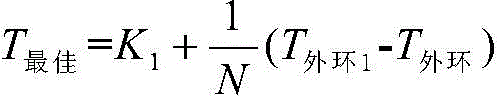 calculating to obtain the optimal refrigerating temperature TOptimization ofWherein N is a constant, K1Is the lowest refrigeration temperature identified from the ambient temperature. According to different outdoor environment temperatures, when the outdoor environment temperature is reduced on the basis of the set threshold value, the optimal refrigeration temperature of the air conditioner is increased on the basis of the lowest refrigeration temperature, and the energy consumption of the air conditioner is reduced while the refrigeration effect of the air conditioner is ensured.
Further, when the air conditioner works in a cooling mode, the step of determining the energy-saving temperature of the air conditioner according to the received running state data of the air conditioner comprises the following steps:
when the outdoor ambient temperature TOuter ringHigher than or equal to a first preset ambient temperature TOuter ring 1While confirming the optimum refrigerating temperature TOptimization ofAt the lowest refrigerating temperature K1;
When the outdoor ambient temperature TOuter ringLower than or equal to a second preset ambient temperature TOuter ring 2While confirming the optimum refrigerating temperature TOptimization ofFor a second preset target temperature K2。
When the outdoor ambient temperature is higher than the first preset ambient temperature T of the set threshold valueOuter ring 1Or a second preset ambient temperature T below a set thresholdOuter ring 2The optimal refrigeration temperature of the air conditioner is limited respectively, so that the refrigeration effect of the air conditioner is ensured, and the energy consumption of the air conditioner is reduced.
Further, the step of determining the saving temperature of the air conditioner according to the received operation state data of the air conditioner when the air conditioner is operated in the heating mode includes:
when the outdoor ambient temperature TOuter ringHigher than a third predetermined ambient temperature TOuter ring 3And is lower than the fourth preset ambient temperature TOuter ring 4According to the formula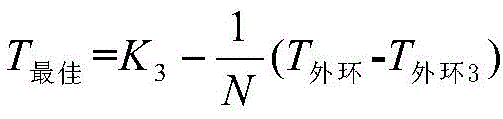 Calculating to obtain the optimal heating temperature TOptimization of(ii) a Wherein N is a constant, K3The highest heating temperature confirmed from the ambient temperature. Determining the optimal heating temperature of the air conditioner according to different outdoor environment temperatures, and when the outdoor environment temperature is at a third preset environment temperature T of a set threshold valueOuter ring 3When the temperature of the air conditioner is increased, the optimal heating temperature of the air conditioner is reduced on the basis of the highest heating temperature, and the energy consumption of the air conditioner is reduced while the heating effect of the air conditioner is ensured.
Further, the step of determining the saving temperature of the air conditioner according to the received operation state data of the air conditioner when the air conditioner is operated in the heating mode includes:
when the chamber is inOutside ambient temperature TOuter ringLower than or equal to a third preset ambient temperature TOuter ring 3Determining the optimal heating temperature T of the air conditionerOptimization ofAt a maximum heating temperature K3;
When the outdoor ambient temperature TOuter ringHigher than a fourth preset ambient temperature TOuter ring 4Determining the optimal heating temperature T of the air conditionerOptimization ofFor a fourth preset target temperature K4。
When the ambient temperature is lower than the set threshold value, the third preset ambient temperature TOuter ring 3At or above a set threshold value and a fourth preset ambient temperature TOuter ring 4And when the air conditioner is used, the optimal heating temperature of the air conditioner is respectively set, so that the heating effect of the air conditioner is ensured, and meanwhile, the energy consumption of the air conditioner is reduced.
Further, the step of calculating the air conditioner power consumption threshold of the area range to which the air conditioner belongs according to the received operation state data sent by the plurality of air conditioners specifically includes: and according to the received running state data sent by the air conditioners in a certain area, taking the average value of the power consumption of a plurality of or all air conditioners working at preset temperature in the area within a preset time period as the air conditioner power consumption threshold value of the area.
Further, the method further comprises: sending the energy-saving temperature to a user terminal corresponding to the air conditioner; and when receiving an energy-saving temperature operation scheme instruction sent by the user terminal, adjusting the target temperature of the air conditioner to the energy-saving temperature. And if the user decides to execute the temperature saving, controlling the air conditioner to adjust the target temperature, and operating according to the instruction of the user, so that the use experience of the user is improved.
The invention also provides an air-conditioning energy-saving temperature confirmation device, which is used for executing the air-conditioning energy-saving temperature confirmation method and comprises the following steps: the receiving unit is used for receiving the running state data sent by the plurality of air conditioners; the running state data comprises position information, a working mode, an outdoor environment temperature, a running time period, power consumption of the air conditioner and an air conditioner target temperature of the air conditioner; the threshold value calculating unit is used for calculating the air conditioner power consumption threshold value of the area range of the air conditioner according to the received running state data sent by the plurality of air conditioners; and the confirming unit is used for determining the energy-saving temperature of the air conditioner according to the received running state data of the air conditioner when the received average value of the power consumption of the air conditioner exceeds the threshold value of the power consumption of the air conditioner in the area range of the air conditioner.
The invention also provides an air conditioner energy-saving temperature confirmation method, which is applied to an intelligent air conditioner control system, wherein the intelligent air conditioner control system comprises a server, a plurality of air conditioners and a user terminal, the air conditioners and the user terminal are in communication connection with the server, and the air conditioner energy-saving temperature confirmation method comprises the following steps: the air conditioner sends the running state data to the server; the server receives the operation state data sent by the plurality of air conditioners and calculates the air conditioner power consumption threshold value of the area range of the air conditioner according to the received operation state data; when the server confirms that the received power consumption average value of the air conditioner exceeds the air conditioner power consumption threshold value of the area range to which the air conditioner belongs, determining the energy-saving temperature of the air conditioner according to the received running state data of the air conditioner, and sending the energy-saving temperature to the user terminal corresponding to the air conditioner; the user terminal responds to the operation of a user and sends an operation instruction to the server, wherein the operation instruction comprises an instruction for operating the energy-saving temperature scheme or an instruction for not operating the energy-saving temperature scheme; and when the received operation instruction is determined to be an instruction for operating the energy-saving temperature scheme, the server controls the air conditioner to adjust the target temperature to the energy-saving temperature.
The invention also provides an intelligent air conditioner control system, which comprises a server, a plurality of air conditioners and a user terminal, wherein the air conditioners and the user terminal are in communication connection with the server, and the air conditioners are used for sending the running state data to the server; the server is used for receiving the operation state data sent by the plurality of air conditioners and calculating the air conditioner power consumption threshold value of the area range of the air conditioner according to the received operation state data; the server is used for determining the energy-saving temperature of the air conditioner according to the received running state data of the air conditioner when the received average power consumption value of the air conditioner exceeds the air conditioner power consumption threshold value of the area range to which the air conditioner belongs, and sending the energy-saving temperature to the user terminal corresponding to the air conditioner; the user terminal is used for responding to the operation of a user and sending an operation instruction to the server, wherein the operation instruction comprises an instruction for operating the energy-saving temperature scheme or an instruction for not operating the energy-saving temperature scheme; and the server is used for controlling the air conditioner to adjust the target temperature to the energy-saving temperature when the received operation instruction is determined to be the instruction for operating the energy-saving temperature scheme.
The present invention also provides a server, comprising: the system comprises a processor and a memory, wherein machine readable instructions executable by the processor are stored in the memory, when a server runs, the processor and the memory are communicated through a bus, and when the processor runs the machine readable instructions, the steps of the air conditioner energy-saving temperature confirmation method are executed.
The invention also provides a computer readable storage medium, wherein the computer readable storage medium stores machine readable instructions, and the machine readable instructions are executed by a processor to execute the steps of the air conditioner energy-saving temperature confirmation method.
Drawings
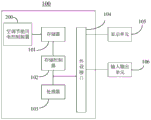
FIG. 1 is a schematic diagram of a server provided by the present invention;
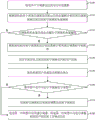
FIG. 2 is a flow chart of a method for confirming an energy-saving temperature of an air conditioner according to the present invention;
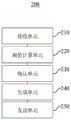
FIG. 3 is a schematic diagram of functional units of an energy-saving temperature confirmation device for an air conditioner according to the present invention;
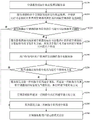
FIG. 4 is a flow chart of another method for confirming the energy-saving temperature of an air conditioner according to the present invention;
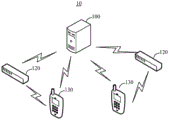
fig. 5 is a schematic diagram of an intelligent air conditioner control system provided by the invention.
Description of reference numerals:
10-intelligent air conditioner control system; 100-a server; 101-a memory; 102-a memory controller; 103-a processor; 104-peripheral interfaces; 105-a display unit; 106-input-output unit; 120-an air conditioner; 130-user terminal; 200-air-conditioning energy-saving temperature confirmation device; 210-a receiving unit; 220-a threshold calculation unit; 230-a validation unit; 240-a generating unit; 250-transmitting unit.
Detailed Description
In order to make the aforementioned objects, features and advantages of the present invention comprehensible, embodiments accompanied with figures are described in detail below.
It is to be understood that the described embodiments are merely exemplary of the invention, and not restrictive of the full scope of the invention. The components of embodiments of the present invention generally described and illustrated in the figures herein may be arranged and designed in a wide variety of different configurations. Thus, the following detailed description of the embodiments of the present invention, presented in the figures, is not intended to limit the scope of the invention, as claimed, but is merely representative of selected embodiments of the invention. All other embodiments, which can be derived by a person skilled in the art from the embodiments of the present invention without making any creative effort, shall fall within the protection scope of the present invention.
It is noted that relational terms such as "first" and "second," and the like, may be used solely to distinguish one entity or action from another entity or action without necessarily requiring or implying any actual such relationship or order between such entities or actions. Also, the terms "comprises," "comprising," or any other variation thereof, are intended to cover a non-exclusive inclusion, such that a process, method, article, or apparatus that comprises a list of elements does not include only those elements but may include other elements not expressly listed or inherent to such process, method, article, or apparatus. Without further limitation, an element defined by the phrase "comprising an … …" does not exclude the presence of other identical elements in a process, method, article, or apparatus that comprises the element.
The present embodiment provides a server 100, and the server 100 may be a single server 100 or a group of servers 100. The set of servers 100 may be centralized or distributed (e.g., the servers 100 may be a distributed system). In some embodiments, the server 100 may be local or remote to the user terminal 130. In some embodiments, the server 100 may be implemented on a cloud platform; by way of example only, the cloud platform may include a private cloud, a public cloud, a hybrid cloud, a community cloud (community cloud), a distributed cloud, an inter-cloud, a multi-cloud, and the like, or any combination thereof. In some embodiments, the server 100 may be implemented on an electronic device.
The server 100 includes an air-conditioning energy-saving temperature confirmation device 200, a memory 101, a storage controller 102, a processor 103, a peripheral interface 104, a display unit 105, and an input/output unit 106.
The memory 101, the memory controller 102, the processor 103, the peripheral interface 104, the display unit 105, and the input/output unit 106 are electrically connected to each other directly or indirectly to implement data transmission or interaction. For example, the components may be electrically connected to each other via one or more communication buses or signal lines. The air conditioner saving temperature confirmation apparatus 200 includes at least one software function module that may be stored in the memory 101 in the form of software or firmware (firmware) or solidified in an Operating System (OS) of the server 100. The processor 103 is configured to execute executable modules stored in the memory 101, such as software functional modules or computer programs included in the air conditioner energy-saving temperature confirmation apparatus 200.
The Memory 101 may be, but is not limited to, a Random Access Memory 101 (RAM), a Read Only Memory 101 (ROM), a Programmable Read Only Memory 101 (PROM), an Erasable Read Only Memory 101 (EPROM), an electrically Erasable Read Only Memory 101 (EEPROM), and the like. The memory 101 is used for storing a program, and the processor 103 executes the program after receiving an execution instruction, and the method executed by the process-defined server 100 disclosed by any embodiment of the invention can be applied to the processor 103, or implemented by the processor 103.
The processor 103 may be an integrated circuit chip having signal processing capabilities. The Processor 103 may be a general-purpose Processor, and includes a Central Processing Unit (CPU), a Network Processor (NP), and the like; but may also be a Digital Signal Processor (DSP), an Application Specific Integrated Circuit (ASIC), a Field Programmable Gate Array (FPGA) or other programmable logic device, discrete gate or transistor logic device, discrete hardware components. The various methods, steps and logic blocks disclosed in the embodiments of the present invention may be implemented or performed. The general purpose processor 103 may be a microprocessor, any conventional processor 103, etc.
The peripheral interface 104 couples various input/output devices to the processor 103 as well as to the memory 101. In some embodiments, the peripheral interface 104, the processor 103, and the memory controller 102 may be implemented in a single chip. In other examples, they may be implemented separately from the individual chips.
The display unit 105 provides an interactive interface (e.g., a user interface) between the server 100 and a user or for displaying data to a user reference. In this embodiment, the display unit 105 may be a liquid crystal display or a touch display. In the case of a touch display, the display can be a capacitive touch screen or a resistive touch screen, which supports single-point and multi-point touch operations. Supporting single-point and multi-point touch operations means that the touch display can sense touch operations simultaneously generated from one or more positions on the touch display, and the sensed touch operations are sent to the processor 103 for calculation and processing.
The input/output unit 106 is used for providing input data for a user to realize the interaction of the user and the server 100. The input/output unit 106 may be, but is not limited to, a mouse, a keyboard, etc., and the keyboard may be a virtual keyboard.
The present invention also provides a storage medium having stored thereon machine readable instructions which, when executed by the processor 103, implement the air conditioner energy saving temperature confirmation method disclosed herein.
First embodiment
The embodiment provides an air conditioner energy-saving temperature confirmation method, which is applied to a server 100, wherein the server 100 is in communication connection with a plurality of air conditioners 120, the server 100 is also in communication connection with a plurality of user terminals 130, and the user terminals 130 and the air conditioners 120 have corresponding relations.
Referring to fig. 2, fig. 2 shows a flowchart of a method for confirming an energy-saving temperature of an air conditioner according to the present embodiment. The air conditioner energy-saving temperature confirmation method comprises the steps of S100-S180.
S100: the operation state data transmitted from the plurality of air conditioners 120 is received.
Each server 100 is in communication connection with a plurality of air conditioners 120, and the server 100 receives operation state data sent by the plurality of air conditioners 120, where the operation state data includes position information of the air conditioners 120, an operation mode, an operation time period, power consumption of the air conditioners 120, an outdoor environment temperature, and an air conditioning target temperature. The location information of the air conditioner 120 may be longitude and latitude information of the air conditioner 120, and the area of the air conditioner 120 may be divided according to the location information of different air conditioners 120, for example, taking school as an example, the air conditioner 120 located in a library, the air conditioner 120 located in a teaching building, and the air conditioner 120 located in a dormitory building may be divided according to the location information of the air conditioner, but not limited thereto, and the area may be divided according to the location information of the air conditioner 120 by taking an administrative area as a boundary, or divided according to geographical climate and temperature difference. The operation mode of the air conditioner 120 generally refers to a heating mode, a cooling mode, and the like. The operation time period of the air conditioner 120 is the start-stop time of the air conditioner 120, for example, 14:00 to 17: 00. The power consumption of the air conditioner 120 is the power consumption of the air conditioner 120 during the operation time period, for example, the power consumption of the air conditioner 120 is 4KW · h when the air conditioner 120 operates at 14:00 to 17: 00. The outdoor environment temperature of the air conditioner 120 is the outdoor temperature when the air conditioner 120 is operated, and the target temperature is the target temperature set when the air conditioner 120 is operated, for example, the target temperature of the air conditioner 120 is set to 25 ℃, and the air conditioner 120 is continuously operated at 25 ℃.
S110: and calculating the air conditioner power consumption threshold of the area range to which the air conditioner 120 belongs according to the received operation state data sent by the plurality of air conditioners 120.
Specifically, the average value of the power consumptions of a plurality of or all of the air conditioners 120 operating at the preset temperature for the preset time period in each zone is used as the air conditioner power consumption threshold value of the zone. It is understood that the power consumption data of a plurality of air conditioners 120 operating at the preset temperature in the area can be reasonably extracted through sampling to calculate the air conditioner power consumption threshold. For example, when the air conditioner 120 is operated in the cooling mode in summer, the ratio of the power consumption of the air conditioner 120 having the target temperature of 26 ℃ in a certain area to the operation time of the air conditioner 120 having the target temperature of 26 ℃ in the certain area is used as the air conditioner power consumption threshold.
The preset temperature may be determined according to climate, temperature, etc., and generally speaking, the preset temperature is lower when the outdoor environment temperature is higher in summer and higher when the outdoor environment temperature is lower in winter, and it is required to say that the preset temperature is a variable range but does not exceed the comfortable value of the air conditioner 120, for example, the comfortable value in summer is at most 26 ℃, and the comfortable value in winter is at least 18 ℃. The working time period can be determined according to the operation time period of the air conditioner 120, for example, if the working time period of the air conditioner 120 is 10: 00-17: 00, the working time period is 7 hours.
S120: it is determined whether the average power consumption of the air conditioner 120 exceeds the threshold power consumption of the air conditioner.
Whether the energy consumption of the air conditioner 120 is too high is determined, that is, whether the average value of the energy consumption of the air conditioner 120 in the operation time period exceeds the air conditioner energy consumption threshold of the area range where the air conditioner 120 is located is determined. When comparing the average value of the power consumption of the air conditioner 120 with the threshold value of the power consumption of the air conditioner, the power consumption of the air conditioner 120 and the average value of the power consumption of the air conditioner are converted for comparison, for example, the threshold value of the power consumption of the air conditioner is 1KW, and the power consumption of the air conditioner 120 in the operation time period is 5KW · h, and the power consumption per unit time is calculated according to the power consumption of the air conditioner 120 in the operation time period being 5KW · h and the operation time period. Specifically, the power consumption of the air conditioner 120 per unit time, i.e., the average value of the power consumption, is calculated according to the operation time period and the power consumption of the air conditioner 120 in the operation state data of the air conditioner 120. For example, if the air conditioner 120 is continuously operated from 13:00 to 15:00 and consumes 4KW · h, the average power consumption of the air conditioner 120 per unit time (e.g., 1 hour) is 2 KW. Comparing the average value of the power consumption of the air conditioner 120 with the threshold value of the power consumption of the air conditioner in the area range where the air conditioner 120 is located, if the average value of the power consumption of the air conditioner 120 exceeds the threshold value of the power consumption of the air conditioner in the area range where the air conditioner 120 is located, determining that the energy consumption of the air conditioner 120 is high, and executing S130, if the average value of the power consumption of the air conditioner 120 does not exceed the threshold value of the power consumption of the air conditioner in the area range where the air conditioner 120 is located, determining that the energy consumption of the air conditioner 120 is normal. The air conditioner 120 is not operated, and S180 is executed, and the air conditioner 120 operates according to an operation mode preset by a user.
S130: and calculating the energy-saving temperature of the air conditioner 120 according to the received operation state data of the air conditioner 120.
For the air conditioners 120 in different operating states, different energy-saving electricity utilization schemes are correspondingly generated, and the different energy-saving electricity utilization schemes include energy-saving temperatures corresponding to the air conditioners 120. If the energy consumption of the air conditioner 120 is high, it is understood that the energy consumption is generally caused by the excessive operation power of the air conditioner 120. For example, the cooling temperature of the air conditioner 120 is too low in summer, or the heating temperature of the air conditioner 120 is high in winter. The energy consumption of the air conditioner 120 is reduced, that is, an energy-saving temperature is set for the air conditioner 120, so that the energy consumption is not too high while the user experience is ensured. In the present embodiment, different strategies are adopted to generate different energy-saving power utilization schemes for the air conditioner 120 operating in the cooling mode and the heating mode.
For example, when the air conditioner 120 operates in the cooling mode, the energy saving temperature is an optimal cooling temperature set for the air conditioner 120, and the step of calculating the optimal cooling temperature of the air conditioner 120 according to the received operating state data of the air conditioner 120 includes the following conditions:
when the outdoor ambient temperature TOuter ringHigher than or equal to a first preset ambient temperature TOuter ring 1While confirming the optimum refrigerating temperature TOptimization ofAt the lowest refrigerating temperature K1. First predetermined ambient temperature TOuter ring 1Can be set to a relatively high ambient temperature, e.g. the first preset ambient temperature TOuter ring 1May be set to 37 deg.C, but is not limited thereto, when the outdoor ambient temperature TOuter ringHigher than or equal to a first preset ambient temperature TOuter ring 1Then, the optimum cooling temperature T of the air conditioner 120 is determinedOptimization ofAt the lowest refrigerating temperature K1。K1The air conditioner 120 can be operated at the lowest cooling temperature K according to the cooling capacity of the air conditioner 120 and the outdoor environment temperature1The refrigeration requirement of the user can be met, and the energy consumption of the air conditioner 120 is not too high. Generally, in order to save energy consumption, in hot summer, the lowest refrigerating temperature K1Set at 26 degrees celsius. It should be noted that the minimum refrigerating temperature K1Corresponding to the outdoor ambient temperature, when the outdoor ambient temperature is reduced, the lowest refrigerating temperature K1The synchronization can be reduced.
When the outdoor ambient temperature TOuter ringHigher than a second preset ambient temperature TOuter ring 2And is lower than a first preset ambient temperature TOuter ring 1Then, according to the following formula: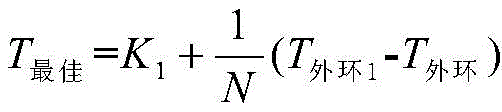 calculating to obtain the optimal refrigerating temperature TOptimization ofWherein N is a constant. In particular, when the outdoor ambient temperature TOuter ringHigher than a second preset ambient temperature TOuter ring 2And is lower than a first preset ambient temperature TOuter ring 1At the lowest refrigerating temperature K1The energy-saving temperature of the
 air conditioner 120 is properly reduced, and the reduction range of the energy-saving temperature is related to the reduction range of the outdoor environment temperature. For example, in the present embodiment, N is 4, that is, at the first predetermined ambient temperature TOuter ring 1When the outdoor ambient temperature is reduced each timeThe energy-saving temperature of the air conditioner 120 is at the lowest refrigeration temperature K at 2 DEG C1The temperature is increased by 0.5 ℃, and the power consumption of the air conditioner 120 is properly reduced under the condition of not influencing the refrigeration requirement of a user, so that the aim of saving energy is fulfilled. In other embodiments of the present invention, the value of N may be other values, and may be determined according to the cooling performance of the air conditioner 120 and the ambient temperature.
When the outdoor ambient temperature TOuter ringLower than or equal to a second preset ambient temperature TOuter ring 2While confirming the optimum refrigerating temperature TOptimization ofFor a second preset target temperature K2. Second predetermined ambient temperature TOuter ring 2Relative to a first predetermined ambient temperature TOuter ring 1Therefore, the optimum cooling temperature of the air conditioner 120 can be properly increased without affecting the cooling requirement of the user, and in this embodiment, the second predetermined ambient temperature TOuter ring 2May be set to 32 deg.c, the second preset target temperature K2May be set at 28 deg.c.
When the air conditioner 120 operates in the heating mode, the energy saving temperature is the optimal heating temperature of the air conditioner 120, and the step of calculating the optimal target temperature of the air conditioner 120 according to the received operating state data of the air conditioner 120 includes the following conditions:
when the outdoor ambient temperature TOuter ringLower than or equal to a third preset ambient temperature TOuter ring 3Determining an optimal heating temperature T of the air conditioner (120)Optimization ofAt a maximum heating temperature K3(ii) a The third preset ambient temperature TOuter ring 3At a lower temperature, e.g. maximum heating temperature K3Can be set to 3 ℃ when the outdoor environment temperature T isOuter ringDetermining the optimal target temperature T of the air conditioner 120 when the temperature is less than or equal to 3 DEG COptimization ofAt a maximum heating temperature K3(ii) a When the outdoor environment temperature is low, it can be understood that the user needs the air conditioner 120 to heat, and the lower the outdoor environment temperature is, the higher the heating temperature is, in this embodiment, when the outdoor environment temperature T isOuter ringLower than or equal to a third preset ambient temperature TOuter ring 3The optimum heating temperature of the air conditioner 120 is adjustedSet to the maximum heating temperature K3. Maximum heating temperature K3The temperature may be 20 ℃, but is not limited thereto, and may be higher or lower, and may be set according to the heating performance of the air conditioner 120 and the ambient temperature.
When the outdoor ambient temperature TOuter ringHigher than a third predetermined ambient temperature TOuter ring 3And is lower than the fourth preset ambient temperature TOuter ring 4According to the formula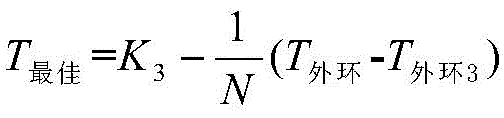 Calculating to obtain the optimal heating temperature TOptimization of(ii) a Wherein N is a constant. Understandably, when the outdoor ambient temperature T isOuter ringHigher than a third predetermined ambient temperature TOuter ring 3That is to say the outdoor ambient temperature is at the third preset ambient temperature TOuter ring 3To reduce the energy consumption, in this embodiment, when the outdoor ambient temperature is at the third predetermined ambient temperature TOuter ring 3When the temperature is increased, the energy-saving temperature of the
 air conditioner 120, that is, the optimum heating temperature is set to the maximum heating temperature K3Is reduced on the basis of (1). For example, N ═ 4, i.e., the outdoor ambient temperature is at the third preset ambient temperature TOuter ring 3On the basis of 2 ℃ per liter, namely the energy-saving temperature of the air conditioner 120, namely the optimal heating temperature is at the maximum heating temperature K3And then the temperature is reduced by 0.5 ℃. The energy consumption of the air conditioner is properly reduced while the heating requirements of users are guaranteed. In other embodiments of the present invention, the value of N may also be other values, which may be determined according to the heating performance of the air conditioner 120 and the ambient temperature.
When the outdoor ambient temperature TOuter ringHigher than a fourth preset ambient temperature TOuter ring 4Determining an optimum cooling temperature T of the air conditioner (120)Optimization ofFor a fourth preset target temperature K4. Fourth preset ambient temperature TOuter ring 4Higher than a third predetermined ambient temperature TOuter ring 3For example, it is understood that when the outdoor ambient temperature T isOuter ringHigher than a fourth preset ambient temperature TOuter ring 4When, the fourth preset ambient temperature TOuter ring 4May be set at 11 ℃, but notTo this end, when the outdoor ambient temperature TOuter ringDetermining the optimal target temperature T of the air conditioner 120 at the temperature of more than or equal to 11 DEG COptimization ofFor a fourth preset target temperature K4Fourth preset target temperature K4The temperature may be set to 18 ℃, but is not limited thereto, and may be specifically determined according to the heating performance of the air conditioner 120 and the ambient temperature.
It should be noted that, in this embodiment, the values listed as the first preset environment temperature, the second preset environment temperature, the third preset environment temperature, the fourth preset environment temperature, and the minimum cooling temperature, the second preset target temperature, the maximum heating temperature, and the fourth preset target temperature are only used to explain the solution provided by the present invention, and are not limited to this embodiment, and may be other values, which may be specifically determined according to the heating performance of the air conditioner 120, the environment temperature, and the requirement of the user.
It should be noted that, if the calculated energy-saving temperature of the air conditioner 120 is not an integer and the air conditioner 120 only supports integer temperature adjustment, the calculated temperature is rounded and then determined as the energy-saving temperature, the rounding manner may be rounding, or rounding off a decimal direct integer part, and the rounding manner listed in this embodiment is only to explain the rounding manner provided by the present invention, and is not limited to this embodiment, and may be other rounding manners.
When the saving temperature of the air conditioner 120 is determined according to the different operation state data of the air conditioner 120, S140 is performed.
S140: and sending the energy-saving electricity utilization scheme to the user terminal 130 corresponding to the air conditioner 120.
The air conditioners 120 and the user terminals 130 have a corresponding relationship, and each air conditioner 120 is bound with at least one user terminal 130. The user terminal 130 may be a remote controller, and may also be a mobile intelligent terminal such as a smart phone, a tablet computer, and a smart watch. During the operation of the air conditioner 120, the air conditioner 120 may also transmit the operation status data to the user terminal 130 for display.
After the server 100 determines different energy-saving temperatures for different air conditioners 120 with excessive energy consumption, the energy-saving temperatures are packaged to generate an energy-saving power utilization scheme, the generated energy-saving power utilization scheme is sent to a user terminal 130 corresponding to the air conditioner 120, the user terminal 130 can display the energy-saving power utilization scheme, a user selects whether to operate the energy-saving temperatures, and the user can send an operation instruction to the server 100 through the user terminal 130, wherein the operation instruction comprises: the energy saving temperature command is run or the energy saving temperature command is not run.
S150: receiving an operation instruction sent by the user terminal 130.
The server 100 is connected to the user terminal 130 in a communication manner, and the server 100 may receive an operation instruction generated in response to a user operation sent by the user terminal 130. The operation instruction comprises the following steps: and operating the energy-saving temperature scheme instruction or not operating the energy-saving temperature scheme instruction. When the server 100 receives the operation instruction transmitted from the user terminal 130, S160 is performed.
S160: and judging whether the operation instruction is an energy-saving operation temperature instruction or not.
If the received operation command is an energy-saving temperature command, S170 is executed to control the air conditioner 120 to adjust the target temperature to an energy-saving temperature. If the received operation command is the energy-saving temperature scheme, the air conditioner 120 does not need to be operated, and S180 is executed, and the air conditioner 120 operates according to the working mode preset by the user.
S170: when receiving an energy-saving temperature plan operation instruction sent by the user terminal 130, adjusting the target temperature of the air conditioner 120 to the energy-saving temperature.
The server 100 is in communication connection with the air conditioner 120, and when the received operation instruction of the user terminal 130 is an operation energy-saving temperature, the server 100 sends a first control instruction to the air conditioner 120 corresponding to the user terminal 130, where the first control instruction is a scheme for enabling the air conditioner 120 to operate the energy-saving temperature, that is, the target temperature of the air conditioner 120 is adjusted to the energy-saving temperature, and for the air conditioner 120 with excessive energy consumption, the target temperature of the air conditioner 120 is adjusted, so that the energy consumption of the air conditioner 120 can be effectively reduced.
S180: and sending a second control instruction to the air conditioner 120, wherein the second control instruction is to enable the air conditioner 120 to operate according to the working mode set by the user.
If the average value of the power consumption of the air conditioner 120 does not exceed the threshold value of the power consumption of the air conditioner in the area to which the air conditioner 120 belongs, or the average value of the power consumption of the air conditioner 120 exceeds the threshold value of the power consumption of the air conditioner in the area to which the air conditioner 120 belongs, but the user sends an operation instruction and does not operate the energy-saving temperature, the user does not need to operate or adjust the air conditioner 120, and sends a second control instruction to the air conditioner 120, so that the air conditioner 120 operates according to the working mode set by the user.
Fig. 3 shows an energy-saving temperature confirmation device 200 for an air conditioner, where fig. 3 is the energy-saving temperature confirmation device 200 for an air conditioner according to this embodiment. It should be noted that the basic principle and the technical effect of the air-conditioning energy-saving temperature confirmation device 200 provided in the present embodiment are substantially the same as the air-conditioning energy-saving temperature confirmation method provided in the present embodiment, and for the sake of brief description, no mention is made in this embodiment, and reference may be made to the corresponding contents of the air-conditioning energy-saving temperature confirmation method in the present embodiment.
The air conditioner energy-saving temperature confirmation apparatus 200 includes: receiving section 210, threshold value calculating section 220, confirming section 230, generating section 240, and transmitting section 250.
A receiving unit 210 for receiving operation state data transmitted from the plurality of air conditioners 120; the operation state data includes location information of the air conditioner 120, an operation mode, an outdoor ambient temperature, an operation time period, power consumption of the air conditioner 120, and an air-conditioning target temperature.
It is to be understood that in a preferred embodiment, the receiving unit 210 may be used to perform S100.
The threshold calculation unit 220 is configured to calculate an air conditioner power consumption threshold of the area range to which the air conditioner 120 belongs according to the received operation state data sent by the plurality of air conditioners 120.
It is to be understood that in a preferred embodiment, the threshold calculation unit 220 may be configured to perform S110.
The confirming unit 230 is configured to confirm whether the received average value of the power consumption of the air conditioner 120 exceeds an air conditioner power consumption threshold of the area range to which the air conditioner 120 belongs.
It is to be appreciated that in a preferred embodiment, the validation unit 230 may be configured to perform S120.
A generating unit 240, configured to calculate an energy saving temperature of the air conditioner 120 according to the received operation state data of the air conditioner 120, so as to generate an energy saving electricity scheme.
It is to be understood that in a preferred embodiment, the generating unit 240 may be configured to perform S130.
A sending unit 250, configured to send an energy-saving power consumption scheme to the user terminal 130 corresponding to the air conditioner 120 when the average power consumption of the air conditioner 120 exceeds the air conditioner power consumption threshold in the area range of the air conditioner 120, where the energy-saving power consumption scheme includes an energy-saving temperature of the air conditioner 120.
It is to be understood that in a preferred embodiment, the sending unit 250 may be configured to perform S140.
The receiving unit 210 is further configured to receive an operation instruction sent by the user terminal 130,
it is to be understood that in a preferred embodiment, the receiving unit 210 may also be configured to perform S150.
The confirming unit 230 may be further configured to confirm that the received operation command is to operate the energy saving temperature scheme.
It is to be understood that in a preferred embodiment, the confirming unit 230 may also be configured to perform S160.
The sending unit 250 is further configured to send a first control instruction to the air conditioner 120 when it is determined that the received operation instruction is an energy-saving operation temperature, where the first control instruction is to enable the air conditioner 120 to adjust a target temperature to an energy-saving operation temperature.
It is to be understood that, in a preferred embodiment, the sending unit 250 may also be configured to execute S170.
The sending unit 250 is further configured to send a second control instruction to the air conditioner 120 when it is determined that the received operation instruction is not to operate the energy saving temperature scheme, where the second control instruction is to enable the air conditioner 120 to operate according to a working mode set by a user.
It is to be understood that, in a preferred embodiment, the sending unit 250 may also be configured to execute S180.
Second embodiment
Referring to fig. 4, fig. 4 is a diagram illustrating another method for confirming an energy-saving temperature of an air conditioner according to a preferred embodiment of the present invention. It should be noted that the basic principle and the generated technical effects of the method for confirming the energy-saving temperature of the air conditioner provided by the embodiment are substantially the same as those of the method for confirming the energy-saving temperature of the air conditioner provided by the embodiment, and for the sake of brief description, corresponding contents in the embodiment may be referred to where this embodiment is not mentioned.
The air conditioner energy-saving temperature confirmation method provided in this embodiment is applied to an intelligent air conditioner control system 10, as shown in fig. 5, the intelligent air conditioner control system 10 includes a server 100, a plurality of air conditioners 120, and a user terminal 130, and both the air conditioners 120 and the user terminal 130 are in communication connection with the server 100.
Referring to fig. 4, the method for confirming the energy-saving temperature of the air conditioner includes S200 to S290.
S200: the air conditioner 120 transmits the operation state data to the server 100.
S210: the server 100 receives the operation state data sent by the plurality of air conditioners 120, and calculates the air conditioner power consumption threshold of the area range to which the air conditioner 120 belongs according to the received operation state data.
S220: the server 100 determines whether the received average value of the power consumption of the air conditioner 120 exceeds an air conditioner power consumption threshold value of the area range to which the air conditioner 120 belongs.
When it is confirmed that the received average value of the power consumption amounts of the air conditioners 120 exceeds the air conditioner power consumption amount threshold value of the area range to which the air conditioners 120 belong, S230 is performed. When it is confirmed that the received average value of the power consumption amounts of the air conditioners 120 does not exceed the air conditioner power consumption amount threshold of the area range to which the air conditioners 120 belong, S280 is performed.
S230: when the average value of the power consumption of the air conditioner 120 exceeds the threshold value of the power consumption of the air conditioner in the area range of the air conditioner 120, the server 100 calculates the energy-saving temperature of the air conditioner 120 according to the received operation state data of the air conditioner 120 to generate an energy-saving power consumption scheme, and pushes the energy-saving power consumption scheme to the user terminal 130 corresponding to the air conditioner 120.
S240: the user terminal 130 transmits an operation instruction including an operation of the energy saving temperature scheme or a non-operation of the energy saving temperature scheme to the server 100 in response to an operation of the user.
S250: the server 100 confirms whether the received operation instruction is to operate the energy-saving temperature scheme.
Executing S260 when the received operation instruction is determined to be the energy-saving temperature scheme, and executing S280 when the received operation instruction is determined not to be the energy-saving temperature scheme.
S260: when the received operation instruction is determined to be the energy-saving temperature operation scheme, the server 100 sends a first control instruction to the air conditioner 120, where the first control instruction is to adjust the target temperature of the air conditioner 120 to be the energy-saving temperature and operate the energy-saving temperature scheme.
S270: the air conditioner 120 operates the energy-saving temperature scheme according to the first control instruction.
S280: the server 100 sends a second control instruction to the air conditioner 120, where the second control instruction is to enable the air conditioner 120 to operate according to the working mode set by the user.
S290: the air conditioner 120 executes the second control command and operates according to a mode set by a user.
Referring to fig. 5, the intelligent air-conditioning control system 10 includes a server 100, a plurality of air conditioners 120, and a user terminal 130, where the air conditioners 120 and the user terminal 130 are both in communication connection with the server 100, and the user terminal 130 may be a remote controller, or may be a mobile intelligent terminal with data communication capability, such as a smart phone, a tablet computer, and a smart watch. During the operation of the air conditioner 120, the air conditioner 120 may also transmit the operation status data to the user terminal 130 for display. The air conditioner 120 may be a cabinet, on-hook, or mobile air conditioner 120.
The air conditioner 120 is configured to send the operation status data to the server 100.
It is to be understood that, in a preferred embodiment, the air conditioner 120 may be used to perform S200.
The server 100 is configured to receive the operation state data sent by the plurality of air conditioners 120, and calculate an air conditioner power consumption threshold of the area range to which the air conditioner 120 belongs according to the received operation state data.
The server 100 is configured to determine an energy saving temperature of the air conditioner 120 according to the received operation state data of the air conditioner 120 when it is determined that the received average value of the power consumption of the air conditioner 120 exceeds the air conditioner power consumption threshold of the area range to which the air conditioner 120 belongs, and send the energy saving temperature to the user terminal 130 corresponding to the air conditioner 120.
It is to be understood that in a preferred embodiment, server 100 may be configured to perform S210-S230.
The user terminal 130 is configured to send an operation instruction to the server 100 in response to a user operation, where the operation instruction includes an operation of the energy-saving temperature scheme or a non-operation of the energy-saving temperature scheme.
It is to be understood that in a preferred embodiment, the user terminal 130 may be configured to perform S240.
The server 100 is configured to determine whether the operation instruction is an energy-saving operation temperature scheme, and when it is determined that the received operation instruction is the energy-saving operation temperature scheme, the server 100 is further configured to send a first control instruction to the air conditioner 120, where the first control instruction is to adjust a target temperature of the air conditioner 120 to an energy-saving temperature and operate the energy-saving operation temperature scheme. The server 100 is further configured to send a second control instruction to the air conditioner 120 when it is determined that the received operation instruction is not to operate the energy-saving temperature scheme, where the second control instruction is to enable the air conditioner 120 to operate according to a working mode set by a user.
It is to be understood that in a preferred embodiment, the server 100 is also operable to perform S250-S260 and S280.
The air conditioner 120 is configured to operate an energy-saving temperature scheme according to the first control instruction.
The air conditioner 120 is further configured to operate according to a mode set by a user according to a second control instruction.
It is understood that, in a preferred embodiment, the air conditioner 120 may also be configured to perform S270 and S290.
In summary, the invention provides an air conditioner energy-saving temperature confirmation method, an air conditioner energy-saving temperature confirmation device and an intelligent air conditioner control system. The air conditioner energy-saving temperature confirmation method comprises the following steps: receiving operation state data sent by a plurality of air conditioners; the running state data comprises position information, a working mode, an outdoor environment temperature, a running time period, power consumption of the air conditioner and an air conditioner target temperature of the air conditioner; calculating to obtain an air conditioner power consumption threshold value of the area range of the air conditioner according to the received running state data sent by the plurality of air conditioners; confirming whether the received average value of the power consumption of the air conditioner exceeds the threshold value of the power consumption of the air conditioner in the area range of the air conditioner; when the average value of the power consumption of the air conditioner exceeds the threshold value of the power consumption of the air conditioner in the area range of the air conditioner, pushing an energy-saving power utilization scheme to a user terminal corresponding to the air conditioner, wherein the energy-saving power utilization scheme comprises the optimal target temperature of the air conditioner; and receiving an operation instruction sent by the user terminal, and sending a first control instruction to the air conditioner when the received operation instruction is determined to be the energy-saving temperature operating scheme, wherein the first control instruction is used for enabling the air conditioner to operate the energy-saving temperature operating scheme. The target temperature is determined again through the power consumption threshold value of the area range where the air conditioner is located and the environment temperature, the energy-saving temperature is set for the air conditioner, the air conditioner can reduce the energy consumption of the air conditioner while guaranteeing the refrigeration or heating requirements of customers through the operation energy-saving temperature, and the user satisfaction and the user experience are improved.
In the embodiments provided in the present application, it should be understood that the disclosed apparatus and method can be implemented in other ways. The apparatus embodiments described above are merely illustrative, and for example, the flowchart and block diagrams in the figures illustrate the architecture, functionality, and operation of possible implementations of apparatus, methods and computer program products according to various embodiments of the present invention. In this regard, each block in the flowchart or block diagrams may represent a module, segment, or portion of code, which comprises one or more executable instructions for implementing the specified logical function(s). It should also be noted that, in some alternative implementations, the functions noted in the block may occur out of the order noted in the figures. For example, two blocks shown in succession may, in fact, be executed substantially concurrently, or the blocks may sometimes be executed in the reverse order, depending upon the functionality involved. It will also be noted that each block of the block diagrams and/or flowchart illustration, and combinations of blocks in the block diagrams and/or flowchart illustration, can be implemented by special purpose hardware-based systems which perform the specified functions or acts, or combinations of special purpose hardware and computer instructions.
In addition, the functional modules in the embodiments of the present invention may be integrated together to form an independent part, or each module may exist separately, or two or more modules may be integrated to form an independent part.
The functions, if implemented in the form of software functional modules and sold or used as a stand-alone product, may be stored in a computer readable storage medium. Based on such understanding, the technical solution of the present invention may be embodied in the form of a software product, which is stored in a storage medium and includes instructions for causing a computer device (which may be a personal computer, a server, or a network device) to execute all or part of the steps of the method according to the embodiments of the present invention. And the aforementioned storage medium includes: a U-disk, a removable hard disk, a Read-Only Memory (ROM), a Random Access Memory (RAM), a magnetic disk or an optical disk, and other various media capable of storing program codes.
Although the present invention is disclosed above, the present invention is not limited thereto. Various changes and modifications may be effected therein by one skilled in the art without departing from the spirit and scope of the invention as defined in the appended claims.
Claims (12)
1. An air conditioner energy-saving temperature confirmation method is characterized by comprising the following steps:
receiving operation state data sent by a plurality of air conditioners (120); the running state data comprises position information, a working mode, an outdoor environment temperature, a running time period, power consumption of the air conditioner (120) and an air conditioner target temperature of the air conditioner (120);
the method for calculating the air conditioner power consumption threshold of the area range of the air conditioner (120) according to the received running state data sent by the plurality of air conditioners (120) comprises the following steps: according to the received running state data sent by the air conditioners (120) in a certain area, taking the average value of the power consumption of a plurality of air conditioners (120) working at a preset temperature in a preset time period as the air conditioner power consumption threshold value of the area;
and when the received average value of the power consumption of the air conditioner (120) is confirmed to exceed the threshold value of the power consumption of the air conditioner in the region range of the air conditioner (120), determining the energy-saving temperature of the air conditioner (120) according to the received operation state data of the air conditioner (120).
2. The air conditioner energy saving temperature confirmation method according to claim 1, wherein the operation mode of the air conditioner (120) includes a heating mode and a cooling mode, the energy saving temperature is an optimal heating temperature when the air conditioner (120) operates in the heating mode, and the energy saving temperature is an optimal cooling temperature when the air conditioner (120) operates in the cooling mode.
3. The air conditioner saving temperature confirmation method according to claim 2, wherein the step of determining the saving temperature of the air conditioner (120) according to the received operation state data of the air conditioner (120) when the air conditioner (120) operates in the cooling mode comprises:
when the outdoor ambient temperature TOuter ringHigher than a second preset ambient temperature TOuter ring 2And is lower than a first preset ambient temperature TOuter ring 1Then, according to the following formula: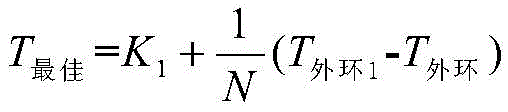 calculating to obtain the optimal refrigerating temperature TOptimization ofWherein N is a constant, K1Is the lowest refrigeration temperature confirmed according to the outdoor ambient temperature.
4. The air conditioner saving temperature confirmation method according to claim 2 or 3, wherein the step of determining the saving temperature of the air conditioner (120) according to the received operation state data of the air conditioner (120) when the air conditioner (120) operates in the cooling mode comprises:
when the outdoor ambient temperature TOuter ringHigher than or equal to a first preset ambient temperature TOuter ring 1While confirming the optimum refrigerating temperature TOptimization ofAt the lowest refrigerating temperature K1;
When the outdoor ambient temperature TOuter ringLower than or equal to a second preset ambient temperature TOuter ring 2While confirming the optimum refrigerating temperature TOptimization ofFor a second preset target temperature K2。
5. The air conditioner energy saving temperature confirmation method according to claim 2, wherein the step of determining the energy saving temperature of the air conditioner (120) according to the received operation state data of the air conditioner (120) when the air conditioner (120) operates in the heating mode comprises:
when the outdoor ambient temperature TOuter ringHigher than a third predetermined ambient temperature TOuter ring 3And is lower than the fourth preset ambient temperature TOuter ring 4According to the formula Calculating to obtain the optimal heating temperature TOptimization of(ii) a Wherein N is a constant, K3The highest heating temperature confirmed from the outdoor ambient temperature.
6. The air conditioner saving temperature confirmation method according to claim 2 or 5, wherein the step of determining the saving temperature of the air conditioner (120) according to the received operation state data of the air conditioner (120) when the air conditioner (120) operates in the heating mode comprises:
when the outdoor ambient temperature TOuter ringLower than or equal to a third preset ambient temperature TOuter ring 3Determining an optimal heating temperature T of the air conditioner (120)Optimization ofAt a maximum heating temperature K3;
When the outdoor ambient temperature TOuter ringHigher than a fourth preset ambient temperature TOuter ring 4Determining an optimal heating temperature T of the air conditioner (120)Optimization ofFor a fourth preset target temperature K4。
7. The air conditioner energy saving temperature confirmation method according to claim 1, further comprising:
transmitting an energy-saving temperature scheme generated according to the energy-saving temperature to a user terminal (130) corresponding to the air conditioner (120);
and when receiving an energy-saving temperature scheme operation instruction sent by the user terminal (130), adjusting the target temperature of the air conditioner (120) to the energy-saving temperature.
8. An air-conditioning energy-saving temperature confirmation apparatus (200) for performing the air-conditioning energy-saving temperature confirmation method according to any one of claims 1 to 7, the apparatus comprising:
a receiving unit (210) for receiving operation state data transmitted by a plurality of air conditioners (120); the running state data comprises position information, a working mode, an outdoor environment temperature, a running time period, power consumption of the air conditioner (120) and an air conditioner target temperature of the air conditioner (120);
the threshold value calculation unit (220) is used for calculating and obtaining the air conditioner power consumption threshold value of the area range of the air conditioner (120) according to the received running state data sent by the plurality of air conditioners (120), and comprises the following steps: according to the received running state data sent by the air conditioners (120) in a certain area, taking the average value of the power consumption of a plurality of air conditioners (120) working at a preset temperature in a preset time period as the air conditioner power consumption threshold value of the area;
a confirming unit (230) for determining the energy saving temperature of the air conditioner (120) according to the received operation state data of the air conditioner (120) when the received average value of the power consumption of the air conditioner (120) exceeds the threshold value of the power consumption of the air conditioner in the area range of the air conditioner (120).
9. An air conditioner energy-saving temperature confirmation method is applied to an intelligent air conditioner control system (10), the intelligent air conditioner control system (10) comprises a server (100), a plurality of air conditioners (120) and a user terminal (130), the air conditioners (120) and the user terminal (130) are in communication connection with the server (100), and the air conditioner energy-saving temperature confirmation method comprises the following steps:
the air conditioner (120) sends the running state data to the server (100);
the server (100) receives the operation state data sent by the plurality of air conditioners (120), and calculates and obtains an air conditioner power consumption threshold value of the area range to which the air conditioners (120) belong according to the received operation state data, and the server comprises: according to the received running state data sent by the air conditioners (120) in a certain area, taking the average value of the power consumption of a plurality of air conditioners (120) working at a preset temperature in a preset time period as the air conditioner power consumption threshold value of the area;
when the server (100) confirms that the received average value of the power consumption of the air conditioner (120) exceeds the air conditioner power consumption threshold value of the area range of the air conditioner (120), determining the energy-saving temperature of the air conditioner (120) according to the received operation state data of the air conditioner (120), and sending the energy-saving temperature to the user terminal (130) corresponding to the air conditioner (120);
the user terminal (130) responds to the operation of a user and sends an operation instruction to the server (100), wherein the operation instruction comprises an energy-saving operation temperature instruction or an energy-saving non-operation temperature instruction;
when the received operation instruction is determined to be an instruction for operating an energy-saving temperature scheme, the server (100) controls the air conditioner (120) to adjust the target temperature to an energy-saving temperature.
10. An intelligent air-conditioning control system is characterized in that the intelligent air-conditioning control system (10) comprises a server (100), a plurality of air conditioners (120) and a user terminal (130), wherein the air conditioners (120) and the user terminal (130) are in communication connection with the server (100),
the air conditioner (120) is used for sending operation state data to the server (100);
the server (100) is configured to receive operation state data sent by the plurality of air conditioners (120), and calculate an air conditioner power consumption threshold of a region range to which the air conditioners (120) belong according to the received operation state data, and includes: according to the received running state data sent by the air conditioners (120) in a certain area, taking the average value of the power consumption of a plurality of air conditioners (120) working at a preset temperature in a preset time period as the air conditioner power consumption threshold value of the area;
the server (100) is used for determining the energy-saving temperature of the air conditioner (120) according to the received operation state data of the air conditioner (120) when the received average value of the power consumption of the air conditioner (120) is confirmed to exceed the air conditioner power consumption threshold value of the area range of the air conditioner (120), and sending the energy-saving temperature to the user terminal (130) corresponding to the air conditioner (120);
the user terminal (130) is used for responding to the operation of a user and sending an operation instruction to the server (100), wherein the operation instruction comprises an energy-saving operation temperature instruction or an energy-saving non-operation temperature instruction;
the server (100) is used for controlling the air conditioner (120) to adjust the target temperature to the energy-saving temperature when the received operation instruction is determined to be the energy-saving temperature operation instruction.
11. A server, comprising: a processor (103), a memory (101), the memory (101) storing machine readable instructions executable by the processor (103), the processor (103) and the memory (101) communicating via a bus when the server (100) is running, the processor (103) executing the machine readable instructions to perform the steps of the air conditioner energy saving temperature confirmation method according to any one of claims 1 to 7.
12. A computer readable storage medium having stored thereon machine readable instructions which, when executed by a processor (103), perform the steps of the air conditioner energy saving temperature confirmation method according to any one of claims 1 to 7.
Priority Applications (1)
| Application Number | Priority Date | Filing Date | Title |
|---|---|---|---|
| CN201811626901.6A CN109855263B (en) | 2018-12-28 | 2018-12-28 | Air conditioner energy-saving temperature confirmation method and device and intelligent air conditioner control system |
Applications Claiming Priority (1)
| Application Number | Priority Date | Filing Date | Title |
|---|---|---|---|
| CN201811626901.6A CN109855263B (en) | 2018-12-28 | 2018-12-28 | Air conditioner energy-saving temperature confirmation method and device and intelligent air conditioner control system |
Publications (2)
| Publication Number | Publication Date |
|---|---|
| CN109855263A CN109855263A (en) | 2019-06-07 |
| CN109855263B true CN109855263B (en) | 2021-08-24 |
Family
ID=66893046
Family Applications (1)
| Application Number | Title | Priority Date | Filing Date |
|---|---|---|---|
| CN201811626901.6A Active CN109855263B (en) | 2018-12-28 | 2018-12-28 | Air conditioner energy-saving temperature confirmation method and device and intelligent air conditioner control system |
Country Status (1)
| Country | Link |
|---|---|
| CN (1) | CN109855263B (en) |
Families Citing this family (9)
| Publication number | Priority date | Publication date | Assignee | Title |
|---|---|---|---|---|
| CN112824999B (en) * | 2019-11-20 | 2022-04-22 | Oppo广东移动通信有限公司 | Temperature control method and related product |
| CN111947276A (en) * | 2020-08-03 | 2020-11-17 | 宁波奥克斯电气股份有限公司 | Control method, server, control equipment and storage medium of air conditioner |
| CN112728716A (en) * | 2020-12-31 | 2021-04-30 | 深圳市兴达扬机电安装有限公司 | Intelligent air conditioner energy-saving control method and device |
| CN116007134B (en) * | 2021-10-22 | 2025-06-17 | 全球能源互联网研究院有限公司 | Air conditioning load control method and device |
| CN114034106B (en) * | 2021-11-10 | 2023-05-12 | 珠海格力电器股份有限公司 | Multi-unit control method and device and multi-unit equipment |
| CN114251788B (en) * | 2021-12-18 | 2023-03-17 | 珠海格力电器股份有限公司 | Air conditioner energy consumption prompting method and system for rental platform |
| CN119096205A (en) * | 2022-04-29 | 2024-12-06 | 泰科消防及安全有限公司 | Building management systems with sustainable improvements |
| CN116907068A (en) * | 2023-07-04 | 2023-10-20 | 宁波奥克斯电气股份有限公司 | Air conditioner, control method and device thereof and readable storage medium |
| CN117366793B (en) * | 2023-09-15 | 2024-04-09 | 广东富兴商超照明有限公司 | Super energy-conserving intelligent control device of merchant and super intelligent control system of merchant |
Citations (3)
| Publication number | Priority date | Publication date | Assignee | Title |
|---|---|---|---|---|
| CN103388879A (en) * | 2013-04-03 | 2013-11-13 | 广东美的制冷设备有限公司 | Control method of air conditioner |
| CN103617559A (en) * | 2013-11-25 | 2014-03-05 | 青岛海尔软件有限公司 | Remote household appliance electricity consumption circumstance management method |
| CN105222266A (en) * | 2014-06-26 | 2016-01-06 | 广东美的制冷设备有限公司 | The electric quantity controlling method of air-conditioner, Apparatus and system |
Family Cites Families (3)
| Publication number | Priority date | Publication date | Assignee | Title |
|---|---|---|---|---|
| JP2004301349A (en) * | 2003-03-28 | 2004-10-28 | Matsushita Electric Ind Co Ltd | Ventilation system |
| CN101457968B (en) * | 2007-12-13 | 2010-06-02 | 财团法人资讯工业策进会 | Method for controlling comfort level of environment by using air conditioning system |
| CN108626858B (en) * | 2018-05-02 | 2021-06-29 | 广东美的制冷设备有限公司 | Control method and control system of air conditioner, remote controller and air conditioner |
-
2018
- 2018-12-28 CN CN201811626901.6A patent/CN109855263B/en active Active
Patent Citations (3)
| Publication number | Priority date | Publication date | Assignee | Title |
|---|---|---|---|---|
| CN103388879A (en) * | 2013-04-03 | 2013-11-13 | 广东美的制冷设备有限公司 | Control method of air conditioner |
| CN103617559A (en) * | 2013-11-25 | 2014-03-05 | 青岛海尔软件有限公司 | Remote household appliance electricity consumption circumstance management method |
| CN105222266A (en) * | 2014-06-26 | 2016-01-06 | 广东美的制冷设备有限公司 | The electric quantity controlling method of air-conditioner, Apparatus and system |
Also Published As
| Publication number | Publication date |
|---|---|
| CN109855263A (en) | 2019-06-07 |
Similar Documents
| Publication | Publication Date | Title |
|---|---|---|
| CN109855263B (en) | Air conditioner energy-saving temperature confirmation method and device and intelligent air conditioner control system | |
| CN104776547B (en) | Control method, terminal and the air conditioner of air conditioner | |
| US7489988B2 (en) | Generator control system, generating apparatus control method, program and record medium | |
| CN105222266A (en) | The electric quantity controlling method of air-conditioner, Apparatus and system | |
| CN105180365A (en) | Household appliance, household appliance control method and household appliance control system | |
| WO2022042012A1 (en) | Control method for dual energy source water heater, apparatus, electronic device, and storage medium | |
| CN111895582A (en) | Compressor control method, device and air conditioning system | |
| WO2019200962A1 (en) | Control system and method for shared air conditioner | |
| CN112629072A (en) | Energy-saving control device of air source heat pump for coal-to-electricity users | |
| JP6979606B2 (en) | Air conditioner control device, air conditioner control method, and program | |
| CN109827303B (en) | Temperature adjusting method and device and server | |
| CN106570589A (en) | Method and device for installing air conditioner, and terminal | |
| CN115164360A (en) | Air conditioner control method and device and air conditioner | |
| CN114992702A (en) | Heating stove starting control method and device, electronic equipment and storage medium | |
| US20160241033A1 (en) | Control device, control method, and program | |
| JP7433131B2 (en) | Water heater control device, water heater control system, operation schedule generation method and program | |
| JP2021101149A (en) | Notification system and program | |
| CN115183383B (en) | Method and device for controlling air conditioning system, air conditioning system and storage medium | |
| CN116608572A (en) | Method and device for controlling air conditioner, air conditioner and storage medium | |
| WO2023231560A1 (en) | Method and apparatus for controlling air conditioner, air conditioner, and storage medium | |
| Yu et al. | Load Resource Regulation Methods for Demand-Responsive Air Conditioning Clusters with Two Types | |
| CN116576564A (en) | Method and device for controlling air conditioner, air conditioner, storage medium | |
| CN203893282U (en) | Replenished water softening control system | |
| JP5935003B2 (en) | Power control apparatus, power management system and program | |
| CN118565036A (en) | Air conditioner control method, air conditioner and computer readable storage medium |
Legal Events
| Date | Code | Title | Description |
|---|---|---|---|
| PB01 | Publication | ||
| PB01 | Publication | ||
| SE01 | Entry into force of request for substantive examination | ||
| SE01 | Entry into force of request for substantive examination | ||
| GR01 | Patent grant | ||
| GR01 | Patent grant |