CN109427056B - Method and system for optimizing image data for data transmission - Google Patents
Method and system for optimizing image data for data transmission Download PDFInfo
- Publication number
- CN109427056B CN109427056B CN201810208810.4A CN201810208810A CN109427056B CN 109427056 B CN109427056 B CN 109427056B CN 201810208810 A CN201810208810 A CN 201810208810A CN 109427056 B CN109427056 B CN 109427056B
- Authority
- CN
- China
- Prior art keywords
- rules
- image
- server
- image data
- data
- Prior art date
- Legal status (The legal status is an assumption and is not a legal conclusion. Google has not performed a legal analysis and makes no representation as to the accuracy of the status listed.)
- Active
Links
Images


Classifications
-
- G—PHYSICS
- G06—COMPUTING OR CALCULATING; COUNTING
- G06T—IMAGE DATA PROCESSING OR GENERATION, IN GENERAL
- G06T7/00—Image analysis
-
- H—ELECTRICITY
- H04—ELECTRIC COMMUNICATION TECHNIQUE
- H04N—PICTORIAL COMMUNICATION, e.g. TELEVISION
- H04N1/00—Scanning, transmission or reproduction of documents or the like, e.g. facsimile transmission; Details thereof
- H04N1/00095—Systems or arrangements for the transmission of the picture signal
-
- H—ELECTRICITY
- H04—ELECTRIC COMMUNICATION TECHNIQUE
- H04L—TRANSMISSION OF DIGITAL INFORMATION, e.g. TELEGRAPHIC COMMUNICATION
- H04L67/00—Network arrangements or protocols for supporting network services or applications
- H04L67/01—Protocols
- H04L67/06—Protocols specially adapted for file transfer, e.g. file transfer protocol [FTP]
-
- H—ELECTRICITY
- H04—ELECTRIC COMMUNICATION TECHNIQUE
- H04L—TRANSMISSION OF DIGITAL INFORMATION, e.g. TELEGRAPHIC COMMUNICATION
- H04L67/00—Network arrangements or protocols for supporting network services or applications
- H04L67/01—Protocols
- H04L67/10—Protocols in which an application is distributed across nodes in the network
-
- H—ELECTRICITY
- H04—ELECTRIC COMMUNICATION TECHNIQUE
- H04N—PICTORIAL COMMUNICATION, e.g. TELEVISION
- H04N1/00—Scanning, transmission or reproduction of documents or the like, e.g. facsimile transmission; Details thereof
- H04N1/00127—Connection or combination of a still picture apparatus with another apparatus, e.g. for storage, processing or transmission of still picture signals or of information associated with a still picture
- H04N1/00204—Connection or combination of a still picture apparatus with another apparatus, e.g. for storage, processing or transmission of still picture signals or of information associated with a still picture with a digital computer or a digital computer system, e.g. an internet server
- H04N1/00244—Connection or combination of a still picture apparatus with another apparatus, e.g. for storage, processing or transmission of still picture signals or of information associated with a still picture with a digital computer or a digital computer system, e.g. an internet server with a server, e.g. an internet server
-
- H—ELECTRICITY
- H04—ELECTRIC COMMUNICATION TECHNIQUE
- H04N—PICTORIAL COMMUNICATION, e.g. TELEVISION
- H04N1/00—Scanning, transmission or reproduction of documents or the like, e.g. facsimile transmission; Details thereof
- H04N1/00912—Arrangements for controlling a still picture apparatus or components thereof not otherwise provided for
-
- H—ELECTRICITY
- H04—ELECTRIC COMMUNICATION TECHNIQUE
- H04N—PICTORIAL COMMUNICATION, e.g. TELEVISION
- H04N1/00—Scanning, transmission or reproduction of documents or the like, e.g. facsimile transmission; Details thereof
- H04N1/32—Circuits or arrangements for control or supervision between transmitter and receiver or between image input and image output device, e.g. between a still-image camera and its memory or between a still-image camera and a printer device
- H04N1/32101—Display, printing, storage or transmission of additional information, e.g. ID code, date and time or title
- H04N1/32128—Display, printing, storage or transmission of additional information, e.g. ID code, date and time or title attached to the image data, e.g. file header, transmitted message header, information on the same page or in the same computer file as the image
-
- H—ELECTRICITY
- H04—ELECTRIC COMMUNICATION TECHNIQUE
- H04N—PICTORIAL COMMUNICATION, e.g. TELEVISION
- H04N7/00—Television systems
- H04N7/18—Closed-circuit television [CCTV] systems, i.e. systems in which the video signal is not broadcast
- H04N7/181—Closed-circuit television [CCTV] systems, i.e. systems in which the video signal is not broadcast for receiving images from a plurality of remote sources
-
- H—ELECTRICITY
- H04—ELECTRIC COMMUNICATION TECHNIQUE
- H04N—PICTORIAL COMMUNICATION, e.g. TELEVISION
- H04N2201/00—Indexing scheme relating to scanning, transmission or reproduction of documents or the like, and to details thereof
- H04N2201/0008—Connection or combination of a still picture apparatus with another apparatus
- H04N2201/0015—Control of image communication with the connected apparatus, e.g. signalling capability
- H04N2201/0031—Control of image communication with the connected apparatus, e.g. signalling capability where the still picture apparatus controls another apparatus
-
- H—ELECTRICITY
- H04—ELECTRIC COMMUNICATION TECHNIQUE
- H04N—PICTORIAL COMMUNICATION, e.g. TELEVISION
- H04N2201/00—Indexing scheme relating to scanning, transmission or reproduction of documents or the like, and to details thereof
- H04N2201/0008—Connection or combination of a still picture apparatus with another apparatus
- H04N2201/0034—Details of the connection, e.g. connector, interface
- H04N2201/0037—Topological details of the connection
- H04N2201/0039—Connection via a network
-
- H—ELECTRICITY
- H04—ELECTRIC COMMUNICATION TECHNIQUE
- H04N—PICTORIAL COMMUNICATION, e.g. TELEVISION
- H04N2201/00—Indexing scheme relating to scanning, transmission or reproduction of documents or the like, and to details thereof
- H04N2201/0077—Types of the still picture apparatus
- H04N2201/0084—Digital still camera
-
- H—ELECTRICITY
- H04—ELECTRIC COMMUNICATION TECHNIQUE
- H04N—PICTORIAL COMMUNICATION, e.g. TELEVISION
- H04N2201/00—Indexing scheme relating to scanning, transmission or reproduction of documents or the like, and to details thereof
- H04N2201/32—Circuits or arrangements for control or supervision between transmitter and receiver or between image input and image output device, e.g. between a still-image camera and its memory or between a still-image camera and a printer device
- H04N2201/3201—Display, printing, storage or transmission of additional information, e.g. ID code, date and time or title
- H04N2201/3212—Display, printing, storage or transmission of additional information, e.g. ID code, date and time or title of data relating to a job, e.g. communication, capture or filing of an image
- H04N2201/3215—Display, printing, storage or transmission of additional information, e.g. ID code, date and time or title of data relating to a job, e.g. communication, capture or filing of an image of a time or duration
-
- H—ELECTRICITY
- H04—ELECTRIC COMMUNICATION TECHNIQUE
- H04N—PICTORIAL COMMUNICATION, e.g. TELEVISION
- H04N2201/00—Indexing scheme relating to scanning, transmission or reproduction of documents or the like, and to details thereof
- H04N2201/32—Circuits or arrangements for control or supervision between transmitter and receiver or between image input and image output device, e.g. between a still-image camera and its memory or between a still-image camera and a printer device
- H04N2201/3201—Display, printing, storage or transmission of additional information, e.g. ID code, date and time or title
- H04N2201/3212—Display, printing, storage or transmission of additional information, e.g. ID code, date and time or title of data relating to a job, e.g. communication, capture or filing of an image
- H04N2201/3222—Display, printing, storage or transmission of additional information, e.g. ID code, date and time or title of data relating to a job, e.g. communication, capture or filing of an image of processing required or performed, e.g. forwarding, urgent or confidential handling
-
- H—ELECTRICITY
- H04—ELECTRIC COMMUNICATION TECHNIQUE
- H04N—PICTORIAL COMMUNICATION, e.g. TELEVISION
- H04N2201/00—Indexing scheme relating to scanning, transmission or reproduction of documents or the like, and to details thereof
- H04N2201/32—Circuits or arrangements for control or supervision between transmitter and receiver or between image input and image output device, e.g. between a still-image camera and its memory or between a still-image camera and a printer device
- H04N2201/3201—Display, printing, storage or transmission of additional information, e.g. ID code, date and time or title
- H04N2201/3278—Transmission
Landscapes
- Engineering & Computer Science (AREA)
- Signal Processing (AREA)
- Multimedia (AREA)
- General Engineering & Computer Science (AREA)
- Computing Systems (AREA)
- Computer Networks & Wireless Communication (AREA)
- Computer Vision & Pattern Recognition (AREA)
- Physics & Mathematics (AREA)
- General Physics & Mathematics (AREA)
- Theoretical Computer Science (AREA)
- Image Analysis (AREA)
- Studio Devices (AREA)
- Two-Way Televisions, Distribution Of Moving Picture Or The Like (AREA)
- Closed-Circuit Television Systems (AREA)
Abstract
The invention relates to a method and a system for optimizing image data for data transmission. In one embodiment, a method of optimizing image data for transmission to a server is provided. The method comprises the following steps: receiving, from the server, a plurality of server rules for optimization and transmission of the image data; generating a plurality of local decision rules based on the plurality of server rules and one or more local events; analyzing at least a first portion of the image data according to the plurality of local decision rules to generate image analysis data; and generating optimized image data for transmission to the server. The optimized image data includes at least a second portion of the image data and the image analysis data.
Description
Technical Field
The present disclosure relates generally to edge computing and, more particularly, to a method and system for optimizing image data for data transmission.
Background
A wide variety of applications may require images to be captured, processed, and analyzed. Many applications, such as internet of things (IOT) applications, telemetry applications, surveillance applications, etc., may require that an image be captured at one location and processed at another location. Thus, an image may be captured at a particular location and then uploaded and sent to a cloud remote server for further analysis and storage. However, such applications may present challenges due to processing power and network bandwidth limitations between the server and the edge nodes. For example, while many devices may have connections that are always on, their connection speed may be limited. Furthermore, in many cases, although devices may have good connection speeds, servers may have limited processing capabilities. Thus, it may be difficult to store and analyze all images captured by an application.
The prior art attempts to overcome the above challenges through traffic prediction models, real-time minimum load scheduling, relative load balancing scheduling, and the like. However, the prior art fails to achieve a balance between connection speed and bandwidth, processing power, available resource load, etc. That is, the prior art fails to optimize the captured images for transmission and remote processing.
Disclosure of Invention
In one embodiment, a method of optimizing image data for transmission to a server is disclosed. In one embodiment, the method may include receiving, from the server, a plurality of server rules for optimization and transmission of the image data; generating a plurality of local decision rules based on the plurality of server rules and one or more local events; analyzing at least a first portion of the image data according to the plurality of local decision rules to generate image analysis data; and generating optimized image data for transmission to the server, wherein the optimized image data includes at least a second portion of the image data and the image analysis data.
In one embodiment, a system for optimizing image data for transmission to a server is disclosed. In one embodiment, the system may include: at least one processor; and a memory communicatively coupled with the at least one processor. The memory may have stored thereon processor-executable instructions that, when executed, may cause the processor to receive from the server a plurality of server rules for optimization and transmission of the image data; generating a plurality of local decision rules based on the plurality of server rules and one or more local events; analyzing at least a first portion of the image data according to the plurality of local decision rules to generate image analysis data; and generating optimized image data for transmission to the server, wherein the optimized image data includes at least a second portion of the image data and the image analysis data.
In one embodiment, a non-transitory computer-readable medium having stored thereon computer-executable instructions for optimizing image data for transmission to a server is disclosed. In one embodiment, the stored instructions, when executed by a processor, may cause the processor to perform operations comprising receiving, from the server, a plurality of server rules for optimization and transmission of the image data; generating a plurality of local decision rules based on the plurality of server rules and one or more local events; analyzing at least a first portion of the image data according to the plurality of local decision rules to generate image analysis data; and generating optimized image data for transmission to the server, wherein the optimized image data includes at least a second portion of the image data and the image analysis data.
It is to be understood that both the foregoing general description and the following detailed description are exemplary and explanatory only and are not restrictive of the invention as claimed.
Drawings
The accompanying drawings, which are incorporated in and constitute a part of this disclosure, illustrate exemplary embodiments and, together with the description, serve to explain the principles disclosed.
FIG. 1 is a block diagram of an exemplary system for optimizing image data for transmission to a server in accordance with some embodiments of the present disclosure.
FIG. 2 is a functional block diagram of an image control engine according to some embodiments of the present disclosure.
FIG. 3 is a schematic flow chart diagram illustrating an exemplary process for optimizing image data for transmission to a server in accordance with some embodiments of the present disclosure.
FIG. 4 is a flow diagram of an exemplary server process for optimizing image data for transmission to a server in accordance with some embodiments of the present disclosure.
FIG. 5 is a flowchart of an exemplary image controller process for optimizing image data for transmission to a server according to some embodiments of the present disclosure.
FIG. 6 is a flow diagram of an example process for optimizing image data for transmission to a server in accordance with some embodiments of the present disclosure.
FIG. 7 is a block diagram of an exemplary computer system for implementing various embodiments.
Detailed Description
Hereinafter, exemplary embodiments will be described with reference to the accompanying drawings. Wherever convenient, the same reference numbers will be used throughout the drawings to refer to the same or like parts. Although embodiments and features of the disclosed principles are described herein, modifications, adaptations, and other embodiments may be made without departing from the spirit and scope of the disclosed embodiments. The following detailed description is intended by way of illustration only, with the true scope and spirit being indicated by the following claims.
Reference is now made to FIG. 1, which is a block diagram of an exemplary system 100 for optimizing image data for transmission to a server in accordance with some embodiments of the present disclosure. Specifically, the system 100 may include an image controller 101, one or more imaging devices 102, and a remote cloud server 103. Image controller 101 may receive image data (e.g., video or images) from imaging device 102 and optimize the image data for subsequent transmission to remote cloud server 103. It will be appreciated by those skilled in the art that the imaging device 102 may be any device capable of obtaining image data, such as a video camera, a digital camera, a surveillance camera, a computer, a laptop computer, a personal computing device (e.g., a tablet, a smart phone, etc.), and the like. Thus, the imaging device 102 may include at least a lens, an imager (i.e., an image sensor), and a recorder (e.g., a memory), among others. Further, it is understood that the imaging device 102 may be located locally or remotely with respect to the image controller 101. For example, in some embodiments, a portion of imaging device 102 may be located locally with respect to image controller 101, while another portion of imaging device 102 may be located remotely with respect to image controller 101. Further, the imaging device 102 may be directly connected to the image controller 101, or may be connected to the image controller 101 through a network component 104 (e.g., a router, bridge, switch, hub, gateway, wireless access point, etc.) or an intermediary device (e.g., a digital video recorder, storage device, etc.).
It will be appreciated by those skilled in the art that the remote cloud server 103 may be any processor-based device capable of storing and processing image data and other information received from the image controller. Thus, the remote cloud server 103 may include at least a processor and a storage device. Image controller 101 and remote cloud server 103 may interact with each other via communication channel 105. Thus, in some embodiments, the image controller 101 may receive the server rules from the remote cloud server 103 via the communication channel 105, and the remote cloud server 103 may receive the raw image data, the optimized image data, the image analysis data, and any other information deemed necessary from the image controller 101 via the communication channel 105. The communication channel 108 may be any wired or wireless communication channel based on different communication technologies (e.g., the internet).
Image controller 101 may implement an image control engine for receiving image data from imaging device 102 and for optimizing the received image data for transmission to remote cloud server 103. As described in further detail below in conjunction with fig. 2, the image control engine may receive a plurality of server rules for image data optimization and transmission from the remote cloud server 103, may generate a plurality of local decision rules based on the plurality of server rules and one or more local events, may analyze at least a first portion of the image data based on the plurality of local decision rules to generate image analysis data, and may generate optimized image data for transmission to the remote cloud server 103. The optimized image data includes at least a second portion of the image data and the image analysis data.
The image controller 101 may include one or more processors 106 and a computer-readable medium (e.g., memory) 107. The computer-readable medium 107 may have instructions that, when executed by the one or more processors 106, may cause the one or more processors 106 to receive and optimize image data and transmit the optimized image data in accordance with various aspects of the present disclosure. The computer readable storage medium 107 may also store a number of system and network parameters captured by the image controller 101 and other data needed or processed by the image controller 101 or the system 100. The one or more processors 106 may receive image data by performing data processing functions, tag the image data, receive server rules, generate local decision rules, analyze the image data, generate optimized image data, monitor local events, initiate machine learning processes, update server rules, and transmit optimized image data.
As described above, in some embodiments, image controller 101 may be located locally with respect to imaging device 102. For example, in some embodiments, image controller 101 may be a stand-alone separate device that may communicate with imaging device 102. Alternatively, in some embodiments, the image controller 101 may also be built into each or one of the imaging devices 102. Further, as described above, in some embodiments, image controller 101 may be remotely located with respect to imaging device 102. For example, in some embodiments, image controller 101 may be located within a remote server of an image optimization service provider. Alternatively, in some embodiments, the image controller 101 may be built into the remote cloud server 103.
Further, it is understood that in some embodiments, various components of image controller 101 may be physically co-located within the same device. Alternatively, in some embodiments, the components of image controller 101 may also be physically distributed within a variety of devices. For example, the processor 106 and the computer readable medium 107 of the image controller 101 may be physically co-located within the same device (e.g., the image controller 101) or may be physically distributed within multiple devices (e.g., the image controller 101, the imaging device 102, and/or the remote cloud server 103).
Reference is now made to fig. 2, which is a functional block diagram of an image control engine 200 implemented by the image controller 101 of the system 100 of fig. 1, according to some embodiments of the present disclosure. In some embodiments, the image control engine 200 may include an image acquisition module 201, an image analysis module 202, a monitoring module 203, a rule setting module 204, a learning module 205, and a database 206. It will be understood by those skilled in the art that each of the modules 201-205 and the database 206 may be located in whole or in blocks within any of the image controller 101, the imaging device 102, and/or the remote cloud server 103.
The image acquisition module 201 may acquire image data 207 containing images of the one or more imaging devices. Further, the image acquisition module 201 may tag the image with at least one of a timestamp and a processing state. The processing state may include, but is not limited to, "captured", "analyzed", "transmitted" of image analysis data, or "transmitted" of metadata, etc. Furthermore, in some embodiments, the image acquisition module 201 may store the image data 207 and the tagged image data within the database 206.
The image analysis module 202 may receive the acquired image data 207 from the image acquisition module 201 or from the database 206. The image analysis module 202 may also receive various rules and associated parameters (e.g., server rules 208, local decision rules, etc.) for conducting the analysis from the database 206. Subsequently, the image analysis module 202 may analyze at least a portion of the image data 207 according to the received rules to generate image analysis data. For example, in some embodiments, image analysis module 202 may perform the image analysis functions and compute analysis vectors based on various image attributes at the request of the remote cloud server (e.g., based on server rules 208) and at the request of the image controller (e.g., based on the local decision rules). In addition, the image analysis module 202 may utilize the received rules and generate an optimized number of images for transmission to the remote cloud server based at least on the image analysis data. In some embodiments, the optimized image data may also include portions of image data 207 (e.g., a fed raw image that has not been image analyzed) or portions of optimized image data (e.g., a fed optimized image that has not been image analyzed). It should be noted that from the database 206, the image analysis module 202 may receive the association parameters in addition to the rules for performing the optimization. Thus, the image analysis module 202 facilitates optimization of the image data, which in turn further facilitates balancing the load of the remote cloud servers and optimizing the connection link bandwidth between the image controller and the remote cloud servers. In some implementations, the image analysis module 202 may store the image analysis data and/or the optimized image data within the database 206. Further, in some embodiments, the image analysis module 202 may transmit the optimized image data to the remote cloud server according to the received rules.
The monitoring module 203 may be an online agent responsible for monitoring one or more local events. In some embodiments, the local event may include, but is not limited to, a system parameter associated with the image controller, a network parameter associated with a communication channel between the image controller and a server, and the like. For example, the system parameters may include key parameters such as processing load of the image controller. In addition, the network parameters may include key parameters related to the communication link between the image controller and the remote cloud server, such as available bandwidth, required bandwidth, idle speed, etc. In some embodiments, the local events (i.e., monitored parameters) may be stored in the database 206 for use by other modules. It should be noted that the local events can be used by either the rule setting module 204 to set rules in various modules or the learning module 205 to generate the local decision rules.
The rule setting module 204 may be responsible for setting various rules, according to which other modules may operate. In some embodiments, the rules may be set in various modules based on local events monitored by the monitoring module 203. It should be noted that the rules may be pushed remotely (e.g., by the remote cloud server) or generated locally (e.g., by the learning module 205). In some implementations, the rule setup module 204 can access the server rules 208 and/or locally generate the rules from the database 206, and can configure the received rules within the image acquisition module 201, the image analysis module 202, and the like, respectively.
Further, it is noted that the image control engine 200 may be implemented in programmable hardware devices such as programmable gate arrays, programmable array logic, programmable logic devices, and the like. Alternatively, the image control engine 200 may be implemented by software executed by various types of processors. An identified executable code engine may, for instance, comprise one or more physical or logical blocks of computer instructions which may, for instance, be organized as an object, procedure, function, module, or other construct. However, in physical form, the executable code of an identified engine need not be located at one place, but may include different instructions stored at different locations that, when logically joined to one another, constitute the engine and achieve its nominal purpose. Indeed, an executable code engine may be a single instruction, or many instructions, and may even be distributed over several different code segments, among different applications, and across several memory devices.
Reference is now made to FIG. 3, which is a schematic flow chart diagram illustrating an exemplary process 300 for optimizing image data for transmission to a server in accordance with some embodiments of the present disclosure. Process 300 may begin with remote image capture and optimization in step 301. The process 300 further includes the steps of: in step 302, the system (i.e., imaging device, image controller, remote cloud server, etc.) is initialized and a communication link is established between the image controller and the remote cloud server; in step 303, a server process is executed; also in step 304, the image controller process is executed in parallel. Thereafter, in step 305, the process 300 may end the remote image capture and optimization by stopping the image controller and other subsystems. Each of the above steps is described in more detail below.
In step 302, each imaging device deployed for a given application (e.g., an internet of things (IOT) application, a telemetry application, a surveillance application, etc.) may be initialized to capture the image data (e.g., radio frequency, images, etc.). In addition, image controllers deployed for multiple imaging devices (e.g., edge image controllers deployed for a group of imaging devices) may be initialized to optimize image data received from the multiple imaging devices, and the optimized image data may be sent to a remote cloud server. In addition, the remote cloud server may be initialized to receive optimized image data (e.g., radio frequency, images, etc.) from the plurality of imaging devices via the image controller. In addition, the communication link may be established between an image controller and the remote cloud server. In some embodiments, the establishing of the communication link may include: authenticating the image controller; and identifying the image controller from a plurality of image controllers deployed in one or more geographic locations for one or more applications. It should be noted that after initialization, each of the imaging devices may begin capturing image data.
After initialization, the remote cloud server may start a server process in step 303. And the remote cloud server sends the server rules and the associated configuration parameters to the image controller. The server rules may be rules defining image data optimization techniques and optimized image data transmission techniques. In some embodiments, the server rules may include, but are not limited to, image analysis rules, image optimization rules, and data transmission rules. The image analysis rules may specify the type of image analysis desired, the definition of the portions of the image data that may be subjected to image analysis, image analysis configuration parameters, and the like. Similarly, the image optimization rules may specify the type of image optimization desired, the definition of portions of the image data that may be image optimized, image optimization configuration parameters, and the like. In addition, the data transmission rules may specify the type of data to be transmitted, data transmission configuration parameters, and the like.
Reference is now made to FIG. 4, which is a flow diagram of an exemplary server process 400 for optimizing image data for transmission to a server in accordance with some embodiments of the present disclosure. The remote cloud server process may begin with initialization of the remote cloud server in step 401. In step 402, the remote cloud server may send the server rules, along with associated configuration parameters, to the graphics controller. In step 403, the remote cloud server may receive the current local rules (after learning) of the image controller. In step 404, the remote cloud server may update the server rules according to the current local rules of the image controller. In step 405, the remote cloud server may receive optimized image data from the image controller. It is understood that the step 403 of receiving the current rule and the step 404 of updating the server rule can be performed after each learning (i.e. after each receiving the optimized image data in step 405) or at regular time intervals.
Referring again to FIG. 3, in step 304, the image controller may initiate the image controller process after initialization. The image controller may acquire image data from the plurality of imaging devices, may perform desired optimization according to a local decision rule (which may be generated by learning rules defined by the remote cloud server and local events), and may send the optimized image data and related data to the remote cloud server. That is, the image controller process may be based on rules defined by the remote cloud server, decisions made by the image control engine based on local events, and/or learning of the server-defined rules and local events.
As described above, in some embodiments, the remote cloud server may inform the image controller of its requirements using the server rules. For example, the remote cloud server may inform the image controller whether images are needed or whether image analysis based on local processing is needed. Wherein the type of image analysis required may also be specified from among a variety of statistical analyses (e.g., boundary detection, image matching, motion detection, motion vectors, etc.) if image analysis is desired. In addition, the remote cloud server may also specify configuration parameters and rules for image analysis statistics. In addition, in some embodiments, the remote cloud server may also specify a portion of the image data for which image analysis is to be performed (e.g., only for a particular imaging device, only the first 5 minutes of the image data, etc.). In some implementations, the remote cloud server may also specify whether any other optimizations need to be performed on other portions of the image data that are not subject to the image analysis. Further, in some embodiments, the remote cloud server may specify transmission conditions for the image data and/or optimized image data (e.g., raw data, image analysis data, optimized data, parameters, etc.).
The image controller may configure the rules, typically in a manner defined by the remote cloud server. However, the image controller may also detect local events or conditions at the image controller, such as monitoring system parameters (e.g., available processing power of the image controller), network parameters (e.g., link bandwidth available for transmission, bandwidth required for transmission, etc.), and so forth. The image controller may then modify the server rule through machine learning of the server rule and the monitored local events. For example, the image controller may modify the server rules by estimating available processing power and bandwidth and by the machine learning. In such cases, the image controller may configure the modified rules (i.e., local decision rules). Thereafter, the image controller may optimize the image data according to the configured rule and send the optimized image data to the remote cloud server. In addition, the image controller can also reduce the complexity of local image data optimization processing and/or reduce the bandwidth requirement of optimized image data transmission by modifying or adjusting configuration parameters such as the resolution of the captured image, image analysis statistical parameters and the like.
Referring now to FIG. 5, an exemplary image controller process 500 for optimizing image data for transmission according to some embodiments of the present disclosure is shown in flow chart form. The image controller process may begin with initializing the image controller in step 501. In step 502, the image controller may receive server rules from the remote cloud server and image data from the plurality of imaging devices. In step 503, the image controller may apply server rules for optimizing the image data. For example, in some embodiments, the image controller may send a portion of the image data to the remote cloud server intact (i.e., send raw image data of certain camera feeds). In addition, in some embodiments, the image controller may optimize a portion of the image data according to an image optimization rule provided by the server rule, and may send the optimized image data to the remote cloud server. In addition, in some embodiments, the image controller may perform image analysis on a portion of the image data according to an image analysis rule provided by the server rule, and may send the image analysis data to the remote cloud server. The raw image data, optimized image data or image analysis data (often referred to as optimized image data) may itself be transmitted according to image analysis rules provided by the server rules.
In step 504, the image controller may implement machine learning by processing raw image data and image analysis data. In step 505, the image controller may also generate or update local decision rules based on the machine learning. In step 506, the image controller may monitor local events (i.e., system parameters, network parameters, etc.). In step 507, the image controller may apply server rules and local decision rules (i.e., self-learning rules) to be mixed on the respective portions of the image data (e.g., each camera feed data) to perform optimization of the image data. The image controller can also share the updated rules with the remote cloud server, so that the remote cloud server can update the server rules correspondingly. In step 508, the image controller may send the optimized image data (including image analysis data) to the remote cloud server according to the updated data transmission rules.
Those skilled in the art will appreciate that a variety of methods may be used to optimize the image data for transmission to the server. For example, the exemplary system 100 can implement optimization of image data and transmission of optimized image data through the processes herein. In particular, those skilled in the art will appreciate that the control logic and/or automation programs for implementing the techniques and steps described herein may be implemented by the system 100 in hardware, software, or a combination of hardware and software. For example, one or more processors within system 100 may access and execute suitable code to implement some or all of the techniques described herein. Similarly, an Application Specific Integrated Circuit (ASIC) for implementing some or all of the methods described herein may also be incorporated within the one or more processors within system 100.
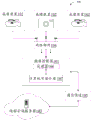
For example, reference is now made to FIG. 6, which illustrates, in flow diagram form, exemplary control logic 600 for optimizing image data for transmission to a server by a system such as system 100 in accordance with some embodiments of the present disclosure. As shown in this flowchart, control logic 600 may include the following steps: receiving a plurality of server rules related to optimization and transmission of the image data from the server in step 601; generating a plurality of local decision rules based on the plurality of server rules and one or more local events in step 602; in step 603, analyzing at least a first portion of the image data according to the plurality of local decision rules to generate image analysis data; and in step 604, generating optimized image data for transmission to the server. The optimized image data may include at least a second portion of the image data and the image analysis data.
In some embodiments, control logic 600 may further include the steps of: receiving the image data from one or more imaging devices; and tagging the image data with at least one of a timestamp and a processing state. Further, in some embodiments, the control logic 600 may further comprise the step of transmitting the optimized image data according to the plurality of local decision rules. Further, in some embodiments, control logic 600 may further include the steps of: sending the plurality of local decision rules to the server; and updating the plurality of server rules according to the plurality of local decision rules. Further, in some embodiments, control logic 600 may include the step of monitoring one or more local events. In some implementations, the one or more local events can include at least one of system parameters related to the image controller and network parameters related to a communication channel between the image controller and a server. Further, in some embodiments, the system parameters may include processing load. Further, in some embodiments, the network parameters may include at least one of available bandwidth and required bandwidth.
In some embodiments, the plurality of server rules may include at least one of a set of image analysis rules, a set of image optimization rules, and a set of data transmission rules. Further, in some embodiments, the set of image analysis rules may specify a desired type of image analysis, a definition of at least a first portion of the image data, and at least one of a plurality of image analysis configuration parameters. Further, in some embodiments, the set of image optimization rules may specify a desired type of image optimization, a definition of at least a second portion of the image data, and at least one of a plurality of image optimization configuration parameters. Further, in some embodiments, the set of data transmission rules may specify a type of data to be transmitted and at least one of a plurality of data transmission configuration parameters.
In some embodiments, generating the plurality of local decision rules in step 602 may include initiating a machine learning process based on the plurality of server rules and the one or more local events. Further, in some implementations, the machine learning process can also be based on the image data and image analysis data. Further, in some embodiments, the one or more local events may include at least one of system parameters and network parameters. Additionally, in some embodiments, generating the optimized image data in step 604 may further include optimizing at least a second portion of the image data according to the plurality of local decision rules.
It should also be appreciated that the above-described techniques may take the form of: a computer or controller implemented process; and apparatus for carrying out these processes. The present disclosure may also be embodied in the form of computer program code containing instructions embodied in tangible media, such as floppy diskettes, CD-ROMs, hard drives, or any other computer-readable storage medium, wherein, when the computer program code is loaded into and executed by a computer or controller, the computer becomes an apparatus for practicing the disclosure. The present disclosure may also be embodied in the form of computer program code or signals, for example, whether stored in a storage medium, loaded into and executed by a computer or controller, or transmitted over some transmission medium, such as over electrical wiring or cabling, through fiber optics, or via electromagnetic radiation, wherein, when the computer program code is loaded into and executed by a computer, the computer becomes an apparatus for practicing the disclosure. When implemented in a general-purpose microprocessor, the code segments of the computer program code configure the microprocessor to create specific logic circuits.
Reference is now made to FIG. 7, which is a block diagram of an exemplary computer system 701 for implementing various embodiments. Various variations of computer system 701 may be used to implement system 100 for optimizing image data for transmission. Computer system 701 may include a central processing unit ("CPU" or "processor") 702. The processor 702 may include at least one data processor for executing program components for performing user or system generated requests. The user may include an individual, an individual using a device (e.g., a device within the scope of the present disclosure), or the device itself. The processor 702 may include an integrated system (bus) controller, a memory management control unit, a floating point unit, a graphics processing unit, a digital signal processing unit, or other specialized processing units. The processor may include an integrated system (bus) controller, a memory management control unit, a floating point unit, a graphics processing unit, a digital signal processing unit, or other specialized processing units. The processor may include a microprocessor, such as an AMD express dragon (Athlon), Duron (Duron), or Hahlon (Opteron), ARM application processor, embedded or secure processor, IBMPowerPC, Intelcore, Itanium (Itanium), Xeon, Saiyang (Celeron), or other processor product line, among others. The processor 702 may be implemented by a host, distributed processor, multi-core, parallel, grid, or other architecture. Some embodiments may use embedded technology such as Application Specific Integrated Circuits (ASICs), Digital Signal Processors (DSPs), Field Programmable Gate Arrays (FPGAs), and the like.
The processor 702 may be configured to communicate with one or more input/output (I/O) devices via an I/O interface 703. The I/O interface 703 may employ a communication protocol/method such as, but not limited to, audio, analog, digital, mono, RCA, stereo, IEEE-1394, serial bus, Universal Serial Bus (USB), Infrared, PS/2, BNC, coaxial, component, composite, Digital Visual Interface (DVI), High Definition Multimedia Interface (HDMI), radio frequency antenna, S-video, VGA, IEEE802.n/b/g/n/x, Bluetooth, cellular (e.g., Code Division Multiple Access (CDMA), high speed packet Access (HSPA +), Global System for Mobile communications (GSM), Long Term Evolution (LTE), WiMax, etc.), and the like.
Computer system 701 can communicate with one or more I/O devices using I/O interface 703. The input device 704 may be, for example, an antenna, a keyboard, a mouse, a joystick, (infrared) remote control, a camera, a card reader, a facsimile machine, a dongle, a biometric reader, a microphone, a touch screen, a touchpad, a trackball, sensors (e.g., accelerometer, light sensor, GPS, gyroscope, proximity sensor, etc.), a stylus, a scanner, a storage device, a transceiver, a video/video source, a head mounted display, and so forth. The output device 705 may be a printer, a facsimile machine, a video display (e.g., Cathode Ray Tube (CRT), Liquid Crystal Display (LCD), Light Emitting Diode (LED), plasma, etc.), audio speakers, or the like. In some implementations, the transceiver 706 can be connected to the processor 702. The transceiver may facilitate various types of wireless transmission or reception. For example, the transceiver may include an antenna operatively connected to a transceiver chip (e.g., Texas instruments WiLinkWL1283, Broadcom BCM4750IUB8, England flying technologies X-Gold618-PMB9800, etc.) to enable IEEE802.11a/b/G/n, Bluetooth, FM, Global Positioning System (GPS), 2G/3GHSDPA/HSUPA communications, etc.
In some embodiments, the processor 702 may be configured to communicate with a communication network 708 through a network interface 707. The network interface 707 may communicate with a communication network 708. The network interface may employ connection protocols including, but not limited to, direct connection, Ethernet (e.g., twisted pair 10/100/1000BaseT), Transmission control protocol/Internet protocol (TCP/IP), token Ring, IEEE802.11a/b/g/n/x, and the like. The communication network 708 may include, but is not limited to, a direct interconnection, a Local Area Network (LAN), a Wide Area Network (WAN), a wireless network (e.g., using wireless application protocol), the internet, and the like. Computer system 701 can communicate with devices 709, 710, and 711 via a network interface 707 and a communication network 708. These devices may include, but are not limited to, personal computers, servers, facsimile machines, printers, scanners, and various mobile devices such as cellular phones, smart phones (e.g., Apple (Apple) iPhone, Blackberry (Blackberry), Android (Android) system based phones, etc.), tablet computers, electronic book readers (Amazon) Kindle, Nook, etc.), laptop computers, notebook computers, gaming machines (Microsoft) Xbox, Nintendo (DS), Sony (Sony) station, etc.), and the like. In some embodiments, computer system 701 may itself include one or more of the devices described above.
In some implementations, the processor 702 may be configured to communicate with one or more memory devices (e.g., RAM713, ROM714, etc.) via the memory interface 712. The storage interface may connect to storage devices including, but not limited to, storage drives, removable disk drives, and the like, using a connection protocol such as Serial Advanced Technology Attachment (SATA), Integrated Drive Electronics (IDE), IEEE1394, Universal Serial Bus (USB), fibre channel, Small Computer System Interface (SCSI), and the like. The storage drives may also include magnetic drums, disk drives, magneto-optical drives, optical disk drives, Redundant Arrays of Independent Disks (RAID), solid state storage devices, solid state drives, and the like.
The storage devices may store a series of program or database components including, but not limited to, an operating system 716, user interface applications 717, web browser 718, mail server 719, mail client 720, user/application data 721 (e.g., any of the data variables or data records described in this disclosure), and the like. Operating system 716 can facilitate resource management and operation of computer system 701. Operating systems include, for example, but are not limited to, apple macintosh osx, Unix-like system suites (e.g., berkeley software suite (BSD), FreeBSD, NetBSD, OpenBSD, etc.), Linux suites (e.g., RedHat, Ubuntu, Kubuntu, etc.), IBMOS/2, microsoft Windows (XP, Vista/7/8, etc.), apple iOS, Google (Google) android, blackberry operating systems, and the like. User interface 717 may facilitate the display, execution, interaction, manipulation, or operation of program components using textual or graphical tools. For example, the user interface may provide a cursor, icon, check box, menu, scroll bar, window, widget, or like computer interactive interface element on a display system operatively connected to computer system 701. In addition, Graphical User Interfaces (GUIs) may also be employed, including, but not limited to, Aqua, IBMOS/2 of the apple Macintosh operating system, Microsoft Windows (e.g., Aero, Metro, etc.), UnixX-Windows, web interface libraries (e.g., ActiveX, Java, Javascript, AJAX, HTML, AdobeFlash, etc.), and the like.
In some embodiments, computer system 701 may execute program components stored by web browser 718. The web browser may be a hypertext browsing application such as microsoft internet explorer, google Chrome, trivia (Mozilla) Firefox (Firefox), apple Safari, etc. The secure web browsing may be implemented by HTTPS (hypertext transfer protocol secure), Secure Sockets Layer (SSL), secure Transport Layer (TLS), and the like. The web browser may use AJAX, DHTML, AdobeFlash, JavaScript, Java, an Application Programming Interface (API), or like tools. In some embodiments, computer system 701 may execute program components stored by mail server 719. The mail server may be an internet mail server such as microsoft Exchange. The mail server may use ASP, ActiveX, ANSIC + +/C #, Microsoft NET, CGI script, Java, JavaScript, PERL, PHP, Python, WebObjects, and like tools. The mail server may also use communication protocols such as Internet information access protocol (IMAP), Mail Application Programming Interface (MAPI), Microsoft Exchange, Post Office Protocol (POP), Simple Mail Transfer Protocol (SMTP), etc. In some embodiments, computer system 701 may execute program components stored by mail client 720. The Mail client may be a Mail viewing program such as apple Mail, Microsoft energy, Microsoft Outlook, collusion, Thunderbird, etc.
In some embodiments, computer system 701 may store user/application data 721, such as data, variables, records, etc. (e.g., server rules, local events, machine learning models, image data, optimized image data, image analysis data, local decision rules, configuration parameters, tagged image data, image controller authentication information, image controller identification, etc.) as described in this disclosure. Such databases may be implemented as fault-tolerant, relational, extensible, secure databases such as Oracle or Sybase. Alternatively, the databases may be implemented as standardized data structures such as arrays, hashes, linked lists, structures, structured text files (e.g., XML), tables, etc., or as object-oriented databases (e.g., via ObjectStore, Poet, Zope, etc.). The databases may be consolidated or distributed databases, sometimes distributed among the various computer systems discussed above in this summary of the invention. It should be understood that the structures and operations of any computer or database component described above may be combined, or distributed in any feasible combination.
Those skilled in the art will appreciate that the techniques described in the various embodiments above may be implemented to optimize the transmission of image data to the remote cloud server based on the processing power of the image controller and/or server, the load on the available resources of the image controller and/or server, the connection speed and bandwidth between the image controller and/or server, etc. The techniques described in the various embodiments above may implement a distributed image/video processing system. The imaging device or an image controller associated with the imaging device may process the obtained image data (i.e., image/video) according to an estimate of a network bandwidth metric that may be used to transmit image or video data to the remote cloud server (i.e., central server). The techniques may also optimize image data based on available network bandwidth. It can be seen that the technique can achieve optimization of network bandwidth usage and computational load at the server and at the image controller using a hybrid approach of central image processing at the server in combination with edge image processing at the image controller. That is, the techniques described in the above embodiments may adaptively balance the connection speed and the load and bandwidth requirements of the server load.
Further, those skilled in the art will appreciate that the techniques described in the various embodiments above may implement configurable image analysis. For example, the techniques allow not only the type of analysis to be performed on the image data to be configured, but also various parameters of the image analysis. The edge image analysis may support server-defined rules and parameters for configuration. Further, the machine learning process may allow for reconfiguration of server-defined rules and parameters through local events.
Thus, those skilled in the art will appreciate that the techniques described in the various embodiments above are an extended and flexible technique. The image controller may act as a gateway for multiple imaging devices (i.e., a single point of contact between a server and multiple imaging devices) and may control multiple feeds of data from the multiple imaging devices. Furthermore, even though the image controller may be configured and controlled by the remote cloud server, it may be customized or improved for a particular set of imaging devices and a particular application through local learning. It will be appreciated that the prior art typically measures network bandwidth and utilizes image processing techniques to change (increase/decrease) the size of the image/video data. In contrast, the technique described in the above embodiment can realize the replacement of image data with image analysis, and can realize the localization of the server-defined rule by local learning.
This specification has described systems and methods for optimizing image data for transmission to a server. The steps shown are for the purpose of illustrating the exemplary embodiments and it is contemplated that as technology continues to evolve, the manner in which particular functions are performed will vary. The above-described embodiments presented herein are for purposes of illustration and not limitation. In addition, for convenience of description, the definition of boundaries of the respective function building blocks herein is arbitrary, and boundaries may be defined in other ways as long as the functions and relationships thereof described above can be appropriately performed. Alternatives (including equivalents, extensions, variations, deviations, etc. of those described herein) will be apparent to persons skilled in the relevant art(s) in light of the disclosure of this application. Such alternatives are within the scope and spirit of the disclosed embodiments.
Furthermore, one or more computer-readable storage media may be used to implement embodiments of the present disclosure. Computer-readable storage media refer to any type of physical memory that can store information or data readable by a processor. Accordingly, a computer-readable storage medium may store instructions for execution by one or more processors, including instructions for causing a processor to perform steps or stages according to embodiments of the present application. The term "computer-readable medium" should be taken to include tangible objects and exclude carrier waves and transitory signals, i.e., non-transitory media including, for example, Random Access Memory (RAM), Read Only Memory (ROM), volatile memory, non-volatile memory, a hard disk drive, CD-ROMs, DVDs, flash drives, disks, and any other known physical storage medium.
It is intended that the foregoing summary and examples be considered as exemplary only, with a true scope and spirit of the disclosed embodiments being indicated by the following claims.
Claims (20)
1. A method of optimizing image data for transmission to a server, comprising:
receiving, by an image controller from the server, a plurality of server rules for optimization and transmission of the image data;
generating, by the image controller, a plurality of local decision rules based on the plurality of server rules and one or more local events, wherein the one or more local events include at least one of system parameters and network parameters;
analyzing, by the image controller, at least a first portion of the image data according to the plurality of local decision rules to generate image analysis data; and
generating, by the image controller, optimized image data for transmission to the server, wherein the optimized image data includes at least a second portion of the image data and the image analysis data.
2. The method of claim 1, further comprising:
receiving the image data from one or more imaging devices; and
the image data is tagged with at least one of a timestamp and a processing state.
3. The method of claim 1, wherein the plurality of server rules includes at least one of a set of image analysis rules, a set of image optimization rules, and a set of data transmission rules; the set of image analysis rules specifies a desired type of image analysis, a definition of the at least a first portion of the image data, and at least one of a plurality of image analysis configuration parameters; the set of image optimization rules specifies a desired type of image analysis, a definition of the at least a second portion of the image data, and at least one of a plurality of image optimization configuration parameters; the set of data transmission rules specifies a type of data to be transmitted and at least one of a plurality of data transmission configuration parameters.
4. The method of claim 1, wherein generating the optimized image data further comprises optimizing the at least a second portion of the image data according to the plurality of local decision rules.
5. The method of claim 1, further comprising transmitting the optimized image data according to the plurality of local decision rules.
6. The method of claim 1, further comprising monitoring the one or more local events, wherein the one or more local events comprise at least one of system parameters related to the image controller and network parameters related to a communication channel between the image controller and the server; the system parameters include a processing load; the network parameters include at least one of available bandwidth and required bandwidth.
7. The method of claim 1, wherein generating the plurality of local decision rules comprises initiating a machine learning process based on the plurality of server rules and the one or more local events and based on the image data and the image analysis data.
8. The method of claim 1, further comprising:
transmitting the plurality of local decision rules to the server; and
updating the plurality of server rules according to the plurality of local decision rules.
9. A system for optimizing image data for transmission to a server, comprising:
an image controller comprising at least one processor and a computer-readable medium having instructions stored thereon, which when executed by the at least one processor, cause the at least one processor to perform operations comprising:
receiving, from the server, a plurality of server rules for optimization and transmission of the image data;
generating a plurality of local decision rules based on the plurality of server rules and one or more local events, wherein the one or more local events include at least one of system parameters and network parameters;
analyzing at least a first portion of the image data according to the plurality of local decision rules to generate image analysis data; and
generating optimized image data for transmission to the server, wherein the optimized image data includes at least a second portion of the image data and the image analysis data.
10. The system of claim 9, wherein the operations further comprise:
receiving the image data from one or more imaging devices; and
the image data is tagged with at least one of a timestamp and a processing state.
11. The system of claim 9, wherein the plurality of server rules includes at least one of a set of image analysis rules, a set of image optimization rules, and a set of data transmission rules; the set of image analysis rules specifies a desired type of image analysis, a definition of the at least a first portion of the image data, and at least one of a plurality of image analysis configuration parameters; the set of image optimization rules specifies a desired type of image analysis, a definition of the at least a second portion of the image data, and at least one of a plurality of image optimization configuration parameters; the set of data transmission rules specifies a type of data to be transmitted and at least one of a plurality of data transmission configuration parameters.
12. The system of claim 9, wherein generating the optimized image data further comprises optimizing the at least a second portion of the image data according to the plurality of local decision rules.
13. The system of claim 9, the operations further comprising transmitting the optimized image data according to the plurality of local decision rules.
14. The system of claim 9, wherein the operations further comprise monitoring the one or more local events, wherein the one or more local events comprise at least one of system parameters related to the image controller and network parameters related to a communication channel between the image controller and the server; the system parameters include a processing load; the network parameter includes at least one of an available bandwidth and a required bandwidth.
15. The system of claim 9, wherein generating the plurality of local decision rules comprises initiating a machine learning process based on the plurality of server rules and the one or more local events and based on the image data and the image analysis data.
16. The system of claim 9, wherein the operations further comprise:
transmitting the plurality of local decision rules to the server; and
updating the plurality of server rules according to the plurality of local decision rules.
17. A non-transitory computer-readable medium having stored thereon computer-executable instructions for:
receiving, from a server, a plurality of server rules for optimization and transmission of image data;
generating a plurality of local decision rules based on the plurality of server rules and one or more local events, wherein the one or more local events include at least one of system parameters and network parameters;
analyzing at least a first portion of the image data according to the plurality of local decision rules to generate image analysis data; and
generating optimized image data for transmission to the server, wherein the optimized image data includes at least a second portion of the image data and the image analysis data.
18. The non-transitory computer-readable medium of claim 17, wherein the instructions are further to monitor the one or more local events, wherein the one or more local events include at least one of system parameters related to an image controller and network parameters related to a communication channel between the image controller and the server; the system parameters include a processing load; the network parameters include at least one of available bandwidth and required bandwidth.
19. The non-transitory computer-readable medium of claim 17, wherein generating the plurality of local decision rules comprises initiating a machine learning process based on the plurality of server rules and the one or more local events and based on the image data and the image analysis data.
20. The non-transitory computer-readable medium of claim 17, wherein the instructions are to:
transmitting the plurality of local decision rules to the server, an
Updating the plurality of server rules according to the plurality of local decision rules.
Applications Claiming Priority (2)
| Application Number | Priority Date | Filing Date | Title |
|---|---|---|---|
| IN201741028953 | 2017-08-16 | ||
| IN201741028953 | 2017-08-16 |
Publications (2)
| Publication Number | Publication Date |
|---|---|
| CN109427056A CN109427056A (en) | 2019-03-05 |
| CN109427056B true CN109427056B (en) | 2021-11-05 |
Family
ID=65361273
Family Applications (1)
| Application Number | Title | Priority Date | Filing Date |
|---|---|---|---|
| CN201810208810.4A Active CN109427056B (en) | 2017-08-16 | 2018-03-14 | Method and system for optimizing image data for data transmission |
Country Status (2)
| Country | Link |
|---|---|
| US (1) | US10491758B2 (en) |
| CN (1) | CN109427056B (en) |
Families Citing this family (11)
| Publication number | Priority date | Publication date | Assignee | Title |
|---|---|---|---|---|
| US20190108404A1 (en) * | 2017-10-10 | 2019-04-11 | Weixin Xu | Consumer Camera System Design for Globally Optimized Recognition |
| US11120522B2 (en) | 2020-02-03 | 2021-09-14 | Sony Interactive Entertainment Inc. | System and method for efficient multi-GPU rendering of geometry by subdividing geometry |
| US11263718B2 (en) | 2020-02-03 | 2022-03-01 | Sony Interactive Entertainment Inc. | System and method for efficient multi-GPU rendering of geometry by pretesting against in interleaved screen regions before rendering |
| US11080814B1 (en) * | 2020-02-03 | 2021-08-03 | Sony Interactive Entertainment Inc. | System and method for efficient multi-GPU rendering of geometry by pretesting against screen regions using prior frame information |
| US11321800B2 (en) | 2020-02-03 | 2022-05-03 | Sony Interactive Entertainment Inc. | System and method for efficient multi-GPU rendering of geometry by region testing while rendering |
| US11170461B2 (en) | 2020-02-03 | 2021-11-09 | Sony Interactive Entertainment Inc. | System and method for efficient multi-GPU rendering of geometry by performing geometry analysis while rendering |
| US11514549B2 (en) | 2020-02-03 | 2022-11-29 | Sony Interactive Entertainment Inc. | System and method for efficient multi-GPU rendering of geometry by generating information in one rendering phase for use in another rendering phase |
| US11508110B2 (en) | 2020-02-03 | 2022-11-22 | Sony Interactive Entertainment Inc. | System and method for efficient multi-GPU rendering of geometry by performing geometry analysis before rendering |
| US12112394B2 (en) | 2020-02-03 | 2024-10-08 | Sony Interactive Entertainment Inc. | System and method for efficient multi-GPU rendering of geometry by pretesting against screen regions using configurable shaders |
| CN111814220B (en) * | 2020-07-03 | 2021-03-26 | 重庆丰鼎科技有限责任公司 | CAE cloud simulation implementation method |
| CN113676404A (en) * | 2021-08-23 | 2021-11-19 | 北京字节跳动网络技术有限公司 | Data transmission method, device, apparatus, storage medium, and program |
Family Cites Families (17)
| Publication number | Priority date | Publication date | Assignee | Title |
|---|---|---|---|---|
| CN101873224A (en) | 2010-06-07 | 2010-10-27 | 北京高森明晨信息科技有限公司 | A cloud computing load balancing method and device |
| US20130198829A1 (en) * | 2011-08-08 | 2013-08-01 | Advanced Video Communications, Inc. | System to retrieve and distribute images in real time |
| US8948253B2 (en) | 2011-12-15 | 2015-02-03 | Flextronics Ap, Llc | Networked image/video processing system |
| JP2013239861A (en) * | 2012-05-14 | 2013-11-28 | Freebit Co Ltd | Image capturing system |
| US9426476B2 (en) * | 2012-07-09 | 2016-08-23 | Hewlett-Packard Development Company, L.P. | Video stream |
| US9801541B2 (en) * | 2012-12-31 | 2017-10-31 | Dexcom, Inc. | Remote monitoring of analyte measurements |
| CN103139609B (en) * | 2013-02-01 | 2016-07-06 | 深圳市深信服电子科技有限公司 | The method and apparatus that remote application video playback is optimized |
| US9179159B2 (en) * | 2013-06-20 | 2015-11-03 | Wowza Media Systems, LLC | Distributed encoding of a video stream |
| US10749989B2 (en) * | 2014-04-01 | 2020-08-18 | Microsoft Technology Licensing Llc | Hybrid client/server architecture for parallel processing |
| US10217003B2 (en) * | 2014-04-10 | 2019-02-26 | Sensormatic Electronics, LLC | Systems and methods for automated analytics for security surveillance in operation areas |
| CN104822047B (en) * | 2015-04-16 | 2018-10-19 | 中国科学院上海技术物理研究所 | One kind being based on network self-adapting medical image transmission display methods |
| IN2015CH03209A (en) * | 2015-06-25 | 2015-07-10 | Wipro Ltd | |
| US10506257B2 (en) * | 2015-09-28 | 2019-12-10 | Cybrook Inc. | Method and system of video processing with back channel message management |
| US10347102B2 (en) * | 2016-03-22 | 2019-07-09 | Sensormatic Electronics, LLC | Method and system for surveillance camera arbitration of uplink consumption |
| JP6822248B2 (en) * | 2017-03-21 | 2021-01-27 | 富士通株式会社 | Information processing system, information processing method and mobile terminal |
| US10410133B2 (en) * | 2017-03-22 | 2019-09-10 | At&T Intellectual Property I, L.P. | Methods, devices and systems for managing network video traffic |
| US11151472B2 (en) * | 2017-03-31 | 2021-10-19 | At&T Intellectual Property I, L.P. | Dynamic updating of machine learning models |
-
2017
- 2017-09-28 US US15/719,173 patent/US10491758B2/en active Active
-
2018
- 2018-03-14 CN CN201810208810.4A patent/CN109427056B/en active Active
Also Published As
| Publication number | Publication date |
|---|---|
| US10491758B2 (en) | 2019-11-26 |
| US20190058799A1 (en) | 2019-02-21 |
| CN109427056A (en) | 2019-03-05 |
Similar Documents
| Publication | Publication Date | Title |
|---|---|---|
| CN109427056B (en) | Method and system for optimizing image data for data transmission | |
| EP3333703A1 (en) | Method and system for automatically updating automation sequences | |
| CN109218379B (en) | Data processing method and system in Internet of things environment | |
| US11321624B2 (en) | Method and system for analyzing internet of things (IoT) data in real-time and providing predictions | |
| CN111680535B (en) | Method and system for real-time prediction of one or more potential threats in video surveillance | |
| AU2022275481B2 (en) | Monitoring human location, trajectory and behavior using thermal data | |
| CN108769214B (en) | Method and apparatus for controlling edge computing device, and method and apparatus for updating data | |
| CN108270611B (en) | Method and system for establishing a secure access connection with an electronic device | |
| US11463525B1 (en) | Method and system for managing internet of things (IoT) devices in heterogeneous communication networks | |
| CN110866212A (en) | Page abnormity positioning method and device, electronic equipment and computer readable medium | |
| EP3293663A1 (en) | Methods and systems for integrated risk management in enterprise environments | |
| CN108536579B (en) | Resource-constrained device testing system and method | |
| US10297056B2 (en) | Method and system for remotely annotating an object in real-time | |
| CN108535684B (en) | Method and system for locating spatially separated wireless transmitters | |
| US10929992B2 (en) | Method and system for rendering augmented reality (AR) content for textureless objects | |
| US20210303548A1 (en) | Method and system for performing real-time data validation | |
| US20200134534A1 (en) | Method and system for dynamically avoiding information technology operational incidents in a business process | |
| EP3239842A1 (en) | Systems and methods for performing integration testing of an information technology (it) infrastructure | |
| CN116580362B (en) | Transmission operation cross-system fusion data acquisition method and digital asset processing system | |
| US20210027220A1 (en) | System and method of providing context based personalized assistance | |
| CN111314652B (en) | Video structured analysis processing method, device, equipment and storage medium thereof | |
| US9917999B2 (en) | System and method for capturing multi-media of an area of interest using multi-media capturing devices | |
| US9955434B1 (en) | Method and system for controlling a transmit range of a wireless transmitter | |
| CN114979644A (en) | Video encoding method, device, equipment and storage medium | |
| CN114693313A (en) | Identification code-based warehousing equipment detection method and device, electronic equipment and medium |
Legal Events
| Date | Code | Title | Description |
|---|---|---|---|
| PB01 | Publication | ||
| PB01 | Publication | ||
| SE01 | Entry into force of request for substantive examination | ||
| SE01 | Entry into force of request for substantive examination | ||
| GR01 | Patent grant | ||
| GR01 | Patent grant |