CN109361922B - Predictive quantization coding method - Google Patents
Predictive quantization coding method Download PDFInfo
- Publication number
- CN109361922B CN109361922B CN201811260531.9A CN201811260531A CN109361922B CN 109361922 B CN109361922 B CN 109361922B CN 201811260531 A CN201811260531 A CN 201811260531A CN 109361922 B CN109361922 B CN 109361922B
- Authority
- CN
- China
- Prior art keywords
- pixel
- processed
- quantization
- component
- obtaining
- Prior art date
- Legal status (The legal status is an assumption and is not a legal conclusion. Google has not performed a legal analysis and makes no representation as to the accuracy of the status listed.)
- Expired - Fee Related
Links
Images


Classifications
-
- H—ELECTRICITY
- H04—ELECTRIC COMMUNICATION TECHNIQUE
- H04N—PICTORIAL COMMUNICATION, e.g. TELEVISION
- H04N19/00—Methods or arrangements for coding, decoding, compressing or decompressing digital video signals
- H04N19/10—Methods or arrangements for coding, decoding, compressing or decompressing digital video signals using adaptive coding
- H04N19/102—Methods or arrangements for coding, decoding, compressing or decompressing digital video signals using adaptive coding characterised by the element, parameter or selection affected or controlled by the adaptive coding
- H04N19/103—Selection of coding mode or of prediction mode
- H04N19/11—Selection of coding mode or of prediction mode among a plurality of spatial predictive coding modes
-
- H—ELECTRICITY
- H04—ELECTRIC COMMUNICATION TECHNIQUE
- H04N—PICTORIAL COMMUNICATION, e.g. TELEVISION
- H04N19/00—Methods or arrangements for coding, decoding, compressing or decompressing digital video signals
- H04N19/10—Methods or arrangements for coding, decoding, compressing or decompressing digital video signals using adaptive coding
- H04N19/102—Methods or arrangements for coding, decoding, compressing or decompressing digital video signals using adaptive coding characterised by the element, parameter or selection affected or controlled by the adaptive coding
- H04N19/124—Quantisation
- H04N19/126—Details of normalisation or weighting functions, e.g. normalisation matrices or variable uniform quantisers
-
- H—ELECTRICITY
- H04—ELECTRIC COMMUNICATION TECHNIQUE
- H04N—PICTORIAL COMMUNICATION, e.g. TELEVISION
- H04N19/00—Methods or arrangements for coding, decoding, compressing or decompressing digital video signals
- H04N19/10—Methods or arrangements for coding, decoding, compressing or decompressing digital video signals using adaptive coding
- H04N19/102—Methods or arrangements for coding, decoding, compressing or decompressing digital video signals using adaptive coding characterised by the element, parameter or selection affected or controlled by the adaptive coding
- H04N19/124—Quantisation
-
- H—ELECTRICITY
- H04—ELECTRIC COMMUNICATION TECHNIQUE
- H04N—PICTORIAL COMMUNICATION, e.g. TELEVISION
- H04N19/00—Methods or arrangements for coding, decoding, compressing or decompressing digital video signals
- H04N19/10—Methods or arrangements for coding, decoding, compressing or decompressing digital video signals using adaptive coding
- H04N19/102—Methods or arrangements for coding, decoding, compressing or decompressing digital video signals using adaptive coding characterised by the element, parameter or selection affected or controlled by the adaptive coding
- H04N19/103—Selection of coding mode or of prediction mode
- H04N19/105—Selection of the reference unit for prediction within a chosen coding or prediction mode, e.g. adaptive choice of position and number of pixels used for prediction
-
- H—ELECTRICITY
- H04—ELECTRIC COMMUNICATION TECHNIQUE
- H04N—PICTORIAL COMMUNICATION, e.g. TELEVISION
- H04N19/00—Methods or arrangements for coding, decoding, compressing or decompressing digital video signals
- H04N19/10—Methods or arrangements for coding, decoding, compressing or decompressing digital video signals using adaptive coding
- H04N19/102—Methods or arrangements for coding, decoding, compressing or decompressing digital video signals using adaptive coding characterised by the element, parameter or selection affected or controlled by the adaptive coding
- H04N19/119—Adaptive subdivision aspects, e.g. subdivision of a picture into rectangular or non-rectangular coding blocks
-
- H—ELECTRICITY
- H04—ELECTRIC COMMUNICATION TECHNIQUE
- H04N—PICTORIAL COMMUNICATION, e.g. TELEVISION
- H04N19/00—Methods or arrangements for coding, decoding, compressing or decompressing digital video signals
- H04N19/10—Methods or arrangements for coding, decoding, compressing or decompressing digital video signals using adaptive coding
- H04N19/134—Methods or arrangements for coding, decoding, compressing or decompressing digital video signals using adaptive coding characterised by the element, parameter or criterion affecting or controlling the adaptive coding
- H04N19/146—Data rate or code amount at the encoder output
- H04N19/147—Data rate or code amount at the encoder output according to rate distortion criteria
-
- H—ELECTRICITY
- H04—ELECTRIC COMMUNICATION TECHNIQUE
- H04N—PICTORIAL COMMUNICATION, e.g. TELEVISION
- H04N19/00—Methods or arrangements for coding, decoding, compressing or decompressing digital video signals
- H04N19/10—Methods or arrangements for coding, decoding, compressing or decompressing digital video signals using adaptive coding
- H04N19/169—Methods or arrangements for coding, decoding, compressing or decompressing digital video signals using adaptive coding characterised by the coding unit, i.e. the structural portion or semantic portion of the video signal being the object or the subject of the adaptive coding
- H04N19/182—Methods or arrangements for coding, decoding, compressing or decompressing digital video signals using adaptive coding characterised by the coding unit, i.e. the structural portion or semantic portion of the video signal being the object or the subject of the adaptive coding the unit being a pixel
-
- H—ELECTRICITY
- H04—ELECTRIC COMMUNICATION TECHNIQUE
- H04N—PICTORIAL COMMUNICATION, e.g. TELEVISION
- H04N19/00—Methods or arrangements for coding, decoding, compressing or decompressing digital video signals
- H04N19/10—Methods or arrangements for coding, decoding, compressing or decompressing digital video signals using adaptive coding
- H04N19/169—Methods or arrangements for coding, decoding, compressing or decompressing digital video signals using adaptive coding characterised by the coding unit, i.e. the structural portion or semantic portion of the video signal being the object or the subject of the adaptive coding
- H04N19/186—Methods or arrangements for coding, decoding, compressing or decompressing digital video signals using adaptive coding characterised by the coding unit, i.e. the structural portion or semantic portion of the video signal being the object or the subject of the adaptive coding the unit being a colour or a chrominance component
-
- H—ELECTRICITY
- H04—ELECTRIC COMMUNICATION TECHNIQUE
- H04N—PICTORIAL COMMUNICATION, e.g. TELEVISION
- H04N19/00—Methods or arrangements for coding, decoding, compressing or decompressing digital video signals
- H04N19/50—Methods or arrangements for coding, decoding, compressing or decompressing digital video signals using predictive coding
-
- H—ELECTRICITY
- H04—ELECTRIC COMMUNICATION TECHNIQUE
- H04N—PICTORIAL COMMUNICATION, e.g. TELEVISION
- H04N19/00—Methods or arrangements for coding, decoding, compressing or decompressing digital video signals
- H04N19/50—Methods or arrangements for coding, decoding, compressing or decompressing digital video signals using predictive coding
- H04N19/503—Methods or arrangements for coding, decoding, compressing or decompressing digital video signals using predictive coding involving temporal prediction
- H04N19/51—Motion estimation or motion compensation
Landscapes
- Engineering & Computer Science (AREA)
- Multimedia (AREA)
- Signal Processing (AREA)
- Compression Or Coding Systems Of Tv Signals (AREA)
Abstract
本发明涉及一种预测量化编码方法,包括如下步骤:(a)将待处理像素分成若干像素分量;(b)获得待处理像素分量;(c)获得所述待处理像素分量的纹理方向梯度;(d)根据所述纹理方向梯度、所述待处理像素分量与其余所述像素分量之间的位置关系获得参考像素;(e)根据所述参考像素获得所述待处理像素分量的预测残差;(f)重复步骤(b)~步骤(e),将任一像素分量作为待处理像素分量获得对应的预测残差以形成预测残差码流;(g)将所述预测残差码流划分为多个量化单元;(h)获取所述量化单元对应的第一率失真优化和第二率失真优化以获得量化残差码流。本发明预测量化编码方法能够减少传输带宽,降低理论极限熵及复杂度。

The present invention relates to a predictive quantization coding method, comprising the following steps: (a) dividing a pixel to be processed into several pixel components; (b) obtaining the pixel component to be processed; (c) obtaining the texture direction gradient of the pixel component to be processed; (d) obtaining a reference pixel according to the texture direction gradient, the positional relationship between the pixel component to be processed and the remaining pixel components; (e) obtaining the prediction residual of the pixel component to be processed according to the reference pixel (f) repeating steps (b) to (e), using any pixel component as a pixel component to be processed to obtain a corresponding prediction residual to form a prediction residual code stream; (g) using the prediction residual code stream Divide into multiple quantization units; (h) obtain the first rate-distortion optimization and the second rate-distortion optimization corresponding to the quantization units to obtain a quantized residual code stream. The predictive quantization coding method of the present invention can reduce the transmission bandwidth, and reduce the theoretical limit entropy and complexity.
Description
技术领域technical field
本发明属于压缩编码领域,具体涉及一种预测量化编码方法。The invention belongs to the field of compression coding, and in particular relates to a predictive quantization coding method.
背景技术Background technique
图像数据中存在很大的冗余度,一般通过压缩编码去相关,即通过较少序列之间的相关性,用较少的比特数来表示视频内容,降低视频内容中的冗余,从而实现对视频或者图像的压缩。There is a lot of redundancy in image data, which is generally de-correlated through compression coding, that is, through less correlation between sequences, fewer bits are used to represent the video content, reducing the redundancy in the video content, so as to achieve Compression of video or images.
在压缩编码过程中,允许图像编码有一定的失真也是视频可以压缩的一个重要原因。在许多应用场合,并不要求压缩后的图像复原后和原图完全一致,而是允许有一定的失真,因为这些失真可以利用人的视觉特性,在图像变化不被觉察的条件下减少量化信号的灰度级之类,来提高数据压缩比。In the process of compression encoding, allowing certain distortion in image encoding is also an important reason why video can be compressed. In many applications, the compressed image is not required to be exactly the same as the original image after restoration, but a certain amount of distortion is allowed, because these distortions can take advantage of human visual characteristics to reduce the quantization signal under the condition that the image changes are not noticed. to improve the data compression ratio.
预测量化方法是压缩编码的常用手段,现有的预测量化方法主要存在下面的问题:预测像素分量容易误判,影响预测结果,且没有充分利用像素纹理之间的相关性,无法进一步降低理论极限熵以及运算复杂度,无法进一步降低预测量化压缩后数据压缩比和失真损失。The predictive quantization method is a common means of compression coding. The existing predictive quantization methods mainly have the following problems: the predicted pixel components are prone to misjudgment, which affects the prediction results, and the correlation between pixel textures is not fully utilized, and the theoretical limit cannot be further reduced. Entropy and computational complexity cannot further reduce the data compression ratio and distortion loss after prediction and quantization compression.
因此,如何提供一种高数据压缩比且失真损失小的预测量化方法是研究的热点问题。Therefore, how to provide a predictive quantization method with high data compression ratio and low distortion loss is a hot research issue.
发明内容SUMMARY OF THE INVENTION
为了解决现有技术中存在的上述问题,本发明提供了一种预测量化编码方法。本发明要解决的技术问题通过以下技术方案实现:In order to solve the above problems existing in the prior art, the present invention provides a predictive quantization coding method. The technical problem to be solved by the present invention is realized by the following technical solutions:
本发明实施例提供了一种预测量化编码方法,包括如下步骤:An embodiment of the present invention provides a predictive quantization coding method, comprising the following steps:
将待处理像素分成若干像素分量:Divide the pixel to be processed into several pixel components:
获得待处理像素分量;Get the pixel component to be processed;
获得所述待处理像素分量的纹理方向梯度;obtaining the texture direction gradient of the pixel component to be processed;
根据所述纹理方向梯度、所述待处理像素分量与其余所述像素分量之间的位置关系获得参考像素;Obtain reference pixels according to the texture direction gradient, the positional relationship between the to-be-processed pixel components and the rest of the pixel components;
根据所述参考像素获得所述待处理像素分量的预测残差;obtaining the prediction residual of the pixel component to be processed according to the reference pixel;
重复步骤(b)~步骤(e),将任一像素分量作为待处理像素分量获得对应的预测残差以形成预测残差码流;Steps (b) to (e) are repeated, and any pixel component is used as the pixel component to be processed to obtain a corresponding prediction residual to form a prediction residual code stream;
将所述预测残差码流划分为多个量化单元;dividing the prediction residual code stream into a plurality of quantization units;
获取所述量化单元对应的第一率失真优化和第二率失真优化以获得量化残差码流。The first rate-distortion optimization and the second rate-distortion optimization corresponding to the quantization unit are acquired to obtain a quantized residual code stream.
在本发明的一个实施例中,将待处理像素分成多个像素分量包括将所述待处理像素分成R像素分量、G像素分量、B像素分量。In an embodiment of the present invention, dividing the pixel to be processed into a plurality of pixel components includes dividing the pixel to be processed into an R pixel component, a G pixel component, and a B pixel component.
在本发明的一个实施例中,步骤(d)包括如下步骤:In one embodiment of the present invention, step (d) comprises the following steps:
(d1)根据所述纹理方向梯度获得第一加权梯度最优值;(d1) obtaining a first weighted gradient optimal value according to the texture direction gradient;
(d2)根据所述第一加权梯度最优值、所述待处理像素分量与其余所述像素分量之间的位置关系获得第二加权梯度最优值;(d2) obtaining a second optimal weighted gradient value according to the first optimal weighted gradient value, the positional relationship between the to-be-processed pixel component and the remaining pixel components;
(d3)根据所述第二加权梯度最优值获得参考方向;(d3) obtaining a reference direction according to the second optimal value of the weighted gradient;
(d4)根据所述参考方向获得所述参考像素。(d4) Obtaining the reference pixel according to the reference direction.
在本发明的一个实施例中,步骤(d2)包括如下步骤:In one embodiment of the present invention, step (d2) comprises the following steps:
(d21)获得所述待处理像素分量的第一加权梯度最优值;(d21) obtaining the first weighted gradient optimal value of the pixel component to be processed;
(d22)根据所述待处理像素分量与其余所述像素分量的位置关系获得位置关系权重;(d22) obtaining a positional relationship weight according to the positional relationship between the to-be-processed pixel component and the rest of the pixel components;
(d23)根据所述位置关系权重和所述第一加权梯度最优值获得所述第二加权梯度最优值。(d23) Obtain the second weighted gradient optimum value according to the positional relationship weight and the first weighted gradient optimum value.
在本发明的一个实施例中,所述待处理像素分量与其余所述像素分量的位置关系包括:与所述待处理像素分量距离越近的像素分量其位置关系权重约大,反之越小。In an embodiment of the present invention, the positional relationship between the to-be-processed pixel component and the rest of the pixel components includes: a pixel component that is closer to the to-be-processed pixel component has a larger positional relationship weight, and vice versa.
在本发明的一个实施例中,步骤(h)包括:In one embodiment of the present invention, step (h) comprises:
(h1)对所述量化单元的预测残差依次进行量化处理、第一补偿处理、第一反量化处理获得第一量化残差和第一率失真优化;(h1) sequentially performing quantization processing, first compensation processing, and first inverse quantization processing on the prediction residual of the quantization unit to obtain a first quantized residual and a first rate-distortion optimization;
(h2)对所述第一量化残差进行第二补偿处理、第二反量化处理获得第二量化残差和第二率失真优化。(h2) Perform a second compensation process and a second inverse quantization process on the first quantized residual to obtain a second quantized residual and a second rate-distortion optimization.
(h3)比较所述第一率失真优化和第二率失真优化,若所述第一率失真优化小于第二率失真优化,则将所述第一量化残差写入所述量化残差码流;否则将所述第二量化残差写入所述量化残差码流。(h3) Compare the first rate-distortion optimization and the second rate-distortion optimization, and if the first rate-distortion optimization is smaller than the second rate-distortion optimization, write the first quantization residual into the quantization residual code stream; otherwise, write the second quantized residual into the quantized residual code stream.
在本发明的一个实施例中,步骤(h1)包括:In an embodiment of the present invention, step (h1) includes:
(h11)对所述量化单元的预测残差依次进行所述量化处理、所述第一补偿处理获得所述第一量化残差;(h11) sequentially performing the quantization process and the first compensation process on the prediction residual of the quantization unit to obtain the first quantization residual;
(h12)对所述第一量化残差进行所述第一反量化处理并依次获得第一反量化残差、第一残差损失、所述第一率失真优化。(h12) Perform the first inverse quantization process on the first quantization residual, and sequentially obtain the first inverse quantization residual, the first residual loss, and the first rate-distortion optimization.
在本发明的一个实施例中,步骤(h2)包括:In one embodiment of the present invention, step (h2) comprises:
(h21)根据所述波动系数获得补偿模板;(h21) obtaining a compensation template according to the fluctuation coefficient;
(h22)根据所述补偿模板对所述第一量化残差进行所述第二补偿处理获得所述第二量化残差;(h22) performing the second compensation process on the first quantization residual according to the compensation template to obtain the second quantization residual;
(h23)对所述第二量化残差进行所述第二反量化处理并依次获得第二反量化残差、第二残差损失、所述第二率失真优化。(h23) Perform the second inverse quantization process on the second quantization residual, and sequentially obtain a second inverse quantization residual, a second residual loss, and the second rate-distortion optimization.
在本发明的一个实施例中,所述波动系数k满足:In an embodiment of the present invention, the fluctuation coefficient k satisfies:

其中,lossresi为所述第一残差损失的第i位的值,pixnumnone0为所述第一残差损失内非0的数量。Wherein, lossres i is the value of the ith bit of the first residual loss, and pixnum none0 is the number of non-zeros in the first residual loss.
与现有技术相比,本发明的有益效果:Compared with the prior art, the beneficial effects of the present invention:
本发明的预测量化编码方法有效减少码流传输带宽,充分利用纹理相关性进行预测编码,自适应进行量化编码,进一步降低理论极限熵及复杂度。The predictive quantization coding method of the present invention effectively reduces the transmission bandwidth of the code stream, makes full use of texture correlation for predictive coding, adaptively performs quantization coding, and further reduces the theoretical limit entropy and complexity.
附图说明Description of drawings
图1为本发明实施例提供的一种预测量化编码方法的流程示意图;1 is a schematic flowchart of a predictive quantization coding method according to an embodiment of the present invention;
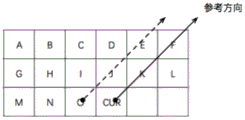
图2为本发明实施例提供的一种预测量化编码方法的原理示意图;FIG. 2 is a schematic diagram of the principle of a predictive quantization coding method provided by an embodiment of the present invention;
图3为本发明实施例提供的一种预测量化编码方法中像素R分量示意图;3 is a schematic diagram of a pixel R component in a predictive quantization coding method provided by an embodiment of the present invention;
图4为本发明实施例提供的一种预测量化编码方法中待处理像素分量的纹理方向梯度计算原理示意图;4 is a schematic diagram of the calculation principle of the texture direction gradient of the pixel component to be processed in a predictive quantization coding method provided by an embodiment of the present invention;
图5为本发明实施例提供的一种预测量化编码方法中参考方向计算原理示意图。FIG. 5 is a schematic diagram of a reference direction calculation principle in a predictive quantization coding method provided by an embodiment of the present invention.
具体实施方式Detailed ways
下面结合具体实施例对本发明做进一步详细的描述,但本发明的实施方式不限于此。The present invention will be described in further detail below with reference to specific embodiments, but the embodiments of the present invention are not limited thereto.
实施例一Example 1
请参见图1,图1为本发明实施例提供的一种预测量化方法的流程示意图。该预测量化方法包括:Please refer to FIG. 1. FIG. 1 is a schematic flowchart of a prediction and quantization method according to an embodiment of the present invention. The predictive quantification method includes:
将待处理像素分成若干像素分量:Divide the pixel to be processed into several pixel components:
获得待处理像素分量;Get the pixel component to be processed;
获得所述待处理像素分量的纹理方向梯度;obtaining the texture direction gradient of the pixel component to be processed;
根据所述纹理方向梯度、所述待处理像素分量与其余所述像素分量之间的位置关系获得参考像素;Obtain reference pixels according to the texture direction gradient, the positional relationship between the to-be-processed pixel components and the rest of the pixel components;
根据所述参考像素获得所述待处理像素分量的预测残差;obtaining the prediction residual of the pixel component to be processed according to the reference pixel;
重复步骤(b)~步骤(e),将任一像素分量作为待处理像素分量获得对应的预测残差以形成预测残差码流;Steps (b) to (e) are repeated, and any pixel component is used as the pixel component to be processed to obtain a corresponding prediction residual to form a prediction residual code stream;
将所述预测残差码流划分为多个量化单元;dividing the prediction residual code stream into a plurality of quantization units;
获取所述量化单元对应的第一率失真优化和第二率失真优化以获得量化残差码流。The first rate-distortion optimization and the second rate-distortion optimization corresponding to the quantization unit are acquired to obtain a quantized residual code stream.
本发明的预测量化方法有效减少码流传输带宽,充分利用纹理相关性进行预测编码,自适应进行量化编码,进一步降低理论极限熵及复杂度。The predictive quantization method of the present invention effectively reduces the transmission bandwidth of the code stream, makes full use of texture correlation for predictive coding, adaptively performs quantization coding, and further reduces the theoretical limit entropy and complexity.
实施例二Embodiment 2
请参见图2,图2为本发明实施例提供的一种预测量化方法的原理示意图。本实施例在上述实施例的基础上包括实施例一的全部内容,重点对该预测量化方法进行详细描述。具体地,该预测量化方法包括如下步骤:Referring to FIG. 2 , FIG. 2 is a schematic schematic diagram of a prediction and quantization method according to an embodiment of the present invention. This embodiment includes the entire contents of the first embodiment on the basis of the above-mentioned embodiment, and focuses on the detailed description of the prediction and quantization method. Specifically, the predictive quantization method includes the following steps:
S01:获取待处理图片的任一像素作为待处理像素;具体地,可按照待处理图像的像素矩阵从左到右的顺序,依次获取像素作为待处理像素。S01: Acquire any pixel of the image to be processed as the pixel to be processed; specifically, the pixels may be sequentially acquired as the pixel to be processed according to the order from left to right of the pixel matrix of the image to be processed.
S02:将上述待处理像素分成待处理像素的R像素分量、G像素分量、B像素分量;对应地,所述待处理图片的像素矩阵中任一像素都可分成对应的R像素分量、G像素分量、B像素分量。S02: Divide the above-mentioned pixels to be processed into R pixel components, G pixel components, and B pixel components of the pixels to be processed; Correspondingly, any pixel in the pixel matrix of the to-be-processed picture can be divided into corresponding R pixel components, G pixel components component, B pixel component.
其中,也可以将待处理像素分成RGBY四个像素分量,或者RGBW四个像素分量,等等,此处分量拆分方式不做具体限制。Wherein, the pixel to be processed may also be divided into four pixel components of RGBY, or four pixel components of RGBW, etc., and the method of dividing the components is not specifically limited here.
S03:获取待处理像素分量;S03: obtain the pixel components to be processed;
将待处理像素的任一像素分量作为待处理像素分量。Take any pixel component of the pixel to be processed as the pixel component to be processed.
S04:获得待处理像素分量的纹理方向梯度;S04: obtain the texture direction gradient of the pixel component to be processed;
其中,纹理方向梯度为矢量值,包括纹理方向梯度的矢量方向和纹理方向梯度的大小两个特征。Among them, the texture direction gradient is a vector value, including the vector direction of the texture direction gradient and the magnitude of the texture direction gradient.
其中,纹理方向梯度通过待处理像素分量周围的像素分量确定,对于待处理像素分量的周围分量,确定待处理像素分量的N个纹理方向梯度G1~GN;Wherein, the texture direction gradient is determined by the pixel components around the pixel component to be processed, and for the surrounding components of the pixel component to be processed, N texture direction gradients G1 to GN of the pixel component to be processed are determined;
请参考图3和图4,图3为本发明实施例提供的一种预测量化编码方法中R像素分量示意图;图4为本发明实施例提供的一种预测量化编码方法中待处理像素分量的纹理方向梯度计算原理图。Please refer to FIGS. 3 and 4. FIG. 3 is a schematic diagram of an R pixel component in a predictive quantization coding method provided by an embodiment of the present invention; FIG. 4 is a schematic diagram of a pixel component to be processed in a predictive quantization coding method provided by an embodiment of the present invention. Schematic diagram of texture orientation gradient calculation.
获取待处理像素的R分量作为待处理像素分量CUR;其中,CUR为待处理像素的R分量,A~O为待处理像素之前已经预测编码过的像素的R分量。The R component of the pixel to be processed is obtained as the pixel component CUR to be processed; wherein, CUR is the R component of the pixel to be processed, and A to O are the R components of the pixel that has been predicted and encoded before the pixel to be processed.
首先,找到待处理像素分量CUR紧邻的O像素分量作为纹理参考分量;First, find the O pixel component next to the pixel component CUR to be processed as the texture reference component;
其中,一种实施方式为:获取O像素分量周围像素距离为0的像素分量N像素分量、H像素分量、I像素分量、J像素分量;分别做由O像素分量到J像素分量、I像素分量、H像素分量、N像素分量的矢量线,则O像素分量到J像素分量的矢量线方向作为第一纹理梯度的矢量方向,J像素分量与O像素分量的差值绝对值为第一纹理梯度的大小,从而得到第一纹理梯度(45°);同理,分别根据I像素分量、H像素分量、N像素分量可以获得第二纹理方向梯度(90°)、第三纹理方向梯度(135°)、第四纹理方向梯度(180°)。Wherein, one embodiment is: obtaining pixel components N pixel components, H pixel components, I pixel components, and J pixel components whose pixel distance is 0 around the 0 pixel component; , the vector line of H pixel component and N pixel component, then the vector line direction from O pixel component to J pixel component is the vector direction of the first texture gradient, and the absolute value of the difference between the J pixel component and the O pixel component is the first texture gradient. The size of , to obtain the first texture gradient (45°); in the same way, the second texture direction gradient (90°) and the third texture direction gradient (135°) can be obtained according to the I pixel component, the H pixel component, and the N pixel component, respectively. ), the fourth texture direction gradient (180°).
其中,另一种实施方式为:获取O像素分量周围像素距离为1的像素分量分别为M像素分量、G像素分量、A像素分量、B像素分量、C像素分量、D像素分量、E像素分量、F像素分量。同理,也可以得到对应的8个纹理方向梯度。Wherein, another embodiment is: obtaining the pixel components with the pixel distance of 1 around the O pixel component being M pixel component, G pixel component, A pixel component, B pixel component, C pixel component, D pixel component, E pixel component respectively , F pixel component. Similarly, the corresponding 8 texture direction gradients can also be obtained.
同理,可以分别获得待处理像素的G分量和B分量中个纹理方向梯度G2和G3。Similarly, the texture direction gradients G2 and G3 in the G component and the B component of the pixel to be processed can be obtained respectively.
S05:根据所述纹理方向梯度、所述待处理像素分量与其余所述像素分量之间的位置关系获得参考像素;S05: Obtain a reference pixel according to the texture direction gradient, the positional relationship between the to-be-processed pixel component and the remaining pixel components;
S051:根据所述纹理方向梯度获得第一加权梯度最优值;S051: Obtain a first weighted gradient optimal value according to the texture direction gradient;
以R分量为例,将待处理像素分量纹理参考分量的N个纹理方向梯度G1~GN进行矢量加权得到N个纹理方向梯度加权后的第一加权梯度BG,加权公式如下:Taking the R component as an example, the N texture direction gradients G1 to GN of the texture reference component of the pixel component to be processed are vector weighted to obtain the N texture direction gradient weighted first weighted gradient BG. The weighting formula is as follows:
BG=w1*G1+w2*G2+…+wN*GNBG=w1*G1+w2*G2+…+wN*GN
其中,w1、w2…wN为加权系数,可以相同也可以不同;Among them, w1, w2...wN are weighting coefficients, which can be the same or different;
其中,w1、w2…wN可以是预先自行设定的固定值。更进一步的,并且,配置w1、w2…wN的相对大小时,可以考虑先验经验。例如,从以往的经验得知,在纹理方向梯度G1的这个方向可能更加适合本图像做预测的实际情况,则可以将w1配置一个更加适合本图像做预测的实际情况的值(例如,可以将w1配置很小),以增加在纹理方向梯度G1的这个方向的权重。当然,w1、w2…wN也可以是自适应的,即可以根据早期预测处理的实际情况,灵活调整w1、w2…wN的相对大小,具体地w1+w2+…+wN=1。Wherein, w1, w2...wN may be preset fixed values. Furthermore, prior experience can be considered when configuring the relative sizes of w1, w2...wN. For example, it is known from past experience that the direction of the texture direction gradient G1 may be more suitable for the actual situation of prediction of this image, then w1 can be configured with a value more suitable for the actual situation of prediction of this image (for example, you can use w1 configuration is small) to increase the weight in this direction of the texture direction gradient G1. Of course, w1, w2...wN can also be adaptive, that is, the relative sizes of w1, w2...wN can be flexibly adjusted according to the actual situation of early prediction processing, specifically w1+w2+...+wN=1.
其中,选取多组w1、w2…wN的值,得到多个第一加权梯度,取多个第一加权梯度中矢量大小的最小值对应的第一加权梯度,即为待处理像素R分量的第一加权梯度最优值BGbstR。Among them, multiple groups of w1, w2...wN are selected to obtain multiple first weighted gradients, and the first weighted gradient corresponding to the minimum value of the vector size in the multiple first weighted gradients is selected, which is the first weighted gradient of the R component of the pixel to be processed. A weighted gradient optimal value BGbst R .
同理,可以分别得到待处理像素G分量和B分量的第一加权梯度最优值BGbstG和BGbstB。Similarly, the first optimal weighted gradient values BGbst G and BGbst B of the G component and the B component of the pixel to be processed can be obtained, respectively.
S052:根据所述第一加权梯度最优值、所述待处理像素分量与其余所述像素分量之间的位置关系获得第二加权梯度最优值;S052: Obtain a second optimal weighted gradient value according to the first optimal weighted gradient value, the positional relationship between the to-be-processed pixel component and the remaining pixel components;
根据步骤S051获得的R分量、G分量、B分量的第一加权梯度最优值进行矢量相加可以得到待处理像素R分量的第二加权梯度最优值,满足如下公式:The second optimal weighted gradient value of the R component of the pixel to be processed can be obtained by vector addition according to the first optimal weighted gradient values of the R component, G component, and B component obtained in step S051, which satisfies the following formula:
BGR=t1R×BGbstR+t2R×BGbstG+t3R×BGbstB BG R = t1 R ×BGbst R +t2 R ×BGbst G +t3 R ×BGbst B
其中,BGR为待处理像素R分量的第二加权梯度最优值,t1、t2、t3分别为R分量、G分量、B分量的第一加权梯度最优值加权系数,可以相同也可以不同;Among them, BG R is the second optimal weighted gradient value of the R component of the pixel to be processed, and t1, t2, and t3 are the first weighted gradient optimal value weighting coefficients of the R component, G component, and B component, respectively, which may be the same or different. ;
优选地,待处理像素R分量下的第一加权梯度最优值加权系数值最大,与待处理像素R分量距离逐渐增加的其它分量下的第一加权梯度最优值加权系数值逐渐减小,且第一加权梯度最优值加权系数值的总和为1,具体为t1R+t2R+t3R=1。Preferably, the weighting coefficient value of the first weighted gradient optimal value under the R component of the pixel to be processed is the largest, and the weighting coefficient value of the first weighted gradient optimal value under other components whose distance from the R component of the pixel to be processed gradually increases gradually decreases, And the sum of the weighting coefficient values of the optimal value of the first weighted gradient is 1, specifically t1 R +t2 R +t3 R =1.
其中,与待处理像素R分量的距离根据待处理像素的像素分量的划分顺序进行判定,比如待处理像素划分像素分量的顺序为R分量、G分量、B分量,则R分量到G分量的距离小于R分量与B分量的距离。Among them, the distance from the R component of the pixel to be processed is determined according to the division order of the pixel components of the pixel to be processed. For example, the order of dividing the pixel components of the pixel to be processed is the R component, the G component, and the B component, then the distance from the R component to the G component less than the distance between the R component and the B component.
同理,可以获得待处理像素G分量的第二加权梯度最优值BGG和待处理像素B分量的第二加权梯度最优值BGB。Similarly, the second optimal weighted gradient value BG G of the G component of the pixel to be processed and the second optimal weighted gradient value BBG of the B component of the pixel to be processed can be obtained.
请再次参考图2,第二加权梯度最优值BGR、BGG、BGB分别满足:Please refer to Fig. 2 again, the second optimal weighted gradient values BGR , BGG , BBG respectively satisfy:
BGR=0.5×BGbstR+0.3×BGbstG+0.2×BGbstB BG R = 0.5 x BGbst R + 0.3 x BGbst G + 0.2 x BGbst B
BGG=0.3×BGbstR+0.4×BGbstG+0.3×BGbstB BG G = 0.3 x BGbst R + 0.4 x BGbst G + 0.3 x BGbst B
BGB=0.2×BGbstR+0.3×BGbstG+0.5×BGbstB BG B = 0.2 x BGbst R + 0.3 x BGbst G + 0.5 x BGbst B
S053:根据所述第二加权梯度最优值获得所述参考值。S053: Obtain the reference value according to the second optimal value of the weighted gradient.
获得步骤S052获得的待处理像素R分量的第二加权梯度最优值BGR的矢量方向作为参考方向。The vector direction of the second weighted gradient optimal value BG R of the R component of the pixel to be processed obtained in step S052 is obtained as a reference direction.
以待处理像素R分量为矢量原点,参考方向上所有可用的分量像素即为参考像素。将参考像素值进行标量加权,得到参考值Ref,加权公式如下所示:Taking the R component of the pixel to be processed as the vector origin, all available component pixels in the reference direction are the reference pixels. The reference pixel value is scalar weighted to obtain the reference value Ref. The weighting formula is as follows:
RefR=r1×cpt1+r2×cpt2+…+rN×cptNRef R =r1×cpt1+r2×cpt2+…+rN×cptN
其中,r1、r2…rN为参考像素加权系数,可以相同也可以不同;cpt1~cptN为R分量的参考方向上N个可用的分量像素值;Among them, r1, r2...rN are the reference pixel weighting coefficients, which can be the same or different; cpt1~cptN are the N available component pixel values in the reference direction of the R component;
请参考图5,图5为本发明实施例提供的一种预测量化编码方法中参考方向计算原理示意图。Please refer to FIG. 5. FIG. 5 is a schematic diagram of a calculation principle of a reference direction in a predictive quantization coding method provided by an embodiment of the present invention.
BG、BGbstR、BGR均是以纹理参考分量O作为矢量原点的矢量,假设第二加权梯度最优值BGR的矢量方向如图,此时在计算参考值Ref时,需要以待处理像素CUR作为矢量原点,以BGR的矢量方向为参考方向,获得参考方向所有可用的像素K像素和F像素作为参考像素,进行加权计算得到:BG, BGbst R and BG R are all vectors with the texture reference component O as the vector origin. Assume that the vector direction of the second weighted gradient optimal value BG R is as shown in the figure. At this time, when calculating the reference value Ref, it is necessary to use the pixel to be processed. CUR is used as the vector origin, and the vector direction of BG R is used as the reference direction to obtain all available pixels K pixels and F pixels in the reference direction as reference pixels, and the weighted calculation is carried out to obtain:
RefR=r1×cptK+r2×cptF Ref R =r1×cpt K +r2×cpt F
其中,cptK为待处理像素K的R分量的像素分量值,cptF为待处理像素F的R分量的像素分量值。Wherein, cpt K is the pixel component value of the R component of the pixel K to be processed, and cpt F is the pixel component value of the R component of the pixel F to be processed.
优选地,对于任意分量,若为45度参考,那么参考值Preferably, for any component, if it is a 45 degree reference, then the reference value
RefR=0.8×cptK+0.2×cptF Ref R = 0.8×cpt K +0.2×cpt F
若为135度参考,那么参考值为0.8*G+0.2A;若为180度参考,那么参考值为0.8*K+0.2J,分量像素值离当前像素越近,配置系数越大。If it is a 135-degree reference, the reference value is 0.8*G+0.2A; if it is a 180-degree reference, the reference value is 0.8*K+0.2J. The closer the component pixel value is to the current pixel, the larger the configuration coefficient.
S06:根据所述参考值获得所述待处理像素分量的预测残差;S06: Obtain the prediction residual of the to-be-processed pixel component according to the reference value;
将待处理像素R分量的像素值减去参考值,可以得到待处理像素R分量的预测残差DifR,计算如下:By subtracting the reference value from the pixel value of the R component of the pixel to be processed, the prediction residual Dif R of the R component of the pixel to be processed can be obtained, which is calculated as follows:
DifR=CurR-RefR Dif R = Cur R -Ref R
同理,可以得到G分量和B分量的预测残差DifG和DifB。Similarly, the prediction residuals Dif G and Dif B of the G component and the B component can be obtained.
S07:重复步骤(b)~步骤(e),将任一像素分量作为待处理像素分量获得对应的预测残差以形成预测残差码流;S07: Repeat steps (b) to (e), and use any pixel component as a to-be-processed pixel component to obtain a corresponding prediction residual to form a prediction residual code stream;
其中,以上实施方式中R分量、G分量和B分量的预测残差的获取过程可以并行处理,也可以串行处理,具体应用规格场景需要,本实施例不做过多限制。The process of obtaining the prediction residuals of the R component, the G component, and the B component in the above embodiments may be processed in parallel, or may be processed in series, as required by specific application specifications and scenarios, and this embodiment does not impose too many restrictions.
S08:将所述预测残差码流划分为多个量化单元;S08: Divide the prediction residual code stream into multiple quantization units;
优选地,量化单元大小可设定为8×1。Preferably, the quantization unit size can be set to 8×1.
S09:获取所述量化单元对应的第一率失真优化和第二率失真优化以获得量化残差码流。S09: Obtain the first rate-distortion optimization and the second rate-distortion optimization corresponding to the quantization unit to obtain a quantized residual code stream.
S091:对所述量化单元的预测残差依次进行量化处理、第一反量化处理、第一补偿处理获得第一量化残差和第一率失真优化;S091: sequentially perform quantization processing, first inverse quantization processing, and first compensation processing on the prediction residual of the quantization unit to obtain a first quantized residual and a first rate-distortion optimization;
首先获得量化参数QP,所有量化单元采用相同的量化参数。优选地,量化参数QP为2。First, the quantization parameter QP is obtained, and all quantization units use the same quantization parameter. Preferably, the quantization parameter QP is 2.
采用量化参数QP对量化单元进行量化处理,获得第一量化残差,满足:The quantization unit is quantized by using the quantization parameter QP to obtain the first quantization residual, which satisfies:
QPRESi=[PRESi>>QP]QPRES i =[PRES i >>QP]
其中,QPRESi为量化单元第i位像素的量化残差,PRESi为量化单元第i位像素的预测残差,QP为量化参数。Wherein, QPRES i is the quantization residual of the i-th pixel of the quantization unit, PRES i is the prediction residual of the i-th pixel of the quantization unit, and QP is the quantization parameter.
其中,“>>”算式表示,若有表达式a>>m则表示将整型数a按二进制位向右移动m位,低位移出后,高位补0。Among them, the ">>" formula means that if there is an expression a>>m, it means that the integer a is shifted to the right by m bits in binary bits, and after the low bit is moved out, the high bit is filled with 0.
对第一量化残差进行第一反量化处理、第一补偿处理获得第一反量化残差,满足:The first inverse quantization process and the first compensation process are performed on the first quantization residual to obtain the first inverse quantization residual, which satisfies:
IQPRES_1i=QPRESi<<QPi+CPIQPRES_1 i =QPRES i <<QP i +CP
其中,IQPRES_1i为量化单元第i位像素的第一反量化残差,CP为第一补偿参数。Wherein, IQPRES_1 i is the first inverse quantization residual of the i-th pixel of the quantization unit, and CP is the first compensation parameter.
优选地,第一补偿参数满足:Preferably, the first compensation parameter satisfies:
CP=(1<<QP)/2CP=(1<<QP)/2
根据第一反量化残差和量化单元的预测残差获得第一残差损失,满足:The first residual loss is obtained according to the first inverse quantization residual and the prediction residual of the quantization unit, which satisfies:
LOSS_1i=IQPRES_1i-PRESi LOSS_1 i = IQPRES_1 i -PRES i
其中,LOSS_1i为量化单元第i位像素的第一残差损失。Wherein, LOSS_1 i is the first residual loss of the ith pixel of the quantization unit.
计算第一率失真优化,满足:Calculate the first rate-distortion optimization, satisfying:

其中,RDO1为第一率失真优化,pixnum为量化单元的长度,a1和a2为权重参数。Among them, RDO 1 is the first rate-distortion optimization, pixnum is the length of the quantization unit, and a1 and a2 are weight parameters.
优选地,a1=a2=1。Preferably, a1=a2=1.
S092:对所述第一量化残差进行第二补偿处理、第二反量化处理获得第二量化残差和第二率失真优化。S092: Perform a second compensation process and a second inverse quantization process on the first quantized residual to obtain a second quantized residual and a second rate-distortion optimization.
首先,根据所述第一残差损失获得波动系数;First, obtain the volatility coefficient according to the first residual loss;
其中,所述波动系数k满足:Wherein, the fluctuation coefficient k satisfies:

其中,LOSS_1i为量化单元第i位像素的第一残差损失,pixnumnone0为第一残差损失LOSS_1内非0的数量,round表示四舍五入运算符。Wherein, LOSS_1 i is the first residual loss of the ith pixel of the quantization unit, pixnum none0 is the number of non-zeros in the first residual loss LOSS_1, and round represents the rounding operator.
获得波动状态,其中,波动状态为同时存储在解码端和编码端的序列,满足:Obtain the fluctuating state, where the fluctuating state is a sequence stored at the decoding end and the encoding end at the same time, satisfying:
CT={c0,c1,ci,…,cm},其中,ci=0或1或-1,m=量化单元长度,优选地,可设置固定的波动状态为:CT={c 0 , c 1 , c i ,...,c m }, wherein, c i =0 or 1 or -1, m=quantization unit length, preferably, the fixed fluctuation state can be set as:
CT={1,0,-1,0,1,0,-1,0}CT={1,0,-1,0,1,0,-1,0}
根据波动状态和波动系数计算第二反量化残差,满足:Calculate the second inverse quantization residual according to the fluctuation state and the fluctuation coefficient, satisfying:
其中,第二反量化残差满足:Among them, the second inverse quantization residual satisfies:
IQPRES_2i=IQPRES_1i+k×ci IQPRES_2 i =IQPRES_1 i +k×ci i
其中,IQPRES_2i为量化单元第i位像素的第二反量化残差。Wherein, IQPRES_2 i is the second inverse quantization residual of the i-th pixel of the quantization unit.
根据第二反量化残差和量化单元的预测残差获得第二残差损失,满足:The second residual loss is obtained according to the second inverse quantization residual and the prediction residual of the quantization unit, which satisfies:
LOSS_2i=IQPRES_2i-PRESi LOSS_2 i =IQPRES_2 i -PRES i
其中,LOSS_2i为量化单元第i位像素的第二残差损失。Wherein, LOSS_2 i is the second residual loss of the ith pixel of the quantization unit.
计算第二率失真优化,满足:Calculate the second rate-distortion optimization, satisfying:

其中,RDO1为第二率失真优化。Among them, RDO 1 is optimized for the second rate distortion.
S093:比较所述第一率失真优化和第二率失真优化,若所述第一率失真优化小于第二率失真优化,则将所述第一量化残差写入所述量化残差码流;否则将所述第二量化残差写入所述量化残差码流。S093: Compare the first rate-distortion optimization and the second rate-distortion optimization, and if the first rate-distortion optimization is smaller than the second rate-distortion optimization, write the first quantized residual into the quantized residual code stream ; otherwise, write the second quantized residual into the quantized residual code stream.
其中,若第一率失真优化小于第二率失真优化则说明不进行第二补偿损失更小,效果更优,则需要在将所述第一量化残差写入所述量化残差码流的同时将不进行第二补偿的标志写入码流;反之,则说明进行第二补偿损失更小,效果更优,则需要在将所述第一量化残差写入所述量化残差码流的同时将进行第二补偿的标志、波动系数写入码流。Wherein, if the first rate-distortion optimization is smaller than the second rate-distortion optimization, it means that the loss of not performing the second compensation is smaller and the effect is better, and the first quantization residual needs to be written into the quantization residual code stream. At the same time, the flag that does not perform the second compensation is written into the code stream; otherwise, it means that the loss of the second compensation is smaller and the effect is better, and the first quantized residual needs to be written into the quantized residual code stream. At the same time, the flag and fluctuation coefficient of the second compensation are written into the code stream.
本发明的预测量化方法有效减少码流传输带宽,充分利用纹理相关性进行预测编码,自适应进行量化编码,进一步降低理论极限熵及复杂度。The predictive quantization method of the present invention effectively reduces the transmission bandwidth of the code stream, makes full use of texture correlation for predictive coding, adaptively performs quantization coding, and further reduces the theoretical limit entropy and complexity.
以上内容是结合具体的优选实施方式对本发明所作的进一步详细说明,不能认定本发明的具体实施只局限于这些说明。对于本发明所属技术领域的普通技术人员来说,在不脱离本发明构思的前提下,还可以做出若干简单推演或替换,都应当视为属于本发明的保护范围。The above content is a further detailed description of the present invention in conjunction with specific preferred embodiments, and it cannot be considered that the specific implementation of the present invention is limited to these descriptions. For those of ordinary skill in the technical field of the present invention, without departing from the concept of the present invention, some simple deductions or substitutions can be made, which should be regarded as belonging to the protection scope of the present invention.
Claims (6)

Priority Applications (3)
| Application Number | Priority Date | Filing Date | Title |
|---|---|---|---|
| CN201811260531.9A CN109361922B (en) | 2018-10-26 | 2018-10-26 | Predictive quantization coding method |
| PCT/CN2018/117216 WO2020082485A1 (en) | 2018-10-26 | 2018-11-23 | Predictive quantization-based encoding method and video compression system |
| US16/236,236 US10645387B1 (en) | 2018-10-26 | 2018-12-28 | Predictive quantization coding method and video compression system |
Applications Claiming Priority (1)
| Application Number | Priority Date | Filing Date | Title |
|---|---|---|---|
| CN201811260531.9A CN109361922B (en) | 2018-10-26 | 2018-10-26 | Predictive quantization coding method |
Publications (2)
| Publication Number | Publication Date |
|---|---|
| CN109361922A CN109361922A (en) | 2019-02-19 |
| CN109361922B true CN109361922B (en) | 2020-10-30 |
Family
ID=65347110
Family Applications (1)
| Application Number | Title | Priority Date | Filing Date |
|---|---|---|---|
| CN201811260531.9A Expired - Fee Related CN109361922B (en) | 2018-10-26 | 2018-10-26 | Predictive quantization coding method |
Country Status (3)
| Country | Link |
|---|---|
| US (1) | US10645387B1 (en) |
| CN (1) | CN109361922B (en) |
| WO (1) | WO2020082485A1 (en) |
Families Citing this family (4)
| Publication number | Priority date | Publication date | Assignee | Title |
|---|---|---|---|---|
| CN112532251B (en) * | 2019-09-17 | 2025-03-04 | 华为技术有限公司 | A method and device for data processing |
| CN119343918A (en) * | 2022-07-07 | 2025-01-21 | Oppo广东移动通信有限公司 | Point cloud rate distortion optimization method and attribute compression method, device and storage medium |
| CN116071440B (en) * | 2022-07-26 | 2024-09-24 | 杭州海康威视数字技术股份有限公司 | Image decoding method, encoding method and device |
| CN118400543B (en) * | 2024-06-25 | 2024-09-13 | 湖北华中电力科技开发有限责任公司 | A foreign body detection method and system for overhead power transmission lines based on image processing |
Citations (3)
| Publication number | Priority date | Publication date | Assignee | Title |
|---|---|---|---|---|
| CN103517069A (en) * | 2013-09-25 | 2014-01-15 | 北京航空航天大学 | HEVC intra-frame prediction quick mode selection method based on texture analysis |
| CN104935939A (en) * | 2009-01-23 | 2015-09-23 | Sk电信有限公司 | Apparatus and method for encoding/decoding images |
| CN105208387A (en) * | 2015-10-16 | 2015-12-30 | 浙江工业大学 | HEVC intra-frame prediction mode fast selection method |
Family Cites Families (4)
| Publication number | Priority date | Publication date | Assignee | Title |
|---|---|---|---|---|
| KR101246915B1 (en) * | 2005-04-18 | 2013-03-25 | 삼성전자주식회사 | Method and apparatus for encoding or decoding moving picture |
| TWI487381B (en) * | 2011-05-19 | 2015-06-01 | Nat Univ Chung Cheng | Predictive Coding Method for Multimedia Image Texture |
| WO2016043637A1 (en) * | 2014-09-19 | 2016-03-24 | Telefonaktiebolaget L M Ericsson (Publ) | Methods, encoders and decoders for coding of video sequences |
| CN108063947B (en) * | 2017-12-14 | 2021-07-13 | 西北工业大学 | A Lossless Reference Frame Compression Method Based on Pixel Texture |
-
2018
- 2018-10-26 CN CN201811260531.9A patent/CN109361922B/en not_active Expired - Fee Related
- 2018-11-23 WO PCT/CN2018/117216 patent/WO2020082485A1/en not_active Ceased
- 2018-12-28 US US16/236,236 patent/US10645387B1/en active Active
Patent Citations (3)
| Publication number | Priority date | Publication date | Assignee | Title |
|---|---|---|---|---|
| CN104935939A (en) * | 2009-01-23 | 2015-09-23 | Sk电信有限公司 | Apparatus and method for encoding/decoding images |
| CN103517069A (en) * | 2013-09-25 | 2014-01-15 | 北京航空航天大学 | HEVC intra-frame prediction quick mode selection method based on texture analysis |
| CN105208387A (en) * | 2015-10-16 | 2015-12-30 | 浙江工业大学 | HEVC intra-frame prediction mode fast selection method |
Non-Patent Citations (1)
| Title |
|---|
| Centralized Texture Depth Packing SEI Message for HEVC and AVC;Jar-Ferr Yang 等;《Joint Collaborative Team on Video Coding (JCT-VC) of ITU-T SG 16 WP 3 and ISO/IEC JTC 1/SC 29/WG 11》;20181012;全文 * |
Also Published As
| Publication number | Publication date |
|---|---|
| CN109361922A (en) | 2019-02-19 |
| WO2020082485A1 (en) | 2020-04-30 |
| US20200137392A1 (en) | 2020-04-30 |
| US10645387B1 (en) | 2020-05-05 |
Similar Documents
| Publication | Publication Date | Title |
|---|---|---|
| CN109361922B (en) | Predictive quantization coding method | |
| CN115514978B (en) | Methods and apparatus for probabilistic mixing of entropy coding in video compression | |
| CN110971915B (en) | Filtering method and device | |
| CN111009018A (en) | Image dimensionality reduction and reconstruction method based on deep neural network | |
| CN110677651A (en) | Video compression method | |
| Liu et al. | Compressive sampling-based image coding for resource-deficient visual communication | |
| CN107547773B (en) | Image processing method, device and equipment | |
| CN110753225A (en) | Video compression method and device and terminal equipment | |
| Zhou et al. | Image compression based on discrete cosine transform and multistage vector quantization | |
| CN119110084A (en) | A high compression ratio image compression method based on optimal transmission mapping | |
| CN114127746A (en) | Compression of convolutional neural networks | |
| CN119052478A (en) | Image coding method, image reconstruction method and device | |
| CN114245117A (en) | Multi-sampling rate multiplexing network reconstruction method, device, equipment and storage medium | |
| CN118264818A (en) | Image compression method, device, equipment and storage medium | |
| EP3180862B1 (en) | Method for coding pulse vectors using statistical properties | |
| US20140133552A1 (en) | Method and apparatus for encoding an image | |
| CN119135910B (en) | Image encoding method and device based on deep learning | |
| CN110234011B (en) | A video compression method and system | |
| CN109274968B (en) | Video compression self-adaptive quantization and inverse quantization method | |
| CN107249130A (en) | It is a kind of 3 to multiply 3 Integer DCT Transform quantizers for digital video decoding | |
| Zepeda et al. | Image compression using the iteration-tuned and aligned dictionary | |
| US11546588B2 (en) | Image processing apparatus, image processing method and image processing program | |
| Chang et al. | A lightweight super-resolution for compressed image | |
| CN116916034B (en) | SAFD-based image processing method, SAFD-based image processing device, SAFD-based image processing equipment and storage medium | |
| US20090074059A1 (en) | Encoding method and device for image data |
Legal Events
| Date | Code | Title | Description |
|---|---|---|---|
| PB01 | Publication | ||
| PB01 | Publication | ||
| SE01 | Entry into force of request for substantive examination | ||
| SE01 | Entry into force of request for substantive examination | ||
| GR01 | Patent grant | ||
| GR01 | Patent grant | ||
| TR01 | Transfer of patent right |
Effective date of registration: 20240422 Address after: 2nd Floor, Overlooking Center, 100 Princeton, New Jersey, USA Patentee after: First United Security Trust Company's 923 Series 2023 Industry Patent Purchase Plan Country or region after: U.S.A. Address before: 710065 Xi'an new hi tech Zone, Shaanxi, No. 86 Gaoxin Road, No. second, 1 units, 22 stories, 12202 rooms, 51, B block. Patentee before: XI'AN CREATION KEJI Co.,Ltd. Country or region before: China |
|
| TR01 | Transfer of patent right | ||
| CF01 | Termination of patent right due to non-payment of annual fee |
Granted publication date: 20201030 |
|
| CF01 | Termination of patent right due to non-payment of annual fee |