CN108874267B - Virtual reality application data processing method, computer device and storage medium - Google Patents
Virtual reality application data processing method, computer device and storage medium Download PDFInfo
- Publication number
- CN108874267B CN108874267B CN201710322336.3A CN201710322336A CN108874267B CN 108874267 B CN108874267 B CN 108874267B CN 201710322336 A CN201710322336 A CN 201710322336A CN 108874267 B CN108874267 B CN 108874267B
- Authority
- CN
- China
- Prior art keywords
- virtual reality
- playback
- picture
- control data
- reality application
- Prior art date
- Legal status (The legal status is an assumption and is not a legal conclusion. Google has not performed a legal analysis and makes no representation as to the accuracy of the status listed.)
- Active
Links
Images




Classifications
-
- A—HUMAN NECESSITIES
- A63—SPORTS; GAMES; AMUSEMENTS
- A63F—CARD, BOARD, OR ROULETTE GAMES; INDOOR GAMES USING SMALL MOVING PLAYING BODIES; VIDEO GAMES; GAMES NOT OTHERWISE PROVIDED FOR
- A63F13/00—Video games, i.e. games using an electronically generated display having two or more dimensions
- A63F13/60—Generating or modifying game content before or while executing the game program, e.g. authoring tools specially adapted for game development or game-integrated level editor
- A63F13/67—Generating or modifying game content before or while executing the game program, e.g. authoring tools specially adapted for game development or game-integrated level editor adaptively or by learning from player actions, e.g. skill level adjustment or by storing successful combat sequences for re-use
-
- G—PHYSICS
- G06—COMPUTING OR CALCULATING; COUNTING
- G06F—ELECTRIC DIGITAL DATA PROCESSING
- G06F9/00—Arrangements for program control, e.g. control units
- G06F9/06—Arrangements for program control, e.g. control units using stored programs, i.e. using an internal store of processing equipment to receive or retain programs
- G06F9/46—Multiprogramming arrangements
- G06F9/48—Program initiating; Program switching, e.g. by interrupt
- G06F9/4806—Task transfer initiation or dispatching
- G06F9/4843—Task transfer initiation or dispatching by program, e.g. task dispatcher, supervisor, operating system
- G06F9/485—Task life-cycle, e.g. stopping, restarting, resuming execution
-
- A—HUMAN NECESSITIES
- A63—SPORTS; GAMES; AMUSEMENTS
- A63F—CARD, BOARD, OR ROULETTE GAMES; INDOOR GAMES USING SMALL MOVING PLAYING BODIES; VIDEO GAMES; GAMES NOT OTHERWISE PROVIDED FOR
- A63F13/00—Video games, i.e. games using an electronically generated display having two or more dimensions
- A63F13/45—Controlling the progress of the video game
- A63F13/48—Starting a game, e.g. activating a game device or waiting for other players to join a multiplayer session
-
- A—HUMAN NECESSITIES
- A63—SPORTS; GAMES; AMUSEMENTS
- A63F—CARD, BOARD, OR ROULETTE GAMES; INDOOR GAMES USING SMALL MOVING PLAYING BODIES; VIDEO GAMES; GAMES NOT OTHERWISE PROVIDED FOR
- A63F13/00—Video games, i.e. games using an electronically generated display having two or more dimensions
- A63F13/45—Controlling the progress of the video game
- A63F13/49—Saving the game status; Pausing or ending the game
- A63F13/493—Resuming a game, e.g. after pausing, malfunction or power failure
-
- A—HUMAN NECESSITIES
- A63—SPORTS; GAMES; AMUSEMENTS
- A63F—CARD, BOARD, OR ROULETTE GAMES; INDOOR GAMES USING SMALL MOVING PLAYING BODIES; VIDEO GAMES; GAMES NOT OTHERWISE PROVIDED FOR
- A63F13/00—Video games, i.e. games using an electronically generated display having two or more dimensions
- A63F13/45—Controlling the progress of the video game
- A63F13/49—Saving the game status; Pausing or ending the game
- A63F13/497—Partially or entirely replaying previous game actions
-
- A—HUMAN NECESSITIES
- A63—SPORTS; GAMES; AMUSEMENTS
- A63F—CARD, BOARD, OR ROULETTE GAMES; INDOOR GAMES USING SMALL MOVING PLAYING BODIES; VIDEO GAMES; GAMES NOT OTHERWISE PROVIDED FOR
- A63F13/00—Video games, i.e. games using an electronically generated display having two or more dimensions
- A63F13/50—Controlling the output signals based on the game progress
- A63F13/52—Controlling the output signals based on the game progress involving aspects of the displayed game scene
- A63F13/525—Changing parameters of virtual cameras
- A63F13/5252—Changing parameters of virtual cameras using two or more virtual cameras concurrently or sequentially, e.g. automatically switching between fixed virtual cameras when a character changes room or displaying a rear-mirror view in a car-driving game
-
- G—PHYSICS
- G06—COMPUTING OR CALCULATING; COUNTING
- G06F—ELECTRIC DIGITAL DATA PROCESSING
- G06F3/00—Input arrangements for transferring data to be processed into a form capable of being handled by the computer; Output arrangements for transferring data from processing unit to output unit, e.g. interface arrangements
- G06F3/01—Input arrangements or combined input and output arrangements for interaction between user and computer
- G06F3/048—Interaction techniques based on graphical user interfaces [GUI]
- G06F3/0484—Interaction techniques based on graphical user interfaces [GUI] for the control of specific functions or operations, e.g. selecting or manipulating an object, an image or a displayed text element, setting a parameter value or selecting a range
-
- G—PHYSICS
- G06—COMPUTING OR CALCULATING; COUNTING
- G06F—ELECTRIC DIGITAL DATA PROCESSING
- G06F9/00—Arrangements for program control, e.g. control units
- G06F9/06—Arrangements for program control, e.g. control units using stored programs, i.e. using an internal store of processing equipment to receive or retain programs
- G06F9/44—Arrangements for executing specific programs
- G06F9/451—Execution arrangements for user interfaces
-
- G—PHYSICS
- G06—COMPUTING OR CALCULATING; COUNTING
- G06F—ELECTRIC DIGITAL DATA PROCESSING
- G06F9/00—Arrangements for program control, e.g. control units
- G06F9/06—Arrangements for program control, e.g. control units using stored programs, i.e. using an internal store of processing equipment to receive or retain programs
- G06F9/46—Multiprogramming arrangements
- G06F9/50—Allocation of resources, e.g. of the central processing unit [CPU]
- G06F9/5005—Allocation of resources, e.g. of the central processing unit [CPU] to service a request
- G06F9/5027—Allocation of resources, e.g. of the central processing unit [CPU] to service a request the resource being a machine, e.g. CPUs, Servers, Terminals
- G06F9/5038—Allocation of resources, e.g. of the central processing unit [CPU] to service a request the resource being a machine, e.g. CPUs, Servers, Terminals considering the execution order of a plurality of tasks, e.g. taking priority or time dependency constraints into consideration
-
- G—PHYSICS
- G06—COMPUTING OR CALCULATING; COUNTING
- G06T—IMAGE DATA PROCESSING OR GENERATION, IN GENERAL
- G06T11/00—Two-dimensional [2D] image generation
-
- G—PHYSICS
- G06—COMPUTING OR CALCULATING; COUNTING
- G06T—IMAGE DATA PROCESSING OR GENERATION, IN GENERAL
- G06T19/00—Manipulating three-dimensional [3D] models or images for computer graphics
- G06T19/006—Mixed reality
-
- G—PHYSICS
- G06—COMPUTING OR CALCULATING; COUNTING
- G06V—IMAGE OR VIDEO RECOGNITION OR UNDERSTANDING
- G06V20/00—Scenes; Scene-specific elements
- G06V20/20—Scenes; Scene-specific elements in augmented reality scenes
-
- A—HUMAN NECESSITIES
- A63—SPORTS; GAMES; AMUSEMENTS
- A63F—CARD, BOARD, OR ROULETTE GAMES; INDOOR GAMES USING SMALL MOVING PLAYING BODIES; VIDEO GAMES; GAMES NOT OTHERWISE PROVIDED FOR
- A63F13/00—Video games, i.e. games using an electronically generated display having two or more dimensions
- A63F13/70—Game security or game management aspects
- A63F13/77—Game security or game management aspects involving data related to game devices or game servers, e.g. configuration data, software version or amount of memory
Landscapes
- Engineering & Computer Science (AREA)
- Theoretical Computer Science (AREA)
- Multimedia (AREA)
- Software Systems (AREA)
- Physics & Mathematics (AREA)
- General Physics & Mathematics (AREA)
- General Engineering & Computer Science (AREA)
- Human Computer Interaction (AREA)
- Computer Graphics (AREA)
- Computer Hardware Design (AREA)
- User Interface Of Digital Computer (AREA)
- Processing Or Creating Images (AREA)
Abstract
The invention relates to a virtual reality application data processing method, computer equipment and a storage medium, wherein the method comprises the following steps: receiving a playback start instruction; restoring the virtual reality application to an initial running state in response to the playback start instruction; acquiring pre-captured and stored control data which is sent to a runtime library by virtual reality operation hardware and has a time sequence; importing the control data into the runtime library according to a corresponding time sequence; and transmitting the imported control data to the virtual reality application in the initial running state for playback processing through the runtime library. The operation in the user history operation can be reproduced through the automatic playback processing without the need for the user to restart the operation from the beginning, improving the operation efficiency.
Description
Technical Field
The present invention relates to the field of computer technologies, and in particular, to a virtual reality application data processing method, a computer device, and a storage medium.
Background
With the rapid development of scientific technology, the types of applications are more and more abundant. Virtual Reality (VR) applications are increasingly favored by the broad range of users due to their good interactivity and better experience.
At present, a part of virtual reality applications require a user to perform a series of operations, the user can not enter the next operation after completing the previous operation, and if the user wants to perform a new operation on a certain operation in the historical operations, the user must perform the new operation from the beginning until the user operates the target operation to be reproduced.
Therefore, when the user wants to perform a new operation on a certain operation in the history operations, the user needs to perform the new operation from the beginning, which results in low operation efficiency.
Disclosure of Invention
Accordingly, it is desirable to provide a virtual reality application data processing method, a computer device, and a storage medium, which solve the problem that when a user wants to perform a new operation on a certain operation in a history operation, the new operation needs to be performed from the beginning, which results in relatively low operation efficiency.
A virtual reality application data processing method, the method comprising:
receiving a playback start instruction;
restoring the virtual reality application to an initial running state in response to the playback start instruction;
acquiring pre-captured and stored control data which is sent to a runtime library by virtual reality operation hardware and has a time sequence;
importing the control data into the runtime library according to a corresponding time sequence;
and transmitting the imported control data to the virtual reality application in the initial running state for playback processing through the runtime library.
A virtual reality application data processing apparatus, the apparatus comprising:
an acquisition module for receiving a playback start instruction;
the running state management module is used for responding to the playback starting instruction and restoring the virtual reality application to an initial running state;
the acquisition module is also used for acquiring pre-captured and stored control data which is sent to a runtime library by virtual reality operation hardware and has a time sequence;
the operation data import module is used for importing the operation data into the runtime library according to a corresponding time sequence;
and the playback processing module is used for transmitting the imported control data to the virtual reality application in the initial running state for playback processing through the runtime library.
A computer device comprising a memory and a processor, the memory having stored therein computer-readable instructions that, when executed by the processor, cause the processor to perform the steps of:
receiving a playback start instruction;
restoring the virtual reality application to an initial running state in response to the playback start instruction;
acquiring pre-captured and stored control data which is sent to a runtime library by virtual reality operation hardware and has a time sequence;
importing the control data into the runtime library according to a corresponding time sequence;
and transmitting the imported control data to the virtual reality application in the initial running state for playback processing through the runtime library.
A storage medium storing computer-readable instructions which, when executed by one or more processors, cause the one or more processors to perform the steps of:
receiving a playback start instruction;
restoring the virtual reality application to an initial running state in response to the playback start instruction;
acquiring pre-captured and stored control data which is sent to a runtime library by virtual reality operation hardware and has a time sequence;
importing the control data into the runtime library according to a corresponding time sequence;
and transmitting the imported control data to the virtual reality application in the initial running state for playback processing through the runtime library.
According to the virtual reality application data processing method, the computer equipment and the storage medium, the operation data which are sent to the runtime library by the hardware for realizing the virtual reality operation and have time sequences are captured and stored in advance, when a playback starting instruction is received, the virtual reality is restored to the initial running state, the operation data which are captured and stored in advance are automatically led into the runtime library according to the corresponding time sequences, the led operation data are transmitted to the virtual reality application in the initial running state through the runtime library for playback processing, the operation in the user historical operation can be reproduced through the automatic playback processing, the user does not need to start the operation again from the beginning, and the operation efficiency is greatly improved.
Drawings
FIG. 1 is a diagram of an application environment of a method for processing virtual reality application data in one embodiment;
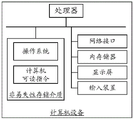
FIG. 2 is a schematic diagram showing an internal configuration of a computer device according to an embodiment;
FIG. 3 is a flowchart illustrating a method for processing virtual reality application data according to an embodiment;
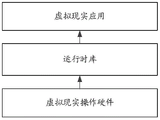
FIG. 4 is a block diagram of a system in one embodiment;
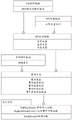
FIG. 5 is a diagram illustrating a parameter definition structure for a registered event callback function and an event import function in a runtime library according to an embodiment;
FIG. 6 is a flowchart illustrating the third party perspective frame generation step in one embodiment;
FIG. 7 is a timing diagram of a data processing method for a virtual reality application in one embodiment;
FIG. 8 is a flowchart illustrating steps of generating an instant virtual reality frame in one embodiment;
FIG. 9 is a flowchart illustrating a virtual reality application data processing method according to another embodiment;
FIG. 10 is a block diagram showing the configuration of a virtual reality application data processing apparatus according to an embodiment;
fig. 11 is a block diagram showing the structure of a virtual reality application data processing apparatus according to another embodiment;
FIG. 12 is a block diagram showing a configuration of a virtual reality application data processing apparatus in another embodiment;
fig. 13 is a block diagram of a virtual reality application data processing apparatus according to still another embodiment.
Detailed Description
In order to make the objects, technical solutions and advantages of the present invention more apparent, the present invention is described in further detail below with reference to the accompanying drawings and embodiments. It should be understood that the specific embodiments described herein are merely illustrative of the invention and are not intended to limit the invention.
Fig. 1 is an application environment diagram of a virtual reality application data processing method in an embodiment. Referring to fig. 1, an application environment of the interactive data processing method includes a terminal 110, virtual reality operating hardware 120, and a head-mounted display 130. Among them, the terminal 110 has a virtual reality application program (may be simply referred to as a virtual reality application) installed therein. Virtual reality operations hardware 120 for receiving or collecting control operations and generating manipulation data capable of controlling the operation of the virtual reality application. The virtual reality operations hardware 120 may include an operation handle and/or a position tracking device, among others. The manipulation data may include operational control data generated from manipulation of the handle and/or physical spatial position data generated from tracking of the position by the position tracking device. A Head Mounted Display (HMD) 110 is a Head Mounted Display device having a function of displaying virtual reality images. The terminal 110 may be a desktop computer or a mobile terminal, and the mobile terminal may include at least one of a mobile phone, a tablet computer, a personal digital assistant, a wearable device, and the like.
The terminal 110 may receive a playback start instruction, and restore the virtual reality application to an initial running state in response to the playback start instruction. The terminal 110 obtains pre-captured and stored manipulation data with time sequence and sent to the runtime library by the virtual reality operation hardware 120, and introduces the manipulation data into the runtime library according to the corresponding time sequence. The terminal 110 transmits the imported manipulation data to the virtual reality application in the initial running state for playback processing through the runtime library. In one embodiment, the terminal 110 may output a playback screen generated by the virtual reality application according to the manipulation data to the head mounted display 110, and the head mounted display 110 may display the playback screen. It is understood that in other embodiments, the terminal 110 may not output the playback screen generated during the playback process to the head-mounted display 110 for display.
FIG. 2 is a diagram illustrating an internal structure of a computer device according to an embodiment. The computer device may be the terminal 110 in fig. 1. Referring to fig. 2, the computer apparatus includes a processor, a nonvolatile storage medium, an internal memory, a network interface, a display screen, and an input device, which are connected through a system bus. Among other things, a non-volatile storage medium of the computer device may store an operating system and computer readable instructions that, when executed, may cause a processor to perform a virtual reality application data processing method. The processor of the computer device is used for providing calculation and control capability and supporting the operation of the whole computer device. The internal memory may have stored therein computer readable instructions that, when executed by the processor, cause the processor to perform a virtual reality application data processing method. The network interface of the computer device is used for network communication. The display screen of the computer equipment can be a liquid crystal display screen or an electronic ink display screen, and the input device of the computer equipment can be a touch layer covered on the display screen, a key, a track ball or a touch pad arranged on the shell of the computer equipment, an external keyboard, a touch pad or a mouse and the like. The touch layer and the display screen form a touch screen.
It will be appreciated by those skilled in the art that the configuration shown in fig. 2 is a block diagram of only a portion of the configuration associated with the present application, and is not intended to limit the computing device to which the present application may be applied, and that a particular computing device may include more or fewer components than shown, or may combine certain components, or have a different arrangement of components.
Fig. 3 is a flowchart illustrating a virtual reality application data processing method according to an embodiment. The present embodiment is mainly illustrated by applying the virtual reality application data processing method to the terminal 110 in fig. 1. Referring to fig. 3, the method specifically includes the following steps:
s302, a playback start instruction is received.
Wherein the playback start instruction is to trigger execution of the playback processing logic.
In one embodiment, a playback switch may be disposed on the terminal, and the generation of the playback start instruction is triggered by a triggering operation (e.g., a touch, a slide, a click, or a press operation) on the playback switch. The playback switch is a function key for controlling playback to be turned on and/or turned off. The playback switch can be an independent function key or a function key formed by combining a plurality of keys. The playback switch may be a physical switch or a virtual switch displayed on the terminal screen.
In another embodiment, the generation of the playback start instruction may also be triggered by performing a preset playback trigger action on the terminal.
In one embodiment, upon receiving a playback start instruction, a playback mode, which is a mode for performing playback processing, may be entered.
And S304, responding to the playback starting instruction, and restoring the virtual reality application to the initial running state.
The virtual reality is a virtual world which is generated by computer simulation and is in a three-dimensional space, and provides simulation of senses such as vision, hearing, touch and the like for a user, so that the user can observe objects in the three-dimensional space as if the user is in his own right.
The virtual reality application is an application program for realizing a virtual reality effect. In one embodiment, the virtual reality application may be a virtual reality gaming application. It is understood that the virtual reality application may be other types of applications as well.
The initial running state is a state in which the virtual reality application is initially running. Specifically, the virtual reality application may be restarted to restore the virtual reality application to the initial running state, or the virtual reality application may be restored to the initial running state through a restoration mechanism.
S306, acquiring pre-captured and stored control data which is sent to the runtime library by the virtual reality operation hardware and has a time sequence.
The virtual reality operation hardware is used for receiving control operation and generating control data capable of controlling the operation of a virtual reality application program. The virtual reality operating hardware may include an operating handle and/or a position tracking device, and the like. It can be understood that if the head mounted display device and the control handle can realize the position tracking function and can collect and send the control data to the terminal, the head mounted display device and the control handle also belong to the position tracking device.
The manipulation data is data corresponding to the control operation and controlling the operation of the virtual reality application. The manipulation data may include operational control data generated from manipulation of the handle and/or physical spatial position data generated from tracking of the position by the position tracking device.
In one embodiment, the composition of the manipulation data may include one or more of a data block size, a time node, a manipulation event type, a manipulation device type, a manipulation duration, and manipulation event additional data.
Wherein the manipulation event type comprises a handle button and/or a head mounted display rotation, etc.; the manipulation device types include a handle and/or head mounted display, manipulation event additional data including physical spatial location data at the time of the manipulation, which may include physical spatial location data of the head mounted display (i.e., HMD location data). It will be appreciated that the event additional data may also include other data associated with the maneuver. Referring to table 1, table 1 is a storage structure of manipulation data in one embodiment.
TABLE 1


By way of example, the composition of the operational data, such as the steering data "40.545545 305 2,3,1", wherein:
40: indicating stored data block size
10:44:28.545545: representing time nodes
305: indicating left handle scroll button
2: indicating left handle
2: indicating length of time the handle is rolled
2,3,1: indicating the physical spatial position of the handle as it rolls
Runtime Library (Runtime Library), a special computer program Library used by a compiler to implement built-in functions in a programming language to provide Runtime (execution) support for the program. And the runtime library is used as a conversion layer between hardware and an application after the language program is run. In this embodiment, the runtime library may be configured to feed back the manipulation data sent by the virtual reality operation hardware to the virtual reality application.
Fig. 4 is a system block diagram of an embodiment, where the virtual reality operating hardware sends the manipulation data to the runtime library, and the runtime library feeds back the manipulation data to the virtual reality application.
It can be understood that when the user directly operates the virtual reality application, the control data with the time sequence, which is sent by the virtual reality operation hardware to the runtime library, can be captured and stored, and the control data with the time sequence, which is captured and stored in advance, is obtained. The terminal can acquire the pre-captured and stored manipulation data which is sent to the runtime library by the virtual reality operation hardware and has a time sequence after receiving the playback start instruction.
The capture refers to a data acquisition mode of interception and transmission. The terminal can intercept the control data which is sent to the runtime library by the virtual reality operation hardware and has time sequence to acquire the control data, and continuously transmit the control data to the runtime library, so that the normal operation and use of the virtual reality application by a user are not influenced when the control data are acquired.
Time sequence means time sequence. The stored control data with time sequence are the stored control data with time sequence. The manipulation data may be one or more. In an embodiment, each piece of manipulation data and the corresponding time node may be stored correspondingly, or the manipulation data may be stored according to a corresponding time sequence, and only the manipulation data itself is stored.
In one embodiment, prior to receiving the playback start instruction, the method further comprises: registering a callback function with a runtime library; and when the virtual reality operation hardware sends the control data with the time sequence to the runtime library, calling a callback function, capturing the control data with the time sequence and storing the control data.
The callback function is used for capturing control data with time sequence, which are sent to the runtime library by the virtual reality operation hardware. In one embodiment, the callback function may be a hook function.
Specifically, the terminal may register a callback function with the runtime library by calling a registration event callback function (registerHookEvent ()) in the runtime library when the virtual reality application is in an initial running state. The registration event callback function is used for registering the callback function in the terminal and used for capturing the control data to the runtime library. As the user operates the virtual reality application, the virtual reality operating hardware generates manipulation data. When the virtual reality operation hardware sends the control data with the time sequence to the runtime library, the terminal can call a callback function, capture the control data with the time sequence and store the control data. In one embodiment, the terminal may register a callback function with the runtime library when receiving a drilling mode start instruction, and the virtual reality application is in an initial running state when the drilling mode is started. The drill mode may be a mode in which the virtual reality application is used in normal operation. The drill mode may be a separate and dedicated drill mode, for example, for a virtual reality game application, the drill mode may be a mode that allows the user to practice the operation without being a consideration of the user level.
In other embodiments, the terminal may register the callback function with the runtime library when the virtual reality application starts. It can be appreciated that the virtual reality application is in an initial running state when it is started.
In the above embodiment, the callback function is registered in the runtime library, and captures and stores the control data with time sequence sent by the virtual reality operation hardware to the runtime library, so that the normal operation and use of the virtual reality application by the user are not affected while the control data is acquired.
And S308, importing the control data into the runtime library according to the corresponding time sequence.
Specifically, the terminal may import the corresponding manipulation data into the runtime library in a time sequence from first to last.
In one embodiment, the terminal may import the manipulation data into the runtime library according to the corresponding timing by calling an event import function in the runtime library. An event import function (polnextevent ()) is used to enable import of stored manipulation data.
FIG. 5 is a diagram illustrating the parameter definition structure of the register event callback function (RegisterHookEvent ()) and the event import function (PollNextEvent ()) in the runtime library in one embodiment. The diamonds in fig. 4 represent an aggregation relationship, i.e., a whole and part containing relationship, from part to whole, such as the HMD matrix data and HMD vector data in fig. 4 belonging to a part of the HMD position data, the HMD position data and control handle event data belonging to a part of the event information belonging to a part of the data to be acquired by the event import function and the callback function. The event import function may be a preset function in the runtime library, or may be a temporary function code that is injected into the runtime library after receiving a playback start instruction (i.e., after starting the playback mode). The preset function is a function that is set in the runtime library in advance, and exists in the runtime library even if the playback start instruction is not received. The temporary function is a function of temporary injection and automatically fails as the operation of the system is finished. The temporary function may be a function that is injected into the runtime library only after receiving a playback start instruction, and the temporary function does not exist in the runtime library until the system finishes running.
It can be understood that, when the event import function is temporary function code injected into the runtime library after receiving the playback start instruction, the import function does not exist in the runtime library in the case that the playback start instruction is not received back, and the occupation of the runtime library space can be reduced.
The terminal can accelerate the introduction of the control data into the runtime library according to the corresponding time sequence. The terminal can also import the control data into the runtime library according to the corresponding time node, namely, the runtime library at a normal speed.
And S310, transmitting the imported control data to the virtual reality application in the initial running state for playback processing through the runtime library.
It can be understood that the runtime library is used for feeding back the manipulation data sent by the virtual reality operation hardware to the virtual reality application, and then the terminal imports the manipulation data into the runtime library according to the corresponding time sequence, and the runtime library also transmits the imported manipulation data to the virtual reality application in the initial running state according to the corresponding time sequence.
In one embodiment, in order to meet the effect of real-time operation control, the terminal may transmit the operation data to the virtual reality application in the initial operating state in real time through the runtime library, that is, after the terminal imports the operation data into the runtime library, the terminal may transmit the data to the virtual reality application in the initial operating state in real time through the runtime library. In another embodiment, the runtime library may also be improved in advance, and after receiving the imported manipulation data, the terminal may transmit the manipulation data to the virtual reality application in the initial running state in real time, but uniformly transmit the manipulation data to the virtual reality application in the initial running state in a preset period, so as to reduce data transmission frequency and save system resources. Here, how the terminal transfers the imported manipulation data to the virtual reality application in the initial operating state through the runtime library is not limited, as long as the manipulation data can be sent to the virtual reality application in the initial operating state.
It can be understood that the virtual reality application in the initial operating state executes the operation processing corresponding to the manipulation data, and the transferred manipulation data is the manipulation data at the time of the previous user operation, so that the virtual reality application executes the operation processing corresponding to the manipulation data, and the playback processing can be realized.
According to the virtual reality application data processing method, the operation data which are sent to the runtime library by the hardware for realizing the virtual reality operation and have time sequences are captured and stored in advance, when a playback starting instruction is received, the virtual reality is restored to the initial running state, the operation data which are captured and stored in advance are automatically led into the runtime library according to the corresponding time sequences, the led operation data are transmitted to the virtual reality application in the initial running state through the runtime library for playback processing, the operation in the user historical operation can be reproduced through the automatic playback processing, the user does not need to start the operation again from the beginning, and the operation efficiency is greatly improved.
In addition, the playback processing can be realized without improving the virtual application program, the universality is realized, and the cost problem and the difficulty problem caused by improving each virtual application program are avoided.
In one embodiment, step S308 includes: determining a playback mode corresponding to the virtual reality application; when the playback mode is the first playback mode, reducing the recording time interval of the control data adjacent according to the time sequence according to the acceleration lead-in multiple corresponding to the first playback mode; and importing the control data into the runtime library in sequence according to the corresponding time sequence and the reduced recording time interval.
Specifically, before importing the manipulation data to the runtime library, the terminal may determine a playback mode corresponding to the virtual reality application currently performing playback processing. In one embodiment, the playback mode may include accelerated playback and/or restored playback. The accelerated playback means that the playback speed is increased by accelerating the stored manipulation speed corresponding to the manipulation data. And the restoring and replaying are to perform restoring and replaying processing at the control speed corresponding to the stored control data.
It can be understood that, when the terminal generates corresponding control data according to the user operation, the terminal records the time node generated by the control data. The recording time interval is the interval between the recorded time nodes which are adjacent to each other according to the time sequence and control the data. For example, if the time node of the recorded previous manipulation data is t1, and the time node of the recorded next manipulation data is t2, the recording time interval between the two adjacent manipulation data is t2-t1.
When the playback mode corresponding to the virtual reality application is the first playback mode (i.e., accelerated playback), the terminal may obtain an accelerated import multiple corresponding to the first playback mode. The acceleration introduction factor may be preset. The terminal reduces the recording time interval of the control data adjacent according to the time sequence according to the acceleration lead-in times; and importing the control data into the runtime library in sequence according to the corresponding time sequence and the reduced recording time interval.
For example, if the acceleration import multiple is 2 times, and the recording time interval between two adjacent pieces of manipulation data arranged in time series is 0.02 second, the recording time interval between the two pieces of manipulation data is reduced to 0.01 second, and then the manipulation data is sequentially imported into the runtime library according to the corresponding time series and the reduced recording time interval of 0.01 second. By speeding up the import, the playback efficiency can be improved.
In one embodiment, the method further comprises: when the playback mode is the second playback mode, acquiring a time node corresponding to the control data; and importing the control data into the runtime library in sequence according to the corresponding time nodes.
When the playback mode corresponding to the virtual reality application is the second playback mode (i.e., reduction playback), the terminal may obtain time nodes corresponding to the control data, and sequentially import the control data into the runtime library according to the corresponding time nodes. It can be understood that the time node corresponding to the control data is a stored time node for the user to operate, and the control data is sequentially imported into the runtime library according to the corresponding time node, so that the control data can be imported into the runtime library according to the control speed of the user during previous operation, that is, the consistency restoration of the operation can be realized.
It should be noted that "first" and "second" in the first playback manner and the second playback manner are only used to distinguish different playback manners, and are not limited in terms of size, dependency, or sequence.
In the above embodiment, before the stored manipulation data is imported into the runtime library, the playback mode corresponding to the virtual reality application is determined, and the manipulation data is imported according to the corresponding playback mode, so that the playback mode is more accurate and effective, and the playback efficiency is improved.
In one embodiment, determining a playback mode corresponding to a virtual reality application includes: and when the virtual three-dimensional coordinates in the virtual reality application and the physical three-dimensional coordinates in the physical space meet the one-to-one mapping relation, judging that the playback mode corresponding to the virtual reality application is the first playback mode.
The virtual three-dimensional coordinates refer to position coordinates corresponding to a user role in a virtual three-dimensional space constructed by virtual reality application. The physical space is a real three-dimensional space. And the physical three-dimensional coordinates are the coordinates of the position where the user is located in the real three-dimensional space.
Specifically, the terminal may determine whether the virtual three-dimensional coordinates in the virtual reality application and the physical three-dimensional coordinates in the physical space satisfy a one-to-one mapping relationship. If the virtual three-dimensional coordinates and the physical three-dimensional coordinates satisfy a one-to-one mapping relationship, which indicates that the position of the user in the virtual three-dimensional space constructed by the virtual reality application is determined only by the physical space position and does not involve the control data generated by the operation of the handle and/or the head-mounted display and the constraint of the corresponding time node, the terminal may determine that the virtual reality application supports accelerated import, that is, the terminal may determine that the playback mode corresponding to the virtual reality application is the first playback mode (i.e., accelerated playback). It is to be understood that, in other embodiments, for a virtual reality application supporting accelerated import, the terminal may also import into the runtime library in a normal import manner without performing accelerated import.
In one embodiment, determining a playback mode corresponding to a virtual reality application includes: and when the virtual three-dimensional coordinates in the virtual reality application and the physical three-dimensional coordinates in the physical space do not meet the one-to-one mapping relation, judging that the playback mode corresponding to the virtual reality application is a second playback mode.
Specifically, when the virtual three-dimensional coordinates in the virtual reality application and the physical three-dimensional coordinates in the physical space do not satisfy a one-to-one mapping relationship, the terminal may determine that the virtual reality application does not support accelerated import, that is, determine that the playback mode corresponding to the virtual reality application is the second playback mode (i.e., reduction playback). In one embodiment, when the virtual three-dimensional coordinates in the virtual reality application are determined by the physical three-dimensional coordinates in the physical space, the manipulation data generated by the operation of the handle and/or the head-mounted display and the corresponding time node, it is indicated that the virtual three-dimensional coordinates in the virtual reality application and the physical three-dimensional coordinates in the physical space do not satisfy a one-to-one mapping relationship.
In the above embodiment, the playback mode corresponding to the virtual reality application is determined by judging whether the virtual three-dimensional coordinates in the virtual reality application and the physical three-dimensional coordinates in the physical space satisfy the one-to-one mapping relationship, so that the playback mode can be determined more accurately, playback is performed based on the accurate playback mode, and the playback efficiency can be improved.
In one embodiment, the method further includes a step of performing playback picture blurring processing, specifically including the following steps: acquiring a playback picture generated by the virtual reality application according to the control data; fuzzifying the playback picture; and outputting and displaying the playback picture after the fuzzification processing.
Specifically, after the terminal transmits the stored control data to the virtual reality application through the runtime library, the virtual reality application can generate a corresponding playback picture according to the control data.
In one embodiment, the terminal may determine, by the virtual reality application, a corresponding virtual three-dimensional coordinate according to the manipulation data, and generate a playback screen corresponding to the determined virtual three-dimensional coordinate. It can be understood that, for some virtual reality applications (e.g., virtual reality game applications) that require continuous operations, the generated frames correspond to virtual three-dimensional coordinates in a virtual three-dimensional space, and the frames corresponding to different virtual three-dimensional coordinates in the virtual three-dimensional space are different, for example, when a user character in the virtual three-dimensional space walks forward, the corresponding frames may also change.
And the terminal acquires a playback picture generated by the virtual reality application according to the control data and fuzzifies the playback picture. Specifically, the terminal may implement the blurring processing on the playback picture by reducing the quality of the playback picture, or may also implement the blurring processing on the playback picture by superimposing a blurred graphic element on the playback picture, for example, by superimposing a mosaic layer. Here, the specific implementation manner of the terminal for blurring the played-back picture is not limited as long as the blurring of the played-back picture can be achieved. Further, the terminal may output and display the generated playback screen after the blurring processing, that is, the terminal may transmit the playback screen after the blurring processing to the head-mounted display for output and display. The user can then see the blurred playback picture through the head mounted display.
In an embodiment, when the terminal sequentially imports the control data into the runtime library according to the corresponding time node in the second playback manner (i.e., restore playback), the step of blurring the playback screen may be performed again. It can be understood that when the terminal imports the control data through the second playback mode for playback processing, the generated picture may cause a user to feel dizzy, and the playback picture is fuzzified, so that the dizzy feeling can be avoided, and the quality and the efficiency of the playback operation are improved.
In one embodiment, the method further comprises: generating a third-party visual angle picture corresponding to the playback picture; and outputting the third-party visual angle picture so as to display the third-party visual angle picture by overlapping the third-party visual angle picture on the playback picture after the fuzzification processing.
Wherein the playback view generated by the virtual reality application according to the manipulation data is a first perspective view. The terminal may generate a third party view picture corresponding to the playback picture by modifying the picture drawing parameter of the playback picture generating the first party view. It can be understood that in the third-party perspective picture, the image corresponding to the user role is a component of the third-party perspective picture, and in the first-party perspective picture, the user role is not displayed.
The terminal may output the generated third-party view picture corresponding to the playback picture, so as to superimpose the third-party view picture on the blurred playback picture for display. In this way, the user is prevented from being dazzled, and the current playback progress can be seen by the user.
In one embodiment, the method further comprises: receiving a playback stop instruction; in response to the playback stop instruction, the blurring process performed on the playback screen is canceled, and generation and output of a third party view screen corresponding to the playback screen are canceled.
The playback stopping instruction is used for triggering execution logic for stopping playback.
Specifically, the user may issue a playback stop instruction by clicking or pressing or the like at any position during playback. The terminal can receive a playback stop instruction initiated by a user at any position in the playback process. For example, the terminal may perform playback for 30 seconds by using all the stored manipulation data for the playback process, but the user does not want to perform full playback, and the user may initiate a playback stop instruction at any position before the playback process for the entire 30 seconds, for example, when playback is performed for 20 seconds, the user may click or press a playback stop button to initiate the playback stop instruction.
The terminal may cancel the blurring process performed on the playback screen and cancel generation and output of the third-party view screen corresponding to the playback screen in response to the playback stop instruction. Specifically, the terminal may cancel the blurring processing of the playback screen at the position corresponding to the playback stop instruction, that is, the playback screen at the position corresponding to the playback stop instruction is a screen that has not been subjected to the blurring processing and that can be normally output and displayed. And, the terminal may also cancel generating and outputting a third party view screen corresponding to the playback screen. That is, after the terminal receives the playback stop instruction, the terminal may not generate the third-party view picture corresponding to the playback picture at the position corresponding to the playback stop instruction. That is, after the terminal performs the above-described processing in response to the playback stop instruction, the user finally sees through the head-mounted display the playback screen itself that has not been subjected to the blurring processing.
As shown in fig. 6, in an embodiment, generating a third party viewing angle picture corresponding to a playback picture (referred to as a third party viewing angle picture generating step for short) specifically includes the following steps:
s602, when the virtual reality application calls the drawing function to draw the playback picture, obtaining picture drawing parameter values transferred to the drawing function by the virtual reality application.
Specifically, after the terminal transfers the stored control data to the virtual reality application through the runtime library, the virtual reality application calls a drawing function to draw a playback picture corresponding to the control data. When the virtual reality application calls the drawing function to draw the playback picture, the terminal can acquire the picture drawing parameter value transferred to the drawing function by the virtual reality application. Wherein the acquired picture drawing parameter value is a drawing parameter value for drawing the first perspective picture. It can be understood that, after acquiring the picture drawing parameter value transferred to the drawing function by the virtual reality application, the terminal may continue to transfer the picture drawing parameter value to the drawing function, so that the drawing function generates a playback picture of the first view angle according to the picture drawing parameter value.
And S604, modifying the picture drawing parameter value according to the drawing parameter value conversion relation between the first party visual angle and the third party visual angle.
The drawing parameter value conversion relationship between the first party viewing angle and the third party viewing angle may be a drawing parameter value conversion rule for converting a first party viewing angle picture into a third party viewing angle picture. The terminal can modify the obtained drawing parameter value for drawing the first view angle picture into the drawing parameter value for drawing the third view angle picture according to the drawing parameter value conversion rule of the first view angle and the third view angle.
And S606, calling a drawing function, and drawing a third-party visual angle picture according to the modified picture drawing parameter value.
Specifically, the terminal may call a drawing function, and draw the third-party view picture according to the modified picture drawing parameter (i.e., the drawing parameter value for drawing the third view picture).
In the embodiment, the third-party visual angle picture is generated by acquiring and modifying the picture drawing parameters, so that the third-party visual angle picture is generated very conveniently, and the efficiency is improved.
In one embodiment, step S602 includes: when the virtual reality application calls a drawing function to draw a playback picture, obtaining a picture drawing parameter value transmitted to the drawing function by the virtual reality application through a hook function injected in the drawing function; step S606 includes: and calling the drawing function through a hook function injected in the drawing function, and drawing the third party visual angle picture according to the modified picture drawing parameter value.
Specifically, the terminal may trigger injection of a hook function into the drawing function upon receiving a playback instruction. When the virtual reality application calls a drawing function to draw and playback the picture, the terminal can obtain the picture drawing parameter value transferred to the drawing function by the virtual reality application through a hook function injected in the drawing function.
After the acquired picture drawing parameter values are modified, the terminal can call the corresponding drawing function again through the hook function injected in the drawing function, and the third-party view picture is drawn according to the modified picture drawing parameter values.
In the embodiment, the third-party visual angle picture is generated by acquiring and modifying the picture drawing parameters through the hook function injected into the drawing function, so that the third-party visual angle picture is generated very conveniently and the efficiency is improved.
It can be understood that, in practice, the terminal implements the virtual reality application data processing method in this embodiment through third-party software running in the terminal. Fig. 7 is a timing diagram of a virtual reality application data processing method in an embodiment, which specifically includes the following steps:
1) And the third-party software calls a callback function of the registration event in the runtime library and registers the callback function in the runtime library.
2) And injecting a hook function into a drawing function in the drawing program by the third-party software.
3) And the third-party software captures the control data sent to the runtime library by the virtual reality operation hardware through the callback function and stores the control data.
4) And the third-party software calls an event import function in the runtime library and imports the stored control data into the runtime library.
5) The runtime library transfers the imported manipulation data to the virtual reality application.
6) And calling a drawing function in the drawing program by the virtual reality application so as to draw a playback picture corresponding to the control data.
7) The hook function injected in the drawing function of the drawing program acquires and modifies the picture drawing parameter value.
8) And a drawing function in the drawing program generates a playback picture according to the original picture drawing parameter value.
9) And (4) a hook function injected into the drawing function of the drawing program calls the drawing function to generate a third party visual angle picture according to the modified picture drawing parameter value.
10 The drawing program returns the playback screen and the third party perspective screen to the third party software.
11 Third party software fuzzifies the playback view and superimposes the third view.
12 The third-party software sends the obscured playback view and the superimposed third perspective view to the head-mounted display.
13 The head mounted display output displays the obscured playback picture, and the superimposed third perspective picture.
As shown in fig. 8, in an embodiment, the method further includes an instant virtual reality picture generating step, specifically including the following steps:
and S802, after receiving the playback stop instruction, stopping importing the control data into the runtime library to finish playback processing.
And the playback stopping instruction is used for triggering execution logic for stopping playback.
Specifically, the user may issue a playback stop instruction by clicking or pressing or the like at any position during playback. The terminal can receive a playback stop instruction initiated by a user at any position in the playback process. For example, the terminal may store manipulation data of all user playback processes, and may perform playback for 30 seconds, but the user may initiate a playback stop instruction at any position before the playback process for the entire 30 seconds, for example, when playback is performed for 20 seconds, the user may click or press a playback stop button to initiate the playback stop instruction.
And after receiving the playback stop instruction, the terminal stops importing the control data into the runtime library to finish playback processing. It can be understood that after the playback processing is finished, the instant operation processing state is recovered, and the terminal can control the runtime library to recover to a state capable of receiving the instant manipulation data sent by the virtual reality operation hardware.
And S804, receiving the instant control data sent by the virtual reality operation hardware through the runtime library and transmitting the instant control data to the virtual reality application.
Specifically, the user may operate the virtual reality operation hardware to send out an instant operation on the virtual reality application, and the virtual reality operation hardware sends the instant manipulation data corresponding to the instant operation to the runtime library. And the terminal receives the instant control data sent by the virtual reality operation hardware through the runtime library and transmits the instant control data to the virtual reality application.
And S806, forming a virtual reality picture according to the instant control data through the virtual reality application, and outputting and displaying the virtual reality picture.
Specifically, the terminal can form a virtual reality picture according to the instant control data through the virtual reality application and output and display the virtual reality picture. In one embodiment, the terminal may determine, by the virtual reality application, a corresponding virtual three-dimensional coordinate according to the instant manipulation data, and generate an instant virtual reality screen corresponding to the determined virtual three-dimensional coordinate.
In the above embodiment, after receiving the playback stop instruction, the playback device can be restored to the instant operation processing state, and a virtual reality picture is formed and output and displayed according to the instant control data sent by the virtual reality operation hardware. The seamless butt joint of the playback and the instant operation is realized, the condition that the instant operation state can be recovered only by other operations is avoided, and the operation efficiency is improved.
As shown in fig. 9, in an embodiment, another virtual reality application data processing method is provided, which specifically includes the following steps:
and S902, registering a callback function in the runtime library, calling the callback function when the virtual reality operation hardware sends the control data with the time sequence to the runtime library, capturing the control data with the time sequence, and storing the control data.
And S904, receiving a playback starting instruction, and responding to the playback starting instruction to restore the virtual reality application to an initial running state.
And S906, acquiring pre-captured and stored control data which is sent to the runtime library by the virtual reality operation hardware and has a time sequence.
S908, determines a playback mode corresponding to the virtual reality application. If the playback mode is the first playback mode, the process proceeds to step S910, and if the playback mode is the second playback mode, the process proceeds to step S912.
When the virtual three-dimensional coordinates in the virtual reality application and the physical three-dimensional coordinates in the physical space meet a one-to-one mapping relation, the playback mode corresponding to the virtual reality application is determined to be the first playback mode. And when the virtual three-dimensional coordinates in the virtual reality application and the physical three-dimensional coordinates in the physical space do not meet the one-to-one mapping relationship, judging that the playback mode corresponding to the virtual reality application is the second playback mode.
S910, reducing the recording time interval of the control data adjacent according to the time sequence according to the acceleration lead-in multiple corresponding to the first playback mode; and importing the control data into the runtime library in sequence according to the corresponding time sequence and the reduced recording time interval.
S912, acquiring a time node corresponding to the control data; and importing the control data into the runtime library in sequence according to the corresponding time nodes.
And S914, transmitting the imported control data to the virtual reality application in the initial running state through the runtime library for playback processing.
And S916, when the virtual reality application calls the drawing function to draw the playback picture, obtaining picture drawing parameter values transferred to the drawing function by the virtual reality application through a hook function injected in the drawing function.
S918, modifying the picture drawing parameter value according to the drawing parameter value conversion relation between the first-party view angle and the third-party view angle.
And S920, calling a drawing function through a hook function injected in the drawing function, and drawing a third-party visual angle picture according to the modified picture drawing parameter value.
And S922, acquiring a playback picture generated by the virtual reality application according to the control data, performing fuzzification processing on the playback picture, and outputting and displaying the fuzzified playback picture.
And S924, outputting the third-party visual angle picture, and overlapping the third-party visual angle picture on the playback picture subjected to the fuzzification processing for displaying.
S926 that receives the playback stop instruction, cancels the blurring process performed on the playback screen in response to the playback stop instruction, and cancels the generation and output of the third party view screen corresponding to the playback screen.
S928, stop importing the manipulation data into the runtime library to end the playback process.
And S930, receiving the instant control data sent by the virtual reality operation hardware through the runtime library and transmitting the instant control data to the virtual reality application.
And S932, forming a virtual reality picture according to the instant control data through the virtual reality application, and outputting and displaying the virtual reality picture.
According to the virtual reality application data processing method, the operation data which are sent to the runtime library by the hardware for realizing the virtual reality operation and have time sequences are captured and stored in advance, when a playback starting instruction is received, the virtual reality is restored to the initial running state, the operation data which are captured and stored in advance are automatically led into the runtime library according to the corresponding time sequences, the led operation data are transmitted to the virtual reality application in the initial running state through the runtime library for playback processing, the operation in the user historical operation can be reproduced through the automatic playback processing, the user does not need to start the operation again from the beginning, and the operation efficiency is greatly improved.
Secondly, before the stored control data are imported into the runtime library, the playback mode corresponding to the virtual reality application is determined, and the control data are imported according to the corresponding playback mode, so that the playback mode is more accurate and effective, and the playback efficiency is improved. And by accelerating the import, the playback efficiency can be further improved.
Then, the blurring processing is carried out on the playback picture, so that the dizzy feeling can be avoided, and the quality and the efficiency of the playback operation are improved.
And then, the third-party visual angle picture is superposed on the playback picture after the fuzzification processing for displaying. In this way, the user is prevented from being dazzled, and the current playback progress can be seen by the user.
In addition, the third-party visual angle picture is generated by acquiring and modifying the picture drawing parameters, so that the third-party visual angle picture is generated very conveniently, and the efficiency is improved.
And finally, after receiving the playback stop instruction, recovering to an instant operation processing state, and forming a virtual reality picture and outputting and displaying the virtual reality picture according to the instant control data sent by the virtual reality operation hardware. The seamless butt joint of the playback and the instant operation is realized, the condition that the operation can be recovered to the instant operation state only by other operations is avoided, and the operation efficiency is improved.
As shown in fig. 10, in one embodiment, there is provided a virtual reality application data processing apparatus 1000, the apparatus 1000 comprising: an obtaining module 1003, an operation state management module 1004, a control data importing module 1006, and a playback processing module 1008, wherein:
an obtaining module 1003, configured to receive a playback start instruction.
The running state management module 1004 is configured to restore the virtual reality application to an initial running state in response to the playback start instruction.
The obtaining module 1002 is further configured to obtain pre-captured and stored manipulation data which is sent to the runtime library by the virtual reality operating hardware and has a time sequence.
And the control data import module 1006 is configured to import the control data into the runtime library according to a corresponding time sequence.
And a playback processing module 1008, configured to transmit the imported manipulation data to the virtual reality application in the initial running state for playback processing through the runtime library.
As shown in fig. 11, in one embodiment, the apparatus 1000 further comprises:
a function registration module 1001, configured to register a callback function with the runtime library.
The control data capturing module 1002 is configured to call a callback function, capture and store control data with a time sequence when the virtual reality operation hardware sends the control data with the time sequence to the runtime library.
In one embodiment, the manipulation data import module 1006 is further configured to determine a playback mode corresponding to the virtual reality application; when the playback mode is the first playback mode, reducing the recording time interval of the control data adjacent according to the time sequence according to the acceleration lead-in multiple corresponding to the first playback mode; and importing the control data into the runtime library in sequence according to the corresponding time sequence and the reduced recording time interval.
In one embodiment, the manipulation data import module 1006 is further configured to determine a playback mode corresponding to the virtual reality application; when the playback mode is the second playback mode, acquiring a time node corresponding to the control data; and importing the control data into the runtime library in sequence according to the corresponding time nodes.
In one embodiment, the manipulation data importing module 1006 is further configured to determine that the playback mode corresponding to the virtual reality application is the first playback mode when the virtual three-dimensional coordinates in the virtual reality application and the physical three-dimensional coordinates in the physical space satisfy a one-to-one mapping relationship.
In an embodiment, the manipulation data importing module 1006 is further configured to determine that the playback manner corresponding to the virtual reality application is the second playback manner when the virtual three-dimensional coordinates in the virtual reality application and the physical three-dimensional coordinates in the physical space do not satisfy a one-to-one mapping relationship.
As shown in fig. 12, in one embodiment, the apparatus 1000 further comprises:
the playback picture processing module 1010 is configured to obtain a playback picture generated by the virtual reality application according to the control data; fuzzifying the playback picture; and outputting and displaying the playback picture after the fuzzification processing.
In one embodiment, the playback screen processing module 1010 is further configured to generate a third party perspective screen corresponding to the playback screen; and outputting the third-party visual angle picture so as to display the third-party visual angle picture by overlapping the third-party visual angle picture on the playback picture after the fuzzification processing.
In one embodiment, the playback picture processing module 1010 is further configured to receive a playback stop instruction; in response to the playback stop instruction, the blurring process performed on the playback screen is canceled, and generation and output of a third party view screen corresponding to the playback screen are canceled.
In one embodiment, the playback screen processing module 1010 is further configured to obtain a screen drawing parameter value passed to the drawing function by the virtual reality application when the virtual reality application calls the drawing function to draw the playback screen; modifying a picture drawing parameter value according to the drawing parameter value conversion relation between the first party view angle and the third party view angle; and calling a drawing function, and drawing a third-party visual angle picture according to the modified picture drawing parameter value.
In one embodiment, the playback screen processing module 1010 is further configured to, when the virtual reality application calls the drawing function to draw the playback screen, obtain a screen drawing parameter value passed by the virtual reality application to the drawing function through a hook function injected in the drawing function.
The playback picture processing module 1010 is further configured to call a drawing function through a hook function injected in the drawing function, and draw a third party view picture according to the modified picture drawing parameter value.
As shown in fig. 13, in one embodiment, the apparatus 1000 further comprises:
a playback processing ending module 1012, configured to, after receiving the playback stopping instruction, stop importing the manipulation data into the runtime library to end the playback processing.
The real-time control module 1014 is configured to receive, through the runtime library, real-time control data sent by the virtual reality operation hardware and transmit the real-time control data to the virtual reality application; and forming a virtual reality picture according to the instant control data through virtual reality application, and outputting and displaying the virtual reality picture.
In one embodiment, a computer device is provided, comprising a memory and a processor, the memory having stored therein computer-readable instructions that, when executed by the processor, cause the processor to perform the steps of: receiving a playback start instruction; restoring the virtual reality application to an initial running state in response to the playback start instruction; acquiring pre-captured and stored control data which is sent to a runtime library by virtual reality operation hardware and has a time sequence; importing the control data into the runtime library according to a corresponding time sequence; and transmitting the imported control data to the virtual reality application in the initial running state for playback processing through the runtime library.
In one embodiment, prior to said receiving playback start instructions, the computer readable instructions further cause the processor to perform the steps of: registering a callback function to a runtime library; and when the virtual reality operation hardware sends the control data with the time sequence to the runtime library, calling the callback function, capturing the control data with the time sequence and storing the control data.
In one embodiment, the importing, by a processor, the manipulation data into the runtime library according to the corresponding timing includes: determining a playback mode corresponding to the virtual reality application; when the playback mode is a first playback mode, reducing the recording time interval of the control data adjacent according to the time sequence according to the acceleration lead-in multiple corresponding to the first playback mode; and sequentially importing the control data into the runtime library according to the corresponding time sequence and the reduced recording time interval.
In one embodiment, the computer readable instructions further cause the processor to perform the steps of: determining a playback mode corresponding to the virtual reality application; when the playback mode is a second playback mode, acquiring a time node corresponding to the control data; and sequentially importing the control data into the runtime library according to the corresponding time nodes.
In one embodiment, the determining, performed by the processor, a playback mode corresponding to a virtual reality application includes: and when the virtual three-dimensional coordinates in the virtual reality application and the physical three-dimensional coordinates in the physical space meet a one-to-one mapping relation, judging that the playback mode corresponding to the virtual reality application is the first playback mode.
In one embodiment, the determining, performed by the processor, a playback mode corresponding to a virtual reality application includes: and when the virtual three-dimensional coordinates in the virtual reality application and the physical three-dimensional coordinates in the physical space do not meet the one-to-one mapping relationship, judging that the playback mode corresponding to the virtual reality application is a second playback mode.
In one embodiment, the computer readable instructions further cause the processor to perform the steps of: acquiring a playback picture generated by the virtual reality application according to the control data; fuzzifying the playback picture; and outputting and displaying the playback picture after the fuzzification processing.
In one embodiment, the computer readable instructions further cause the processor to perform the steps of: generating a third-party visual angle picture corresponding to the playback picture; and outputting the third-party visual angle picture so as to display the third-party visual angle picture by overlapping the third-party visual angle picture on the playback picture after the fuzzification processing.
In one embodiment, the computer readable instructions further cause the processor to perform the steps of: receiving a playback stop instruction; and in response to the playback stop instruction, canceling blurring processing performed on the playback screen, and canceling generation and output of a third-party view screen corresponding to the playback screen.
In one embodiment, the generating, performed by a processor, a third party perspective view corresponding to the playback view includes: when a virtual reality application calls a drawing function to draw a playback picture, obtaining picture drawing parameter values transmitted to the drawing function by the virtual reality application; modifying the picture drawing parameter value according to the drawing parameter value conversion relation between the first party visual angle and the third party visual angle; and calling the drawing function, and drawing a third party visual angle picture according to the modified picture drawing parameter value.
In one embodiment, the obtaining, by the processor, the picture drawing parameter value passed by the virtual reality application to the drawing function when the virtual reality application calls the drawing function to draw the playback picture includes: when a virtual reality application calls a drawing function to draw a playback picture, obtaining a picture drawing parameter value transferred to the drawing function by the virtual reality application through a hook function injected in the drawing function.
The calling of the drawing function executed by the processor draws a third party visual angle picture according to the modified picture drawing parameter value, and comprises the following steps: and calling the drawing function through a hook function injected in the drawing function, and drawing a third party visual angle picture according to the modified picture drawing parameter value.
In one embodiment, the computer readable instructions further cause the processor to perform the steps of: after receiving a playback stop instruction, stopping importing the control data into the runtime library to end the playback processing; receiving instant control data sent by virtual reality operation hardware through the runtime library and transmitting the instant control data to the virtual reality application; and forming a virtual reality picture according to the instant control data through the virtual reality application, and outputting and displaying the virtual reality picture.
In one embodiment, a storage medium is provided that stores computer-readable instructions that, when executed by one or more processors, cause the one or more processors to perform the steps of: receiving a playback start instruction; restoring the virtual reality application to an initial running state in response to the playback start instruction; acquiring pre-captured and stored control data which is sent to a runtime library by virtual reality operation hardware and has a time sequence; importing the control data into the runtime library according to a corresponding time sequence; and transmitting the imported control data to the virtual reality application in the initial running state for playback processing through the runtime library.
In one embodiment, prior to said receiving playback start instructions, the computer readable instructions further cause the processor to perform the steps of: registering a callback function with a runtime library; and when the virtual reality operation hardware sends the control data with the time sequence to the runtime library, calling the callback function, capturing the control data with the time sequence and storing the control data.
In one embodiment, the importing, by a processor, the manipulation data into the runtime library according to the corresponding timing includes: determining a playback mode corresponding to the virtual reality application; when the playback mode is a first playback mode, reducing the recording time interval of the control data adjacent in time sequence according to the acceleration lead-in multiple corresponding to the first playback mode; and sequentially importing the control data into the runtime library according to the corresponding time sequence and the reduced recording time interval.
In one embodiment, the computer readable instructions further cause the processor to perform the steps of: determining a playback mode corresponding to the virtual reality application; when the playback mode is a second playback mode, acquiring a time node corresponding to the control data; and sequentially importing the control data into the runtime library according to the corresponding time nodes.
In one embodiment, the determining, performed by the processor, a playback mode corresponding to a virtual reality application includes: and when the virtual three-dimensional coordinates in the virtual reality application and the physical three-dimensional coordinates in the physical space meet a one-to-one mapping relation, judging that the playback mode corresponding to the virtual reality application is the first playback mode.
In one embodiment, the determining, performed by the processor, a playback mode corresponding to a virtual reality application includes: and when the virtual three-dimensional coordinates in the virtual reality application and the physical three-dimensional coordinates in the physical space do not meet the one-to-one mapping relation, judging that the playback mode corresponding to the virtual reality application is a second playback mode.
In one embodiment, the computer readable instructions further cause the processor to perform the steps of: acquiring a playback picture generated by the virtual reality application according to the control data; fuzzifying the playback picture; and outputting and displaying the playback picture after the fuzzification processing.
In one embodiment, the computer readable instructions further cause the processor to perform the steps of: generating a third-party visual angle picture corresponding to the playback picture; and outputting the third-party visual angle picture so as to display the third-party visual angle picture by overlapping the third-party visual angle picture on the playback picture after the fuzzification processing.
In one embodiment, the computer readable instructions further cause the processor to perform the steps of: receiving a playback stop instruction; and in response to the playback stop instruction, canceling blurring processing performed on the playback screen, and canceling generation and output of a third-party view screen corresponding to the playback screen.
In one embodiment, the generating, performed by a processor, a third party perspective view corresponding to the playback view includes: when a virtual reality application calls a drawing function to draw a playback picture, obtaining picture drawing parameter values transmitted to the drawing function by the virtual reality application; modifying the picture drawing parameter value according to the drawing parameter value conversion relation between the first party visual angle and the third party visual angle; and calling the drawing function, and drawing a third party visual angle picture according to the modified picture drawing parameter value.
In one embodiment, the obtaining, by the processor, the picture drawing parameter value passed by the virtual reality application to the drawing function when the virtual reality application calls the drawing function to draw the playback picture includes: when a virtual reality application calls a drawing function to draw a playback picture, obtaining picture drawing parameter values transferred to the drawing function by the virtual reality application through a hook function injected in the drawing function.
The calling of the drawing function executed by the processor draws a third party visual angle picture according to the modified picture drawing parameter value, and comprises the following steps: and calling the drawing function through a hook function injected in the drawing function, and drawing a third party visual angle picture according to the modified picture drawing parameter value.
In one embodiment, the computer readable instructions further cause the processor to perform the steps of: after receiving a playback stop instruction, stopping importing the control data into the runtime library to end the playback processing; receiving instant control data sent by virtual reality operation hardware through the runtime library and transmitting the instant control data to the virtual reality application; and forming a virtual reality picture according to the instant control data through the virtual reality application, and outputting and displaying the virtual reality picture.
It should be noted that, the user information (including but not limited to user equipment information, user personal information, etc.) and data (including but not limited to data for analysis, stored data, displayed data, etc.) referred to in the present application are information and data authorized by the user or sufficiently authorized by each party, and the collection, use and processing of the related data need to comply with the relevant laws and regulations and standards of the relevant country and region.
It will be understood by those skilled in the art that all or part of the processes of the methods of the embodiments described above can be implemented by a computer program, which can be stored in a computer-readable storage medium, and can include the processes of the embodiments of the methods described above when the computer program is executed. The storage medium may be a non-volatile storage medium such as a magnetic disk, an optical disk, a Read-Only Memory (ROM), or a Random Access Memory (RAM).
The technical features of the above embodiments can be arbitrarily combined, and for the sake of brevity, all possible combinations of the technical features in the above embodiments are not described, but should be considered as the scope of the present specification as long as there is no contradiction between the combinations of the technical features.
The above examples only show some embodiments of the present invention, and the description thereof is more specific and detailed, but not construed as limiting the scope of the invention. It should be noted that various changes and modifications can be made by those skilled in the art without departing from the spirit of the invention, and these changes and modifications are all within the scope of the invention. Therefore, the protection scope of the present patent should be subject to the appended claims.
Claims (14)
1. A virtual reality application data processing method, the method comprising:
receiving a playback start instruction;
restoring the virtual reality application to an initial running state in response to the playback start instruction;
acquiring pre-captured and stored control data which is sent to a runtime library by virtual reality operation hardware and has a time sequence;
importing the control data into the runtime library according to a corresponding time sequence;
transmitting the imported control data to the virtual reality application in an initial running state for playback processing through the runtime library;
fuzzifying a playback picture generated by the virtual reality application according to the control data;
when the virtual reality application calls a drawing function to draw a playback picture, obtaining picture drawing parameter values transferred to the drawing function by the virtual reality application;
modifying the picture drawing parameter value according to the drawing parameter value conversion relation between the first party visual angle and the third party visual angle;
calling the drawing function, and drawing a third party visual angle picture according to the modified picture drawing parameter value;
and outputting the third-party visual angle picture so as to display the third-party visual angle picture by overlapping the third-party visual angle picture on the playback picture after the fuzzification processing.
2. The method of claim 1, wherein prior to the receiving a playback start instruction, the method further comprises:
registering a callback function with a runtime library;
and when the virtual reality operation hardware sends the control data with the time sequence to the runtime library, calling the callback function, capturing the control data with the time sequence and storing the control data.
3. The method of claim 1, wherein the importing the manipulation data into the runtime library according to the corresponding timing comprises:
determining a playback mode corresponding to the virtual reality application;
when the playback mode is the first playback mode, then
Reducing the recording time interval of the control data adjacent according to the time sequence according to the acceleration import multiple corresponding to the first playback mode;
and sequentially importing the control data into the runtime library according to the corresponding time sequence and the reduced recording time interval.
4. The method of claim 1, further comprising:
determining a playback mode corresponding to the virtual reality application;
when the playback mode is the second playback mode, then
Acquiring a time node corresponding to the control data;
and sequentially importing the control data into the runtime library according to the corresponding time nodes.
5. The method of claim 3, wherein determining the playback mode corresponding to the virtual reality application comprises:
and when the virtual three-dimensional coordinates in the virtual reality application and the physical three-dimensional coordinates in the physical space meet a one-to-one mapping relation, judging that the playback mode corresponding to the virtual reality application is the first playback mode.
6. The method of claim 4, wherein determining the playback mode corresponding to the virtual reality application comprises:
and when the virtual three-dimensional coordinates in the virtual reality application and the physical three-dimensional coordinates in the physical space do not meet the one-to-one mapping relation, judging that the playback mode corresponding to the virtual reality application is a second playback mode.
7. The method according to claim 1, wherein obtaining the picture drawing parameter value passed by the virtual reality application to the drawing function when the virtual reality application calls the drawing function to draw the playback picture comprises:
when a virtual reality application calls a drawing function to draw a playback picture, obtaining picture drawing parameter values transferred to the drawing function by the virtual reality application through a hook function injected in the drawing function;
the calling the drawing function and drawing the third party visual angle picture according to the modified picture drawing parameter value comprises the following steps:
and calling the drawing function through a hook function injected in the drawing function, and drawing a third party visual angle picture according to the modified picture drawing parameter value.
8. The method according to any one of claims 1 to 7, further comprising:
after a playback stop instruction is received, stopping importing the control data into the runtime library to finish the playback processing;
receiving instant control data sent by virtual reality operation hardware through the runtime library and transmitting the instant control data to the virtual reality application;
and forming a virtual reality picture according to the instant control data through the virtual reality application, and outputting and displaying the virtual reality picture.
9. A computer device comprising a memory and a processor, the memory having computer-readable instructions stored therein which, when executed by the processor, cause the processor to perform the steps of:
receiving a playback start instruction;
restoring the virtual reality application to an initial running state in response to the playback start instruction;
acquiring pre-captured and stored control data which is sent to a runtime library by virtual reality operation hardware and has a time sequence;
importing the control data into the runtime library according to a corresponding time sequence;
transmitting the imported control data to the virtual reality application in an initial running state for playback processing through the runtime library;
fuzzifying a playback picture generated by the virtual reality application according to the control data;
when the virtual reality application calls a drawing function to draw a playback picture, obtaining picture drawing parameter values transferred to the drawing function by the virtual reality application;
modifying the picture drawing parameter value according to the drawing parameter value conversion relation between the first party view angle and the third party view angle;
calling the drawing function, and drawing a third party visual angle picture according to the modified picture drawing parameter value;
and outputting the third-party visual angle picture so as to overlap the third-party visual angle picture on the playback picture after the fuzzification processing for displaying.
10. The computer device of claim 9, wherein prior to said receiving a playback start instruction, said computer readable instructions further cause said processor to:
registering a callback function with a runtime library;
and when the virtual reality operation hardware sends the control data with the time sequence to the runtime library, calling the callback function, capturing the control data with the time sequence and storing the control data.
11. The computer device of claim 9, wherein the importing, by the processor, the manipulation data into the runtime library at a corresponding timing comprises:
determining a playback mode corresponding to the virtual reality application;
when the playback mode is the first playback mode, then
Reducing the recording time interval of the control data adjacent according to the time sequence according to the acceleration import multiple corresponding to the first playback mode;
and sequentially importing the control data into the runtime library according to the corresponding time sequence and the reduced recording time interval.
12. The computer device of claim 9, wherein the computer readable instructions further cause the processor to perform the steps of:
determining a playback mode corresponding to the virtual reality application;
when the playback mode is the second playback mode, then
Acquiring a time node corresponding to the control data;
and sequentially importing the control data into the runtime library according to the corresponding time nodes.
13. The computer device of any of claims 9-12, wherein the computer readable instructions further cause the processor to perform the steps of:
after a playback stop instruction is received, stopping importing the control data into the runtime library to finish the playback processing;
receiving instant control data sent by virtual reality operation hardware through the runtime library and transmitting the instant control data to the virtual reality application;
and forming a virtual reality picture according to the instant control data through the virtual reality application and outputting and displaying the virtual reality picture.
14. A storage medium having computer-readable instructions stored thereon which, when executed by one or more processors, cause the one or more processors to perform the steps of the method of any one of claims 1 to 8.
Priority Applications (4)
| Application Number | Priority Date | Filing Date | Title |
|---|---|---|---|
| CN201710322336.3A CN108874267B (en) | 2017-05-09 | 2017-05-09 | Virtual reality application data processing method, computer device and storage medium |
| PCT/CN2018/083584 WO2018205809A1 (en) | 2017-05-09 | 2018-04-18 | Virtual reality application data processing method, computer device and storage medium |
| EP18799360.5A EP3611610A4 (en) | 2017-05-09 | 2018-04-18 | Virtual reality application data processing method, computer device and storage medium |
| US16/508,483 US11307891B2 (en) | 2017-05-09 | 2019-07-11 | Virtual reality application data processing method, computer device and storage medium |
Applications Claiming Priority (1)
| Application Number | Priority Date | Filing Date | Title |
|---|---|---|---|
| CN201710322336.3A CN108874267B (en) | 2017-05-09 | 2017-05-09 | Virtual reality application data processing method, computer device and storage medium |
Publications (2)
| Publication Number | Publication Date |
|---|---|
| CN108874267A CN108874267A (en) | 2018-11-23 |
| CN108874267B true CN108874267B (en) | 2022-12-09 |
Family
ID=64104831
Family Applications (1)
| Application Number | Title | Priority Date | Filing Date |
|---|---|---|---|
| CN201710322336.3A Active CN108874267B (en) | 2017-05-09 | 2017-05-09 | Virtual reality application data processing method, computer device and storage medium |
Country Status (4)
| Country | Link |
|---|---|
| US (1) | US11307891B2 (en) |
| EP (1) | EP3611610A4 (en) |
| CN (1) | CN108874267B (en) |
| WO (1) | WO2018205809A1 (en) |
Families Citing this family (4)
| Publication number | Priority date | Publication date | Assignee | Title |
|---|---|---|---|---|
| CN110598027B (en) * | 2019-09-10 | 2022-09-02 | Oppo广东移动通信有限公司 | Image processing effect display method and device, electronic equipment and storage medium |
| CN112256317B (en) * | 2020-10-21 | 2022-07-29 | 上海曼恒数字技术股份有限公司 | Rapid construction method, medium and equipment of virtual reality immersion type large-screen tracking system |
| CN112535865B (en) * | 2020-12-15 | 2024-08-23 | 网易(杭州)网络有限公司 | Game content playback method, terminal, readable storage medium and electronic device |
| CN114862669B (en) * | 2022-03-22 | 2025-12-16 | 阿里巴巴(中国)有限公司 | Training method of picture processing model and picture processing method |
Citations (4)
| Publication number | Priority date | Publication date | Assignee | Title |
|---|---|---|---|---|
| CN104111864A (en) * | 2013-04-22 | 2014-10-22 | 腾讯科技(深圳)有限公司 | Recording method, playback method, recording device and playback device for application operations |
| CN104580973A (en) * | 2014-12-30 | 2015-04-29 | 中国科学院深圳先进技术研究院 | Recording and playback method and device of virtual surgical simulation process |
| CN105103232A (en) * | 2013-03-28 | 2015-11-25 | 三菱电机株式会社 | Playback device, control method, and program |
| US9616338B1 (en) * | 2016-02-29 | 2017-04-11 | Vreal Inc | Virtual reality session capture and replay systems and methods |
Family Cites Families (10)
| Publication number | Priority date | Publication date | Assignee | Title |
|---|---|---|---|---|
| US6064355A (en) * | 1994-05-24 | 2000-05-16 | Texas Instruments Incorporated | Method and apparatus for playback with a virtual reality system |
| US20160267720A1 (en) * | 2004-01-30 | 2016-09-15 | Electronic Scripting Products, Inc. | Pleasant and Realistic Virtual/Augmented/Mixed Reality Experience |
| US20120086630A1 (en) * | 2010-10-12 | 2012-04-12 | Sony Computer Entertainment Inc. | Using a portable gaming device to record or modify a game or application in real-time running on a home gaming system |
| CN102769775A (en) * | 2012-06-12 | 2012-11-07 | 严幸华 | Overlay image providing system, server, and method |
| JP2014127987A (en) * | 2012-12-27 | 2014-07-07 | Sony Corp | Information processing apparatus and recording medium |
| US9858899B2 (en) * | 2013-06-13 | 2018-01-02 | Microsoft Technology Licensing, Llc | Managing transitions of adaptive display rates for different video playback scenarios |
| US9715764B2 (en) * | 2013-10-03 | 2017-07-25 | Honda Motor Co., Ltd. | System and method for dynamic in-vehicle virtual reality |
| US9997199B2 (en) * | 2014-12-05 | 2018-06-12 | Warner Bros. Entertainment Inc. | Immersive virtual reality production and playback for storytelling content |
| US11351466B2 (en) * | 2014-12-05 | 2022-06-07 | Activision Publishing, Ing. | System and method for customizing a replay of one or more game events in a video game |
| EP3206122A1 (en) * | 2016-02-10 | 2017-08-16 | Nokia Technologies Oy | An apparatus and associated methods |
-
2017
- 2017-05-09 CN CN201710322336.3A patent/CN108874267B/en active Active
-
2018
- 2018-04-18 WO PCT/CN2018/083584 patent/WO2018205809A1/en not_active Ceased
- 2018-04-18 EP EP18799360.5A patent/EP3611610A4/en active Pending
-
2019
- 2019-07-11 US US16/508,483 patent/US11307891B2/en active Active
Patent Citations (4)
| Publication number | Priority date | Publication date | Assignee | Title |
|---|---|---|---|---|
| CN105103232A (en) * | 2013-03-28 | 2015-11-25 | 三菱电机株式会社 | Playback device, control method, and program |
| CN104111864A (en) * | 2013-04-22 | 2014-10-22 | 腾讯科技(深圳)有限公司 | Recording method, playback method, recording device and playback device for application operations |
| CN104580973A (en) * | 2014-12-30 | 2015-04-29 | 中国科学院深圳先进技术研究院 | Recording and playback method and device of virtual surgical simulation process |
| US9616338B1 (en) * | 2016-02-29 | 2017-04-11 | Vreal Inc | Virtual reality session capture and replay systems and methods |
Also Published As
| Publication number | Publication date |
|---|---|
| WO2018205809A1 (en) | 2018-11-15 |
| US11307891B2 (en) | 2022-04-19 |
| CN108874267A (en) | 2018-11-23 |
| US20190332418A1 (en) | 2019-10-31 |
| EP3611610A4 (en) | 2021-01-27 |
| EP3611610A1 (en) | 2020-02-19 |
Similar Documents
| Publication | Publication Date | Title |
|---|---|---|
| US12094047B2 (en) | Animated emoticon generation method, computer-readable storage medium, and computer device | |
| CN108874267B (en) | Virtual reality application data processing method, computer device and storage medium | |
| CN115278107B (en) | Video processing method, device, electronic equipment and storage medium | |
| WO2022151752A1 (en) | Scene switching method and apparatus | |
| CN112418942A (en) | Advertisement display method and device and electronic equipment | |
| CN112202958A (en) | Screenshot method and device and electronic equipment | |
| CN111818382B (en) | Screen recording method and device and electronic equipment | |
| CN114253449B (en) | Screen capturing method, device, equipment and medium | |
| CN115514859B (en) | Image processing circuit, image processing method, and electronic apparatus | |
| CN114827737B (en) | Image generation method, device and electronic device | |
| CN113794831B (en) | Video shooting method, device, electronic equipment and medium | |
| CN113891158B (en) | Video playback method, device, system, electronic device and storage medium | |
| CN114053706A (en) | Game interface visual angle processing method, device, equipment and storage medium | |
| CN115589453B (en) | Video processing methods, apparatus, electronic devices and storage media | |
| CN114841854B (en) | Image processing method, device, equipment and storage medium | |
| CN114286002B (en) | Image processing circuit, method, device, electronic device and chip | |
| CN113691443B (en) | Image sharing method and device and electronic equipment | |
| CN117255219A (en) | A comment processing method, device, electronic device and storage medium | |
| CN117271090A (en) | Image processing methods, devices, electronic equipment and media | |
| CN113709375A (en) | Image display method and device and electronic equipment | |
| CN112367562A (en) | Image processing method and device and electronic equipment | |
| CN113852774A (en) | Screen recording method and device | |
| CN119364274B (en) | Event processing method and device | |
| CN114398129B (en) | Shared object sharing method, device, electronic device and readable storage medium | |
| CN119316652B (en) | Comment-based multimedia resource display method and device, electronic equipment and storage medium |
Legal Events
| Date | Code | Title | Description |
|---|---|---|---|
| PB01 | Publication | ||
| PB01 | Publication | ||
| SE01 | Entry into force of request for substantive examination | ||
| SE01 | Entry into force of request for substantive examination | ||
| GR01 | Patent grant | ||
| GR01 | Patent grant |