CN108688677B - Vehicle driving support system and vehicle driving support method - Google Patents
Vehicle driving support system and vehicle driving support method Download PDFInfo
- Publication number
- CN108688677B CN108688677B CN201810116314.6A CN201810116314A CN108688677B CN 108688677 B CN108688677 B CN 108688677B CN 201810116314 A CN201810116314 A CN 201810116314A CN 108688677 B CN108688677 B CN 108688677B
- Authority
- CN
- China
- Prior art keywords
- driver model
- vehicle
- driver
- parameter
- data
- Prior art date
- Legal status (The legal status is an assumption and is not a legal conclusion. Google has not performed a legal analysis and makes no representation as to the accuracy of the status listed.)
- Expired - Fee Related
Links
- 238000000034 method Methods 0.000 title claims abstract description 187
- 230000008569 process Effects 0.000 claims abstract description 164
- 238000004458 analytical method Methods 0.000 claims description 74
- 230000002996 emotional effect Effects 0.000 claims description 40
- 230000008859 change Effects 0.000 claims description 16
- 238000012545 processing Methods 0.000 description 78
- 238000006243 chemical reaction Methods 0.000 description 27
- 230000006399 behavior Effects 0.000 description 17
- 238000004891 communication Methods 0.000 description 17
- 230000008451 emotion Effects 0.000 description 17
- 238000010586 diagram Methods 0.000 description 16
- 206010041349 Somnolence Diseases 0.000 description 10
- 238000012795 verification Methods 0.000 description 9
- 230000004044 response Effects 0.000 description 8
- 230000001133 acceleration Effects 0.000 description 7
- 238000004364 calculation method Methods 0.000 description 6
- 230000003111 delayed effect Effects 0.000 description 5
- 238000000605 extraction Methods 0.000 description 5
- 238000004378 air conditioning Methods 0.000 description 4
- 239000002131 composite material Substances 0.000 description 4
- 230000009467 reduction Effects 0.000 description 4
- 230000005540 biological transmission Effects 0.000 description 3
- 238000001514 detection method Methods 0.000 description 3
- 230000033001 locomotion Effects 0.000 description 3
- 238000012986 modification Methods 0.000 description 3
- 230000004048 modification Effects 0.000 description 3
- 238000012935 Averaging Methods 0.000 description 2
- 210000004556 brain Anatomy 0.000 description 2
- 230000000694 effects Effects 0.000 description 2
- 239000000284 extract Substances 0.000 description 2
- 238000001914 filtration Methods 0.000 description 2
- 230000006870 function Effects 0.000 description 2
- 230000006872 improvement Effects 0.000 description 2
- 238000005259 measurement Methods 0.000 description 2
- 230000002123 temporal effect Effects 0.000 description 2
- 208000019901 Anxiety disease Diseases 0.000 description 1
- 208000012661 Dyskinesia Diseases 0.000 description 1
- 206010062519 Poor quality sleep Diseases 0.000 description 1
- 230000003213 activating effect Effects 0.000 description 1
- 230000002411 adverse Effects 0.000 description 1
- 230000036506 anxiety Effects 0.000 description 1
- 230000037007 arousal Effects 0.000 description 1
- 238000013473 artificial intelligence Methods 0.000 description 1
- 230000003935 attention Effects 0.000 description 1
- 210000003403 autonomic nervous system Anatomy 0.000 description 1
- 230000017531 blood circulation Effects 0.000 description 1
- 230000015556 catabolic process Effects 0.000 description 1
- 239000012141 concentrate Substances 0.000 description 1
- 238000012790 confirmation Methods 0.000 description 1
- 230000007423 decrease Effects 0.000 description 1
- 238000006731 degradation reaction Methods 0.000 description 1
- 230000002542 deteriorative effect Effects 0.000 description 1
- 230000002124 endocrine Effects 0.000 description 1
- 238000005516 engineering process Methods 0.000 description 1
- 238000011156 evaluation Methods 0.000 description 1
- 238000010195 expression analysis Methods 0.000 description 1
- 230000001815 facial effect Effects 0.000 description 1
- 230000008921 facial expression Effects 0.000 description 1
- 230000002349 favourable effect Effects 0.000 description 1
- 230000008014 freezing Effects 0.000 description 1
- 238000007710 freezing Methods 0.000 description 1
- 230000036541 health Effects 0.000 description 1
- 238000010801 machine learning Methods 0.000 description 1
- 230000036651 mood Effects 0.000 description 1
- 230000017311 musculoskeletal movement, spinal reflex action Effects 0.000 description 1
- 230000001734 parasympathetic effect Effects 0.000 description 1
- 238000003672 processing method Methods 0.000 description 1
- 238000011946 reduction process Methods 0.000 description 1
- 238000012827 research and development Methods 0.000 description 1
- 230000035807 sensation Effects 0.000 description 1
- 238000000926 separation method Methods 0.000 description 1
- 230000035882 stress Effects 0.000 description 1
- 230000002889 sympathetic effect Effects 0.000 description 1
- 230000007704 transition Effects 0.000 description 1
- 230000000007 visual effect Effects 0.000 description 1
- 210000001260 vocal cord Anatomy 0.000 description 1
Images




Classifications
-
- B—PERFORMING OPERATIONS; TRANSPORTING
- B60—VEHICLES IN GENERAL
- B60W—CONJOINT CONTROL OF VEHICLE SUB-UNITS OF DIFFERENT TYPE OR DIFFERENT FUNCTION; CONTROL SYSTEMS SPECIALLY ADAPTED FOR HYBRID VEHICLES; ROAD VEHICLE DRIVE CONTROL SYSTEMS FOR PURPOSES NOT RELATED TO THE CONTROL OF A PARTICULAR SUB-UNIT
- B60W40/00—Estimation or calculation of non-directly measurable driving parameters for road vehicle drive control systems not related to the control of a particular sub unit, e.g. by using mathematical models
- B60W40/08—Estimation or calculation of non-directly measurable driving parameters for road vehicle drive control systems not related to the control of a particular sub unit, e.g. by using mathematical models related to drivers or passengers
- B60W40/09—Driving style or behaviour
-
- B—PERFORMING OPERATIONS; TRANSPORTING
- B60—VEHICLES IN GENERAL
- B60W—CONJOINT CONTROL OF VEHICLE SUB-UNITS OF DIFFERENT TYPE OR DIFFERENT FUNCTION; CONTROL SYSTEMS SPECIALLY ADAPTED FOR HYBRID VEHICLES; ROAD VEHICLE DRIVE CONTROL SYSTEMS FOR PURPOSES NOT RELATED TO THE CONTROL OF A PARTICULAR SUB-UNIT
- B60W50/00—Details of control systems for road vehicle drive control not related to the control of a particular sub-unit, e.g. process diagnostic or vehicle driver interfaces
- B60W50/0098—Details of control systems ensuring comfort, safety or stability not otherwise provided for
-
- B—PERFORMING OPERATIONS; TRANSPORTING
- B60—VEHICLES IN GENERAL
- B60W—CONJOINT CONTROL OF VEHICLE SUB-UNITS OF DIFFERENT TYPE OR DIFFERENT FUNCTION; CONTROL SYSTEMS SPECIALLY ADAPTED FOR HYBRID VEHICLES; ROAD VEHICLE DRIVE CONTROL SYSTEMS FOR PURPOSES NOT RELATED TO THE CONTROL OF A PARTICULAR SUB-UNIT
- B60W30/00—Purposes of road vehicle drive control systems not related to the control of a particular sub-unit, e.g. of systems using conjoint control of vehicle sub-units
- B60W30/02—Control of vehicle driving stability
- B60W30/025—Control of vehicle driving stability related to comfort of drivers or passengers
-
- B—PERFORMING OPERATIONS; TRANSPORTING
- B60—VEHICLES IN GENERAL
- B60W—CONJOINT CONTROL OF VEHICLE SUB-UNITS OF DIFFERENT TYPE OR DIFFERENT FUNCTION; CONTROL SYSTEMS SPECIALLY ADAPTED FOR HYBRID VEHICLES; ROAD VEHICLE DRIVE CONTROL SYSTEMS FOR PURPOSES NOT RELATED TO THE CONTROL OF A PARTICULAR SUB-UNIT
- B60W50/00—Details of control systems for road vehicle drive control not related to the control of a particular sub-unit, e.g. process diagnostic or vehicle driver interfaces
- B60W2050/0001—Details of the control system
- B60W2050/0019—Control system elements or transfer functions
- B60W2050/0028—Mathematical models, e.g. for simulation
- B60W2050/0029—Mathematical model of the driver
-
- B—PERFORMING OPERATIONS; TRANSPORTING
- B60—VEHICLES IN GENERAL
- B60W—CONJOINT CONTROL OF VEHICLE SUB-UNITS OF DIFFERENT TYPE OR DIFFERENT FUNCTION; CONTROL SYSTEMS SPECIALLY ADAPTED FOR HYBRID VEHICLES; ROAD VEHICLE DRIVE CONTROL SYSTEMS FOR PURPOSES NOT RELATED TO THE CONTROL OF A PARTICULAR SUB-UNIT
- B60W50/00—Details of control systems for road vehicle drive control not related to the control of a particular sub-unit, e.g. process diagnostic or vehicle driver interfaces
- B60W2050/0062—Adapting control system settings
- B60W2050/0075—Automatic parameter input, automatic initialising or calibrating means
- B60W2050/0083—Setting, resetting, calibration
- B60W2050/0088—Adaptive recalibration
-
- B—PERFORMING OPERATIONS; TRANSPORTING
- B60—VEHICLES IN GENERAL
- B60W—CONJOINT CONTROL OF VEHICLE SUB-UNITS OF DIFFERENT TYPE OR DIFFERENT FUNCTION; CONTROL SYSTEMS SPECIALLY ADAPTED FOR HYBRID VEHICLES; ROAD VEHICLE DRIVE CONTROL SYSTEMS FOR PURPOSES NOT RELATED TO THE CONTROL OF A PARTICULAR SUB-UNIT
- B60W2540/00—Input parameters relating to occupants
- B60W2540/043—Identity of occupants
-
- B—PERFORMING OPERATIONS; TRANSPORTING
- B60—VEHICLES IN GENERAL
- B60W—CONJOINT CONTROL OF VEHICLE SUB-UNITS OF DIFFERENT TYPE OR DIFFERENT FUNCTION; CONTROL SYSTEMS SPECIALLY ADAPTED FOR HYBRID VEHICLES; ROAD VEHICLE DRIVE CONTROL SYSTEMS FOR PURPOSES NOT RELATED TO THE CONTROL OF A PARTICULAR SUB-UNIT
- B60W2540/00—Input parameters relating to occupants
- B60W2540/22—Psychological state; Stress level or workload
Landscapes
- Engineering & Computer Science (AREA)
- Automation & Control Theory (AREA)
- Transportation (AREA)
- Mechanical Engineering (AREA)
- Human Computer Interaction (AREA)
- Physics & Mathematics (AREA)
- Mathematical Physics (AREA)
- Traffic Control Systems (AREA)
- Control Of Driving Devices And Active Controlling Of Vehicle (AREA)
Abstract
The invention provides a vehicle driving support system and a vehicle driving support method, the vehicle driving support system includes: a shared server (1) that learns a general driver model (Ma) based on driving data of a plurality of drivers; a personal server (3) that learns a personal driver model (Mb) based on driving data of a specific driver; and an onboard controller (5) that is provided in a vehicle (A) of a driver and executes a predetermined vehicle control process, wherein the personal server (3) is provided with a parameter update engine (32) that updates the onboard controller (5) in the vehicle control process on the basis of a general driver model (Ma) and a personal driver model (Mb), and the parameter update engine (32) acquires the general driver model (Ma) and the personal driver model (Mb), and determines whether or not to update the vehicle control process on the basis of either the general driver model (Ma) or the personal driver model (Mb) under a predetermined condition.
Description
Technical Field
The present invention relates to a vehicle driving support system and a vehicle driving support method, and more particularly to a vehicle driving support system and a vehicle driving support method using a driver model.
Background
In recent years, it has been proposed to use a driver model in order to assist vehicle control (see, for example, patent document 1). Patent document 1 specifically describes a driver model relating to a driving operation. The driver model processing device of patent document 1 uses an individual driver model created for use in the vehicle and an optimal driver model created by a driver model server outside the vehicle. In this device, when a difference is generated between the individual driver model and the optimal driver model based on the optimal driver model created based on data from a plurality of vehicles, advice is given to the driver in accordance with the difference.
Further, a learning system for a vehicle is proposed (see patent document 2). In the learning system of patent document 2, data for image recognition processing is transmitted from the vehicle to the learning server, and the learning processing is executed in the learning server using the data. Thereby, update data of the parameters used for the image recognition processing is generated, and the parameters are updated in the vehicle by the update data.
Patent document 1: japanese laid-open patent publication No. 2009-237937
Patent document 2: japanese patent laid-open publication No. 2015-135552
As described in patent document 2, in order to ensure more favorable vehicle control, it is preferable that the vehicle control process can be sequentially updated based on learning in an external machine learning system. In particular, it is more preferable if the vehicle control process can be updated so as to be suitable for the individual driving characteristics of the driver. However, for example, when the assumed extreme driving is repeated, the vehicle control process is updated in accordance with the repeated driving, and therefore, there is a possibility that adverse effects such as early performance degradation of the vehicle and an increase in fatigue of the driver may be caused.
Disclosure of Invention
The present invention has been made to solve the above-described problems, and an object thereof is to provide a vehicle driving support system and a vehicle driving support method that can more appropriately perform update of vehicle control processing in a vehicle based on learning in an external learning system.
In order to achieve the above object, a vehicle driving support system according to the present invention includes: a general driver model learning unit that learns a general driver model to be applied to a plurality of drivers based on driving data of the plurality of drivers; a personal driver model learning unit that learns a personal driver model unique to a specific driver based on driving data of the specific driver; and an onboard controller that is provided in a vehicle of a driver and executes a predetermined vehicle control process, wherein the individual driver model learning unit includes a vehicle control updating unit that updates the vehicle control process by the onboard controller based on a general driver model and an individual driver model, and the vehicle control updating unit acquires the general driver model and the individual driver model and determines whether to update the vehicle control process based on either the general driver model or the individual driver model according to a predetermined condition.
According to the present invention thus constituted, an appropriate model is selected from the general driver model and the individual driver model according to predetermined conditions, and the vehicle control process executed in the vehicle is updated based on the selected model. The individual driver model is learned based on driving data of the vehicle, while the general driver model is learned based on driving data of a plurality of drivers. Therefore, by selecting either one of the individual driver model and the general driver model according to an appropriate condition, the vehicle control process can be updated more appropriately.
In the present invention, it is preferable that the vehicle control update unit determines a difference between the general driver model and the individual driver model, and updates the vehicle control process based on the general driver model when the difference is equal to or greater than a predetermined threshold value.
According to the present invention thus constituted, when the difference between the general driver model and the individual driver model is equal to or greater than the predetermined threshold value, there is a possibility that the individual driver model is generated by repeating the extreme driving operation, and therefore the vehicle control process is updated using the general driver model. This can suppress the risk of lowering the safety of the vehicle.
In the present invention, it is preferable that the individual driver model learning unit includes a driver state analysis unit that analyzes a current state of the driver based on driving data of the specific driver, and the vehicle control update unit updates the vehicle control process based on the general driver model when the state of the driver analyzed by the driver state analysis unit does not change to a predetermined improved state after the update of the vehicle control process based on the individual driver model is executed.
According to the present invention thus configured, when the state of the driver is not improved (for example, when the emotional state is not changing from tension to relaxation) although the vehicle control process is updated based on the individual driver model, the vehicle control process is updated based on the general driver model again.
In the present invention, it is preferable that the vehicle control update unit preferentially updates the vehicle control process based on the individual driver model over the vehicle control process based on the general driver model.
Since the individual driver model reflects the characteristics of a specific driver better than the general driver model, it is preferable to update the individual driver model in the vehicle control process. Therefore, in the present invention, the individual driver model is prioritized over the general driver model.
In order to achieve the above object, the present invention provides a vehicle driving support method in a vehicle driving support system, including: a general driver model learning unit that learns a general driver model to be applied to a plurality of drivers based on driving data of the plurality of drivers; a personal driver model learning unit that learns a personal driver model unique to a specific driver based on driving data of the specific driver; and an onboard controller provided in a vehicle specifying a driver and executing a predetermined vehicle control process, the vehicle driving support method including: a step in which the individual driver model learning unit acquires a general driver model from the general driver model learning unit; a step in which the individual driver model learning unit acquires control parameters for vehicle control processing from the vehicle-mounted controller; a step in which the individual driver model learning unit acquires an individual driver model parameter corresponding to a control parameter of the vehicle control process from the individual driver model; a step in which the individual driver model learning unit acquires a general driver model parameter corresponding to a control parameter of the vehicle control process from the general driver model; a step in which the individual driver model learning unit calculates a difference between the individual driver model parameter and the general driver model parameter, which is the closest to each other; calculating, by the individual driver model learning unit, an update parameter of the control parameter based on the individual driver model parameter when the difference is smaller than a predetermined value; calculating, by the individual driver model learning unit, an update parameter of the control parameter based on the general driver model parameter when the difference is larger than a predetermined value; and a step in which the individual driver model learning unit transmits an instruction to the onboard controller to update the control parameter to the update parameter.
In order to achieve the above object, the present invention provides a method for updating a vehicle control process in a vehicle driving support system, the method comprising: a general driver model learning unit that learns a general driver model to be applied to a plurality of drivers based on driving data of the plurality of drivers; a personal driver model learning unit that learns a personal driver model unique to a specific driver based on driving data of the specific driver; and an onboard controller provided in a vehicle of a specific driver and executing a predetermined vehicle control process, the method for updating the vehicle control process comprising: a step in which a driver state analysis unit analyzes the current emotional state of the driver based on the driving data of the specific driver; a step in which the individual driver model learning unit acquires control parameters for vehicle control processing from the vehicle-mounted controller; a step in which the individual driver model learning unit acquires an individual driver model parameter corresponding to a control parameter of the vehicle control process from the individual driver model; a step in which the individual driver model learning unit calculates an update parameter of the control parameter based on the individual driver model parameter; a step in which the individual driver model learning unit transmits an instruction for updating the control parameter to an update parameter to the vehicle-mounted controller; updating the control parameter to an update parameter by the vehicle-mounted controller; a step in which a driver state analysis unit analyzes the current emotional state of the driver based on the driving data of the specific driver; a step in which the individual driver model learning unit acquires a general driver model parameter corresponding to a control parameter of the vehicle control process from the general driver model when the emotional state of the driver analyzed by the driver state analysis unit does not change to a predetermined state; a step in which the individual driver model learning unit calculates an update parameter of the control parameter based on the general driver model parameter; and a step in which the individual driver model learning unit transmits, to the on-vehicle controller, an instruction to update the control parameter to an update parameter calculated based on the general driver model parameter.
ADVANTAGEOUS EFFECTS OF INVENTION
According to the present invention, it is possible to provide a vehicle driving support system and a vehicle driving support method capable of more appropriately executing update of vehicle control processing in a vehicle based on learning in an external learning system.
Drawings
Fig. 1 is a configuration diagram of a vehicle driving support system according to an embodiment of the present invention.
Fig. 2 is a functional block diagram of each component of the vehicle driving support system according to the embodiment of the present invention.
Fig. 3 is a functional block diagram in a vehicle control block in a vehicle according to an embodiment of the present invention.
Fig. 4 is an explanatory diagram of the flow of data in the shared server, the personal server, and the vehicle-mounted controller according to the embodiment of the present invention.
Fig. 5 is an explanatory diagram of the operation of the synchronization engine according to the embodiment of the present invention.
Fig. 6 is an explanatory diagram of the parameter update processing according to the embodiment of the present invention.
Fig. 7 is an explanatory diagram of the control recommendation processing according to the embodiment of the present invention.
Fig. 8 is a configuration diagram of a vehicle driving system according to a modification of the embodiment of the present invention.
Description of symbols:
1: a common server; 3: a personal server; 5: a vehicle-mounted controller; 8: a vehicle sensor; 9 a: an information presentation device; 9 b: an in-vehicle device; 9 c: an information communication device; 9 d: a vehicle control system; 11: a learning engine; 31: a learning engine; 32: a parameter update engine; 33: a recommendation engine; 33 a: a state analysis block; 33 b: a recommendation block; 34: a differential analysis engine; 35: a result verification engine; 40: 1 st synchronization engine; 51: a vehicle control block; 51 a: a status state analysis block; 51 b: an ideal state analysis block; 51 c: a difference calculation block; 52 a: an entertainment control block; 52 b: a safety control block; 53: recommending a decision block; 60: a 2 nd synchronization engine; a: a vehicle; da. Db: accumulating the data; and Ma: a general driver model; mb: a personal driver model; mi: an ideal driver model; p: controlling parameters; s, S2: a vehicle driving support system.
Detailed Description
Hereinafter, a vehicle driving support system according to an embodiment of the present invention will be described with reference to the drawings. First, the configuration of the vehicle driving support system will be described with reference to fig. 1 to 3. Fig. 1 is a configuration diagram of a vehicle driving support system, fig. 2 is a functional block diagram of each component of the vehicle driving support system, and fig. 3 is a functional block diagram in a vehicle control block in a vehicle.
As shown in fig. 1, the vehicle driving support system S includes a shared server 1, a personal server 3, and an onboard controller (ECU)5 in the vehicle a. They are connected to be able to communicate with each other through a wireless or wired communication line N.
The shared server 1 and the personal server 3 are computer systems constituting a manual system, and learn and update a general driver model and a personal driver model, respectively. The shared server 1 includes an arithmetic unit 1a, a storage unit 1b, a communication unit 1c, and the like. Similarly, the personal server 3 includes an arithmetic unit 3a, a storage unit 3b, a communication unit 3c, and the like.
The onboard controller 5 also includes a computing unit 5a (processor), a storage unit 5b, a communication unit 5c, and the like. The onboard controller 5 executes a vehicle control process of the vehicle a. The vehicle control process includes a driving support process in addition to the driving control process.
As shown in fig. 2, in the shared server 1, a learning engine 11 (arithmetic unit 1a) configured by artificial intelligence learns the driving data received from the plurality of personal servers 3 and the general data received from the external information system (information providing service center or the like) 7a, thereby constructing a general driver model Ma. By learning new driving data, general data, the general driver model Ma is thereby updated one by one. The driving data and the general data are stored in the storage unit 1b as the storage data Da.
The general data is, for example, voice data, behavior data, image data, and the like of a person (driver). The general data is mainly used to construct an emotion inference model that constitutes a part of the general driver model Ma. Further, the update of the general driver model Ma requires learning of large data composed of driving data from a plurality of personal servers 3 and general data from an external information source. Therefore, the processing speed (update interval) of the general driver model Ma is very slow (for example, 1 hour or more).
The general driver model Ma is a model for applying to a general driver, not to a specific driver who drives the vehicle a. Therefore, driving data relating to a plurality of drivers other than the specific driver and emotion estimation data (general data) indicating the characteristics of a general person are used. The general driver model Ma contains a plurality of sub-models. The learning engine 11 learns the behavior and the temporal change of the state of the general driver with respect to the theme of each assigned or newly found sub model based on the driving data and the general data, and creates and updates the sub model. The submodels include a behavior tendency model, a driving determination reference model, an emotion estimation model, and the like of the driver in various situations. Also, the general driver model Ma has general knowledge data. The general knowledge data is various general information acquired from the driving data and general data, for example, a point of attention of a specific road portion and information on a place of entertainment (restaurant information and the like).
An example of a sub-model of the general driver model Ma is listed. The voice model of the general driver's various emotions (joy, anger, sadness, especially feeling happy). A happy state model (a correlation model representing the correlation between various states (driver, surrounding environment, vehicle) and happy). Submodels related to the generation of inattention and drowsiness, which are generated based on map data, driver expression data, and the like (for example, specifying a specific point which is easy to generate, a driver's state (for example, travel time), and the like). A driving operation characteristic model (for example, an avoidance behavior start position of an obstacle) generated based on the travel history data, the operation history data, and the like.
When learning an operation model of the accelerator and brake, the learning engine 11 uses data related to the driver, the driving place, the surrounding environment, the time zone, the accelerator opening degree, the brake sensor data, and the like included in the driving data as a set of data, and learns how to operate the accelerator and brake in accordance with the position, speed, number, and the like of the preceding vehicle and pedestrian to create a model.
In addition, the learning engine 11 analyzes the voice data of the general driver or the general person and the image data associated with the voice data, and analyzes the expressive features of the face when the general driver feels happy, in the case of learning the smiling face determination model included in the emotion estimation model. Thereby, a smiling face determination model representing the association between the change (angle of mouth angle, angle of eye angle, etc.) of the feature portion extracted from the appearance (i.e., expression of the face) and the smiling face is generated and updated. By using the smiling face determination model, it is possible to estimate whether or not the driver is a smiling face (or feels happy) from information (such as the angle of the corner of the mouth) of the feature portion. The characteristic portion may be a pre-specified portion or a portion newly detected by the learning engine 11.
Further, the general driver model Ma includes a correlation model (emotion generation model) representing a correlation between the vehicle state and the emotional state of the driver. The emotional state is analyzed from the driver state data. The learning engine 11 analyzes the transition of the emotional state, and analyzes the vehicle state (motion state: vehicle speed, lateral acceleration, front-rear acceleration, etc., vehicle-mounted device operating state: air conditioner temperature, seat position, music, etc.) that affects the emotional state, learns which kind of vehicle state affects the emotional state, and learns the correlation between the vehicle state and the emotional state. The vehicle state (control factor) that affects the emotional state may be set in advance, or may be additionally set by finding a new control factor through analysis by human knowledge.
The driver state data used for the analysis of the emotional state is sound data, image data, brain wave data, or the like. For example, frequency analysis of a sound wave based on involuntary movement of a vocal cord is performed to analyze sound data (speech sound) for emotion analysis. Furthermore, facial expression analysis based on image data, facial color analysis due to blood flow changes, and the like are performed. In addition, a sympathetic/parasympathetic ratio analysis of the autonomic nervous system was performed. By using one or more of these analyses, the emotional state can be determined on, for example, an emotion map, a raschel circle model, which represents joy, anger, sadness on coordinates. The learning engine 11 analyzes the change of the emotional state (i.e., the movement on the emotion map, the circular model) and the change of the vehicle state.
For example, when learning a correlation model indicating a correlation between a temperature environment and an emotional state, the learning engine 11 uses data related to a driver, the emotional state, a travel place, a time zone, an inside/outside temperature, weather, and the like included in the driving data as a set of data, learns an influence of a temperature environment such as a difference between an inside temperature and an outside temperature, weather, and the like on the emotional state, and updates the correlation model.
Further, when it is learned that a new control factor not included in the existing correlation model causes a change in emotional state (for example, feeling happy when a plurality of items of the vehicle state are combined, or the like), a new correlation model based on the new control factor is generated. In this way, the learning engine 11 detects control factors that affect the emotional state of the driver from the big data and constructs a model.
The personal server 3 learns the driving data (including the voice data) received from the vehicle a, the general data acquired from the external information system 7b, and the communication data (the call voice data, the mail text data, the device setting information, and the like) acquired from the portable information terminal device 7c of the specific driver by the learning engine 31 (the arithmetic unit 3a) configured by a manual knowledge, thereby constructing the individual driver model Mb. The individual driver model Mb is also updated one by one. The personal server 3 learns the temporal changes or histories of the behavior, vehicle performance, and the like of the driver using the driving data and the like. Therefore, the processing speed of the individual driver model Mb is low (for example, 1 second or more) compared to various control processes in the vehicle a.
The general data acquired by the personal server 3 is audio data, behavior data, and image data of a plurality of drivers included in a group of drivers (for example, a group of drivers of vehicles having the same vehicle type) that can be considered to have a common driving tendency. The device setting information is, for example, bookmark information registered in an internet browser application of the portable information terminal apparatus.
The voice data acquired by the microphone of the vehicle a is also included in the driving data acquired via the 2 nd synchronization engine 60 of the on-vehicle controller 5, but is directly output to the personal server 3 in real time via the communication device. In the personal server 3, the sound data is voice-recognized. The driving data, the general data, and the audio data are stored in the storage unit 3b as stored data Db.
The 1 st synchronization engine 40 of the personal server 3 performs data conversion on the accumulated data stored in the storage unit 3b, and transmits the converted data to the shared server 1.
The individual driver model Mb is a model for applying to a specific driver. Therefore, the driving data of a specific driver who drives the vehicle a and the general data of other drivers who can be considered to have driving characteristics relatively close to the specific driver are used. The individual driver model Mb also includes a plurality of sub models, as in the general driver model Ma. The individual driver model Mb has ambient environment state data and vehicle state data extracted from the acquired driving data. The learning engine 31 also learns a plurality of submodels (an example of a submodel for the individual driver model Mb, and an example of a submodel for the general driver model Ma) similar to the learning engine 11. Similarly to the learning engine 11, the learning engine 31 detects a control factor that affects the emotional state of the driver, updates the model, and constructs a new model.
In the vehicle-mounted controller 5, a predetermined vehicle control process is executed by a vehicle control block (arithmetic unit) 51 based on sensor data of the vehicle sensor 8. The vehicle control block 51 controls various in-vehicle devices and systems of the vehicle a through a rule base using a vehicle control algorithm (vehicle control program) 50 that defines a vehicle control process. That is, various controls (rule base processing) are executed in accordance with a predetermined rule (algorithm) based on sensor data. Therefore, in the vehicle control process performed by the on-vehicle controller 5, a high processing speed (for example, 10 msec or less) is realized.
The vehicle control process includes a driving support process in addition to the driving control process. The driving support process includes a braking driving support process, a support information presentation process, and an on-vehicle device control process.
In the braking driving support process, a command signal is output to the vehicle control system 9d (engine, brake, steering), and the accelerator, brake, and steering drive device are automatically operated.
In the support information presentation process, various support information for supporting the driving operation of the driver is provided via the in-vehicle information presentation device 9a (navigation device, meter, speaker, etc.), and information is provided via the information communication device 9c (in-vehicle communication unit, portable information terminal device, etc.) to an external information system, information terminal device, home electric appliance, etc.
In the in-vehicle equipment control process, the in-vehicle equipment 9b (air conditioner, window, lamp, door, etc.) is automatically operated in order to improve the driving environment. For example, the temperature setting, opening, and closing of the air conditioner are automatically performed, and the opening and closing of the window are automatically performed.
The vehicle sensor 8 includes an in-vehicle camera, a biosensor, a microphone, an out-vehicle camera, a radar, a navigation device, a vehicle behavior sensor, a driver operation detection sensor, an inter-vehicle communicator, an inter-vehicle-infrastructure communicator, a remote controller, and the like.
The in-vehicle camera captures images of the driver and other occupants in the vehicle a and outputs in-vehicle image data.
The biosensor measures the heartbeat, pulse, perspiration, brain waves, and the like of the driver, and outputs biological data.
The microphone collects sounds of the driver and other occupants, and outputs sound data.
The vehicle exterior camera captures images of the front, side, and rear of the vehicle a, and outputs vehicle exterior image data.
The radar irradiates a radio wave, a sound wave, or a laser beam forward, sideways, or rearward of the vehicle a, receives a reflected wave from an object outside the vehicle (a preceding vehicle, another vehicle, a pedestrian, a ground fixed object, an obstacle, or the like) around the vehicle a, and outputs object outside the vehicle data such as a relative position and a relative speed of the object (for example, a preceding vehicle position, a preceding vehicle relative speed, or the like).
The navigation device acquires vehicle position information, combines the vehicle position information with internal map information, traffic jam information acquired from the outside, and input information (a destination, a route point, and the like), and outputs navigation data (a plurality of pieces of route information, route information selected by a driver, and the like).
The vehicle behavior sensor and the driver operation detection sensor include a speed sensor, a front-rear acceleration sensor, a lateral acceleration sensor, a yaw rate sensor, an accelerator opening sensor, an engine speed sensor, an AT transmission position sensor, a brake switch sensor, a brake hydraulic pressure sensor, a steering angle sensor, a steering torque sensor, a turn indicator switch position sensor, a wiper switch position sensor, a lamp switch position sensor, and a vehicle interior/exterior temperature sensor.
The inter-vehicle communicator, the inter-vehicle-infrastructure communicator, and the remote controller acquire communication data from other vehicles, traffic data (traffic congestion information, speed limit information, etc.) from the traffic infrastructure, and remote operation data from the outside, and output these data.
The output data from the vehicle sensor 8 is input as driving data to the vehicle control block 51. The output data is converted into driving data representing various physical quantities suitable for execution of processing in the vehicle control block 51 by a predetermined device (not shown) or by a data processing block in the vehicle controller 5, and then input to the vehicle control block 51. By data conversion, an output data is converted into a driving data representing one or more information. The data conversion also includes a case where the conversion processing is not performed on the output data.
For example, the vehicle exterior image data of the vehicle exterior camera is converted into preceding vehicle, position data of a lane, offset (deviation) data that is offset (deviated) from a reference line (center of the lane, set path), and the like. The steering angle data of the steering angle sensor is converted into fluctuation data (unstable data of the steering angle; fluctuation range, fluctuation period, etc.) and the like. Further, the image data of the in-vehicle camera is data-converted into personal specific data (a result of driver authentication based on a driver image registered in advance, and personal data that specifies an authenticated driver), expression data (a mouth angle, an eye angle, and the like) used for smiling face determination and the like of the driver, and the like.
The driving data is various data related to the driver, the surrounding environment, and the vehicle, and includes driver state data, surrounding environment data, and vehicle state data. These data are each composed of a plurality of individual data.
The driver state data is data indicating the physical state of the driver, and includes in-vehicle image data (including image data of the driver), sound data, biological data (including heartbeat data), and the like.
The surrounding environment data is data indicating the state of the vehicle-exterior object such as another vehicle, a pedestrian, an obstacle, a road shape, or a traffic state in the vicinity of the vehicle a, and includes vehicle-exterior image data, vehicle-exterior object data, navigation data, vehicle-interior data, vehicle infrastructure data, and the like.
The vehicle state data is data indicating a vehicle motion state and an operation state of the in-vehicle device, and includes measurement data based on a vehicle behavior sensor, driver operation data indicating a switch position of the in-vehicle device based on a driver operation detection sensor, and personal identification data. Specifically, the vehicle state data includes, for example, a vehicle speed, a front-rear acceleration, a lateral acceleration, a yaw rate, an accelerator opening degree, an engine rotation speed, an AT transmission position, a brake switch position, a brake hydraulic pressure, a front inter-vehicle distance, a relative speed to a preceding vehicle, a steering angle, a steering torque, a turn signal switch position, a wiper switch position, a lamp switch position, a vehicle inside-outside temperature, and personal identification information.
The 2 nd synchronization engine 60 of the onboard controller 5 performs data conversion on the driving data temporarily stored in the storage unit 5b, and transmits the driving data to the personal server 3.
As shown in fig. 3, the vehicle control block 51 has a present state analysis block 51a, an ideal state analysis block 51b, a difference calculation block 51c, an entertainment (entertainment) control block 52a, and a safety control block 52 b.
The driving data is input to the present state analysis block 51a and the ideal state analysis block 51 b. In the present state analysis block 51a, the present driver state, the present device operation state, the present surrounding environment state, and the present vehicle state are extracted from the driving data. On the other hand, in the ideal state analysis block 51b, an ideal driver state, an ideal equipment operation state, an ideal surrounding environment state, and an ideal vehicle state are calculated from the driving data based on a vehicle control model (ideal model) specified by a plurality of control parameters P.
The driver state is determined based on, for example, heartbeat data of the driver, instability analysis data, and the like. The ambient environment state is determined from, for example, camera image data, radar measurement data, and the like. The vehicle state is determined based on, for example, lateral acceleration data, engine power data, and brake wear amount data.
In the difference calculation block 51c, differences are calculated for various items of the present state and the ideal state (the driver state, the device operation state, the surrounding environment state, the vehicle state) output from the present state analysis block 51a and the ideal state analysis block 51b, and output as difference data.
The entertainment control block 52a and the safety control block 52b perform various processes based on the differential data.
The safety control block 52b controls safety control processing associated with the operation of the vehicle control system 9d, and also controls support information presentation processing associated with the operation of the information presentation device 9a, the in-vehicle apparatus 9b, and the information communication device 9 c. On the other hand, the entertainment control block 52a controls the entertainment control process associated with the operations of the information presentation device 9a, the in-vehicle apparatus 9b, and the information communication device 9c, but does not execute the control process associated with the operation of the vehicle control system 9 d.
The entertainment control block 52a and the safety control block 52b output operation instructions to the information presentation device 9a, the in-vehicle apparatus 9b, and the information communication device 9c based on the difference data. Further, the safety control block 52b outputs an operation instruction to the vehicle control system 9 d. Data transmitted to the external information system 7b via the information communication device 9c can be accumulated in the information system 7b and further provided to the personal server 3.
For example, assume that the present state analysis block 51a analyzes that the driver drives the vehicle a at 60km in a normal state where the level of consciousness is high. On the other hand, the ideal state analysis block 51b calculates (predicts) a predetermined travel path (including position and speed) when the driver turns the curve 30m ahead in this state, based on the ideal model of the vehicle control algorithm 50. Further, the present state analysis block 51a continues the state analysis, and thus outputs the travel route on which the vehicle a actually travels as the analysis result.
The difference calculation block 51c calculates a difference between the predetermined travel path based on the ideal state analysis block 51b and the actual travel path based on the present state analysis block 51 a. For example, the safety control block 52b does not perform any special processing when the predetermined speed is substantially equal to the actual speed, performs processing for generating a brake operation warning when the speed difference between the predetermined speed and the actual speed is small, and performs processing for automatically activating the brake when the speed difference is large.
When the actual steering operation timing is delayed by a predetermined time or more from the steering operation timing defined by the predetermined travel route, a message urging the steering operation timing to advance is displayed.
In a predetermined situation, when the predicted heart rate based on the ideal model is larger than the actual heart rate by a predetermined value or more (estimated to be excited), the entertainment control block 52a performs a process of displaying a message urging a break or a message urging the playing of music with a calm atmosphere.
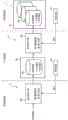
Next, the 1 st synchronization engine 40 of the personal server 3 and the 2 nd synchronization engine 60 of the onboard controller 5 will be described with reference to fig. 4 and 5. Fig. 4 is an explanatory diagram of the flow of data in the shared server, the personal server, and the in-vehicle controller, and fig. 5 is an explanatory diagram of the operation of the synchronization engine.
As shown in fig. 4, the on-vehicle controller 5 executes recognition, judgment, and behavior determination by a rule base based on driving data (information amount "medium"). Therefore, the information targeted in the onboard controller 5 is fast (< 10m seconds). The vehicle control system 9d, the in-vehicle device 9b, and the like operate in accordance with the behavior-determining command when receiving the operation command (information amount "small") from the in-vehicle controller 5. Therefore, the information speed is very fast (< 1m seconds).
On the other hand, the personal server 3 learns and grows based on driving data from the onboard controller 5 and data (information amount "large") from the external information system 7b and the like. Therefore, the information in the personal server 3 is slow (> 1 second). The shared server 1 performs learning and growth based on driving data from the plurality of individual servers 3 and large data (information amount "maximum") from an external information system 7a and the like. Therefore, the information speed in the shared server 1 is very slow (> 1 hour). That is, the upper layer processes a larger amount of information than the lower layer, but the information speed is slower. The common server 1 is the uppermost and the onboard controller 5 is the lowermost.
Therefore, in order to smoothly perform data processing in each hierarchy (that is, in order to prevent the flow of data processing from deteriorating in any hierarchy), the present embodiment achieves uniformity of information entropy. In summary, assuming that the computation load (the total number of steps of the processing program) of the processing executed in each layer and the target response time when all the processing steps are executed are known, the processing load at each moment (per unit time) can be made uniform by adjusting the amount of data to be processed per unit time in each layer.
In the present embodiment, the information entropy is defined by "data amount per unit time × processing speed". The processing speed is defined by "the total number of steps of the processing program (total program line number) × target response time".
Information entropy is data size x total number of steps x target response time
For example, when the data amount is 10MB, the number of steps is 1000 lines, and the target response time is 10m seconds, the onboard controller 5 sets the data amount to 100KB, 10000 lines, and 1 second in the individual server 3, and sets the data amount to 10B, 100000 lines, and 1000 seconds in the shared server 1.
Since the data amount in each hierarchy level is adjusted in this manner, when the driving data is transmitted from the lower hierarchy level to the upper hierarchy level, the data conversion of the driving data is performed by the synchronization engine of the lower hierarchy level so that the driving data can be easily processed at the upper hierarchy level. By this data conversion, the amount, quality, and time of the driving data are converted. The onboard controller 5 has a 2 nd synchronization engine 60 and the personal server 3 has a 1 st synchronization engine 40.
As shown in fig. 5, the onboard controller 5 sequentially receives driving data based on output data of the vehicle sensor 8 and executes vehicle control processing. On the other hand, the 2 nd synchronization engine 60 performs the 2 nd data conversion processing (quantity, quality, time) on the driving data, and transmits the driving data after the data conversion to the personal server 3. The personal server 3 stores the received driving data in the storage unit 3b as behavior history data and state history data of the driver, and uses the data for predetermined processing. Then, the 1 st sync engine 40 performs the 1 st data conversion process (amount, quality, time) on the received driving data, and transmits the driving data after the data conversion to the shared server 1. The shared server 1 stores the received driving data in the storage unit 1b as behavior history data and state history data of the driver, and uses the driving data for predetermined processing.
The synchronization request blocks 21 and 41 in the upper layer issue an acquisition request command for requesting transmission of driving data of a required information attribute to the synchronization engines 40 and 60 in the lower layer in accordance with a system required for processing in the upper layer. Upon receiving the instruction, the synchronization engine of the lower layer executes data conversion processing corresponding to the requested information attribute. The synchronization engine of the lower layer issues a data conversion instruction to another data processing block (not shown) of the same lower layer, performs data conversion, and outputs the driving data after the data conversion to the upper layer. In addition, the lower layer monitors the upper layer. The synchronization request blocks 21 and 41 output, for example, acquisition request commands that specify a data amount reduction method, an association and separation method of individual data (specification of a plurality of individual data), and a time axis setting method (extraction method and statistical processing method) to the 1 st synchronization engine 40 and the 2 nd synchronization engine 60, respectively.
In the data conversion process related to the amount of data, the data amount of the driving data is reduced. For example, data amount reduction processing based on extraction of feature amounts, conversion of information amounts, and the like is performed. The 1 st and 2 nd sync engines 40 and 60 execute the 1 st and 2 nd data amount reduction processes, respectively.
In the extraction of the feature amount, the data size is reduced so as to include minimum information necessary for the processing of the upper layer. For example, the image data is converted into data of a feature amount (angle of mouth angle, information of lane, etc.) extracted from the image data.
In the conversion of the information amount, the driving data is converted into a summary statistic (averaging, time axis filtering, etc.). For example, the amount of deviation from the center line (deviation amount data per 10m seconds) is converted into average deviation amount data at intervals of 100 seconds. Further, the steering angle data every 10 msec is converted into instability determination data in units of 5 sec.
The synchronization engine enables the other processing blocks to perform extraction of feature quantities and conversion of information quantities.
In the data conversion processing relating to the quality of the data, data relevance conversion processing is performed that converts relevance between information of a plurality of items included in the driving data. The 1 st and 2 nd synchronization engines 40 and 60 execute the 1 st and 2 nd data correlation conversion processes, respectively.
In the conversion of the association, a plurality of individual data are selectively given to the association. For example, the personal specific data and the heartbeat data, the time data and the heartbeat data, and the position data and the heartbeat data are associated with each other. The personal specific data, the heartbeat data, the time data, and the position data may be associated with one data. By associating, the associated data can be handled as integrated data in a certain target process, and therefore, the processes in the upper layer can be reduced. For example, in order to use the data for learning a smiling face determination model, angle data of a mouth angle (feature amount data obtained by data amount reduction processing), sound data, driving operation data, and vehicle interior environment data (air conditioner, audio system, and the like) can be associated with each other.
In the conversion of the relevance, the specific information is deleted based on the plurality of information associated with the relevance. For example, the personal specific data is separated. The personal server 3 uses composite data in which specific individual data and personal specific data are associated with each other, but the shared server 1 uses composite data obtained by separating the personal specific data from the composite data in order to ensure anonymity of the composite data. In addition, when the personal specific data includes a name, an age, a sex, an address, and the like, only the specific items (name, sex) may be separated.
In the data conversion process related to the time of the data, a time axis change process is performed, and the time axis change process performs time axis processing of the driving data. The 1 st and 2 nd synchronization engines 40 and 60 execute the 1 st and 2 nd time axis changing processes, respectively.
In time-axis processing, predetermined time-varying data is selectively extracted (sampled) on a time axis. For example, when the quality of data is the same, information is thinned out in the time axis direction. For example, the heartbeat data at 10 m-second intervals is thinned out to heartbeat data at 100 m-second intervals. For example, when heartbeat data is used to detect pulse rate irregularities, only heartbeat data representing a significant value (exceeding a predetermined threshold) is selectively extracted by time axis processing. In addition, in the time axis processing, conversion of the driving data into the summary statistic (averaging, time axis filtering) and conversion into statistical information (for example, frequency distribution) are performed by statistical processing. In the time axis processing, selective extraction time intervals (fixed or indefinite) and statistical processing time intervals on the time axis are set based on the update processing time (target response time) of the general driver model Ma and the individual driver model Mb. Therefore, the longer the target response time is, the longer the data interval of the driving data output by the time-axis processing is.
In the present embodiment, the adjustment of the data amount is performed between the hierarchies (the shared server 1, the personal server 3, and the onboard controller 5), but the present invention is not limited to this, and the adjustment of the data amount may be performed similarly between the functional blocks in each hierarchy (for example, the learning engine 31, the parameter updating engine 32, the recommendation engine 33, the difference analysis engine 34, and the result verification engine 35 that constitute the personal server 3, respectively).
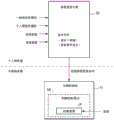
Next, the parameter update process will be described with reference to fig. 6. Fig. 6 is an explanatory diagram of the parameter update process. The personal server 3 has a parameter update engine 32.
The parameter update engine 32 acquires a general driver model Ma from the shared server 1, acquires various control parameters P and driving data (including audio data and vehicle state data) that define vehicle control processing from the onboard controller 5, and updates the control parameters P with reference to the individual driver model Mb.
The parameter updating engine 32 judges in principle the update of the individual driver model Mb by the learning engine 31, and updates the vehicle control algorithm 50 associated with the updated portion in accordance with the update. Specifically, the control parameter P (including the value of the control parameter and the type of the control parameter) included in the vehicle control algorithm 50 is changed.
Therefore, the parameter updating engine 32 compares the individual driver model Mb before updating with the latest individual driver model Mb, and extracts the updated portion. Then, the parameter updating engine 32 extracts the control parameter P corresponding to the updated portion from the various control parameters P acquired from the vehicle a. The parameter update engine 32 also acquires the driver model parameters of the individual driver model Mb corresponding to the control parameters P.
Then, the acquired driver model parameters are compared with the corresponding control parameters P (difference analysis). In addition, in the case where the driver model parameters are associated with the control parameters P but do not directly correspond to each other, the driver model parameters are converted so as to directly correspond to each other, and the converted values are compared with the control parameters P.
As a result of the difference analysis, when the difference exceeds a threshold value set according to the type of the control parameter P, the driver model parameter (or the converted value) is set as the update parameter. Further, the parameter update engine 32 determines whether or not a predetermined update condition is satisfied. When the update condition is satisfied, the parameter update engine 32 outputs a control parameter update instruction to update the control parameter P to the update parameter. When the on-board controller 5 receives the control parameter update instruction, the control parameter P corresponding to the control parameter update instruction is updated to a new update parameter.
In the present embodiment, the update content and the update time are defined as predetermined update conditions. Regarding the update content, in the case where the control parameter P to be updated is the control parameter P of the vehicle control process related to the traveling safety (vehicle traveling safety control process) associated with the traveling, stopping, and turning, the update is prohibited. When the control parameter P of the control process relating to the vehicle safety is changed, there is a possibility that the control parameter P gives a sense of incongruity to the driver during the driving operation, and therefore the control parameter P is not updated. Specifically, the vehicle travel safety control process is a control process associated with automatic accelerator control, automatic brake control, and automatic steering control. For example, the vehicle travel safety control process includes a danger avoidance control process for preventing collision with an obstacle or deviation from a travel path. Further, the instability determination process is also included in the vehicle control process related to the traveling safety.
In the case of the updatable update content, the parameter update engine 32 determines an update timing (at the time of stop, at the time of IG off) from the driving data (vehicle state data), and transmits a control parameter update command when an update timing condition is satisfied. In the present embodiment, the parameter update engine 32 determines the update condition, but the on-board controller 5 that has received the control parameter update command may determine the update condition.
Further, an update time is defined in accordance with the update content. The update timing includes immediate (when the individual driver model Mb is updated), when the vehicle is stopped, and when the ignition switch is turned off (when the IG is turned off). The update timing of the control parameter P allowing the change during running is set to "immediate". Examples of "immediate" are a smiling face determination parameter (angle of a mouth corner) in the smiling face determination process, an air conditioner set temperature, and accident information.
Further, the update timing of the control parameter suitable for updating when the vehicle is stopped is set to "when the vehicle is stopped". Examples of the "vehicle stop time" are, for example, an automatic parking determination parameter (a body angle of the driver in the driver image data, etc.), a vehicle seat position, and a mirror angle in the automatic parking determination process.
The update timing of the control parameter suitable for updating during the IG off state is set to "during the IG off state". An example of "IG off" is general map information.
In addition, when a new sub-model is generated in the updated individual driver model Mb and when it is determined by the learning engine 31 that another sub-model is more effective than the existing sub-model in accordance with a predetermined process, a new control parameter P may be added in accordance with the sub-models. For example, as a result of learning, it is analyzed that the angle of the eye corner is more effective for smile determination of the driver than the angle of the mouth corner, and a new smile determination model based on the angle of the eye corner is generated. In this case, the control parameter P is set in place of or in addition to the existing sub-model based on the angle of the mouth angle. Specifically, the type of the control parameter P used by the smile determination logic in the smile determination process included in the vehicle control process is replaced from the angle of the mouth corner to the angle of the eye corner, and the value of the control parameter P is changed from the angle threshold of the mouth corner to the angle threshold of the eye corner.
In addition, an example will be described in which predetermined processing (change of the order of travel route proposal, steering vibration, increase in speaker volume, and the like) is executed when it is determined that the driver is drowsy in the vehicle control processing. The learning engine 31 learns a submodel based on the magnitude of the unstable angle of steering as a drowsiness determination model. In contrast, in the drowsiness determination process of vehicle a, if the unstable angle (the fluctuation range) of the steering exceeds the determination threshold, it is determined that drowsiness is large. When the learning engine 31 learns that the unstable angle of the ordinary vehicle a is also large, the sub-model is updated, and along with this, the determination threshold value (the value of the control parameter) is updated to a large value.
On the other hand, when the learning engine 31 learns that the variation cycle is more effective for determining drowsiness than the magnitude of the unstable angle of steering, a submodel based on the variation cycle of the unstable angle of steering is added as the drowsiness determination model. Accordingly, in the drowsiness determination process of the vehicle a, the type of the control parameter is changed to the fluctuation cycle of the unstable angle, and the value of the control parameter (determination threshold value, fluctuation cycle) is also changed.
Further, when the drowsiness determination submodel based on the image data is added, the type of the control parameter is changed to a certain feature amount of the image data in the vehicle a along with this, and the value of the control parameter (determination threshold) is also changed.
In addition, a process in a case where the general driver model Ma is taken into consideration in the parameter updating process will be described. That is, when the specific driver of the vehicle a repeats an extreme driving operation different from the usual one, the individual driver model Mb and the vehicle control process (control parameter P) may be updated so that their safety is lowered. Therefore, in the case where the individual driver model Mb is greatly deviated from the general driver model Ma, the control parameter P is updated based on the general driver model Ma in order to ensure safety.
The parameter update engine 32 obtains the general driver model Ma and the control parameters P. Further, when the individual driver model Mb is updated, the updated portion is extracted. Then, the control parameter P corresponding to the updated portion is acquired. Further, the individual driver model parameters of the individual driver model Mb of the update section (or corresponding to the acquired control parameters P) and the general driver model parameters of the general driver model Ma are acquired.
Next, the parameter updating engine 32 compares the acquired individual driver model parameter with the general driver model parameter, and calculates a difference. When the difference is equal to or less than a predetermined value, an update parameter for updating the control parameter P is calculated based on the individual driver model parameter. On the other hand, when the difference is larger than the predetermined value, an update parameter for updating the control parameter P is calculated based on the general driver model parameter. The operation of updating the parameters is the same as in the above embodiment.
When the update parameter is calculated in this manner, as in the above-described embodiment, a control parameter update command for updating the control parameter P to the update parameter is output when a predetermined update condition is satisfied.
Further, the processing in the following case is explained: in the parameter update process, after the update is performed based on the individual driver model Mb, the update is performed again based on the general driver model Ma according to a predetermined condition. That is, when the control parameter P is updated based on the individual driver model Mb but improvement is not confirmed in the vehicle control process, the updated control parameter P is updated again based on the general driver model Ma.
The prescribed condition for the renewal is whether the emotional state of the driver improves before and after the renewal. If the emotional state of the driver is not improved, the control parameter P is updated again. Therefore, the parameter updating engine 32 analyzes the emotional state of the driver from the driver's emotion analysis data based on the driving data (sound data).
Note that the emotion analysis may be executed sequentially by the parameter update engine 32, or may be continuously executed by another function block (driver state analysis unit) and stored as an emotion analysis history. In addition, the improvement of emotional state refers to a case where the emotional state moves from an unpleasant negative emotion (sadness, hating complaints, anger, anxiety, tension, dissatisfaction, etc.) to a pleasant positive emotion (joy, happiness, ease, relaxation, satisfaction, etc.).
The parameter update engine 32 obtains the control parameter P. Further, when the individual driver model Mb is updated, the updated portion is extracted. Then, the control parameter P corresponding to the updated portion is extracted. Further, the individual driver model parameters of the individual driver model Mb of the updated portion (or corresponding to the acquired control parameters P) are acquired. Then, based on the individual driver model parameter, an update parameter for updating the control parameter P is calculated.
When a predetermined update condition is satisfied, a control parameter update command for updating the control parameter P to an update parameter is output. When the on-board controller 5 receives the control parameter update instruction, the corresponding control parameter P is updated to a new update parameter.
The parameter updating engine 32 determines whether the emotional state of the driver improves before and after the update of the control parameter P due to the update of the individual driver model Mb. When it is determined that the emotional state of the driver is improved, the update process of the control parameter P is ended. On the other hand, when it is determined that the emotional state of the driver is not improved, the parameter update engine 32 acquires the general driver model parameters of the general driver model Ma corresponding to the control parameters P.
Then, a new update parameter for updating the control parameter P is calculated based on the general driver model parameter. When a predetermined update condition is satisfied, a control parameter update command for updating the control parameter P to a new update parameter is output. When the on-board controller 5 receives the control parameter update instruction, the corresponding control parameter P is updated to a new update parameter.
For example, in the case where the submodel of the steering operation timing during the curve traveling is updated based on the general driver model Ma, after the corresponding control parameter P (such as the steering operation guidance timing during the driving assistance) of the vehicle a is updated based on the individual driver model Mb, the pressure during the curve traveling (based on the heartbeat, the voice analysis, and the like) is not reduced as compared with before the update.
Next, the recommendation processing (control recommendation processing) will be described with reference to fig. 7. Fig. 7 is an explanatory diagram of the control recommendation process. The personal server 3 has a recommendation engine (vehicle control recommendation section) 33.
The recommendation engine 33 instructs or proposes execution of the recommendation process to the onboard controller 5 using the general driver model Ma acquired from the shared server 1, the driving data (including the voice data) acquired from the vehicle a, and the individual driver model Mb. The onboard controller 5 executes the recommendation process when a predetermined condition is satisfied.
The recommendation engine 33 has a state analysis block 33a and a recommendation block 33 b.
The state analysis block 33a analyzes the driver state, the surrounding environment state, and the vehicle state based on the driving data (including the sound data), the general driver model Ma, and the individual driver model Mb. The analysis includes analysis of the current state, analysis of the state in the near future (e.g., after 30 minutes, after 1 hour).
The recommendation block 33b derives and outputs an optimal impetus suitable for the driver based on the analysis output of the state analysis block 33a, the driving data, the general driver model Ma, and the individual driver model Mb (recommendation processing). Further, since the recommendation engine 33 performs a state analysis using a high level of the accumulated data, it is operated even while the driver is away from the vehicle a, and the recommendation process is appropriately derived.
The driver state includes states of mind, body, and behavior of the driver. The psychological (emotional) state includes attention, arousal, mood, stress, driving load, driving power, feeling, tension, and the language context. The physical (human) state includes fatigue, health, thermal sensation, visual confirmation of the device, operability of the device, driving comfort, riding comfort, human body information, and the like. The behavior state includes a gaze position/object, an attention state, a posture, a device operation, a driving behavior/operation/posture, a dialogue, a habit, a living behavior, a behavior intention, and the like.
The psychological state (particularly, emotional state) may be directly analyzed from voice data (for example, emotion analysis using an endocrine model), image data of the driver, and heartbeat data, or may be estimated from other driving data (including image data and heartbeat data of the driver) using a personal driver model Mb.
The surrounding environment state is an environment around the vehicle a, and includes a traffic/travel environment, a risk pre-mastered (congestion, road freezing, etc.), a communication environment, and the like.
The vehicle state is a driving state of the vehicle a, and includes driving difficulty, instability, and the like.
The recommendation block performs at least a vehicle interior space recommendation, a travel recommendation, and an information presentation recommendation as recommendation control.
The cabin space recommendation is intended to provide recommendation control suitable for the cabin environment of the driver, and includes provision of seat/mirror positions and angles, air conditioning, music, welcome shows, and the like.
The travel recommendation is to provide recommendation control suitable for the travel route of the driver, including a prompt of a recommended route, a comfortable route, a challenging route with high driving difficulty, a danger avoiding route, and the like.
The information presentation recommendation includes presentation of information useful for the driver and presentation of a high level state estimation result based on an appropriate timing and an appropriate presentation method. The information prompts of useful information for the driver include information prompts of places worth looking on the route (scenery, restaurants, places of interest, etc.), road traffic/weather/news, reminders (forgetting items, preventing late arrival), ToDo (to do) lists, recalled images, and the like. The presentation of the height state estimation result includes information presentation of a height automatic parking determination and a height smiling face determination.
The recommendation block 33b can derive appropriate recommendation control using a basic association table describing the association between the analysis state by the state analysis block 33a and a predetermined recommendation process. The association table can also be learned and updated by the individual driver model Ma and the general driver model Mb.
The vehicle-mounted controller 5 outputs instructions to the information presentation device 9a, the vehicle-mounted device 9b, the information communication device 9c, and the vehicle control system 9d based on the recommendation signal. Therefore, the onboard controller 5 may store a processing program executed when each recommendation signal is received.
In the present embodiment, for example, the recommendation block 33b derives an achievable and appropriate recommendation process in consideration of the surrounding environment state and the vehicle state from the driver states (fatigue, emotion, stress, attentiveness, wakefulness, and the like) analyzed by the state analysis block 33a, and outputs a recommendation signal.
For example, the state analysis block 33a presumes the state of the body. Here, it is assumed that the analysis indicates that the driver feels fatigue. In response to this, the recommendation block 33b selects and outputs an appropriate recommendation signal from the cabin space recommendation signal, the travel route recommendation signal, and the information presentation recommendation signal according to the situation.
The vehicle interior space recommendation signal is a signal instructing, for example, a process of operating the air conditioner, a process of resetting (lowering) the air conditioning temperature, a process of outputting a predetermined music channel broadcast from a speaker, a process of changing the music channel, a process of changing the seat position and the mirror angle according to the degree of fatigue, and the like. The travel route recommendation signal is a signal for instructing, for example, to prompt a process of changing from a currently set route that is difficult (e.g., many curves) to a new route that is difficult (e.g., many straight roads). The information presentation recommendation signal is a signal that instructs a display process or the like for displaying a predetermined message advising a break or a reduction in speed on the display screen. When a predetermined physical state or a predetermined psychological (emotional) state is analyzed, an appropriate recommendation signal is selected.
The individual driver model Mb includes sub models indicating the preferences (air-conditioning temperature, broadcast channel, seat position, mirror angle, and the like) of the driver for the settings of the in-vehicle device. For example, when the state analysis block 33a analyzes that the setting of the in-vehicle device is different from the setting preferred by the driver when the driver starts driving, analyzes the state of a predetermined body or the state of a predetermined mind (emotion), the recommendation block 33b outputs a cabin space recommendation signal instructing the setting to be changed to the preferred setting. In this instruction, an air-conditioning temperature, a broadcast channel, a seat position, a mirror angle, and the like are specified as operation parameter values (favorite setting values).
An example of information presentation recommendation will be described. It is assumed that the state analysis block 33a analyzes that the vehicle a is approaching a specific place (surrounding environment state) where inattention and drowsiness are likely to be caused, with reference to the individual driver model Mb. In response to this, the recommendation block 33b outputs a recommendation signal so as to execute attention-calling processing by voice or the like at a point (at an appropriate timing) in front of a specific place by a predetermined distance.
Further, when the state analysis block 33a analyzes that the specific place is also a place that is likely to cause inattention or drowsiness to the general driver with reference to the general driver model Ma, the recommendation block 33b outputs a recommendation signal so as to execute an early attention-calling process at a near place (at an appropriate timing) that is farther from the specific place.
The individual driver model Mb includes a sub-model that is constructed based on communication data (call sound data, mail text data, device setting information, and the like) acquired from the portable information terminal device 7c and indicates the preference (food, interest, sports, and the like) of the driver. For example, in the favorite submodel of "food", the type of favorite food (japanese food, french food, italian food, etc.) is classified based on a bookmark or the like as the device setting information.
When the state analysis block 33a analyzes the estimated time at which the driver starts to feel fasting based on the submodel, the recommendation block 33b outputs a recommendation signal of restaurant information (food type, restaurant name) showing the type of favorite food on the navigation map in accordance with the estimated time (at an appropriate timing). The recommendation signal may be selected when a predetermined physical state or a predetermined psychological (emotional) state is analyzed, without being limited to the fasting degree.
Further, an example of the travel route recommendation will be described. The state analysis block 33a estimates the emotional state or the physical state of the driver from the driving data with reference to the individual driver model Mb and the general driver model Ma. Here, it is assumed that the driver is expected to feel a low level of pleasure (or that the driver is expected to feel boring within 1 hour as the driving power decreases).
The recommendation block 33b receives the analysis output indicating the estimation (prediction), and derives recommendation processing for making the estimation pleasant (or for making the estimation not boring). For example, based on the individual driver model Mb and the general driver model Ma, a place (a road on a coastline, a sight spot, or the like) registered as a place where the general driver or the driver of the vehicle a feels pleasure is searched for within a range of a predetermined distance from the current position, and a recommendation signal urging a change to a route having the place as a route point is output. When the onboard controller 5 receives the recommendation signal, the route points included in the recommendation signal are input to the navigation device. Thus, the navigation device performs a new route calculation, thereby displaying a new recommended route on the display screen.
When the state analysis block 33a estimates that the road surface is frozen from the outside air temperature, weather, and the like, the recommendation block 33b outputs a recommendation signal instructing to avoid a route where the road surface is estimated to be frozen.
The on-vehicle controller 5 has a recommendation decision block 53 that determines whether to execute a recommendation process based on the recommendation signal. The recommendation decision block 53 permits execution in the case where the recommendation processing is entertainment control processing, and denies execution in the case where the recommendation processing is security control processing. In the in-vehicle controller 5, in the case where execution is permitted by the recommendation decision block 53, the entertainment control block 52a performs recommendation processing in accordance with the recommendation signal.
In the present embodiment, whether or not the recommendation process can be executed is determined based on which of the entertainment control process and the security control process the recommendation process is. However, the present invention is not limited to this, and the recommendation process may be rejected even if the recommendation process is the entertainment control process, in a case where the driving of the vehicle may become unsafe. For example, in the case where the recommended processing is processing in which the alarm generation timing is delayed in the case where the brake operation timing is delayed, execution is rejected because of increased insecurity, but in the case where the recommended processing is processing in which the alarm generation timing is advanced, execution is permitted because of increased safety, conversely.
Further, the recommendation decision block 53 also rejects the execution of the recommendation process when the recommendation process is a process that contradicts or invalidates the vehicle control process of the on-board controller 5. For example, in the vehicle control process, although the process of advancing the alarm generation timing delayed with respect to the brake operation is executed due to weather (when it is rainy or the visibility is low), in the case where the recommended process is a process of delaying the alarm generation timing, the recommended process is not executed because it contradicts or invalidates the process due to weather, but in the case where the recommended process is a process of advancing the alarm generation timing, it does not contradict or invalidate the process due to weather, and the recommended process is allowed to be executed.
Next, a supplementary process of the individual driver model based on the general driver model will be described. Since the vehicle a is limited to traveling based on a specific region and a specific traveling operation, reference data (driving data and general data) used by the individual driver model Mb is significantly reduced compared to reference data used by the general driver model Ma. Therefore, a difference is generated between the individual driver model Mb and the general driver model Ma according to such a difference in data amount.
A comparison block (not shown) in the recommendation engine 33 acquires the individual driver model Mb and the general driver model Ma, and performs a comparison process. By this comparison processing, submodels, general knowledge, and the like that exist in the general driver model Ma but do not exist in the individual driver model Mb are extracted. The extracted difference data (submodel, general knowledge, etc.) is stored as accumulated data via the result verification engine 35 and learned by the learning engine 31. This adds a submodel, general knowledge, and the like that can be adapted to the vehicle a to the individual driver model Mb.
Next, verification processing of the recommendation instruction will be described with reference to fig. 2. The personal server 3 also has an ideal driver model Mi, a differential analysis engine 34, and a result verification engine 35.
The ideal driver model Mi is created based on the driving operation of the expert driver, and is a model representing an ideal state in which the driver concentrates and enjoys the driving operation in a state where the driving skill owned by the driver is balanced with the difficulty of traveling.
The difference analysis engine 34 compares the driver's state in the ideal driver model Mi with the actual driver's state analyzed based on the driver's voice data.
The result verification engine 35 analyzes the difference data from the difference analysis engine 34, thereby verifying what influence the driver's state is affected by executing recommendation processing based on the recommendation signal, and stores the verification result in the storage unit 3 b. The verification result is an evaluation of how much the difference is reduced (closer to the ideal state) or how much the difference is increased (farther from the ideal state) by execution of the recommendation processing. The learning engine 31 learns the verification result, whereby the individual driver model Mb is updated to be more suitable for the specific driver.
Next, a vehicle driving support system according to a modified example will be described with reference to fig. 8. Fig. 8 is a configuration diagram of a vehicle driving system according to a modified example.
The vehicle driving support system S2 according to the modified example is different from the vehicle driving support system S according to the above-described embodiment, and the personal server 3 is mounted on the vehicle a. That is, the onboard controller 5 and the personal server 3 are mounted on the vehicle a so as to be able to communicate with each other. The flow of data is the same as the vehicle driving support system S.
In the vehicle driving support system S2, the vehicle-mounted controller 5 and the personal server 3 are connected in a state of being divided via a gateway having a security function. Therefore, the onboard controller 5 and the personal server 3 constitute a separate unit.
In the case where the onboard controller 5 and the personal server 3 are configured as an integrated unit, there is a possibility that the calculation capability is temporarily insufficient due to the learning process of the personal driver model that requires advanced processing, and the vehicle control process is delayed. However, in the present modification, since the onboard controller 5 and the personal server 3 are configured by separate units, the onboard controller 5 only needs to execute the vehicle control processing, and thus no delay in the vehicle control processing occurs, as in the above-described embodiment.
In addition, the artificial energy-knowing technology is currently in the research and development stage, and the progress degree is relatively fast. Therefore, in the present modification, the personal server 3 configured as a separate body can be easily updated to a higher-performance personal server.
Next, the operation of the vehicle driving support system of the present embodiment will be described.
The vehicle driving support system of the present embodiment includes: a shared server 1 (a general driver model learning unit) that learns a general driver model Ma for applying to a plurality of drivers based on driving data of the plurality of drivers; a personal server 3 (a personal driver model learning unit) that learns a personal driver model Mb unique to a specific driver based on driving data of the specific driver; and an onboard controller 5 provided in the vehicle a of the driver and executing a predetermined vehicle control process, wherein the personal server 3 includes a parameter update engine 32 (vehicle control update unit) that updates the onboard controller 5 in the vehicle control process based on the general driver model Ma and the personal driver model Mb, and the parameter update engine 32 acquires the general driver model Ma and the personal driver model Mb and determines whether or not to update the vehicle control process based on either one of the general driver model Ma and the personal driver model Mb under a predetermined condition.
In the present embodiment, an appropriate model is selected from the general driver model Ma and the individual driver model Mb under predetermined conditions, and the vehicle control process executed in the vehicle a is updated based on the selected model. The individual driver model Mb is learned based on the driving data of the vehicle a, while the general driver model Ma is learned based on the driving data of a plurality of drivers. Therefore, by selecting either one of the individual driver model Mb and the general driver model Ma according to an appropriate condition, the vehicle control process can be updated more appropriately.
In the present embodiment, the parameter updating engine 32 determines the difference between the general driver model Ma and the individual driver model Mb, and updates the vehicle control process based on the general driver model Ma when the difference is equal to or greater than a predetermined threshold value. In the present embodiment, when the difference between the general driver model Ma and the individual driver model Mb is equal to or greater than the predetermined threshold, the individual driver model Mb may be generated by repeating an extreme driving operation, and therefore the vehicle control process is updated using the general driver model Ma. This can suppress the risk of lowering the safety of the vehicle a.
In the present embodiment, the personal server 3 includes a driver state analysis unit (parameter update engine 32) that analyzes the current state of the driver based on the driving data of the specific driver, and the parameter update engine 32 executes the update of the vehicle control process based on the general driver model Ma when the state of the driver analyzed by the driver state analysis unit does not change to the predetermined improved state after the update of the vehicle control process based on the personal driver model Mb is executed. In the present embodiment, when the vehicle control process is updated based on the individual driver model Mb but the state of the driver is not improved (for example, when the emotional state is not changed from tension to relaxation), the vehicle control process is updated based on the general driver model Ma again.
In the present embodiment, the parameter update engine 32 prioritizes the update of the vehicle control process based on the individual driver model Mb over the update of the vehicle control process based on the general driver model Ma. Since the individual driver model Mb reflects the characteristics of the specific driver more favorably than the general driver model Ma, it is preferable to update the individual driver model Mb in the vehicle control process. Therefore, in the present embodiment, the individual driver model Mb is prioritized over the general driver model Ma.
Further, the present embodiment is a vehicle driving support method in a vehicle driving support system including: a shared server 1 that learns a general driver model Ma for applying to a plurality of drivers based on driving data of the plurality of drivers; a personal server 3 that learns a personal driver model Mb unique to a specific driver based on driving data of the specific driver; and an onboard controller 5 provided in a vehicle a of a specific driver and executing a predetermined vehicle control process, the vehicle driving support method including: a step in which the personal server 3 acquires the general driver model Ma from the shared server 1; a step in which the personal server 3 acquires a control parameter P for vehicle control processing from the onboard controller 5; a step in which the personal server 3 acquires, from the personal driver model Mb, a personal driver model parameter corresponding to the control parameter P of the vehicle control process; a step in which the personal server 3 acquires a general driver model parameter corresponding to the control parameter P of the vehicle control process from the general driver model Ma; a step in which the personal server 3 calculates the closest difference between the individual driver model parameter and the general driver model parameter; a step in which the personal server 3 calculates an update parameter of the control parameter P based on the individual driver model parameter when the difference is smaller than a predetermined value; a step in which the personal server 3 calculates an update parameter of the control parameter P based on the general driver model parameter when the difference is greater than a predetermined value; and a step in which the personal server 3 transmits an instruction for updating the control parameter P to the update parameter to the on-vehicle controller 5.
Further, the present embodiment is a method for updating a vehicle control process in a vehicle driving support system including: a shared server 1 that learns a general driver model Ma for applying to a plurality of drivers based on driving data of the plurality of drivers; a personal server 3 that learns a personal driver model Mb unique to a specific driver based on driving data of the specific driver; and an onboard controller 5 provided in a vehicle a of a specific driver and executing a predetermined vehicle control process, the vehicle control process updating method including: a step in which a driver state analysis unit analyzes the current emotional state of the driver based on the driving data of the specific driver; a step in which the personal server 3 acquires a control parameter P for vehicle control processing from the onboard controller 5; a step in which the personal server 3 acquires, from the personal driver model Mb, a personal driver model parameter corresponding to the control parameter P of the vehicle control process; a step in which the personal server 3 calculates an update parameter of the control parameter P based on the individual driver model parameter; a step in which the personal server 3 transmits an instruction for updating the control parameter P to an update parameter to the onboard controller 5; a step in which the onboard controller 5 updates the control parameter P to an update parameter; a step in which a driver state analysis unit analyzes the current emotional state of the driver based on the driving data of the specific driver; a step in which the personal server 3 acquires a general driver model parameter corresponding to a control parameter of the vehicle control process from the general driver model Ma when the emotional state of the driver analyzed by the driver state analysis section does not change to a predetermined state; a step in which the personal server 3 calculates an update parameter of the control parameter P based on the general driver model parameter; and a step in which the personal server 3 transmits, to the on-vehicle controller 5, an instruction to update the control parameter P to an update parameter calculated based on the general driver model parameter.
Claims (5)
1. A vehicle driving support system includes:
a general driver model learning unit that learns a general driver model to be applied to a plurality of drivers based on driving data of the plurality of drivers;
a personal driver model learning unit that learns a personal driver model unique to a specific driver based on driving data of the specific driver; and
an onboard controller provided in the vehicle of the driver and executing a predetermined vehicle control process,
the individual driver model learning unit includes a vehicle control updating unit that updates the vehicle control process by the onboard controller based on the general driver model and the individual driver model,
the vehicle control update unit acquires the general driver model and the individual driver model, determines whether to update the vehicle control process based on either the general driver model or the individual driver model according to a predetermined condition,
the vehicle control update unit determines a difference between the general driver model and the individual driver model, and updates the vehicle control process based on the general driver model when the difference is equal to or greater than a predetermined threshold value.
2. The vehicle driving support system according to claim 1, wherein,
the individual driver model learning unit includes a driver state analysis unit that analyzes a current state of the driver based on the driving data of the specific driver,
the vehicle control update unit executes the update of the vehicle control process based on the general driver model when the state of the driver analyzed by the driver state analysis unit does not change to a predetermined state after the execution of the update of the vehicle control process based on the individual driver model.
3. The vehicle driving support system according to claim 1 or 2, wherein,
the vehicle control update unit prioritizes update of the vehicle control process based on the individual driver model over update of the vehicle control process based on the general driver model.
4. A vehicle driving support method in a vehicle driving support system, the vehicle driving support system comprising: a general driver model learning unit that learns a general driver model to be applied to a plurality of drivers based on driving data of the plurality of drivers; a personal driver model learning unit that learns a personal driver model unique to a specific driver based on driving data of the specific driver; and an onboard controller provided in the vehicle of the specific driver and executing a predetermined vehicle control process,
the vehicle driving support method includes:
a step in which the individual driver model learning unit acquires the general driver model from the general driver model learning unit;
a step in which the individual driver model learning unit acquires a control parameter of the vehicle control process from the onboard controller;
a step in which the individual driver model learning unit acquires an individual driver model parameter corresponding to a control parameter of the vehicle control process from the individual driver model;
a step in which the individual driver model learning unit acquires a general driver model parameter corresponding to a control parameter of the vehicle control process from the general driver model;
a step in which the individual driver model learning unit calculates a difference between the individual driver model parameter and the general driver model parameter;
a step in which the individual driver model learning unit calculates an update parameter of the control parameter based on the individual driver model parameter when the difference is smaller than a predetermined value;
a step in which the individual driver model learning unit calculates an update parameter of the control parameter based on the general driver model parameter when the difference is larger than a predetermined value; and
and a step in which the individual driver model learning unit transmits an instruction to the onboard controller to update the control parameter to the update parameter.
5. An update method of a vehicle control process in a vehicle driving support system, the vehicle driving support system comprising: a general driver model learning unit that learns a general driver model to be applied to a plurality of drivers based on driving data of the plurality of drivers; a personal driver model learning unit that learns a personal driver model unique to a specific driver based on driving data of the specific driver; and an onboard controller provided in the vehicle of the specific driver and executing a predetermined vehicle control process,
the update method for the vehicle control process includes:
a step in which a driver state analysis unit analyzes the current emotional state of the driver based on the driving data of the specific driver;
a step in which the individual driver model learning unit acquires a control parameter of the vehicle control process from the onboard controller;
a step in which the individual driver model learning unit acquires an individual driver model parameter corresponding to a control parameter of the vehicle control process from the individual driver model;
a step in which the individual driver model learning unit calculates an update parameter of the control parameter based on the individual driver model parameter;
a step in which the individual driver model learning unit transmits an instruction to the onboard controller to update the control parameter to the update parameter;
updating the control parameter to the updated parameter by the onboard controller;
a step in which the driver state analysis unit analyzes the current emotional state of the driver based on the driving data of the specific driver;
a step in which the individual driver model learning unit acquires a general driver model parameter corresponding to a control parameter of the vehicle control process from the general driver model when the emotional state of the driver analyzed by the driver state analysis unit does not change to a predetermined state;
a step in which the individual driver model learning unit calculates an update parameter of the control parameter based on the general driver model parameter; and
and a step in which the individual driver model learning unit transmits, to the onboard controller, an instruction to update the control parameter to the update parameter calculated based on the general driver model parameter.
Applications Claiming Priority (2)
| Application Number | Priority Date | Filing Date | Title |
|---|---|---|---|
| JP2017-065085 | 2017-03-29 | ||
| JP2017065085A JP6575934B2 (en) | 2017-03-29 | 2017-03-29 | Vehicle driving support system and vehicle driving support method |
Publications (2)
| Publication Number | Publication Date |
|---|---|
| CN108688677A CN108688677A (en) | 2018-10-23 |
| CN108688677B true CN108688677B (en) | 2021-06-25 |
Family
ID=63450439
Family Applications (1)
| Application Number | Title | Priority Date | Filing Date |
|---|---|---|---|
| CN201810116314.6A Expired - Fee Related CN108688677B (en) | 2017-03-29 | 2018-02-06 | Vehicle driving support system and vehicle driving support method |
Country Status (4)
| Country | Link |
|---|---|
| US (1) | US10668929B2 (en) |
| JP (1) | JP6575934B2 (en) |
| CN (1) | CN108688677B (en) |
| DE (1) | DE102018001342A1 (en) |
Families Citing this family (40)
| Publication number | Priority date | Publication date | Assignee | Title |
|---|---|---|---|---|
| WO2016158197A1 (en) * | 2015-03-31 | 2016-10-06 | 日立オートモティブシステムズ株式会社 | Automatic driving control device |
| US20190185012A1 (en) | 2017-12-18 | 2019-06-20 | PlusAI Corp | Method and system for personalized motion planning in autonomous driving vehicles |
| US11130497B2 (en) | 2017-12-18 | 2021-09-28 | Plusai Limited | Method and system for ensemble vehicle control prediction in autonomous driving vehicles |
| US11273836B2 (en) | 2017-12-18 | 2022-03-15 | Plusai, Inc. | Method and system for human-like driving lane planning in autonomous driving vehicles |
| US10442443B1 (en) * | 2018-05-09 | 2019-10-15 | GM Global Technology Operations LLC | Providing driver feedback |
| WO2020069517A2 (en) | 2018-09-30 | 2020-04-02 | Strong Force Intellectual Capital, Llc | Intelligent transportation systems |
| KR102675289B1 (en) * | 2018-10-29 | 2024-06-17 | 현대자동차주식회사 | Vehicle And Control Method Thereof |
| US11480117B2 (en) * | 2018-12-17 | 2022-10-25 | Ford Global Technologies, Llc | Method and system for vehicle stop/start control |
| US12322219B2 (en) | 2018-12-26 | 2025-06-03 | Allstate Insurance Company | System generated damage analysis using scene templates |
| US11741763B2 (en) * | 2018-12-26 | 2023-08-29 | Allstate Insurance Company | Systems and methods for system generated damage analysis |
| JP2020119260A (en) * | 2019-01-23 | 2020-08-06 | トヨタ自動車株式会社 | Information processing device, information processing method and program |
| DE102020201039A1 (en) * | 2019-01-31 | 2020-08-06 | Hyundai Motor Company | METHOD AND DEVICE FOR THE SHARED USE OF MOVABLE OBJECTS IN A FLEET SYSTEM |
| KR102837537B1 (en) * | 2019-01-31 | 2025-07-22 | 현대자동차주식회사 | Method And Apparatus for vehicle sharing in fleet system |
| KR102740146B1 (en) * | 2019-03-08 | 2024-12-06 | 현대자동차주식회사 | Method And Apparatus for mobility sharing in fleet system |
| US10668930B1 (en) * | 2019-02-04 | 2020-06-02 | State Farm Mutual Automobile Insurance Company | Determining acceptable driving behavior based on vehicle specific characteristics |
| WO2020170304A1 (en) * | 2019-02-18 | 2020-08-27 | 日本電気株式会社 | Learning device and method, prediction device and method, and computer-readable medium |
| CN113825973A (en) * | 2019-03-18 | 2021-12-21 | 柯尼亚塔有限公司 | System and method for evaluating vehicle technology |
| DE112019007052B4 (en) * | 2019-03-20 | 2026-02-19 | Mitsubishi Electric Corporation | Vigilance level assessment device, device to support automated driving and vigilance assessment procedure |
| WO2020202450A1 (en) * | 2019-04-01 | 2020-10-08 | ヤマハ発動機株式会社 | Personality analysis method, personality analysis device, information processing method using personality data, and information processing device using personality data |
| CN113613978B (en) * | 2019-04-02 | 2024-03-26 | 沃尔沃卡车集团 | On-board control system for operating a vehicle |
| CN110135355B (en) * | 2019-05-17 | 2023-04-07 | 吉林大学 | Method for actively regulating and controlling emotion of driver by using color and sound effect |
| JP7377042B2 (en) * | 2019-09-25 | 2023-11-09 | 株式会社Subaru | vehicle system |
| JP7619774B2 (en) * | 2020-01-17 | 2025-01-22 | 株式会社Subaru | Autonomous Driving Assistance Device |
| US11738804B2 (en) * | 2020-02-07 | 2023-08-29 | Micron Technology, Inc. | Training a vehicle to accommodate a driver |
| EP4105907B1 (en) * | 2020-02-14 | 2024-12-04 | Panasonic Intellectual Property Management Co., Ltd. | Information processing method, information processing system, and information processing device |
| JP2021149617A (en) * | 2020-03-19 | 2021-09-27 | 本田技研工業株式会社 | Recommendation guidance device, recommendation guidance method, and recommendation guidance program |
| US11878714B2 (en) * | 2020-04-06 | 2024-01-23 | Harman International Industries, Incorporated | Techniques for customizing self-driving models |
| FR3109127B1 (en) * | 2020-04-10 | 2022-04-22 | Renault Sas | Method for recognizing a driving mode of a vehicle and associated recognition device |
| KR20210133084A (en) | 2020-04-28 | 2021-11-05 | 삼성전자주식회사 | Method for learning neuaral network and device thereof |
| US11808591B2 (en) | 2020-06-04 | 2023-11-07 | Harman International Industries, Incorporated | Affective-cognitive load based navigation |
| US11721234B2 (en) * | 2020-10-14 | 2023-08-08 | GM Global Technology Operations LLC | Methods and systems to autonomously train drivers |
| US12157503B2 (en) * | 2020-10-15 | 2024-12-03 | Atieva, Inc. | Defining driving envelope for assisted-driving system |
| CN114834475B (en) * | 2021-01-15 | 2024-05-31 | 宇通客车股份有限公司 | Vehicle output torque control method and device |
| JP7621874B2 (en) * | 2021-04-26 | 2025-01-27 | 東海旅客鉄道株式会社 | Automated Learning System |
| CN113536028A (en) * | 2021-07-30 | 2021-10-22 | 湖北亿咖通科技有限公司 | Music recommendation method and device |
| JP7668204B2 (en) * | 2021-10-26 | 2025-04-24 | 本田技研工業株式会社 | In-vehicle control system |
| DE102021131737B4 (en) | 2021-12-02 | 2025-10-16 | Audi Aktiengesellschaft | Method for operating a driving dynamics system device of a motor vehicle during a journey, control device, and motor vehicle |
| JP7801933B2 (en) * | 2022-03-31 | 2026-01-19 | 株式会社シマノ | Control device for human-powered vehicle, learning method, control method for human-powered vehicle, and computer program |
| IT202300006930A1 (en) * | 2023-04-07 | 2024-10-07 | Xenia Network Solutions S R L | Driving assistance method for a user, related system and vehicle |
| CN119305570B (en) * | 2023-07-14 | 2025-09-26 | 长城汽车股份有限公司 | Vehicle control method based on behavior habits and vehicle |
Citations (5)
| Publication number | Priority date | Publication date | Assignee | Title |
|---|---|---|---|---|
| JP2009264880A (en) * | 2008-04-24 | 2009-11-12 | Equos Research Co Ltd | Driver model creation device |
| JP5051542B2 (en) * | 2008-03-27 | 2012-10-17 | 株式会社エクォス・リサーチ | Driver model processor |
| CN105313899A (en) * | 2014-07-10 | 2016-02-10 | 现代摩比斯株式会社 | On-vehicle situation detection apparatus and method |
| WO2016170786A1 (en) * | 2015-04-21 | 2016-10-27 | パナソニックIpマネジメント株式会社 | Information processing system, information processing method, and program |
| CN106372438A (en) * | 2016-09-13 | 2017-02-01 | 西安科技大学 | Method for establishing sample bank for distinguishing driving state of driver |
Family Cites Families (18)
| Publication number | Priority date | Publication date | Assignee | Title |
|---|---|---|---|---|
| DE10343683A1 (en) * | 2003-09-20 | 2005-04-21 | Daimler Chrysler Ag | Information system for motor vehicles |
| JP4682714B2 (en) * | 2005-06-14 | 2011-05-11 | トヨタ自動車株式会社 | Dialog system |
| US7579942B2 (en) * | 2006-10-09 | 2009-08-25 | Toyota Motor Engineering & Manufacturing North America, Inc. | Extra-vehicular threat predictor |
| JP2009205646A (en) * | 2008-02-29 | 2009-09-10 | Equos Research Co Ltd | Driving support device |
| US8384534B2 (en) * | 2010-01-14 | 2013-02-26 | Toyota Motor Engineering & Manufacturing North America, Inc. | Combining driver and environment sensing for vehicular safety systems |
| US9638537B2 (en) * | 2012-06-21 | 2017-05-02 | Cellepathy Inc. | Interface selection in navigation guidance systems |
| US20170279957A1 (en) * | 2013-08-23 | 2017-09-28 | Cellepathy Inc. | Transportation-related mobile device context inferences |
| JP6044556B2 (en) | 2014-01-16 | 2016-12-14 | 株式会社デンソー | Learning system, in-vehicle device, and server |
| US10540723B1 (en) * | 2014-07-21 | 2020-01-21 | State Farm Mutual Automobile Insurance Company | Methods of providing insurance savings based upon telematics and usage-based insurance |
| US20160059775A1 (en) * | 2014-09-02 | 2016-03-03 | Nuance Communications, Inc. | Methods and apparatus for providing direction cues to a driver |
| CN104260725B (en) * | 2014-09-23 | 2016-09-14 | 北京理工大学 | A kind of intelligent driving system containing pilot model |
| JP6497915B2 (en) * | 2014-12-08 | 2019-04-10 | 株式会社デンソーテン | Driving support system |
| US9988056B2 (en) * | 2015-12-15 | 2018-06-05 | Octo Telematics Spa | Systems and methods for controlling sensor-based data acquisition and signal processing in vehicles |
| WO2018019354A1 (en) * | 2016-07-25 | 2018-02-01 | Swiss Reinsurance Company Ltd. | An apparatus for a dynamic, score-based, telematics connection search engine and aggregator and corresponding method thereof |
| WO2018028799A1 (en) * | 2016-08-12 | 2018-02-15 | Swiss Reinsurance Company Ltd. | Telematics system with vehicle-embedded telematics devices (oem line fitted) for score-driven, automated insurance and corresponding method |
| US9739627B1 (en) * | 2016-10-18 | 2017-08-22 | Allstate Insurance Company | Road frustration index risk mapping and mitigation |
| US10192171B2 (en) * | 2016-12-16 | 2019-01-29 | Autonomous Fusion, Inc. | Method and system using machine learning to determine an automotive driver's emotional state |
| US10252461B2 (en) * | 2017-03-27 | 2019-04-09 | International Business Machines Corporation | Cognitive-based driving anomaly detection based on spatio-temporal landscape-specific driving models |
-
2017
- 2017-03-29 JP JP2017065085A patent/JP6575934B2/en not_active Expired - Fee Related
-
2018
- 2018-02-06 CN CN201810116314.6A patent/CN108688677B/en not_active Expired - Fee Related
- 2018-02-21 DE DE102018001342.2A patent/DE102018001342A1/en not_active Withdrawn
- 2018-02-26 US US15/904,851 patent/US10668929B2/en not_active Expired - Fee Related
Patent Citations (5)
| Publication number | Priority date | Publication date | Assignee | Title |
|---|---|---|---|---|
| JP5051542B2 (en) * | 2008-03-27 | 2012-10-17 | 株式会社エクォス・リサーチ | Driver model processor |
| JP2009264880A (en) * | 2008-04-24 | 2009-11-12 | Equos Research Co Ltd | Driver model creation device |
| CN105313899A (en) * | 2014-07-10 | 2016-02-10 | 现代摩比斯株式会社 | On-vehicle situation detection apparatus and method |
| WO2016170786A1 (en) * | 2015-04-21 | 2016-10-27 | パナソニックIpマネジメント株式会社 | Information processing system, information processing method, and program |
| CN106372438A (en) * | 2016-09-13 | 2017-02-01 | 西安科技大学 | Method for establishing sample bank for distinguishing driving state of driver |
Also Published As
| Publication number | Publication date |
|---|---|
| US10668929B2 (en) | 2020-06-02 |
| JP2018169705A (en) | 2018-11-01 |
| CN108688677A (en) | 2018-10-23 |
| US20180281812A1 (en) | 2018-10-04 |
| JP6575934B2 (en) | 2019-09-18 |
| DE102018001342A1 (en) | 2018-09-27 |
Similar Documents
| Publication | Publication Date | Title |
|---|---|---|
| CN108688677B (en) | Vehicle driving support system and vehicle driving support method | |
| CN108688676B (en) | Vehicle driving support system and vehicle driving support method | |
| CN108688673B (en) | Vehicle driving support system | |
| JP6683163B2 (en) | Vehicle driving support system | |
| CN108688675B (en) | Vehicle driving support system | |
| JP6555645B2 (en) | Vehicle driving support system and vehicle driving support method | |
| JP6607223B2 (en) | Vehicle driving support system and vehicle driving support method | |
| JP6575933B2 (en) | Vehicle driving support system | |
| US10259451B2 (en) | Motion sickness mitigation system and method | |
| JP7329755B2 (en) | Support method and support system and support device using the same | |
| CN111731280B (en) | Vehicle control device, vehicle control method and storage medium | |
| JP6579495B2 (en) | Vehicle driving support system | |
| JP6579494B2 (en) | Vehicle driving support system | |
| JP6579493B2 (en) | Vehicle driving support system | |
| CN116080564B (en) | Method and device for adjusting state of vehicle passenger | |
| JP2026013448A (en) | Driving assistance devices | |
| CN120756497A (en) | Control method, device, vehicle, medium and program product | |
| CN121062734A (en) | User state adjusting method, device, electronic equipment, storage medium and product | |
| CN120902750A (en) | Vehicle atmosphere adjusting method, device, equipment and storage medium |
Legal Events
| Date | Code | Title | Description |
|---|---|---|---|
| PB01 | Publication | ||
| PB01 | Publication | ||
| SE01 | Entry into force of request for substantive examination | ||
| SE01 | Entry into force of request for substantive examination | ||
| GR01 | Patent grant | ||
| GR01 | Patent grant | ||
| CF01 | Termination of patent right due to non-payment of annual fee | ||
| CF01 | Termination of patent right due to non-payment of annual fee |
Granted publication date: 20210625 Termination date: 20220206 |