CN108509866B - A face contour extraction method - Google Patents
A face contour extraction method Download PDFInfo
- Publication number
- CN108509866B CN108509866B CN201810199612.6A CN201810199612A CN108509866B CN 108509866 B CN108509866 B CN 108509866B CN 201810199612 A CN201810199612 A CN 201810199612A CN 108509866 B CN108509866 B CN 108509866B
- Authority
- CN
- China
- Prior art keywords
- contour
- local
- face
- curve
- point
- Prior art date
- Legal status (The legal status is an assumption and is not a legal conclusion. Google has not performed a legal analysis and makes no representation as to the accuracy of the status listed.)
- Expired - Fee Related
Links
Images


Classifications
-
- G—PHYSICS
- G06—COMPUTING OR CALCULATING; COUNTING
- G06V—IMAGE OR VIDEO RECOGNITION OR UNDERSTANDING
- G06V40/00—Recognition of biometric, human-related or animal-related patterns in image or video data
- G06V40/10—Human or animal bodies, e.g. vehicle occupants or pedestrians; Body parts, e.g. hands
- G06V40/16—Human faces, e.g. facial parts, sketches or expressions
- G06V40/161—Detection; Localisation; Normalisation
-
- G—PHYSICS
- G06—COMPUTING OR CALCULATING; COUNTING
- G06V—IMAGE OR VIDEO RECOGNITION OR UNDERSTANDING
- G06V10/00—Arrangements for image or video recognition or understanding
- G06V10/40—Extraction of image or video features
- G06V10/44—Local feature extraction by analysis of parts of the pattern, e.g. by detecting edges, contours, loops, corners, strokes or intersections; Connectivity analysis, e.g. of connected components
-
- G—PHYSICS
- G06—COMPUTING OR CALCULATING; COUNTING
- G06V—IMAGE OR VIDEO RECOGNITION OR UNDERSTANDING
- G06V10/00—Arrangements for image or video recognition or understanding
- G06V10/40—Extraction of image or video features
- G06V10/46—Descriptors for shape, contour or point-related descriptors, e.g. scale invariant feature transform [SIFT] or bags of words [BoW]; Salient regional features
- G06V10/462—Salient features, e.g. scale invariant feature transforms [SIFT]
-
- G—PHYSICS
- G06—COMPUTING OR CALCULATING; COUNTING
- G06V—IMAGE OR VIDEO RECOGNITION OR UNDERSTANDING
- G06V40/00—Recognition of biometric, human-related or animal-related patterns in image or video data
- G06V40/10—Human or animal bodies, e.g. vehicle occupants or pedestrians; Body parts, e.g. hands
- G06V40/16—Human faces, e.g. facial parts, sketches or expressions
- G06V40/168—Feature extraction; Face representation
- G06V40/169—Holistic features and representations, i.e. based on the facial image taken as a whole
Landscapes
- Engineering & Computer Science (AREA)
- Physics & Mathematics (AREA)
- General Physics & Mathematics (AREA)
- Multimedia (AREA)
- Theoretical Computer Science (AREA)
- Computer Vision & Pattern Recognition (AREA)
- Health & Medical Sciences (AREA)
- Oral & Maxillofacial Surgery (AREA)
- General Health & Medical Sciences (AREA)
- Human Computer Interaction (AREA)
- Image Processing (AREA)
- Image Analysis (AREA)
Abstract
Description
技术领域technical field
本发明涉及图像处理的技术领域,尤其是指一种人脸轮廓提取方法。The invention relates to the technical field of image processing, in particular to a face contour extraction method.
背景技术Background technique
在人脸图像的相关应用中,经常需要根据输入的人脸图像,自动定位出脸部的关键特征点,如眼睛、鼻尖、嘴角点以及人脸的轮廓。现有的方法可以精确地定位眼睛、鼻尖和嘴角等特征明显的位置,而位于脸颊以及下巴的人脸轮廓则具有挑战性。对于目前大部分基于特征点的人脸对齐方法只是在人脸边缘设置几个特征点,难以提取出人脸轮廓线的弯曲的形状细节。但是这些细节特征在很多计算机视觉应用中非常重要,例如人脸识别、表情识别和三维人脸重构等。提高人脸轮廓的精确度对于数字图像处理和计算机视觉研究领域具有重要的意义和价值,但是目前提取出像素级别精确的连续人脸轮廓曲线是一个非常挑战的问题。In the related application of face image, it is often necessary to automatically locate the key feature points of the face, such as eyes, nose tip, mouth corner points and the contour of the face, according to the input face image. Existing methods can precisely locate prominent features such as eyes, nose tip, and mouth corners, while facial contours located on cheeks and chin are challenging. For most of the current face alignment methods based on feature points, only a few feature points are set at the edge of the face, and it is difficult to extract the curved shape details of the face contour. But these detailed features are very important in many computer vision applications, such as face recognition, expression recognition and 3D face reconstruction. Improving the accuracy of face contours is of great significance and value in the fields of digital image processing and computer vision research, but it is a very challenging problem to extract pixel-level accurate continuous face contour curves.
人脸轮廓检测的较早期一些方法是简单地使用一条抛物线拟合人脸的下巴区域,但是这种方法过于简单,只能用于下巴区域,而且一条抛物线无法表现出人脸轮廓的弯曲特征。Kass等[M.Kass,A.Witkin,and D.Terzopoulos,“Snakes:Active contour models,”IJCV,vol.1,no.4,pp.321–331,1988.]提出的主动轮廓模型,可以用来描述目标轮廓曲线,主要应用于基于形状的目标分割。一些研究者[V.Perlibakas,“Automatical detectionof face features and exact face contour,”Pattern Recognition Letters,vol.24,no.16,pp.2977–2985,2003.]将这种方法应用在人脸领域提取人脸轮廓线。主动轮廓模型对于其中的参数较为敏感,并且会因为初始化位置的不同而收敛到不同的局部最优解,而得到不理想的结果。所以主动轮廓法通常需要不断调整参数以及准确的初始化,而这在自然环境下很难做到。同时主动轮廓模型通过迭代将曲线从初始化的位置向目标轮廓拟合,而这个过程通常很容易受到噪音干扰,以至于经常在中途或者局部最优停止。Some earlier methods of face contour detection simply use a parabola to fit the chin area of the face, but this method is too simple and can only be used for the chin area, and a parabola cannot show the curved features of the face contour. The active contour model proposed by Kass et al. [M.Kass, A. Witkin, and D. Terzopoulos, "Snakes: Active contour models," IJCV, vol.1, no.4, pp.321–331, 1988.], can It is used to describe the target contour curve and is mainly used for shape-based target segmentation. Some researchers [V.Perlibakas,"Automatical detectionof face features and exact face contour,"Pattern Recognition Letters,vol.24,no.16,pp.2977–2985,2003.] applied this method to face extraction Face contour lines. The active contour model is sensitive to its parameters, and will converge to different local optimal solutions due to different initialization positions, resulting in unsatisfactory results. Therefore, the active contour method usually requires continuous parameter adjustment and accurate initialization, which is difficult to achieve in the natural environment. At the same time, the active contour model iteratively fits the curve from the initial position to the target contour, and this process is usually easily disturbed by noise, so that it often stops in the middle or at the local optimum.
人脸分割也是一种可以提取人脸轮廓的方法,例如Wang等[B.Wang,X.Chang,andC.Liu,“Skin detection and segmentation of human face in color images,”International Journal of Intelligent Engineering and Systems,vol.4,no.1,pp.10–17,2011.]提出的皮肤检测和人脸分割方法,通常这类方法通常是将图像分为人脸区域和非人脸区域,如此两部分之间的边界就可以作为人脸轮廓。但是这些方法对于人脸边界的处理比较粗糙,以至于边界曲线过于曲折而且不贴合人脸的实际轮廓,同时经常将靠近脸部的一部分脖子区域和上部的头发部分囊括到人脸的区域中,而无法得到良好的人脸轮廓曲线。Face segmentation is also a method that can extract face contours, such as Wang et al. [B.Wang,X.Chang,andC.Liu, "Skin detection and segmentation of human face in color images," International Journal of Intelligent Engineering and Systems , vol.4, no.1, pp.10–17, 2011.] proposed skin detection and face segmentation method, usually this kind of method usually divides the image into face area and non-face area, so the two parts The boundary between them can be used as the face contour. However, these methods deal with the face boundary relatively rough, so that the boundary curve is too tortuous and does not fit the actual contour of the face. At the same time, a part of the neck area and the upper part of the hair close to the face are often included in the face area. , and can not get a good face contour curve.
人脸对齐的方法则是在人脸照片上寻找预先定义好的人脸关键点,比如眼睛、鼻尖、嘴角点、眉毛以及人脸各部分轮廓点,是一种基于有监督学习的策略。近年来,级联形状回归模型在关键特征点定位问题上有着不错的表现,例如Kazemi等[V.Kazemi andJ.Sullivan,“One millisecond face alignment with an ensemble of regressiontrees,”in CVPR,2014,pp.1867–1874.]使用回归模型,直接学习从人脸图像到人脸形状模型额映射函数,简单高效,在实验室场景和自然场景中都获得了不错的实验结果。人脸对齐的方法大大提升了人脸关键点定位的鲁棒性。但是在人脸轮廓上关键点数目稀少,而且由于真实情况下的复杂情景,会出现偏内或者偏外的情况。所以这样稀疏的几个点,难以表现出不同人的脸部轮廓线各不相同的特征。The method of face alignment is to find predefined face key points on face photos, such as eyes, nose tip, mouth corner points, eyebrows, and contour points of various parts of the face, which is a strategy based on supervised learning. In recent years, cascaded shape regression models have performed well in the problem of key feature point localization, such as Kazemi et al. [V.Kazemi and J.Sullivan, "One millisecond face alignment with an ensemble of regression trees," in CVPR, 2014, pp. 1867–1874.] used the regression model to directly learn the mapping function from the face image to the face shape model, which is simple and efficient, and obtained good experimental results in both laboratory and natural scenes. The face alignment method greatly improves the robustness of face key point location. However, the number of key points on the face contour is scarce, and due to the complex situation in the real situation, there will be inward or outward situations. Therefore, such sparse points are difficult to show the different features of different people's facial contours.
以上的几种方法或过于受参数和初始化的限制无法鲁棒在自然图片上正常运行,或能找到人脸轮廓的大致位置无法准描述人脸轮廓的弯曲特征。在目前的日益爆发的各种视觉应用中,需要能够鲁棒、快速得获取高精度的人脸轮廓的方法,为上层的例如人脸识别,人脸表情识别,3D人脸重建等应用提供关键的轮廓信息。The above methods are too limited by parameters and initialization, and cannot be robust to normal operation on natural pictures, or can find the approximate position of the face contour and cannot accurately describe the curved features of the face contour. In the current explosion of various visual applications, a method that can obtain high-precision face contours robustly and quickly is required, which provides the key for upper-layer applications such as face recognition, facial expression recognition, and 3D face reconstruction. contour information.
发明内容SUMMARY OF THE INVENTION
本发明的目的在于克服现有技术的缺陷和不足,提出了一种人脸轮廓提取方法,在任意输入一张人脸图像,能够迅速找到精确到像素级别的完整连续人脸轮廓曲线。The purpose of the present invention is to overcome the defects and deficiencies of the prior art, and propose a face contour extraction method, which can quickly find a complete continuous face contour curve accurate to the pixel level when a face image is input arbitrarily.
为实现上述目的,本发明所提供的技术方案为:一种人脸轮廓提取方法,包括以下步骤:In order to achieve the above purpose, the technical solution provided by the present invention is: a method for extracting human face contour, comprising the following steps:
1)人脸图像预处理1) Face image preprocessing
输入一张图像之后,使用人脸检测的算法提取出其中人脸的区域,并通过关键特征点定位算法找到人脸轮廓的大致区域;After inputting an image, the face detection algorithm is used to extract the area of the face, and the approximate area of the face contour is found through the key feature point positioning algorithm;
2)局部正方形区域采样2) Local square area sampling
在沿着人脸轮廓的大致区域采样生成一系列稠密的正方形,将整个人脸轮廓区域包含其中;Generate a series of dense squares by sampling the approximate area along the face contour, including the entire face contour area;
3)局部轮廓曲线提取3) Local contour curve extraction
在每个局部正方形区域中,都提取一条抛物线引导基于梯度信息的局部轮廓曲线,构成局部轮廓曲线组成的局部结果集合;In each local square area, a parabola is extracted to guide the local contour curve based on the gradient information to form a local result set composed of the local contour curve;
4)全局轮廓曲线融合4) Global contour curve fusion
通过基于PCA的全局融合算法,将稠密冗余的局部轮廓曲线融合成为一条全局轮廓曲线结果,得到完整的人脸轮廓线。Through the PCA-based global fusion algorithm, the dense and redundant local contour curves are fused into a global contour curve result, and a complete face contour line is obtained.
在步骤1)中,所述的通过关键特征点定位算法找到人脸轮廓的大致区域,对初始化位置有鲁棒性,具体如下:In step 1), the approximate area of the face contour is found through the key feature point positioning algorithm, which is robust to the initialization position, as follows:
使用人脸检测算法提取人脸在图片中所在的区域,得到人脸区域的包围框,同时获取这张图片中人脸的位置以及尺度的大小信息;然后使用人脸对齐算法得到脸部轮廓上的几个粗糙的关键点作为初始化,连成一条表示人脸轮廓区域的初始化曲线;Use the face detection algorithm to extract the area where the face is located in the picture, obtain the bounding box of the face area, and obtain the position and scale information of the face in this picture at the same time; then use the face alignment algorithm to get the face contour. Several rough key points are used as initialization to form an initialization curve representing the contour area of the face;
在步骤2)中,所述的在沿着人脸轮廓的大致区域采样生成一系列稠密的正方形,将整个人脸轮廓区域包含其中,具体如下:In step 2), a series of dense squares are generated by sampling the approximate area along the face contour, and the entire face contour area is included therein, as follows:
步骤1)中已经得到表征人脸轮廓区域的一条初始化曲线,沿着这条曲线将整个人脸轮廓区域划分为多个重叠的正方形区域,且这些正方形区域的中心点位于初始化曲线上,正方形区域的大小设置为人脸检测算法提取的人脸包围框大小的预设倍率,这些重叠的正方形区域要覆盖全部的人脸轮廓区域,正方形区域的方向设置为当前中心点的初始化曲线的切线方向,得到的局部轮廓曲线结果总是从正方形区域的顶部开始,到正方形底部结束,初始化曲线位于真实人脸轮廓的附近,这些重叠的正方形区域就覆盖住整个真实的人脸轮廓;另外,在此采用密集采样人脸轮廓区域的方法能够得到大量重叠冗余的局部轮廓曲线结果,满足在步骤4)全局轮廓曲线提取步骤中交叉验证的需要;In step 1), an initialization curve representing the face contour area has been obtained. Along this curve, the entire face contour area is divided into multiple overlapping square areas, and the center point of these square areas is located on the initialization curve. The size of the square area is set to the preset magnification of the face bounding box size extracted by the face detection algorithm. These overlapping square areas should cover the entire face contour area, and the direction of the square area is set to the tangent direction of the initialization curve of the current center point. The result of the local contour curve always starts from the top of the square area and ends at the bottom of the square. The initialization curve is located near the real face contour, and these overlapping square areas cover the entire real face contour; The method of sampling the face contour area can obtain a large number of overlapping and redundant local contour curve results, which meets the needs of cross-validation in step 4) the global contour curve extraction step;
在步骤3)中,所述的在每个局部正方形区域中,都提取一条抛物线引导基于梯度信息的局部轮廓曲线,构成局部轮廓曲线组成的局部结果集合,具体如下:In step 3), in each local square area, a parabola is extracted to guide the local contour curve based on the gradient information to form a local result set composed of the local contour curve, as follows:
步骤2)中得到大量重叠的正方形区域,在每个正方形区域中都包含一段真实的人脸轮廓曲线,而且每一块正方形区域的方向,即任意一个正方形边的垂直方向,均与初始化曲线的方向一致;在这一步骤中根据以下方法得到抛物线引导基于梯度信息的局部轮廓曲线:In step 2), a large number of overlapping square areas are obtained, each square area contains a real face contour curve, and the direction of each square area, that is, the vertical direction of any square side, is the same as the direction of the initialization curve. Consistent; in this step, the parabolic-guided gradient information-based local contour curve is obtained according to the following method:
每一块正方形的方向均与初始化曲线的方向一致,则局部以这个正方形区域的边作为直角坐标系单独看这块正方形区域,局部的人脸轮廓线C一定是从正方形区域的顶部开始,到正方形区域的底部结束;这个正方形区域是N×N的像素矩阵,那么局部轮廓曲线C表示为N个来自不同行的像素集合:The direction of each square is consistent with the direction of the initialization curve, then the side of the square area is used as a rectangular coordinate system to look at this square area alone, and the local face contour line C must start from the top of the square area and go to the square The bottom of the region ends; this square region is an N×N matrix of pixels, then the local contour curve C is represented as a collection of N pixels from different rows:
C=<p1,p2,...,pi,...,pN>C=<p 1 ,p 2 ,...,p i ,...,p N >
其中,C是局部轮廓曲线,pi=(i,j)是这个局部轮廓曲线C上的第i个点,而且这个点的位置是在这个正方形区域的第i行、第j列,其中i和j的范围都是[1,N];p1是第一个点,pN是最后一个点;对于局部人脸轮廓线上相邻的两个点pi和pi+1,要求其相邻两列数差不大于1,确保像素之间的平滑性;Among them, C is the local contour curve, p i = (i, j) is the ith point on the local contour curve C, and the position of this point is the ith row and jth column of the square area, where i The range of and j are both [1, N]; p 1 is the first point, p N is the last point; for the two adjacent points p i and p i+1 on the local face contour line, it is required to The difference between the number of adjacent two columns is not greater than 1 to ensure smoothness between pixels;
抛物线引导基于梯度信息的局部轮廓曲线通过下面能量函数确定所在位置:The parabola guides the local contour curve based on the gradient information to determine its location through the following energy function:

其中,


其中,M表示动态规划的矩阵,M(i-1,j+Δ)是矩阵上一行对应点的能量,g(i,j)表示这个点处的梯度值,i是行数,j是列数,ei-1,j+Δ(i,j)表示偏离抛物线的误差,α值是控制平滑度的参数,不同α值对局部轮廓曲线C结果有影响,需经过实验取一个合适的值。Among them, M represents the matrix of dynamic programming, M(i-1,j+Δ) is the energy of the corresponding point in a row on the matrix, g(i,j) represents the gradient value at this point, i is the number of rows, j is the column Number, e i-1,j+Δ (i,j) represents the deviation from the parabola, the α value is a parameter to control the smoothness, different α values have an impact on the results of the local contour curve C, and an appropriate value needs to be obtained through experiments .
在步骤4)中,所述的通过基于PCA的全局融合算法,将稠密冗余的局部轮廓曲线融合成为一条全局轮廓曲线结果,得到完整的人脸轮廓线,具体如下:In step 4), described by the PCA-based global fusion algorithm, the dense and redundant local contour curves are fused into a global contour curve result, and a complete face contour line is obtained, as follows:
通过步骤2)在人脸轮廓区域上通过密集采样得到正方形区域集合,然后通过步骤3)在每个正方形区域中得到一条局部轮廓曲线;现在就得到由多段重叠的局部轮廓曲线的集合;令

人脸轮廓曲线通常包含大量的弯曲细节特征,无法通过简单的参数化形式表示;因此需要使用一系列点Q={ql}l∈[1,L]的队列来表示最终的全局轮廓曲线结果,其中L为全局轮廓曲线的长度,同时Q中的点都来自于P以保持全局轮廓曲线的弯曲细节特征;The face contour curve usually contains a large number of curved details, which cannot be represented in a simple parametric form; therefore, a queue of a series of points Q={q l } l∈[1,L] needs to be used to represent the final global contour curve result , where L is the length of the global contour curve, and the points in Q all come from P to maintain the curved details of the global contour curve;
在最开始队列Q是空的,很显然q0就是第一条局部轮廓曲线上的第一个点p0,然后每次通过PCA算法来寻找下一个点;At the beginning, the queue Q is empty, obviously q 0 is the first point p 0 on the first local contour curve, and then the PCA algorithm is used to find the next point each time;
为了计算点


其中,


当队列Q中最后一个点为ql,对应P中的点为


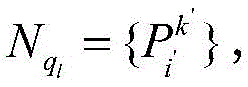
其中,


本发明与现有技术相比,具有如下优点与有益效果:Compared with the prior art, the present invention has the following advantages and beneficial effects:
1、本发明在初始人脸轮廓区域上采用了密集采样的方法,不同采样所得的正方形区域包含不同的图像信息,会找到不同的局部轮廓曲线结果。在其中一个区域无法贴合真实人脸轮廓曲线,也许在另外一个区域会得到准确的结果。这种交叉验证的机制,保证了算法的准确性和鲁棒性。1. The present invention adopts a dense sampling method on the initial face contour area. The square area obtained by different sampling contains different image information, and different local contour curve results will be found. In one of the areas, the contour curve of the real face cannot be fitted, and an accurate result may be obtained in another area. This cross-validation mechanism ensures the accuracy and robustness of the algorithm.
2、本发明采用抛物线引导的局部轮廓曲线的方式,生成局部的人脸轮廓线,充分利用真实人脸轮廓线是符合抛物线状的特点,巧妙地利用动态规划算法找到布局最优解。抛物线引导的方法既加速了算法的速度,又使得全局轮廓曲线符合真实情况。2. The present invention adopts the method of local contour curve guided by parabola to generate local face contour line, makes full use of the parabolic characteristic of real face contour line, and cleverly uses dynamic programming algorithm to find the optimal solution of the layout. The parabolic guidance method not only speeds up the algorithm, but also makes the global contour curve fit the real situation.
3、本发明采用从局部到全局三个步骤获取高质量的连续人脸曲线,计算过程简单,准确率较高,具有像素级别的精度,且不易受到图片光照变化的干扰。3. The present invention adopts three steps from local to global to obtain high-quality continuous face curves, the calculation process is simple, the accuracy is high, the accuracy is pixel-level, and it is not easily disturbed by changes in picture illumination.
4、在实际应用中可以全自动,也可以用户交互,对人脸轮廓提取的初始化的位置鲁棒。4. In practical applications, it can be fully automatic or user-interactive, and is robust to the initialized position of face contour extraction.
附图说明Description of drawings
图1是人脸轮廓提取方法流程图。FIG. 1 is a flowchart of a method for extracting face contours.
图2是人脸轮廓提取方法各个步骤结果示例图。Figure 2 is an example diagram of the results of each step of the face contour extraction method.
图3是预处理和采样正方形区域示例图。Figure 3 is an example diagram of preprocessing and sampling square regions.
图4是不同α值局部轮廓曲线变化的对比图。FIG. 4 is a comparison diagram of the changes of the local contour curves with different α values.
图5是(a)(b)抛物线引导和(c)(d)没有抛物线引导的对比图。Figure 5 is a comparison of (a)(b) with parabolic guidance and (c)(d) without parabolic guidance.
图6是本发明和ERT等方法的比较的示例图。FIG. 6 is an example diagram of a comparison between the present invention and methods such as ERT.
图7是本发明(g)(h)(i)与ACM方法(d)(e)(f)在不同初始化位置的结果对比图。FIG. 7 is a comparison diagram of the results of the present invention (g)(h)(i) and the ACM method (d)(e)(f) at different initialization positions.
具体实施方式Detailed ways
下面结合具体实施例对本发明作进一步说明。The present invention will be further described below in conjunction with specific embodiments.
如图1和图2所示,本实施例所提供的人脸轮廓提取方法,包括以下步骤:As shown in FIG. 1 and FIG. 2 , the method for extracting a face contour provided by this embodiment includes the following steps:
1)人脸图像预处理:输入一张图像之后,使用人脸检测的算法提取出其中人脸的区域,并通过关键特征点定位算法找到人脸轮廓的大致区域;1) Face image preprocessing: After inputting an image, use the algorithm of face detection to extract the area of the face, and find the approximate area of the face contour through the key feature point positioning algorithm;
2)局部正方形区域采样,在沿着人脸轮廓的大致区域采样生成一系列稠密的正方形,将整个人脸轮廓区域包含其中;2) Local square area sampling, generating a series of dense squares in the approximate area along the face contour, including the entire face contour area;
3)局部轮廓曲线提取,在每个局部正方形区域中,都提取一条抛物线引导基于梯度信息的局部轮廓曲线,构成局部轮廓曲线组成的局部结果集合;3) Local contour curve extraction, in each local square area, extract a parabola to guide the local contour curve based on the gradient information to form a local result set composed of local contour curves;
4)全局轮廓曲线融合,通过基于PCA的全局融合算法,将稠密冗余的局部轮廓曲线融合成为一条全局轮廓曲线结果,得到完整的人脸轮廓线。4) Global contour curve fusion, through the PCA-based global fusion algorithm, the dense and redundant local contour curves are fused into a global contour curve result, and a complete face contour line is obtained.
在步骤1)中,输入一张图像,首先对其进行预处理,提取图像中人脸部分所在的区域,并找到人脸轮廓的大致区域,对人脸轮廓提取算法进行初始化。In step 1), input an image, first preprocess it, extract the area where the face part is located in the image, find the approximate area of the face contour, and initialize the face contour extraction algorithm.
首先使用人脸检测算法提取人脸在图片中所在的区域,得到人脸区域的包围框,同时可以确定这张图片中人脸尺度的大小。然后使用任意一种人脸对齐算法为本发明的人脸轮廓提取算法提供脸部轮廓上的几个粗糙的关键点作为初始化,连成一条表示人脸轮廓区域的初始化曲线。First, the face detection algorithm is used to extract the area where the face is located in the picture, and the bounding box of the face area is obtained, and the size of the face scale in this picture can be determined at the same time. Then, any kind of face alignment algorithm is used to provide the face contour extraction algorithm of the present invention with several rough key points on the face contour as initialization, which are connected to form an initialization curve representing the face contour area.
在本发明中,使用了Kazemi等[V.Kazemi and J.Sullivan,“One millisecondface alignment with an ensemble of regression trees,”in CVPR,2014,pp.1867–1874.]提出的Ensembles of Regression Trees(ERT)算法,本发明的人脸轮廓提取算法并不要求初始化具有较高的准确性,只需要指示出人脸轮廓所在的大致区域。为了加速整个算法,本发明使用ERT算法检测出5个人脸轮廓附近的关键特征点。他们的位置分别在眼睛两边、嘴巴两边以及下巴尖的区域。图3(a)显示了5个关键特征点位置的一个例子,由图可见本发明仅仅使用了非常粗糙的初始化位置的输入。In the present invention, the Ensembles of Regression Trees (ERT ) algorithm, the face contour extraction algorithm of the present invention does not require high accuracy of initialization, but only needs to indicate the approximate area where the face contour is located. In order to speed up the whole algorithm, the present invention uses the ERT algorithm to detect 5 key feature points near the contour of the face. They are located on the sides of the eyes, the sides of the mouth, and the tip of the chin. Figure 3(a) shows an example of the positions of five key feature points, and it can be seen from the figure that the present invention only uses the input of very rough initialization positions.
之后通过曲线拟合算法将这5个点构成一条初始化曲线,表示这个人脸轮廓区域,并为下一步的局部正方形区域采样提供正方形中心位置和方向信息。关键点只有5个非常稀疏,为了保证这条拟合曲线通过所有的关键点而不会偏离人脸区域,本发明使用了Catmull-Rom算法。图3(b)显示了使用Catmull-Rom曲线将5个关键特征点拟合成为一个初始化曲线。Then, these five points are formed into an initialization curve by the curve fitting algorithm, which represents the face contour area, and provides the square center position and direction information for the next local square area sampling. There are only 5 key points, which are very sparse. In order to ensure that the fitting curve passes through all the key points without deviating from the face area, the present invention uses the Catmull-Rom algorithm. Figure 3(b) shows the fitting of 5 key feature points into an initialization curve using the Catmull-Rom curve.
在步骤2)中,所述的局部正方形区域采样的方法,具体如下:In step 2), the method for the described local square area sampling is as follows:
在上面步骤1)中已经得到表征人脸轮廓区域的一条初始化曲线,沿着这条曲线我们可以将整个人脸轮廓区域划分为很多较小重叠的正方形区域。这些正方形区域的中心点位于初始化曲线上,正方形区域的大小设置为人脸检测算法提取的人脸包围框大小的一定倍率(范围在0~0.5之间),本发明设置为人脸包围框大小的0.2倍。正方形区域的方向设置为当前中心点的初始化曲线的切线方向,以便于得到的局部轮廓曲线结果总是从正方形区域的顶部开始,到正方形底部结束。In the above step 1), an initialization curve representing the face contour area has been obtained. Along this curve, we can divide the entire face contour area into many smaller overlapping square areas. The center point of these square areas is located on the initialization curve, the size of the square area is set to a certain magnification of the size of the face bounding box extracted by the face detection algorithm (the range is between 0 and 0.5), and the present invention is set to 0.2 of the size of the face bounding box times. The direction of the square area is set to the tangent direction of the initialization curve at the current center point, so that the resulting local contour curve always starts from the top of the square area and ends at the bottom of the square.
初始化曲线位于真实人脸轮廓的附近,这些重叠的正方形区域就可以覆盖住整个真实的人脸轮廓。为了结果的准确度,采用密集采样人脸轮廓区域的方法,本发明默认值设置为70个正方形区域。这样可以得到大量重叠冗余的局部轮廓曲线结果,满足在步骤4)全局轮廓曲线提取步骤中得到高精度的全局轮廓曲线结果的需要。图3(c)显示了密集采样的正方形区域。The initialization curve is located near the real face contour, and these overlapping square areas can cover the entire real face contour. For the accuracy of the result, the method of densely sampling the face contour area is adopted, and the default value of the present invention is set to 70 square areas. In this way, a large number of overlapping and redundant local contour curve results can be obtained, which meets the requirement of obtaining high-precision global contour curve results in the step 4) global contour curve extraction step. Figure 3(c) shows a densely sampled square region.
在步骤3)中,所述的局部轮廓曲线提取的方法,具体如下:In step 3), the method for the described local contour curve extraction is as follows:
上一步骤中得到了大量重叠的正方形区域,在每个正方形区域中都包含了一段真实的人脸轮廓曲线,而且每一块正方形区域的方向(任意一个正方形边的垂直方向)均与初始化曲线的方向一致。在这步中将要找出抛物线引导基于梯度信息的局部轮廓曲线。In the previous step, a large number of overlapping square areas were obtained, each square area contains a real face contour curve, and the direction of each square area (the vertical direction of any square side) is the same as that of the initialization curve. the same direction. In this step, the local contour curve of the parabolic guidance based on the gradient information will be found.
每一块正方形的方向均与初始化曲线的方向一致,则局部以这个正方形区域的边作为直角坐标系单独看这块正方形区域,局部的人脸轮廓线C一定是从正方形区域的顶部开始,到正方形区域的底部结束。这条曲线不仅拥有最大的梯度,同时还拥有尽可能地像抛物线一样平滑。这个正方形区域是N×N的像素矩阵,那么局部轮廓曲线C可以表示为N个来自不同行的像素集合:The direction of each square is consistent with the direction of the initialization curve, then the side of the square area is used as a rectangular coordinate system to look at this square area alone, and the local face contour line C must start from the top of the square area and go to the square The bottom end of the area. This curve not only has the largest gradient, but also has the smoothest possible parabola. This square area is an N×N pixel matrix, then the local contour curve C can be represented as N sets of pixels from different rows:
C=<p1,p2,...,pi,...,pN>C=<p 1 ,p 2 ,...,p i ,...,p N >
其中pi=(i,j)是这个局部轮廓曲线C上的第i个点,而且这个点的位置是在这个正方形区域的第i行、第j列,其中i和j的范围都是[1,N]。p1是第一个点,pN是第一个点。对于局部人脸轮廓线上相邻的两个点pi和pi+1,本发明要求其相邻两列数差不大于1,确保像素之间的平滑性。where p i =(i,j) is the i-th point on the local contour curve C, and the position of this point is the i-th row and j-th column of the square area, where the ranges of i and j are both [ 1,N]. p 1 is the first point and p N is the first point. For the two adjacent points pi and pi +1 on the local face contour line, the present invention requires that the difference in the number of the adjacent two columns is not greater than 1 to ensure smoothness between pixels.
局部轮廓曲线拥有很大的梯度值,并且有像抛物线一样的平滑性。本发明中的抛物线引导基于梯度信息的局部轮廓曲线通过下面能量函数确定所在位置:The local contour curve has a large gradient value and has a smoothness like a parabola. The parabola in the present invention guides the local contour curve based on the gradient information to determine the location through the following energy function:

其中
C*(i,j)是使用动态规划算法得到的从第0行到第i行区域内以(i,j)点终止的局部轮廓曲线,那么它一定来自于之前的{C*(i-1,j-1),C*(i-1,j),C*(i-1,j+1)}三条轮廓线中的一个,使用di-1,j+Δ(i,j)表示点(i,j)到抛物线C*(i-1,j+Δ),Δ={-1,0,1}的距离,使用

其中M表示动态规划的矩阵,M(i-1,j+Δ)是矩阵上一行对应点的能量,g(i,j)表示这个点处的梯度值,i是行数,j是列数。ei-1,j+Δ(i,j)表示偏离抛物线的误差。α值是控制平滑度的参数,图4显示了不同α值对局部轮廓曲线C结果的影响。本发明中将平滑参数的α值设为0.7。图5显示了抛物线引导和没有抛物线引导的单纯基于梯度的动态规划算法得到的不同结果。where M represents the dynamic programming matrix, M(i-1,j+Δ) is the energy of the corresponding point in a row on the matrix, g(i,j) represents the gradient value at this point, i is the number of rows, and j is the number of columns . e i-1,j+Δ (i,j) represents the deviation from the parabola. The α value is a parameter that controls the smoothness, and Figure 4 shows the effect of different α values on the results of the local profile curve C. In the present invention, the α value of the smoothing parameter is set to 0.7. Figure 5 shows the different results obtained by a purely gradient-based dynamic programming algorithm with and without parabolic guidance.
在步骤4)中,所述的全局轮廓曲线融合的方法,具体如下:In step 4), the described method for global contour curve fusion is as follows:
之前的步骤2)在人脸轮廓区域上通过密集采样得到了正方形区域集合,然后通过步骤3)在每个正方形区域中得到了一条局部轮廓曲线。现在就得到了由很多较短且重叠的局部轮廓曲线的集合。令

人脸轮廓曲线通常包含大量的弯曲细节特征,无法通过简单的参数化形式表示。因此需要使用一系列点Q={ql}l∈[1,L]的队列来表示最终的全局轮廓曲线结果,其中L为全局轮廓曲线的长度。同时Q中的点都来自于P以保持全局轮廓曲线的弯曲细节特征。Face contour curves usually contain a large number of curved details, which cannot be represented in a simple parametric form. Therefore, a sequence of points Q={q l } l∈[1,L] needs to be used to represent the final global contour curve result, where L is the length of the global contour curve. At the same time, the points in Q are all derived from P to maintain the curved details of the global contour curve.
在最开始队列Q是空的,很显然q0就是第一条局部轮廓曲线上的第一个点p0,然后每次通过PCA算法来寻找下一个点;At the beginning, the queue Q is empty, obviously q 0 is the first point p 0 on the first local contour curve, and then the PCA algorithm is used to find the next point each time;
为了计算点


其中


当队列Q中最后一个点为ql,对应P中的点为
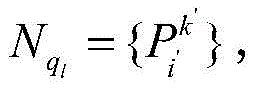


其中


综上所述,本发明方法具有精度高,速度快,在实际应用中可以全自动,也可以用户交互,最后得到的人脸轮廓曲线具有像素级别的精度,并且符合人脸轮廓抛物线状的特点。本发明与已有方法进行了比较实验,结果如图6表明本发明具有优越的性能。同时本发明的方法对人脸轮廓提取的初始化的位置鲁棒,在原有初始化位置进行一些改变并不影响结果,如图7所示使用了3个初始化位置,本发明的结果依然精确,而对比的ACM的方法没有得到正确的结果。To sum up, the method of the present invention has high precision and high speed, can be fully automatic in practical application, and can also be user-interactive, and the finally obtained face contour curve has pixel-level accuracy and conforms to the parabolic characteristics of the face contour. . The present invention has been compared with the existing method, and the results shown in Figure 6 show that the present invention has superior performance. At the same time, the method of the present invention is robust to the initialized position of face contour extraction, and some changes in the original initialized position will not affect the result. As shown in Figure 7, three initialized positions are used. The ACM method did not get the correct result.
以上所述实施例只为本发明之较佳实施例,并非以此限制本发明的实施范围,故凡依本发明之形状、原理所作的变化,均应涵盖在本发明的保护范围内。The above-mentioned embodiments are only preferred embodiments of the present invention, and are not intended to limit the scope of implementation of the present invention. Therefore, any changes made according to the shape and principle of the present invention should be included within the protection scope of the present invention.
Claims (3)




Priority Applications (1)
| Application Number | Priority Date | Filing Date | Title |
|---|---|---|---|
| CN201810199612.6A CN108509866B (en) | 2018-03-12 | 2018-03-12 | A face contour extraction method |
Applications Claiming Priority (1)
| Application Number | Priority Date | Filing Date | Title |
|---|---|---|---|
| CN201810199612.6A CN108509866B (en) | 2018-03-12 | 2018-03-12 | A face contour extraction method |
Publications (2)
| Publication Number | Publication Date |
|---|---|
| CN108509866A CN108509866A (en) | 2018-09-07 |
| CN108509866B true CN108509866B (en) | 2020-06-19 |
Family
ID=63377528
Family Applications (1)
| Application Number | Title | Priority Date | Filing Date |
|---|---|---|---|
| CN201810199612.6A Expired - Fee Related CN108509866B (en) | 2018-03-12 | 2018-03-12 | A face contour extraction method |
Country Status (1)
| Country | Link |
|---|---|
| CN (1) | CN108509866B (en) |
Families Citing this family (7)
| Publication number | Priority date | Publication date | Assignee | Title |
|---|---|---|---|---|
| CN109409262A (en) * | 2018-10-11 | 2019-03-01 | 北京迈格威科技有限公司 | Image processing method, image processing apparatus, computer readable storage medium |
| CN109558880B (en) * | 2018-10-16 | 2021-06-04 | 杭州电子科技大学 | A Contour Detection Method Based on Fusion of Visual Global and Local Features |
| WO2020216804A1 (en) * | 2019-04-23 | 2020-10-29 | L'oréal Sa | Convolution neural network based landmark tracker |
| CN111667400B (en) * | 2020-05-30 | 2021-03-30 | 温州大学大数据与信息技术研究院 | Human face contour feature stylization generation method based on unsupervised learning |
| CN113297893B (en) * | 2021-02-05 | 2024-06-11 | 深圳高通半导体有限公司 | Method for extracting stroke outline point set |
| CN113160223A (en) * | 2021-05-17 | 2021-07-23 | 深圳中科飞测科技股份有限公司 | Contour determination method, determination device, detection device and storage medium |
| CN113837067B (en) * | 2021-09-18 | 2023-06-02 | 成都数字天空科技有限公司 | Organ contour detection method, organ contour detection device, electronic device, and readable storage medium |
Citations (9)
| Publication number | Priority date | Publication date | Assignee | Title |
|---|---|---|---|---|
| CN101136105A (en) * | 2007-05-11 | 2008-03-05 | 辽宁师范大学 | Free difference operation and deformable contour extraction system |
| CN101339612A (en) * | 2008-08-19 | 2009-01-07 | 陈建峰 | Face contour checking and classification method |
| CN102063727A (en) * | 2011-01-09 | 2011-05-18 | 北京理工大学 | Covariance matching-based active contour tracking method |
| CN106156692A (en) * | 2015-03-25 | 2016-11-23 | 阿里巴巴集团控股有限公司 | A kind of method and device for face edge feature point location |
| CN106156739A (en) * | 2016-07-05 | 2016-11-23 | 华南理工大学 | A kind of certificate photo ear detection analyzed based on face mask and extracting method |
| CN106529437A (en) * | 2016-10-25 | 2017-03-22 | 广州酷狗计算机科技有限公司 | Method and device for face detection |
| CN106650635A (en) * | 2016-11-30 | 2017-05-10 | 厦门理工学院 | Method and system for detecting rearview mirror viewing behavior of driver |
| CN107403144A (en) * | 2017-07-11 | 2017-11-28 | 北京小米移动软件有限公司 | Face localization method and device |
| CN107452030A (en) * | 2017-08-04 | 2017-12-08 | 南京理工大学 | Method for registering images based on contour detecting and characteristic matching |
Family Cites Families (1)
| Publication number | Priority date | Publication date | Assignee | Title |
|---|---|---|---|---|
| WO2014165972A1 (en) * | 2013-04-09 | 2014-10-16 | Laboratoires Bodycad Inc. | Concurrent active contour segmentation |
-
2018
- 2018-03-12 CN CN201810199612.6A patent/CN108509866B/en not_active Expired - Fee Related
Patent Citations (9)
| Publication number | Priority date | Publication date | Assignee | Title |
|---|---|---|---|---|
| CN101136105A (en) * | 2007-05-11 | 2008-03-05 | 辽宁师范大学 | Free difference operation and deformable contour extraction system |
| CN101339612A (en) * | 2008-08-19 | 2009-01-07 | 陈建峰 | Face contour checking and classification method |
| CN102063727A (en) * | 2011-01-09 | 2011-05-18 | 北京理工大学 | Covariance matching-based active contour tracking method |
| CN106156692A (en) * | 2015-03-25 | 2016-11-23 | 阿里巴巴集团控股有限公司 | A kind of method and device for face edge feature point location |
| CN106156739A (en) * | 2016-07-05 | 2016-11-23 | 华南理工大学 | A kind of certificate photo ear detection analyzed based on face mask and extracting method |
| CN106529437A (en) * | 2016-10-25 | 2017-03-22 | 广州酷狗计算机科技有限公司 | Method and device for face detection |
| CN106650635A (en) * | 2016-11-30 | 2017-05-10 | 厦门理工学院 | Method and system for detecting rearview mirror viewing behavior of driver |
| CN107403144A (en) * | 2017-07-11 | 2017-11-28 | 北京小米移动软件有限公司 | Face localization method and device |
| CN107452030A (en) * | 2017-08-04 | 2017-12-08 | 南京理工大学 | Method for registering images based on contour detecting and characteristic matching |
Non-Patent Citations (3)
| Title |
|---|
| 《Facial feature extraction and image warping using PCA based statistic model》;Zhong Xue等;《Proceedings 2001 International Conference on Image Processing》;20011231;第2卷;第689-692页 * |
| 《人脸特征点提取方法综述》;李月龙等;《计算机学报》;20160731;第39卷(第7期);第1356-1374页 * |
| 《基于形状识别的人脸轮廓线提取》;陈鹏飞等;《计算机工程与设计》;20140331;第35卷(第3期);第890-894页 * |
Also Published As
| Publication number | Publication date |
|---|---|
| CN108509866A (en) | 2018-09-07 |
Similar Documents
| Publication | Publication Date | Title |
|---|---|---|
| CN108509866B (en) | A face contour extraction method | |
| Dai et al. | A 3d morphable model of craniofacial shape and texture variation | |
| CN109325398B (en) | Human face attribute analysis method based on transfer learning | |
| CN106682598B (en) | Multi-pose face feature point detection method based on cascade regression | |
| CN109472198B (en) | Gesture robust video smiling face recognition method | |
| CN108876879B (en) | Method and device for realizing human face animation, computer equipment and storage medium | |
| CN105005769B (en) | A kind of sign Language Recognition Method based on depth information | |
| Fang et al. | 3D/4D facial expression analysis: An advanced annotated face model approach | |
| CN110163239B (en) | Weak supervision image semantic segmentation method based on super-pixel and conditional random field | |
| Lemaire et al. | Fully automatic 3D facial expression recognition using differential mean curvature maps and histograms of oriented gradients | |
| Li et al. | Robust visual tracking based on convolutional features with illumination and occlusion handing | |
| Zhu et al. | Discriminative 3D morphable model fitting | |
| Salazar et al. | Fully automatic expression-invariant face correspondence | |
| CN106407958B (en) | Face feature detection method based on double-layer cascade | |
| CN110991258B (en) | A face fusion feature extraction method and system | |
| WO2017219391A1 (en) | Face recognition system based on three-dimensional data | |
| CN101499128A (en) | Three-dimensional human face action detecting and tracing method based on video stream | |
| CN107563323A (en) | A kind of video human face characteristic point positioning method | |
| CN106874850A (en) | One kind is based on three-dimensional face point cloud characteristic point positioning method | |
| CN105956552A (en) | Face black list monitoring method | |
| CN108446672A (en) | A kind of face alignment method based on the estimation of facial contours from thick to thin | |
| Ma et al. | Lip feature extraction based on improved jumping-snake model | |
| Sun et al. | Expression robust 3d facial landmarking via progressive coarse-to-fine tuning | |
| CN108665470B (en) | An Interactive Contour Extraction Method | |
| Xu et al. | A Facial Expression Recognition Methond Based on Improved HOG Features and Geometric Features |
Legal Events
| Date | Code | Title | Description |
|---|---|---|---|
| PB01 | Publication | ||
| PB01 | Publication | ||
| SE01 | Entry into force of request for substantive examination | ||
| SE01 | Entry into force of request for substantive examination | ||
| GR01 | Patent grant | ||
| GR01 | Patent grant | ||
| CF01 | Termination of patent right due to non-payment of annual fee | ||
| CF01 | Termination of patent right due to non-payment of annual fee |
Granted publication date: 20200619 |