Random access feedback and processing method, base station and terminal
Technical Field
The present invention relates to the field of communications technologies, and in particular, to a random access feedback and processing method, a base station, and a terminal.
Background
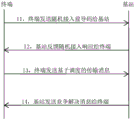
The existing Long Term Evolution (LTE) protocol adopts a four-step random access mechanism, as shown in fig. 1, the main implementation process of the four-step random access mechanism is as follows:
step 11, the terminal sends a Random Access Preamble (Msg 1 message) to the base station;
step 12, the base station feeds back a Random Access Response (RAR), i.e. Msg2 message, to the terminal;
step 13, the terminal sends a Scheduled Transmission message (Msg3 message), wherein the Msg3 message includes layer 2/layer 3(L2/L3) random access information;
in step 14, the base station sends a Contention Resolution message (Msg 4 message) to the terminal.
For uplink multi-beam (multi-beam) Physical Random Access Channel (PRACH) transmission in a New air interface (New Radio, NR) of a 5 th generation mobile communication system (5G), there is a problem of large control plane delay, and a performance index of Low delay defined for a Low-delay and Low-latency communications (URLLC) scenario cannot be satisfied. In order to effectively reduce the processing delay of the control plane, NR is currently discussing a two-step random access mechanism. As shown in fig. 2, the main implementation process of the two-step random access mechanism is as follows:
step 21, the terminal sends a Random Access Preamble + Data (Msg 1 message) to the base station, where the Msg1 message includes identification information (UE ID) of the terminal, a small Data packet, and the like;
in step 22, the base station feeds back a Random Access Response (RAR), i.e. Msg2 message, to the terminal.
It should be noted that the difference between the two-step random access mechanism of NR and the four-step random access mechanism of the conventional LTE is that Msg1 sends the preamble of random access and data at the same time, where the content of the data bearer corresponds to the content of Msg3 in the four-step random access mechanism.
However, the two-step random access mechanism does not define a method for the terminal to know whether the base station successfully receives the preamble and the data of the first message in the two-step random access mechanism, so that the two-step random access mechanism is incomplete, and the reliability of network communication cannot be ensured.
Disclosure of Invention
The invention provides a random access feedback and processing method, a base station and a terminal, and aims to solve the problems that the existing terminal cannot know whether the base station successfully receives a lead code and data of a first message in a two-step random access mechanism, so that the two-step random access mechanism is incomplete, and the reliability of network communication is influenced.
In order to solve the above technical problem, an embodiment of the present invention provides a random access feedback method, including:
receiving a first message sent by a terminal during random access, wherein the first message comprises a lead code field and a data field;
detecting a lead code field and a data field of the first message to obtain a detection result of whether a lead code exists in the first message and/or whether data is successfully obtained in the first message;
and feeding back the detection result to the terminal.
Further, the detection result includes: at least one of a presence of a preamble in the first message, an absence of a preamble in the first message, a successful acquisition of data in the first message, a unsuccessful acquisition of data in the first message, a presence of a preamble in the first message and a unsuccessful acquisition of data in the first message, and a presence of a preamble in the first message and a successful acquisition of data in the first message.
Further, when the detection result includes that the preamble exists in the first message and data is not successfully obtained in the first message, the step of feeding back the detection result to the terminal includes:
sending a random access response carrying data transmission error information to a terminal; or
Sending a random access response carrying wireless network temporary identification information of a terminal to the terminal, wherein the wireless network temporary identification information of the terminal is not equal to the identification information of the terminal; or
Feeding back a random access response to the terminal by adopting a medium access control layer protocol data unit format of a first random access mechanism; or
No random access response is sent to the terminal.
Further, when the detection result includes that the preamble exists in the first message and data is successfully obtained in the first message, the step of feeding back the detection result to the terminal includes:
sending a random access response carrying data transmission success information to the terminal; or
Sending a random access response carrying identification information of the terminal to the terminal, wherein the identification information is detected in a data field of the first message; or
And feeding back a random access response to the terminal by adopting a medium access control layer protocol data unit format of a second random access mechanism, wherein the random access response carries the identification information of the terminal detected in the data field of the first message.
Further, when the detection result includes that no preamble exists in the first message, the step of feeding back the detection result to the terminal includes:
no random access response is sent to the terminal.
An embodiment of the present invention provides a base station, including:
a first receiving module, configured to receive a first message sent by a terminal during random access, where the first message includes a preamble field and a data field;
a detection module, configured to detect a preamble field and a data field of the first message to obtain a detection result of whether a preamble exists in the first message and/or whether data is successfully obtained in the first message;
and the feedback module is used for feeding the detection result back to the terminal.
Further, the detection result includes: at least one of a presence of a preamble in the first message, an absence of a preamble in the first message, a successful acquisition of data in the first message, a unsuccessful acquisition of data in the first message, a presence of a preamble in the first message and a unsuccessful acquisition of data in the first message, and a presence of a preamble in the first message and a successful acquisition of data in the first message.
Further, when the detection result includes that a preamble exists in the first message and data is not successfully obtained in the first message, the feedback module is configured to:
sending a random access response carrying data transmission error information to a terminal; or
Sending a random access response carrying wireless network temporary identification information of a terminal to the terminal, wherein the wireless network temporary identification information of the terminal is not equal to the identification information of the terminal; or
Feeding back a random access response to the terminal by adopting a medium access control layer protocol data unit format of a first random access mechanism; or
No random access response is sent to the terminal.
Further, when the detection result includes that a preamble exists in the first message and data is successfully obtained in the first message, the feedback module is configured to:
sending a random access response carrying data transmission success information to the terminal; or
Sending a random access response carrying identification information of the terminal to the terminal, wherein the identification information is detected in a data field of the first message; or
And feeding back a random access response to the terminal by adopting a medium access control layer protocol data unit format of a second random access mechanism, wherein the random access response carries the identification information of the terminal detected in the data field of the first message.
Further, when the detection result includes that no preamble exists in the first message, the feedback module is configured to:
no random access response is sent to the terminal.
The embodiment of the invention provides a random access processing method, which comprises the following steps:
when random access is carried out, a first message comprising a preamble field and a data field is sent to a base station;
receiving a detection result of the first message fed back by the base station, wherein the detection result is whether a lead code exists in the first message and/or whether data is successfully obtained in the first message;
and performing random access processing corresponding to the detection result according to the detection result.
Further, the detection result includes: at least one of a presence of a preamble in the first message, an absence of a preamble in the first message, a successful acquisition of data in the first message, a unsuccessful acquisition of data in the first message, a presence of a preamble in the first message and a unsuccessful acquisition of data in the first message, and a presence of a preamble in the first message and a successful acquisition of data in the first message.
Further, when the detection result includes that a preamble exists in the first message and data is not successfully obtained in the first message, the step of receiving the detection result of the first message fed back by the base station includes:
and receiving a random access response which is sent by the base station and carries data transmission error information.
Further, when the detection result includes that a preamble exists in the first message and data is not successfully obtained in the first message, the step of receiving the detection result of the first message fed back by the base station includes:
receiving a random access response which is sent by a base station and carries the wireless network temporary identification information of a terminal, wherein the wireless network temporary identification information of the terminal is not equal to the identification information of the terminal.
Further, the step of performing the random access processing corresponding to the detection result includes:
and retransmitting the data which is not successfully transmitted in the first message to the base station.
Further, when the detection result includes that a preamble exists in the first message and data is not successfully obtained in the first message, the step of receiving the detection result of the first message fed back by the base station includes:
and receiving a random access response fed back by the base station by adopting a medium access control layer protocol data unit format of a first random access mechanism.
Further, the step of performing the random access processing corresponding to the detection result includes:
and retransmitting the unsuccessfully transmitted data in the first message based on the uplink grant in the random access response.
Further, when the detection result includes that a preamble exists in the first message and data is successfully obtained in the first message, the step of receiving the detection result of the first message fed back by the base station includes:
receiving a random access response which is sent by a base station and carries data transmission success information; or
Receiving a random access response which is sent by a base station and carries identification information of a terminal, wherein the identification information is detected in a data field of the first message; or
And receiving a random access response fed back by the base station in a medium access control layer protocol data unit format of a second random access mechanism, wherein the random access response carries the identification information of the terminal detected in the data field of the first message.
Further, the step of performing the random access processing corresponding to the detection result includes:
and determining that the random access process of the terminal is finished, and performing a subsequent communication process.
Further, when the detection result includes that no preamble exists in the first message and/or that a preamble exists in the first message and data is not successfully obtained in the first message, the step of receiving the detection result of the first message fed back by the base station includes:
and within a preset random access response time window, not receiving the random access response fed back by the base station.
Further, the step of performing the random access processing corresponding to the detection result includes:
and increasing the sending power, and re-performing random access until the maximum transmission times are reached.
An embodiment of the present invention provides a terminal, including:
a sending module, configured to send a first message including a preamble field and a data field to a base station when performing random access;
a second receiving module, configured to receive a detection result of the first message fed back by the base station, where the detection result is whether a preamble exists in the first message and/or whether data is successfully obtained in the first message;
and the processing module is used for carrying out random access processing corresponding to the detection result according to the detection result.
Further, the detection result includes: at least one of a presence of a preamble in the first message, an absence of a preamble in the first message, a successful acquisition of data in the first message, a unsuccessful acquisition of data in the first message, a presence of a preamble in the first message and a unsuccessful acquisition of data in the first message, and a presence of a preamble in the first message and a successful acquisition of data in the first message.
Further, when the detection result includes that a preamble exists in the first message and data is not successfully obtained in the first message, the second receiving module is configured to:
and receiving a random access response which is sent by the base station and carries data transmission error information.
Further, when the detection result includes that a preamble exists in the first message and data is not successfully obtained in the first message, the second receiving module is configured to:
receiving a random access response which is sent by a base station and carries the wireless network temporary identification information of a terminal, wherein the wireless network temporary identification information of the terminal is not equal to the identification information of the terminal.
Further, the processing module is configured to:
and retransmitting the data which is not successfully transmitted in the first message to the base station.
Further, when the detection result includes that a preamble exists in the first message and data is not successfully obtained in the first message, the second receiving module is configured to:
and receiving a random access response fed back by the base station by adopting a medium access control layer protocol data unit format of a first random access mechanism.
Further, the processing module is configured to:
and retransmitting the unsuccessfully transmitted data in the first message based on the uplink grant in the random access response.
Further, when the detection result includes that a preamble exists in the first message and data is successfully obtained in the first message, the second receiving module is configured to:
receiving a random access response which is sent by a base station and carries data transmission success information; or
Receiving a random access response which is sent by a base station and carries identification information of a terminal, wherein the identification information is detected in a data field of the first message; or
And receiving a random access response fed back by the base station in a medium access control layer protocol data unit format of a second random access mechanism, wherein the random access response carries the identification information of the terminal detected in the data field of the first message.
Further, the processing module is configured to:
and determining that the random access process of the terminal is finished, and performing a subsequent communication process.
Further, when the detection result includes that no preamble exists in the first message and/or that a preamble exists in the first message and data is not successfully obtained in the first message, the second receiving module is configured to:
and within a preset random access response time window, not receiving the random access response fed back by the base station.
Further, the processing module is configured to:
and increasing the sending power, and re-performing random access until the maximum transmission times are reached.
The invention has the beneficial effects that:
according to the scheme, the base station detects the received first message of the random access of the terminal and feeds back the detection result to the terminal, so that the terminal can clearly know whether the base station successfully receives the lead code and the data of the first message in the two-step random access mechanism.
Drawings
Fig. 1 is a schematic diagram of a communication process of a four-step random access mechanism;
fig. 2 shows a schematic diagram of a communication process of a two-step random access mechanism;
fig. 3 is a flowchart illustrating a random access feedback method according to a first embodiment of the present invention;
fig. 4 is a block diagram of a base station according to a second embodiment of the present invention;
fig. 5 is a schematic structural diagram of a base station according to a third embodiment of the present invention;
fig. 6 is a flowchart illustrating a random access processing method according to a fourth embodiment of the present invention;
fig. 7 shows a block diagram of a terminal according to a fifth embodiment of the present invention;
fig. 8 is a schematic structural diagram of a terminal according to a sixth embodiment of the present invention.
Detailed Description
In order to make the objects, technical solutions and advantages of the present invention more apparent, the present invention will be described in detail with reference to the accompanying drawings and specific embodiments.
The invention provides a random access feedback and processing method, a base station and a terminal, aiming at the problems that the existing terminal can not know whether a base station successfully receives a lead code and data of a first message in a two-step random access mechanism, the two-step random access mechanism is incomplete, and the network communication reliability is influenced.
Example one
As shown in fig. 3, an embodiment of the present invention provides a random access feedback method, including:
step 31, receiving a first message sent by a terminal during random access, wherein the first message comprises a preamble field and a data field;
it should be noted that, the first message (i.e., Msg1) is a random access message sent to the base station when the terminal employs a two-step random access mechanism, and generally, a preamble field and a data field should be reserved in the first message, so that the terminal fills the preamble and the data information sent by the terminal to the base station into the position indicated by the corresponding field when performing random access.
Step 32, detecting a preamble field and a data field of the first message to obtain a detection result whether a preamble exists in the first message and/or whether data is successfully obtained in the first message;
it should be noted that, when receiving a random access message sent by a terminal, a base station needs to detect a preamble field and a data field in the random access message respectively to determine whether a preamble and data of a random access are received (it should be noted that, in general, the preamble and the data sent by the terminal are encoded by using different encoding methods), and optionally, the detection result includes: at least one of a presence of a preamble in the first message, an absence of a preamble in the first message, a successful acquisition of data in the first message, a unsuccessful acquisition of data in the first message, a presence of a preamble in the first message and a unsuccessful acquisition of data in the first message, and a presence of a preamble in the first message and a successful acquisition of data in the first message.
And step 33, feeding back the detection result to the terminal.
After the base station detects the first message sent by the terminal, the base station needs to notify the terminal of the detection result, so that the terminal performs subsequent random access processing according to the detection result.
The above step 31 is explained below from the case where the detection result includes that a preamble exists in the first message and data is not successfully obtained in the first message, the detection result includes that a preamble exists in the first message and data is successfully obtained in the first message, and the detection result includes that a preamble does not exist in the first message, respectively.
1. When the detection result includes that the preamble exists in the first message and data is not successfully obtained in the first message, the implementation manner of step 33 is:
mode 11, sending a random access response carrying data transmission error information to a terminal;
it should be noted that the data transmission error information directly carried in the random access response is explicit feedback for performing the detection result, and when the terminal receives the random access response carrying the data transmission error information, it may know that the base station failed to decode the data information, and at this time, the terminal needs to resend the unsuccessfully sent data in the first message to the base station, and in this case, the terminal may continue to transmit the third message (Msg3) in the four-step random access mechanism, and resend the unsuccessfully sent data in the first message in the third message to the base station in the two-step random access mechanism.
Mode 12, sending a random access response carrying radio network temporary identity information (T-RNTI) of a terminal to the terminal, where the radio network temporary identity information of the terminal is not equal to identity information (e.g., UE ID) of the terminal;
it should be noted that, the radio network temporary identification information of the terminal carried in the random access response is implicit feedback of the detection result, and when the terminal sends the random access message, the terminal sends the identification information of the terminal to the base station in the data information, and when the terminal obtains that the radio network temporary identification information of the terminal carried in the random access response is not equal to the identification information of the terminal, it indicates that the base station has not successfully detected the data in the random access message, i.e. it indicates that the base station has failed to decode the data; it should be noted that, when the base station does not decode the data successfully, the radio network temporary identifier information of the terminal needs to be generated, and the radio network temporary identifier information can be determined and obtained by the base station according to the time-frequency resource location occupied by the first message. In this way, the terminal needs to retransmit the data that was not successfully transmitted in the first message to the base station, and in this case, the terminal may continue to transmit the third message in the four-step random access mechanism, and retransmit the data that was not successfully transmitted in the first message in the two-step random access mechanism in the third message to the base station.
Mode 13, feeding back a random access response to a terminal in a medium access control layer protocol data unit (MAC PDU) format using a first random access mechanism;
it should be noted that this method is also an implicit feedback of the detection result, the first random access mechanism is a four-step random access mechanism, when the base station feeds back the random access response in the MAC PDU format of the four-step random access mechanism, it indicates that the base station fails to decode the data, in this case, the terminal retransmits the unsuccessfully transmitted data in the first message based on the uplink Grant (UL Grant) in the random access response, and at the same time, when the terminal retransmits, both the Modulation and Coding Scheme (MCS) and the time-frequency position used are determined according to the uplink Grant.
Mode 14, no random access response is sent to the terminal.
In this way, because the base station does not detect the data in the first message, the feedback of the random access response may not be performed, and when the terminal does not receive the random access response fed back by the base station within the random access response time window, it may know that the random access is unsuccessful, and the terminal needs to increase the transmission power at this time and perform the random access again until the maximum transmission times is reached, and the random access at this time may adopt a four-step random access mechanism or a two-step random access mechanism to perform the random access process.
2. When the detection result includes that the preamble exists in the first message and data is successfully obtained in the first message, the implementation manner of step 33 is:
mode 21, sending a random access response carrying data transmission success information to the terminal;
it should be noted that, the information of successful data transmission is directly carried in the random access response as explicit feedback of the detection result, and when the terminal receives the random access response carrying the information of successful data transmission, it can know that the base station successfully decodes the data information, that is, the random access is successful, and at this time, the terminal determines that the random access process is completed, and performs the subsequent communication process.
The method 22 is to send a random access response carrying identification information of the terminal to the terminal, wherein the identification information is detected in a data field of the first message;
it should be noted that, the identification information of the terminal carried in the random access response is implicit to perform feedback of the detection result, because the terminal sends the random access message together with the identification information of itself in the data information, when the terminal obtains that the identification information carried in the random access response is unequal, it indicates that the base station successfully detects the data in the random access message, that is, it indicates that the base station successfully decodes the data, that is, the random access is successful, and at this time, the terminal determines that the random access process is completed, and performs the subsequent communication process.
Mode 23, feeding back a random access response to the terminal in a medium access control layer protocol data unit format using a second random access mechanism, where the random access response carries the identifier information of the terminal detected in the data field of the first message.
It should be noted that this way is also implicit to perform feedback of the detection result, the second random access mechanism is a two-step random access mechanism, when the base station uses the MAC PDU format of the two-step random access mechanism to feed back the random access response, it indicates that the base station successfully decodes the data, that is, the random access is successful, and at this time, the terminal determines that the random access process is completed, and performs the subsequent communication process.
3. When the detection result includes that no preamble exists in the first message, the implementation manner of step 33 is:
no random access response is sent to the terminal.
In this way, because the base station does not detect the data in the first message, the feedback of the random access response may not be performed, and when the terminal does not receive the random access response fed back by the base station within the random access response time window, it may know that the random access is unsuccessful, and the terminal needs to increase the transmission power at this time and perform the random access again until the maximum transmission times is reached, and the random access at this time may adopt a four-step random access mechanism or a two-step random access mechanism to perform the random access process.
It should be noted that two detection result feedback manners, namely, an explicit indication manner and an implicit indication manner, are mainly provided in the embodiment of the present invention.
Explicit indication mode, that is, feedback detection result of bit field predefined in random access response, that is, the above-mentioned mode 11 and mode 12; the implicit indication mode is divided into two cases, one is to design a unified random access response MAC PDU format for the two-step random access mechanism and the four-step random access mechanism, in the format, the terminal obtains a feedback result of whether the base station successfully detects the data by judging whether the value of the field is the same as the identification information of the terminal, that is, the above-mentioned mode 12 and mode 22; the other is to design different random access response MAC PDU formats for the two-step random access mechanism and the four-step random access mechanism, and distinguish the two random access mechanisms according to the different MAC PDU formats, so as to distinguish whether the base station successfully decodes the data, i.e. the above-mentioned modes 13 and 23.
The following is an example of the above implementation of the embodiment of the present invention in practical application.
a. The base station detects the lead code but does not successfully obtain the data, and adopts an explicit mode to feed back the detection result
When the base station detects the preamble but does not successfully acquire the data, the base station sets the bit field in the random access response that indicates the current Msg1 data portion to NACK (identifying a data transmission error of Msg 1).
And when the terminal receives the NACK indication in the random access response, continuing to transmit the Msg3 in the four-step random access process, and putting the data in the Msg1 of the original two-step random access process in the Msg3 for transmission.
b. The base station detects the lead code but does not successfully obtain the data, and feeds back the detection result by adopting an implicit first mode
When the base station detects the preamble in the two-step random access mechanism Msg1 but does not successfully acquire data, the base station feeds back a T-RNTI in a random access response, and the T-RNTI can be determined by the time-frequency resource position occupied by the Msg 1.
And when the terminal judges that the T-RNTI received in the random access response is not equal to the UE ID stored by the terminal, continuing to transmit the Msg3 in the four-step random access process, and putting the data in the Msg1 of the original two-step random access process in the Msg3 for transmission.
c. The base station detects the lead code but does not successfully obtain the data, and feeds back the detection result by adopting an implicit second mode
When the base station detects the preamble in the two-step random access mechanism Msg1 but fails to acquire data, the base station feeds back in a random access response in a MAC PDU format applied to the four-step random access mechanism.
When the terminal judges that the MAC PDU format applied to the four-step random access mechanism is received in the random access response, the terminal conducts one-time retransmission based on the uplink authorization in the random access response, the content of the retransmission is the data of the Msg1, and the adopted modulation coding mode and the time frequency position are determined according to the uplink authorization.
d. The base station detects the lead code but does not successfully obtain the data, and does not feed back the detection result
When the base station detects the preamble in the two-step random access mechanism Msg1 but does not successfully acquire data, the base station does not feed back any random access response; the terminal judges within the random access response time window itself and repeats the random access procedure (which may be two-step random access or four-step random access).
Under the condition of Msg1 that the terminal sends the preamble and data of the two-step random access, when the terminal does not receive the random access response in the corresponding random access response time window, the terminal has two processing methods: firstly, increasing the sending power and entering a new four-step random access process; second, the transmit power is boosted and the two-step random access procedure is re-entered.
e. The base station detects the lead code and successfully obtains the data, and adopts an explicit mode to feed back the detection result
When the base station detects the preamble and successfully acquires the data, the base station sets the bit field in the random access response that indicates the current Msg1 data portion to ACK (identifying successful data transmission by Msg 1).
And when the terminal receives the ACK instruction in the random access response, judging that the two-step random access process is ended.
f. The base station detects the lead code and successfully obtains the data, and feeds back the detection result by adopting an implicit second mode
When the base station detects the lead code and successfully decodes the data, the base station resolves the UE ID from the data part and fills the relevant fields in the random access response, and the MAC PDU format of the two-step random access mechanism is adopted for feedback in the random access response.
And the terminal receives the MAC PDU format of the two-step random access mechanism in the random access response, and judges that the two-step random access process is finished when the relevant field of the terminal identification information in the random access response is equal to the UE ID stored by the terminal.
The embodiment of the invention solves the problem that the terminal in the two-step random access mechanism can not know whether the lead code and the data part in the Msg1 received by the base station are correct or not, ensures the scheme integrity of the two-step random access mechanism, and effectively reduces the control plane processing delay compared with the four-step random access mechanism.
Example two
As shown in fig. 4, an embodiment of the present invention provides a base station 40, including:
a first receiving module 41, configured to receive a first message sent by a terminal during random access, where the first message includes a preamble field and a data field;
a detecting module 42, configured to detect a preamble field and a data field of the first message, so as to obtain a detection result of whether a preamble exists in the first message and/or whether data is successfully obtained in the first message;
and a feedback module 43, configured to feed back the detection result to the terminal.
Specifically, the detection result includes: at least one of a presence of a preamble in the first message, an absence of a preamble in the first message, a successful acquisition of data in the first message, a unsuccessful acquisition of data in the first message, a presence of a preamble in the first message and a unsuccessful acquisition of data in the first message, and a presence of a preamble in the first message and a successful acquisition of data in the first message.
Optionally, when the detection result includes that a preamble exists in the first message and data is not successfully obtained in the first message, the feedback module 43 is configured to:
sending a random access response carrying data transmission error information to a terminal; or
Sending a random access response carrying wireless network temporary identification information of a terminal to the terminal, wherein the wireless network temporary identification information of the terminal is not equal to the identification information of the terminal; or
Feeding back a random access response to the terminal by adopting a medium access control layer protocol data unit format of a first random access mechanism; or
No random access response is sent to the terminal.
Optionally, when the detection result includes that a preamble exists in the first message and data is successfully obtained in the first message, the feedback module 43 is configured to:
sending a random access response carrying data transmission success information to the terminal; or
Sending a random access response carrying identification information of the terminal to the terminal, wherein the identification information is detected in a data field of the first message; or
And feeding back a random access response to the terminal by adopting a medium access control layer protocol data unit format of a second random access mechanism, wherein the random access response carries the identification information of the terminal detected in the data field of the first message.
Optionally, when the detection result includes that no preamble exists in the first message, the feedback module 43 is configured to:
no random access response is sent to the terminal.
It should be noted that the embodiment of the base station is a base station corresponding to the above method embodiments one to one, and all implementation manners in the above method embodiments are applicable to the embodiment of the base station, and the same technical effect can be achieved.
EXAMPLE III
As shown in fig. 5, an embodiment of the present invention provides a base station, including:
a processor 51; and a memory 53 connected to the processor 51 through a bus interface 52, wherein the memory 53 is used for storing programs and data used by the processor 51 in executing operations, and when the processor 51 calls and executes the programs and data stored in the memory 53, the following processes are executed:
receiving, by the transceiver 54, a first message sent when the terminal performs random access, where the first message includes a preamble field and a data field;
detecting a lead code field and a data field of the first message to obtain a detection result of whether a lead code exists in the first message and/or whether data is successfully obtained in the first message;
the detection result is fed back to the terminal via the transceiver 54.
It should be noted that the processor 51 is also configured to implement the functions of any other module of the base station.
It should be noted that the transceiver 54 is connected to the bus interface 52, and is used for receiving the first message and feeding back the detection result under the control of the processor 51.
It should be noted that in fig. 5, the bus architecture may include any number of interconnected buses and bridges, with one or more processors represented by processor 51 and various circuits of memory represented by memory 53 being linked together. The bus architecture may also link together various other circuits such as peripherals, voltage regulators, power management circuits, and the like, which are well known in the art, and therefore, will not be described any further herein. The bus interface provides an interface. The transceiver 54 may be a number of elements including a transmitter and a transceiver providing a means for communicating with various other apparatus over a transmission medium. The processor 51 is responsible for managing the bus architecture and general processing, and the memory 53 may store data used by the processor 51 in performing operations.
Those skilled in the art will appreciate that all or part of the steps for implementing the above embodiments may be performed by hardware, or may be instructed to be performed by associated hardware by a computer program that includes instructions for performing some or all of the steps of the above methods; and the computer program may be stored in a readable storage medium, which may be any form of storage medium.
Example four
As shown in fig. 6, an embodiment of the present invention provides a random access processing method, including:
step 61, when random access is carried out, a first message comprising a lead code field and a data field is sent to a base station;
step 62, receiving a detection result of the first message fed back by the base station, where the detection result is whether a preamble exists in the first message and/or whether data is successfully obtained in the first message;
and 63, performing random access processing corresponding to the detection result according to the detection result.
Specifically, the detection result includes: at least one of a presence of a preamble in the first message, an absence of a preamble in the first message, a successful acquisition of data in the first message, a unsuccessful acquisition of data in the first message, a presence of a preamble in the first message and a unsuccessful acquisition of data in the first message, and a presence of a preamble in the first message and a successful acquisition of data in the first message.
Optionally, when the detection result includes that a preamble exists in the first message and data is not successfully obtained in the first message, the specific implementation manner of step 62 is:
receiving a random access response carrying data transmission error information sent by a base station;
or
Receiving a random access response which is sent by a base station and carries the wireless network temporary identification information of a terminal, wherein the wireless network temporary identification information of the terminal is not equal to the identification information of the terminal.
Correspondingly, the specific implementation manner of step 63 is: and retransmitting the data which is not successfully transmitted in the first message to the base station.
Optionally, when the detection result includes that a preamble exists in the first message and data is not successfully obtained in the first message, the specific implementation manner of step 62 is:
and receiving a random access response fed back by the base station by adopting a medium access control layer protocol data unit format of a first random access mechanism.
Correspondingly, the specific implementation manner of step 63 is: and retransmitting the unsuccessfully transmitted data in the first message based on the uplink grant in the random access response.
Optionally, when the detection result includes that a preamble exists in the first message and data is successfully obtained in the first message, the specific implementation manner of step 62 is:
receiving a random access response which is sent by a base station and carries data transmission success information; or
Receiving a random access response which is sent by a base station and carries identification information of a terminal, wherein the identification information is detected in a data field of the first message; or
And receiving a random access response fed back by the base station in a medium access control layer protocol data unit format of a second random access mechanism, wherein the random access response carries the identification information of the terminal detected in the data field of the first message.
Correspondingly, the specific implementation manner of step 63 is: and determining that the random access process of the terminal is finished, and performing a subsequent communication process.
Optionally, when the detection result includes that no preamble exists in the first message and/or that a preamble exists in the first message and data is not successfully obtained in the first message, the specific implementation manner of step 62 is:
and within a preset random access response time window, not receiving the random access response fed back by the base station.
Correspondingly, the specific implementation manner of step 63 is: and increasing the sending power, and re-performing random access until the maximum transmission times are reached.
In the first embodiment, all the descriptions about the terminal side are applied to the embodiment of the random access processing method applied to the terminal, and the same technical effects as those of the first embodiment can be achieved.
EXAMPLE five
As shown in fig. 7, an embodiment of the present invention provides a terminal 70, including:
a sending module 71, configured to send a first message including a preamble field and a data field to a base station when performing random access;
a second receiving module 72, configured to receive a detection result of the first message fed back by the base station, where the detection result is whether a preamble exists in the first message and/or whether data is successfully obtained in the first message;
and the processing module 73 is configured to perform random access processing corresponding to the detection result according to the detection result.
Specifically, the detection result includes: at least one of a presence of a preamble in the first message, an absence of a preamble in the first message, a successful acquisition of data in the first message, a unsuccessful acquisition of data in the first message, a presence of a preamble in the first message and a unsuccessful acquisition of data in the first message, and a presence of a preamble in the first message and a successful acquisition of data in the first message.
Optionally, when the detection result includes that a preamble exists in the first message and data is not successfully obtained in the first message, the second receiving module 72 is configured to:
and receiving a random access response which is sent by the base station and carries data transmission error information.
Optionally, when the detection result includes that a preamble exists in the first message and data is not successfully obtained in the first message, the second receiving module 72 is configured to:
receiving a random access response which is sent by a base station and carries the wireless network temporary identification information of a terminal, wherein the wireless network temporary identification information of the terminal is not equal to the identification information of the terminal.
Accordingly, the processing module 73 is configured to:
and retransmitting the data which is not successfully transmitted in the first message to the base station.
Optionally, when the detection result includes that a preamble exists in the first message and data is not successfully obtained in the first message, the second receiving module 72 is configured to:
and receiving a random access response fed back by the base station by adopting a medium access control layer protocol data unit format of a first random access mechanism.
Accordingly, the processing module 73 is configured to:
and retransmitting the unsuccessfully transmitted data in the first message based on the uplink grant in the random access response.
Optionally, when the detection result includes that a preamble exists in the first message and data is successfully obtained in the first message, the second receiving module 72 is configured to:
receiving a random access response which is sent by a base station and carries data transmission success information; or
Receiving a random access response which is sent by a base station and carries identification information of a terminal, wherein the identification information is detected in a data field of the first message; or
And receiving a random access response fed back by the base station in a medium access control layer protocol data unit format of a second random access mechanism, wherein the random access response carries the identification information of the terminal detected in the data field of the first message.
Accordingly, the processing module 73 is configured to:
and determining that the random access process of the terminal is finished, and performing a subsequent communication process.
Optionally, when the detection result includes that no preamble exists in the first message and/or that a preamble exists in the first message and data is not successfully obtained in the first message, the second receiving module 72 is configured to:
and within a preset random access response time window, not receiving the random access response fed back by the base station.
In response, the processing module 73 is configured to:
and increasing the sending power, and re-performing random access until the maximum transmission times are reached.
It should be noted that the embodiment of the terminal is a terminal corresponding to the above method embodiments one to one, and all implementation manners in the above method embodiments are applicable to the embodiment of the terminal, and the same technical effect can be achieved.
EXAMPLE six
As shown in fig. 8, an embodiment of the present invention provides a terminal, including:
a processor 81; and a memory 83 connected to the processor 81 through a bus interface 82, wherein the memory 83 is used for storing programs and data used by the processor 81 in executing operations, and when the processor 81 calls and executes the programs and data stored in the memory 83, the following processes are executed:
at the time of random access, transmitting a first message including a preamble field and a data field to the base station through the transceiver 84;
receiving, by a transceiver 84, a detection result of the first message fed back by the base station, where the detection result is whether a preamble exists in the first message and/or whether data is successfully obtained in the first message;
and performing random access processing corresponding to the detection result according to the detection result.
Wherein the transceiver 84 is connected to the bus interface 82 for sending the first message and obtaining the detection result under the control of the processor 81.
It should be noted that in fig. 8, the bus architecture may include any number of interconnected buses and bridges, with one or more processors represented by processor 81 and various circuits represented by memory 83 being linked together. The bus architecture may also link together various other circuits such as peripherals, voltage regulators, power management circuits, and the like, which are well known in the art, and therefore, will not be described any further herein. The bus interface provides an interface. The transceiver 84 may be a plurality of elements including a transmitter and a transceiver providing a means for communicating with various other apparatus over a transmission medium. For different terminals, the user interface 85 may also be an interface capable of interfacing with a desired device, including but not limited to a keypad, display, speaker, microphone, joystick, etc. The processor 81 is responsible for managing the bus architecture and general processing, and the memory 83 may store data used by the processor 81 in performing operations.
Those skilled in the art will appreciate that all or part of the steps for implementing the above embodiments may be performed by hardware, or may be instructed to be performed by associated hardware by a computer program that includes instructions for performing some or all of the steps of the above methods; and the computer program may be stored in a readable storage medium, which may be any form of storage medium.
While the preferred embodiments of the present invention have been described, it will be understood by those skilled in the art that various changes and modifications may be made without departing from the spirit and scope of the invention as defined in the following claims.