CN107926046B - Controlling access to a shared wireless medium in a wireless communication system - Google Patents
Controlling access to a shared wireless medium in a wireless communication system Download PDFInfo
- Publication number
- CN107926046B CN107926046B CN201680042344.6A CN201680042344A CN107926046B CN 107926046 B CN107926046 B CN 107926046B CN 201680042344 A CN201680042344 A CN 201680042344A CN 107926046 B CN107926046 B CN 107926046B
- Authority
- CN
- China
- Prior art keywords
- wireless communication
- communication system
- level
- threshold
- carrier sense
- Prior art date
- Legal status (The legal status is an assumption and is not a legal conclusion. Google has not performed a legal analysis and makes no representation as to the accuracy of the status listed.)
- Active
Links
Images




Classifications
-
- H—ELECTRICITY
- H04—ELECTRIC COMMUNICATION TECHNIQUE
- H04W—WIRELESS COMMUNICATION NETWORKS
- H04W74/00—Wireless channel access
- H04W74/04—Scheduled access
-
- H—ELECTRICITY
- H04—ELECTRIC COMMUNICATION TECHNIQUE
- H04W—WIRELESS COMMUNICATION NETWORKS
- H04W74/00—Wireless channel access
- H04W74/08—Non-scheduled access, e.g. ALOHA
-
- H—ELECTRICITY
- H04—ELECTRIC COMMUNICATION TECHNIQUE
- H04L—TRANSMISSION OF DIGITAL INFORMATION, e.g. TELEGRAPHIC COMMUNICATION
- H04L67/00—Network arrangements or protocols for supporting network services or applications
- H04L67/14—Session management
-
- H—ELECTRICITY
- H04—ELECTRIC COMMUNICATION TECHNIQUE
- H04W—WIRELESS COMMUNICATION NETWORKS
- H04W74/00—Wireless channel access
- H04W74/08—Non-scheduled access, e.g. ALOHA
- H04W74/0808—Non-scheduled access, e.g. ALOHA using carrier sensing, e.g. carrier sense multiple access [CSMA]
- H04W74/0816—Non-scheduled access, e.g. ALOHA using carrier sensing, e.g. carrier sense multiple access [CSMA] with collision avoidance
-
- H—ELECTRICITY
- H04—ELECTRIC COMMUNICATION TECHNIQUE
- H04W—WIRELESS COMMUNICATION NETWORKS
- H04W74/00—Wireless channel access
- H04W74/08—Non-scheduled access, e.g. ALOHA
- H04W74/0808—Non-scheduled access, e.g. ALOHA using carrier sensing, e.g. carrier sense multiple access [CSMA]
- H04W74/0825—Non-scheduled access, e.g. ALOHA using carrier sensing, e.g. carrier sense multiple access [CSMA] with collision detection
-
- H—ELECTRICITY
- H04—ELECTRIC COMMUNICATION TECHNIQUE
- H04W—WIRELESS COMMUNICATION NETWORKS
- H04W74/00—Wireless channel access
- H04W74/08—Non-scheduled access, e.g. ALOHA
- H04W74/0833—Random access procedures, e.g. with 4-step access
- H04W74/0841—Random access procedures, e.g. with 4-step access with collision treatment
- H04W74/085—Random access procedures, e.g. with 4-step access with collision treatment collision avoidance
Landscapes
- Engineering & Computer Science (AREA)
- Computer Networks & Wireless Communication (AREA)
- Signal Processing (AREA)
- Mobile Radio Communication Systems (AREA)
- Small-Scale Networks (AREA)
Abstract
A method of controlling access to a shared wireless medium based on a contention-based medium access protocol involving carrier sensing in a first wireless communication system is provided, wherein the first wireless communication system employs a first radio access technology according. The method includes determining (S1) whether a second wireless communication system employing a second, different radio access technology operates on the same channel of the shared wireless medium as the first wireless communication system. The method further comprises the following steps: if the second wireless communication system is operating on the same channel, a change of a carrier sensing threshold from a first level to a different second level for determining for at least one communication unit whether media is available for access in the first wireless communication system is initiated (S1).
Description
Technical Field
The proposed technology relates generally to wireless communication technology, and in particular to a method and apparatus for controlling access to a shared wireless medium based on a contention-based medium access protocol involving carrier sensing, and corresponding communication units, computer programs and computer program products and devices.
Background
In general, media access is of paramount importance to the operation and performance of a communication network.
Contention-based protocols are communication protocols for medium access and for operating wireless communication devices that allow many users to use the same transmission medium, e.g., a radio medium, with little or no pre-coordination.
Carrier Sensing (CS) and listen-before-talk (LBT) are examples of contention-based procedures for medium access in wireless communication, whereby a radio transmitter first senses its radio environment, i.e. a shared wireless medium or (radio) channel, before it starts transmitting. Listen before talk is sometimes referred to as listen before transmit. The LBT procedure in IEEE802.11 for Wireless Local Area Networks (WLANs) is one of the most well-known contention-based protocols.
For example, Carrier Sense Multiple Access (CSMA) is a Medium Access Control (MAC) protocol in which nodes verify that no other traffic is present before transmitting on a shared transmission medium (e.g., an electrical bus or a band of the electromagnetic spectrum).
Carrier sensing typically means that the transmitter uses feedback from the receiver to determine whether another transmission is in progress before initiating the transmission. That is, the transmitter attempts to detect the presence of a transmission or carrier from another station before attempting to transmit. If a transmission/carrier is sensed, the station waits for the ongoing transmission to complete before initiating its own transmission. Multiple access means that multiple stations transmit and/or receive on the medium.
Fig. 1 is a schematic diagram showing an example of a wireless network employing carrier sensing with a so-called clear channel assessment threshold CCAT. Each access point AP typically has a CCAT and a corresponding listening area. A listening area may be understood herein as an area in which a transmission will be declared. The AP uses CCAT when performing carrier sensing for transmissions to any portable terminal (commonly referred to as a station, STA, associated with the AP). Similarly, each STA also typically has a CCAT for carrier sensing transmissions to the AP.
However, wireless networks using carrier sensing as the basis for medium access typically suffer from low spectral efficiency and/or low spatial reuse in dense deployments. This is because if the STA and AP sense that the medium is busy, access to the wireless medium must be deferred. To increase spatial reuse, the media sensing threshold may be adjusted to be more aggressive. However, this may lead to high interference situations, resulting in reduced system performance and impaired user experience.
However, it has been recognized that conventional contention-based medium access protocols suffer from various problems, for example, with regard to unbalanced and/or unfair medium or channel sharing between different communication stations and/or different types of communication systems.
In particular, different types of communication systems may use different policies and/or thresholds for medium access, which may result in such imbalances and/or unfair medium or channel sharing.
Disclosure of Invention
It is an object to provide an efficient way of controlling access to a shared wireless medium. For example, it is desirable to improve coexistence of different types of wireless communication systems, especially when operating in unlicensed spectrum.
It is also an object to provide a method for controlling access to a shared wireless medium.
It is also an object of the invention to provide an apparatus configured to control access to a shared wireless medium.
Another object is to provide a communication unit comprising the device.
It is a further object to provide a computer program for controlling access to a shared wireless medium when executed by at least one processor.
It is a further object to provide a computer program product comprising a computer readable medium having stored such a computer program.
It is also an object to provide an apparatus for controlling access to a shared wireless medium.
These and other objects are met by embodiments of the proposed technology.
According to a first aspect, a method of controlling access to a shared wireless medium based on a contention-based medium access protocol involving carrier sensing in a first wireless communication system employing a first radio access technology is provided. The method comprises the following steps:
-determining whether a second wireless communication system employing a different second radio access technology operates on the same channel of the shared wireless medium as the first wireless communication system; and
-initiating a change of a carrier sensing threshold from a first level to a different second level for determining for at least one communication unit whether the medium is available for access in the first wireless communication system, if the second wireless communication system is operating on the same channel.
According to another aspect, there is provided an apparatus configured to control access to a shared wireless medium based on a contention-based medium access protocol involving carrier sensing in a first wireless communication system, wherein the first wireless communication system employs a first radio access technology. The apparatus is configured to: it is determined whether a second wireless communication system employing a different second radio access technology operates on the same channel of the shared wireless medium as the first wireless communication system. The apparatus is further configured to: a change in a carrier sensing threshold from a first level to a different second level used in the first wireless communication system to determine whether the medium is available for access for at least one communication unit is initiated if the second wireless communication system is operating on the same channel.
According to another aspect, there is provided a communication unit comprising an apparatus as described herein.
According to yet another aspect, a computer program is provided, which when executed by at least one processor, controls access to a shared wireless medium in a first wireless communication system based on a contention-based medium access protocol involving carrier sensing, wherein the first wireless communication system employs a first radio access technology. The computer program comprises instructions that when executed cause the at least one processor to:
-determining whether a second wireless communication system employing a different second radio access technology operates on the same channel of the shared wireless medium as the first wireless communication system; and
-initiating a change of a carrier sensing threshold from a first level to a different second level for determining for at least one communication unit whether the medium is available for access in the first wireless communication system, if the second wireless communication system is operating on the same channel.
According to another aspect, there is provided a computer program product comprising a computer readable medium having stored thereon a computer program as defined herein.
According to yet another aspect, an apparatus for controlling access to a shared wireless medium based on a contention-based medium access protocol involving carrier sensing in a first wireless communication system employing a first radio access technology is provided. The apparatus comprises:
-a determining module for determining whether a second wireless communication system employing a different second radio access technology operates on the same channel of the shared wireless medium as the first wireless communication system; and
-a control module for initiating a change from a first level to a different second level of a carrier sensing threshold in the first wireless communication system for determining for at least one communication unit whether the medium is available for access, if the second wireless communication system is operating on the same channel.
An advantage of the proposed technique is a more efficient strategy for controlling access to a shared wireless medium, in particular a more fair and/or balanced medium or channel sharing between different communication stations and/or different types of wireless communication systems.
Other advantages will be appreciated upon reading the detailed description.
Drawings
The embodiments, together with further objects and advantages thereof, may best be understood by making reference to the following description taken in conjunction with the accompanying drawings in which:
fig. 1 is a diagram illustrating an example of a wireless network employing carrier sensing with a clear channel assessment threshold CCAT.
Fig. 2 is a schematic flow chart diagram illustrating an example of a method of controlling access to a shared wireless medium according to an embodiment.
Fig. 3 is a schematic flow chart illustrating an example of a method for carrier sensing in a wireless communication system according to an embodiment.
Fig. 4 is a schematic diagram showing an example of two WLAN access points that take turns accessing a radio communication channel.
Fig. 5 is a schematic diagram illustrating an example of two WLAN access points competing for access to a radio communication channel with a base station or similar network node of another type of wireless communication system.
Fig. 6 is a schematic block diagram illustrating an example of an apparatus according to an embodiment.
Fig. 7 is a schematic diagram illustrating an example of a communication unit including the apparatus of fig. 6.
Fig. 8 is a schematic diagram illustrating an example of computer implementation according to an embodiment.
Fig. 9 is a schematic diagram illustrating an example of an apparatus for controlling access to a shared wireless medium in a wireless communication system according to an embodiment.
Fig. 10 is a diagram illustrating an example of an apparatus for threshold allocation for carrier sensing in a wireless communication system according to an embodiment.
Fig. 11A is a schematic diagram illustrating an example of communication units of different types of communication systems using different policies and/or thresholds for media access.
Fig. 11B is a diagram illustrating an example of received signal levels originating from an access point and relationships to a CCAT threshold and an energy detection threshold.
Detailed Description
Throughout the drawings, the same reference numerals are used for similar or corresponding elements.
As used herein, the non-limiting term "network node" may refer to an access point or similar radio network node including an access controller or the like.
As used herein, the non-limiting terms "wireless communication device" and "wireless device" may refer to a terminal or station STA, user equipment UE, mobile phone, cellular phone, personal digital assistant PDA equipped with radio communication capabilities, smart phone, laptop or personal computer PC equipped with an internal or external mobile broadband modem, tablet PC with radio communication capabilities, target device, device-to-device UE, machine type UE or UE supporting machine-to-machine communication, iPAD, customer premises equipment CPE, laptop embedded equipment LEE, laptop mounted equipment LME, USB adapter (dongle), portable electronic radio communication device, sensor device equipped with radio communication capabilities, and the like. In particular, the term "wireless device" should be interpreted as a non-limiting term, including any type of wireless device communicating with a radio network node in a wireless communication system, or any device equipped with radio circuitry for wireless communication according to any relevant standard for wireless communication.
In the following, the general non-limiting term "communication unit" comprises a network node and/or an associated wireless device.
To better understand, it may be helpful to begin with a brief overview and problem analysis.
As described above, different types of communication systems may use different policies and/or thresholds for medium access, which may result in unbalanced and/or unfair medium or channel sharing.
For example, cellular radio access technologies such as licensed assisted access LAA or long term evolution unlicensed LTE-U are being introduced into unlicensed spectrum such as the 5GHz band and will co-exist with other wireless networks such as WLAN (e.g., Wi-Fi). LAA is a technology for aggregated access to licensed and unlicensed spectrum, allowing operators to benefit from the extra capacity available in the unlicensed part of the spectrum.
Wi-Fi uses a carrier sense mechanism to assess whether the channel is busy before transmission. If the channel is sensed to be busy, Wi-Fi will defer transmission and sense again.
LAA is discussing the same principles and is currently discussing how these mechanisms should work.
To assess whether the medium or channel is busy, Wi-Fi uses a clear channel assessment threshold CCAT for which the channel is considered occupied if the received Wi-Fi signal is greater than this level. If the signal is not stronger than the threshold, the channel is deemed idle and transmission may proceed. This process is called signal detection (also called preamble detection). Signal detection is conditioned on the possibility of actually identifying a Wi-Fi signal, i.e., actually decoding a portion of a packet. If the Wi-Fi signal cannot be decoded, a process called energy detection is used instead. In energy detection, the received energy level is measured and compared to another threshold (energy detection threshold) that is 20dB higher than CCAT.
LAA power uses thresholds but does not attempt to detect any Wi-Fi signals. As to when "any energy" is detected, it simply uses an energy detection threshold, i.e. the same higher threshold, to assess whether the channel is busy.
The inventors have recognized that in some cases, Wi-Fi may be disadvantaged if a different threshold than LAA or LTE unlicensed is used to assess when a channel is available.
Fig. 11A is a schematic diagram illustrating an example of communication units of different types of communication systems using different policies and/or thresholds for media access. In this example, Wi-Fi access points AP1 and AP2 employ a CCAT threshold to evaluate whether the media or channel is busy. On the other hand, a co-existing eNB may simply use an energy detection threshold to evaluate whether the channel is busy.
This may allow LAA or LTE unlicensed users to get many more transmission opportunities than any Wi-Fi user (whether STA or AP), all otherwise the same.
Fig. 11B is a diagram showing an example of received signal levels originating from access point AP2 and relationships to CCAT thresholds and energy detection thresholds. Assuming the eNB and AP1 receive the same or similar signal levels, the eNB may evaluate the medium as idle, while AP1 may evaluate the medium as busy, since the eNB uses a higher energy detection threshold and AP1 uses a lower CCAT threshold.
In particular, since CCAT is set to-82 dBm, two or more Wi-Fi networks using the same channel may not be able to operate simultaneously, while Wi-Fi networks may be able to operate simultaneously if LAA or LTE are not authorized to operate in the same channel. In practice, this means that in deployments where Wi-Fi networks already exist, Wi-Fi may have a slight disadvantage compared to LAA or LTE non-authorizations when network densification is done.
Fig. 2 is a schematic flow chart diagram illustrating an example of a method of controlling access to a shared wireless medium according to an embodiment.
According to a first aspect, a method of controlling access to a shared wireless medium based on a contention-based medium access protocol involving carrier sensing in a first wireless communication system employing a first radio access technology is provided. The method comprises the following steps:
s1: determining whether a second wireless communication system employing a different second radio access technology operates on the same channel of the shared wireless medium as the first wireless communication system; and
s2: a change in a carrier sensing threshold from a first level to a different second level used in the first wireless communication system to determine whether the medium is available for access for at least one communication unit is initiated if the second wireless communication system is operating on the same channel.
In this way, a more fair and/or balanced sharing of media or channels between different communication stations and/or different types of communication systems may be achieved.
For example, a carrier sensing threshold used in a first wireless communication system to determine for at least one communication unit whether media is available for access increases from a lower first level to a higher second level.
As a possible addition, the first threshold level may be used for carrier sensing applicable to transmissions originating from the same service set, while the second threshold level may be used for carrier sensing applicable to transmissions originating from other service sets within the first wireless communication system. Thus, having determined that the second wireless communication system is operating on the same channel of the shared wireless medium as the first wireless communication system, the second threshold level may be used for carrier sensing for transmissions originating from other service sets.
For example, the carrier sensing threshold used in the first wireless communication system for determining for at least one communication unit whether the medium is available for access may be adjusted to a so-called coexistence threshold level different from a default carrier sensing threshold level used for signal detection within the first wireless communication system.
In a particular example, a default carrier sensing threshold level is still maintained for carrier sensing applicable to transmissions originating within the same service set.
A service set is generally considered to be a group of communication units or devices associated with a wireless network, in particular a WLAN type network. In particular, the basic service set BSS provides the basic building blocks of a WLAN, such as an 802.11 type wireless network. In infrastructure mode, the access point and associated station STAs together are referred to as a BSS. Alternatively, an ad-hoc network of client stations may be established without a controlling access point, the result of which is often referred to as an independent basic service set IBSS. An extended service set ESS is a set of two or more interconnected BSSs that share the same service set identification SSID.
In a particular embodiment, a first carrier sense threshold is assigned for use in the first wireless communication system that is applicable to transmissions identified as originating from within the same service set as the carrier sense communication unit. A second carrier sense threshold is assigned for use in the first wireless communication system that is adapted for transmissions identified as originating from outside the service set of carrier sense communication units, wherein the second carrier sense threshold is adjusted or changed to a second level.
In general, the coexistence threshold level corresponds to a case where transmissions of the first wireless communication system and the second wireless communication system on the same channel coexist.
For example, the coexistence threshold level is higher than the default carrier sensing threshold level.
In a particular embodiment, the coexistence level corresponds to a level of a threshold in the second wireless communication system for determining whether media is available for access.
As an example, the coexistence level may correspond to a level used in the first wireless communication system to determine whether the media is available for access when no carrier is detected.
The coexistence level may correspond to a level used for energy detection in the first wireless communication system.
As an example, the carrier sense threshold is a threshold for detecting a signal within the first wireless communication system. This may include at least partially decoding and/or otherwise identifying a certain type of signal, such as a WLAN or Wi-Fi signal.
The carrier sense threshold may be a clear channel assessment threshold CCAT.
In a particular embodiment, the step of determining whether a second wireless communication system employing a different second type of radio access technology operates on the same channel of the shared wireless medium as the first wireless communication system comprises: an ongoing or recent transmission of the second wireless communication system on the channel under consideration is identified.
As an example, the first wireless communication system may be a wireless local area network, WLAN, system and the second wireless communication system may be a cellular radio network operating in an unlicensed spectrum.
For example, the first wireless communication system may be a Wi-Fi system.
For example, the second wireless communication system may be unlicensed based on licensed assisted access, LAA, or long term evolution, LTE.
The method may for example be performed by a communication unit of a wireless communication device, such as an access point or a first wireless communication system.
As an example, the access point may initiate the change of the carrier-sensing threshold by notifying at least one associated wireless communication device that the carrier-sensing threshold should be changed from a first level to a second level. For example, the access point may notify associated STAs of its BSS of the change in the carrier sense threshold via an information bit or field in the beacon broadcast transmission. As another example, the access point may notify each associated STA of the same BSS through unicast information of a dedicated signaling message. As another example, the access point may inform associated STAs of the same BSS by setting an information bit of a header when transmitting data (DL or UL) between the access point and the station. If data is transmitted in the UL direction, the information may be conveyed in an ACK frame sent by the access point. If data is transmitted in the DL direction, the information may be conveyed in the PHY or MAC header of the data transmission.
Alternatively, the wireless communication device may identify that the second wireless communication system is operating on the same channel as the first wireless communication system and initiate a change in the carrier sensing threshold.
Fig. 3 is a schematic flow chart illustrating an example of a method for carrier sensing in a wireless communication system according to an embodiment. The method may be used independently, but is preferably used as an addition to the aforementioned method according to the first aspect when another system employing a different radio access technology is detected.
There is thus provided a method of carrier sensing by a communication unit in a first wireless communication system, wherein the communication unit belongs to a service set.
The method comprises the following steps:
s11: allocating a first carrier sensing threshold for use in a first wireless communication system, the first carrier sensing threshold being applicable to transmissions identified as originating from within the same service set; and
s12: allocating a second carrier sensing threshold for use in the first wireless communication system, the second carrier sensing threshold being applicable to transmissions identified as originating from other service sets;
wherein the first carrier sense threshold and the second carrier sense threshold are different.
In other words, for carrier sensing by a particular communication unit, such as an access point or associated wireless communication device, there is a difference between transmissions identified as originating from within the same service set as the communication unit under consideration and transmissions identified as originating from other service sets.
In particular, this means that a first carrier sense threshold may be applied when detecting signals to/from communication units within the service set to which the carrier sense communication unit belongs, whereas a second carrier sense threshold may be applied when detecting signals originating from outside the service set to which the carrier sense communication unit belongs.
In other words, the proposed technique may thus use, for example, a first carrier sense threshold for carrier sensing identified as originating from transmissions within a particular I/BSS and/or ESS, while a second carrier sense threshold for carrier sensing identified as originating from transmissions of other I/BSSs and/or other ESS.
As an example, the second carrier sensing threshold is set to a higher level than the first carrier sensing threshold.
For example, the second carrier sensing threshold may be adjusted to a level for energy detection in the first wireless communication system.
As an example, the second carrier sensing threshold may be adjusted to a level of a threshold used in a different second wireless communication system to determine whether the medium is available for access.
In particular embodiments, the second wireless communication system is of a different type or employs a different radio access technology than the first wireless communication system.
As an example, the first wireless communication system may be a wireless local area network, WLAN, system and the second wireless communication system may be a cellular radio network operating in an unlicensed spectrum.
For example, the first wireless communication system may be a Wi-Fi system.
For example, the second wireless communication system may be unlicensed based on licensed assisted access, LAA, or long term evolution, LTE.
The method may for example be performed by a communication unit of a wireless communication device, such as an access point or a first wireless communication system.
The proposed techniques may also be considered as techniques for improving coexistence between different types of wireless communication systems operating in unlicensed spectrum.
It should also be understood that the proposed techniques may be applied to the network side and/or the terminal side.
The proposed techniques may be used alone or combined and/or integrated with any conventional mechanism involving a common carrier sense threshold.
To better understand the proposed technology, it may be useful to briefly summarize and analyze with reference to a specific non-limiting context of a Wireless Local Area Network (WLAN).
WLAN technology is a common technology for local area wireless communication. As its name implies, Wireless Local Area Network (WLAN) technology provides the basis for wireless communication within a local area coverage area. Although most commercial applications are based on widely accepted standards (e.g., various versions of IEEE802.11 commonly referred to as Wi-Fi), WLAN technology includes industry-specific solutions and proprietary protocols.
WLANs are standardized in the IEEE802.11 specification, e.g., the IEEE standard for information technology — the exchange of information between telecommunications and systems. Local area network and metropolitan area network-specific requirements. Portion 11: wireless LAN Medium Access Control (MAC) and Physical Layer (PHY) Specifications (IEEE Standard for Information technology-Tele-communications and Information exchange between systems, local and regional area networks, part 11: Wireless LAN Medium Access Control (MAC) and Physical Layer (PHY) Specifications). WLAN systems conforming to the 802.11MAC specification operate based on distributed medium or channel access, which means that each node in the network has an approximately equal probability of accessing the medium.
WLAN or Wi-Fi currently operate primarily on the 2.4GHz or 5GHz frequency bands. The IEEE802.11 specification regulates the physical layer, MAC layer, and other aspects of an access point or wireless terminal to ensure compatibility and interoperability between the access point (also known as an AP) and the wireless devices or terminals (also known as STAs). Wi-Fi generally operates in unlicensed frequency bands, so Wi-Fi communications may encounter interference sources from any number of known and unknown devices. For example, at home environments and hotspots (such as airports, train stations, and restaurants), Wi-Fi is often used as a wireless extension to fixed broadband access.
WLAN technology relies on carrier sense multiple access with collision avoidance (CSMA/CA) in order to efficiently and fairly share the wireless medium between different WLAN entities and even different radio access technologies, RATs. CSMA/CA as applied by WLAN systems requires that each device wishing to send data detects a common communication channel or medium before performing a transmission, to avoid repeated transmissions that would normally result in data loss and the need for retransmission. In order for a device to consider the channel busy, it must detect a transmission with a received signal strength level that exceeds a predetermined threshold (referred to as a CCAT threshold), as previously described in connection with fig. 1.
Although simultaneous or concurrent communication is possible, by using a static CCAT, a node may avoid accessing the medium because it is exposed to concurrent transmissions in neighboring basic service sets, BSSs. This limits the performance of current systems, especially when the CCA threshold used today is very low (-82 dBm). If the STA and AP can dynamically adjust their carrier sense thresholds, the amount of concurrent transmissions in the system can be increased without increasing the probability of collisions within the BSS. This means an increase in the spectral efficiency of the system.
In one particular non-limiting example, it is proposed that a Wi-Fi node identify or detect whether another wireless system, e.g., an LTE-LAA system, is present in the same channel. If there is an ongoing LAA transmission, the access point AP may for example broadcast to the STAs in the BSS that CCAT should be set to the same level as the threshold of energy detection ED, which is typically used for transmissions outside its own BSS. For transmissions within the same BSS, for example, if it is identified that the transmission originates from a user communicating within the own BSS, the channel may preferably be considered busy to avoid collisions. In this particular way, this channel will be shared with the LAA and the LAA will not have great advantage.
Using the above approach, Wi-Fi and LAA can contend for transmission opportunities using the same definition as to when the channel is perceived as occupied. Within a BSS, it may be more important to protect its traffic, so there may be no gain in using the same threshold as the energy detection.
For example, referring to fig. 4 and 5, the above problem is best illustrated by using three different "entities" or access points (AP1 and AP2 and LAA) that utilize the same channel. For purposes of description, we assume that AP1 and AP2 are not part of the same extended/basic service set E/BSS. For example, AP1 and AP2 are part of BSS1 and BSS2, respectively.
If the AP1 used a first threshold level of-82 dBm for AP2 and the LAA used a second threshold level of-62 dBm for AP2, the LAA would sense a transmission opportunity when the AP1 senses the channel is busy.
If the AP2 used-82 dBm for AP1 and the LAA used-62 dBm for AP1, the LAA would perceive a transmission opportunity when the AP2 perceives the channel to be busy.
To make the situation even more equal when assessing whether the channel is actually busy, etc., it would be beneficial to use the same threshold.
Consider first the situation in fig. 4, where AP1 and AP2 take turns accessing the channel. In fig. 5, base stations such as LAA enodebs, enbs are added. The eNB is not delayed by the AP2 but transmits simultaneously. AP1 may be at a disadvantage because it will share the channel in time with the eNB and AP 2. Particularly problematic is that the AP1 will only discover that the channel is clear when neither the AP2 nor the eNB are transmitting. Since the eNB is not deferred by AP2, it is easy to see that AP2 is almost in a severe starved (starved) state. Assume that the load in BSS2 corresponding to AP2 is 75%. Further, it is also assumed that the load of LAA is 50%. If BSS2 and LAA are assumed to be independent of each other, the probability of finding a channel free is (1-3/4) × 1/2-12.5%. This is not sufficient for some applications.
In a particular example, it is suggested that when the presence of an eNB is detected, the AP1 should change its CCAT to a second threshold level, e.g., an ED level (-62dBm), and therefore transmit simultaneously with the AP 2. In this way, the channel is shared with the LAA eNB in a fair manner. Since the load in this example is 50% for LAA, the BSS1 will occupy 50% of the channel time. Thus LAA is still 50%, but the channel occupancy of BSS1 has risen from 12.5% to 50%. In essence, fair sharing between LAA and BSS1 is achieved, while full spatial multiplexing with BSS2 is achieved.
Example of how to identify the presence of network nodes using other technologies
Signal mode
If a Wi-Fi node (AP or terminal) finds, through energy detection, that the medium is moderately busy more than X% of the time, it may be suspected that another system is also using the same channel, where X is a configurable value. The Wi-Fi node may then measure the duration of these busy periods, and if the periods are constant, may conclude that: there are also frame-based wireless systems in the channel.
Explicit signalling
If, for example, the Wi-Fi node is co-located with the LAA node, in a network node (AP and eNB) or in a device node, the Wi-Fi node may obtain information about LAA activity through explicit (intra-node) signaling.
Spectrum analysis/estimation
Different signals have different spectral properties that can be used to determine what criteria are present. For example, LTE has a bandwidth of 18MHz, while 802.11ax is proposed to have a signal bandwidth greater than 19MHz, both systems operating in a 20MHz channel. By detecting the bandwidth of the signal, it can therefore be determined whether the LAA is also operating in the band, in addition to Wi-Fi.
Time correlation
Systems using OFDM use a Cyclic Prefix (CP), also referred to as a guard interval GI, to handle the delay spread of the channel. Since the CP is only a copy of the last portion of the OFDM symbol, it can be used to determine the duration of the OFDM symbol. Since the lengths of the OFDM symbols of LAA and Wi-Fi are different, this is a simple way to determine what system is using the channel.
Example of how threshold changes are shared
In case the AP recognizes that another wireless system exists in the same channel, the AP may inform the associated STA that CCAT should be changed to the level of ED through a broadcast message. This may be done, for example, in a beacon. But may also be done by using dedicated signaling to the individual STAs.
In case the terminal recognizes that another wireless system is present in the same channel, it may inform the AP about this and the AP may broadcast the information accordingly, as described above.
This may also be a completely distributed scheme. For example, since there may be cases where only some STAs are affected by LAA activity, preferably, the STAs may autonomously recognize this without involving the AP and then set CCAT accordingly. This may actually mean that some STAs in the BSS may use the first threshold level while others may use the second threshold level. For example, some STAs may use CCAT-82 dBm, while others may use-62 dBm.
It should be understood that the methods and apparatus described herein may be combined and rearranged in various ways.
For example, embodiments may be implemented in hardware, or in software for execution by suitable processing circuitry, or a combination thereof.
The steps, functions, procedures, modules, and/or blocks described herein may be implemented in hardware using any conventional technology, such as using discrete or integrated circuit technology, including both general purpose electronic circuitry and application specific circuitry.
Particular examples include one or more suitably configured digital signal processors and other known electronic circuitry, such as interconnected discrete logic gates for performing a specialized function, or an application-specific integrated circuit (ASIC).
Alternatively, at least some of the steps, functions, procedures, modules and/or blocks described herein may be implemented in software, e.g., a computer program run by suitable processing circuitry (e.g., one or more processors or processing units).
Examples of processing circuitry include, but are not limited to: one or more microprocessors, one or more Digital Signal Processors (DSPs), one or more Central Processing Units (CPUs), video acceleration hardware, and/or any suitable programmable logic circuitry, such as one or more Field Programmable Gate Arrays (FPGAs) or one or more Programmable Logic Controllers (PLCs).
It will also be appreciated that the general processing power of any conventional device or unit implementing the proposed techniques may be reused. Existing software may also be reused, for example, by reprogramming the existing software or adding new software components.
According to another aspect, there is provided an apparatus configured to control access to a shared wireless medium based on a contention-based medium access protocol involving carrier sensing in a first wireless communication system, wherein the first wireless communication system employs a first radio access technology. The apparatus is configured to: it is determined whether a second wireless communication system employing a different second radio access technology operates on the same channel of the shared wireless medium as the first wireless communication system. The apparatus is further configured to: a change in a carrier sensing threshold from a first level to a different second level used in the first wireless communication system to determine whether the medium is available for access for at least one communication unit is initiated if the second wireless communication system is operating on the same channel.
For example, a carrier sensing threshold used in a first wireless communication system to determine for at least one communication unit whether media is available for access increases from a lower first level to a higher second level.
For example, the carrier sensing threshold used in the first wireless communication system for determining for at least one communication unit whether the medium is available for access may be adjusted to a so-called coexistence threshold level different from a default carrier sensing threshold level for signal detection within the first wireless communication system.
In a particular example, a default carrier sensing threshold level is still maintained for carrier sensing applicable to transmissions originating from users within the same service set.
In general, the coexistence threshold level corresponds to a case where transmissions of the first wireless communication system and the second wireless communication system on the same channel coexist.
For example, the coexistence threshold level is higher than the default carrier sensing threshold level.
In a particular embodiment, the coexistence level corresponds to a level of a threshold in the second wireless communication system for determining whether media is available for access.
As an example, the coexistence level may correspond to a level used in the first wireless communication system to determine whether the media is available for access when no carrier is detected.
The coexistence level may correspond to a level used for energy detection in the first wireless communication system.
As an example, the carrier sense threshold is a threshold for detecting a signal within the first wireless communication system.
As an example, the first wireless communication system may be a wireless local area network, WLAN, system and the second wireless communication system may be a cellular radio network operating in an unlicensed spectrum.
For example, the first wireless communication system may be a Wi-Fi system.
For example, the second wireless communication system may be unlicensed based on licensed assisted access, LAA, or long term evolution, LTE.
An apparatus configured for carrier sensing by a communication unit in a first wireless communication system, wherein the communication unit belongs to a service set, is also provided. The apparatus is configured to assign a first carrier sensing threshold for use in the first wireless communication system, the first carrier sensing threshold being applicable to transmissions identified as originating from within the same service set. The apparatus is also configured to assign a second carrier sensing threshold for use in the first wireless communication system, the second carrier sensing threshold being applicable to transmissions identified as originating from other service sets, wherein the first carrier sensing threshold and the second carrier sensing threshold are different.
In particular, this means that a first carrier sense threshold may be applied when detecting signals to/from communication units within the service set to which the carrier sense communication unit belongs, whereas a second carrier sense threshold may be applied when detecting signals originating from outside the service set to which the carrier sense communication unit belongs.
As an example, the second carrier sensing threshold is set to a higher level than the first carrier sensing threshold.
For example, the second carrier sensing threshold may be adjusted to a level for energy detection in the first wireless communication system.
As an example, the second carrier sensing threshold may be adjusted to a level of a threshold used in a different second wireless communication system to determine whether the medium is available for access.
In particular embodiments, the second wireless communication system is of a different type or employs a different radio access technology than the first wireless communication system.
As an example, the first wireless communication system may be a wireless local area network, WLAN, system and the second wireless communication system may be a cellular radio network operating in an unlicensed spectrum.
For example, the first wireless communication system may be a Wi-Fi system.
For example, the second wireless communication system may be unlicensed based on licensed assisted access, LAA, or long term evolution, LTE.
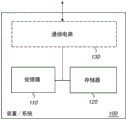
Fig. 6 is a schematic block diagram illustrating an example of an apparatus according to an embodiment. In this particular example, the apparatus 100 includes a processor 110 and a memory 120, the memory including instructions executable by the processor whereby the apparatus is operable to perform the functions, steps and/or actions described above including controlling access to a shared wireless medium and implementing carrier sensing.
Optionally, the apparatus 100 may further comprise a communication interface 130. The communication circuitry may include functionality for wired and/or wireless communication with other devices and/or network nodes in the network. In a particular example, the communication circuitry may be based on radio circuitry for communicating (including transmitting and/or receiving information) with one or more other nodes. The communication circuitry may be interconnected with the processor and/or the memory.
According to another aspect, there is provided a communication unit comprising an apparatus as described herein.
Fig. 7 is a schematic diagram illustrating an example of a communication unit including the apparatus of fig. 6. The communication unit 10 basically comprises a device 100. The communication unit 10 may be, for example, a network node such as an access point, a radio network node or an access controller, or a wireless communication device.
In case the apparatus 100 does not comprise any communication circuitry for wired and/or wireless communication with other devices and/or network nodes itself, the apparatus 100 may alternatively use the communication functionality of the communication unit 10 for external communication. In this case, the apparatus 100 is connected to a communication circuit (not shown in fig. 7) of the communication unit.
Fig. 8 is a schematic diagram illustrating an example of computer implementation according to an embodiment.
In this particular example, at least some of the steps, functions, procedures, modules, and/or blocks described herein are implemented in computer programs 225, 235, the computer programs 225, 235 being loaded into memory 220 for execution by processing circuitry including one or more processors. The processor 210 and the memory 220 are interconnected to each other to enable normal software operation. Optional input/output devices may also be interconnected with the processor(s) and/or memory to enable input and/or output of relevant data, e.g., input parameter(s) and/or derived output parameter(s).
The term "processor" should be interpreted in a generic sense as any system or device capable of executing program code or computer program instructions to perform a particular processing, determining, or computing task.
Accordingly, a processing circuit comprising one or more processors is configured to: well-defined processing tasks such as those described herein are performed when the computer program is run.
The processing circuitry does not have to be dedicated to performing only the above-described steps, functions, procedures and/or blocks, but may also perform other tasks.
According to yet another aspect, a computer program is provided, which when executed by at least one processor, controls access to a shared wireless medium in a first wireless communication system based on a contention-based medium access protocol involving carrier sensing, wherein the first wireless communication system employs a first radio access technology. The computer program comprises instructions that when executed cause the at least one processor to:
-determining whether a second wireless communication system employing a different second radio access technology operates on the same channel of the shared wireless medium as the first wireless communication system; and
-initiating a change of a carrier sensing threshold from a first level to a different second level for determining for at least one communication unit whether the medium is available for access in the first wireless communication system, if the second wireless communication system is operating on the same channel.
A computer program is also provided for, when executed by at least one processor, performing threshold allocation for carrier sensing in a first wireless communication system. The computer program comprises instructions that when executed cause the at least one processor to:
-allocating a first carrier sensing threshold for use in the first wireless communication system, the first carrier sensing threshold being adapted for transmissions identified as originating from within the same service set as the communication unit performing carrier sensing;
-allocating a different second carrier sensing threshold for use in the first wireless communication system, said second carrier sensing threshold being applicable to transmissions identified as originating from other service sets.
The proposed technology also provides a carrier comprising a computer program, wherein the carrier is one of an electrical signal, an optical signal, an electromagnetic signal, a magnetic signal, an electronic signal, a radio signal, a microwave signal, or a computer readable storage medium.
According to another aspect, there is thus provided a computer program product comprising a computer readable medium having stored thereon a computer program as defined herein.
By way of example, the software or computer program may be embodied as a computer program product 225, 235, typically carried or stored on a computer readable medium 220, 230 (specifically, a non-volatile medium). The computer-readable medium may include one or more removable or non-removable storage devices, including (but not limited to): read Only Memory (ROM), Random Access Memory (RAM), Compact Disc (CD), Digital Versatile Disc (DVD), Blu-ray disc, Universal Serial Bus (USB) memory, Hard Disk Drive (HDD) storage, flash memory, magnetic tape, or any other conventional storage device. The computer program may thus be loaded into the operating memory of a computer or equivalent processing device for execution by the processing circuitry thereof.
Accordingly, the flow diagrams presented herein may be considered computer flow diagrams when executed by one or more processors. A corresponding device may be defined as a group of functional modules, wherein each step performed by a processor corresponds to a functional module. In this case, the functional modules are implemented as computer programs running on a processor. Thus, the apparatus may alternatively be defined as a group of functional modules, wherein the functional modules are implemented as a computer program running on at least one processor.
The computer programs residing in the memory may thus be organized into suitable functional modules configured to perform at least a portion of the steps and/or tasks described herein, when executed by the processor.
Fig. 9 is a schematic diagram illustrating an example of an apparatus for controlling access to a shared wireless medium in a wireless communication system according to an embodiment.
According to yet another aspect, an apparatus 300 for controlling access to a shared wireless medium based on a contention-based medium access protocol involving carrier sensing in a first wireless communication system employing a first radio access technology is provided. The apparatus 300 comprises:
a determining module 310 for determining whether a second wireless communication system employing a different second radio access technology operates on the same channel of the shared wireless medium as the first wireless communication system; and
a control module 320 for initiating a change from a first level to a different second level of a carrier sensing threshold in the first wireless communication system for determining for at least one communication unit whether media is available for access, if the second wireless communication system is operating on the same channel.
Fig. 10 is a diagram illustrating an example of an apparatus for threshold allocation for carrier sensing in a wireless communication system according to an embodiment.
An apparatus for threshold allocation for carrier sensing in a first wireless communication system is also provided. The apparatus comprises:
a module 410 for allocating a first carrier sensing threshold for use in the first wireless communication system, said first carrier sensing threshold being adapted for transmissions identified as originating from within the same service set as the communication unit performing carrier sensing; and
a module 420 for assigning a second carrier sensing threshold for use in the first wireless communication system, the second carrier sensing threshold being applicable to transmissions identified as originating from other service sets,
wherein the first carrier sense threshold and the second carrier sense threshold are different.
The modules 410 and 420 may also be referred to as a first distribution module 410 and a second distribution module 420. Alternatively, the modules 410 and 420 are integrated into a common distribution module.
Alternatively, the modules in fig. 9 and 10 may be implemented primarily by hardware modules or alternatively by hardware with appropriate interconnections between the various modules. Specific examples include one or more suitably configured digital signal processors and other known electronic circuitry, such as discrete logic gates and/or Application Specific Integrated Circuits (ASICs) interconnected as previously described to perform the specified functions. Other examples of hardware that may be used include input/output (I/O) circuitry and/or circuitry for receiving and/or transmitting signals. The extension of software to hardware is only an implementation choice.
The above embodiments are given by way of example only and it should be understood that the proposed technology is not limited thereto. Those skilled in the art will appreciate that various modifications, combinations, and alterations to the embodiments may be made without departing from the scope of the present disclosure, as defined by the appended claims. In particular, different part solutions in different embodiments may be combined in other configurations that are technically feasible.
Claims (23)
Applications Claiming Priority (3)
| Application Number | Priority Date | Filing Date | Title |
|---|---|---|---|
| US201562194735P | 2015-07-20 | 2015-07-20 | |
| US62/194,735 | 2015-07-20 | ||
| PCT/SE2016/050017 WO2017014685A1 (en) | 2015-07-20 | 2016-01-15 | Controlling access to a shared wireless medium in a wireless communication system |
Publications (2)
| Publication Number | Publication Date |
|---|---|
| CN107926046A CN107926046A (en) | 2018-04-17 |
| CN107926046B true CN107926046B (en) | 2021-02-05 |
Family
ID=55398355
Family Applications (1)
| Application Number | Title | Priority Date | Filing Date |
|---|---|---|---|
| CN201680042344.6A Active CN107926046B (en) | 2015-07-20 | 2016-01-15 | Controlling access to a shared wireless medium in a wireless communication system |
Country Status (6)
| Country | Link |
|---|---|
| US (1) | US20170164403A1 (en) |
| EP (1) | EP3326420A1 (en) |
| JP (1) | JP6591037B2 (en) |
| CN (1) | CN107926046B (en) |
| MX (1) | MX2017017003A (en) |
| WO (1) | WO2017014685A1 (en) |
Families Citing this family (9)
| Publication number | Priority date | Publication date | Assignee | Title |
|---|---|---|---|---|
| WO2017131478A1 (en) * | 2016-01-29 | 2017-08-03 | 엘지전자 주식회사 | Method for transmitting/receiving uplink signal and device supporting same in wireless communication system supporting unlicensed band |
| CN107155199B (en) * | 2016-03-04 | 2023-09-26 | 华为技术有限公司 | Configuration method, device and wireless communication system of air interface technology |
| US10517021B2 (en) | 2016-06-30 | 2019-12-24 | Evolve Cellular Inc. | Long term evolution-primary WiFi (LTE-PW) |
| US10361835B2 (en) * | 2017-06-19 | 2019-07-23 | Mitsubishi Electric Research Laboratories, Inc. | System for coexistence of Wi-Fi HaLow network and low-rate wireless personal area network (LR-WPAN) |
| CN109286988B (en) * | 2017-07-19 | 2021-01-08 | 维沃移动通信有限公司 | Transmission method, device and computer-readable storage medium in unlicensed frequency band |
| WO2019213303A1 (en) * | 2018-05-04 | 2019-11-07 | Commscope Technologies Llc | Coordinated listen before talk (c-lbt) for long term evolution (lte) licensed-assisted access (laa) |
| US11382133B2 (en) * | 2020-11-09 | 2022-07-05 | GM Global Technology Operations LLC | Method and apparatus for intelligent wireless protocol optimization |
| US11805551B2 (en) * | 2021-11-19 | 2023-10-31 | Qualcomm Incorporated | Contention-based channel access based on different channel access requirements |
| US12495367B2 (en) * | 2023-07-12 | 2025-12-09 | Silicon Laboratories Inc. | System, method and apparatus for adaptively controlling transmit power based on energy detection |
Citations (1)
| Publication number | Priority date | Publication date | Assignee | Title |
|---|---|---|---|---|
| CN102595569A (en) * | 2011-01-14 | 2012-07-18 | 华为技术有限公司 | Carrier sense method and system |
Family Cites Families (18)
| Publication number | Priority date | Publication date | Assignee | Title |
|---|---|---|---|---|
| US8681810B2 (en) * | 2006-04-13 | 2014-03-25 | Qualcomm Incorporated | Dynamic carrier sensing thresholds |
| US20070286122A1 (en) * | 2006-06-12 | 2007-12-13 | Motorola, Inc. | Clear channel assessment threshold adaptation in a wireless network |
| US8666319B2 (en) * | 2011-07-15 | 2014-03-04 | Cisco Technology, Inc. | Mitigating effects of identified interference with adaptive CCA threshold |
| JP6309900B2 (en) * | 2012-01-26 | 2018-04-11 | インターデイジタル パテント ホールディングス インコーポレイテッド | Dynamic parameter adjustment for LTE coexistence |
| WO2013114263A1 (en) * | 2012-02-02 | 2013-08-08 | Koninklijke Philips Electronics N.V. | Wireless docking with carrier sense control |
| WO2014064322A1 (en) * | 2012-10-22 | 2014-05-01 | Nokia Corporation | Interference avoidance and power savings for coexistence among different radio access technologies |
| WO2014178678A1 (en) * | 2013-05-02 | 2014-11-06 | 엘지전자 주식회사 | Method for sensing channel dynamically in wireless lan system and apparatus therefor |
| US20150195849A1 (en) * | 2014-01-06 | 2015-07-09 | Intel IP Corporation | Systems, methods and devices for multiple signal co-existence in multiple-use frequency spectrum |
| US9609649B2 (en) * | 2014-04-11 | 2017-03-28 | Qualcomm Incorporated | Adaptively using subframes for radar detection in unlicensed spectrum |
| JP2016005114A (en) * | 2014-06-17 | 2016-01-12 | ソニー株式会社 | Terminal device, base station, and program |
| JP6760063B2 (en) * | 2014-07-11 | 2020-09-23 | ソニー株式会社 | Information processing equipment, communication system and information processing method |
| KR102054117B1 (en) * | 2014-08-18 | 2019-12-09 | 주식회사 윌러스표준기술연구소 | Wireless communication method for simultaneous data communication, and wireless communication terminal using same |
| CN106664719B (en) * | 2014-09-02 | 2019-10-25 | 华为技术有限公司 | Method and equipment for adjusting clear channel assessment CCA threshold |
| US9516542B2 (en) * | 2014-09-23 | 2016-12-06 | Intel Corporation | Wireless device, method, and computer readable media for channel contention in wireless communication devices |
| CN107005960B (en) * | 2014-09-24 | 2020-07-07 | 交互数字专利控股公司 | Channel usage indication and synchronization for LTE operation in unlicensed frequency bands |
| US9907085B2 (en) * | 2014-09-26 | 2018-02-27 | Avago Technologies General Ip (Singapore) Pte. Ltd. | WIFI-coordinated LAA-LTE |
| US10187907B2 (en) * | 2015-07-05 | 2019-01-22 | Ofinno Technologies, Llc | Preamble transmission in a wireless device |
| US10742562B2 (en) * | 2015-07-16 | 2020-08-11 | Samsung Electronics Co., Ltd. | Method and apparatus for adaptive control of contention window in LAA |
-
2016
- 2016-01-15 CN CN201680042344.6A patent/CN107926046B/en active Active
- 2016-01-15 US US14/913,662 patent/US20170164403A1/en not_active Abandoned
- 2016-01-15 JP JP2018502211A patent/JP6591037B2/en active Active
- 2016-01-15 WO PCT/SE2016/050017 patent/WO2017014685A1/en not_active Ceased
- 2016-01-15 EP EP16705312.3A patent/EP3326420A1/en not_active Withdrawn
- 2016-01-15 MX MX2017017003A patent/MX2017017003A/en unknown
Patent Citations (1)
| Publication number | Priority date | Publication date | Assignee | Title |
|---|---|---|---|---|
| CN102595569A (en) * | 2011-01-14 | 2012-07-18 | 华为技术有限公司 | Carrier sense method and system |
Non-Patent Citations (1)
| Title |
|---|
| Broadcom Corporation.Alternatives for LAA LBT Energy Detection Threshold Adaptation.《3GPP TSG RAN WG1 Meeting #81, R1-152939》.2015, * |
Also Published As
| Publication number | Publication date |
|---|---|
| JP6591037B2 (en) | 2019-10-16 |
| MX2017017003A (en) | 2018-04-30 |
| EP3326420A1 (en) | 2018-05-30 |
| JP2018527793A (en) | 2018-09-20 |
| WO2017014685A1 (en) | 2017-01-26 |
| CN107926046A (en) | 2018-04-17 |
| US20170164403A1 (en) | 2017-06-08 |
Similar Documents
| Publication | Publication Date | Title |
|---|---|---|
| CN107926046B (en) | Controlling access to a shared wireless medium in a wireless communication system | |
| TWI589140B (en) | Methods and apparatus for clear channel assessment | |
| EP2992729B1 (en) | Methods, devices and computer program for peer-to-peer and ap traffic multiplexing | |
| US9693369B2 (en) | Radio communication in unlicensed band | |
| CN110958716B (en) | Wireless communication method for clear channel assessment and wireless communication terminal using the same | |
| KR101674605B1 (en) | System and method for channel-dependent cca thresholds to balance different use cases in wireless networks | |
| JP6647299B2 (en) | Partial channel reservation for shared communication media | |
| JP2016540421A (en) | Wireless communication postponement based on transmission opportunities | |
| US9473284B2 (en) | Contention for channel access in wireless network | |
| US20150264689A1 (en) | Methods and apparatus for multiplexing peer-to-peer traffic and/or access point traffic | |
| US20180054818A1 (en) | Techniques for communication management using multiple network allocation vectors | |
| RU2681350C1 (en) | Station, access point and implemented wireless transfer treatment methods in a wireless communication network | |
| US20250039921A1 (en) | Wireless communication method for saving power and wireless communication terminal using same | |
| EP3298850B1 (en) | Controlling access to a shared wireless medium | |
| EP3295715B1 (en) | Indicating channel usage in wireless network | |
| US10462799B2 (en) | First node and a method therein | |
| US20170150520A1 (en) | Controlling Access to a Radio Medium for Wireless Communication | |
| US9622266B2 (en) | Configuring simultaneous transmissions in wireless network | |
| JP2018098604A (en) | Radio communication system and method |
Legal Events
| Date | Code | Title | Description |
|---|---|---|---|
| PB01 | Publication | ||
| PB01 | Publication | ||
| SE01 | Entry into force of request for substantive examination | ||
| SE01 | Entry into force of request for substantive examination | ||
| GR01 | Patent grant | ||
| GR01 | Patent grant |