CN107454046B - Cross-device authentication method and device - Google Patents
Cross-device authentication method and device Download PDFInfo
- Publication number
- CN107454046B CN107454046B CN201610380667.8A CN201610380667A CN107454046B CN 107454046 B CN107454046 B CN 107454046B CN 201610380667 A CN201610380667 A CN 201610380667A CN 107454046 B CN107454046 B CN 107454046B
- Authority
- CN
- China
- Prior art keywords
- authentication
- access control
- access
- identification information
- control terminal
- Prior art date
- Legal status (The legal status is an assumption and is not a legal conclusion. Google has not performed a legal analysis and makes no representation as to the accuracy of the status listed.)
- Active
Links
- 238000000034 method Methods 0.000 title claims abstract description 71
- 230000008569 process Effects 0.000 description 37
- 238000013475 authorization Methods 0.000 description 6
- 238000010586 diagram Methods 0.000 description 6
- 238000012545 processing Methods 0.000 description 4
- 230000003993 interaction Effects 0.000 description 2
- 238000012986 modification Methods 0.000 description 2
- 230000004048 modification Effects 0.000 description 2
- 230000008520 organization Effects 0.000 description 2
- 238000012795 verification Methods 0.000 description 2
- 238000004891 communication Methods 0.000 description 1
- 238000011161 development Methods 0.000 description 1
- 238000005516 engineering process Methods 0.000 description 1
Images




Classifications
-
- H—ELECTRICITY
- H04—ELECTRIC COMMUNICATION TECHNIQUE
- H04L—TRANSMISSION OF DIGITAL INFORMATION, e.g. TELEGRAPHIC COMMUNICATION
- H04L63/00—Network architectures or network communication protocols for network security
- H04L63/08—Network architectures or network communication protocols for network security for authentication of entities
- H04L63/0876—Network architectures or network communication protocols for network security for authentication of entities based on the identity of the terminal or configuration, e.g. MAC address, hardware or software configuration or device fingerprint
-
- H—ELECTRICITY
- H04—ELECTRIC COMMUNICATION TECHNIQUE
- H04L—TRANSMISSION OF DIGITAL INFORMATION, e.g. TELEGRAPHIC COMMUNICATION
- H04L63/00—Network architectures or network communication protocols for network security
- H04L63/10—Network architectures or network communication protocols for network security for controlling access to devices or network resources
Landscapes
- Engineering & Computer Science (AREA)
- Computer Hardware Design (AREA)
- Computer Security & Cryptography (AREA)
- Computing Systems (AREA)
- General Engineering & Computer Science (AREA)
- Computer Networks & Wireless Communication (AREA)
- Signal Processing (AREA)
- Power Engineering (AREA)
- Computer And Data Communications (AREA)
- Telephonic Communication Services (AREA)
Abstract
The invention discloses a cross-device authentication method, which comprises the following steps: when receiving an access request of a terminal, an access control terminal judges whether identification information which passes authentication when an accessor corresponding to the access request accesses other access control terminals associated with the access control terminal exists; and after judging that the identification information exists, the access control terminal controls the visitor to access the data corresponding to the access request through the terminal. The invention also discloses a cross-device authentication device. The invention reduces the authentication operation of access and improves the efficiency of terminal access.
Description
Technical Field
The invention relates to the technical field of network security, in particular to a cross-device authentication method and a cross-device authentication device.
Background
With the rapid development of mobile internet, smart terminals such as smart phones and tablet computers are becoming more and more popular, and people prefer to use mobile terminals to work wirelessly, for example, a notebook computer is connected to a WiFi network to complete work. The WiFi hotspot internet access is provided for places such as companies, hotels, business supermarkets and the like, and user authentication is needed when the user accesses the network based on the aspects of safety, management and control, continuous marketing and the like. At present, for user authentication of accessing a network, when the same WiFi hotspot accesses the network, only one authentication is needed, and the subsequent access will be automatically performed when the WiFi hotspot is accessed again. However, when there are different stores in a chain such as a mall, a supermarket, a restaurant, or when a headquarters person goes to a branch structure or office, re-authentication is required, and user authentication is required every time when the headquarters person arrives at a different branch structure. The authentication process of network access is complicated and the efficiency is poor.
The above is only for the purpose of assisting understanding of the technical aspects of the present invention, and does not represent an admission that the above is prior art.
Disclosure of Invention
The invention mainly aims to provide a cross-device authentication method and a cross-device authentication device, and aims to solve the problems that the authentication process of network access is complicated and the efficiency is poor due to repeated re-authentication needed in the conventional network authentication.
In order to achieve the above object, the present invention provides a cross-device authentication method, including the following steps:
when receiving an access request of a terminal, an access control terminal judges whether identification information which passes authentication when an accessor corresponding to the access request accesses other access control terminals associated with the access control terminal exists;
and after judging that the identification information exists, the access control terminal controls the visitor to access the data corresponding to the access request through the terminal.
Preferably, the step of judging that the identification information exists comprises:
the access control terminal judges whether the identification information which passes the authentication when the visitor accesses other access control terminals associated with the access control terminal is stored locally;
and when the access control terminal locally stores identification information which passes authentication when the visitor accesses other access control terminals associated with the access control terminal, judging that the identification information exists.
Preferably, after the step of determining whether the identification information that passes the authentication when the visitor accesses another access control terminal associated with the access control terminal is stored locally, the method further includes:
when the identification information which passes authentication when the visitor accesses other access control terminals associated with the access control terminal is not stored locally by the access control terminal, acquiring the identification information from a central control terminal connected with the access control terminal;
and the access control terminal judges that the identification information exists when acquiring the identification information from a central control terminal connected with the access control terminal.
Preferably, the step of controlling the visitor to access the data corresponding to the access request through the terminal includes:
after judging that the identification information exists, the access control terminal judges whether the authentication information corresponding to the identification information is valid authentication information;
and when the authentication information is valid authentication information, the access control terminal controls the visitor to access the data corresponding to the access request through the terminal.
Preferably, the method further comprises:
when a new visitor passes the local access authentication, the access control terminal sets identification information passing the authentication for the visitor and records the identification information;
and the access control terminal synchronizes the recorded identification information passing the authentication to a central control terminal connected with the access control terminal so that other access control terminals can acquire the recorded identification information passing the authentication from the central control terminal.
In addition, to achieve the above object, the present invention provides an authentication apparatus across devices, including:
the judging module is used for judging whether identification information which passes authentication exists when an accessor corresponding to the access request accesses other access control terminals associated with the access control terminal when the access request of the terminal is received;
and the control module is used for controlling the visitor to access the data corresponding to the access request through the terminal after the judging module judges that the identification information exists.
Preferably, the judging module includes:
the judging unit is used for judging whether identification information which passes authentication when the visitor accesses other access control terminals associated with the access control terminal is stored locally; the judging unit is also used for
And judging that the identification information exists when the identification information which passes the authentication when the visitor locally stores the identification information when accessing other access control terminals associated with the access control terminal.
Preferably, the judging module further comprises:
the acquisition unit is used for acquiring the identification information from a central control end connected with the access control end when the identification information which passes authentication when the visitor accesses other access control ends associated with the access control end is not stored locally;
the judging unit is further configured to judge that the identification information exists when the identification information is acquired from a central control end connected to the access control end.
Preferably, the determining unit is further configured to determine whether the authentication information corresponding to the identification information is valid authentication information after determining that the identification information exists;
the control module is further configured to control the visitor to access the data corresponding to the access request through the terminal when the authentication information is valid authentication information.
Preferably, the method further comprises the following steps:
the recording module is used for setting authenticated identification information for a new visitor and recording the authenticated identification information when the new visitor locally passes the access authentication;
and the synchronization module is used for synchronizing the recorded identification information passing the authentication to a central control end connected with the synchronization module so that other access control ends can acquire the recorded identification information passing the authentication from the central control end.
When an access request of a terminal is received, an access control terminal judges whether an identification which passes authentication when an accessor corresponding to the access request accesses other access control terminals associated with the access control terminal exists; and when the visitor passes the access authentication of other access control terminals, allowing the visitor to pass the current access of the terminal. According to the scheme, when the terminal requests access, after the associated access control terminal passes the access authentication, the visitor does not need authentication at the current access control terminal, and the access of the visitor is directly allowed. The authentication operation of terminal access is reduced, and the efficiency of terminal access is improved.
Drawings
FIG. 1 is a flowchart illustrating a cross-device authentication method according to a first embodiment of the present invention;
FIG. 2 is a network diagram according to an embodiment of the present invention;
FIG. 3 is a flowchart illustrating a cross-device authentication method according to a second embodiment of the present invention;
FIG. 4 is a flowchart illustrating a cross-device authentication method according to a third embodiment of the present invention;
FIG. 5 is a flowchart illustrating a cross-device authentication method according to a fourth embodiment of the present invention;
FIG. 6 is a flowchart illustrating a fifth embodiment of a cross-device authentication method according to the present invention;
FIG. 7 is a flowchart illustrating an access control terminal downloading authentication information from a central control terminal according to an embodiment of the present invention;
fig. 8 is a schematic flowchart illustrating a process of sending authentication information from an access control end to a central control end according to an embodiment of the present invention;
FIG. 9 is a flowchart illustrating authentication of an access request according to an embodiment of the invention;
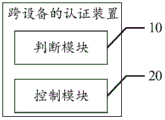
FIG. 10 is a functional block diagram of a cross-device authentication apparatus according to a first embodiment of the present invention;
FIG. 11 is a block diagram illustrating a detailed function of the determining module in FIG. 10;
fig. 12 is a functional block diagram of an authentication apparatus of a cross device according to a second embodiment of the present invention.
The implementation, functional features and advantages of the objects of the present invention will be further explained with reference to the accompanying drawings.
Detailed Description
It should be understood that the specific embodiments described herein are merely illustrative of the invention and are not intended to limit the invention.
The main solution of the embodiment of the invention is as follows: when an access request of a terminal is received, an access control terminal judges whether an identification which passes authentication when an accessor corresponding to the access request accesses other access control terminals associated with the access control terminal exists; and when the visitor passes the access authentication of other access control terminals, allowing the visitor to pass the current access of the terminal. According to the scheme, when the terminal requests access, after the associated access control terminal passes the access authentication, the visitor does not need authentication at the current access control terminal, and the access of the visitor is directly allowed. The authentication operation of terminal access is reduced, and the efficiency of terminal access is improved.
The problems of complicated authentication process and poor efficiency of network access caused by repeated re-authentication of the prior network authentication
Based on the above problem, the present invention provides a cross-device authentication method.
For better describing the embodiments of the present invention, the terms used in the embodiments of the present invention are explained as follows:
WLAN: a technology for connecting terminals such as personal computers and handheld devices (such as mobile phones and tablet computers) with each other in a wireless manner is provided.
And (3) wireless AP: the short name of the wireless Access Point is called Access Point, and the function of the wireless Access Point is to establish connection between a wired network and a wireless network. In this case, the wireless AP is a bridge for communication between the wireless network and the wired network.
The wireless controller: the Wireless Access Point Controller is used for centralized control of Wireless APs, is a core of a Wireless network, is responsible for managing all Wireless APs in the Wireless network, and manages the APs, and comprises the following steps: configuration issuing, relevant configuration parameter modification, radio frequency intelligent management, access security control and the like.
Centralized management: the centralized security management Center is called as a centralized security management Center, and the centralized security management Center is called as a Secure Center in English and is used for centralized management of the controller. One controller acts as the central node, and the other controllers act as the mesh points. The central controller manages the network controller.
Referring to fig. 1, fig. 1 is a flowchart illustrating a cross-device authentication method according to a first embodiment of the present invention.
In one embodiment, the cross-device authentication method includes:
step S10, when receiving the access request of the terminal, the access control terminal judges whether the identification information passing the authentication exists when the visitor corresponding to the access request accesses other access control terminals associated with the access control terminal;
in this embodiment, when a user needs network access or serves as a visitor (e.g., WeChat, short message, etc.), the user initiates an access request through a terminal. When a user initiates an access request through a terminal, the access request passes through an access control terminal, and the access control terminal needs to authenticate an accessor of the access request. When receiving an access request of a terminal, the access control terminal judges whether identification information which passes authentication when an accessor corresponding to the access request accesses other access control terminals associated with the access control terminal exists. The other access control terminals associated with the access control terminal include but are not limited to: a branch access control terminal or a central access control terminal. I.e. a branch access control or a central access control, which is the same access control. For example, a mall has multiple branches, each branch has a WiFi hotspot, each WiFi hotspot has an access control end, and when a user initiates an access request at the WiFi hotspot of branch a through a terminal, the user determines whether an visitor corresponding to the access request passes authentication of the WiFi hotspot at branch B. The judging process comprises the following steps: whether identification information which passes authentication when the visitor accesses other access control terminals associated with the access control terminal can be obtained, and when the identification information is obtained, the identification information is judged to exist; and when the identification information is not acquired, judging that the identification information does not exist. The identification information corresponds to authentication information, and the authentication information is that the user name and the terminal information pass authentication and are associated with the passing authentication identification. The identification information is terminal information, Mac address, user login information and other identity information.
Step S20, after determining that the identification information exists, the access control end controls the visitor to access the data corresponding to the access request through the terminal.
And controlling the visitor to access the data corresponding to the access request through the terminal after judging that the identification information exists. That is, when the visitor passes the access authentication when accessing another access control terminal associated with the access control terminal, the access corresponding to the access request is permitted. For example, when the visitor requests access through the WiFi hotspot of the branch office a, it is determined that the WiFi hotspot of the branch office B of the visitor has passed the authentication, and the terminal is allowed to access the network through the WiFi hotspot of the branch office a, that is, the visitor is allowed to access the internet through the WiFi hotspot of the branch office a using the terminal to perform access to internet data and network data interaction. And after the identification information does not exist, the access control terminal performs access authentication on an accessor. The authentication process includes: and the access control terminal receives the authentication information input by the terminal and allows the access of the visitor after the authentication information passes. And after the authentication is passed, caching the authentication information of the visitor. The authentication information cached in the terminal visitor is deleted according to a certain policy, for example, the authentication data cached in the terminal is deleted according to time, use frequency, use interval, or the like. The applied scenario, for example, 1, the user passes the authentication of the headquarters using the notebook a, and the user can request the data access directly at the branch office using the notebook a without performing the authentication again; 2. the user a passes the authentication of the headquarters by using the notebook computer A, and the user a can directly request data access at the branch office by using the notebook computer B without performing the authentication again, that is, the same user can directly access by using different terminals after the user authentication. The notebook A and the user a in the scene are both visitors, and when the visitors request access, the visitors pass authentication at other associated access control terminals, do not need re-authentication, and directly access data through corresponding terminals, so that the authentication process is reduced.
For a better description of embodiments of the present invention, reference is made to fig. 2, which includes: central controller 1, mesh point controller 2, central area AP, AP1, and AP2, where the central controller controls central area AP, mesh point controller 1 controls AP1, and mesh point controller 2 controls AP 2. When a user requests access to the AP1 through a terminal, it is determined whether the terminal is authenticated at the AP2 or the central zone AP. When the terminal is authenticated at the AP2 or the central area AP, the terminal is allowed to access the AP1 and access the Internet through the AP 1. In an embodiment of the present invention, when receiving an access request from a terminal, determining whether the terminal passes authentication at the home terminal, and when the terminal passes authentication at the home terminal, allowing access; and when the terminal does not pass the authentication, the authentication process of the terminal access is completed through the mode. In other embodiments of the present invention, in order to improve the security of access, when receiving the access of the terminal, it is determined whether to obtain the automatic authentication authorization, and when obtaining the automatic authentication authorization, the authentication of the terminal access is completed according to the above process; and when the automatic authentication authorization is not obtained, prompting to carry out authentication operation, and providing an authentication operation interface for a user to finish access authentication through the authentication operation interface.
In the embodiment, when an access request of a terminal is received, an access control terminal judges whether an identification which passes authentication when an accessor corresponding to the access request accesses other access control terminals associated with the access control terminal exists; and when the visitor passes the access authentication of other access control terminals, allowing the visitor to access currently. According to the scheme, when the terminal requests access, after the associated access control terminal passes the access authentication, the visitor does not need authentication at the current access control terminal, and the access of the visitor is directly allowed. The authentication operation of terminal access is reduced, and the efficiency of terminal access is improved.
Referring to fig. 3, fig. 3 is a flowchart illustrating a cross-device authentication method according to a second embodiment of the present invention. Based on the first embodiment of the above cross-device authentication method, the step S10 includes:
step S11, the access control terminal judges whether the identification information passing the authentication when the visitor accesses other access control terminals associated with the access control terminal is stored locally;
step S12, when the access control end locally stores the identification information that passes the authentication when the visitor accesses another access control end associated with the access control end, it determines that the identification information exists.
In this embodiment, when determining the identification information, the access control end first determines locally, that is, the access control end determines whether to locally store the identification information that passes authentication when the visitor accesses another access control end associated with the access control end. The judging process comprises the following steps: and the access control terminal acquires the identification information of the visitor. And searching whether identification information corresponding to the visitor information exists in an index table of locally stored authentication information, and judging that the visitor passes the authentication when the locally stored visitor accesses other access control terminals associated with the access control terminal when the identification information is searched in the index table, thereby judging that the visitor does not need to re-authenticate. If not, judging that the identification information which passes the authentication when the visitor accesses other access control terminals associated with the access control terminal is not stored locally, and further judging that the identification information does not exist.
Further, in order to improve the accuracy of the access authentication, referring to fig. 4, after the step S11, the method further includes:
step S13, when the identification information that passes the authentication when the visitor accesses other access control terminals associated with the access control terminal is not stored locally, the access control terminal acquires the identification information from a central control terminal connected with the access control terminal;
step S14, when the access control end does not obtain the identification information from the central control end connected with the access control end, the access control end judges that the identification information does not exist;
step S15, when the access control end obtains the identification information from the central control end connected to the access control end, it determines that the identification information exists.
And when the identification information which passes authentication when the visitor accesses other access control terminals associated with the access control terminal is not stored locally by the access control terminal, acquiring the identification information from a central control terminal connected with the access control terminal. That is, index information of identification information indicating whether authentication is passed at other associated access control terminals is acquired from the central control terminal. The determination process is similar to the above local process, and is not described in detail herein. In an embodiment of the present invention, when the central control end does not store the identification information, the central control end sends an acquisition instruction of the identification information to other associated access control ends, and acquires the latest index information of the identification information that passes the authentication from each associated access control end. After the index information of the latest identification information is successfully acquired, the corresponding access control terminal is inquired about the identification information, and the judgment process is executed again through the inquired identification information.
According to the embodiment, the terminal access authentication operation is performed through the local access control terminal and the central control terminal, so that the accuracy of the access authentication is improved.
Referring to fig. 5, fig. 5 is a flowchart illustrating a cross-device authentication method according to a fourth embodiment of the present invention. Based on the second embodiment of the above cross-device authentication method, the step S20 includes:
step S21, after judging that the identification information exists, the access control terminal judges whether the authentication information corresponding to the identification information is valid authentication information;
step S22, when the authentication information is valid authentication information, the access control end controls the visitor to access the data corresponding to the access request through the terminal.
In this embodiment, after the identification information is determined to exist, it is determined whether the authentication information corresponding to the identification information is valid authentication information. The process of determining whether the authentication information is valid includes, but is not limited to: 1) judging whether the authentication information is within the valid period, namely judging whether the storage time of the authentication information is longer than a preset time (for example, the preset time is 1 month or 2 months and the like), judging the authentication information as invalid when the storage time is longer than the preset time, and judging the authentication information as valid when the storage time is shorter than or equal to the preset time; 2) judging whether the authentication information is authorized authentication information, namely judging whether the authentication information is authorized by a user and can be used for automatic verification, judging the authentication information to be invalid when the authentication information is not authorized, and judging the authentication information to be valid when the authentication information is authorized; 3) whether the format of the authentication information is matched with the latest format or not is judged to be invalid authentication information when the format of the authentication information is not matched with the latest format, and the authentication information is judged to be valid authentication information when the format of the authentication information is matched with the latest format; 4) judging whether the authentication information is usable authentication information of the network point, judging invalid authentication information when the authentication information is not usable authentication information of the network point, and judging valid authentication information when the authentication information is usable, namely, corresponding to an open authority to some authentication information for different network points, wherein the authentication information which is authenticated in other branch structures cannot be used in the network point and needs to be authenticated again when the authority is not opened. And when the authentication information is valid, the access control terminal controls the visitor to access the data corresponding to the access request through the terminal, and the visitor can directly access the data without re-authentication.
According to the embodiment, the validity of the authentication information is judged, so that the safety of access authentication is ensured, and the safety of user information is further improved.
Referring to fig. 6, fig. 6 is a flowchart illustrating a fifth embodiment of the cross-device authentication method according to the present invention. Based on the first to third embodiments, the method further includes:
step S30, when a new visitor passes the local access authentication, the access control terminal sets and records the authenticated identification information for the visitor;
step S40, the access control end synchronizes the recorded identification information passing the authentication to the central control end connected thereto, so that other access control ends can obtain the recorded identification passing the authentication from the central control end.
In this embodiment, after the visitor performs access authentication for the first time through the terminal or performs authentication operation again, and the authentication passes, setting and recording identification information that passes the authentication for the visitor, and associating the identification information with the visitor. The access control terminal stores the identification information passing the access authentication locally, and synchronizes the identification information to a central control terminal so that other access control terminals can obtain the recorded identification information passing the access authentication from the central control terminal. In an embodiment of the present invention, in order to ensure that the authentication information stored by the access control end is the latest identification information, the access control end synchronizes the latest identification information with the central control end at intervals of a certain time (for example, 30 minutes or 1 hour). Referring to fig. 7, the process of downloading the authentication information from the central control end by the access control end specifically includes: s1, the branch safety gateway downloads the authentication information index summary table to the central equipment periodically and incrementally; s2, the branch end equipment receives the central end equipment authentication information index summary table; and S3, after the branch terminal deduplication processing, updating the branch terminal authentication database. In other embodiments of the present invention, the access control end periodically (1 day, 2 days, etc.) sends the local authentication information to the central control end, or sends the local authentication information to the central control end when the local authentication information changes. Referring to fig. 8, specifically, the method includes: s4, uploading the authentication information index sub-table to the central terminal by the branch security gateway at regular increments; s5, the central terminal receives the index sub-table sent by the branch terminal; and S6, after the central terminal deduplication processing, updating the certification information index sub-table of the central terminal. In other embodiments of the present invention, the central control end may also actively request the access control end to report the latest authentication information, and the specific process is similar to the process of uploading the authentication information to the central control end by the access control end, and is not described in detail herein.
For better describing the embodiment of the present invention, referring to fig. 9, the cross-device authentication process includes: s101, a security gateway receives a network access request; s102, is the user online in the security gateway? If yes, executing S103, otherwise executing S104; s103, putting through any request; s104, obtaining information such as MAC addresses (three-layer environment needs to be obtained through snmp); s105, whether the corresponding authentication information can be inquired in the local authentication database or not is judged, and if yes, the process S106-S109 is executed; if not, executing the processes S110-S112; s106, popping up an authentication and prompt window on an authentication address interface of the local computer; s107, authentication is successful? If yes, executing S108, otherwise, executing S109; s108, successfully authenticating and online, and storing the corresponding relation between the MAC information and the user name and the organization structure to a local authentication database; s109, prompting authentication failure; s110, whether the user is found in the central authentication information index summary table? If yes, executing S112, otherwise, executing S111; s111, displaying an authentication interface for user authentication according to the authentication strategy; and S112, obtaining the authentication information of the user from the corresponding branch network point, and directly authenticating the online. Specifically, the method comprises the following steps: when a user accesses a network at a branch end, the branch security gateway checks whether the user is an authenticated user, and if the user is an authenticated online user, the user is directly put through; if the user is not authenticated, the branch security gateway acquires the label (such as an MAC address or a user name and the like) of the user, then searches from an index summary table of a headquarters, confirms that the user is authenticated in other chain branches, and if the user authentication information matched with the user can be acquired from other chain branches according to the label of the user, checks whether the user authentication information accords with rules such as a validity period and the like, and is on-line if the user authentication information accords with the rules; if the authentication information corresponding to the user tag cannot be acquired in the authentication information base or the authentication information is invalid, the user needs to be authenticated to access the network, the user is regarded as a first-time authentication user, authentication is performed according to an authentication strategy set by the wireless network, and the user can use the wireless network after the authentication is successful.
The invention further provides a cross-device authentication device.
Referring to fig. 10, fig. 10 is a functional module diagram of a cross-device authentication apparatus according to a first embodiment of the present invention.
In one embodiment, the cross-device authentication apparatus includes: a judging module 10 and a control module 20.
The determining module 10 is configured to determine, when receiving an access request from a terminal, whether there is identification information that passes authentication when an accessor corresponding to the access request accesses another access control terminal associated with the access control terminal;
in this embodiment, when a user needs network access or serves as a visitor (e.g., WeChat, short message, etc.), the user initiates an access request through a terminal. When a user initiates an access request through a terminal, the access request passes through an access control terminal, and the access control terminal needs to authenticate an accessor of the access request. When receiving an access request of a terminal, the access control terminal judges whether identification information which passes authentication when an accessor corresponding to the access request accesses other access control terminals associated with the access control terminal exists. The other access control terminals associated with the access control terminal include but are not limited to: a branch access control terminal or a central access control terminal. I.e. a branch access control or a central access control, which is the same access control. For example, a mall has multiple branches, each branch has a WiFi hotspot, each WiFi hotspot has an access control end, and when a user initiates an access request at the WiFi hotspot of branch a through a terminal, the user determines whether an visitor corresponding to the access request passes authentication of the WiFi hotspot at branch B. The judging process comprises the following steps: whether identification information which passes authentication when the visitor accesses other access control terminals associated with the access control terminal can be obtained, and when the identification information is obtained, the identification information is judged to exist; and when the identification information is not acquired, judging that the identification information does not exist. The identification information corresponds to authentication information, and the authentication information is that the user name and the terminal information pass authentication and are associated with the passing authentication identification. The identification information is terminal information, Mac address, user login information and other identity information.
The control module 20 is configured to, after the determining module 10 determines that the identification information exists, control the visitor to access the data corresponding to the access request through the terminal by the access control end.
After determining that the identification information exists, the control module 20 controls the visitor to access the data corresponding to the access request through the terminal. That is, when the visitor passes the access authentication when accessing another access control terminal associated with the access control terminal, the access corresponding to the access request is permitted. For example, when the visitor requests access through the WiFi hotspot of the branch office a, it is determined that the WiFi hotspot of the branch office B of the visitor has passed the authentication, and the terminal is allowed to access the network through the WiFi hotspot of the branch office a, that is, the visitor is allowed to access the internet through the WiFi hotspot of the branch office a using the terminal to perform access to internet data and network data interaction. And after the identification information does not exist, the access control terminal performs access authentication on an accessor. The authentication process includes: and the access control terminal receives the authentication information input by the terminal and allows the access of the visitor after the authentication information passes. And after the authentication is passed, caching the authentication information of the visitor. The authentication information cached in the terminal visitor is deleted according to a certain policy, for example, the authentication data cached in the terminal is deleted according to time, use frequency, use interval, or the like. The applied scenario, for example, 1, the user passes the authentication of the headquarters using the notebook a, and the user can request the data access directly at the branch office using the notebook a without performing the authentication again; 2. the user a passes the authentication of the headquarters by using the notebook computer A, and the user a can directly request data access at the branch office by using the notebook computer B without performing the authentication again, that is, the same user can directly access by using different terminals after the user authentication. The notebook A and the user a in the scene are both visitors, and when the visitors request access, the visitors pass authentication at other associated access control terminals, do not need re-authentication, and directly access data through corresponding terminals, so that the authentication process is reduced.
For a better description of embodiments of the present invention, reference is made to fig. 2, which includes: central controller 1, mesh point controller 2, central area AP, AP1, and AP2, where the central controller controls central area AP, mesh point controller 1 controls AP1, and mesh point controller 2 controls AP 2. When a user requests access to the AP1 through a terminal, it is determined whether the terminal is authenticated at the AP2 or the central zone AP. When the terminal is authenticated at the AP2 or the central area AP, the terminal is allowed to access the AP1 and access the Internet through the AP 1. In an embodiment of the present invention, when receiving an access request from a terminal, determining whether the terminal passes authentication at the home terminal, and when the terminal passes authentication at the home terminal, allowing access; and when the terminal does not pass the authentication, the authentication process of the terminal access is completed through the mode. In other embodiments of the present invention, in order to improve the security of access, when receiving the access of the terminal, it is determined whether to obtain the automatic authentication authorization, and when obtaining the automatic authentication authorization, the authentication of the terminal access is completed according to the above process; and when the automatic authentication authorization is not obtained, prompting to carry out authentication operation, and providing an authentication operation interface for a user to finish access authentication through the authentication operation interface.
In the embodiment, when an access request of a terminal is received, an access control terminal judges whether an identification which passes authentication when an accessor corresponding to the access request accesses other access control terminals associated with the access control terminal exists; and when the visitor passes the access authentication of other access control terminals, allowing the visitor to access currently. According to the scheme, when the terminal requests access, after the associated access control terminal passes the access authentication, the visitor does not need authentication at the current access control terminal, and the access of the visitor is directly allowed. The authentication operation of terminal access is reduced, and the efficiency of terminal access is improved.
Referring to fig. 11, the judging module 10 includes a judging unit 11 and an acquiring unit 12,
the judging unit 11 is configured to judge whether to locally store identification information that passes authentication when the visitor accesses another access control terminal associated with the access control terminal; the judging unit 11 is also used for
And judging that the identification information exists when the identification information which passes the authentication when the visitor locally stores the identification information when accessing other access control terminals associated with the access control terminal.
In this embodiment, when determining the identification information, the determining unit 11 first determines locally, that is, the determining unit 11 determines whether to locally store the identification information that passes the authentication when the visitor accesses another access control terminal associated with the access control terminal. The process of the judgment by the judgment unit 11 includes: and acquiring the identification information of the visitor. And searching whether identification information corresponding to the visitor information exists in an index table of locally stored authentication information, and judging that the visitor passes the authentication when the locally stored visitor accesses other access control terminals associated with the access control terminal when the identification information is searched in the index table, thereby judging that the visitor does not need to re-authenticate. If not, judging that the identification information which passes the authentication when the visitor accesses other access control terminals associated with the access control terminal is not stored locally, and further judging that the identification information does not exist.
The obtaining unit 12 is configured to obtain, when identification information that passes authentication when the visitor accesses another access control terminal associated with the access control terminal is not stored locally, the identification information from a central control terminal connected to the access control terminal;
the determining unit 11 is further configured to determine that the identification information does not exist when the identification information is not obtained from a central control end connected to the access control end; the judging unit 11 is also used for
And when the identification information is acquired from a central control end connected with the access control end, judging that the identification information exists.
The acquisition unit 12 acquires the identification information from the central control terminal connected to the access control terminal when the identification information that passes authentication when the visitor accesses another access control terminal associated with the access control terminal is not locally stored. That is, index information of identification information indicating whether authentication is passed at other associated access control terminals is acquired from the central control terminal. The determination process is similar to the above local process, and is not described in detail herein. In an embodiment of the present invention, when the central control end does not store the identification information, the central control end sends an acquisition instruction of the identification information to other associated access control ends, and acquires the latest index information of the identification information that passes the authentication from each associated access control end. After the index information of the latest identification information is successfully acquired, the corresponding access control terminal is inquired about the identification information, and the judgment process is executed again through the inquired identification information.
According to the embodiment, the terminal access authentication operation is performed through the local access control terminal and the central control terminal, so that the accuracy of the access authentication is improved.
According to the embodiment, the terminal access authentication operation is performed through the local access control terminal and the central control terminal, so that the accuracy of the access authentication is improved.
Further, the judging unit 11 is further configured to judge whether the authentication information is valid authentication information after judging that the authentication information exists;
the control module 20 is further configured to control the visitor to access the data corresponding to the access request through the terminal when the authentication information is valid authentication information.
In this embodiment, after determining that the identification information exists, the determining unit 11 determines whether the authentication information corresponding to the identification information is valid authentication information. The process of determining whether the authentication information is valid includes, but is not limited to: 1) judging whether the authentication information is within the valid period, namely judging whether the storage time of the authentication information is longer than a preset time (for example, the preset time is 1 month or 2 months and the like), judging the authentication information as invalid when the storage time is longer than the preset time, and judging the authentication information as valid when the storage time is shorter than or equal to the preset time; 2) judging whether the authentication information is authorized authentication information, namely judging whether the authentication information is authorized by a user and can be used for automatic verification, judging the authentication information to be invalid when the authentication information is not authorized, and judging the authentication information to be valid when the authentication information is authorized; 3) whether the format of the authentication information is matched with the latest format or not is judged to be invalid authentication information when the format of the authentication information is not matched with the latest format, and the authentication information is judged to be valid authentication information when the format of the authentication information is matched with the latest format; 4) judging whether the authentication information is usable authentication information of the network point, judging invalid authentication information when the authentication information is not usable authentication information of the network point, and judging valid authentication information when the authentication information is usable, namely, corresponding to an open authority to some authentication information for different network points, wherein the authentication information which is authenticated in other branch structures cannot be used in the network point and needs to be authenticated again when the authority is not opened. And when the authentication information is valid, the access control terminal controls the visitor to access the data corresponding to the access request through the terminal, and the visitor can directly access the data without re-authentication.
According to the embodiment, the validity of the authentication information is judged, so that the safety of access authentication is ensured, and the safety of user information is further improved.
Referring to fig. 12, fig. 12 is a functional module diagram of a cross-device authentication apparatus according to a second embodiment of the present invention. The cross-device authentication apparatus further includes: a recording module 30 and a synchronization module 40,
the recording module 30 is configured to set authenticated identification information for a new visitor and record the authenticated identification information when the new visitor locally passes the access authentication;
the synchronization module 40 is configured to synchronize the recorded identification information passing through the authentication to a central control end connected to the central control end, so that other access control ends obtain the recorded identification passing through the authentication from the central control end.
In this embodiment, after the visitor performs access authentication for the first time through the terminal or performs authentication operation again, and the authentication passes, setting and recording identification information that passes the authentication for the visitor, and associating the identification information with the visitor. The access control terminal stores the identification information passing the access authentication locally, and synchronizes the identification information to a central control terminal so that other access control terminals can obtain the recorded identification information passing the access authentication from the central control terminal. In an embodiment of the present invention, in order to ensure that the authentication information stored by the access control end is the latest identification information, the access control end synchronizes the latest identification information with the central control end at intervals of a certain time (for example, 30 minutes or 1 hour). Referring to fig. 7, the process of downloading the authentication information from the central control end by the access control end specifically includes: s1, the branch safety gateway downloads the authentication information index summary table to the central equipment periodically and incrementally; s2, the branch end equipment receives the central end equipment authentication information index summary table; and S3, after the branch terminal deduplication processing, updating the branch terminal authentication database. In other embodiments of the present invention, the access control end periodically (1 day, 2 days, etc.) sends the local authentication information to the central control end, or sends the local authentication information to the central control end when the local authentication information changes. Referring to fig. 8, specifically, the method includes: s4, uploading the authentication information index sub-table to the central terminal by the branch security gateway at regular increments; s5, the central terminal receives the index sub-table sent by the branch terminal; and S6, after the central terminal deduplication processing, updating the certification information index sub-table of the central terminal. In other embodiments of the present invention, the central control end may also actively request the access control end to report the latest authentication information, and the specific process is similar to the process of uploading the authentication information to the central control end by the access control end, and is not described in detail herein.
For better describing the embodiment of the present invention, referring to fig. 9, the cross-device authentication process includes: s101, a security gateway receives a network access request; s102, is the user online in the security gateway? If yes, executing S103, otherwise executing S104; s103, putting through any request; s104, obtaining information such as MAC addresses (three-layer environment needs to be obtained through snmp); s105, whether the corresponding authentication information can be inquired in the local authentication database or not is judged, and if yes, the process S106-S109 is executed; if not, executing the processes S110-S112; s106, popping up an authentication and prompt window on an authentication address interface of the local computer; s107, authentication is successful? If yes, executing S108, otherwise, executing S109; s108, successfully authenticating and online, and storing the corresponding relation between the MAC information and the user name and the organization structure to a local authentication database; s109, prompting authentication failure; s110, whether the user is found in the central authentication information index summary table? If yes, executing S112, otherwise, executing S111; s111, displaying an authentication interface for user authentication according to the authentication strategy; and S112, obtaining the authentication information of the user from the corresponding branch network point, and directly authenticating the online. Specifically, the method comprises the following steps: when a user accesses a network at a branch end, the branch security gateway checks whether the user is an authenticated user, and if the user is an authenticated online user, the user is directly put through; if the user is not authenticated, the branch security gateway acquires the label (such as an MAC address or a user name and the like) of the user, then searches from an index summary table of a headquarters, confirms that the user is authenticated in other chain branches, and if the user authentication information matched with the user can be acquired from other chain branches according to the label of the user, checks whether the user authentication information accords with rules such as a validity period and the like, and is on-line if the user authentication information accords with the rules; if the authentication information corresponding to the user tag cannot be acquired in the authentication information base or the authentication information is invalid, the user needs to be authenticated to access the network, the user is regarded as a first-time authentication user, authentication is performed according to an authentication strategy set by the wireless network, and the user can use the wireless network after the authentication is successful.
The above description is only a preferred embodiment of the present invention, and not intended to limit the scope of the present invention, and all modifications of equivalent structures and equivalent processes, which are made by using the contents of the present specification and the accompanying drawings, or directly or indirectly applied to other related technical fields, are included in the scope of the present invention.
Claims (8)
1. A cross-device authentication method, comprising the steps of:
when receiving an access request of a terminal, an access control terminal judges whether identification information which passes authentication when an accessor corresponding to the access request accesses other access control terminals associated with the access control terminal exists;
after judging that the identification information exists, the access control terminal controls the visitor to access the data corresponding to the access request through the terminal;
the step of controlling the visitor to access the data corresponding to the access request through the terminal comprises the following steps:
after judging that the identification information exists, the access control terminal judges whether the authentication information corresponding to the identification information is valid authentication information;
when the authentication information is valid authentication information, the access control terminal controls the visitor to access the data corresponding to the access request through the terminal;
determining valid authentication information includes: judging whether the authentication information is available authentication information of the access control terminal, and judging the authentication information to be invalid authentication information when the authentication information is unavailable authentication information; when the authentication information is available, determining the authentication information to be valid; and for different websites, correspondingly opening different rights to access data corresponding to the request through the authentication information, wherein when the rights are not opened, the authentication information authenticated by other access control terminals exists, and the authentication information cannot be used at the access control terminals and needs to be authenticated again.
2. The cross-device authentication method according to claim 1, wherein the step of determining that the identification information exists comprises:
the access control terminal judges whether the identification information which passes the authentication when the visitor accesses other access control terminals associated with the access control terminal is stored locally;
and when the access control terminal locally stores identification information which passes authentication when the visitor accesses other access control terminals associated with the access control terminal, judging that the identification information exists.
3. The cross-device authentication method according to claim 2, wherein after the step of the access control terminal determining whether the identification information that passes the authentication when the visitor accesses the other access control terminals associated with the access control terminal is stored locally, the method further comprises:
when the identification information which passes authentication when the visitor accesses other access control terminals associated with the access control terminal is not stored locally by the access control terminal, acquiring the identification information from a central control terminal connected with the access control terminal;
and the access control terminal judges that the identification information exists when acquiring the identification information from a central control terminal connected with the access control terminal.
4. The cross-device authentication method of any one of claims 1 to 3, wherein the method further comprises:
when a new visitor passes the local access authentication, the access control terminal sets identification information passing the authentication for the visitor and records the identification information;
and the access control terminal synchronizes the recorded identification information passing the authentication to a central control terminal connected with the access control terminal so that other access control terminals can acquire the recorded identification information passing the authentication from the central control terminal.
5. An authentication apparatus across devices, comprising:
the judging module is used for judging whether identification information which passes authentication exists when an accessor corresponding to the access request accesses other access control terminals associated with the access control terminal when the access control terminal receives the access request of the terminal;
the control module is used for controlling the visitor to access the data corresponding to the access request through the terminal after the judging module judges that the identification information exists;
the judging module is further configured to judge, after judging that the identification information exists, whether the authentication information corresponding to the identification information is valid authentication information by the access control terminal;
the control module is further used for controlling the visitor to access the data corresponding to the access request through the terminal by the access control terminal when the authentication information is valid authentication information;
the judging module judges the valid authentication information to include: judging whether the authentication information is available authentication information of the access control terminal, and judging the authentication information to be invalid authentication information when the authentication information is unavailable authentication information; when the authentication information is available, determining the authentication information to be valid; and for different websites, correspondingly opening different rights to access data corresponding to the request through the authentication information, wherein when the rights are not opened, the authentication information authenticated by other access control terminals exists, and the authentication information cannot be used at the access control terminals and needs to be authenticated again.
6. The cross-device authentication apparatus of claim 5, wherein the determination module comprises:
the judging unit is used for judging whether identification information which passes authentication when the visitor accesses other access control terminals associated with the access control terminal is stored locally; the judging unit is also used for
And judging that the identification information exists when the identification information which passes the authentication when the visitor locally stores the identification information when accessing other access control terminals associated with the access control terminal.
7. The cross-device authentication apparatus of claim 6, wherein the determination module further comprises:
the acquisition unit is used for acquiring the identification information from a central control end connected with the access control end when the identification information which passes authentication when the visitor accesses other access control ends associated with the access control end is not stored locally;
the judging unit is further configured to judge that the identification information exists when the identification information is acquired from a central control end connected to the access control end.
8. The cross-device authentication apparatus according to any one of claims 5 to 7, further comprising:
the recording module is used for setting authenticated identification information for a new visitor and recording the authenticated identification information when the new visitor locally passes the access authentication;
and the synchronization module is used for synchronizing the recorded identification information passing the authentication to a central control end connected with the synchronization module so that other access control ends can acquire the recorded identification information passing the authentication from the central control end.
Priority Applications (1)
| Application Number | Priority Date | Filing Date | Title |
|---|---|---|---|
| CN201610380667.8A CN107454046B (en) | 2016-05-31 | 2016-05-31 | Cross-device authentication method and device |
Applications Claiming Priority (1)
| Application Number | Priority Date | Filing Date | Title |
|---|---|---|---|
| CN201610380667.8A CN107454046B (en) | 2016-05-31 | 2016-05-31 | Cross-device authentication method and device |
Publications (2)
| Publication Number | Publication Date |
|---|---|
| CN107454046A CN107454046A (en) | 2017-12-08 |
| CN107454046B true CN107454046B (en) | 2021-01-19 |
Family
ID=60486120
Family Applications (1)
| Application Number | Title | Priority Date | Filing Date |
|---|---|---|---|
| CN201610380667.8A Active CN107454046B (en) | 2016-05-31 | 2016-05-31 | Cross-device authentication method and device |
Country Status (1)
| Country | Link |
|---|---|
| CN (1) | CN107454046B (en) |
Families Citing this family (5)
| Publication number | Priority date | Publication date | Assignee | Title |
|---|---|---|---|---|
| CN109697454B (en) * | 2018-11-06 | 2020-10-16 | 邓皓文 | Cross-device individual identification method and device based on privacy protection |
| CN112152996B (en) * | 2020-08-19 | 2022-09-20 | 杭州数梦工场科技有限公司 | Data transmission method, device, equipment and storage medium based on gateway cascade |
| WO2022068156A1 (en) * | 2020-09-30 | 2022-04-07 | 华为技术有限公司 | Cross-device authentication method and related apparatus |
| CA3194323A1 (en) * | 2020-09-30 | 2022-04-07 | Xiwen FANG | Cross-device authentication method and related apparatus |
| WO2022105096A1 (en) * | 2020-11-20 | 2022-05-27 | 华为技术有限公司 | Trusted terminal determination method and related device |
Citations (6)
| Publication number | Priority date | Publication date | Assignee | Title |
|---|---|---|---|---|
| CN102665216A (en) * | 2012-05-03 | 2012-09-12 | 杭州热望信息技术有限公司 | User authentication method for extensible and distributed wireless local area network (WLAN) |
| CN104038917A (en) * | 2014-06-27 | 2014-09-10 | 北京星网锐捷网络技术有限公司 | Method and device for terminal roaming authentication |
| CN104320780A (en) * | 2014-11-17 | 2015-01-28 | 上海斐讯数据通信技术有限公司 | Authentication sharing method and module for wireless routers inside local area network |
| CN104320781A (en) * | 2014-11-27 | 2015-01-28 | 上海斐讯数据通信技术有限公司 | Verifying method and system for mobile terminal |
| CN104581725A (en) * | 2014-11-28 | 2015-04-29 | 广东工业大学 | A Wi-Fi access dynamic authentication system and authentication method thereof |
| CN105450616A (en) * | 2014-09-23 | 2016-03-30 | 中国电信股份有限公司 | Terminal authentication method, trusted determination gateway, authentication server and system |
Family Cites Families (1)
| Publication number | Priority date | Publication date | Assignee | Title |
|---|---|---|---|---|
| JP2002247047A (en) * | 2000-12-14 | 2002-08-30 | Furukawa Electric Co Ltd:The | Session shared key sharing method, wireless terminal authentication method, wireless terminal, and base station device |
-
2016
- 2016-05-31 CN CN201610380667.8A patent/CN107454046B/en active Active
Patent Citations (6)
| Publication number | Priority date | Publication date | Assignee | Title |
|---|---|---|---|---|
| CN102665216A (en) * | 2012-05-03 | 2012-09-12 | 杭州热望信息技术有限公司 | User authentication method for extensible and distributed wireless local area network (WLAN) |
| CN104038917A (en) * | 2014-06-27 | 2014-09-10 | 北京星网锐捷网络技术有限公司 | Method and device for terminal roaming authentication |
| CN105450616A (en) * | 2014-09-23 | 2016-03-30 | 中国电信股份有限公司 | Terminal authentication method, trusted determination gateway, authentication server and system |
| CN104320780A (en) * | 2014-11-17 | 2015-01-28 | 上海斐讯数据通信技术有限公司 | Authentication sharing method and module for wireless routers inside local area network |
| CN104320781A (en) * | 2014-11-27 | 2015-01-28 | 上海斐讯数据通信技术有限公司 | Verifying method and system for mobile terminal |
| CN104581725A (en) * | 2014-11-28 | 2015-04-29 | 广东工业大学 | A Wi-Fi access dynamic authentication system and authentication method thereof |
Also Published As
| Publication number | Publication date |
|---|---|
| CN107454046A (en) | 2017-12-08 |
Similar Documents
| Publication | Publication Date | Title |
|---|---|---|
| US11483708B2 (en) | Network access tokens for accessories | |
| CN107454046B (en) | Cross-device authentication method and device | |
| US10606224B2 (en) | Device enabled identity authentication | |
| CN108305360B (en) | Access control method and related device | |
| KR101920654B1 (en) | Enterance control system and method based on near field communication | |
| CN113658364A (en) | Visitor management method, device, system and computer readable storage medium | |
| US11594092B2 (en) | Multi-site building access using mobile credentials | |
| US20150235496A1 (en) | Systems and methods for lock access management using wireless signals | |
| US9942763B2 (en) | Method and apparatus of triggering applications in a wireless environment | |
| US20160241559A1 (en) | Method and System for Credential Management | |
| CN105282868B (en) | System and method for WiFi network to be temporarily added | |
| WO2017136579A1 (en) | Decentralized virtual trustless ledger for ticketing control | |
| CN106211152A (en) | A kind of wireless access authentication method and device | |
| CN109076070A (en) | Method and apparatus for facilitating frictionless two-factor authentication | |
| US9699656B2 (en) | Systems and methods of authenticating and controlling access over customer data | |
| CN104254073A (en) | Method and device for authentication of access terminal | |
| US20020029336A1 (en) | Authentication method and authentication system for users attempting to access an information source via communication network, and information processing system and information processing method using the same | |
| JP2010033193A (en) | Authentication system and authentication server device | |
| KR101403045B1 (en) | Method for providing terminal access control service interlocking access control | |
| CN105812482A (en) | Method for sharing communication information and server platform | |
| JP2013247614A (en) | Communication device, authentication server and communication system | |
| JP2005064737A (en) | Wireless LAN system and access point | |
| JP7243281B2 (en) | Radio control system, control device and radio control method | |
| JP2019175197A (en) | Authentication device, authentication device control method, and program thereof | |
| US10542569B2 (en) | Community-based communication network services |
Legal Events
| Date | Code | Title | Description |
|---|---|---|---|
| PB01 | Publication | ||
| PB01 | Publication | ||
| SE01 | Entry into force of request for substantive examination | ||
| SE01 | Entry into force of request for substantive examination | ||
| GR01 | Patent grant | ||
| GR01 | Patent grant |