CN107026729B - Method and apparatus for transferring software - Google Patents

Method and apparatus for transferring software Download PDF

Info

Publication number
CN107026729B
CN107026729B CN201611166556.3A CN201611166556A CN107026729B CN 107026729 B CN107026729 B CN 107026729B CN 201611166556 A CN201611166556 A CN 201611166556A CN 107026729 B CN107026729 B CN 107026729B
Authority
CN
China
Prior art keywords
random number
examiner
software
checksum
checker
Prior art date
Legal status (The legal status is an assumption and is not a legal conclusion. Google has not performed a legal analysis and makes no representation as to the accuracy of the status listed.)
Active
Application number
CN201611166556.3A
Other languages
Chinese (zh)
Other versions
CN107026729A (en
Inventor
C.胡特
P.杜普利斯
Current Assignee (The listed assignees may be inaccurate. Google has not performed a legal analysis and makes no representation or warranty as to the accuracy of the list.)
Robert Bosch GmbH
Original Assignee
Robert Bosch GmbH
Priority date (The priority date is an assumption and is not a legal conclusion. Google has not performed a legal analysis and makes no representation as to the accuracy of the date listed.)
Filing date
Publication date
Application filed by Robert Bosch GmbH filed Critical Robert Bosch GmbH
Publication of CN107026729A publication Critical patent/CN107026729A/en
Application granted granted Critical
Publication of CN107026729B publication Critical patent/CN107026729B/en
Active legal-status Critical Current
Anticipated expiration legal-status Critical

Links

Images

Classifications

    • HELECTRICITY
    • H04ELECTRIC COMMUNICATION TECHNIQUE
    • H04LTRANSMISSION OF DIGITAL INFORMATION, e.g. TELEGRAPHIC COMMUNICATION
    • H04L63/00Network architectures or network communication protocols for network security
    • H04L63/12Applying verification of the received information
    • H04L63/123Applying verification of the received information received data contents, e.g. message integrity
    • HELECTRICITY
    • H04ELECTRIC COMMUNICATION TECHNIQUE
    • H04LTRANSMISSION OF DIGITAL INFORMATION, e.g. TELEGRAPHIC COMMUNICATION
    • H04L9/00Cryptographic mechanisms or cryptographic arrangements for secret or secure communications; Network security protocols
    • H04L9/08Key distribution or management, e.g. generation, sharing or updating, of cryptographic keys or passwords
    • H04L9/0861Generation of secret information including derivation or calculation of cryptographic keys or passwords
    • H04L9/0869Generation of secret information including derivation or calculation of cryptographic keys or passwords involving random numbers or seeds
    • HELECTRICITY
    • H04ELECTRIC COMMUNICATION TECHNIQUE
    • H04LTRANSMISSION OF DIGITAL INFORMATION, e.g. TELEGRAPHIC COMMUNICATION
    • H04L63/00Network architectures or network communication protocols for network security
    • H04L63/04Network architectures or network communication protocols for network security for providing a confidential data exchange among entities communicating through data packet networks
    • H04L63/0428Network architectures or network communication protocols for network security for providing a confidential data exchange among entities communicating through data packet networks wherein the data content is protected, e.g. by encrypting or encapsulating the payload
    • HELECTRICITY
    • H04ELECTRIC COMMUNICATION TECHNIQUE
    • H04LTRANSMISSION OF DIGITAL INFORMATION, e.g. TELEGRAPHIC COMMUNICATION
    • H04L63/00Network architectures or network communication protocols for network security
    • H04L63/06Network architectures or network communication protocols for network security for supporting key management in a packet data network
    • H04L63/067Network architectures or network communication protocols for network security for supporting key management in a packet data network using one-time keys
    • HELECTRICITY
    • H04ELECTRIC COMMUNICATION TECHNIQUE
    • H04LTRANSMISSION OF DIGITAL INFORMATION, e.g. TELEGRAPHIC COMMUNICATION
    • H04L63/00Network architectures or network communication protocols for network security
    • H04L63/08Network architectures or network communication protocols for network security for authentication of entities
    • H04L63/0869Network architectures or network communication protocols for network security for authentication of entities for achieving mutual authentication
    • HELECTRICITY
    • H04ELECTRIC COMMUNICATION TECHNIQUE
    • H04LTRANSMISSION OF DIGITAL INFORMATION, e.g. TELEGRAPHIC COMMUNICATION
    • H04L63/00Network architectures or network communication protocols for network security
    • H04L63/12Applying verification of the received information
    • HELECTRICITY
    • H04ELECTRIC COMMUNICATION TECHNIQUE
    • H04LTRANSMISSION OF DIGITAL INFORMATION, e.g. TELEGRAPHIC COMMUNICATION
    • H04L9/00Cryptographic mechanisms or cryptographic arrangements for secret or secure communications; Network security protocols
    • H04L9/32Cryptographic mechanisms or cryptographic arrangements for secret or secure communications; Network security protocols including means for verifying the identity or authority of a user of the system or for message authentication, e.g. authorization, entity authentication, data integrity or data verification, non-repudiation, key authentication or verification of credentials
    • H04L9/3234Cryptographic mechanisms or cryptographic arrangements for secret or secure communications; Network security protocols including means for verifying the identity or authority of a user of the system or for message authentication, e.g. authorization, entity authentication, data integrity or data verification, non-repudiation, key authentication or verification of credentials involving additional secure or trusted devices, e.g. TPM, smartcard, USB or software token
    • HELECTRICITY
    • H04ELECTRIC COMMUNICATION TECHNIQUE
    • H04LTRANSMISSION OF DIGITAL INFORMATION, e.g. TELEGRAPHIC COMMUNICATION
    • H04L9/00Cryptographic mechanisms or cryptographic arrangements for secret or secure communications; Network security protocols
    • H04L9/32Cryptographic mechanisms or cryptographic arrangements for secret or secure communications; Network security protocols including means for verifying the identity or authority of a user of the system or for message authentication, e.g. authorization, entity authentication, data integrity or data verification, non-repudiation, key authentication or verification of credentials
    • H04L9/3236Cryptographic mechanisms or cryptographic arrangements for secret or secure communications; Network security protocols including means for verifying the identity or authority of a user of the system or for message authentication, e.g. authorization, entity authentication, data integrity or data verification, non-repudiation, key authentication or verification of credentials using cryptographic hash functions
    • HELECTRICITY
    • H04ELECTRIC COMMUNICATION TECHNIQUE
    • H04LTRANSMISSION OF DIGITAL INFORMATION, e.g. TELEGRAPHIC COMMUNICATION
    • H04L9/00Cryptographic mechanisms or cryptographic arrangements for secret or secure communications; Network security protocols
    • H04L9/32Cryptographic mechanisms or cryptographic arrangements for secret or secure communications; Network security protocols including means for verifying the identity or authority of a user of the system or for message authentication, e.g. authorization, entity authentication, data integrity or data verification, non-repudiation, key authentication or verification of credentials
    • H04L9/3271Cryptographic mechanisms or cryptographic arrangements for secret or secure communications; Network security protocols including means for verifying the identity or authority of a user of the system or for message authentication, e.g. authorization, entity authentication, data integrity or data verification, non-repudiation, key authentication or verification of credentials using challenge-response
    • H04L9/3278Cryptographic mechanisms or cryptographic arrangements for secret or secure communications; Network security protocols including means for verifying the identity or authority of a user of the system or for message authentication, e.g. authorization, entity authentication, data integrity or data verification, non-repudiation, key authentication or verification of credentials using challenge-response using physically unclonable functions [PUF]
    • GPHYSICS
    • G06COMPUTING OR CALCULATING; COUNTING
    • G06FELECTRIC DIGITAL DATA PROCESSING
    • G06F21/00Security arrangements for protecting computers, components thereof, programs or data against unauthorised activity
    • G06F21/30Authentication, i.e. establishing the identity or authorisation of security principals
    • G06F21/44Program or device authentication

Landscapes

  • Engineering & Computer Science (AREA)
  • Computer Security & Cryptography (AREA)
  • Computer Networks & Wireless Communication (AREA)
  • Signal Processing (AREA)
  • Computer Hardware Design (AREA)
  • Computing Systems (AREA)
  • General Engineering & Computer Science (AREA)
  • Storage Device Security (AREA)

Abstract

用于传输软件的方法和装置。用于传输软件的方法,其特征在于下列特征:‑检查者产生第一随机数和第二随机数,‑所述检查者根据第二随机数借助于设备的模仿的或之前测得的硬件函数来计算密码密钥,‑所述检查者利用所述密钥将所述软件加密成密文,‑所述检查者将所述密文发送给所述设备,‑所述检查者将所述第一随机数发送给所述设备,‑所述检查者从所述设备中接收校验和,‑所述检查者根据所述第一随机数和所述设备的复制的工作存储器借助于所述模拟的或之前测得的硬件函数和预先给定的密码散列函数来计算参考值,‑所述检查者根据所述参考值使所述校验和经受检查,以及‑只要所述检查通过,所述检查者就将所述第二随机数发送给所述设备。

Figure 201611166556

Method and apparatus for transferring software. A method for transmitting software, characterized by the following features: - a first random number and a second random number are generated by a checker, - said checker is based on the second random number by means of a simulated or previously measured hardware function of the device to calculate a cryptographic key, - the examiner encrypts the software into ciphertext using the key, - the examiner sends the ciphertext to the device, - the examiner sends the first A random number is sent to the device, - the checker receives a checksum from the device, - the checker relies on the first random number and the copied working memory of the device by means of the simulation a reference value is calculated from a hardware function that is or previously measured and a predetermined cryptographic hash function, - the checker subjects the checksum to a check against the reference value, and - as long as the check passes, the checksum is The inspector sends the second random number to the device.

Figure 201611166556

Description

Method and device for transmitting software
Technical Field
The invention relates to a method for transmitting software. The invention further relates to a corresponding device, a corresponding computer program and a corresponding storage medium.
Background
Information security is a sub-field of informatics with a different desire, known as a protection target in professional language. In addition to availability and confidentiality, integrity is also one of the traditional protection goals here. This is to be understood as preventing unauthorized modification of the Information according to the Common Criteria for Information Technology Security Evaluation (CC) of the international standardization. Other protection goals of authenticity represent the nature of the authenticity, inspectability and trustworthiness of the object, especially of the device.
The mentioned objects are of particular interest in the field of even more recent developments of cyber-physical systems (CPS). This general concept is understood by those skilled in the art as a composite of informatics or software technology components with mechanical or electronic components that communicate over a data infrastructure, such as the internet. The construction of networked physical systems is formed by the networking of embedded systems via wired or wireless communication networks, in particular so-called sensor networks.
WO 2013160032 a1 proposes determining the origin of a building block, wherein at least one individual attribute of the building block is used to identify the origin without exclusive access to secret data and without verifying a signature assigned to the building block with a public key. The current identification, for example a PUF value, is generated from at least one component-specific property of the component. As long as the currently generated identification corresponds to the verified signature, the originality of the component is inferred. The signature corresponds here to a code word encrypted with a private key, for example the private key of the manufacturer of the component.
Disclosure of Invention
The invention provides a method for transmitting software, a corresponding device, a corresponding computer program and a corresponding storage medium according to the independent claims.
The advantage of the solution is the security provided that the actual software is downloaded and implemented on the actual hardware device, e.g. the sensor. Whereas existing solutions can typically only check one of two security standards at a time.
Unlike conventional proof of software integrity in the sense of trusted computing (attestation), the proposed method does not necessarily presuppose remote and also accurate measurement of the implementation time on the sensor device.
Unlike the aforementioned conventional schemes, the mechanism according to the present invention is furthermore effective in addressing situations where the sensor has been infected by malware. Here, the action of the inspector is not dependent on the presence or absence of malware. The complete software of the target device is deleted and replaced by trusted software.
Unlike a large number of known solutions, the proposed solution has characteristics close to the implicit mutual authentication. Assuming that only a legitimate reviewer can mimic the hardware function or have previously measured the hardware function, meaningful encryption can only be computed by the legitimate reviewer. Thus, the sensor can check after decryption for the presence of artifacts in the decrypted code, e.g. the checksum of a part of the software, and thus ensure that the software has been encrypted by a legitimate source, e.g. by a real hub.
Unlike existing systems, embodiments of the present invention do not require a direct communication link, and in particular, a cable connection, between the inspector and the device to be inspected. In general, existing systems even require that the communication between the inspector and the device is the only communication, i.e. excluding eavesdropping attacks.
The solution discussed later furthermore prevents attacks against software which is itself intellectual property, since the software can only be decrypted by authorized, typically embedded (embedded) devices.
Advantageous refinements and improvements of the basic idea specified in the independent claims are possible by means of the measures mentioned in the dependent claims. It can thus be provided that: hardware functions are Physically Unclonable Functions (PUFs) of the device or based On Trusted Platform Modules (TPMs) of the device, secrets characterizing the device or SIMPL systems of the device, as proposed in u. R ü hrmair "SIMPL systems: On a public key variant of a physical unclonable functions", IACR Cryptographic approach (cryptographic electronic print Archive), No. 255, 2009, and in u. R ü hrmair "SIMPL systems, or can we design, confidential hardware with cryptographic key information," fsem: Theory and Practice of Computer Science (26-45, pages 2011), as well as computers. An active attacker cannot impersonate an authorized device in these cases. To achieve this, the attacker must, for example, cryptographically break the TPM or clone the PUF, but such attacks cannot be done in practice at reasonable cost.
According to a further aspect, it can be provided that the software comprises a program that can be executed, for example a code update, and that the device executes the program after decryption of the software. After the software update, the sensor device provides evidence in this case with respect to the examiner: the sensor device has successfully implemented the code update.
Drawings
Embodiments of the invention are illustrated in the drawings and are further explained in the description that follows.
Fig. 1 shows a schematic simplified architecture of a sensor connected to a hub.
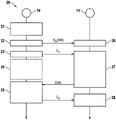
Fig. 2 shows a sequence diagram of a method according to an embodiment of the invention.
Detailed description of the preferred embodiment
The method according to the invention can be implemented, for example, in software or hardware or in a hybrid form of software and hardware, for example, in an embedded device (11) and a hub acting as an inspector (10), as illustrated by the exemplary smart home scenario of fig. 1. The term "hub" should not be understood in the limited sense of the ISO/OSI reference model, but rather in the broad sense of the word, which includes any node that is networked, in particular wirelessly, with the device (11), as long as the hub is suitable for connecting the device (11) with further network nodes to form a computer network, for example a sensor network (wireless sensor network).
The device (11) itself comprises, in addition to possible further components, which are not shown on the drawing, a working memory (12) implemented as a Static Random Access Memory (SRAM), the working memory (12) having physically unclonable hardware functions (14) and sufficient memory space for storing software (13) provided for the operation of the working memory. In addition, the device (11) comprises, in the present embodiment, a microcontroller (15), a read only memory (ROM 16) and an air interface (17) suitable for mutual data exchange with the examiner (10).
Fig. 2 illustrates the process of method (20). The method enables secure transmission and in particular updating of software (13) by binding the software (13) to the genuine device (11) in a specific, non-repudiating manner with respect to eavesdropping attacks, man-in-the-middle attacks, malware and forged or tampered hardware. Both parties, the inspector (10) and the device (11), participate in the proposed mechanism. The device (11) should prove its authenticity and (software) integrity with respect to the verifier (10). Since the checker (10), here also the hub, usually has sufficient computational resources, it is assumed below that the safety of the checker is secured by other mechanisms, such as antivirus software (13), code signing, address space layout randomization, control flow integrity or others. In other words, it should generally be assumed that the examiner (10) is trustworthy.
The basic assumption of the current design is that the tamper-resistant functionfIs provided, said tamper-resistant function being inseparably bound to the actual hardware of the device (11). In other words, if directed to arbitrary inputCWill have effective resultsR=f(C)Back to the examiner (10), who can then conclude that the functionfIs indeed implemented by said specific, legal device (11). Examples of such functions are a TPM, a PUF (14) depicted in fig. 1 and a routine for integrity certification. In general, a simple block cipher or a so-called keyed hash function, for example a hash-function-based message authentication code (HMAC), can also be emulated on the assumption that each checker (10) possesses a secret specific to the device (11) that cannot be extracted in a simple manner by an intruderf
It is furthermore assumed that the examiner (10) possesses a functionf'Said functionf'Although some restrictions on implementation time or memory usage may still be used in order to mimic a functionf. Function of this kindf'Is the public of a particular TPMKnowledge of the key, knowledge of the challenge-response pair of the PUF (14) or, in the case of a weak PUF (14), knowledge about the secret key stored by the latter.f'Further examples of non-secret-based knowledge of (a) are the already mentioned SIMPL systems and selected runtime properties of the program code implemented on the device (11).
Under both assumptions, after the method (20) is finished, the method (20) guarantees the authenticity of the device (11) and the integrity of the software (13) implemented by the device (11).
In a first step (21), the examiner (10) generates two random numbers by means of a suitable random source, e.g. a physical random number generator (TRNG)C 1 AndC 2 . The examiner then calculates a common secret key according to the following rulek:
K=f'(C 2 )
Next, the examiner (10) uses the secret keykThe software (13) to be transmitted and implemented by the device (11) is encrypted (step 22) in the following manner:
SW k =E k (SW|random)
whereinE k For example, representing the AES by means of a secret keykAnd (5) obtaining the ciphertext. The software (13) is padded with random data to ensure that the resulting ciphertext isE k (SW|random)Has approximately the same size as the working memory (12) of the device (11), so that only a very small capacity of the working memory (12) is reserved in order to carry out the further method (20). The examiner (10) now encrypts the ciphertextSW k Is transmitted to the device (11).
At the receiving of the ciphertextSW k The device (11) then stores (step 26) the ciphertext inThe device is in a writable memory, including a working memory (12), whereby the cryptogram covers the entire hitherto stored content of the memory, including any harmful software. Next, the content of the working memory (12) of the device (11) is stored in the deviceSW k For later useMTo indicate.
In a next step (23), the examiner (10) assigns a random numberC 1 Is transmitted to the device (11). The device (11) will in turn beC 1 As a function of the precedingfIs input. Resultsf(C 1 )With the contents of the working memory (12) of the device (11)MAre transmitted (step 27) together to a checksum functiongAnd thus provide evidence that: the device (11) has stored the complete received ciphertext such that each malware can be assumed to be deleted, and the device (11) has a pairing functionfAccess of (2):
CHK=g(f(C 1 ),M)
function(s)gExamples of (c) are cryptographic signatures, such as HMAC, cryptographically secure hash functions, such as SHA family hash functions, or any other (suitable) hash function, such as Cyclic Redundancy Check (CRC), if the security risk can be made reasonable.
The examiner (10) selectively measures (step 24) predefined logical and/or physical measurement variablesOAnd said device (11) calculates a checksumCHK=g(f(C 1 ),M). As indicated by the subsequent step (25), forOProvides additional possibilities: checking whether it does indeed involve performing a functionfOf the specific (real) device (11). Examples of physical measurement variables are pairsfIs performed by the examiner (10).
In a next step, the device (11) will check the sumCHKTransmitted to the examiner (10). The examiner meterCalculating reference valuesg(f'(C 1 ,M))And compares it with the received checksumCHKA comparison is made (step 25). The examiner (10) selectively calculates desired values of predefined logical and/or physical measurement variablesO'And comparing the results with actual measurementsOA comparison is made.
If the check (25) is performed successfully, i.e. the value returned by the device (11) and the value of the checker (10) coincide, the checker (10) will then apply a random numberC 2 Is transmitted to the device (11). The device (11) calculatesk=f(C 2 )And by calculatingD k (E k (SW))To decrypt (step 28) the ciphertextSW K WhereinD k Indicating e.g. in using secret keyskFor example, decryption in accordance with AES. This is the last step of the proposed method (20). After decryption of the software (13), the device (11) can execute the software and thus switch to a normal operating mode, for example for transmitting the measured sensor values to a hub acting as an inspector (10).
Since only legitimate devices (11) can compute the correct result (except the examiner (10))k=f (C 2 )The method (20) therefore ensures that only authorised devices (11) can decrypt the software (13). This in turn prevents third parties from decrypting and running the software (13). In other words, the method prevents the misappropriation of intellectual property (intellectual property), such as transmission and reverse engineering by software (13), and eliminates the threat by counterfeit sensors connected to the hub. In addition, because of the content of the working memory (12) of the device (11)MIs checked andCHKbefore the device (11) allows the decryption software (13), i.e. before it willC 2 Is checked before transmission to the device (11), so ensuring that: when the examiner (10) passes the transmissionC 2 Operation of the device (11) when it becomes possible to decrypt and implement the original software (13)No malware is present in the memory (12). Finally, since only legitimate reviewers (10) can calculate the keyk=f'(C 2 )The device (11) therefore ensures the authenticity of the checker (10).

Claims (10)

1. Method (20) for transmitting software (13) to a remote device (11),
characterized by the following features:
-the examiner (10) generates a first random number (fC 1 ) And a second random number (C 2 ),
-said examiner (10) according to said second random number (C 2 ) -calculating (21) a cryptographic key by means of an emulated or previously measured hardware function of the device (11),
-the checker (10) encrypts (22) the software (13) into a ciphertext using the key,
-the examiner (10) sends the ciphertext to the device (11),
-said examiner (10) combines said first random number (f: (m;)C 1 ) Sending (23) to the device (11),
-said checker (10) receiving a checksum (f) from said device (11)CHK),
-said examiner (10) according to said first random number (C 1 ) And the copied contents of the working memory (12) of the device (11) calculating a reference value by means of the emulated or previously measured hardware function and a predefined cryptographic hash function,
-said checker (10) making said checksum(s) dependent on said reference value(s) ((s))CHK) Subject to inspection (25), and
-said second random number is assigned by said inspector (10) as soon as said inspection (25) passes (a:)C 2 ) To said device (11).
2. The method (20) of claim 1,
characterized by the following features:
-transmitting (23) the first random number (fC 1 ) And receiving said checksum (CHK) The examiner (10) measures (24) a measurement variable, and
-the examiner (10) subjects the measurement quantity to an examination (25).
3. The method (20) of claim 2,
characterised in that said measurement parameter is the time at which said first random number (23) is transmittedC 1 ) And receiving said checksum (CHK) The time period in between.
4. The method (20) according to any one of claims 1 to 3,
characterized by the following features:
-said device (11) receiving said ciphertext and said first random number from said checker (10) (m:)C 1 ),
-the device (11) depositing (26) the ciphertext in a local working memory (12) of the device (11),
-said device (11) according to said first random number (f: (m)C 1 ) And the content of the local working memory (12) calculating (27) the checksum by means of the hash function and a hardware function native to the device (11) ((27))CHK),
-said device (11) comparing said checksum(s) ((s))CHK) To the examiner (10),
-said device (11) receiving said second random number from said examiner (10) (C 2 ),
-said device (11) according to said second random number(s) ((C 2 ) Calculating the key by means of the native hardware function, an
-the device (11) decrypting (28) the ciphertext with the key in order to obtain the software (13).
5. The method (20) according to any one of claims 1 to 3,
characterized by the following features:
-the software (13) comprises a program capable of being implemented, and
-the device (11) implements the program after decryption (28) of the software (13).
6. The method (20) according to any one of claims 1 to 3,
characterized by at least one of the following features:
-the hardware function is a physically unclonable function (14) of the device (11),
-said hardware function is based on a trusted platform module of said device (11),
-the hardware function is based on a secret characterizing the device (11), or
-said hardware function is based on the SIMPL system of said device (11).
7. The method (20) according to any one of claims 1 to 3,
characterized by the following features:
-said checker (10) fills said software (13) before said encryption (22) so that said ciphertext fills a working memory (12) of said device (11).
8. The method (20) according to any one of claims 1 to 3,
characterized by at least one of the following features:
-said checksum (a)CHK) And the reference value is a message authentication code based on the hash function,
-the hash function is a secure hash algorithm, or
-said check (25) is a cyclic redundancy check.
9. Computer-readable storage medium, on which a computer program is stored, which computer program is set up for carrying out the method (20) according to one of claims 1 to 8 when the computer program is executed by a computer.
10. Device (10, 11) having a computer-readable storage medium, on which a computer program is stored, and a computer, the computer program being set up for carrying out the method (20) according to one of claims 1 to 8 when the computer program is executed by the computer.
CN201611166556.3A 2015-12-17 2016-12-16 Method and apparatus for transferring software Active CN107026729B (en)

Applications Claiming Priority (2)

Application Number Priority Date Filing Date Title
DE102015225651.0 2015-12-17
DE102015225651.0A DE102015225651A1 (en) 2015-12-17 2015-12-17 Method and apparatus for transmitting software

Publications (2)

Publication Number Publication Date
CN107026729A CN107026729A (en) 2017-08-08
CN107026729B true CN107026729B (en) 2021-08-17

Family

ID=58993647

Family Applications (1)

Application Number Title Priority Date Filing Date
CN201611166556.3A Active CN107026729B (en) 2015-12-17 2016-12-16 Method and apparatus for transferring software

Country Status (3)

Country Link
US (1) US10404718B2 (en)
CN (1) CN107026729B (en)
DE (1) DE102015225651A1 (en)

Families Citing this family (5)

* Cited by examiner, † Cited by third party
Publication number Priority date Publication date Assignee Title
DE102017214591A1 (en) 2017-08-22 2019-02-28 Robert Bosch Gmbh Method and device for protecting a device
DE102017214584A1 (en) 2017-08-22 2019-02-28 Robert Bosch Gmbh Method and device for protecting a device
GB201806997D0 (en) * 2018-04-30 2018-06-13 Univ Leuven Kath Configurable hardware device
JP7693596B2 (en) * 2022-03-17 2025-06-17 株式会社東芝 Key management device, quantum cryptography communication system and program
US20240195635A1 (en) * 2022-12-12 2024-06-13 Intel Corporation Roots of trust in intellectual property (ip) blocks in a system on a chip (soc)

Citations (3)

* Cited by examiner, † Cited by third party
Publication number Priority date Publication date Assignee Title
CN103067402A (en) * 2013-01-10 2013-04-24 天地融科技股份有限公司 Method and system for digital certificate generation
CN103493431A (en) * 2011-04-28 2014-01-01 株式会社东芝 Data recording device and method of processing data recording device
CN104579680A (en) * 2014-12-19 2015-04-29 飞天诚信科技股份有限公司 Method for safe distribution of seed

Family Cites Families (48)

* Cited by examiner, † Cited by third party
Publication number Priority date Publication date Assignee Title
JP3541522B2 (en) * 1995-10-09 2004-07-14 松下電器産業株式会社 Communication protection system and equipment between devices
JPH10171350A (en) * 1996-12-10 1998-06-26 Hitachi Ltd Hash value generation method and apparatus
US5970144A (en) * 1997-01-31 1999-10-19 Synacom Technology, Inc. Secure authentication-key management system and method for mobile communications
US6108420A (en) * 1997-04-10 2000-08-22 Channelware Inc. Method and system for networked installation of uniquely customized, authenticable, and traceable software application
US6263445B1 (en) * 1998-06-30 2001-07-17 Emc Corporation Method and apparatus for authenticating connections to a storage system coupled to a network
US7051211B1 (en) * 2000-08-21 2006-05-23 International Business Machines Corporation Secure software distribution and installation
EP1211587A1 (en) * 2000-11-30 2002-06-05 Pentap Technologies AG Distributing programming language code
JP4151246B2 (en) * 2001-08-22 2008-09-17 ソニー株式会社 Information distribution terminal, computer program, and information providing method
EP1436967A2 (en) * 2001-10-19 2004-07-14 Matsushita Electric Industrial Co., Ltd. Device authentication system and device authentication method
US20030145203A1 (en) * 2002-01-30 2003-07-31 Yves Audebert System and method for performing mutual authentications between security tokens
US7747531B2 (en) * 2002-02-05 2010-06-29 Pace Anti-Piracy Method and system for delivery of secure software license information
JP2004104539A (en) * 2002-09-11 2004-04-02 Renesas Technology Corp Memory card
US7644442B2 (en) * 2003-01-31 2010-01-05 Microsoft Corporation Systems and methods for using machine attributes to deter software piracy in an enterprise environment
US8041957B2 (en) * 2003-04-08 2011-10-18 Qualcomm Incorporated Associating software with hardware using cryptography
DE60315324D1 (en) * 2003-12-15 2007-09-13 Mobile Integrated Solutions Lt A method for limiting the redistribution of licensed files in a digital cellular system
US20050210014A1 (en) * 2004-03-08 2005-09-22 Sony Corporation Information-processing method, decryption method, information-processing apparatus and computer program
FR2890267B1 (en) * 2005-08-26 2007-10-05 Viaccess Sa METHOD FOR ESTABLISHING A SESSION KEY AND UNITS FOR IMPLEMENTING THE METHOD
JP4912772B2 (en) * 2005-09-22 2012-04-11 富士通株式会社 Encryption method, encryption / decryption method, encryption device, encryption / decryption device, transmission / reception system, and communication system
JP4829628B2 (en) * 2005-10-31 2011-12-07 富士通株式会社 Encryption method, encryption / decryption method, encryption device, encryption / decryption device, and communication system
US9509512B1 (en) * 2006-12-22 2016-11-29 Marvell International Ltd. Message digest generator
CN101617351B (en) * 2007-01-19 2011-06-22 三菱电机株式会社 Ciphertext generating device, cryptographic communication system, and group parameter generating device
US8615665B2 (en) * 2007-01-26 2013-12-24 Harris Corporation Method for providing high assurance integrity of installed software images in a software defined radio
JP5257357B2 (en) * 2007-05-25 2013-08-07 日本電気株式会社 Key generation device, encryption device, and decryption device
US9653004B2 (en) * 2008-10-16 2017-05-16 Cypress Semiconductor Corporation Systems and methods for downloading code and data into a secure non-volatile memory
US8285949B2 (en) * 2009-06-03 2012-10-09 Apple Inc. Secure software installation
US8509448B2 (en) * 2009-07-29 2013-08-13 Motorola Solutions, Inc. Methods and device for secure transfer of symmetric encryption keys
DE102009051201B4 (en) * 2009-10-29 2012-12-20 Siemens Aktiengesellschaft Authentication and data integrity protection of a token
US9852150B2 (en) * 2010-05-03 2017-12-26 Panzura, Inc. Avoiding client timeouts in a distributed filesystem
JP5433498B2 (en) * 2010-05-27 2014-03-05 株式会社東芝 Cryptographic processing device
US20120002803A1 (en) * 2010-07-02 2012-01-05 Wael Adi Self reconfiguring vlsi architectures for unknown secret physical functions based crypto security systems
CN102315933B (en) * 2011-10-18 2014-02-05 飞天诚信科技股份有限公司 Method for updating key and system
WO2013101034A1 (en) * 2011-12-29 2013-07-04 Intel Corporation Software modification for partial secure memory processing
FR2985343B1 (en) * 2012-01-03 2014-01-03 Inside Secure METHOD FOR EXECUTING AN APPLICATION IN AN NFC DEVICE
US9572029B2 (en) * 2012-04-10 2017-02-14 Imprivata, Inc. Quorum-based secure authentication
DE102012206726A1 (en) 2012-04-24 2013-10-24 Robert Bosch Gmbh Method for determining the originality of a component
JP2014103514A (en) * 2012-11-19 2014-06-05 Toshiba Corp Communication device, communication system and program
US20140237239A1 (en) * 2012-12-31 2014-08-21 Safelylocked, Llc Techniques for validating cryptographic applications
DE102013203415B4 (en) * 2013-02-28 2016-02-11 Siemens Aktiengesellschaft Create a derived key from a cryptographic key using a non-cloning function
WO2015013474A2 (en) * 2013-07-25 2015-01-29 Siemens Healthcare Diagnostics Inc. Anti-piracy protection for software
US9350550B2 (en) * 2013-09-10 2016-05-24 M2M And Iot Technologies, Llc Power management and security for wireless modules in “machine-to-machine” communications
US9432186B2 (en) * 2014-01-13 2016-08-30 Mxtran Inc. Password-based key derivation without changing key
JP6277734B2 (en) * 2014-01-20 2018-02-14 富士通株式会社 Information processing program, information processing apparatus, and information processing method
ES2619613T3 (en) * 2014-06-12 2017-06-26 Nagravision S.A. Cryptographic method to exchange messages securely and device and system to implement this method
BR112017002747A2 (en) * 2014-08-29 2018-01-30 Visa Int Service Ass computer implemented method, and, computer system.
US11068895B2 (en) * 2015-02-17 2021-07-20 Visa International Service Association Token and cryptogram using transaction specific information
US10178164B2 (en) * 2015-08-31 2019-01-08 Visa International Service Association Secure binding of software application to communication device
CN109075970A (en) * 2015-10-21 2018-12-21 海德拉管理有限责任公司 Encryption and decryption POSTSCRIPT language
KR101790948B1 (en) * 2015-10-26 2017-10-27 삼성에스디에스 주식회사 Apparatus and method for providing drm service, apparatus and method for playing contents using drm service

Patent Citations (3)

* Cited by examiner, † Cited by third party
Publication number Priority date Publication date Assignee Title
CN103493431A (en) * 2011-04-28 2014-01-01 株式会社东芝 Data recording device and method of processing data recording device
CN103067402A (en) * 2013-01-10 2013-04-24 天地融科技股份有限公司 Method and system for digital certificate generation
CN104579680A (en) * 2014-12-19 2015-04-29 飞天诚信科技股份有限公司 Method for safe distribution of seed

Also Published As

Publication number Publication date
CN107026729A (en) 2017-08-08
DE102015225651A1 (en) 2017-06-22
US10404718B2 (en) 2019-09-03
US20170180392A1 (en) 2017-06-22

Similar Documents

Publication Publication Date Title
JP7827318B2 (en) Blockchain-implemented method and system
CN113014539B (en) Internet of things equipment safety protection system and method
Schulz et al. Short paper: Lightweight remote attestation using physical functions
CN107026729B (en) Method and apparatus for transferring software
Shipman et al. A zero trust architecture for automotive networks
CN114553547B (en) Data authentication method and system for manageable blockchain sensor
Akram et al. A privacy preserving application acquisition protocol
Murti Security in embedded systems
Pop et al. Secure migration of WebAssembly-based mobile agents between secure enclaves
Akram et al. Remote attestation mechanism for user centric smart cards using pseudorandom number generators
CN111651740B (en) Trusted platform sharing system for distributed intelligent embedded system
He et al. Research on a trusted migration scheme for containers based on the unclonable functions
Larsen Trust in Trustless Systems: Decentralized Trust Anchors towards Sustainable Security
He et al. PLRAC: A PUF Characteristic Based Lightweight Remote Attestation for Container
CN121118085A (en) Privacy protection methods and reasoning methods for U-shaped speculative decoding inference framework
Vieitez Parra The impact of attestation on deniable communications
CN121309215A (en) A device authentication method, system, device, and storage medium
Ma et al. Remote attestation mechanism for embedded devices based on physical unclonable functions

Legal Events

Date Code Title Description
PB01 Publication
PB01 Publication
SE01 Entry into force of request for substantive examination
GR01 Patent grant
GR01 Patent grant