CN105491138B - Distributed load scheduling method based on load rate graded triggering - Google Patents
Distributed load scheduling method based on load rate graded triggering Download PDFInfo
- Publication number
- CN105491138B CN105491138B CN201510930997.5A CN201510930997A CN105491138B CN 105491138 B CN105491138 B CN 105491138B CN 201510930997 A CN201510930997 A CN 201510930997A CN 105491138 B CN105491138 B CN 105491138B
- Authority
- CN
- China
- Prior art keywords
- server
- load
- load rate
- task
- rate
- Prior art date
- Legal status (The legal status is an assumption and is not a legal conclusion. Google has not performed a legal analysis and makes no representation as to the accuracy of the status listed.)
- Active
Links
Images


Classifications
-
- H—ELECTRICITY
- H04—ELECTRIC COMMUNICATION TECHNIQUE
- H04L—TRANSMISSION OF DIGITAL INFORMATION, e.g. TELEGRAPHIC COMMUNICATION
- H04L67/00—Network arrangements or protocols for supporting network services or applications
- H04L67/01—Protocols
- H04L67/10—Protocols in which an application is distributed across nodes in the network
- H04L67/1001—Protocols in which an application is distributed across nodes in the network for accessing one among a plurality of replicated servers
- H04L67/1004—Server selection for load balancing
-
- H—ELECTRICITY
- H04—ELECTRIC COMMUNICATION TECHNIQUE
- H04L—TRANSMISSION OF DIGITAL INFORMATION, e.g. TELEGRAPHIC COMMUNICATION
- H04L67/00—Network arrangements or protocols for supporting network services or applications
- H04L67/50—Network services
- H04L67/60—Scheduling or organising the servicing of application requests, e.g. requests for application data transmissions using the analysis and optimisation of the required network resources
Landscapes
- Engineering & Computer Science (AREA)
- Computer Networks & Wireless Communication (AREA)
- Signal Processing (AREA)
- Computer And Data Communications (AREA)
Abstract
本发明提供一种基于负载率分级触发的分布式负载调度方法,包括筛选出能够将任务消耗量化的服务器;将服务器的负载率在0‑100%之间等分为若干区间;服务器节点实时且持续监测服务器的负载率;服务器节点向负载均衡器发送服务器的负载率状态变化;负载均衡器更新负载率情况表;并对分布式负载进行调度。本发明提出的方法有效减少网络通信量,降低负载均衡器的负担,于此同时负载均衡器调度表可以相对准确的反映服务器的真实负载;不仅可以保证剩余计算资源最多的服务器被作为选择对象,同时可以使CPU以及内存利用率保持相对平衡,避免单一资源过度消耗。
The invention provides a distributed load scheduling method based on load rate hierarchical triggering, which includes screening out servers that can quantify task consumption; dividing the load rate of the server into several intervals between 0-100%; the server nodes are real-time and Continuously monitor the load rate of the server; the server node sends the load rate status change of the server to the load balancer; the load balancer updates the load rate situation table; and schedules the distributed load. The method proposed by the present invention effectively reduces the network traffic and the burden of the load balancer, and at the same time, the load balancer schedule can relatively accurately reflect the real load of the server; not only can it ensure that the server with the most remaining computing resources is selected as the object, At the same time, the CPU and memory utilization can be kept relatively balanced to avoid excessive consumption of a single resource.
Description
技术领域technical field
本发明涉及网络流量控制及负载均衡领域,具体涉及一种基于负载率分级触发的分布式负载调度方法。The invention relates to the field of network flow control and load balancing, in particular to a distributed load scheduling method based on load rate hierarchical triggering.
背景技术Background technique
近年来,由于信息技术的发展、网络的日益普及,爆炸的互联网和万维网已经明显的为用户增加了大量的在线信息和可能的服务。受欢迎网站的流量已经远远超出了单个Web服务器所能够承受的能力。日益增长的信息和服务依赖于一个能够抵抗戏剧性压力的互联网基础结构,一个能提供大量Web请求的Web服务器系统。因此,考虑到系统的可扩展性和成本效益,出现了分布式设计的Web服务器系统(Web集群)来代替一台像大型机这样具有高性能的Web服务器,这些最受欢迎的网站采用分布式/并行架构以减轻单一服务器的负载。分布式计算系统所提供高性能环境能够提供巨大的处理能力。分布式系统通过有效的任务划分实现各节点服务器系统之间的任务平衡,使各计算机系统资源能够得到有效地利用。In recent years, due to the development of information technology and the increasing popularity of the Internet, the explosive Internet and the World Wide Web have obviously added a large amount of online information and possible services to users. The traffic to popular websites has grown far beyond what a single web server can handle. The ever-increasing amount of information and services depends on an Internet infrastructure that can withstand dramatic stress, a system of Web servers that can serve large numbers of Web requests. Therefore, considering the scalability and cost-effectiveness of the system, distributed designed web server systems (web clusters) have emerged to replace one high-performance web server like a mainframe, and these most popular websites use distributed / Parallel architecture to lighten the load on a single server. The high-performance environment provided by distributed computing systems can provide enormous processing power. The distributed system realizes the task balance among the server systems of each node through effective task division, so that the resources of each computer system can be effectively utilized.
目前数百台电脑连接起来构建成一个分布式计算系统。分布式计算系统为了获得最大的效率,系统的整个工作负载必须分配到网络上的各个节点。因此,由于多处理器计算机系统的分布式存储使得负载均衡问题成为研究的热点。负载分配到各处理器节点被简单地称为负载均衡问题。在一个多节点系统里,存在一些节点闲置而其它节点处于过载的高可能性。负载均衡算法的目标就是维护每个处理器节点的负载,使得所有的处理器节点既不过载也不空闲。现有技术普遍存在的缺陷是:负载均衡器调度表中,不能及时更新服务器真实的负载情况。此外类似于基于最小连接数调度策略不能有效衡量服务器的负载。这就意味着每个处理器节点在理想的情况下,在任何时刻具有相等的负载,做到系统在执行时获得最大的性能(最小的执行时间)。所以合理的设计一个负载均衡算法可以显著提高系统的性能。Hundreds of computers are currently connected to form a distributed computing system. In order to obtain maximum efficiency in a distributed computing system, the entire workload of the system must be distributed to each node on the network. Therefore, due to the distributed storage of multi-processor computer systems, the problem of load balancing has become a research hotspot. Distributing the load to the various processor nodes is simply referred to as a load balancing problem. In a multi-node system, there is a high probability that some nodes are idle and others are overloaded. The goal of the load balancing algorithm is to maintain the load on each processor node so that all processor nodes are neither overloaded nor idle. A common defect of the prior art is that the real load situation of the server cannot be updated in time in the schedule table of the load balancer. In addition, the scheduling strategy based on the minimum number of connections cannot effectively measure the load of the server. This means that each processor node ideally has an equal load at any time, so that the system can achieve maximum performance (minimum execution time) during execution. Therefore, a reasonable design of a load balancing algorithm can significantly improve the performance of the system.
发明内容SUMMARY OF THE INVENTION
有鉴于此,本发明提供的一种基于负载率分级触发的分布式负载调度方法,该方法有效减少网络通信量,降低负载均衡器的负担,于此同时负载均衡器调度表可以相对准确的反映服务器的真实负载;不仅可以保证剩余计算资源最多的服务器被作为选择对象,同时可以使CPU以及内存利用率保持相对平衡,避免单一资源过度消耗。In view of this, the present invention provides a distributed load scheduling method based on load rate hierarchical triggering, which effectively reduces network traffic and reduces the burden of load balancers, and at the same time, the load balancer scheduling table can relatively accurately reflect The real load of the server; it can not only ensure that the server with the most remaining computing resources is selected as the object, but also can keep the CPU and memory utilization relatively balanced to avoid excessive consumption of a single resource.
本发明的目的是通过以下技术方案实现的:The purpose of this invention is to realize through the following technical solutions:
一种基于负载率分级触发的分布式负载调度方法,所述方法包括如下步骤:A distributed load scheduling method based on load rate hierarchical triggering, the method comprises the following steps:
步骤1.筛选出能够将任务消耗量化的服务器;Step 1. Screen out the servers that can quantify the task consumption;
步骤2.将所述服务器的负载率在0-100%之间等分为若干区间;
步骤3.服务器节点实时且持续监测所述服务器的负载率;
若所述服务器节点监测到所述服务器的负载率所在的区间发生变化,则进入步骤4;If the server node detects that the interval in which the load rate of the server is located changes, then go to step 4;
否则,则继续监测;Otherwise, continue monitoring;
步骤4.所述服务器节点向负载均衡器发送所述服务器的负载率状态变化;Step 4. The server node sends the load rate state change of the server to the load balancer;
步骤5.所述负载均衡器更新负载率情况表;并对分布式负载进行调度。Step 5. The load balancer updates the load rate situation table; and schedules the distributed load.
优选的,所述步骤1包括:Preferably, the step 1 includes:
1-1.获取目标任务所需要消耗的计算资源;1-1. Obtain the computing resources consumed by the target task;
1-2.筛选满足所述目标任务且剩余资源最多的服务器集合;1-2. Screen the server set that satisfies the target task and has the most remaining resources;
1-3.针对所述服务器集合,求得消耗各项所述目标任务的计算资源最均衡的目标服务器;1-3. For the set of servers, obtain the target server that consumes the most balanced computing resources of each of the target tasks;
1-4.负载均衡器将所述目标任务分发给为第二步所述目标服务器。1-4. The load balancer distributes the target task to the target server in the second step.
优选的,所述步骤1-1包括:Preferably, the step 1-1 includes:
获取目标任务Taskj所需要消耗的计算资源;所计算资源包括计算量Qj和消耗内存Rj。Obtain the computing resources consumed by the target task Task j ; the computing resources include the computing amount Q j and the consumed memory R j .
优选的,所述步骤1-2包括:Preferably, the steps 1-2 include:
a.计算满足所述目标任务的最大富余的所述计算资源的服务器剩余资源率Ui:a. Calculate the server remaining resource rate U i of the computing resource that satisfies the maximum surplus of the target task:

式(1)中,CiWi为服务器序列号为i的CPU剩余性能,RiYi为服务器编号为i的剩余内存资源;CiWi/Qj为i服务器CPU计算资源处理Taskj胜任能力,RiYi/Rj为i服务器内存处理Taskj胜任能力;In formula (1), C i W i is the CPU remaining performance of the server serial number i, R i Y i is the remaining memory resource of the server number i; C i W i /Q j is the CPU computing resource processing task of the i server. j competency, R i Y i /R j is the competency of i server memory processing Task j ;
b.根据服务器剩余资源率Ui值的大小,将待选的所述服务器的按服务器剩余资源率Ui从高到低排序,筛选出剩余资源最多的服务器集合。b. According to the value of the remaining resource rate U i of the server, sort the servers to be selected according to the remaining resource rate U i of the server from high to low, and filter out the server set with the most remaining resources.
优选的,所述步骤1-3包括:Preferably, the steps 1-3 include:
c.针对所述服务器集合,求得消耗各项所述目标任务的最均衡的计算资源:c. For the server set, obtain the most balanced computing resources that consume each of the target tasks:

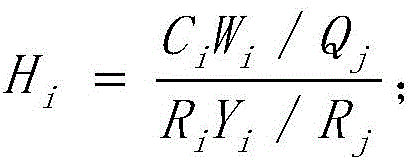
式(2)中,Hi为计算参数且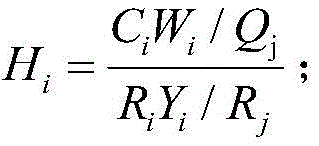
d.筛选出消耗各项所述目标任务的最均衡的计算资源对应的所述服务器。d. Screening out the servers corresponding to the most balanced computing resources consuming each of the target tasks.
优选的,所述步骤5包括:Preferably, the step 5 includes:
5-1.所述负载均衡器根据接收到的所述服务器的负载率状态变化;5-1. The load balancer changes according to the received load rate status of the server;
5-2.所述负载均衡器在负载率情况表中将所述服务器的负载率区间更改为修订值;所述修订值为所述服务器的负载率当前所在区间的中间值;5-2. The load balancer changes the load rate interval of the server to a revised value in the load rate situation table; the revised value is the middle value of the interval in which the load rate of the server is currently located;
5-3.根据负载率情况表中在的所述修订值对分布式负载进行调度。5-3. Schedule the distributed load according to the revised value in the load rate situation table.
从上述的技术方案可以看出,本发明提供了一种基于负载率分级触发的分布式负载调度方法,包括筛选出能够将任务消耗量化的服务器;将服务器的负载率在0-100%之间等分为若干区间;服务器节点实时且持续监测服务器的负载率;服务器节点向负载均衡器发送服务器的负载率状态变化;负载均衡器更新负载率情况表;并对分布式负载进行调度。本发明提出的方法有效减少网络通信量,降低负载均衡器的负担,于此同时负载均衡器调度表可以相对准确的反映服务器的真实负载;不仅可以保证剩余计算资源最多的服务器被作为选择对象,同时可以使CPU以及内存利用率保持相对平衡,避免单一资源过度消耗。It can be seen from the above technical solutions that the present invention provides a distributed load scheduling method based on load rate hierarchical triggering, including screening out servers that can quantify task consumption; setting the server load rate between 0-100% It is divided into several intervals; the server node monitors the server's load rate in real time and continuously; the server node sends the server's load rate status change to the load balancer; the load balancer updates the load rate situation table; and schedules the distributed load. The method proposed by the present invention effectively reduces the network traffic and the burden of the load balancer, and at the same time, the load balancer schedule can relatively accurately reflect the real load of the server; not only can it ensure that the server with the most remaining computing resources is selected as the object, At the same time, the CPU and memory utilization can be kept relatively balanced to avoid excessive consumption of a single resource.
与最接近的现有技术比,本发明提供的技术方案具有以下优异效果:Compared with the closest prior art, the technical solution provided by the present invention has the following excellent effects:
1、本发明所提供的技术方案中,通过筛选出能够将任务消耗量化的服务器;将服务器的负载率在0-100%之间等分为若干区间;服务器节点实时且持续监测服务器的负载率;服务器节点向负载均衡器发送服务器的负载率状态变化;负载均衡器更新负载率情况表;并对分布式负载进行调度;有效减少网络通信量,降低负载均衡器的负担,于此同时负载均衡器调度表可以相对准确的反映服务器的真实负载;不仅可以保证剩余计算资源最多的服务器被作为选择对象,同时可以使CPU以及内存利用率保持相对平衡,避免单一资源过度消耗。1. In the technical solution provided by the present invention, the server that can quantify the task consumption is screened out; the load rate of the server is divided into several intervals between 0-100%; the server node monitors the load rate of the server in real time and continuously ;The server node sends the load rate status change of the server to the load balancer; the load balancer updates the load rate situation table; and schedules the distributed load; effectively reduces the network traffic and the load of the load balancer, while the load balances The server scheduling table can relatively accurately reflect the real load of the server; it can not only ensure that the server with the most remaining computing resources is selected as the object, but also can keep the CPU and memory utilization relatively balanced to avoid excessive consumption of a single resource.
2、本发明提供的技术方案,应用广泛,具有显著的社会效益和经济效益。2. The technical solution provided by the present invention is widely used and has significant social and economic benefits.
附图说明Description of drawings
图1是现有技术的任务分配队列的静态负载均衡原理图;Fig. 1 is the static load balancing schematic diagram of the task allocation queue of the prior art;
图2是现有技术的LVS集群系统体系结构图;Fig. 2 is the LVS cluster system architecture diagram of the prior art;
图3是本发明的一种基于负载率分级触发的分布式负载调度方法的流程图;3 is a flowchart of a distributed load scheduling method based on load rate hierarchical triggering of the present invention;
图4是本发明分布式负载调度方法中步骤1的流程示意图;4 is a schematic flowchart of step 1 in the distributed load scheduling method of the present invention;
图5是本发明分布式负载调度方法中步骤5的流程示意图;5 is a schematic flowchart of step 5 in the distributed load scheduling method of the present invention;
图6是本发明的具体应用例的服务器节点发送负载情况的模式图;6 is a schematic diagram of a server node sending load situation of a specific application example of the present invention;
图7是本发明的具体应用例的负载均衡器的模型图。FIG. 7 is a model diagram of a load balancer of a specific application example of the present invention.
具体实施方式Detailed ways
下面将结合本发明实施例中的附图,对本发明实施例中的技术方案进行清楚、完整地描述,显然,所描述的实施例仅仅是本发明一部分实施例,而不是全部的实施例。基于本发明的实施例,本领域普通技术人员在没有做出创造性劳动前提下所获得的所有其他实施例,都属于本发明保护的范围。The technical solutions in the embodiments of the present invention will be clearly and completely described below with reference to the accompanying drawings in the embodiments of the present invention. Obviously, the described embodiments are only a part of the embodiments of the present invention, but not all of the embodiments. Based on the embodiments of the present invention, all other embodiments obtained by those of ordinary skill in the art without creative work fall within the protection scope of the present invention.
现有技术包括静态负载均衡模型及LVS动态负载均衡模型:Existing technologies include static load balancing model and LVS dynamic load balancing model:
一、静态负载均衡模型:1. Static load balancing model:
在静态算法中,根据每个节点服务器的性能,在程序编译时将进程分配给处理器。一旦进程被分配了,程序运行时就不可能改变或重新分配。在静态负载均衡算法中,每个节点的任务数是固定的。静态算法不能收集各节点的任何信息。对于每个节点进程来说,分配任务的完成受如下基本因素影响:任务到来时间、任务资源的大小、平均的执行时间和内部的通信处理。既然这些因素应该在任务分配前被测量,那么静态负载均衡也被称为概率性算法。这是因为在程序运行过程中没有任务迁移,没有开销发生或少量的开销发生。对于静态负载均衡,当任务数多于处理器数量时,负载均衡性能更好。In a static algorithm, processes are assigned to processors at program compilation time according to the performance of each node server. Once a process has been allocated, it cannot be changed or re-allocated while the program is running. In the static load balancing algorithm, the number of tasks per node is fixed. Static algorithms cannot collect any information about each node. For each node process, the completion of the assigned task is affected by the following basic factors: the arrival time of the task, the size of the task resource, the average execution time and the internal communication process. Since these factors should be measured before task assignment, static load balancing is also known as a probabilistic algorithm. This is because there is no task migration while the program is running, and no overhead or a small amount of overhead occurs. For static load balancing, when the number of tasks exceeds the number of processors, the load balancing performance is better.
图1显示了局部任务到达任务分配队列的静态负载均衡原理图。一个任务从任务分配队列要么被分配到远程的服务器节点,要么被分配到阀值队列里。一个任务也能够从远程节点分配到阀值队列。一旦一个任务被分配到阀值队列,它就不能被迁移到其它的节点。一个任务到达任何一个节点,要么被这个节点给处理,要么通过网络通信被转移到其他节点进行远程处理。静态负载均衡算法能够划分为两个子类,最优静态负载均衡和次优静态负载均衡。Figure 1 shows the schematic diagram of static load balancing for local tasks arriving in the task assignment queue. A task is either assigned to a remote server node from the task assignment queue or to a threshold queue. A task can also be assigned to a threshold queue from a remote node. Once a task is assigned to the threshold queue, it cannot be migrated to other nodes. When a task arrives at any node, it is either processed by this node or transferred to other nodes for remote processing through network communication. Static load balancing algorithms can be divided into two subcategories, optimal static load balancing and suboptimal static load balancing.
静态负载均衡存在的问题:在一个广泛的实时应用程序运行时产生负载,或者程序运行时发生了戏剧性的负载变化,甚至一些预先未知的运行行为。在这样的应用环境下,静态负载均衡方法就会效率低下。对于向淘宝、京东这些流量访问大,随机性访问强的网站,采用静态负载均衡模型显然不合适。Problems with static load balancing: load is generated when a wide range of real-time applications are running, or dramatic load changes occur when the program is running, or even some unknown running behavior. In such an application environment, the static load balancing method would be inefficient. For websites with large traffic and strong random access such as Taobao and Jingdong, it is obviously inappropriate to use the static load balancing model.
二、LVS动态负载均衡模型:2. LVS dynamic load balancing model:
LVS是由国防科技大学的章文嵩博士发起,并经过多年的发展,现在已经成熟应用于构建高性能、可扩展的负载均衡系统。采用LVS搭建负载均衡集群时,需要有一个虚拟的IP作为整个系统对外提供服务的请求地址。这个虚拟IP一般配置在负载均衡器上,用于建立客户端请求与服务器端的相应连接。当客户端向集群系统发起任务请求时,任务请求数据包先到达集群系统的负载均衡器,在负载均衡器上根据管理人员配置的负载均衡调度算法进行请求任务的调度分配,再进一步将请求任务分配到具体的后端服务器上进行处理。整个过程对用户来说是透明的,用户不用关心集群系统内是怎么实现的,只需要关心系统响应给用户的信息是否准确及时。LVS was initiated by Dr. Zhang Wensong from the National University of Defense Technology, and after years of development, it has now been maturely applied to build a high-performance and scalable load balancing system. When using LVS to build a load balancing cluster, a virtual IP is required as the request address for the entire system to provide services to the outside world. This virtual IP is generally configured on the load balancer to establish the corresponding connection between the client request and the server. When the client initiates a task request to the cluster system, the task request data packet first arrives at the load balancer of the cluster system, on the load balancer, the request task is scheduled and allocated according to the load balancing scheduling algorithm configured by the administrator, and then the request task is further dispatched. Allocated to specific back-end servers for processing. The whole process is transparent to the user. The user does not need to care about how the cluster system is implemented, but only needs to care about whether the information that the system responds to the user is accurate and timely.
图2为LVS集群系统的体系结构图。LVS集群由三部分构成,分别是负载均衡器、服务器池和共享存储。Figure 2 is an architecture diagram of the LVS cluster system. LVS cluster consists of three parts, namely load balancer, server pool and shared storage.
负载均衡器:它实际是集群对外的一个前端机。作用是把用户发来的请求,发送到服务器上执行。让用户认为始终是一个IP地址为其提供的服务。Load balancer: It is actually a front-end machine outside the cluster. The function is to send the request sent by the user to the server for execution. Make users think that it is always an IP address that provides services to them.
服务器池:它可以执行不同类型的请求,例如Web、Mail、DNS、Ftp等类型的请求。服务器池是真正执行请求的服务器。Server Pool: It can perform different types of requests, such as Web, Mail, DNS, Ftp and other types of requests. The server pool is the server that actually executes the request.
共享存储:它可以提供与服务器池相同的服务。其工作原理是开辟一个共享存储区提供给服务器池使用,从而共享存储区会获得与服务器池相同的内容。Shared Storage: It can provide the same service as a server pool. Its working principle is to open up a shared storage area for the server pool to use, so that the shared storage area will get the same content as the server pool.
用户发送请求到虚拟服务器,接到请求后,负载均衡器根据事先设定好的算法将此请求发送到真实服务器,真实服务器将请求处理好后,直接返回用户或者通过负载均衡器发送给用户。The user sends a request to the virtual server. After receiving the request, the load balancer sends the request to the real server according to the preset algorithm. After the real server processes the request, it directly returns to the user or sends it to the user through the load balancer.
Linux内核的IPVS模块内嵌入了十种负载均衡调度算法,包括轮询调度、加权轮询调度、目的地址散列调度、源地址散列调度、最小连接调度、加权最小连接调度、基于局部性的最小连接数调度、带复制的基于局部性的最小连接数调度、最短预期延迟调度算法、不排队调度算法。它们普遍存在的缺陷是:负载均衡器调度表中,不能及时更新服务器真实的负载情况。此外类似于基于最小连接数调度策略不能有效衡量服务器的负载。Ten load balancing scheduling algorithms are embedded in the IPVS module of the Linux kernel, including round-robin scheduling, weighted round-robin scheduling, destination address hash scheduling, source address hash scheduling, least connection scheduling, weighted least connection scheduling, locality-based Minimum connection scheduling, locality-based minimum connection scheduling with replication, shortest expected delay scheduling algorithm, no-queue scheduling algorithm. Their common defect is that the load balancer schedule cannot update the real load situation of the server in time. In addition, the scheduling strategy based on the minimum number of connections cannot effectively measure the load of the server.
如图3所示,本发明提供一种基于负载率分级触发的分布式负载调度方法,包括如下步骤:As shown in FIG. 3 , the present invention provides a distributed load scheduling method based on load rate hierarchical triggering, including the following steps:
步骤1.筛选出能够将任务消耗量化的服务器;Step 1. Screen out the servers that can quantify the task consumption;
步骤2.将服务器的负载率在0-100%之间等分为若干区间;
步骤3.服务器节点实时且持续监测服务器的负载率;
若服务器节点监测到服务器的负载率所在的区间发生变化,则进入步骤4;If the server node detects that the interval in which the load rate of the server is located changes, then go to step 4;
否则,则继续监测;Otherwise, continue monitoring;
步骤4.服务器节点向负载均衡器发送服务器的负载率状态变化;Step 4. The server node sends the load rate status change of the server to the load balancer;
步骤5.负载均衡器更新负载率情况表;并对分布式负载进行调度。Step 5. The load balancer updates the load rate situation table; and schedules the distributed load.
如图4所示,步骤1包括:As shown in Figure 4, step 1 includes:
1-1.获取目标任务所需要消耗的计算资源;1-1. Obtain the computing resources consumed by the target task;
1-2.筛选满足目标任务且剩余资源最多的服务器集合;1-2. Filter the server set that meets the target task and has the most remaining resources;
1-3.针对服务器集合,求得消耗各项目标任务的计算资源最均衡的目标服务器;1-3. For the server set, find the target server that consumes the most balanced computing resources for each target task;
1-4.负载均衡器将目标任务分发给为第二步目标服务器。1-4. The load balancer distributes the target task to the target server for the second step.
其中,步骤1-1包括:Among them, step 1-1 includes:
获取目标任务Taskj所需要消耗的计算资源;所计算资源包括计算量Qj和消耗内存Rj。Obtain the computing resources consumed by the target task Task j ; the computing resources include the computing amount Q j and the consumed memory R j .
其中,步骤1-2包括:Among them, steps 1-2 include:
a.计算满足目标任务的最大富余的计算资源的服务器剩余资源率Ui:a. Calculate the remaining resource ratio U i of the server with the maximum surplus computing resources satisfying the target task:

式(1)中,CiWi为服务器序列号为i的CPU剩余性能,RiYi为服务器编号为i的剩余内存资源;CiWi/Qj为i服务器CPU计算资源处理Taskj胜任能力,RiYi/Rj为i服务器内存处理Taskj胜任能力;In formula (1), C i W i is the CPU remaining performance of the server serial number i, R i Y i is the remaining memory resource of the server number i; C i W i /Q j is the CPU computing resource processing task of the i server. j competency, R i Y i /R j is the competency of i server memory processing Task j ;
b.根据服务器剩余资源率Ui值的大小,将待选的服务器的按服务器剩余资源率Ui从高到低排序,筛选出剩余资源最多的服务器集合。b. According to the value of the remaining resource rate U i of the server, sort the servers to be selected according to the remaining resource rate U i of the server from high to low, and filter out the server set with the most remaining resources.
其中,步骤1-3包括:Among them, steps 1-3 include:
c.针对服务器集合,求得消耗各项目标任务的最均衡的计算资源:c. For the server set, find the most balanced computing resources consuming each target task:

式(2)中,Hi为计算参数且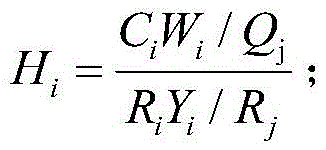
d.筛选出消耗各项目标任务的最均衡的计算资源对应的服务器。d. Screen out the server corresponding to the most balanced computing resources consuming each target task.
如图5所示,步骤5包括:As shown in Figure 5, step 5 includes:
5-1.负载均衡器根据接收到的服务器的负载率状态变化;5-1. The load balancer changes according to the received load rate status of the server;
5-2.负载均衡器在负载率情况表中将服务器的负载率区间更改为修订值;修订值为服务器的负载率当前所在区间的中间值;5-2. The load balancer changes the load rate range of the server to the revised value in the load rate situation table; the revised value is the middle value of the current range of the server's load rate;
5-3.根据负载率情况表中在的修订值对分布式负载进行调度。5-3. Schedule the distributed load according to the revised value in the load rate situation table.
本发明提供一种基于负载率分级触发的分布式负载调度方法的具体应用例,具体如下:The present invention provides a specific application example of a distributed load scheduling method based on load rate hierarchical triggering, as follows:
(1)把服务器的负载率情况按照0-100%分成若干区间;(1) Divide the load rate of the server into several intervals according to 0-100%;
(2)服务器节点一直在检测服务器的负载率;(2) The server node has been detecting the load rate of the server;
(3)若在某时刻其负载率处于某一区间,当监测到负载率突破某一区间,即向负载均衡器发送该服务器的负载情况;(3) If the load rate is in a certain range at a certain time, when the monitored load rate breaks through a certain range, the load status of the server is sent to the load balancer;
(4)负载均衡器中负载率情况表相应服务器的负载率为该区间的中间值;(4) The load rate of the corresponding server in the load rate situation table in the load balancer is the middle value of the interval;
图6为服务器节点发送负载情况的模式图。首先,我们可以把服务器负载率分为多个区间,下面举例为10个区间,表一为某一服务器负载区间表。FIG. 6 is a schematic diagram of a server node sending load. First, we can divide the server load rate into multiple intervals. The following example is 10 intervals. Table 1 is a server load interval table.
表一负载区间表Table 1 Load interval table

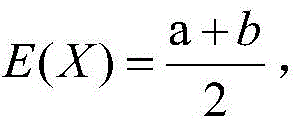
例如:某一服务器的CPU负载率在某时刻为30%-40%之间,若检测到负载率突破到40%-50%之间,则服务器向负载均衡器发送负载变化。负载均衡器中负载情况表中该服务器的CPU负载率改写为45%,概括说每次负载率或内存利用率突破每一个区间,就会向负载均衡器发送负载变化。且发送的报文不需要具体的数值,只需要发送负载所在的区间,且负载均衡器中某服务器负载情况表负载率为该区间的中间值。这样做的优势就是:可以有效的减小通信开销以及负载均衡器的负担,且可以相对准确的反映服务器的负载情况。下面对负载率取负载区间的中间值进行说明。服务器在某一段时间内的负载率X满足区间[a,b]均匀分布,设连续型随机变量X的分布函数为
其中,一种任务消耗量化的服务器选择策略:Among them, a server selection strategy for task consumption quantification:
为了克服不能真实衡量服务器的负载的问题,本篇从考虑服务器节点的处理能力方面,我们利用计算机系统性能的一些基本参数来作为考核服务器性能的指标。利用各性能指标参数的利用情况来作为服务器节点负载值的参数,负载均衡器利用这些性能参数来以及任务所需消耗动态计算服务器的适用值,调度器根适用值进行任务分配,均衡后端各服务器的执行任务。In order to overcome the problem of not being able to measure the load of the server, this article considers the processing capability of the server node, and uses some basic parameters of the computer system performance as the index for evaluating the server performance. The utilization of each performance index parameter is used as the parameter of the load value of the server node. The load balancer uses these performance parameters to dynamically calculate the applicable value of the server as well as the required consumption of the task. The scheduler allocates the task based on the applicable value, and balances the The tasks performed by the server.
一般情况下,任务有好多种类型,有消耗CPU的进程,有消耗内存的进程。有些程序消耗CPU较大,但是内存消耗小,有些消耗内存,但是CPU消耗小。因而,把任务CPU消耗以及内存消耗量化,有助于负载均衡器合理分配任务。本方案基于以上情况设计了一种合理的负载均衡调度算方案,该方案能够动态的考虑后端各服务器节点的实时处理能力和实时的负载情况,负载均衡器利用这个方案来分配客户端向负载均衡集群系统请求任务。In general, there are many types of tasks, including CPU-consuming processes and memory-consuming processes. Some programs consume more CPU but less memory, some consume memory but less CPU. Therefore, quantifying the CPU consumption and memory consumption of tasks can help the load balancer allocate tasks reasonably. Based on the above situation, this scheme designs a reasonable load balancing scheduling calculation scheme. This scheme can dynamically consider the real-time processing capacity and real-time load situation of each server node in the backend. The load balancer uses this scheme to allocate the load to the client. Balance cluster system request tasks.
图7是一种任务细化的的负载均衡模型。Figure 7 is a task-refined load balancing model.
该模型中会把每一个任务分为的消耗量在客户端进行估算,并发送给负载均衡器。负载均衡器首先会根据负载调度表中服务器的负载率,进行相关计算筛选出剩余资源最大的服务器集合,然后再通过相关算法计算出CPU负载和内存负载均衡服务器集合,选出目标服务器。表二为到达负载均衡器中的任务列表,表三为负载均衡器中服务器负载情况表。In this model, the consumption of each task is estimated on the client side and sent to the load balancer. The load balancer will first perform relevant calculations to screen out the server set with the largest remaining resources according to the load rate of the server in the load schedule table, and then calculate the CPU load and memory load balancing server set through related algorithms, and select the target server. Table 2 is the list of tasks to reach the load balancer, and Table 3 is the server load situation table in the load balancer.
表二负载均衡器中的任务列表Table 2 List of tasks in the load balancer
表三负载均衡器中服务器负载情况表Table 3 Server load situation in the load balancer


表二说明:任务所需内存以及计算量分别用Rj和Qj表示。表三说明:其中CPU的性能为Ci、以及内存大小为Ri已经归一化处理。CPU剩余负载率、剩余内存利用率分别用Wi和Yi表示。Table 2 shows that the memory and calculation amount required by the task are represented by Rj and Qj, respectively. Table 3 shows that the performance of the CPU is Ci and the memory size is Ri, which has been normalized. The remaining CPU load rate and remaining memory utilization are represented by Wi and Yi, respectively.
某一任务Task j筛选目标服务器过程:设一个任务所需内存为Rj,所需的计算量为Oj。The process of screening the target server for a certain task Task j: Let the memory required by a task be Rj, and the required calculation amount is Oj.
第一步:计算按照Ui的大小,列出前20个服务器的序号。该方案用每个服务器剩余计算资源除以任务所需的的计算资源,其中CiWi为服务器编号为i的CPU剩余性能,RiYi为服务器编号为i的剩余内存资源。通过该公式可以筛选出剩余资源最多的服务器集合,但是该方案有缺陷:当CPU计算资源多,而内存资源少的服务器也有可能被选入作为目标服务器。因而需要进一步筛选。Step 1: Calculate List the serial numbers of the top 20 servers according to the size of U i . The scheme divides the remaining computing resources of each server by the computing resources required for the task, where C i Wi is the remaining CPU performance of the server number i , and R i Y i is the remaining memory resources of the server number i. Through this formula, the set of servers with the most remaining resources can be filtered out, but this scheme has defects: when there are more CPU computing resources and less memory resources, the server with less memory resources may also be selected as the target server. Therefore, further screening is required.
第二步:则令


第三步:负载均衡器则将Task j分发给为第二步所求得序号的服务器。The third step: The load balancer distributes Task j to the server with the sequence number obtained in the second step.
以上实施例仅用以说明本发明的技术方案而非对其限制,尽管参照上述实施例对本发明进行了详细的说明,所属领域的普通技术人员依然可以对本发明的具体实施方式进行修改或者等同替换,而这些未脱离本发明精神和范围的任何修改或者等同替换,其均在申请待批的本发明的权利要求保护范围之内。The above embodiments are only used to illustrate the technical solutions of the present invention and not to limit them. Although the present invention has been described in detail with reference to the above embodiments, those of ordinary skill in the art can still modify or equivalently replace the specific embodiments of the present invention. , and any modifications or equivalent replacements that do not depart from the spirit and scope of the present invention are all within the protection scope of the claims of the present invention for which the application is pending.
Claims (4)


Priority Applications (1)
| Application Number | Priority Date | Filing Date | Title |
|---|---|---|---|
| CN201510930997.5A CN105491138B (en) | 2015-12-15 | 2015-12-15 | Distributed load scheduling method based on load rate graded triggering |
Applications Claiming Priority (1)
| Application Number | Priority Date | Filing Date | Title |
|---|---|---|---|
| CN201510930997.5A CN105491138B (en) | 2015-12-15 | 2015-12-15 | Distributed load scheduling method based on load rate graded triggering |
Publications (2)
| Publication Number | Publication Date |
|---|---|
| CN105491138A CN105491138A (en) | 2016-04-13 |
| CN105491138B true CN105491138B (en) | 2020-01-24 |
Family
ID=55677848
Family Applications (1)
| Application Number | Title | Priority Date | Filing Date |
|---|---|---|---|
| CN201510930997.5A Active CN105491138B (en) | 2015-12-15 | 2015-12-15 | Distributed load scheduling method based on load rate graded triggering |
Country Status (1)
| Country | Link |
|---|---|
| CN (1) | CN105491138B (en) |
Families Citing this family (15)
| Publication number | Priority date | Publication date | Assignee | Title |
|---|---|---|---|---|
| CN106533978B (en) * | 2016-11-24 | 2019-09-10 | 东软集团股份有限公司 | A kind of network load balancing method and system |
| CN106961670B (en) * | 2017-05-02 | 2019-03-12 | 千寻位置网络有限公司 | Geo-fencing system and working method based on distributed structure/architecture |
| CN107196865B (en) * | 2017-06-08 | 2020-07-24 | 中国民航大学 | Load-aware adaptive threshold overload migration method |
| CN107257387A (en) * | 2017-08-18 | 2017-10-17 | 四川长虹电器股份有限公司 | Adaptive load balancing method |
| CN109936606A (en) * | 2017-12-18 | 2019-06-25 | 浙江宇视科技有限公司 | Task distribution method and device |
| CN111294248B (en) * | 2018-12-06 | 2022-01-28 | 中国移动通信集团福建有限公司 | Network element fault quality inspection method, device, equipment and medium |
| CN109495351B (en) * | 2018-12-26 | 2021-01-12 | 网易(杭州)网络有限公司 | Method and device for determining data processing capacity of server system, electronic equipment and storage medium |
| CN110995802A (en) * | 2019-11-22 | 2020-04-10 | 北京奇艺世纪科技有限公司 | Task processing method and device, storage medium and electronic device |
| CN112416559B (en) * | 2020-11-30 | 2024-06-04 | 中国民航信息网络股份有限公司 | Scheduling policy updating method, service scheduling method, storage medium and related device |
| CN114745563B (en) * | 2022-04-11 | 2024-01-30 | 中国联合网络通信集团有限公司 | Method, device and system for processing live broadcast task by selecting edge computing node |
| CN115051997B (en) * | 2022-07-12 | 2024-03-19 | 中国电信股份有限公司 | Distributed resource scheduling method and device, storage medium and electronic equipment |
| CN115574898B (en) * | 2022-09-30 | 2024-06-14 | 江苏移动信息系统集成有限公司 | A water conservancy perception system based on 5G edge computing |
| CN116382892B (en) * | 2023-02-08 | 2023-10-27 | 深圳市融聚汇信息科技有限公司 | Load balancing method and device based on multi-cloud fusion and cloud service |
| CN116319480B (en) * | 2023-05-22 | 2023-08-08 | 圣麦克思智能科技(江苏)有限公司 | IDC operation and maintenance system and method based on data processing |
| CN119676243A (en) * | 2024-12-17 | 2025-03-21 | 哈尔滨理工大学 | Multi-session connection and load balancing method and system based on real-time load rate |
Citations (4)
| Publication number | Priority date | Publication date | Assignee | Title |
|---|---|---|---|---|
| CN1835453A (en) * | 2005-03-16 | 2006-09-20 | 华为技术有限公司 | Method of realizing load sharing in distributing system |
| CN101447939A (en) * | 2008-12-16 | 2009-06-03 | 中国移动通信集团北京有限公司 | Service distribution method and load balancer |
| CN102708011A (en) * | 2012-05-11 | 2012-10-03 | 南京邮电大学 | Multistage load estimating method facing task scheduling of cloud computing platform |
| CN104168332A (en) * | 2014-09-01 | 2014-11-26 | 广东电网公司信息中心 | Load balance and node state monitoring method in high performance computing |
Family Cites Families (1)
| Publication number | Priority date | Publication date | Assignee | Title |
|---|---|---|---|---|
| CN102232282B (en) * | 2010-10-29 | 2014-03-26 | 华为技术有限公司 | Method and apparatus for realizing load balance of resources in data center |
-
2015
- 2015-12-15 CN CN201510930997.5A patent/CN105491138B/en active Active
Patent Citations (4)
| Publication number | Priority date | Publication date | Assignee | Title |
|---|---|---|---|---|
| CN1835453A (en) * | 2005-03-16 | 2006-09-20 | 华为技术有限公司 | Method of realizing load sharing in distributing system |
| CN101447939A (en) * | 2008-12-16 | 2009-06-03 | 中国移动通信集团北京有限公司 | Service distribution method and load balancer |
| CN102708011A (en) * | 2012-05-11 | 2012-10-03 | 南京邮电大学 | Multistage load estimating method facing task scheduling of cloud computing platform |
| CN104168332A (en) * | 2014-09-01 | 2014-11-26 | 广东电网公司信息中心 | Load balance and node state monitoring method in high performance computing |
Also Published As
| Publication number | Publication date |
|---|---|
| CN105491138A (en) | 2016-04-13 |
Similar Documents
| Publication | Publication Date | Title |
|---|---|---|
| CN105491138B (en) | Distributed load scheduling method based on load rate graded triggering | |
| CN102185779B (en) | Method and device for realizing data center resource load balance in proportion to comprehensive allocation capability | |
| CN103713956B (en) | Method for intelligent weighing load balance in cloud computing virtualized management environment | |
| CN103338228B (en) | Cloud computing load balancing dispatching algorithms based on double weighting Smallest connection algorithms | |
| US10198292B2 (en) | Scheduling database queries based on elapsed time of queries | |
| CN103763378A (en) | Task processing method and system and nodes based on distributive type calculation system | |
| CN103944997B (en) | In conjunction with the load-balancing method of random sampling and Intel Virtualization Technology | |
| CN107977271B (en) | Load balancing method for data center integrated management system | |
| Rupprecht et al. | SquirrelJoin: Network-aware distributed join processing with lazy partitioning | |
| Zhang et al. | The real-time scheduling strategy based on traffic and load balancing in storm | |
| Soundarabai et al. | Comparative study on load balancing techniques in distributed systems | |
| Hu et al. | Job scheduling without prior information in big data processing systems | |
| Li et al. | Dynamic load balancing algorithm based on FCFS | |
| Mirobi et al. | Dynamic load balancing approach for minimizing the response time using an enhanced throttled load balancer in cloud computing | |
| Sun et al. | A two-tier coordinated load balancing strategy over skewed data streams: D. Sun et al. | |
| CN107566535A (en) | Adaptive load balancing strategy based on user concurrent access timing planning in a kind of web map service | |
| Sun et al. | Lc‐Stream: An elastic scheduling strategy with latency constraints in geo‐distributed stream computing environments | |
| Ashalatha et al. | Dynamic load balancing methods for resource optimization in cloud computing environment | |
| Chandakanna et al. | A sliding window based self-learning and adaptive load balancer | |
| CN107203256A (en) | Energy-conservation distribution method and device under a kind of network function virtualization scene | |
| Kumar et al. | A priority based dynamic load balancing approach in a grid based distributed computing network | |
| Neelakantan et al. | Task allocation in distributed systems | |
| Li et al. | Neilats: Neighbor-aware latency-sensitive application scheduling in heterogeneous cloud-edge environment | |
| CN109144664B (en) | Dynamic migration method of virtual machine based on user service quality demand difference | |
| Li et al. | A dynamic load balancing algorithm based on consistent hash |
Legal Events
| Date | Code | Title | Description |
|---|---|---|---|
| C06 | Publication | ||
| PB01 | Publication | ||
| C10 | Entry into substantive examination | ||
| SE01 | Entry into force of request for substantive examination | ||
| GR01 | Patent grant | ||
| GR01 | Patent grant |