Detailed Description
The polyester amide of the present invention, a fiber produced from the polyester amide, and a production method thereof will be described in detail below with reference to specific embodiments.
The polyesteramides of the invention have the following structural units:
wherein x is an integer of 2-18, preferably an integer of 2-4, and more preferably 2; y is an integer of 2 to 18, preferably an integer of 4 to 12, and more preferably 6; z is an integer of 2 to 18, preferably an integer of 4 to 6, and more preferably 5; wherein R is1~R4Is H or C1~C4Any one of the alkyl groups, preferably H. In an embodiment of the present invention, the molar ratio of the structural units (i) and (ii) in the polyester is 1:0.9 to 1.1, the molar ratio of the structural units (iii) and (iv) in the polyester is 1:0.95 to 1.05, and the molar ratio of the structural units (i) and (iii) in the polyesteramide is (1:99 to 99.8:0.2), preferably (30:70) to (99.5:0.5), and more preferably (70:30) to (99: 1).
In the present invention, the intrinsic viscosity of the polyesteramide is preferably 0.3 to 1.8dL/g, more preferably 0.5 to 1.0 dL/g.
The preparation method of the polyesteramide comprises the step of carrying out polycondensation on raw materials of dihydric alcohol, terephthalic acid or derivatives thereof and nylon salt to prepare the polyesteramide random copolymer.
Preferably, the molar ratio of the nylon salt, the dihydric alcohol, the terephthalic acid and the derivatives thereof is (0.002-99): 1-3): 1, preferably (0.005-3): 1.2-2.6): 1, more preferably (0.01-0.3): 1.5-2.2): 1. In the present invention, the diol may be an aliphatic diol containing 2 to 18 carbon atoms, such as ethylene glycol, propylene glycol, butylene glycol, pentylene glycol, hexylene glycol, heptylene glycol, octylene glycol, nonylene glycol, decylene glycol, undecylene glycol, dodecylene glycol, tridecylene glycol, tetradecylene glycol, pentadecylene glycol, hexadecyl glycol, heptadecylene glycol, octadecylene glycol, among which ethylene glycol, propylene glycol, and butylene glycol are preferable.
In the step (1), two or more than two diols can be added simultaneously to form polyesteramides with different structures.
In the invention, the terephthalic acid derivative comprises terephthalic acid monoester, terephthalic acid diester, terephthaloyl dichloride and compounds of the above compounds, wherein hydrogen on benzene rings of the above compounds is partially or completely substituted by alkyl containing 1-4 carbon atoms.
In the invention, the nylon salt comprises a nylon salt formed by aliphatic dibasic acid with a carbon chain length of 2-18 and aliphatic diamine with a carbon chain length of 2-18, preferably adipic acid hexamethylene diamine salt or adipic acid glutaric diamine salt. The above nylon salt can be produced by a conventionally known method, for example, by recrystallization from water or ethanol, wherein the molar ratio of the dibasic acid to the diamine in the nylon salt may vary from (0.95: 1.05) to (1.05: 0.95), and is not particularly limited.
The preparation method of the polyesteramide further comprises the following steps:
(1) adding dihydric alcohol, terephthalic acid and/or derivatives thereof and nylon salt into a reaction container under the protection of nitrogen or inert gas, and carrying out subsequent polycondensation in the step (2) after more than 90% of the terephthalic acid or derivatives thereof are subjected to esterification and acylation reactions;
(2) and heating the reaction container to 230-320 ℃, vacuumizing until the vacuum degree reaches below 30kPa, and stopping the reaction to obtain the polyesteramide after the intrinsic viscosity of the reaction product is 0.3-1.8 dL/g.
In the invention, in the step (1), esterification and acylation reactions exist, and the reaction constant (about 300-400) of acylation is far higher than that (about 4) of esterification, so that terephthalic acid or a derivative thereof can firstly perform acylation reaction with an exposed amino group in a nylon salt. If the terephthalic acid or the derivative thereof and the dibasic acid in the nylon salt are in an excessive state, almost all the amino groups of the diamine in the nylon salt react with the carboxyl groups to form the acylation compound terminated by the terephthalic acid or the derivative thereof and the dibasic acid in the nylon salt, so that the polymerization degree of the polyamide chain segment can be regulated and controlled by controlling the ratio of the terephthalic acid or the derivative thereof to the nylon salt, and even the diamide structural unit formed by the same diamine molecule can be inserted between two ester structural units of the polyester chain to avoid the formation of the long polyamide chain segment, which cannot be achieved by all the previous patents. The carboxylic end-capped acylate and terephthalic acid or derivatives thereof are esterified with an excess of diol to form a monomer for subsequent transesterification. The invention realizes the controllability of the polymerization degree of the amide chain segment in an ingenious mode.
In the invention, the esterification end point of the step (1) is set to be more than 90%, preferably more than 95% of the esterification and acylation reaction of the terephthalic acid and/or the derivative thereof, the esterification and acylation rate is high, the subsequent polycondensation reaction is favorably carried out, and the side reaction is easy to control.
Preferably, one or more auxiliary agents are added during the addition of the starting materials in step (1), and/or one or more auxiliary agents are added before the heating of the reaction vessel in step (2).
In the present invention, the auxiliary includes various stabilizers such as a transesterification catalyst, an esterification catalyst, an etherification inhibitor, a polymerization catalyst used for polymerization, a heat stabilizer, a light stabilizer, and a polymerization regulator. The adjuvants may also include antioxidants, weathering agents, antiblocking agents, lubricants, crystallization nucleating agents, plasticizers, antistatic agents, conductive or antistatic fillers, flame retardants, fillers and other polycondensation-modifying materials, etc., as desired for the final properties of the polyesteramide. These additives may be added as needed within a range not impairing the effects of the present invention. The addition method may be any known method.
Examples of the transesterification catalyst and the esterification catalyst include compounds such as manganese, cobalt, zinc, titanium, and calcium. Examples of the etherification inhibitor include amine compounds. Examples of the polymerization catalyst include compounds containing germanium, antimony, titanium, aluminum, and the like. For example, the germanium-containing compound includes amorphous germanium dioxide, crystalline germanium dioxide, germanium chloride, tetraethoxygermanium, tetra-n-butoxygermanium, germanium phosphite, and the like, and the amount thereof is preferably 5 to 150ppm, more preferably 10 to 100ppm, and further preferably 15 to 70ppm, in terms of the concentration of germanium atoms in the polyesteramide compound. The antimony-containing compound includes antimony trioxide, antimony acetate, antimony tartrate, antimony potassium tartrate, antimony oxychloride, antimony glycolate, antimony pentoxide, and antimony triphenyl, and the amount of the antimony-containing compound is preferably 10 to 400ppm, more preferably 20 to 350ppm, and still more preferably 30 to 300ppm, in terms of the antimony atom concentration in the polyesteramide compound. Examples of the titanium-containing compound include tetraalkyl titanates such as tetraethyl titanate, tetraisopropyl titanate, tetra-n-propyl titanate, and tetra-n-butyl titanate, and partial hydrolyzates thereof, titanium oxalate compounds such as titanium oxalate, titanium ammonium oxalate, titanium sodium oxalate, titanium potassium oxalate, titanium calcium oxalate, and titanium strontium oxalate, titanium trimellitate, titanium sulfate, and titanium chloride, and the amount thereof is preferably 0.5 to 300ppm, more preferably 1 to 200ppm, and still more preferably 3 to 100ppm, in terms of the titanium atom concentration in the polyesteramide compound. Examples of the aluminum-containing compound include carboxylates such as aluminum formate, aluminum acetate, aluminum propionate and aluminum oxalate, inorganic acid salts such as oxides, aluminum hydroxide, aluminum chloride, aluminum chlorohydroxide and aluminum carbonate, alkylaluminum such as methylaluminum and ethylaluminum ethoxide, aluminum complex compounds such as aluminum acetylacetonate and acetoacetic acid, organoaluminum compounds such as trimethylaluminum and triethylaluminum, and partial hydrolysates thereof, and the amount thereof is preferably 1 to 400ppm, more preferably 3 to 300ppm, and still more preferably 5 to 200ppm, in terms of the aluminum atom concentration in the polyesteramide compound.
In the step (1) of the present invention, an alkali metal compound or an alkaline earth metal compound may be used. Examples of the alkali metal compound or alkaline earth metal compound include alkali metal or alkaline earth metal carboxylates and alkoxides. The amount of the alkali metal or alkaline earth metal is preferably 0.1 to 200ppm, more preferably 0.5 to 150ppm, and still more preferably 1 to 100ppm, in terms of the atomic concentration of the alkali metal or alkaline earth metal in the polyesteramide compound.
In the production of the polyester amide compound of the present invention, 1 or more kinds of phosphoric acid, phosphorous acid, hypophosphorous acid, phosphonic acid, and derivatives thereof can be used as the heat stabilizer. Examples thereof include phosphoric acid, trimethyl phosphate, triethyl phosphate, tributyl phosphate, triphenyl phosphate, monomethyl phosphate, dimethyl phosphate, monobutyl phosphate, dibutyl phosphate, phosphorous acid, sodium hypophosphite, trimethyl phosphite, triethyl phosphite, tributyl phosphite, methylphosphonic acid, dimethyl methylphosphonate, dimethyl ethylphosphonate, diethyl phenylphosphonate, and diphenyl phenylphosphonate. The amount of the phosphorus-containing compound is preferably 1 to 200ppm, more preferably 2 to 150ppm, and still more preferably 3 to 100ppm, based on the concentration of phosphorus atoms in the polyesteramide compound.
In addition, in the production of the polyesteramide compound of the present invention, a higher alcohol such as lauryl alcohol may be added for the purpose of adjusting the weight average molecular weight. In addition, a polyhydric alcohol such as glycerin may be added for the purpose of improving physical properties.
The antioxidant includes copper-based antioxidants, hindered phenol-based antioxidants, hindered amine-based antioxidants, phosphorus-based antioxidants, sulfur-based antioxidants, and the like, and among them, hindered phenol-based antioxidants and phosphorus-based antioxidants are preferable.
The weather resistant agent includes a diphenol compound, a salicylate compound, a benzotriazole compound, a benzophenone compound, a hindered amine compound, and the like.
The anti-sticking agent or lubricant comprises aliphatic alcohol, aliphatic amide, aliphatic bisamide, diurea, polyethylene wax and the like.
The crystallization nucleating agent comprises inorganic particles such as talc, silicon dioxide, kaolin, clay, boron nitride and the like, or metal oxides, high-melting point nylon and the like.
The plasticizer comprises octyl p-hydroxybenzoate, N-butylbenzenesulfonamide and the like.
The antistatic agent includes alkyl sulfate type anionic antistatic agents, quaternary ammonium salt type cationic antistatic agents, nonionic antistatic agents such as polyoxyethylene sorbitan monostearate, betaine type amphoteric antistatic agents, and the like.
The flame retardant includes melamine cyanurate, hydroxides (e.g., magnesium hydroxide, aluminum hydroxide, etc.), ammonium polyphosphate, brominated polystyrene, brominated polyphenylene ether, brominated polycarbonate, brominated epoxy resin, or a combination of these brominated flame retardants with antimony trioxide.
The filler includes a granular, needle-like or plate-like filler such as glass fiber, carbon black, black ink, barium sulfate, magnesium sulfate, calcium carbonate, magnesium carbonate, antimony oxide, titanium dioxide, alumina, zinc oxide, iron oxide, zinc sulfide, zinc, lead, nickel, aluminum, copper, iron, stainless steel, bentonite, montmorillonite, mica, etc.
The other polycondensates include other polyamides, polyethylene, polypropylene, polyester, polycarbonate, polyphenylene oxide, polyphenylene sulfide, liquid crystal polymer, polysulfone, polyethersulfone, ABS resin, AS resin, polystyrene, and the like.
In the invention, the addition agents added in the step (1) and the step (2) are selected according to actual needs, and the addition agents can be the same or different.
In the preparation method of the polyesteramide, the polycondensation temperature in the step (2) is preferably 230-320 ℃, the polycondensation speed is reduced due to low temperature, and the side reaction is increased due to high temperature, so the polycondensation temperature is more preferably 250-300 ℃. The degree of vacuum in the polycondensation in the step (2) is preferably controlled to 30kPa or less, and in order to accelerate the progress of the polycondensation reaction and obtain a polyesteramide having a higher intrinsic viscosity, the degree of vacuum in the polycondensation is more preferably controlled to 1kPa or less, and the degree of vacuum in the polycondensation can be gradually reduced so as to gradually increase the degree of polymerization. In order to make the polyesteramide have practical production significance, the reaction is stopped after the intrinsic viscosity of the polyesteramide is 0.3-1.8 dL/g, and more preferably the intrinsic viscosity is 0.5-1.0 dL/g.
In the preparation method of the polyesteramide, the phenomenon that the molecular chain of the polyester is broken due to the amino group in the nylon salt is completely acylated in the polycondensation process in the step (2) can be greatly reduced in other patents due to the addition of the amino group at the end of the polyamide oligomer.
The invention also provides a fiber, and the raw material of the fiber is prepared from the polyamide modified polyester. Other necessary raw materials may be added during the process of preparing the fiber, as needed, for example, to prepare an island fiber.
Further, the fibers may be polyester amide nascent fibers, polyester amide filament, polyester amide POY fibers, polyester amide plus spandex, polyester amide FDY, and polyester amide staple fibers.
The fiber fineness of the invention is preferably 0.5-10 dtex, and the single fiber fineness can be adjusted by the device and the process according to different application fields. Due to the fact that the filament number is too low, abnormal phenomena such as end breakage and the like easily occur, and meanwhile, due to the fact that the filament number is too high, bending strength of the fabric is too high, and hand feeling is hard. Therefore, the fineness of the fiber of the present invention is more preferably in the range of 1.0 to 7.0 dtex. Meanwhile, if the monofilament fineness is kept within the range required by the invention, the appropriate number of filaments can be selected according to the application to meet the application requirement.
The strength of the fiber of the present invention is preferably 1.0 to 8.0 cN/dtex. The strength is too low, fluff is easy to appear in the weaving process, a finished product is easy to damage, the strength is too high, the spinnability is poor during spinning, the yarn breaking phenomenon is easy to appear, and the fiber is regulated by polymerization and spinning processes according to different application fields, wherein the more preferable strength range of the fiber is 2.0-5.5 cN/dtex.
The fiber of the present invention has an elongation at break of 5.0 to 400.0%, preferably 15 to 130%. The dye-uptake of the fiber dyed by the acid dye under normal pressure is more than 80 percent.
The method for preparing the fiber is not particularly limited in the present invention, and any suitable technique can be adopted, and those skilled in the art can know that suitable process parameters can be determined.
In one embodiment of the present invention, a method of making a fiber comprises the steps of: guiding the polyester amide slices or melts into a spinning machine by using a melt pump or a single screw, spinning at 210-285 ℃, preferably at 215-260 ℃, at 200-1500 m/min, preferably at 400-1200 m/min, more preferably at 500-1100 m/min to obtain polyester amide nascent fibers; or spinning the polyesteramide at 210-285 ℃ at the spinning speed of 1500-3500 m/min, more preferably 1800-3200 m/min to obtain the polyesteramide POY fiber; or spinning the polyesteramide at 210-285 ℃, directly feeding the fiber from the spinneret plate into a first hot plate, wherein the temperature of the hot plate is 75-100 ℃, the speed is 800-2000 m/min, then feeding the fiber into a second hot plate, the temperature of the hot plate is 120-180 ℃, the speed is 3200-5200 m/min, and the fiber is drawn between the first hot plate and the second hot plate by 2-5 times; and (3) feeding the fiber bundle coming out of the second guide disc into a winding machine for winding at the winding speed of 3100-5200 m/min, and winding to obtain the polyester amide FDY fiber.
In the invention, the prepared polyester amide nascent fiber can be subjected to primary drafting at 40-90 ℃, wherein the drafting multiple is 1.5-6 times, and the secondary drafting at 80-120 ℃ is carried out, wherein the drafting multiple is 1.1-1.6 times, and the fiber filament is obtained after heat setting at 120-160 ℃; or performing primary drafting on the polyester amide nascent fiber at 40-90 ℃, wherein the drafting multiple is 1.5-4 times, performing secondary drafting at 80-120 ℃, the drafting multiple is 1.1-2 times, then crimping the fiber, the number of crimps is 10-20/25 cm, then performing heat setting at 120-180 ℃ for 15 minutes, cutting the shaped fiber on a cutting machine, and packaging to obtain the polyester amide staple fiber. Or drafting the polyester amide POY fiber on a texturing machine at the speed of 300-1200 m/min by 1.3-3 times, wherein the temperature of a preheating box is 120-220 ℃, the D/Y is 1.4-2.6, the temperature of a shaping box is 140-200 ℃, and the winding speed is 800-2200 m/min, so as to obtain the polyester amide textured yarn.
The polyester amide of the present invention, fibers produced from the polyester amide, and processes for producing the same will be described in detail below with reference to specific examples. It should be understood that the following examples are illustrative only and are not intended to limit the scope of the present invention.
The properties of the examples and comparative examples were measured by the following methods and methods known in the industry:
intrinsic viscosity η (dL/g), test method: reference is made to ASTM D4603-2003;
melting point Tm (° c), test method: reference GB/T19466.3-2004;
breaking strength (CN/dtex), test method: reference GB/T3916-1997;
elongation at break (%), test method: reference GB/T3916-1997;
dye uptake (%), test method: refer to FZ/T54037-2011.
Example 1
Preparation of a polyesteramide copolymer
19.4kg of dimethyl terephthalate, 12.4kg of ethylene glycol and 0.1kg of adipic acid hexamethylene diamine salt (commercially available, the same below) are added into a 200L reaction kettle, the temperature is increased to 205 ℃ for reaction, low boiling point components are fractionated out, the reaction is carried out for 80 minutes, and the esterification and acylation reactions are finished when the fraction reaches 98 percent of the theoretical amount. And adding 13g of tetrabutyl titanate polycondensation catalyst, heating to 250 ℃, vacuumizing to 50Pa, continuing heating to 280 ℃, reacting for 4 hours, filling 0.4MPa nitrogen into a polymerization kettle when the intrinsic viscosity of the polyesteramide in the kettle is 0.78dL/g, and carrying out wire drawing and granulation. The resulting polyesteramide had a melting point of 249 ℃.
Example 2
Preparation of a polyesteramide copolymer
18.8kg of dimethyl terephthalate, 11.2kg of ethylene glycol, 0.7kg of glutaric diamine adipate (which is commercially available, the same applies hereinafter) and 3.8g of tetrabutyl titanate are added into a 200L reaction kettle, the temperature is raised to 198 ℃ for reaction, low-boiling components are fractionated, the reaction is carried out for 80 minutes, and the esterification and acylation reactions are finished when the fraction reaches 99 percent of the theoretical amount. Then adding 10g of tetrabutyl titanate polycondensation catalyst, heating to 240 ℃, vacuumizing to 50Pa, continuing heating to 270 ℃, reacting for 4 hours, filling 0.5MPa nitrogen into a polymerization kettle when the intrinsic viscosity of the polyesteramide in the kettle is 0.84dL/g, and wire drawing and granulating. The melting point of the resulting polyesteramide was 237 ℃.
Example 3
Preparation of a polyesteramide copolymer
Adding 15.6kg of terephthalic acid, 14.5kg of ethylene glycol, 1.49kg of glutaric diamine adipate and 2.2g of tetrabutyl titanate into a 200L reaction kettle, heating to 210 ℃ for reaction, fractionating low-boiling-point components, carrying out the reaction for 120 minutes, and finishing the esterification and acylation reaction when the fraction reaches 99% of the theoretical amount. Then adding 8.2g tetrabutyl titanate polycondensation catalyst, heating to 245 ℃, vacuumizing to 50Pa, continuing to heat to 270 ℃, reacting for 4 hours, charging 0.6MPa nitrogen into the polymerization kettle when the intrinsic viscosity of the polyesteramide in the kettle is 0.87dL/g, and drawing and granulating. The resulting polyesteramide had a melting point of 228 ℃.
Example 4
Preparation of a polyesteramide copolymer
Adding 11.6kg of terephthalic acid, 15.5kg of ethylene glycol, 8.0kg of glutaric diamine adipate and 18g of antimony trioxide into a 200L reaction kettle, heating to 200 ℃ for reaction, fractionating low-boiling-point components, carrying out the reaction for 120 minutes, and finishing the esterification and acylation reaction when the fraction reaches 99% of the theoretical amount. Heating to 245 ℃, vacuumizing to 100Pa, continuing heating to 275 ℃, reacting for 3 hours, filling 0.4MPa nitrogen into a polymerization kettle when the intrinsic viscosity of the polyesteramide in the kettle is 0.78dL/g, and drawing and granulating. The resulting polyesteramides have no melting point.
Example 5
Preparation of a polyesteramide copolymer
9.9kg of terephthalic acid, 10.2kg of ethylene glycol, 2.4kg of butanediol, 13.2kg of dodecanedioic acid glutaric diamine salt and 2.0g of sodium hypophosphite are added into a 200L reaction kettle, the temperature is increased to 200 ℃ for reaction, low boiling point components are fractionated, the reaction is carried out for 120 minutes, and the esterification and acylation reactions are finished when the fraction reaches 98 percent of the theoretical amount. Then adding 10g tetrabutyl titanate polycondensation catalyst, heating to 240 ℃, vacuumizing to 20kPa, continuing to heat to 268 ℃, vacuumizing to 70Pa, reacting for 4 hours, charging 0.3MPa nitrogen into the polymerization kettle when the intrinsic viscosity of the polyesteramide in the kettle is 0.70dL/g, and drawing and granulating. The resulting polyesteramides have no melting point.
Example 6
Preparation of a polyesteramide copolymer
Adding 15.6kg of terephthalic acid, 14.5kg of ethylene glycol, 1.57kg of adipic acid hexamethylene diamine salt and 2.4g of tetrabutyl titanate into a 200L reaction kettle, heating to 210 ℃ for reaction, fractionating low-boiling-point components, carrying out the reaction for 120 minutes, and finishing the esterification and acylation reaction when the fraction reaches 99% of the theoretical amount. And adding 8g of tetrabutyl titanate polycondensation catalyst, heating to 250 ℃, vacuumizing to 50Pa, continuously heating to 280 ℃, reacting for 4 hours, filling 0.5MPa nitrogen into a polymerization kettle when the intrinsic viscosity of the polyesteramide in the kettle is 0.84dL/g, and carrying out wire drawing and granulation. The melting point of the resulting polyesteramide was 226 ℃.
Example 7
Preparation of a polyesteramide copolymer
9.9kg of terephthalic acid, 13.6kg of ethylene glycol, 10.4kg of adipic acid hexamethylene diamine salt (nylon 66 salt), 2g of sodium hypophosphite and 60g of titanium dioxide are added into a 200L reaction kettle, the temperature is increased to 210 ℃ for reaction, low boiling point components are fractionated, the reaction is carried out for 100 minutes, and the esterification and acylation reactions are finished when the fraction reaches 99% of the theoretical amount. And adding 8g of tetrabutyl titanate polycondensation catalyst, heating to 248 ℃, vacuumizing to 70Pa, continuously heating to 280 ℃, reacting for 3 hours, filling 0.4MPa nitrogen into a polymerization kettle when the intrinsic viscosity of the polyesteramide in the kettle is 0.72dL/g, and drawing and granulating. The resulting polyesteramides have no melting point.
Example 8
Preparation of a polyesteramide copolymer
Adding 15.6kg of terephthalic acid, 16.7kg of propylene glycol, 1.49kg of glutaric diamine adipate, 2.4g of tetrabutyl titanate and 1.6g of sodium hypophosphite into a 200L reaction kettle, heating to 220 ℃ for reaction, fractionating low-boiling-point components, carrying out the reaction for 80 minutes, and finishing the esterification and acylation reaction when the fraction reaches 99% of the theoretical amount. Then 8g of tetrabutyl titanate polycondensation catalyst is added, after the temperature is raised to 245 ℃, the vacuum pumping is carried out until the pressure is 40Pa, the temperature is continuously raised to 280 ℃, the reaction is carried out for 4 hours, when the intrinsic viscosity of the polyesteramide in the kettle is 0.98dL/g, 0.6MPa nitrogen is filled into the polymerization kettle, and the wire drawing granulation is carried out. The resulting polyesteramide had a melting point of 215 ℃.
Example 9
Preparation of a polyesteramide copolymer
Adding 15.6kg of terephthalic acid, 20.7kg of butanediol, 1.49kg of glutaric diamine adipate, 3.2g of tetraisopropyl titanate and sodium pyrophosphate solution containing 32g of titanium dioxide into a 200L reaction kettle in sequence, heating to 220 ℃ for reaction, fractionating low-boiling components, carrying out the reaction for 120 minutes, and finishing the esterification and acylation reaction when the fraction reaches 98% of the theoretical amount. Then adding 7.6g of tetraisopropyl titanate polycondensation catalyst, heating to 245 ℃, vacuumizing to 80Pa, continuing to heat to 270 ℃, reacting for 4 hours, filling 0.4MPa nitrogen into the polymerization kettle when the intrinsic viscosity of the polyesteramide in the kettle is 0.76dL/g, and wire drawing and granulating. The melting point of the resulting polyesteramide was 213 ℃.
Example 10
Preparation of polyester amide filaments
The polyester amide slice obtained in the example 2 is dried in vacuum at 120 ℃ for 10h, then is spun at 250 ℃ and the winding speed is 600m/min, so as to obtain the polyester amide nascent fiber, and the nascent fiber is subjected to primary drafting at 75 ℃, the drafting multiple is 3 times, secondary drafting at 115 ℃, the drafting multiple is 1.4 times, and the fiber filament is obtained after heat setting at 150 ℃. The breaking strength of the fiber is 4.6cN/dtex, the elongation at break is 29 percent, and the fiber modulus is 38 cN/dtex; the obtained fiber is dyed for 90 minutes at 93 ℃ and normal pressure in red acid dye with the bath ratio of 1: 20, washed with water and dried, and the dye uptake of the polyester amide filament yarn can reach 81 percent through detection. Dyeing is uniform, and no color difference or broken filament exists.
Example 11
Preparation of polyester amide plus elater
The polyester amide chips obtained in example 3 were vacuum-dried at 120 ℃ for 12 hours, spun at 245 ℃ at a winding speed of 2800m/min to obtain polyester amide copolymer POY fibers, and the fibers were drawn on a draw texturing machine at 900m/min by 1.6 times, at a preheating oven temperature of 200 ℃, D/Y of 1.7 and a winding speed of 1400m/min to obtain polyester amide textured yarns. The breaking strength of the fiber is 2.62cN/dtex, and the elongation at break is 33%; dyeing the obtained fiber in a blue acid dye with a bath ratio of 1: 20 at 95 ℃ for 60 minutes under normal pressure, washing with water, drying, and detecting to obtain the polyester amide spandex filament dyeing rate reaching 85%. Dyeing is uniform, and no color difference or broken filament exists.
Example 12
Preparation of polyester amide FDY fibers
After the polyester amide slices obtained in the embodiment 6 are dried in vacuum at 120 ℃ for 12h, spinning is carried out at 248 ℃, the temperature of a first hot plate is 80 ℃, the speed is 1500m/min, then the polyester amide slices enter a second hot plate, the temperature of the hot plate is 160 ℃, the speed is 3750m/min, fiber drafting is carried out between the first hot plate and the second hot plate, and the drafting multiple is 2.5 times; and (4) feeding the fiber bundle coming out of the second guide disc into a winding machine for winding at the winding speed of 3700m/min to obtain the polyester amide FDY fiber after winding. The breaking strength of the fiber is 3.82cN/dtex, and the elongation at break is 30%; and dyeing the obtained fiber in a red acid dye with a bath ratio of 1: 20 at 93 ℃ under normal pressure for 30 minutes, washing with water, drying, and detecting that the dye-uptake of the polyester amide copolymer FDY fiber can reach 83%. Dyeing is uniform, and no color difference or broken filament exists.
Example 13
Preparation of polyester amide staple fibers
After the polyester amide chips obtained in example 8 were vacuum-dried at 120 ℃ for 10 hours, the pretreated polyester amide copolymer was spun at 243 ℃ at a winding speed of 800m/min to obtain polyester amide nascent fibers, and after the fibers were collected, primary drawing was performed at 55 ℃ at a drawing ratio of 3.2, secondary drawing was performed at 120 ℃ at a drawing ratio of 1.3, and then the fibers were crimped, and then heat-set at 160 ℃ for 15 minutes, and the fibers after setting were cut and packaged on a cutter to obtain cotton-type polyester amide copolymer staple fibers having a fineness of 1.7dtex and a length of 38 mm. The breaking strength of the fiber is 2.23cN/dtex, the elongation at break is 40 percent, and the number of crimps is 13/25 cm; the obtained fiber is dyed in blue acid dye with the bath ratio of 1: 20 for 35 minutes at 90 ℃ and normal pressure, and is dried after being washed with water, and the dye-uptake of the cotton type polyester amide copolymer short fiber obtained by detection can reach 85%. Dyeing is uniform and has no color difference.
Example 14
Preparation of polyesteramide nascent fiber
Vacuum drying the polyester amide slice obtained in the embodiment 9 at 120 ℃ for 10h, adding the polyester amide slice into a single screw extruder, carrying out melt extrusion at 240 ℃ to prepare polyester amide melt, metering the obtained melt by a metering pump, feeding the melt into a spinning manifold, and spraying the melt from a spinneret plate hole to form melt trickle in a spinning component of the spinning manifold after melt distribution and homogenization; and cooling and oiling the melt trickle, and winding at the spinning speed of 1100m/min to obtain the polyester amide copolymer nascent fiber. The as-spun fiber had a breaking strength of 1.1cN/dtex and an elongation at break of 340%.
Comparative example
Preparation of a polyesteramide copolymer
Adding 19.4kg of dimethyl terephthalate, 11.2kg of ethylene glycol and 3.8g of tetrabutyl titanate into a 200L reaction kettle, heating to 210 ℃, reacting for 80 minutes, and ending the ester exchange reaction when the fraction reaches 98% of the theoretical amount. Then 10g of tetrabutyl titanate polycondensation catalyst is added, 1.2kg of polycaprolactam oligomer with the relative viscosity of 2.0 is added after the temperature is raised to 240 ℃, the vacuum pumping is carried out until the pressure reaches 50Pa, the temperature is continuously raised to 270 ℃, the reaction is carried out for 4 hours, when the intrinsic viscosity of the polyesteramide in the polymerization kettle is 0.82dL/g, 0.5MPa nitrogen is filled into the polymerization kettle, and the wire drawing and the granulation are carried out. The resulting polyesteramide had a melting point of 238 ℃.
Preparation of polyester amide filaments
And (2) drying the polyester amide slices at 120 ℃ for 10 hours in vacuum, spinning at 245 ℃ at a winding speed of 600m/min to obtain polyester amide nascent fibers, and performing primary drafting on the nascent fibers at 75 ℃, wherein the drafting ratio is 3 times, secondary drafting is performed at 115 ℃, the drafting ratio is 1.4 times, and heat setting is performed at 150 ℃ to obtain fiber filaments. The breaking strength of the fiber is 3.2cN/dtex, the elongation at break is 28 percent, and the fiber modulus is 36 cN/dtex; the obtained fiber is dyed for 90 minutes at 93 ℃ and normal pressure in red acid dye with the bath ratio of 1: 20, washed with water and dried, and the dye uptake of the polyester amide filament can reach 74 percent through detection. Dyeing is uniform, no color difference exists, and broken filaments exist.
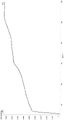
The polyester amide copolymers of examples 3 and 4 of the present invention as shown in FIGS. 1 and 2 have Differential Scanning Calorimetry (DSC) spectra. In example 3, the proportion of the nylon salt monomer based on the total weight of the raw materials is lower than that in example 4, and in the DSC spectrum of figure 1, the glass transition temperature (Tg) and the melting peak (Tm) of the polyester amide copolymer are only one; in contrast, in the DSC chart of example 4, there is still one glass transition temperature, but no melting peak.
The DSC chart of FIG. 1 shows that when the content of amino groups in the raw material is small, the content of amide structural units in the polyester amide copolymer after polymerization is low, so that the molecular chain of the polyester amide is substantially dominated by ester structural units, thereby maintaining the general regularity of the molecular chain structure, and thus showing a melting peak in the DSC chart.
The DSC chart of fig. 2 shows that when the amount of amino groups in the raw material is large, the content of amide structural units in the polyester amide copolymer after polymerization is high, so that the polyester amide molecular chain is mainly composed of two types of structural units, i.e., ester and amide, and the structure is lack of regularity, and thus no melting peak appears in the DSC chart.
The DSC spectra in FIG. 1 and FIG. 2 show glass transition temperatures, which indicates that the polymers obtained in examples 3 and 4 are homogeneous copolymers, and do not contain homopolymers or blends, i.e., the amide structural units are uniformly embedded in the polyester main chain and do not undergo phase separation. The melting point disappears along with the increase of the proportion of the amido bond, which shows that the amido bond is uniformly distributed on the polyester chain and does not form aggregation, which is very helpful for improving the prevention performance, and the melting point also indirectly shows that the synthesis method of the invention can indirectly realize the controllability of the number of the repeating units of the amido bond segment by adjusting the proportion of the terephthalic acid and the derivatives thereof to the nylon salt.
In the invention, the nylon salt with odd carbon atoms formed by the pentamethylene diamine has excellent characteristics, can effectively reduce the compact type of the molecular structure of the polyester fiber, and is more beneficial to solving the problem that the dye is difficult to enter an amorphous area.
In the invention, the controllability of the distribution of amide structural units in the polyesteramide on a polyester chain is realized by adopting the nylon salt as a monomer and properly adjusting the using amount of the nylon salt, and the defect that only polyamide oligomer can be blocked on the polyester chain in the conventional polyester-polyamide copolymer is overcome, so that the effects of optimizing the polyester performance and improving the dyeing property can be realized with fewer amide bonds and lower cost.
In addition, the dispersibility of the amide structure is controlled, so that the whole molecular chain structure is uniform, the spinnability can be effectively improved in the spinning process, and the phenomena of yarn breakage and broken yarn are prevented. In the polycondensation process, because the amino groups of the diamine and the derivatives thereof are completely acylated, the phenomenon that the molecular chain of the polyester is broken due to the addition of the amino group at the end of the polyamide oligomer in other patents can be greatly reduced.
In the invention, the used raw materials are common popular chemical raw materials, deep processing is not needed, the polymerization is completed in one step through melt polymerization, the process is simple, the production efficiency is high, and the production can be directly realized by simply modifying the conventional polyester device. Compared with diamine, the used nylon salt has the advantages of easy transportation, no pollution, easy operation, low requirement on equipment and the like, and more importantly, the volatilization of the diamine can be effectively reduced in the early esterification and acylation processes.
The cotton type or wool type fiber prepared by the invention can be blended with cotton or wool in any proportion, and the fabric woven by the blended yarn can be dyed in one bath, has no color difference in dyeing, high dye uptake and deep dyeing. This greatly simplifies the dyeing process of the fabric and effectively reduces the cost. The amide groups contained in the fiber are fully reacted with the acid groups in the acid dye, so that the acid dye can be dyed at a rate of more than 80% at a temperature of 80-110 ℃ under normal pressure, the deep dyeing degree can be completely reached, the dyeing is uniform, the color difference is avoided, and the acid dyeability of the polyester is greatly improved. The fiber has simple preparation process, can be smoothly spun in a common polyester spinning device, has good performance, the breaking strength of the fiber is more than 1.0cN/dtex, the elongation at break is more than 5 percent, all indexes can meet the requirements of subsequent weaving, and the fiber has simple production operation and lower cost and is suitable for industrial production. Meanwhile, compared with the mixture of polyester and polyamide, the polyesteramide of the invention overcomes the problems of poor compatibility of the mixture and difficult spinning.
The above examples are only for explaining the technical solution of the present invention, and do not limit the present invention.
Although a few aspects of the present invention have been shown and discussed, it would be appreciated by those skilled in the art that changes may be made in this aspect without departing from the principles and spirit of the invention, the scope of which is therefore defined in the claims and their equivalents.